

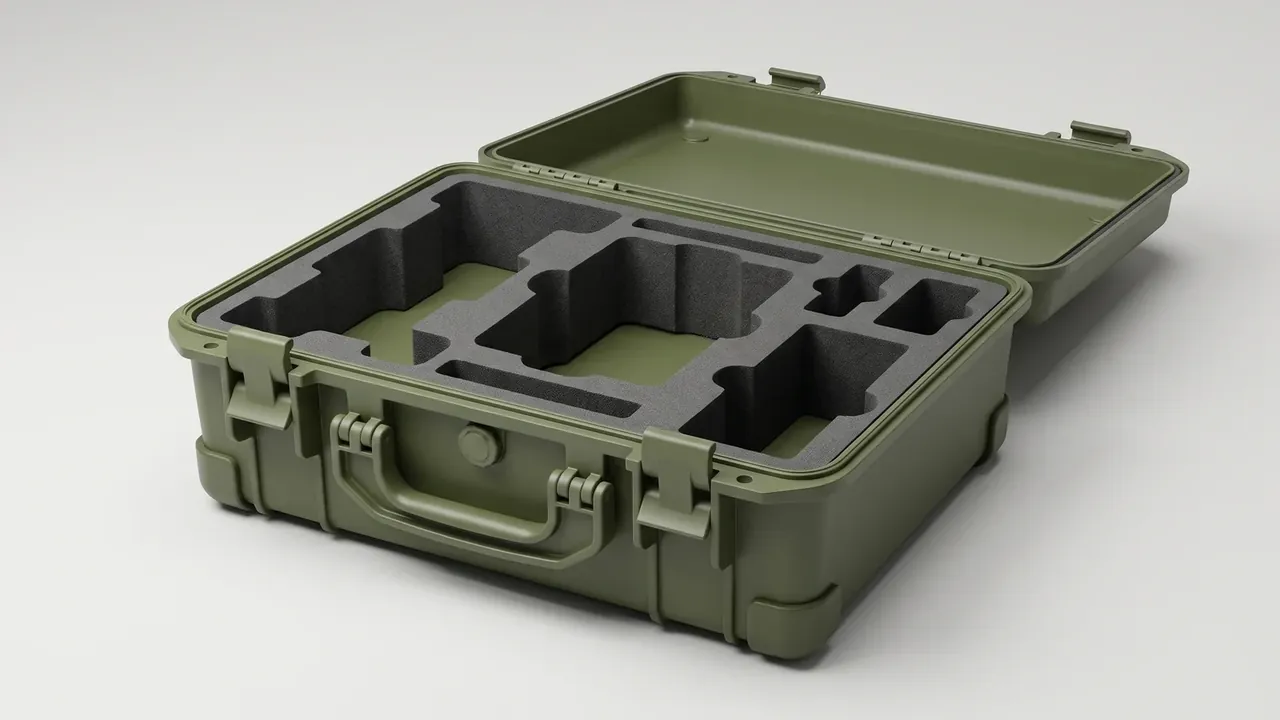
Quick answer: A waterproof drone carrying case is accepted on clause numbers and sample state, not on the number printed on the label. IPX7 means 1 m for 30 min, IP68 depth is vendor-declared, the valve cracks at 0.3–0.5 bar, and 516.8 means 26 drops.
Table of contents
- Reading the rating clause by clause
- The pressure valve: cracking differential and flow
- Thermal cycling and damp heat
- Drop, vibration and the test surface
- Type test versus routine test
- Verifying certificates and reports
- FAQ
1. Reading the rating clause by clause
The first digit of an IP code covers solids, the second liquids, and a waterproof drone carrying case usually pairs IP6X with IPX7. IEC 60529 fixes the IPX7 baseline: sample top 150 mm below the surface, lowest point about 1000 mm, 30 min, no harmful ingress afterwards.
IP68 hands depth and time back to the vendor: one string can mean 1.5 m for half an hour, another 3 m for an hour; without parameters the claims cannot be ranked.
| Clause | Criterion | Duration |
|---|---|---|
| IEC 60529 IP6X | no visible dust inside | 8 h at 2 kPa vacuum |
| IEC 60529 IPX7 | no harmful ingress | 30 min at 1 m |
| Pressure valve | cracking differential 0.3–0.5 bar | 30 s hold, every unit |
| Thermal cycling | no crack, no permanent set on seal faces | 5 cycles, 2 h per dwell |
| MIL-STD-810H 507.6 | no condensation, no red rust on hardware | 10 days |
| MIL-STD-810H 516.8 | latches closed, no through-crack | 26 drops |
IP6X is the clause most often skipped: 8 h in a talcum chamber under 2 kPa vacuum, no visible dust inside. A case passing IPX7 alone is half tested.
2. The pressure valve: cracking differential and flow
A waterproof drone carrying case is not a sealed jar, it needs a valve that relieves pressure as the differential climbs. The core is an ePTFE membrane, the cracking point set by a spring.
The criterion is 0.3 to 0.5 bar. Below it the membrane meets reverse water pressure early in shallow immersion; above it the lid stays shut after an air freight leg.
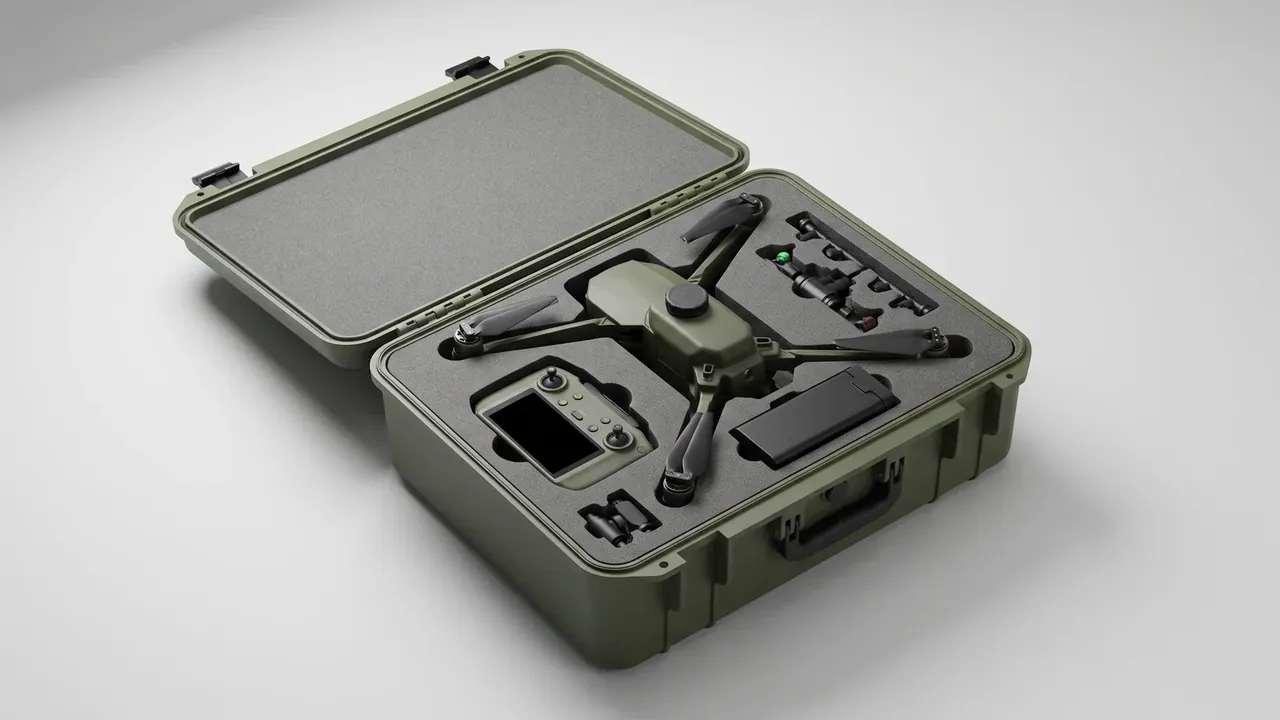
Flow decides recovery: a 25 L body at 0.5 bar needs about 12 L of air within 3 min, so flow is usually 200 mL/min or more. The port position in the test photograph must match the goods.
3. Thermal cycling and damp heat
Parameters belong in the report, or nothing compares: cold catches embrittlement, heat catches seal softening.
| Stage | Condition | Dwell |
|---|---|---|
| Cold | -20 °C | 2 h |
| Hot | 60 °C | 2 h |
| Ramp | 3 °C/min max | - |
| Cycles | 5 | - |
Three criteria: no permanent indentation on the seal face, latches closable with one hand, compression set under 30 percent; seal hardness shift within 10 Shore A.
Damp heat follows 507.6 for 10 days, one 24 h cycle between 30 °C and 60 °C at 95 percent relative humidity. It hunts condensation, rust on hinges and lifting labels; any one fails.
The drop after cold soak is the real test: impact strength at -20 °C falls to roughly thirty percent and the latch root cracks first.
4. Drop, vibration and the test surface
For a waterproof drone carrying case the 516.8 surface is 50 mm plywood over steel or concrete, height graded by mass: 1.2 m below 18 kg, 0.9 m up to 45 kg.
The count is 26 drops over 8 corners, 12 edges and 6 faces: corners concentrate energy, edges check the wall-to-rib transition, faces check latches and hinges.
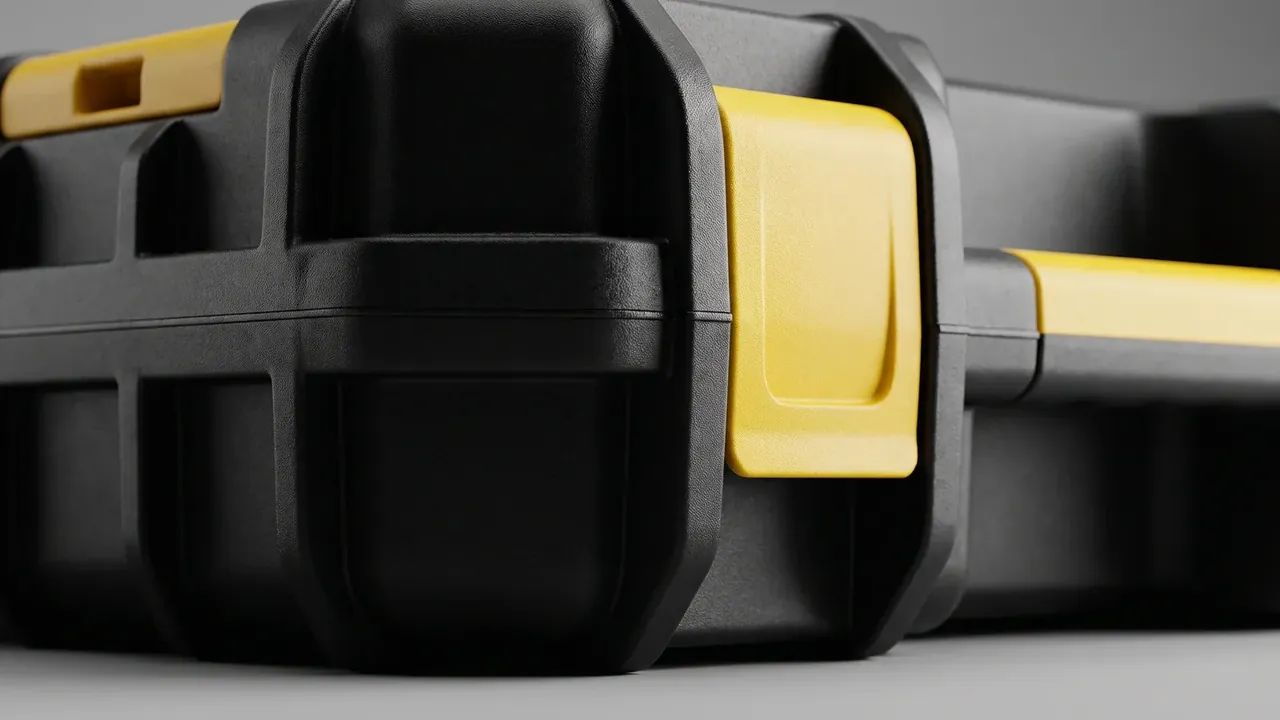
Four criteria: every latch engaged, no through-crack, lid-to-body offset under 1.5 mm, a repeat IPX7 with no ingress. Vibration is separate: 514.8 spectrum, 1 h per axis.
5. Type test versus routine test
- Type test: new mould first part, compound change, change beyond 3 mm, re-test every 24 months.
- Routine: air-tightness on every unit, 0.3 bar for 60 s, drop under 0.02 bar.
- Visual: seal joint aligned, membrane unwrinkled, latches even over 20 cycles.
- Batch sampling: 3 units per lot through IPX7, 1 unit through a corner drop.
- Disposition: one failure doubles the sample, 2 failures in 5 reject the lot.
Type test reads design, routine test reads consistency; mixing them is the commonest hole in a factory audit of a waterproof drone carrying case.
6. Verifying certificates and reports
Six points decide acceptance: standard number and edition, accreditation mark, sample description with photographs, sample state, parameters, and pass statement. Each can sink a conclusion alone. The edition matters: the 1989 text plus two amendments is current. Sample state defines scope. An IPX7 pass on an empty shell does not transfer to a loaded case, and a description without the valve deserves a question mark.
Four errors recur on a waterproof drone carrying case report: an IP66 jet report presented as IP67, a test on the next size down, a valve taped shut, and a report dated before the revision. Retest only the missing clause, on samples from the current lot.
Conclusion
The leverage sits between clause, parameter and sample state, not in the label. Write the 8 h of IP6X, the 30 min of IPX7, the 0.3–0.5 bar and the 26 drops into the contract annex, then retest gaps clause by clause. Only then is the rating of a waterproof drone carrying case a conclusion anyone can re-check.
This article discusses only the container (case body) side of specifications and design intent, and does not cover any handling, loading or use of the contents.
Related Reading
- IP ratings and test conditions for waterproof hard cases
- Drop and impact clauses for airdrop cases
- Storage conditions for moulds and case bodies
- Seal and stacking checks for shell boxes
- Pallet and case marking for traceability
Related Products
- 8 Series — Gun Cases; Military Equipment Cases; Camera Equipment Cases; Drone Cases; Watch Cases; Knife Cases; First Aid Cases; Electronics Equipment Cases
- WL8-2812 PP Gun Case — model WL8-2812
- All protective cases and toolboxes: 7 series, 158 models