

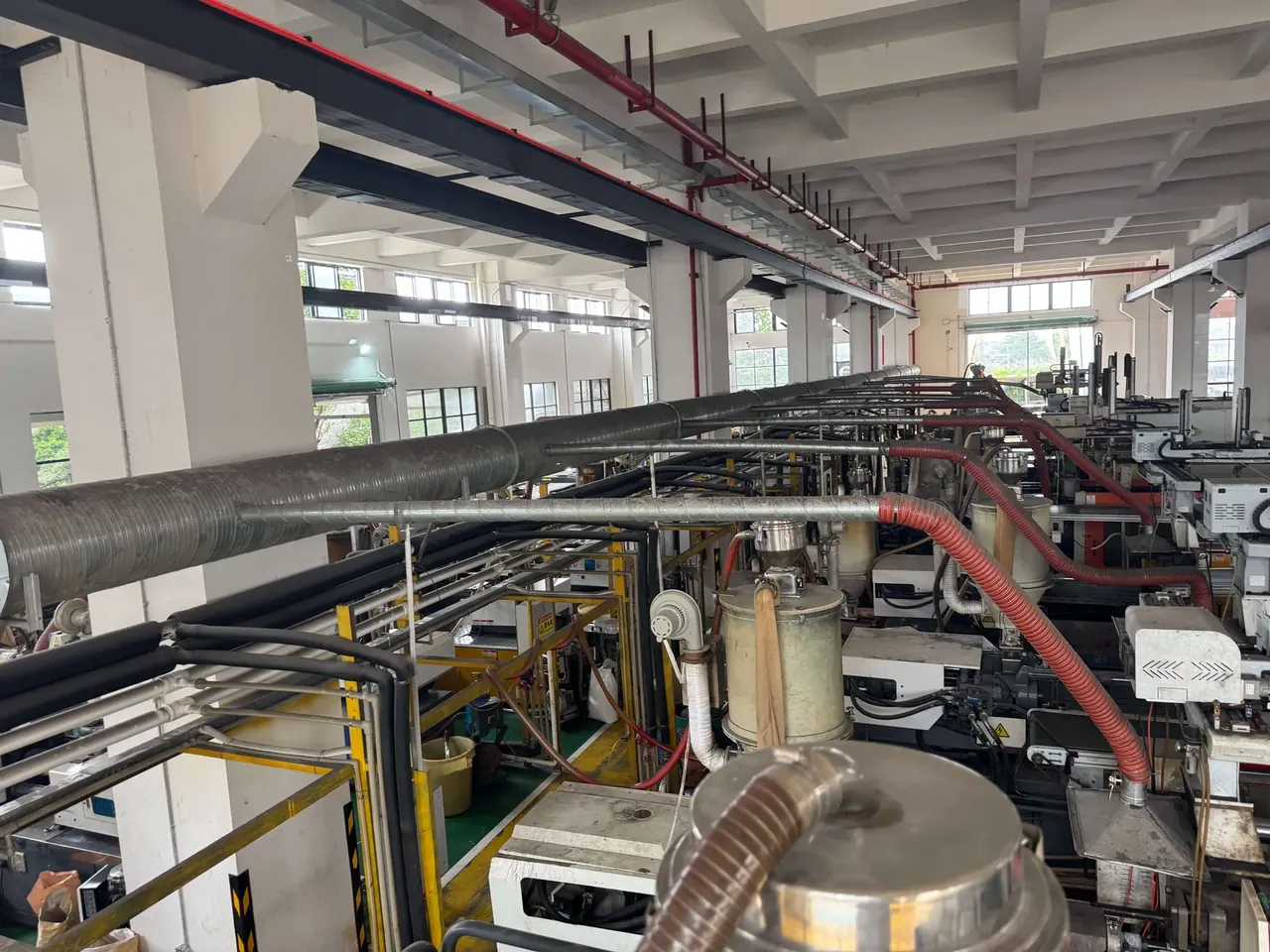
Quick answer: Wear resistant heavy-duty military injection molded case is judged by 1.2 m drop, 0.6 mm mouth flatness and 1.8 mm lid deflection after 3-tier stack.
Table of contents
- Wall thickness distribution and process choice in a Wear resistant heavy-duty military injection molded case
- Corner weld lines and gate position
- Mouth flatness after a six-face drop
- Lid deflection under stack load
- Batch reject limits for wall thickness
- FAQ
1. Wall thickness distribution and process choice in a Wear resistant heavy-duty military injection molded case
A Wear resistant heavy-duty military injection molded case is specified at 640 x 460 x 280 mm outside and 570 x 395 x 210 mm inside, with a nominal 4.2 mm wall, 7.2 kg empty and a 15 kg rated load. Wall maps differ between the two processes, so measuring points must be agreed first.
In a Wear resistant heavy-duty military injection molded case made by rotomoulding, powder builds the wall layer by layer; corners gain material, broad flats run thin, and tolerance holds to +/- 0.6 mm. Injection moulding fixes the wall by tool gap but leaves orientation at the gate.
A Wear resistant heavy-duty military injection molded case must hold its mouth from -25 C to 60 C, so measuring points cover corners, mid-wall and flange.
| Wall point | Rotomoulded | Injection moulded |
|---|---|---|
| Corner build-up | 5.2 mm | 4.2 mm |
| Mid side wall | 3.9 mm | 4.2 mm |
| Mouth flange | 4.4 mm | 4.3 mm |
| Broad base flat | 3.8 mm | 4.1 mm |
A corner gain of 1.0 mm comes free with rotomoulding. Injection moulding needs a local boss to reach the same figure.
2. Corner weld lines and gate position
In a Wear resistant heavy-duty military injection molded case made by injection, two flow fronts meet at a weld line; gate position decides whether it crosses the mouth or hides in a corner. Tensile strength is benchmarked at >= 18 MPa.
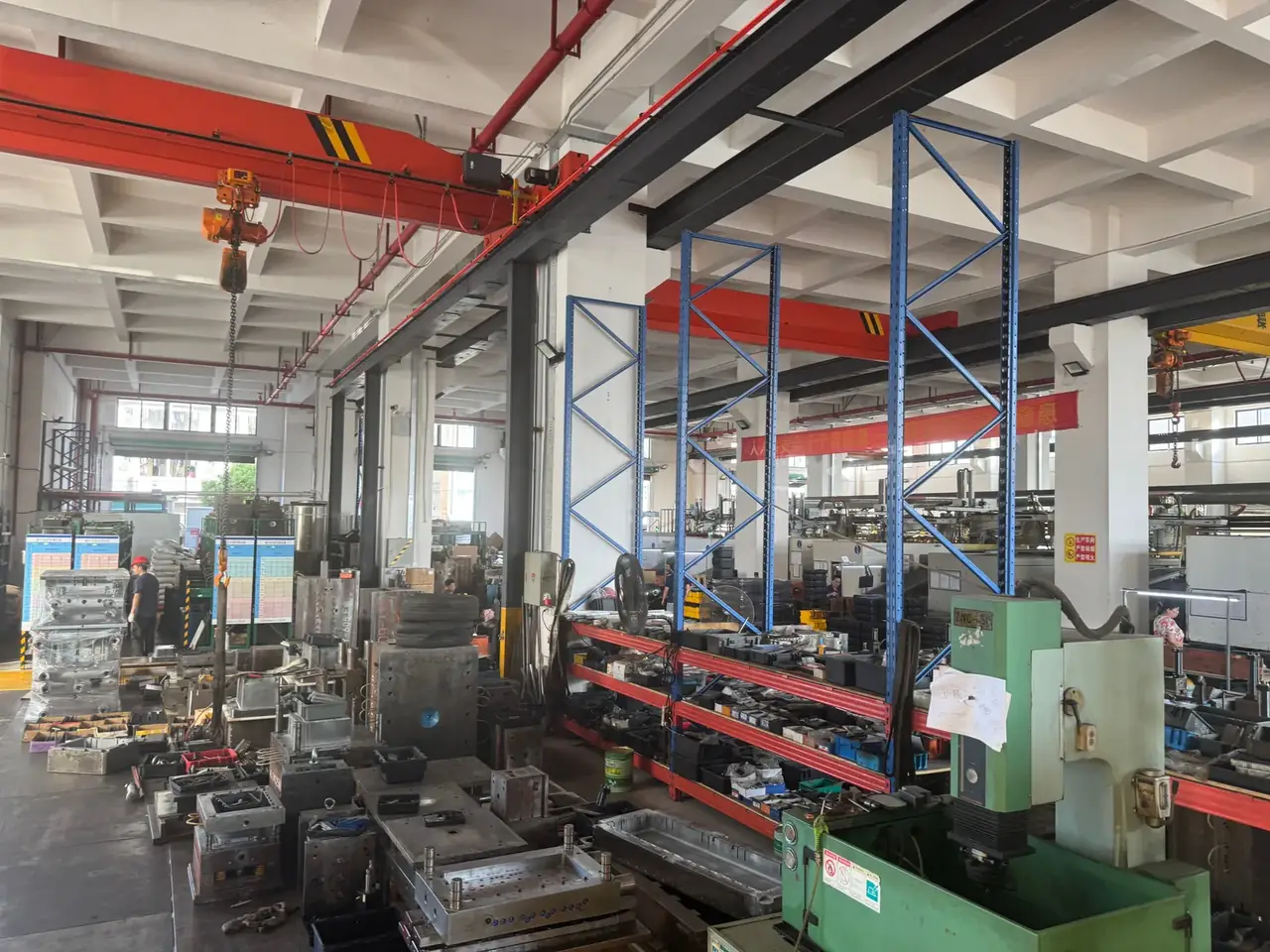
A Wear resistant heavy-duty military injection molded case built by rotomoulding has no gate, yet corner pooling can trap gas; injection pulls tensile coupons, rotomoulding checks thickness spread.
The corner load path is a chain. Impact reaches the corner guard first. The guard passes it into the crease where the side wall meets the base. If the wall there drops below 4.2 mm, bending stress collects at the weld line. The two sides shrink at different rates and add residual stress. Latch keepers and hinge seats sit nearby, and four latches preload the joint at 420 N each. One corner therefore carries impact, bending and preload at once, so corners are sampled separately rather than folded into a side-wall mean.
3. Mouth flatness after a six-face drop
For a Wear resistant heavy-duty military injection molded case, a six-face drop at 1.2 m with 15 kg leaves an unbroken corner as only the first gate; mouth flatness within 0.6 mm is the real check.
| Drop face | Corner state | Mouth flatness |
|---|---|---|
| Base down | No crack | 0.3 mm |
| Lid down | No crack | 0.4 mm |
| Long side down | No crack | 0.5 mm |
| Short side down | No crack | 0.6 mm |
| Corner down | No crack | 0.6 mm |
Flatness is taken at eight points with a feeler gauge; short-side and corner impacts are worst because load lands beside a latch keeper.
4. Lid deflection under stack load
For a Wear resistant heavy-duty military injection molded case, stacking is rated at 3 tiers for 24 h with 15 kg, and lid deflection must stay within 1.8 mm.
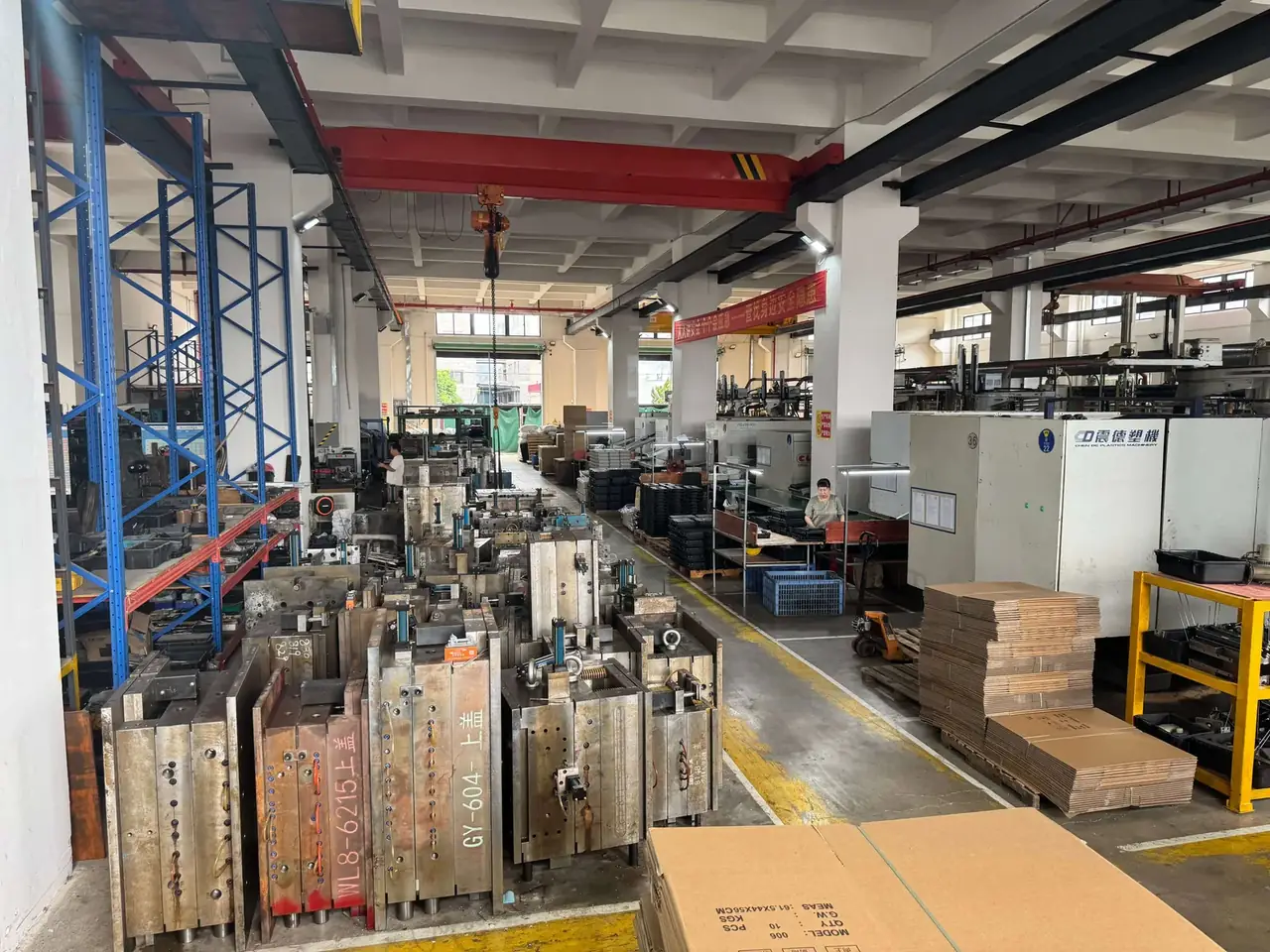
At 60 C, a Wear resistant heavy-duty military injection molded case creeps faster; the 24 h reading runs a third above room temperature, so the check follows a soak at the upper working temperature.
| Deflection point | Load condition | Limit |
|---|---|---|
| Lid centre | 3 tiers / 24 h | <= 1.8 mm |
| Long-edge midpoint | 3 tiers / 24 h | <= 1.2 mm |
| Short-edge midpoint | 3 tiers / 24 h | <= 1.0 mm |
| Recovery after unload | 2 h rest | <= 0.3 mm |
Recovery belongs in the same table. A deflected lid that rebounds past 0.3 mm has taken a permanent set and will cross the limit sooner on the next stack. The four latches only keep the joint shut during stacking; tightening them is not a way to add stiffness to the lid.
5. Batch reject limits for wall thickness
From each lot, eight Wear resistant heavy-duty military injection molded case shells are gauged at corner and mid-wall; under 3.6 mm is rejected, above 5.4 mm the 570 x 395 x 210 mm cavity is rechecked.
Cycle life for a Wear resistant heavy-duty military injection molded case runs 4000 open-close loops, with flatness remeasured every 1000 cycles and 420 N latch preload decaying by no more than a tenth; weld-line coupons are benchmarked at >= 18 MPa.
JUNZHIJIA records the process lot and measuring points in the release report, so thickness spread traces back to a tool or a setting.
Conclusion
The process choice for a Wear resistant heavy-duty military injection molded case ends up in three tables: wall points, drop faces and deflection points. Corner weld lines, gate position and latch preload all serve one sealing face, and the shell only passes when that face stays true. Ask for measuring points and the process lot before comparing figures.
Related Reading
- How injection moulding builds a case shell
- Injection versus rotational moulding for case shells
- Flocking wear testing for case liners
- Injection moulded protective case specifications
Related Products
- 8 Series — Gun Cases; Military Equipment Cases; Camera Equipment Cases; Drone Cases; Watch Cases; Knife Cases; First Aid Cases; Electronics Equipment Cases
- WL8-2812 PP Gun Case — model WL8-2812
- All protective cases and toolboxes: 7 series, 158 models