

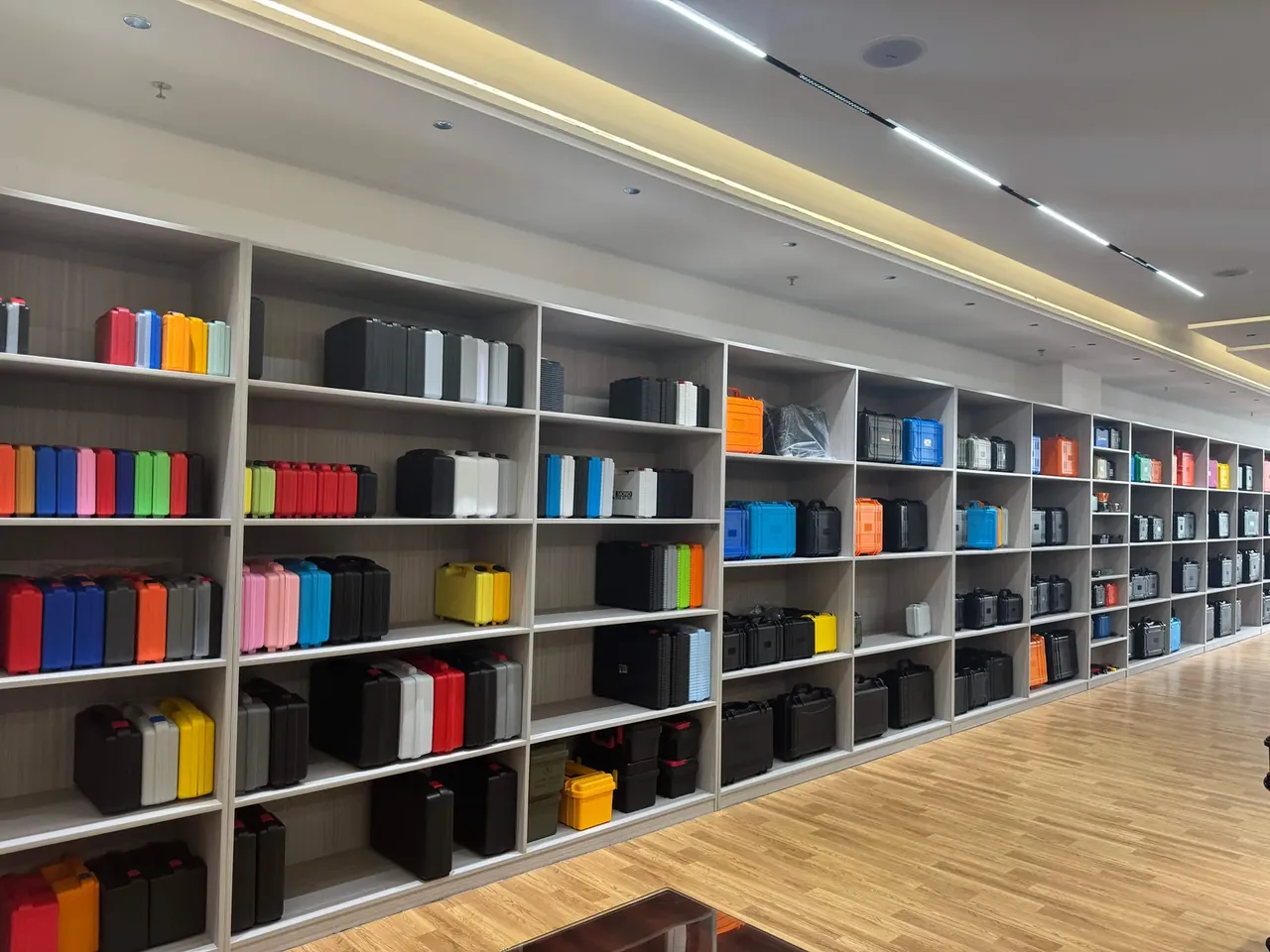
Quick answer: The Wheeled Military Transport Case pairs a 6.0 mm wheel-mount plate with an R12 mm corner radius, holding six-layer settlement at 0.9 mm and 3.6 kN.
Table of contents
- Wheel-mount plate thickness of the Wheeled Military Transport Case
- Corner radius of the mouth guards
- Settlement readings layer by layer under stacking
- Compression judgement under off-centre load
- Plate-thickness rejection line for wheeled batches
- FAQ
1. Wheel-mount plate thickness of the Wheeled Military Transport Case
The Wheeled Military Transport Case keeps a 6.0 mm wheel-mount plate under its base, thickened rather than an extension of the 5.1 mm wall. Between a 680 x 480 x 300 mm envelope and a 605 x 415 x 230 mm cavity, spare material goes to the wall, the mouth flange and this plate. At 20 kg stacked six high, an equally thin plate would drive the wheel-seat bolts into the floor.
The 6.0 mm value is sampled at six points, each within 0.3 mm of nominal. The Wheeled Military Transport Case logs the thinnest point, since settlement starts at the lean corner. Plate thickness governs vertical support and the R12 mm guard radius sideways force, so both readings share one card for the six-layer / 24 h stack.
| Plate tier | Measured plate | Wheel-seat settlement after six layers / 24 h |
|---|---|---|
| Thin | 4.8 mm | 1.3 mm, reject |
| Nominal | 6.0 mm | 0.7 mm |
| Thick | 7.2 mm | 0.5 mm |
2. Corner radius of the mouth guards
The four mouth corners of the Wheeled Military Transport Case take an R12 mm radius so the load above slides down a curve instead of pressing a sharp point. Guards share axes with the wheel plate, letting an upper wheel seat land on the lower arc crown. Cut the radius too small and corner stress after six layers / 24 h adds over 0.2 mm to settlement.
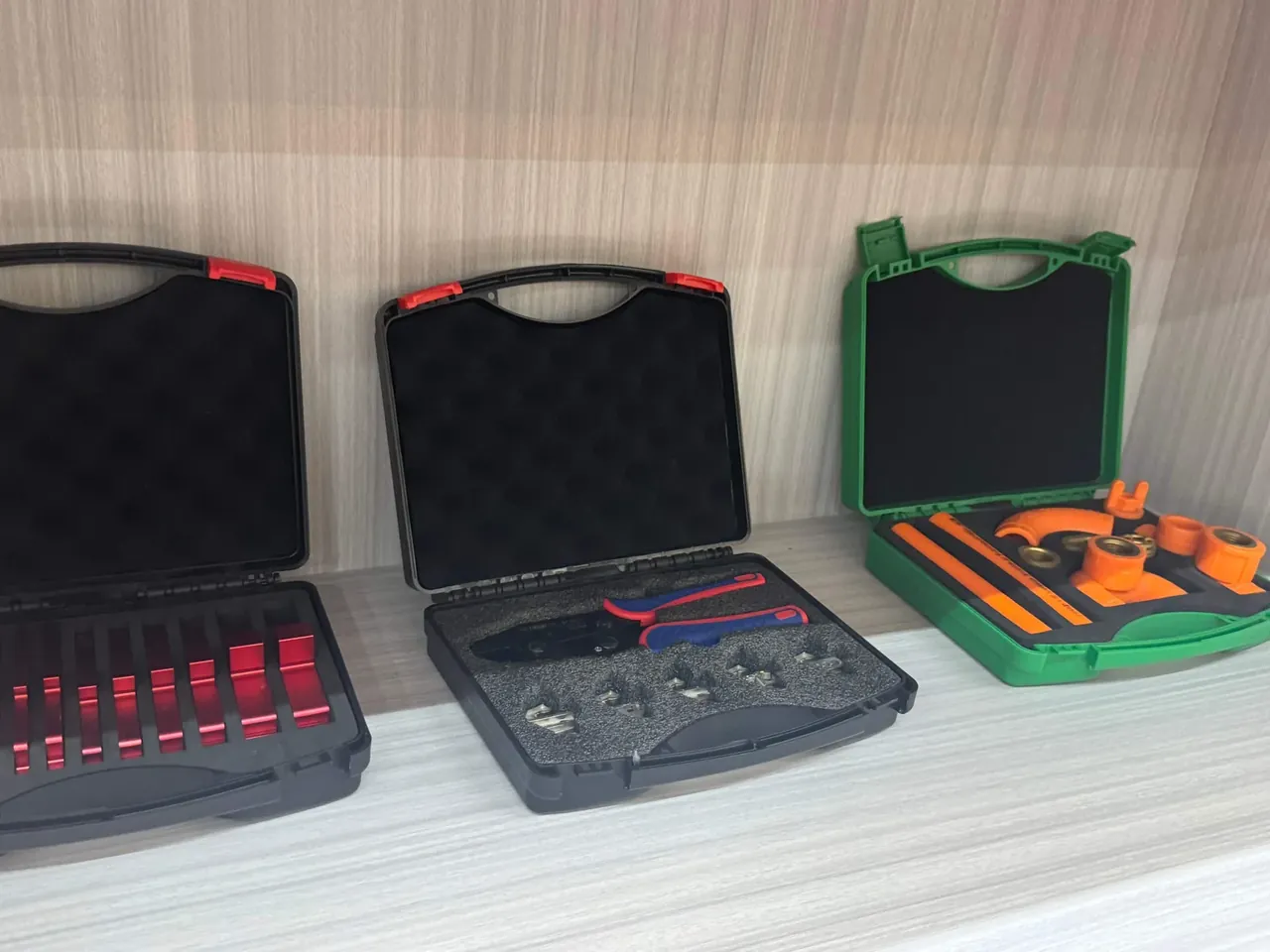
An R12 mm arc absorbs the slight outward bow of a 20 kg loaded mouth better than a right angle does, versus 8.6 kg empty. Before the Wheeled Military Transport Case reaches the stacking rig it runs 4300 empty open-close cycles, then stacks six high. Four latches at 455 N each are checked in that run; cycles with the lid not fully seated are excluded.
3. Settlement readings layer by layer under stacking
Stacking of the Wheeled Military Transport Case follows six layers / 24 h, with wheel-seat height measured after each layer and a final reading at the full 24 h. The 0.9 mm ceiling governs; the first three layers climb fast and the last three flatten, so the record is the 24 h value, not any rebound. Both 8.6 kg empty and 20 kg loaded states are run, keeping the larger settlement.
The rig clamp drifts about 0.05 mm at zero, so JUNZHIJIA subtracts that play before the Wheeled Military Transport Case records settlement, in a separate card column. Corrected layer curves show which layer crushed the plate and which only loosened tooling. Six layers matches the loading ceiling behind the 3.6 kN compression check.
| Stack layers | Cumulative load time | Wheel-seat settlement |
|---|---|---|
| 2 layers | 8 h | 0.3 mm |
| 4 layers | 16 h | 0.6 mm |
| 6 layers | 24 h | 0.8 mm |
4. Compression judgement under off-centre load
Beyond even stacking, the Wheeled Military Transport Case clears an off-centre round: the upper shell shifts about 60 mm so load falls on two guards on one side, and compression must hold 3.6 kN. A 1.2 m drop follows, landing opposite a guard so shock runs down the arc into the base. The 3.6 kN compression and 0.9 mm settlement are separate lines; a shell clears only when both pass.
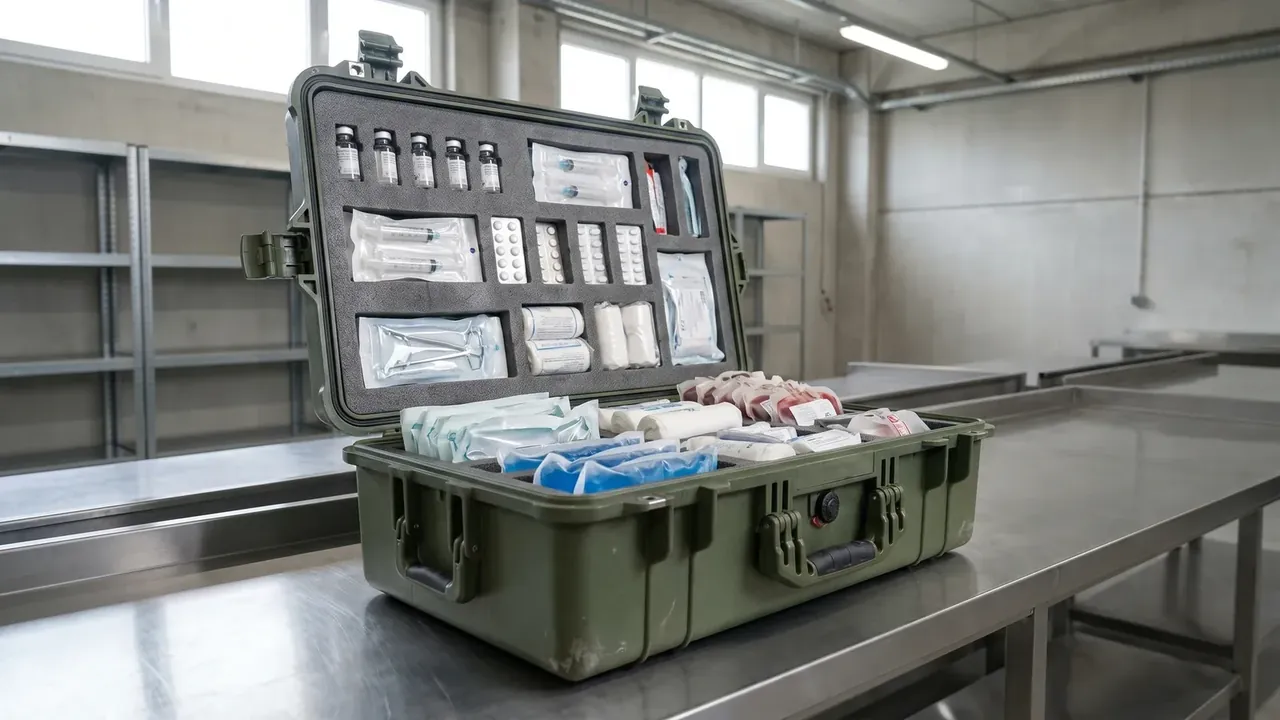
At the 1.2 m drop retest the plate roots are checked for blushing, then settlement remeasured; a gap over 0.1 mm from the stacking value means the plate and floor parted. Mouth sealing of the Wheeled Military Transport Case is checked after both figures are in: an IP67 spray retest sees whether the two gaskets at 23 percent compression still meet. The spray covers the mouth alone.
5. Plate-thickness rejection line for wheeled batches
Eight shells per batch are measured at the plate, and for the Wheeled Military Transport Case a reading 1.0 mm under the 6.0 mm nominal is a reject; two such shells send the whole batch back, with no single good shell released alone.
The line matches the thinnest plate holding settlement within 0.9 mm after six layers / 24 h. Go thinner and the sixth layer lifts the reading near 24 h. Mould temperature, hold time and this line go into the JUNZHIJIA process card, and a tool or material change calls for one more full run. The Wheeled Military Transport Case binds each settlement reading to its release decision, filed by shell number. The batch code matches only that shell's data. The table below sorts three bands into outcomes, so a retester does not treat the thick tier's margin as a batch-wide tolerance.
| Settlement value | Matching plate tier | Disposition |
|---|---|---|
| no more than 0.9 mm | nominal 6.0 mm | release |
| 0.9 to 1.2 mm | thin 4.8 mm | remeasure wheel seat |
| above 1.2 mm | reject band | whole batch rework |
Conclusion
A 6.0 mm wheel plate paired with an R12 mm guard radius is what lets the Wheeled Military Transport Case hold wheel-seat settlement within 0.9 mm and compression at 3.6 kN after six layers / 24 h, with the off-centre and 1.2 m drop retests covering joint loosening. Measured plate, layer curves and the rejection line are filed in tiers by JUNZHIJIA and rerun after any tool or material change. When specifying a wheeled shell of this kind, ask first whether plate thickness and corner radius come with measured figures.
Related Reading
- Can a protective case be fitted with wheels? Matching trolley handle and castor load
- How to choose a wheeled transit case: five criteria
- Case stacking feet: four feet bearing load and stacking tiers
- Stable stacking: stacking ribs, locator bosses and interlocking principles
Related Products
- 8 Series — Gun Cases; Military Equipment Cases; Camera Equipment Cases; Drone Cases; Watch Cases; Knife Cases; First Aid Cases; Electronics Equipment Cases
- WL8-2812 PP Gun Case — model WL8-2812
- All protective cases and toolboxes: 7 series, 158 models