


A 5G base-station maintenance case is a professional protective container used by telecom operations teams to carry spares, modules, instruments and tools during base-station inspection, fault repair and equipment cutover. Its core value is delivering fragile, expensive, moisture-sensitive and ESD-sensitive telecom modules safely to the tower base, the equipment room and remote sites, while keeping on-site access orderly and inventory countable. Compared with an ordinary toolbox, a 5G base-station maintenance case faces high-value optical and RF modules, frequent tower climbs and equipment-room entries, dust, moisture and temperature swings, and the time pressure of fault repair, so it demands more from protection rating, ESD control, moisture protection, compartment layout and carry design. This article covers the selection and design of 5G base-station maintenance cases, 5G equipment cases, telecom base-station cases and base-station module cases, breaking down protection ratings (IP / GB/T 4208 / MIL-STD-810H / ISTA), module categories, liners and compartments, material selection, tower carry design, optical module and fiber protection, moisture, ESD and temperature control, power and instrument loading, procurement and acceptance, and common mistakes, with tables that can be used directly in tenders and acceptance. The goal is to help operators and telecom engineering service providers cut module damage rates and mean time to repair.
Readers who need the fundamentals of cases and liners should first review Plastic Protective Cases: Material and Structure and Cushion Liner and Custom Cutting Design. For telecom and electrical test instruments see Communication Test Instrument Protection and Electrical Meter Protection Solutions, and for IT operations and fiber construction see IT Operations Toolkits.
What Is a 5G Base-Station Maintenance Case
A 5G base-station maintenance case, also called a 5G equipment case, telecom base-station case or base-station module case, is a modular carry container used by telecom operators and telecom engineering service providers in base-station operations. The difference from an ordinary toolbox is the payload: an ordinary toolbox holds durable hand tools, while a base-station maintenance case often carries optical modules, RF modules, baseband unit accessories, patch cords, network cables, power adapters and test instruments at the same time, and optical and RF devices are sensitive to static, dust, moisture and shock while being far more valuable per unit than ordinary tools.
In form, a 5G base-station maintenance case usually consists of a rigid shell, a modular liner, layered trays and a latch system. The shell provides impact resistance, dust and water protection and stackability; the modular liner fixes different module sizes in unique positions and isolates static; the layered trays separate fast-moving small parts from main items for quick access; and the latch system keeps everything in place during transport and handling. Common options include a handle or shoulder strap, casters, a transparent window, a dissipative liner, a desiccant pocket and a label or QR code position for records and identification.
Typical users include network operations center inspection and repair crews, base-station installation and cutover teams at telecom engineering service providers, tower and equipment-room operators, private network telecom maintenance teams in power, rail, port and mining, and field support engineers from equipment manufacturers. Wherever modules and instruments must be brought to a site and a replacement and test completed quickly, that is the application boundary for a 5G base-station maintenance case.
Protection Pain Points in Base-Station Maintenance Work
The first pain point is high module value and ESD sensitivity. Optical modules, RF parts and baseband components are electrostatic-discharge sensitive devices, and a single improper touch or static generated by ordinary foam friction can cause latent damage that shows up on site as a link that will not stabilize or a rate that drops, which is extremely expensive to diagnose. The second is a harsh working environment. Base stations sit on rooftops, towers, mountains, coastlines and along highways, so the case must survive hoisting up and down towers, vehicle vibration, rain, snow, dust and salt-fog corrosion.
The third pain point is repair time pressure. A downed site usually maps to key performance indicators and user complaints, so the crew must locate and replace the fault in the shortest time, and a case with disordered contents, missing spares or missing tools directly lengthens the outage. The fourth is counting and traceability. Modules are assets whose serial numbers, issue and installation destination must be recorded, and without unified numbering and checklist marking the records will not match reality and spares will be lost. The fifth is temperature, humidity and pressure variation. Mountain and coastal sites have large day-night temperature swings and high humidity, and air freight or high-altitude transport also involves pressure change, so a case with insufficient sealing and moisture control will let modules and instruments fail from damp.
The common conclusion from these pain points is that a 5G base-station maintenance case should be engineered as a telecom spare-part field delivery system: define the module list and work process first, then decide the ESD, moisture, compartment and carry design, and finally close the loop on counting and traceability with checklists and numbering. Comparing only capacity and price usually exposes module damage and spare loss after only a few repair jobs.
Protection Ratings and Referenced Standards (IP / GB/T 4208 / MIL-STD-810H / ISTA)
The protection rating is the foundation of the program. IP rating is judged per IEC 60529 and GB/T 4208: the first digit denotes dust protection from 1 to 6 and the second denotes water protection from 1 to 8. A 5G base-station maintenance case usually requires at least IP65, meaning fully dust-tight and resistant to low-pressure water jets, and coastal, rainy or temporarily outdoor storage scenarios should use IP67, meaning fully dust-tight and able to survive immersion at 1 meter for 30 minutes.
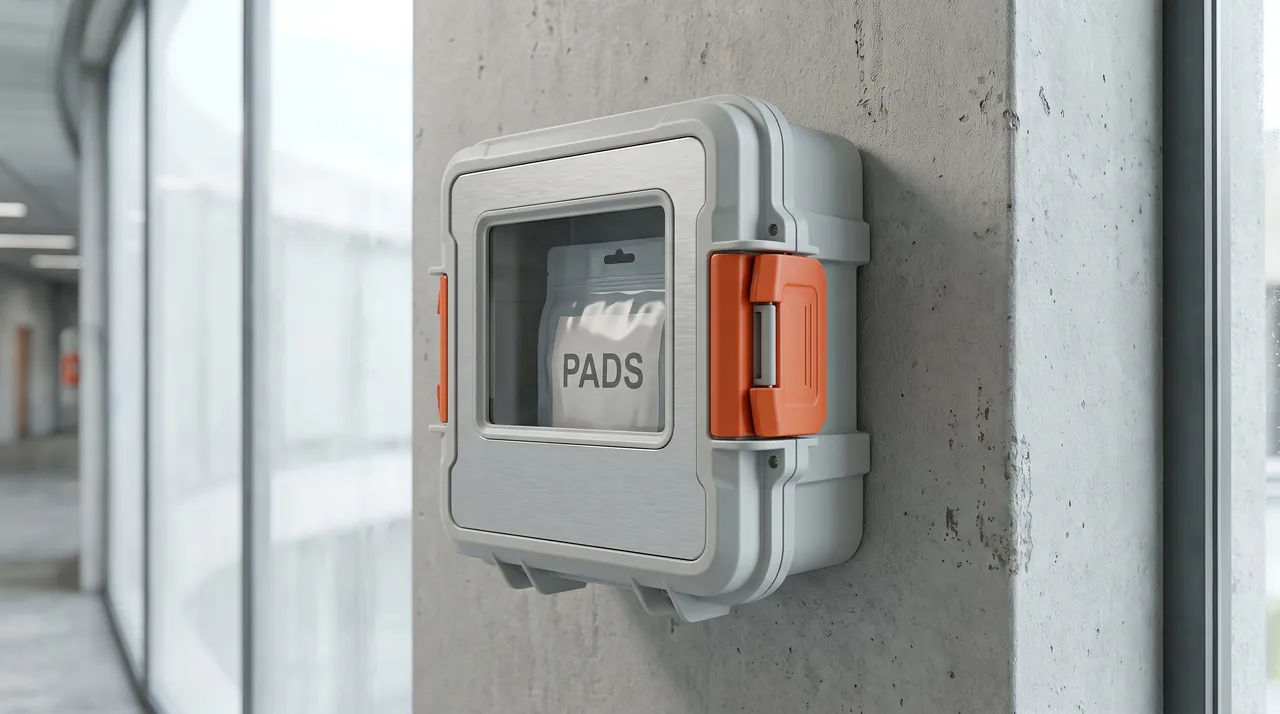
Mechanical and environmental validation can reference MIL-STD-810H: drop (Method 516.8), random vibration (Method 514.8), temperature-humidity cycling (Method 507.6), salt fog (Method 509.6) and low pressure (Method 500.6) correspond to handling drops, vehicle transport vibration, cross-climate work, coastal corrosion, and high-altitude or air transport. For shipping spares by logistics, the ISTA series is recommended, for example ISTA 2A, for whole-package validation. Flame retardancy is rated per UL94, commonly targeting V-0 or V-1, and impact can be described on the IK scale, typically 0.5 to 20 joules.
| Work scenario | Suggested IP | Suggested methods | Key focus |
|---|---|---|---|
| --- | --- | --- | --- |
| Rooftop and equipment-room inspection | IP65 | Drop, stacking | Dust protection and compartments |
| Tower hoisting and work at height | IP65 to IP67 | Drop, random vibration | Fall protection and straps |
| Coastal and rainy regions | IP67 | Salt fog, temperature-humidity cycling | Corrosion and moisture |
| High-altitude and mountain sites | IP67 | Low pressure, drop | Sealing and pressure equalization |
| Spare-part logistics shipping | IP65 to IP67 | ISTA 2A | Cushioning and outer box |
Base-Station Modules and Equipment Categories: AAU, RRU, BBU and Optical Modules
Module size, weight and sensitivity vary greatly, and classifying them before designing the liner and compartments markedly improves hit rate. AAU active antenna units and RRU remote radio units are large and heavy, so the main risks are knocking and hoisting impact. BBU baseband units and their boards are ESD-sensitive, so the main risks are static and damp. Optical modules are small, valuable and have a fragile optical window, so the main risks are static, dust and mechanical crushing. Patch cords, network cables and power cables mainly risk tangling and connector damage. Instruments such as optical power meters, spectrum analyzers and VSWR testers are sensitive to vibration and humidity.
| Equipment category | Typical weight | Main risk | Liner and compartment suggestion |
|---|---|---|---|
| --- | --- | --- | --- |
| AAU / RRU | High | Knocking, hoisting impact | Dedicated large compartment plus cushion blocks |
| BBU and boards | Medium | ESD, damp | Dissipative EVA plus shielding bag |
| Optical modules | Low | ESD, dust, crushing | Dedicated module pockets plus dust caps |
| Patch cords and network cables | Low | Tangling, connector damage | Cable channel plus tie-downs |
| Test instruments | Medium | Vibration, humidity | Machined EVA with clearance |
| Tools and small parts | Low | Mixing, loss | Compartment boxes plus checklist card |
For instruments needed in the on-site test step, align the liner standard with a communication test instrument protection program so that the instrument case and the maintenance case can share and swap modules.
Liner and Positioning: Modular Compartments and ESD Design
The liner decides whether modules stay stable, clean and countable inside the case. Stable means no displacement, clean means dust and ESD isolation are in place, and countable means every module has one unique position so a missing item is obvious. The common approach is modular compartments plus removable trays plus a dissipative surface layer: compartments divide by module shape, trays layer small items, and the dissipative surface prevents friction charging.
Four engineering rules are worth following. First, place heavy items low and light items high, putting AAU and RRU units at the base and near the center so the center of gravity does not shift and tip the case during handling. Second, optical modules and boards must have independent compartments and dust caps, and fingers must never touch the optical window or the gold fingers. Third, put fast-moving items in the top tray so no one has to unpack the case during a repair, and keep spares and low-frequency items below. Fourth, make the liner a replaceable module so that a change of site type or equipment vendor only requires a new liner while the case continues in service, lowering long-term procurement cost.
For scenarios requiring repeated opening and closing on site, use a removable tray structure with a checklist card and numbered labels. Related liner practices are described in Cushion Liner and Custom Cutting Design.
Typical Maintenance Scenarios and Configurations
Mapping scenarios to configurations significantly shortens repair preparation time.
| Maintenance scenario | Recommended configuration | Key point |
|---|---|---|
| --- | --- | --- |
| Routine inspection | Medium injection case plus compartment liner plus instrument slot | Light, quick access |
| Optical module replacement | ESD case plus module pockets plus cleaning tools | Dust and ESD control |
| Board replacement | ESD case plus board compartments plus shielding bags | ESD and moisture |
| Tower climbing work | Rotomolded case plus lift points plus tool pouch | Fall protection, impact |
| Coastal site repair | IP67 case plus corrosion package | Salt fog and moisture |
| Spare-part logistics transfer | Rotomolded case plus outer box plus ISTA validation | Double cushioning |
| Multi-site rounds | Large case plus layered trays plus checklist | Counting and traceability |
For teams working at night or in severe weather, reserve positions for mobile lighting and a backup power supply inside the case and configure them following the emergency communication and power protection program.
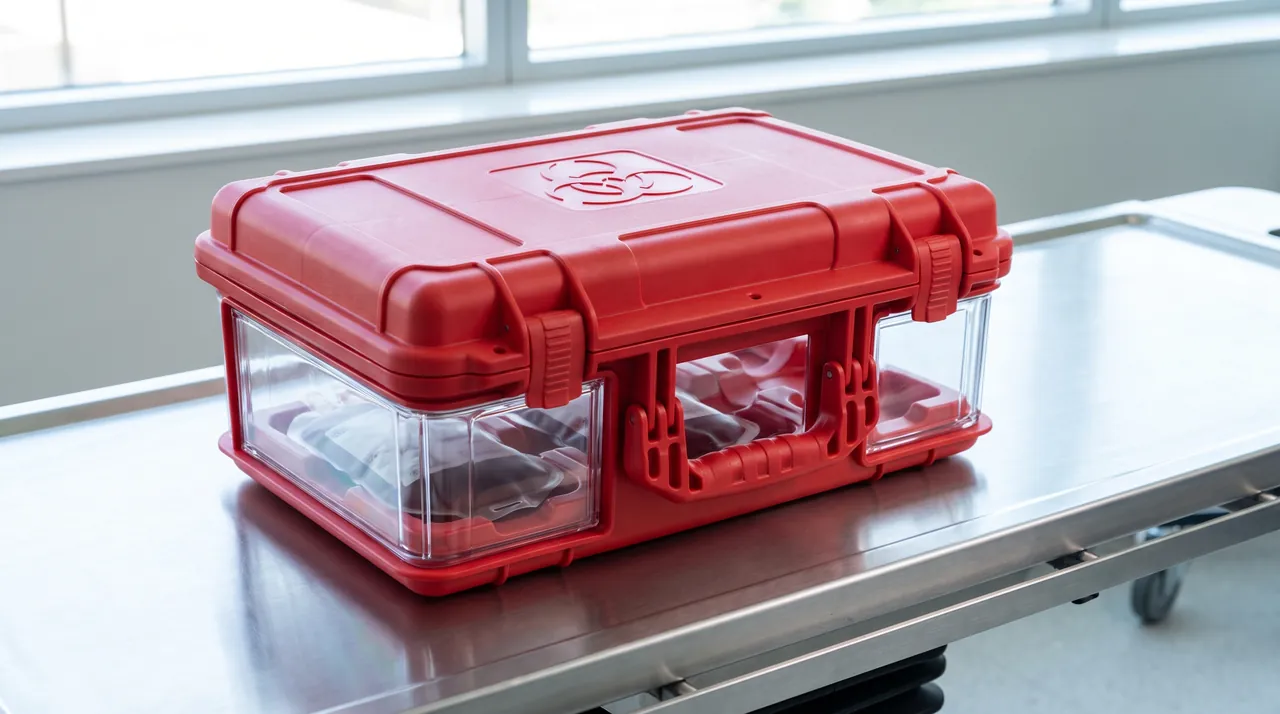
One practical planning habit shortens every repair: build the case around the work order rather than around the equipment list alone. List the steps of the most common fault, then place the item needed at each step in the order it is used, from the instrument for the first measurement to the spare that closes the job. A case arranged in work order turns the crew's search time into zero and measurably shortens the outage.
Shell Material and Structure Selection (Rotomolded / Injection / Aluminum)
The shell material decides weight, strength and cost. A rotomolded case is made in one piece from LLDPE with generous wall thickness, no weld seam and excellent impact and weather resistance, suited to large, heavy module cases that need hoisting. An injection-molded case is molded from PP, ABS or PC with a thin wall, tight precision, a clean appearance and low cost, suited to mid and small instrument and optical module cases. An aluminum case offers high strength, good heat dissipation and EMI shielding, suited to instruments and RF parts that need shielding and thermal performance, but it costs more and resists dents less well than rotomolding.
| Material route | Advantages | Limits | Typical fit |
|---|---|---|---|
| --- | --- | --- | --- |
| Rotomolded | Impact and weather resistant, can be large | Higher self-weight | AAU and RRU, high-load spares |
| Injection-molded | Light, precise, low cost | Limited load and size | Optical modules, boards, instruments |
| Aluminum | Strong, can shield and dissipate | Higher cost, dents | Test instruments, RF parts |
| Sheet metal plus liner | Customizable, rack mountable | Sealing depends on design | Fixed equipment-room stations |
Screen first on four items, namely total module weight, maximum size, transport mode and whether shielding is needed, then review with total cost of ownership. For most operations teams the sensible configuration is rotomolding or injection molding for the bulk and aluminum for instruments, balancing durability, cost and specialty needs. For process differences see Rotomolded vs Injection-Molded Cases.
Carry Design for Tower and Outdoor Work
Base-station maintenance frequently involves tower climbing, ladders and cramped equipment rooms, so carry design directly affects safety and efficiency. First, control the weight of each case. Keep the loaded weight within what two people can carry safely, and switch to split cases or a wheeled case when it is exceeded, avoiding a single person carrying a load up a tower. Second, add hoisting and fixation interfaces. Reserve lift points, webbing loops or strap anchors so the case can be hoisted by rope during a tower climb, preventing a dropped object. Third, optimize the shape and handles. Round the corners and widen the handles so that one hand can hold the case while the other grips the ladder, and add a shoulder strap to free both hands when needed.
Fourth, fall protection and rain protection. At height the case needs a reliable attachment point, and for outdoor sites an IP67 seal or an added rain liner and desiccant is recommended. Fifth, night and confined-space work. Add reflective marking and a lighting position inside the lid so that items can be found quickly in the dark. Sixth, process discipline. Standardize the routine of take the case, open the lid, take the part, replace the part, reset the liner and latch the case, which reduces both omission and mixing. For teams working in mountains and along the coast, follow the carry and protection thinking in the emergency communication and power protection program.
Protecting Optical Modules, Fibers and Patch Cords
Optical modules and fibers are the most delicate and the most easily damaged items in base-station maintenance. The optical window and gold fingers of a module must never be touched by fingers, and transport and storage require dust caps and independent compartments. Static is the number one killer of optical modules, so an anti-static wrist strap or an anti-static work surface must be used when handling them, and the case should use a dissipative liner with a grounding terminal reserved.
Fiber and patch cord protection focuses on minimum bend radius and end-face cleanliness. The coil diameter should not be smaller than the minimum bend radius specified by the manufacturer, since excessive bending increases attenuation and can even break the fiber, and the end face should be cleaned with a dedicated tool before every mating. Reserve a position in the case for cleaning consumables such as anhydrous ethanol, lint-free wipes and a fiber cleaning pen, and give connectors independent pockets so they cannot knock against each other. For on-site fusion splicing or termination, configure a separate fusion splicer toolkit so that duties are separated from the maintenance case. For more detailed ESD practice related to electronic components, see Anti-Static and Component Protection Solutions.
Moisture, ESD and Temperature Control
Moisture control is the hidden key to telecom modules. Damp conditions cause condensation inside optical modules, leakage on boards and corrosion of metal parts, and the effect is most visible in coastal and rainy regions. The usual practice is to place desiccant inside the case with a humidity indicator card and keep the case at IP65 or above so external moisture cannot enter. For long-term storage or marine shipping, add a humidity logger and check the curve on arrival. If the case contains hygroscopic materials or wooden parts, dry them before sealing.
ESD is an equally firm requirement. Cases containing boards, chips and optical modules should use a conductive or dissipative liner with a grounding terminal reserved on the case, and modules should be bagged in anti-static or shielding bags before going into the liner. Wear an anti-static wrist strap during work, and avoid repeatedly rubbing the case in a dry environment or on synthetic carpet. For temperature, passive solutions use insulating liners and phase-change materials, while active solutions use temperature-controlled cases with cooling or heating. Most modules only need to avoid extremes, so an insulating liner plus a temperature logger provides traceability. Related moisture and temperature practices are described in Waterproof Cases and IP Rating Explained.
Power, Instruments and Tools Loaded with the Case
Base-station repair usually needs everything in one trip, so the loaded inventory list matters just as much. Organize by six categories: modules, instruments, tools, consumables, cleaning and safety. Modules include optical modules, boards and patch cords. Instruments include an optical power meter, a VSWR tester, a multimeter or clamp meter. Tools include screwdrivers, wrenches, cable strippers and crimping pliers. Consumables include cable ties, labels and waterproof tape. Cleaning includes a fiber cleaning pen, lint-free wipes and anhydrous ethanol. Safety includes an anti-static wrist strap, insulating gloves, a headlamp and harness accessories.
Keep the instrument case separate from or layered above the tool case so that metal tools cannot crush instruments. The instrument liner should be machined to its outline with clearance reserved, and batteries and chargers should be stored separately against short circuit. Where on-site power is needed, add a portable power position and state the charging and storage rules clearly. For the selection of electrical instruments, see Electrical Meter Protection Solutions and Charging and Cable Organization Solutions.
Typical Application Scenarios and Configurations
| Scenario | Recommended configuration | Key point |
|---|---|---|
| --- | --- | --- |
| Urban rooftop inspection | Injection case plus instrument slot plus compartment liner | Light and fast |
| Mountain tower repair | Rotomolded case plus lift points plus spare pack | Fall protection, impact |
| Coastal site maintenance | IP67 case plus desiccant and humidity card | Salt fog and moisture |
| Bulk optical module replacement | ESD case plus module pockets plus cleaning kit | Dust and ESD |
| Board and baseband maintenance | ESD case plus shielding bags plus board compartments | ESD and moisture |
| Spare-part warehouse transfer | Rotomolded case plus outer box plus ISTA validation | Double cushioning |
| Shared multi-operator site | Partitioned case plus numbered labels plus checklist | Asset traceability |
For scenarios requiring on-site generation or emergency power, combine with an emergency power and communication assurance program to form a complete field capability of maintenance, power and communication.
Procurement and Acceptance Checklist
Operator and service provider procurement usually follows a tender or framework agreement, so technical clauses must be clear and verifiable. The recommended checklist is: first, the module and equipment list with dimensions, weights and quantities as the input to liner design; second, the protection rating and governing standard, GB/T 4208 or IEC 60529, stating whether IP67 is required; third, mechanical and environmental validation requirements, including drop height, vibration level, and the salt fog and low pressure method numbers with referenced MIL-STD-810H methods; fourth, ESD requirements such as surface resistance range, grounding terminal and liner type; fifth, the liner and compartment scheme including optical module pockets, board compartments, cable channels and layered trays; sixth, carry design including handle, shoulder strap, casters, lift points and strap anchors; seventh, accessory and consumable positions such as desiccant, humidity card, cleaning kit and lighting position; eighth, documents including test reports, material certificates and sampling plan; and ninth, lead time, packaging and after-sales terms.
At acceptance, use first-article plus sampling: check the liner fit with modules, the isolation between optical module and board compartments, tongue contact and latch compression on the first article, then verify the IP rating, representative drop and vibration items, conformance to salt fog or low pressure methods, liner dimensional consistency and label durability on sampled units. For ESD schemes, spot-test surface resistance and grounding continuity. Only by writing critical metrics into the contract can a good sample be prevented from becoming a drifting production run.
Common Mistakes to Avoid
Mistake one: using an ordinary toolbox to carry optical modules, since ordinary foam does not control static and friction charging alone can damage the device. Mistake two: mixing high and low voltage or metal tools with modules, which both damages modules and creates short-circuit risk. Mistake three: choosing by capacity without compartments, so the crew rummages through the case and the outage lengthens. Mistake four: ignoring moisture control, so coastal modules fail intermittently and are hard to diagnose. Mistake five: keeping no numbering or checklist, so module records do not match reality and spare loss cannot be traced. Mistake six: letting one person carry an overweight case up a tower, creating fall and impact risk. Mistake seven: skipping transport validation, so spares are damaged during logistics transfer. Putting these into the review table prevents most field problems.
JUNZHJIA Customization Capability
JUNZHJIA provides customized and volume supply of 5G base-station maintenance cases for telecom operators, telecom engineering service providers and equipment manufacturers. We machine dissipative EVA liners, independent optical module and board compartments, layered trays and cable channels from the module list, and support conductive and dissipative surface layers with grounding terminals. The shell can follow any of three material routes, namely rotomolding, injection molding and aluminum, and can be supplied with handles, shoulder straps, casters, lift points, a pressure-equalization valve and a unified numbering scheme. We can provide GB/T 4208, MIL-STD-810H and ISTA related test documents and support structural review, sampling and mass production. For teams sharing several site types and vendor platforms, we support a modular program with standard cases and dedicated liners, combining long case reuse with equipment-specific liners to cut long-term procurement and inventory cost.
Frequently Asked Questions (FAQ)
Question: What is the essential difference between a 5G base-station maintenance case and an ordinary toolbox? Answer: The essential difference is the payload and the cost of failure. An ordinary toolbox holds durable hand tools, while a base-station maintenance case carries optical modules, RF and baseband boards, patch cords and test instruments, and optical modules and boards are ESD-sensitive devices where a single discharge or moisture ingress can cause latent damage that shows up on site as an unstable link, which is extremely expensive to diagnose. A maintenance case therefore must solve not only strength but also ESD, moisture, dust, compartment layout and inventory traceability, typically using one unique position per module so a missing item is immediately visible.
Question: What protection rating does a base-station maintenance case need at minimum? Answer: At least IP65, which is fully dust-tight and resistant to low-pressure water jets, and IP67 for coastal, rainy, temporarily outdoor or long-term storage scenarios, meaning fully dust-tight and able to survive immersion at 1 meter for 30 minutes. High-altitude and mountain sites should also consider how low pressure affects the gasket, and a pressure-equalization valve may be needed. IP rating is judged per GB/T 4208, equivalent to IEC 60529, so require a test report with a defined sampling plan rather than a verbal claim of water and dust resistance.
Question: Why must optical modules be protected against static during transport? Answer: An optical module contains a laser and driver circuitry and is an ESD-sensitive device. Static voltage generated by a person or by ordinary foam friction can reach over a thousand volts, which is enough to degrade laser performance or damage the driver circuit, and the damage is usually latent, appearing only after installation as bit errors or a lower rate. The correct practice is to use a dissipative liner with a grounding terminal, fit dust caps and bag the module in an anti-static bag, wear an anti-static wrist strap when handling it, and never touch the optical window or gold fingers with bare fingers.
Question: How should the liner be designed for base-station spares? Answer: Use a combination of modular compartments, removable trays and a dissipative surface layer. Place heavy items such as AAU and RRU units at the base and near the center, give optical modules and boards independent compartments with dust caps, route patch cords through a cable channel, and keep fast-moving items in the upper tray so a repair can be done quickly. Make the liner a replaceable module so that a change of site type or equipment vendor only requires a new liner while the case continues in service, which lowers long-term procurement cost and keeps liner dimensions standardized.
Question: Does a base-station maintenance case need special carry and hoisting design? Answer: Yes. Base-station work frequently involves tower climbing, ladders and cramped equipment rooms, so keep the loaded weight of each case within what two people can carry safely and switch to split or wheeled cases when it is exceeded. Reserve lift points, webbing loops or strap anchors so the case can be hoisted by rope during a tower climb and cannot fall. Round the corners and widen the handles so one hand can grip while the other holds the ladder, use IP67 sealing or an added rain liner and desiccant outdoors, and add reflective marking and a lighting position for night work.
Question: How do I prevent damage when transferring spares by logistics? Answer: The key is double cushioning with standardized validation. Parcel and LTL sorting involves repeated throwing, so add a corrugated outer box and cushioning corners outside the maintenance case to form inner and outer absorption, and validate the whole package following the ISTA 2A approach. Also fix the internal modules against displacement and add a humidity indicator card, then check the record on arrival. For high-value small items such as optical modules, use a separate small case or a dedicated compartment so they are not crushed by larger items. Writing transport validation into the agreement is more effective than assigning blame afterwards.
Question: How do I control moisture and corrosion in coastal or humid environments? Answer: The case should reach IP67 with desiccant and a humidity indicator card inside, and long-term storage should add a humidity logger whose curve is checked on arrival. Metal parts should preferably be 316 stainless steel or corrosion-resistant engineering plastics, latches and hinges should use salt-fog-resistant designs, and neutral salt spray testing per GB/T 10125 can be required where relevant. Bag modules in anti-static bags before they go into the liner to reduce direct exposure, and keep the storage area ventilated rather than sealed and hot for long periods. Structural fasteners and labels should also be assessed for weatherability.
Question: What should be checked most carefully at acceptance? Answer: Check the liner fit with modules, the isolation between optical module and board compartments, tongue contact and latch compression on the first article. Then verify the IP rating, representative drop and vibration items, conformance to salt fog or low pressure requirements, liner dimensional consistency and label durability on sampled units, and for ESD schemes spot-test surface resistance and grounding continuity. At the same time verify the GB/T 4208, MIL-STD-810H and ISTA related documents and the sampling plan, and write critical metrics into the technical specification so that verbal promises can be verified.
For further reading, see Communication Test Instrument Protection, IT Operations Toolkits and Fiber Construction, Anti-Static and Component Protection Solutions and Emergency Communication and Power Protection. JUNZHJIA offers a complete matrix from standard 5G base-station maintenance cases to fully custom module carry programs; select according to your module list and work process.
This article is SEO/GEO technical content. Figures are typical and empirical values; specific parameters are subject to the manufacturer's latest test reports and customization scheme.