

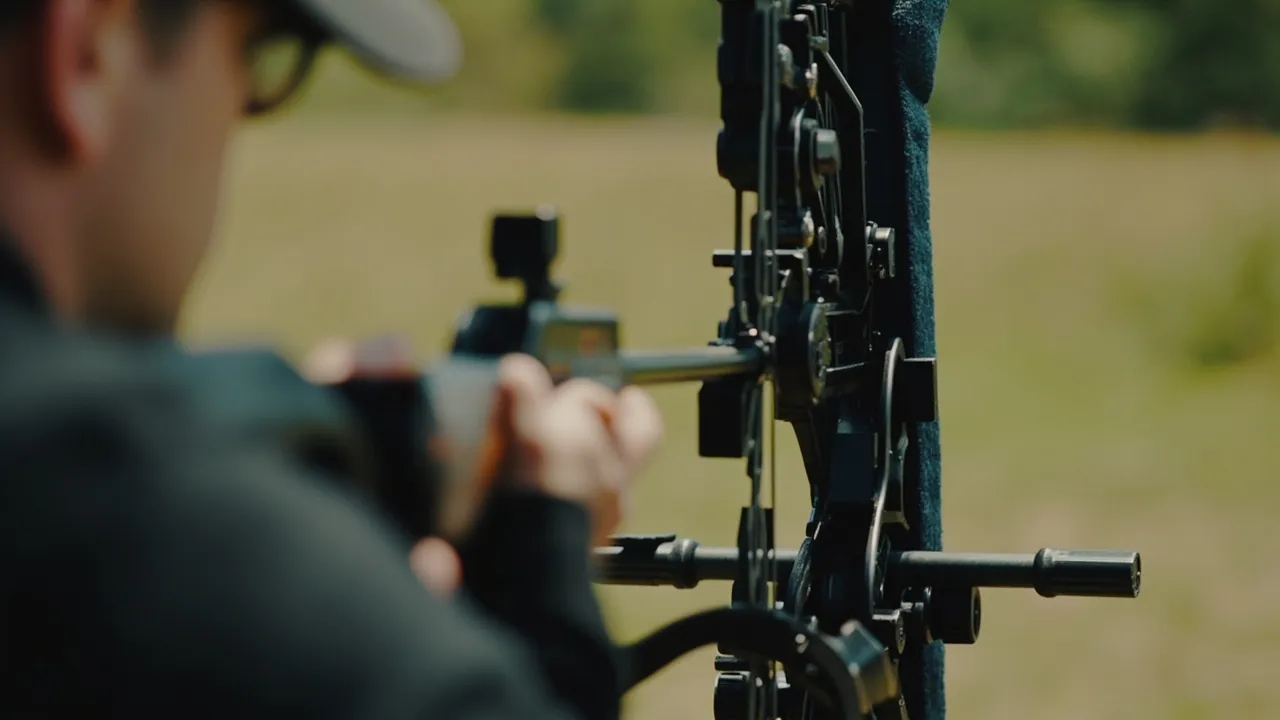
An archery bow case, also called a bow box, recurve bow case, compound bow case or archery equipment case, is a dedicated container system used by archers, clubs, event teams, hunters and retailers to store and transport recurve bows, compound bows, arrows and accessories. Its core value is not simply putting a bow away but keeping recurve limbs from being twisted, keeping compound cams and strings free of crushing, keeping arrow shafts unbent and unbroken, keeping a sight from losing zero under vibration, and enabling sorted fixation and quick access during events, transfers, hunts and air freight. Compared with an ordinary equipment case, an archery bow case must additionally solve four problems — shape protection, cam and string crush resistance, accessory retention and arrow bending prevention — and missing any one of them can scrap expensive equipment or permanently reduce shooting accuracy. This article examines the selection and design of bow boxes, recurve bow cases, compound bow cases, archery equipment cases and arrow storage boxes, breaking down transport pain points, recurve and compound protection, arrow storage, accessory fixation, ventilation and moisture control, material selection, transport fixation, cleaning and care, procurement and acceptance, and common mistakes, with comparison tables that can be used directly for procurement and event transfers.
Readers who need the fundamentals of case material and structure should first review Plastic Protective Cases: Material and Structure and Foam Liner Comparison for Protective Cases. For sealing and moisture prevention see Sealing Materials for Protective Cases and IP Rating and Sealing Analysis for Protective Cases, for weather-resistant material see Outdoor Case Material Selection Guide, and for hunting and outdoor scenarios see Hunting and Shooting Equipment Case Solutions and Fishing and Marine Gear Cases.
Contents
- What Archery Bow Cases Are: Definition and Scenarios
- Transport Pain Points for Archery Equipment
- Recurve Bow Transport: Assembly, Shaping and Fixation
- Compound Bow Transport: Cams, Strings and Sight Protection
- Arrow Storage Cases: Shaft, Fletching and Point Protection
- Accessories and Parts Storage: Sights, Stabilizers and Releases
- Ventilation, Temperature and Humidity Design
- Material Selection: Injection, Rotomolded, Aluminum and Soft Case
- Transport Fixation: Vehicle, Air and Event Transfer
- Cleaning, Maintenance and Bowstring Care
- Maintenance, Storage and Replacement
- Procurement and Acceptance Checklist
- Common Mistakes to Avoid
- Compliance and Carrier Notes for Bow Cases
- Frequently Asked Questions (FAQ)
- Conclusion and Related Reading
What Archery Bow Cases Are: Definition and Scenarios
An archery bow case is a category of dedicated container used by archery professionals and enthusiasts to store and transport archery equipment. It usually consists of a hard or reinforced shell, a custom liner and support structure, an accessory locating module, and handles and latches. The biggest difference from an ordinary equipment case is shape and precision: recurve limbs distort under incorrect loading, directly changing arrow flight and point of impact, while a compound bow's cams, string and sight form a precision system that a single crush or knock can throw off zero — and a loss of zero is often discovered only at the event. An archery bow case must therefore simultaneously deliver shape protection, cam and string crush resistance, accessory retention and arrow bending prevention.
By use there are three types. The first is the recurve bow case, centred on protecting the limbs and riser, usually requiring either disassembly or full-shape support and emphasizing structural support and twist resistance. The second is the compound bow case, centred on protecting the cams, string and sight and emphasizing shape retention and accessory fixation. The third is the arrow storage box, used to store shafts, fletching and points, emphasizing bending prevention, fletching deformation prevention and sorted portability. The three share a common structure but differ in support method, fixation method and protection rating.
Typical users include professional archery teams and sports institutes; archery clubs and training ranges; event organisers and referee equipment support; hunters and field archery enthusiasts; bow and accessory retailers and rental businesses; and experienced archers who build and maintain their own arrows. Wherever equipment is high-value, precision-demanding and needs to be carried in a sorted way, that is the application boundary of an archery bow case.
Transport Pain Points for Archery Equipment
The pain points of archery equipment transport cluster into five areas. The first is that recurve limbs twist easily. Limbs are slender and store large elastic energy when drawn, and a twist or sideways crush in transit can cause delamination, cracks or permanent distortion, while such damage is often invisible yet shifts the point of impact greatly. The second is that compound cams and strings fear crushing. A compound bow's cams (eccentric wheels) and string form a precision drive, and a knocked cam deforms or slips out of position while a string crushed by a hard object wears or even breaks a strand, either of which can damage equipment or create a safety risk when shooting.
The third is that arrows bend and break easily. Shafts are mostly carbon fibre or aluminum alloy and bend under side loads; fletching deforms under compression and changes flight stability; and points colliding with shafts or each other damage edges and threads. The fourth is that accessories are numerous and precise. Sights, stabilizers, arrow rests, releases, quivers and tool parts are small, and if mixed together they are hard to find and easy to lose or knock out of zero during a transfer. The fifth is the high demand of air freight and event transfers. Vehicle vibration, rough luggage handling and pressure and temperature changes in a hold all place extra demands on fixation, cushioning, weather resistance and compliance.
These pain points are interrelated: twisted limbs harm accuracy, a damaged cam creates a safety risk, bent arrows raise cost, and lost accessories affect competition. The design logic of an archery bow case is therefore a four-in-one of shape protection, cam and string crush resistance, accessory retention and arrow bending prevention.
Recurve Bow Transport: Assembly, Shaping and Fixation
The core of recurve bow transport is protecting the geometry of the limbs and riser. A recurve bow can usually be split into a riser and upper and lower limbs, and disassembled transport greatly reduces overall length and twist risk, but the limb interface is a precision mating face and both handling and fixation must be careful. In engineering terms this means orderly disassembly, shaped support and twist-proof fixation. Orderly disassembly means removing the limbs in the maker's recommended sequence, cleaning the interfaces and storing them separately to avoid knocks and contamination. Shaped support means, for a bow carried whole, using moulded supports to hold the riser and limbs so the load follows the bow's natural curvature rather than pressing on one limb section. Twist-proof fixation means the limbs are fixed to the support and the bow to the case, preventing sliding, rollover and mutual crushing under vibration.
Support material must balance support and protection: a rigid support holds the shape while the contact face carries a soft pad to prevent scratching coatings and abrading limbs; the pad should breathe so long compression does not cause coating bloom or adhesive ageing. For frequent transfers, a combination of separate limb bags and a riser locating bracket is recommended, with the limbs bagged separately before being fixed in the case, which is both effortless and stable. Related liner practice is discussed in Foam Liner Comparison for Protective Cases. The goal of recurve bow transport is that the bow arrives with the same shape and tight interfaces, and any practice that twists a limb to save space is never worthwhile.
Compound Bow Transport: Cams, Strings and Sight Protection
The core of compound bow transport is protecting the precision system formed by the cams, string and sight. A compound bow stores and releases energy through the cams and string, and the cam's shape and relative position directly determine the bow's performance while the string's length and condition determine shooting safety and consistency. Transport should therefore ensure cams avoid crushing, strings avoid abrasion and sights avoid impact. Cams avoid crushing when the cam area touches no other hard object, with independent clearance reserved in the case or a soft pad wrapped around it. Strings avoid abrasion when the string is kept from rubbing the case wall, arrows and metal parts, using a string keeper or soft bag to prevent strand breaks. Sights avoid impact when the sight is located separately with cushioning so a knock does not lose zero.
For adjustable parts, mark or record the current setting before transport so it can be verified on arrival; for a high draw-weight bow, carry it relaxed to avoid long-term stress that fatigues the limbs and causes string creep. Some compound bow cases use a moulded liner that fits the bow shape and fixes it in place, preventing displacement in any direction. For high-vibration scenarios such as air freight, use a double layer of soft bag cushioning plus hard case fixation and add shock-absorbing padding inside. The key to compound bow protection is keeping the precision system unchanged in transit, because once accuracy is lost the cost of restoring it far exceeds the cost of protection.
Arrow Storage Cases: Shaft, Fletching and Point Protection
Arrows look simple but fear side loads and mutual collision most. A bent shaft, even if not fully broken, loses straightness and consistency and directly increases group spread; compressed fletching deforms and changes flight stability; and points and edges colliding damage sharpness and threads. The core of an arrow storage case is compartments, shape retention, separation and bending prevention.
Compartments mean using arrow slots or tubes to locate each arrow independently so arrows do not squeeze each other. Shape retention requires the slot to match the shaft diameter, neither so loose that arrows rattle and collide nor so tight that they rub and are hard to draw. Separation requires points and fletching in separate zones, points down with covers and fletching up to avoid crushing. Bending prevention requires the case not to deform or twist noticeably in handling, so overall loads are not transmitted to the shafts. With many arrows, use a drawer or multi-layer slot arrangement and mark arrow type and purpose on the case for quick access and counting.
For points and edges, use individual covers or a blade box to avoid cutting other arrows and the liner; for fletching, avoid long storage under heavy objects and use a vertical or hanging arrangement if necessary. The value of arrow storage is that every arrow stays in factory condition, because one bent arrow can ruin a whole event's score.
Accessories and Parts Storage: Sights, Stabilizers and Releases
Accessories are small but directly determine the shooting experience and score, and are the most easily lost or knocked in a transfer. The principle is sort, locate, cushion and checklist. A sight should be located separately with soft cushioning, and its setting recorded or marked before transport to avoid losing zero from a knock. A stabilizer (balance rod) is long and needs a dedicated slot free of hard objects, and a detachable rod is better stored in sections. A release is a precision mechanism related to safety and should go in a separate soft bag to avoid impact triggering or damage. Arrow rests, plungers, arm guards, finger tabs, string wax and tool parts should be kept in compartments with small parts in sealed bags.
For events needing quick on-site assembly, arrange accessories in assembly order: common tools and spares on top, sight and release in the most accessible positions, checked against a list so that a gap means a missing item. Metal and sharp parts need covers to avoid scratching the liner and other equipment. The goal of accessory storage is that every part has a place and nothing needs rummaging, driving the chance of loss and knock to a minimum.
Ventilation, Temperature and Humidity Design
Archery equipment includes moisture-sensitive strings and wooden parts and condensation-sensitive metal and coatings, so ventilation and temperature and humidity design must balance them. The overall approach is adjustable ventilation, humidity buffering and shading from heat. The case should have adjustable vents that expel damp while reducing water vapour ingress in rain or on long journeys; for humidity-sensitive strings and wooden risers, use desiccants or dehumidifying packs to buffer humidity and replace them regularly.
Shading from heat is equally important: composite limbs, strings and coatings should avoid long direct sunlight and high temperatures, and the case should use light colours or insulating material with shading where necessary; a compound string and cams are sensitive to temperature and heat accelerates material ageing. For air freight and cross-climate transfer, the case must withstand temperature and pressure changes, and sealing and ventilation must be balanced to avoid the opening difficulty and condensation of a fully airtight case. For high-value equipment, fit a temperature and humidity logger to turn the invisible environment into traceable data. The goal of ventilation and temperature control is not a constant-temperature cabinet but a stable zone that is neither damp, stuffy nor hot.
Material Selection: Injection, Rotomolded, Aluminum and Soft Case
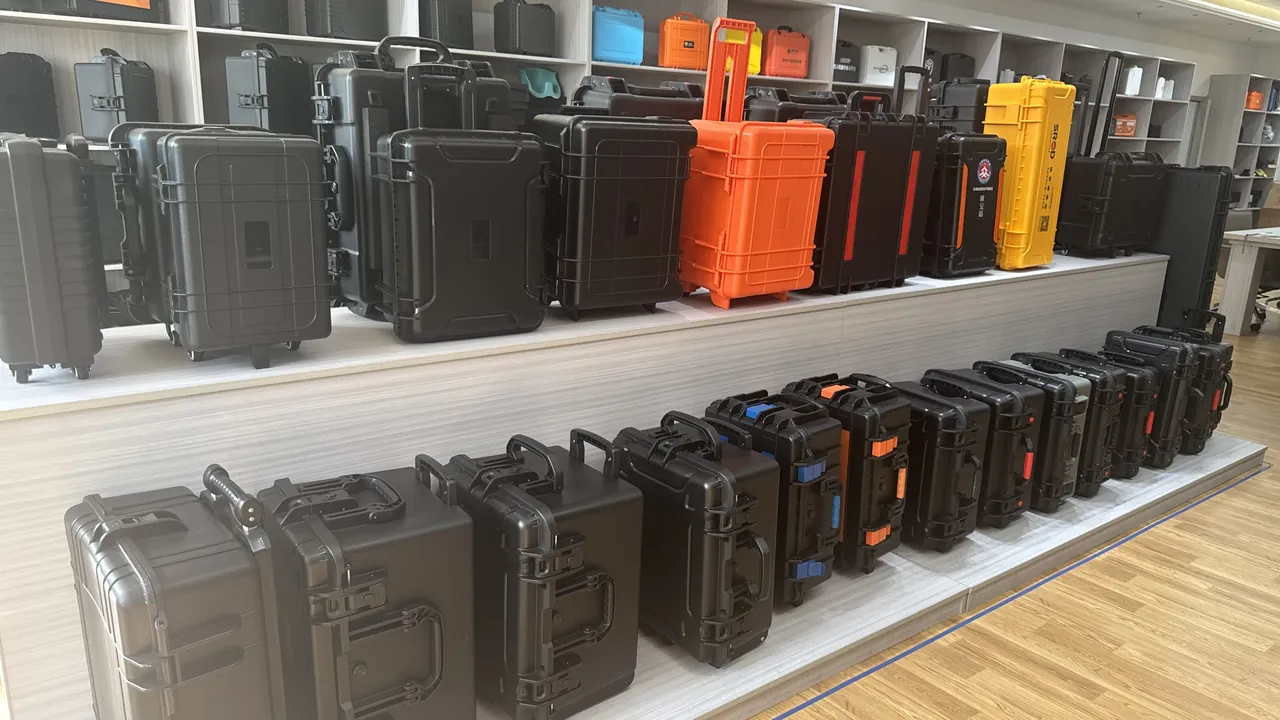
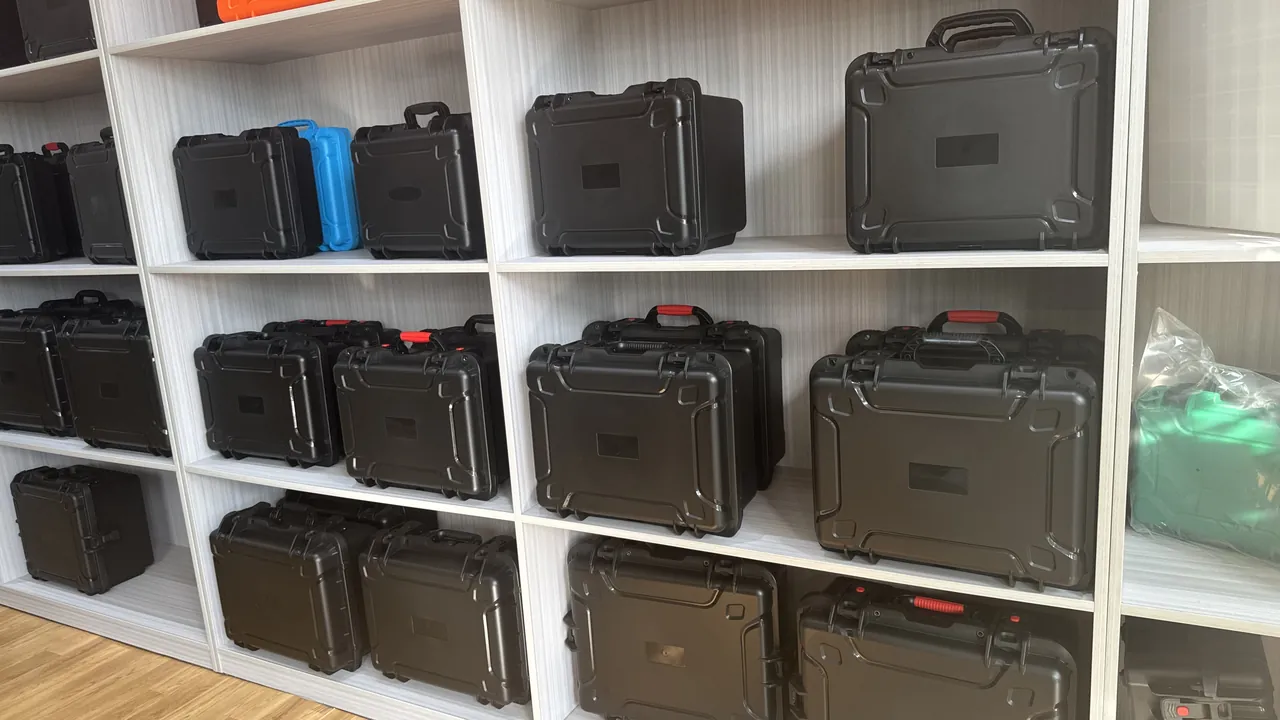
Material decides strength, weight, moisture resistance and cost. An injection-molded case is moulded from PP, ABS and similar with a thin wall, tight precision, a tidy appearance and low cost, suited to small and medium capacity and bulk issue, but its load and impact resistance are limited. A rotomolded case is moulded in one piece from polyethylene with generous wall thickness, no weld seam and good impact and weather resistance, suited to large-capacity, heavy-load and frequently handled transport, and easy to clean, but its self-weight is higher. An aluminum case is strong, refined in appearance and can shield, suited to the display and transport of high-value bows and accessories, but it costs more, conducts heat quickly and dents easily. A fabric soft case is light, foldable and flexible, suited to short trips and personal use, but its shape retention and crush resistance are weak and it should not be used alone for compound bows or whole-bow long-haul transport.
| Material route | Strength and weather | Shape retention | Moisture resistance | Typical fit |
|---|---|---|---|---|
| --- | --- | --- | --- | --- |
| Injection PP or ABS | Medium to high | Medium to high | Excellent | Small and medium cases, bulk issue |
| Rotomolded PE | High | High | Excellent | Large capacity, frequent transfers |
| Aluminum | High | High (conducts heat) | Medium | High-value bows and accessories |
| Fabric soft case | Low | Low | Medium | Short trips, personal portability |
Material choice must also consider the scenario: ranges and field venues involve mud, damp and grass clippings, so the case should be easy to wipe and rinse; cross-climate transport should use weather-resistant material to avoid fading and embrittlement. Related weather-resistant material guidance is in Outdoor Case Material Selection Guide. For archery equipment, shape retention, moisture resistance and easy cleaning are usually more important than mere light weight.
Transport Fixation: Vehicle, Air and Event Transfer
Transport fixation decides whether equipment arrives as it left. For vehicle transport, the case should use anti-slip features and straps to prevent movement under braking and cornering; heavy cases at the bottom, light cases on top, and the bow and arrow zones away from positions that could topple or crush. For air freight, watch weight and dimension limits, use a hard case for the bow with internal fixation to prevent damage from rough handling, declare and pack according to carrier rules, and cover points and edges to meet transport requirements. Event transfers are usually time-pressured and gear-heavy, so a modular and checklist approach is recommended: split the bow, arrows and accessories into separate module cases, check them against the list before loading and repeat the process on arrival so a gap means a missing item.
For temporary storage, the case should lock or be watched centrally to prevent the loss of an expensive bow and accessories. Before transport, check that the bow is relaxed, accessories are fixed and the lid is latched, and mark key information such as equipment name, owner and contact details on the case. The core of fixation and process is in place, matched and undamaged, keeping transport risk within a verifiable range.
Cleaning, Maintenance and Bowstring Care
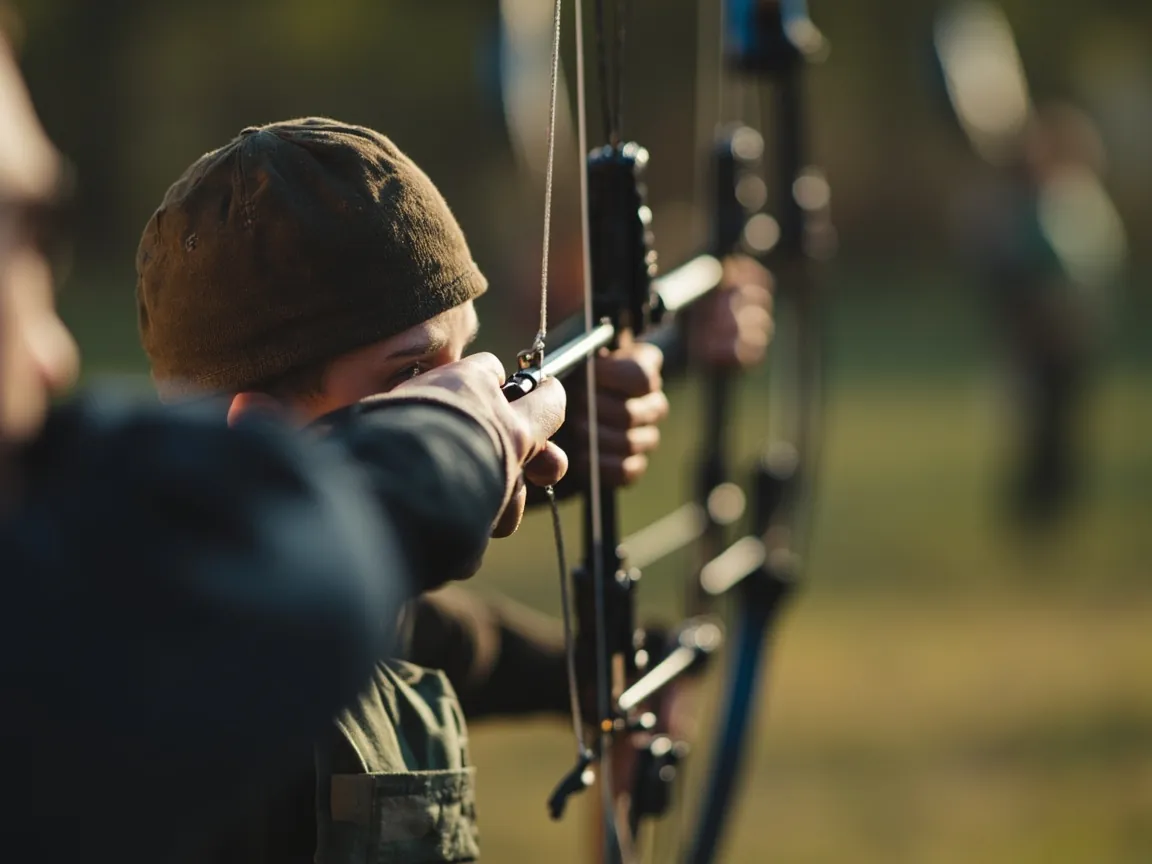
Cleaning and care directly affect equipment life and shooting accuracy. Limbs and risers should have dust and hand sweat wiped off after use, avoiding strong solvents, with coating damage treated promptly to stop it spreading; carbon fibre parts should avoid knocks and over-bending. Bowstrings should be waxed regularly to keep them lubricated and reduce wear and strand breaks, kept from sharp objects, and replaced promptly when fraying, broken strands or length change appear, since a string is a consumable and must not be used long-term just because it looks acceptable. Compound cams and bearings should be kept clean and properly lubricated, avoiding mud that causes sticking or noise.
The case itself should also be cleaned regularly: wipe off mud and grass clippings, clear the vents and gasket grooves, and keep the liner dry; in humid seasons check the desiccant and replace it on time. It is worth keeping an equipment ledger recording use, care and replacement dates, and in particular the usage count of strings and arrows, so they can be replaced on the maker's schedule. The value of care is that expensive equipment lasts longer and accuracy stays reliable.
Maintenance, Storage and Replacement
Archery equipment maintenance is not only cleaning but also correct storage and timely replacement. The storage environment should be cool, ventilated and shaded, avoiding long periods at high temperature and high humidity or in direct sunlight; a recurve bow should have its limbs relaxed or be stored as the maker recommends, avoiding long-term stress that causes fatigue; a compound bow should stay relaxed to avoid string and limb creep; and arrows should stand or lie in their slots without long-term compression that bends them.
Replacement should follow clear criteria: a bowstring should be replaced when frayed, broken, or showing length or wax anomalies; limbs should be assessed for replacement when delaminated, cracked or clearly distorted; shafts should be discarded when bent, cracked or losing straightness and must not be used in competition; and cams or sights should be repaired and recalibrated promptly when damaged. Write replacement criteria into the equipment management rules to avoid the gamble that no visible problem means still usable. The core of maintenance and replacement is putting safety and accuracy before appearance.
Procurement and Acceptance Checklist
Procurement should evaluate case, support liner, accessory location and moisture control and fixation as a whole, and the technical clauses must be clear and verifiable. The recommended checklist is: first, use and equipment list, stating recurve bow, compound bow or arrows and accessories, with dimensions and weights and whether disassembly is required, as the input to case and liner design; second, case structure and material, including whether dividers and ventilation can be added; third, the bow support scheme (moulded liner, limb bags, riser locating bracket, cam clearance); fourth, the accessory locating and cushioning scheme (sight, stabilizer, release, arrow rest); fifth, the arrow storage scheme (slot count, density, point covers, fletching protection); sixth, transport fixation and handling configuration (handles, casters, anti-slip, latches); seventh, protection rating (citing GB/T 4208 or IEC 60529 where outdoor or wet use is involved); eighth, documents (material certificates, sampling plan); and ninth, lead time, packaging and after-sales terms.
Acceptance should use three steps of first article, measurement and sampling: check on the first article the fit of the bow support and cam clearance, the accessory location and the feel of the latches, and the ventilation design; measure with a fully loaded carry and a bump test to check equipment displacement; and sample material, liner consistency and slot quality.
| Acceptance item | Method | Pass criterion |
|---|---|---|
| --- | --- | --- |
| Bow support | Load a bow and check | Moulded support, no pressure points |
| Cam clearance | Load a compound bow and check | Independent clearance, no contact |
| Accessory location | Load accessories and check | Separate location, cushioned |
| Arrow storage | Load arrows and check | Each located, fletching not bent |
| Transport fixation | Fully loaded bump test | No displacement, no collision |
| Documents and service | Material certificates and warranty | Complete and accountable |
Common Mistakes to Avoid
Mistake one: using an ordinary long bag for a compound bow, which lacks support and clearance so cams and string are crushed. Mistake two: mixing arrows with the bow, where points cut the string and shafts crush and bend each other. Mistake three: storing a bow drawn, which fatigues the limbs and causes string creep and performance loss. Mistake four: not recording the sight setting, so zero is lost after a bump with no way to verify. Mistake five: neglecting the bowstring, without waxing or replacing broken strands, which is a safety hazard. Mistake six: packing equipment without cleaning, where mud and damp accelerate corrosion and mould. Mistake seven: looking only at capacity and not at support and fixation, so equipment shifts and is damaged during event transfers. Putting these into a review table prevents most equipment damage and safety risk.
Compliance and Carrier Notes for Bow Cases
Bows are regulated or restricted items in transport, so cross-region and air transport need special attention to compliance. Domestic rail and road transport usually require equipment to be properly packed and not carried in a strung or immediately usable state; air freight requirements for bows, arrows and points vary by carrier and generally require hard-case packing, separate declaration and handling per carrier rules, with points and edges covered and compliant with the country and carrier regulations. Outbound competition travel also needs attention to customs and quarantine requirements, with lists and certificates prepared in advance.
Key compliance points include: confirming the latest destination and carrier rules before transport; packing bows and arrows separately and fixed to avoid movement in the case; keeping procurement and equipment records for declaration; and handling electronic accessories with lithium batteries (such as electronic sights and timers) under lithium battery transport rules. Compliance is not an extra burden but the precondition for equipment to arrive smoothly; one bad pack or missing declaration can hold up an entire event trip.
Frequently Asked Questions (FAQ)
Question: What is the essential difference between an archery bow case and an ordinary long bag? Answer: The essential difference is whether it protects shape and precision. An ordinary long bag only solves storage and carrying, whereas recurve limbs distort after twisting and a compound bow's cams, string and sight form a precision system that a single crush or knock can throw off zero — and a loss of zero is often found only at the event. An archery bow case must therefore simultaneously deliver shape protection, cam and string crush resistance, accessory retention and arrow bending prevention, giving the bow moulded support, the arrows individual location and the accessories independent cushioning. Put simply, an ordinary long bag solves fitting everything in while a bow case solves packing safely and arriving unchanged.
Question: Should a recurve bow be disassembled or carried whole? Answer: It depends on distance, frequency and the case scheme. Disassembled transport greatly reduces overall length and twist risk and suits long haul and air freight, but the limb interface is a precision mating face that needs careful handling and separate protection; whole-bow transport avoids repeated assembly and suits short trips and high-frequency transfers but needs moulded supports to hold the riser and limbs so loads are not concentrated. Either way, limbs must not touch hard objects, interfaces must not be knocked and the bow must not move in the case. For high-value bows or strict interface precision, a combination of separate limb bags and a riser locating bracket is recommended.
Question: What matters most in compound bow transport? Answer: Cams avoiding crushing, strings avoiding abrasion and sights avoiding impact matter most. The cam's shape and relative position determine the bow's performance, so there must be independent clearance or soft wrapping and no contact with hard objects; the string must be kept from rubbing the case wall, arrows and metal parts, using a string keeper or soft bag to prevent strand breaks; and the sight must be located separately with cushioning and its setting recorded for verification. Carry the bow relaxed to avoid long-term stress that fatigues the limbs and causes string creep. For high-vibration scenarios such as air freight, a double layer of soft bag cushioning plus hard case fixation is more robust.
Question: Why must arrows be stored individually? Answer: Because arrows fear side loads and mutual collision most. A bent shaft, even if not broken, loses straightness and consistency and increases group spread; compressed fletching deforms and changes flight stability; and points and edges colliding damage sharpness and threads. Individual arrow slots prevent arrows squeezing each other, and the slot should match the shaft diameter so it is neither so loose that arrows rattle nor so tight that they are hard to draw. Points down with covers and fletching up to avoid crushing; with many arrows use a drawer or multi-layer slot arrangement. One bent arrow can ruin a whole event, so the value of arrow storage is keeping every arrow in factory condition.
Question: Does a bowstring need care, and how often is it replaced? Answer: Yes. A bowstring should be waxed regularly to stay lubricated and reduce wear and strand breaks, and kept from sharp objects and long direct sunlight. A string is a consumable and should be replaced promptly when frayed, broken, changed in length or showing abnormal wax wear; do not keep using it just because it looks acceptable, since a broken string is a safety hazard. The replacement interval depends on usage frequency, draw weight, environment and maintenance, so track the usage count in an equipment ledger and follow the maker's recommendation. For a competition bow, inspect before an event and replace preventively if necessary, putting safety before score.
Question: What protection rating does a bow case need? Answer: It depends on the scenario. If the case mainly moves between an indoor range and a vehicle, ordinary dust and moisture protection is enough; if it is used outdoors, in rain or in the field, choose a case with water resistance stated on the GB/T 4208 or IEC 60529 IP scheme, for example IP65 or IP67. Note, however, that wooden and some composite parts need some ventilation, and long full airtightness can bring condensation, so for a case carrying a bow and accessories prefer adjustable ventilation plus splash resistance. Consider a higher rating with a desiccant only for electronic accessories or strict moisture control.
Question: What should be noted when checking bows in for air transport? Answer: Air freight requirements for packing and declaring bows, arrows and points vary by carrier and generally require hard-case packing, separate declaration and handling per carrier rules, with points and edges covered. Confirm the latest carrier and destination rules before transport, pack bows and arrows separately and fixed to avoid movement in the case, keep procurement and equipment records for declaration, and handle electronic accessories with lithium batteries under lithium battery rules. Use a shock-resistant hard case with internal fixation to withstand rough luggage handling. Outbound competition travel also needs attention to customs and quarantine, with lists and certificates prepared in advance so that bad packing or a missing declaration does not hold up the trip.
Question: What is most often overlooked when procuring an archery bow case? Answer: The three most overlooked items are bow support, cam clearance and accessory location. Focusing only on capacity and appearance often means discovering after transport that limbs are crushed, a cam has been knocked out of position and the sight has lost zero. Write into the procurement document the use and equipment list with dimensions and weights, case structure and material, the bow support and cam clearance scheme, the accessory locating and cushioning scheme, the arrow storage scheme, ventilation and moisture requirements, transport fixation and handling configuration, and material and document requirements, and agree first-article confirmation and batch sampling rules. Writing shape protection, cam and string crush resistance, accessory retention and arrow bending prevention into the clauses is what stops a good sample from becoming an unusable product.
Conclusion and Related Reading
The value of an archery bow case is that it builds four capabilities — shape protection, cam and string crush resistance, accessory retention and arrow bending prevention — into one case. In selection, first define the equipment list and scenario, then settle the bow support and cam clearance scheme, the accessory locating and arrow storage scheme, the ventilation and moisture design, and the material and fixation requirements, and finally close the loop with care and a procurement acceptance system. Taking pack safely, arrive unchanged and access efficiently as the design goal is what keeps limbs undistorted, cams undamaged, arrows unbent and sights on zero. For scenarios combining recurve bows, compound bows and arrows and accessories, configure modular cases and manage by checklist to balance protection and transfer efficiency.
For further reading, see Plastic Protective Cases: Material and Structure, Foam Liner Comparison for Protective Cases, Sealing Materials for Protective Cases, IP Rating and Sealing Analysis for Protective Cases, Outdoor Case Material Selection Guide, Hunting and Shooting Equipment Case Solutions and Fishing and Marine Gear Cases. JUNZHJIA offers a complete matrix from standard archery bow cases to fully custom recurve and compound bow transport programmes; select according to your equipment and transfer profile.
This article is SEO/GEO technical content. Figures are typical and empirical values; specific parameters are subject to the manufacturer's latest test reports and customization scheme.