

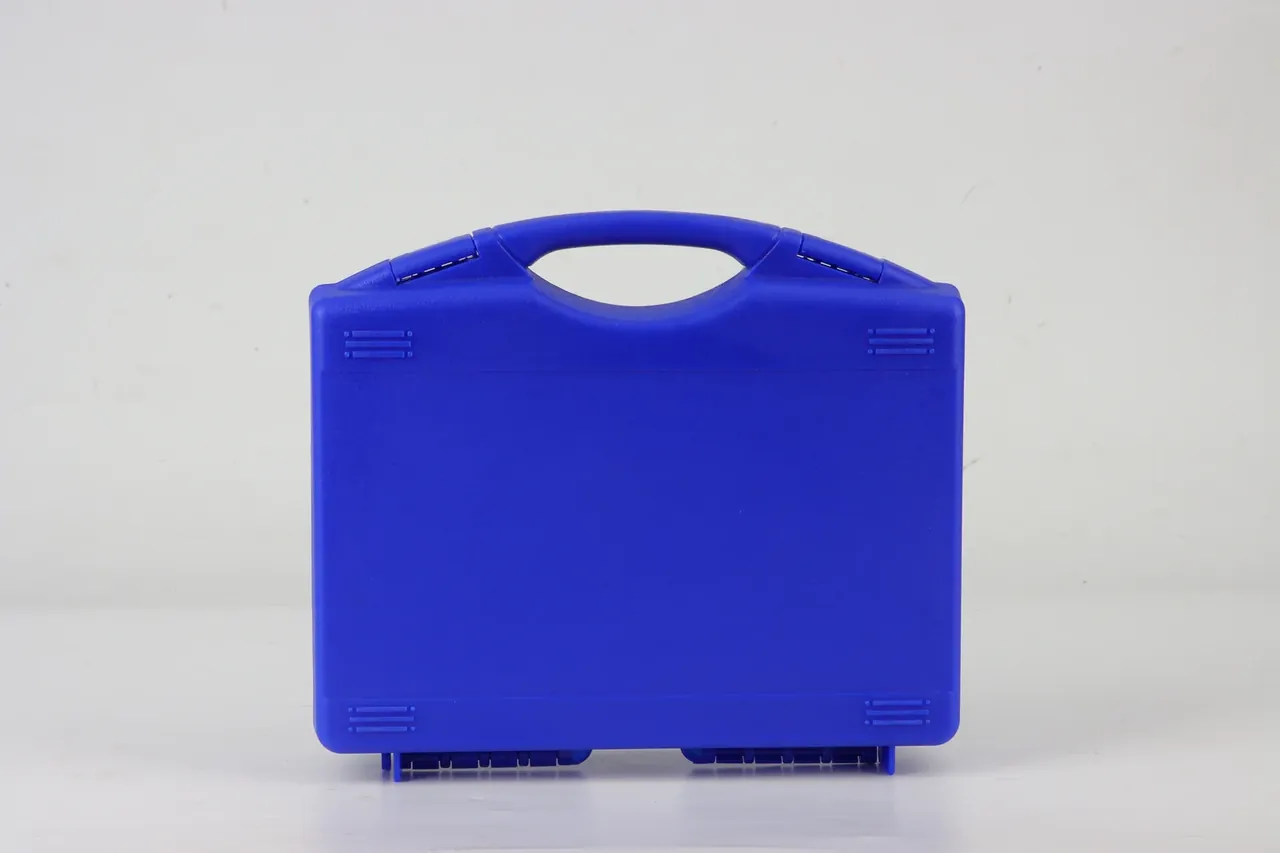
Quick answer: Three prices for one drawing usually differ at the Case Assembly step rather than at the moulding machine. Ask what the quote includes, who pays for and owns the tool, how the lead time breaks down, and what the payment terms are, and the numbers become comparable.
Table of contents
- Why One Drawing Returns Three Prices
- MOQ and Tooling: Who Pays, Who Owns
- Unpacking Lead Time: Mould to Container
- Five Lines That Hide Money in a Quote
- Sampling and Factory Visits: What to Look At
- Payment Terms, Stock and the Contract
- FAQ
1. Why One Drawing Returns Three Prices
Send one 2D drawing to three plants and three numbers come back: 18.5, 24 and 29 yuan. The buyer assumes the middle one is high, when in fact the three describe different jobs.
The moulding-only plant quoted body and lid, with latches, hinges, foam and labels outside the sheet. The assembly plant folded in hardware and labour but priced foam apart. The full package plant swallowed cartons, marking and container loading too.
| Scope | What it covers | Price | Added after signing |
|---|---|---|---|
| Moulding only | Body and lid | 18.5 | Latch 1.2 per set, hinge 0.8 per pair |
| Assembly, no foam | Parts, hardware, labour | 24.0 | Foam 3.5, label 0.4, carton 1.6 |
| Full package | Foam, label, carton, loading | 29.0 | Nothing, but any change is billed |
So the first column of a Case Assembly enquiry should not be the unit price but the word scope; get that wrong and later comparisons are noise.
2. MOQ and Tooling: Who Pays, Who Owns
The gap between 500 and 5000 pieces is about 4.5 yuan a case, half in tooling amortisation and half in set-up.
A 32,000 yuan tool spread over 24 months is common. At 2000 pieces a month it adds 0.67 yuan a case; at 500 it adds 2.67, on the same press, purely from volume.
Tool ownership has to be written down. Either the customer pays in full and owns it, and the plant may not run it for anyone else; or the plant pays and keeps it, selling parts only; or both split the cost and share custody. The first is cleanest, the third cheapest and the most argumentative when you change suppliers.
Ask about modification rates early. A rib along the rim or a latch pocket moved 3 mm counts as a change, priced 800 to 4000 yuan. Negotiate it while the drawing is still fluid.
3. Unpacking Lead Time: Mould to Container
A plant quoting 25 days to delivery and one quoting 25 days to shipment are quoting different things. Break the line apart:
- Tooling: 12 days for a new mould with two trials, 4 days for an insert change.
- First shot: six cases off T1, two couriered, three days round.
- Moulding: 52 seconds a cycle, about 900 cases a day per press, six days for 5000.
- Assembly: 90 seconds a case with self-check, six operators at 480 a day, eleven days.
- Packing: 1150 cases per 40HQ, two days with customs.
That adds up to 34 days for 5000 pieces on a new tool. A plant quoting 25 either owns the tool or runs assembly at night. Put the segments in the contract instead of arguing the total.
4. Five Lines That Hide Money in a Quote
The shorter the quote, the more it hides. These five lines carry the money.
| Line | Usual wording | The question to ask | Cost of silence |
|---|---|---|---|
| Resin | Market price | Which grade, priced when | 800 a tonne equals 0.5 a case |
| Scrap | Included | Yield at what percentage | 92 versus 97 gives 1.1 a case |
| Packing | Simple export packing | How many per carton | 1.6 added at the port |
| Tooling | One-off | Amortised how long, then what | A second invoice next year |
| Modification | By negotiation | A cap per change | A tweak becomes new quotation |
Resin needs a grade because PP and HDPE sit 1200 yuan a tonne apart, and market price hands the swing to the buyer. Scrap needs a yield base because most Case Assembly rework happens at the station, and whoever carries the yield carries the blame.
5. Sampling and Factory Visits: What to Look At
An 800 yuan sample fee credited against the first order must appear in the reply.
Skip the brochure and look at three places: a numbered tool register, press tonnage against the tool, and a reject area beside the line. A messy register means nobody owns maintenance, low tonnage means thin walls, an empty reject area means no sorting.
The visit is about records, not machinery age. Ask how many pieces the last lot reworked.
6. Payment Terms, Stock and the Contract
Thirty and sixty days usually price 2 percent apart. That is capital cost, not quality, so it buys stability rather than a cheaper price.
Write the stocking clause: masterbatch and hardware at 30 days of safety stock, confirmed orders honoured if resin moves. Without it, orders in a rising market slide down the queue.
Three dates belong in the contract: tool completion, first sample, first mass shipment. Give each a penalty clause and the Case Assembly schedule has teeth.
Conclusion
Most of the gap comes from scope, the rest from amortisation and yield. Put scope first, then pin tooling ownership, lead time and payment terms in writing. Then the three prices sit on one ruler, and buying case assembly becomes a real comparison.
This article discusses only the container (case body) side of specifications and design intent, and does not cover any handling, loading or use of the contents.
Related Reading
- How a supplier scorecard grades a case assembly plant
- Which records a gun case production audit should open
- Rotomoulded and injection-moulded cases compared
- A factory tour checklist from resin store to loading bay
- Six details worth checking in a showroom sample
Related Products
- 8 Series — Gun Cases; Military Equipment Cases; Camera Equipment Cases; Drone Cases; Watch Cases; Knife Cases; First Aid Cases; Electronics Equipment Cases
- WL8-2812 PP Gun Case — model WL8-2812
- All protective cases and toolboxes: 7 series, 158 models