

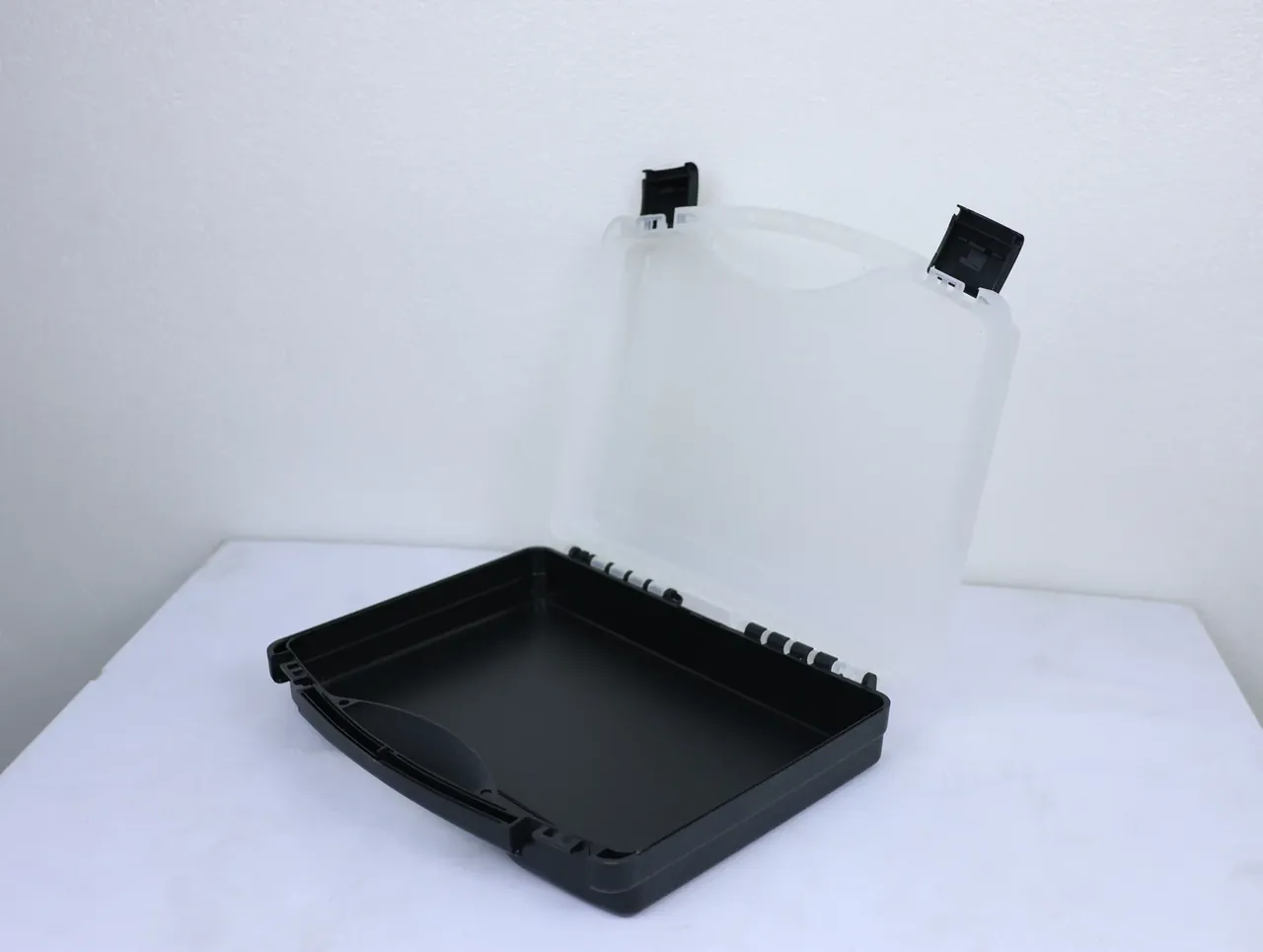
Quick answer: A Case Assembly Workstation is sized by three inputs — loaded mass, envelope and takt — and the rest is arithmetic: a 46 kg case on an 82 second takt gives a 900 × 700 mm bench, a 300 kg frame and 500 lx at the face.
Table of contents
- Three Numbers Set the Case Assembly Workstation
- Bench Size From the Envelope
- Height and Legroom From Elbow Height
- Rack Pitch From Consumption
- Air and Power: Pressure, Flow, Ports
- Light at the Assembly Face
- FAQ
1. Three Numbers Set the Case Assembly Workstation
Three values fix a Case Assembly Workstation before a line is drawn: loaded mass, outer envelope, takt. Take a moulded case of 620 × 460 × 230 mm, 46 kg when full, 320 units a shift, 82 seconds per unit. Those three produce a dozen derived values.
Mass sets structure. Spread 46 kg over a 900 mm span, but an operator leans on the case while a latch clicks; at 1.5 times the load is 69 kg, so the frame is rated 300 kg static and 120 kg dynamic.
Envelope sets the bench and takt sets the rack: 620 × 460 mm forces 900 × 700 mm of surface, and 82 seconds fixes a refill every 15 minutes.
| Input | Value | Derived parameter | Window |
|---|---|---|---|
| Loaded mass | 46 kg | Frame rating, top thickness | 300 kg static or more |
| Envelope | 620 × 460 × 230 mm | Bench width and depth | Not under 900 × 700 mm |
| Output | 320 units a shift | Takt, bin size, refills | 60 to 120 seconds |
2. Bench Size From the Envelope
Extra area does not improve a Case Assembly Workstation bench. The case is 620 mm long, so 140 mm a side makes the bench 900 mm wide; it is 460 mm deep, so 120 mm front and back makes 700 mm. The margin is working room: fingers need 25 mm under the bottom edge, corners swing a 60 mm arc when the case turns.
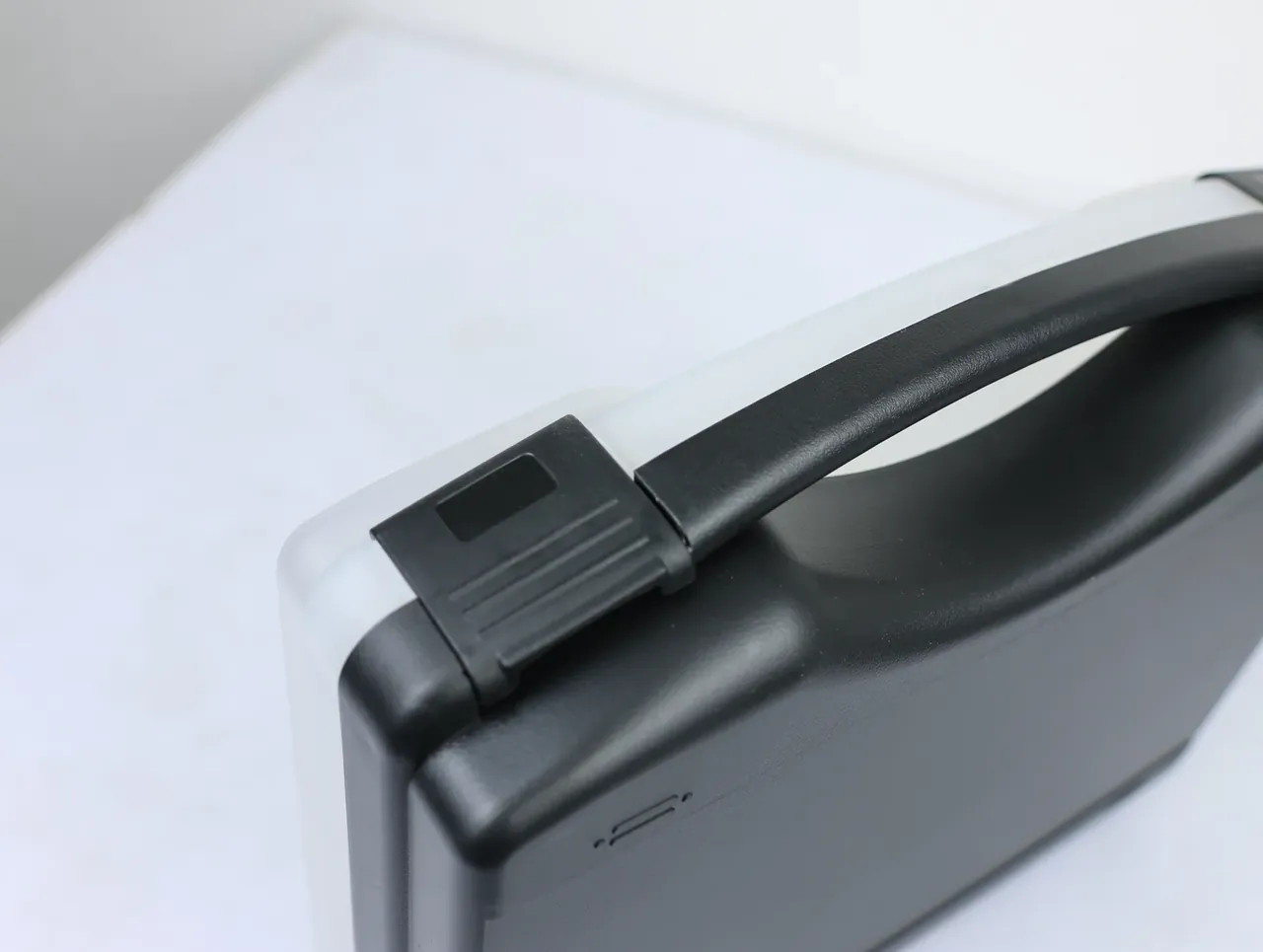
The top is 25 mm plywood with a 2 mm anti-static skin. Across 900 mm the centre must not deflect past 1.5 mm; beyond that the case levels itself and one hand steadies it, costing 7 seconds a unit. The Case Assembly Workstation frame is 40 × 40 × 2 mm profile on 4 posts, loaded at 71 kg against a 300 kg rating.
| Member | Section | Capacity | Failure mode |
|---|---|---|---|
| Post | 40 × 40 × 2 mm | 400 kg axial | Foot sinks, top tilts |
| Cross member | 40 × 40 × 2 mm, 2 off | 1 mm at 50 N side push | Bench shakes |
| Top | 25 mm plywood | 1.5 mm at 900 mm | Case rotates, holes miss |
3. Height and Legroom From Elbow Height
Height is derived, not remembered. GB/T 10000 puts male elbow height at 954 to 1096 mm, female at 899 to 1021 mm. Precision work needs a downward view, so the top sits 50 to 100 mm below the elbow, at 950 to 1000 mm; general assembly drops to near 900 mm.
Operators differ by 140 mm in stature but the top holds one height, so the gap closes at the floor with a 100 mm footrest. A seated place runs a 720 to 760 mm top and legroom 620 mm high, 450 mm deep, 700 mm wide.
| Task | Posture | Elbow | Bench |
|---|---|---|---|
| Precision fitting | Standing | 954 mm | 950 to 1000 mm |
| General assembly | Standing | 1024 mm | 900 to 950 mm |
4. Rack Pitch From Consumption
Racks on a Case Assembly Workstation follow consumption, not wall space. Each unit takes 18 M6 screws and a box holds 200, so one box covers 11 units; at 82 seconds it lasts 15 minutes and a shift needs 4 refills. More than 6 means the box is too small, and picking costs about 8% of output.
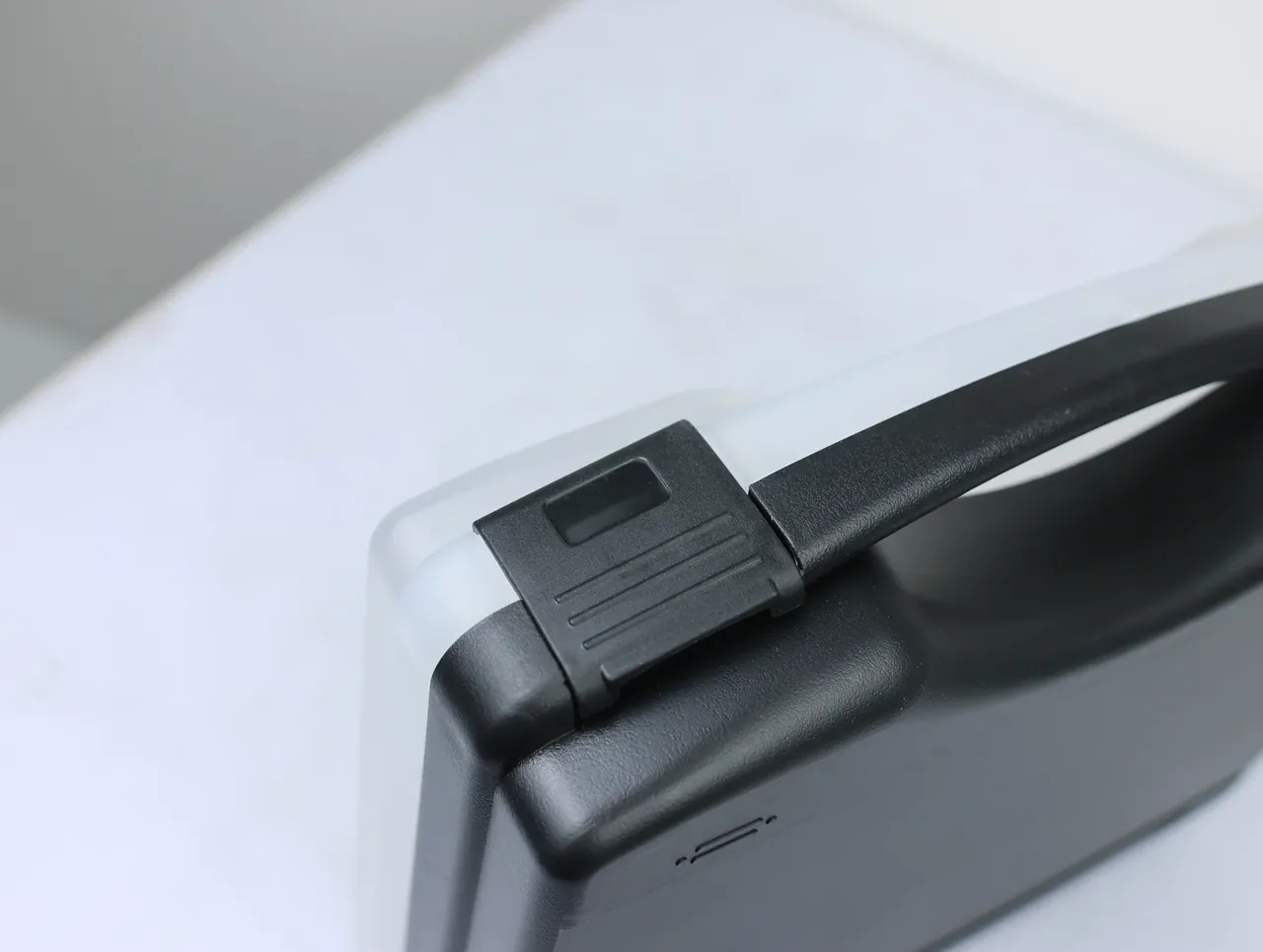
Pitch is the tallest bin plus 40 mm. Bins here are 210 mm, so pitch is 250 mm; 5 tiers reach 1250 mm, plus a 150 mm plinth, putting the top level at 1400 mm, below the shoulder. A sixth tier would sit at 1650 mm, an overhead reach, so it goes. Depth is 400 mm, and each tier carries 60 kg on 30 × 30 × 1.5 mm posts.
5. Air and Power: Pressure, Flow, Ports
An air screwdriver wants 0.5 to 0.6 MPa and draws 0.30 m³/min. Two at once need an 8 mm main and 6 mm drops, losing no more than 0.03 MPa. At 0.05 MPa M6 screws stop reaching 8 N·m, a batch out of tolerance.
A Case Assembly Workstation filter unit holds 5 µm and drains once a shift; quick couplings sit 200 mm above the top and 250 mm in from the edge.
Power is a 220 V, 10 A duplex outlet 150 mm under the bench, behind 30 mA protection tripping in 0.1 s, earth below 4 Ω. The anti-static surface reads 1 MΩ to 1000 MΩ. Flight cases add sling requirements, see airdrop case limits.
6. Light at the Assembly Face
The Case Assembly Workstation face needs 300 lx for general assembly and 500 lx for precision, floors from GB 50034. The cavity is 230 mm deep and overhead light never reaches it, so a 4000 K, Ra 85 strip sits 1200 mm above the bench and lifts the floor to 750 lx.
Keep cut-off at 30 degrees and flicker under 8%; above 6000 K a gasket crease disappears. Read a meter on a 1 m grid, 9 points, lowest over highest above 0.7. One-sided strips drop the far end to 210 lx, where missed latches come from.
Conclusion
Three inputs — 46 kg, 620 × 460 × 230 mm, 82 seconds — carry bench, frame, height, rack, air and light in one chain, and every link can be measured on the floor. Revisions fall from 3 rounds to 1. Specifications come from load and takt, not a catalogue, which is why a Case Assembly Workstation deserves the arithmetic first.
This article discusses only the container (case body) side of specifications and design intent, and does not cover any handling, loading or use of the contents.
Related Reading
- Where takt time actually goes
- Placing parts, tools and bench
- Specification order for a chest case
- Sizing a fuze pack line
Related Products
- 8 Series — Gun Cases; Military Equipment Cases; Camera Equipment Cases; Drone Cases; Watch Cases; Knife Cases; First Aid Cases; Electronics Equipment Cases
- WL8-2812 PP Gun Case — model WL8-2812
- All protective cases and toolboxes: 7 series, 158 models