

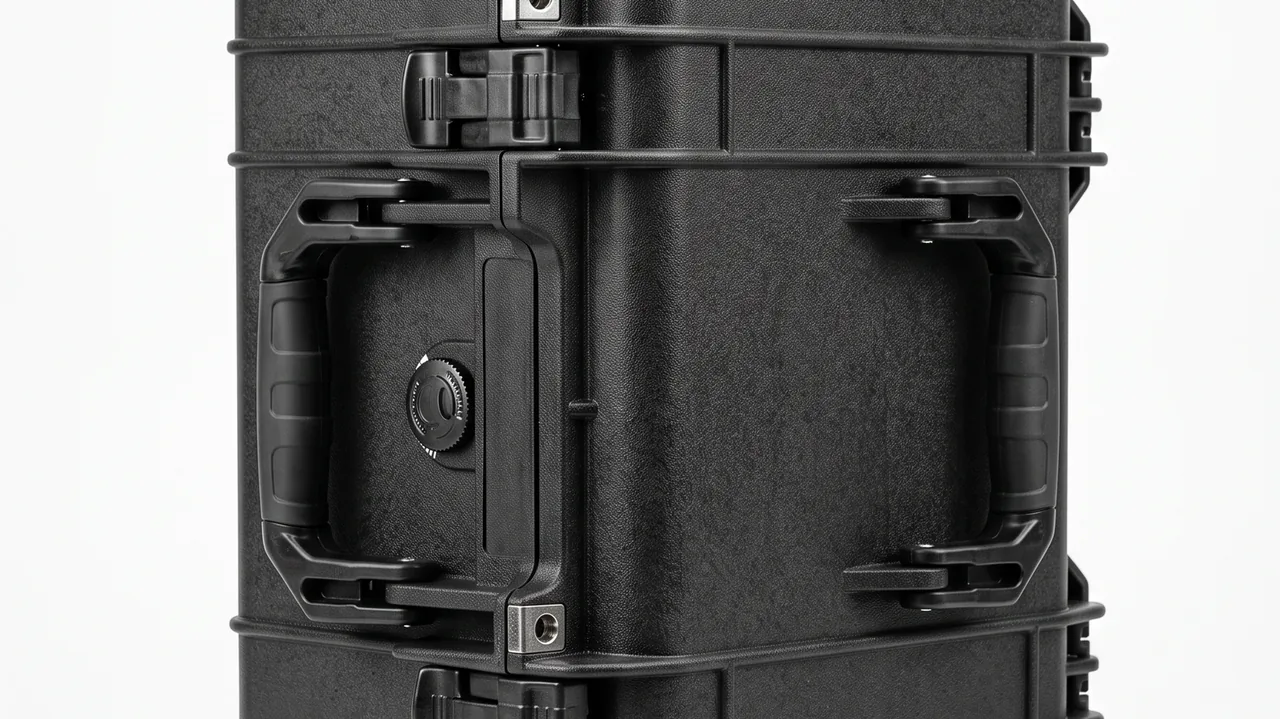
The first delivery to arrive on a cold room project is usually the panel package: polyurethane sandwich wall and ceiling panels, door leaves and door frames, hinges and latches, gaskets, and door frame heating cable. These land earlier than the refrigeration plant, take up more volume, and are more likely to be damaged in the few tens of minutes it takes to unload them. The real enemy of a panel is not impact but sustained bending moment: let a six metre sandwich panel hang unsupported at mid-span, or lay too many panels flat in a stack, and the steel skin slides irreversibly against the foam core. The result is a wavy face, an eccentric panel end and a misaligned tongue-and-groove joint, which finishes as an out-of-tolerance joint gap, cold leakage and condensation on the wall. A sandwich panel gets its bending stiffness from the skin and core acting together, and it is strongly directional: stiffness along the panel length is high, while stiffness perpendicular to the face depends entirely on support spacing. Ignore that mechanical fact in the packing plan and good panels become rejected panels on site. This article works through panels, doors, hardware, gaskets and pipework accessories, and gives case structure, support layout, moisture control and opening inspection actions.
Arrival timing is equally awkward. Civil works are still finishing, panel erection has not started, and the panels are leaned against a wall or laid flat in the open for two or three weeks. When erection finally begins, the tongue will not enter the groove, the door frame diagonal is out of tolerance and the hardware already shows rust. By then the panels cannot be returned, only patched on site, and sealing performance is permanently reduced. Writing support and moisture requirements into the dispatch and unloading rules is the practical problem this article addresses.
Contents
- Why cold room panels only reveal their problems at erection
- Polyurethane sandwich panels: core density, skin gauge and eccentric ends
- Panel edges and joints: cam locks, edge wrapping and kerf protection
- Cold room doors: leaf flatness and hinge loading
- Locks and hardware: salt spray protection and coating selection
- Gaskets and frame heating cable: compression set and low-temperature brittleness
- Moisture control: core ingress, pallets and desiccant
- Stacking and standing: panel stiffness direction and support spacing
- Case structure: long-load bracing, lashing and lifting
- Defrost pipework and refrigeration accessories: isolating and securing copper and aluminium
- Test and verification basis: GB/T 4857, ISTA and cold storage observation
- Marking, packing list and opening inspection
- Selection checklist and five common mistakes
- Frequently asked questions
- Conclusion and related reading
Why cold room panels only reveal their problems at erection
The panel package for a mid-sized cold room includes wall and ceiling panels in several thicknesses, corner and door frame panels, door leaves with observation windows or air curtains, thresholds and bollards, eccentric cam locks and locating pins, hinges, sliding gear and track, gasket profiles and magnetic seals, frame and threshold heating cable, and defrost drain pipework with suspension fittings. It travels in three legs: factory to project store, project store to site, site to the erection position. The last leg is the shortest, is often handled by temporary labour, and concentrates the damage.
Claims and rework cluster into six patterns. The first is wavy faces and eccentric panel ends, caused by unsupported mid-span or excess flat stacking, and visible as misaligned joints and heavy sealant consumption after erection. The second is deformed tongue-and-groove and cam lock holes. Panel skin edges are only a fraction of a millimetre thick, so local impact makes the mating face misfit, and even a fully tightened cam lock cannot pull two panels flat. The third is scratched coatings and damaged film. Cold room panels are usually coated steel or stainless steel, and in a cold, humid environment corrosion starts from any coating break. The fourth is twisted door leaves and out-of-tolerance frame diagonals, which show up as incomplete gasket contact, abnormal closing force and mis-set electric door limits. The fifth is early corrosion of hardware, because hinges, lock bodies, track and fasteners corrode noticeably faster in a chloride-bearing environment. The sixth is compression set and low-temperature embrittlement of gaskets, which presents as cold air leakage and a frost band around the door.
All six share one characteristic: the root cause almost always happens during transport and temporary storage, while the symptom only appears at erection and during the pull-down test. A few millimetres of face undulation is not obvious at the open case, yet it is enough to prevent a whole wall of joints from lining up. A gasket held compressed for weeks does not recover on its own and has to be replaced as a complete length. A panel case therefore has two separate jobs: keep the panel face and edges exactly as they left the factory, and keep hardware and gaskets at their original performance.
Polyurethane sandwich panels: core density, skin gauge and eccentric ends
A sandwich panel is two steel skins bonded to a rigid polyurethane or polyisocyanurate foam core. Core density and skin gauge together set the bending stiffness and the thermal performance. Typical practice places core density in the medium-to-high band, with thin coated or stainless steel skins, and panel thickness stepped according to the room temperature class. The mechanics of that composite are straightforward: the skins carry tension and compression, the core carries shear, and the core keeps the two skins working together.
The first rule follows directly: never let the foam core take any form of local compression. Rigid closed-cell foam handles uniformly distributed face load well but is very sensitive to concentrated load. Rest a small timber block on the panel face as a support, or place a heavy item directly on the face, and the core takes a permanent crush. The steel skin then locks that crush in place, so externally it looks like a slight dishing while the skin and core have already locally debonded.
The second rule is control of support spacing. Panel self-weight generates bending moment along the length, and the greater the distance between supports, the greater the mid-span deflection. Common practice sets several supports along the panel length so that the span between any two adjacent supports stays small, with the bearing surface made as a continuous timber rail or a flexible cradle rather than a point support. For very long panels, agree an acceptable unsupported length with the manufacturer before dispatch instead of judging by eye on site.
| Typical defect | Main cause | Effect on erection and operation |
|---|---|---|
| --- | --- | --- |
| Wavy panel face | Excess flat stacking, unsupported mid-span, point supports | Misaligned joints, heavy sealant consumption |
| Eccentric panel end | Local core compression, skin-to-core debond | Tongue will not seat, thermal bridge at the joint |
| Local skin dishing | Concentrated load, stacked weight | Uneven face, corrosion starting at the stress point |
| Deformed edge fold | No end protection, forced striking during assembly | Cam lock holes offset, cam lock ineffective |
| Coating scratch and film damage | Rubbing against hardware, sling crushing | Corrosion starting from the break, cold and humid |
The third rule is leave the protective film on until erection. What coated or film-faced panels suffer in transport and storage is usually not one large scratch but a mass of fine friction marks, produced when grit or metal swarf gets between panels that then move against each other. Protective film reduces that risk considerably, but water trapped under film accelerates coating degradation, so film-faced panels stored outdoors or in damp conditions need ventilation and rain protection.
Panel edges and joints: cam locks, edge wrapping and kerf protection
The panel edge is the most fragile part of the whole assembly and the part that cannot be reworked. One side of a cold room panel normally carries a tongue, the other a groove, with eccentric cam locks and locating pins inside the groove. The steel is folded at the edge, is only a fraction of a millimetre thick, and has very little impact resistance. A single knock can deform the fold and prevent the cam lock from seating.
Packaging should therefore cover the edges completely. Both panel ends and the two long edges need edge protection, in the form of die-cut foam corners, board wrapping or wood-plastic edge strip. What matters is a flat contact face with no hard corner bearing directly on the steel. Edge protection must not be fixed with nails or staples, because the fastener itself will scratch the face under vibration, and worse, metal swarf landing on the core surface becomes a corrosion initiation point in a cold, humid environment.
Joint protection carries one extra requirement: a tongue must never be shipped seated inside a groove. Some logistics providers do this to halve the volume, but it means the tongue takes concentrated squeeze and repeated rocking for the entire journey. The tongue root cracks easily and the mating faces grind against grit. The correct method is to leave clearance between panels and separate them with resilient spacers.
| Handling method | Volume used | Panel risk | Applicable condition |
|---|---|---|---|
| --- | --- | --- | --- |
| Flat stacking | Low | High, self-weight sag plus interlayer load | Short small panels only, with calculated layer count and dunnage |
| Leaned and stood | Medium | Medium, topples if the angle is too small | Needs a rack, lashing and a non-slip floor |
| Standing in a braced case | High | Low, geometry stays stable | Long panels, large batches, high-value faces |
| Suspended or dedicated clamp | Very high | Low to medium | Oversized and non-standard panels, with proper rigging |
For the material combinations used in internal bracing, lashing and spacers, see removable divider systems for protective cases, where the approach to removable battens and location details transfers directly to a standing panel case.
Cold room doors: leaf flatness and hinge loading
The cold room door is the only part of the envelope that moves constantly, which makes it more transport-sensitive than the panels. Hinged and sliding door leaves are also sandwich construction, but once installed they must stay flat for years, because gasket sealing depends on the gap between leaf and frame being uniform.
Door leaf transport has to solve two mechanical problems. The first is flatness. When leaf length-to-width ratio is large, self-weight produces bending between supports, so supports belong under the two short edges and the reinforced frame edge, not under the middle of the facing panel. The second is protection of hinge mounting faces. Once a hinge mounting face is knocked out of shape or has its coating broken, the installed leaf drops, which shows up as the top edge rubbing and the bottom gap widening. On site that can only be compensated with shims, and only to a limited degree.
Door frames and thresholds are long, thin-walled parts that must be protected against torsion. A twisted frame has an out-of-tolerance diagonal that is very hard to correct, and diagonal dimension is usually a contractual acceptance parameter. Fix the frame to a rigid support along its full length with at least three restraints, so it cannot twist between two end supports.
Heavy leaves fitted with electric operators, air curtains or observation windows need the mechanism packed separately or independently braced. A mechanism left carrying part of the leaf self-weight settles or shifts during transport, and that kind of fault only appears after installation.
Locks and hardware: salt spray protection and coating selection
Corrosion pressure on cold room hardware is far higher than in ordinary indoor service. Low temperature raises brittleness, condensation keeps surfaces wet for long periods, and wash-down water or food processing may bring chloride-bearing media into the room. The corrosion resistance of hinges, lock bodies, handles, track, rollers, cam locks and fasteners should therefore be specified together with the room cleaning regime.
Coating and substrate selection is a trade-off between strength, corrosion resistance and low-temperature toughness. Zinc-plated carbon steel is strong and economical but corrodes from coating defects in damp or chloride-bearing conditions. Stainless steel resists corrosion much better, though strength and cost have to be reassessed, and contact with aluminium parts must be managed to avoid galvanic corrosion. Aluminium is light and well suited to track and frame accessories, but tolerates repeated impact less well.
| Hardware class | Common material and finish | Main risk | Packing point |
|---|---|---|---|
| --- | --- | --- | --- |
| Hinges and load pins | Stainless or zinc-plated carbon steel | Corrosion seizure, hole deformation | Factory packaging, individual compartments |
| Lock bodies and handles | Stainless steel, die-cast zinc alloy | Coating blistering, mechanism seizure | Moisture barrier bag, no mutual impact |
| Sliding track and rollers | Aluminium profile, bearing steel | Bend under squeeze, bearing corrosion | Full-length support, end caps |
| Cam locks and locating pins | Zinc-plated or stainless steel | Bending, thread damage | Thread caps, individual small boxes |
| Fasteners | Mostly stainless bolts | Mixed material, galvanic couple with aluminium | Sorted by size, material marked |
Corrosion performance is normally assessed with a neutral salt spray method, and the exact material grade and test duration belong in the purchase document rather than a general note about rust prevention. For coastal or high-humidity cold rooms, settle the coating system and fastener material at the purchasing stage so that site work does not produce the familiar mismatch of a rusty hinge beside a clean bolt. Hardware must also be strictly sorted by material and size, because stainless fasteners stored together with aluminium parts form a galvanic cell as soon as moisture is present, and the aluminium corrodes preferentially.
Gaskets and frame heating cable: compression set and low-temperature brittleness
The door gasket is the thinnest, cheapest and most energy-critical component in a cold room. It works under continuous compression, and transport plus storage is also a period of continuous compression, so compression set is the leading failure mechanism, followed by low-temperature hardening and embrittlement.
EPDM and silicone are the two common gasket materials. EPDM resists water and ageing, costs moderately and suits standard chilled rooms. Silicone keeps its elasticity better at low temperature and retains rebound better under deep-freeze duty and frequent cycling, at higher cost. Magnetic gasket profiles add another concern: the magnetic strip must not be crushed or allowed to corrode, because a swollen corroded strip lifts the profile locally and the gasket can no longer sit against the frame.
Five packing actions follow. First, do not transport gaskets fitted to the door leaf. Shipping them fitted means the whole profile sits compressed for weeks, which is the direct cause of compression set. Second, lay a single gasket flat or coil it at the large radius permitted by the manufacturer, and never fold it into a crease. Third, do not store it in the same compartment as sharp metal parts, because a cut in the sealing lip will fail an air-tightness check. Fourth, control storage temperature, avoiding long hot periods and direct sunlight, and avoiding repeated bending at very low temperature, which cracks the material. Fifth, mark the batch number and the pre-installation checks, so the site team can judge whether the gasket is still within its shelf life. See case seal material selection and compression design for the general method behind gasket material and compression choices.
Frame and threshold heating cable is electrical, normally shipped as a coil or in full lengths. Its risks are insulation cut by sharp edges, small-radius bending and damp cable ends. Coil it with a protective sleeve and secure it separately, seal the ends and mark the specification and length, and keep it out of the hardware compartment so it cannot chafe against hard parts for hours.
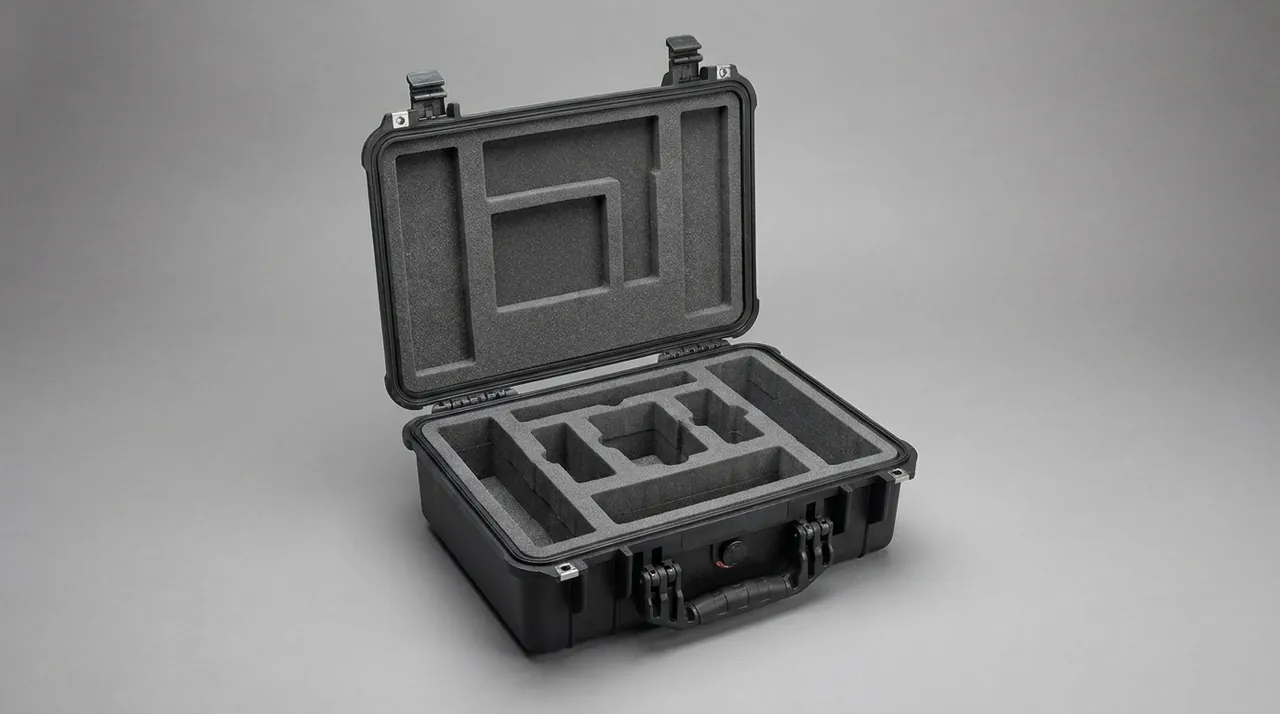
Moisture control: core ingress, pallets and desiccant
Moisture control for cold room panels differs from general equipment protection because surface rust is not the only concern. The question is whether water can get into the sandwich itself. The core is closed-cell, but panel ends, joint gaps and cam lock holes are open channels. Once water enters through those paths and then freezes, the expansion of the ice gradually extends the debonded area between skin and core, which is one of the common causes of the blisters seen in cold room panels.
The first measure is physical separation. Panels must never sit directly on open ground or unfinished surfaces. They belong on pallets or timber dunnage with airflow underneath. When covering with a rain sheet, leave ventilation gaps, otherwise the arrangement becomes sealed on top and wet underneath and condenses inside the stack. The second measure is end sealing, closing panel ends and joints temporarily before dispatch and removing the closure just before erection. The third is internal desiccant with humidity indication, especially for cases containing hardware and electrical parts, sized from free internal volume and transit duration rather than placed by habit.
| Moisture measure | What it protects | Implementation point | Failure mode |
|---|---|---|---|
| --- | --- | --- | --- |
| Pallet or dunnage | Panel underside and ground contact | Raise and keep airflow underneath | Bottom wicking, edge corrosion |
| Cover with ventilation | Outdoor storage period | Rain protection with air gaps | Internal condensation, water under film |
| End sealing | Cuts and joints | Temporary closure, removed before erection | Core ingress, freeze-thaw blistering |
| Desiccant and indicator | Case internal air | Sized by volume, split into bags | Hardware rust, no acceptance evidence |
| Pressure equalisation | Sealed case body | Controlled venting, no gasket pull | Gasket deformation, internal condensation |
For hardware and electrical parts travelling in a sealed case over long distances, internal-to-external pressure differential must also be handled, as covered in how a case pressure equalisation valve works. Panels themselves are normally not fully sealed in packing, because their volume is large and condensation driven by temperature difference cannot be absorbed by desiccant. An open or semi-open structure on pallets with a ventilated cover is usually more practical.
Stacking and standing: panel stiffness direction and support spacing
Panel transport attitude is the starting point for every other protection measure, and it is also the thing site teams most casually change. The right attitude depends on two parameters: panel length and stiffness direction. Along the length, skin and core work together and bending performance is best. Perpendicular to the face, bending performance depends on where the supports are.
Standing is the most reliable attitude for long panels, but standing does not mean vertical. A panel standing perfectly vertical has a high centre of gravity and a small base, so lateral acceleration during transport will topple the whole stack. Standing is therefore usually combined with a controlled lean angle and a reliable rack, so that the component of self-weight presses the panel into the rack rather than leaving it free. Too small an angle crushes the lower edge, too large an angle moves the centre of gravity outward, and in both cases the site sees broken panel ends or a collapsed stack.
Flat stacking is not forbidden outright, but it has conditions: short panels, a controlled layer count, continuous dunnage between every layer with dunnage positions vertically aligned, and adequate support under the lowest layer. If dunnage is not aligned from layer to layer, the weight of the upper layers passes through dunnage into local areas of the lower panels, producing a point load crush. Workable practice aligns dunnage with the support positions recommended by the manufacturer and lashes the stack externally against interlayer slip.
| Attitude parameter | Risk when too low | Risk when too high | Recommended practice |
|---|---|---|---|
| --- | --- | --- | --- |
| Stand lean angle | Lower edge crushed | Centre of gravity out, whole stack topples | Follow the rack design value and lash |
| Support spacing | Mid-span sag, wavy face | Dense supports, slow handling | Continuous dunnage set by length and thickness |
| Flat stack layers | Poor efficiency, large footprint | Interlayer load, core crush | Calculated layer count with aligned dunnage |
| Lashing tension | Interlayer slip, toppling | Indentations, local crush under strap | Soft slings with edge protectors and tension limiters |
Panel lashing also needs tension control. A strap tightens progressively under vibration, and a strap bearing directly on steel creates stress concentration either side of the marking, which in time becomes a coating break and a corrosion start. Put an edge protector or resilient pad between strap and face, and use a tensioner with a limiting function instead of pulling by hand as hard as possible.
Case structure: long-load bracing, lashing and lifting
The structural logic of a long panel case differs from a standard equipment case. The governing problem is not bearing but bending and torsion. If the case body lacks stiffness, it bends along with the panels during lifting and transport, and no amount of internal restraint can prevent the panels from following.
Three points matter. First, provide a continuous frame along the length so the case carries its own bending load instead of relying on the panels to provide stiffness. Second, fit removable internal braces at mid-panel positions to break the long span, with contact faces made as continuous resilient pads so that the brace never becomes a point load. Third, use rigid end plates with lift points at both ends, so the horizontal component of the sling is taken by the end plate rather than cutting into the panel ends.
Lifting a long case needs particular care. When slinging under the case, the contact points must land on the frame or the end plates. When using a forklift, the forks should cover most of the case length with additional support at mid-span; lifting a long case only at the two ends will visibly sag the middle. For oversized panels, dedicated clamps or vacuum lifters are preferable; see case wheels and trolley handle configuration, where the engineering considerations for moving and supporting heavy cases also apply to long-load transfer on site.
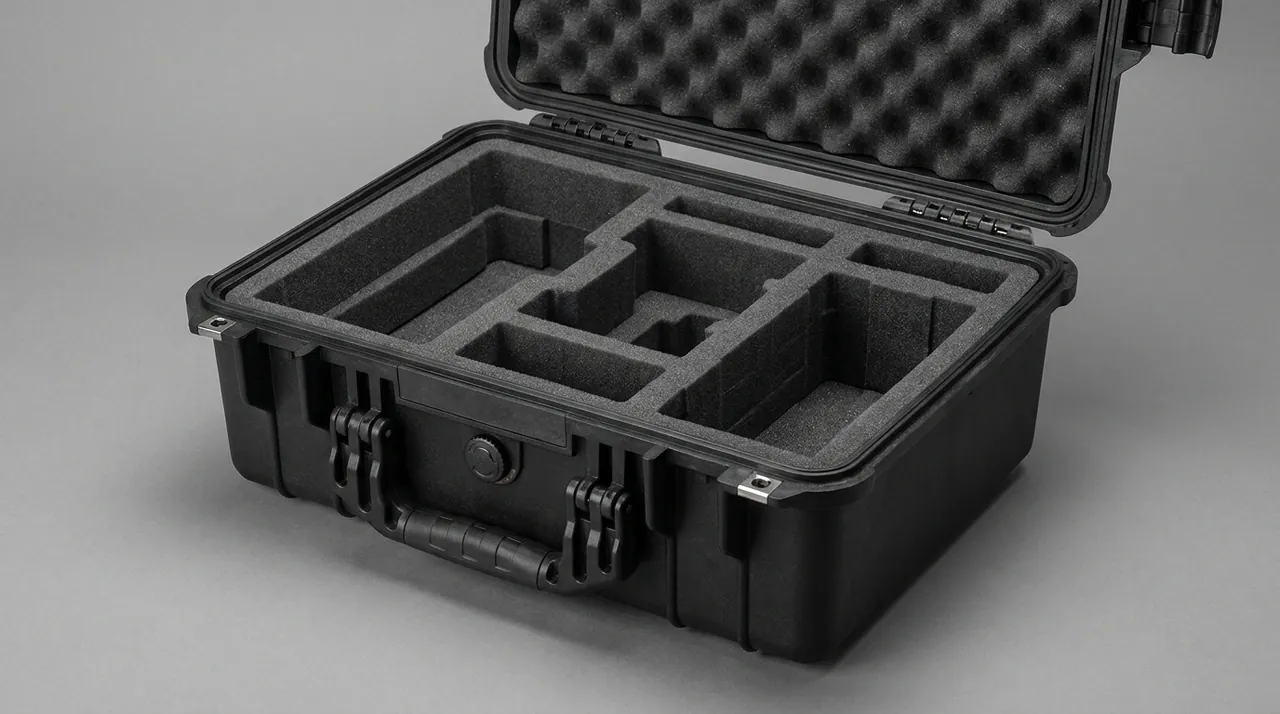
Defrost pipework and refrigeration accessories: isolating and securing copper and aluminium
The cold room accessory package contains a further load that is easy to overlook: defrost drain pipework, ceiling suspension fittings and refrigeration line accessories. They arrive in the same delivery window as panels and doors but have entirely different packing requirements.
The usual copper problem in transport is bending deformation and port contamination. If a defrost drain line, liquid line or suction line sits as a free cantilever inside a case, transport vibration bends it repeatedly at the brazed joint and produces a fatigue crack. Fix pipework to the case frame or the internal brace with clamps, and cap every open end so construction dust and moisture cannot enter.
Galvanic corrosion between aluminium, stainless and zinc-plated parts is especially pronounced in cold rooms: condensation keeps surfaces wet for long periods and the two metals in contact form a stable corrosion cell. Store suspension fittings, supports and fasteners segregated by material, and place an inert membrane or board between mating surfaces.
Components holding residual lubricant and clean pipework parts should travel in separate cases or separate compartments from panels and hardware. Metal swarf, grit and oil are the three main contamination sources for a cold room circuit, and swarf from cutting panels on site is essentially unavoidable. Separating clean parts from the cutting area at the packaging level is the cheapest single measure available.
Test and verification basis: GB/T 4857, ISTA and cold storage observation
Verification of a panel case cannot rely on an empty case test, and it cannot rely on ambient-temperature testing alone. Panel failure mechanisms are sensitive to both temperature and time: low temperature makes coating brittle and gaskets hard, while long storage lets self-weight bending and compression set develop fully. Verification should therefore combine transport packaging tests with a cold storage observation step.
| Reference | Applicable scenario | Typical use for panel cases |
|---|---|---|
| --- | --- | --- |
| GB/T 4857 series | Domestic road-dominated transport | Vibration, shock, stacking and drop tests |
| ISTA series | International and multi-leg distribution | Distribution cycle and vehicle vibration simulation |
| GB/T 4208 and IEC 60529 | Case and packing seal evaluation | Confirming sealed accessory packaging |
| GB/T 191 | Package handling pictorial marks | Do not overturn, keep dry, centre of gravity, stack count |
| GB/T 10125 | Hardware corrosion evaluation | Neutral salt spray for coating and material confirmation |
| MIL-STD-810H | Environmental test methods | Test profile for low temperature and humidity cycling (methods reference, not military certification) |
Cold storage observation is specific to panel packages. Store a loaded case at a temperature close to the real storage condition for a period, then check face flatness, end eccentricity and gasket hardness. This step finds what ambient testing cannot, for example a batch of gaskets whose rebound deteriorates noticeably at low temperature, or a batch of panels where water accumulates under the film after humidity cycling.
Marking, packing list and opening inspection
Panel case marking serves two audiences: warehouse and transport staff, who decide how to stack and lift, and the erection crew, who decide which case to open first and how to store the contents temporarily. Following GB/T 191, mark at minimum do not overturn, keep dry, centre of gravity, maximum stack count and lift point positions. Long cases should also state the permitted lifting method and the auxiliary support requirement.
The packing list should carry item-by-item specification and quantity, panel thickness and length, the initial state of protective film and end sealing, and the compartment positions for hardware and gaskets. For gaskets and electrical parts, add batch numbers and the recommended pre-installation checks.
The opening inspection is best fixed as one sequence. Check that case markings match the packing list. Check the integrity of the protective film and look for friction marks. Inspect panel ends, joints and cam lock holes for deformation, with particular attention to the tongue root and the folded edge. Check door leaf flatness and door frame diagonals. Check hardware for rust spots and gaskets for creases and compression marks. Then photograph, file, and sign the acceptance record. Turning these steps into a fixed checklist prevents the passive sequence in which a surface-clean delivery is signed for and problems are only traced back after erection.
Selection checklist and five common mistakes
| Check item | What to confirm |
|---|---|
| --- | --- |
| Panel schedule | Thickness, length, quantity, unit and total mass |
| Attitude plan | Stand angle or flat layer count, support positions, dunnage alignment |
| Edge protection | End protectors, long edge strips, joint spacers and fixing method |
| Brace structure | Removable brace positions, contact pads, no point loading |
| Door and frame | Support positions, diagonal protection, mechanism bracing |
| Hardware and gaskets | Compartment layout, desiccant, moisture barrier bags, batch marking |
| Lashing and lifting | Lift points, tension limiters, edge protectors, fork length requirement |
| Marking and documents | Pictorial marks, packing list, opening inspection checklist |
Five mistakes deserve naming. Mistake one: seating the tongue into the groove to save volume. The saving is space; the cost is a cracked tongue and a ground mating face. Mistake two: supporting the middle of the panel face with a small timber block or a brick. That leaves an unrecoverable core crush; use continuous dunnage or a flexible cradle. Mistake three: leaving gaskets fitted to the door leaf. A whole profile held compressed for weeks will not recover on its own. Mistake four: assuming a panel is a solid board that cannot be crushed. Face loading capacity is limited, and stacked weight or excess flat layers all damage the core. Mistake five: inspecting only the visible face and skipping joints and cam lock holes. Edge deformation is precisely what most affects erection quality and is hardest to repair on site.
Frequently asked questions
Q: Why does support spacing on cold room sandwich panels have to be controlled, and why is denser not automatically better?
A: Spacing must stay below an upper limit, but denser supports are not automatically better, because of how the load travels. Panel bending capacity comes from the skins carrying tension and compression and the core carrying shear, so deflection relates directly to the span between adjacent supports. A longer span raises mid-span bending moment and the shear stress at the skin-to-core interface, and sustained loading causes interface slip, which appears macroscopically as a wavy face and an eccentric panel end. Denser supports introduce two problems of their own. First, every additional contact point on the face is a potential concentrated load, so if the supports are small timber blocks, each one becomes a place where the core can crush. Second, handling efficiency drops, and site teams under schedule pressure tend to skip some supports, which produces a worse result than a correctly spaced layout. The sound approach is to set support spacing from panel length, thickness and the manufacturer's recommended span, and to make the bearing surface a continuous timber rail or flexible cradle so load enters as a line load rather than a point load.
Q: Shipping panels with the tongue seated in the groove halves the volume, so why is it unacceptable?
A: Because the seated condition changes how the panel carries load, and that cost is far higher than the freight saved. When two panels are packed seated, the tongue takes continuous concentrated squeeze from its neighbour for the entire journey and also rocks inside the groove under transport vibration. The folded steel at the tongue root is typically only a fraction of a millimetre thick and will crack or deform plastically under that repeated loading. Once the tongue deforms, it will not seat properly during erection, and even a fully tightened cam lock cannot pull the two panels flat, so the joint gap goes out of tolerance. At the same time the mating faces grind against each other under vibration, and grit and metal swarf trapped between them score the sealing face inside the groove. In a cold, humid environment that scoring also becomes the start of corrosion at the coating break. The right way to control volume is to optimise the packing arrangement and the stand angle, not to sacrifice edge condition. Panels should be separated by clearance with resilient spacers so that load passes through the spacers rather than through the joint.
Q: A cold room door leaf shows no impact damage in transit, so why will it not close properly after installation?
A: The root cause is usually not impact but a change in flatness during transport. A cold room door leaf is a sandwich construction with a large length-to-width ratio and limited inherent stiffness. If supports are placed under the middle of the facing panel, or only under the two long edges with the middle left to hang, the leaf bends slowly under its own weight. This is an elastic-range deformation, so there is no visible dishing, but after assembly the gap between leaf and frame varies along the height: one section is over-compressed while another opens up, and the gasket cannot form continuous contact. The second common cause is a knocked or coating-damaged hinge mounting face, after which the installed leaf drops and shows edge rubbing at the top with a widening gap at the bottom. Door leaves should therefore be supported under the two short edges and the reinforced frame edge, hinge mounting faces should be protected, and frame parts should have at least three lengthwise restraints with the diagonal dimension protected. Acceptance should measure flatness and diagonal rather than judging by appearance.
Q: Why is a general note about rust prevention not enough for cold room hardware in a purchase document?
A: Because rust prevention cannot be inspected and cannot establish liability. Corrosion conditions in a cold room are far harsher than in ordinary indoor service. Low temperature raises brittleness, condensation keeps surfaces wet for long periods, and wash-down or food processing may introduce chloride-bearing media, so corrosion rates differ completely from a general warehouse. A purchase document should state the substrate and coating system, the applicable neutral salt spray method and duration, and the material requirement for critical items such as hinges, lock bodies, track, cam locks and fasteners, so that goods-in inspection has an objective basis. The second issue is material mixing. Stainless fasteners stored together with, or in direct contact with, aluminium parts form a galvanic cell as soon as moisture is present, and the aluminium corrodes first. The familiar site complaint of a clean hinge beside white corrosion powder on nearby aluminium is exactly this mechanism. Hardware should be compartmentalised by material and size with external marking to prevent substitution. For coastal or high-humidity projects, settle the coating system at the purchasing stage rather than discovering rust after erection.
Q: Why should door gaskets be removed and packed separately instead of travelling fitted to the door leaf?
A: Because gaskets are the most commonly overlooked case, and the effect is measurable. A door gasket works under continuous compression by design, and transport plus temporary storage is also a period of continuous compression, so the two combine to accumulate compression set beyond the design value. Compression set in rubber materials depends on both time and temperature: the longer the compression and the higher the temperature, the worse the recovery, and the transport window typically lasts several weeks including high temperatures inside a container. That is precisely the least favourable combination. Shipping gaskets fitted also means uneven compression, because leaf self-weight bending presses some sections harder and creates local permanent marks, which become the cold leakage points after installation. The correct method is to remove the gasket and pack it separately, laid flat or coiled at the large radius permitted by the manufacturer, folded into no crease, kept out of the compartment holding sharp metal parts, stored away from heat and sunlight, and marked with a batch number so shelf life can be judged. Check appearance and elasticity once before installation.
Q: How should stack height and flat layer count for panel cases be decided?
A: By structural calculation and test rather than by site judgement about whether a stack looks stable. Flat stacking carries risk from two directions. The first is self-weight bending: the lowest panel carries the weight of every layer above it, and if dunnage positions are aligned and spans are controlled, that load passes down through the dunnage to the ground. If dunnage is not aligned from layer to layer, upper layers pass their weight through dunnage into local areas of the lower panels and crush the core. The second is interlayer slip: lateral acceleration in transport makes layers move relative to each other, particularly without external lashing. Flat stacking should therefore satisfy several conditions at once: restricted panel length, controlled layer count, continuous dunnage between every layer with vertical alignment, adequate support under the lowest layer, and external lashing around the whole stack. For long and large panels, standing in a braced case with internal support is preferable. It uses more volume, but the geometry stays stable and edge loading stays controllable, which lowers overall risk on long journeys considerably. Mark the permitted stack count and the up direction on the case exterior.
Q: What problems most often appear during two or three weeks of temporary storage on site, and how should storage be managed?
A: Four problems dominate, and all of them occur during the period when nobody is paying attention. The first is bottom wicking and edge corrosion, caused by panels sitting directly on open or unfinished ground; the fix is to raise them on pallets or dunnage with airflow underneath. The second is water under the film and coating degradation, caused by a rain sheet laid directly on the panel face and sealed on all sides, so moisture generated as the stack warms during the day condenses under the film at night; the fix is to leave ventilation gaps when covering, or use a framed shelter. The third is core ingress and freeze-thaw blistering, where water enters through panel ends, joint gaps and cam lock holes, freezes, and progressively extends the debonded area between skin and core; the fix is temporary end sealing before dispatch, removed just before erection. The fourth is degradation of gaskets and hardware, which need separate, climate-controlled storage. State the temporary storage requirements in the shipping documents, and check compliance during the on-site acceptance visit.
Q: What custom support does JUNZHIJIA provide for cold room panel and door component packing?
A: JUNZHIJIA builds customised schemes around panel specification and transport mode, covering case structure, internal support, edge protection and hardware compartmentalisation. Specific work includes continuous frames and removable internal braces designed from panel length, thickness and unit mass, so that the long span is broken without introducing point loads; end plate supports and diagonal protection for door leaves and frames, with mechanism bracing set by door type; edge protectors, spacers and end caps for tongues, grooves and cam lock holes, with film retention and inspection requirements written into the shipping file; and compartmented liners, moisture barrier bags and desiccant sizing for hinges, lock bodies, track and gaskets, sorted and marked by material to prevent mixing. Pictorial marking for do not overturn, keep dry, centre of gravity and stack count follows GB/T 191. OEM and ODM cooperation is available, with tooling from drawings or physical samples. Test reports and inspection documents can accompany the scheme for purchasing review and handover acceptance.
Conclusion and related reading
Panel protection comes down to three words: flat, edged, dry. Flatness depends on support spacing and standing attitude, edges depend on protectors and resilient spacers, and dryness depends on raising, end sealing and ventilation. All three live inside routine packing and unloading actions, need no extra process, yet decide whether a wall lines up, a door seals, and cold stays in.
Related Reading