

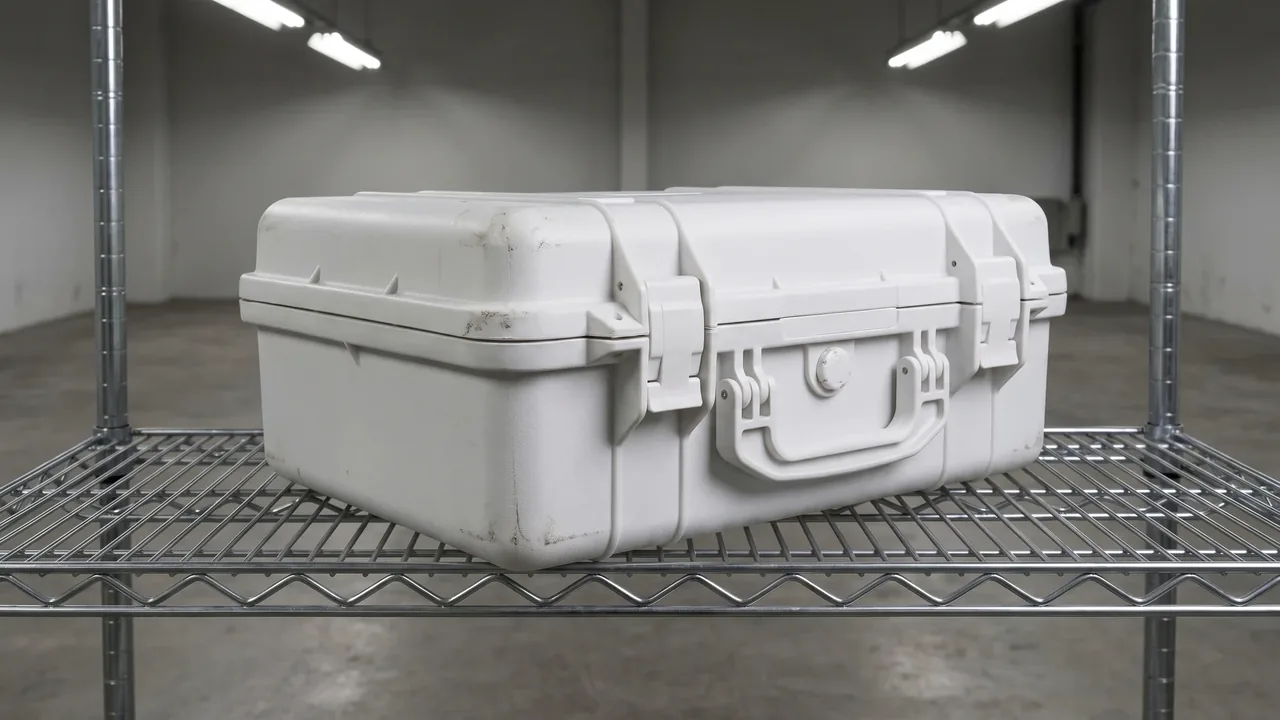
The explosion-proof case is a flameproof, pressure-resistant protective enclosure built for flammable, explosive, and hazardous environments. Its task is not to "put things inside" but to turn a deliverable flameproof capability and pressure-relief capability into a box structure that can be validated, maintained, and traced. An explosion-proof case must, in transit, storage, and field use, contain internal overpressure, interrupt the flame path, and direct pressure release, holding its flameproof integrity after repeated open-close while keeping static dissipation and grounding in order. This article unpacks, from a protective-case manufacturer's point of view, the general requirements an explosion-proof case should meet in flameproof mechanism, pressure shell, flameproof gap, pressure relief and bursting disc, static dissipation and grounding, seal traceability, stack load, service and inspection, and military acceptance, and gives procurement a checklist they can drop straight into a technical agreement. It must be stated plainly that this article discusses the packaging container only — that is, the shell's pressure structure, flameproof face, relief element, flame arrestor, and static dissipation — and does not address the physical or chemical properties, formulation, or handling of whatever is inside; the classification, handling, and any defense-trade export of the contents are governed by local regulations and export control requirements, and the container supplier's duty is to translate flameproof, pressure-relief, sealing, and traceability into a mass-producible box structure. JUNZHIJIA manufactures rotomolded and aluminum protective cases over the long term, and the experience below references this kind of volume production process.
Written from the bench of a protective-case manufacturer, this guide deliberately stays within the boundary of the container. It does not describe which substance the box holds, its detonation characteristics, or how it is handled; those sit with the hazardous-goods authority, the safety-assessment body, and the regulator. What it does offer is the engineering reasoning a buyer can use to turn a vague "explosion-proof case" request into a numbered technical agreement, and to ask the right questions when two quotations look identical on paper but diverge sharply on the flameproof capability they actually deliver. The rest of the article walks the flameproof chain link by link, from the pressure shell to on-site acceptance.
The Mission: Turning Hazardous-Environment Isolation into a Deliverable Capability
The explosion-proof case faces a chain of "load, transit, store, field, recover" rather than a single trip. At loading it must let the contents be installed by procedure with grounding maintained; in transit it must keep structural integrity and an intact flameproof face under external shock and vibration; in storage it must keep flameproof and relief function in a warehouse without mains power; in the field it must let the handler quickly judge whether the flameproof face and relief element are intact; at recovery it must be serviced, inspected, and reissued. This mission means the core of an explosion-proof case is not "thicker" but "holds pressure, breaks the flame path, releases directionally, dissipates cleanly." Abstracting hazardous-environment isolation into a standard box unit is the fundamental way to cut hazardous-goods support complexity, and the basis on which modern hazardous transport moves from "sturdy is enough" to "deliver by flameproof rating."
Broken down, the mission has four capabilities: pressure resistance maintainable, flame path interruptible, pressure releasable directionally, static dissipatable. Pressure resistance maintainable means the shell does not rupture or throw dangerous fragments under internal overpressure; flame path interruptible means the flameproof face and flame arrestor separate internal flame from the external environment; pressure releasable directionally means the relief element opens in a set direction at a set pressure rather than the shell failing as a whole; static dissipatable means the shell is conductive and reliably grounded so static charge does not accumulate. The manufacturer must reserve interfaces for these four in the structure: the pressure shell, the flameproof face, the relief element, and the grounding terminal, all of which are the engineering details that make flameproof capability real.
Concretely, an explosion-proof case earns its name only when three conditions hold together: the pressure structure does not fail under the rated overpressure, the flameproof face and relief element still function after open-close, and the static dissipation path is continuous and reliable. Miss any one and the explosion-proof case reverts to "a thick iron box," which is exactly the illusion flameproof delivery was built to remove. The remainder of this article treats those three conditions as engineering requirements with measurable acceptance criteria, so a buyer can specify them in numbers rather than adjectives, and can reject a quotation that only promises explosion protection in a render.
The Core of Flameproofing: Pressure Shell and Flameproof Gap
The biggest difference between an explosion-proof case and an ordinary metal box is that it must have both "pressure resistance" and "flameproofing." Pressure resistance means the shell does not rupture as a whole under a set internal overpressure; flameproofing means that through controlled gaps and paths, any internal flame or pressure wave is confined inside the shell without igniting the external environment. The key parameters of a flameproof face are gap width, gap length, and surface roughness: too wide a gap lets flame out, too narrow or too long affects pressure release, so the flameproof face must be machined to standard and kept flat and clean, and any scratch, corrosion, or paint breaks the flameproofing. Writing the flameproof-face parameters into the technical agreement is the core by which a buyer distinguishes a flameproof quote from a "thick iron box," and the link flameproof design should most quantify yet most often sees omitted from a quotation.
The key of the pressure structure is the coordination of shell strength and relief element. The shell must be designed for wall thickness, ribs, and joints at the rated overpressure so the overpressure is first released through the relief element rather than rupturing the shell; the joint between shell and relief element is also critical, ensuring the relief element acts before the shell fails at the opening pressure. The manufacturer should state at delivery which faces are pressure-load-bearing and which are directional relief faces, avoiding "thicken the whole box" as the only plan. Writing the coordination of pressure and relief into the technical agreement is more reliable than finding "the shell cracked first" at test and then remedying, and aligns with the "sealed structural integrity" idea of the ordnance packing box, only the explosion-proof case upgrades integrity from sealing to pressure-tight flameproofing.
A second layer of flameproofing is recovery after open-close. After repeated open-close the flameproof face wears or accumulates scale, the gap changes, and flameproof capability falls. Therefore the flameproof face should be a structure that can be inspected, cleaned, and serviced, with fit margin left so the box keeps flameproof parameters after many cycles. The manufacturer should provide the flameproof-face inspection interval and service method, writing "still flameproof after open-close" into the technical agreement, more reliable than servicing only after flameproofing fails, and avoiding a whole batch of hazardous goods losing protection over one failed flameproof face. A practical tip is to record the gap measurement as a trend, not a single pass-or-fail reading, because the rate of change matters as much as the absolute value when deciding whether the box is still safe to issue, and a slow drift is exactly what a snapshot hides.

Material Routes: Steel, Aluminum, Composite Pressure Trade
The material route of an explosion-proof case directly decides pressure capacity and weight. A steel box is strong, pressure-resistant, and cost-controlled, but heavy and prone to rust so needs anti-corrosion treatment; an aluminum box is light and portable, but lower in pressure strength than steel, needing thickness or ribs to compensate; composite fiber wins on specific strength but pressure consistency and repairability need separate assessment, suiting high-value low-volume. Material is not "the thicker the better" but reverse-derived from rated overpressure, weight constraint, corrosive environment, and site service condition. Writing the material reason as a verifiable pressure note is the core by which a buyer distinguishes a "select-by-experience" quotation.
Whichever material is chosen, the explosion-proof case should place pressure consistency on a par with single-unit strength. A pressure-resistant prototype is easy; a thousand units all qualified is hard, so the material declaration should bind the process: weld and heat-treatment parameters for steel, wall and rib layout for aluminum, layup and cure for composite. The manufacturer should state at delivery which parameters decide consistency and provide first-article and periodic pressure samples. Writing consistency into the technical agreement is more reliable than finding "this one differs a lot from that one" after volume and then remedying, and avoids a batch of hazardous goods failing collectively because of shell scatter.
A second material consideration is corrosion and static. A steel box needs anti-corrosion to stop rust weakening pressure and the flameproof face; an aluminum box needs to stop the oxide layer breaking conduction; a composite box needs an embedded conductive layer to dissipate static. Therefore a material and treatment proven to satisfy pressure, corrosion, and conduction together should be chosen. The manufacturer should provide the material's corrosion and conduction notes so the buyer trades among the three on evidence rather than pressure alone. Front-loading corrosion and static into material selection is the key that keeps an explosion-proof case safe in a real hazardous environment, and avoids sacrificing conduction to chase high pressure, causing static buildup.
Pressure Relief and Bursting Disc: Directional Release
One of the hardest parts of an explosion-proof case is not "holding it" but "where to let it go." When internal pressure reaches the set value, the relief element must open directionally, driving pressure and any flame to a safe direction, rather than the shell rupturing as a whole and throwing fragments randomly. Common solutions include the bursting disc, the relief valve, and the flame-arresting relief element: the bursting disc ruptures at a set pressure, the relief valve opens and can reset at a set pressure, and the flame arrestor also interrupts flame passage. The choice depends on set pressure, release rate, and whether reset is needed. Writing the relief solution into the technical agreement is the core by which a buyer distinguishes a "thick shell only" quotation, and the link explosion-proof design most needs to customize.
The key of relief design is release direction and safety distance. The relief element should drive pressure toward a direction with fewer people and equipment, consistent with the box's use attitude, avoiding a release direction pointing to a dangerous side as the attitude changes in transit. The manufacturer should mark the release direction and safety distance on the shell and specify the installation attitude. Writing the release direction into the technical agreement is more reliable than finding "the relief points at people" on site and then remedying, and avoids the relief element becoming a secondary injury source, exactly the most critical difference of an explosion-proof case over an ordinary transport case on the safety dimension.
A second layer of relief is maintainability and readability of the relief element. A bursting disc is a one-time element that must be replaced after rupture; a relief valve resets but needs seal inspection; a flame arrestor needs cleaning. Therefore the relief element should be a replaceable, inspectable structure with a status indicator. The manufacturer should provide the relief element's replacement interval and spare number, writing "relief maintainable" into the delivery spec, more reliable than discovering after a pressure event that the element had failed, and avoiding the shell bearing pressure it should not because the relief element aged.
Internal Restraint and Static Dissipation
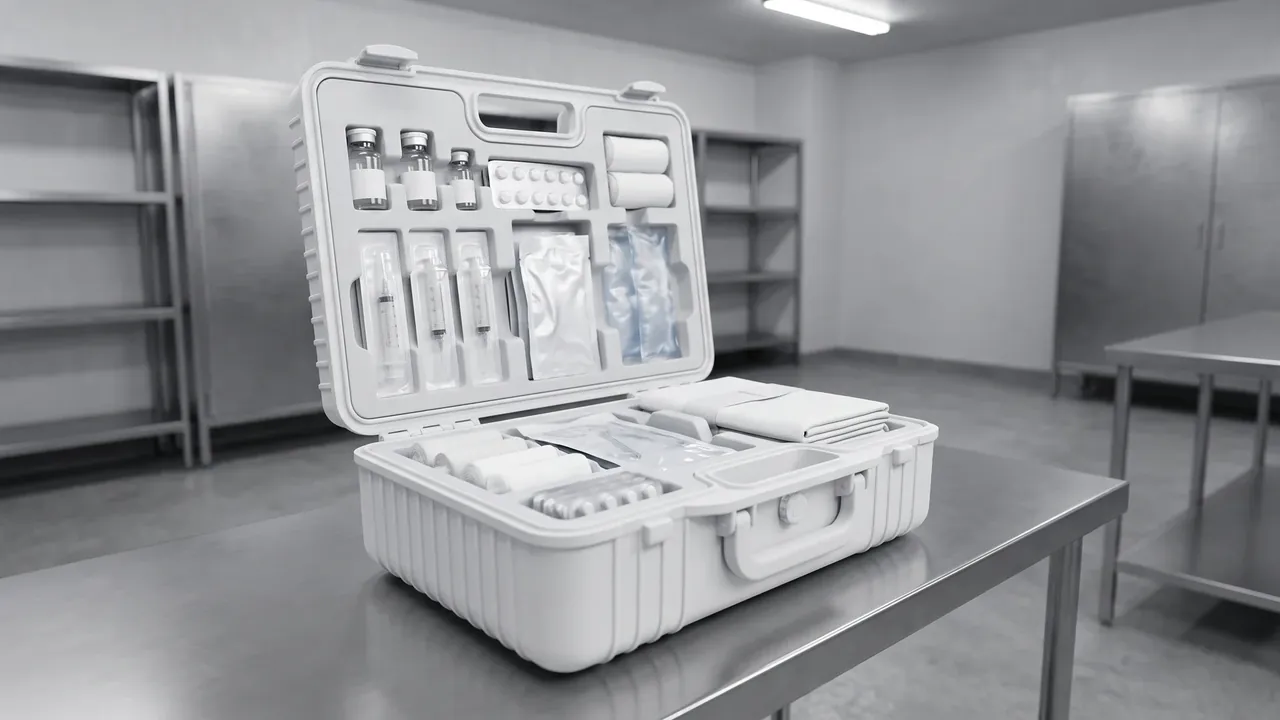
The liner system of an explosion-proof case has two goals: keep the contents in place under vibration, and dissipate static reliably. EVA and EPE foams fix the contents, dividers and trays handle multiple items; but unlike an ordinary box, the liner must not block the static dissipation path, so the conductive pad, grounding terminal, and liner must be designed together so the contents are both restrained and reliably dissipated. Writing restraint and static dissipation as acceptable metrics is the core difference of an explosion-proof case over an ordinary storage box on both stability and static dimensions, and the link the buyer most easily overlooks yet most affects safety.
The trade-off between custom and universal liner depends on the contents' organization and static need. Fixed kitting suits a typed liner with fixed grounding positions, giving consistent restraint and dissipation; ad-hoc tasks suit adjustable dividers and swappable grounding modules, using zoning logic rather than per-item cutting. Either way, the explosion-proof case should guarantee "pick on open, secure on reset," with grounding still reliable after reset. Writing the reset as a diagram on the inner lid is low-cost and high-return; if reset depends on one person, restraint and grounding drift when that person leaves, and that is the human-factor risk batch hazardous support fears most.
A detail often missed is the testability of static dissipation. The explosion-proof case should provide a testable grounding terminal or test point so the handler can confirm at the site with a simple method whether the dissipation path is continuous, rather than only testing back in the lab. The manufacturer should provide the grounding terminal spec and test point position, writing "grounding testable" into acceptance, more reliable than troubleshooting after a static event. Front-loading grounding testability into the structure is the key that keeps static safety over years of reuse, and the basis the buyer can rely on at inventory.
Locks and Seals: The Hazardous-Goods Custody Chain
In hazardous-goods transit, seal management matters more than for a single box. An explosion-proof case usually has two lock layers: a pressure-rated latch for daily access, and a numbered seal added at handover. The pressure latch must be of equal strength to the shell so it does not become a pressure weak point; the seal number binds to the handover sheet, and every opening generates a record, ensuring a definite answer to "was it opened." High-value or sensitive batches can upgrade to RFID seals that automatically record time and location at each custody point, turning the responsibility chain from manual check to system trace. This is consistent with the sealed-to-opened traceability of the war reserve case, only the explosion-proof case extends the custody point along the hazardous-goods regulatory chain.
Traceability also lives in the identity system. The explosion-proof case should provide both a QR code and an embossed serial on the identification panel, so manual verification survives a scanner outage; a hidden verification code inside the lid guards against malicious replacement of the external plate. This dual identity matters especially in hazardous scenes, because one box may cross many units and years, and any identity mismatch voids every later record. Front-loading traceability into the box structure, rather than pasting paper after the fact, is the key action within the manufacturer's responsibility boundary and the basis the buyer can rely on at compliance audit.
The seal should also link to the relief element's status. The explosion-proof case seal or record card should record the relief element's inspection date and replacement node so every handover can check "is the relief still within validity." When a batch circulates across years, any date mismatch voids relief management, so the identity and date system must be front-loaded into the structure rather than tallied afterward. High-value batches can upgrade to time-stamped seals that record time at each custody point, turning the hazardous-goods responsibility chain from manual ledger to system trace, so "is it valid" has a definite answer and violation risk across multi-unit handovers drops sharply.
Stack and Palletization: Pressure Structure Not in Conflict with Stacking
Explosion-proof cases rarely sit single in warehouses; more often they stack densely and dock with pallets and rack modules. Stacking strength depends on bearing surface, ribs, and locator pins working together: top and bottom stacking bosses must align so load transfers vertically to the main structure, not onto thin walls or latches; locator pins prevent inter-layer sliding, avoiding collapse during a forklift hard brake or rough road. But the special point of an explosion-proof case is that the stacking load must not conflict with the pressure design — the relief element must not be blocked by the box above and fail, so the stacking bosses should avoid the relief area, specified explicitly in the technical agreement. Writing this into the agreement is the key that distinguishes an explosion-proof case from an ordinary box on the stacking dimension.
Palletization is the key interface that lets an explosion-proof case join the transport system. External dimensions should prioritize alignment to standard pallets and container inner widths so multiple boxes tile a pallet without gaps or overhang; the base should have features that work with pallet straps or anti-slip mats, preventing the whole load from sliding in transit. This interface looks like a sizing issue but decides whether the explosion-proof case truly enters containerized transport or gets re-stacked at every node. For hazardous transport, palletization also directly affects isolation and fixing efficiency, the last mile turning "a box" into "a hazardous unit," and it shares the stack-to-pallet discipline of the stackable container, only the explosion-proof case brings the relief area into the stacking constraint.
Stacking should also consider the long-term state of the pressure structure. Under long compression and temperature change, the shell and flameproof face may slowly change, so a stacking tier limit and periodic inspection should be specified. The manufacturer should state the stacking tier limit, the relief-area exclusion, and the inspection interval in the technical agreement so the warehouse does not press heavy boxes onto the relief area. Front-loading the long-term state into the agreement is more reliable than finding "the flameproof face deformed" at inspection and then remedying, and avoids a whole stack becoming dangerous in a chain because the bottom box failed.
Sealing and Flame Arresting: Gap Control and Flame Elements
The seal of an explosion-proof case must solve both "water and dust proofing" and "flameproofing and flame arresting," and the two have different mechanisms. Water and dust proofing relies on elastomer gasket compression; flameproofing and flame arresting rely on controlled gaps and flame elements: an elastomer gasket that fully blocks the gap may affect pressure relief, while relying entirely on the gap for flameproofing requires precise gap control. Therefore an explosion-proof case often uses the division "structural face carries flameproofing, gasket carries protection," letting each do its job. Writing this division into the technical agreement is the core by which a buyer distinguishes a flameproof quote from an ordinary one, and the link most easily mishandled in explosion-proof seal design.
The choice of flame element depends on the possible flame type and relief need. Flame mesh, flame plate, and flame-arresting relief element each fit a scenario: mesh suits small-flow gas, plate suits directional relief, and the flame-arresting relief element carries both relief and flame arresting. The choice should be designed together with the box's relief solution, avoiding conflict between flame arresting and relief. The manufacturer should state the flame solution's applicable conditions and service method at delivery, writing "flame arresting maintainable" into the delivery spec, more reliable than discovering flame-arresting failure after a pressure event.
A second layer of sealing is recovery after open-close. After repeated open-close, the structural face and gasket both wear, so they should be inspectable, cleanable, replaceable, with fit margin left in the structure. The manufacturer should provide the structural face and gasket inspection interval and spare numbers, writing "still flameproof after open-close" into the technical agreement. Front-loading open-close recovery into the structure is the key that keeps flameproofing and protection over years of reuse, and a dimension ordinary transport cases often ignore.
Static Dissipation and Grounding: Eliminating the Ignition Source at Box Level
In a flammable and explosive environment, static is a common potential ignition source, so at the box level the explosion-proof case must be conductive and reliably grounded so accumulated static is dissipated in time. This requires the material or coating to be conductive, the box parts to be conductively continuous, and the grounding point to be reliable and testable. Any insulating section (a coating, a pad, or a liner) may break the dissipation path, so all parts should be assessed for conduction. Writing static dissipation into the technical agreement is the key by which a buyer distinguishes a flameproof quote from an ordinary one, and an unavoidable safety link in hazardous use.
Static dissipation should also consider the handling action. Opening, taking, and wiping may generate static, so the explosion-proof case should design conductive contact surfaces at the opening and handling points so the operator and the box form a dissipation path. The manufacturer should provide handling static guidance and grounding method, writing "anti-static handling" into the usage spec. Front-loading anti-static into the handling surface is the key that reduces ignition risk in the real field, and avoids a single opening action generating a static discharge.
A third layer of grounding is verifiability. If grounding is not testable, dissipation effectiveness cannot be confirmed, so the explosion-proof case should provide a testable grounding point and criterion for periodic site verification. The manufacturer should provide the grounding impedance criterion and test point position and specify the retest interval. Writing grounding testable into the technical agreement is the key that upgrades the explosion-proof case from "designed anti-static" to "verifiably anti-static," and the data the buyer can rely on at compliance audit.
Service and Inspection: Cycle Management of Flameproof Face and Relief Element
The reliability of an explosion-proof case rests on periodic service, so service and inspection matter more than an ordinary box. A full service should include: checking the flameproof-face gap and surface, checking shell welds and ribs, checking the relief element's status and validity, checking flame-arrestor cleanliness, and checking grounding continuity and impedance. The manufacturer should provide a service checklist, decision criteria, and replaceable-part numbers so the site acts by procedure rather than by feel. Writing the service procedure into the technical agreement is the key that keeps the explosion-proof case flameproof, and avoids "small damage unserviced, big damage scrapped."
A key maintenance action is flameproof-face inspection. After repeated open-close and handling the flameproof face may wear, rust, or be painted, so an inspection interval and criterion should be specified so the buyer decides by data whether to repair or replace. The manufacturer should provide the flameproof-face inspection method and repair process so flameproofing moves from "one factory pass" to "periodically verifiable." Writing the inspection into the delivery spec is the core difference of an explosion-proof case over an ordinary box on the verifiable dimension, and the data source the buyer can rely on at safety audit.
A second layer of service is the record. Each service and inspection of an explosion-proof case should leave a trace so "how many times serviced, what state the flameproof face is in now" is queryable. The manufacturer should reserve a service-record position or bind the record to the box identity so service moves from human memory to system trace. Front-loading the service record into the structure is the basis for a manageable explosion-proof case, and the data the buyer can rely on when deciding to replace, avoiding a whole batch of hazardous goods losing protection over one aged flameproof face without anyone knowing.
Military Acceptance: Mapping MIL-STD-810H to GJB Flameproof
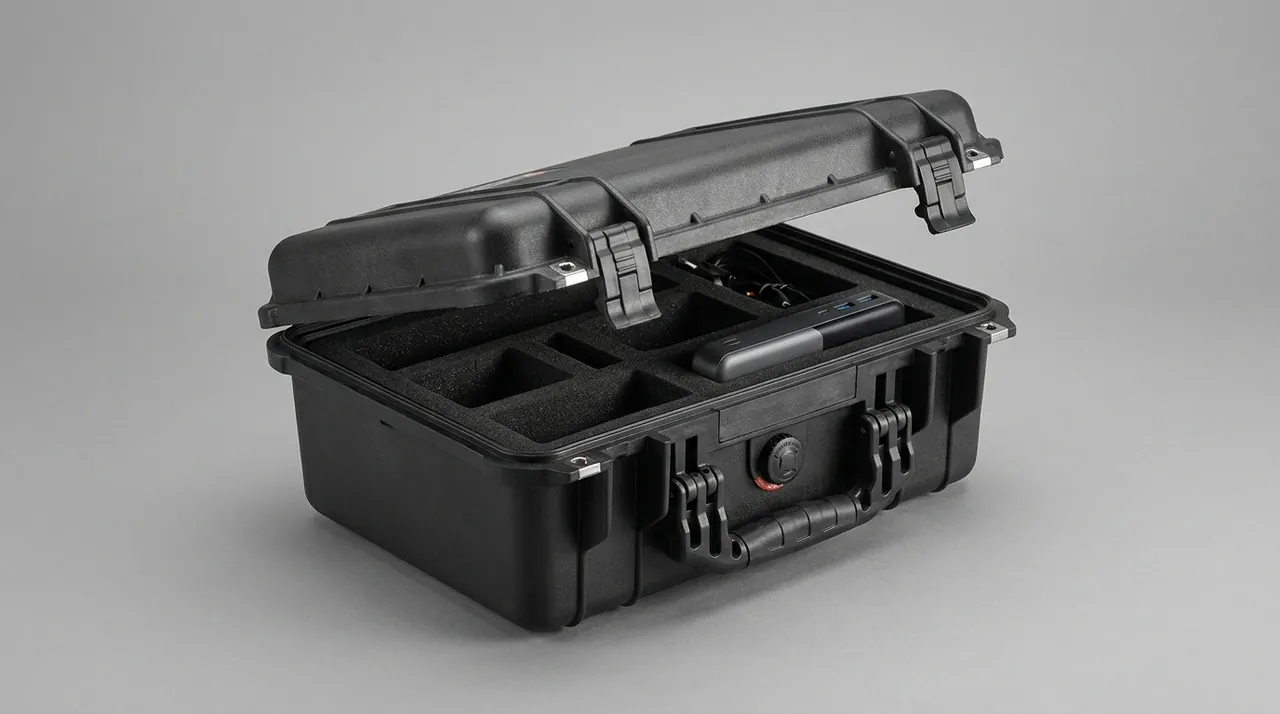
Military acceptance of an explosion-proof case usually maps to MIL-STD-810H and the corresponding GJB methods, but the focus differs from an ordinary transport case: beyond generic drop, vibration, and salt spray, the explosion-proof case should add flameproof-related verification such as pressure testing (shell does not fail under rated overpressure), flameproof testing (no flame path leakage), relief element opening pressure and release direction, and static dissipation and grounding continuity. Turning "flameproof capability" from a claim into a set of acceptable tests is the core by which a buyer distinguishes a flameproof quote from an ordinary one. The test profile should bind to the real use scenario, because only a test matching the actual scenario predicts field performance.
Military testing should not be read only for a pass mark, but for whether the report maps to the specific box. The explosion-proof case acceptance report should record: shell deformation under pressure testing, the flame path under flameproof testing, relief element opening pressure and direction, and the retention of the flameproof face and grounding after salt spray and vibration. These data feed directly back into shell and flameproof-face improvement, where the test budget earns its return. A supplier without a report can only promise verbally, with nothing to compare in an incident dispute; a supplier with a report has committed to specific test conditions checkable line by line. The bound object should be the real batch, not a generic sample, because the consistency of batch flameproofing shows exactly in every box reproducing the conclusion.
The deeper value is the improvement loop: aligning the real field problem with the lab failure mode forces shell or flameproof-face optimization. For example if a box's flameproof-face gap grows after several hundred cycles, the lab should reproduce the flameproof test at the same count, then use the flameproof-face fit and surface treatment as the mold-change basis. Writing this loop into the technical agreement makes the explosion-proof case not "accepted once, then unchanged" but continuously converging with field feedback. This is consistent with the "drive iteration by test profile" idea of the military rotomolded case, only the explosion-proof case extends the test goal from protection to pressure-tight flameproofing.
Export and Compliance Documents: Trade Requirements for Hazardous-Goods Containers
When an explosion-proof case is exported or moved cross-border with hazardous goods, its compliance documents are more complex than an ordinary case. Beyond the general UN packaging certification, packing list, and material conformity, an explosion-proof container also needs pressure and flameproof test reports, a third-party lab number, and traceable batch records so the physical box, certificate, and report correspond one to one. The classification, packing group, and declaration of the hazardous goods are governed by local regulations and export control requirements; wooden packaging must meet IPPC fumigation or exemption. The typical failure is document inconsistency: certificate box type, report status, and actually shipped box do not match, often detained at the port. Writing the boundary of "container compliance" versus "contents compliance" clearly is the premise that cross-border hazardous transport avoids responsibility disputes.
Export should also separate the boundary of "container compliance" from "contents compliance." The explosion-proof case manufacturer is responsible only for the container's pressure, flameproof, sealing, and static dissipation; the classification and handling of the contents are the contents party's, and the two must not be confused. Therefore the technical agreement should state which test reports the container provides, who issues them, and for how long, while the contents compliance is separately the buyer's or contents party's responsibility. Writing the boundary clearly is more reliable than arguing "who owns this box" at the port, and avoids mistakenly pushing hazardous-goods responsibility onto the container manufacturer. It must be restated that this article discusses the container only; export is governed by local regulations and export control requirements, and the manufacturer's duty is to build compliance into the box, not to replace the contents or regulatory body.
In practice, the explosion-proof case export documents should attach a list-style annex stating version, validity, and issuing body, re-verified against the certificate before each production, starting paperwork two weeks early typically halving clearance time. The explosion-proof case's multi-batch, long-cycle nature makes document version management more critical than single-batch export: the same box type in different years may correspond to different standards, and if documents are not updated per batch, an old report with a new box fails at the port. Binding the document version to the production batch is the most overlooked yet most fatal link in explosion-proof case export compliance.
Long Seal and Spares: Life Management of Relief Element and Flameproof Face
Explosion-proof cases are mostly reusable assets, so long seal and spare management matters more than an ordinary case. An explosion-proof box may serve years, during which the relief element, flameproof face, gasket, and grounding terminal all age; without replaceable-part numbers, a whole box loses flameproofing over one element. The manufacturer should deliver a complete spare list with part numbers so the buyer procures by drawing rather than verbal inquiry. Front-loading spares into delivery is the key that keeps an explosion-proof case at low ownership cost over the whole cycle, and avoids a key explosion-proof box being out of service for a missing part, exactly the management action reusable flameproofing should most use.
Seal should also include relief-element validity management. One-time elements such as bursting discs have a storage shelf life, and past it the opening pressure may drift, so validity should be specified and replaced periodically. The manufacturer should provide the element validity and replacement interval so the buyer replaces by data rather than by feel. Writing validity into the technical agreement is more reliable than discovering "the element expired long ago" at a pressure event, and avoids a whole batch of explosion-proof boxes losing relief capacity collectively without anyone knowing.
A third layer of seal is the environment's effect on the flameproof face. Moisture and salt spray rust the flameproof face and break the gap, so the storage environment should control humidity and be inspected periodically; the manufacturer should give storage advice and an inspection interval. Front-loading the storage environment into the maintenance procedure is the key that keeps an explosion-proof case usable after years of storage, and avoids discovering at opening that the flameproof face has rusted and failed. It must be restated that this article discusses the container only; the classification and handling of the contents are governed by local regulations, and the manufacturer's duty is to build pressure, flameproofing, relief, and static dissipation into the box, not to replace the contents or regulatory body.
Procurement Checklist: Writing "Explosion-Proof Case" into an Agreement
Buying an explosion-proof case should not stop at "a thick iron box" but turn every line above into an acceptable clause. The checklist should at least include: rated overpressure and pressure-shell design, flameproof-face gap and surface process, relief element type/opening pressure/release direction, flame-arresting solution and service, anti-corrosion and conduction treatment, grounding terminal and testability, liner restraint and static-dissipation coordination, pressure-rated latch and seal traceability, stacking tier and relief-area exclusion, flameproof-face and relief-element inspection interval, military pressure and flameproof test profile with bound batch, export document list with version management, and spare part numbers with element validity. Writing this list into the technical agreement gives the buyer the right to question quotations rather than picking boxes by feel at acceptance.
Procurement should also write "use environment" and "service interval" into the requirement. The real cost of an explosion-proof case is not the unit price but whether it holds flameproofing under rated overpressure, how much the flameproof face falls after many cycles, and how dear the service and elements are. Once those numbers are estimated honestly, every line of the checklist gains a budget anchor. It must be restated that this article discusses the packaging container; the classification, handling, and export of hazardous goods are governed by local regulations and export control requirements, and the container manufacturer's duty is to translate pressure, flameproofing, relief, and static dissipation into a mass-producible box structure, not to replace the contents or regulatory body. Writing the checklist into the agreement is the first step that turns "flameproof delivery" from a slogan into an auditable engineering fact.
Same-Structure Scenes: Petrochemical, Mining, Industrial Control
The explosion-proof case's design logic is not only for the military; in petrochemical, mining, and industrial control it is the same structure. Flammable gas environments, dust environments, and battery-energy-storage scenes equally need pressure, flameproofing, relief, and static dissipation, differing only in standard class and marking requirement. Therefore the explosion-proof case's pressure structure, flameproof face, and relief element can migrate directly to the industrial system, letting the two share production and spares and cut total cost of ownership. The manufacturer should reserve interfaces for "civil-military common structure" rather than making incompatible molds for each version, and aligns with the "standardized zoning interface" idea of the equipment case and gear case.
The civilian scene also stresses reachability and readability. Industrial-site handlers are often non-military, so the explosion-proof case marking should highlight relief direction and grounding and the reset method so anyone sees safety information before model number. The box should reserve multilingual or pictogram card positions so cross-region use needs no repaint to swap the list. Writing "readable" into the design is the last mile taking the explosion-proof case from military to industrial safety, and the key to its real scaled-reuse value.
The industrial scene sometimes demands stricter standard conformity. Petrochemical and mining often require flameproofing and relief to meet specific standards with test reports, so the industrial version should emphasize verifiability and documentation even more than the military version. The manufacturer can provide a test template and document list so the customer connects to safety assessment quickly. Front-loading documentation into delivery is the key that makes the explosion-proof case truly deliver "safe delivery" value, and avoids a qualified explosion-proof box being unable to enter the industrial safety system for missing documents.
Closing
The reliability of an explosion-proof case is written into every detail of pressure and flameproofing: holds pressure, breaks the flame path, releases directionally, dissipates cleanly. Buy it as a flameproof-delivery system, not as a thick iron box. Related Reading: Ordnance Packing Box, EMI Shielding Case, Equipment Case and Gear Case.
Frequently Asked Questions
Q: Why does an explosion-proof case stress both pressure resistance and flameproofing; is a thick shell not enough? A: Because "thick" only solves strength, not the flame path or the pressure-release direction. Pressure resistance requires the shell not to rupture as a whole under a set internal overpressure; flameproofing requires controlled gaps and paths to confine flame or pressure wave inside the shell without igniting the outside. The two have different mechanisms: a thick-shell-only box may hold pressure yet leak flame at the gap; a gap-only box may resist ignition yet rupture as a whole under overpressure. Therefore an explosion-proof case must coordinate the pressure shell, flameproof face, and relief element, and direct the release toward the safe side. Writing pressure and flameproof parameters into the technical agreement lets the buyer distinguish a "real explosion-proof case" from "a thick iron box" with acceptable clauses. The typical field failure is a thick-shell box leaking flame at a gap, with the responsibility boundary already blurred because "flameproof face was never written," exactly where the two mechanisms diverge.
Q: Why must an explosion-proof case's relief element release directionally? A: Because when internal pressure reaches the set value, if the shell ruptures as a whole, fragments fly in random directions and may injure people and equipment; the point of the relief element is to drive pressure and any flame toward a designated safe direction so the shell does not fail as a whole. Therefore the relief element should be consistent with the box's use attitude, and the shell should clearly mark the release direction and safety distance and specify the installation attitude, avoiding an attitude change in transit that points the release to a dangerous side. Writing the release direction into the technical agreement is more reliable than finding "the relief points at people" on site and then remedying, and avoids the relief element itself becoming a secondary injury source. This is the most critical difference of an explosion-proof case over an ordinary transport case on the safety dimension, and the one a quotation most often omits.
Q: Why does an explosion-proof case need static dissipation and grounding? A: Because in a flammable and explosive environment static is a common potential ignition source; if the shell is insulating or poorly grounded, accumulated static discharging may ignite the external environment. Therefore at the box level the explosion-proof case must be conductive and reliably grounded: the material or coating conductive, all parts conductively continuous, the grounding point reliable and testable. Any insulating section (a coating, a pad, or a liner) may break the dissipation path, so all parts should be assessed for conduction. Opening, taking, and wiping may generate static, so conductive contact should be designed at the handling surface. Writing static dissipation into the technical agreement is an unavoidable safety link in hazardous use, and avoids a single opening action generating a discharge. The safe practice is to verify grounding impedance on a schedule, because a reading taken once at delivery says nothing about the box a year later. A further point is that the test should be done at the joints and hinges, not only at the main grounding stud, because a bonded joint that reads open is the most common path failure and the least visible until the day static finds it.
Q: What documents differ from an ordinary case when an explosion-proof case is exported? A: Beyond the general UN packaging certification, packing list, and material conformity, an explosion-proof container also needs pressure and flameproof test reports, a third-party lab number, and traceable batch records so the physical box, certificate, and report correspond one to one; the classification, packing group, and declaration of the hazardous goods are governed by local regulations and export control requirements; wooden packaging needs IPPC fumigation or exemption. The biggest failure is document inconsistency: certificate box type, report status, and shipped box mismatch often get detained. Also separate "container compliance" from "contents compliance" — the manufacturer only owns the container pressure, flameproofing, sealing, and static dissipation, the contents classification and handling are the contents party's, and the agreement must state who issues which and for how long. The explosion-proof case's multi-batch long cycle means the document version must bind to the production batch; an old report with a new box fails at the port, and starting paperwork two weeks early typically halves clearance time.
Q: Why must an explosion-proof case's flameproof face be inspected periodically? A: Because after repeated open-close and handling the flameproof face wears, rusts, or gets painted, the gap changes, and flameproof capability falls, which is the most concealed flameproof failure mode — the box looks intact while the flame path is no longer controlled. Therefore a flameproof-face inspection interval and criterion should be specified so the buyer decides by data whether to repair or replace; the manufacturer should provide the inspection method and repair process so flameproofing moves from "one factory pass" to "periodically verifiable." The field lesson is that a box accepted on a single factory test, after a few hundred cycles, has a flameproof face already out of tolerance with nobody aware. Writing flameproof-face inspection into the agreement is more reliable than troubleshooting after an incident, and avoids a whole batch of hazardous goods losing protection over one failed flameproof face. A further point is that the inspection should be paired with a re-check of the pressure-rated latch, because a latch that has lost preload will not hold the face against the seat, and the two fail together while the drawing still shows them as separate items.
Q: Why must an explosion-proof case's relief element mind its validity? A: Because one-time elements such as bursting discs have a storage shelf life, and past it the material may age and the opening pressure drift, causing the disc not to open when it should or to open early below pressure, both of which are dangerous. Therefore the element's validity and replacement interval should be specified so the buyer replaces by data rather than by feel; the manufacturer should provide the element validity, opening-pressure tolerance, and spare number. A relief valve resets but needs seal inspection, and a flame arrestor needs cleaning, so both belong on the service checklist. Writing validity into the technical agreement is more reliable than discovering "the element expired long ago" at a pressure event, and avoids a whole batch of explosion-proof boxes losing relief capacity collectively without anyone knowing, exactly the hidden risk reusable flameproofing must watch most. A further safeguard is to write the element validity on the seal card so a handover reveals an expired disc before the box leaves the depot, rather than at the moment it is suddenly needed and there is no time to replace it.
Q: Can an explosion-proof case be civil-military common to cut total cost? A: Yes, and it should be. Flammable gas environments, dust environments, and battery-energy-storage scenes equally need pressure, flameproofing, relief, and static dissipation, differing only in standard class and marking requirement, so the explosion-proof case's pressure structure, flameproof face, and relief element can migrate directly to the industrial system, letting the two share production and spares and cut total cost of ownership. The manufacturer should reserve interfaces for "civil-military common structure" rather than making two incompatible molds. The civilian scene should also stress reachability and compliance documents: marking highlights relief direction and grounding, with a test template and document list. Writing documentation into the design is the last mile taking the explosion-proof case from military to industrial safety, and the key to its real scaled-reuse value, avoiding dual-tooling that wastes the most money over a decade of service. Procurement should therefore ask for the common-structure option explicitly in the agreement, because the saving shows up only after years of parallel service, not on the first invoice, and a shared relief element, latch, and flameproof face across both versions means the plant and the field unit draw from one spare pool instead of duplicating it.
Q: Why should the explosion-proof case military test add a flameproof-specific item rather than generic items only? A: Because generic items (drop, vibration, salt spray) only prove the box does not break, not that it "flameproofs before breaking," and the failure modes of an explosion-proof case are exactly a changed flameproof-face gap, an expired relief element, or broken grounding. Therefore the military test should add flameproof-specific items: the shell not failing under pressure testing, the flame path not leaking under flameproof testing, relief element opening pressure and direction, and the retention of the flameproof face and grounding after salt spray and vibration; these data feed directly back into shell and flameproof-face improvement, where the test budget earns its return. A supplier without a report can only promise verbally, with nothing to compare in an incident dispute; a supplier with a report has committed to specific test conditions checkable line by line. The report should also bind to the real batch rather than a generic sample, because the consistency of batch flameproofing shows exactly in every box reproducing the conclusion. The deeper value is the improvement loop: aligning the field problem with lab failure modes forces mold change, so the explosion-proof case converges continuously with feedback rather than staying unchanged after one acceptance.