

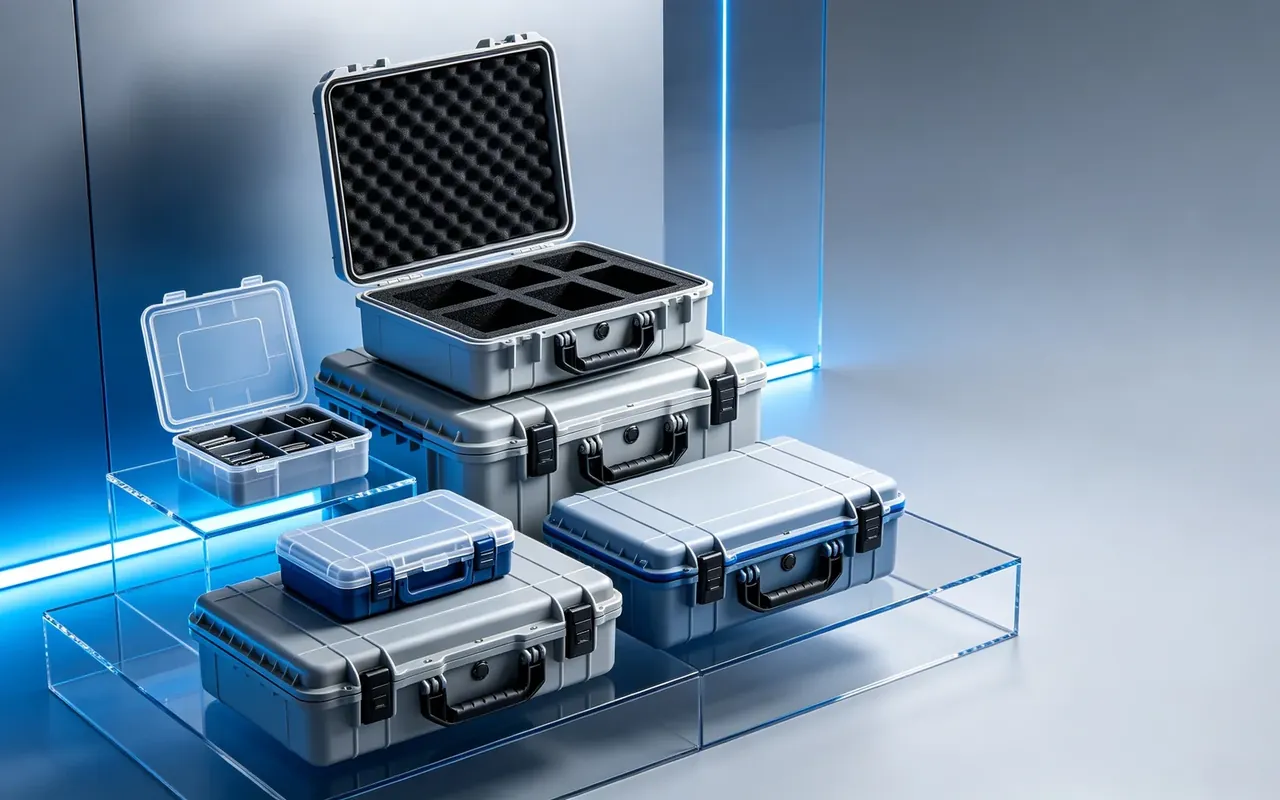
Quick answer: ISO 2233 fixes the atmosphere, not the test: 20, 23 or 27 °C at 50 or 65% RH, a 24 h board dwell against 4 h for plastic, judged by mass.
Table of contents
- Conditioning is a weighing process, not a waiting room
- Three standard atmospheres, and how to pick one
- Dwell time depends on the material, and 24 h is only the floor
- Rack layout, probes and chamber volume
- Stability, then the five minute transfer
- FAQ
1. Conditioning is a weighing process, not a waiting room
A 400 x 300 x 200 mm PP case left overnight and one held until its mass stops moving are two different samples. The second has a known moisture content; the first has a known dwell time and nothing else.
That distinction decides whether the drop test that follows means anything. Wet board loses up to 30 percent of its edge crush strength, while a dry PP shell turns brittle and splits at the corner radius. When two labs disagree, the conditioning record is the first place to look.
ISO 2233 specifies an atmosphere, a tolerance, a dwell and a stability criterion, all four on the record sheet. It describes no test method, which is why the clause sits at the front of a report.
2. Three standard atmospheres, and how to pick one
Three combinations are defined: 20 °C with 65 percent relative humidity, 23 °C with 50 percent, and 27 °C with 65 percent. Each carries a tolerance of plus or minus 2 °C and plus or minus 5 percent RH.
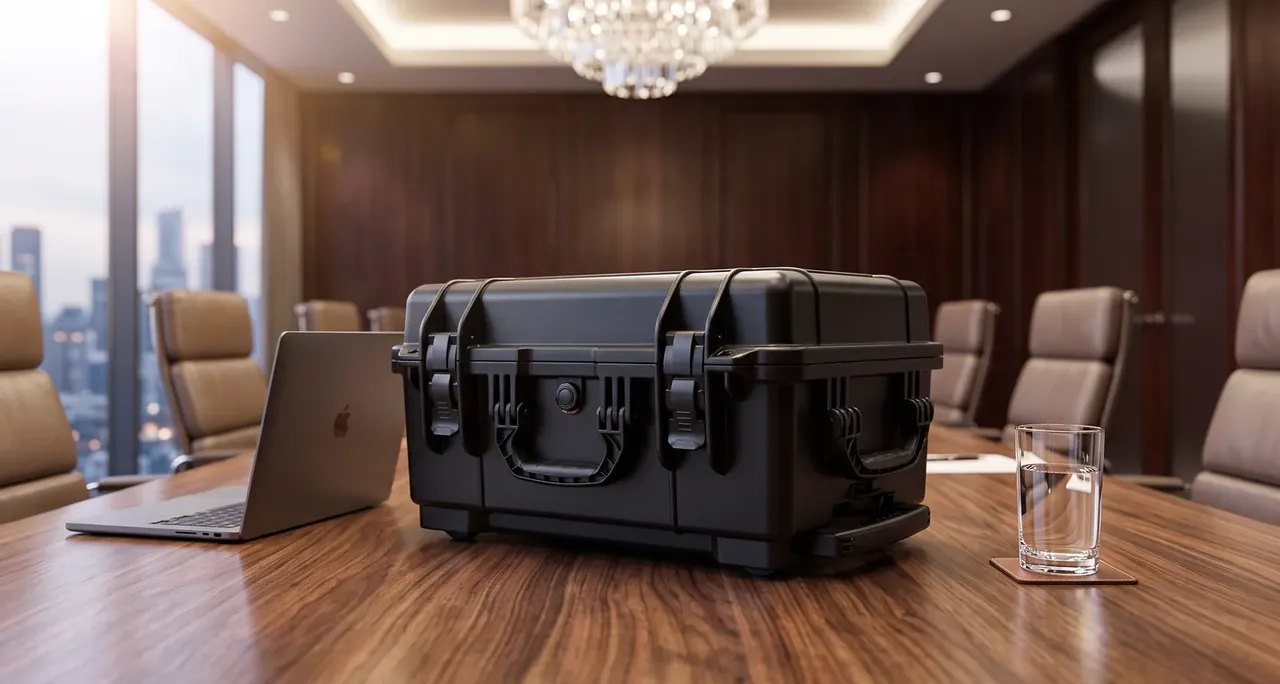
Selection follows the test standard that comes next, not preference. Most transport packaging work uses 23 °C/50 percent, humid-climate projects move to 27 °C/65 percent, and some European board clauses sit at 20 °C/65 percent.
The three are not interchangeable. The same 400 x 300 x 200 mm shell holds 0.3 percent moisture at 23 °C/50 percent and 0.5 percent at 27 °C/65 percent: wall thickness holds, stiffness does not.
3. Dwell time depends on the material, and 24 h is only the floor
Twenty-four hours applies to paper and board. Plastics absorb slowly and little, so 4 h is enough above a 3 mm wall; plywood and timber, with higher starting moisture, often need 48 h. A shell with a foam liner follows the slowest layer.
| Material class | Minimum dwell | Weighing interval | Typical risk if short |
|---|---|---|---|
| Paper and board | 24 h | 24 h | edge crush reads high |
| Corrugated board | 24 h | 24 h | compression reads high |
| PP, ABS, PC shell | 4 h | 12 h | corner cracking in drop |
| Foam liner, EVA | 6 h | 12 h | false rebound |
| Plywood, timber | 48 h | 24 h | mass drift after test |
Dwell and stability are separate conditions, and both must be met: dwell is time in the chamber, stability is mass that has stopped drifting. Meeting the first without the second is half a procedure.
The atmosphere and the dwell belong on the request form, not in the technician's judgement. When a customer asks for 48 h, the report states 48 h, not a rounded 24 h.
4. Rack layout, probes and chamber volume
Keep 100 mm between samples, 500 mm from the chamber wall and 100 mm off the floor, never in front of the supply duct. The clearances let air move around every face instead of drying one side.
Probe position matters as much. Place the sensor between samples, 200 mm clear of the nearest one, away from wall and return grille. A probe on the wall reads the wall, typically 1 °C to 2 °C below the air, so the chart looks compliant while the sample is not.
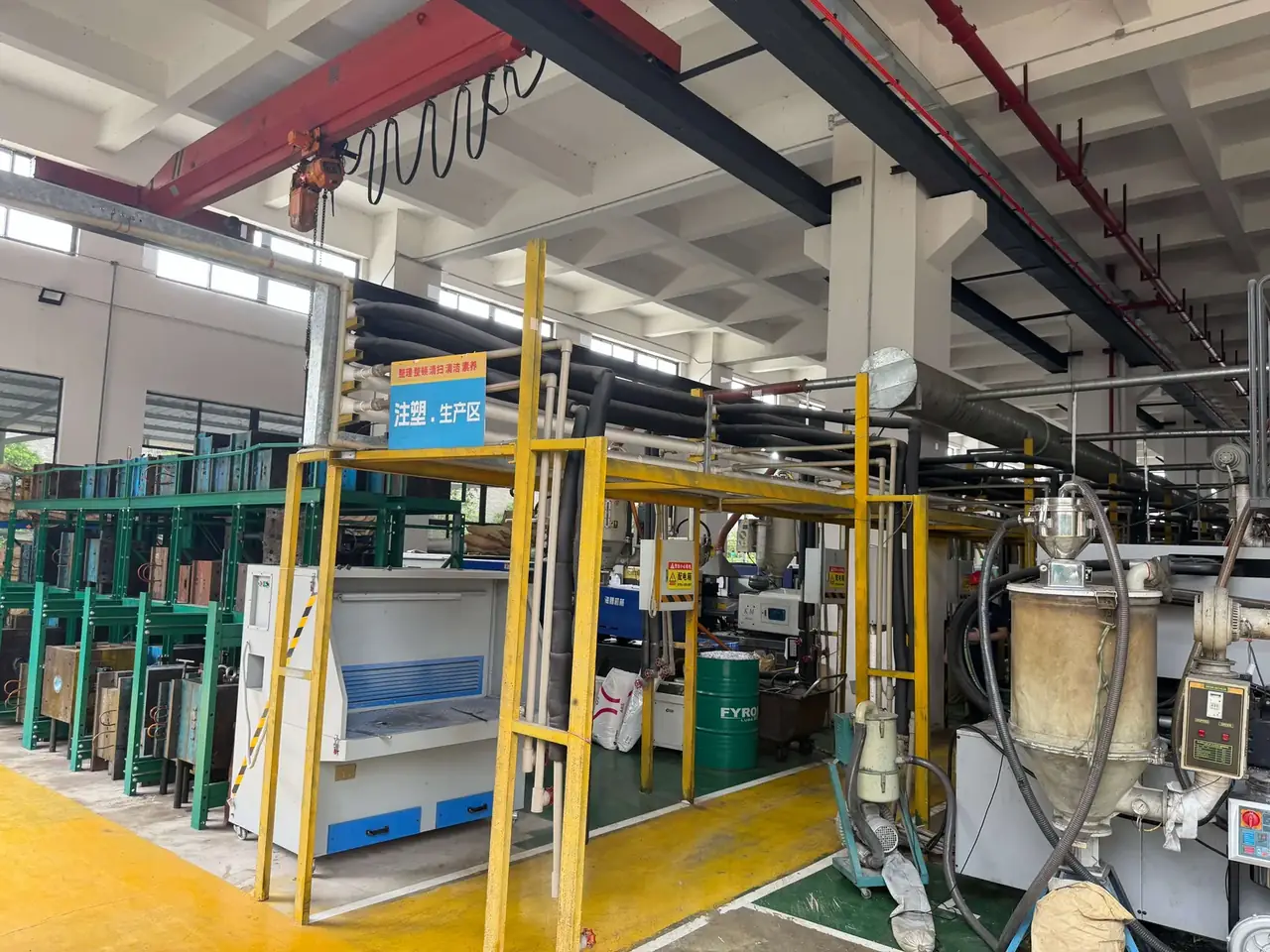
Chamber volume should be at least five times the sample volume: a 60 L case wants 300 L of usable space, and three cases need 900 L. Every door opening costs about 40 min of recovery, and an undersized chamber lets samples push local humidity past 70 percent, which the chart may not show.
5. Stability, then the five minute transfer
Stability is judged on a balance, not on the dial. Two consecutive weighings, at least 24 h apart, must agree within 0.1 percent of sample mass. If both differ by more, the next check waits another 24 h.
Weigh on the same balance each time, at 0.1 g resolution, and put the sample back within 1 min. Each opening drops humidity by 3 to 5 points and needs 20 min to recover, so plan the schedule before the batch starts.
Log temperature and humidity every 15 min. A continuous excursion beyond tolerance for 30 min voids that stretch and restarts the clock; a 1 to 2 min door event can be noted.
From the last weighing to the test start, the chain must fit inside 1 h, transfer under 5 min. Move the case flat, never stacked, never in sunlight.
| Stage | Limit | Permitted action |
|---|---|---|
| Removal | door closed within 1 min | take only the scheduled sample |
| Transfer | 5 min or less | carry flat, no stacking |
| Set-up | 10 min or less | mount in test attitude |
| Test start | within 1 h of removal | go straight into the next procedure |
The recovery leg is usually skipped, yet ISO 2233 treats it as the mirror of conditioning. A dropped case goes back into the same atmosphere for 1 h to 2 h before inspection; otherwise the shell relaxes, cracks close up, and the defect rate comes out too low.
Anything beyond 1 h belongs in the report as an actual interval, with a note that conditions may have drifted. The same shell dropped 3 h after removal cracks at the corners more often than one dropped within the hour.
Conclusion
The useful part of ISO 2233 is not the table of atmospheres but the numbers around it: three conditions, a tolerance of plus or minus 2 °C and plus or minus 5 percent RH, 24 h for board against 4 h for plastic, two weighings within 0.1 percent, a 5 min transfer and a 1 h window to start. Write those into the work instruction and conditioning stops being a formality. Only samples that dwell long enough, weigh stable and travel fast produce comparable data.
This article covers case-side specifications only and does not address any handling, loading or use of the contents.
Related Reading
- High and low temperature tests are a different procedure
- Translating storage humidity limits into case design
- Test sequence in GB/T 4857 transport packaging
- Where conditioning sits in an ISTA sequence
- Temperature-controlled case accuracy and tolerance
Related Products
- 8 Series — Gun Cases; Military Equipment Cases; Camera Equipment Cases; Drone Cases; Watch Cases; Knife Cases; First Aid Cases; Electronics Equipment Cases
- WL8-2812 PP Gun Case — model WL8-2812
- All protective cases and toolboxes: 7 series, 158 models