

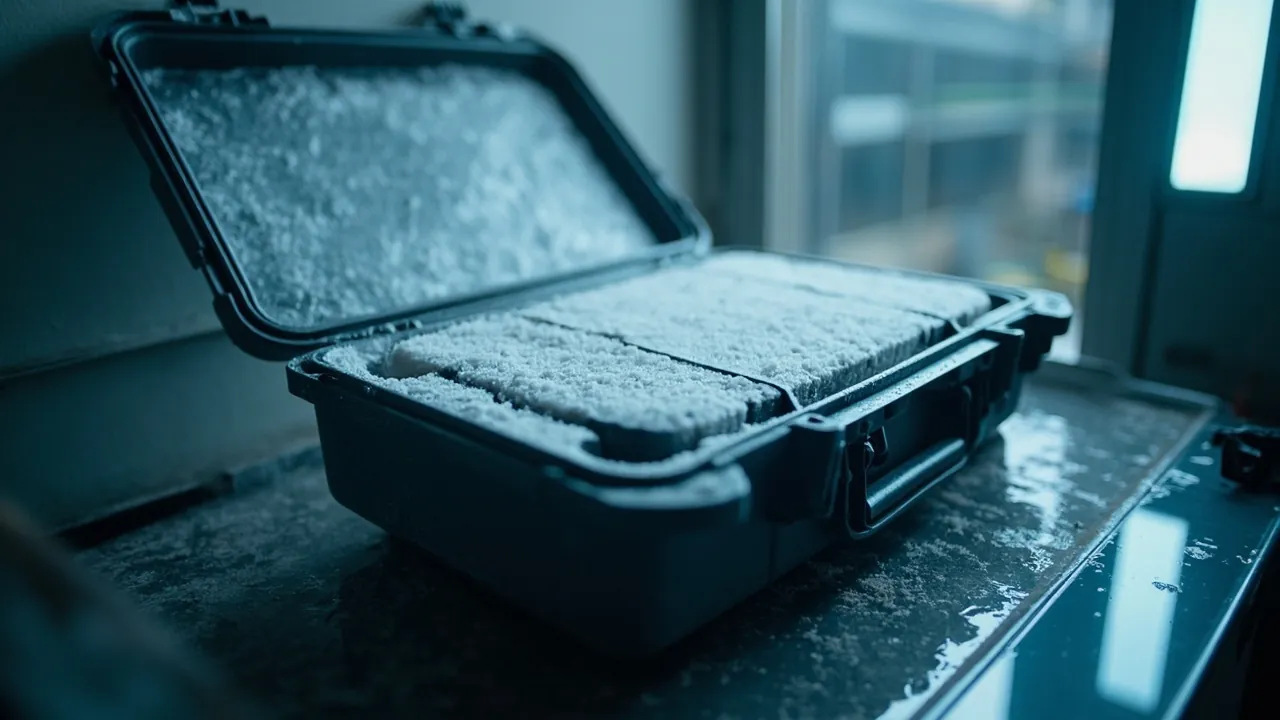
Short answer: high and low temperature testing is not about putting a case in a freezer and an oven for a while — it separately verifies two different things, storage tolerance and operational reliability at temperature extremes. The pair of points at -40 C and +70 C essentially probes the margin at both ends of the same material system: at the cold end, the embrittlement and impact resistance of the plastic, the compression set and rebound of the seal, and the opening effort of the latches; at the hot end, the softening and creep of the plastic, the rise in internal pressure, and the accelerated ageing and permanent set of the seal. The standard approach follows the GB/T 2423 series, that is GB/T 2423.1 for cold, GB/T 2423.2 for dry heat and GB/T 2423.22 for temperature change, or the equivalent IEC 60068 series; military and severe duties follow MIL-STD-810H Method 501 for high temperature and Method 502 for low temperature; and packaging and transport duties are conditioned to GB/T 4857.2. This article analyses four real temperature duties, the three test dimensions that matter, the division of responsibilities between standards, the failure mechanisms at each end, thermal shock cycle design, a parameter table, pass criteria, five failure modes, and a temperature class checklist you can paste into an enquiry.
The most common misunderstanding needs correcting first: passing a -40 C test usually only means the case still works after being stored at -40 C and returned to room temperature, not that it can be opened and used on site at -40 C. Those two duties differ greatly in difficulty. The former only requires that the material does not crack at low temperature and that function recovers on warming; the latter requires the seal to retain enough rebound when cold, the latches not to become brittle or jam, and the plastic to retain enough toughness to take the operating force. So an enquiry must always state the specimen condition: storage (not operated, not loaded) or operating (operated or loaded while cold). The test conditions and conclusions differ completely, and confusing them creates real field risk. For the broader picture of how materials behave at both extremes, see outdoor protective case temperature extremes.
Table of Contents
- Short Answer: Temperature Testing Probes Material Margin at Both Ends
- Why Protective Cases Need This Verification: Four Real Temperature Duties
- The Three Dimensions That Matter: Cold Storage, Hot Storage and Thermal Shock
- Standards Responsibilities: GB/T 2423, IEC 60068, MIL-STD-810H and GB/T 4857.2
- The -40 C End: Embrittlement, Seal Hardening and Latch Failure
- The +70 C End: Softening, Creep, Internal Pressure and Seal Set
- Thermal Shock Testing: Choosing Transition Time and Cycle Count
- Parameter Table: Temperature Points, Dwell, Transition and Cycles
- Specimen Condition: Storage vs Operating, a Fundamental Difference
- Pass Criteria and Inspection Items: Appearance, Dimensions, Function, Sealing
- Five Typical Failure Modes and Material Selection Responses
- Combined Verification with IP Rating, Salt Spray and Stacking
- Putting Temperature Data to Work in Tendering and Acceptance
- Temperature Class Configuration in OEM/ODM Projects
- Frequently Asked Questions
- Conclusion and Further Reading
Short Answer: Temperature Testing Probes Material Margin at Both Ends
Define the object precisely and the later parameters gain meaning.
High and low temperature testing holds a specimen at a specified temperature for a specified time, or cycles it at a specified rate, and examines structural integrity, dimensional stability and functional reliability at that temperature and after recovery to ambient.
Its fundamental difference from room-temperature testing is that material properties are a function of temperature:
- Cold end: thermoplastics move towards the glassy state, modulus rises and toughness falls, which shows up as embrittlement; rubber seals harden and rebound more slowly, which shows up as reduced sealing force;
- Hot end: plastic modulus falls and creep and softening begin; rubber ages faster and takes permanent compression set; gas inside a sealed case expands and produces rising internal pressure;
- The change itself: materials and wall sections expand at different rates and have different thermal inertia, generating thermal stress at interfaces and constraints, which under repeated cycling leads to fatigue and cracking.
Three conclusions follow. First, a temperature test must report both the temperature and the dwell time; temperature alone cannot indicate the degree of creep or ageing. Second, storage and operating conditions must be kept separate and never mixed. Third, the conclusion must be tied to seal condition, because many cases in the field that are structurally intact but already leaking fail at the seal. For sealing principles see outdoor case seal ring.
Why Protective Cases Need This Verification: Four Real Temperature Duties
These tests are not an academic exercise; they map onto four real situations.
Duty one: outdoor and field work. Cases used in telecommunications, power, exploration and emergency response sit in unsheltered outdoor conditions. In summer the case surface can be far hotter than the air temperature; in winter at high latitude or altitude the air temperature can stay below -30 C for extended periods.
Duty two: extreme temperatures in transport and storage. A light truck body can exceed 60 C after standing in the sun, while an open yard in a northern winter can fall below -30 C, and an air freight hold can approach -40 C. The critical point is that the case may be under stacking load at the same time as the extreme temperature, which is a combined duty.
Duty three: cold chain and specialised industries. Cold storage, biological sample transport and chemical raw material storage require cases used long term between -20 C and -40 C, often with the case opened while still cold.
Duty four: internal heat sources. If the case holds batteries, heat-generating electronics or components that must be warmed, the internal temperature can exceed ambient, producing a complex gradient with a cold outer face and a warm inner face that loads the seal from both sides.
| Duty | Typical temperature | Duration | Primary risk |
|---|---|---|---|
| --- | --- | --- | --- |
| Outdoor sun exposure | Surface above 70 C | Hours per day, long term | Softening, creep, seal ageing |
| High-latitude winter | -30 C to -40 C | Weeks to months | Plastic embrittlement, seal hardening |
| Air freight hold | About -40 C to +25 C | Hours | Rapid change, internal pressure swing |
| Summer truck or container | 35 C to 65 C | Hours to weeks | Accelerated creep, rising internal pressure |
| Cold chain storage | -18 C to -40 C | Long term | Long-term cold ageing, stiff opening |
| Internal heat, cold outside | Inner high, outer low | Long term | Combined gradient, seal loaded both ways |
Together these duties show that a case temperature rating must read as a combination of range, duration and specimen condition. A bare statement of -40 C to +70 C is incomplete, because the same numbers can mean either a storage limit or an operating limit, and the two call for entirely different materials and structure.
The Three Dimensions That Matter: Cold Storage, Hot Storage and Thermal Shock
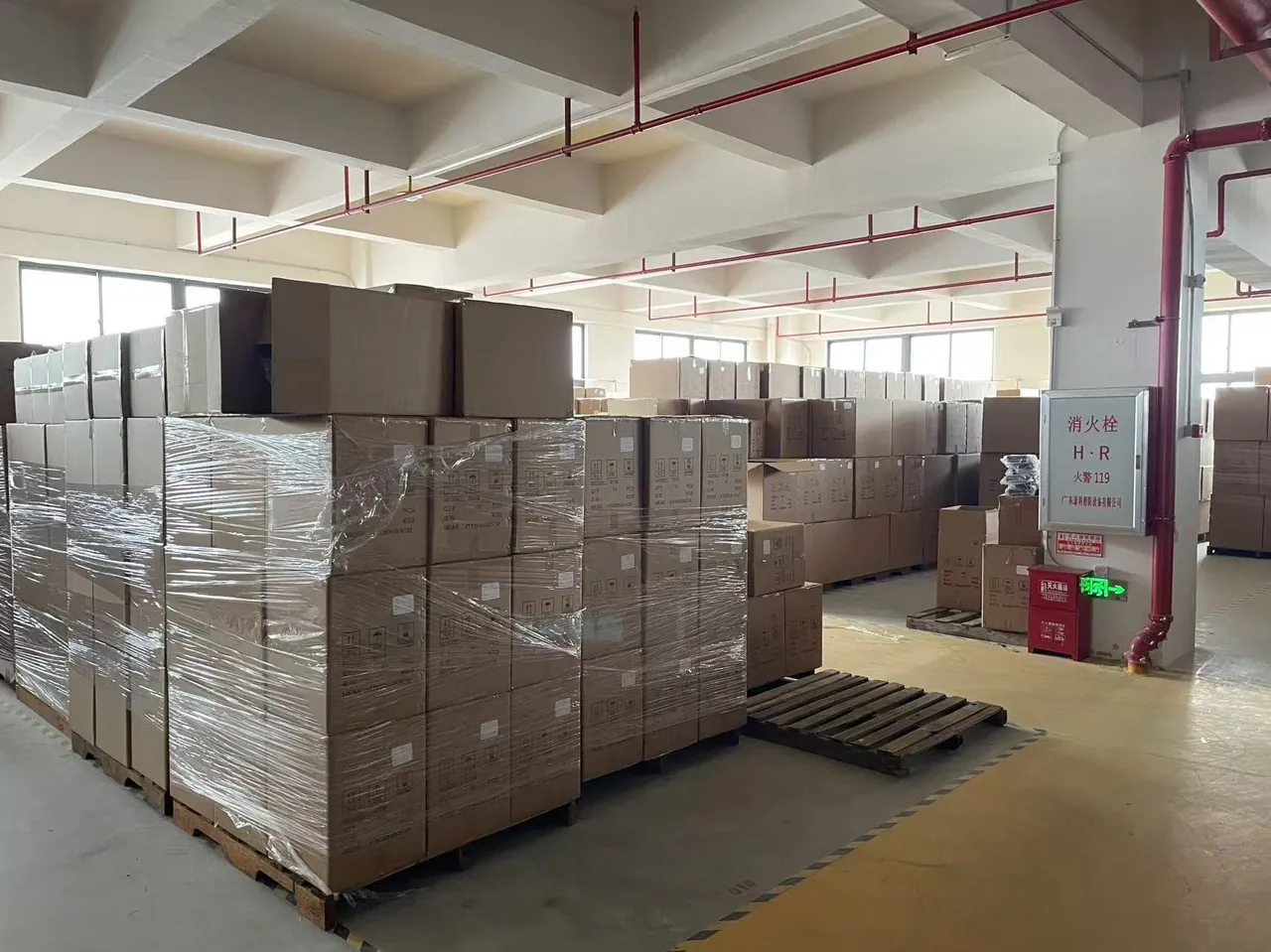
Engineering splits the verification into three dimensions, each with a clear purpose.
Dimension one: cold storage. The specimen is held at -40 C for a specified time, commonly 16 or 24 hours or the stabilisation time set by the standard, with no operation or loading, then returned to ambient and inspected. The purpose is to confirm that the material does not crack when cold, takes no irrecoverable deformation, and works normally after warming. This is the most basic level and usually what a buyer means by passing a low temperature test.
Dimension two: hot storage. The specimen is held at +70 C for a specified time and inspected after returning to ambient. The purpose is to confirm that the material does not soften and fail, takes no permanent deformation, that the seal's compression set stays within limits, and that the insert does not collapse. Hot-end failures tend to be gradual, so a longer dwell exposes more.
Dimension three: thermal shock, or temperature change. The specimen is transferred between cold and hot at a specified rate for 5, 10 or more cycles. The purpose is to expose thermal stress arising from differing expansion coefficients and thermal inertia, and to test bonded interfaces, two-shot moulding joints, metal insert to plastic joints, and the repeated compression and rebound of the seal. Thermal shock most readily exposes the joints between dissimilar materials rather than a single material itself.
The three dimensions cannot substitute for each other. Surviving cold storage does not prove that an interface will not crack after cycling, and surviving hot storage does not prove that toughness at cold is adequate. A complete programme covers all three, or selects by real duty when budget is limited.
Standards Responsibilities: GB/T 2423, IEC 60068, MIL-STD-810H and GB/T 4857.2
The standards system has three layers: environmental test methods, military environmental qualification, and packaging conditioning.
| Standard | Role | Key provisions | Typical use |
|---|---|---|---|
| --- | --- | --- | --- |
| GB/T 2423.1 | Environmental testing, cold | Severity levels and dwell times | Domestic cold verification |
| GB/T 2423.2 | Dry heat | Severity levels and dwell times | Domestic hot verification |
| GB/T 2423.22 | Temperature change | Rate, transition time and cycle count | Domestic thermal shock |
| IEC 60068-2-1, -2-2, -2-14 | International equivalents for cold, dry heat and temperature change | Technically aligned with the GB/T 2423 series | Export projects and international recognition |
| MIL-STD-810H Method 501 | High temperature | Includes hot storage and hot operating procedures | Military and severe duties |
| MIL-STD-810H Method 502 | Low temperature | Includes cold storage and cold operating procedures | Military and severe duties |
| GB/T 4857.2 | Conditioning of packaging | Atmosphere and conditioning time | Pre-treatment for transport tests |
| IEC 60529 and GB/T 4208 | Enclosure ingress protection | IP test conditions and criteria | Seal retest after temperature change |
The three layers read like this. The GB/T 2423 series and the equivalent IEC 60068 series answer how to run the test: temperature points, dwell, transition time and cycle count. MIL-STD-810H answers how to tailor a military or severe duty, insisting on conditions derived from the real life profile rather than fixed severities. GB/T 4857.2 answers how to condition a specimen before transport testing; it is not itself a cold or hot test, but it brings the specimen to a defined equilibrium so that batches are comparable. Where a seal must be verified after temperature change, the test returns to the IP conditions of IEC 60529 and GB/T 4208, because the ingress protection rating is a whole-enclosure metric.
A common error is treating the GB/T 4857.2 conditioning conditions as the temperature test itself. Conditioning only brings a specimen to a comparable state, and its conditions, typically standard atmosphere at 23 C and 50 per cent relative humidity or hot humid at 40 C and 90 per cent relative humidity, are far short of -40 C or +70 C. The military tailoring method is described in MIL-STD-810H case compliance.
The -40 C End: Embrittlement, Seal Hardening and Latch Failure
Cold-end mechanisms differ entirely from the hot end and need separate analysis.
Mechanism one: the plastic enters the glassy state and toughness falls. Thermoplastics have a glass transition temperature. As service temperature approaches the effective embrittlement band near that point, the material shifts from ductile to brittle fracture, cracking instead of deforming to absorb energy. A drop or impact in a cold environment is therefore the most dangerous combination, and drop height requirements usually need rechecking at low temperature; see drop test height by weight.
Mechanism two: the seal hardens and rebounds more slowly. Rubber seals gain modulus and lose rebound rate when cold, with two consequences. The initial sealing force may actually rise because the rubber is stiffer, but the seal cannot rebound quickly enough to compensate when the case is disturbed or deforms, opening a micro-gap. At the same time, cold accelerates compression set, so a seal held compressed while cold may not recover its original thickness on warming and permanently loses sealing capability.
Mechanism three: latches become stiff or brittle. A plastic latch hardens when cold, so more operating force is needed, and a latch with a stress concentration or a defect can fracture in brittle mode. If the case also shrinks with cold enough to misalign them, the latches can jam.
Mechanism four: dissimilar materials shrink differently. The plastic case, metal inserts and rubber seal have quite different thermal expansion coefficients. On cooling, a metal insert that shrinks less than the surrounding plastic creates tensile stress at the joint, and repeated cycling can lead to cracking or a loose insert.
Engineering responses. At the cold end, prefer materials with good low temperature toughness and toughening modification to lower the embrittlement temperature; choose a rubber with good cold performance, such as silicone or certain EPDM compounds, with extra compression and rebound margin; avoid sharp corners and thin sections in latches, using metal reinforcement where necessary; and leave thermal expansion allowance around metal inserts. Insert materials may also harden and lose cushioning when cold; see case seal and insert materials.
The +70 C End: Softening, Creep, Internal Pressure and Seal Set
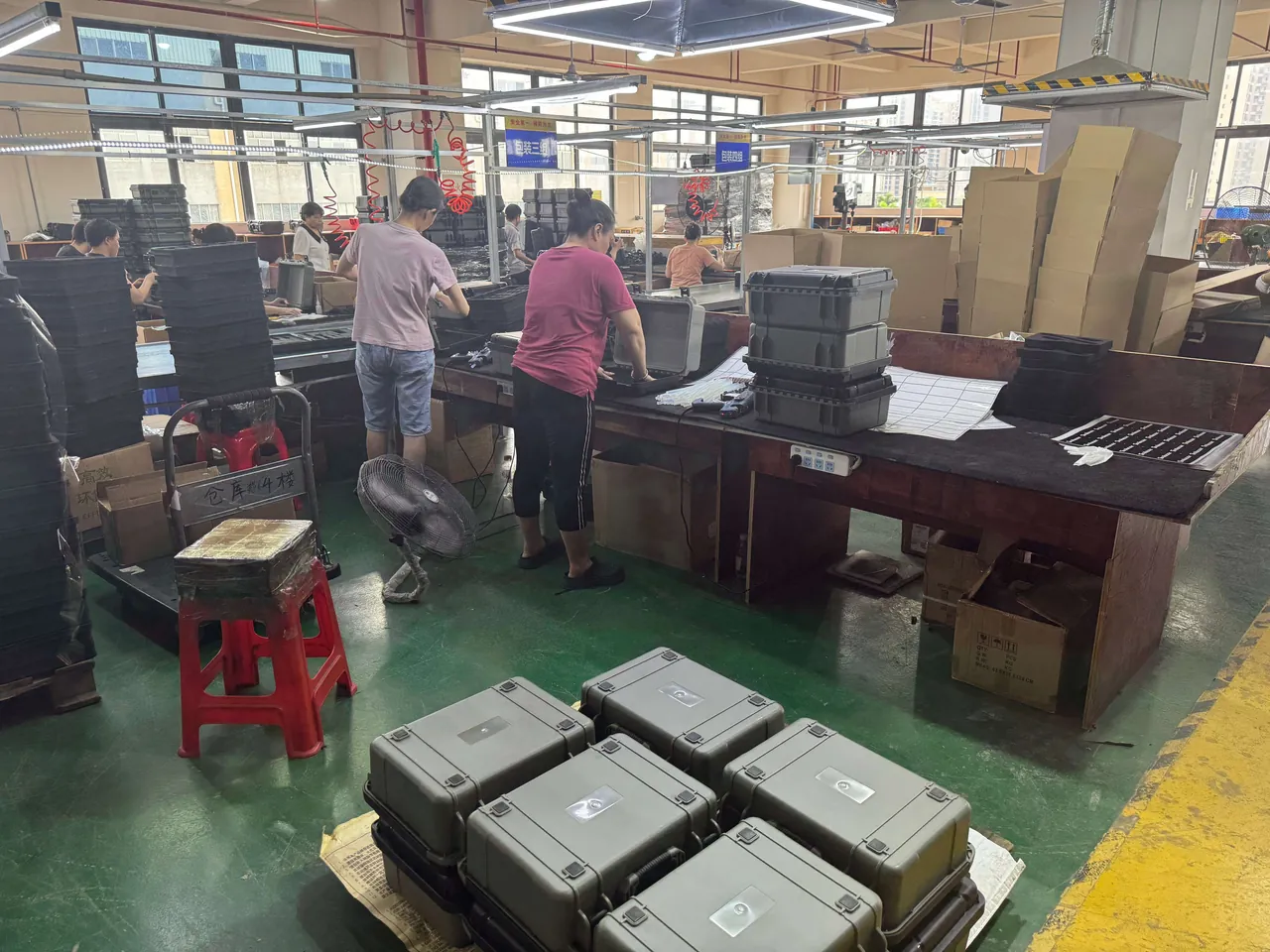
Hot-end failure is more insidious because it is gradual.
Mechanism one: falling modulus and accelerating creep. Heat lowers plastic modulus, so the case deflects more under the same load, and more importantly creep rate is highly temperature sensitive, often multiplying for roughly every 10 C rise. Long-term storage at high temperature can therefore produce permanent deformation such as side wall bulging and lid sinking, by the same mechanism as stacking; see case stacking structure.
Mechanism two: rising internal pressure. The gas pressure inside a sealed case is approximately proportional to absolute temperature. Warming the interior from 20 C (293 K) to 70 C (343 K) at constant volume gives a theoretical differential of
Delta p = 101.3 kPa x (343 - 293) / 293 = about 17.3 kPa
A 50 C rise therefore produces roughly 17 kPa of extra internal pressure, enough to visibly bow a large lid or to push continuously outward on the seal. This explains why cases with a pressure equalisation valve have an advantage at high temperature; see outdoor case pressure valve.
Mechanism three: accelerated seal ageing and permanent compression set. Heat markedly accelerates rubber ageing, which shows up as hardening, cracking and loss of elasticity, while sustained compression produces compression set. Compression set is the key index of hot seal performance, usually specified as a maximum percentage after a given temperature and time.
Mechanism four: softening and collapse of the insert. Foam inserts can soften, lose rebound and compact under sustained load, losing cushioning. Hot storage testing must therefore check insert condition as well as the case.
Engineering responses. At the hot end, prefer materials with a higher heat deflection temperature, using glass-fibre reinforcement where needed; raise case stiffness with ribs to compensate for the lower modulus; specify a rubber with higher temperature capability and low compression set; evaluate a pressure equalisation valve for fully sealed designs; and recheck insert density and rebound for the hot duty.
Thermal Shock Testing: Choosing Transition Time and Cycle Count
Thermal shock is the most easily overlooked dimension and often the one that exposes interface problems.
The critical parameters are transition time and cycle count, not the temperature points themselves.
Transition time. This is the time to move the specimen from the cold chamber to the hot chamber or back, plus the time for the specimen temperature to stabilise. The shorter the transition, the greater the surface-to-core temperature difference and the more severe the thermal stress. Standards typically specify a short transition to produce a genuine shock, for example the rapid temperature change procedure in GB/T 2423.22. If the transition is long, the specimen equalises and the test degrades into a slow temperature cycle, losing much of its severity.
Cycle count. Common values are 5, 10 or more cycles, chosen from the real life profile. If equipment sees dozens of severe temperature changes a year, design for several years of accumulation. More cycles mean a longer test, so the choice must balance severity against cost.
Two points must be clear:
- Thermal shock is not the same as temperature cycling. A temperature cycle is a slow oscillation, often one cycle per 24 hours, testing long-term ageing and creep accumulation; thermal shock is a rapid oscillation testing thermal stress and interfaces. The mechanisms differ and they do not substitute for each other.
- Whether the specimen is operated during the test defines the nature of the conclusion. Operating or loading during the shock tests the operating condition; checking only after stabilisation tests storage.
Parameter Table: Temperature Points, Dwell, Transition and Cycles
Parameters must be given as a set. The following values reflect common engineering practice.
| Parameter | Typical value | Note |
|---|---|---|
| --- | --- | --- |
| Cold point | -40 C, or -55 C for severe duty | Choose from real duty, not automatically the harshest |
| Hot point | +70 C, or +85 C for severe duty | Note the extra load from rising internal pressure |
| Cold dwell | 16 h or 24 h, or hold after stabilisation | Wait for the specimen core to stabilise |
| Hot dwell | 16 h or 24 h, longer for ageing studies | Longer exposes more creep and ageing |
| Rate for cycling | 1 C/min to 5 C/min | Slow cycling accumulates ageing |
| Transition time | Often within minutes for shock | Shorter means more severe thermal stress |
| Cycle count | 5, 10 or more, from the life profile | Each cycle includes cold and hot dwell |
| Specimen condition | Storage or operating, must be stated | The two are not interchangeable |
| Conditioning | Per GB/T 4857.2 | Ensures batch comparability |
| Recovery | 1 to 2 hours at ambient, or until stable | Then measure dimensions and function |
Dwell time must be counted from the moment the specimen core reaches the target temperature, not from the moment it enters the chamber. Case wall thickness, inserts and internal air all add thermal inertia, so counting from insertion badly compresses the effective dwell on large cases and makes the conclusion optimistic.
Specimen Condition: Storage vs Operating, a Fundamental Difference
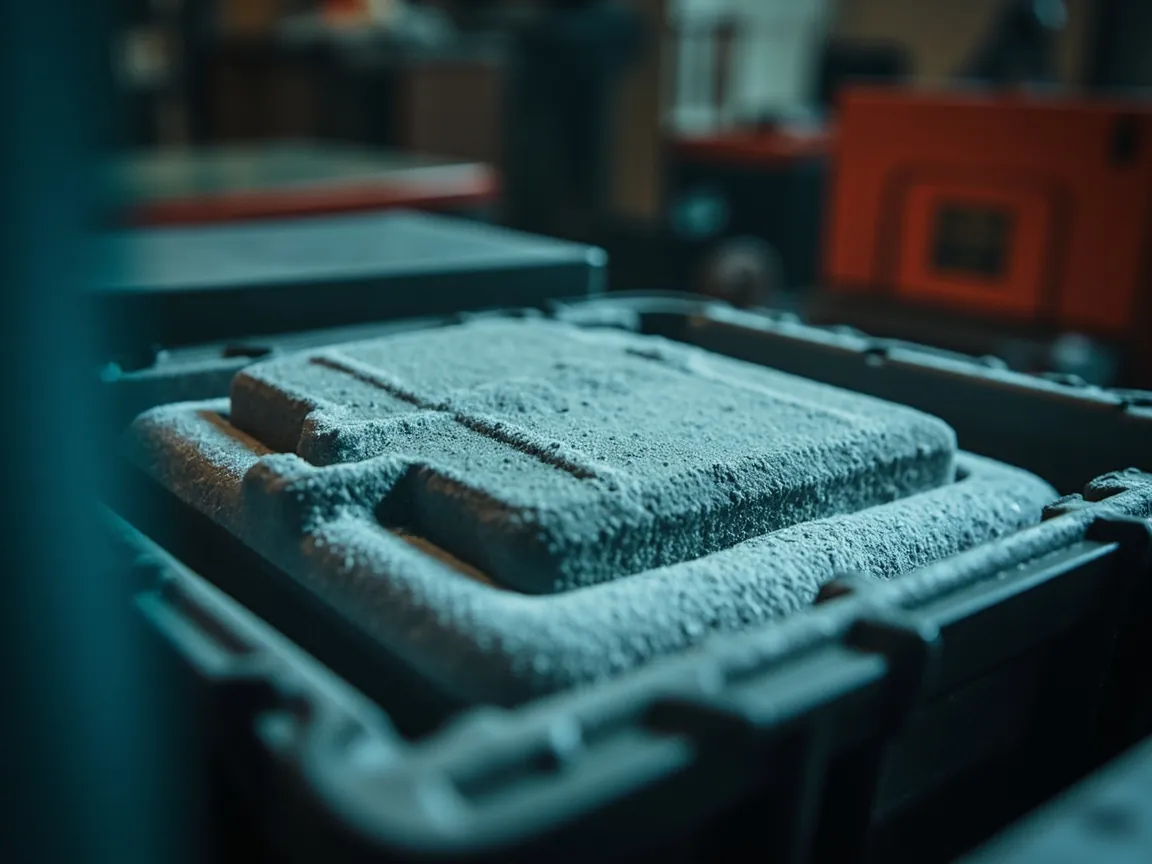
This is the most easily confused point in temperature testing, and the consequences are serious.
Storage, or non-operating. The specimen is not operated, loaded or powered at the extreme temperature; it is inspected for appearance, dimensions and post-recovery function only after stabilisation. The bar is lower and suits duties where no degradation at extremes is required.
Operating. The specimen is operated and loaded at the extreme temperature, for example latches opened and closed, sealing test pressure applied, rated load applied or power applied. The bar is much higher and suits duties where normal use at the extremes is required.
| Aspect | Storage | Operating |
|---|---|---|
| --- | --- | --- |
| Operated during test | No | Yes |
| Main assessment | No degradation, recoverable | Function works at the extreme |
| Typical severity | Lower | Higher |
| Material requirement | No cracking, no permanent set | Toughness, rebound and operating effort all adequate |
| Common risk | Function abnormal after recovery | Jamming, brittle fracture, seal failure when cold |
Practical advice. If a product must be opened and used in a cold region, or carried while hot over long periods, test the operating condition. If it is only transported and stored, storage plus a room-temperature functional retest is usually sufficient. Always state the specimen condition in the enquiry and the contract, because the same passing -40 C report can represent very different severity.
Pass Criteria and Inspection Items: Appearance, Dimensions, Function, Sealing
Pass criteria must be agreed before the test and matched to the specimen condition. Combine four groups of inspection.
Item one: appearance. No cracks, delamination, bulging or stress whitening; no flaking of coating or printed graphics.
Item two: dimensions. Key dimensions, such as case outline, mating gap and latch alignment, deviate from the initial value by no more than the specified limit after returning to ambient. The focus is irrecoverable dimensional change, because it is direct evidence of thermal stress damage and creep.
Item three: function. Latch opening effort within the permitted range, hinges not binding, pressure valve breathing, stacking and load capacity retained, optionally verified by loading at low temperature.
Item four: sealing. For waterproof cases, run a whole-enclosure IP retest after the temperature test. Note the order: temperature change first, then IP, because temperature change alters seal condition, and reversing the order masks the real risk. Methods are described in what is the IP67 rating and IP67 submersion test.
A well-written pass criterion reads: after conditioning to GB/T 4857.2 at 23 C and 50 per cent relative humidity for 24 hours, hold the specimen at -40 C for 24 hours, then at +70 C for 24 hours, completing 10 cycles; after a two-hour recovery at ambient, there is no cracking or delamination, key dimensions deviate by no more than 0.5 per cent, latch opening effort is between 30 and 80 N, and IP67 is passed to IEC 60529 and GB/T 4208.
Five Typical Failure Modes and Material Selection Responses
Recognising the failure mode is the basis for material and tooling decisions.
Failure one: cold embrittlement. Common at case corners, latches and thin sections. Responses: choose a tougher low temperature material or toughened grade, increase radii, avoid thin walls and sharp corners.
Failure two: hot bulging and sinking. Common on large lids and side walls. Responses: add ribs, raise heat deflection temperature, and evaluate a pressure equalisation valve to reduce internal pressure.
Failure three: the seal hardening when cold and losing rebound. Responses: change to a rubber compound with better cold performance, increase compression and groove depth margin, and control compression set.
Failure four: interface cracking and loose inserts. Seen at two-shot moulding joints and metal insert to plastic joints. Responses: leave thermal expansion allowance, optimise the joint geometry, and select material combinations with better matched expansion.
Failure five: insert hardening or collapse. Hard when cold and losing cushioning, soft when hot and compacting. Responses: select insert material and density for the temperature range, switching to a temperature-resistant foam where needed.
| Failure mode | Where it occurs | Root cause | Improvement direction |
|---|---|---|---|
| --- | --- | --- | --- |
| Cold embrittlement | Corners, latches, thin walls | Insufficient toughness | Toughened material, larger radii |
| Hot bulge or sink | Large lid and side walls | Lower modulus, creep, internal pressure | Ribs, pressure equalisation valve |
| Seal failure | Seal | Hardening, lost rebound, permanent set | Different rubber, more compression |
| Interface cracking | Two-shot or insert joints | Mismatched expansion | Expansion allowance, geometry change |
| Insert hardening or collapse | Foam insert | Properties drift with temperature | Material and density by temperature range |
Combined Verification with IP Rating, Salt Spray and Stacking
Passing a single item does not prove overall reliability; the combination and its order are what matter.
Combination one: temperature change plus IP. Run high and low temperature and thermal shock first, then whole-enclosure IP. Because temperature change alters seal dimensions and rebound, temperature first and IP second is what exposes the real risk.
Combination two: temperature change plus salt spray. For coastal and marine transport, heat, humidity and salt spray together accelerate metal corrosion and rubber ageing, so follow the temperature test with ISO 9227 neutral salt spray; see salt spray test hours for cases.
Combination three: temperature change plus stacking. Heat accelerates creep, so stacking while hot is the worst credible combination. Where a product is stored hot for long periods, run stacking at temperature, as described in case stacking structure.
Combination four: temperature plus vibration and drop. Cold embrittlement followed by impact is the most dangerous combination, so sequence a low temperature drop. The transport scheme framework is in ISTA transport testing procedure.
The core of combined verification is sequence, not the number of items. Arranging the sequence to match the real worst case is what makes the conclusion meaningful.
Putting Temperature Data to Work in Tendering and Acceptance
Temperature data only creates value when it is written into technical requirements.
Use one: state the temperature class and condition. Specify operating from -40 C to +70 C, or storage from -40 C to +70 C, with the standard and dwell time used.
Use two: state specimen condition and inspection items. Specify whether the specimen is operated or loaded during the test and whether an IP retest after temperature change is required.
Use three: state pass criteria. Write out the four groups of criteria, appearance, dimensions, function and sealing, item by item to avoid later dispute.
Use four: require complete reports. A report should contain temperature curves, dwell, transition time, cycle count, measurement data and the pass conclusion. A report without a temperature curve often cannot show that the specimen core actually reached the target temperature.
Use five: monitor batch consistency. After design freeze, a simplified check, such as one temperature point with a short dwell plus room-temperature function and IP retests, can be sampled to AQL; see custom case acceptance AQL.
Temperature Class Configuration in OEM/ODM Projects
JUNZHJIA, manufactured by KeXin New Materials (Guangdong) Co., Ltd., supplies protective cases, tool boxes, military-specification storage cases and waterproof junction boxes for wholesale, distribution, OEM/ODM and global supply. For temperature requirements, projects can typically be configured as follows:
- Material and structure: plastic grade and toughening modification selected for the target range, with ribs and base structure compensating for the lower modulus when hot;
- Sealing system: rubber compound and compression selected for the range, with an assessment of whether a pressure equalisation valve is needed for hot internal pressure;
- Insert configuration: EVA, EPE, PU or temperature-resistant foam selected for the range, so that the insert does not fail first;
- Test documentation: high and low temperature test reports, temperature curves and post-change IP retest reports, optionally combined with MIL-STD-810H methods and transport schemes.
Bring four inputs to the supplier early: target temperature range, specimen condition, dwell time and compression set limit. Adjusting a temperature class after the seal compound and structure are frozen usually means new tooling or a different material system, with a significant cost and lead time penalty.
Frequently Asked Questions
Q: What does passing a -40 C test actually prove? A: The statement is incomplete on its own, and three follow-up questions are needed. First, storage or operating? Storage only requires normal function after storage at -40 C and warming; operating requires opening, loading or even powering at -40 C, which is far harder. Second, for how long? A 30-minute dwell and a 24-hour dwell expose cold embrittlement very differently; the short dwell may only cool the surface, while the long dwell lets thick walls and inserts freeze right through. Third, which items were inspected? Appearance alone covers far less than dimensions, function and a sealing retest. A correct statement reads something like: after 24 hours storage at -40 C and a two-hour recovery at ambient, no cracking, latch opening effort 30 to 80 N, and IP67 passed. Without those three pieces of information, a claim of passing -40 C is only indicative and cannot be used for acceptance.
Q: What is the difference between thermal shock and temperature cycling, and can one replace the other? A: No, they cannot replace each other because the failure mechanisms differ. Temperature cycling is a slow oscillation, often one cycle per several hours or per day, so the specimen equalises and the test mainly assesses long-term ageing, creep accumulation and seal compression set. Thermal shock is a rapid oscillation, with transition times often within minutes, creating a significant surface-to-core differential and mainly assessing thermal stress, bonded interfaces, two-shot moulding and insert joints. A case may pass 100 slow cycles and fail 10 rapid shocks, or the reverse. Choose by real duty. If equipment sees slow seasonal swings, use cycling; if it moves from a cold store to a hot environment, or is rapidly transhipped, use shock. Where budget allows, severe projects should run both, because real life profiles usually superimpose the two.
Q: Where does the -40 C to +70 C range come from? A: It is an engineering range covering most industrial and outdoor duties rather than a mandatory standard value. -40 C broadly covers the lower extreme of high-latitude winter, air freight holds and some cold chain, while +70 C broadly covers the upper extreme of case surface temperature under summer sun. Selection should follow the principle of tailoring to real duty: a product used only in temperate zones may specify -20 C to +60 C, while military or polar applications may need to go to -55 C or lower. Simply choosing harsher points is not good practice, because a harsher test over-constrains material and structure and raises cost for duty that may never occur. The correct approach is to define the intended region of use and life profile first, then set the temperature points, dwell and cycles, and write them into the technical specification. MIL-STD-810H specifically emphasises tailoring to the life profile rather than adopting fixed severities.
Q: What tends to go wrong with the seal in temperature testing? A: The seal is among the most temperature-sensitive parts of the system. At the cold end the main problem is hardening and slower rebound: as rubber modulus rises the initial sealing force may increase, but the seal cannot rebound quickly enough to compensate when the case moves slightly under load or deflection, opening a gap, and sustained compression while cold worsens compression set so that the seal may not recover its original thickness on warming. At the hot end the main problem is accelerated ageing and permanent compression set: the rubber hardens, cracks and loses elasticity, leaving a permanent indentation in the thickness direction. The criteria must therefore include compression set, not just appearance. Engineering responses are to choose a rubber with a wider temperature range and lower compression set, and to increase compression and groove depth margin. Note also that thermal shock repeatedly compresses and releases the seal, so a design with too little compression can lose sealing force after only a few cycles; a whole-enclosure IP retest after cycling is therefore essential. See outdoor case seal ring.
Q: Why should a high temperature test also watch internal pressure? A: Because the internal pressure of a sealed case rises markedly with temperature and imposes extra load on the structure. By the ideal gas approximation, warming the interior from 20 C to 70 C at constant volume gives a theoretical differential of about 17 kPa, roughly equivalent to 1.7 m of water column. There are two consequences. First, the lid is pushed outward, bowing a large lid noticeably, and if the material modulus has already fallen with heat the deflection is greater. Second, the seal is pushed continuously outward and can be displaced from its groove. Conversely, cooling from hot to cold produces a relative vacuum that pulls the lid tight, making opening difficult and potentially rolling the seal inward. A high temperature test must therefore observe lid bowing and seal condition together, not just whether the material softened. For a fully sealed design, evaluate adding a pressure equalisation valve; see outdoor case pressure valve.
Q: Do insert materials need separate temperature testing? A: Yes, and it is frequently overlooked. Inserts such as EVA, EPE and PU foam harden and lose cushioning when cold, and soften and lose rebound when hot, compacting under sustained load. The consequence is the hidden failure of a case that is intact while the protected item is damaged, because impact energy is no longer absorbed by the insert and reaches the item directly. Good practice is to test the insert together with the case and, after the test, check thickness recovery, hardness change and cushioning performance. Where a product must survive a drop at low temperature, run a low temperature drop as well, because a hardened insert and an embrittled case are compounding risks. Select material for the range: foams with good low temperature flexibility for cold duties, and densities with good thermal stability for hot duties. A material comparison is in case seal and insert materials.
Q: Without a thermal chamber, how can I make a preliminary assessment? A: Some substitute checks are possible, but their limits must be understood. Option one: domestic freezer and oven. A freezer typically reaches about -18 C, sometimes -24 C, and cannot cover -40 C; a domestic oven can hold 60 to 70 C, but with poor uniformity and stability. These allow a qualitative check: whether opening becomes stiff or the material brittle when cold, and whether it softens or bows when hot. Take care with safety: domestic appliances are not intended for continuous duty, and a case in an oven may release odour, so ensure ventilation. Option two: use supplier data and third-party reports. Request a formal report with temperature curves and check that the conditions match your duty; this carries far more weight than a home test. Option three: compare material data sheets. Check the glass transition temperature and heat deflection temperature of the plastic and the temperature range and compression set data of the rubber as an initial screen. The key point is that simplified methods cannot replace a properly specified test, and projects needing acceptance evidence should still run a formal high and low temperature test.
Q: How should the dwell time be set? A: Dwell is set by two factors: the time to reach temperature stabilisation and the degree of ageing or creep that must be exposed. First, the specimen core must genuinely reach the target temperature rather than the chamber air alone. Thick-walled cases, cases with inserts and cases with internal air layers all have high thermal inertia, often needing several hours to stabilise. Timing must therefore start once the specimen core reaches the target, ideally confirmed with a thermocouple and reported as a temperature curve. Second, ageing and creep are functions of time, and a longer dwell exposes more: cold embrittlement and seal compression set at the cold end, and creep, ageing and internal pressure at the hot end, all need time to appear. Common practice is 16 or 24 hours, extending to 48 hours or more for severe duties. Specify both "hold for X hours after stabilisation" and "total test time not exceeding Y hours" in the technical specification, which preserves severity while making the test practical and cost-controlled.
Conclusion and Further Reading
Back to the title question: to test a protective case across a -40 C to +70 C range, run storage tests at each point to the GB/T 2423 series or IEC 60068 series, add thermal shock where required, condition to GB/T 4857.2 beforehand, and judge afterwards on appearance, dimensions, function and sealing. The core question is not whether the case can survive a given temperature, but whether the material still has adequate margin at both ends: the cold end fears embrittlement and lost rebound, the hot end fears softening, creep and rising internal pressure. Every conclusion must carry three conditions: the temperature and dwell time, the specimen condition, storage or operating, and whether an IP retest was run after the temperature change.
Three actionable recommendations. First, define the life profile before the temperature points, choosing the range from real region, duration and duty rather than automatically the harshest numbers. Second, write the specimen condition into the technical requirement, stating storage or operating and whether the specimen is operated or loaded, since the two cannot be mixed. Third, get the order right: temperature change first and the IP retest afterwards, combining salt spray, stacking and low temperature drop where the real worst case requires it.
JUNZHJIA, manufactured by KeXin New Materials (Guangdong) Co., Ltd., supplies protective cases, tool boxes, military-specification storage cases and waterproof junction boxes for wholesale, distribution, OEM/ODM and global supply, configuring case material, ribs, seals and inserts to the target temperature range, and providing high and low temperature test reports, temperature curves and post-change IP retest documentation.
Further Reading