

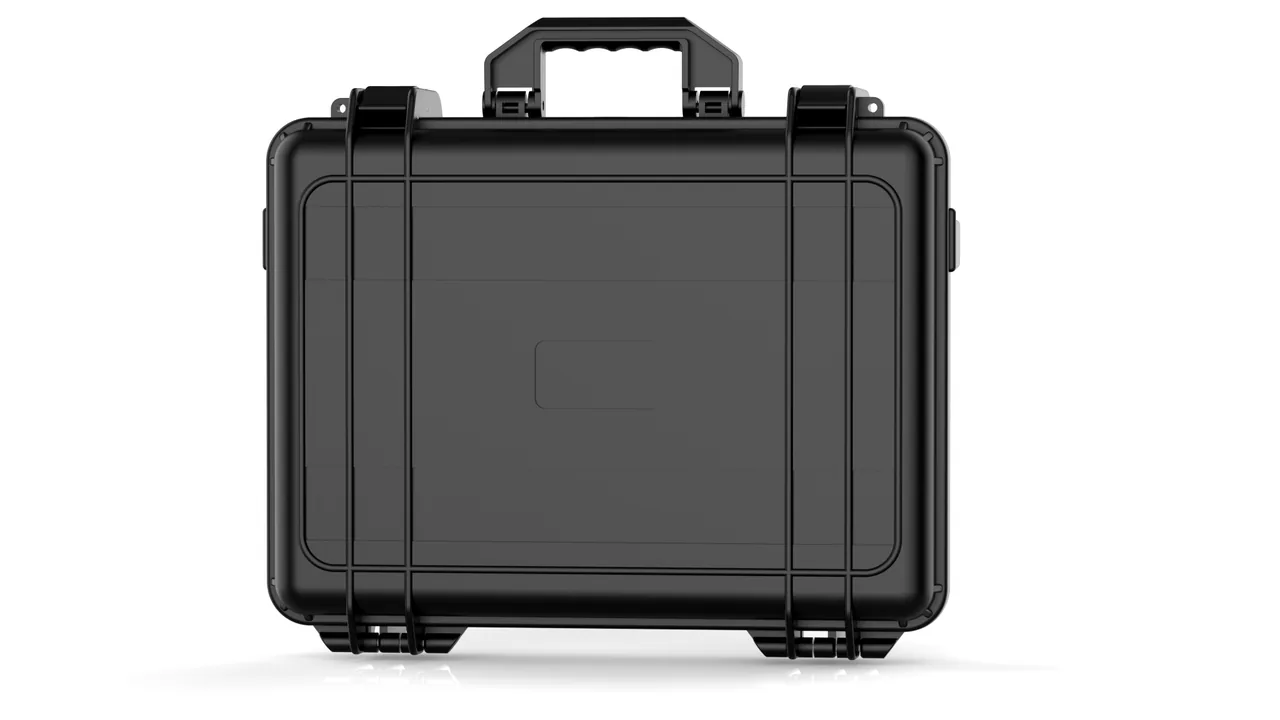
A milking machine is the only mechanical system on a dairy farm that touches raw milk directly. Every component in the chain therefore carries two obligations at once: it has to hold mechanical tolerance, and it has to survive a hygiene review. A pulsator opens and closes once or twice every second. A teat-cup liner flexes against the teat in a controlled squeeze. A vacuum pump holds the negative-pressure baseline for the entire pipeline. When these parts leave the factory for a farm, or come off a farm for service, transit and storage become the least supervised link in the quality chain. Cast-iron vacuum pump bodies grow red rust inside a damp case. Silicone liners age under oil and ozone. Pulsator valve plates and springs lose their factory setting after a drop. JUNZHIJIA, manufactured by Kexin New Materials (Guangdong) Co., Ltd., has supplied protective cases to dairy-equipment builders for years. This article works from the manufacturer's side of the bench: what actually damages milking machine parts in logistics, and what case and liner architecture reliably prevents it.
Why Milking Machine Parts Are Harder to Protect Than Ordinary Farm Hardware
The protection logic for ordinary farm hardware is blunt: heavy, hard, and tough enough. Milking machine parts behave almost the opposite way, because they answer to three separate rulebooks.
The first is hygiene. Any part that touches milk, or that touches a liner which touches milk, has to stay clean until the moment it is installed. No paper dust. No foam crumbs. No flaking coating particles. No oil film. No mould. The second is precision. A pulsator's pulsation rate and pulsation ratio set the stability of the milking curve. Valve-seat flatness, spring preload, and air-bleed orifice diameter are controlled in millimetre and sometimes micron ranges. Once distorted, the farm has to recalibrate the whole cluster set. The third is material science. Liners and food-grade tubing are silicone or food-grade elastomer, and they fear oil, ultraviolet light, ozone, and long-term compression set.
Stack those three rulebooks together and a case can no longer be just a shell that survives handling. One internal cavity has to manage moisture, shock, compression, contamination, and static cling simultaneously, and the parts still have to be usable the moment the lid opens. That is where a milking machine parts case parts company with a general equipment case or a plain IP67 waterproof box in terms of selection logic.
Look at field failure data and three sources dominate arrival defects. The first is condensation inside a long-haul sea container. The second is drops and lateral impacts across multi-leg transport. The third is silicone parts taking a permanent crease while sitting in a warehouse. Almost every one of these three is decided by the packaging plan, not by the quality of the part.
Pulsators: What Micron-Level Precision Actually Faces in Transit
A pulsator is the pacemaker of a milking machine. It alternates vacuum and atmosphere so the liner produces a rhythmic squeeze and release that mimics a calf nursing. A dairy farm typically runs dozens to over a hundred pulsator positions, and a single out-of-step unit shows up immediately as uneven udder emptying.
The vulnerable point on a pulsator is the valve plate group. Plates are usually rubber or polyurethane composite, forming a sealing face against the seat. Axial shock in transit makes the plate shuttle against the seat, and a light impression is enough to shift opening response time. Coil springs are just as sensitive. Once a spring is squeezed sideways, free length and stiffness change, and the pulsation rate drifts with them.
The second weak point is the air-bleed orifice and the adjustment screw. Micro-holes in the housing vent and tune frequency. They are small and uncovered, so a single foam crumb or dust grain that enters the cavity will block the air path. On adjustable pulsators the adjustment screw protrudes from the housing and is a classic cantilever, which is the first thing to bend in a drop.
The third weak point comes from the disassembled state. Pulsators sent for service often arrive already opened, with plates, springs, and seals loose. Loose parts strike each other and scrape each other's sealing faces. One of the clearest repair cases we have seen: a pulsator arrived with pulsation rate down nearly twenty percent. Teardown showed the spring had been pressed against a metal fitting sharing the same compartment, producing unrecoverable plastic deformation.
So the packaging strategy for pulsators has to be fix first, isolate second, cushion third. Fix means a custom liner that leaves the housing zero travel. Isolate means one pulsator per cavity, with loose parts in their own small pockets. Cushion means a controlled compliant margin at the contact surface, so shock energy is absorbed by the liner instead of reaching the valve seat.
Teat-Cup Assemblies and Silicone Liners: Oil, Compression, and Ageing
A teat-cup assembly is a shell plus a liner. The liner sits directly on the teat and is the most hygiene-sensitive surface in the milk path. Silicone liners rarely fail from being worn out. Far more often they fail from being stored wrong.
Silicone is a high-elasticity material, and sustained compression produces compression set. If dozens of liners are stacked in one case, the bottom and middle layers sit under the weight of the layers above for a sea voyage that routinely runs thirty to forty days. By arrival the round cross-section may be elliptical, the lip recovers short of its original shape, and once fitted to the cup the vacuum seal is poor. The result is cup slip, air leakage, and incomplete milk-out.
Oil is the second enemy. In transit or in storage, if the case sits near forklift oil, chain lubricant, or uncleaned machined metal parts, mineral oil migrates into the silicone surface and causes swelling plus a rise in hardness. Contamination of this kind looks minor to the eye, but the squeeze feel and rebound speed of the liner change measurably, and that ultimately affects how gently the machine milks.
Ozone and ultraviolet light matter mostly during long outdoor storage. Silicone is ozone-sensitive, and fine surface crazing appears. Once those micro-cracks spread at the liner lip, they become bacterial harbourage. Dairy hygiene audits are strict on exactly this detail, because tiny cracks on a teat-contact surface are extremely difficult to clean.
The shell itself is usually stainless steel or engineering plastic and tolerates compression reasonably well, but if a burr is knocked onto the shell-liner mating surface it will score a freshly installed liner. That is one reason shells and liners should not share a compartment.
Our approach is to give the teat-cup assembly its own tier. Liners sit flat or upright in single independent pockets, touching nothing else, with a compliant support under each pocket so self-weight cannot print a crease. Shells go into separate rigid positions with a soft divider layer so metal cannot score neighbouring parts. The whole silicone tier is designed against oil contamination, and the case interior avoids any regrind foam that could bleed oil.
Vacuum Pumps and Vacuum Lines: From Oil Residue to the Pressure Baseline
The vacuum pump is the power source of the milking system, commonly a rotary-vane or liquid-ring design. The pump, along with its receiver tank, vacuum regulator, safety valve, and vacuum gauge, sits firmly in the heavy and oily category.
The biggest transit problem for a vacuum pump is residual oil. Pumps normally retain lubricant internally, and a tip-over in transit pushes oil out through the inlet, the exhaust, or the sight glass, contaminating the whole case. Once out, the oil volatilises inside a closed cavity and creates an oil-vapour atmosphere that directly threatens silicone liners and seals sharing the same space. Disassembled units must therefore be drained and plugged before packing, with dedicated caps closing the inlet and exhaust ports.
Vacuum lines are difficult because of their length. Vacuum hose and food-grade tubing are long, large-bore, and low in stiffness. A bend taken too far creates a permanent kink, and the inner side of a kink collapses under vacuum to form a local restriction that destabilises the vacuum level. Stainless vacuum tube holds rigidity better, but thin-wall tube dents under lateral impact, and a dent reduces the internal cross-section just the same, raising extraction resistance.
We classify vacuum pumps as a heavy tier, always lowest in the case and over the geometric centre of gravity, with high-density liner forming the cradle and lateral restraint so the body never touches the case wall directly. Vacuum gauges and regulators are precision instruments, so they belong in a floating precision tier, never in the same cavity as the pump. For food-grade and vacuum hose we use large-radius arc cradles that keep the line above its specified minimum bend radius, and we cap each tube end with a clean cover to keep dust and oil vapour out.
Food-Grade Lines and Sanitary Liners: Compliance Is a Threshold, Not a Bonus
Dairy equipment is not a consumer product, and its packaging materials join the compliance chain too. During incoming inspection a farm will often ask the supplier to state whether the inner packaging is food-grade, whether it has an odour, and whether it releases plasticiser. This is not fussiness. It is the inevitable consequence of milk safety regulation.
Food-grade lines cover raw-milk transfer hose, cleaning circuits, food-grade fittings, and clamps. Before assembly, the inner wall has to stay clean. Any dust, fibre, or metal chip that enters the bore becomes a first-generation contamination source. The tube end is the most direct opening, so every end gets its own cap.
There are three design essentials for a sanitary liner. First, material direction. On dairy projects JUNZHIJIA favours food-contact-grade EVA or food-grade PP, avoiding regrind that could bleed oil or odour, and avoiding halogenated flame retardants in foams. Second, no dead corners. The liner surface should be smooth and wipeable, pocket corners radiused, with no narrow crevices where debris collects. Third, cleanable and replaceable. The liner lifts out as one piece, which lets the farm clean and sanitise it at season change and lets a single liner be replaced later.
One clarification matters. A sanitary liner is not sterile packaging. It delivers physical cleanliness and contamination isolation. The goal is for parts to arrive in a cleanable, clean condition, not to replace the sanitising step. Writing that distinction on the case label and in the packing note measurably reduces friction during incoming inspection.
Moisture and Condensation: The Most Overlooked Killer of Milking Machine Parts
If impact is the visible risk, moisture is the invisible one. Milking machine parts contain a lot of metal: pump housings, stainless clamps, vacuum fittings, pulsator springs, control-box terminals. In a damp environment these corrode at a rate the eye cannot follow.
The conditions for condensation are specific. The classic sequence: parts are packed in a warm, humid workshop, so humid air is sealed inside the case. The case then crosses latitudes in a container or enters a cold warehouse at night. The internal temperature drops below the dew point, and water vapour condenses as a liquid film on metal surfaces. That film combines with acidic gases in the air to form a corrosive electrolyte. The cycle repeats, and the longer the voyage the more visible the corrosion.
There are three standard countermeasures. The first is barrier sealing: an IP67 case with a gasket keeps external moisture out, but does nothing about moisture already sealed in. The second is desiccant adsorption: a metered quantity of desiccant absorbs both the sealed-in vapour and whatever slowly permeates. The third is structural venting: a pressure equalisation valve breathes slowly as temperature swings, preventing the internal negative pressure that would otherwise pull water through the seal face.
In practice the best answer is all three combined: IP67 body sealing as the base, a pressure equalisation valve mounted high on the case wall, and desiccant metered to the net internal volume and held in a replaceable position. For dairy customers we generally recommend a desiccant change port or a removable desiccant tray so a mid-route warehouse can top it up. Where parts include precision electronics or rust-prone metal, VCI vapour-phase corrosion inhibition can be added so inhibitor molecules fill the closed cavity and reach threads and crevices that oil films never reach.
Precision Electrical and Control Parts: Pulsation Controllers, Control Boxes, Sensors
Modern milking parlours rely heavily on electronics. Pulsation controllers, variable-frequency drives, vacuum sensors, milk-meter modules, wash controllers, and cluster control units are all precision electrical parts with high shock and ESD sensitivity.
Failures here tend to be subtle and severe. A board can develop micro-cracked solder joints under shock, pass factory test, and only show intermittent faults after days of running on the farm. Static discharge can destroy a sensitive device at the instant the lid opens, especially if the liner uses ordinary foam and generates charge through repeated rubbing.
The protection strategy is tiered isolation plus ESD control. Controllers and sensors get their own cavities, fixed with anti-static foam or anti-static dividers, never sharing with metal heavy parts. Harnesses are bundled separately and connectors get protective caps. For modules containing pressure and flow sensors, we use a floating suspension so the liner provides both support and vibration damping. The electrical tier is physically separated from any oil-bearing vacuum pump tier so oil vapour cannot migrate upward through gaps.
Cavity Architecture: Putting Physically Different Parts in One Case
A single milking machine parts order often contains dozens of line items, from cast pump bodies to silicone lips, from sight glasses to electronic modules. If you try to hold all of that in one block of foam with routed holes, the conflicts are almost unavoidable: hard parts strike soft parts, oily parts contaminate clean parts, heavy parts crush light parts.
Our method is an attribute-based cavity architecture that sorts parts into four tiers.
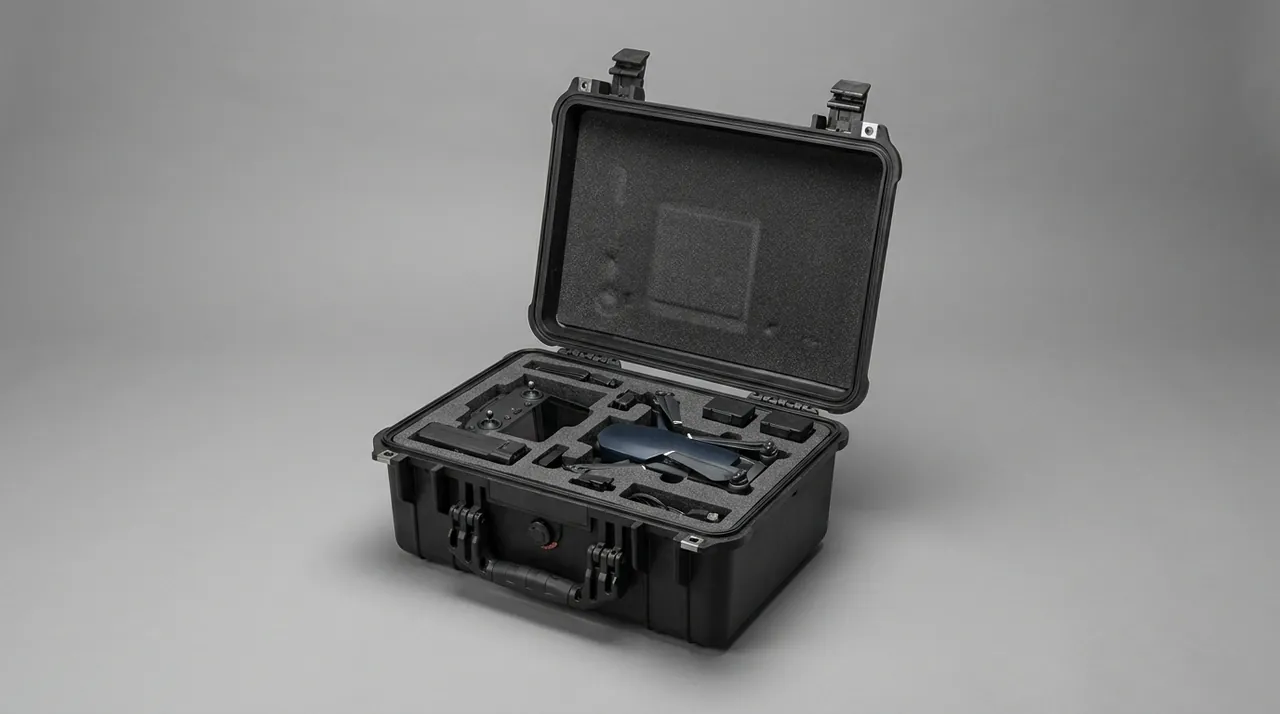
The heavy tier sits at the bottom and carries vacuum pumps, receiver tanks, motors, and expansion vessels. It uses high-density liner with recessed restraint, and mass is kept as close to the geometric centre as possible. The precision tier holds pulsators, sensors, valves, and instruments in independent small cavities with compliant cushioning and floating fixation. The clean tier holds silicone liners, food-grade hose, and clamps, designed against oil, dust, and compression. The long and irregular tier holds vacuum tube, support arms, and long hose, restrained by cradles and straps that respect the minimum bend radius.
Tiers are divided by removable partitions. The partitions come out, which means the farm can convert the case into a tool or spares case after receiving the shipment. That modularity lets one case work across the whole equipment lifecycle instead of being single-use packaging.
Liner Materials: Choosing Between EVA, EPE, and Food-Grade PP
The liner is the part of the case that actually does the work. Three material families cover most milking machine requirements, and each has a clear boundary.
EVA, ethylene-vinyl acetate, is the workhorse for custom liners. It thermoforms, holds complex pockets and curved supports, balances cushioning and rebound well, and machines to tight tolerance, which suits pulsators, sensors, and instruments that need conformal fixation. Its limits are higher density and cost, plus some compression set under sustained load, so pocket dimensions must account for material compression.
EPE, expanded polyethylene, is inexpensive, light, and cushions well, which suits wrapping large and irregular parts. Its weak points are insufficient support stiffness, significant deflection under load, and unsuitability for dimension-critical pockets. Low-density EPE also sheds crumbs, so it needs care in the clean tier.
Food-grade PP is the stiffest option. It is washable, reusable, and non-hygroscopic, which suits clean-tier trays and dividers and any structural part the farm needs to lift out and clean. Its weakness is forming freedom: complex pockets need assembly or multiple pieces.
On dairy projects our usual combination is a food-grade PP tray with EVA compliant pads in the clean tier, a solid EVA form in the precision tier, high-density EVA plus a PP stiffening plate in the heavy tier, and EVA cradles with straps in the long-part tier. That mix balances cleanability, support stiffness, and cost.
IP67 and Pressure Equalisation: Where the Seal Actually Ends
IP67 means the highest dust protection level plus no water ingress under defined short-term immersion. For milking machine parts its value shows up in three places.
The first is on the farm. A milking parlour is a high-humidity environment with frequent washdown. A case stored in the parlour or the holding area will be hit by washdown water. An IP67 case keeps parts and electronics safe in that environment. The second is in transit: open yards, rain during loading, and container seepage all demand water resistance. The third is in storage, where rising damp and dripping condensate are the main long-term threat.
IP67 is not absolute, though. A sealed case breathes as temperature changes, and without pressure compensation it develops internal negative pressure that pulls the outer water film toward the seal face. Repeated over many cycles, that accelerates gasket ageing and eventually causes seepage. Fitting a pressure equalisation valve to an IP67 case is therefore standard engineering practice: it lets gas exchange slowly while blocking liquid water, and combined with desiccant it holds internal humidity low for a long time.
One more point deserves emphasis: IP67 is a system-level specification for the assembled case, not a material property of the shell. Gasket compound, parting-line flatness, latch-force distribution, hinge stiffness, and gasket compression all affect the final result. Ask a supplier for a complete water-ingress test description rather than a shell-only material report.
Clean Unpacking and Farm Receiving Procedure
The final value of a well-designed case shows up at the moment the farm opens it. Standardising the unpacking sequence reduces secondary contamination of clean parts.
A workable sequence: clean the case exterior before it enters the parlour, wiping soil and water from the lid and sides. Open the lid in a clean area rather than in the manure handling zone. Lift out the clean-tier tray without opening inner packaging until the assembly step actually begins. Place removed liners and trays in designated spots and wash or sanitise silicone and food-grade parts separately. Dispose of desiccant and VCI sachets per instruction instead of leaving them loose in the parlour.
JUNZHIJIA supplies a packing-slip unpacking and cleaning guide with dairy shipments, documenting material statements, cleaning method, and reusable cycle count. Documentation of this kind is useful during farm audits and customer reviews, and it reduces returns caused by incorrect handling.
From Case to Farm Asset Management
Once a case graduates from single-use packaging to a farm asset, selection criteria shift toward the whole lifecycle.
The first is traceability. A QR code or RFID tag on the case can record the parts list inside, the calibration date, and the desiccant change date, so the farm can track it in the equipment register. Milking machine parts are replaced frequently, and traceability removes arguments over whether a given pulsator was actually swapped.
The second is maintainability. Gaskets, latches, handles, and pressure equalisation valves should all be individually replaceable. Gasket ageing is the leading cause of seal failure, so a fast gasket change dramatically extends case life. The liner should be replaceable and re-cuttable so a revised parts list does not obsolete the case.
The third is stackability and handling. Farm stores are tight, so cases should stack with a clearly marked maximum stack count. Cases containing vacuum pumps get heavy, so wheels and pallet compatibility matter.
The fourth is recyclability. The case body should use recyclable engineering plastic that can be separated at end of life, which matters for dairy customers running environmental audits.
Field Failure Cases and the Design Response to Each
Mapping field cases to design responses makes it faster to judge whether a case is trustworthy.
Case one: a pulsator arrives with a low pulsation rate. Cause: loose pulsators shared a cavity with metal fittings, and a spring was pressed sideways. Response: one cavity per unit, separate small pockets for loose parts, no mixed-part cavities.
Case two: silicone liner lip deformed. Cause: liners stacked under load for a long sea voyage, producing compression set. Response: single independent pockets laid flat, compliant support under each pocket, no self-weight printing.
Case three: vacuum pump oil contaminated the whole case. Cause: a disassembled unit was not drained and plugged, and residual oil escaped during a tip-over. Response: mandatory drain and plug before packing, pump in its own cavity, plus a drainage channel in the liner.
Case four: stainless clamps arrived rusty. Cause: condensate formed a liquid film inside the case. Response: IP67 sealing plus a pressure equalisation valve, metered desiccant, and VCI when needed. For background on these mechanisms, see Condensation Control Inside Protective Cases, IP67 Protective Case: Waterproof Ratings and Selection Points, and Pressure Equalisation Valve: Breathing and Sealing Design for Cases.
Case five: controller showed intermittent faults after installation. Cause: shock micro-cracked solder joints, or static damage. Response: anti-static liner and independent cushioned cavity, bundled harnesses, capped connectors.
Case six: vacuum hose arrived with a collapsed kink. Cause: hose bent arbitrarily during packing. Response: large-radius arc cradle, minimum bend radius respected, clean cover on each end.
Procurement and Acceptance Points
From a buying perspective, six checks will separate a reliable milking machine parts case from a plausible-looking one.
Start with the parts list and its physical distribution. Sort parts into heavy, precision, clean, and long categories, quantify volume and mass per tier, and only then decide case size and internal architecture. Do not pick a case first and fit parts into it afterwards.
Second, material compliance files. Contact materials in the clean tier should carry a food-contact compliance statement including odour and migration test conclusions. The case body should have salt spray, UV ageing, drop, and IP rating reports.
Third, structural detail. Is the gasket a replaceable design, and is gasket compression stated as an engineering value? Do latch count and placement produce even pressure? Does the hinge have metal reinforcement? Are handle static and dynamic load ratings backed by test data? Does the pressure equalisation valve include a waterproof breathable membrane?
Fourth, delivery and after-sales. Does the liner drawing ship with the case, can the liner be revised when the parts list changes, and are gaskets, latches, and desiccant available as long-term spares? JUNZHIJIA delivers on all three through a standardised process so dairy customers can build a lasting spares list.
Fifth, verification. For a first article, run a real shipment or a laboratory vibration, drop, and thermal-humidity cycle test, then check pulsator frequency and inspect silicone liner appearance and rebound after opening, so the protection plan is confirmed by data rather than assumption.
Sea Freight and Cold-Chain Considerations
Milking machine parts frequently ship by sea for export or inter-regional transfer, and some dairy scenarios involve cold storage. The two environments demand different things.
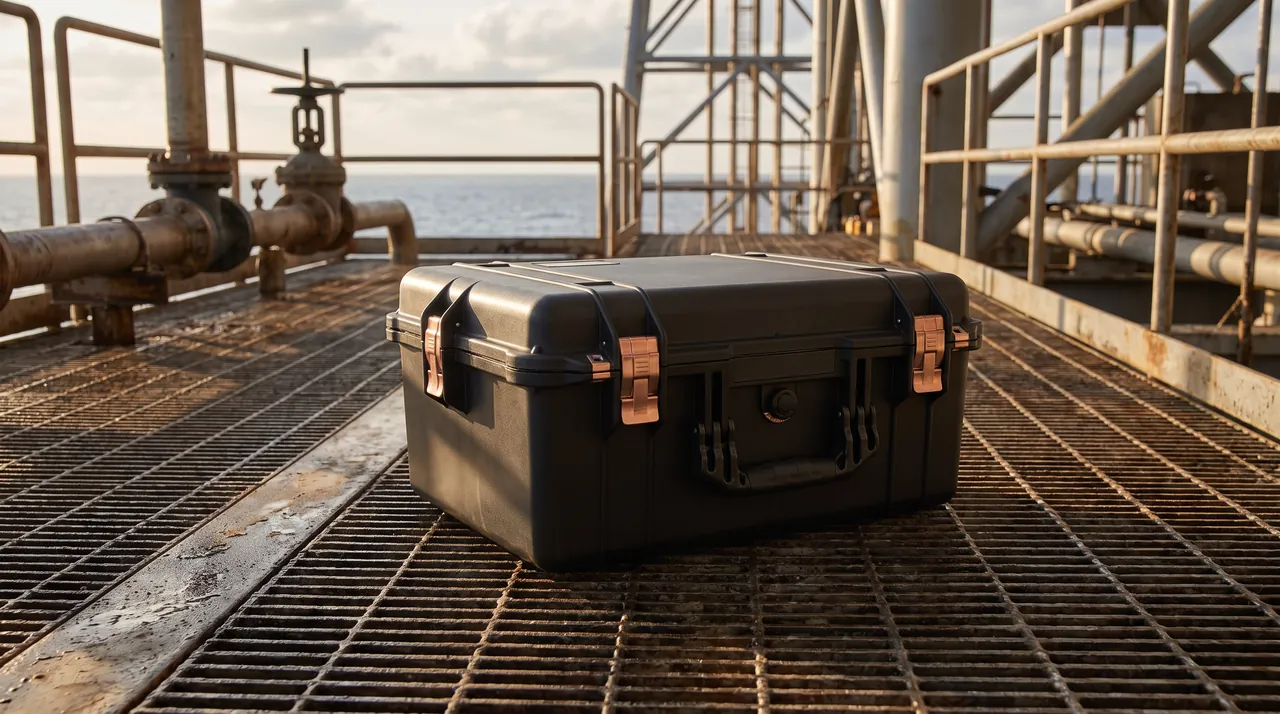
The key variables in sea freight are humidity and duration. Container relative humidity can stay very high for weeks, and the day-night temperature swing creates container rain, where droplets condensed on the roof fall directly onto cargo. The response: sealing level appropriate to the route, desiccant quantity scaled to the voyage duration, no hygroscopic plain cardboard inside the case, and moisture-barrier film rather than plain paper around parts. When stacking, keep cases away from the container doors and roof.
The key variable in cold chain is low temperature. Cold raises the brittleness of some plastics and reduces case impact resistance. Silicone stiffens in the cold and rebounds more slowly, so the liner cannot provide full cushioning at low temperature. The response: choose materials with good low-temperature performance, or increase liner thickness and reduce stack layers in cold scenarios. For cases with electronics, allow a temperature equalisation period before opening after leaving the cold, so condensation does not land directly on a cold circuit board.
Liner Care and Reuse Management
For a case to be reused, the liner has to be maintainable.
Routine care: after each opening, inspect pockets for debris, oil, or cracks. Wipe clean-tier liners with a neutral cleaner and dry them fully before refitting. Replace any liner whose pocket edges have collapsed or whose support has lost resilience. Change desiccant on the stated cycle and VCI sachets at end of validity.
Storage management: do not stack weight on empty cases, or the liner takes a set under sustained load. Leave lids slightly open or add desiccant to prevent mould in a closed cavity. Label liners and case bodies separately so liners from different parts groups are not mixed.
End-of-life judgement: replace EVA liners showing clear compression set, sluggish rebound, or damaged pocket edges. Replace food-grade PP trays with cracks or heavy surface scoring, because scoring is a cleaning dead corner.
Why Choose JUNZHIJIA as Your Milking Machine Parts Case Manufacturer
JUNZHIJIA is manufactured by Kexin New Materials (Guangdong) Co., Ltd., a specialist in engineering plastic protective cases. Our capability covers the full chain from structural design and tooling development through injection moulding to custom liners and whole-case validation.
For dairy equipment customers we offer four targeted supports. First, sanitary liner design that runs from material selection to dead-corner-free geometry to cleanability and replaceability, following dairy industry practice. Second, integrated moisture control combining IP67 sealing, a pressure equalisation valve, and a metered desiccant provision with voyage-based recommendations. Third, precision cavity architecture delivering high-accuracy EVA formed pockets and ESD configuration for pulsators, sensors, and instruments. Fourth, compliance documentation and verification support, including material test reports and whole-case protection testing coordination.
We understand that what a milking machine parts customer actually needs is not a box. It is for parts to hold their factory condition across regions and climates, and to be ready to install the moment the lid opens on the farm. That is where we keep investing, at both the structural and the material end.
Frequently Asked Questions
Q: What goes wrong with pulsators in transit, and how does a protective case prevent it? A: Pulsator damage clusters around the valve plate, the spring, and the adjustment screw. Axial shock in transit makes the valve plate shuttle against its seat and take an impression, which shifts opening response time. A spring squeezed sideways loses its free length and stiffness, and pulsation rate drifts with it. The protruding adjustment screw is a cantilever and bends first in a drop. Service units often ship disassembled, so plates, springs, and seals strike each other and scrape sealing faces. The design response is fix, isolate, cushion: a high-accuracy EVA formed cavity that leaves the housing zero travel, one pulsator per cavity, separate small pockets for loose parts, and a controlled compliant margin at the contact surface so shock energy is absorbed by the liner rather than reaching the valve seat. We recommend checking pulsation frequency against the factory value on arrival, on a sample basis at minimum, and repeating the check after any long sea leg. Pulsators are the single most calibration-sensitive item in the shipment, so they repay a dedicated cavity rather than a shared one. Record the factory frequency on the packing slip so the receiving farm has a reference value to compare against.
Q: Why should silicone teat-cup liners never be stacked, and what is the correct approach? A: Silicone is a high-elasticity material, and sustained compression produces compression set. Stacking dozens of liners in one case leaves the bottom and middle layers compressed under both their own weight and the layers above, and a sea voyage of thirty to forty days is long enough for real damage. On arrival the round cross-section may be elliptical and the lip recovers short of its original shape. Fitted to a cup, that liner seals poorly against vacuum, producing cup slip, air leakage, and incomplete milk-out. The correct approach is a single independent pocket per liner, laid flat or standing upright, with a compliant support beneath each pocket so self-weight is carried by the pocket rather than by neighbouring liners. Silicone must also stay away from oil, ozone, and ultraviolet light: mineral oil migration causes swelling and higher hardness, while ozone produces fine crazing at the lip that becomes bacterial harbourage. Clean-tier liners should be wipeable so the farm can clean and sanitise them on a defined schedule, and the tier itself should avoid regrind foam that could bleed oil. Liner count per order is high, so a stack-free pocket layout is also the cheapest insurance against an entire batch being rejected at inspection.
Q: What preparation do vacuum pumps and vacuum lines need before packing? A: Vacuum pumps and receiver tanks are heavy, oil-bearing parts, so draining and plugging before packing is mandatory. Residual lubricant inside the pump escapes through the inlet, the exhaust, or the sight glass if the unit tips over in transit, and once oil is loose in a closed cavity it volatilises into an oil-vapour atmosphere that directly threatens silicone liners and seals sharing the same space. Cap the inlet and exhaust with dedicated plugs and provide a drainage channel below the pump. Vacuum gauges and regulators are precision instruments and belong in their own floating cavity, never with the pump. Vacuum hose and food-grade tubing are long and low in stiffness; a bend taken too far creates a permanent kink whose inner side collapses under vacuum into a local restriction, destabilising the vacuum level. Use a large-radius arc cradle that respects the minimum bend radius, cap each tube end with a clean cover to exclude dust and oil vapour, and protect thin-wall stainless tube against lateral denting. Where a single order mixes a pump with long hose, keep them in separate tiers so the heavy item can never settle onto the tubing.
Q: What exactly does compliance require for food-grade lines and sanitary liners? A: Packaging materials for dairy equipment join the compliance chain, and incoming inspection often asks the supplier to confirm whether inner packaging is food-grade, whether it carries an odour, and whether it releases plasticiser. Three areas cover it. First, material direction: use food-contact-grade EVA or food-grade PP for the clean tier and any food-contact part, avoid regrind that could bleed oil or odour, and avoid halogenated flame retardants in foams. Second, dead-corner-free geometry: keep liner surfaces smooth and wipeable, radius pocket corners, and eliminate narrow crevices where debris and milk residue collect. Third, cleanability and replaceability: the liner should lift out as one piece so the farm can clean and sanitise it at season change, and so a single liner can be replaced later. One clarification matters here. A sanitary liner is not sterile packaging. It provides physical cleanliness and contamination isolation, so parts arrive in a cleanable, clean condition, and the farm still performs cleaning and sanitising per its own procedure. State that boundary in writing, and incoming inspection becomes a short conversation instead of a dispute. Keep the material statement with the shipment, not filed centrally.
Q: How does a protective case deal with condensation and moisture during sea freight? A: Condensation conditions are specific. Parts are packed in a warm, humid workshop, so humid air is sealed inside the case. Internal temperature then drops below the dew point in transit, and water vapour condenses as a liquid film on metal surfaces, where it combines with acidic gases to form a corrosive electrolyte, and the cycle repeats. No single measure solves it fully. IP67 sealing blocks external water but not the vapour already sealed in. Desiccant absorbs sealed-in vapour but is spent once saturated. A venting structure equalises pressure but adds a new moisture path. In practice we combine all three: IP67 body sealing as the base, a pressure equalisation valve mounted high on the side wall to let gas exchange slowly while blocking liquid water and preventing the internal negative pressure that pulls water toward the seal, and desiccant metered to net internal volume in a replaceable position. For cases holding precision electronics or rust-prone metal, VCI vapour-phase corrosion inhibition can be added so inhibitor molecules fill the closed cavity and reach threads and crevices oil films never reach. Scale desiccant to voyage length rather than to case volume alone, and note the change date on the case so a mid-route warehouse can act.
Q: What principles should cavity architecture follow, and how should tiers be divided? A: The core principle is to partition by physical attribute rather than by the order of the parts list, and to decide the tier plan before the case outline. Four tiers work well. The heavy tier holds vacuum pumps, receiver tanks, and motors at the bottom, close to the geometric centre, with high-density liner providing recessed restraint and no direct contact between pump body and case wall. The precision tier holds pulsators, sensors, valves, and instruments in independent small cavities with compliant cushioning and floating fixation. The clean tier holds silicone liners, food-grade hose, and clamps, designed against oil, dust, and compression, and never sharing with metal heavy parts. The long and irregular tier holds vacuum tube, support arms, and long hose, restrained by cradles and straps that respect the minimum bend radius. Removable partitions divide the tiers, and because they come out, the farm can convert the case into a tool or spares case after receiving the shipment. The payoff is that one case works across the entire equipment lifecycle rather than serving as single-use packaging, which also lowers the effective cost per shipment.
Q: Does fitting a pressure equalisation valve to an IP67 case compromise water resistance? A: No, provided the valve is correctly specified. A sealed case breathes as temperature changes, and with no pressure compensation it develops internal negative pressure that pulls the outer water film toward the seal face. Repeated over many cycles, that accelerates gasket ageing and eventually causes seepage. The pressure equalisation valve exists precisely to let gas exchange slowly while blocking liquid water: a waterproof breathable membrane inside passes gas molecules slowly, while liquid water cannot penetrate because of surface tension. Mount the valve high on the case side wall, away from standing water and direct washdown impact, and inspect periodically for membrane blockage by dust or oil, since a blocked membrane behaves like no valve at all. It also helps to state clearly that IP67 is a system-level property of the assembled case, not a material property of the shell. Gasket compound, parting-line flatness, latch-force distribution, hinge stiffness, and gasket compression all influence the outcome, so ask for a complete water-ingress test description rather than a shell-only report. Treat the valve as a service item, and note its inspection interval beside the desiccant schedule.
Q: What adjustments do cases and liners need in cold-chain storage and transport? A: Low temperature brings two main variables. First, brittleness rises. Ordinary plastics lose impact resistance in the cold and crack more easily on a drop, so the case body should use engineering plastic with good low-temperature performance, or increase wall thickness and reinforcement ribs. Second, silicone and elastomer liners stiffen in the cold and rebound more slowly, so the liner cannot provide full cushioning. In cold scenarios, increase liner thickness, reduce stack layers, and add margin to the independent cushioned cavities around precision parts. For cases containing electronics, allow a temperature equalisation period after leaving the cold before opening the lid, so airborne moisture does not condense directly onto a cold circuit board. Also verify that the gasket still holds compression and rebound at low temperature, and switch to a compound with better low-temperature behaviour if it does not. Refrigeration packages, vacuum pumps, and controllers are the parts most often destroyed by a rushed cold-chain unpack, so a short written unpacking note fixed inside the lid prevents that for far less than one failed delivery. Add the same note to the case label so it survives the loss of the packing slip.
Q: How can a milking machine parts case achieve a long service life and genuine reuse? A: Long life depends on replaceable wear parts and a maintainable liner. Structurally, the gasket, latches, handles, and pressure equalisation valve should each be individually replaceable, because gasket ageing is the leading cause of seal failure and a fast gasket change extends case life sharply. The liner should lift out whole and be re-cuttable, so a revised parts list does not obsolete the case. For routine care, inspect pockets after each opening for debris, oil, or cracks, wipe clean-tier liners with a neutral cleaner and dry them fully before refitting, and change desiccant and VCI sachets on the stated cycle. In storage, avoid stacking weight on empty cases, which takes a set in the liner, leave lids slightly open or add desiccant to prevent mould, and label liners separately so pockets from different parts groups are never mixed. Replace EVA liners showing compression set, sluggish rebound, or damaged edges, and replace scored food-grade PP trays, since scoring is a cleaning dead corner.
Related Reading
- Dairy Processing Parts Cases: Sanitary Transit and Stainless Rust Control
- Dairy Processing Equipment Cases: Spare-Part Protection for Line Stoppages
- Cleanroom Equipment Cases for Food-Contact and Sanitary Zones
JUNZHIJIA, manufactured by Kexin New Materials (Guangdong) Co., Ltd. — custom milking machine parts cases for dairy transit.