

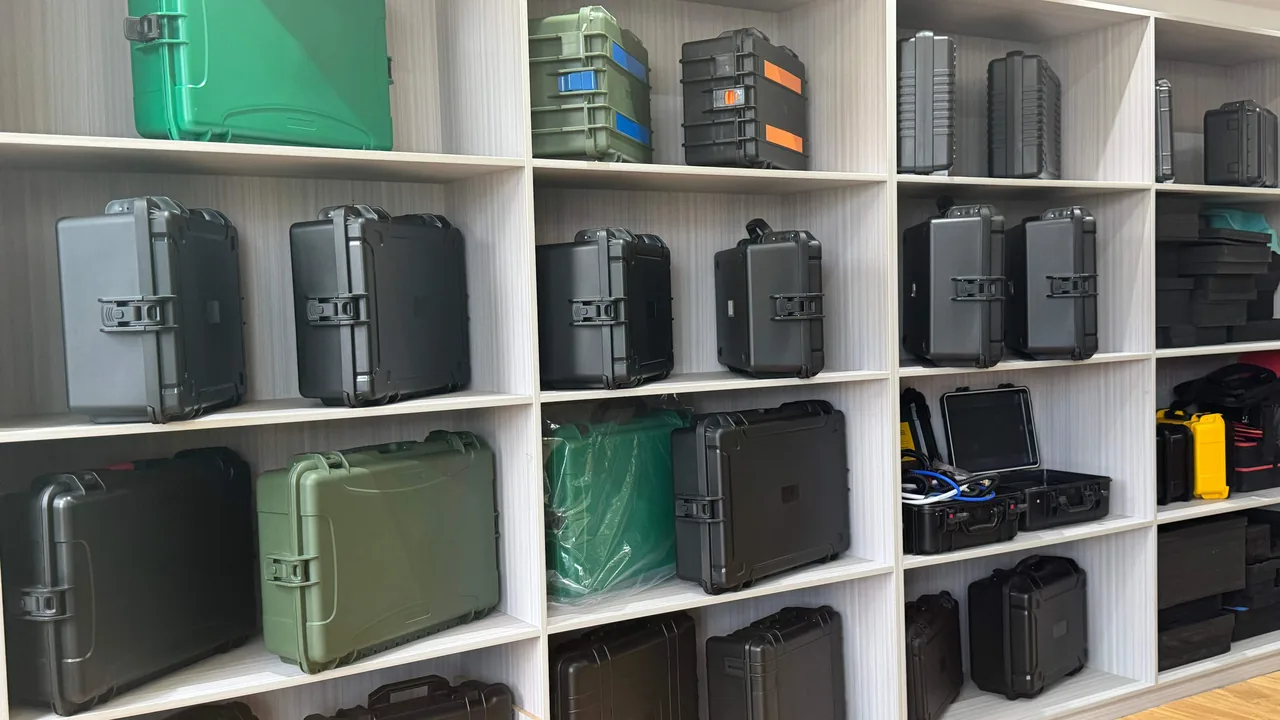
Dairy plants operate under one of the strictest hygiene regimes in the food industry. Milk, whey and cream are both rich microbiological growth media and one of the major allergen groups, so any residue can breach two red lines at once: microbial limits and allergen cross-contact. Wet washdown runs daily, recirculating 1–2% sodium hydroxide at 75–85 °C to strip fat and protein, followed by 1–1.5% nitric acid at 60–70 °C to remove scale and milkstone. Chill circuits hold 2–4 °C, so pipework and equipment surfaces live in a permanent cycle of low temperature, high humidity and rapid temperature change that drives condensation. Pumps, valves and gaskets move through repair and turnaround inside that regime, which means a protective case is no longer just impact protection; it is a segment of the hygiene chain.
The JUNZHIJIA protection principle is to make the case part of the hygiene verification rather than a blind spot: a liner that does not shed, absorb odour or discolour, a case that can be washed and drained, and residue that can be swabbed, recorded and audited, so that the opening state and the cleaning record correspond one to one. Only when the packaging material itself passes the hygiene criteria can pumps, valves and hygienic parts avoid becoming allergen and microbial carriers during turnaround.
Table of Contents
- The Dairy Hygiene Regime: Allergen and Microbial Pressure Together
- Wet Washdown and Alternating Acid and Caustic Duty
- Surface Integrity: Ra Roughness, Crevices and Non-Adhering Design
- Liner Materials: No Shedding, No Odour Retention, No Colour Bleed
- Protecting Hygienic Pumps: Lobe, Centrifugal and Progressive Cavity
- Seat Valves and Mix-Proof Valves: Fixing Sealing Faces and Stems
- Plate-Pack Gaskets and O-Rings: Segregated Storage Management
- Cold Storage, Condensation Risk and Stacking in Transport
- Residue Verification and Swab-Test Documentation
- Allergen Changeover and Cleaning Record Traceability
- Case Washdown Compatibility: IP65/IP66, Drainage, Non-Porous Liner
- Custom Liners, Tooling and OEM/ODM Delivery Points
- Inspection on Receipt and Acceptance Criteria
- Frequently Asked Questions FAQ
- Conclusion and Related Reading
The Dairy Hygiene Regime: Allergen and Microbial Pressure Together
Dairy hygiene management runs two parallel judgement lines. One targets microorganisms; the other targets allergens. Their requirements for packaging overlap but are not identical. Microbial control demands surfaces free of nutrient residue, standing water and biofilm attachment points, and is usually judged by swab or rinse samples for total plate count, coliforms and specific pathogens. Allergen control demands that protein residue from the previous product does not enter the next batch, and is usually judged by specific ELISA or ATP fluorescence. Both lines point to the same conclusion: everything that touches or approaches the product, liner and outer case included, should be cleanable and verifiable.
| Hygiene requirement | Judged on | Common method | Requirement for the case |
|---|---|---|---|
| --- | --- | --- | --- |
| Microbial control | Surface counts, pathogens | Swab plus culture, ATP | No water-absorbing layer, no liquid traps |
| Allergen control | Milk protein, lactose residue | Specific ELISA, protein swabs | Liner does not retain odour, can be scrubbed |
| Cleaning effectiveness | CIP return fluid, final rinse conductivity | Online conductivity, turbidity | Case materials release no ions |
| Cold-chain integrity | Chiller and transfer temperatures | Temperature loggers | Case does not embrittle when cold |
| Foreign body control | Packaging fragments, fibres | Visual plus foreign-body detection | Liner does not shed or powder |
One point must be clear: a protective case is not normally classified as a product contact surface, and most systems manage it as a non-contact material. That does not justify lower requirements. Between opening and installation, parts are unbagged, carried and set down temporarily, and fragments, fibres or residue from the packaging can easily reach a contact surface. Bringing the case into the hygiene assessment moves the risk upstream instead of adding a step.
Wet Washdown and Alternating Acid and Caustic Duty
Dairy cleaning is a fixed sequence of caustic to strip fat and acid to remove scale, with frequent intermediate and final rinses between them. A protective case faces four loads at once: chemical attack, thermal shock, condensation from rapid temperature change, and dried chemical residue. The most underestimated of these is residue: caustic and acid drying in succession on the same surface form crystalline salts, and a salt crystal sitting on 316L is a pitting initiation site.
| Duty | Medium and parameters | Main effect on case and liner | Response |
|---|---|---|---|
| --- | --- | --- | --- |
| Caustic wash | NaOH 1–2%, 75–85 °C, 10–20 min | Attacks aluminium hardware, softens ordinary foam | 316 stainless hardware, closed-cell EVA or PE |
| Acid wash | Nitric acid 1–1.5%, 60–70 °C | Accelerates corrosion on unpassivated surfaces | Acid-resistant liner, no bare carbon steel |
| Intermediate rinse | Ambient process water, 1–2 bar | Dilutes residue but can pool locally | Base drainage, sloped emptying |
| Final rinse | Purified water, conductivity monitored online | Residue is the final acceptance criterion | Case materials release no ions |
| Hot-cold cycling | 85 °C wash zone into a 2–4 °C chiller | Condensation, gasket pulled by vacuum | Pressure equalisation, wipeable sealing face |
| Dried chemical residue | Caustic and acid salt crystals | Pitting, corrosion staining | Dry after washing, inspect hardware periodically |
Condensation from temperature difference is often more persistent than the washdown itself. A case moves from an 85 °C wash area into a 4 °C cold store; the interior air contracts, creating a pressure drop that draws moist air past the sealing lip, which then condenses into a film. After several dozen cycles, mould spots appear inside the gasket even though the case rating is met. The answer follows the same logic as distillery duty but with more emphasis on drainage: a wipeable sealing face, a self-draining interior, and where necessary a breathable membrane to equalise the differential.
Surface Integrity: Ra Roughness, Crevices and Non-Adhering Design
Dairy surface roughness limits are usually tighter than in general food processing, with product contact faces typically held to Ra 0.8 µm or better and some high-risk areas to 0.4 µm or below. The reason is straightforward: the larger the Ra, the more microscopic pits retain milk protein and fat, and the harder it is for cleaning fluid to reach them, so the residue becomes the starting point for the next batch. Crevices matter just as much. A capillary gap between two mating metal faces lets liquid in but not out, and is the classic biofilm attachment point.
| Surface state | Typical value | Residue risk | Protection requirement |
|---|---|---|---|
| --- | --- | --- | --- |
| Mirror or EP grade | Ra 0.4 µm or better | Low, but easily scratched | Never contact hard parts, individual slots |
| Hygienic grade | Ra 0.8 µm or better | Medium | Soft contact, no relative movement |
| General machined | Ra 1.6–3.2 µm | Higher | Acceptable as non-contact, separate zone |
| Weld and heat-affected zone | Requires passivation | High, pits easily | Prevent rubbing that destroys the passive layer |
| Grooves and threads | Geometric dead zones | High | Floated face, no debris ingress |
The direct consequence for protection design is that any contact mode capable of scratching, indenting or embedding debris is unacceptable. Pump casing sealing faces, valve seat cones and the gasket grooves of plate packs all fall into the category of parts that are scrapped or must be re-machined once damaged. The liner must be formed part by part, with face support and floated edges, and the material itself must not generate abrasive fragments. The support logic mirrors that used for structural components in EV Battery Tray & Mold Cases: let the structure carry the load, then let the precision part float.
Liner Materials: No Shedding, No Odour Retention, No Colour Bleed
No shedding is easy to understand; no odour retention and no colour bleed matter just as much in dairy. Milk fat and protein penetrate and adsorb strongly, and once an open-cell foam has taken on odour it cannot be washed or blown out, so it becomes a long-term source of both smell and residue. Poor-quality colour masterbatch can also migrate after repeated caustic washing and wiping, contaminating light-coloured parts.
| Material | Water and odour uptake | Shedding tendency | Cleanability | Resistance to 85 °C caustic | Typical use |
|---|---|---|---|---|---|
| --- | --- | --- | --- | --- | --- |
| Closed-cell EVA, 45–60 kg/m³ | Low | Low | Good, wipe or rinse | Good | First choice for contact layer and die-cut liner |
| Closed-cell PE | Low | Medium at cut edges | Good | Good | Pads and support blocks |
| Cross-linked PE foam (IXPE) | Low | Low | Good | Good | Thin cushioning, surface facing |
| Open-cell PU foam | High | Medium | Poor | Poor | Not recommended for this duty |
| EPE pearl foam | Medium | High | Poor | Poor | Outer void fill only |
| Silicone foam | Low | Low | Good | Good | Where high-temperature sterilisation is required |
Material choice is only half the story; the forming method matters too. Die-cut edge burrs, the quality of heat-sealed edges and the water and alkali resistance of the adhesive all affect long-term cleanliness. Adhesives should be water and alkali resistant acrylic or hot-melt systems, avoiding water-based grades that emulsify on contact with moisture. The liner should preferably be removable so it can be cleaned and replaced separately; bonded-in liners assemble faster but have to be scrapped entirely once contaminated, and the bond line itself becomes a crevice that never dries out.
Protecting Hygienic Pumps: Lobe, Centrifugal and Progressive Cavity
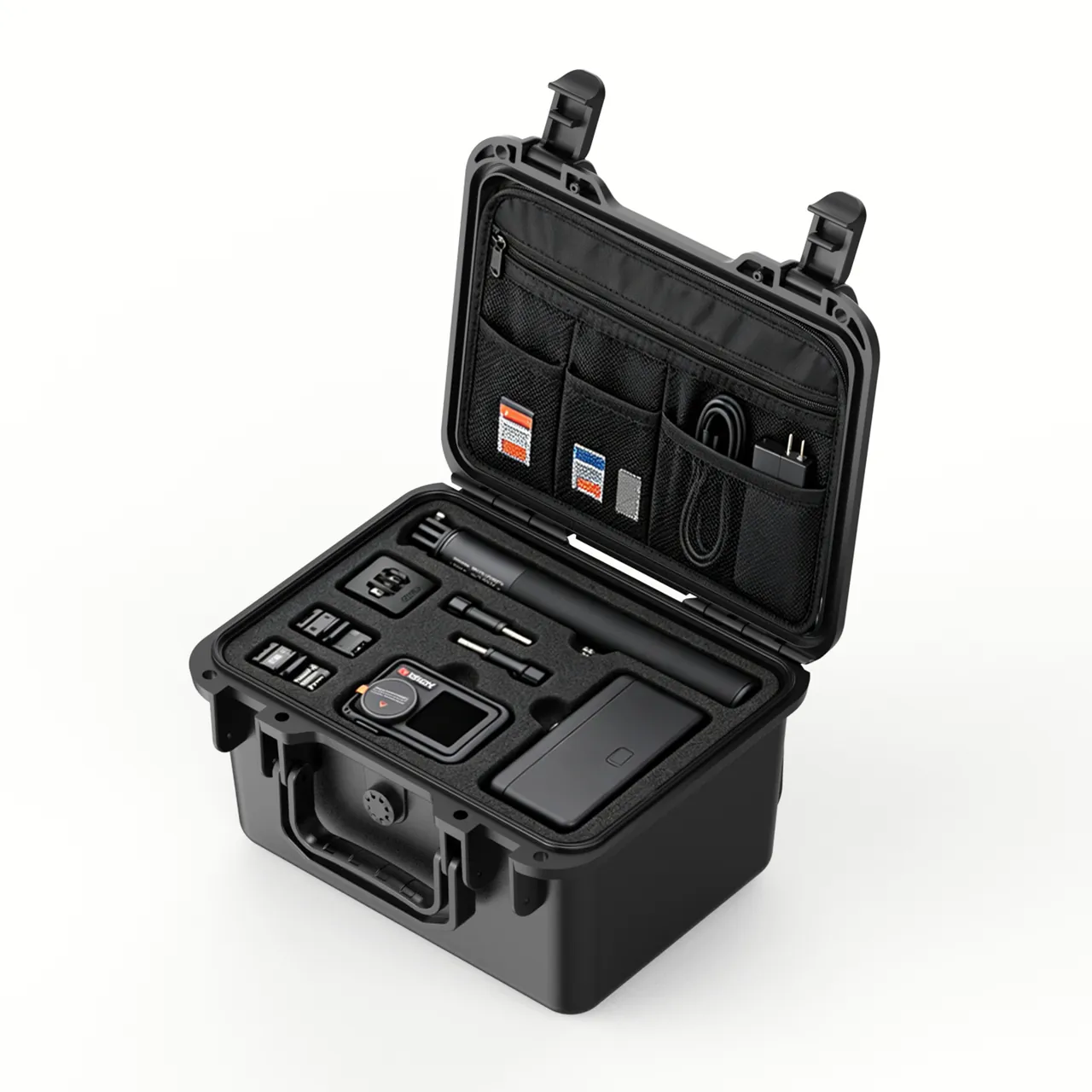
Hygienic pumps are the most frequently serviced rotating equipment in a dairy plant and cover the widest range of value and precision. Lobe rotors are precision-matched parts that rely on clearance rather than contact, so a knocked or deformed rotor changes clearance, reducing efficiency and increasing shear. Centrifugal pump impellers and shaft seals are the core, and the impeller is sensitive to scratches that affect balance. Progressive cavity pumps use an elastomer stator that takes a permanent set under long-term compression.
| Pump type | Critical parts | Sensitive failure | Packing point |
|---|---|---|---|
| --- | --- | --- | --- |
| Lobe (rotary lobe) | Rotors, casing bore, mechanical seal | Rotor impact, clearance change | Individual rotor slots, floated faces |
| Centrifugal | Impeller, shaft, mechanical seal, casing cover | Impeller scratches, balance loss | Impeller face supported, shaft vertical or fixed horizontally |
| Progressive cavity | Stator, rotor, universal joint | Stator permanent set, rubber ageing | Stator unloaded, no long-term compression |
| Self-priming | Pump chamber, gas-liquid separator | Seal face damage | Protective caps on faces |
| Hygienic inline | Impeller, O-rings | O-ring flattening | Seals packed separately |
Three rules apply across the family. First, the mating faces of rotating parts must never act as load-bearing surfaces; all load goes through the case or the liner structure. Second, elastomer parts such as stators and O-rings should not be stored under sustained compression, and separate storage extends their life. Third, the rotating and stationary faces of a mechanical seal are a matched lapped pair and must be fixed and stored as a pair, never mixed between sets. The tiered zoning approach used for impellers, bodies and flanges in Pump, Valve & Fitting Cases applies directly here.
Seat Valves and Mix-Proof Valves: Fixing Sealing Faces and Stems
Seat valves and mix-proof valves, including double-seat and mix-proof designs, are the critical control points in dairy piping and the focus of cleaning validation. The value of a mix-proof valve is that it separates two media with two independent seals and an intermediate leakage chamber, so that a seal failure becomes detectable. The geometric accuracy of the sealing faces and stem therefore determines product safety directly, and an impact in transit is not a cosmetic issue but a compliance issue.
| Area | Sensitive failure | Consequence | Fixing strategy |
|---|---|---|---|
| --- | --- | --- | --- |
| Valve seat cone | Scratch or indentation | Leakage, mix-proof function lost | Cone floated, soft face support |
| Valve stem | Bending, coating damage | Stroke inaccuracy, poor sealing | Two-point support, axial limit |
| Leakage chamber port | Deformation or blockage | Detection function lost | Protective cap on the port |
| Actuator air port | Thread damage | Air circuit leakage | Thread plug |
| Clamp connection end | Face impact | Assembly leakage | Face floated 2–3 mm |
Over-stacking is a common fault with valve parts: when bodies are stacked, the lower units carry the full weight above, creating bending stress between stem and seat. The correct approach is a tiered tray or individual slots, so that weight passes through the valve body into the base support rather than through the sealing pair. With a solid die-cut foam liner, the slot depth should exceed the valve body height by 5–10 mm to leave a top cavity, so the actuator cannot press against the lid.
Plate-Pack Gaskets and O-Rings: Segregated Storage Management
Plate heat exchangers are the core of dairy pasteurisation and UHT treatment. Their gaskets are the highest-volume hygienic elastomer consumable and the point where compatibility problems concentrate. A gasket must resist caustic wash, acid wash, milk fat and peracetic acid disinfection, while retaining resilience through hot-cold cycling. Choose the wrong material and the outcome ranges from a sharp drop in service life to swelling and detachment that enters the product.
| Material | Service range | NaOH 1–2% (75–85 °C) | Nitric acid 1–1.5% (60–70 °C) | Peracetic acid / hypochlorite | Milk fat and protein | Hygiene compliance | Typical use |
|---|---|---|---|---|---|---|---|
| --- | --- | --- | --- | --- | --- | --- | --- |
| EPDM | −40 to +150 °C | Excellent, swell under 5% | Good, concentration limited | Moderate | Good | Food contact possible | First choice for plate gaskets and O-rings |
| FKM | −20 to +200 °C | Poor, degrades in strong alkali | Excellent | Moderate | Excellent | Grade dependent | Acid circuits, high-temperature stages |
| PTFE, encapsulated | −60 to +260 °C | Excellent | Excellent | Excellent | Excellent | Excellent | Severe corrosion, direct steam contact |
| Silicone | −60 to +200 °C | Good | Moderate | Moderate | Moderate | Food contact possible | Low temperature, static sealing |
| NBR | −30 to +100 °C | Good | Moderate | Poor | Moderate | Limited | Not recommended for CIP systems |
| HNBR | −30 to +150 °C | Excellent | Good | Good | Excellent | Grade dependent | High-strength sealing duty |
Segregated storage has three rules. First, gaskets of different materials and grades must be stored in separate compartments so they cannot be fitted to an incompatible circuit; use both colour coding by material and separation by size. Second, store gaskets flat and avoid folding or hanging them, because stress concentration at a crease becomes a leak path once installed. Third, gaskets have a shelf life: EPDM stored at 30 °C shows a clear rise in compression set after two years, so first-in, first-out is essential. A systematic comparison of elastomer behaviour appears in Protective-Case Seal Materials.
Cold Storage, Condensation Risk and Stacking in Transport
Dairy spares often move through 2–4 °C chill stores or 0–10 °C cool rooms, and low temperature raises two easily overlooked problems: embrittlement and condensation. Thermoplastic liners increase in modulus and lose toughness when cold, so they crack more readily on impact. When a cold case is brought into a warm workshop, the case surface and the parts inside condense rapidly, and if that water is not dried it both rusts metal parts and provides conditions for microbial growth.
| Risk | Condition | Consequence | Measure |
|---|---|---|---|
| --- | --- | --- | --- |
| Low-temperature liner cracking | Drop below −5 °C | Liner splits, support lost | EVA with good cold resilience, avoid EPE |
| Surface condensation | Chiller into warm workshop | Rust spots, mould | Transition zone, 2–4 h warm-up before opening |
| Gasket hardening when cold | Below −10 °C | Seal failure, hard to open | Low-temperature EPDM grade |
| Stacking load | Above rated layers | Lower cases creep, liner collapses | Layer limit, pallets |
| Cold-store humidity | Often above 80% RH | Internal moisture uptake | Desiccant, humidity indicator card |
| Handling impact | Material embrittled when cold | Higher breakage probability | Limit drop height |
Warm-up is the step most plants skip. The correct practice is to move the whole case into a buffer area first and let it return to workshop temperature over two to four hours before opening and unbagging. That avoids condensation on the parts and lets the liner regain its resilience before it has to absorb handling loads. Stacking should stay within the rated number of layers, usually five or fewer, and every case label should carry both the inbound date and the re-inspection date.
Residue Verification and Swab-Test Documentation
In a dairy system, cleaning that cannot be verified is effectively cleaning that did not happen. Swab testing is the most direct tool: a defined area template is used to wipe a critical surface, and the sample is measured by ATP fluorescence, protein residue or allergen-specific ELISA to produce quantifiable data. For a case to be covered by this method, its liner architecture must allow sampling points that are reachable, wipeable and repeatably located.
| Verification item | Method | Typical criterion | Record |
|---|---|---|---|
| --- | --- | --- | --- |
| ATP fluorescence | Surface swab plus luminometer | Below in-house relative light unit limit | Point, time, reading |
| Protein residue | Swab plus protein swab or ELISA | Below method detection limit | Batch, method, result |
| Allergen specific | Specific ELISA | Below in-house limit | Allergen type, batch |
| Visual cleanliness | White-cloth wipe, bright light | No visible residue | Inspector, verdict |
| Conductivity, final rinse | Online conductivity | Close to incoming water baseline | Curve and peak |
| Microbiological | Swab plus culture | Total plate count within in-house limit | Conditions, result |
Fixed sampling points inside the case are recommended, for example the liner top surface, the slot floor corner and the inside of the gasket, each numbered in the cleaning SOP so that different shifts and operators sample the same locations and the data are comparable. Sampling records should be bound to the case number, batch and cleaning date to form a complete evidence chain. Where calibration and cleaning documents must travel with instrument-type hygienic parts, the document control approach described in Medical Instrument Cases is a useful reference.
Allergen Changeover and Cleaning Record Traceability
Dairy lines frequently produce formulas containing milk, soy or nuts on the same equipment, and cleaning verification for allergen changeover is stricter than routine CIP. If a case has been used for repairs on a milk-containing product and then moves to another line, there must be cleaning and verification records to demonstrate that it does not create a cross-contact risk.
| Changeover | Risk | Verification requirement | Record |
|---|---|---|---|
| --- | --- | --- | --- |
| Milk to non-milk | Milk protein residue | Protein residue plus ELISA confirmation | Batch, method, result |
| Soy to non-soy | Soy protein residue | Specific ELISA | Allergen type |
| Cleaning agent change | Residual chemical reaction | Rinse water testing | Change record |
| Liner replacement | New material migration | Migration assessment and compliance statement | Material certificate |
| Cross-line transfer | Cross-contact | Re-clean plus sampling | Transfer note |
| Restart after long idle | Mould, pests | Full clean plus visual | Start-up checklist |
Two practical measures help. First, zone the case fleet by allergen risk with colour and numbering, physically separating milk-dedicated cases from general-purpose ones, which reduces the verification burden created by ad hoc transfers. Second, the record must answer three questions: what was last carried in this case, when was it cleaned, and what was verified afterwards. A scannable label on the outside, backed by a batch history, is far more reliable than paper.
Case Washdown Compatibility: IP65/IP66, Drainage, Non-Porous Liner
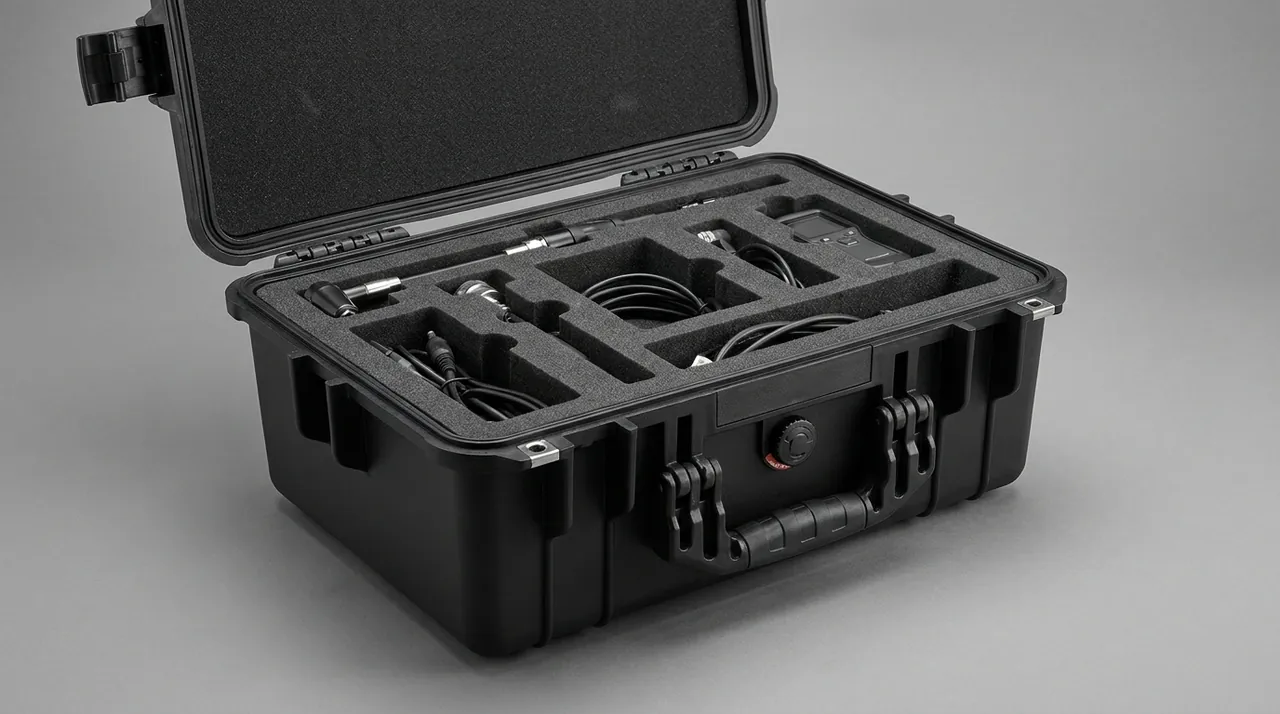
A dairy case will almost certainly be washed, so washdown compatibility is a design requirement rather than an optional extra. It has three layers: the exterior must withstand jet pressure without ingress, the interior must drain rather than pool, and the materials must resist cleaning chemicals without releasing contaminants.
| Rating | Meaning | Suitable location in a dairy | Note |
|---|---|---|---|
| --- | --- | --- | --- |
| IP54 | Dust protected, splash resistant | Dry stores | Not for washdown zones |
| IP65 | Dust tight, water jets | General wet areas, beside equipment | Gasket inspection needed |
| IP66 | Dust tight, powerful water jets | Washdown rooms | Drainage must actually empty |
| IP67 | Temporary immersion | Floors prone to standing water | Dry the sealing face after immersion |
| IP69K | High-pressure hot-water jets | Beside equipment washed directly | Must be tested to the actual condition |
Three structural details decide the outcome. The gasket should be a dual-lip EPDM profile at 25–35% compression, because over-compression causes permanent set while under-compression leaks. The base should have an openable drain or a sloped emptying face so washdown water cannot pool and form biofilm. The liner must be closed-cell or faced, since open-cell foam that has absorbed water cannot dry in a reasonable time. The practical differences between the five ratings are set out in IP65, IP66 and IP67 Rating Differences. Gaskets and hardware are consumables, so set an inspection and replacement interval against usage frequency and mark the last replacement date on the case.
Custom Liners, Tooling and OEM/ODM Delivery Points
Dairy pump and valve sizes span a very wide range, from DN25 seat valves to large lobe pumps, and a catalogue case rarely satisfies both hygiene and retention requirements. Before design starts, fix three inputs: the parts list with critical dimensions, the hygiene and cleaning requirement, and the logistics and cold-store conditions. From these follow the case size series, liner material and sealing class.
| Input | What to specify | Impact |
|---|---|---|
| --- | --- | --- |
| Parts list | Name, material, size, mass, quantity | Compartment count, liner thickness |
| Hygiene requirement | Washdown, swab sampling | Liner material and structure, removable preferred |
| Allergen management | Dedicated case, scan traceability | Labels, numbering, colour zoning |
| Cleaning method | Manual washdown or CIP environment | Sealing class, drainage design |
| Logistics | Stack height, chiller temperature, drop height | Wall thickness, ribs, low-temperature grades |
JUNZHIJIA cases support custom liner architecture, tooling development and OEM/ODM cooperation, with moulds built to drawings, closed-cell liners die-cut per part and provisions for removable structures and label positions so they can be cleaned or replaced separately. Case, liner, seals and documentation can be confirmed together as one delivery package, which removes the information loss that comes from coordinating several suppliers. Structural, material and transport performance should be verified by a suitably qualified third-party laboratory against current standards; the specific test items and pass criteria depend on the test plan actually commissioned.
Inspection on Receipt and Acceptance Criteria
Incoming inspection should set executable criteria across four items: case, liner, cleanliness and documentation. The liner deserves the most attention, because it is the only component that can carry contamination into the clean zone.
| Inspection item | Criterion | Method | Action if failed |
|---|---|---|---|
| --- | --- | --- | --- |
| Case sealing | Gasket not flattened or cracked | Visual plus hand rebound | Replace gasket |
| Liner integrity | No cracks, no delamination, no fragments | Visual plus white-cloth wipe | Replace liner |
| Liner water uptake | Surface not damp or darkened | Visual plus drip test | Material non-conforming |
| Odour | No abnormal smell | Sniff test at opening | Return and trace material |
| Surface cleanliness | No visible residue on white cloth | Lint-free cloth wipe | Rewash |
| Drainage | Drain open, clear and closable | Fill-and-drain test | Rework |
| Documentation | Material certificates and declarations complete | Item-by-item check | Reissue |
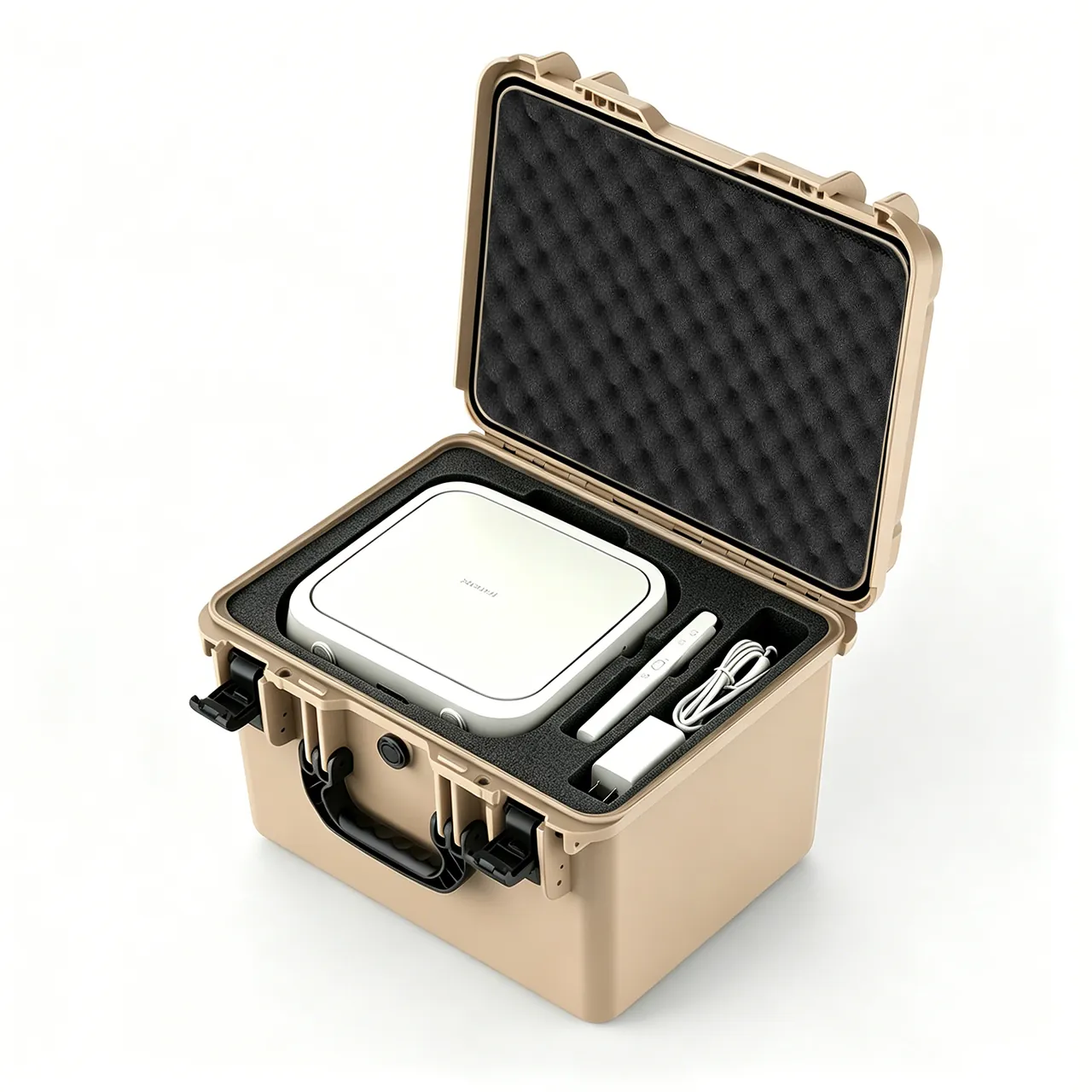
A fixed sequence works well: inspect the outer case and seals, then the liner for integrity and odour, then run a white-cloth wipe and a drip test, and finally check the documents and log the case number. The drip test is a low-cost, fast criterion: place a drop of water on the liner surface, and if it soaks in quickly and leaves a dark mark, the material is not closed-cell and should be rejected outright.
Frequently Asked Questions FAQ
Q: Why do dairy plants require a protective-case liner to be a non-absorbing, closed-cell material?
A: Dairy cleaning is wet cleaning, so case and liner surfaces inevitably see caustic, acid and rinse water. Open-cell foam has interconnected cells, and once liquid enters it cannot dry in a reasonable time, leaving the interior permanently damp; that grows mould and provides a breeding ground for microorganisms. The open structure also adsorbs milk fat and protein, and the resulting odour and residue cannot be washed or blown out, so the liner gradually becomes a cross-contamination source. Closed-cell materials such as closed-cell EVA, closed-cell PE and cross-linked PE foam have independent cells, so liquid cannot penetrate and the surface dries quickly after wiping or rinsing. They also resist fragmenting under compression and rubbing, which prevents debris from lodging in valve seats, pump casing sealing faces and clamp grooves. Density and resilience matter too: EVA at 45–60 kg/m³ balances support and cushioning, while lower density collapses and higher density is stiff with little cushioning. Finally, use the drip test as an incoming criterion; if a water drop soaks in and leaves a dark mark, the material is not closed-cell and should be rejected.
Q: Can a liner be wiped with sodium hypochlorite or peracetic acid for disinfection?
A: Yes, with conditions. Peracetic acid and sodium hypochlorite are both common dairy disinfectants and do not noticeably swell or dissolve closed-cell EVA, PE, cross-linked PE or silicone, so wipe-down disinfection is workable. The critical step is that the surface must then be rinsed or wiped with purified water to remove residue, and this matters most for chlorinated agents: dried residue forms salt crystals that markedly accelerate pitting on 316L, and once pitting starts it is usually amplified by subsequent cleaning. In practice, wipe with a lint-free cloth soaked in disinfectant, hold the wetted contact time within the in-house requirement, then wipe clean with purified water and air- or blow-dry. Note that frequent use of high-concentration chlorinated disinfectant accelerates ageing of rubber gaskets; if the case gasket is EPDM, reduce the contact frequency or move to a material more tolerant of oxidisers. Immersing the whole case is not advisable, because hardware, labels and the pressure-equalisation membrane can all be affected. Records should state the disinfectant type, concentration, contact time and rinsing method so that an audit can reconstruct the procedure.
Q: What checks should a mix-proof valve pass after transport to be considered acceptable?
A: The core function of a mix-proof valve is to separate two media and provide a detectable leakage signal when a seal fails, so after transport the focus is on sealing geometry and leakage-chamber connectivity rather than appearance. Work through four steps. First, visually inspect both sealing cones and the stem for scratches, indentations and embedded debris; on mirror or sub-0.8 µm surfaces, any scratch should be recorded and assessed. Second, check stem straightness and stroke, actuating the valve by hand several times where possible to confirm there is no binding or run-out. Third, check the leakage-chamber port and the actuator air port for intact threads, missing caps and blocked passages, using low-pressure gas to confirm continuity. Fourth, check the clamp faces and gasket grooves for impact deformation. After all four steps pass, a pressure and function test should still be run once the valve is installed, with pressure and hold time per the equipment manufacturer's instruction. Where transport records show shock beyond the limit, strip and inspect the sealing pair, replace seals, and file the conclusion in the equipment record as the baseline for later cleaning validation.
Q: How should plate-pack gaskets be stored inside a case without damaging them?
A: Three rules: store flat, store segregated, and store unloaded. A plate gasket is a thin-walled elastomer part, and folding, hanging or local compression over time creates permanent deformation at the crease, which becomes a leak path after installation; store them flat and avoid sharp bends. Different materials and sizes must be kept in separate compartments, because plate gasket selection depends heavily on the circuit medium: alkaline circuits usually use EPDM, while acid or high-temperature stages may need FKM or a PTFE-encapsulated grade. Fitting the wrong grade may look fine initially but accelerates ageing and causes premature failure. Third, avoid sustained compression: do not place heavy items on top of gaskets and do not let a gasket sit under a pump body. Shelf life also matters. Even unused, EPDM stored at 30 °C shows a clearly higher compression set after two years, so follow first-in, first-out and label each case with the inbound and re-inspection dates. For long storage, lay gaskets flat in shallow closed-cell liner slots, stack no more than three deep, and keep them away from direct sunlight and ozone sources such as electric motors.
Q: How should sampling points be set for swab verification of a protective case?
A: The goal is to cover the positions most likely to hold residue, not to distribute points evenly. Three categories are recommended. The first is corners and crevices, such as the slot floor corner, the inside of the gasket and the junction between liner and case wall, because these are hardest to scrub and carry the highest residue probability. The second is high-contact areas, such as the liner top surface where parts rest, because residue there is most likely to transfer to the part. The third is the hardest positions to dry, such as around the drain and under the sealing lip, because moisture alone is a risk. Number each point and write it into the cleaning SOP, keep the template area consistent with the method, and make sure different shifts and operators sample the same locations so the data are comparable. For detection, ATP fluorescence works well for rapid release while protein residue tests and allergen-specific ELISA confirm allergen removal; the two should be used together. Bind records to case number, batch and cleaning date. If one point is consistently high, investigate whether its geometry forms a dead zone and change the liner rather than simply scrubbing harder.
Q: Can a case taken out of a cold store be opened straight away?
A: No. A cold case entering a warm, humid workshop condenses rapidly, forming a water film on the case surface, the liner and the metal parts. If it is unbagged or the parts are installed immediately, that water can be carried into piping and equipment, metal surfaces develop rust spots quickly, and a light-coloured liner may darken with moisture, making cleanliness harder to judge. The correct practice is to move the whole case to a buffer area first and let it return to workshop temperature over two to four hours, then open the case and unbag the parts. A second cold-related risk is embrittlement: thermoplastic liners gain modulus and lose toughness when cold, so a drop inside the chiller is more likely to crack the liner than the same drop at room temperature. Limit drop height and avoid sharp impacts when handling in cold rooms, and where necessary specify an EVA grade with better low-temperature resilience. For duties that must operate briefly at low temperature, assess the material's brittle point in advance and add a low-temperature drop test to incoming inspection.
Q: What additional requirements apply to turnaround cases during allergen changeover?
A: The requirement is stricter than routine cleaning, and the essence is provable absence of residue. Routine CIP targets fat and scale removal, while allergen changeover must reduce previous-batch protein residue below the detection limit, which means different methods and criteria. Work through four steps: run a full caustic and acid clean, then a purified-water final rinse with conductivity monitoring; swab the defined sampling points and confirm with a protein residue test or specific ELISA; once confirmed, replace or re-clean the liner and record the cleaning and verification conclusion on the case label; finally bind the case to the logistics paperwork so it can be checked when it enters the next line. At management level, zone the fleet by allergen risk, for example physically separating milk-dedicated cases from general-purpose ones, which reduces the verification burden of ad hoc transfers. If a batch result sits near the upper limit, treat it as non-conforming, re-clean it and assess whether the sampling point geometry forms a dead zone. The record should answer what the case last carried, when it was cleaned and what was verified afterwards.
Q: How should minimum order quantity and lead time be negotiated for small-batch custom pump and valve parts?
A: Separate fixed cost from variable cost first. Fixed cost is mainly tooling: a new case mould depends on size, structural complexity and whether two-colour injection is needed, and is a one-time investment, whereas an EVA die-cut liner uses a cutting die that costs far less than a case mould and is much easier to revise. For small batches, a standard case with a custom liner therefore cuts the minimum order quantity significantly. Variable cost is driven by material, processing hours and inspection scope, and items such as removable liners, scan labels, desiccant and travelling documents should be priced per piece so that a packaged quotation does not hide individual costs. On lead time, confirm three things first: the sample approval cycle, the number of mould trials and the production slot. Capacity is tight in peak season, so order a quarter ahead. Put acceptance criteria in the contract as well, covering liner density and thickness tolerance, case sealing class, odour and cleanliness criteria, the document list and the disposition of non-conforming goods, so no dispute arises after delivery.
Conclusion and Related Reading
Dairy protection extends hygiene into packaging: a liner that does not absorb water, shed or retain odour, and a case that can be washed, drained and recorded. JUNZHIJIA closed-cell liners match turnaround state to cleaning records.
Related Reading