

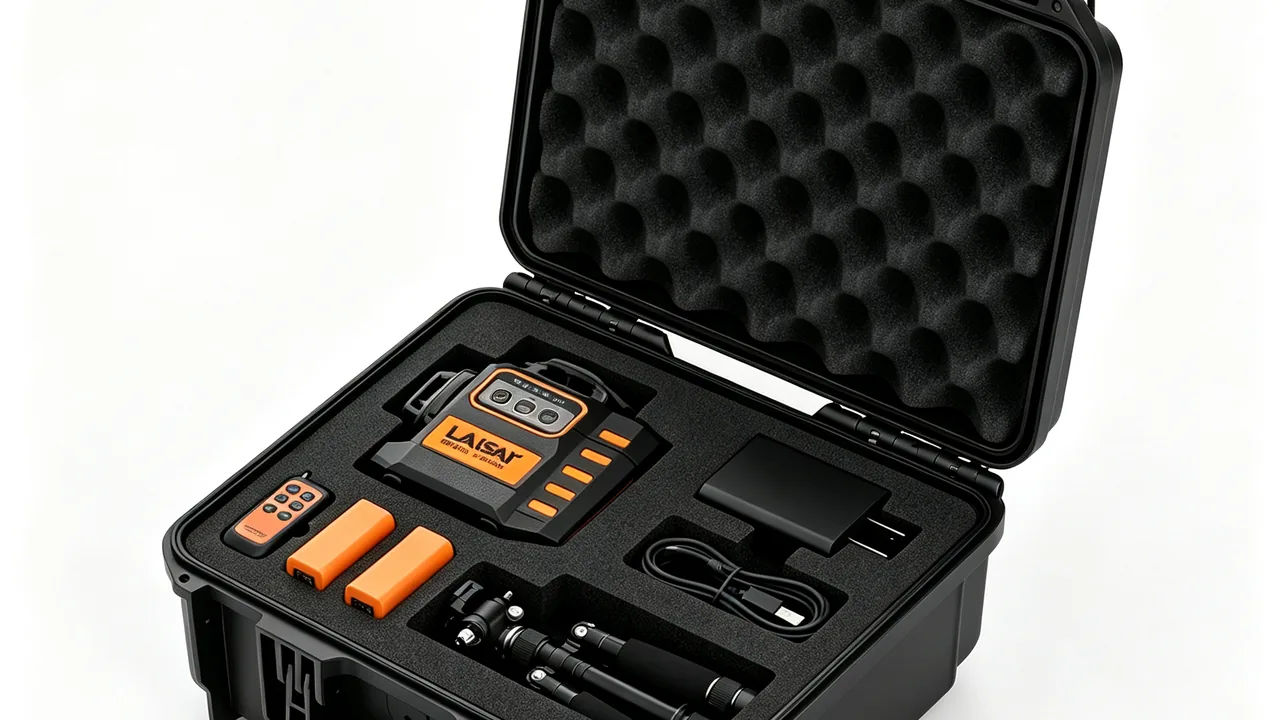
Medical device transport differs from ordinary industrial shipping in one fundamental respect. A device is not merely "intact" when it looks undamaged and powers on. It is intact when its traceability records, its cleanable surfaces, and its valid calibration certificate are all still in order. A patient monitor with a hairline scratch across a textured housing may be rejected by infection control because it can no longer be wiped down effectively. A probe that took an impact above its allowable limit may boot normally today while its measurement accuracy has already drifted outside its calibration envelope. A portable ultrasound unit exposed to rain during transfer may fail later, mid-examination, because moisture reached its high-voltage circuitry.
What these failures share is that the damage is invisible, the consequence is delayed, and responsibility is hard to assign. JUNZHIJIA therefore designs medical cases around a different brief: beyond physical protection, the case must support cleanability, disinfectant compatibility, preservation of calibration status, and documentation of transport conditions. A medical case belongs to the device lifecycle management system, not to the consumables budget.
Table of Contents
- Special Constraints of Medical Device Transport
- Payload Inventory and Classification First
- Shell and Cleanability: Wipeable, Non-Absorbent, Non-Shedding
- Sealing Ratings: IP65, IP67, and Disinfectant Compatibility
- Cushioning and Vibration Isolation: Allowable Acceleration
- Thermal Control and Cold Chain: Reagents, Samples, Standards
- Cavity Layout and Fixing Sterile Instrument Trays
- Electrostatic Discharge Protection for Sensitive Circuits
- Locks, Security Seals, and Chain-of-Custody Management
- Long-Term Effects of Cleaning and Disinfection on Materials
- Transport Validation: ISTA, ASTM D4169, and Acceptance Criteria
- Customization, Registration Documents, and Case Documentation
- Acceptance Checklist and Failure Mode Troubleshooting
- Frequently Asked Questions FAQ
- Conclusion and Related Reading
Special Constraints of Medical Device Transport
Physical constraints. Like any precision instrument, a medical device must survive shock, vibration, climatic swings, and stacking load. The difference is integration density: portable ultrasound, patient monitors, and endoscope units pack sensors, optics, precision mechanisms, and electronics into one housing, and tolerable acceleration is far lower than for industrial equipment of similar mass.
Cleanability constraints. After transfer, equipment may enter an operating theatre, an intensive care unit, or a clean laboratory. A case whose exterior has deep recesses, open seams, coarse texture, or absorbent liner material becomes a reservoir for microorganisms and particles. Acceptable designs keep exterior surfaces free of deep grooves, wipeable in a single direction, with liners removable for cleaning or replacement.
Calibration and condition constraints. Medical devices carry defined calibration intervals, and transport vibration or shock above limits can invalidate a calibration. Higher-demand applications therefore place shock indicators or temperature and humidity data loggers inside the case, turning the question of whether transport conditions were exceeded into a verifiable record.
Regulatory and traceability constraints. Transport records, cleaning records, calibration status, and case documentation together form part of a quality system. Where a product registration certificate exists, packaging information, labeling, and instructions must match the registration dossier, and any arbitrary packaging change can raise a compliance question.
| Constraint | Manifestation | Design impact | Basis |
|---|---|---|---|
| --- | --- | --- | --- |
| Physical | Shock, vibration, stacking, drop | Graded cushioning, positive stops, stiffness | ISTA, GB/T 4857, ASTM D4169 |
| Cleanability | Wipeable, non-shedding, non-absorbent | Smooth shell, removable liner | Wipe test, water absorption |
| Calibration / condition | Accuracy drift after over-limit shock | Shock and climate logger positions | Calibration policy, internal control |
| Regulatory / traceability | Label, document, record consistency | Marking area, document pocket, seal point | Quality system documents |
Payload Inventory and Classification First
The payload range in medical work is enormous, from a few hundred grams of accessories to a hundred-kilogram mobile detector. Classification must come before case selection. Tag every item on four axes: thermal requirement, cleanliness level, fragility, and regulatory status. If a single journey carries both ambient instruments and refrigerated reagents, they must not share a cavity; design the system as a main case plus an independent thermally controlled insert.
| Payload class | Typical items | Weight range | Thermal need | Recommended approach |
|---|---|---|---|---|
| --- | --- | --- | --- | --- |
| Portable diagnostic unit | Ultrasound, monitor, ECG | 2–12 kg | Ambient | Cut main cavity, full-unit locating |
| Precision probes and scopes | Ultrasound probes, endoscope bodies | 0.2–2 kg | Ambient, no bending | Dedicated shallow cavity, curved cradle |
| Mobile imaging parts | Flat panel detector, its battery | 2–6 kg | Ambient | Two-sided clamping, anti-bending |
| Laboratory and reagents | Kits, controls, samples | 0.1–3 kg | 2–8 °C or −20 °C | Thermal insert plus logger |
| Sterile instrument trays | Surgical and dental instruments | 1–8 kg | Ambient | Tray fixing, anti-shift blocking |
| Consumables and cabling | Probe covers, leads, power supplies | 0.5–4 kg | Ambient | Compartment storage, cable spooling |
| Calibration accessories | Simulators, reference blocks | 0.5–5 kg | Ambient, shock sensitive | High-density pads, isolated cells |
| Case documents | Certificates, manuals, record sheets | Under 1 kg | Ambient, dry | Separate document pocket |
Two layout habits distinguish medical cases from industrial ones: prioritize usability on opening, so probes, cables, and consumables sit in the upper layer with generous grab points; and reserve a record position in the lid liner for shock indicators, loggers, or a transport note.
Shell and Cleanability: Wipeable, Non-Absorbent, Non-Shedding
Three questions decide whether a shell suits a clinical environment: can the surface be wiped in a single direction, can the liner be removed for cleaning, and does the material absorb water?
Exterior surfaces should be flat, with few recesses and seams, and radiused transitions at corners. Injection-molded PP or ABS shells excel here because the mold can produce smooth curvature and an integral handle. Rotomolded PE finishes rougher and needs additional treatment. Aluminum extrusion cases have seams between profiles and panels where dust collects, requiring gasket fill and a flush finish. Lower surface roughness means higher coverage per wipe.
Liner material is the decisive factor. Closed-cell EVA does not absorb water, but cut faces expose crumbs and trap soil. Medical liners therefore receive three treatments: sealed cut edges, a dense film or coating on the face, and a fully removable format. For high-cleanliness applications, a tray-style liner can be lifted out and cleaned or disinfected separately while the empty case is wiped.
Water absorption is often overlooked. Porous or fibrous fills hold moisture for long periods and become a substrate for microbial growth, so paperboard, felt, and open-cell sponge should be avoided unless the layer is designed as a single-use replacement.
| Surface | Cleanability requirement | Recommended approach | Avoid |
|---|---|---|---|
| --- | --- | --- | --- |
| Shell exterior | Single-direction wipe, no deep grooves | Smooth molded finish, radiused corners, integral handle | Deep recesses, wide seams, coarse texture |
| Liner body | Non-absorbent, non-shedding | Closed-cell EVA or IXPE, sealed cut edges | Sponge, felt, paper fill |
| Liner fixing | Removable for cleaning | Tray-style liner, stackable layers | Permanently bonded liner |
| Document pocket | Dry, traceable | Separate sleeve or waterproof box | Sharing a cavity with devices |
| Marking area | Wipe and disinfectant resistant | Screen print or solvent-resistant label | Plain paper labels |
Sealing Ratings: IP65, IP67, and Disinfectant Compatibility
Sealing demand comes from two directions: ingress from the outside environment, and liquid involved in cleaning the case itself. Devices may meet rain, snow, floor washdown, or spilled fluids in an ambulance, and the case itself must be wiped or rinsed after contamination.
The practical test is whether the case will contact flowing or standing water. Ambulance transfer, pre-hospital response, disease-control sampling, and rural outreach all make rain contact likely, so IP65 is the minimum, with IP67 advisable where standing water is possible.
| Rating | Dust | Water | Medical fit |
|---|---|---|---|
| --- | --- | --- | --- |
| IP54 | Limited | Splashing | In-hospital transfer, dry corridors |
| IP65 | Dust-tight | Water jets | Ambulances, field response, rain and snow |
| IP66 | Dust-tight | Powerful jets | Facilities washing exteriors with pressure |
| IP67 | Dust-tight | Temporary immersion | Field sampling, water crossings, disaster response |
Two sealing details separate medical from industrial practice. First, gasket cleanability: embedded gaskets accumulate soil in the groove over time and cannot be fully cleaned, so medical cases favor a gasket that can be lifted out and cleaned or replaced as a unit, with no crevice that resists a wipe. Second, no permanently open vent: temperature differentials create internal pressure, and an open vent would both void the rating and admit liquid. The correct solution is a pressure equalization valve that opens briefly above a threshold and reseals; the mechanism is described in how a pressure equalization valve works.
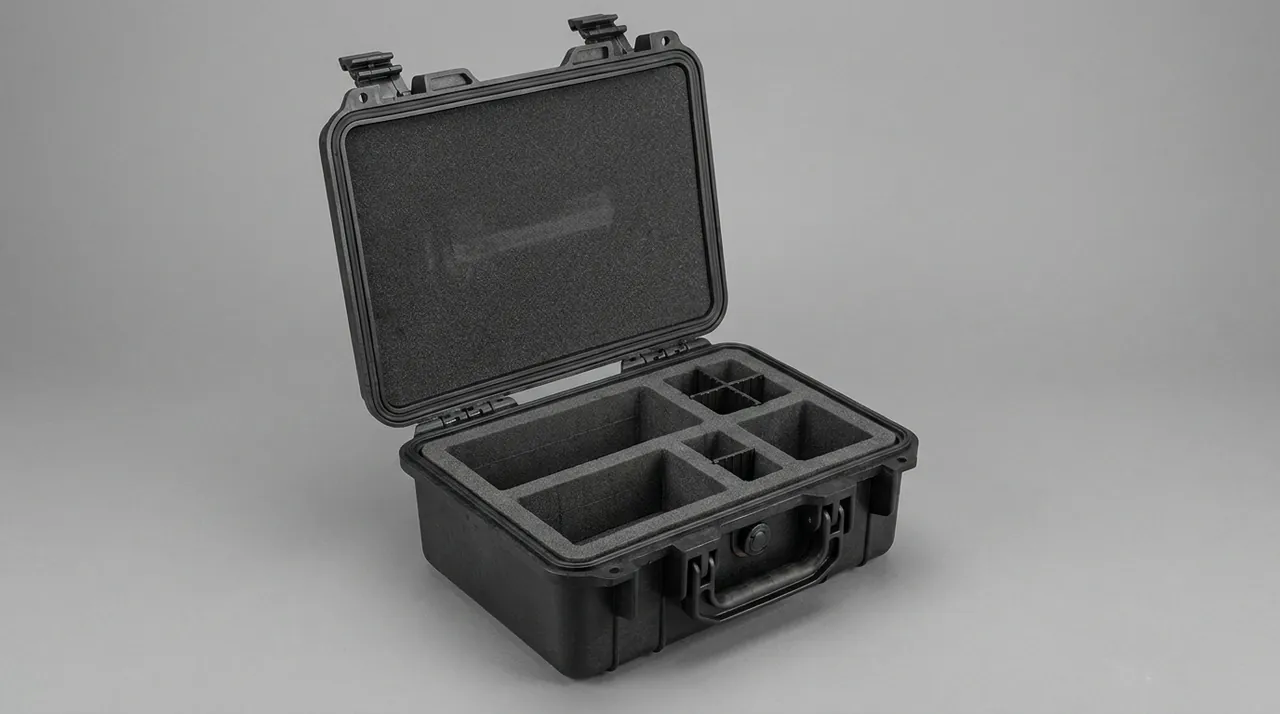
An IP rating describes the complete system: unengaged latches, debris on the gasket, or a contaminated valve all reduce real performance substantially. Daily checks should therefore cover three actions rather than a specification sheet: latches, sealing face, and valve.
Cushioning and Vibration Isolation: Allowable Acceleration
The difficulty in medical cushioning design is that allowable acceleration is low while device masses vary widely. One case may carry a 0.3 kg ultrasound probe and an 8 kg patient monitor, and their optimal cushioning parameters are entirely different.
The engineering answer is to design cushioning parameters per zone, not to apply one foam density to the whole case.
For light, brittle items such as probes, scope bodies, and optical assemblies, the objective is limiting peak acceleration rather than resisting force. Use lower density, thicker foam, for example EVA at 38–45 kg/m³ in a 30–50 mm layer, trading a long deformation stroke for a lower peak. Attitude constraint is essential so the probe cannot roll inside the pocket.
For heavy, rigid items such as monitors, flat panel detectors, and instrument trays, the objective shifts to compressive strength and positive location. Use higher density material, 60–80 kg/m³, or rigid foam as the load-bearing layer, with corner blocks preventing displacement under impact.
For long, slender items such as endoscope bodies, lead bundles, and rigid catheters, the objective is preventing bending deformation. Scope cavities should be continuous cradles with no unsupported span, and lead sets should wind on a large radius to avoid repeated small-radius flexing of internal conductors.
| Item type | Allowable acceleration | Recommended cushioning | Critical constraint |
|---|---|---|---|
| --- | --- | --- | --- |
| Ultrasound probe | Low | EVA 38–45 kg/m³, 30–50 mm | Curved cradle, full attitude constraint |
| Portable host unit | Medium | EVA 55–70 kg/m³, 20–30 mm | Corner blocks, base bearing |
| Flat panel detector | Medium | 60–80 kg/m³ with rigid core | Two-sided clamping, anti-bending |
| Endoscope body | Low | Continuous cradle plus IXPE | No unsupported span, minimum bend radius |
| Instrument tray | Medium-high | High-density pad plus locating posts | No instrument contact, no tray shift |
| Calibration standard | Low | High-density EVA, isolated cell | No point contact with hard parts |
Layering is standard: a high-density base bears the load, a medium-density middle layer carries cut pockets, and a soft cap applies preload. This hard-base, medium-core, soft-cap arrangement lets items of different mass each receive reasonably matched cushioning within one case. Quantitative material comparisons appear in protective case foam material comparison and liner foam types explained; the general isolation method is covered in precision instrument protective case design.
Thermal Control and Cold Chain: Reagents, Samples, Standards
Temperature-sensitive payloads are the hardest part of medical case design, because the problem stops being a packaging problem and becomes a heat transfer problem.
Three groups typically need thermal control: reagents and quality controls, usually at 2–8 °C, biological samples at 2–8 °C or −20 °C depending on type, and calibration reference materials, which normally require a stable temperature away from light. The requirement is not "colder is better" but "hold within the specified band and never cross either limit."
A passive thermal case consists of an outer shell, an insulating layer, phase change elements, and temperature logging.
| Design variable | Influence | Common practice | Risk |
|---|---|---|---|
| --- | --- | --- | --- |
| Ambient temperature | Sets heat flow direction | Use worst-case season | Designing only for ambient 20 °C |
| Transport duration | Sets required capacity | Actual duration plus 50% margin | No margin, late-stage excursion |
| Phase change temperature | Sets the hold plateau | Match midpoint of target band | Wrong choice causes over-cooling |
| Payload mass | Affects heat capacity and volume | Leave air circulation paths | Packed solid, uneven temperature |
| Opening frequency | Accelerates heat loss | Reduce openings, zone the payload | Frequent sample retrieval |
| Logging | Determines traceability | Logger placed beside samples | Logger position not representative |
Three errors dominate field experience: designing only for moderate ambient conditions, so capacity falls short in a hot vehicle or a winter yard; placing phase change elements in direct contact with samples, causing localized over-cooling; and placing the logger against the case wall, where it records the wall rather than the sample.
Passive thermal validation is normally designed around the specific route rather than a single standard, covering full and partial loads, worst-case ambient temperature, actual or simulated duration, and simulated opening. Any thermal conclusion holds only under those conditions and cannot be extrapolated. Related approaches appear in medical sample transport case design.
Cavity Layout and Fixing Sterile Instrument Trays
Sterile instrument transport has two defining features: concentrated mass and no mutual contact. A stainless instrument tray may weigh 5–8 kg, and instruments striking each other during transport can chip cutting edges, distort joints, and scratch plating.
Three fixing approaches are common. Tray-fixed designs keep instruments in their standard sterile tray and provide a locating cavity for the whole tray, preserving the clinical workflow, at the cost of assembly clearance that requires corner blocks. Individual slot designs cut a dedicated pocket per instrument, giving the best protection at high changeover effort. Modular insert designs use replaceable inserts configured per set, suiting departments with many instrument types.
| Fixing approach | Protection | Reconfiguration | Best fit | Caution |
|---|---|---|---|---|
| --- | --- | --- | --- | --- |
| Tray-fixed | Medium | High | Standard instrument sets | Eliminate tray-to-cavity clearance |
| Individual slots | High | Low | Valuable, fragile instruments | Liner rework on any change |
| Modular inserts | Medium-high | Medium | Multi-type departments | Inserts must locate reliably |
| Roll pouch plus strap | Medium | High | Soft instruments, catheters | Avoid strap witness marks |
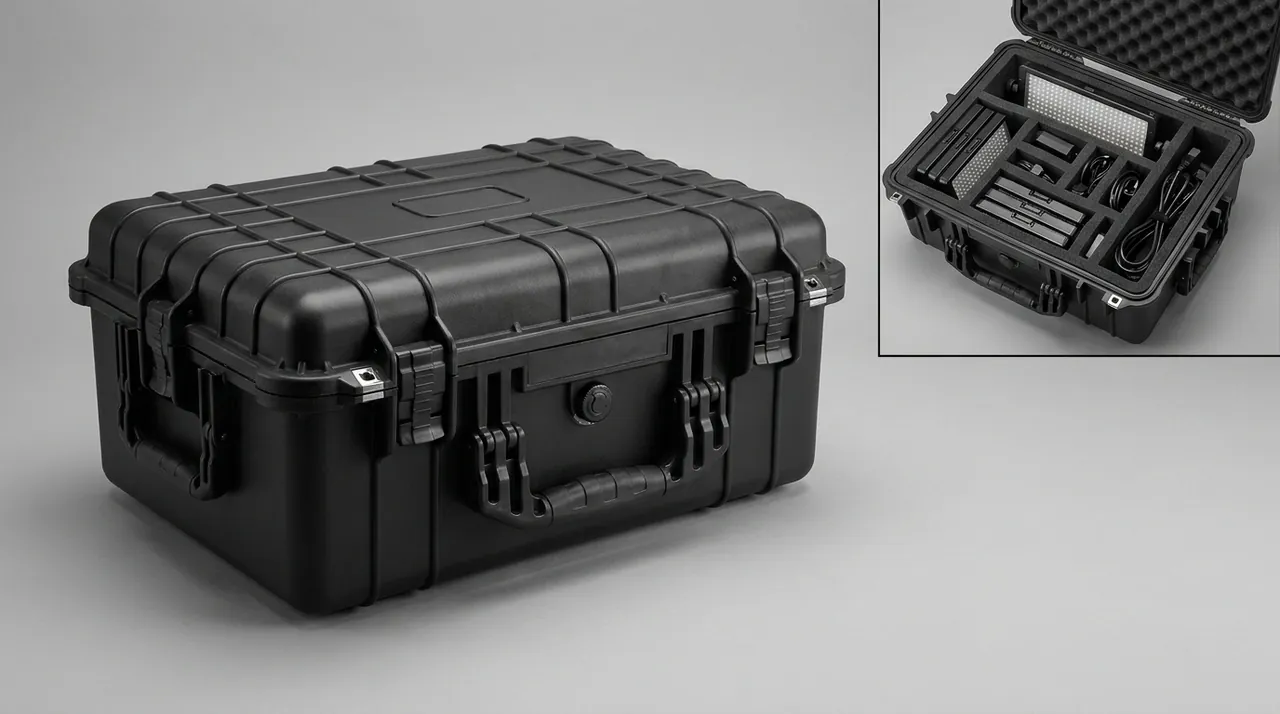
Electrostatic Discharge Protection for Sensitive Circuits
Medical devices contain many ESD-sensitive components: sensor front ends, analog circuitry, communication interfaces, and unguarded service ports. Discharge causes two failure modes. Catastrophic failure damages a component outright, producing an obvious malfunction. Latent failure degrades parameters, showing up as reduced accuracy or shortened service life, and is far more likely to be misattributed to a device defect.
During transport the main charge source is triboelectric generation, produced as equipment frets against plastic liner material. ESD protection therefore does not begin with an antistatic bag. It begins with eliminating relative motion.
Four measures follow. First, constraint before shielding: if the device can move, any shielding is a passive remedy, so cut the pocket and apply preload so it cannot move at all. Second, select materials with controlled static behavior: ordinary EVA and IXPE are insulators that accumulate charge readily, whereas a dissipative surface layer bleeds charge slowly instead of releasing it suddenly, with target values set by the device sensitivity class rather than copied from another category. Third, treat interfaces separately, orienting service ports toward a wall or fitting a cover so they do not rub. Fourth, separate packaging from the case: for the most sensitive modules, bag them in antistatic film first so the bag provides the electrostatic barrier and the case provides mechanical protection.
| ESD risk point | Mechanism | Countermeasure | Verification |
|---|---|---|---|
| --- | --- | --- | --- |
| Liner friction | Device frets against foam | Remove freedom, dissipative layer | Surface resistivity measurement |
| Connector friction | Repeated contact with liner | Port cover, dedicated slot | Visual wear inspection |
| Tools carrying charge | Tools share the cavity | Separate tool compartment | Packing list check |
| Shielding discontinuity | Poor grounding path | Defined grounding route | Continuity measurement |
| Latent failure | Accumulated low-energy discharge | Reduce motion, periodic testing | Scheduled calibration and function test |
ESD measures do not replace routine testing, which remains the most reliable way to detect latent failure.
Locks, Security Seals, and Chain-of-Custody Management
Medical cases need one function industrial cases usually do not: a verifiable closed state. When equipment or samples pass between several parties, whether the case was opened after leaving point A is a question that must have an answer.
Seal points provide it. A hole or slot beside the latches accepts a single-use seal whose serial number is recorded on the handover sheet, and the receiving party confirms integrity and number match. The seal point must be positioned so opening the lid necessarily destroys the seal.
Lock design must satisfy two conditions at once: latches that cannot pop open under vibration, and rapid access for authorized staff. Symmetrical paired latches with anti-accidental-opening features are standard, with a padlock position added where needed. Combination or key locks suit high-value equipment or controlled materials.
| Security element | Design implementation | Management action | Consequence of failure |
|---|---|---|---|
| --- | --- | --- | --- |
| Seal | Dedicated seal point, broken to open | Record seal serial number | Cannot prove the case stayed closed |
| Latch | Symmetrical engagement, anti-pop | Check at every handover | Pops open in transit |
| Padlock position | Metal hasp or latch seat | Key and code control | Unauthorized access |
| Marking | Device name, owner, contact details | Keep legible | Misrouting, poor traceability |
| Handover record | In-case transfer sheet | Signature at each stage | Responsibility unclear |
Long-Term Effects of Cleaning and Disinfection on Materials
Disinfectant effects on materials are gradual and irreversible. Many cases pass acceptance and then show tackiness, crazing, or chalking after six months because of long-term interaction between the chemical and the polymer.
| Method | Active agent example | Effect on PP / PE shell | Effect on EVA liner | Caution |
|---|---|---|---|---|
| --- | --- | --- | --- | --- |
| Alcohol wipe | Ethanol, isopropanol | Minor | Surface tackiness over time | Avoid prolonged soaking |
| Chlorine-based | Sodium hypochlorite | Discoloration, stress cracking | Accelerated aging | Rinse with water after wiping |
| Peroxide-based | Hydrogen peroxide | Minor | Possible oxidation | Limit contact time |
| Quaternary ammonium | Benzalkonium chloride | Minor | Generally acceptable | Remove residue |
| Moist heat | Steam | Possible distortion | Marked degradation | Generally unsuitable |
| UV-C irradiation | UV-C | Embrittlement over time | Marked aging | Limit exposure time |
No single material is optimal against all methods, so selection should follow the dominant method in actual use, with unsuitable methods documented as prohibited. Where chlorine-based agents or UV-C are mandatory, shift the design toward a replaceable liner.
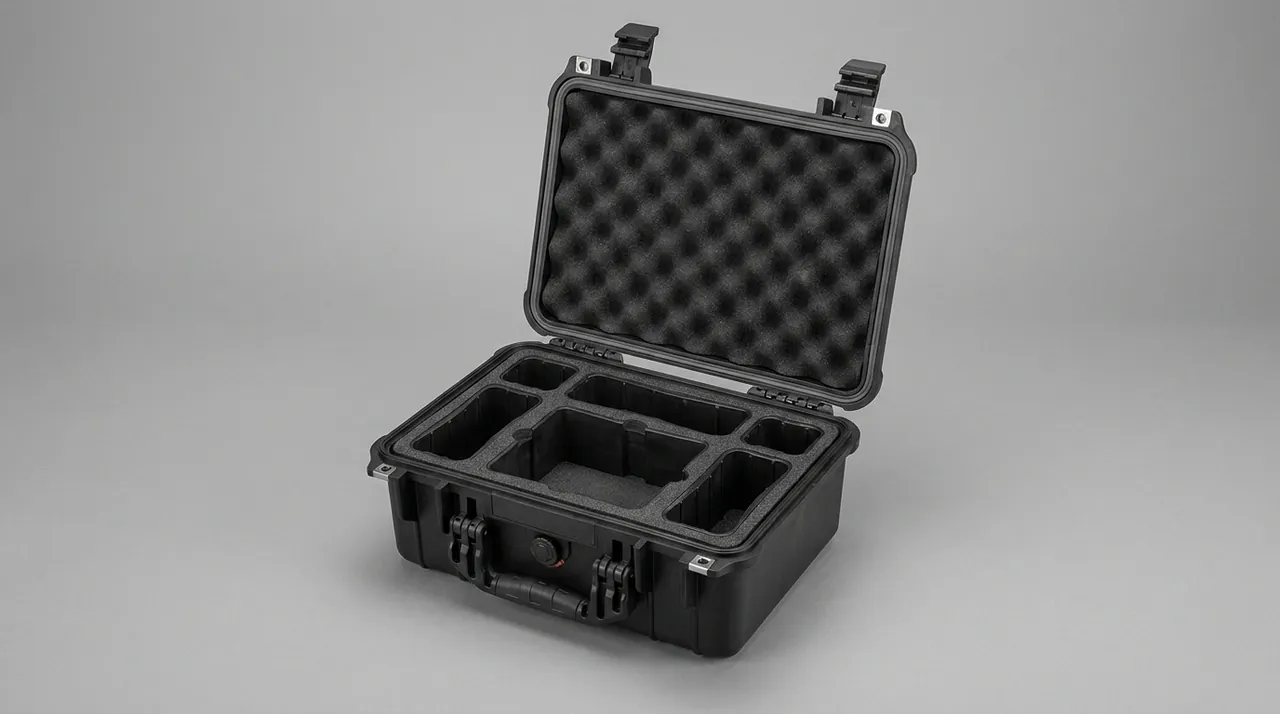
Transport Validation: ISTA, ASTM D4169, and Acceptance Criteria
Validation exists to demonstrate that this case and device combination survives the intended transport chain, not to obtain a certificate, so the plan must map to the real route.
Common references include the ISTA series for packaged-product transport testing, ASTM D4169 for shipping container and system performance, and the GB/T 4857 series for individual packaging test methods. ISTA organizes procedures around transport modes; ASTM D4169 frames a distribution cycle into which hazards can be combined; GB/T 4857 provides single test methods.
| Test | Reference | Key conditions | Acceptance criteria |
|---|---|---|---|
| --- | --- | --- | --- |
| Drop | ISTA, GB/T 4857.5 | Corner, edge, face drops | No shell rupture, no device shift, function normal |
| Random vibration | ASTM D4169, GB/T 4857.7 | Spectrum by transport mode | No loosening, no abnormal noise |
| Stacking | GB/T 4857.3 | Constant load, defined time | No bulging or collapse, sealing face intact |
| Concentrated impact | ASTM D4169 procedures | Specified impact energy | No liner penetration, no device damage |
| Spray | IEC 60529 | Conditions for the declared rating | No internal water |
| Low pressure | Relevant procedures | Simulated air freight altitude | Sealing intact, no deformation |
Acceptance criteria operate on three levels: physical integrity, function and accuracy confirmed by power-on self-test after testing, and traceability in which records, serial numbers, and pre- and post-test data correspond and are archived. Before volume deployment, run a physical trial on one representative route with shock and climate loggers and compare the data against the tested conditions; cross-border routes should also consider the sea leg. See sea freight and long-haul transport.
Customization, Registration Documents, and Case Documentation
Medical customization adds two stages to the industrial workflow: compliance confirmation and documentation.
Requirements and compliance confirmation defines the device list, transport chain, cleanliness and disinfection requirements, thermal requirements, and whether the packaging change touches the packaging description in the registration dossier. The conclusion should be documented in writing and confirmed by quality or regulatory staff rather than by the case supplier.
Data acquisition captures accurate geometry through a 3D model or a physical scan, with particular attention to probes, connectors, vents, and feet. Cavity and liner design produces the cavity layout, cushioning layers, liner removal method, and record and document positions. Prototype fitting builds the first liner, loads the actual device, and verifies handling motion, preload, and lid closure. Validation testing runs drop, vibration, spray, and thermal checks as agreed. Production and documentation delivers batch liners with critical dimension re-inspection plus the accompanying documents.
| Stage | Deliverable | Medical-specific confirmation |
|---|---|---|
| --- | --- | --- |
| Requirements | Requirements and compliance record | Does the packaging change affect registration? |
| Data acquisition | 3D model or dimension drawing | Probe and connector protrusions |
| Design | Layout and exploded drawings | Liner removal method, record positions |
| Prototype fitting | First article and fit record | Handling motion matches clinical habit |
| Validation | Test report | Post-test function and accuracy checks |
| Production | Shipping report and documents | Label, manual, and record consistency |
Case documentation should include a packing list mapping device serial numbers to accessories, a liner layout drawing for repacking, cleaning and disinfection notes, replacement intervals for gaskets and liners, and a transfer record sheet. Where label content must match registration documents, confirm it with quality or regulatory staff before printing. JUNZHIJIA supports the transition from single-piece prototyping to volume supply for medical cases and can provide tooling, OEM and ODM services, and full case documentation; contractual allocation of sealing and testing responsibility is best stated explicitly, as discussed in IP clauses in custom case contracts. Related configurations appear in medical box series and medical emergency equipment cases.
Acceptance Checklist and Failure Mode Troubleshooting
Acceptance should run along four lines: appearance, cleanliness, mechanism, and records.
| No. | Check item | Acceptance criterion | Action if failed |
|---|---|---|---|
| --- | --- | --- | --- |
| 1 | Shell exterior | No deep grooves or sharp edges, wipeable | Reject or rework |
| 2 | Liner | Non-absorbent, sealed edges, removable | Replace liner |
| 3 | Gasket | Seated, separately removable, untwisted | Reseat |
| 4 | Latches and seal point | Symmetrical engagement, sensible seal position | Adjust or replace |
| 5 | Equalization valve | Opens and closes, no leak when closed | Inspect diaphragm |
| 6 | Cushioning layers | Matched to mass, 2–4 mm preload | Change foam density |
| 7 | Thermal insert | Elements isolated from samples, logger positioned | Re-layout |
| 8 | ESD measures | No relative motion, port covers fitted | Add constraint or covers |
| 9 | Packing rehearsal | Complete within five minutes | Optimize grab points |
| 10 | Case documentation | List, drawing, notes, record sheet present | Supply missing items |
Troubleshooting order should be constraint first, sealing second, thermal path third, material last. Loose equipment traces to oversized pockets or insufficient foam density; water ingress to unengaged latches or debris on the gasket; thermal excursions to insufficient phase change capacity or over-packing; and material degradation to a disinfectant and polymer mismatch.
Frequently Asked Questions FAQ
Q: How does a medical instrument case differ from an industrial case, and can an industrial case be used instead?
A: Not directly, and the difference is not strength but constraint set. Industrial cases optimize for impact and drop resistance. Medical cases must additionally satisfy cleanability, removable or washable liners, disinfectant compatibility, documented transport condition, and consistency with registration documents and markings. For example, a case with excellent IP rating and impact performance still fails in a clinical environment if its liner is permanently bonded deep-groove EVA with exposed crumbs and its shell has wide seams and coarse texture. It likewise fails where shock or temperature records must be kept if there is no position for a logger. Conversely, if a device is only transferred along a fixed indoor corridor at ambient temperature, never enters a clean area, and is not covered by a registered packaging description, a well-designed industrial case can be technically acceptable. The deciding step is to list classifications, use scenarios, and quality system requirements first, then select the configuration, rather than starting from a case that merely looks robust and trying to satisfy the remaining requirements afterwards.
Q: Is IP67 the standard configuration for medical cases, or is IP65 sufficient?
A: IP65 is usually sufficient, but the answer must be scenario-based. Under IEC 60529 or GB/T 4208, IP65 means dust-tight with protection against water jets, which covers ambulance transfer, field response, brief rain and snow exposure, and routine exterior washing. IP67 adds temporary immersion, which matters where a case may fall into or rest against standing water, as in field sampling, disaster response, or water crossings. A direct test is to review the typical transport chain and ask whether standing water contact is possible; if it is, specify IP67. Remember that the rating describes the complete system, so latches not fully engaged, debris on the gasket, or an unreseated valve will reduce actual performance well below the nominal figure. This matters more in medical work because cases are frequently open during cleaning, so staff may overlook the closing checks. Formalize a three-point closing check, covering latches, sealing face, and valve, and verify it during handover. Where a case is opened and closed many times per day, inspect the gasket weekly for compression set, since a gasket that no longer springs back will leak long before it looks visibly damaged. A fixed layout also makes restocking faster between shifts, because a missing item is visible at a glance rather than being discovered at the point of use.
Q: Why must the liner be removable? Wouldn't bonding it in place be more stable?
A: A bonded liner creates cleanliness problems that are difficult to overcome. First, the bond line forms a crevice that cannot be wiped effectively, so contamination accumulates where no cleaning action reaches it. Second, the liner is a consumable: cut faces gradually fuzz and shed, and foam takes a compression set, so once bonded the only remedy is scrapping the whole case, which costs far more than replacing a liner. Third, clinical device inventories rotate between departments, and a removable liner can be swapped by exchanging trays, whereas a bonded liner must return to the factory and the device is out of service meanwhile. Fourth, after a contamination event a removable liner can be cleaned or disinfected separately while the empty case is wiped thoroughly. Medical cases therefore favor tray-style or stacked insert liners located by posts or edges rather than adhesive, which preserves the ability to remove, wash, and replace without sacrificing transport stability. Specify the replacement interval in the case documentation so that liner condition is reviewed on a schedule rather than only after a problem appears. Keeping the inventory list inside the lid means the case can be checked on arrival without opening every compartment, which shortens the hand-off between teams.
Q: The temperature logger shows no excursion, so why were the sample results still abnormal?
A: Temperature logging is one dimension of cold chain quality, and sample abnormality can originate elsewhere. First, logger position: if the logger sits near the case wall while samples occupy the center, the recorded temperature does not represent the samples, and the deviation is largest with small payloads in a large cavity. Second, localized over-cooling: phase change elements in direct contact produce surface temperatures below the lower limit, and some samples fail when they approach freezing even though the average internal temperature looks correct. Third, opening frequency: each opening admits heat and redistributes internal temperature, and a brief opening may appear as only a small fluctuation on the curve while strongly affecting samples near the opening. Fourth, packing method: a fully packed cavity obstructs air circulation and creates non-uniform zones. Fifth, pre-analytical handling of the sample itself may be the cause. Validate internal uniformity with multi-point measurement, separate elements from samples, and reduce opening frequency with a fixed retrieval order. Where possible, pre-chill the payload before loading, since a warm payload consumes a large share of the available cooling capacity in the first hour.
Q: Is ESD protection simply a matter of putting the device in an antistatic bag?
A: An antistatic bag addresses electrostatic shielding but not the generation of charge. In transport, the main source is triboelectric charging between the device and the liner material, which requires relative motion to occur. The most effective measure is therefore to eliminate relative motion by cutting precise pockets and applying even preload so the device cannot fret at all. On that foundation, consider material behavior: ordinary EVA and IXPE are insulators with very high surface resistivity that accumulate charge readily, while a dissipative surface layer bleeds charge slowly instead of releasing it suddenly. For the most sensitive modules, still bag them in antistatic film before loading, so the bag provides the electrostatic barrier and the case provides mechanical protection, with clear division of function. Separately, unguarded service ports and connectors should be isolated from the liner or fitted with covers, because friction concentrates at interfaces. Note that ESD-induced latent failure appears as parameter degradation rather than functional failure and is very hard to detect on site, so periodic function and accuracy testing remains essential, and any deviation should be investigated rather than attributed to normal wear.
Q: Should sterile instruments be fixed as a complete tray, or should each instrument have its own pocket?
A: It depends on instrument value, fragility, and variety stability. Tray-fixed designs preserve the existing clinical arrangement, require no relearning by nursing staff, and need only a tray change when the set changes, which makes implementation cheapest and suits standardized routine sets. The risk is assembly clearance between tray and cavity: without corner blocks the tray shifts under impact and instruments strike one another, so clearance must be eliminated deliberately. Individual pockets give the best protection, supporting cutting edges, joints, and tips separately, and suit valuable or fragile instruments, but any change in instrument type requires a new liner, so changeover cost is high. For departments with many instrument types, modular inserts strike a balance: each instrument type has its own insert, combined as needed for a given procedure, delivering both protection and flexibility. Whichever approach is used, confirm two conditions: no instrument is unsupported, and every pair of instruments is separated by an isolating layer. Remember that the case is not a sterile barrier; sterility depends on the instrument packaging itself, so the case exists to protect that packaging.
Q: After wiping the shell with a chlorine-based disinfectant, it turned pale with fine cracks. Is that a manufacturing defect?
A: It is usually the result of long-term interaction between material and disinfectant rather than a production defect. Chlorine-based agents can cause discoloration and stress cracking in polypropylene and polyethylene after repeated contact. Materials science classifies this as environmental stress cracking, which requires three conditions simultaneously: residual stress, a chemical medium, and time. Injection-molded parts inevitably carry molding stress, and demolding, assembly, and latch compression add further stress, so even where a single wipe shows nothing, fine cracks can appear at stress concentrations over months. Three responses help. First, rinse with clean water immediately after wiping so the disinfectant does not dry and concentrate. Second, avoid prolonged soaking and use wipes instead. Third, if the cleaning protocol requires chlorine-based agents, declare this at the specification stage so that a more resistant material can be selected or the vulnerable geometry reinforced. If pale marks have already appeared, assess whether the sealing face and structural strength are affected and replace the affected parts if necessary. Recording which agent was used and how often makes it much easier to identify the cause when a batch of cases shows the same pattern at the same age.
Q: What information is needed to customize a medical case, and does it affect registration documents?
A: Supply the device list with quantities, dimensions including key protrusions, mass and center of gravity, use scenario and transport chain, cleanliness and disinfection methods, thermal requirements, and whether record and document positions are required. Geometry is most reliable from a 3D model or physical scan; where neither exists, supply photographs with a scale reference from several angles and verify against the physical device during prototype fitting. Compliance is the frequently underestimated part: where a product holds a registration certificate, its packaging description may already appear in the registration dossier, and whether a packaging change constitutes a modification must be judged by quality or regulatory staff rather than the supplier. Assess the impact at project start and document the conclusion in writing. Labeling, instructions, and record sheet content must stay consistent with registration documents and should be confirmed before printing. Handling these items early avoids discovering a compliance problem after production, when tooling and inventory are already committed. Keep the approved layout drawing and the compliance conclusion on file together, so later configuration changes can be assessed against the original basis.
Conclusion and Related Reading
Medical case design extends physical protection into condition preservation and a documented record loop.
Related Reading