

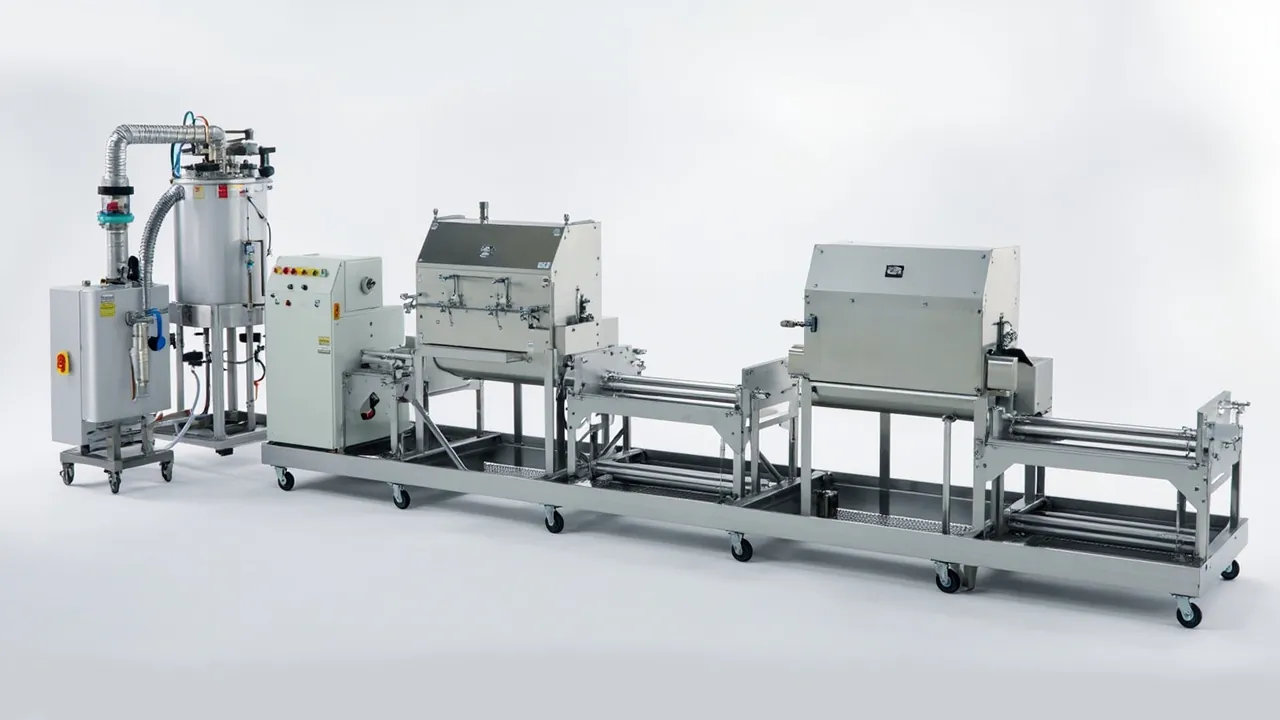
Shipping spare parts for dairy processing equipment is really the problem of moving metal components that are already in a clean, ready-to-install state through an uncontrolled logistics chain and delivering them back to the plant in a condition that allows immediate installation and material contact. The practical conclusion: homogenizer plungers, homogenizing valve seats, plate heat exchanger plates and gaskets should not be shipped in ordinary wooden crates with bubble wrap. They belong in a dedicated case with a cleanable liner, a closed seal, and a pressure equalization path, and they must be dried, individually bagged and documented before the lid goes on. In a dairy plant's incoming inspection logic, dust, fiber, rain marks or metal swarf found on arrival triggers re-cleaning or outright rejection, and re-cleaning itself is a damage risk for precision surfaces such as plate gasket grooves and mirror-finished plungers.
This article is written for dairy plant maintenance managers, spare parts buyers and equipment integrators. It covers protection grading for homogenizer and pasteurizer components, liner selection, cleanliness control, food-contact compliance, three delivery configurations, and an actionable receiving checklist. Engineering practice follows JUNZHJIA protective case methods; every standard referenced is given with its correct scope of application so it can be quoted in a technical annex.
Contents
- 1. Why dairy spare parts are a special transport problem
- 2. Homogenizer component inventory and protection grading
- 3. Pasteurizer components: plates, gaskets and piping
- 4. Cleanliness control: applying ISO 14644 and GMP thinking to packaging
- 5. Food-contact compliance and material declarations
- 6. Liner selection: EVA, clean PE foam and compartment layouts
- 7. Sealing and pressure equalization: why IP rating is not the whole story
- 8. Transport and environmental test references
- 9. Three typical delivery configurations compared
- 10. Pre-packing preparation and receiving checklist
- 11. OEM/ODM and customization workflow
- 12. Frequently asked questions
- Conclusion and related reading
1. Why dairy spare parts are a special transport problem
Dairy plant spares have a characteristic that most mechanical industries do not share: the clean state of the component is part of its value. When a homogenizer is shut down to replace plungers and seal assemblies, the surrounding area has usually already been rinsed and sanitized, and the new parts need to go in as quickly as possible to limit product exposure time. If the crate is opened and the parts show paper dust, wood fibers, grit or water marks, the crew must re-clean them and redo the contact-surface treatment, and every minute of that work is downtime cost.
The real contamination risk is rarely the moment of packing. It is the middle of the journey: the cargo bed of a line-haul truck carries dust; a sea container can develop condensation; the case gets dragged and stacked during transshipment; loading in rain produces splash. Translated into packaging requirements, that becomes four hard rules — dust exclusion, moisture exclusion, impact protection, and cross-contamination prevention. The first three are solved by sealing and cushioning geometry. The fourth is solved by layout discipline: one part per cavity, and clean parts never sharing a case with non-clean parts.
Odour is another factor that gets underestimated. Dairy and fermentation plants are extremely sensitive to smell. Certain rubbers, recycled board and low-grade foams release volatile compounds inside a closed case, and machined metal surfaces adsorb them, which means extra treatment before installation. This makes odour grade and volatile control of liner materials far more important in a dairy context than in mining or heavy industry.
2. Homogenizer component inventory and protection grading
Homogenizer spare parts value is concentrated in the high-pressure section, so protection grading should follow two axes: surface precision and whether the part contacts product directly.
| Component | Critical surface | Main risk | Grade | Packing action |
|---|---|---|---|---|
| --- | --- | --- | --- | --- |
| Homogenizing plunger | Mirror ground, cylindricity critical | Nicks, scratches, bending | A | Bag individually, axial restraint, never stacked |
| Valve seat / valve core | Carbide sealing face | Edge chipping | A | Dedicated cavity, sealing faces never touching |
| Plunger seal assembly | Elastomer, ages | Compression set, oil staining | B | Light-blocking bag, away from greases |
| High-pressure crank shaft | Ground journals | Bending, corrosion | A | Rigid base plate plus axial stops |
| Check valve set | Precision fits | Mixed parts, mismatch | B | Numbered cavities with a part list |
| Relief valve and gauge | Spring and dial | Dial deformed under load | B | Separate cushioned pocket for the dial |
| Piping and flanges | Internal cleanliness | Bore contamination, flange face damage | C | Capped ports, protective flange inserts |
What grade A parts share is that a single small surface defect causes seal failure. The core packing action is therefore to remove every degree of freedom — the part must not be able to move relative to the case in any direction. A reliable rule of thumb is that the cavity depth should exceed one third of the part height, and the cavity width should be 0.5 to 1 mm smaller than the part diameter to create a slight interference fit, so the material grips by elastic recovery when the part is inserted.
For parts that travel to a repair shop or back to the manufacturer for calibration, the case should include a separate document pocket for the removal record, inspection report and serial number label. Dairy plants have shipped repaired and new parts in the same consignment and discovered the mismatch only during traceability review. That is a process design gap, and a case design can carry part of the error-proofing function.
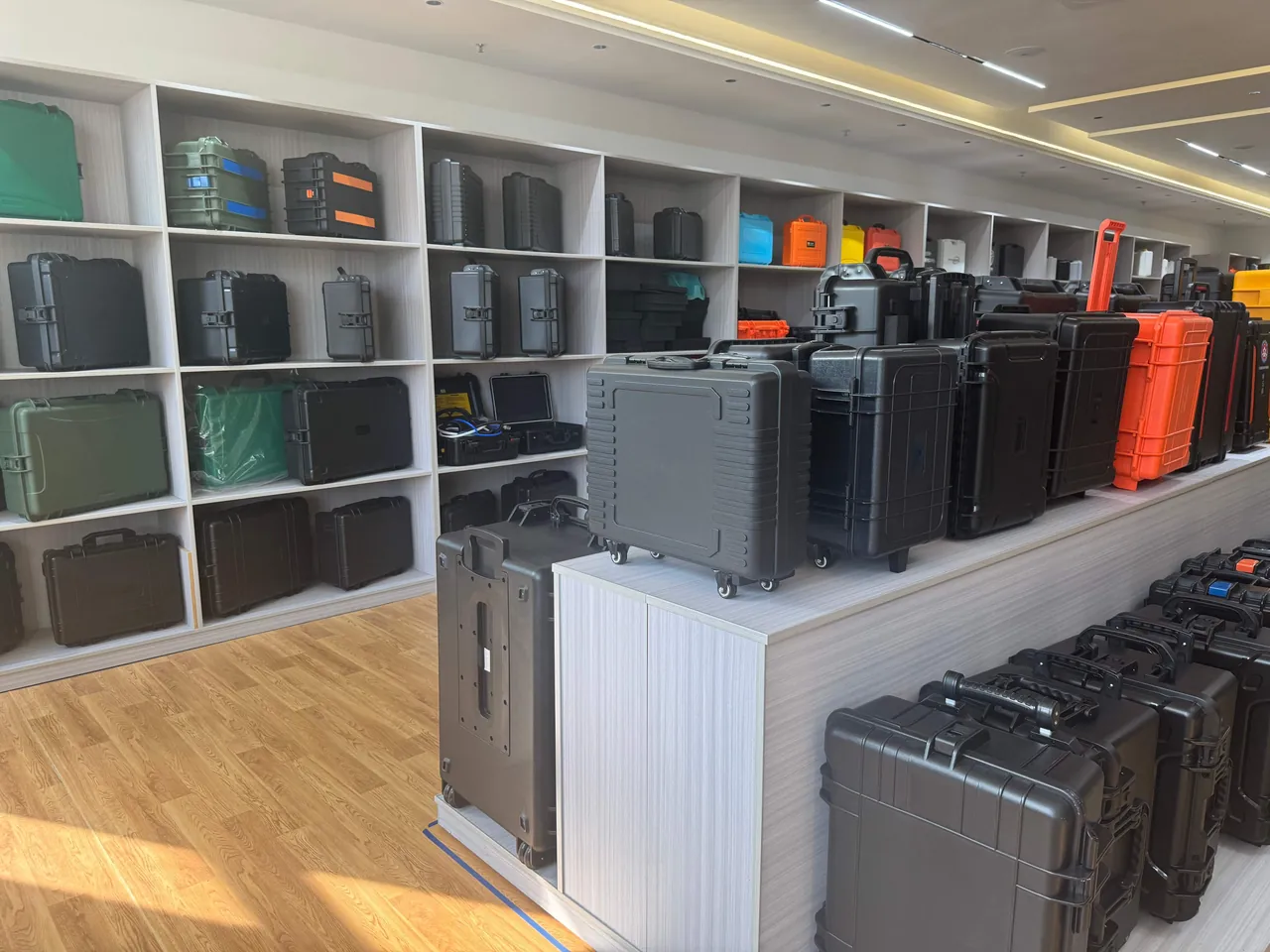
3. Pasteurizer components: plates, gaskets and piping
Dairy pasteurization is dominated by plate heat exchanger designs and tubular ultra-high-temperature systems. The spare parts differ enormously in form and must be treated differently.
Plate heat exchanger plates are the classic component that looks robust and is not. A plate is thin stamped stainless steel, and its gasket groove is the geometry that determines whether the unit leaks internally. Once that groove is deformed by compression, the unit will seep at the high-temperature section after installation, and the seepage typically appears only after several hours of operation, which makes diagnosis expensive. Plates should therefore be packed upright or at a steep angle, with the plate body resting on a continuous support so the whole face carries the load, and never balanced on a corner. Plates must not touch each other directly; use clean interleaves. Keep the count per case in the 20 to 40 range, and if the total weight approaches the practical limit for manual handling, add handles and castors so the case is never dropped during loading.
Gaskets fail by permanent compression set and ageing. They should be stored flat, with no tension, out of direct sunlight, and within the temperature range stated by the material supplier. For common EPDM grades, keep them away from greases and solvents, which is exactly the rule that gets broken when mixed spare parts share one case.
Piping and valves are all about the bore. Dairy tubing has strict internal roughness requirements, and if the bore is contaminated in transit it must be re-cleaned and re-passivated. Cap the ends with clean caps or heat-shrink covers, plug valve cavities, and bag the assembly before fixing it down.
For temperature-sensitive elastomers, the same layered temperature-buffering logic used in cold chain packaging applies when gaskets cross climate zones; see cold chain and food grade protective case design for the underlying approach.
4. Cleanliness control: applying ISO 14644 and GMP thinking to packaging
Buyers often ask whether talking about cleanliness for a shipping case is overkill. The answer is that the packaging discussion is not about achieving a cleanroom class. It is about guaranteeing that cleanliness is not degraded. The ISO 14644 family defines classification and testing methods for cleanrooms and clean zones; GMP defines the management principles that prevent contamination and cross-contamination. Migrating both ideas into packaging yields three measurable requirements:
- Initial cleanliness. Liner and case interior must be free of visible dust, loose fibre and oil before loading. Use non-shedding materials and wipe surfaces before assembly.
- Particle generation control. Materials must not release significant particles under vibration and friction. Low-shedding materials are the correct choice for precision parts, especially those that will enter a clean zone for installation.
- Contamination isolation. Once closed, external dust must not enter during transport. This depends on the seal, not on wrapping the part in more fabric.
Dairy plants typically require a material statement and a cleaning statement from the supplier and perform visual and wipe checks at receiving. If the parts will ultimately enter a higher-class filling area, the packaging cleanliness requirements should align with cleanroom equipment component transport and protection, and the "de-dust the outer case before it enters the hall" step should be written into the procedure.
One caution: cleanliness control cannot be achieved with more packaging layers. An extra non-woven wrap does not make anything cleaner; it adds fibre shedding and electrostatic attraction. The principle is fewer materials, more stable materials, easier to clean.
5. Food-contact compliance and material declarations
Some dairy components contact product directly or indirectly — seals, some piping, valve internals. That makes the safety boundary of the packaging material a matter that must be stated explicitly. The GB 4806 series is the Chinese national standard system for food contact materials and articles, setting requirements for raw materials, sensory properties, migration and overall migration for plastics, rubbers and coatings among others. One detail that gets overlooked is that the chain runs both ways: the liner that touches the component is itself a controlled article, and it must not transfer substances to the component surface under prolonged contact and elevated temperature.
A technical annex should state four things clearly:
- the liner material grade and whether it meets the relevant food contact material standard;
- whether plasticizers, regrind or recycled content are present;
- whether the film touching the component is food grade or medical grade;
- whether a material declaration and third-party test report can be supplied on request.
For parts that genuinely do not touch product — crank shafts, external flanges — there is no need to specify food grade liner universally. Select by cleanliness and cushioning requirement, otherwise cost rises with little benefit. This is where a specialist supplier differs from a generic case factory: the specialist helps you draw that line, the generalist applies one rule to everything.
6. Liner selection: EVA, clean PE foam and compartment layouts
The core trade-off in liner selection is cushioning versus shedding versus cleanability.
| Liner material | Cushioning | Shedding tendency | Cleaning difficulty | Suitable parts |
|---|---|---|---|---|
| --- | --- | --- | --- | --- |
| EVA foam | Good, elastic grip | Low | Moderate, wipeable | Plungers, valve seats, precision valves |
| Clean PE foam | Moderate, firm | Very low | Low | High-cleanliness cavity location |
| PU foam | Good | Moderate | Higher, adsorbs dirt | General parts, cost driven |
| XPE / IXPE | Moderate | Low | Low | Plate interleaves, base layers |
| Textile laminated liner | Moderate | High (fibre) | High | Not recommended for dairy |
The practical combination is clean PE foam for location plus local EVA for cushioning: the cavity prevents movement, the cushion absorbs impact, and neither sheds. Compartment design should follow the rule of "one part per cavity, natural to pick up, awkward to mix up." If operators habitually tip the case out because the cavities are too tight, even a good design fails.
For foam machining methods and tolerance control — cavity depth, cavity width, multi-cavity consistency — the general process notes in EVA foam insert custom process apply equally to dairy components, including the interference and tolerance guidance.
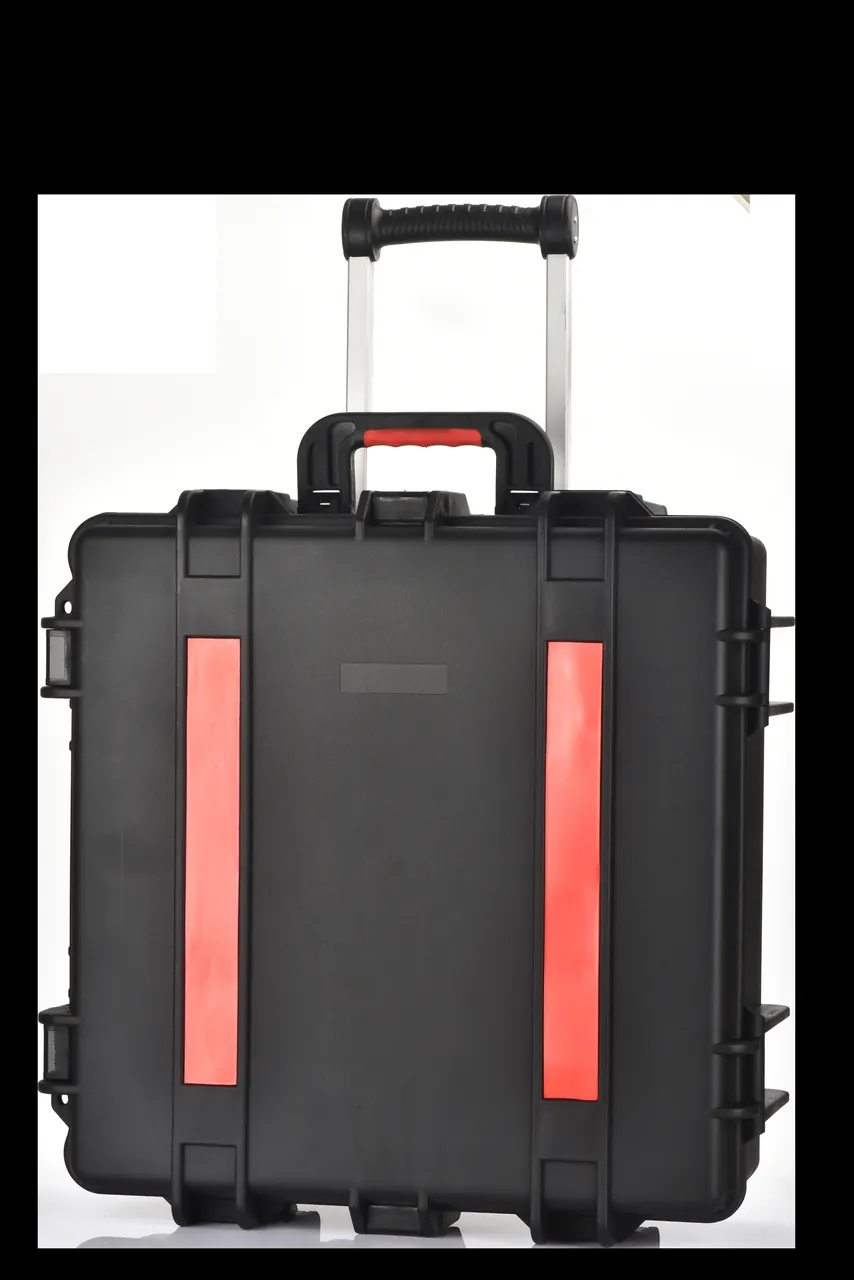
7. Sealing and pressure equalization: why IP rating is not the whole story
The sealing requirement for dairy component cases comes from dust and splash, not from deep immersion. IEC 60529 and GB/T 4208 define the IP rating language used to describe dust and water protection; IP65 means dust tight and protected against water jets, IP67 means short-term immersion. For most dairy spare parts, IP65 to IP67 is sufficient. Chasing a higher rating only increases lid opening force and operational friction, which reduces compliance on the shop floor.
More often overlooked than the IP rating is pressure equalization. When a packed case travels by air, over high-altitude roads, or by sea with large temperature swings, the differential pressure loads the gasket. Internal overpressure makes the lid bulge; external overpressure makes the case hard to open and can even pull the sealing lip into a deformed shape under vacuum. A pressure equalization valve equalizes air slowly while blocking liquid water and dust, and it is standard equipment for long-distance and air freight. For flow rate and mounting position guidance see protective case pressure equalization valve.
Another engineering detail is the gasket replacement interval. Dairy plants open and close cases frequently, so the sealing lip accumulates wear and grease contamination. Gaskets should be managed as a spare part rather than addressed after a leak appears.
8. Transport and environmental test references
Quoting test standards in the technical annex substantially reduces disputes at receiving. The usual references are:
- MIL-STD-810H — a set of environmental test methods. The vibration, shock, temperature-humidity and drop method sections may be used as the basis for validating a packed case's environmental robustness. Note that testing to this standard does not constitute military certification; here it serves purely as a source of methods.
- ISTA series — performance test procedures for transport packaging, selected by package type and weight for whole-package validation.
- ASTM D4169 — a standard for designing a test plan around a distribution cycle, suitable when multiple logistics stages must be covered.
- GB/T 4857 series — basic test methods for transport packages in China, covering stacking, vibration, impact and drop. This is the smoothest reference for domestic delivery and acceptance.
In practice, use staged validation: validate liner location with vibration and drop separately, validate sealing with dust and water tests separately, then run a whole-case distribution cycle. If one item fails, you know exactly which layer is at fault instead of scrapping the whole design. For methodology, read transport package basic testing and case design together with executing an ISTA transport test program.
9. Three typical delivery configurations compared
Requirements vary widely by scenario. The three configurations below cover the majority of dairy spare parts situations.
| Code | Scenario | Case form | Liner | Sealing | Extras |
|---|---|---|---|---|---|
| --- | --- | --- | --- | --- | --- |
| D-1 Station turnover | In-plant spare circulation, temporary storage | Portable hard case | Washable compartment tray | IP54 or better | Stackable, washable exterior |
| D-2 Regional distribution | Inter-plant transfer, third-party logistics | Medium case with handle | Clean PE location plus EVA cushion | IP65 | Equalization valve, document pocket |
| D-3 Export sea freight | OEM export with machinery, project delivery | Wheeled case or palletized case set | Custom multi-cavity liner, part-by-part numbering | IP67 | Desiccant, humidity indicator card, packing list |
For D-3, place a humidity indicator card inside and state the post-opening inspection requirement on the exterior. For consignments containing elastomers that cross climate zones, agree on a higher-grade moisture barrier with the supplier. If components also fall under inspection or dangerous goods transport rules — for example items containing specific media or pressurized vessels — check hazardous goods transport and case compliance separately rather than treating them as ordinary spares.
10. Pre-packing preparation and receiving checklist
Before packing (supplier side)
- Clean and dry the components, confirm no cleaning agent residue, and record the drying method and duration.
- Bag precision surfaces individually and fully close the bag with no open end.
- Clean the liner before assembly, wipe the case interior and confirm it is free of swarf.
- Check every part against the list and numbering, and photograph the packed state.
- Before closing, confirm nothing is trapped on the seal and the latches are evenly loaded.
On arrival (dairy plant side)
- Inspect the case exterior for damage, deformation and water marks to judge whether abnormal impact or immersion occurred.
- Check the equalization valve and gasket; noticeable suction when opening indicates a large pressure differential during transit.
- Remove parts one by one and inspect precision surfaces for scratches, rust spots and dust. Grade A parts should be unpacked on a clean bench or inside a clean area.
- Verify part numbers against the packing list and confirm there is no mismatch.
- Record the unpacking state for traceability. If there is an anomaly, keep the liner and packaging as found for analysis.
The value of this routine is that receiving inspection becomes a recorded process rather than a subjective judgement. If a leak or accuracy problem appears after installation, the transport stage can be ruled in or out quickly.
11. OEM/ODM and customization workflow
Customization requests from dairy equipment manufacturers and spare parts distributors cluster around three items: liner cavities cut to the component drawing, case marking and numbering systems, and batch consistency. A workable sequence:
- Supply component drawings or physical samples, and identify the critical protected surfaces and permitted clamping areas.
- Define the delivery scenario — station turnover, regional distribution, or export sea freight — and derive the sealing grade and case form from it.
- Build and validate samples: trial-fit the liner, run whole-case vibration and drop validation, run sealing and dust validation.
- Run a small batch in the field, collect feedback on pick-up convenience, and fine-tune cavity openings.
- Freeze the drawing and acceptance criteria, then move to volume supply.
JUNZHJIA, manufactured by Kexin New Materials (Guangdong) Co., Ltd., supplies liners and seals matched to component models, supports OEM/ODM and global supply, and can commit to inspection and material documentation in the agreement. When qualifying a factory, see how to choose a protective case OEM factory and custom case acceptance sampling to move acceptance rules into the contract stage.
12. Frequently asked questions
Q: What is the most commonly overlooked acceptance item when a dairy plant buys spare parts cases?
A: It is the recorded condition of the gasket and the pressure equalization valve. Most inspections look at the case exterior and the component appearance and never examine the sealing structure, so a case can look perfect while the sealing lip has already taken a compression set or has debris embedded in it, and the next leg of transport lets dust and water straight in. Two checks should be made standard. First, the feel when opening the lid: if it needs obvious force and produces a hiss, the pressure differential during transit was significant and the valve should be re-examined. Second, the gasket surface, for compression marks, nicks and embedded fibre. The second frequently missed item is liner cleanliness; brand new liners often carry machining debris from production, and if it is not cleaned before loading, that debris ends up right next to a precision surface. The third is the correspondence between documents and physical parts, especially when repaired and new parts ship in one consignment, where every serial number must be checked individually. Writing these three into the acceptance form measurably reduces receiving disputes and makes it easier to trace responsibility to the correct transport stage.
Q: Can homogenizer plungers be shipped in the same case as other components?
A: Technically yes, but two conditions must be met: each plunger needs its own locating cavity, and there must be no hard contact path between the plunger cavity and any metal part. The defining specifications of a plunger are cylindricity and surface roughness, and any edge impact creates a leakage path under high pressure and can even score the seal assembly. So even in one case the rule is one part per cavity with a wall between cavities, full-face cushioning over both ends of the plunger, and axial stops to prevent travel. Placing a plunger in the same cavity as flanges or bolts, which have sharp edges, is the most dangerous arrangement. A more robust approach is to give grade A parts such as plungers and valve seats their own small case and put grade C parts in a different one. The cost is one extra case number and one extra handling step; the benefit is a large reduction in precision surface risk. For volume purchasing, split by grade A, B and C directly and write the grading rule into the annex so different suppliers cannot interpret it differently and produce uneven arrivals.
Q: Is it safer to pack plate heat exchanger plates upright or flat?
A: From a stress standpoint, upright or steeply angled is safer, with one precondition — the plate face must have continuous support rather than resting on a corner. When packed upright, plate weight transfers along the plate body, the gasket groove sees almost no bending stress, and provided the base is a continuous flexible support with lateral location, the plate barely deforms under transport vibration. The problem with flat stacking is that lower plates carry the weight above them, and a plate is a thin stamped part with low through-thickness stiffness, so prolonged compression produces irreversible collapse around the gasket groove area. If case height forces flat packing, reduce the stack count, add clean interleaves between plates, and cap the total stack weight. Either way, plates must not touch each other as bare metal, because stamped edges will score one another under vibration. It is worth writing "plates supported on their faces, no corner support, no more than the agreed number of layers" into the technical annex and running one whole-case vibration validation so measured data replaces a rule of thumb.
Q: Do high-cleanliness dairy components require food grade packaging materials?
A: It depends on whether the component contacts product and whether indirect contact is possible, so a blanket answer is wrong. If the component is itself a food contact surface, such as a seal, part of a pipeline, or a filling valve component, then the film and liner in prolonged contact with it should be controlled in the food contact material framework: state the grade, avoid regrind and inappropriate additives, and require a material declaration. If the component is only an external structural part, such as a crank shaft, frame flange or external linkage, the dominant risks are dust and corrosion, and a low-shedding, cleanable industrial material is entirely adequate; mechanically stable EVA or clean PE foam both work and food grade material is unnecessary. What really must be avoided is the choice that looks premium but is functionally wrong, such as a textile laminated liner marketed as clean where fibre shedding is actually worse. A simple purchasing test: confirm the contact relationship first, then the cleaning method, then whether the material survives the cleaning frequency. Getting those three right reduces long-term risk more than comparing unit prices.
Q: Which transit damage on dairy spares is a packaging problem and which is a handling problem?
A: Damage morphology separates them. Scratches concentrated in one direction usually indicate handling, for example dragging a part along the case wall during removal. Randomly distributed scratches accompanied by dust indicate a packaging problem, meaning insufficient location allowed rubbing under vibration. Chipped edges and local dents usually come from a drop or from stacking, so the issue is case strength or logistics control. Rust spots and water marks point to moisture control failure or immersion in transit and require reviewing sealing grade and pressure equalization. Deformation around a gasket groove is almost always caused by stacked load and is a liner design problem. Mapping morphology to cause locates the responsible stage quickly and directs the next design revision. Suppliers should photograph the packed state and the plant should photograph the same angles at unpacking to create a before-and-after record. Photographs are the cheapest traceability evidence and far more reliable than recollection. When the same damage recurs on the same component, do not hide it behind thicker cushioning; go back to the locating geometry and the packing method.
Q: What extra factors apply to dairy spare parts cases shipped by sea for export?
A: The main variables in sea freight are time, temperature and humidity cycling, and repeated handling. Long transit means any moisture inside the case keeps working, so use desiccant and a humidity indicator card and write the card reading method into the packing documents. Temperature and humidity cycling makes a sealed case pass through mild positive and negative pressure repeatedly, so a pressure equalization valve is effectively mandatory, otherwise gasket fatigue accelerates noticeably. Repeated handling loads the corners and latches frequently, so confirm castors, handles and latches are reliable at full load. Destination customs and marking requirements also matter: shipping marks, the numbering system and the language of the component list should be confirmed in advance so a port inspection does not force repacking. If solid wood is used, it must comply with international phytosanitary requirements, and many projects move to fumigation-free materials or hard plastic cases precisely to avoid that step. Finally, agree in the contract on how anomalies found after opening are handled and evidenced. Cross-border accountability is expensive, so a process defined up front beats negotiation afterwards.
Q: How can a dairy plant control corrosion in its own spare parts cases?
A: Corrosion usually has three sources: cleaning residue, ambient moisture, and dissimilar metal contact. Cleaning residue is the most common. If a component is packed before it is fully dry, residual water creates a locally humid environment inside a closed case, and even stainless steel can pit; residual chlorine-based cleaning agent accelerates this considerably, which is why drying confirmation must be a checklist item. Ambient moisture comes from transport and storage and is controlled jointly by sealing, desiccant and dehumidified storage; if cases live near a washdown area, specify a washdown-tolerant exterior and inspect seals regularly. Dissimilar metal contact is easily missed: put a stainless part and a carbon steel part in one cavity and, given any electrolyte, even condensation, galvanic corrosion begins, the less noble steel is attacked first and the corrosion products that follow then contaminate the stainless surface. Separate the cavities by material and avoid direct metal-to-metal contact. One further habit is worth adopting: either provide a ventilation path or dry the interior thoroughly, but never seal moisture inside, because that simply locks the water in with the component.
Conclusion and related reading
A dairy processing parts case does not need to solve "does everything fit." It needs to solve "does it arrive clean, accurate and installable." Grading components A/B/C, choosing case form and sealing grade by delivery scenario, writing cleanliness and food contact compliance into the technical annex, and receiving against a checklist is a closed loop that removes most of the uncertainty from the transport stage.
Dairy-processing case work is produced by Kexin New Materials (Guangdong) Co., Ltd., which supplies homogenizer and pasteurizer liners through wholesale, distribution and OEM/ODM channels worldwide, with material and inspection documentation released on request. To evaluate a solution, start by listing the components and their critical protected surfaces, then move to sample validation.
Related reading