

Quick answer: Stock allocation runs on 5 priorities, nearest site first, then batch, lead time, stock health and contract volume; 3 conditions gate every transfer.
Table of contents
- Why Stock Allocation Needs Rules, Not a Spreadsheet
- Five Priorities in Order
- Three Conditions Before Any Transfer
- Two Sharing Levels and a 5% Oversell Guard
- The Weekly Review and the Transfer Order
- FAQ
1. Why Stock Allocation Needs Rules, Not a Spreadsheet
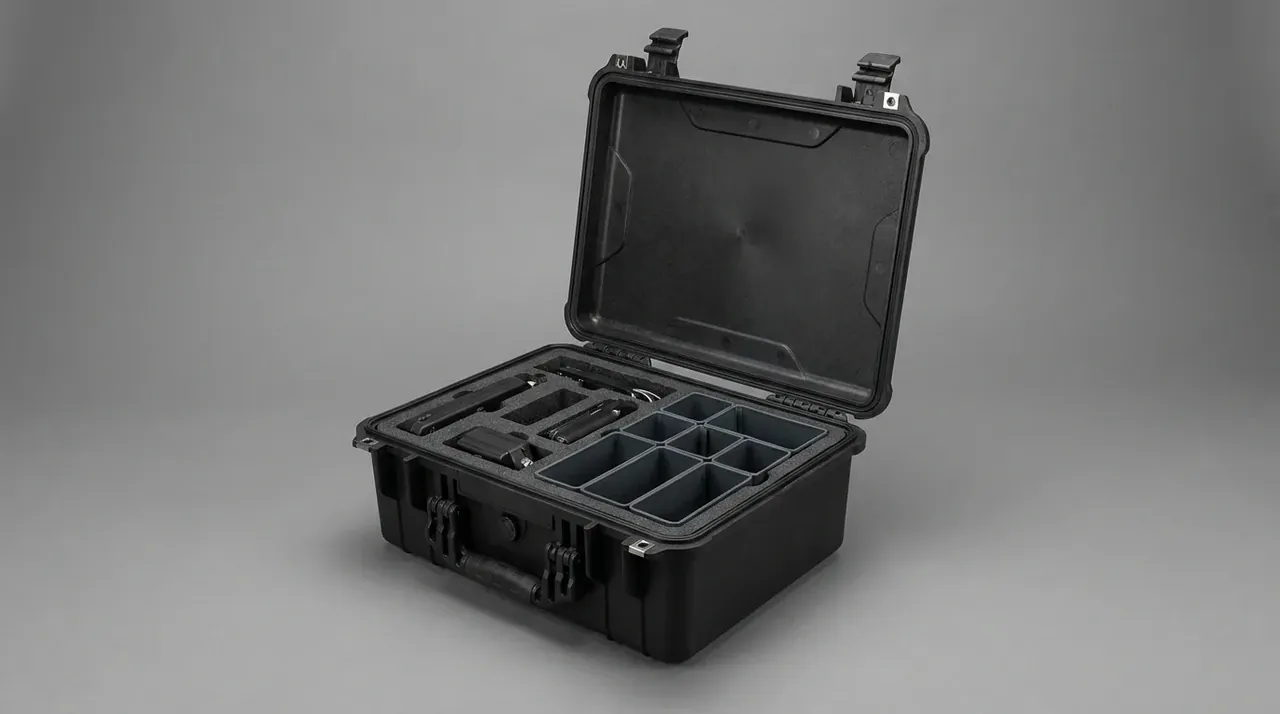
One black case of 620 × 420 × 300 mm sat in three places: 80 units at the plant, 45 in the east China warehouse, 12 overseas. Sales saw only the plant line, shipped 60 from there, and paid 3 extra days plus a second inbound charge on sea freight billed by volume.
Stock allocation is not a merger of three ledgers. It is a ranking of available quantity on one screen, under one rule set. Available means on-hand minus allocated minus frozen, refreshed within 15 min; where the definitions differ, sharing multiplies the error by three.
Scope comes second. Twelve SKUs enter the pool on a mechanical test: all three sites shipped the model in the past 12 months, monthly outbound above 200 units, size inside existing tooling. Everything else stays local, since a pool that keeps growing has no rule that survives a busy week.
2. Five Priorities in Order
The list has 5 entries, read in sequence; a vetoed entry hands the decision to the next. Priority 1 is distance, a regional site within 600 km, then the plant, then overseas. Priority 2 is batch, where an order completing a 200-unit pallet layer wins. Priority 3 is lead time, counted back from the promised date, with transit of 5 to 35 days admissible.
Priority 4 is stock health: a site below its lower water mark leaves the allocation, so one order cannot push the next customer into a stockout. Priority 5 is contract volume, where locked annual quantities are served first, even from the furthest site.
Conflicts sit between 1 and 5. Locked contract volume is reserved per SKU and per month, outside the priority contest; only the remainder is ranked from 1 to 4.
| Priority | Test | Typical case | Veto |
|---|---|---|---|
| 1 Distance | Regional site within 600 km | Same-city urgent order | Site below water mark |
| 2 Batch | Completes a 200-unit pallet | Monthly replenishment | Still short of 200 |
| 3 Lead time | Transit of 5 to 35 days | Pre-show shipment | 5 days past promise |
| 4 Stock health | Above the two water marks | Peak season grab | Falls under 60% |
| 5 Contract | Inside locked annual volume | Key account draw | Volume used up |
3. Three Conditions Before Any Transfer
A transfer starts only when 3 conditions hold. A site other than the shipping site falls below 60% of safety stock; regional demand for 30 days exceeds on-hand plus in-transit; total transfer cost stays under 40% of the air premium on that batch. With 2 of the 3 met, stock allocation puts the case on a watch list and nothing moves.
The third condition needs a formula. Transfer cost is line-haul freight plus handling plus capital in transit; the air premium is the quoted difference between air and transfer for that batch. The 40% line stops stock from being pushed where it cannot turn for 2 weeks.
Approval runs 2 levels, regional supervisor and supply chain manager. A transfer is capped at 800 units and starts at 200; below that the order goes by courier, where handling and paperwork per unit exceed the freight saved.
4. Two Sharing Levels and a 5% Oversell Guard
Sharing under stock allocation has 2 levels. Level 1 operates between regional warehouses inside one customs territory, with no duty or transit declaration. Level 2 runs from the plant to every site including overseas; with 28 days of sea transit it serves replenishment, never an urgent order.
| Site type | Reach | Transit | Sharing level | Role |
|---|---|---|---|---|
| Plant | National | Same day | Level 2 origin | Backstop |
| Regional | 600 km | 2 to 5 days | Level 1 | Nearest shipment |
| Overseas | One customs area | 28 days | Level 2 receiver | Local stock |
The oversell guard is 5%. When allocatable quantity exceeds physical stock by 5%, new orders lock and sales see pending instead of a promise. Measured transit loss is about 0.3%; the rest covers labelling reprints and units pulled for spares.
The allocation window is 24 h. Orders for one SKU queue by priority and release together at the end. Receipt confirmation is due within 48 h; anything unconfirmed returns to the pool with a pending-check flag.
5. The Weekly Review and the Transfer Order
The stock allocation review runs weekly for 45 min and looks at 3 tables: available quantity and water marks by site, the in-transit list, and last week's receipt variances. Price is not on the agenda.
A transfer order carries 6 fields: origin, destination, SKU and quantity, expected arrival, owner and carrier reference, cost attribution. Drop one and a variance becomes untraceable.
Tracking uses carrier milestones and warehouse scan-in. No update for 24 h means a manual check; 72 h classifies the batch as an exception and pulls it from the stock allocation pool. Variance review closes within 3 days of receipt, after which photographs no longer match the record.
Conclusion
Stock allocation is a question of rule order, not software. Write the 5 priorities as a readable sequence, gate every transfer behind 3 conditions that hold together, and hold the edges with 2 sharing levels and a 5% oversell guard. In writing, the weekly review takes 45 min; in people's heads, every transfer starts with an argument.
This article covers case-side specifications only and does not address any handling, loading or use of the contents.
Related Reading
- SKU convergence and turnover in an overseas warehouse
- How to set safety stock and reorder points
- Is 600 units the right safety stock
- Per-trip cost of returnable logistics cases
- Closing the loop on returnable cases
Related Products
- 8 Series — Gun Cases; Military Equipment Cases; Camera Equipment Cases; Drone Cases; Watch Cases; Knife Cases; First Aid Cases; Electronics Equipment Cases
- WL8-2812 PP Gun Case — model WL8-2812
- All protective cases and toolboxes: 7 series, 158 models