


A paper machine is a single continuous heavy production line. From the headbox to the reel it may run for dozens of metres, and its spare-parts store has a characteristic that most other heavy industries do not share: a large share of its spares are surface-critical parts. Calender rolls, doctor blades, suction-box covers, ceramic dewatering elements and shoe-press loading shoes all derive their function from a surface condition measured in micrometres or less. A scratch 5 µm deep on a steel bracket is irrelevant; the same scratch on a calender roll shell is copied across the full web width and becomes a continuous streak defect.
So transport protection for paper mill parts is not really about building a stronger box. It is about delivering the surface condition, cleanliness and metallurgical state that the part had when it left the manufacturing plant, unchanged, into the hands of the mill's maintenance department. The protection principle JUNZHIJIA applies to the paper industry is therefore: package by failure mechanism, not by outer dimension — wet-end parts, dry-end parts, roll-surface parts and mild-steel parts each get their own dedicated protection combination, sharing neither liner, nor desiccant, nor outer case.
Table of Contents
- Wet End and Dry End: Two Very Different Failure Environments
- Roll-Surface Parts: Surface Failure Is Functional Failure
- Contamination Control: Lint, Paper Dust and Board Dust
- Liner Selection: No-Shed Is the First Rule
- Corrosion Protection for Mild-Steel Journals and Bearing Housings
- Combining VCI Film, Desiccant and Barrier Bags
- Very Long Rolls: Moulded Case or Plywood Crate
- Lifting Points and Sling Design
- Why an IP Rating Is Justified for Spare-Part Cases
- Compartments, Location and Cushioning Design
- Comparing the Three Protection Methods
- Packing Documents and Acceptance Criteria
- Frequently Asked Questions FAQ
- Conclusion and Related Reading
Wet End and Dry End: Two Very Different Failure Environments
Treating a paper machine as one environment is useless, because its wet end and dry end impose almost opposite packaging requirements. The wet end — forming and press sections — is humid, splashy and mildly acidic. The dry end — dryer, calender and reel sections — is hot, steam-laden and full of airborne paper dust. Spares for one machine may therefore need two entirely different protection strategies within the same shipment.
Typical wet-end conditions are stock consistency of 0.5% to 1.2%, stock temperature of 20 to 60 °C, and pH between 4.5 and 8.0 depending on the grade. Under acid sizing systems the stock is mildly acidic, and splash droplets deposited on carbon steel become pitting nuclei. The wet end is also a mixture of water and fibre: under a water film, fibres adhere firmly to roll shells and covers and dry into a fibre scale that is difficult to wipe off.
The dry end is completely different. Steam pressure runs at 0.3 to 1.0 MPa, dryer cylinder shells reach 100 to 140 °C, hood relative humidity sits at 40% to 60% with condensate dripping, and paper dust and dry fibre concentration is high. A part removed from the dry end is hot; as it cools inside a sealed case, the enclosed air contracts and creates negative pressure — exactly the situation where a pressure equalisation valve earns its place.
| Area | Dominant stress | Typical effect on parts | Protection focus |
|---|---|---|---|
| --- | --- | --- | --- |
| Forming (wet end) | Water splash, mildly acid stock, fibre scale | Carbon-steel pitting, plugged cover grooves | Water barrier + VCI + anti-adhesion liner |
| Press section | High load, felt lint, moisture | Cover damage, lint embedded in surface | Compartmented support + non-shedding liner |
| Dryer section | 100–140 °C, condensate, paper dust | Coating ageing, dust embedding | Heat-resistant liner + dust barrier |
| Calender section | Nip load, micrometre-level surface | Roll-shell scratching, defect transfer | Rigid support + zero-contact isolation |
| Reel section | Tension, dust | Sensor and bearing contamination | Compartmentation + clean enclosure |
The practical conclusion is blunt: one box design cannot serve wet-end and dry-end parts at the same time. Wet-end parts must be defended against water and fibre, dry-end parts against dust and condensate, and roll-surface parts mainly against the parts travelling next to them.
Roll-Surface Parts: Surface Failure Is Functional Failure
Some paper machine parts are accepted on surface integrity rather than dimensional tolerance. These must be discussed separately.
Calender rolls. Soft-covered rolls typically use a polymer shell with hardness quoted in Pusey & Jones (P&J), commonly 20 to 90 P&J. Hard rolls use chilled cast iron or ceramic, with surface roughness Ra as low as 0.1 to 0.4 µm and hardness of 480 to 560 HV. No sharp edge may touch such a surface: a single dent from a neighbouring part distorts the nip pressure profile and produces spots or cloudiness in the sheet.
Doctor blades. Thickness is usually 0.15 to 0.60 mm, in carbon steel, stainless steel, ceramic or carbon fibre, with a ground bevel. Blades fear bending and edge impact above all. Coiled blades must be wound in the correct direction to avoid a memory set; flat blades must be laid flat, never stood on edge.
Suction-box covers and ceramic dewatering elements. Usually alumina ceramic at 90% to 99% Al2O3 content, or UHMWPE. Ceramic is hard but brittle: a chipped corner is a scrapped part, and slotted or drilled edges are the stress concentrations most likely to fail.
| Part | Critical surface parameter | Practical damage threshold | Typical consequence |
|---|---|---|---|
| --- | --- | --- | --- |
| Chilled-iron calender roll | Ra 0.1–0.4 µm, 480–560 HV | No visible scratch, dents ≤2 µm | Streak defects, uneven calendering |
| Polymer-covered soft roll | 20–90 P&J hardness | No dents, no embedded matter | Uneven nip profile, spots |
| Doctor blade | 0.15–0.60 mm thick, ground bevel | No kink, no rolled edge | Scratches, web breaks, blade change downtime |
| Ceramic dewatering element | 90–99% Al2O3 | No chipped corner | Fabric wear, uneven dewatering |
| UHMWPE cover | Sharp slot edges | No burrs or slot deformation | Fibre hang-up, plugged holes |
The transport requirement follows directly: roll-surface parts should be rigidly supported on their non-working surface, with the working surface held at zero contact. Use saddles under the journals or the outer diameter at both ends rather than resting the shell on foam. Foam can absorb vibration energy, but it cannot be trusted to decide whether relative movement occurs — that responsibility belongs to the rigid restraint.
Contamination Control: Lint, Paper Dust and Board Dust
There is an underrated transport hazard in the paper industry: the packaging itself sheds. Mills are close to obsessive about foreign matter entering the process, because a single fibre or particle becomes a stock lump in the wet end, a dent under the calender and a coating streak at the coater.
Corrugated board is the most common shedding source. When corrugated board is cut, folded and rubbed it releases board dust, broadly in the 5 to 150 µm range, and the fibre fragments are the fraction most easily held on roll shells by static charge. Roll-surface parts and ceramic elements should therefore never touch unprotected corrugated board. If board must be used as structural support, keep it outside the barrier layer, or specify film-faced or foil-laminated board.
Three executable actions cover most contamination control:
- Clean before packing. Wipe roll shells and covers with anhydrous ethanol or isopropyl alcohol, then dry-wipe with a lint-free nonwoven. Blow ceramic slots clean with compressed air filtered to 0.01 µm.
- Separate the zones. Clean parts and packaging consumables should be packed in areas of different cleanliness class. The ideal sequence is to seal the part into its barrier bag immediately after cleaning, then place the bagged part into the outer case.
- Choose the liner deliberately. Every material that could touch a working surface should be closed-cell and fibre-free, such as cross-linked polyethylene (PE) or ethylene-vinyl acetate (EVA) closed-cell foam.
A useful field test costs nothing: rub a black nonwoven ten times across the contact surface and look for visible fibre or particle release. Maintenance departments use exactly this check, and it filters out the great majority of unsuitable liners before a shipment ever leaves the plant.
Liner Selection: No-Shed Is the First Rule
Liner selection in the paper industry differs fundamentally from general tool-case practice. A general case prioritises cushioning and cost; a paper machine spare-part case must prioritise cleanliness and cleanability first, and cushioning second.
| Liner material | Structure | Shedding risk | Cleanability | Typical use |
|---|---|---|---|---|
| --- | --- | --- | --- | --- |
| Closed-cell PE foam | Isolated cells, skinned surface | Very low | Wipeable | Direct contact layer on roll shells |
| EVA foam | Closed cell, die-cuts well | Very low | Wipeable | Contoured location cavities |
| EPE foam | Isolated cells, low density | Low, crumbs at cut edges | Fair | Outer cushioning, non-working surfaces |
| IXPE cross-linked foam | Finer cell structure | Low | Good | Thin isolation and anti-friction layers |
| Open-cell polyurethane | Open cell structure | High | Poor | Not recommended for paper mill spares |
| Corrugated board | Fibrous | High | Not wipeable | Structural support outside the barrier only |
The recommended order of decisions is: first identify which surface must not be touched, then decide what supports it, and only then use foam to fill gaps. The common mistake is to reverse that order — calculate the volume first and stuff foam in afterwards, and the working surface comes out with foam impressions.
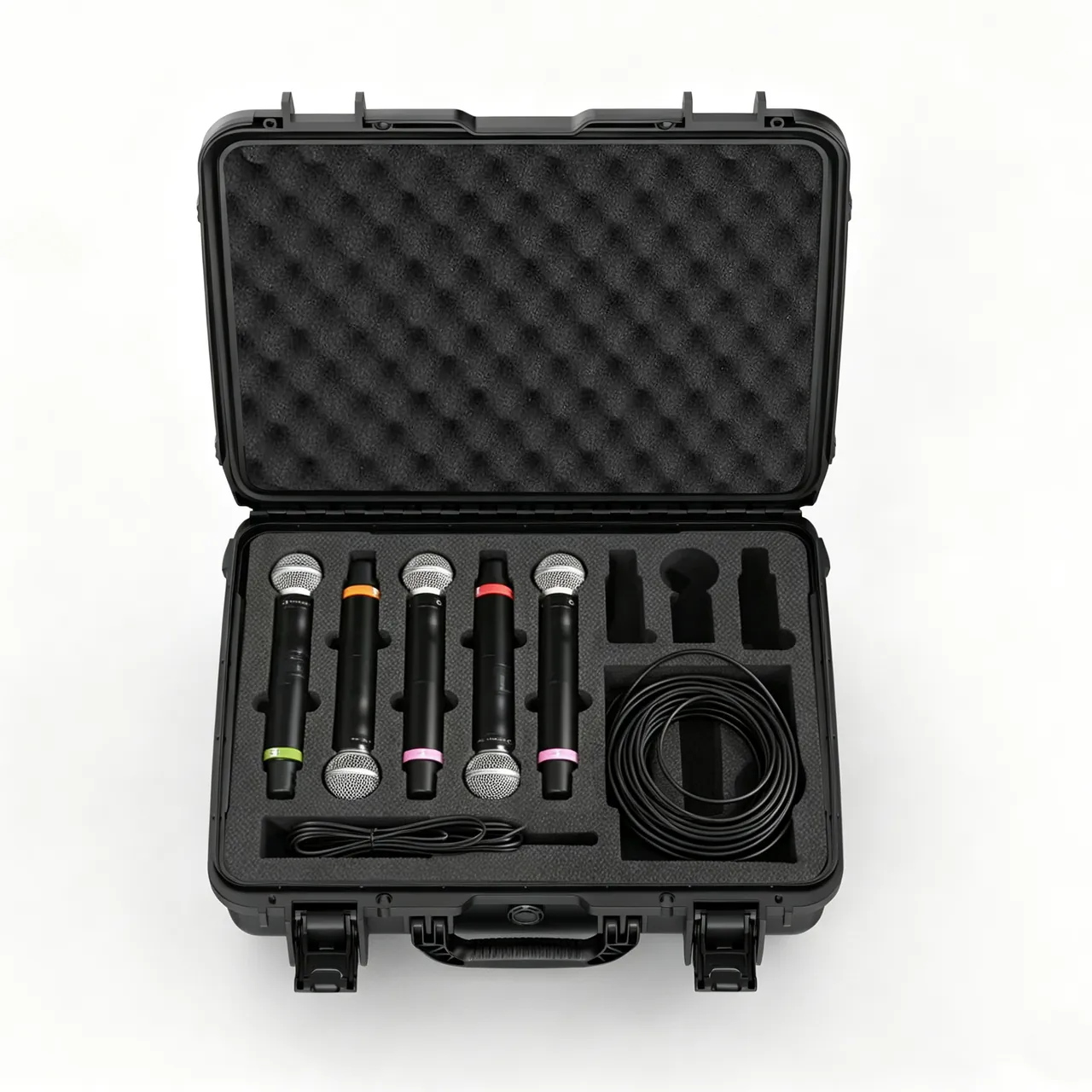
EVA die-cut liners perform particularly well for paper machine spares because they can be machined into a negative cavity that matches the part outline, so the part is located by fitting into the cavity rather than by being pressed down onto it. EVA density is normally specified between 45 and 90 kg/m3: too low and it loses locating ability, too high and it becomes difficult to die-cut and unnecessarily expensive. For irregular parts heavier than about 30 kg, a composite of an EVA locating cavity over a base EPE cushioning layer is preferred, because location and energy absorption then have clearly separated roles. The wider logic of matching foam type to part geometry is set out in the guide to case internal foam types.
Corrosion Protection for Mild-Steel Journals and Bearing Housings
The journals, bearing housings and coupling flanges of a roll are usually the only surfaces not made from stainless steel or given a coating, and they are where corrosion starts. Under ISO 9223 corrosivity categories, most inland mill locations and ship holds on export routes fall into C3 to C4, approaching C5 where salt spray is a factor at sea.
Corrosion begins at the critical relative humidity. For a clean carbon steel surface this is about 60% RH; once chloride or sulphate particles deposit on the surface, the critical humidity can fall below 40% RH. A case interior that does not feel damp can still corrode steel. Deciding whether vapour-phase corrosion inhibitor (VCI) is needed therefore depends less on whether the destination is coastal and more on whether local condensation and ionic contamination can occur inside the case.
VCI works by slow sublimation at ambient temperature: inhibitor molecules form a monomolecular adsorption layer on the metal surface and interrupt the electrochemical path between water and oxygen. Amine carboxylates are common for carbon steel; copper and copper alloys need a benzotriazole (BTA) component; galvanised parts should avoid strongly acidic formulations. Selection points:
- For mixed metals, use a broad-spectrum VCI, or apply metal-specific VCI grades and only then combine the parts in one case.
- VCI needs an enclosed volume. In an open environment the molecules disperse within weeks and a 12 to 24 month protection window collapses.
- VCI and desiccant can work together, but desiccant should not press directly against metal and cause localised over-drying and dust build-up.
Surface preparation matters far more than the VCI itself. The rust grades of ISO 8501 make a useful handover baseline: grade A is fully covered with mill scale, B has begun to rust, and C and D are progressively worse. New parts should leave the plant at grade A or B and degreased. If a part already carries grade C rust, remove it first — VCI can only lock in existing corrosion, never reverse it.
Combining VCI Film, Desiccant and Barrier Bags
The logic of the three-layer combination fits in one sentence: the barrier bag keeps external water out, the desiccant removes internal water, and the VCI adds a second line of defence directly on the metal. All three are needed, but their parameters must match or they work against one another.
Barrier bags are characterised by water vapour transmission rate (WVTR). A plain PE bag has a relatively high WVTR; PA/PE coextruded film and PET/AL/PE foil laminate can reach roughly 0.1 g/(m2·24h), which is the preferred class for long sea voyages. The bag must be fully heat-sealed, with a seal width of at least 15 mm and a peel-strength check on a sampling basis.
Desiccant is most easily sized against the free internal volume. Starting from fine-pore silica gel under good barrier conditions, 20 to 30 g per cubic metre is a reasonable baseline, multiplied by a factor for voyage length and barrier grade; montmorillonite clay needs roughly 1.5 to 2 times as much because its unit absorption is lower. Indicator desiccant with a humidity card lets the mill judge protection status at a glance on opening.
| Combination | Barrier level | Suggested protection window | Typical situation |
|---|---|---|---|
| --- | --- | --- | --- |
| VCI film wrap + standard outer case | Medium | 3–6 months | Domestic short haul, returnable parts |
| VCI film + foil barrier bag + desiccant | High | 12–24 months | Sea freight export, long storage |
| Barrier bag + desiccant (no VCI) | High | 6–12 months | Oiled parts, non-metallic components |
| VCI emitter + closed case | Medium | 6–12 months | Bulky parts that cannot be bagged |
One caution: more desiccant is not better. Over-drying can shrink polymer covers and rubber seals, and can also dry and loosen timber supports until location is lost. Hang desiccant in the upper part of the case or fix it in a corner, keep it off the parts, and retain a sensible moisture margin. One easily missed detail is the pressure equalisation valve: when a warm part cools inside a sealed case, or when a route crosses regions with a large temperature difference, the pressure differential can reach several kPa. Without a vent, that load acts on the gasket, accelerating seal ageing and possibly distorting the lid enough to break the IP rating.
Very Long Rolls: Moulded Case or Plywood Crate
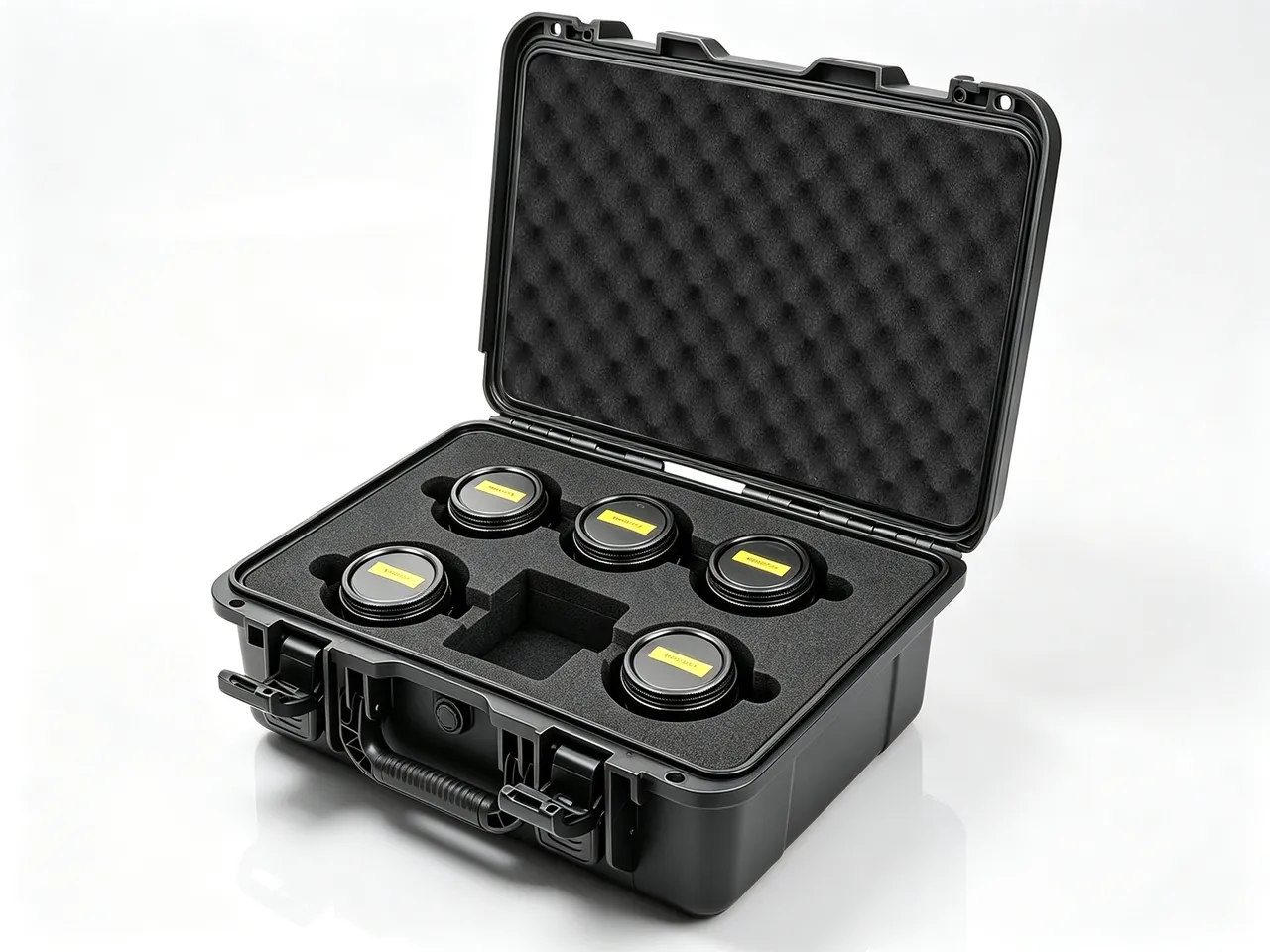
The most concrete packaging problem in a paper mill is length. Calender rolls, guide rolls and spreader rolls commonly run 2 to 9 m, and some wide-machine rolls exceed 10 m. That scale is beyond the mould capacity of almost all injection-moulded and rotomoulded cases, which typically top out around 2000 to 3000 mm. A crate becomes unavoidable.
The decision is not complicated:
| Criterion | Moulded case (rotomoulded/injection) | Crate (plywood/solid timber) |
|---|---|---|
| --- | --- | --- |
| Length | ≤2500 mm | >2500 mm |
| Single-part weight | ≤80 kg (case-dependent) | Not limited, subject to structural analysis |
| Sealing requirement | IP65/IP67 formally defined | No IP claim; achieved by inner barrier bag |
| Reuse cycles | High (returnable) | Low (usually single trip) |
| Export compliance | No wood quarantine issue | Must comply with ISPM 15 heat treatment |
| Unit cost | High | Low |
When a crate is used for roll parts, three things must be right. First, the base must carry full-length saddles, spaced by roll deflection calculation — generally at about one third and two thirds of the length — so the middle cannot sag into permanent bow. Second, the saddle-to-journal contact needs a soft pad such as 5 to 10 mm closed-cell foam or a felt composite, and the saddle face should be V-shaped or arced so the roll cannot rotate under vibration. Third, leave at least 30 mm between the crate's inner wall and the roll shell, and bag the whole roll so timber fragments never reach the surface.
For export, ISPM 15 is a hard gate: heat treatment at a wood core temperature of at least 56 °C for at least 30 minutes, with the IPPC mark and the treatment provider code applied to the crate. Confirm the destination country's specific wood packaging rules at quotation stage rather than at the port.
A useful middle path is a demountable steel or aluminium frame plus barrier bag. When the mill wants to reuse the frame, it can be broken down and stacked for the return leg, which costs far less freight than an equivalent rigid case. The trade-off is that sealing depends entirely on the bag, because the frame itself provides no watertight envelope.
Lifting Points and Sling Design
Paper machine parts are long and heavy: a 6 m calender roll can weigh 3 to 8 t. Lifting errors cause the worst accidents, so lifting point design must proceed alongside packaging design, not be retrofitted after the case is built.
Four principles apply. First, lifting points belong on load-bearing structure, never on a wall panel. If a rotomoulded case has moulded-in lugs on the wall, the weld strength to the wall must be calculated; metal and frame cases should use welded or bolted lugs sized to EN 13155 or ASME B30.20. Second, keep the safety factor at 4:1 or better, so the marked working load limit (WLL) is no more than one quarter of the maximum lifting load. Third, use four-point lifting with a spreader beam so the sling angle to horizontal stays between 45° and 60°; a flatter angle sharply increases sling tension. Fourth, never let a sling touch the roll shell — use nylon soft slings throughout and add corner protectors at contact points.
For marking, fix a plate on all four sides stating gross and net weight, centre of gravity, lifting point locations and rated load, stacking limit and a no-stacking warning where relevant, and the usual keep-dry and this-way-up symbols. On a long case with an offset centre of gravity, the marked CoG must reflect reality: a wrong mark is more dangerous than no mark.
Why an IP Rating Is Justified for Spare-Part Cases
Mills often ask why a roll part, which does not fear water, needs a case with an IP rating. The answer lies in actual storage conditions.
Paper machine spares are usually kept in the mill's spare-parts store or the maintenance shop. These spaces share three problems: high humidity, high dust load, and periodic washdown. A spare-part case may sit in that store for 6 to 24 months, be moved, be splashed during washdown and be covered in paper dust. Without any sealing ability, the case interior simply equals the store environment, and both VCI and desiccant are consumed far faster.
An IP rating makes the protection window calculable. Under IEC 60529 (equivalent to GB/T 4208), IP65 means dust-tight and protected against low-pressure water jets from all directions; IP67 means short-term immersion, typically 1 m for 30 minutes; IP66 means protection against powerful jets at 12.5 mm nozzle and 100 L/min. For paper mill spare-part cases, IP65 is usually the best-value starting point, because acceptance testing is simple and the sealing design is mature. Step up to IP67 only when cases must cross areas subject to standing water or be transferred in the open.
Sealing is not mysterious. The standard approach is a gasket groove on the mating face, fitted with a solid silicone or EPDM seal compressed to 25% to 35%. Too little compression leaks; too much causes permanent set. The seal material must match temperature: silicone covers −60 to 200 °C, while EPDM covers −40 to 120 °C with better weather resistance but only fair resistance to mineral oil. Latch count and spacing matter just as much — the closer the latches, the more even the compression, and large cases should keep latch spacing at or below 200 mm.
Note one boundary: an IP rating is a claim about the empty case, and a part inside does not thereby become waterproof. If a mill leaves a spare-part case outdoors in the rain, an additional rain cover or tarpaulin is still required.
Compartments, Location and Cushioning Design
Structural design reduces to one sentence: rigid structure owns position, elastic material owns energy. Mixing those two responsibilities is the most common cause of failure in paper machine spare-part cases.
Rigid location fixes the part's coordinates and is normally provided by timber bunks, metal brackets, saddles and EVA locating cavities. The design must ensure no displacement under the maximum inertial load, which is taken from transport vibration and shock conditions, commonly per ASTM D4169 distribution cycles or the GB/T 4857 series.
Elastic cushioning absorbs energy and is normally provided by EPE, IXPE or spring mounts. The governing parameter is static stress. Foam cushion curves are U-shaped, and the transmissibility of a given foam varies widely with static stress. If static stress is too low the foam compacts fully and stops cushioning; if it is too high the foam barely deflects and shock passes straight through. Calculate static stress as part weight divided by bearing area, then read density and thickness off the cushion curve.
| Cushion material | Density range | Character | Typical use |
|---|---|---|---|
| --- | --- | --- | --- |
| EPE foam | 20–35 kg/m3 | Good recovery, low cost, flat curve | Large-area support, outer cushioning |
| EVA foam | 45–90 kg/m3 | Die-cuts well, structural | Locating cavities, contoured liners |
| IXPE cross-linked foam | 25–60 kg/m3 | Fine cells, strong in thin layers | Surface isolation, anti-friction |
| Polyurethane pads | Graded by hardness | High load capacity, reusable | Base support for heavy parts |
| Spring mounts | — | Suited to large mass and low frequency | Transport frames for multi-tonne parts |
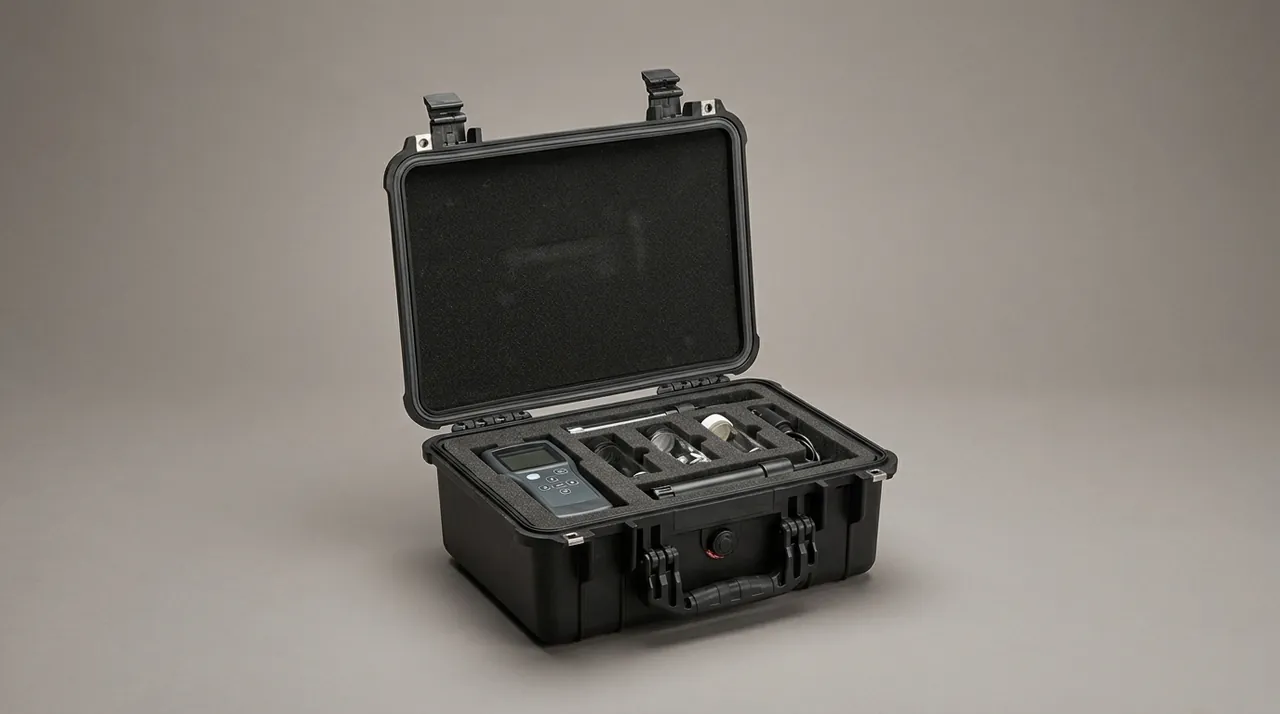
One compartmentation benefit is directly relevant to mill operations: pack by machine position. A maintenance department would rather receive one kit covering one section of one machine than a case assembled by shape. With per-position compartments, the kit is usable straight from the case and unused spares go back into the same compartment, avoiding the handling damage that re-sorting causes. Where flexible support and repeated reuse both matter, the same approach is described in the cushion liner case reference.
Comparing the Three Protection Methods
Pulling the elements together, paper machine spares fall into three mainstream protection methods. Their cost structures, cleaning burdens and failure modes are quite different, and mixing them produces either over-protection or a critical gap.
| Item | VCI film + case | Desiccant + barrier bag | Rust-preventive coating + case |
|---|---|---|---|
| --- | --- | --- | --- |
| Mechanism | Vapour-phase inhibition, molecular film | Lowers internal RH below the critical value | Physical barrier; oil or wax film blocks the electrochemical path |
| Best for | Carbon-steel journals, bearing housings, flanges | Precision parts, ceramics, assemblies with non-metallic components | Large bare metal surfaces, long sea voyages |
| Protection window | 12–24 months if well sealed | 12–24 months | 6–18 months depending on film thickness |
| Unpacking burden | Low, usually no cleaning | Low, but desiccant must be disposed of | High, oil must be fully removed |
| Relative cost | Low | Medium | Low material, high labour |
| Main failure mode | Seal failure lets VCI escape | Desiccant saturation, bag puncture | Missed coating, unprotected corners |
| Fit with an IP case | Good | Good | Fair; oil films attract dust |
The decision sequence should be:
- Check first whether the part has non-metallic sensitive components such as rubber covers, polymer shells or sensors. If so, prefer barrier bag plus desiccant and avoid VCI effects on polymers.
- Then check for exposed carbon steel. If present, add VCI or a coating — choose one, not both, because an oil film blocks VCI adsorption.
- Then assess protection window and transport mode. Beyond 6 months, or for sea freight, the barrier class must rise to a foil laminate.
- Check whether repeated opening is expected. Mills often draw spares several times, and if every opening breaks the seal, switch to resealable VCI film or a case with a pressure equalisation valve.
Irregular parts often need several methods in one case: the roll body in VCI film inside a barrier bag, while fasteners and tooling sit in separate compartments. Flexible use of multiple strategies in a single case is covered in more depth in the custom foam insert guide. For corrosion validation, the neutral salt spray conditions described in the salt spray corrosion test reference — 5% NaCl at 35 °C with continuous spray — are the usual basis for a mill's incoming verification.
Packing Documents and Acceptance Criteria
Packaging value is ultimately realised through documents that can be checked and acceptance actions that pass. A mill's maintenance department performs only a few actions on receipt, and the packer should make sure each one succeeds.
Documents to ship with the case:
- Packing list: every part listed with description, drawing number, quantity, material, weight and compartment reference.
- Corrosion protection card: VCI type, desiccant type and quantity, activation date, recommended opening deadline.
- Lifting diagram: lifting point locations, rated load and recommended sling type.
- Inspection record: results of visual, cleanliness and seal (pressure-decay) checks with the inspector's signature.
- Material compliance: ISPM 15 treatment certificate for wood, plus RoHS and REACH declarations for foam and adhesives.
Acceptance actions on receipt:
- Inspect the case exterior for punctures, serious deformation and missing latches.
- Read the humidity indicator card before opening to judge whether it is within limits.
- After removal, wipe the working surface with a black nonwoven and confirm no fibre or particle release.
- Visually inspect roll shells and ceramic edges for scratches and chips.
- Inspect journals and bearing housings for rust; any acceptable light discolouration must be agreed in the contract in advance.
Acceptance criteria must be written quantitatively into the contract or technical agreement — for example, no visible scratch on a roll shell, ceramic edge chips not exceeding 0.5 mm, rust on journals not exceeding 1% of surface area. Vague wording such as good appearance carries no weight in a dispute.
Frequently Asked Questions FAQ
Q: Why should a calender roll not be wrapped in foam over the full shell surface?
A: Foam appears soft, but it only lowers the shock peak; it does not limit displacement. Under transport vibration the roll migrates slightly within the foam, and the repeated rubbing between foam and shell presses fine particles — foam crumbs and dust — into the surface as impressions. Foam also takes a compression set under sustained load, so local stiffness becomes uneven and the shell ends up with its own print pattern. The correct approach is to saddle the journals or the outer diameter at both ends so the working shell stays airborne at zero contact. Foam is then used only for saddle pads and for filling, and it must be closed-cell and non-shedding. Vibration energy is absorbed by the saddle and cushion layer, while the roll position is defined by rigid structure. Separating those two duties is what allows surface integrity and positional accuracy to be achieved at the same time.
Q: Can wet-end and dry-end parts travel in the same protective case?
A: It is not advisable. Wet-end and dry-end parts fail for opposite reasons: wet parts need water and fibre resistance, dry parts need dust and condensate resistance. In one case, the differing cleanliness requirements mean stock residue from a wet part contaminates dry parts; the desiccant requirement differs too, and over-drying accelerates water loss from rubber seals and polymer covers; and the thermal behaviour differs, because a hot dry-end part cooling inside a sealed case creates negative pressure that can draw moisture from the wet part into the shared volume. If logistics force a combined shipment, bag each part separately first, then divide the case into zones with physical partitions and independently sized desiccant in each zone. Fit the whole case with a pressure equalisation valve so that repeated thermal cycling does not fatigue the seal, and mark the packing list so the mill can unpack each zone by its own method.
Q: What conditions must a wooden crate satisfy for exporting roll parts by sea?
A: The core requirement is ISPM 15. Wood packaging material must be heat treated at a wood core temperature of at least 56 °C for at least 30 minutes, or fumigated with methyl bromide, and the finished crate must carry the IPPC mark with country code, treatment provider code and treatment method code. Beyond that, three points matter. First, structural strength must be checked against sea stacking, typically three to five tiers of top load. Second, the crate interior must use a barrier bag and desiccant, because day-night temperature swings inside a container cause condensation. Third, the restraint must survive ship roll and pitch, so saddles and the crate floor must be positively connected to stop the roll from shifting inside. Confirm the destination country's wood packaging rules at quotation stage, since some markets impose additional notification requirements and discovering them at the port causes delays and storage charges. Wood packaging used for export sea freight should also carry the ISPM 15 treatment mark, and that mark should be recorded on the packing list so a customs query can be answered without opening the crate. Q: Can VCI film and rust-preventive oil be used together?
A: Combining them on the same metal surface is generally not recommended. The continuous oil film acts as a physical barrier that blocks VCI molecules from diffusing to the metal surface and adsorbing there, so the VCI cannot form an effective monomolecular inhibiting layer. The result is that neither performs to specification, and the unpacking cleaning burden increases. The sound approach is to choose one according to part condition: for finished parts already coated with rust-preventive oil, a barrier bag with desiccant is sufficient and no VCI is needed; for bare metal parts, use VCI with a barrier bag. If one case contains both oiled and bare parts, divide it into compartments and place the matching protection medium in each compartment independently, and state this clearly on the packing list so the mill can unpack each zone correctly. If a combination is unavoidable, validate it on a small sample first to confirm that no oil-film rejection or inhibitor failure occurs.
Q: Where do ceramic dewatering elements most often get damaged in transit?
A: The most common damage sites are slots, hole edges and corners. Ceramic has high hardness but low fracture toughness, so it is extremely sensitive to point contact and edge-concentrated loads. Two load types are most dangerous in transit. The first is point contact, for example a sharp corner of an adjacent part or fastener bearing on a ceramic edge. The second is bending load, for example a cover supported only at its two ends with load applied at mid-span, or pressed rigidly against a case wall. Protection should therefore keep edges unloaded, use closed-cell foam for area contact on load-bearing faces, and never clamp ceramic directly with hard metal fittings. Separate compartments prevent ceramic parts from striking each other. On opening, inspect edges specifically for shell-shaped fractures; a chip means the element should be scrapped, because the damaged edge becomes a fabric wear source and produces uneven dewatering. The highest risk points are the leading edges and the mounting faces, because those are the surfaces that carry the sealing and scraping function, and a chipped edge changes the water line across the whole forming section. Q: How should desiccant quantity be sized so it is neither excessive nor insufficient?
A: A practical method is to size against the free volume inside the barrier bag and then apply factors. Starting with fine-pore silica gel under good barrier conditions such as a foil laminate with an intact seal, use 20 to 30 g per cubic metre. For voyages longer than six months, or where the barrier is a plain PE bag, multiply by 1.5 to 2.5. For montmorillonite clay, whose absorption per unit mass is lower, multiply again by about 1.5 to 2. A signal of over-sizing is internal humidity persistently below 20% RH, which can dry out rubber parts and timber supports; a signal of under-sizing is a humidity indicator card that has already changed colour when the case is opened. The most reliable practice is to place humidity indicator cards in the first shipment, measure again on arrival, and use the measured data to correct the quantity for the next batch rather than repeating the same figure year after year.
Q: How many support points should a long roll have, and where should they be placed?
A: Two-point support is usual, positioned at roughly one quarter to one third of the roll length from each end, depending on roll stiffness and length. Supports placed too close to the ends let the middle sag and take a permanent bow, while supports crowded into the centre leave both ends overhanging and oscillating under vibration. The engineering approach is to model the roll as a simply supported beam, calculate maximum deflection, and keep the combined dead-load and transport dynamic deflection within an allowable value — for a precision calender roll, typically not more than 0.1% of the roll length. Very long or very heavy rolls should move to three or four support points, with a height-adjustable saddle at intermediate positions to absorb assembly tolerance. The support face must be arced or V-shaped and lined with a soft pad to prevent rolling and point contact. Record the saddle positions on the lifting diagram so the mill can reassemble the cradle for the return trip.
Q: Does a paper mill spare-part case need IP67?
A: For most paper machine spare-part cases IP65 is sufficient, and IP67 is an enhanced option. The deciding factor is where the case is stored and moved. If it lives in a covered spare-parts store or maintenance shop with only washdown splash and dust, IP65 — dust-tight and protected against low-pressure water jets from all directions — is adequate, and it offers simpler acceptance testing, a mature sealing design and lower cost. Consider IP67 only when the case is stored in the open, must cross areas of standing water in the plant, or is briefly immersed. It is important to note that an IP67 case does not make the part itself waterproof. If the part contains electrical components or untreated carbon steel, a barrier bag and desiccant should still be used inside. Because repeated opening wears the gasket, the technical agreement should also state a gasket replacement interval and spare-part supply.
Conclusion and Related Reading
Package paper mill parts by failure mechanism: rigid structure owns position, elastic liner owns energy, and the barrier owns moisture.
Related Reading