


Retail, food-service and chain-store checkout terminals operate year-round in environments of high-frequency opening, oil, dust and customer bumps. The conclusion is clear: equipping POS terminals and barcode scanners with dedicated protective boxes significantly lowers the probability of touchscreen scratches, print-module dust ingress, loose interfaces and drop damage it is the most economical investment to extend retail-terminal life and reduce outage repairs.
Many stores leave devices exposed, so scanner cables get pulled, POS screens fill with oil fingerprints, and the paper slot jams with debris. Dedicated protective boxes turn "exposed risk" into "controlled inside the box" through screen films, cable channels, interface boots and drop-resistant shells. This article focuses on POS-terminal protective boxes and barcode-scanner cases to give a practical retail-terminal protection plan.
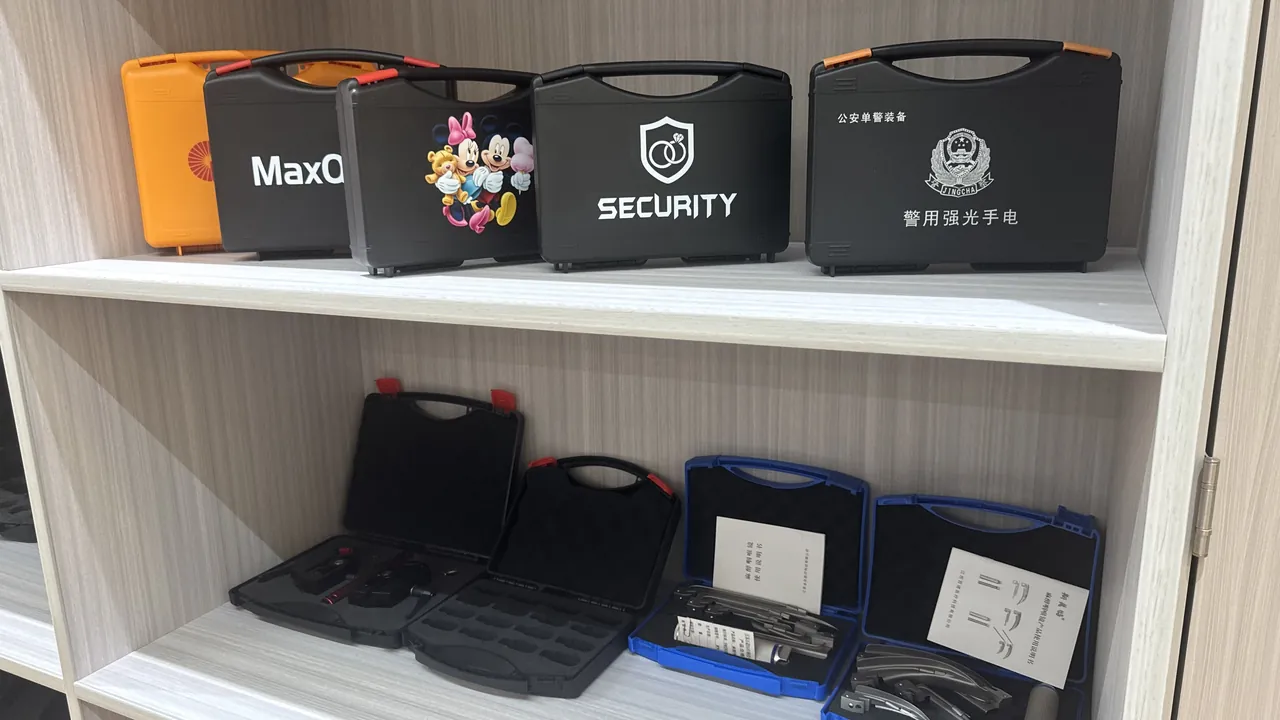
Table of Contents
- Why retail terminals need dedicated boxes
- Structure and anti-theft of the POS protective box
- Buffer and interface protection of the scanner case
- Touchscreen and print-module protection
- Power adaptation and cable management
- Dust-proofing, water resistance and cleaning
- Ratings and standard references
- Material and portable structure
- Selection parameters reference
- Batch standardization for chain stores
- Field deployment and maintenance
- Transport, storage and OEM/ODM
- Cleaning, maintenance and lifecycle management
- Procurement agreement and standardization clauses
Why retail terminals need dedicated boxes
Checkout devices are typical "high-use, low-attention" assets: touched hundreds of times a day yet rarely maintained. Their failure modes concentrate in three types screen scratches and oil, cable fatigue breakage, and whole-unit drop or liquid spill. The value of a protective box is precisely to pre-isolate these three.
In the accessory organization system of the charger and cable box, the power and data cables of POS and scanners should also be managed inside the same box to avoid desktop cable chaos. For chain brands, unified boxes also fix store visual identity and ease asset inventory.
Rule of thumb: a protective box with cable channel and screen film can cut scanner-cable breakage repairs by about half and visibly reduce screen-scratch complaints.
Structure and anti-theft of the POS protective box
The POS-terminal protective box usually adopts a "base + front frame + back cover" split structure: the base fixes the host and cash-drawer interface, the front frame reserves touch and display windows with an anti-glare film, and the back cover stores power and network cables. For anti-theft, the shell can add a security lock hole or steel-cable anchor to prevent easy removal; the cutouts precisely match common models, ensuring keys, card swipe and scan are unobstructed.
For mobile POS or tablet cashier, the box can become a light back-clip type, balancing grip and drop protection. When selecting, confirm the box fits the model size and interface layout; if necessary, use the custom-liner thinking of the electronics box for 1:1 fit.
Buffer and interface protection of the scanner case
The barcode-scanner case mainly protects handheld scanners, whose fragile points are the scan window and the cable root. The box should give the gun body an independent slot, with the scan window toward a soft pad to avoid friction with hard objects; a cable clip at the root prevents repeated bending that breaks the core. For wireless scanners, the box should reserve a battery compartment and charging seat.
If the store also has a fixed scan platform, the platform and handheld can share one combined box with zoned storage. In the IT operations toolkit system, scanning devices often deploy with fiber splicers and base-station tools in the same vehicle, so the mobile protective box must accommodate multiple devices.
Touchscreen and print-module protection
The touchscreen is the POS protection focus; the front frame should carry a high-transparency anti-scratch film with enough touch margin to avoid edge-pressure mis-touch. The thermal print module fears dust and foreign objects; the box paper slot should have a dust flap, with internal paper-run space to prevent jams from compression; periodic small-brush cleaning of paper scraps extends head life.
Power adaptation and cable management
The checkout counter has many cables (power, network, cash drawer, scanner, receipt printer). The protective box should embed cable channels and tie positions, storing excess cable in the back cover and exposing only necessary interfaces. The power adapter should have an independent small compartment labeled to avoid heat from stacking on the host. For multi-terminal stores, the divided scheme of the cable storage box can unify cable management.
Dust-proofing, water resistance and cleaning
Store environments are oily and dusty; the box shell should use easily cleaned PP or ABS, ideally with oil-repellent surface treatment. IP rating generally IP54 suffices for splash and dust; for beverage areas or outdoor markets, IP65 is advised. Daily wipe with a slightly damp soft cloth; clean the scan window with a lens cloth; never soak the film in alcohol for long.
Ratings and standard references
| Item | Recommended | Standard | Note |
|---|---|---|---|
| --- | --- | --- | --- |
| Dust | IP5X | IEC 60529 / GB/T 4208 | Daily dust |
| Splash | IP54 | IEC 60529 | Drink spill |
| Outdoor / market | IP65 | IEC 60529 | Rain shower |
| Flammable shell | HB/V-2 | UL 94 | Fire safety |
| Impact | IK07 | IEC 62262 | Drop buffer |
Material and portable structure
Shells are mainly PP and ABS; PP resists drops, ABS has a flat surface for silk-screen brand logos. Chain stores often use ABS front frames for flat film adhesion. Portable structures split into fixed (countertop) and back-clip (mobile cashier); the former values stability, the latter weight reduction. Lock holes and steel-cable anchors are recommended as standard with asset-number labels.
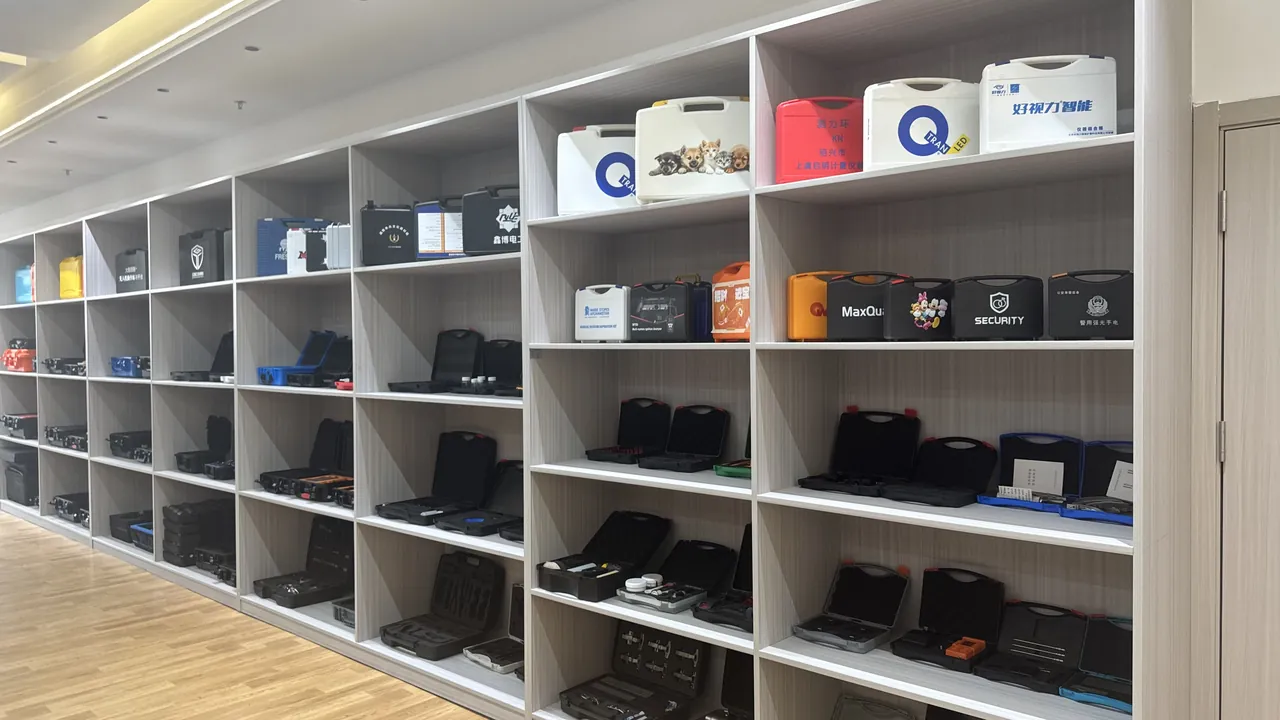
Selection parameters reference
| Device type | Clearance (mm) | Material | Key cutouts |
|---|---|---|---|
| --- | --- | --- | --- |
| Desktop POS | 320×220×120 | ABS+PP | Touch / swipe / drawer |
| Tablet POS | 280×200×40 | PP | Camera / charge |
| Handheld scanner | 200×90×70 | PP | Scan window / cable root |
| Scan platform | 220×160×100 | ABS | Light window / interface |
Batch standardization for chain stores
Chain brands should build a protective-box list by "store type + model": convenience, food-service and supermarket differ, but same-type stores must standardize to "same store same box, same box same label." Color and silk-screen unify brand visual; asset numbers ease patrol inventory. JUNZHJIA supports OEM/ODM boxes customized by model, delivering consistent quality and documents per batch for global store rollout.
Field deployment and maintenance
- Before install, confirm box-model match with no obstructed cutouts.
- Clean the screen before filming to avoid bubbles affecting touch.
- Fix excess cable in the channel; clip the scanner cable root.
- Keep the paper dust flap closed; clear paper scraps periodically.
- Check lock holes and steel cables weekly against cutting or loosening.
Transport, storage and OEM/ODM
For new-store rollout or old-store replacement, protective boxes transport with the devices; pack per the ISTA 3 validated stacking scheme, single-layer load within 70% of nominal. Storage should be ventilated and dry to avoid long-pressure film adhesion. JUNZHJIA, at its Zhongshan plant, provides OEM/ODM from tooling, injection, film to packaging, and delivers IP and flame documents for brand compliance acceptance.
Cleaning, maintenance and lifecycle management
POS and scanner protective boxes live in greasy, drink-exposed, high-frequency-open environments, so maintenance directly decides life. Replacement signals include: film largely bubbled or scratched through, broken cable channel causing loose cables, cut lock hole or failed steel cable, fogged transparent window that cannot be cleaned, and stressed shell cracking. When any appears, replace promptly to avoid "box damage causing device damage." In the supporting of the cable storage box, the cable accessories should also be checked in sync to prevent aged channels from pulling wires.
For management, a three-tier "store device box" ledger is recommended: clean monthly, inspect quarterly. JUNZHJIA, at its Zhongshan plant, can provide customized protective boxes with silk-screen asset codes, with OEM/ODM standardization, tracing each device to its box for chain-store patrol inventory. The electronics box series applies the same traceability to the devices themselves.
Rule of thumb: stores running monthly cleaning and quarterly inspection can cut box-related repairs by about half versus "replace only when too dirty to use."
A common blind spot is the barcode scanner cable: the case may be fine while the internal cable channel silently cracks, so the gun lead starts to fray at the root. Inspection must open the box, not just wipe the outside. The it operations toolkit and it carry case share this lesson the protective shell looks intact while the internal management fails. For food-court and beverage-heavy sites, specify a stronger oil-repellent surface in the agreement, because standard finishes break down faster under sugar and acid splashes, and a sticky film then traps dirt that scratches the touchscreen on the next open.
Procurement agreement and standardization clauses
Chain and high-frequency stores procuring protective boxes in volume should lock in the technical agreement: first, model clause clearly state adapted model size and interface layout, with cutouts consistent with the sealed sample; second, material clause PP/ABS grade and oil-repellent / flame rating; third, labeling clause brand silk-screen, asset number and color-code spec; fourth, document clause provide IP, flame and drop proofs per batch; fifth, traceability clause each box gets a unique code transferable across stores.
For multi-format brands, JUNZHJIA supports OEM/ODM standardized supply, bringing the POS-terminal protective box and barcode-scanner case into one visual and coding system. The agreement should reserve a replenishment clause for spares (film, cable channel, latch) to avoid single-point damage sinking the whole device protection. The charger and cable box benefits from the same clause language, keeping the accessory program coherent with the terminal program.
| Agreement clause | Locked content | Acceptance basis |
|---|---|---|
| --- | --- | --- |
| Model | Size / interface / cutout | Real-device fit |
| Material | PP/ABS / oil-repellent / flame | Material certificate |
| Labeling | Silk-screen / code / color | Sample comparison |
| Documents | IP / flame / drop | Per-batch delivery |
| Traceability | Unique code | Scan-verifiable |
Beyond the table, require the supplier to retain a sealed reference sample for the contract term; when a store disputes a box, the sample decides fit and finish. Also specify the cleaning-agent resistance test, because store cleaners vary and a film that survives only water will fail on the first degreaser wipe. For brands running the esd component box in back-office electronics, add a note that terminal and component boxes must not share storage if the latter is conductive, a small clause that prevents static surprises. Finally, align replacement timing with device refresh cycles so a new POS generation does not arrive in an old, mismatched box the hardware toolbox series and precision instrument case show how synchronized refresh keeps the whole kit current.
Sizing the box to the terminal and scanner
The POS-terminal protective box and barcode-scanner case serve different shapes, and sizing each to its device prevents the usual damage. The POS box must clear the touchscreen, card reader and cash-drawer interface with cutouts that do not press the bezel; the scanner case must clear the scan window and cushion the cable root. Buying a generic "device box" that fits neither leads to a screen pressed by the lid or a gun rattling in a too-large cavity. The electronics box series shows how a 1:1 liner removes that slack, and the charger and cable box handles the power and data tails that otherwise tangle.
Cable management is where most failures start. A POS site has power, network, drawer, scanner and printer cables; if they are loose inside the box, the strain lands on the connector, not the strain relief. Route each through a dedicated channel, tie the excess behind the back cover, and leave only the working ends exposed. The it-carry case and it operations toolkit use the same channeling for laptops and testers, and the same principle keeps the checkout counter tidy.
| Device | Sizing priority | Failure if ignored |
|---|---|---|
| --- | --- | --- |
| POS terminal | Bezel clearance | Screen pressure marks |
| Scanner gun | Window cushion | Lens scratches |
| Cables | Dedicated channels | Connector strain |
| Power adapter | Isolated bay | Heat buildup |
A final sizing point is future models. Terminals refresh every few years; a box with a modular front frame (swappable cutout panel) outlives a fixed-cutout box and avoids a full repurchase. The hardware toolbox series and anti-static component box both support modular fronts, a pattern worth copying for retail terminals.
Store rollout and staff training
A protective box program fails if only the procurement team understands it. Rollout should pair the box with a one-page card: how to film the screen, how to route cables, how to clean the scan window, and when to report a damaged latch. Stores that train on receipt see far fewer screen and cable failures than stores that merely receive a box. The emergency command comms case and security inspection case succeed on the same training discipline.
Color and label standardization across a chain turns the box into a recognizable asset. A customer seeing the same branded box at every branch reads "this store is organized"; an auditor seeing the same asset code reads "this device is tracked." The electronics box series extends the same branding to the devices inside, creating a coherent in-store system rather than a mismatched pile.
Finally, measure the program. Track box-related repairs per store per quarter; the data shows whether the box is earning its keep and which stores need retraining. This closes the loop from purchase to proof, and it is the difference between a one-time buy and a sustained standard.
Extended value of protective boxes in retail digitalization
As stores push retail digitalization, the POS terminal and scanner change from "checkout tools" into "data capture terminals," and the protective box's extended value becomes visible. First, a box with asset code and silk-screen identity makes every terminal traceable; paired with a back-office asset system, inventory and transfer shift from manual checking to scan-and-know. Second, the zoned interior modularizes host, scanner gun, receipt printer and power, so when a store upgrades the model it only swaps the relevant insert while the shell and identity continue, cutting repeat purchase. In the supporting of the charger and cable box, cables enter the same coding system, avoiding the "new box, messy cables" split.
Customer experience is the other extension. Uniform-looking boxes give different branches a consistent professional feel; smooth opening, clean screens and tidy counters directly lift the checkout impression. For chain brands, this puts "standardization" from the manual onto the counter. JUNZHJIA, at its Zhongshan plant, can provide OEM/ODM boxes customized by model with brand silk-screen and asset codes, with consistent per-batch quality to support a unified image across multi-format stores.
Rule of thumb: chain stores running "one device, one box, one code" can cut terminal inventory and fault-location time by about half versus manual ledgers.
Coordination with the electronics box series matters: the POS host, tablet and scanner are essentially screen-bearing electronics, and their protection logic screen film, cable management, moisture proofing, static control is highly consistent, so one liner and silk-screen spec can be shared, lowering design and spare complexity. The digital system can also set "no-mix zones" at the barcode level to stop ordinary consumable boxes from entering anti-static storage.
Over a longer cycle, the box is the carrier of the store asset's full life: fix the code at purchase, log inspection at use, iterate with inserts at refresh, trace by box at retirement. Getting this box right is what makes the "last meter" of retail digitalization actually land which is why it deserves to be planned as equipment, not consumable.
The cost case supports the point. A coded, branded box costs more upfront than a plain bin, but when you add the labor saved in counts, the downtime saved from faster fault location, and the waste avoided by insert-only upgrades, the total cost of ownership usually favors the coded box within a year. The hardware toolbox series and precision instrument case show the same TCO logic for higher-value gear, and the POS box is simply its high-traffic retail expression.
Implementation pitfalls deserve naming. First, label durability: a silk-screen or barcode that rubs off in months defeats the system, so specify oil-resistant, scratch-proof marking and verify it against the store's actual cleaners. Second, insert drift over time a clerk parks the scanner in the wrong cell "just once," and the data rots; a weekly spot scan catches it early. Third, over-coding not every consumable needs a code, so apply codes where accuracy value exceeds cost, typically the top 80% of pick frequency. The it operations toolkit and it-carry case use the same 80/20 rule for consumable tracking on service calls.
Sustainability is the quiet bonus. Standardized, durable, repairable boxes outlast throwaway bins by years, and a modular insert means the shell survives a model change that would otherwise scrap the whole box. For brands with environmental targets, this longevity is a defensible procurement argument alongside the operational ones. The road-bridge detection case and rail-transit signal case benefit from the same durability reasoning on long infrastructure programs.
Finally, measure the program like any capital. Track terminal uptime, fault-location time and box-related tickets per quarter; the trend shows whether the coded box earns its keep and where the next improvement lies. This closes the loop from a plastic box to a managed store system, and it is the difference between buying containers and building capability.
In real-world deployments, selecting POS-Terminal Protective Boxes & Barcode-Scanner Cases should never reduce to picking a box by its outer dimensions. These units face combined hazards of dust, moisture, vibration and temperature swing, so dust/water protection, shock resistance and foam retention must be specified together to avoid costly rework after delivery.
From a supply-chain perspective, categories like pos terminal protective boxes barcode scanner cases protective case are better served by batch customization than scattered purchases. A volume program locks case color, silkscreen identity, custom-cut foam and seal slots, keeping equipment consistent across sites and cutting the cost of non-interchangeable spares.
Standards give the acceptance its backbone. POS-Terminal Protective Boxes & Barcode-Scanner Cases should map to GB/T 4208 (IEC 60529) for the IP code, MIL-STD-810H for drop and vibration methods, and the ISTA transit series; where flammability matters, add the UL94 rating. Put the standard numbers in the contract so vendors cannot substitute claims for test reports.
On materials, modified PP, ABS and PC each trade off differently. PP brings toughness and low-temperature resistance for large cases; ABS is rigid but brittle when cold; PC excels in impact and clear windows. For pos terminal protective boxes barcode scanner cases protective case, a one-piece shell with neoprene or EPDM foam gasket tends to age more predictably under salt spray and UV.
Foam is what turns a generic case into a purpose-built one. CNC-cut EVA, layered foam and adjustable dividers let the device sit with zero clearance, so it cannot shift under shock or drop. For POS-Terminal Protective Boxes & Barcode-Scanner Cases, custom foam also shortens field setup and re-stow time, and the investment is usually far below a single instrument repair.
Maintenance is routinely overlooked. After each use, wipe standing water and salt from the lid, and on coastal sites rinse the gasket with fresh water then air-dry; periodically check latches and hinges for looseness and the gasket for cracks or loss of spring. Stocking latches and gaskets at about 3% of case count contains sudden failures.
Test documentation is the lever for traceability. Ask the supplier to ship material statements, IP summaries, drop and vibration records, and batch numbers for gasket, latch and hinge. For pos terminal protective boxes barcode scanner cases protective case, also keep a seal-status template for handover and audit, closing the loop from order to operation.
The procurement spec should name five hard metrics: target IP grade, the matching shock standard, flammability grade, foam form and the identification/seal position. Make sample-case acceptance a contract milestone, lock process and materials on the sample, then inspect volume lots to the same standard with per-batch files to keep lot-to-lot variance in check.
On site, traceable seal status often matters more than the case itself. Build a one-case-one-record habit listing the device inventory, calibration validity and seal state, checked before every use. This supports availability and gives closed-loop evidence for audits and accountability, especially at scale.
JUNZHJIA typically offers OEM/ODM and device-shaped foam tooling for POS-Terminal Protective Boxes & Barcode-Scanner Cases, and can deliver per-batch test-file packages covering material flammability, sealing and drop, so buyers can call them up during supplier review and annual re-inspection.
Temperature swing is often underestimated. If POS-Terminal Protective Boxes & Barcode-Scanner Cases is used in freezing or hot environments, confirm the material brittle-point and heat-deflection temperatures to avoid cold cracking or heat softening. For pos terminal protective boxes barcode scanner cases protective case, an insulated wall or phase-change buffer can keep the interior steadier during short transits.
Stacking and transit design affect field efficiency. The lid should carry anti-slip ribs or locating bosses so stacked cases will not slide sideways, and latches must not pop open under stacked load. For POS-Terminal Protective Boxes & Barcode-Scanner Cases, calculate gross weight against the container limit and secure with straps or a cage to prevent latch fatigue from in-vehicle rolling.
ESD and EMC are implicit requirements for electronic equipment cases. For sensitive devices, use anti-static foam and consider a conductive layer or metallized film in the wall for shielding that lowers cross-talk with other radios. For pos terminal protective boxes barcode scanner cases protective case, apply these only as the device manual's ESD/EMC spec demands, avoiding blind over-build.
Cost should not be judged on unit price alone. A case below about 1% of the device value usually means cut materials and seals, and the long-run repair and downtime cost is higher. For POS-Terminal Protective Boxes & Barcode-Scanner Cases, use a whole-life cost view that counts failure rate, spare availability and seal-verification time to find the option that is truly cheaper.
A smooth customization flow protects the lead time. The ideal path is: provide the device list and 3D data, the supplier returns a foam layout and a sample case, and volume runs start after seal verification. For POS-Terminal Protective Boxes & Barcode-Scanner Cases, writing the foam tooling and sample milestone into the contract sharply reduces field rework and repeated changes.
A scenario-based grade map cuts selection guesswork. For pos terminal protective boxes barcode scanner cases protective case, build a table linking scenario to IP grade and liner form so apron, warehouse and channel environments each map to a case, letting front-line crews pick by the table and lowering the risk of water entry or calibration drift from misuse.
In real-world deployments, selecting POS-Terminal Protective Boxes & Barcode-Scanner Cases should never reduce to picking a box by its outer dimensions. These units face combined hazards of dust, moisture, vibration and temperature swing, so dust/water protection, shock resistance and foam retention must be specified together to avoid costly rework after delivery.
From a supply-chain perspective, categories like pos terminal protective boxes barcode scanner cases protective case are better served by batch customization than scattered purchases. A volume program locks case color, silkscreen identity, custom-cut foam and seal slots, keeping equipment consistent across sites and cutting the cost of non-interchangeable spares.
Standards give the acceptance its backbone. POS-Terminal Protective Boxes & Barcode-Scanner Cases should map to GB/T 4208 (IEC 60529) for the IP code, MIL-STD-810H for drop and vibration methods, and the ISTA transit series; where flammability matters, add the UL94 rating. Put the standard numbers in the contract so vendors cannot substitute claims for test reports.
On materials, modified PP, ABS and PC each trade off differently. PP brings toughness and low-temperature resistance for large cases; ABS is rigid but brittle when cold; PC excels in impact and clear windows. For pos terminal protective boxes barcode scanner cases protective case, a one-piece shell with neoprene or EPDM foam gasket tends to age more predictably under salt spray and UV.
Foam is what turns a generic case into a purpose-built one. CNC-cut EVA, layered foam and adjustable dividers let the device sit with zero clearance, so it cannot shift under shock or drop. For POS-Terminal Protective Boxes & Barcode-Scanner Cases, custom foam also shortens field setup and re-stow time, and the investment is usually far below a single instrument repair.
FAQ
Q: Must a POS use a protective box, can't it be exposed? A: Exposed use is not impossible, but the risk is significantly higher. The counter is touched hundreds of times daily, with occasional drink spills, customer bumps and cable pulls, all accelerating screen scratches, loose interfaces and drops. The box pre-isolates these risks at minimal cost: film against scratches, channel against breaks, shell against drops, dust flap against jams. A single small shop may delay, but chain and high-frequency stores should standardize; it minimizes outage repairs and complaints.
Q: Can a barcode-scanner case really reduce cable breaks? A: Yes, the key is "cable-root protection." Scanner breaks mostly occur at the repeated bend of the data-cable root; the case fixes excess cable with a clip and limits bend radius so the root no longer suffers fatigue. The gun body's independent slot avoids hard-object collision, and the scan window faces a soft pad against wear. Experience shows cable-break repairs drop about half with the case. Wireless guns focus on protecting the battery compartment and charging seat with reserved positions.
Q: Does the touchscreen film affect sensitivity? A: A qualified high-transparency anti-scratch film barely affects capacitive sensitivity, provided the film is moderately thick, bubble-free and the front frame cutout leaves enough touch margin. If the frame presses the screen edge, it may cause edge mis-touch or local failure, so the front-frame chamfer and cutout must match the model. Use model-specific boxes or custom liners; avoid generic boxes that "fit by size" at the cost of precision. Clean daily with a slightly damp cloth, not long alcohol soak.
Q: What IP rating should the protective box choose? A: Most indoor stores IP54 (splash and dust) suffices for drink spills and daily dust; if the device is near beverage stations or ice-cream cabinets, IP65 is advised; outdoor markets and food trucks need IP65 with sun and rain cover. Dust-proofing is more often overlooked than water the paper dust flap and scan-window cleaning greatly affect print and read life. The flammable shell should reach UL 94 HB or V-2 for fire compliance.
Q: Can mobile and desktop POS boxes be interchangeable? A: Not recommended. Desktop POS values stability and many interfaces (drawer, network, print), with a larger body emphasizing fixation and cabling; mobile/tablet POS values grip and weight reduction, mostly back-clip emphasizing drop protection rather than full enclosure. Forced interchange leads to either too heavy to carry or unstable to stand. Select by model; if needed, use custom liner for 1:1 fit referencing the electronics box approach.
Q: What to watch in chain-store box standardization? A: The core is "same-type store, same box, same label." First sort the model list by store format (convenience/food/supermarket), then lock box type, material, cutouts, color and silk-screen per model into the technical agreement. Require the supplier to provide IP, flame and consistency documents per batch with an agreed sampling ratio to avoid cutout shift or color deviation across batches. Unified asset numbers and brand silk-screen ease patrol inventory and global rollout.
Q: Can scanner and POS share one box? A: Yes, but zoned. The combined box stores platform, handheld and receipt printer in zones: scanner in an independent slot with window to soft pad, cable root clipped; POS zone fixes the host with touch window reserved. Zoning avoids gun body pressing the screen and cable tangling. If space is tight, two boxes of same color and label also work for desktop alignment. The key is "each in its place, cables not exposed, easy access."
Q: How to clean the protective box without affecting use? A: Wipe the shell with neutral cleaner and a slightly damp soft cloth; oil-repellent surfaces are better. Clean the scan window with a lens cloth, no abrasives. If the film edge lifts, press flat with a soft cloth; severe bubbles need replacement. Clear dust in the cable channel with a brush; sweep paper scraps from the slot weekly. Never soak in banana oil, acetone or other organic solvents, or they will dissolve PP/ABS and the film. Dry thoroughly before reinstalling to keep moisture out of interfaces.
Q: How are customized POS boxes delivered and documented? A: Based on model size or 3D model, make 1:1 liner and front-frame cutouts; after sample confirmation, mass-inject. JUNZHJIA, at its Zhongshan plant, provides OEM/ODM from tooling, injection, film to packaging, and delivers IP, drop and flame (UL 94) test documents per batch for brand compliance and global rollout. Provide the model list, interface layout and brand silk-screen requirements at order to sample once and reduce multi-supplier coordination.
Conclusion and Further Reading
The reliability of a retail terminal hides in every well-stored detail. The POS-terminal protective box and barcode-scanner case turn "exposed risk" into "controlled inside the box" through screen films, cable management, interface boots and drop-resistant shells the most cost-effective protection for chain and high-frequency stores.
Related Reading