

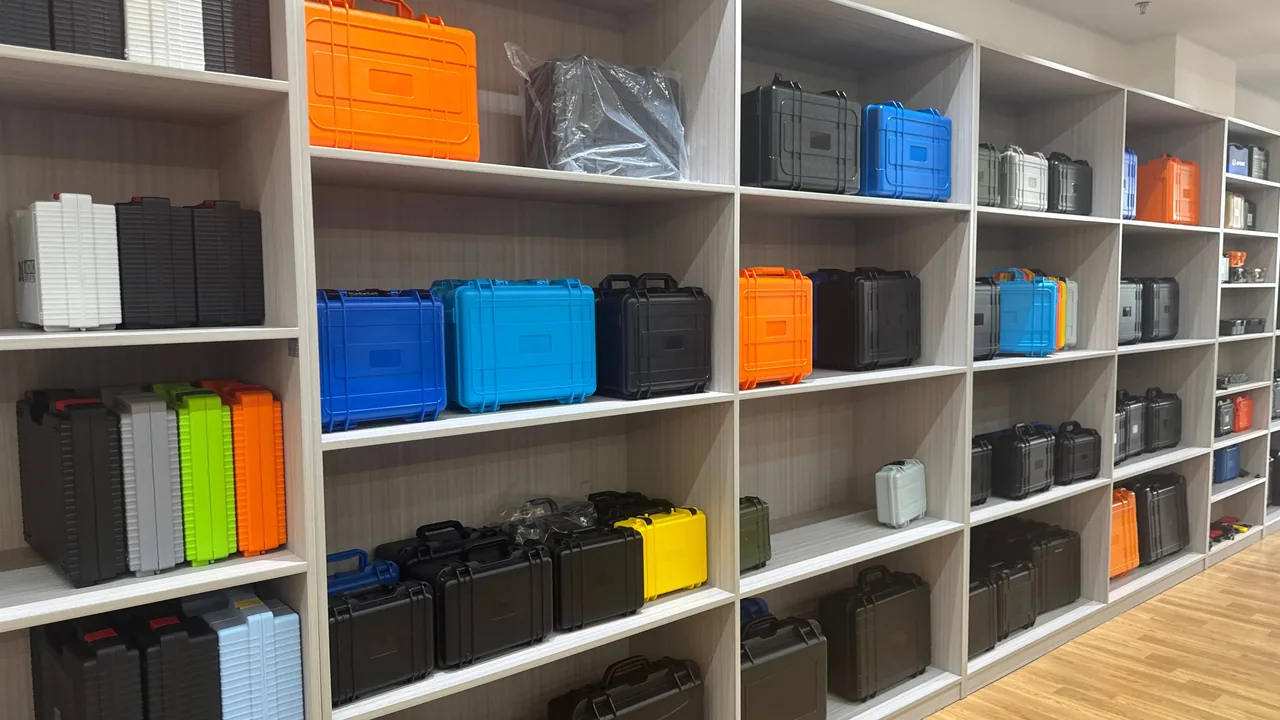
Every annual overhaul, tandem expansion or evaporator station upgrade at a cane or beet sugar mill sets off a long migration of heavy components. Mill rolls, toothed rollers, top and bottom rollers from the milling train, evaporator heating tube bundles and tube plates, crystalliser agitator shafts, and continuous centrifuge baskets and screens all share the same profile: individual masses ranging from a few hundred kilograms to more than ten tonnes, working surfaces measured to fine tolerances, and a plant environment that is hot, humid, dusted with sugar and wet with residual juice. One careless lift, one resonant stretch of highway, one condensation cycle inside a sea container can leave a roll face indented, a tooth chipped, a tube bundle bowed or a tube-plate sealing face scratched, pushing the whole maintenance window back by weeks.
The JUNZHIJIA protection principle is straightforward: sugar mill spares are not ordinary heavy freight, they should be packed as an engineering problem of load transfer, environmental isolation and traceable acceptance, using engineered plastic cases, zoned cushioning liners and complete travelling documentation to hold transport risk inside a measurable, repeatable band.
Table of Contents
- Transport Risk Profile for Sugar Mill Components
- Mill Rolls and Toothed Rollers: Heavy Load, Torsional Vibration and Working-Surface Protection
- Evaporator Tube Bundles: Thin Wall, High Slenderness and Internal Cleanliness
- Crystalliser and Centrifuge Components: Restraining Dynamically Balanced Parts
- The Corrosive Duty of a Sugar Mill: Sugar Dust, Juice, Wash Chemicals and Salt Spray
- Cushion Liner Design: Calculating Foam Thickness and Load-Bearing Layers
- Compartmentalisation and Lifting: Centre of Gravity, Lifting Points and Base Load Path
- Sealing and Environmental Control: IP Ratings, Pressure Equalisation and Desiccant
- Transport Testing and Acceptance Criteria: ISTA, GB/T 4857 and ASTM D4169
- Case Material and Structure Selection: PP, ABS and Rotomoulded LLDPE
- Stacking, Storage and Handling Practice
- Custom Tooling and OEM/ODM Service Workflow
- Frequently Asked Questions FAQ
- Conclusion and Related Reading
Transport Risk Profile for Sugar Mill Components
A typical mill roll has a shell diameter between seven hundred and eleven hundred millimetres and a body length between eighteen hundred and twenty-two hundred millimetres. The shell is usually cast iron with hardfacing or centrifugal composite casting, and a finished roll often weighs between six and fifteen tonnes. An evaporator heating tube bundle welds several hundred stainless or copper tubes of thirty-eight to fifty millimetres diameter and one point two to two point zero millimetres wall thickness into two tube plates, producing an assembly up to ten metres long. The basket and screen of a continuous centrifuge are high-speed rotating parts whose dynamic balance governs running vibration and sugar loss through the screen. A crystalliser agitator shaft is a slender member with a very high length-to-diameter ratio, and once its flange sealing face is scratched it will weep continuously. Bringing these components into a single logistics scheme exposes them to three families of risk.
- Mechanical risk: localised bearing stress from a roll's own weight, resonance amplification during long road vibration, impact acceleration during lifting, lateral squeeze and long-term creep under stacking.
- Environmental risk: sea freight humidity and coastal salt spray, condensation driven by day-night temperature swings, hygroscopic adhesion of sugar dust and juice residue, and electrochemical corrosion from residual alkaline wash liquor or acid descaler.
- Management risk: missing records for roll faces, tooth flanks and tube-plate sealing faces; unclear centre-of-gravity and lifting-point marking; and damage discovered on arrival that cannot be attributed to a specific stage.
Table one maps the damage modes of four typical sugar mill component families against the protection measures that address them, and it can serve as the basis of an unpacking checklist.
| Component family | Dominant damage mode | Direct consequence | Protection focus |
|---|---|---|---|
| --- | --- | --- | --- |
| Mill roll / toothed roller | Roll face indentation, tooth chipping, journal bending | Lower mill extraction, reduced juice recovery | Full-perimeter foam contact plus rigid saddle, journal located on its own bearings |
| Evaporator tube bundle | Tube bowing, tube-plate weld cracking, internal contamination | Falling heat transfer coefficient, juice scorching | Continuous rigid bearers with multiple supports, fixed tube-plate ends and controlled internal humidity |
| Crystalliser agitator shaft | Slender shaft bowing, flange sealing face scratching | Eccentric agitation, persistent seal leakage | Multiple supports to remove cantilever deflection, soft facing pads on the flange |
| Centrifuge basket / screen | Loss of dynamic balance, screen slot deformation | Excessive running vibration, sugar loss | Axial restraint on the rotating body, never mixed with hard parts in one cavity |
The figures above reflect general engineering practice; actual values should follow drawing tolerances, transport test results and site acceptance criteria.
Mill Rolls and Toothed Rollers: Heavy Load, Torsional Vibration and Working-Surface Protection
A mill roll is among the most expensive and slowest to repair of all sugar mill spares. Its vulnerability is not overall strength but two specific locations: the hardfaced shell or the toothed working surface, where any hard contact leaves an indentation that later distorts the load distribution across the cane blanket, and the journals at both ends, which must retain concentricity for assembly. A roll transport scheme therefore has one governing rule: the load must land on the journals and end faces, while the working surface never touches anything hard.
In practice the roll is laid horizontally in a saddle machined to the shell radius, with the saddle positioned as close to the journals as possible rather than at mid-body, so that the bending moment and deflection from self-weight are minimised. The journals receive their own V-blocks so that they do not share a contact face with the saddle. A layer of low-density, fine-celled, non-shedding foam covers the working surface, but that foam only isolates and keeps dust off; it carries no primary load. The load path must run through the rigid saddle into the case base and then into the vehicle, never through the foam.
| Roll mass band | Recommended base structure | Contact layer | Transport attitude |
|---|---|---|---|
| --- | --- | --- | --- |
| Below three tonnes | Plywood base above eighteen millimetres with steel strapping | Low-density EPE wrap | Horizontal, axial restraint |
| Three to eight tonnes | Timber-steel composite saddle, four-point journal bearing | PE blocks with foam facing | Horizontal, both ends axially locked |
| Above eight tonnes | Heavy steel saddle, journal bearing plus end thrust stop | EVA and foam composite | Horizontal, no stacking |
For toothed rollers and roll tooth sleeves, the tooth flanks are the most fragile feature. Before shipment, compressible closed-cell foam strips should be pressed into the tooth gaps so that adjacent teeth never touch each other, and the whole roller should then be secured with soft slings padded wherever they cross a tooth flank. Without padding, the tension in the sling alone can cause local plastic deformation. When several toothed rollers travel in one case, rigid dividers must separate them completely; relying on foam thickness for soft separation is not acceptable.
Stacking and storage deserve equal attention. To save space, mills routinely stack cases two or three high. If the case has no load-bearing corner posts and no base beams, the upper weight passes through the lid directly onto the roll face. JUNZHIJIA heavy-duty cases use load-bearing corner posts and embedded base beams so that stacking loads travel down the case structure to the floor instead of through the component. For a comparable treatment of shaft journal location and load path, see Mill Roll and Bearing Housing Protective Cases for Rolling Mills, where the same engineering logic is applied to rolling mill rolls.
Evaporator Tube Bundles: Thin Wall, High Slenderness and Internal Cleanliness
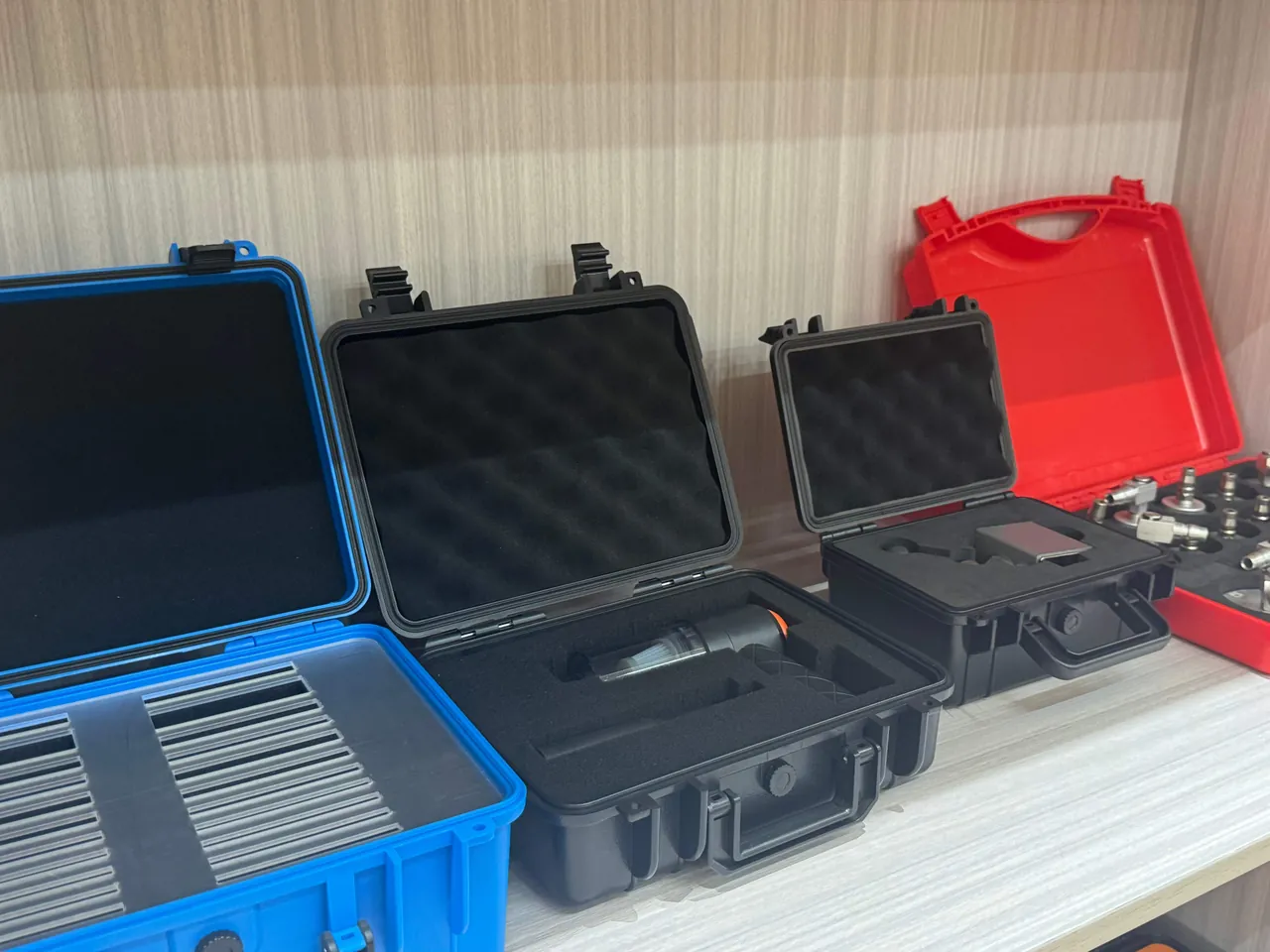
An evaporator heating tube bundle is the classic thin-wall, high-slenderness component of a sugar mill. Several hundred thin tubes are welded into two tube plates, and the assembly stiffness comes from the plates and the bundle acting together rather than from any single tube. The bundle is therefore very sensitive to concentrated load and to bending during transport. Once it bows overall, the relative positions of the tube-plate holes shift, and field installation involving tube insertion, expansion and welding becomes far more difficult. If a tube is locally crushed, the juice flow inside forms a stagnant zone where scale builds quickly and heat transfer falls away.
The key to packing a bundle is support at three or more points plus end restraint. Supports should be placed near the tube plates and at mid-span so that the middle never hangs free; the bearer beams must be rigid and run continuously, because a row of short blocks allows the bundle between them to sag and oscillate. The tube-plate end face is the sealing datum and needs a soft facing board, after which both ends of the bundle are tied down to the base pallet to stop axial creep in transit.
For the mill user, internal cleanliness often matters more than appearance. Before dispatch the bundle should be degreased, dried and internally purged; desiccant is then placed in the case or the tubes, and the sealing humidity is recorded so the customer can compare it with the indicator card on arrival. For long sea voyages it is worth filling the tubes with dry air or nitrogen and capping them, which reduces the residence of moist air inside the tubes. The tube-plate and tube-mouth protection logic for similar heat transfer components is described in Heat Exchanger Tube Bundle and Head Protective Cases.
One caution is worth stating plainly. Because a bundle looks regular, it is easy to underestimate how fragile it is. The most common accident is a rigger passing slings between the two tube plates and lifting, so that the concentrated force from the sling bends the tube mouths on the inner face of the plate. Correct lifting always uses a dedicated spreader that carries the bearer beams rather than loading the bundle itself.
Crystalliser and Centrifuge Components: Restraining Dynamically Balanced Parts
Continuous centrifuge baskets and screens, and crystalliser agitator shafts with their impellers, are all dynamically balanced parts. They fear two things in transit: local damage that shifts mass distribution, and sustained offset loading that produces plastic bending of the shaft or basket. Once balance is disturbed, the machine can often only run at reduced speed, vibration stays above limit, and the screen slots widen under vibration, causing sugar loss and unstable massecuite quality.
During packing, the rotating body should be positively restrained in the axial direction so that inertia forces in transit pass through a shaft end or a dedicated flange seat into the case structure, and never through the thin basket wall. Any residual massecuite or wash liquor inside the basket must be removed and the part dried before packing; otherwise the liquid sloshes, seeps and spreads across the wall, starting corrosion. An agitator shaft is a slender member and should travel horizontally on several evenly spaced supports, never on two end supports that allow mid-span sag.
| Dynamically balanced part | Principal risk | Location method | Environmental requirement |
|---|---|---|---|
| --- | --- | --- | --- |
| Centrifuge basket | Local impact shifting the mass balance | Shaft-end flange seat with axial retaining ring | Dry, no residual liquid in the cavity |
| Centrifuge screen | Slot deformation, wall indentation | Full-perimeter soft support, no point contact | Moisture control, keep away from other steel parts |
| Crystalliser agitator shaft | Slender shaft bowing, keyway damage | Horizontal support at several equal intervals | Journal coated with rust preventive and wrapped |
| Impeller assembly | Blade deformation, weld cracking | Shaped support blocks following the blade profile | Packed separately, no mutual contact |
One detail is routinely overlooked: the travelling documents should include the original dynamic balance record or a radial runout datum. On arrival, re-measuring that datum before installation cleanly separates a transport-induced problem from a manufacturing one. More on packing and handling of this family appears in Centrifuge Rotor Cases for High Speed Rotating Components.
The Corrosive Duty of a Sugar Mill: Sugar Dust, Juice, Wash Chemicals and Salt Spray
Corrosion in a sugar mill is a triple overlay. The first layer is sugar dust and juice residue: cane juice contains organic acids, sugars and water, and once it clings to a metal surface it both absorbs moisture and, under microbial action, acidifies locally to produce pitting. The second layer is wash chemicals: routine shutdown cleaning uses alkaline liquor, hot water and acid descalers, and if the liner or case material is poorly chosen, residual liquor accelerates attack on both the component and the case hardware. The third layer is coastal and sea freight salt spray: chloride ions along southern coastal mills and export sea routes markedly accelerate pitting of stainless steel and dezincification of copper alloys.
A protective case for sugar mill spares should therefore be chosen for chemical resistance and salt spray resistance together. The case body can be PP, ABS or rotomoulded LLDPE; hinges, latches and bolts should be stainless or otherwise corrosion protected; and gaskets should use a rubber or elastomer that tolerates heat, water and alkali rather than hardening after contact with residue. Metal components should be derusted, desalted and coated with protective grease before dispatch, with vapour phase corrosion inhibitor as a supplement inside the case.
| Corrosion source | Mechanism | Protection measure |
|---|---|---|
| --- | --- | --- |
| Juice and sugar dust residue | Moisture absorption, local acidification by organic acids, microbial attack | Thorough cleaning and drying before packing, non-hygroscopic closed-cell liner |
| Alkaline wash liquor | Degrades some elastomer gaskets, accelerates aluminium corrosion | Alkali-resistant gaskets, no bare aluminium contact faces |
| Acid descaler | Uniform or pitting corrosion of stainless and copper alloys | Stainless hardware, liner assessed for acid resistance |
| Sea freight salt spray | Chloride penetration of the passive film causing pitting | Full sealing, desiccant with humidity indicator card, verified on arrival |
Salt spray protection must be described scientifically. A salt spray test ranks competing schemes against each other; it cannot be extrapolated directly into field service life and it does not constitute any form of product certification. Where a project specifies a target corrosion resistance in years, the technical agreement should state the test method, the duration and the acceptance criteria, and the result should be judged together with the actual route and storage conditions.
Cushion Liner Design: Calculating Foam Thickness and Load-Bearing Layers
The liner is the part that actually holds the workpiece and governs the forces it sees; the case only resists external load, and the two must be designed together. The correct division of labour is that the contact layer isolates, prevents abrasion and excludes dust, while the load-bearing layer and rigid saddle carry gravity and inertia. Confusing the two is a common error: burying a mill roll or a tube bundle in foam feels safe, but low-density foam compacts rapidly under several tonnes of self-weight, and the component ends up hard against the case floor or wall anyway.
Cushion thickness should be estimated from the permitted acceleration and the allowable compression of the foam rather than chosen as a round number. The sequence is to establish the shock acceleration the component can tolerate from transport tests or historical data, then use the foam stress-strain curve at the target strain to back-calculate the required contact area and thickness, and finally re-check the design against the actual stacking and drop cases. For very heavy parts the foam often becomes thinner rather than thicker, because the rigid saddle and the multiple support points solve the problem.
| Liner material | Density and hardness | Resilience | Typical application |
|---|---|---|---|
| --- | --- | --- | --- |
| EPE pearl foam | Low density, soft | Fast recovery, long cushioning stroke | Light and medium parts, full wrap and anti-abrasion |
| EVA foam | Medium to high, tunable | Good shape retention, high load capacity | Heavy parts, load-bearing layer, shaped pockets and blocks |
| PE foam | Medium density, firm | Resists repeated compression, durable | Reusable liners for frequently handled cases |
| IXPE cross-linked | Fine, uniform cell | Smooth surface, no shedding | Precision working surfaces, tube-plate sealing faces |
A composite liner is the standard answer for heavy sugar mill parts: the face in contact with the workpiece uses IXPE or fine-celled EPE to protect the working surface, while shaped EVA blocks outside it establish rigid location and spread the load, and the whole assembly is set into a timber-steel saddle. This keeps the working surface away from hard contact while preventing any displacement under severe vibration. A comparable liner and stacking design for a very hard, wear-resistant part is described in High Manganese Ball Mill Liner Transport and Stacking Cases. Once the liner concept is fixed, a first-article fitting should quantify insertion force, clamping force and ease of removal rather than relying on feel.
Compartmentalisation and Lifting: Centre of Gravity, Lifting Points and Base Load Path
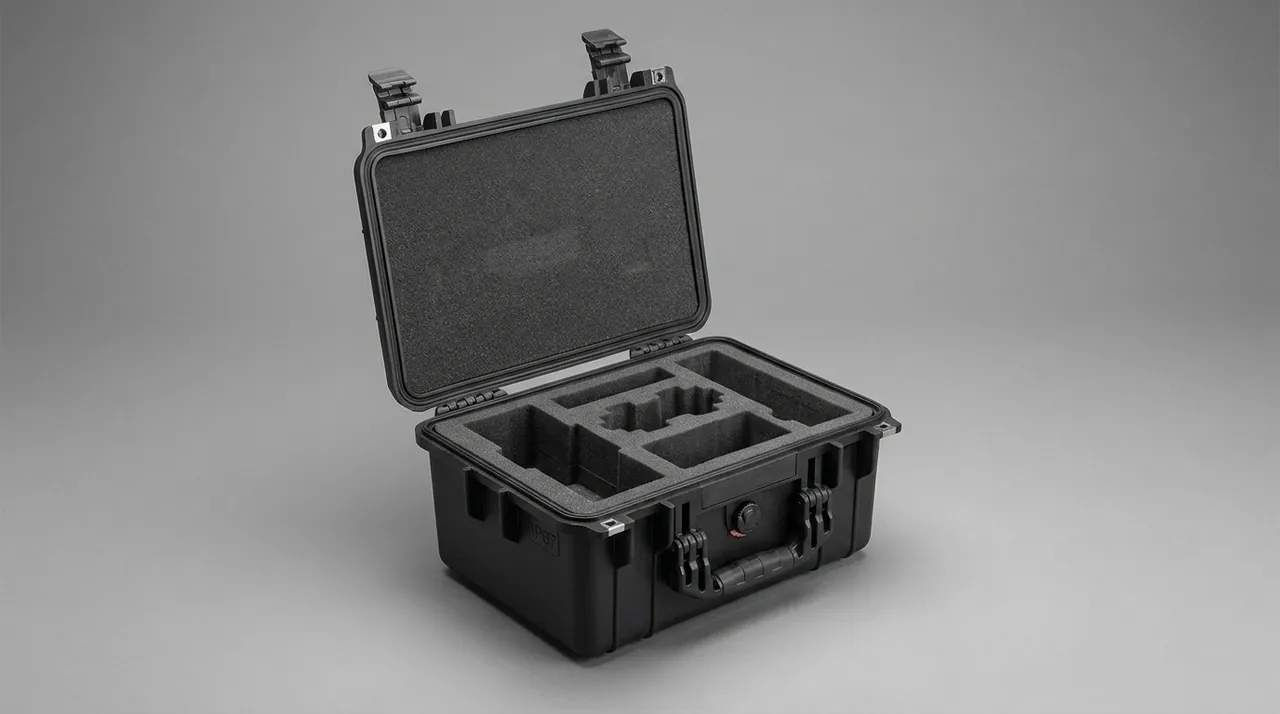
Sugar mill parts are frequently shipped as a mixed batch: one mill roll, several toothed rollers, and a handful of flanges and bearing housings on the same vehicle. Compartmentalisation is then not a cosmetic question but a load path question. If parts of different mass bands share one cavity, the heavy part presses continuously on the lighter ones during vibration, and the lighter part will be damaged even when wrapped in foam. The correct approach is to separate mass bands with rigid dividers that both divide and support, so that the load in one cavity is never transmitted to another.
Centre of gravity and lifting points form another high-risk area. The case should be marked externally with the centre of gravity, gross mass, lifting points and maximum stacking tiers, and the lifting points must align vertically as closely as possible with the internal centre of gravity; otherwise the case tilts on the first lift and the component inside takes a lateral shock. Base capacity should be checked against the heaviest single part plus the stacking load, adding base beams or a bottom pallet where necessary so that a concentrated load is spread over a larger area.
| Packing stage | Common mistake | Consequence | Correct practice |
|---|---|---|---|
| --- | --- | --- | --- |
| Compartmentalisation | Heavy and light parts share a cavity | Light parts crushed over time | Rigid dividers so no load crosses between cavities |
| Lifting | Lifting points offset from the centre of gravity | Tilt on lift, lateral shock inside | Align lifting points with the centre of gravity and mark them |
| Securing | Strapping directly over a working surface | Local indentation of the working surface | Pad the strap and route it clear of the working surface |
| Base load | Relying only on foam beneath a heavy part | Hard contact once foam compacts | Continuous rigid bearer beams with four-point bearing |
Long shaft-like parts need separate consideration. Conveyor rollers, agitator shafts and drive shafts have a high length-to-diameter ratio, and both cantilever loading and two-point support with mid-span resonance must be avoided; the number and spacing of supports should be set by calculation or test. The treatment of multiple supports and axial restraint in Conveyor Roller Cases for Long Shaft Components can be adapted directly to sugar mill agitator and drive shafts. Every lifting operation should also be supported by a lid marking that states lift here and by a documented lifting sequence, so that the site never has to rely on improvisation.
Sealing and Environmental Control: IP Ratings, Pressure Equalisation and Desiccant
Whether a sugar mill spare case needs sealing depends on how exposed the component will be during transport and storage. Under IEC 60529 and GB/T 4208, IP65 resists water jets and suits yard transfers and short-term outdoor storage where rain or washdown is a risk, while IP67 tolerates short immersion and suits long sea voyages, repeated container transfers and deck stowage where water may pool. It is important to note that the higher the sealing rating, the more pronounced the pressure differential problem becomes: day-night temperature swings at sea and cabin pressure changes in the air both drive the internal pressure well away from ambient, and without a bleed path the gasket may be pressed in or forced out, defeating the seal.
The engineering answer is a waterproof breathable pressure equalisation valve fitted to the sealed case. It lets gas pass slowly while blocking liquid water, keeping internal and external pressure essentially equal so that the gasket only carries assembly compression rather than differential load. For components such as evaporator bundles whose internal cavities cannot be fully dried, equalisation is even more important, because warm air trapped at sealing will condense on a cold flight leg and form droplets inside the tubes.
| Exposure scenario | Recommended rating | Pressure management | Humidity management |
|---|---|---|---|
| --- | --- | --- | --- |
| Short internal transfer | IP54 to IP65 | Usually no dedicated valve | Gasket plus simple desiccant |
| Outdoor yard storage | IP65 | Valve recommended | Desiccant plus humidity indicator card |
| Long road and rail | IP65 | Valve recommended | Desiccant sized to transit duration |
| Sea freight and intermodal | IP67 | Valve mandatory | Full desiccant dose, sealing humidity record, arrival verification |
Humidity management should follow the order of dehumidify, then seal, then monitor. Components and liners should be equilibrated in a dry environment before sealing, an adequate desiccant charge and a humidity indicator card should be placed inside, the sealing date and initial humidity should be recorded, and on arrival the indicator card should be read before deciding whether further drying is needed. Every humidity record should travel with the case as part of a complete evidence chain.
Transport Testing and Acceptance Criteria: ISTA, GB/T 4857 and ASTM D4169
Whether a packing scheme is acceptable is ultimately demonstrated by transport testing rather than by feel or experience. The heavy nature of sugar mill spares means the test programme must cover four basic families of load case: vibration, shock, stacking and drop.
| Test family | Common standard | Main objective | Judgement focus |
|---|---|---|---|
| --- | --- | --- | --- |
| Fixed-frequency and random vibration | GB/T 4857, ASTM D4169 | Liner displacement and resonance under long vibration | No displacement, abrasion or loosening of the component |
| Drop and shock | ISTA 1A / 2A | Cushioning capacity under handling impact | Light scuffing of the outer case acceptable, no component damage |
| Stacking load | GB/T 4857 stacking test | Creep of case and component under long static load | No case collapse, no component deformation |
| Incline and horizontal impact | ASTM D4169 distribution cycle | Start-stop and marshalling impacts | Restraint does not fail, component does not shift |
During testing, accelerometers should be placed at critical positions inside the case so that the measured transmissibility confirms the system natural frequencies avoid the common transport excitation bands. Judgement should be layered: the outer case may show light scuffing, the liner may show limited compression, and the component itself must show no displacement, no scuffing and no functional damage. Precision rotating parts should additionally have radial runout or dynamic balance datums re-measured.
It must be stated clearly that any standard test is only a simulation of a defined load case and cannot be treated as complete coverage of every real route; test reports support scheme comparison and acceptance, and they do not constitute an absolute guarantee of zero damage in the field. Where a project involves an unusual route or environment, supplementary testing should be agreed separately in the contract.
Case Material and Structure Selection: PP, ABS and Rotomoulded LLDPE
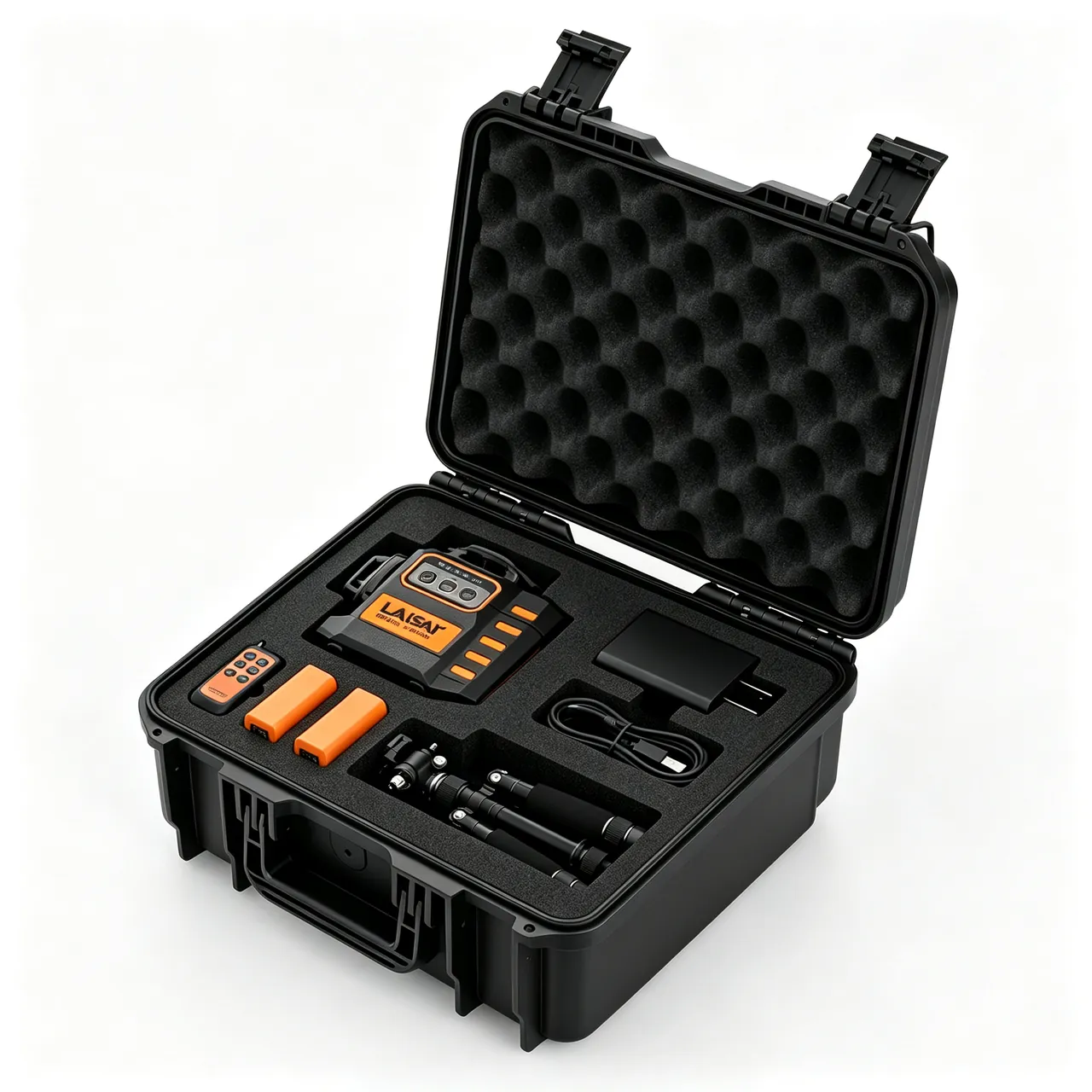
Case material selection balances strength, mass, chemical resistance, weathering and cost. Because most sugar mill spares are heavy, the design emphasis should be on structural load capacity rather than on the intrinsic strength of the material: with the same polymer, the presence of reinforcing ribs, corner posts and continuous base beams makes an enormous difference to real load capacity.
| Case material | Strength and stiffness | Chemical resistance | Weathering | Typical use |
|---|---|---|---|---|
| --- | --- | --- | --- | --- |
| PP copolymer | Moderate, good toughness | Good acid and alkali resistance | Fair | Medium parts, mixed batches |
| ABS | High, good surface hardness | Fair | Fair | Precision parts, appearance-critical cases |
| Rotomoulded LLDPE | High, seamless and impact resistant | Good | Good | Large heavy-duty, outdoor and sea freight |
| Stainless steel frame composite | Very high | Excellent | Excellent | Very large and heavy parts in repeated service |
Structurally, a heavy-duty case should combine reinforcing ribs with load-bearing corner posts and continuous base beams. Hinges and latches should be sized against the heaviest component plus the stacking load so that the lid cannot open unexpectedly in transit, and a locating feature between lid and body should keep the sealing face aligned after many open-close cycles. Because a rotomoulded case is formed as one seamless piece, it offers a clear advantage in sea freight and outdoor conditions and is often the preferred option for large sugar mill spares. Selection should weigh mass, cost and service life together rather than comparing unit price alone.
Stacking, Storage and Handling Practice
Space in mill warehouses and quayside yards is usually tight, and stacking cases two or three high is normal. Without an explicit stacking rule, the weight of the upper case passes through the lid onto the component below, and long static load can cause the case material to creep so that the lid slowly sinks. The case should therefore be marked with its maximum stacking tiers and single-unit mass, and the yard should be organised so that heavy does not sit on light, large does not sit on small, and ventilation and inspection aisles are preserved on racking or pallets.
Handling should follow a fixed routine: confirm the lifting-point markings and inspect the case before the lift, keep the case level throughout, and immediately after landing check for deformation, loose latches and an abnormal humidity indicator reading. For reusable cases that travel repeatedly, each return should include a check of gasket elasticity, hardware corrosion and permanent compression set in the liner, replacing consumable parts as needed. Keeping a case number and a usage record extends service life significantly and makes it possible to trace responsibility when damage does occur.
| Handling stage | Check items | Action principle |
|---|---|---|
| --- | --- | --- |
| Before loading | Case exterior, latches, gaskets | Any significant damage means do not ship |
| During loading | Lifting points, centre of gravity, level attitude | Align lifting points with the centre of gravity, never lift tilted |
| During stacking | Tier count, pallets, ventilation aisles | Respect the marked tiers, keep inspection access |
| After return | Gaskets, hardware, liner compression set | Replace consumables to standard and file the record |
Storage conditions also affect the component inside. A hot, humid mill warehouse accelerates rusting of metal parts and ageing of rubber and plastic parts, so long-term storage should use a ventilated, rain-sheltered and sun-sheltered location with periodic checks of desiccant and humidity indicator cards. Where the case has a pressure equalisation valve, it may be left in its normal working state during storage so that temperature cycling does not generate sustained positive or negative internal pressure.
Custom Tooling and OEM/ODM Service Workflow
Sugar mill spares come in many families with irregular drawings and small batch quantities, so a standard case rarely fits and customisation is what makes a project workable. The JUNZHIJIA custom workflow normally starts from drawings and physical data: confirming the component outline, mass, centre of gravity, fragile features and working-surface tolerances, then deriving the case size, liner compartment layout, saddle form and lifting-point positions, followed by prototyping and a first-article trial fitting.
The first-article fitting is the most effective single risk control. It quantifies insertion force, ease of removal, working-surface contact condition and restraint reliability, and the liner thickness and support-block profile are adjusted accordingly, avoiding the situation where a problem only appears after mass production. For cases intended for long-term reuse, the fitting stage should also assess open-close life and seal retention.
On the manufacturing side, JUNZHIJIA cases are produced with in-house tooling, injection moulding, rotomoulding and foam forming, and can be delivered as anything from a single case to a complete packing solution, with baseline verification of sealing, stacking and vibration completed before mass production. For brand owners, JUNZHIJIA offers both OEM and ODM cooperation: OEM manufactures to the customer drawing and specification and applies the customer brand, while ODM involves our participation in the structural concept and liner design. Whichever route is chosen, the delivery should include a complete travelling document set covering the packing drawing, liner drawings, lifting and unpacking instructions, material and humidity records and a test report summary, so that the packing becomes a traceable, repeatable standard item.
Frequently Asked Questions FAQ
Q: A mill roll weighs well over ten tonnes. Why not simply ship it in a timber crate?
A: A timber crate is not forbidden, but in heavy sugar mill duty it has several weaknesses that are hard to engineer around. First, the load path is uncontrolled: plank joints compress locally and shift, so the bearing positions migrate during a long journey. Second, weather resistance is poor: in high humidity and salt spray a timber crate absorbs moisture, warps and moulds, and corroded fasteners quickly reduce overall stiffness. Third, it is not reusable, while sugar mill spares often travel outbound with new parts and return with repaired ones, so the lifecycle cost of a single-trip crate is actually higher. The value of a dedicated protective case is that its structure can be designed: continuous base beams, load-bearing corner posts and a rigid saddle carry the load straight to the vehicle, the liner and saddle together limit component movement, sealing and desiccant isolate the environment, and the case itself can be recovered, reused and logged. For a roll above ten tonnes, the sensible arrangement is a steel or timber-steel saddle to carry self-weight, independent journal location to stop axial creep, and low-density foam on the working surface purely for isolation and dust exclusion.
Q: Evaporator tube bundles are very long. What damage is most likely in transit, and how is it prevented?
A: The most common damage is overall bowing combined with tube-plate end face distortion. A bundle may be six to ten metres long, and its stiffness comes mainly from the two tube plates acting with the tube array, so the middle is relatively soft. If only the two ends are supported, self-weight and vibration produce visible sag and repeated flexing; if slings are passed between the two tube plates during lifting, the concentrated force bends the tube mouths near the inner plate face. If a tube is locally crushed, juice forms a stagnant zone at that point, scale thickens quickly and the heat transfer coefficient falls away, and cleaning becomes extremely difficult. Prevention works along three lines. Use continuous rigid bearer beams with several supports near the plates and at mid-span to remove any free span. Fit a soft facing board to the tube-plate end face and tie both ends down to limit axial movement. Degrease, dry and purge the internal passages first, place desiccant in the case and record the sealing humidity; for long sea voyages consider filling the tubes with dry air or nitrogen and capping them. Lifting must always use a spreader carrying the bearer beams, never the bundle itself.
Q: Do sugar dust and juice residue really corrode components, and does the case need special treatment?
A: Yes, and the corrosion is deceptive. Cane juice contains sugars, organic acids and water. Once it clings to a metal surface it absorbs moisture to form an electrolyte film and, through microbial action, acidifies locally, so pitting tends to start at welds, threads and crevices. Sugar dust then absorbs moisture in humid air and cakes, holding water against the metal for long periods. If a component is packed before it is fully dry after washing, a sealed case can act like an incubator and accelerate attack. Cleaning, desalting and drying must therefore be completed before packing, metal surfaces should carry a suitable protective grease, and vapour phase corrosion inhibitor can be added as a supplement. On the case side, the liner should be a non-hygroscopic closed-cell material, gaskets should be alkali and water resistant, hardware should be stainless or corrosion protected, and bare aluminium should never sit against residual liquor for long periods. For coastal mills and export sea freight the salt spray factor should be included in the same assessment and managed through full sealing and an adequate desiccant charge.
Q: When a centrifuge basket or screen loses dynamic balance after transport, what usually caused it?
A: The cause is usually a combination of factors. The first is local impact shifting mass distribution: a thin basket wall or a screen bar pressed by a hard object deforms plastically, and even a small displacement changes the balance. The second is sustained offset loading bending the shaft or flange; without reliable axial restraint, inertia forces in transit create a bending moment through the shaft end. The third is incomplete cleaning before dispatch, where residual massecuite sloshes, seeps and then sets on one side, adding an eccentric mass. The fourth is incorrect reassembly on site, for example a gasket, fastener or retaining ring fitted the wrong way round. Prevention rests on three measures. The rotating body must bear on a shaft end or dedicated flange seat with positive axial restraint, and the thin basket wall must never carry load. Residual material must be removed and the part dried before packing. An original dynamic balance record or radial runout datum should travel with the case so that it can be re-measured before installation. Together these measures both prevent damage and make it possible to separate transport responsibility from manufacturing responsibility when a deviation appears.
Q: How should IP65 and IP67 be chosen for a sugar mill spare part case?
A: The choice should follow the exposure intensity of the transport and storage environment, not a preference for the highest number. Under IEC 60529 and GB/T 4208, IP65 resists water jets and suits internal transfers and situations where rain or washdown is possible but water does not pool, while IP67 tolerates short immersion and suits long sea voyages, intermodal transport, deck stowage and quayside storage where brief flooding can occur. Most sugar mill spares are heavy, and as a case grows larger its sealing perimeter and stiffness both increase, which makes the pressure differential issue more severe: day-night temperature swings at sea and cabin pressure changes in the air create a substantial internal-external difference, and without a bleed path the gasket is pressed in or forced out so that the seal fails. Any scheme that specifies IP65 or above for long-distance transport should therefore include a waterproof breathable pressure equalisation valve, so the gasket only carries assembly compression rather than differential load. Desiccant quantity should be calculated from transit duration, and a humidity indicator card should be provided for arrival verification.
Q: Which travelling documents matter most for reducing disputes after arrival?
A: The value of travelling documentation is that it turns packing execution into verifiable evidence. The most important items are these. A packing drawing and liner drawings that show the position and method of restraint for every component and cavity, so that return legs with repaired parts can be repacked to the same scheme. Lifting and unpacking instructions that state lifting-point positions, centre-of-gravity orientation and the unpacking sequence, so that the site does not improvise and cause secondary damage. Material and rust prevention records covering the cleaning and drying process, the grease and desiccant specification, and the sealing humidity and date. A transport test report summary that describes the load cases and criteria the packing scheme was verified against. Precision records such as dynamic balance or runout datums for comparison on arrival. At receiving inspection, the case exterior and humidity indicator should be checked first, then components verified against the list, and the actual condition recorded and photographed. With complete documents, any damage can be quickly attributed to a specific stage.
Q: Sugar mill spares come in small batches with irregular drawings. Will custom protective cases be very expensive?
A: The unit price of a custom case is certainly higher than a general timber crate or a standard plastic box, but total cost should be assessed over the full lifecycle. First, there is reuse: a dedicated case can carry repaired parts back many times, so the amortised cost per trip is often below that of single-trip packing. Second, damage rates fall: one indented mill roll can trigger repair, freight and downtime costs that exceed the entire packaging investment for the batch. Third, work efficiency rises: zoned location and clear marking shorten handling and counting and reduce rework from mis-loading. Fourth, management cost falls: standardised cases with numbers and usage records simplify inventory control and responsibility tracing. Practical ways to control cost include designing one case to cover a family of similar parts with changeable liners, using standard cases with simple liners for low-value consumable items, and putting the load-bearing structure into the saddle and case base rather than simply adding material thickness everywhere. Sensible design trade-offs are far more effective than squeezing unit price.
Q: If one batch contains both heavy mill rolls and precision small parts, how should packing and transport be organised?
A: The governing principle is to grade, separate and compartmentalise, and never to mix different mass bands in one cavity. Heavy parts such as mill rolls and toothed rollers need independent heavy-duty cases with a rigid saddle carrying the load, journals positively located and the working surface softly isolated. Medium rotating parts such as centrifuge components suit a medium case with a composite liner, while precision parts such as bearings, sensors and instruments go in their own cavities away from metal heavy parts. If one case body is unavoidable, rigid dividers must break the load path between mass bands so that heavy parts cannot press continuously on light ones through the liner, and every cavity should be numbered with a position map on the lid. In transport organisation, heavy cases go low, lighter cases above with a limited number of tiers, and each case mass, centre of gravity and lifting points should be stated in the travelling documents.
Conclusion and Related Reading
Sugar mill transport protection turns irregular, irreversible transit damage into a designed, verified and traceable engineering problem. JUNZHIJIA supplies heavy-duty custom cases with zoned liners, sealed moisture control, pressure equalisation and OEM/ODM support.
Related Reading