

Heat exchangers and columns are the heat transfer and separation core of refining, coal chemical and specialty chemical plants, and their turnaround spares share two distinctive traits: individual pieces are long and heavy, yet the critical features are thin and precise. The conclusion up front: the job of a heat exchanger and column parts case is not primarily to survive a drop. It is to prevent bending, prevent crushing, prevent impact damage and prevent rain ingress. Tube bundles need multi-point saddle supports to control deflection, tubesheet and tube-to-tubesheet welds must never take point loads, column internals such as structured packing, trays and distributors must sit on dedicated supports in the right orientation to avoid self-weight deformation, and the case or cradle must be structurally designed for lifting and stacking with at least IP65 rain protection. Get those four right and the high-frequency losses of bent bundles, cracked tube welds, crushed packing sheets and distorted trays fall systematically.
The most common field failures are telling. A 6 m stainless tube bundle is strapped directly to a flatbed with steel bands, the unsupported mid-span takes a permanent set over rough roads, and the bundle will not slide back into the shell. A reboiler bundle is lifted with slings bearing on the tubesheet edge, hairline cracks appear in the tube welds, and the tightness test fails. Structured packing sits stacked under its own weight in a wooden crate for three months, the corrugations collapse, and mass transfer efficiency drops noticeably after installation. Trays ship stacked without support, the thin plates develop wave distortion, and the sealing edges no longer mate during installation. The common root cause is a packaging concept that only asks whether the part fits and whether it is tied down, without designing for the component's mechanics and geometry. This article works through bundles, tubesheets and baffles, column internals and heavy-duty case structure, and provides usable selection, insert, lifting, testing and acceptance guidance for equipment management, turnaround planning and procurement teams in refining, coal chemical and chemical plants.
Table of Contents
- 1. Transport Challenges for Heat Exchanger and Column Parts
- 2. Tube Bundle Structure and Failure Modes
- 3. Tubesheets, Baffles and Tie Rods
- 4. Column Internals: Packing, Trays and Distributors
- 5. Heavy Loads and Lifting: Case Load Capacity and Structure
- 6. Protection Rating, Material and Oversize Options
- 7. Insert and Support Design: Saddles, Stacking and Compartments
- 8. Vibration, Shock and Transport Test Verification
- 9. Moisture, Rust and Cleanliness Control
- 10. Corrosion and Salt Spray Response
- 11. Hazardous Area Awareness and Work Boundaries
- 12. Incoming Inspection, AQL Sampling and Traceability Labels
- 13. Custom Workflow, OEM/ODM Delivery and Selection Tables
- Frequently Asked Questions
- Conclusion & Related Reading
1. Transport Challenges for Heat Exchanger and Column Parts
Packaging heat exchanger and column spares is difficult because four constraints stack on top of each other.
- Polarized size and weight. Tube bundles are classic long heavy items, commonly 3 to 9 m long and weighing from a few hundred kilograms to more than ten tonnes. Structured packing, trays and distributors are classic thin-wall lightweight items with very low stiffness. A single turnaround spare list often contains both, so one packaging formula cannot cover everything.
- Critical features are internal and invisible. Tube welds, tubesheet sealing faces, packing corrugations, tray valve holes and sealing edges, once deformed or damaged, are often only discovered at pressure testing or startup, making rework extremely expensive.
- The load path depends on the component itself. A bundle has limited stiffness. Strapping it directly or lifting from a single point sends load through the bundle, causing deflection or local crushing. The correct approach is to route load through the case support structure, never through the component body.
- Long transport and storage periods. Turnaround spares often arrive months in advance and sit in open or semi-open yards. Rain, day-night temperature swings and ultraviolet light cause corrosion, sealing face contamination and rubber aging.
One further constraint is easily overlooked: site handling conditions are usually worse than at the factory. Access roads inside a process unit are narrow, crane reach is limited and laydown space is tight. The packaging concept must therefore design in how the part will be unloaded, stored and lifted on site, rather than leaving that problem to the field.
For the general approach of tiering protection by component sensitivity, see the instrument case selection guide. For heavy-duty case structure, see seal and shock case design.
2. Tube Bundle Structure and Failure Modes
The tube bundle is the most critical and most expensive part of a shell-and-tube exchanger. It comprises tubesheets, tubes, baffles, tie rods and spacers, and bypass sealing strips. Transport failures fall into four groups. Awareness of design practice from TEMA, API 660 for shell-and-tube exchangers, API 661 for air-cooled units and GB/T 151 for heat exchangers helps frame what "acceptable" looks like for the finished assembly.
| Failure mode | Mechanism | Consequence | Prevention |
|---|---|---|---|
| --- | --- | --- | --- |
| Overall bending | Long unsupported span plus vibration plus self-weight | Deflection out of tolerance, will not enter the shell | Multi-point saddles, controlled span, no two-point lifting |
| Tube weld cracking | Slings bearing on the tubesheet edge or impact with hard objects | Failed tightness test, weld repair required | Guard plates at the tubesheet, no lifting or load bearing on it |
| Local tube crushing | Point contact with a hard object or stacking under another part | Single tube scrapped or plugged | Soft backing at contacts, never stack directly on metal |
| Fin collapse (finned tubes) | Fins are very thin and fold under load | Reduced surface area, higher air-side resistance | No load bearing in the finned zone, use fin combs |
| Internal contamination and rust | Rain, moisture, trapped water | Faster fouling or pitting after startup | Cap tube ends, desiccant, rain-proof case, VCI |
| Tubesheet sealing face damage | Impact, scoring, rust | Joint leakage, sealing face remachining | Fit a protective cover, protect separately |
Critical action one is support span control. Allowable bundle deflection is set by process and assembly requirements, and a practical engineering target is often one to two thousandths of the span. To achieve it:
- Set the number of support points by bundle length. At least three points are recommended, with 2 to 2.5 m spacing for longer bundles.
- Prefer baffle locations as support points, because baffles are the bundle's rigid nodes and supporting there is most favorable to the tubes.
- Machine the saddle contact face to match the bundle outer diameter, with a contact angle of 90 to 120 degrees, avoiding line contact that crushes tubes locally.
- Use medium-density EVA or rubber padding to balance friction restraint and cushioning.
Critical action two is lifting point design. Never cinch steel bands or slings directly onto the bundle body or tubesheet edge. The correct approach is to provide lifting lugs, lifting holes or forklift pockets on the case or dedicated cradle so lifting load is borne entirely by structure. Where a sling must go directly around a bundle, use wide slings matched to the diameter with padding at contacts, and place the lifting points at rigid nodes near baffles or the tubesheet.
For the relationship between ingress protection and case sealing, see the waterproof case IP design guide.
3. Tubesheets, Baffles and Tie Rods
Tubesheets
The tubesheet is the heaviest item at each end of a bundle and the component most often misused as a rigging point. Key points:
- Fit a guard ring or plate around the tubesheet circumference and face so slings and wire rope never contact it directly.
- Cover the tubesheet sealing face, the surface mating with the shell flange, with a protective cover in plastic or wood and a soft lining. Covers must be free of sulfur and chlorine.
- Never place other components on a tubesheet and never use it as a support point.
- Where bolt holes are already machined, fit plugs or protective tape so hole edges are not deformed or damaged, which would impair bolt assembly.
Baffles and support plates
Baffles are thin punched plates with low radial stiffness and normally a small clearance to the tubes.
- Axial or lateral squeeze deforms baffles and alters the shell-side flow path, degrading heat transfer.
- The insert must not apply local load directly to baffles. Support points should land on the region formed by the peripheral tubes and the baffles together.
- Since baffle outer diameter is normally slightly smaller than shell inner diameter by design, avoid clamp-style restraint at the baffles, which would bend the plates.
Tie rods and bypass strips
- Tie rods are slender and their threaded or welded ends damage easily. Keep them clear of other components in transit.
- Thin attachments such as bypass sealing strips and impingement plates should have their own compartments and not be mixed with the bundle body.
- Where an impingement plate ships with the bundle, support it so it cannot move and create point loads.
A practical test: if a restraint point transfers load from structure into a thin plate or a weld, that restraint is wrong. Every step of packaging design should ask where the force finally lands.
4. Column Internals: Packing, Trays and Distributors
Column internals share a common profile: thin, light, low stiffness and high precision. Their protection logic is nearly the opposite of a bundle's. Bundles fear bending and rely on support points to control deflection. Internals fear crushing and rely on orientation and interlayer separation to avoid self-weight deformation.
Structured packing
Structured packing is made from thin metal or plastic sheets, corrugated and stacked into elements, with individual sheet thickness often between 0.1 and 0.3 mm.
- The biggest risk is stacking load. Directly stacking multiple packing elements crushes the corrugations in the lower layers, reducing mass transfer efficiency and raising pressure drop.
- Correct practice: place each element on its own flat tray or frame, with a rigid divider between layers so load goes through the divider rather than the sheets, and limit the number of layers where needed.
- Elements must sit horizontally, or in the orientation specified by the manufacturer. Never store them on edge or tilted long term, which causes lateral buckling of the sheets.
- Surface coatings or special treatment layers are abrasion sensitive. Add lint-free cloth or PE film at contact points.
- Where cleanliness requirements are high, for example in specialty chemicals or pharmaceutical support, prevent fiber and dust contamination with a secondary PE bag.
Random packing
- Random packing such as Pall rings, cascade rings and saddles ships by volume in bags or boxes, where the priority is preventing breakage and attrition.
- Use PE-lined bags inside corrugated cartons or plastic totes. Avoid loose loading directly into a metal case where pieces strike and break each other.
- Ceramic packing in particular requires control of drop height and stack height because the material is brittle.
Trays
Trays ship as individual thin-plate segments, commonly 2 to 4 mm thick, and valve, sieve and bubble-cap designs differ structurally.
- The biggest risk is wave distortion. Unsupported stacking lets trays take a permanent wave set under their own weight, so sealing edges no longer mate and liquid weeps through.
- Correct practice: use a dedicated rack with vertical leaning or layered flat stacking, with support points on tray stiffeners or edge flanges rather than the middle of the plate.
- Fix each segment individually to prevent sliding and chafing.
- Fit protective strips on sealing edges, the flanges that mate with the support ring, to prevent impact damage.
Distributors and collectors
- Distributors are complex, with many small holes and nozzles that damage or plug easily. Give them separate compartments and fit dust covers or plugs.
- Debris inside distributor piping directly degrades distribution uniformity, so cap all openings and confirm internal cleanliness before packing.
Other internals
- Mist eliminators: the mesh is very soft and deforms under load. Ship the unit in a frame in its original orientation, never stacked.
- Internal fasteners and gaskets: separate compartments, bagged by size, so they are neither lost nor damaged by contact with heavy parts.
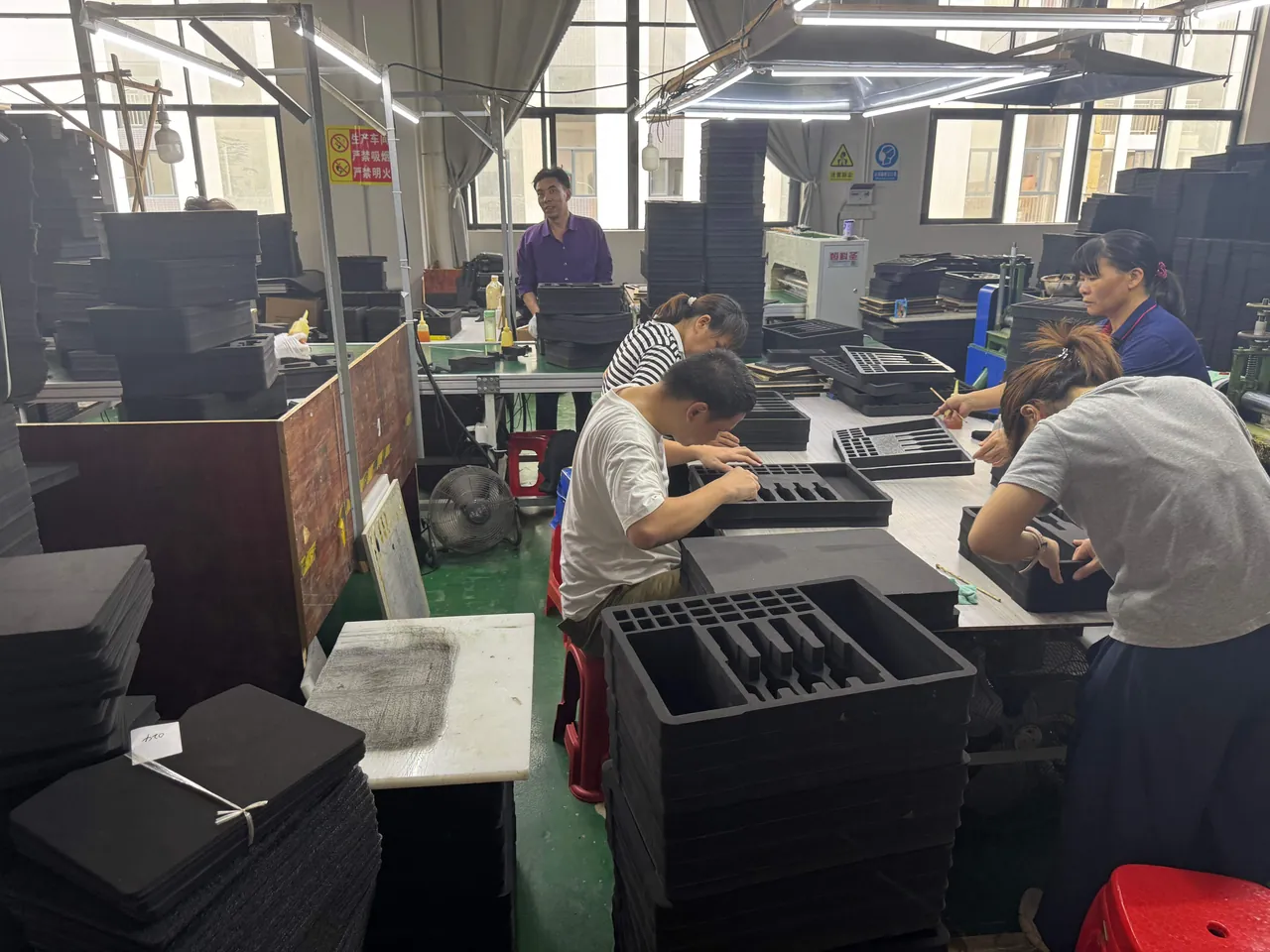
5. Heavy Loads and Lifting: Case Load Capacity and Structure
Heat exchanger and column parts cases face heavy load and large size at the same time. Structural design must address four conditions: load bearing, lifting, stacking and transport securing.
Load bearing design
- Static load. Determine the load capacity of the base and support beams from component weight times a safety factor. A practical design load is 2 to 3 times static weight.
- Dynamic load. Transport superimposes vertical acceleration, commonly considered at 1.5 to 2 times gravitational acceleration. Braking and cornering generate longitudinal and lateral loads that must be transferred to the vehicle through straps and blocking.
- Local load. Heavy components must land on support beams or stiffeners, never directly on hollow panels.
Lifting design
- Provide standardized lifting lugs, lifting holes or forklift pockets on the case or cradle, positioned symmetrically about the center of gravity, and mark lifting points and center of gravity clearly on the case surface.
- Verify lug capacity by calculation or test and state the rated load in the documentation.
- For long bundles, a dedicated transport cradle with a case cover works best: the cradle carries all weight and provides the lifting interface, while the cover only provides rain and dust protection. This keeps the structure safe and makes field inspection easy.
- Never use the bundle body, tubesheet or tie rods as lifting points.
Stacking and securing
- Where stacking is required, state the permitted number of layers and the support positions, and verify them by stacking test.
- For transport securing, combine non-slip base treatment, four-way strapping and blocking. Pad strap contact points to prevent damage.
- For container shipments, confirm case dimensions and lashing points meet container securing requirements.
Structural materials
- Heavy cradles should use steel sections such as square tube and angle, with corrosion protection. Covers can be PP panel or aluminum frame with laminated panel.
- Where a fully integrated case is requested, a rotomolded case with an internal metal frame balances impact resistance and load capacity.
For heavy case structure and cushioning design, see seal and shock case design. For site handling configuration, see case wheels and trolley handle.
6. Protection Rating, Material and Oversize Options
Protection rating selection depends mainly on open storage duration, transport mode and component sensitivity. Ratings follow IEC 60529 and its Chinese equivalent GB/T 4208.
| Spare type | Main risk | Recommended rating | Note |
|---|---|---|---|
| --- | --- | --- | --- |
| Tube bundle (carbon or stainless) | Rain, moisture, water into tubes | IP65 (IP67 for long open storage) | Focus on rain protection and tube end caps |
| Finned tube bundle | Fin collapse plus corrosion | IP65 | Also needs fin combs |
| Tubesheet and sealing face items | Scoring, rust | IP65 to IP67 | Sealing face must have a cover |
| Structured packing | Moisture, contamination, compression | IP65 to IP67 | Secondary PE bag where cleanliness is critical |
| Trays and distributors | Deformation, impact, debris | IP65 | Insert and rack design matter more |
| Random packing | Moisture, breakage | IP54 to IP65 | Bags plus cartons as primary packaging |
| Mist eliminators | Deformation, contamination | IP65 | Dedicated frame |
Materials and structural options:
- Soft insert in an outer case. For small and medium parts such as tubesheet fittings, distributors and tray segments, using molded PP or PE cases or panel cases.
- Steel cradle with case cover. For bundles, long tubes and heavy items. The cradle carries load and provides the lifting interface; the cover provides rain and dust protection. This is the most economical and reliable option for long heavy items.
- Rotomolded case with internal frame. For integrated lifting and high impact resistance, available in larger sizes with lifting lugs.
- Wooden crates, with compliance care. Exports require ISPM 15 fumigation, and lumber moisture content must be controlled to avoid releasing moisture onto components. Use with caution for high-cleanliness and sour service.
For flammability, cases entering chemical process or storage areas can be specified to a UL94 vertical burn rating such as UL94 V-0, with material certificates requested. This is a material property only and constitutes no explosion protection or fire certification.
On hardware, long cases need latch counts scaled with length to keep the mid-section gasket compressed. Stainless or removable hinges are recommended. See toolbox hinge, latch and seal selection.
JUNZHJIA, manufactured by Kexin New Materials (Guangdong) Co., Ltd., supplies heavy-duty heat exchanger and column parts packaging as a steel multi-point saddle cradle with a PP cover, calculating support point count and lifting point positions from bundle diameter, length and weight, and providing structural calculation notes, protection rating statements and material certificates for owner and EPC verification.
7. Insert and Support Design: Saddles, Stacking and Compartments
Bundle saddle design
- Determine the number and position of support points. Calculate from bundle length and allowable deflection, preferring baffle locations. A rule of thumb is one support every 2 to 2.5 m with a minimum of three.
- Design a curved saddle. The saddle inner arc matches the bundle outer diameter with a contact angle of 90 to 120 degrees, avoiding line contact.
- Choose padding. Medium-density EVA in the 60 to 90 kg/m3 range, or oil-resistant rubber, balances friction restraint and cushioning. Too hard crushes tubes; too soft loses restraint.
- Add axial limits. Fit blocking on both sides of each saddle or use straps to limit axial movement, preventing the bundle from sliding lengthwise.
- Reinforce the tubesheet end. Weight concentrates at the tubesheet, so place a saddle close to it to avoid an end cantilever.
- Cap and label tube ends. Fit dedicated caps to all tube ends and mark the case to confirm the tubes are clean and the caps are intact.
Stacking and compartments for column internals
- Packing elements. One tray per element, rigid dividers between layers, limited layer count, and tray design that lets a forklift or lifting gear take the whole tray from below.
- Trays. Use a vertical leaning rack or a layered flat rack, with supports on stiffeners and flanges and separators between segments.
- Distributors. Separate compartments, dust covers on openings, protective sleeves on nozzles and pipe ends.
- Mist eliminators. Ship in a frame in the original orientation, never stacked or loaded.
- Fasteners and gaskets. Bagged by size with weight and quantity marked, in dedicated small compartments.
Insert material reference:
| Material | Density range | Characteristics | Typical application |
|---|---|---|---|
| --- | --- | --- | --- |
| EVA foam | 60 to 120 kg/m3 | Tunable stiffness, CNC carveable, low shedding | Saddle padding, tubesheet end support |
| Oil-resistant rubber | By hardness | High friction, oil resistant | Saddle padding, axial blocking |
| PU foam | 30 to 80 kg/m3 | Molded in one piece, good energy absorption | Irregular part wrapping |
| PE foam | 25 to 45 kg/m3 | Low cost, easy to cut | Large-part bedding, filling |
| Felt / nonwoven | Not applicable | Anti-scratch, lint-free | Sealing face contact layers |
| Rigid divider (PP, PVC, plywood, steel) | Not applicable | Load bearing, isolating | Between packing elements, tray layers |
For users with long-term volume supply and many bundle sizes, a standardized cradle with interchangeable saddles works well: one cradle serves many bundles by swapping saddles to match outer diameter, avoiding a full packaging rebuild for each size. See removable divider system and custom case mold cost analysis.
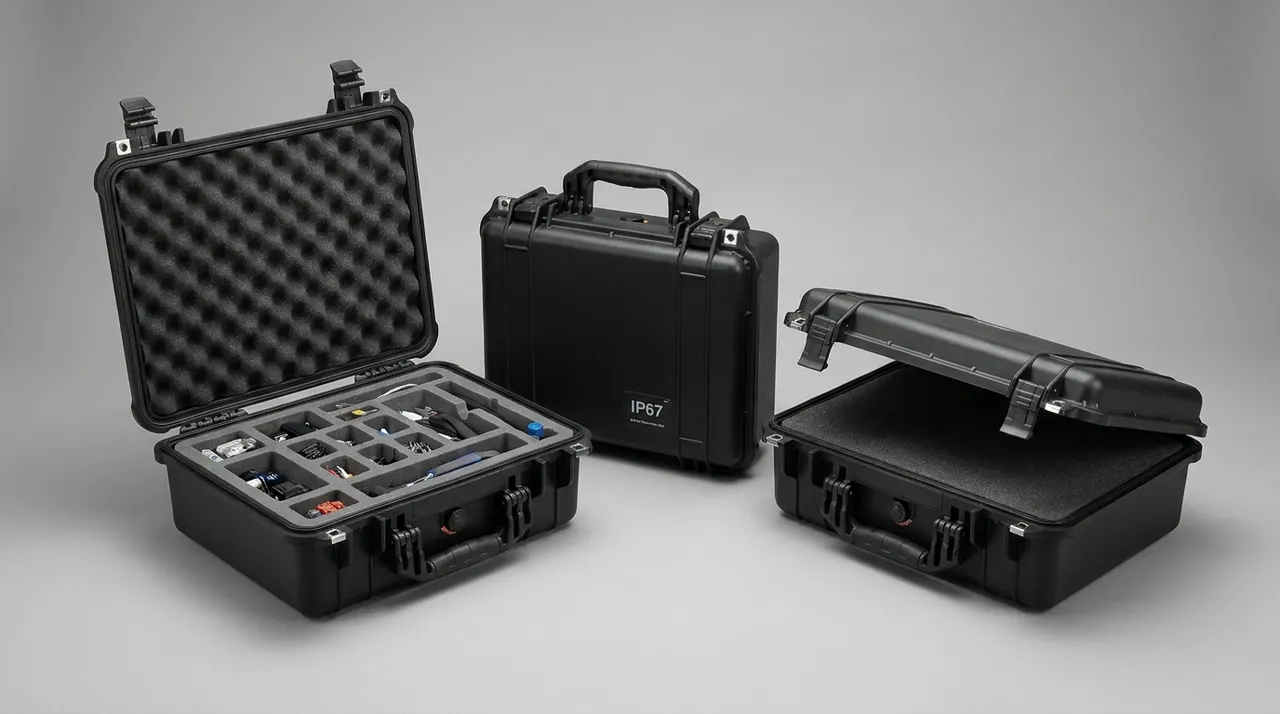
8. Vibration, Shock and Transport Test Verification
Transport testing for heavy long items differs from ordinary packages: test levels are higher, and attention focuses on structural deformation rather than cosmetic damage.
Common international test families:
- ISTA. The ISTA 1 series suits factory screening. The ISTA 3 series adds conditioning, random vibration, drops and shock. For heavy long items, ISTA 3E for unitized loads or a project-specific procedure is common. See ISTA transport testing procedure.
- ASTM D4169. Selects sequences and assurance levels by distribution cycle, suited to combined air, road and sea transport. See ASTM D4169 distribution cycle testing.
- GB/T 4857. The Chinese family of basic transport package test methods covering stacking, vibration, impact and drop, and the most cited basis in domestic tenders. See GB/T 4857 transport packaging testing.
Environmental conditions can be cited from MIL-STD-810H method numbers and levels for vibration, shock, humidity, temperature and salt spray. It must be stated clearly: citing MIL-STD-810H methods only standardizes test conditions and levels. It does not mean the product holds any military certification, nor that it passed every test in the standard. See MIL-STD-810H case compliance.
Recommended verification package for heat exchanger and column parts cases:
| Test | Reference basis | Key observation | Pass criterion (rule of thumb) |
|---|---|---|---|
| --- | --- | --- | --- |
| Random vibration | ISTA 3 / GB/T 4857.23 | Saddle displacement, strap loosening, bundle contact with blocking | No displacement, no hard contact marks |
| Shock / drop | ISTA 3A or 3E / GB/T 4857.5 | Cradle deformation, saddle crushing | No permanent structural deformation, saddle compression within allowance |
| Stacking compression | GB/T 4857.3 and .4 | Case collapse, cradle bending | Dimensional change within allowance |
| Temperature-humidity cycling | GB/T 4857.2 | Condensation, rust, label lift | No condensation, no rust spots |
| Lifting verification | Company procedure | Lug deformation, strap slip | No permanent deformation, no slip |
| Post-test inspection | Company procedure | Bundle deflection, tube welds, packing sheets | Deflection within allowance, no deformation damage |
Practical note: for bundle-class parts, measure and record the deflection at several reference points before packing using a string line or laser distance meter, then re-measure on arrival. This is the most direct and lowest-cost evidence that transport did or did not cause bending.
9. Moisture, Rust and Cleanliness Control
Heat exchanger and column spares often sit in open or semi-open yards for months, so moisture and rust control decides whether they are ready to install on opening or need rework first.
Moisture and rust measures
- Cap tube ends and cavities. Fit dedicated caps or blind plates to all tube ends, shell connections and inspection openings. This matters most for stainless bundles, where trapped rainwater causes pitting.
- Desiccant sizing. Calculate from internal free volume and transport or storage duration. A practical rule is 1 to 2 kg of high-performance desiccant per cubic meter of free volume, doubled for ocean freight and wet regions. For large-volume items such as bundles, place small desiccant packs inside the tubes and record the count.
- Humidity indicator cards. Place where they can be read immediately on opening and treat them as acceptance evidence. Target below 60 percent relative humidity at opening, and below 50 percent for precision sealing faces.
- Vapor corrosion inhibitor. Use VCI film, VCI paper or emitters for carbon steel bundles, tubesheets and steel cradles. Confirm compatibility with copper, zinc, aluminum and coatings.
- Surface preparation. Apply suitable rust preventive grease to tubesheet sealing faces, bolt holes and machined surfaces before dispatch, and wrap in lint-free material.
- Pressure equalization valves. Sealed cases develop a pressure differential across climate zones or in air freight. Fit a pressure equalization valve to avoid hard opening or gasket damage. See case pressure equalization valve configuration.
Cleanliness control
For heat exchangers, internal and external cleanliness directly affects fouling and pressure drop after startup. ISO 4406 expresses solid particle contamination level using three code numbers for particles above 4, 6 and 14 micrometers. Although aimed at operating fluids, its particle control logic applies to packaging management.
- Clean and dry bundle internals before dispatch and keep the case at low humidity.
- Use low-shedding insert material and avoid aged, crumbling foam and sulfur-bearing or chlorine-bearing lumber.
- Secondary-pack column internals such as packing, distributors and mist eliminators in PE bags to prevent fiber and dust contamination.
- Unpack in a clean area. Install packing elements and distributors soon after opening to avoid prolonged exposure.
- For stainless parts, avoid chlorine-bearing cleaners to prevent stress corrosion.
For routine case cleaning and maintenance, see how to clean a protective case.
10. Corrosion and Salt Spray Response
High salt spray environments at coastal refineries, river terminals and offshore platforms test both steel cradles and bundles. Treat cradle corrosion and component corrosion as separate problems.
- Cradles and hardware. Use hot-dip galvanizing or blast plus heavy-duty coating systems for steel cradles. Prefer stainless or treated carbon steel for hinges, latches and lifting lugs. Evaluate with neutral salt spray per ISO 9227, the standard for corrosion tests in artificial atmospheres, salt spray tests. For coastal and offshore use, a practical requirement is 240 to 720 hours with no red rust, per contract.
- Component-level material awareness. The petrochemical industry applies requirements for resistance to environmental and sulfide stress cracking, commonly cited through NACE MR0175 / ISO 15156. Packaging cases and cradles themselves are not subject to NACE material certification, but packaging materials must be free of sulfur and chlorine and must not use recycled content or adhesives that release corrosive species. Wooden materials require moisture content control and ISPM 15 compliance for export.
- Dissimilar metal isolation. Insert insulating separators such as rubber pads or EVA between stainless bundles and carbon steel cradles and straps to avoid galvanic corrosion.
- Coating protection. Exterior coatings abrade under straps in transit, so pad all contact points and avoid solvent-based cleaners that react with the coating.
Procurement tip: state in the technical requirement that packaging materials must be free of sulfur, free of chlorine and free of recycled content, and specify the cradle coating system and salt spray duration. This measurably reduces corrosion-related complaints.
11. Hazardous Area Awareness and Work Boundaries
Process areas in refining and chemical plants contain explosive gas atmospheres. IEC 60079, the international family for equipment in explosive atmospheres, with its Chinese counterpart GB 3836, is the governing framework. The core point:
Protective cases and transport cradles are outer packaging and logistics equipment, not explosion-proof electrical equipment. Packing a bundle in an IP67 case or a covered cradle grants no explosion protection certification, and the fact that the part serves a hazardous area does not imply the packaging needs such certification. The case's role is to have contents unpacked and handed over at the periphery of the process area, in a warehouse or in a maintenance shop.
Practical notes:
- Avoid large-area friction of static-accumulating plastic film, adding grounding or static-dissipative material where needed.
- Mark cases and labels with wording such as not an explosion-proof container, do not open inside a hazardous area, per plant HSE convention.
- During lifting and handling inside a classified area, follow site hot work and static control rules, and never drag metal parts across the ground.
- For removed bundles containing residual oil or liquid, drain, clean and purge to hazardous goods requirements before packing, applying ADR and IMDG hazmat transport packaging rules where relevant.
- A turnaround practice of unpacking and lifting immediately should have a pre-approved lifting plan and risk assessment, with case markings consistent with that plan.
Defining the boundary and marking it professionally significantly reduces coordination overhead between equipment, HSE and construction teams.
12. Incoming Inspection, AQL Sampling and Traceability Labels
Acceptance efficiency for turnaround spares directly affects the maintenance schedule, so the acceptance plan must be fast and accurate. Three items belong in the contract.
- Arrival and packaging check. Case or cover intact, no water ingress, gaskets complete, humidity card in range, seal numbers continuous, lifting lugs and straps sound.
- Sampling inspection on opening. Determine the plan per GB/T 2828.1, the standard for sampling procedures for inspection by attributes, with an agreed AQL. See custom case acceptance and AQL.
- Critical dimension and condition re-verification. Re-measure bundle deflection, inspect tube welds visually and by dye penetrant where required, check tubesheet sealing faces, and inspect packing and trays visually, recording against factory records.
Suggested acceptance checklist:
| Check item | Method | Acceptance basis | Action on failure |
|---|---|---|---|
| --- | --- | --- | --- |
| Case or cradle appearance | Visual plus seal number | No damage, deformation or water ingress | Isolate and inspect contents |
| Lifting points and straps | Visual plus inspection record | No deformation, slip or chafing | Replace and assess the component |
| Internal humidity | Humidity indicator card | RH at or below 60 percent (50 percent for precision faces) | Replace desiccant and recheck |
| Bundle deflection | String line or laser distance meter | Within allowable deflection | Return for straightening or claim |
| Tube welds | Visual, dye penetrant if required | No cracks or leakage | Weld repair |
| Tubesheet sealing face | Visual plus straight edge | No scoring, rust or impact damage | Remachine the sealing face |
| Fins on finned tubes | Visual | No significant collapse or crushing | Assess surface area loss |
| Structured packing | Visual plus sample elements | Corrugations intact, no crushing | Replace affected elements |
| Trays | Visual plus straight edge | No significant wave distortion, flanges intact | Straighten or replace |
| Distributors | Visual plus ball or air pass test if needed | No deformation, blockage or impact damage | Repair or replace |
| Accessories and documents | List cross-check | Quantities match, documents complete | Replenish |
Labels and markings are the key to turnaround efficiency. Give every item, not merely every case, a weather-resistant plate showing part name and tag number, parent equipment number, specification and model, quantity, manufacturing date, packing date, case number and a QR code linking to the electronic record. For long bundles and multi-segment column internals, also mark installation orientation and sequence so field teams do not have to cross-reference drawings repeatedly.
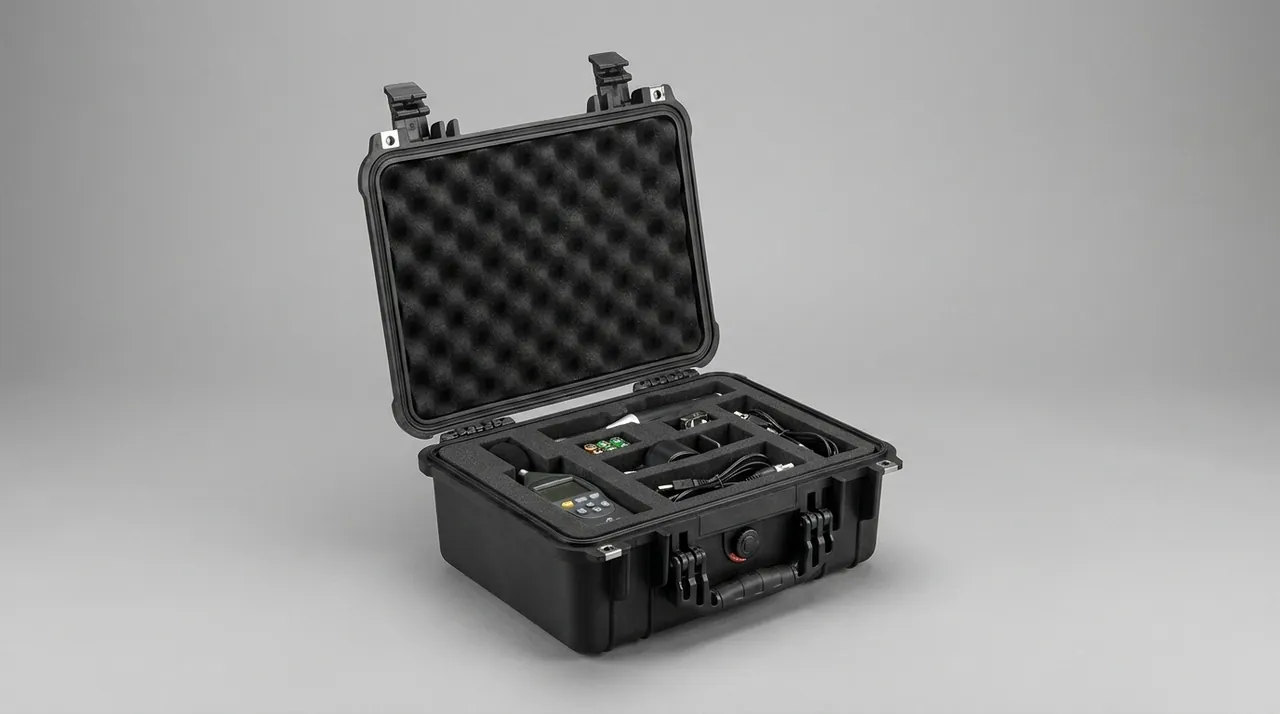
13. Custom Workflow, OEM/ODM Delivery and Selection Tables
For users with multiple units and long-term supply needs, packaging belongs inside supplier system management. JUNZHJIA, manufactured by Kexin New Materials (Guangdong) Co., Ltd., serves global wholesale, distribution and OEM/ODM customers with one-stop support from structural design and insert customization to documentation. A typical workflow:
- Requirements gathering. Component drawings or physical parameters including diameter, length, weight, center of gravity and sensitive surfaces, plus kit combinations, transport modes, site lifting conditions and annual volume.
- Concept design. Cradle and case specification, material, protection rating, support point count and position, lifting point design, insert layer drawings and 3D assembly views.
- Prototype and trial lift. Build the first article and run a real loading and lifting exercise to verify handling, restraint and lifting safety.
- Test verification. Vibration, shock, stacking and temperature-humidity cycling as agreed, plus rated load verification for lifting where required, with test records issued.
- Production and quality control. Batch sampling with first-article and process records retained.
- Documentation. Material certificates, protection rating statements, structural calculation notes, test records, packing drawings and label templates.
- Continuous improvement. Saddles and cradles adjusted from field feedback under version-controlled drawings.
When evaluating suppliers, see the criteria in how to choose a protective case OEM factory. Four points matter most: heavy and oversize capability, structural calculation capability, verifiable test records, and references in the same industry. For packaging asset life and inspection intervals, see protective case service life.
Selection decision table
| Scenario | Component traits | Recommended solution | Key support / insert | Key verification |
|---|---|---|---|---|
| --- | --- | --- | --- | --- |
| Bundle, 3 to 6 m, 1 to 5 t | Long, heavy, bend sensitive | Steel multi-point saddle cradle with PP cover | 3 to 5 curved saddles, contact angle 90 to 120 degrees | Deflection recheck plus lifting verification |
| Bundle, 6 to 9 m, above 5 t | Oversize and overweight | Dedicated transport cradle with independent lifting points | Supports at baffle locations, 2 to 2.5 m spacing | Structural calculation plus stacking verification |
| Finned tube bundle | Fins crush easily | Cradle with fin combs | No load bearing in the finned zone | Visual plus surface area assessment |
| Tubesheet and sealing face items | Precision surfaces | Mid-size molded case, IP67 | Covers, soft padding, separate compartments | Sealing face recheck |
| Structured packing | Thin sheets, crush sensitive | Dedicated trays with steel or wood frames, IP65 | One element per tray, rigid interlayer dividers | Sample element check |
| Tray segments | Thin plate, wave distortion risk | Vertical leaning rack or layered flat rack | Supports on stiffeners and flanges | Straight edge check |
| Distributors and mist eliminators | Complex, prone to blockage and crushing | Dedicated frame case, IP65 | Dust covers on openings, separate compartments | Visual plus ball pass |
| Random packing | High volume, breakage risk | Lined bags plus cartons or totes | Control drop height and stack height | Sampled breakage rate |
| Turnaround mixed load | Multiple categories | Master cradle plus modular inserts | Heavy low, thin high, numbered compartments | Whole-case vibration plus count |
Common misconceptions
- Myth one: steel bands strapped directly onto the bundle are stronger. Bands create point loads and feed transport shock straight into the bundle. Route load through saddles and the cradle instead.
- Myth two: the tubesheet works as a lifting point. The tubesheet edge is where tube welds live. Sling pressure there easily cracks welds.
- Myth three: the higher packing elements stack, the more space saved. Lower sheets crush, and mass transfer efficiency drops irreversibly.
- Myth four: trays can be stacked flat. Unsupported stacking causes wave distortion. Lean them upright or stack in layers with support.
- Myth five: IP67 solves everything. IP covers dust and water only, not shock, vibration, static or temperature-humidity cycling. For heavy items, structural load capacity matters more.
- Myth six: MIL-STD-810H is a certification. It is a source of test methods, not a certificate.
- Myth seven: wood is cheapest, so choose wood. Exports need ISPM 15, and wood is unsuitable for high-cleanliness and sour service. Over the long run, a steel cradle with a cover often costs less.
Frequently Asked Questions
Q: What problems most often affect heat exchanger tube bundles in transit, and how does packaging prevent them?
A: The three most common are overall bending, tube weld cracking and tube end rust from water ingress. Bending comes from long unsupported spans combined with vibration and self-weight, and it often only becomes visible when the bundle will not slide back into the shell. The solution is multi-point saddle support, at least three points with 2 to 2.5 m spacing for long bundles, placed preferentially at baffle locations, with a saddle contact angle of 90 to 120 degrees to avoid line contact that crushes tubes. Tube weld cracking usually comes from slings or steel bands bearing on the tubesheet edge. The correct approach is to route lifting load through the cradle and lifting lugs, never using the bundle body, tubesheet or tie rods as lifting points. If a sling must go around the bundle directly, use a wide sling with padding at every contact point. Tube end rust is controlled with dedicated caps, desiccant, a humidity indicator card and VCI inside the case. Specify IP65 or above, and IP67 for long open storage.
Q: How should bundle support points be arranged?
A: The goal is to control deflection and land loads on rigid nodes. First, use at least three points, with 2 to 2.5 m spacing for longer bundles, deriving the exact count from bundle diameter, wall thickness and allowable deflection rather than habit. Second, prefer baffle locations, because baffles are the bundle's internal rigid nodes and supporting there is most favorable to the tubes and least likely to cause local crushing. Third, machine the saddle inner arc to match the bundle outer diameter with a contact angle of 90 to 120 degrees, avoiding line contact. Fourth, use medium-density EVA in the 60 to 90 kg/m3 range or oil-resistant rubber for padding, balancing friction restraint and cushioning: too hard crushes tubes, too soft loses restraint under vibration. Fifth, weight concentrates at the tubesheet, so place a saddle near it to avoid an end cantilever. Sixth, fit blocking or straps to limit axial sliding. Allowable deflection is often taken as one to two thousandths of the span, and should be confirmed with the process or mechanical engineer.
Q: Why can structured packing not simply be stacked for transport?
A: Structured packing is made from metal or plastic sheets, often only 0.1 to 0.3 mm thick, corrugated and stacked into elements, so stiffness is extremely low. When elements are stacked directly, the lower sheets carry the weight of everything above, and the corrugated structure takes plastic deformation under long-term static compression, meaning the corrugations collapse silently. Once the corrugation geometry is lost, the specific surface area and flow channel structure change, which reduces mass transfer efficiency and raises pressure drop, and the deformation cannot be repaired in the field. Correct practice: place each element on its own flat tray or frame, add rigid dividers between layers so load goes through the divider rather than the sheets, limit layer count where needed, keep elements horizontal or in the manufacturer's specified orientation, and never store them on edge or tilted long term, which causes lateral buckling. Add lint-free cloth or PE film at contact points to prevent abrasion, and use a secondary PE bag where cleanliness requirements are high.
Q: How do I prevent wave distortion in trays during transport?
A: Trays are thin plates, usually 2 to 4 mm thick, and often ship as segments, so the biggest risk is permanent wave distortion from self-weight when stacked without support. The consequence is sealing edges that no longer mate, causing liquid weeping after startup and directly degrading separation efficiency, a fault that is expensive to correct once the column is closed. Four protection points apply. First, use a dedicated rack with vertical leaning or layered flat stacking, and place supports on tray stiffeners or edge flanges, never in the middle of the plate. Second, when stacking in layers, add rigid dividers and limit the number of layers based on plate stiffness. Third, fix each segment individually to prevent sliding and chafing in transit. Fourth, fit protective strips on the sealing edges, the flanges that mate with the support ring, to prevent impact damage. At acceptance, check flatness with a straight edge and confirm the flanges are undamaged. If minor distortion is found before installation, correct it before fitting rather than forcing it flat with bolts.
Q: What should be considered in the lifting design for a heavy bundle case?
A: Four points. First, lifting points must be structural: lugs, lifting holes or forklift pockets on the case or cradle. Never use the bundle body, tubesheet or tie rods. Second, position lugs symmetrically about the center of gravity and mark lifting points and center of gravity clearly on the case so the field does not guess or improvise. Third, verify lug and cradle capacity by calculation or test and state the rated load in the delivery documentation so the field can select the right rigging and sling angles. Fourth, pad all sling contact points to protect coatings and prevent chafing. For long bundles, a dedicated transport cradle with a case cover works best: the cradle carries all weight and serves as the lifting interface while the cover only provides rain and dust protection, keeping structure safe and field inspection easy. Where stacking is needed, use a stacking test to establish permitted layers and support positions rather than estimating from appearance.
Q: What protection rating should heat exchanger and column parts cases use, and what about open storage?
A: Ratings follow IEC 60529 and the equivalent Chinese standard GB/T 4208, and selection depends mainly on open storage duration, transport mode and component sensitivity. Bundles should start at IP65, with IP67 recommended for long open storage or ocean freight. Finned bundles should use IP65 with fin combs. Tubesheet and sealing face items should be IP65 to IP67 with a mandatory sealing face cover, because a rusty or scored face means remachining. Structured packing and trays should be IP65, with secondary PE bags where cleanliness requirements are high. Random packing is normally IP54 to IP65 using lined bags plus cartons. Remember that an IP rating covers solids and water only, not shock, vibration, static or temperature-humidity cycling, and structural load capacity matters more than the sealing rating for heavy items. Open storage also demands attention to UV aging of plastics, condensation from day-night temperature swings and standing water at the case base, so use pallets underneath and check desiccant and humidity cards periodically.
Q: Which standards should packaging verification cite, and how are they used at acceptance?
A: Organize along three lines. For transport performance, the ISTA series is common, with ISTA 3E unitized load or a project-specific procedure for heavy long items, along with ASTM D4169 distribution cycle sequences. Domestic tenders often cite GB/T 4857, which includes stacking, vibration, impact and drop items. For environmental conditions, cite MIL-STD-810H method numbers and levels for vibration, shock, humidity, temperature and salt spray, while stating clearly that these are only method sources and do not represent military certification or a full pass. For materials and structure, cite UL94 for case flammability, ISO 9227 neutral salt spray for cradle and hardware corrosion resistance, IEC 60529 with GB/T 4208 for ingress protection, and ISO 4406 particle level expression for bundle cleanliness. Also write bundle deflection re-measurement and rated lifting load verification into the acceptance plan so the most important risks for this equipment class are explicitly checked. Finally, keep the exact cited method numbers, levels and distances in the packing documents, so a third party inspector, an insurer or a customer engineer can reproduce the same test conditions years later without having to ask the supplier to reconstruct them.
Q: What opening checks should be performed when heat exchanger and column spares arrive?
A: Five steps. Step one, appearance and packaging: check the case or cradle for damage and deformation, confirm lifting points and straps are sound, verify seal number continuity, and read the humidity indicator card against the acceptance limit. Step two, bundle specifics: re-measure deflection at several reference points using a string line or laser distance meter against factory records, inspect tube welds visually with dye penetrant where required, check tubesheet sealing faces for scoring, rust and impact damage, and check fins for collapse. Step three, column internals: sample structured packing elements for intact corrugations, check tray flatness with a straight edge and confirm flange condition, inspect distributors for deformation, blockage and impact damage, and check mist eliminators for deformation. Step four, accessories and compatibility: verify fastener and gasket quantities and specifications, and confirm all tube end caps are intact. Step five, records and disposition: judge batch acceptance with a GB/T 2828.1 sampling plan against an agreed AQL and isolate nonconforming items.
Q: How do I choose between a wooden crate and a steel cradle case, and how do the costs compare?
A: It depends on size and weight, export requirements and storage environment. Wooden crates have a lower initial cost and suit small to medium items, non-export shipments and short-term use. However, exports require ISPM 15 fumigation, lumber moisture content releases humidity onto components, and leachates carry contamination risk, so wood is unsuitable for high-cleanliness parts and sour service. A steel cradle with a cover costs more initially but offers clear advantages: the structure carries load and provides the lifting interface, so the bundle load path is well defined; the cover provides rain and dust protection with controllable sealing; and the assembly can be reused for years, which can lower the amortized cost per shipment. Three tests guide the decision. First, consider unit value and rework cost, since high-value bundles justify a structurally reliable cradle. Second, consider usage frequency and service years, because long-term volume supply should be evaluated on total life-cycle cost. Third, consider export and compliance requirements, where wood and its moisture release are best avoided.
Conclusion & Related Reading
The essence of a heat exchanger and column parts case is translating four engineering constraints into concrete structure and insert language: long heavy items bend, thin-wall items crush, precision faces take impact damage, and metal parts rust. Multi-point saddles with controlled spans prevent bundle bending. Structural lifting points instead of component load paths prevent weld cracking. Layered rigid dividers and dedicated racks prevent packing collapse and tray distortion. IP65 or IP67 covers with desiccant and VCI prevent corrosion. Structural calculations and test records make heavy lifting verifiable, and markings with an acceptance regime make turnaround traceability efficient. Do all six and the high-frequency losses of bent bundles, cracked tube welds, crushed packing and distorted trays fall systematically.
Write the cradle and case structure, support point layout, protection rating, rated lifting load, test basis and acceptance method into your technical requirement, and require suppliers to provide material certificates, structural calculation notes and test records. JUNZHJIA, manufactured by Kexin New Materials (Guangdong) Co., Ltd., supports heavy-duty cradle structural design, custom inserts and OEM/ODM volume delivery, and supplies inspection and packing documentation per project so refining and chemical users can fold packaging into the turnaround spare parts quality system rather than leaving it as evidence in a post-incident dispute.
Related Reading