

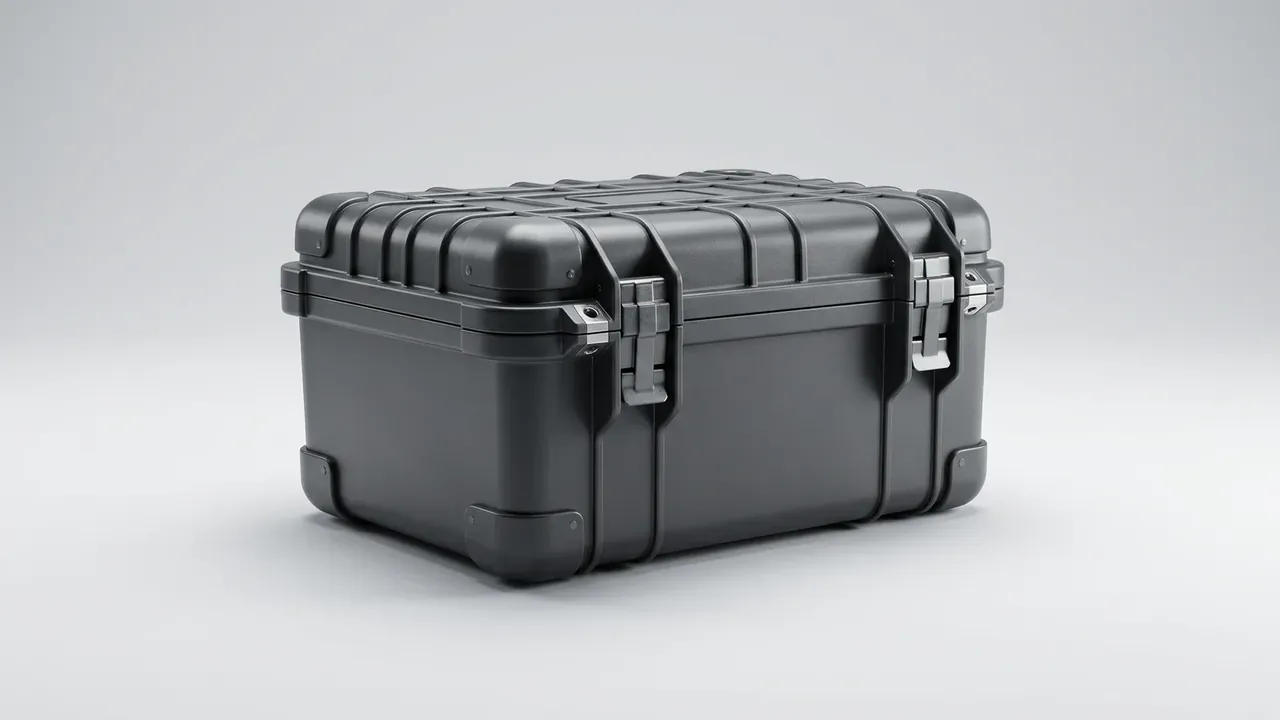
Quick answer: War reserve case quotations look alike; the differences sit behind the MOQ, the tooling and the test list. Ask with four numbers, 200 units, a 52,000 yuan tool, 38 days of tooling and 60 days of credit, and the offer shows its real shape.
Table of contents
- Three Lines to Draw Before You Ask for a Quote
- MOQ and Tooling Ownership Are Two Answers
- Five Costs Missing from the Quotation
- Lead Time Has Three Stages, Not One Number
- Payment Terms, Factory Visit and Sample Fee
- Incoming Inspection and Claim Clauses
- FAQ
1. Three Lines to Draw Before You Ask for a Quote
Draw three lines before a single email goes out: storage years, batch size, delivery window.
Without them, ten suppliers return ten prices and all look sane. Storage years decide the resin, the seal hardness and the desiccant load, and 8 years and 15 years are not one grade. Batch size is 200 units or 800; the window is 90 days or 45, and anyone who cannot split it into tooling plus production days is not making the case.
| Line | Number | Usual answer | What it tells you |
|---|---|---|---|
| Storage years | 8 or 15 | Either is fine | No material plan |
| First batch | 200 or 800 | Depends | No price breaks |
| Window | 90 or 45 days | We will try | Cannot split days |
The window is the line buyers give away first. Pressure turns 90 days into 45, first-article approval gets cut, and dimensional drift starts there.
2. MOQ and Tooling Ownership Are Two Answers
A war reserve case is not a stock item; change the cavity and a mould has to be cut.
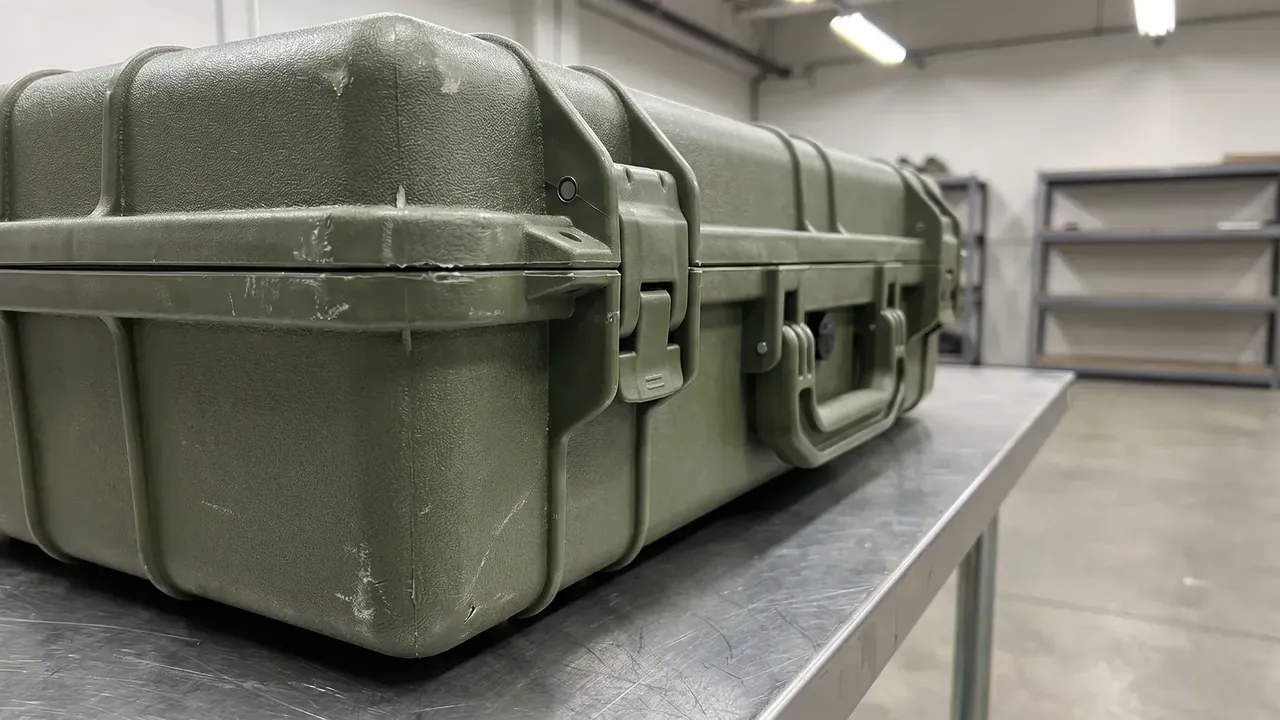
At 52,000 yuan for the tool, three ways to place it exist, and each fixes the first-order price, the owner of the mould and whether it travels.
| Arrangement | First-order price | Mould owner | Later risk |
|---|---|---|---|
| Buyer pays in full | High, tool included | Buyer | Movable, if written |
| Amortised per unit | Low, plus 65 yuan | Supplier | Break-even near 800 units |
| Supplier absorbs | Lowest | Supplier | Stays behind |
A plant quoting 200 units runs a small rotomoulding machine with one mould on two shifts. Above 500 units the work moves to a carousel, which holds delivery but queues repeat orders by 20 days.
Ownership must be written: the mould belongs to the buyer and can be collected within 30 days of a line stop.
3. Five Costs Missing from the Quotation
A settled unit price is not a settled total.
- Mould changes: 3,000 yuan per round when the first article misses a dimension
- Testing: tightness, drop and salt fog outsourced, about 4,200 yuan
- Packing: 45 yuan per timber crate, 12 yuan per carton
- Sample fee: 1,800 yuan, credited against production
- Freight: 0.6 yuan per unit per day after 7 free days
Together they run 8 to 12 percent of the unit price on a war reserve case, so price them line by line.
4. Lead Time Has Three Stages, Not One Number
Lead time is three stages added together: 38 days of tooling, 26 days of first-article approval and 12 days of ramp-up, which is 76 days.

The stage that gets cut is first-article approval. It measures cavity size, wall thickness, latch position and pressure decay, where 1.5 kPa held for 10 minutes must not fall past 0.2 kPa. Some plants merge both stages, run 50 units and inspect afterwards, when the mould has cycled hundreds of times and the buyer pays for rework. The schedule should list dates and deliverables: a mould acceptance sheet, three samples with a report, then a sealed sample with batch records. Three documents, and the date means something. Ask about the queue as well, since a finished mould may wait 15 days for a slot.
5. Payment Terms, Factory Visit and Sample Fee
Thirty percent down with the balance at 60 days is the ordinary structure. Push the deposit under 20 percent and resin grades quietly drop, costing impact strength without changing the look.
Visit the machines, not the showroom. Tonnage, mould stations and oven logs answer the capacity question.
Do not skip the 1,800 yuan sample. About 21 kg points to an 8 mm wall, and a light sample means thin material. Then stack the war reserve case to 2.2 m for 72 hours and check the rim.
6. Incoming Inspection and Claim Clauses
Sample 10 percent of a 200 unit lot, so 20 cases, and check: cavity size, latch force, pressure decay and marking.
Measure with tape and caliper, and reject the lot beyond 3 mm of drift. Latch force should feel identical across the twenty, since one stiff and one loose means mixed hardware. Repeat the pressure test, and a decay past 0.2 kPa points to the seal.
A claim clause on a war reserve case needs three things: which report decides, where rework ends and return begins, and the replacement lead time.
Conclusion
Negotiating a war reserve case means putting three lines and four numbers on the table: 200 units, a 52,000 yuan tool, 38 days of tooling and 60 days of credit, which together set the price structure. Ask for the five missing costs in writing, and the war reserve case you order will be priced on clauses you can check.
This article discusses only the container (case body) side of specifications and design intent, and does not cover any handling, loading or use of the contents.
Related Reading
- Design requirements and storage cycles
- Inspection intervals and opening management
- How to weight a supplier scorecard
- Rotomoulding and wall thickness
- Which processes to audit in a factory
Related Products
- 8 Series — Gun Cases; Military Equipment Cases; Camera Equipment Cases; Drone Cases; Watch Cases; Knife Cases; First Aid Cases; Electronics Equipment Cases
- WL8-2812 PP Gun Case — model WL8-2812
- All protective cases and toolboxes: 7 series, 158 models