


Bottom line first: the collectible value of a military ammo box cannot be summed up as simply high or low. It is set by four variables working together: scarcity, condition, narrative, and completeness. An ordinary mass-produced steel box with a large surviving population and middling condition is usually just a "user-grade" old object whose value lies mostly in its practical function as a storage container rather than a collector premium. A box from a clearly identified early production lot with intact markings, original factory finish, and complete fittings may reach "collector grade," where value rests on industrial history, design history, and scarcity together. The decisive question is not whether it looks old, but three things: has it been over-restored, can its markings be verified, and how large is the surviving population of its type. This article treats military ammo boxes strictly as decommissioned industrial containers, meaning metal and plastic storage and transport boxes that have completed their original service life and entered civilian use. It is about manufacturing history, materials history, marking systems, and design culture, with no discussion of the original contents.
From the field to civilian life, these containers went through a complete identity shift: military packaging, then government surplus, then civilian storage tool, then design symbol, then collectible. This path is not unusual. Oil drums, wooden crates, military backpacks, and flight jackets have all followed something similar. Ammo boxes are distinctive because they are structurally minimal, functionally clear, robust in material, and highly standardized, making them both a good sample of industrial design and a representative of the pragmatic culture of using things to the end. Only with that in mind does it make sense that they draw attention simultaneously in outdoor gear, home storage, creative design, and industrial heritage collecting.
Table of Contents
- Bottom Line: The Four Variables of Collectible Value
- From Military Container to Civilian Artifact: A Reuse Pathway
- The Four Pillars: Scarcity, Condition, Narrative, and Completeness
- Condition Grading: A Six-Level Scale from User Grade to Museum Grade
- Key Price Drivers: Age, Markings, Material, and Craftsmanship
- Reading Markings and Inscriptions: The Value of Lot, Year, and Production Data
- Why Material and Process Matter to Collectors: Steel, Welding, and Coating as Period Evidence
- Fakes and Aging: Six Common Problems and How to Spot Them
- Preserving Collectibles: Moisture, Rust, and Avoiding Over-Restoration
- The Civilian Shift: Military-Style Storage Boxes in Modern Design
- A Value Assessment Table and Market Reference Dimensions
- Collector Grade or User Grade: Choosing Between Two Needs
- Frequently Asked Questions
- Conclusion and Further Reading
Bottom Line: The Four Variables of Collectible Value
Before discussing any specific price, build a judgment framework. The collectible value of a military container is set by four independent variables, and a shortfall in any one of them sharply lowers the whole.
Variable one: scarcity. Scarcity is not the same as age. A steel box mass-produced in the 1940s may not be scarce because so many survive. A model produced in small numbers, from a special lot, or discontinued early may be scarce even if newer. Judge scarcity by the surviving proportion of its type, not by the year alone.
Variable two: condition. Condition is a multiplier. For the same model, a difference in condition can produce a several-fold difference in value. The core of condition assessment is originality: whether the factory finish survives, whether there is extensive corrosion, whether the structure is deformed, whether fittings are complete. Note carefully: "restored" is usually worth less than "naturally aged," because restoration destroys original information.
Variable three: narrative. Part of a collectible's price comes from its story: a clear period, verifiable production background, and a documented chain of custody all add certainty. The value of industrial and design history tends to be more durable and less contentious than military association.
Variable four: completeness. Intact markings, complete fittings, and undamaged structure and lock hardware constitute completeness. The effect of missing parts on collectible value is often underestimated: a box missing its lock and latches may be worth half as much as a complete example, or less.
| Variable | High-value trait | Low-value trait | Perceived weight |
|---|---|---|---|
| --- | --- | --- | --- |
| Scarcity | Small batch, special lot, early discontinuation | Mass production, large surviving population | High |
| Condition | Original finish, no extensive corrosion, no deformation | Over-restored, rusted through, deformed | Very high |
| Narrative | Clear period, documented background, traceable custody | Unknown origin, unverifiable | Medium-high |
| Completeness | Intact markings, complete fittings, sound structure | Missing lock and latches, illegible markings | Medium-high |
In one sentence: collectible value equals scarcity times condition times narrative times completeness. This is a multiplication, not a sum. If any factor approaches zero, the whole collapses.
From Military Container to Civilian Artifact: A Reuse Pathway
The journey of a military ammo box into civilian hands follows a fairly clear five-stage path. Understanding it helps place a given box and identify where its value comes from.
Stage one: military packaging. As a standardized storage and transport container, its design goal was protection, stacking, transport, and rapid identification. Boxes of this stage follow clear function-first principles: simple structure, adequate strength, easy volume production.
Stage two: surplus disposal. As equipment was updated, older containers left service and entered surplus disposal channels. These boxes often arrive in concentrated batches with widely varying condition, some never issued and some heavily worn. This is the source of the collector market.
Stage three: civilian storage tool. Once in civilian hands, what matters first is utility: sealing, sturdiness, stackability, and lockability. Typical uses at this stage are tool storage, outdoor storage, and garage organization.
Stage four: design symbol. With the rise of outdoor culture and industrial design trends, the military style became an aesthetic language, and these containers were rediscovered by designers for their minimal structure and rugged texture.
Stage five: collectible. A model enters the collecting field when "early-lot premiums," "original-finish premiums," and "complete-marking premiums" appear. The marker of this stage is that price is no longer set by utility but by scarcity and originality.
| Stage | Primary identity | Source of value | Typical traits | Condition spread |
|---|---|---|---|---|
| --- | --- | --- | --- | --- |
| One | Military packaging | Protection and transport function | Standardized, volume produced | In service |
| Two | Surplus materiel | Disposal channels and volume | Appears in batches, varying condition | Unissued to heavily worn |
| Three | Civilian storage | Sealing, sturdiness, stacking | Cleaned and used | Clear use marks |
| Four | Design symbol | Structural and textural appeal | Designed and reworked | Often modified |
| Five | Collectible | Scarcity and originality | Early lots, original finish | Original state sought |
An important point: the value logic of the same box differs completely by stage. A box resprayed, fitted with a wooden liner, and turned into a coffee table is a "good piece" at the design stage but may lose much of its value at the collecting stage for destroying originality. So before judging value, first judge what it is being treated as.
The Four Pillars: Scarcity, Condition, Narrative, and Completeness
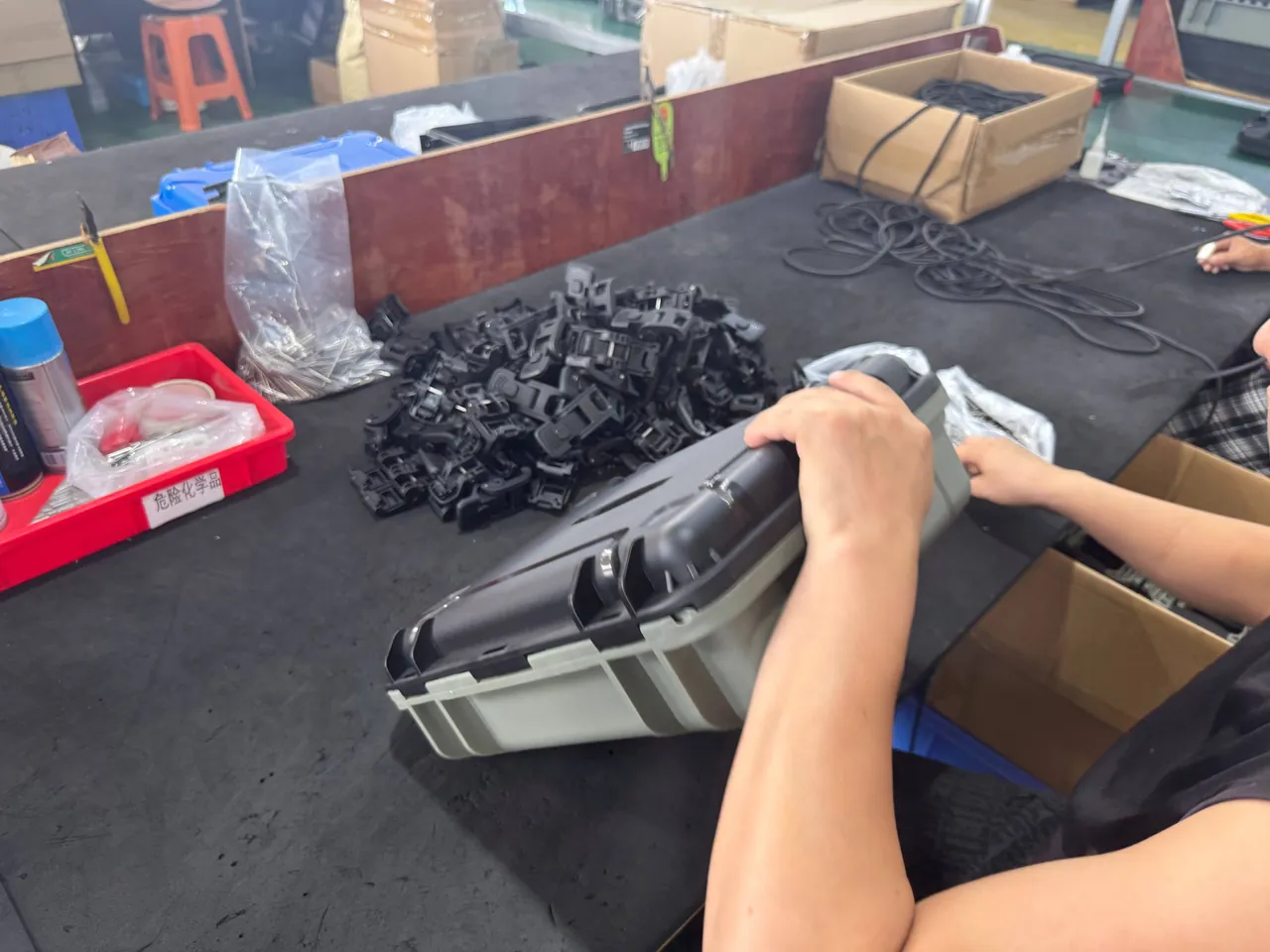
Expand the four variables into operational checks.
How to judge scarcity:
- Production scale: whether it was standard-issue at volume or a small-batch accessory.
- Discontinuation timing: the earlier production ended and the earlier it left circulation, the lower the surviving proportion.
- Lot specialness: special orders, special markings, and trial batches are usually scarcer.
- Geography: a model common in one region may be rare in another, and local scarcity affects transaction prices.
- Survival state: models that were heavily destroyed or melted for scrap may survive in far smaller numbers than production totals suggest.
How to judge condition:
- Finish originality: whether the factory finish survives or has been overcoated, resprayed, or broadly touched up.
- Corrosion degree: distinguish surface rust, pitting, and structural rust-through. Structural rust-through affects value far more than surface rust.
- Structural integrity: whether the body is deformed, whether welds have cracked, whether hinges and latches are sound.
- Reasonableness of wear: natural wear, dents, and scratches are acceptable; deliberate aging is a negative.
How to judge narrative:
- Datability: whether markings, inscriptions, and process features corroborate each other.
- Chain of custody: whether there is traceable provenance, treating oral stories with caution.
- Documentary support: whether public specification records, industrial history literature, or period photographs support the claim.
- Certainty first: a general rule in collecting is a certainty premium. A provable ordinary piece is often more sought after than an unprovable exceptional one.
How to judge completeness:
- Intact markings: whether nameplates, stenciled numbers, and lot information are clearly legible.
- Complete fittings: whether lock, hasp loops, handles, and seals are original to the piece.
- Associated items: whether original paperwork, labels, or packaging accompany it.
- Unmodified: whether it has been drilled, cut, welded for reinforcement, or converted outside standard form.
Condition Grading: A Six-Level Scale from User Grade to Museum Grade
Collecting generally uses grade descriptions to communicate condition. The table below gives an operable six-level framework for decommissioned metal and plastic containers. The grades are conventional industry descriptors, not a mandatory standard.
| Grade | Name | Finish | Corrosion | Structure and fittings | Modification | Positioning |
|---|---|---|---|---|---|---|
| --- | --- | --- | --- | --- | --- | --- |
| C1 | Parts grade | Largely missing | Structural rust-through | Deformed or incomplete | Often heavily reworked | Parts source |
| C2 | User grade | Partially surviving | Moderate to heavy surface rust | Structurally sound, fittings missing | Often functionally modified | Practical storage |
| C3 | Good grade | Mostly surviving | Light surface rust | Structurally sound, main fittings present | Minor use marks | Daily use, entry collecting |
| C4 | Excellent grade | Largely original | Minor surface rust | Complete, sound lock hardware | Unmodified | Mainstream collecting |
| C5 | Very fine grade | Original and even | Very little corrosion | Complete, original fittings | Unmodified | Advanced collecting |
| C6 | Museum grade | Fully original | No visible corrosion | Complete, all accessories present | Unmodified | Exhibition and archive |
Three rules for using the scale:
- Originality matters more than newness. A C5 original box is usually worth more than a perfectly restored C3 that looks brand new.
- Structural defects are hard damage. Rust-through, cracked welds, and key deformation drive the grade straight to C1 or C2, however attractive the rest may be.
- Grade with photos and the object together. Judging condition from photos alone is high risk, since lighting, angle, and post-processing hide defects. For large transactions, verify in person.
Key Price Drivers: Age, Markings, Material, and Craftsmanship
In real transactions, four groups of features drive price divergence most.
Age. Earlier lots generally attract more attention, but age must be verifiable. Verification uses marking content, coating technology, material features, and structural detail such as hinge form and latch style. Age alone is meaningless. Only age that can be cross-verified earns a premium.
Markings. Markings are the identity card of a collectible. Clear stenciled numbers, nameplates, and lot codes provide production data and a time anchor, and they are the physical carrier of the narrative. Legibility and completeness of markings are among the most weighted single items in condition assessment.
Material. The material choice of each era carries collecting significance in itself: steel represents the era of industrial stamping and welding, aluminum the attempt at weight reduction, and engineering plastics the era of one-piece molding and coating-free production. Material history is part of industrial design history, so samples with distinct material features draw more interest from design-oriented collectors. For the technical thread of material evolution, see material evolution of military storage boxes.
Craftsmanship. Welding method, seaming, coating system, and seal construction are all period fingerprints. Early phosphating and coating processes, and later powder coating and one-piece molding, leave clear differences in detail. For related process and coating systems, see long-term storage performance of military steel ammo cans.
| Feature | High-value expression | Low-value expression | Verification point |
|---|---|---|---|
| --- | --- | --- | --- |
| Age | Early lot, verifiable | Vague or doubtful period | Markings, process, structure cross-check |
| Markings | Clear, complete, legible | Faint, overcoated, missing | Consistency with physical process |
| Material | Representative material, stable | Material badly degraded | Density, magnetism, corrosion behavior |
| Craftsmanship | Clear period features | Overwritten by later rework | Welds, seaming, coating dating |
| Fittings | Complete and original | Missing or mismatched | Comparison with period products |
Reading Markings and Inscriptions: The Value of Lot, Year, and Production Data
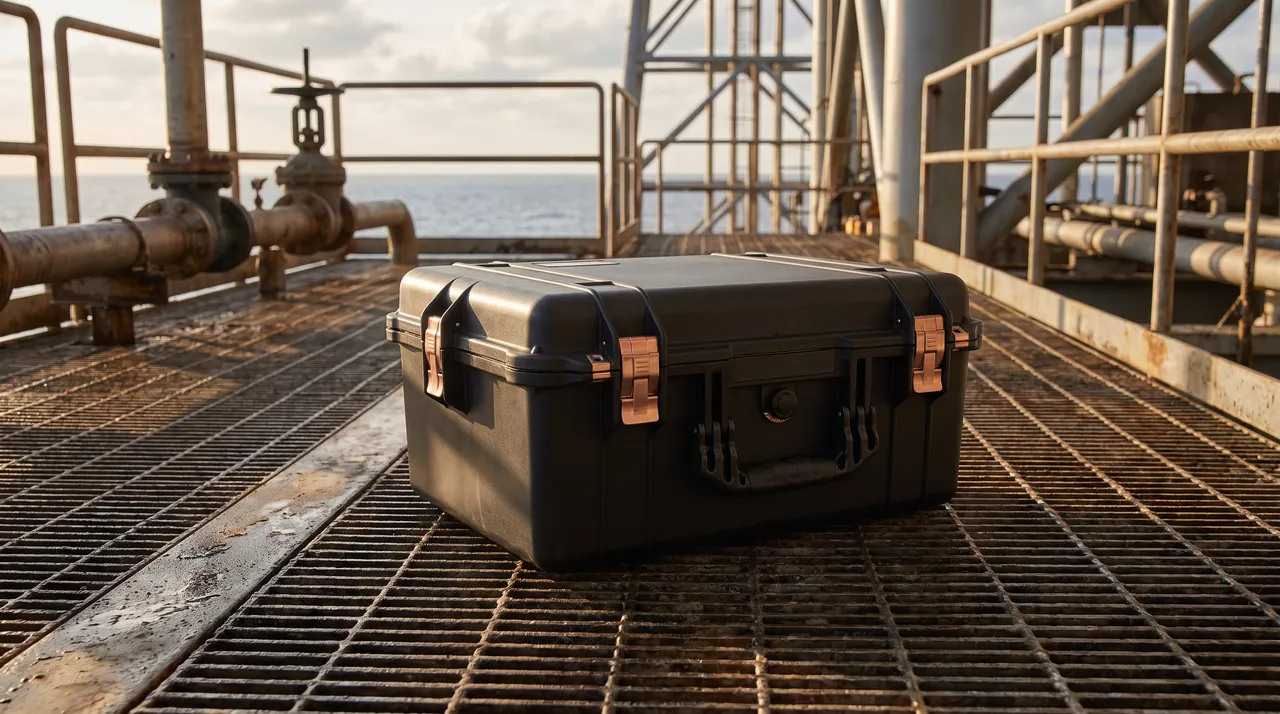
Markings are the core carrier of collectible value, and understanding the marking system is a basic skill.
Markings usually carry four kinds of information:
- Production data: manufacturer code, factory identifier.
- Lot data: lot number, serial number, production year or period code.
- Model data: container model or specification code.
- Purpose and warning information: markings that may relate to the original contents, identified here purely as container markings with no reference to the contents themselves.
Three practical ways to read markings:
- Method one: examine the carrier. Stencil, silk screen, stamping, and nameplate have different period signatures. Stamped markings tend to appear in earlier lots, while stencil and silk screen require judging the coating type to date the piece.
- Method two: examine typeface and layout. Letterform, character height, line spacing, and arrangement rules usually follow specification conventions and are strong dating clues.
- Method three: cross-check against the object. The most reliable method is verifying markings, process, and material against each other. If the claimed period conflicts with the welding method, coating system, or material features, be highly suspicious.
Extending to modern marking systems. In modern asset management, item marking often follows the unique identification (UID) logic set out in standards such as MIL-STD-130: a unique identifier plus a data carrier plus a registry. That logic appears today as serial marking and QR-coded registries, which shows that traceable marking has always been a goal of industrial packaging. For related management ideas, see lock selection and numbering management for military ammo boxes.
A caution: never conclude from a single marking. The market contains "later-applied" markings, where a more desirable stamp is added to an ordinary box to raise value. Markings must therefore be judged together with process, material, and structure.
Why Material and Process Matter to Collectors: Steel, Welding, and Coating as Period Evidence
For collectors oriented toward industrial design history and industrial heritage, material and process are themselves sources of value.
The steel era. Low carbon steel boxes represent the maturity of industrial stamping, bending, welding, and coating systems. Features include visible welds, neat seaming, heavy flanges, and a phosphating plus coating corrosion system. Coating systems are especially telling: early alkyd or phenolic systems, mid-period epoxy primer with polyurethane topcoat, and military camouflage coating specifications all show up in color, gloss, and chalking as period markers.
The aluminum era. Aluminum boxes represent the attempt at weight reduction, with thinner walls, a distinct anodized surface, and different welding signatures. Aluminum corrosion products differ completely from steel, typically white or grey powdery deposits, which is a useful material clue.
The engineering plastics era. Injection-molded one-piece plastic boxes represent the coating-free, high-sealing era, with no visible welds, ribs molded into the body, and uniform color running through the material. For collectors, these containers embody contemporary industrial design rather than historical artifact value.
| Era | Representative material | Process features | Surface features | Collector focus |
|---|---|---|---|---|
| --- | --- | --- | --- | --- |
| Steel era | Low carbon steel | Stamping, welding, seaming | Welds, coating, corrosion | Welding craft, finish originality |
| Aluminum era | Aluminum alloy | Welding, anodizing | Oxide film, white corrosion products | Anodized state, weld quality |
| Plastics era | HDPE, PP, and similar | One-piece injection molding | Uniform color, ribs, no welds | Contemporary design value, mold craft |
On the cultural meaning of camouflage. The functional design of military coatings, such as camouflage, has evolved in civilian hands into a visual language widely used in outdoor gear and fashion. This cultural shift is the most visible expression of the military style going civilian. For related discussion, see why most military ammo boxes are green.
Fakes and Aging: Six Common Problems and How to Spot Them
Every collecting market has fakes. Six problems are common with military containers.
Problem one: later-applied markings. A more desirable stamp is added to an ordinary box.
- How to spot: examine paint layer stacking, film thickness, and overspray at edges. New markings often sit over old paint or rust and have sharper edges and fresher color.
Problem two: full respray with artificial aging. A new or restored box is sprayed to look aged.
- How to spot: artificial aging tends to concentrate on edges and recesses while real wear is more random. Check whether difficult-to-age locations such as seams, interior, and the base match the exterior.
Problem three: assembled parts. Parts from several sources are combined into one "complete" box.
- How to spot: compare coating color, corrosion level, and wear across body, lid, hinge, and latches. Inconsistency usually means different origins.
Problem four: conversion passed off as an earlier model. A later model is altered to imitate an earlier one.
- How to spot: compare structural detail against specification records, including hinge form, latch layout, flange shape, and handle construction.
Problem five: material misrepresentation. A lower-cost metal is passed off as aluminum or stainless steel.
- How to spot: combine density, magnetism, and corrosion products. Aluminum is not ferromagnetic and has clearly lower density. Stainless steel magnetism varies by grade, so it is only a hint and never a determination on its own.
Problem six: story packaging. An unverifiable origin story inflates the price.
- How to spot: require verifiable evidence such as documents, photographs, or period references. The basic principle in collecting is that a documented ordinary piece beats an undocumented legend.
| Problem | Common method | Detection point | Risk level |
|---|---|---|---|
| --- | --- | --- | --- |
| Later-applied markings | Adding earlier markings | Paint stacking, edge overspray | High |
| Full artificial aging | Aging a new or restored box | Whether hard-to-age areas match | High |
| Assembled parts | Combining parts from several sources | Wear and color mismatch across parts | Medium-high |
| Model conversion | Altering a later model to an earlier one | Structural detail versus records | Medium-high |
| Material misrepresentation | Substituting lower-cost metal | Density, magnetism, corrosion products | Medium |
| Story packaging | Unverifiable provenance | Require verifiable evidence | Medium |
Preserving Collectibles: Moisture, Rust, and Avoiding Over-Restoration
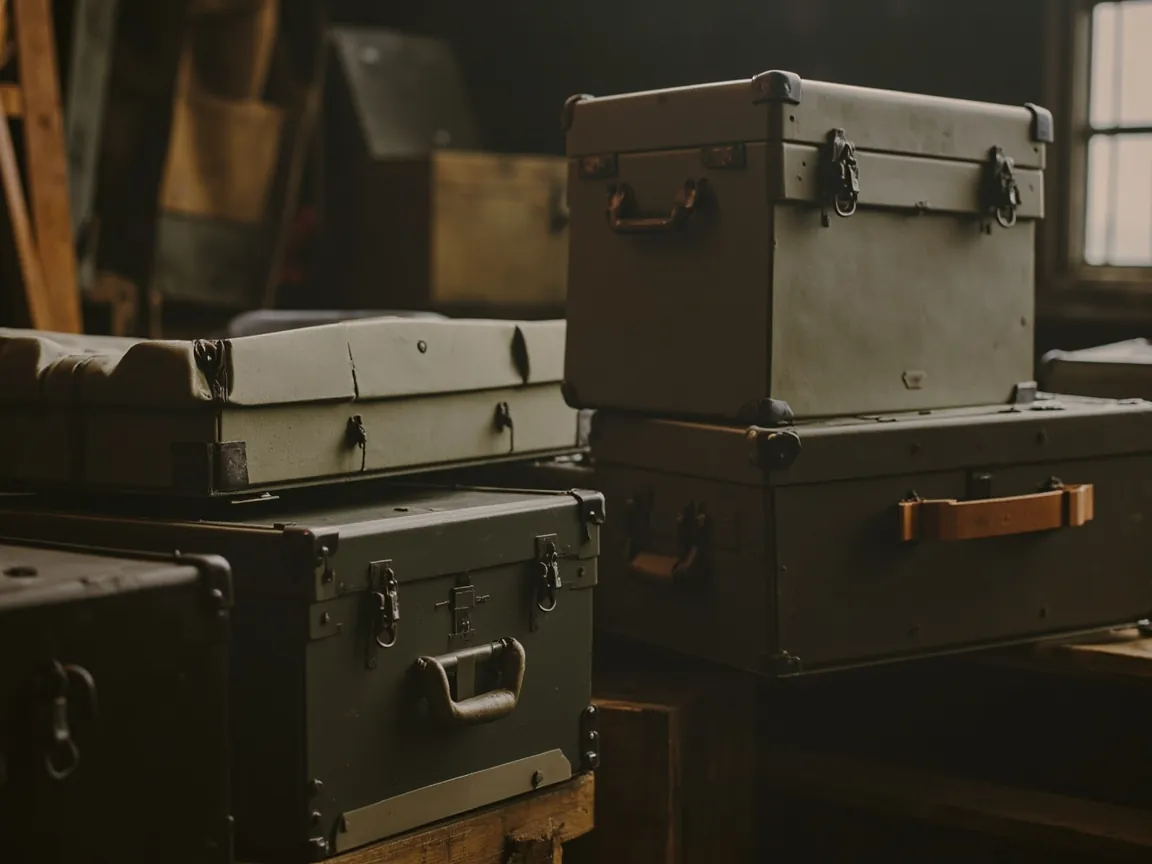
Collectible value depends heavily on preservation state. For metal containers, the central tension is between stopping further deterioration and preserving the original state.
Four preservation principles:
- Minimal intervention. Do not clean, repaint, or restore unnecessarily. The value lost to over-restoration often exceeds the loss from deterioration itself.
- Reversibility. If treatment is necessary, choose reversible methods. Irreversible treatments such as full respraying or weld reinforcement should be avoided where possible.
- Documentation. Record before-and-after photographs, treatment details, and materials, forming a "collectible history."
- Stable environment first. Controlling temperature and relative humidity is more effective than any "preservation oil."
Specific maintenance points:
| Item | Recommended practice | Practices to avoid | Reason |
|---|---|---|---|
| --- | --- | --- | --- |
| Temperature and humidity | Stable temperature, moderate-to-low relative humidity | Frequent large swings | Swings accelerate corrosion and coating aging |
| Surface dusting | Soft brush, soft cloth, gentle | Scraping rust with sharp tools | Damages original surface and coating |
| Rust prevention | Dry environment plus rust paper or VCI material | Applying thick grease | Grease penetrates and is hard to remove |
| Coating | Preserve the original finish | Broad touch-up, full respray | Destroys original information |
| Storage | Avoid stacking pressure and long sun exposure | Long outdoor exposure | UV and stress accelerate degradation |
| Handling | Wear gloves, support from underneath | Gripping latches or handles | Causes local stress and deformation |
A safety note. Older containers may use lead-based paint. Avoid sanding, scraping, and heat when handling such pieces, prevent dust generation, wash hands afterward, and keep the item out of reach of children. Where treatment is needed, consult a professional conservator.
A reference approach to environmental control. Museums and archives have mature experience and standards for temperature and humidity control, such as standards for the storage environment of archives and library materials, with general principles of stable temperature, moderate-to-low relative humidity with small fluctuations, light exclusion, and dust control. Industrial heritage collections are commonly managed by the general principles applied to metal artifacts.
The Civilian Shift: Military-Style Storage Boxes in Modern Design
The evolution of the military style from functional design into an aesthetic language is a classic process of civilian adaptation, with three levels.
Level one: functional continuation. The most direct destination for a decommissioned container is continued use as a storage box for tools, accessories, outdoor gear, and household items. Value here is practical, with no collector premium. For related uses, see can an ammo box be used as an outdoor storage box.
Level two: design re-creation. Designers and makers convert them into furniture, lamps, storage installations, and speaker housings. Value here is creativity and craft, but conversion usually means destroying originality, so it must be clear: a converted piece and a collectible are two different value paths, and you cannot have both.
Level three: symbolization. The military style has become a visual symbol widely borrowed by modern product design: rugged angles, exposed ribs, matte coatings, metal latches, and a pronounced sense of structure. Many modern storage and protective cases deliberately continue this visual language, but they are newly manufactured products whose value logic is function and quality, not scarcity.
Two concepts must be distinguished here:
- Decommissioned originals: value from scarcity, originality, and historical narrative.
- Modern recreations or modern-style products: value from function, quality, warranty, and supply capability.
Confusing the two is the most common error in both collecting and procurement. The former cannot be mass produced, cannot guarantee supply, and carries no performance commitment. The latter can be produced to standard, can supply test documentation, and can be procured in volume. For users who need practical function, modern products are the more sensible choice. For collectors, originality is the core. For modern container selection, see how to choose a tactical storage box.
A Value Assessment Table and Market Reference Dimensions
Two tables consolidate the discussion and help build systematic judgment.
Table one: single-item value assessment (score by dimension, 100 total).
| Dimension | Weight | High-scoring factors | Low-scoring factors |
|---|---|---|---|
| --- | --- | --- | --- |
| Scarcity | 25 | Small batch, special lot, early discontinuation | Mass production, large surviving population |
| Condition | 30 | Original finish, very little corrosion, no deformation | Restored, rusted through, deformed |
| Narrative certainty | 20 | Verifiable period, clear background | Unknown origin, unverifiable |
| Completeness | 15 | Intact markings, original fittings | Missing parts, illegible markings |
| Structural stability | 10 | No structural defects | Cracked welds, rust-through |
Table two: market reference dimensions (for comparison, not a price commitment).
| Dimension | Description | Direction of effect on price |
|---|---|---|
| --- | --- | --- |
| Trading activity for comparable items | More circulation means more transparent pricing | Higher activity gives more stable prices |
| Share of original finish | A higher original finish share is scarcer | Positive |
| Fitting completeness | Original fittings are scarce | Positive |
| Size and use | Small suits display, large suits utility | Depends on market preference |
| Regional difference | Supply and preference vary by region | Can cause notable price gaps |
| Documentation completeness | Supported by literature or photographs | Positive |
A pragmatic note: the collecting market shows clear preference volatility and regional variation, and any specific price is time-sensitive. This article therefore gives no price figures but a judgment framework. Mastering the framework is worth more than memorizing a number.
Collector Grade or User Grade: Choosing Between Two Needs
Finally, a practical question: if you like the texture of these containers and also need one that genuinely works, what should you choose?
If your core need is use:
- Choose a modern protective or transport case. These carry a defined ingress protection rating (such as IP65 or IP67 under IEC 60529 and GB/T 4208-2017), an impact rating (IK under IEC 62262 and GB/T 20138), material property data, and test reports.
- Look at long-term serviceability indicators such as replaceable seals, resupplyable fittings, and customizable inserts.
- Decommissioned originals are sturdy, but seals are usually aged, fittings are hard to source, and there are risks from corrosion and lead-based paint, making them unsuitable where load bearing and moisture protection matter.
If your core need is collecting:
- Prioritize originality, marking completeness, and structural stability, not whether it "looks nice."
- Avoid self-restoration and recoloring. Any treatment should follow the principles of reversibility, minimal intervention, and documentation.
- Build your own "collectible file" recording provenance, condition, and treatment history, which raises value over time.
| Need | Recommended choice | Indicators to watch | To avoid |
|---|---|---|---|
| --- | --- | --- | --- |
| Daily storage and protection | Modern protective case | IP rating, IK rating, material data | Aged seals on decommissioned originals |
| Outdoor and transport | Modern transport case | Stacking load, locks, inserts | Old boxes with no test documentation |
| Display and creative use | Decommissioned original or recreation | Texture, structure, finish | Over-modification destroying originality |
| Collecting and investment | Decommissioned original, high grade | Scarcity, originality, completeness | Restoration, applied markings, assembly |
| Bulk procurement | Modern products with OEM/ODM | Supply capability, spares, documents | Irreplaceable old items |
In wholesale, distribution, and OEM/ODM projects for protective cases and military-style storage and transport boxes, JUNZHJIA can provide box selection, custom inserts, marking and labeling, and spare parts programs matched to practical needs, along with the corresponding technical documentation and test data. Modern industrial products solve the problems of being replicable, suppliable, and verifiable, while collectible originals deliver the value of being irreplaceable. The two logics differ and should not be confused.
Frequently Asked Questions
Q: Can military ammo boxes really sell for high prices?
A: Not in any general way, and prices diverge enormously. Four variables decide value: scarcity, condition, narrative, and completeness, and they multiply rather than add, so any factor near zero collapses the whole. A mass-produced steel box with a large surviving population, an overcoated finish, and missing fittings is usually just a user-grade old object whose value lies mostly in practical storage, with limited collector premium. A small-batch example with an intact factory finish, legible markings, original fittings, and no structural defects may reach collector grade. Note especially that originality matters more than newness: a naturally aged but original box in high grade is usually worth more than one that has been perfectly restored to look new, because restoration destroys original information. The market also shows clear preference volatility and regional variation, so any specific price is time-sensitive. Mastering the judgment framework matters more than memorizing a price.
Q: How can I tell whether an old ammo box has been restored?
A: Five angles. First, paint layer stacking and edges: new paint often sits over old paint or rust, with sharper edges and fresher color, unlike a naturally aged transition. Second, reasonableness of wear distribution: real wear concentrates on edges, the base, and handles, and is random, while artificial aging tends to sit in obvious places, betraying itself in seams, the interior, and the base, which are hard to age. Third, consistency across parts: body, lid, hinge, latches, and handle should have coordinated coating color, corrosion, and wear; clear inconsistency suggests assembly from several sources. Fourth, cross-checking markings with process: if the claimed period clearly conflicts with the welding method, seaming, or coating system, be highly suspicious. Fifth, evidence in the gaps: restoration rarely reaches seams and interior thoroughly, and residual old paint, rust, and grime often expose the true state. For large transactions, verify in person; judging from photos alone is high risk.
Q: Does the coating color of an ammo box carry collecting value?
A: Yes, but view it rationally. From a collecting standpoint, coating value comes from three things. First, originality: how much of the factory finish survives directly sets the grade. Second, dating value: coating systems of different periods differ in coating type, color, gloss, and chalking, making them physical evidence for period determination. Third, design history value: the functional design of military coatings, such as camouflage, has evolved in civilian design into a visual language widely borrowed by outdoor gear and fashion, and that cultural shift has research value in itself. Avoid equating color alone with a "military association premium," because in collecting, the verifiable value of industrial and design history tends to be more durable and less contentious than vague association. Coating state also affects safety: older containers may use lead-based paint, so handling should avoid sanding or scraping that generates dust.
Q: Can a decommissioned original be used as a daily storage box?
A: Yes, but its limits and risks must be clear. The advantages are real: sturdy structure, stackability, and the compressive strength of a metal body. As a daily user, however, there are three practical issues. First, aged seals: rubber seals are consumables, and seals on a box stored for many years are often hardened, cracked, or missing, sharply reducing moisture and water resistance, while replacements may be hard to source. Second, corrosion and structural risk: a box that looks fine outside may already be corroded inside or at seams, creating risk during load bearing and handling, and it is especially unsuitable for long-term compressive stacking. Third, material safety: older containers may use lead-based paint and are unsuitable for storing food, tableware, or items children may touch. For tools, hardware, and outdoor sundries, a decommissioned original works well, but clean it thoroughly, inspect the structure, and avoid uses with moisture requirements. Where sealing, protection ratings, and long-term reliability matter, a modern protective case is the more sensible choice.
Q: What preservation issues should I watch for when collecting these containers?
A: Four things. First, environmental control: keep temperature stable and relative humidity at a moderate-to-low level with small fluctuations, excluding light and dust. Note that large temperature and humidity swings harm a collectible more than a steady high or low reading, because repeated expansion and contraction accelerate coating aging and metal corrosion. Second, minimal intervention and reversibility: do not clean, repaint, or restore unnecessarily, choose reversible methods for any treatment, and document it, because the value lost to over-restoration often exceeds the loss from natural deterioration. Third, how to handle rust prevention: prefer a dry environment with rust-inhibiting paper or VCI vapor corrosion inhibitor materials, and avoid thick grease, which penetrates fine seams and is hard to remove completely. Fourth, handling and storage: avoid long-term stacking pressure and long outdoor sun exposure, wear gloves and support from underneath when carrying, and do not grip latches or handles directly, which causes local stress and deformation. A collectible file recording provenance, condition, and treatment history raises certainty and value over time.
Q: Do modern military-style storage boxes have collectible value?
A: Two concepts must be separated. A contemporary military-style product has a value logic of function, quality, supply capability, and warranty, not collectible value. It is still in production, can be reproduced at volume, and is not scarce, so it lacks the core marker of a collectible. That does not make it worthless: for users needing practical function, modern products are far superior to decommissioned originals in three key respects, namely definite protection ratings and test documentation such as IP ratings under IEC 60529 and GB/T 4208-2017, replaceable seals and resupplyable fittings, and customizable inserts with volume supply capability. The correct understanding is therefore that a collectible original addresses irreplaceable value, while a modern product addresses replicable, suppliable, verifiable function. They are parallel tracks and should not be confused. Treating a modern product as an investment, or a decommissioned original as reliable protective gear, is a mismatch of expectations.
Q: Where can I learn about the history and markings of these containers?
A: Four directions. First, public specification records and industrial standards literature, which usually document models, specifications, and marking rules, forming the basis for judgment. Second, industrial history and industrial design history research, especially literature on the packaging industry, metalworking processes, and coating technology, which explains why a given structure and surface feature appeared in a given period. Third, museum and industrial heritage institution collection records, which apply mature methods for storing and grading metal artifacts that can inform your own assessment standard. Fourth, collector communities and comparison with period objects, verifying period features of markings, process, and material against items of known reliable origin. A caution: any single source can carry bias, and the most reliable method is verifying markings, process, and material against each other. Additionally, collecting and transferring military materiel may be restricted by the laws and regulations of different countries and regions, so confirm local rules before any transaction. Nothing here is legal advice.
Q: What is the most common mistake when judging collectible value?
A: Five mistakes are most common. First, looking only at age and not condition, assuming older is always more valuable, when an early mass-produced item may not be scarce and a heavily corroded or restored box loses value despite its age. Second, treating restoration as a plus, assuming a cleaner, shinier box must be worth more, when in fact restoration destroys original information and originality is the core of collectible value, so over-restoration typically costs more than natural deterioration. Third, trusting origin stories, when the basic principle of collecting is that a documented ordinary piece beats an undocumented legend, and any narrative should require verifiable support. Fourth, ignoring structural defects, being drawn in by appearance while overlooking rust-through, cracked welds, and key deformation, which are hard damage that drives the grade down. Fifth, confusing converted pieces with collectibles, since a box turned into a coffee table may be a "good piece" in design but lose much of its value in collecting for destroying originality. The way to avoid all five is to return to the four variables, scarcity, condition, narrative, and completeness, and to cross-check markings, process, and material.
Conclusion and Further Reading
Back to the original question: are military ammo boxes worth collecting? The answer is not a price but a framework: collectible value equals scarcity times condition times narrative times completeness. From the field to civilian life, these containers passed through five stages of transformation, military packaging, surplus materiel, civilian storage, design symbol, and collectible, and the value logic differs completely at each stage: modification is a plus at the design stage but a minus at the collecting stage. Understanding that path explains why the same box can be judged so differently by different people.
Three executable recommendations. First, judge first what it is being treated as, whether practical tool, design piece, or collectible, since the criteria differ completely. Second, insist on originality first and on cross-checking markings, process, and material, accepting neither unverifiable periods and stories nor treating restoration as a plus. Third, preserve collectibles under the principles of minimal intervention, reversibility, and documentation, while watching for safety risks such as lead-based paint. In wholesale, distribution, and OEM/ODM projects for protective cases and military-style storage and transport boxes, JUNZHJIA can provide box selection, custom inserts, marking and labeling, and spare parts programs matched to practical needs, along with the corresponding technical documentation and test data. Modern industrial products solve the functional problems of being replicable, suppliable, and verifiable, while collectible originals deliver irreplaceable value. The two logics differ, and each has its place.
Further Reading