

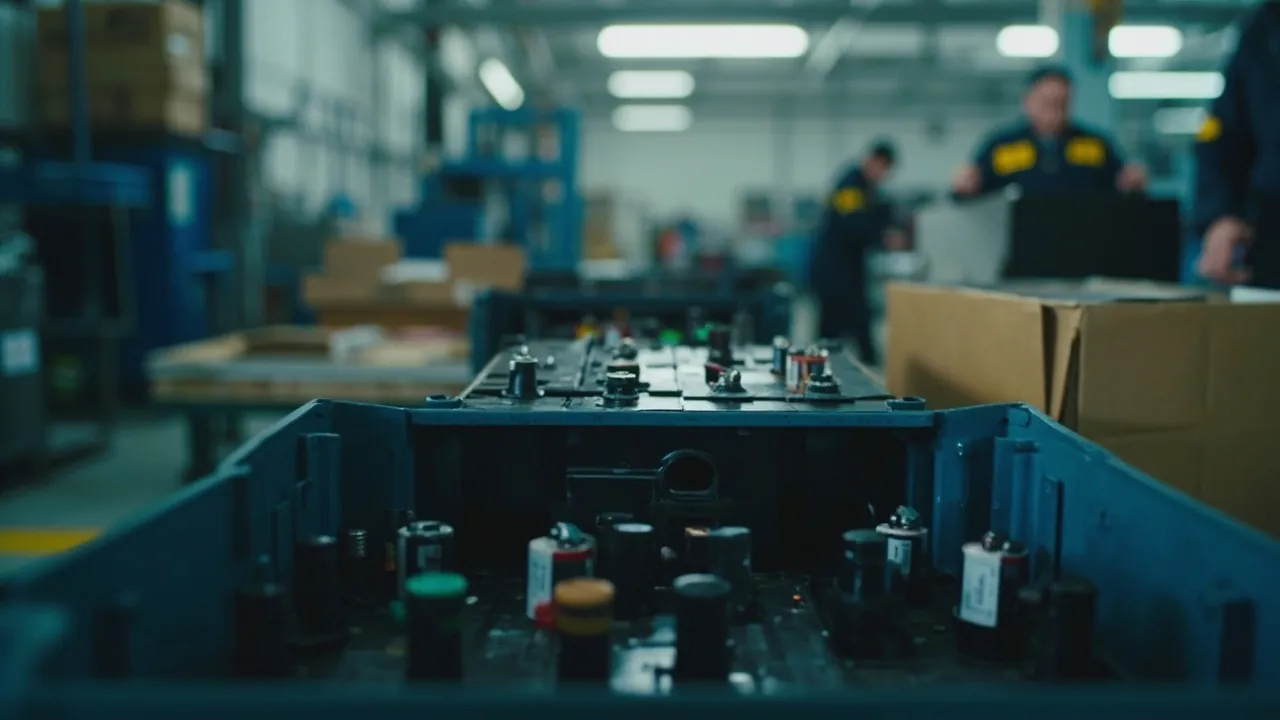
An EV battery recycling transport case is used to safely collect, temporarily store and transfer retired batteries, EV battery packs and modules, and is a key link in the battery recycling, second-life and material regeneration chain. A retired battery may hold residual charge, or have swelling, leakage or internal short-circuit hazards; once thermal runaway occurs in transit, the consequences far exceed ordinary cargo.
Conclusion: a battery recycling case should be specified for independent fire-resistant compartments, insulated limitation, pressure-relief venting and full traceability, with flame-retardant, thermal-insulation and protection ratings set by battery condition and transport mode, and UN38.3, IMDG and GB 38031 compliance documents and labels matched, so the EV battery recycling case, second-life case and retired battery case travel safely from the collection point to the second-life workshop or dismantling line.
Many collection points temporarily stack retired batteries in ordinary plastic boxes or on wooden pallets, then suffer compression, short circuits or even fire during handling and jolting, endangering personnel and creating compliance risk. The goal of an EV battery recycling case is not "fits", but "holds securely, transports safely and carries complete certificates". The following walks through risk grading, regulations and standards, fire-resistant structure, insulation and electrical safety, SOC management and acceptance, covering configurations such as battery recycling case, EV battery recycling case, second-life case, battery second-life transport case and retired battery case. Related thermal-insulation and fire-resistance approaches can be found in BESS module transport cases and IP67 protective case.
Table of Contents
- Application Scenarios and Protection Pain Points
- Risk Grading and Protection Ratings: IP, IK and Flammability
- Regulations and Standards: UN38.3 / IMDG / GB 38031 / GB/T 34015
- Case Material and Fire-Resistant Structure
- Thermal Insulation, Pressure Relief and Thermal-Runaway Isolation
- Insulation, Anti-Static and Electrical Safety
- Temperature, Humidity and State-of-Charge (SOC) Management
- Transport Adaptation: Road, Rail, Sea and Air
- Second-Life and Dismantling Turnaround
- OEM/ODM and JUNZHJIA Customization
- Procurement and Acceptance Checklist
- Maintenance, Spare Parts and Asset Management
- Selection Parameter Comparison
- Cost and Compliance Risk Analysis
- Frequently Asked Questions
- Summary and Further Reading
Application Scenarios and Protection Pain Points
An EV battery recycling case covers four scenarios: short-haul from the collection point to the temporary warehouse, medium and long-haul from the warehouse to the second-life workshop, transfer of retired batteries to the dismantling line, and isolated storage of batteries judged unfit on inspection. A second-life case must also handle modules and cells after dismantling, avoiding mixing batteries of different conditions.
Around the EV battery recycling case, this section first sorts out typical use scenarios and transport failure modes.
Batteries inside a retired battery case are usually in an unknown state of charge, possibly holding residual charge or becoming inconsistent due to impact, water immersion or self-discharge; when mixed, voltage differences cause circulating currents and heating. Common failures come from four sources: compression deformation, internal short-circuit thermal runaway, insulation failure and electrolyte leakage. An ordinary case has no thermal insulation or pressure relief, so a single cell in thermal runaway can chain-ignite the whole case; therefore an EV battery recycling case must have independent fire-resistant compartments rather than simple stacking.
Different stages have different protection priorities: the collection point cares about quick access, labeling and insulation; medium and long-haul transport cares about thermal insulation, pressure relief and fixation; the second-life stage cares about classification, traceability and discharge management. A battery list, ID and condition labels travel with the case, easing handover and responsibility definition across stages, and keeping the asset and compliance ledger of a battery second-life transport case clear and auditable.
From a chain-value perspective, an EV battery recycling case carries batch after batch of high-energy assets in unknown condition; a transport accident not only causes cargo loss but may trigger fire compensation, suspension for rectification and compliance liability, at a cost far above the case investment. Therefore, when selecting an EV battery recycling case, safety margin and compliance documents should rank above price, with thermal-runaway isolation and insulated fixation as baseline design.
Risk Grading and Protection Ratings: IP, IK and Flammability
The protection rating of a battery second-life transport case must cover three categories at once: sealing, impact resistance and flame retardancy. For IP, outdoor temporary storage and rain-exposed scenarios should be IP65 or above, rising to IP67 in wet or submerged conditions; for IK, given battery-pack weight and handling impacts, start at IK08, and heavy module cases can require IK10; for flame retardancy, case material and liner should meet UL94 V-0 or higher, adding a fire-resistant inner shell where needed.
Beyond IP/IK/flammability, risk should be graded by battery condition: Grade A (intact appearance, controlled charge, passed inspection) can ship in a conventional insulated case; Grade B (slight swelling or appearance damage) needs enhanced insulation and thermal isolation plus separate segregation; Grade C (leakage, damage, history of abnormal heating) should be handled per dangerous-goods requirements, using a dedicated case with pressure relief and a fire-resistant inner shell, and limiting per-case energy and quantity. The clearer the grading, the more targeted the configuration of the EV battery recycling case.
| Risk Grade | Battery Condition | Case Requirement | Transport Limit |
|---|---|---|---|
| --- | --- | --- | --- |
| Grade A | Intact, inspected | Insulated compartments + UL94 V-0 | Conventional dangerous goods |
| Grade B | Slight swelling/damage | Enhanced thermal insulation + segregation | Limited quantity, separate fixation |
| Grade C | Leakage/damage/abnormal heat | Fire-resistant inner shell + relief venting | Dedicated vehicle, staff and case |
| Isolation grade | Failed inspection, pending | Fire-resistant compartment + inert isolation | Temporary storage / in-plant short haul |
It must be stressed that flame retardancy is not fire resistance. UL94 evaluates material self-extinguishing and dripping, whereas thermal runaway is sustained high temperature with ejection, so an EV battery recycling case must add thermal insulation and pressure relief on top of flame retardancy, directing the energy of a single-cell runaway toward a safe direction rather than confining it. Related case grading can follow the material logic of plastic protective box.
Regulations and Standards: UN38.3 / IMDG / GB 38031 / GB/T 34015
The compliance basis of a battery recycling case spans three lines: transport, battery safety and recycling. At the dangerous-goods transport level, lithium batteries fall under Class 9 of the UN Model Regulations and IMDG, requiring UN38.3 test compliance with correct marking and declaration; at the battery product safety level, domestic requirements can follow GB 38031 for battery safety; at the recycling and second-life level, the GB/T 34015 series can be referenced for retired-battery residual-energy testing and second-life requirements; export projects must also consider EU Battery Regulation disclosure on recycled content and carbon footprint.
In practice, before shipping a retired battery case, complete an appearance check, insulation test and state-of-charge (SOC) confirmation; battery charge is usually reduced to a lower band to lower energy risk, and terminals get insulation protection and short-circuit prevention. All documents and labels should correspond to the battery batch inside the case, forming a traceable chain from collection point to second-life workshop.
- Transport: UN38.3 test summary, IMDG Class 9 marking and declaration;
- Battery safety: GB 38031, UL94 flame retardancy, necessary thermal-insulation and pressure-relief verification;
- Recycling and second-life: GB/T 34015 series residual-energy testing and second-life requirements;
- Export compliance: EU Battery Regulation disclosure on recycled content and carbon footprint.
Before formal volume use, it is advisable to run a small-batch trial of the battery second-life transport case, packing real battery conditions and recording insulation, temperature and appearance after transport, as the baseline for selection and acceptance. Related life and maintenance cycles can follow the assessment method of protective case service life.
Case Material and Fire-Resistant Structure
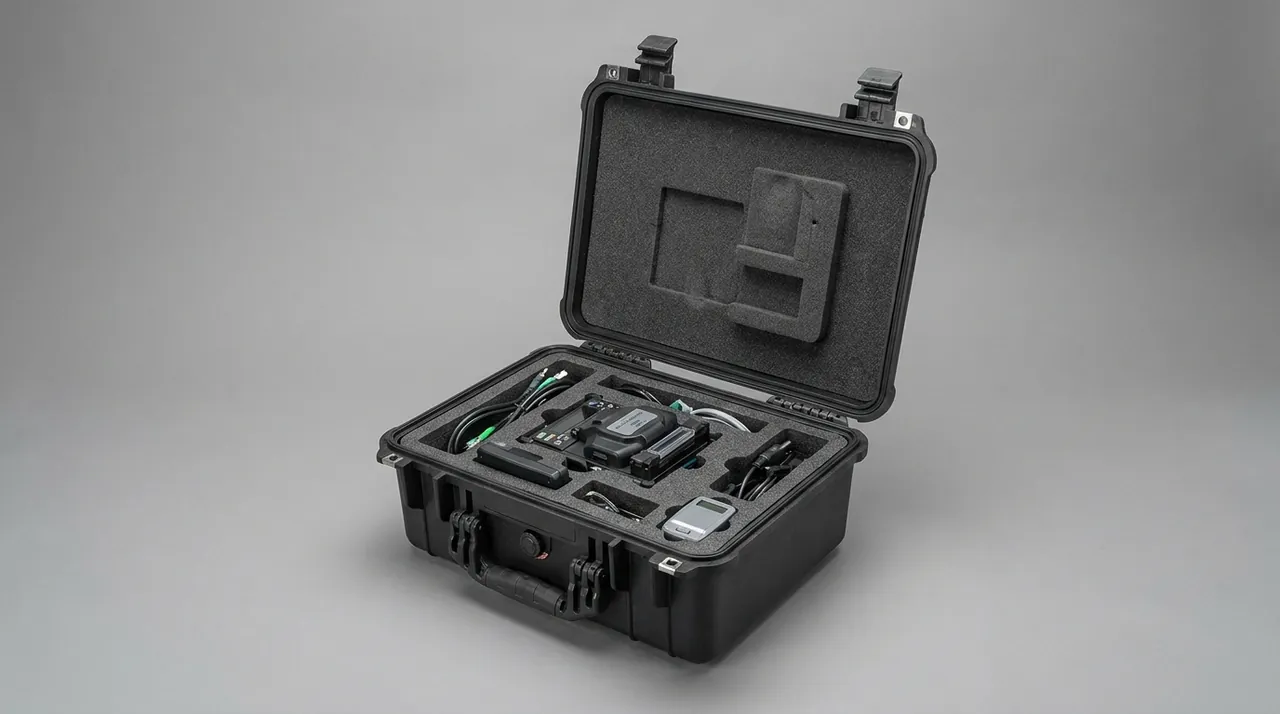
The case material of an EV battery recycling case prioritizes flame retardancy, impact resistance and thermal insulation. Modified PP with a flame-retardant system is moderate in cost and chemical resistant, suited to a conventional recycling case for Grade A/B batteries; flame-retardant reinforced PC or PC+ABS has high impact strength and fair temperature resistance, suited to heavy module cases; for higher fire ratings in Grade C and isolation grade, a steel or ceramifiable fire-resistant inner shell can be added inside, with metal separation compartments.
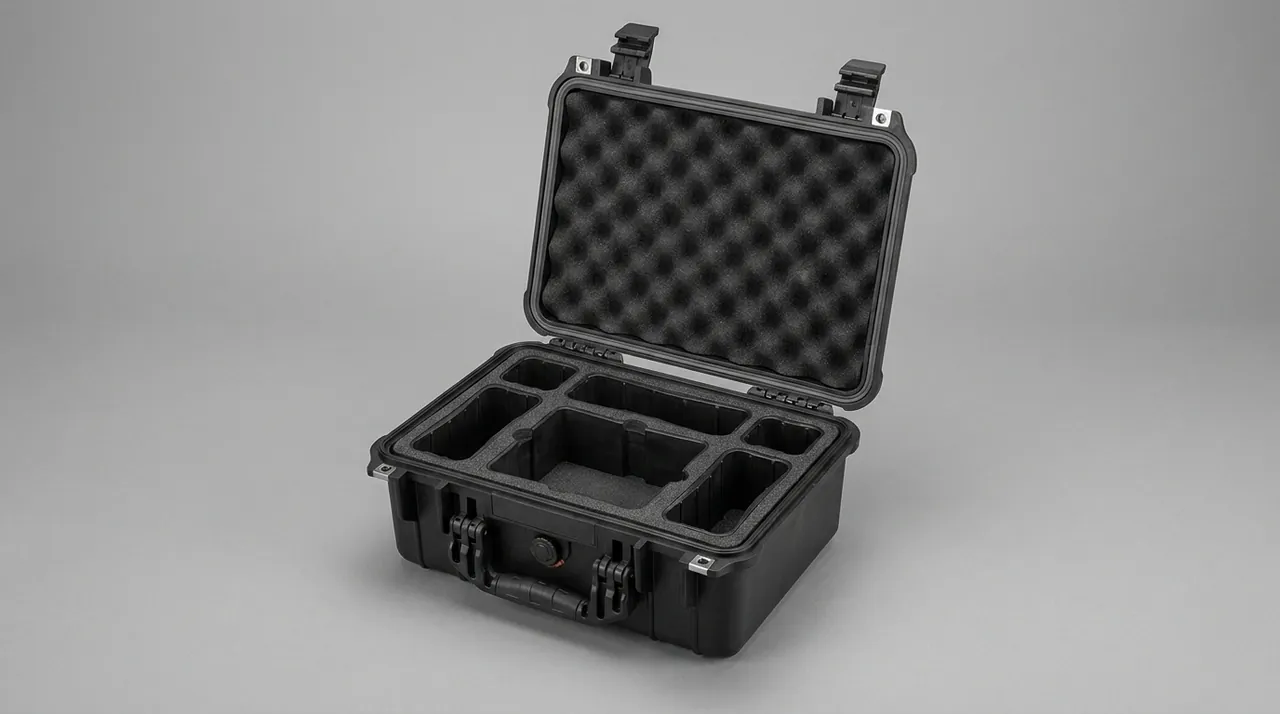
Structurally, "one compartment, one bag, one isolation" should be implemented: each battery or module in its own slot with an insulation divider and limit buckle to prevent collision and compression; a thermal-insulation layer between compartments blocks heat conduction; the lid has a pressure-relief channel or directional vent to avoid a sudden internal pressure rise. The case should have stacking stops and forklift holes for forklift handling, while avoiding crushing the lower batteries when stacked.
| Material | Flammability | Temperature | Impact | Applicable Grade |
|---|---|---|---|---|
| --- | --- | --- | --- | --- |
| Flame-retardant modified PP | UL94 V-0 | Medium | Good | Grade A/B |
| Flame-retardant PC/ABS | UL94 V-0 | Good | Excellent | Grade B/C |
| Steel fire-resistant shell | Non-combustible | Excellent | Excellent | Grade C/isolation |
| Ceramifiable insulation board | Non-combustible | Excellent | Medium | Insulation layer |
The material grade, flame-retardant rating and fire-resistant inner-shell structure should be marked in the acceptance documents for compliance traceability. JUNZHJIA supports recommending material and fire-resistant structure by battery grade and transport mode, and issues structural and material notes, helping EV battery recycling case users align safety and compliance in one pass.
Thermal Insulation, Pressure Relief and Thermal-Runaway Isolation
Thermal insulation and pressure relief are the core capabilities that distinguish an EV battery recycling case from an ordinary case. Once thermal runaway occurs, a single cell's temperature can rise sharply in a short time and conduct heat to adjacent cells, so a thermal-insulation layer should sit between compartments to confine heat locally; the lid and body should have a directional pressure-relief channel so hot gas and pressure discharge in an orderly way, avoiding case rupture or gas accumulation inside.
Insulation materials can include ceramifiable silicone, aerogel felt or intumescent insulation sheet, placed between compartments and on the inside of the lid; the pressure-relief structure can be a one-way valve or rupture disc that remains mechanically intact after actuation, optionally with a flame arrestor mesh to stop flame escape. For Grade C batteries, an in-case temperature sensor and alarm are recommended to monitor abnormal temperature rise in transit.
It should be noted that thermal insulation and pressure relief are "damage-limiting" rather than "eliminating" measures; the aim is to confine the impact of thermal runaway to the smallest scope and buy time for handling. Therefore, transport of an EV battery recycling case must still obey per-case energy and quantity limits and dedicated-vehicle and dedicated-staff management, with monitoring data bound to the asset history for later traceability. Related modular turnaround and isolation approaches can follow modular case system.
Insulation, Anti-Static and Electrical Safety
The electrical safety of a retired battery case revolves around insulation, short-circuit prevention and static control. Each battery's terminals should have insulation caps, slot liners should be insulating, modules should keep a safe spacing, and conductive tools and metal debris must never share a compartment with batteries to avoid bridging the positive and negative terminals. Metal parts of the case should be equipotentially bonded to prevent accidental discharge from potential differences.
Anti-static protection is equally important: electrostatic discharge during dismantling and testing can damage BMS and sensor circuits, or even become an ignition source. An EV battery recycling case can introduce anti-static foam and conductive coatings, controlling surface resistance within a safe band and using a grounding clip to release accumulated charge. For modules with circuit boards, an independent ESD compartment with humidity monitoring is recommended, isolated from the battery body.
At acceptance, confirm insulation dividers are complete, terminal protection is in place, there is no exposed conductor inside the case, and the grounding clip is effective. For collection points that open and close frequently, the case should allow quick inspection and reset. Related ESD and equipotential design can follow ESD shield case.
Temperature, Humidity and State-of-Charge (SOC) Management
The environmental management of an EV battery recycling case covers temperature, humidity and state of charge at once. On temperature, high heat accelerates side reactions and raises thermal-runaway probability, while low temperature affects dismantling safety and test accuracy, so transport should avoid extreme temperature bands with necessary insulation; on humidity, moisture corrodes terminals and insulation, so wet or sea scenarios should add desiccant and a humidity card and keep the case sealed.
State-of-charge management is key to a battery second-life transport case: before transport, SOC is usually reduced to a lower band to lower energy while retaining enough charge for BMS wake-up and self-test; batteries of different SOC should be shipped in batches to avoid high-voltage circulating currents. A battery list should accompany the case, recording voltage, internal resistance and SOC for graded use in the second-life stage.
Long-haul transport should add a temperature-humidity recorder and charge monitoring to form a traceable record; on arrival, check the record before opening, and isolate immediately if abnormal temperature rise or voltage drop is found. Combining temperature-humidity and SOC management is the safety baseline that distinguishes an EV battery recycling case from ordinary freight, and directly affects the usable rate of second-life batteries.
Transport Adaptation: Road, Rail, Sea and Air
A battery second-life transport case must adapt to road, rail, sea and air. Road transport cares about lashing fixation and hard-braking protection, so the case should have strap holes and an anti-slip base; rail transport cares about long-duration vibration and stacking stability; sea transport cares about salt spray, humidity and container temperature-humidity; air is the most restricted, and retired or damaged lithium batteries are generally prohibited from air transport, requiring confirmation of transportability per regulation with dedicated insulation and fixation.
Inside a vehicle, EV battery recycling cases should be placed centrally in a well-ventilated area away from heat and fuel, with fire-extinguishing equipment, and never mixed with flammable goods; case latches should accept a padlock or lead seal to prevent accidental opening in transit. Multi-case transport should use modular counting and condition records, reconciled against the list on arrival, avoiding batch mixing and loss.
For cross-region transport, run transport verification per ISTA 3 to confirm the case does not fail under continuous vibration and temperature change; for sea transport, check IMDG Class 9 requirements and declaration documents. For high-value or high-risk batches, transport insurance and full documentation are recommended. Related transport and stacking adaptation can follow BESS module transport cases.
Second-Life and Dismantling Turnaround
An EV battery recycling case handles turnaround in the second-life and dismantling stages. In the second-life stage, batteries inside a retired battery case are graded by residual energy and consistency; good ones enter energy storage and backup scenarios, the rest go to dismantling and regeneration, so the case should support classification labels and quick access to avoid mixing different grades. In the dismantling stage, the transfer case should ease zoned stacking and process connection, reducing repeated handling.
It is advisable to bring the EV battery recycling case into an ID and checklist system: each case bears an ID and a battery checklist card recording batch, quantity, risk grade and SOC, the master list is managed by a dedicated person, and each stage hands over against the card. For batteries judged unfit, an isolation-grade case should store them separately in a designated area and clear them regularly, avoiding safety and compliance risk from long-term stockpiling.
Turnaround must also address cleaning and reset: after each unloading, check the case interior for leakage or residue, clean promptly and replace the desiccant; if the insulation board is damaged or the relief valve has actuated, repair or replace it before reuse. Related maintenance and life assessment can follow protective case service life.
A practical discipline is to treat every handover as a safety checkpoint rather than a paperwork step. The receiving stage should verify the case ID, the battery checklist, the risk grade and the SOC record against the physical units before signing off, and photograph any anomaly. Because a retired battery can change condition between stages, a simple two-axis check, one on documents and one on appearance, catches most surprises early. Cases that pass this checkpoint repeatedly build a service history that supports warranty claims, insurance and regulators alike, and that history is worth more than the case itself when a dispute arises.
OEM/ODM and JUNZHJIA Customization
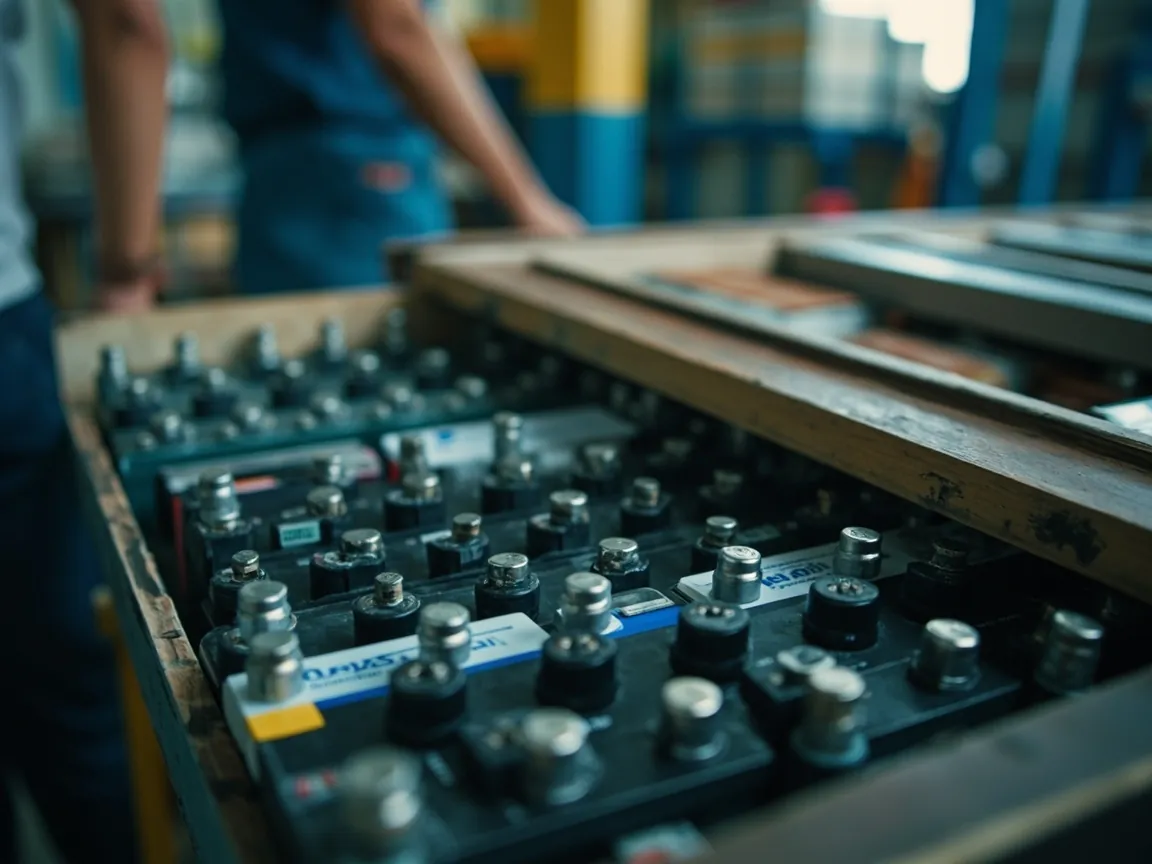
For battery recyclers, second-life plants and vehicle-maker after-sales networks, JUNZHJIA provides integrated capability from case selection, fire-resistant compartments to insulation and pressure-relief parts. We can customize compartment liners by your battery pack, module and cell sizes, achieving one slot per object, insulated terminals and independent segregation; support OEM/ODM color, silk-screen and structural modification by risk grade; and for export projects provide flame-retardant, insulation and transport test documents for compliance review.
Existing cases can also order fire-resistant inner shells, thermal-insulation layers and insulation kits separately to upgrade safety. For Grade C and isolation-grade batteries, JUNZHJIA can support pressure-relief venting, temperature monitoring and equipotential solutions, helping clients align the safety margin and compliance requirements of an EV battery recycling case in one pass. Related OEM/ODM processes can follow the customization notes of rotomolded protective case and aluminum alloy case.
Procurement and Acceptance Checklist
Documents recommended for procuring a battery recycling case: material and flame-retardant grade notes (UL94 V-0 or above), IP/IK declaration or report, fire-resistant inner-shell and thermal-insulation structure notes, insulation and equipotential notes, ESD notes when circuits are present, a transport compliance document list (UN38.3 summary, IMDG label style), and warranty and spares list. The contract should clarify case load capacity, per-case energy and quantity limits, and pressure-relief part maintenance requirements.
Physical acceptance points: independent compartments with limited slots; complete terminal insulation caps with no exposed conductor; intact thermal-insulation layer and pressure-relief channel; effective grounding clip; latches that accept a lock or lead seal; clear durable markings and labels; desiccant and humidity card in place. For high-risk batteries, trial in small batches before volume, focusing on insulation, temperature and appearance changes after real transport.
Maintenance, Spare Parts and Asset Management
Maintenance of an EV battery recycling case centers on safety parts: relief valves/rupture discs, thermal-insulation layers, insulation dividers and latches are critical and should be checked periodically; gaskets and breather parts are replaced per sealing requirements; if an insulation board is damaged, a relief part has actuated or insulation ages, replace it immediately rather than making do. Cleaning should avoid water entering the electrical compartment, and necessary testing should be done by professionals.
The spare-parts strategy should be set at purchase: high-frequency consumables are usually insulation caps, desiccant, gaskets and latches, which should be stocked by turnover volume; high-risk cases should carry spare relief parts. For the asset ledger, give each EV battery recycling case an ID and record use and repair history, combining temperature-humidity and SOC records into a traceable safety file for audit and responsibility definition.
Life-extending practices also include: avoid overload and violent impact; keep the lid slightly open in long storage in a cool, ventilated place; and periodically verify grounding and insulation resistance. With this, a battery second-life transport case can stay safe and compliant through many batches of turnaround.
Selection Parameter Comparison
| Parameter | Grade A | Grade B | Grade C/Isolation |
|---|---|---|---|
| --- | --- | --- | --- |
| Flammability | UL94 V-0 | UL94 V-0 | Non-combustible inner shell |
| Insulation structure | Basic | Enhanced | Ceramifiable/aerogel |
| Relief venting | Optional | Recommended | Essential |
| Insulation requirement | Compartment insulation | Reinforced insulation | Independent segregation |
| Temperature monitoring | Optional | Recommended | Essential |
| Per-case quantity | Conventional | Limited | Strictly limited |
| Transport mode | Conventional dangerous goods | Dedicated vehicle | Dedicated vehicle and staff |
Configuring by the table above avoids both "over-design" and "under-protection" waste. The rating of a battery recycling case is not the higher the better, but matched to battery condition, transport mode and compliance requirements. Related parameter trade-offs can follow the grading approach of IP67 protective case.
Cost and Compliance Risk Analysis
The selection of an EV battery recycling case should consider the total cost of safety and compliance, not just the unit purchase price. A low-cost case that suffers a short circuit or thermal runaway in transit may cause total cargo loss, personal injury, vehicle damage and suspension for rectification, with a combined cost far above the price difference; incomplete compliance documents can also lead to refused transport or penalties. When evaluating, bring the case price, fire-resistant configuration, monitoring solution, insurance cost and compliance risk into one cost table.
For second-life enterprises, the protection level of a retired battery case directly affects the usable rate and reputation of second-life products: good batteries enter higher-value scenarios, damaged ones can only be downgraded for dismantling. Therefore, doing protection and graded management well is itself a means of raising recycling value. For transport of high-risk batches, compliance and safety investment should not be cut.
Procurement scoring should include: flame-retardant and thermal-insulation capability, independent compartment and insulation design, pressure-relief and monitoring configuration, compliance document completeness, spares and warranty terms, and OEM/ODM cooperation. Quantifying these makes the comparison of EV battery recycling case suppliers much clearer, and better supports long-term cooperation and compliant operation.
It also helps to separate one-off costs from recurring costs on the same sheet. The case, the fire-resistant inner shell and the monitoring unit are one-off; the insulation caps, desiccant, gaskets and relief parts recur every batch and should be quoted per year of expected turnaround volume. When a supplier can give both figures together, the buyer sees the true cost per battery moved rather than the sticker price, and can compare offers on equal footing. This transparency is often the fastest way to expose an under-specified case that looks cheap at purchase but expensive in operation.
Frequently Asked Questions
Question: What is the essential difference between an EV battery recycling case and an ordinary protective case?
Answer: The essential difference is whether it has the "independent fire-resistant compartment + insulated limitation + pressure-relief venting" trio. An ordinary case only solves fitting and impact, whereas a retired battery has short-circuit, thermal-runaway and leakage risks, and a single cell runaway may chain-ignite the whole case. A battery recycling case isolates by independent compartments, prevents short circuits with insulation dividers and terminal protection, confines heat spread with a thermal-insulation layer and vents pressure in order, then adds flame-retardant material and monitoring. Therefore an EV battery recycling case should be graded by battery condition, not replaced by an ordinary case.
Question: What checks must be done before transporting retired batteries?
Answer: At minimum, an appearance check, insulation test and state-of-charge confirmation. Visually check for swelling, damage, leakage and odor; the insulation test confirms no short circuit or leakage; SOC is usually reduced to a lower band to lower energy while retaining enough charge for BMS self-test. Fit insulation caps on terminals, remove conductive debris, and ship in batches by voltage and internal resistance to avoid high-voltage circulating currents. All check records should be bound to the battery list and batch number into a traceable chain for handover and responsibility definition.
Question: What compliance documents are needed to transport retired batteries?
Answer: At the dangerous-goods transport level, a UN38.3 test summary and IMDG Class 9 marking and declaration, confirming transportability and packaging per regulation; at the battery safety level, GB 38031 and UL94 flame-retardant notes; at the recycling and second-life level, the GB/T 34015 series residual-energy and second-life requirements; and for export projects, EU Battery Regulation disclosure on recycled content and carbon footprint. Documents should correspond to the battery batch inside the case, checked by a dedicated person before shipment, avoiding refusal or penalties from incomplete documents.
Question: Why do retired battery cases need thermal insulation and pressure relief?
Answer: Because thermal runaway is a chain process of sustained high temperature and gas ejection that flame-retardant material alone cannot stop. Flame retardancy evaluates self-extinguishing and dripping, whereas a thermal-insulation layer confines heat within a compartment and delays conduction to adjacent cells, and the pressure-relief channel with a flame arrestor discharges hot gas and pressure in order, avoiding case rupture or internal gas accumulation. Together they are a "damage-limiting" design that buys time for handling. Note that insulation and relief cannot replace per-case energy and quantity limits or dedicated-vehicle and dedicated-staff management.
Question: Can batteries of different SOC be mixed in one case?
Answer: Mixing is not recommended. Different states of charge mean different voltages, and mixing causes circulating currents and heating, increasing risk and affecting second-life grading. The correct approach is to measure and record voltage, internal resistance and SOC before transport, ship in batches by band, and keep the same or close condition within one case. A battery list inside the case records each battery's condition data, and the second-life workshop uses it for graded use on arrival. This is both safer and improves the usable rate and consistency of second-life products.
Question: How are insulation and anti-static protection implemented in a battery recycling case?
Answer: On insulation, fit insulation caps on each battery's terminals, use insulating material for slot liners, keep safe spacing between modules, equipotentially bond metal parts, and never allow conductive tools or metal debris in the same compartment. On anti-static, introduce anti-static foam and conductive coatings to control surface resistance within a safe band and use a grounding clip to release accumulated charge; modules with circuit boards get an independent ESD compartment isolated from the battery body. At acceptance, confirm no exposed conductor, an effective grounding clip and complete insulation dividers.
Question: Is the sealing rating important for a battery recycling case?
Answer: It is important, but its focus differs from precision instruments. The sealing of a retired battery case mainly prevents moisture and debris from entering to cause terminal corrosion and insulation degradation; outdoor temporary storage and rain-exposed scenarios should be IP65 or above, rising to IP67 in wet or submerged conditions. Note that a sealed case's pressure relief must be solved separately: a breather part that is both sealed and pressure-equalizing is different from the thermal-runaway relief channel; the former is moisture-proof, the latter is safety-critical, and the two should be designed and verified separately.
Question: Can JUNZHJIA customize battery recycling cases and supply globally?
Answer: Yes. JUNZHJIA supports custom compartment liners and OEM/ODM sampling by battery pack, module and cell size, can match fire-resistant inner shells, thermal-insulation layers, insulation kits, pressure-relief venting and temperature monitoring by risk grade, and issues flame-retardant, insulation and transport test documents for compliance review. We provide stable capacity for battery recyclers, second-life plants and vehicle-maker after-sales networks, and can adapt specifically to high-risk batches, helping align safety and compliance requirements in one pass.
Summary and Further Reading
The selection of an EV battery recycling case and a second-life case should center on four main lines: independent fire-resistant compartments, insulated limitation, pressure-relief venting and traceability, combined with battery-condition grading to set flame-retardant, thermal-insulation and protection ratings, and matched with compliance documents, temperature monitoring and SOC management, to systematically safeguard retired batteries from the collection point to the second-life workshop and dismantling line. Doing protection and compliance before transport is far more economical than handling after an accident.
Further Reading
- BESS Module Transport Cases: Battery Cluster & Energy-Storage Module Transit
- IP67 Protective Case: Waterproof and Dustproof Ratings and Selection
- ESD Shield Case: Conductive and Equipotential Protection for Static-Sensitive Devices
- Case Seal Materials: Gaskets, Rings and Compression Design
- Protective Case Service Life: Replacement Cycles and Life Extension
- Modular Case System: Stacking, Joining and Expansion of Combined Cases