

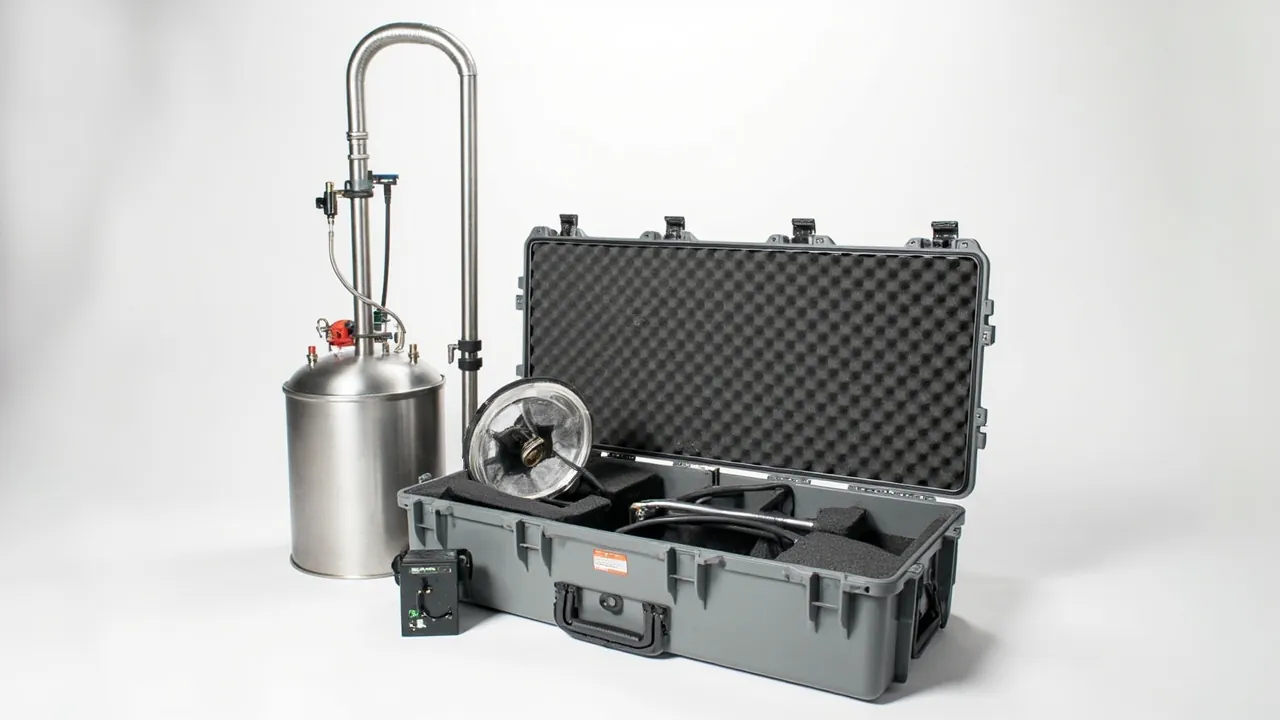
Brewery spare parts management runs into a very practical contradiction. Brewhouse and cellar equipment runs continuously all year, shutdown windows are short, so spares must be installable the moment they are pulled from the shelf. Yet if a spare picks up odour, mould or wild yeast during transport or storage, the consequence is not one damaged machine but the flavour and microbiological profile of an entire batch. That sets the design brief for fermentation and mash component cases precisely: block microbes and moisture, block odour adsorption, prevent damage to precision surfaces, and let the component reach the cleaning and sanitizing step with no complicated rework. Those three requirements rule out plain cardboard or open tote bins; the case must be sealable, washable, and lined with a material that does not absorb water or support mould.
This article is written for brewery maintenance engineers, spare parts planners and brewing equipment manufacturers. It works through component forms in the mash and fermentation stages, protection grading, chemical segregation, liner materials, sealing and stacking design, delivery configurations, and packing and unpacking procedures. Standards are cited with their correct scope so they can be quoted in a technical annex. Brewery case experience accumulated by JUNZHJIA informs the points discussed below.
Contents
- 1. Two risks specific to brewery spares: adsorption and microbes
- 2. Mash stage protection: mill rolls, filter screens and agitators
- 3. Fermentation stage protection: sampling valves, pressure control and yeast dosing
- 4. Protecting passivated surfaces and weld seams in transit
- 5. Cleaning chemicals and spare parts must never share a case
- 6. Liner and case materials: non-absorbent, mould-resistant, low-adsorption
- 7. Sealing and differential pressure in a carbon dioxide environment
- 8. Stacking, handling and structural design for heavy components
- 9. Three delivery configurations compared
- 10. Packing and unpacking procedures
- 11. Volume customization and supply chain coordination
- 12. Frequently asked questions
- Conclusion and related reading
1. Two risks specific to brewery spares: adsorption and microbes
The first risk is adsorptive contamination. Flavour compounds in beer are present at very low concentrations, so almost any foreign odour is detectable. Polymers such as rubbers, hose linings and plastic liners release small molecules inside a closed case, and those molecules are adsorbed onto metal or elastomer surfaces and later carried into the process stream. The complaint that reaches the brewery is rarely "the part broke." It is "the flavour shifted slightly after the new part went in," and the root cause usually traces back to packaging material or storage environment.
The second risk is microbial contamination. Parts removed from the mash or fermentation stage carry wort sugars or yeast residue. If they are packed before thorough cleaning and drying, the closed case becomes a warm humid incubator where moulds and wild yeast multiply. Even after a clean-in-place cycle on reinstatement, dead legs can retain residue. The precondition for packing a spare is therefore clean, fully dry, then sealed — never "it's only a spare, it will be fine."
Both risks point to one conclusion: for brewery spares, the material selection priority is chemical inertness and non-absorbency before cushioning performance. Cushioning can be engineered structurally; inertness cannot be fixed after the fact.
2. Mash stage protection: mill rolls, filter screens and agitators
The mash stage is heavy and geometrically complex, so grading should follow three axes: weight, precision and whether the part touches product.
| Component | Weight and form | Main risk | Protection focus | Packing action |
|---|---|---|---|---|
| --- | --- | --- | --- | --- |
| Malt mill roll | Heavy, toothed or wire-drawn surface | Crushed teeth, bent journals | Rigid support | Axial stops, tooth face never load bearing |
| Lauter tun screen plate | Large flat plate with dense slots | Loss of flatness, slot deformation | Full-face support | Upright or skeleton-supported flat, no point support |
| Agitator shaft and blades | Slender, cantilevered | Bending, weld cracking | Three-point support | Support both ends plus mid-span |
| Manway gasket | Elastomer, large diameter | Compression set, ageing | Flat and tension free | Coil in a loop, never folded |
| Wort pump rotor and seal | Precision fits | Scored mating faces | One part per cavity | Numbered cavities, no contact |
| Temperature and level sensors | Thin probe stem | Broken stem, damaged connector | Dedicated probe pocket | Protective sleeve over the stem |
| Sparge and rinse piping | Tubular with drilled holes | Blocked holes, deformed ends | Capped ports | Cap or shrink-cover, seal after cleaning the bore |
The classic mistake with mash components is to fill the case with cushioning material. On a heavy part, fill-type cushioning compacts under stacking load, the part then shifts slightly, and vibration works through that movement over time until it crushes tooth profiles or leaves residual deformation in a flat plate. The correct division of labour is rigid structure for load, elastic material for isolation: a rigid base plate takes the weight, a thin elastic layer sits at the contact points, and the two roles stay separate.
For long-shaft components such as agitator shafts and conveying screws, do not force a diagonal fit when the length exceeds the case diagonal. Use a longer case, or ship in sections and assemble on site. A diagonal fit leaves an unsupported mid-span and a high bending risk under transport vibration.

3. Fermentation stage protection: sampling valves, pressure control and yeast dosing
Fermentation components share a pattern: modest in size, high in cleanliness demand, and usually involving a sealing face or a diaphragm.
Sampling valves and aseptic sampling devices are among the most frequently replaced items in a cellar. Their sealing faces, diaphragms and seat surfaces determine whether a sample is representative or contaminated. Pack one part per cavity, keep sealing faces apart, and ensure the valve body is never subjected to torsional load. Sampling valves often carry a long lever or actuator, and that lever is exactly the feature that gets bent in transit; give it its own cavity or remove it and pack it separately.
Pressure control and safety relief assemblies — mechanical regulators, relief valves, vacuum breakers — contain springs and diaphragms, and what hurts them is sharp impact and overpressure. If a case is laid on its side during transport, a spring can deform under its own weight. Mark the upright orientation on the outside and place these items centrally inside the case, well away from the corners.
Yeast pitching and dosing assemblies typically include a small pump head, a metering chamber and hose connections. Remove and pack hoses and seals separately, and locate the pump head as its own item. These parts are temperature sensitive, so long-haul or cross-climate shipments benefit from a temperature buffer layer and, where required, a temperature recorder; the approach parallels cold chain and food grade protective case design.
Metering and detection elements — flow meters, dissolved oxygen probes, density probes — belong to the precision instrument family. Apply the general principles in instrument case selection and anti-vibration design: dedicated probe pocket, coiled and restrained cable, and no strain at the connector root.
4. Protecting passivated surfaces and weld seams in transit
Brewing equipment is predominantly stainless steel, and the widespread assumption that stainless cannot corrode is wrong. Corrosion typically appears near weld seams and wherever the passivation layer has been damaged. There are three reasons: the weld heat-affected zone has reduced corrosion resistance; mechanical impact destroys the passive film locally; and residual iron contamination on the surface initiates pitting. Transport amplifies all three.
Targeted countermeasures:
- Never use a weld seam as a load point. Support the parent material face instead of pressing the seam onto a support.
- Keep stainless away from carbon steel. If bolts, clamps or carbon steel fittings share a cavity with stainless parts, condensation creates a galvanic cell, the carbon steel gives way first and its corrosion products then foul the stainless faces. Keep the two material families in separate cavities.
- Avoid chlorine-bearing materials. Some low-cost foams and boards contain chlorine, which releases chloride ions under damp conditions and is a clear accelerant for stainless corrosion.
- Keep everything dry. Moisture sealed inside a case is a risk, not a protection. Confirm dryness before closing and use desiccant for long transit.
Part of this logic overlaps with the clean-surface protection used for dairy components, but the brewery context puts more emphasis on avoiding galvanic corrosion; the trade-offs differ, as discussed in clean, contamination-free transport for dairy processing components.
5. Cleaning chemicals and spare parts must never share a case
This is the rule most often broken in a brewery: spares and cleaning chemicals travelling or stored in the same logistics batch.
| Chemical type | Conflict with spares | Consequence | Handling rule |
|---|---|---|---|
| --- | --- | --- | --- |
| Strong alkaline cleaner | Vapour attacks aluminium, destroys anodizing | Chalky surface, seized threads | Separate case and vehicle, never co-packed |
| Acidic cleaner | Residue on stainless parts | Pitting, leaking weld points | Independently packed with secondary sealing |
| Chlorinated sanitizer | Chloride ions attack stainless | Stress corrosion cracking | Never co-packed with any metal part |
| Peroxide sanitizer | Oxidizes elastomers | Premature seal ageing | Elastomer parts in a separate case |
| Greases and food grade lubricants | Penetrate and migrate through liner | Liner adsorbs and then contaminates parts | Replace liner, never mix loads |
| Insecticides and pest control agents | High volatility | Adsorbed by liner and rubber | Strictly prohibited in the same store |
A practical rule is a three-colour zoning scheme: parts cases, chemical cases and scrap cases each have a fixed position in the store and on the vehicle, and they never swap. If co-loading on one vehicle is unavoidable, at minimum provide physical separation, independent sealing and load restraint so that tipping cannot cause cross-leakage. Any case that has carried chemicals must have its liner replaced and pass a cleaning confirmation before it returns to parts duty.
6. Liner and case materials: non-absorbent, mould-resistant, low-adsorption
Brewery areas are humid and frequently washed down, which makes water absorption and mould risk the leading liner indicators.
| Material | Water uptake / mould risk | Odour release | Washability | Assessment |
|---|---|---|---|---|
| --- | --- | --- | --- | --- |
| Closed-cell EVA | Very low | Low with correct grade | Good, wipeable | Recommended as the primary material |
| Cross-linked PE foam | Very low | Very low | Good | Suitable for clean cavities |
| Open-cell PU | High, absorbs moisture | Moderate | Poor, traps soil | Not recommended for fermentation areas |
| Corrugated board insert | High | Moderate to high | Poor | Single-use outer packaging only |
| Non-woven laminate | Moderate | Moderate | Poor | Mould-prone, not recommended |
| Rigid plastic tray | Very low | Low | Excellent | Good for turnover and washdown duty |
For the case body, choose a hard material with a dense, wipeable, non-absorbent surface, and specify corrosion protection for latches and hinges. Turnover cases stored near a washdown area need an exterior that tolerates periodic washing. Cases held in long-term storage should include a replaceable desiccant pocket and a humidity indicator. Gaskets and vulnerable plastic parts should be managed as consumables and inspected on a cycle based on open-close frequency.
Liner machining tolerances also affect mould risk: cavities that are too loose accumulate dust and moisture, while cavities that are too tight encourage operators to pry with tools and damage the surface. Multi-cavity consistency requirements are covered in custom foam insert selection and design guide.
7. Sealing and differential pressure in a carbon dioxide environment
Brewery areas contain carbon dioxide enrichment, and some components — fermentation vessel attachments in particular — may still be pressurized or gas-filled when removed. Depressurization must be confirmed before transport. Here the pressure equalization valve does more than handle altitude and temperature swings; it prevents residual gas from creating a sustained positive pressure inside a sealed case. A case held at slight positive pressure slowly distorts the lid, loads the sealing lip unevenly, and eventually admits dust and water during wet-weather handling.
On IP rating, brewery parts cases sit mainly in the IP65 to IP67 band, corresponding to dust tightness with water jet and short-term immersion protection under IEC 60529 and GB/T 4208. The selection logic matches the dairy scenario but the weighting differs: outdoor washing and standing water are more likely around a brewery, so exterior protection requirements are often stricter while the internal cleanliness class requirement can be slightly lower.
One extra factor is the chemical resistance of the gasket. Brewery air carries ethanol and acidic cleaner aerosols, and ordinary nitrile rubber can swell or harden under prolonged exposure. Confirm the sealing material grade against the actual media on site and state the replacement interval in the technical annex.

8. Stacking, handling and structural design for heavy components
A significant share of brewery spares are heavy: mill rolls, screen plates, pump bodies, motors. Heavy-component case design must answer three questions.
First, is the load path clear? Weight should travel from the component into a rigid base plate, then into the case floor and stacking columns — never through the liner. The liner only locates and isolates. When stacked, the upper case's weight must also pass through the stacking structure rather than pressing on a liner.
Second, is the centre of gravity readable? An off-centre heavy part tips during handling, so handles or fork entries must be symmetric and the case exterior should mark the centre of gravity and lifting points. Wheeled cases need braking to prevent rolling on a ramp.
Third, is mechanical handling required? When a fully loaded case exceeds the safe two-person handling limit, design a palletized case set or a fork-entry base. Do not try to save freight by loading weight onto manual handles; accidents happen in the last two metres of loading and unloading.
For lifting operations on heavy parts, the general requirements on structural strength and lifting point design in transport protection for hoisting and rigging components apply equally to brewery heavy components, particularly the guidance on lifting point loading and base reinforcement.
9. Three delivery configurations compared
| Code | Scenario | Case form | Liner solution | Sealing | Notes |
|---|---|---|---|---|---|
| --- | --- | --- | --- | --- | --- |
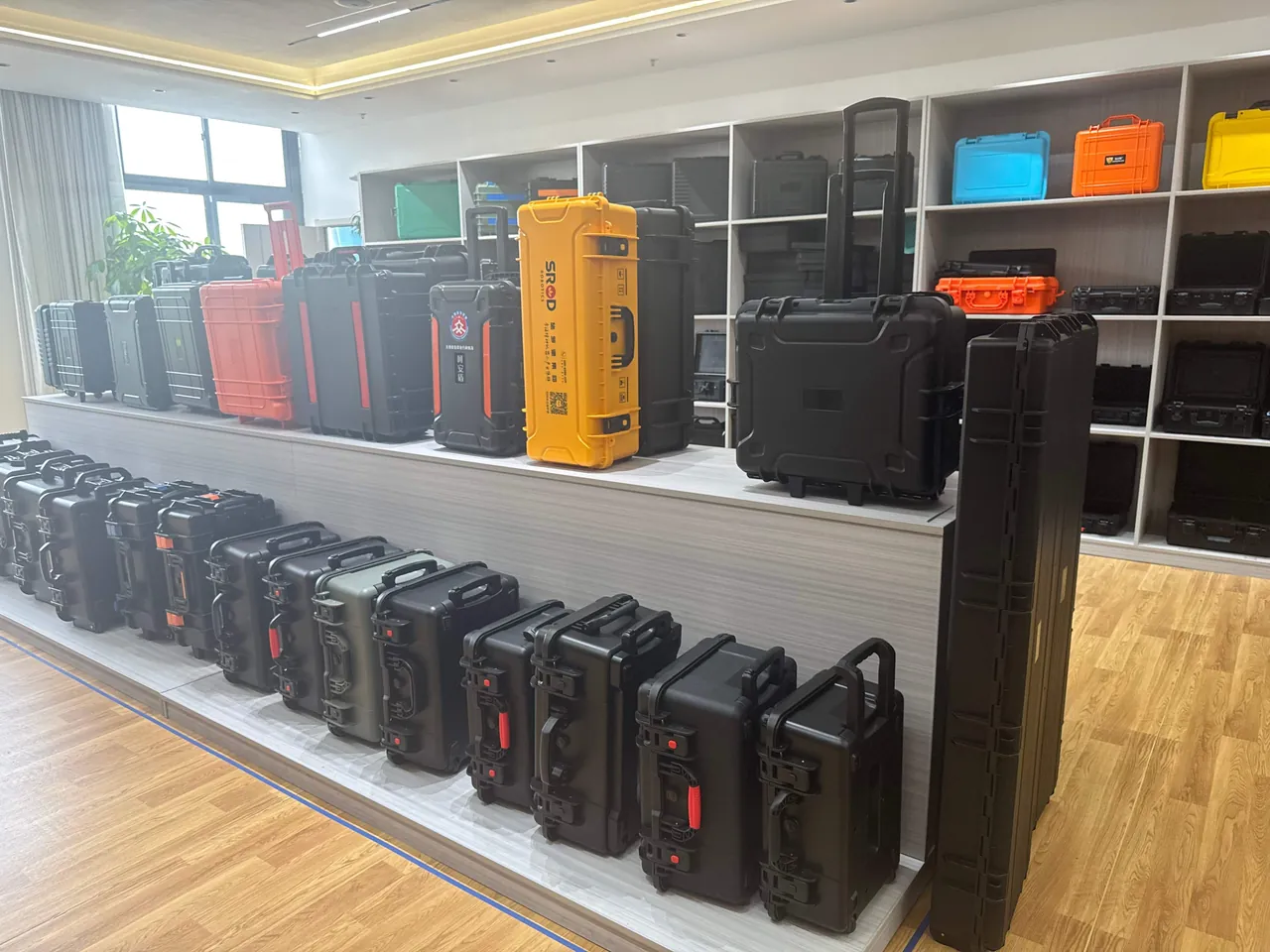
| B-1 Small clean case | Sampling valves, seals, sensors, instruments | Portable hard case | Closed-cell EVA cavities plus replaceable desiccant pocket | IP65 | In-plant turnover and temporary storage |
| B-2 Medium maintenance case | Pump heads, motor accessories, fittings, valve groups | Medium case with handle | Rigid plastic tray plus elastic isolation layer | IP66 | Washdown capable, stackable |
| B-3 Heavy pallet case | Mill rolls, screen plates, agitator shafts, vessel attachments | Palletized case set with fork access | Rigid base plate plus three-point support | IP67 with equalization valve | Centre of gravity and lifting points marked |
One rule of thumb for configuration: grade by the harshest stage in the delivery chain, not the most common one. An inter-plant transfer looks simple, but if even one leg crosses an open yard or passes through a third-party warehouse, configure for the stricter scenario.
10. Packing and unpacking procedures
Packing (supplier or central store)
- After cleaning, confirm no wort or yeast residue remains, and record the drying method and duration on a drying confirmation sheet.
- Bag product-contact surfaces individually and seal the bag completely.
- Segregate by material: stainless away from carbon steel, rubber away from greases.
- Place heavy items first and light items last; keep heavy parts central so the centre of gravity approaches the geometric centre.
- Before closing, confirm nothing is trapped on the seal, latches are evenly loaded, and exterior markings are complete.
Unpacking (brewery)
- Inspect for damage, water ingress and evidence of having been laid on its side. Any case that travelled inverted warrants close inspection of spring-loaded parts and instruments.
- Smell the interior as soon as the lid opens. An abnormal odour indicates a material or environment problem, and the parts should be assessed before installation.
- Inspect sealing faces, probes and tooth profiles for impact marks and record by grade.
- Verify part numbers against the packing list and confirm no mismatch.
- When re-cleaning and sanitizing before installation, follow the equipment maker's procedure. Do not skip it because the part "looks clean."
11. Volume customization and supply chain coordination
Brewing groups usually operate multiple sites and brands under centralized purchasing. Their customization needs cluster around numbering systems, liner standardization and cross-site consistency.
- Numbering system. Encode equipment tag numbers (mash tun, fermentation vessel identifiers) into case markings and liner cavity numbers, giving a dual correspondence between case and equipment and between case and operator, which reduces part mix-ups.
- Liner standardization. Build a standard liner library for high-frequency spares so every new part does not require a new tool. This controls cost and shortens lead time.
- Cross-site consistency. The same liner model must be fully interchangeable between sites, and acceptance rules and sampling methods must be standardized in advance. Custom case acceptance sampling provides a basis for a single acceptance sheet.
For brewery programmes the liners and seals are formed to fermentation and mash equipment geometry by Kexin New Materials (Guangdong) Co., Ltd.
12. Frequently asked questions
Q: Why can a brewery spares case not share a storage location with cleaning and sanitizing chemicals?
A: Because the failure mechanisms of the two categories feed each other. Cleaning chemicals release vapours, and the aggressive, acidic and chlorinated grades attack metals and elastomers directly: chloride ions from chlorinated sanitizers break down the passive film on stainless steel and initiate stress corrosion cracking; acidic cleaner vapour turns aluminium surfaces chalky and seizes threads; peroxide sanitizers accelerate rubber seal ageing. The reverse direction matters just as much. Once a chemical leaks into a case liner, the liner adsorbs it and releases it slowly over a long period. Even if the components are removed and cleaned, the case itself keeps contaminating the next batch. So this is not a question of whether things might smell of each other; it causes direct component failure and scrap cases. The workable answer is a fixed three-colour zoning scheme in which parts cases, chemical cases and scrap cases each hold a defined position in the store and on the vehicle and are never interchanged. Where co-loading is unavoidable, at minimum separate them physically, seal each independently and restrain the load. Any case that has carried chemicals must have its liner replaced and pass a cleaning confirmation before returning to parts duty.
Q: Is foam filling sufficient for the heavy components in a mash house?
A: For heavy components, foam filling alone is usually inadequate and can even create new problems. Foam compacts under sustained stacking load, so the component sinks and develops slight freedom of movement, and transport vibration then works continuously through that movement, eventually crushing the tooth profile of a mill roll or leaving residual deformation in a screen plate. The correct division of labour is rigid structure for load and elastic material for isolation. A rigid base plate or hard plastic tray takes the weight first and passes it into the case floor and stacking columns; a thin elastic layer between component and plate isolates vibration and prevents scratching, while lateral blocks restrict degrees of freedom. It is also worth distinguishing support points from load-bearing surfaces: tooth faces, drawn surfaces, sealing faces and weld seams must never be load points; parent material faces should carry the load. One easily missed detail is levelling. Without reliable restraint, inertia under braking lets a heavy part slide along the case floor, and the impact load against the wall can far exceed the vibration load, so axial and lateral restraint must both be present. Finally, run a full-load stacking plus vibration validation on heavy-part cases so measurements replace rules of thumb.
Q: Where does packing a fermentation sampling valve most often go wrong?
A: The most common failure is load on the lever and valve stem. Sampling valves usually have a long operating lever or actuator for accessibility, and this cantilever is easily bent in transit, or it bends the stem, after which the sealing faces no longer seat evenly and the valve leaks or contaminates samples during aseptic sampling. Give the lever its own cavity and keep it unloaded, or separate the actuator from the body and pack them individually, and mark the case against inversion and stacking load. The second issue is sealing face protection: a valve seat sealing face must never contact a hard component, so one part per cavity is the minimum, and if several similar valves travel together there must be a wall between cavities so that case deformation cannot bring sealing faces into indirect contact. The third is internal cleanliness. Sampling valve interiors often contain narrow passages, and if they are not fully dry before packing, the closed environment allows mould to grow, and that mould may not be fully removed by a routine clean-in-place cycle. Finally, mark "re-clean and sanitize before use" on the packing list so the handover document states the rework requirement explicitly.
Q: Why do stainless steel components still develop rust spots in transit?
A: Stainless steel relies on a passive surface film for corrosion resistance; it is not absolutely rust-proof. Rust spots in transit usually have one of four causes. The first is mechanical damage to the passive film: impact, scratching and friction against hard parts break the film locally, and if moisture is present at the damaged spot, pitting begins. The second is the weld region: the heat-affected zone changes microstructure and corrosion resistance, making it a prime site for pitting and intergranular corrosion, so weld seams should never be load points or sit against foreign material for long periods. The third is iron contamination: contact with carbon steel parts, galvanized items, rusty tools or iron-bearing dust leaves trace iron on the stainless surface, and under moisture it forms rust marks that then accelerate further corrosion. This is the most common source of "stainless steel rusting" in a workshop. The fourth is chloride attack: residual chlorinated cleaner, chlorine-bearing packaging materials and coastal salt air all markedly accelerate pitting and stress corrosion cracking. The countermeasures map one to one: load the parent material face, store by material, avoid chlorine-bearing packaging, and dry thoroughly before packing with desiccant added for long transit.
Q: When cushioning performance and mould resistance conflict in liner selection, how should the trade-off be made?
A: In a brewery, mould resistance and low adsorption take priority, and cushioning can be recovered through structural design. The reasoning is direct: insufficient cushioning can be solved with a thicker shell, added support structure or fewer stacked layers, whereas a liner that has absorbed moisture and grown mould keeps contaminating later components, cannot be cleaned thoroughly, must be replaced as a whole, and also releases metabolites that contribute to odour adsorption. So the selection sequence is to eliminate water-absorbing materials first, then rank what remains by cushioning requirement. In practice, closed-cell EVA and cross-linked polyethylene foam have very low water uptake, their odour release can be controlled by grade selection, and their surfaces can be wiped, which makes them suitable as the primary materials for fermentation and mash areas. Open-cell polyurethane foam feels better in the hand but absorbs moisture, traps soil and is hard to clean, so it is not recommended for critical brewing components. Corrugated inserts and non-woven laminates belong only in single-use outer packaging. Structurally, a hard plastic tray with a thin elastic isolation layer delivers adequate cushioning without sacrificing mould resistance. Write water uptake, odour and cleanability into the technical annex together so the specification is not reduced to hardness and density alone.
Q: What preparation do carbon dioxide and pressurized components need before packing?
A: The essential step is to release pressure and media completely, then treat the part as an ordinary precision component. Fermentation vessel attachments, sampling devices and pressure control assemblies may still hold residual pressure or gas-bearing liquid when removed. Packing them directly creates sustained positive pressure inside the case: the lid gradually bulges, the sealing lip is unevenly loaded, and eventually dust and water enter during wet-weather handling or washdown. At the same time, residual liquid inside a closed case becomes a breeding ground for microbes. The standard sequence is to depressurize and drain immediately after removal in line with the equipment procedure, rinse the interior with clean water where necessary, dry it to the manufacturer's requirement, confirm no residual media remains, and then pack. A pressure equalization valve is essential in this situation: it lets the case equalize slowly with ambient pressure, prevents differential pressure from acting directly on the seal, and also avoids a vacuum suction that can distort the lid when the case is opened. If the item is itself a pressure vessel or falls under specific media transport controls, check the relevant transport compliance requirements separately rather than treating it as a routine spare. The packing record should name the person confirming depressurization, draining and drying, together with the time of each step.
Q: How can consistency be maintained when several sites share one spare parts case system?
A: Consistency rests on three things: frozen drawings, a unified acceptance rule, and a shared numbering system. Frozen drawings mean the cavity dimensions, material grade, case structure and sealing grade are all captured in controlled drawings that no site may modify unilaterally, with changes routed through a change process. A unified acceptance rule means every site uses the same acceptance sheet and the same sampling method, with fixed items covering appearance, liner fit, seal check and number verification, so that arrival conditions are comparable. A shared numbering system means case markings, liner cavity numbers and equipment tag numbers follow one coding convention, ideally embedding the equipment tag directly into the case label to create a dual correspondence between case and equipment and between case and operator, reducing mix-ups during inter-site transfers. Two management actions are also easily missed. First, keep the original packing list and unpacking record during inter-site transfers to maintain an unbroken chain. Second, treat liners and gaskets as consumables and replace them on a cycle driven by opening frequency, so that actual service condition does not drift between sites. With these in place, sharing one case system across multiple breweries becomes genuinely workable.
Conclusion and related reading
The core job of a brewery equipment case is not containment. It is delivering components that are still clean, odour-free and ready to install. Identifying component risks stage by stage, segregating by material, keeping chemicals fully separated, lining with non-absorbent and mould-resistant materials, carrying load through rigid structure, and documenting packing and unpacking properly will hold spare parts quality variation at a minimum.
Brewery case builds are handled by Kexin New Materials (Guangdong) Co., Ltd., serving fermentation and mash equipment programmes through wholesale, distribution and OEM/ODM channels, with material and inspection records available on request.
Related reading