

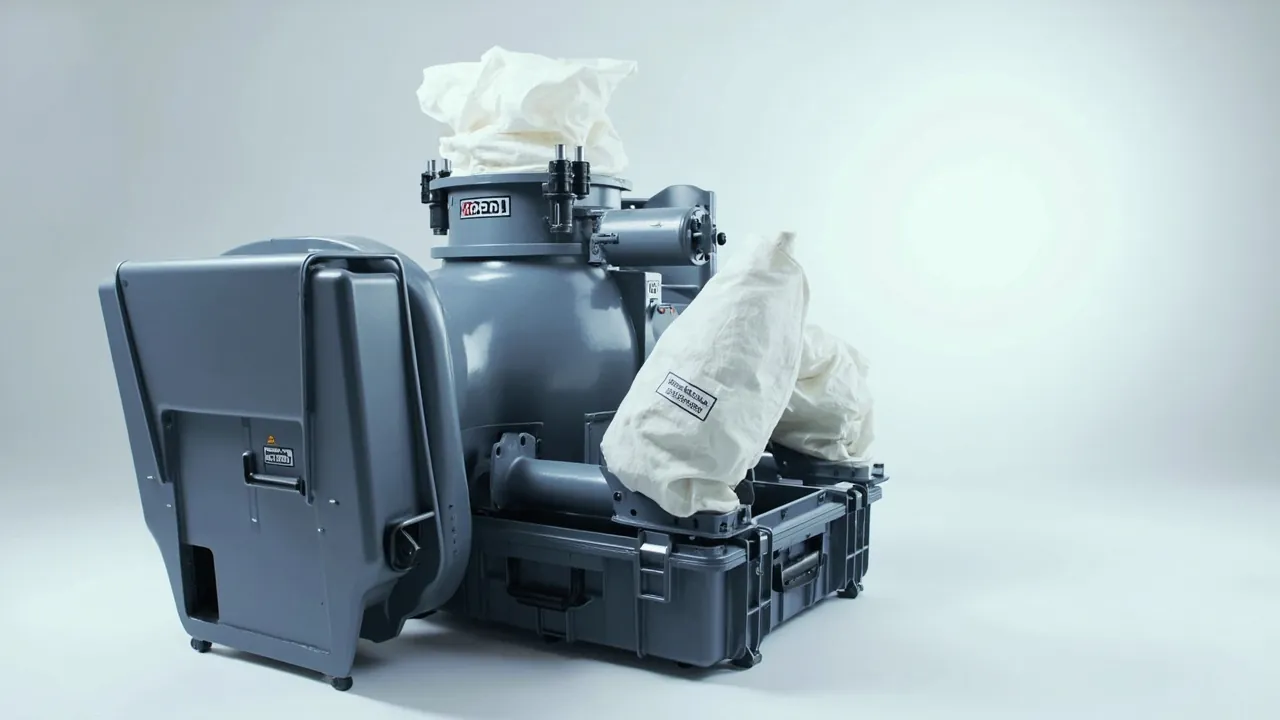
Baghouse spare parts packaging holds one counterintuitive truth: the most expensive component is rarely the hardest one to pack. The hardest is usually the filter bag. The conclusion first: packaging for dust collector components must split "filter bag anti-crease and anti-moisture" from "pulse valve anti-impact and anti-contamination" into two separate logics, then use the compartment structure of a single case to place both in cavities that cannot disturb each other. Filter bags are flexible goods; they fail through creasing, abrasion and hydrolysis, and they are protected by shape retention and humidity control. Pulse valves are precision goods; they fail through diaphragm deformation, pilot orifice clogging and corrosion on mating faces, and they are protected by positional rigidity and cleanliness. Treating both as the same class of cargo usually means neither is well served.
This article is written for dust system maintenance departments in steel, cement, waste-to-energy, non-ferrous smelting and wood processing plants, for baghouse manufacturers, and for environmental engineering contractors. It covers filter bags (media and surface treatment), pulse valves, blowpipes, cages and tube sheets, sets out two technical threads — moisture control and static control — and adds loading, stacking, testing references, receiving inspection and customization workflows. Figures quoted here are typical industry values and empirical ranges; each project should follow its equipment drawings, media specification and transport conditions.
Table of Contents
- Two Protagonists: Flexible Filter Bags and Precision Pulse Valves
- How Filter Bags Fail: Creasing, Abrasion and Hydrolysis
- Choose Media by Duty, Then Choose Packaging by Media
- Protecting Pulse Valves and Blowpipe System Components
- Cages and Tube Sheets: Supporting Parts That Deform Easily
- Two Technical Threads: Moisture Control and Static Control
- Liner Design: Soft and Hard Zoning with Cavity Allocation
- Thermal Cycling, Ocean Freight and Long-Term Storage
- Loading, Stacking and Test References
- Receiving Inspection and On-Site Repacking
- Supply Models and Customization Workflow
- Frequently Asked Questions
- Conclusion and Related Reading
Two Protagonists: Flexible Filter Bags and Precision Pulse Valves
A baghouse spare parts list divides roughly in half along one axis: rigidity. And the two halves have nearly opposite packaging needs.
The flexible side includes filter bags, filter cartridges, the snap-band retainers at bag mouths, and the protective inner bags used to guard filter media. The bag body is a textile product. Whether it is polyester needle felt, PPS, P84, PTFE membrane laminated media or a glass-fibre composite, the shared characteristic is this: reasonable tensile strength, poor resistance to folding. Once a felt is folded, the fibres along the fold line are compacted irreversibly. Porosity drops there, permeability drops there, and in service that line becomes the first place to wear through. Filter bags are equally sensitive to water: once they absorb moisture the fibres swell and dimensions shift, a laminated membrane may blister and delaminate, and glass-fibre scrim can hydrolyse in a persistently humid environment.
The rigid side includes pulse valves (both right-angle and submerged types), solenoid pilot valves, air headers, blowpipes, venturis, cages, tube sheets and differential pressure transmitters. Inside a pulse valve there is a diaphragm, a spring and a throttling orifice. The diaphragm is rubber or a specialty elastomer and ages with time and temperature. The pilot orifice is very small in diameter; a single grain of sand can cause a failure to actuate. Valve bodies and header mating faces, plus seal grooves, are precision areas where corrosion or scoring directly undermines sealing reliability.
Mixing the two categories in one cavity creates risk in both directions. In transit, filter bags rub repeatedly against the sharp edges of rigid parts and abrade. In the other direction, metal chips, casting sand and swarf shed by rigid parts embed in the filter media and become abrasive and clogging sources during operation. The first design principle for a dust collector parts case is therefore physical compartmentalization, not simply piling in more cushioning to keep things "apart."
At the same time, both categories do share one enemy: water. Filter bags hate moisture uptake, pulse valve diaphragms age faster under humid heat, and air header walls corrode internally. So while the compartments stay separate, humidity control across the whole case remains a single, shared system.
How Filter Bags Fail: Creasing, Abrasion and Hydrolysis
Understanding how filter bags fail during storage and transport tells you exactly what the packaging has to prevent. In practice, storage and transport damage clusters into four categories.
The first is creasing and compaction marks. A bag may ship folded, rolled or flattened. Folded packaging that is squeezed repeatedly in the case compacts the felt along the fold line into a low-permeability "hard edge." Once installed, the dust-laden gas stream develops a velocity differential across that hard edge, and if it wears through, the whole bag fails within a short period. Empirical practice: keep the fold radius generous, prefer rolling or free laying for long storage cycles, and never allow sustained pressure at a fold line.
The second is abrasion and snagging. Filter media surfaces — particularly PTFE membrane faces and glass-fibre surface layers — resist scratching poorly. Contact friction against case walls, cages, strapping, or even the snap band of another bag causes damage. When packing, media surfaces should not touch each other directly, and should never touch a rigid part directly.
The third is moisture uptake and hydrolysis. Polyester hydrolyses faster under high humidity and elevated temperature. Glass-fibre scrim loses strength noticeably once wet. A laminated membrane that absorbs moisture can swell and separate from the scrim. A bag stored outdoors for a few weeks during a humid season often smells musty on opening, with visible water marks on the fibre surface.
The fourth is contamination. Workshop dust, oil mist and metal chips adhering to the media surface clog the pores and cannot be removed in service. For dust systems serving food, pharmaceutical or cleanroom production, media contamination can also raise compliance issues.
| Failure mode | Trigger | Consequence | Packaging countermeasure |
|---|---|---|---|
| --- | --- | --- | --- |
| Creasing and compaction | Fold radius too small, sustained load | Local permeability drop, first wear point | Control fold radius, avoid sustained load, prefer rolling |
| Abrasion and snagging | Friction against rigid parts or snap bands | Membrane damage, scrim strength loss | Separate compartments, soft interlayers, no bare co-packing |
| Moisture uptake and hydrolysis | High humidity, thermal cycling, outdoor storage | Fibre strength loss, membrane delamination | Metered desiccant, barrier liner, elevated storage |
| Surface contamination | Workshop dust, oil mist, metal chips | Pore clogging, compliance risk | Dedicated inner bag, clean packing area, compartment isolation |
The essential point is that most bag defects only surface after installation, by which time tracing them back to transport is impossible. That is precisely why packing records and receiving inspection records for filter bags must be traceable.
Choose Media by Duty, Then Choose Packaging by Media
Media selection follows the flue gas duty, and the media type in turn determines which packaging sensitivities matter. Getting this sequence right gives every later decision its basis.
Polyester needle felt suits ambient-temperature, dry, non-corrosive duties at good value, with moderate hydrolysis resistance. The packaging focus is moisture prevention, and outdoor storage must be tightly controlled.
PPS (polyphenylene sulphide) offers good temperature and acid-base resistance but is sensitive to oxidizing media and humid environments; prolonged water contact accelerates strength decay. Packaging must provide a barrier and must avoid contact with chlorine-containing materials.
P84 (polyimide) handles high temperatures with fine fibres and good filtration efficiency, but the fibres are relatively brittle and fold resistance is poorer still, so the fold radius must be larger.
PTFE membrane media has low surface energy and high initial filtration efficiency, but the membrane layer is the weak link. Any scratch can rupture it, so packaging must keep every potentially hard object away from the membrane face.
Glass-fibre and glass-fibre composite media handle the highest temperatures, but the fibres are brittle and lose strength when wet; both vibration and bending during transport cause fibre breakage. Packaging for these media usually needs to hold the shape inside the bag while providing barrier and desiccant protection.
Antistatic media (needle felts with low surface resistivity, or media with conductive scrim) serve combustible dust duties. Their conductivity depends on conductive constituents in the fibre, so packaging must avoid conductive foreign matter that would contaminate them, while case material selection must also accommodate static dissipation requirements.
| Media type | Main sensitivity | Packaging priority | Suggested storage window |
|---|---|---|---|
| --- | --- | --- | --- |
| Polyester needle felt | Moisture hydrolysis | Moisture barrier, desiccant, barrier liner | Sheltered storage, install within six months |
| PPS | Oxidizing media, high humidity | Barrier, chlorine avoidance, humidity control | Sealed storage, avoid long outdoor cycles |
| P84 | Brittle fibre, poor fold resistance | Larger fold radius, no compressive load | Lay flat or roll, minimize handling |
| PTFE membrane | Membrane scratching | Membrane face inward, soft separation | Never share a cavity with rigid parts |
| Glass-fibre composite | Brittle fracture, hydrolysis | Shape retention, barrier, moisture control | Sealed, gentle handling, no heavy load |
| Antistatic media | Conductive constituent contamination | Clean packing, foreign-matter exclusion | Keep packaging intact until opening |
Protecting Pulse Valves and Blowpipe System Components
A pulse valve is the actuating element of the cleaning system, and its packaging logic is entirely different from that of filter bags. Three things matter: positional rigidity, cleanliness and diaphragm protection.
Diaphragms and springs are the most fragile internal parts. In normal service the diaphragm sits inside the valve body and sees no external force, but if valve bodies collide inside the case, the diaphragm can be squeezed by internal pressure fluctuations or body deformation. Each pulse valve must therefore be individually located; loose stacking is not acceptable. Profiled cradles or compartment dividers that keep valve bodies from touching are the preferred approach.
The pilot valve orifice needs dust exclusion. Orifice diameters are often in the sub-millimetre range, and a single grain of sand can block one. Before packing, pilot valve inlet and outlet ports should be fitted with dust plugs or sealed with tape, to be removed per the work instruction after unpacking.
Sealing faces and threaded ports need impact and corrosion protection. Valve mounting faces, seal grooves and threaded connections are precision areas. Applying a removable rust-preventive coating before packing, fitting protective caps on ports, and keeping case humidity low all help prevent rust spots during long storage.
Air headers and blowpipes are long components. A header is typically a welded cylinder, and its transport risks are deformation and damage around weld areas. A blowpipe is a long tube whose nozzle orifices are precision features that deform easily under stacking load. The answer is independent support for long parts with multiple support points, plus dedicated protective sleeves over nozzle orifice zones.
Differential pressure transmitters and solenoid coils are electrical items. These need moisture protection, static protection and freedom from coil compression; where interference sensitivity is high, shielded packaging is appropriate. The methods described in ESD shield case structure and grounding requirements apply directly here.
| Component | Precision or fragile area | Main risk | Protection |
|---|---|---|---|
| --- | --- | --- | --- |
| Pulse valve body | Diaphragm, seal groove, mounting face | Impact, corrosion | Profiled cradle per unit, rust-preventive coating |
| Solenoid pilot valve | Orifice, coil | Dust clogging, coil compression | Port plugging, dedicated cavity, moisture control |
| Air header | Welds, connection flanges | Deformation, impact damage | Multi-point support, port caps |
| Blowpipe | Nozzle orifices, tube ends | Orifice deformation, tube bending | Full-length support, orifice sleeves |
| Venturi | Throat inner surface | Scoring, foreign matter | Individual wrapping, port plugging |
| Differential pressure transmitter | Diaphragm, terminals | Humidity, static, compression | Shielded packaging, desiccant, dedicated cavity |
Cages and Tube Sheets: Supporting Parts That Deform Easily
Cages (bag support frames) and tube sheets are two routinely overlooked categories, yet both are classic cases of "looks sturdy, deforms easily."
A cage is a wire structure welded into a cylindrical grid, and its stiffness depends on wire diameter and ring spacing. Small-diameter cages flatten or twist readily in transit, and cage straightness directly governs how a bag sits and seals. A deformed cage loads the bag unevenly and creates localized wear. Packaging should use axial support plus end restraint: run support rods or sleeves along the cage axis, restrain both ends, and prevent end loads during stacking. Multiple cages in one case must stay axis-parallel; crossed stacking is not permitted.
A tube sheet is a perforated steel plate where hole position accuracy and flatness both matter; hole spacing out of tolerance skews bag spacing. Tube sheets are typically large in area and limited in thickness, so the transport risks are bending and burr damage at hole edges. The answer is face-contact cradling, never single-point lifting or localized support.
Snap bands and bag mouth clamps are small parts but thin-walled and elastic; they take a permanent set under compression and should live in their own small cavity, never piled with other parts.
Venturis are usually castings or stampings, and the throat inner surface is the flow acceleration zone; scoring there degrades cleaning performance, so individual wrapping is required.
The common principle across all of these can be stated simply: let the load travel through the frame, not through the part. Internal support structure should direct stacking loads into the outer case frame rather than passing them through the components. Long parts benefit from longitudinal stiffeners or timber bearers; thin plates benefit from intermediate support points.
Two Technical Threads: Moisture Control and Static Control
A dust collector parts case has only two technical threads, and both are routinely over-simplified.
The first thread is moisture control. Desiccant lowers relative humidity inside a sealed space, but its effectiveness depends entirely on the barrier performance of the case. If the case seals poorly and breathes noticeably, desiccant is consumed rapidly and accomplishes nothing. The correct sequence is therefore: first isolate the components from case air using a barrier liner, then place metered desiccant inside that liner, and finally let the outer case provide mechanical protection and light exclusion. Pressure equalization should be handled with a pressure equalization valve so that thermal cycling does not repeatedly force the seal open. This matches the principles set out in how the pressure equalization valve works in a protective case.
The second thread is static control and dust explosion prevention. A dust collection system handles combustible or explosible dust by definition, and if spare parts packaging generates a static discharge during transfer or unpacking, an ignition risk exists. Countermeasures include selecting static-dissipative packaging materials, packing inside a static-controlled work area, grounding large-area film that could accumulate charge, and marking the case with the necessary warnings. Note that antistatic packaging aims not at complete insulation but at controlled charge dissipation, so surface and volume resistance limits should match the actual work environment and follow the project specification or the relevant antistatic standard.
| Thread | Controlled variable | Key measures | Common mistake |
|---|---|---|---|
| --- | --- | --- | --- |
| Moisture | Internal relative humidity | Barrier liner, metered desiccant, humidity indicator card | Desiccant without a barrier |
| Moisture | Pressure cycling | Pressure equalization valve, prevent seal flexing | Fully sealed with no relief path |
| Static | Surface charge accumulation | Dissipative materials, grounding, static-controlled area | Relying on the word "antistatic" with no verification |
| Dust explosion | Combustible dust environment | Clean packing, marking, work procedures | Residual dust left inside the case |
Liner Design: Soft and Hard Zoning with Cavity Allocation
Liner design for a dust collector parts case is essentially a space allocation problem: flexible parts must retain their shape, rigid parts must retain their position, and the two categories must not touch.
Flexible-part cavities are usually placed on the upper layer or at the side. Low-density foam simply cradling the bags is sufficient; the key is no compression and no excessive folding. If bags ship rolled, add a core support so the roll does not loosen in transit. If they ship laid flat, use divider panels so individual bags do not press on each other.
Rigid-part cavities belong on the lower layer, formed from high-density foam or composite structure into profiled pockets. For heavier headers and long pipe sections, use a combination of rigid cradle plus elastomeric pad: the cradle carries the main load, the pad absorbs vibration. This restrains displacement without the repeated movement that pure elastic support allows under vibration.
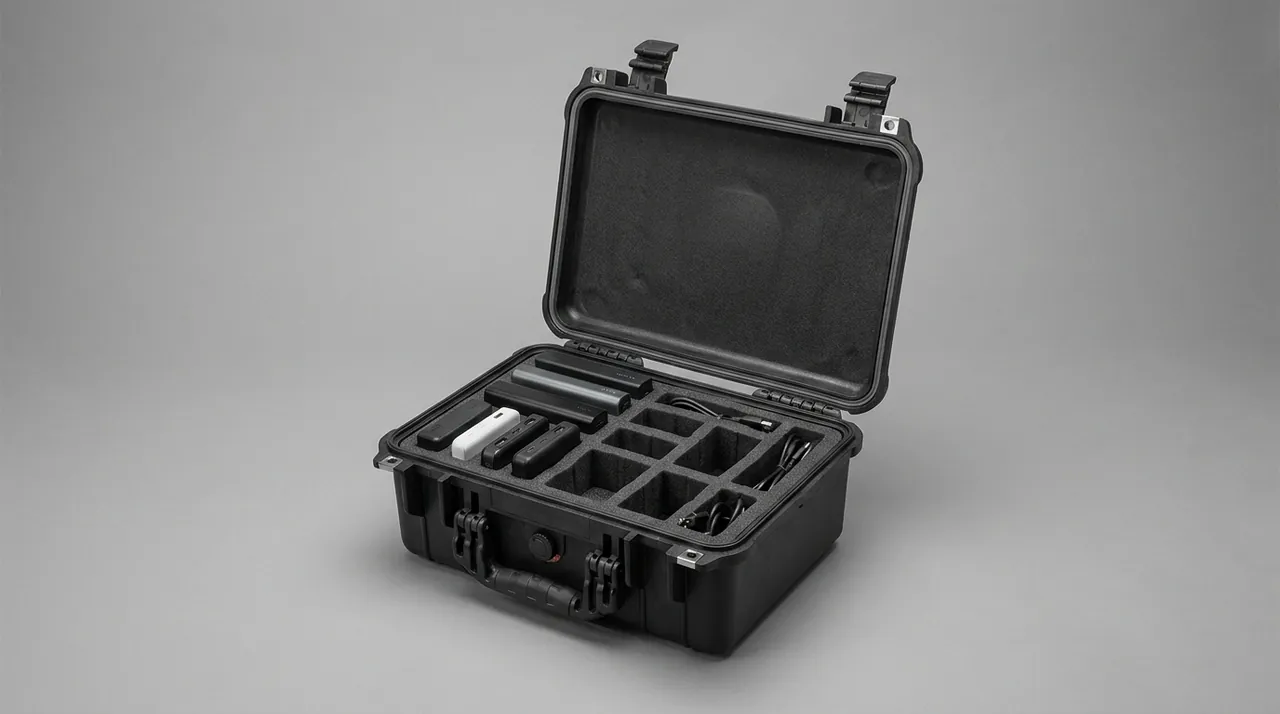
Electrical-part cavities should be separate small chambers kept at low humidity, with a static shield layer where warranted.
Zoning rule: three categories, three cavities — flexible media in one, precision metal in another, electrical items in the third. If case dimensions force only two cavities, merge electrical and metal items with reinforced moisture control, and keep the media in its own cavity.
Liner elements should also be removable and refittable. Baghouse maintenance windows are short, and if the liner is destroyed when the first spare is removed, the remaining parts lose their protection. Make the liner removable and deliver the layout drawing with the case.
Thermal Cycling, Ocean Freight and Long-Term Storage
Real storage and transport conditions for dust collector spares are usually harsher than the manufacturer imagines. Three typical environments need separate responses.
Ocean freight for export. A container sees day-night temperature swings over the voyage, with heavy condensation on interior walls and a high-humidity, high-salt external environment. Moisture uptake risk for media and corrosion risk for pulse valves both rise. Countermeasures: barrier liner, ample desiccant, sealed outer case, plus sensible internal arrangement to reduce stacking pressure. On long ocean routes, fit a humidity indicator window that can be read without opening the case.
Domestic road and rail. The main risks are vibration and handling shock, plus rain ingress en route. Beyond mechanical protection, the outer case should have basic water resistance so rain does not penetrate to the barrier liner.
Long-term on-site storage. Power plant and cement plant spare parts yards are often open or semi-open. The longer the storage period, the greater the protection burden. Manage by tier: within three months the original packaging can stand as is; three to six months calls for checking humidity indicators and replenishing desiccant; beyond six months, open the case to inspect bag form and metal surfaces and reapply rust prevention and barrier protection if needed.
| Storage condition | Main threat | Measures | Inspection frequency |
|---|---|---|---|
| --- | --- | --- | --- |
| Climate-controlled indoor store | Minimal | Keep original packaging | Once before installation |
| Sheltered warehouse | Humidity, dust | Elevate off floor, keep closed | Check indicator monthly |
| Semi-open yard | Damp, thermal swing, rain splash | Reinforce barrier, replenish desiccant | Fortnightly |
| Open coastal yard | Salt fog, condensation, sunlight | Barrier liner, rain cover, periodic re-inspection | Weekly |
One point deserves emphasis: thermal cycling effects on pulse valves are routinely underestimated. Diaphragm materials stiffen in cold and age faster in heat, so repeated cycles degrade elasticity. If spares must sit for long periods in regions with wide temperature swings, pack the valve items separately indoors.
Loading, Stacking and Test References
Loading and stacking sound like common sense, yet the most frequent cause of a failed protection scheme is someone adding "just one more part" at the last minute.
Loading principles: heavy parts low, light parts high; support point spacing for long parts not too wide; filter bags must never be used as void filler; no unsecured free space inside the case, since loose parts accumulate kinetic energy in transit.
Stacking principles: respect the marked stacking tiers; provide a rain-shedding top layer and elevate the base off the ground outdoors; keep orientation consistent with the case design and never invert.
Test references should be organized along mechanical and environmental lines:
- GB/T 4857 series: basic tests for transport packages, covering stacking, vibration, impact and drop, used to verify whether liners and restraints are sufficient.
- ISTA series: select the program matching the actual distribution mode, well suited to intermodal shipments.
- ASTM D4169: sequences tests around a distribution cycle, commonly used on export projects.
- MIL-STD-810H: environmental test methods applicable to humidity, temperature, vibration and shock, used as an environmental suitability verification basis. It must be stated clearly that this is a reference to test methods, not a military certification, together with the specific method numbers and severity levels.
- GB/T 10125 and similar salt spray methods: evaluate rust prevention effectiveness on metal parts under high-salt ocean conditions.
Acceptance criteria should be written as quantifiable clauses covering at least: no structural deformation of the case after testing, no liner displacement, no new creases or ruptures in filter bags, no rust spots or impact damage on metal parts, and humidity indicators below threshold. For the wider logic of mechanical protection testing, see how to sequence GB/T 4857 transport packaging tests.

Receiving Inspection and On-Site Repacking
Receiving inspection closes the loop, and it is also the fastest place to detect problems. Record each item against the project list:
| Inspection item | Method | Pass criterion | Action on failure |
|---|---|---|---|
| --- | --- | --- | --- |
| Case exterior | Visual | No punctures, no structural deformation | Record and open fully |
| Humidity indicator | Read card | Below colour-change threshold | Reinspect all components |
| Bag appearance | Visual and tactile | No new creases, snags or mould spots | Photograph and assess concession |
| Membrane layer | Visual | No blistering or rupture | Record and contact manufacturer |
| Pulse valves | Visual and dimensional sampling | No impact damage, no corrosion on seal faces | Assess individually |
| Pilot valve ports | Visual | Plugs intact, no dust ingress | Clean and re-inspect |
| Cage straightness | Visual and sampling | No visible bending | Straighten or replace |
| Tube sheet | Visual and flatness check | No bending, no burr damage at holes | Assess grinding allowance |
| Liner and documents | Visual and cross-check | Liner intact and refittable, packing list matches | Complete before warehousing |
Two points about on-site repacking are easily missed. First, remaining spares should return to their original packaging form as soon as possible; do not leave opened filter bags lying bare in the workshop. Second, reinstall parts according to the liner layout drawing so cavities are not repurposed. Where the site must draw different part types frequently, the zoning approach in removable divider systems in component cases is worth adopting.
Supply Models and Customization Workflow
Dust collector spares are usually purchased per equipment set or under annual framework agreements, and case types must match the whole spare parts list. A five-step workflow is recommended.
Step one, compile the list. Record bag dimensions (diameter by length, media type, surface treatment, mouth configuration), pulse valve models and quantities, cage and tube sheet dimensions and weights, electrical item list, plus transport mode, destination climate and storage duration.
Step two, allocate cavities. Decide which parts ship together and which must be separated, and define the protection form, desiccant quantity and humidity indicator placement for each cavity.
Step three, validate the first article. Build a first article, run a physical fit check and, where warranted, the transport tests described above.
Step four, serial production. Manufacture against the project number and retain key process records for traceability.
Step five, on-site support. Provide refitting drawings, unpacking work instructions and storage guidance.
On the manufacturing side, production for this case family is carried out by Kexin New Materials (Guangdong) Co., Ltd. Case exterior dimensions, liner cavities and barrier schemes can be customized item by item against the dust collector model, filter bag specification and pulse valve quantity. Beyond its own brand supply, the company also takes OEM/ODM contract manufacturing orders and distributes to customers worldwide through wholesale and regional agency channels; for projects requiring acceptance support, test documents and material certificates can be supplied with the shipment under the terms of the contract. Where a project also covers air pollution control equipment, the handling of scrubber and catalyst components described in air pollution control equipment cases is worth reviewing, so that the case family can be planned as one series from the start.
Frequently Asked Questions
Q: Can filter bags and pulse valves share the same cavity?
A: Not advisable. Their failure mechanisms differ, and co-packing creates risk in both directions. Pulse valve bodies, header connections and cradles are rigid metal parts with sharp edges and threads. Under transport vibration, filter bags rubbing repeatedly against those surfaces suffer membrane rupture and scrim snagging, damage that only becomes visible after installation, when tracing it back to transport is no longer possible. In the other direction, metal chips, casting sand and thread protector fragments shed by valve bodies and cradles embed in the filter media, becoming abrasive and clogging sources that cannot be removed in service. If case count limitations force co-packing, at minimum separate the cavities, install independent barrier layers, keep media surfaces from touching any metal part directly, and configure desiccant per cavity. For high-value media such as PTFE membrane or glass-fibre composite, and for high-precision pulse valves, insist on separate cases. Where annual framework agreements make separate cases uneconomical, at least split the shipment into a media case and a valve case so that the two protection logics stay independent.
Q: Should filter bags be packed folded, rolled or laid flat?
A: It depends on storage duration and media type; there is no single answer. Folded packing offers the highest space efficiency, but compaction at the fold line creates a hard, low-permeability edge that wears through first in service, so it suits short turnover only, with a generous fold radius and no long-term pressure at the fold. Rolled packing avoids fold lines and suits medium-to-long storage and long bags, but needs a core support so the roll does not loosen and squeeze itself, and winding tension must not be excessive or compaction occurs anyway. Flat laying is gentlest on the media and suits brittle fibres such as P84 and glass fibre, but consumes floor area and limits stacking. Empirical practice: polyester and PPS bags may ship folded for short distances, moving to rolled for long distances or long storage; P84 and glass-fibre composite bags should be laid flat or rolled at a large radius; every configuration should avoid sustained compressive load at fold or layer positions.
Q: What happens if a pulse valve pilot orifice clogs, and how is it prevented?
A: The pilot orifice is the control passage for pulse valve actuation, often only a fraction of a millimetre across. Once sand, metal chips or dried lubricant residue block it, the valve cannot open or close on signal. The consequence is cleaning failure: incomplete cleaning raises operating resistance and energy consumption, and bags that keep carrying dust wear faster. More seriously, a valve stuck open or closed wastes compressed air or unbalances compartment differential pressure. Prevention works in three stages. At the manufacturing end, clean and function-test before dispatch. At the packaging end, fit dust plugs or sealing tape on ports, give pilot valves their own cavity, and introduce no materials into the case that shed debris. At the site end, remove plugs first and perform an air check per the work instruction, and keep packing and unpacking inside a contamination-controlled area rather than leaving the case open for long periods in a dust-laden workshop.
Q: How much desiccant should be used — is more always better?
A: More is not better. Desiccant quantity must match the case internal volume, the barrier performance and the target storage duration. Overuse is uneconomic and can leave liquid accumulation once the desiccant is saturated. In engineering practice, establish three inputs first: the net volume of the space requiring humidity control, the actual moisture vapour transmission level of the barrier liner, and the target storage period with the environments to be crossed. Then set the desiccant quantity according to empirical ratios and suspend it distributed around the case rather than concentrating it under the components. Concentrating it leaves regions far from the desiccant at persistently high humidity, creating localized condensation. Fit humidity indicator cards so protection status can be confirmed visually. For long-term storage, work by tier: inspect and replenish at three to six months, and open the case beyond six months to re-inspect component condition. Where a case is large with a long seal line, shrink the humidity-controlled volume from the whole case to the interior of the barrier liner.
Q: What special requirements apply to packing antistatic filter media?
A: Antistatic media incorporate conductive constituents into the fibre or scrim to lower surface resistivity, and they serve duties handling combustible dust. Packaging requirements follow two threads. The first protects conductivity: conductive constituents are sensitive to foreign contamination, so packing should avoid contact with metal chips, carbon powder and oil, and should not share a cavity with materials that shed debris. The work area should be clean and operators should follow antistatic work practices. The second thread concerns the electrostatic behaviour of the packaging itself: for spares destined to handle combustible dust, a static discharge during transfer or unpacking is an ignition risk, so packaging materials should be of the dissipative type, large-area film should be grounded, and the case should carry the necessary warnings. Note once again that antistatic packaging aims at controlled charge dissipation rather than complete insulation, and specified surface and volume resistance limits should match the actual work environment.
Q: How does condensation form inside a case during ocean freight?
A: Condensation occurs when a surface temperature falls below the dew point of the surrounding air. Over a sea voyage a container experiences day-night temperature swings: by day the internal air warms and its moisture content rises, and by night the outer walls and case exterior cool rapidly, so water vapour condenses on the cooler surfaces, including the case exterior and any bare metal surfaces inside. Over time this accumulates into a water film in crevices and at the base, providing the conditions for electrochemical corrosion while keeping the filter media persistently damp. Four responses help: use a barrier liner to isolate components from case air so condensation forms outside the liner rather than on the parts; fit desiccant matched to the voyage to control absolute moisture inside the liner; fit a pressure equalization valve to reduce the breathing caused by repeatedly forcing the seal open; and arrange the load sensibly inside the container, keeping cases away from container walls, then let the case equalize in the storage environment before opening, so that cold parts are not exposed to warm humid air and condensate instantly.
Q: Which transport tests should a dust collector parts case undergo?
A: Verify along two separate lines, mechanical and environmental, and define acceptance criteria in the technical agreement in advance. Mechanically, select stacking, vibration, impact and drop methods from the GB/T 4857 series according to the actual transport mode, to verify that liners, cradles and restraints can carry the transport loads; ISTA programs may be selected by distribution mode; export projects may use ASTM D4169 to sequence tests around a distribution cycle. Environmentally, focus on validating moisture and corrosion protection: humidity and thermal cycling tests assess condensation risk, while salt spray methods assess rust prevention under high-salt ocean conditions. Where a contract cites MIL-STD-810H, use it as a reference to environmental test methods and state explicitly that this is a reference to test methods, not a military certification, together with the specific method numbers, severity levels and acceptance criteria. The purpose of any test is to make the scheme verifiable rather than to tick a box, so the criteria must be quantitative.
Q: What should be considered when storing pulse valves in cold conditions?
A: Cold mainly affects diaphragms and lubrication state, and the problem often shows up at the moment of unpacking. Diaphragm materials stiffen in cold, becoming harder and more brittle; if they take an impact or are forced into assembly while cold, they crack or take a permanent set. Some valve internals use grease that thickens in cold, which can make pilot valve action sluggish. Storage and transport recommendations follow. Pack pulse valves in their own cases indoors or in a space with some temperature control, avoiding long outdoor exposure. Before opening, let the case equalize with the storage environment; do not carry it from a cold space straight into a warm humid workshop and open it there, or cold surfaces will condense immediately. Before assembly, check diaphragms for hardening or cracking and replace if necessary. Valves stored long term should have a function test before commissioning, confirming opening and closing pressures are normal. These practices matter particularly for winter installation projects in northern regions.
Conclusion and Related Reading
The design of a dust collector parts case reduces to one sentence: compartmentalize first, control moisture second, and think about cushioning last. Compartmentalization resolves the conflict between flexible media and precision valves. Moisture control addresses the shared enemy of media moisture uptake and diaphragm ageing. Cushioning only addresses vibration and displacement, and leaving it until last actually makes it clearer where to place it and how hard it should be. Write bag crease and membrane condition, pulse valve seal face and port condition, and internal humidity indicator readings into the acceptance criteria, because these three reveal the true level of protection far better than whether the case exterior survived intact.
Related Reading