

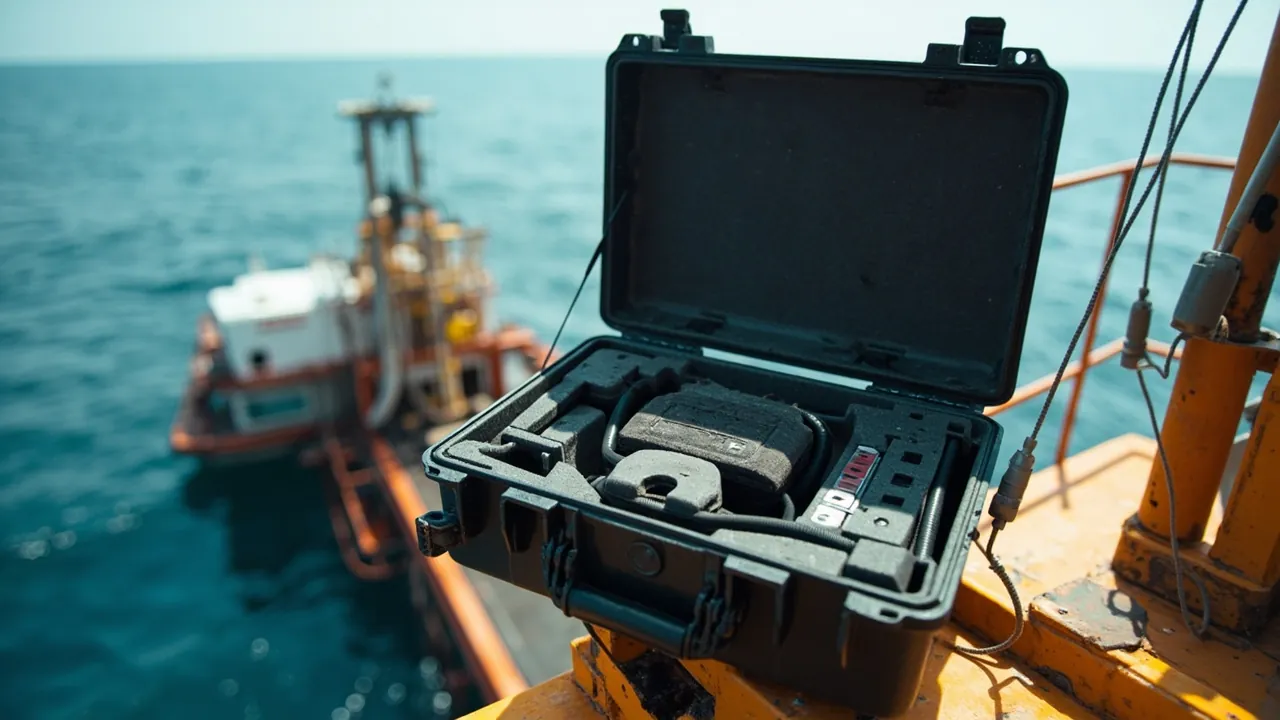
A marine buoy instrument case protects ocean observation equipment case and hydrological instrument case payloads such as sensors and data loggers through transit, deck storage and long-term offshore deployment turnaround. These are high-value assets whose downtime is extremely expensive: a single salt-spray attack, a single condensation event or a single transit vibration can shift the readings of CTD, ADCP, wave sensors and water-quality sensors, or void an entire season of data.
Conclusion: a marine buoy case should be specified for full-wrap suspension, hard-shell compartments for critical parts, salt-spray sealing and traceability, with IP/IK and corrosion ratings set by the deployment sea area and cycle, and IEC 60529, GB/T 4208, ASTM B117 and ISTA test reports obtained, so the ocean observation equipment case is protected from the shore warehouse to the offshore platform and safely recovered.
Many organizations move the equipment inside a marine buoy instrument case in ordinary wooden or foam boxes, only to find rust, condensation, displacement and salt ingress into connectors offshore, and discover failed sensors after returning to port. The goal of an ocean observation equipment case is not merely "unbroken", but still serviceable and compliant after salt spray, damp heat and vibration when the instrument reaches the deck. The following walks through standards, structure, sealing, corrosion protection, transport and acceptance, covering configurations such as marine buoy case, buoy instrument case, hydrological instrument case, offshore deployment case and ocean observation equipment case. Related sealing and corrosion approaches can be found in IP67 protective case and case seal materials.
Table of Contents
- Application Scenarios and Protection Pain Points
- How to Choose Protection Rating: IP and IK
- Standards and Test Basis: IEC 60529 / ASTM B117 / ISTA
- Case Material and Structure
- Liner and Cushioning System
- Sealing, Latches and Breather Valve
- Temperature, Humidity and Salt-Spray Management
- Transport and On-Board Storage Adaptation
- Offshore Deployment and Maintenance Turnaround
- OEM/ODM and JUNZHJIA Customization
- Procurement and Acceptance Checklist
- Maintenance, Spare Parts and Asset Management
- Selection Parameter Comparison
- Cost and Lifecycle Analysis
- Frequently Asked Questions
- Summary and Further Reading
Application Scenarios and Protection Pain Points
A marine buoy instrument case covers three typical scenarios: first, land transport and warehousing turnaround from the shore base to the pier; second, vessel deck transport and temporary storage; third, long-term deployment and periodic maintenance on an offshore platform. A hydrological instrument case often sails with the vessel for weeks, and the deck has large day-night temperature swings, high salt-spray concentration and frequent wave splash, so the case must be both waterproof and resistant to UV aging.
Around the ocean observation equipment case, this section first sorts out typical use scenarios and transport failure modes.
Equipment inside a buoy instrument case usually includes multiparameter water-quality analyzers, conductivity-temperature-depth (CTD) probes, acoustic Doppler current profilers (ADCP), wave sensors, data loggers and battery packs; if any one of them is damp or takes in salt, the credibility of the whole data string is compromised. Common failures come from four sources: salt-spray electrochemical corrosion, temperature-change condensation, deck vibration displacement and connector insulation degradation. Ordinary wooden boxes are not sealed, have loose liners and no corrosion treatment, so they cannot cover these risks, which is why a dedicated offshore deployment case solution is required.
Different stages need differentiated adaptation: the land leg cares about vibration and tipping prevention; the sea leg cares about deck lashing and salt spray; the long-deployment leg cares about a breather valve balancing pressure differential and anti-fouling. A packing list and ID tag travel with the case, easing cross-voyage transfer and after-sales traceability, and keeping the marine buoy case asset ledger clear and auditable.
From a data-value perspective, a marine buoy instrument case often carries a continuous observation sequence: once moisture or salt enters midway, the usability of the whole sequence suffers, and re-measurement costs far more than the protection investment. Therefore, when selecting a buoy instrument case, do not only compare the case unit price; bring data credibility, voyage continuity and repair downtime into the evaluation together. For an ocean observation equipment case undertaking long-term monitoring, protection margin is itself part of data quality and part of the observation project's ability to meet its obligations.
How to Choose Protection Rating: IP and IK
The protection rating of a marine buoy case centers on two items, IP and IK: IP is expressed by two digits, the first for dust (5 for dust-protected, 6 for dust-tight) and the second for water (5 for jet, 6 for strong jet, 7 for temporary immersion, 8 for continuous immersion); IK indicates impact resistance, with IK08 withstanding about 5 joules and IK10 about 20 joules. An offshore deployment case on deck should start at IP66, use IP67 where waves may strike or brief immersion is possible, and IP68 for long-term floating deployment.
Beyond IP/IK, the marine environment requires a separately specified corrosion rating. Marine atmosphere is commonly assessed by neutral salt-spray tests per ISO 9227 and ASTM B117, and the corrosivity category can follow ISO 12944 C5-M (marine high corrosivity). For a buoy instrument case, hardware should prefer 316 stainless steel, seals should use weatherable EPDM or silicone, and the case should avoid ordinary carbon-steel fasteners, which can rust tight within months.
| Deployment Scenario | Suggested IP | Suggested IK | Corrosion Focus | Typical Use |
|---|---|---|---|---|
| --- | --- | --- | --- | --- |
| Shore-base warehouse turnaround | IP65 | IK07 | General moisture | Marine buoy case |
| Pier and short land transport | IP66 | IK08 | Salt spray C4 | Hydrological instrument case |
| Vessel deck storage | IP66-IP67 | IK08 | Salt spray C5-M | Offshore deployment case |
| Long-term offshore deployment | IP67-IP68 | IK08+ | Salt spray C5-M | Ocean observation equipment case |
It should be noted that waterproof does not mean long-term immersion. IP67 means no ingress at 1 meter for 30 minutes, while long immersion and repeated wave impact need IP68 together with pressure-relief and breathing design. If a buoy instrument case must balance sealing with internal-external pressure differential, it can follow the general practice of shock and seal structures, balancing gasket compression against the breather valve.
Standards and Test Basis: IEC 60529 / ASTM B117 / ISTA
The test basis for an ocean observation equipment case should unfold along four lines: sealing, salt spray, vibration and drop, none of which can be omitted. Sealing follows the IP ratings of IEC 60529 and GB/T 4208; salt spray follows ASTM B117 neutral salt spray and ISO 9227, optionally with cyclic salt spray; vibration and shock follow MIL-STD-810H Methods 514 and 516.8; transport packaging follows the ISTA 3 series.
For a long-term offshore deployment case, classification-society rules and deck lashing requirements should also be considered. If a marine buoy instrument case sails with a research vessel, the owner usually requires anti-slip, anti-capsize and lashing-point documentation; where a lithium battery power module is involved, insulation and labeling must follow IMDG requirements for lithium batteries. The more complete the test documentation, the easier the acceptance and insurance claim for the ocean observation project.
- Sealing: IEC 60529 / GB/T 4208, declared by IP66-IP68 grade;
- Salt spray: ASTM B117 / ISO 9227, rated against C4-C5-M;
- Vibration and shock: MIL-STD-810H Methods 514 / 516.8, simulating swell and jolting;
- Transport: ISTA 3A/3E, covering sea-land combined hauling, stacking and temperature change.
Before formal volume procurement, it is advisable to run a small-batch trial of the hydrological instrument case, packing the equipment in its actual deployment attitude and recording salt-spray, humidity and vibration outcomes, as the baseline for selection and acceptance. Related life and maintenance cycles can follow the assessment method of protective case service life.
In test execution, it is advisable to combine salt spray and vibration into a combined condition rather than isolated tests. The real failure of an offshore deployment case is often the result of salt-spray corrosion plus deck vibration plus temperature-change condensation stacking together, and passing a single test does not guarantee overall reliability. One can run vibration first, then salt spray, then a temperature-humidity cycle, and observe the joint degradation of the sealing surface and hardware, which is closer to real sea conditions. Acceptance of a marine buoy case should also reference combined-condition conclusions, and require the supplier to explain test sequence and criteria.
Case Material and Structure
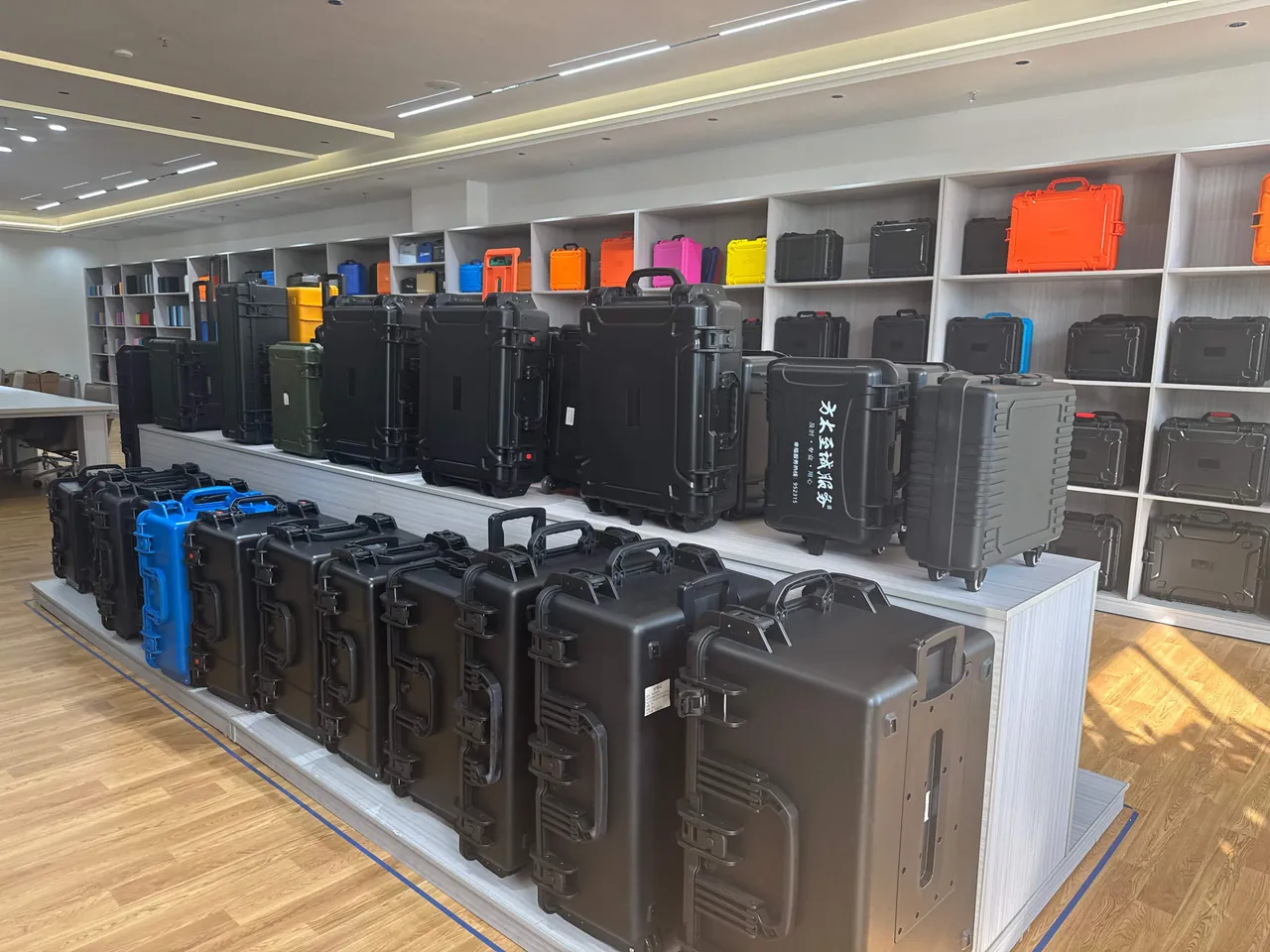
The case material of an offshore deployment case prioritizes salt-spray resistance, UV resistance and impact resistance. Rotomolded polyethylene (HDPE/LDPE) one-piece forming is the mainstream choice for a marine buoy case: uniform wall thickness, impact resistant, low-temperature tolerant and available with UV stabilizers; polypropylene (PP) is tough and chemical resistant, suited to a hydrological instrument case; marine-grade aluminum alloy shell is lightweight and heat-dissipating, suited to an ocean observation equipment case that is frequently carried by hand.
Structurally, attention should be paid to corner reinforcement, replacing hinges and latches with metal parts, and to stacking and lashing design. An offshore deployment case should have lashing holes or rails at the bottom for deck locking; the lid should carry anti-slip ribs and a drainage channel to avoid pooling. Fasteners should be uniformly 316 stainless steel, and the sealing face should be flatness-controlled to prevent gaps after prolonged vibration.
| Material | Salt-Spray Resistance | UV Resistance | Weight | Application |
|---|---|---|---|---|
| --- | --- | --- | --- | --- |
| Rotomolded HDPE | Excellent | Excellent (with additive) | Medium | Marine buoy case |
| Modified PP | Good | Good | Light | Hydrological instrument case |
| Marine-grade aluminum | Excellent | Excellent | Fairly light | Portable observation case |
| ABS+PC alloy | Medium | Medium | Medium | Shore-base turnaround case |
The material grade and corrosion treatment should be marked in the acceptance documents for long-term traceability. JUNZHJIA supports recommending material and surface treatment by sea area and deployment cycle, and issues structural notes, helping marine buoy case users align technical requirements in one pass during tendering.
Liner and Cushioning System
The liner decides whether the equipment in a buoy instrument case "shakes, compresses or collides". An offshore deployment case commonly uses closed-cell EVA or XPE foam, CNC-cut to the three-dimensional shape of the equipment, so that the CTD, water-quality sensors and loggers each sit in their own position without pressing each other. Closed-cell foam does not absorb water, reducing dampness and mold, making it the preferred choice for a hydrological instrument case.
The cushioning system is best as "primary full wrap plus secondary isolation": the main unit and sensors are fully wrapped in foam, critical probes go into an independent hard compartment with a floating gap, and the case does not directly touch the equipment wall. Electronic loggers should get an anti-static liner and equipotential bonding, and battery modules should be independently insulated and fixed. An ocean observation equipment case can also add damping feet to weaken the continuous vibration transmitted from the deck.
For a marine buoy case that needs quick field access, the liner should have movable compartments and grab slots, so maintenance staff can load and unload with one hand even on a swaying deck. Related liner customization methods can follow the general process of cushion liner and custom cutting.
Sealing, Latches and Breather Valve
Sealing is the lifeline of an offshore deployment case. A marine buoy case usually uses a continuous full-perimeter EPDM or silicone gasket embedded in a flange groove and compressed to form a continuous seal; the gasket must resist salt spray, UV and low temperature to avoid offshore aging and cracking. The gasket profile is best a foam or solid composite, with compression matched to latch clamping force.
Latches and hinges should use 316 stainless steel, and butterfly or multi-point latches distribute lid pressure evenly across the sealing face. If an offshore deployment case is stored on deck with large temperature swings, a pressure-equalization valve (breather valve) is needed to balance the internal-external pressure differential, preventing negative-pressure lid suction or positive-pressure lifting from breaking the seal. The breather valve should have a waterproof breathable membrane, allowing air exchange while blocking moisture and salt-spray particles.
At acceptance, confirm the gasket is continuous around the perimeter with no breakpoint and no debris, and that inverted standing is silent with no water trace. For a frequently opened hydrological instrument case, hinges and latches should be metal and periodically lubricated. Related gasket replacement and maintenance cycles can follow the advice of case seal materials.
Temperature, Humidity and Salt-Spray Management
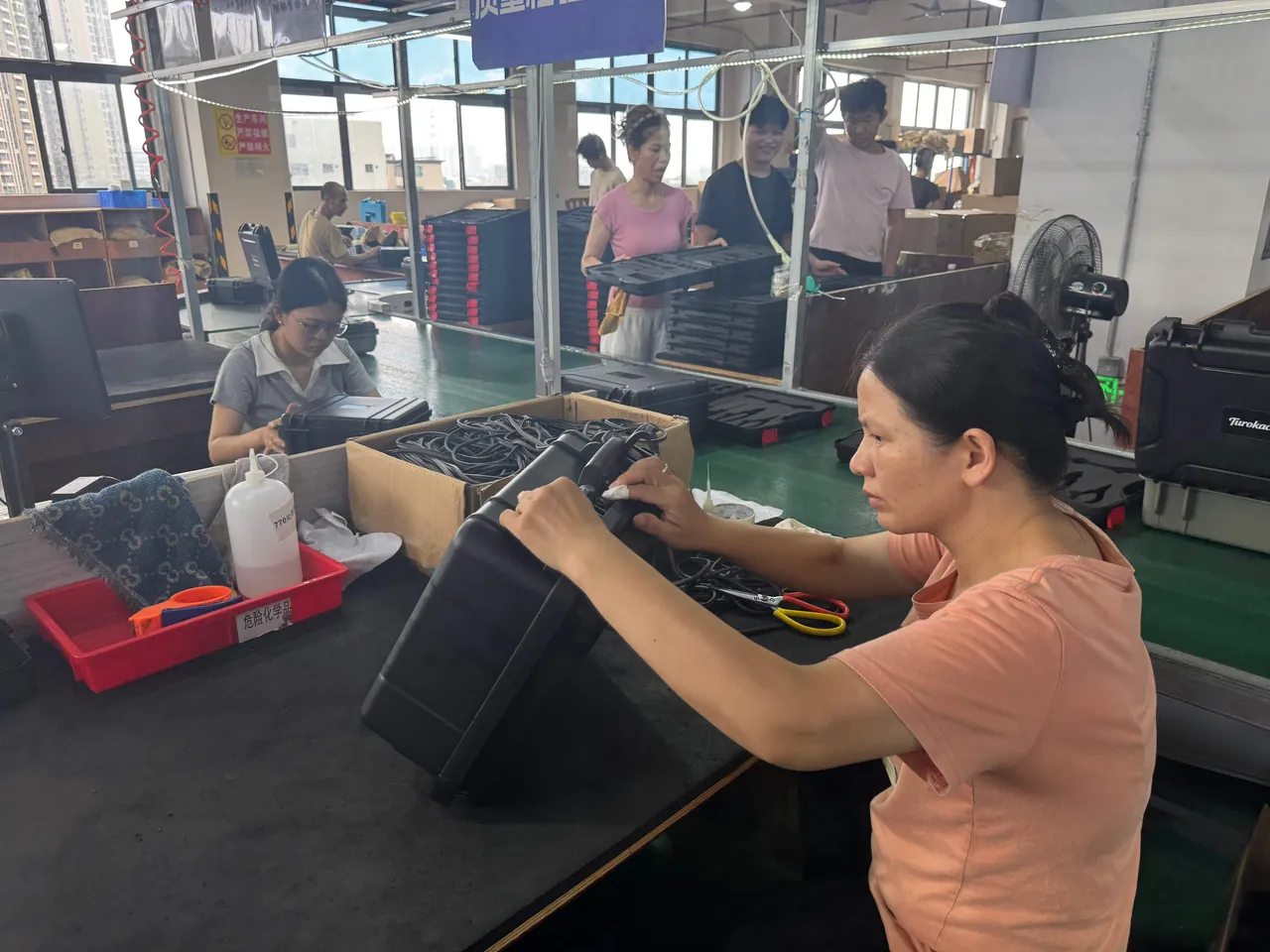
The biggest hidden killer of an ocean observation equipment case is temperature-change condensation. Offshore day-night temperature swings cause the air inside the case to condense repeatedly, and the water film on circuits and connectors gradually lowers insulation and causes electrochemical corrosion. The countermeasure is a "seal + absorb + visualize" trio: full-perimeter sealing blocks external moisture, desiccant and a humidity card go inside, and long-haul or long-deployment cases add a temperature-humidity recorder to form a traceable record.
Salt-spray management distinguishes "outside the case" from "inside the case". Outside, the material and coating resist salt spray; inside, sealing and drying keep salt out. After opening an offshore deployment case for maintenance, wipe the connectors and check for salt crystals before resealing. For a buoy instrument case with metal probes, a vapor-phase corrosion inhibitor (VCI) material inside the case can provide supplementary protection.
After long-haul transport across temperature bands to the pier, it is advisable to let the case equalize temperature before opening and powering up, avoiding condensation from sudden cooling or heating. Combining temperature-humidity management with asset traceability is standard redundancy for a marine buoy case in harsh environments, and markedly reduces the probability of "failed on arrival". Related electrochemical protection can follow the conductive and equipotential design of ESD shield case.
Transport and On-Board Storage Adaptation
Transport of a buoy instrument case covers road, pier lifting, vessel deck and container. Road transport cares about lashing and tipping prevention; pier lifting cares about lifting points and rated stacking load; deck storage cares about anti-slip, wave-impact protection and locking points; container transport cares about palletization and temperature-humidity monitoring. A marine buoy case should have forklift holes or lifting holes at the bottom and anti-slip tenons on the sides, for stacking without slipping.
On board, an offshore deployment case should be placed where lashing points exist, avoiding areas exposed to waves; the lid faces up and latches face out for quick access. Multiple cases with a unified outer dimension module ease modular loading and counting on deck and in containers. An ocean observation equipment case containing a lithium battery module should be insulated and fixed separately per dangerous-goods rules with labels, and must never be stored illegally mixed with equipment in the same cabin.
For cross-region voyages, it is advisable to run transport verification per ISTA 3 to confirm the case does not fail under continuous vibration and temperature change. For a high-value ocean observation equipment case, transport insurance is recommended, with an immediate opening inspection on arrival at port, retaining images and humidity-card readings as the basis for claims.
For multi-voyage, multi-station operations, it is advisable to build a standard loading diagram for the marine buoy case: specify each case's fixing points, stacking layers and loading sequence, and mark them on the lid. Then different crews do not need to figure it out again, which shortens deck operation time and reduces the risk of sliding and collision from improper temporary stacking. For an offshore deployment case, the loading diagram and lashing list are also documents delivered with the case, and should be filed together with the equipment list and humidity-card records.
Offshore Deployment and Maintenance Turnaround
The value of a marine buoy case lies not only in transport but also in the turnaround efficiency of long-term deployment and periodic maintenance. During deployment, instruments inside the hydrological instrument case must be quickly taken out on a swaying deck and mounted to the buoy frame; movable liner compartments and grab slots markedly shorten operation time and reduce the risk of dropping overboard. During maintenance, the equipment should be wiped of salt and checked for sealing before being refixed and dried in the case.
It is advisable to bring the offshore deployment case into an ID and checklist management system: each case bears an ID and an equipment checklist card, the master list is kept by a dedicated person, and reconciliation is done on departure and return. For a long-deployed ocean observation equipment case, a "voyage maintenance pack" can be included, containing spare gaskets, desiccant, humidity cards and fasteners, reducing offshore standstills from missing parts.
Turnaround must also address biofouling. Probes immersed long-term may carry algae and shellfish on their surfaces, which should be handled in an external washing area on return to shore, avoiding bringing salt and dirt into the case. If a marine buoy case is used for equipment with batteries, confirm battery charge and appearance before deciding whether to store it in the case. Related modular turnaround approaches can follow the combination method of modular case system.
OEM/ODM and JUNZHJIA Customization
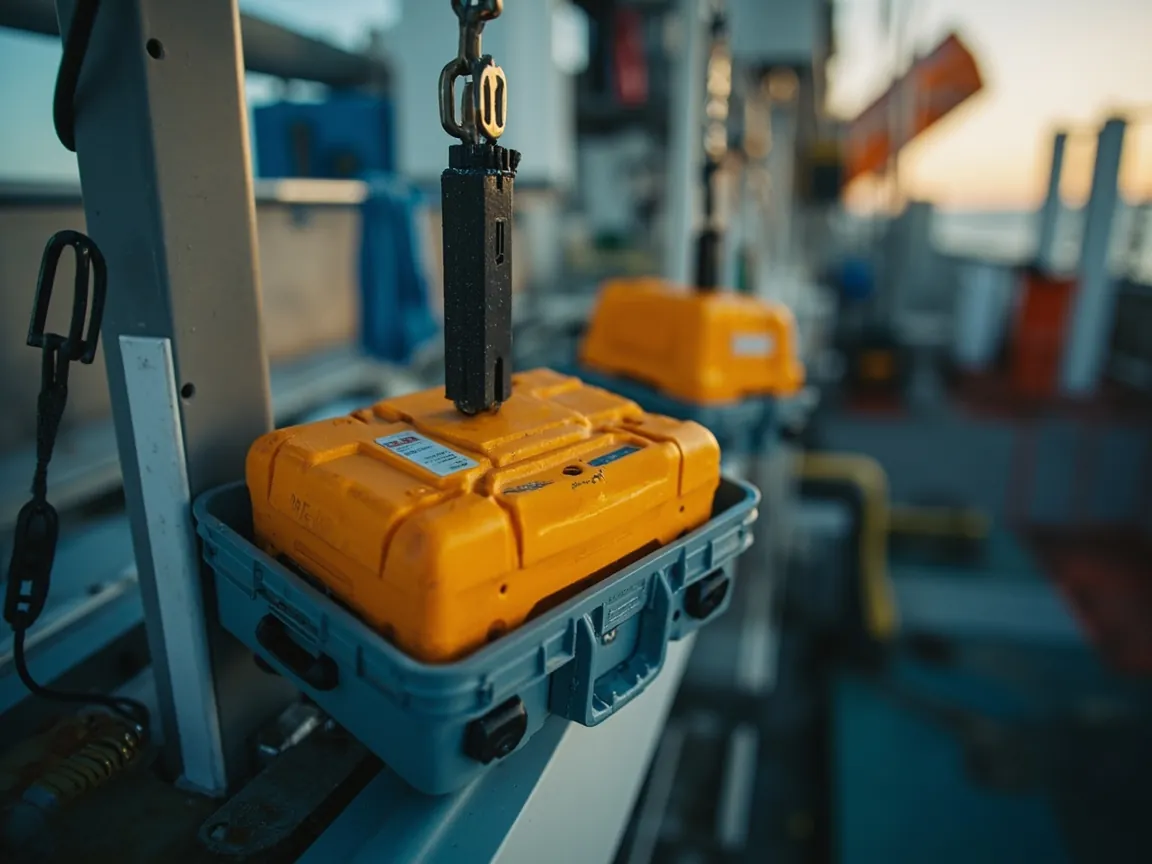
For ocean observation organizations, buoy integrators and instrument makers, JUNZHJIA provides integrated capability from case selection, liner customization to seal and corrosion-part matching. We can customize CNC-cut closed-cell foam liners according to the actual sizes of your CTD, current profiler, wave sensor, logger and battery module, achieving one slot per object with critical parts' hard compartments facing up; support OEM/ODM color, silk-screen and structural modification by sea area and project; and for export projects provide IP, salt-spray, vibration and transport test documents for inclusion in tenders and technical agreements.
Existing cases can also order liner and seal kits separately to upgrade corrosion protection and cushioning. For long-term offshore deployment cases, JUNZHJIA can support breather valves, 316 stainless steel hardware and UV-resistant surface treatment, helping clients align the maintenance cycle and life expectation of a marine buoy case in one pass. Related OEM/ODM processes can follow the customization notes of rotomolded protective case and aluminum alloy case.
Procurement and Acceptance Checklist
Documents recommended for procuring a marine buoy case: material grade and corrosion treatment notes, IP grade declaration or report (IEC 60529 / GB/T 4208), salt-spray report (ASTM B117 / ISO 9227), drop and vibration records (MIL-STD-810H, ISTA), liner layout drawing, flammability grade when a battery is present (UL94), ESD notes for electronics, and warranty and spares list. The contract should clarify the seal replacement cycle and breather valve maintenance requirements.
Physical acceptance points: trial fit without displacement, inverted standing without noise; full-wrap suspension with critical parts not touching the case wall; continuous perimeter seal with no breakpoint; complete 316 stainless steel hardware without rust; breather valve venting normally with an intact waterproof breathable membrane; humidity card and desiccant in place. For a high-value ocean observation equipment case, trial in small batches before volume, focusing on salt-spray and vibration stability under real sea conditions.
Maintenance, Spare Parts and Asset Management
The core of marine buoy case maintenance is sealing and corrosion protection: EPDM or silicone gaskets are affected by salt spray and UV, so check elasticity and cracks every six months, and shorten to quarterly in C5-M sea areas; check the breather valve membrane annually and replace it if clogged; check 316 stainless steel fasteners annually for looseness and pitting. Once a gasket hardens, cracks or has an unrecoverable compression set, replace it even if the appearance is intact, otherwise the IP rating fails.
The spare-parts strategy should be set at purchase: the high-frequency consumables of an offshore deployment case are usually gaskets, breather valves, desiccant and fasteners, which should be stocked by voyage. For the asset ledger, give each marine buoy case an ID and record overhauls and gasket replacements, combining humidity-card and temperature-humidity recorder data into a traceable service history for life assessment and budgeting.
Life-extending practices also include: keep the lid slightly open in long storage to avoid crushing the gasket; avoid prolonged UV exposure, using a sunscreen cover where needed; rinse the case exterior of salt with fresh water and dry it after returning to shore. With this maintenance, a hydrological instrument case can serve many sailing seasons without protection loss. Related life assessment can follow protective case service life.
Selection Parameter Comparison
| Parameter | Shore-Base Turnaround | Deck Storage | Long-Term Deployment |
|---|---|---|---|
| --- | --- | --- | --- |
| Suggested IP | IP65 | IP66-IP67 | IP67-IP68 |
| Suggested IK | IK07 | IK08 | IK08+ |
| Corrosion rating | C3 | C4 | C5-M |
| Seal material | EPDM | EPDM/silicone | Silicone/EPDM |
| Hardware | 304 stainless | 316 stainless | 316 stainless |
| Liner material | EVA | Closed-cell EVA/XPE | Closed-cell XPE |
| Breather valve | Optional | Recommended | Essential |
| Drying solution | Desiccant | Desiccant + humidity card | Desiccant + recorder |
Selecting by the table above avoids both "over-design" and "under-protection" waste. The rating of a marine buoy case is not the higher the better, but matched to the sea area, cycle and handling method. Related parameter trade-offs can follow the grading approach of IP67 protective case.
Cost and Lifecycle Analysis
The selection of a marine buoy case should consider total lifecycle cost, not just the unit purchase price. A low-cost case may show rust and seal failure within months offshore, causing instrument repair, voyage delay and data voiding, and its combined cost far exceeds the purchase price difference. When evaluating, bring the gasket and breather valve replacement cycle, spare-parts availability, case repairability and salt-spray life into one cost table.
For an ocean observation equipment case, one sensor scrapped by moisture or salt ingress may equal the purchase cost of several marine buoy cases; one piece of equipment lost overboard due to deck fixation failure is even worse. Therefore, doing protection before sailing is far more economical than emergency repair and re-measurement after a voyage is interrupted. For an offshore deployment case with batteries, the lithium battery transport compliance and insurance cost should also be counted in the total.
Procurement scoring should include: completeness of IP/IK and salt-spray reports, liner customization capability, corrosion-resistant hardware configuration, breather valve and drying solution, spares and warranty terms, and OEM/ODM cooperation. Quantifying these makes the comparison of hydrological instrument case suppliers much clearer, and better supports long-term cooperation and volume cost reduction.
Frequently Asked Questions
Question: What protection rating should a marine buoy instrument case use?
Answer: Grade by deployment form: IP65 for shore-base turnaround, IP66 for pier and short land transport, IP66-IP67 for vessel deck storage, and IP67-IP68 for long-term offshore deployment, plus IK08 or higher impact resistance. Offshore, a salt-spray corrosion rating must be separately specified, designed against ISO 12944 C5-M marine high corrosivity, with 316 stainless steel hardware. IP only addresses water and dust ingress; corrosion protection relies on material, coating and hardware together. JUNZHJIA can recommend a rating combination by sea area and cycle and issue IEC 60529 and ASTM B117 test documents.
Question: After seawater immersion, does the case really not admit water?
Answer: IP67 means no ingress at 1 meter for 30 minutes, and IP68 means no ingress under continuous immersion; both require a continuous perimeter seal, even clamping and a qualified gasket compression. For long-term floating or repeated wave impact, besides choosing IP68, a pressure-equalization valve and waterproof breathable membrane should be fitted to balance the pressure differential and avoid negative-pressure lid suction. Note that waterproof is not the same as moisture-proof; a desiccant and humidity card inside are still recommended as secondary protection, especially for a hydrological instrument case with circuits.
Question: With large offshore temperature swings, how do I handle condensation inside the case?
Answer: Condensation arises when moist air inside the case releases a water film during a sudden temperature drop. The countermeasure is "seal + absorb + visualize": a continuous perimeter seal blocks external moisture, desiccant goes inside with a humidity card, and long-haul or long-deployment cases add a temperature-humidity recorder. After reaching the pier, equalize temperature before opening and powering up to avoid sudden cooling or heating. For metal probes, a vapor-phase corrosion inhibitor can supplement protection. Binding the temperature-humidity data to the asset history aids traceability and responsibility definition.
Question: Will a breather valve let salt spray into the case?
Answer: A qualified breather valve uses a waterproof breathable membrane that allows only air molecules through while blocking liquid water and salt-spray particles, so it maintains sealing while balancing the pressure differential. The key is membrane quality and installation sealing: the membrane must resist salt spray and UV, and the interface must be reliably sealed so it does not become a water path. At acceptance, a venting and waterproof test should be done, and the membrane checked annually for clogging or damage. On a deck with day-night temperature swings, a marine buoy case almost always needs a breather valve.
Question: Which liner material is better for the marine environment?
Answer: Closed-cell EVA or XPE foam is recommended. The closed-cell structure does not absorb water and resists mold, reducing dampness and biofouling, making it suited to an ocean observation equipment case; cutting is CNC-machined to the equipment's three-dimensional shape so the main unit, sensors and logger each stay in place. Cushioning uses "full wrap + hard compartment for critical parts + floating gap", with the case wall not directly touching the equipment. Electronic devices get an anti-static liner, battery modules are independently insulated and fixed, and damping feet weaken deck-transmitted vibration.
Question: How should a buoy instrument case be fixed on deck?
Answer: A marine buoy case should have lashing holes or rails at the bottom and anti-slip tenons on the sides, so straps can lock it to deck lashing points; avoid stacking in wave-exposed areas, and use a unified outer dimension module for modular stacking. The lid faces up and latches face out for quick access and inspection. An ocean observation equipment case with a lithium battery should be insulated and fixed separately per dangerous-goods rules with labels. For cross-region voyages, run transport verification per ISTA 3, buy transport insurance and inspect on arrival at port.
Question: How often should gaskets be replaced in a damp, high-salt environment?
Answer: A gasket is a consumable; generally check elasticity and cracks every six months, and shorten to quarterly in C5-M sea areas. Once it hardens, cracks or has an unrecoverable compression set, replace it even if the appearance is intact, otherwise the seal fails. Replace with a same-spec weatherable EPDM or silicone ring, and clean the flange before installation, ensuring no salt crystals or debris. Check the breather valve membrane annually. Combining with the humidity-card reading helps judge whether to replace earlier.
Question: Can JUNZHJIA do marine project customization and global supply?
Answer: Yes. JUNZHJIA supports custom closed-cell foam liners and OEM/ODM sampling by instrument and battery module size, can match seals, 316 stainless steel hardware, breather valves and UV-resistant surface treatment by sea area, and issues IP, salt-spray, vibration and transport test documents for system audits and tendering. We provide stable capacity for ocean observation organizations, buoy integrators and instrument makers, and can adapt specifically to long-deployment and high-frequency maintenance scenarios, helping turn offshore losses into quantifiable cost savings.
Summary and Further Reading
The selection of a marine buoy instrument case and an offshore deployment case should center on four main lines: full-wrap suspension, hard compartments for critical parts, salt-spray sealing and traceability, combined with sea area and deployment cycle to set IP/IK and corrosion ratings, and matched with breather valves, a drying solution and 316 stainless steel hardware, to systematically protect the CTD, ADCP, wave sensors and water-quality sensors of an ocean observation equipment case. Doing protection before sailing is far more economical than emergency repair and re-measurement after a voyage is interrupted.
Further Reading
- IP67 Protective Case: Waterproof and Dustproof Ratings and Selection
- Case Seal Materials: Gaskets, Rings and Compression Design
- Rotomolded Protective Case: One-Piece Shell and Impact Resistance
- Protective Case Service Life: Replacement Cycles and Life Extension
- Modular Case System: Stacking, Joining and Expansion of Combined Cases
- BESS Module Transport Cases: Battery Cluster & Energy-Storage Module Transit