

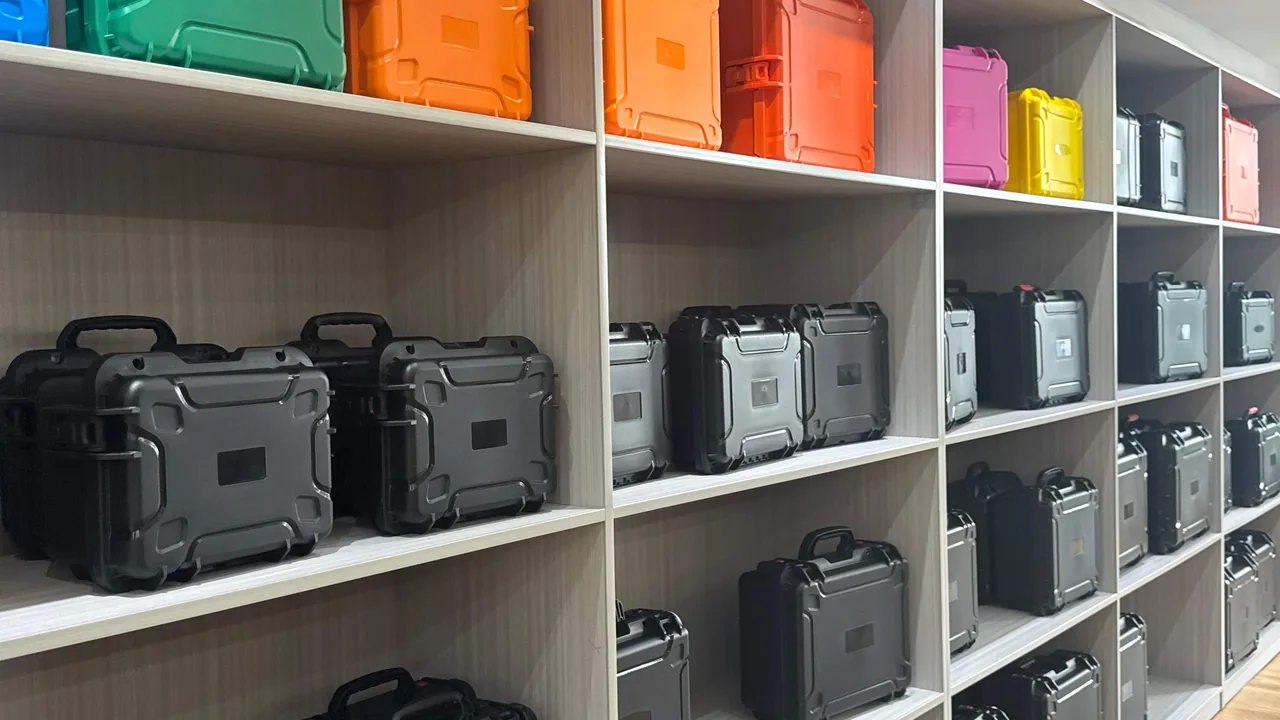
A palm oil mill turns fresh fruit bunches (FFB) into crude palm oil (CPO) through a fixed chain of equipment: steriliser, thresher, digester and heating tank, screw press, clarifier, sludge separator, vacuum dryer and finished oil storage. This line runs year round at 25–35 °C with 80%–95% relative humidity, and coastal mills add salt-laden air on top of that. As a result, press screws, pressing cage bars, clarifier scrapers, decanter rotors, pump rotors and valves are high-turnover spare parts that frequently travel across oceans and are lifted straight into the plant on arrival.
Damage to these parts in transit rarely looks like a shattered electronic device. It is quieter and more insidious: chipped hardfacing on screw flights, bruised keyways on shaft ends, scuffed mating faces, plastically bent cage bars and screens, pitted bearing races, scratched flange sealing faces and out-of-tolerance straightness on long shafts. Any one of these turns a half-day assembly job into a week of rework and may force the whole press line to run at reduced capacity.
JUNZHIJIA's protection principle is straightforward: a palm oil mill case must be designed in the order of mating faces first, dynamic balance second, cleanliness third — lock the datum faces and rotor attitude before you talk about moisture, salt spray or stacking loads.
Table of Contents
- 1. The Palm Oil Mill Equipment Chain and Its Transport Pain Points
- 2. Protecting the Press Screw and Pressing Cage Structure
- 3. Cage Bars, Screens and Thin-Walled Parts: Preventing Deformation
- 4. Clarifier Tanks, Scrapers and Skimmer Component Protection
- 5. Sludge Separators and Decanter Rotor Dynamic Balance Protection
- 6. Corrosion Protection for Pumps, Valves and Sealing Faces
- 7. Oil Residue, Fibre Carryover and Cross-Contamination Control
- 8. Tropical Humidity, Ingress Ratings and Salt Spray Strategy
- 9. Compartmentalisation and QR Code Traceability for Wear Parts
- 10. Cushioning Structure Design for Shock and Vibration
- 11. Foam Liner Selection: EPE, EVA and IXPE Compared
- 12. Stacking, Forklift Handling, Custom Delivery and Documentation
- Frequently Asked Questions FAQ
- Conclusion and Related Reading
1. The Palm Oil Mill Equipment Chain and Its Transport Pain Points
To understand why a protective case has to be designed a certain way, you first need to understand what each spare part actually is. The pressing station of a mill covers sterilising, threshing, digesting and pressing, with the screw press at its core. The clarification station then separates water, sand and fibre from the crude oil, and its core equipment is the clarifier tank, the sand trap and the sludge separator. Parts from these two stations fail in completely different ways: pressing-station parts suffer abrasive wear and high-torque deformation, while clarification-station parts suffer corrosion, scaling and loss of dynamic balance.
From a logistics perspective, palm oil mills cluster in equatorial regions across Southeast Asia, West Africa and South America. Sea transit is long, transhipment is common, quay handling is rough, and the final leg is often a rutted dirt road into the estate. A protective case therefore has to survive three load families at once: persistent high humidity and condensation inside a shipping container, multi-layer stacking in yards and on vessels, and sustained vibration plus random shock on the last overland stretch.
What is most underestimated is moisture, not impact. Palm oil equipment surfaces often carry a residual oil film, and that film traps palm fibre and mineral dust. In a hot, humid environment the mixture becomes a mildly acidic paste that accelerates corrosion of carbon steel. Once corrosion reaches a mating face or a sealing face, even a forced assembly leaves clearance and eccentricity, which later shows up as oil leakage, abnormal vibration and premature shaft seal failure. The first duty of a protective case is therefore moisture isolation; impact resistance comes second.
2. Protecting the Press Screw and Pressing Cage Structure
The heart of a screw press is the press screw (worm) and the pressing cage. The screw is normally tapered, with a decreasing pitch and an increasing root diameter from the feed end to the discharge end, generating pressure through volumetric compression. The flights are usually hardfaced with tungsten carbide or Stellite to resist abrasion from palm fibre and sand. The pressing cage is built from a set of cage bars or wedge wire, with slot widths commonly between 0.25 mm and 0.50 mm, and this gap directly governs oil extraction efficiency and the residual oil content of the press cake.
Transport risk for these two components concentrates on edges and datums. Hardfacing is brittle at corners, so if the screw is not restrained and shifts with the vehicle, flight edges striking each other or the case wall will chip. Screw shaft ends usually carry a keyway and thread for mounting a drive pulley or coupling, and any bruising there means on-site rework. The pressing cage is a rigid thin-walled cylinder that ovalises easily under radial squeeze, and ovality makes the slot gap uneven around the circumference.
For these parts JUNZHIJIA uses a two-point location plus single-axis restraint liner scheme. EVA profiled blocks cradle the machined journals at both ends of the screw so the precision datums carry the load. The unsupported flight section is packed with low-density EPE that does not touch the case wall. A steel shaft-end sleeve covers the keyway and thread, and a stop block locks axial movement. The cage is carried in an external ring clamp cradle that spreads load into the outer circumference rather than into the slot openings.

| Component | Typical material | Transport failure | Protection focus |
|---|---|---|---|
| --- | --- | --- | --- |
| Press screw | Cast or stainless steel with tungsten carbide hardfacing | Chipped flights, bruised keyway | Shaft-end sleeve, two-point EVA cradle, axial stop |
| Cage bars | Stainless wedge wire | Bending, slot distortion | External ring clamp cradle, interlayer pads |
| Drive shaft / coupling | Quenched and tempered alloy steel | Scuffed mating faces, rust | VCI film plus separate compartment |
| Taper sleeve / bushing | Bronze or wear-resistant cast iron | Bore scoring, ovality | Bore plug, end-face ring guard |
3. Cage Bars, Screens and Thin-Walled Parts: Preventing Deformation
Cage bars, screens, sieve plates and taper sleeves are classic thin-walled parts. Their shared weakness is low bending stiffness combined with tight flatness requirements. The bending that occurs in transit is usually not caused by a direct blow but by creep under stacked self-weight or by over-tight lashing: the part measures flat at packing time and is out of tolerance by the time it clears customs. This kind of deformation can rarely be corrected on site, so the whole batch is scrapped or returned, and it is one of the most common hidden losses in palm oil plants.
Protective design for thin-walled parts revolves around three ideas: bearing surface, separation layer and clamping force. The bearing surface means the part must never be supported on points or lines alone; a full-face pallet must spread the load evenly. The separation layer means inserting EPE sheets or corrugated dividers between adjacent layers to prevent metal-to-metal rubbing and galvanic corrosion. The clamping force means limiting strap pressure and using elastic pressure bars rather than rigid clamps, so that no local crushing occurs.
For sieve plates and screens with a flatness datum, standing the parts upright in a comb-like locating slot is usually better than laying them flat. The datum face then sees load in the same direction as in service, and operators can withdraw parts in sequence. For slender cage bars over one metre long, temporary stiffening ribs or spreader bars can be fitted and removed after unloading, preventing the bundle from bowing during lifting.
There is also a handling dimension that is easy to miss. Thin-walled parts should never be lifted by a single sling around the middle, because the resulting two-point bending is exactly the deformation mode the parts are weakest against. A spreader beam with two or more attachment points, or a purpose-made lifting frame that mirrors the support positions inside the case, keeps the part in the same stress state in the air as it is in the box. Written handling instructions printed on the case lid, with lifting-point symbols, cost very little and prevent a large share of arrival damage.
4. Clarifier Tanks, Scrapers and Skimmer Component Protection
The clarification station separates sand, water and fibre from crude oil by settling, and its main parts include the clarifier agitator shaft, the bridge, the scraper arms, the oil skimmer and the sand trap. Most of these are long shafts or wide-span welded frames, so the critical transport metric is straightness and flatness rather than surface finish. A six-metre agitator shaft supported at only two points with an unsupported middle will take a permanent set from transport vibration, and once installed it will show seal misalignment and abnormal noise.
A sound approach supports long shafts at three or more points, placed either side of the centre of gravity, and if necessary pairs the shaft with a temporary I-beam skid so the two act as one structural unit. Bridges and scraper arms are welded frame assemblies where stiffness changes abruptly at fillet welds. These nodes crack easily during lifting, so soft cushion blocks should sit at node positions and slings should never bear directly on a weld.
Skimmers and scraper blades are usually polished stainless sheet. Any hard contact leaves a scratch, and every scratch becomes a nucleation point for scaling. Such parts should be wrapped in non-woven fabric or PE bubble film and then placed in an individual compartment, never mixed with bolts, pins or other hard small items. Inside clarifier-station cases, JUNZHIJIA generally avoids bare metal fixing points altogether and uses low-hardness engineering plastic locating blocks instead, removing the scratch source at its origin rather than trying to manage it downstream.
5. Sludge Separators and Decanter Rotor Dynamic Balance Protection
The sludge separator and the decanter centrifuge are the most precise machines in the clarification station. Their rotors consist of a bowl, a scroll conveyor, a differential gearbox and main bearings. Rotors are dynamically balanced before dispatch, typically to grade G2.5 or tighter, and any impact, deformation or bearing damage in transit destroys that balance. The consequence after installation is severe vibration and, in the worst case, a cracked bearing housing.
There are three non-negotiable rules for rotor transport. First, the rotor must stay in its assembled attitude; it must not be dismantled and shipped loose, because a bowl in one corner and a scroll in another is simply a decision to abandon the factory balance state. Second, the rotor must be carried on its own bearing journals or on a dedicated transport cradle, never cantilevered, and the bowl outer diameter must never rest directly on the case floor. Third, an axial transport lock must be fitted so that inertial movement in transit cannot hammer the bearings.
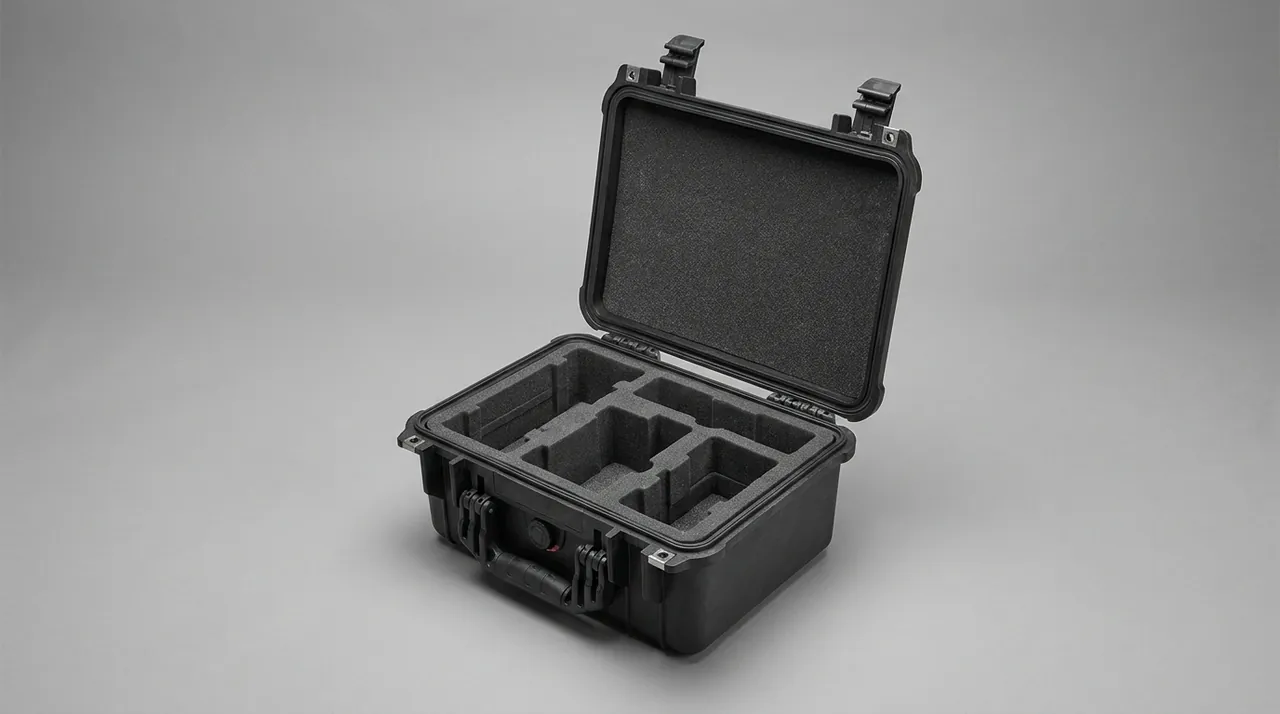
For the general handling logic of rotors and precision balanced assemblies, see Centrifuge Rotor Cases: Protecting Dynamically Balanced Parts. Moisture is just as damaging to these components as impact: bearings are precision parts, and once a raceway is pitted by corrosion the running noise and temperature rise immediately. Wrap the bearing cavity in VCI anti-rust film, enclose the whole machine in an aluminium-plastic composite moisture barrier bag, add sufficient desiccant based on net case volume (typically at least 500 g of silica gel per cubic metre), and fit a pressure equalisation valve so that the daily temperature swing in a container is relieved through the valve instead of being breathed in and out of the bag.
6. Corrosion Protection for Pumps, Valves and Sealing Faces
The clarification and sludge circuits depend on pumps and valves: screw and slurry pumps move sand-laden sludge, centrifugal pumps transfer crude oil, and gate, butterfly and pinch valves switch lines. Their shared weak points are sealing faces and linings — flange serrations, valve seat rings, rubber linings and the rotating and stationary faces of mechanical seals are all micron-level fits, and a single knock can create a leak path. For the broader principles of protecting this part family, see Pump and Valve Part Cases: Protecting Sealing Faces and Linings.
The corrosion mechanism in a palm oil mill deserves its own explanation. Crude palm oil contains free fatty acids (FFA) and, at elevated temperature and humidity, behaves as a weak acid that emulsifies and carries water. The sludge zone adds organic acids and sand, producing combined corrosion and abrasion attack. On carbon steel valve bodies, factory anti-rust oil has usually lost effectiveness after a long voyage, so vapour-phase corrosion inhibitor film must replace passive oil coating. On stainless steel parts, chloride pitting must be prevented and mixed loading with carbon steel must be avoided to eliminate galvanic couples.
| Medium / environment | Dominant corrosion form | Case and liner recommendation | Suggested rating |
|---|---|---|---|
| --- | --- | --- | --- |
| Crude oil with FFA (hot) | Weak acid attack, scaling | PP or ABS case with oil-resistant EVA | IP65 |
| Sand-laden sludge | Abrasion plus galvanic corrosion | HDPE case with separate compartments | IP67 |
| Coastal salt spray | Chloride pitting | PC case with stainless hardware and VCI | IP67 |
| Long open-yard storage | Condensation, mould | Case plus barrier bag plus desiccant | IP67 |
Mixing stainless and carbon steel hardware in one case is the most common and most overlooked mistake. As soon as condensation forms, the two metals create a galvanic cell; the carbon steel corrodes first, and the rust run-off then contaminates the stainless surface and initiates pitting there as well. The correct practice is to wrap every metal item separately, separate them with non-metallic dividers, and specify stainless or salt-spray-treated hardware for hinges and latches.
7. Oil Residue, Fibre Carryover and Cross-Contamination Control
Parts removed from a palm oil mill usually come away coated in residual oil, sludge and palm fibre. If they are packed without cleaning, the residue slowly oxidises and turns rancid inside the sealed case, producing a sticky acidic film and odour. That film corrodes metal and feeds mould. The daily temperature swing inside a shipping container then drives repeated condensation, the residue absorbs water and emulsifies, and the situation deteriorates further.
For this reason the first step in the protection process is not choosing foam but controlling cleanliness. Dewatering components used elsewhere on the same line have comparable requirements, as covered in Sludge Dewatering Equipment Cases: Protecting Filter Belts and Chemical Systems. Remove sludge with a food-grade cleaner, blow out crevices with compressed air, then wipe the oil film with anhydrous ethanol or a dedicated solvent, and only pack after confirming the surface is no longer slippery. Threaded holes, oil galleries and blind holes should be plugged before washing so that cleaner cannot remain trapped inside and become a new corrosion source.
Dirty and clean parts from the same batch must be packed in separate cases, or at the very least in strictly separated compartments. Old cage bars must not share a case with newly purchased bearings; a sand-laden pump housing must not share a case with a machined mechanical seal. The layering rule is contamination source at the bottom, clean parts on top, isolation layer in between, with a cleanliness and batch label inside the case so cleanliness can be verified at goods-in. For food-contact-grade parts, liner materials with halogen content or plasticiser migration risk should be avoided, and food-grade IXPE or PE foam specified instead.
8. Tropical Humidity, Ingress Ratings and Salt Spray Strategy
Ingress protection ratings are defined by IEC 60529 and the equivalent GB-T 4208. The first digit indicates protection against solid foreign objects and the second indicates protection against water. For a palm oil mill, IP65 means the case withstands water jets and suits in-plant transfer and sheltered storage, while IP67 means brief immersion and suits open-yard unloading, quay operations in rain and long-term high-humidity storage. The decision should be based on the real exposure between dispatch and installation, not on price alone.
Salt spray and damp heat are two different test philosophies. The neutral salt spray test in GB/T 10125 evaluates corrosion resistance in coastal environments, and typical acceptance criteria are no red rust after 48, 96 or 240 hours. Damp heat and thermal cycling tests focus on condensation and moisture absorption. It must be emphasised that salt spray hours do not translate into service years; the test is a relative ranking tool for materials and surface treatments, and 240 hours of salt spray cannot be read backwards as five years rust-free on an island.
Success usually comes down to details. Does the gasket harden at low temperature? Does the pressure equalisation valve relieve container pressure differentials? Has all hardware received a proper salt-spray-resistant finish? Does the liner foam stay elastic after absorbing moisture? For tropical export orders, JUNZHIJIA typically uses a five-layer moisture strategy: an IP67 case, an aluminium-plastic composite barrier bag, VCI vapour-phase protection, a pressure equalisation valve and desiccant. This cuts the condensation, corrosion and mould chain at several points at once rather than relying on any single barrier.
9. Compartmentalisation and QR Code Traceability for Wear Parts
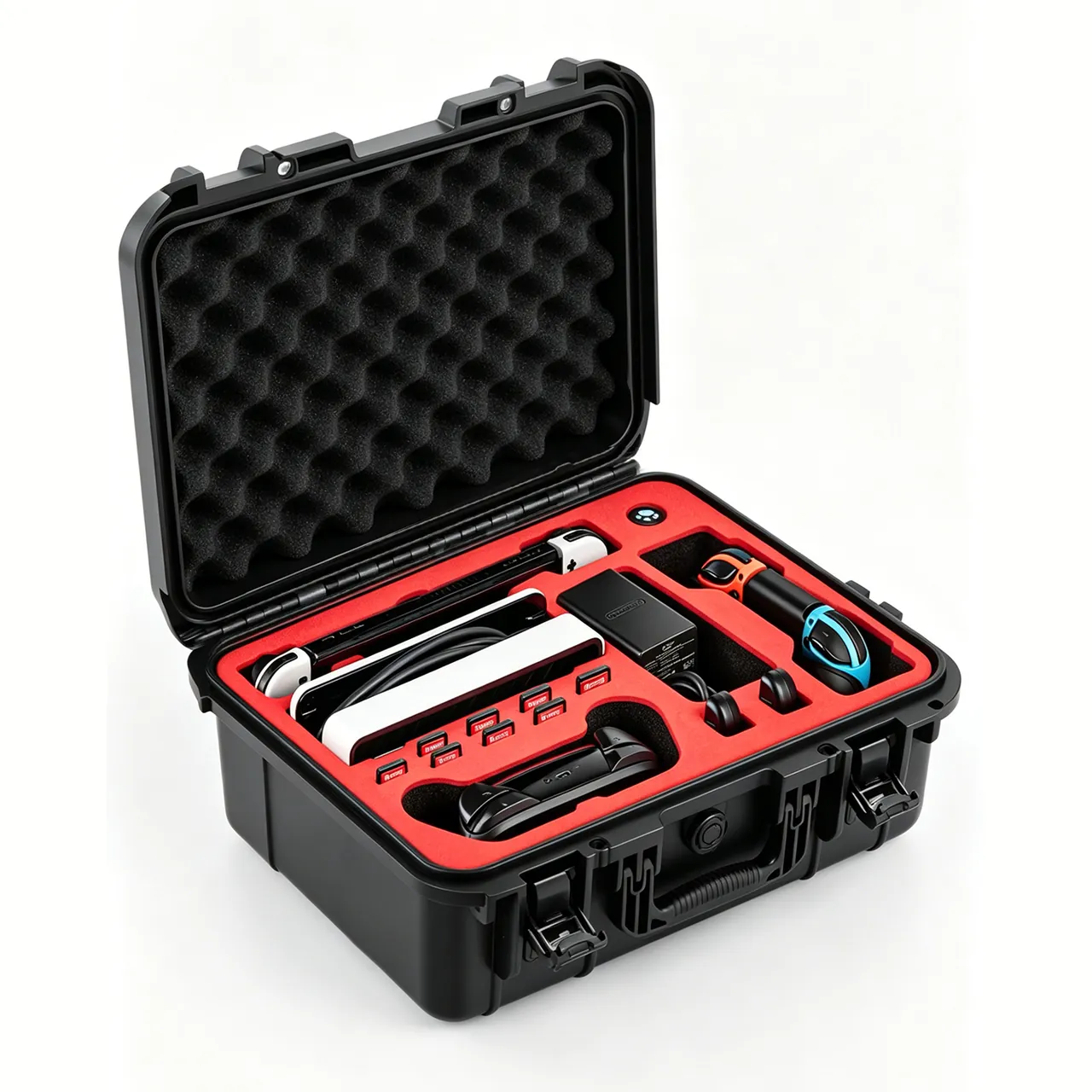
Palm oil mills usually order spares as a kit, and one screw press kit may contain a screw, cage bars, taper sleeves, shaft seals, bolts and gaskets. Packed loose in one large cavity, heavy items crush light ones, sharp corners scratch seals and small parts vanish into dead corners, and stocktaking means emptying the whole case. The value of compartmentalisation is not only impact separation; it lets the site withdraw parts in assembly sequence and cuts downtime.
The recommended practice is to divide compartments by assembly station: one cavity for the pressing station, one for the drive train, one for seals and fasteners, each independently removable as a drawer or sub-case. Dividers between cavities must be rigid and load-bearing, not foam alone. For similar parts that are easy to confuse, such as seal rings of the same size but different hardness, a silk-screened or self-adhesive label at the base of each pocket prevents wrong installation.
QR codes and asset traceability are becoming standard requirements in palm oil group procurement. A QR code silk-screened on the case side can link to the packing list, material certificates, salt spray report and dimensional inspection report for that case, while a sub-code on each internal pocket shows the individual batch number and inspection record. This solves stock accuracy problems across international spare-part warehouses and the traceability question of which batch was actually shipped. QR codes should be abrasion-resistant and salt-spray treated so they do not become illegible within a quarter in a tropical environment.
10. Cushioning Structure Design for Shock and Vibration
Transport loads fall into two families: random vibration (sustained, low amplitude, high frequency) and shock (handling drops, marshalling impacts, emergency braking). Within palm oil spares, press screws and rotors are heavy and brittle in the relevant sense — brittle hardfacing, bearings that dislike shock — while cage bars and screens are light and flexible and dislike bending. The two need different cushioning strategies and must not share one foam density or one support method.
Cushioning design starts with mass and drop height. The commonly used relationship is that the heavier the packaged mass, the lower the test drop height. Under the GB/T 4857 series, for example, drop test height for transport packages is set by mass band. ISTA 2A and 3A are closer to real distribution, combining drop, vibration, stacking and concentrated impact, while ASTM D4169 allows test severity to be tailored to a distribution cycle. Match the standard to the actual route rather than defaulting to the most severe option.
| Test standard | Focus | Typical use | Note |
|---|---|---|---|
| --- | --- | --- | --- |
| GB/T 4857 series | Drop, stacking, vibration | Domestic and basic export acceptance | Severity set by mass band |
| ISTA 1A / 2A | Drop, vibration, stacking | Single and combined packages | 2A closer to real distribution |
| ISTA 3A | Parcel distribution simulation | Courier and LTL | Includes concentrated impact |
| ASTM D4169 | Tailored to distribution cycle | Ocean plus inland | Selectable DC level |
The key cushioning metric is transmissibility. When the natural frequency of the foam and payload system approaches the dominant transport excitation frequency, resonance amplifies the input; even if the case survives, precision internals may not. For high-value items such as rotors, run a transport vibration and resonance check, then adjust foam density and support positions to move the system natural frequency out of the common excitation band. The underlying test logic is discussed further in Transport Vibration Testing and Case Resonance Verification. JUNZHIJIA can match drop height, stacking layers and cushioning curves to a customer's logistics route and payload mass.
11. Foam Liner Selection: EPE, EVA and IXPE Compared
Liner material decides whether the second line of defence in a protective case holds. The three foams commonly used for palm oil equipment each have a distinct character. EPE has low density, good resilience and low cost, and suits void filling and light separation. EVA has high density and hardness, can be precisely profiled, and suits load bearing and location. IXPE has fine closed cells, a smooth surface and good water and chemical resistance, and suits food-contact surfaces and high-humidity environments.
| Material | Density range | Resilience / compression set | Water and oil resistance | Typical use |
|---|---|---|---|---|
| --- | --- | --- | --- | --- |
| EPE | 20–35 kg/m³ | Good resilience, moderate set | Fair | Filling, cushion layers, light part separation |
| EVA | 60–120 kg/m³ | Stiff, low permanent set | Good | Profiled blocks, load bearing, compartment frames |
| IXPE | 33–100 kg/m³ | Fine cells, dimensionally stable | Excellent | High-humidity faces, food contact, sealing pads |
Selection is not a matter of harder or more expensive being better; foam hardness must match part mass and contact area. A frequent error is placing high-hardness EVA directly against a polished or stainless sealing face, where the foam is harder than the scratch resistance of the part and repeated micro-movement in transit polishes marks into the surface. The correct division of labour is hard foam for load bearing and soft foam for contact: EVA for the skeleton, plus a layer of low-density EPE or non-woven fabric at the contact face.
For palm oil groups that change models frequently and order in small batches, a modular liner is worth considering. The base tray is a fixed skeleton and the upper profiled plate is a quick-change die-cut layer. Different parts of the same envelope need only a new upper plate while the case and base liner stay common, reducing tooling amortisation and letting the spare-part warehouse swap the liner itself. JUNZHIJIA supports liner profiling from drawings and reverse engineering from 3D scanning, with food-grade liner options available on request.
12. Stacking, Forklift Handling, Custom Delivery and Documentation
Palm oil spares are usually received as full pallets, so the protective case has to be planned together with the pallet. Stacking load must be assessed on the long-term pressure at the bottom case, not on the compression strength of a single case. In a hot, humid environment a plastic case creeps under sustained load, so four-high stacking carries a fundamentally different long-term risk from two-high. Calculate base plate and ribs using stacking layers times single-case mass times a safety factor, and verify the stacking load on the bottom case.
The common forklift handling injury is a fork tine puncturing the case floor or side wall. The correct practice is to provide forklift pockets in the base or fit a pallet, and never to let fork tines bear directly on a thin case floor. When lifting press screws and rotors, the lifting points must be the dedicated lugs, and slings must never choke the shaft journal or the bowl outer diameter. Plastic corner guards reduce scuffing during yard dragging.
On manufacturing and delivery, Kexin New Materials (Guangdong) Co., Ltd. provides one-stop tooling, injection moulding, liner customisation, silk-screen printing and labelling, supports OEM and ODM models, and supplies a packing list, material certificate, dimensional inspection report, salt spray report and liner drawing with the case so that the customer can check every item at goods-in. For cross-border projects, fumigation or material declarations and marking schemes can be prepared to destination-port requirements.
The custom process is best run as requirement confirmation, 3D scan or drawing review, liner prototype, case tooling, first article inspection, mass production and outgoing inspection. The first article inspection stage deserves the most investment, because palm oil spares are often single heavy items and a liner dimension error is extremely expensive to correct later. At acceptance, verify liner fit to the part, whether restraint positively locks, case sealing and pressure valve function, salt spray appearance of hardware, and completeness of documentation.
Frequently Asked Questions FAQ
Q: Why should a press screw not be dismantled and packed as separate pieces for shipping?
A: A press screw, its taper sleeve and its shaft end form a matched set that was aligned and verified as an assembly. Dismantled and packed loose, the individual pieces shift against one another inside the case and can chip the hardfaced flights, bruise the keyway and scuff the mating faces. More importantly, the concentricity between the screw, the coupling and the drive components was established at the factory, and without dedicated assembly fixtures on site that concentricity and the running clearance between screw and cage are very difficult to restore, which directly affects pressing efficiency and oil yield. The correct method is to ship the assembly intact, protect the keyway and thread with a steel shaft-end sleeve, cradle both machined journals in profiled EVA blocks, and apply an axial stop so the datum faces carry the location load rather than the flights. The case cavity should therefore be sized around the assembled unit rather than the largest single part, and the packing list should record the assembly serial number so that the factory balance and fit state can be traced later.
Q: Should cage bars and screens be laid flat or stood upright during transport?
A: Standing the parts upright in comb-like locating slots is generally preferable to laying them flat. When laid flat and stacked, the lower parts carry the self-weight of everything above them plus any lashing load, and sustained transport vibration produces creep-type bending that is out of tolerance on arrival and almost impossible to straighten on site. Standing the parts keeps the load direction consistent with the in-service orientation, so the flatness datum is not bowed, and operators can withdraw parts in the exact assembly sequence. If flat packing is unavoidable, spread the load with a full-face pallet rather than point supports, insert EPE sheets or corrugated dividers between every layer, and use elastic pressure bars instead of rigid clamping so that strap pressure stays below the level that crushes the part. Never sling a thin-walled part from a single central point, because the resulting two-point bending is precisely the failure mode these components are weakest against. Whatever orientation is chosen, the support spacing should be recorded on the liner drawing so that the same support pattern can be reproduced after a partial withdrawal.
Q: Why does a decanter centrifuge rotor need a transport lock?
A: The rotor is built from a bowl, a scroll conveyor and main bearings, and its running behaviour depends on the dynamic balance established at the factory, usually to grade G2.5 or tighter. If the rotor is free to move axially in transit, inertial forces repeatedly hammer the bearings and the differential gearbox, causing raceway pitting or a change in bearing preload. After installation this appears as abnormal vibration, raised bearing temperature and, in the worst case, a cracked bearing housing. A transport lock fixes the rotor axially, removes the clearance that allows movement, and routes shock loads through the dedicated transport cradle into the case instead of into the bearings. The lock must be removed in the correct sequence before installation, so a removal instruction sheet should travel inside the case to prevent the lock being left in place and damaging the machine at first start-up. The same sheet should list the torque values for the bearing housing bolts. Locking hardware should also be painted in a high-visibility colour, so that a missed removal is obvious during commissioning rather than discovered through vibration.
Q: Why must residual oil be cleaned off palm oil equipment before packing?
A: Residual oil, sludge and palm fibre oxidise and turn rancid inside a sealed case, forming a sticky acidic film, releasing odour and feeding mould. Daily temperature swings inside a shipping container cause repeated condensation, the residue absorbs water and emulsifies, and the mixture then accelerates carbon steel corrosion and stainless steel pitting. Cleanliness control therefore comes before foam selection: strip sludge with a food-grade cleaner, blow out crevices with compressed air, wipe the oil film with anhydrous ethanol or a dedicated solvent, and pack only when the surface is no longer slippery. Threaded holes and oil galleries should be plugged before washing so that cleaner cannot remain trapped inside and become a new corrosion source. Contaminated parts should never share a cavity with clean precision components such as bearings or mechanical seals, and a cleanliness and batch label inside the lid makes the whole process verifiable at goods-in. Where parts cannot be cleaned immediately, seal them in a barrier bag at the point of removal rather than leaving them open in a humid workshop, because a few hours of exposure in a tropical plant can already start surface corrosion on machined faces.
Q: In a tropical high-humidity environment, should the case be IP65 or IP67?
A: It depends on the real exposure between dispatch and installation. IP65 withstands water jets and suits sheltered in-plant transfer and storage, while IP67 withstands brief immersion and suits open-yard unloading, quay work in rain and long-term high-humidity storage. Most palm oil mills sit in equatorial coastal areas, unloading often coincides with heavy rain, and spares may sit in the open for several weeks, so specifying the case to IP67 is generally advisable. The case rating alone is still not sufficient: combine it with an aluminium-plastic composite barrier bag, VCI vapour-phase protection, a calculated quantity of desiccant and a pressure equalisation valve so that condensation, corrosion and mould are interrupted at several stages rather than left to a single gasket. A gasket that hardens in cool night air can fail long before the case shell does. Also check that the latches can be operated with gloves, since a case that achieves IP67 on the test bench may be left unsealed on site if the latches are awkward, and an unsealed IP67 case performs worse than a properly closed IP65 one.
Q: Does passing 240 hours of salt spray testing mean five years rust-free on an island?
A: No. The neutral salt spray test in GB/T 10125 is an accelerated ranking tool used to compare the relative corrosion resistance of different materials and surface treatments. Its corrosion mechanism, salt concentration and wet-dry cycling differ from a real island environment, so hours cannot be converted linearly into service years. Passing 240 hours only shows that the surface treatment performs relatively well within the same comparison batch. Judging long-term service life requires combining the material system, hardware coating thickness, seal material, actual maintenance interval and site corrosivity class, and where necessary running a physical coupon exposure trial at the plant to confirm real behaviour. It is also worth remembering that the case protects the part for weeks or months, while the part itself operates for years, so in-service corrosion is governed mainly by the material and coating rather than by the case. Ask the supplier for the salt spray report covering the specific hardware finish rather than the case shell alone, because hinges and latches are usually the first items to show red rust in a coastal mill.
Q: How should EPE, EVA and IXPE be selected for palm oil spare parts?
A: Divide the work by load and contact requirement. EPE has low density and good resilience, so it suits filling layers and light separation. EVA is dense, hard and precisely profiled, so it suits load-bearing blocks and compartment skeletons. IXPE has fine cells, resists water and chemicals and is dimensionally stable, so it suits high-humidity faces and food-contact areas. The core principle is hard foam for load, soft foam for contact: build the skeleton from EVA and add low-density EPE or non-woven fabric wherever the liner touches a machined face or a stainless sealing face. This stops hard foam from polishing marks into the part through repeated micro-movement, and it keeps the load path rigid where stiffness is genuinely required. Foam hardness should be matched to part mass and contact area rather than chosen by cost, and compression set should be checked for parts that will stay in the case for months. Where parts will be stored for more than a year, specify a lower compression set grade and pair it with a moisture barrier bag rather than relying on the foam alone.
Q: What practical value does a compartmentalised liner deliver to a palm oil mill?
A: The value shows up in assembly efficiency and wrong-installation risk. A palm oil mill spare kit often includes a screw, cage bars, taper sleeves, shaft seals and fasteners, and loose packing lets heavy items crush light ones, sharp corners scratch sealing faces and small parts disappear into dead corners, while stocktaking means emptying the entire case. Dividing cavities by assembly station lets the site withdraw parts in sequence and shortens downtime during a planned maintenance stop. Labelling similar parts, such as same-size seal rings of different hardness, at each pocket markedly reduces wrong installation. Dividers between cavities should be rigid and load bearing rather than foam alone, so that the case structure, not the cushioning, carries the mass of heavy items. Combined with a case-level QR code and pocket-level sub-codes, the scheme gives item-level traceability of batch and inspection records. The compartment layout should also be documented, so that a single replaced drawer or lid can be reordered without resending the whole case.
Conclusion and Related Reading
Palm oil mill part protection simply extends three process disciplines — mating faces, dynamic balance and cleanliness — into logistics: lock the screw datum, hold rotor balance, stop thin walls from creeping, and keep the whole case dry in tropical humidity.
Related Reading