

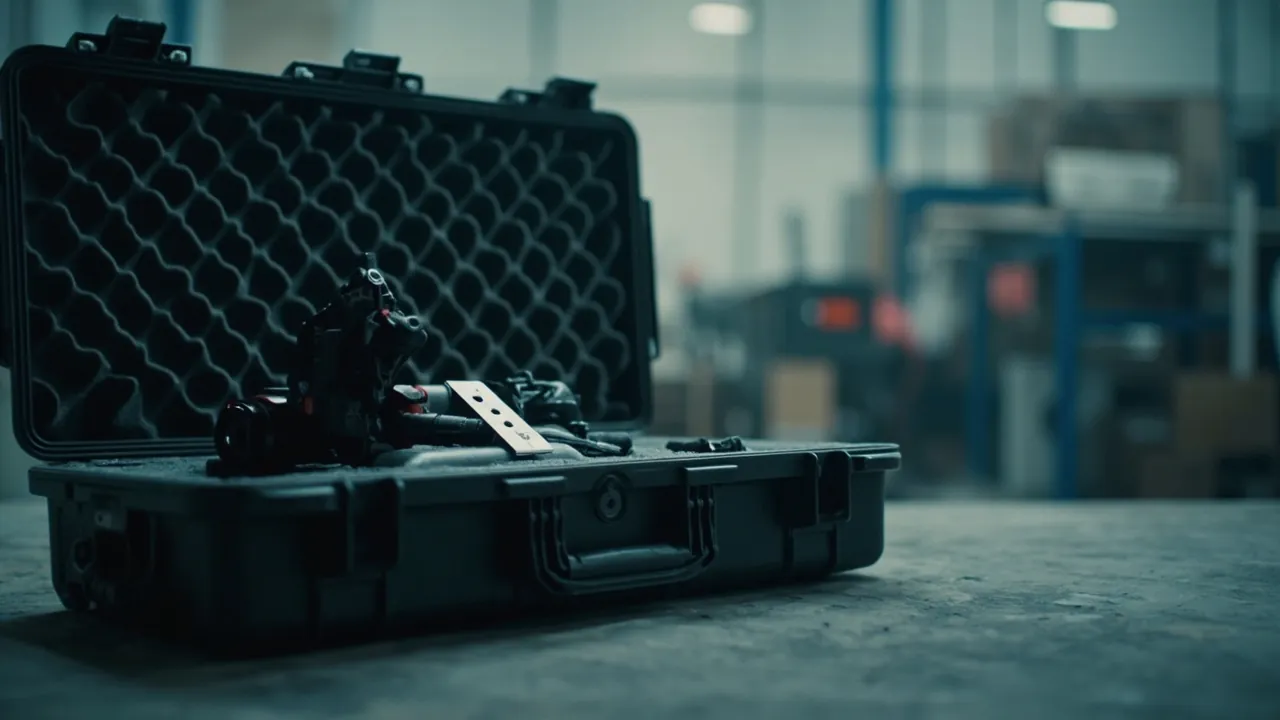
The ring die and the press rollers are the two most frequently replaced - and the two most delicate - spare parts in any feed pellet mill. The conclusion first: ring dies and press rollers are composite sensitive items that combine a hardened surface, a precision hole or tooth geometry, and an extreme sensitivity to moisture and impact. They must be shipped in sealed, moisture-controlled cases with rigid locating inserts and feed-grade rust prevention. A generic wooden crate with loose fill cannot deliver an acceptable arrival pass rate. A ring die carries thousands of hardened tapered die holes through its wall; once an hole edge chips or the bore corrodes, output rate and pellet quality drop immediately. Once a roller shell tooth flank is scored or worn beyond tolerance, the mill slips, throughput collapses, and the part is replaced outright.
The transport pain points are very specific. A large ring die weighs several hundred kilograms, is a thin-walled ring, and is vulnerable to end-face distortion and hole-edge damage from lifting impacts and stacking loads. Because ring dies and press rollers touch feed material directly, any rust, oil residue, wood splinter, or packaging debris becomes a cross-contamination risk. Feed plants are dust-laden environments, and the pelleting zone is hot and humid, which makes rust prevention harder still. This article is written for feed machinery manufacturers, plant engineering departments, spare parts distributors, and OEM/ODM buyers. It covers component grading, case and insert design, rust prevention and hygiene requirements, sealing levels, standard validation methods, and on-site unpacking practice, and it explains how JUNZHJIA supports custom inserts and volume supply.
Table of Contents
- 1. Why Ring Dies and Press Rollers Need a Dedicated Parts Case
- 2. Component List and Sensitivity Grading
- 3. Failure Modes: Hole-Edge Chipping, Bore Corrosion, Tooth Damage and Shaft Distortion
- 4. Moisture and Cleanliness Limits for Ring Dies
- 5. Size and Weight Boundaries: Packing Strategies from 300 mm to 1200 mm Dies
- 6. Case Structure and Material Selection
- 7. Insert and Locating Design: Protecting the End Faces of an Upright Ring Die
- 8. Protecting Roller Assemblies and Bearings
- 9. Rust Prevention and Feed-Contact Hygiene Requirements
- 10. Dust Explosion Awareness: What a Case Can and Cannot Do
- 11. Sealing and Ingress Protection: An IEC 60529 and GB/T 4208 View
- 12. Transport Vibration and Shock Validation: GB/T 4857 and ISTA
- 13. Labelling, Traceability and On-Site Unpacking
- 14. OEM/ODM Workflow, Acceptance and Reuse Management
- Frequently Asked Questions
- Conclusion & Related Reading
1. Why Ring Dies and Press Rollers Need a Dedicated Parts Case
The way a pellet mill works means that the value of these two components sits in the surface and the geometry, not in the bulk material.
First, the value of a ring die is in its die holes. After vacuum heat treatment or carburizing and hardening, the die is hard throughout. Its inner wall carries a dense array of tapered, bell-mouthed holes. Hole diameter, taper, and bore wall roughness together determine extrusion resistance and pellet density. These holes are the product of precision forming operations and there is no field repair method for them. A chipped hole edge changes the material flow direction; a corroded bore raises friction and eventually blinds the hole.
Second, the value of a press roller is in its tooth flank and fits. The roller shell surface carries a specific tooth profile that grips and compresses material. Tooth wear or tooth breakage reduces grip directly, cutting throughput and pellet hardness. The roller bearing and shaft journal are precision fits; once an impact leaves a brinell mark, the assembly runs hot and fails quickly.
Third, the hygiene dimension. Ring dies and rollers are feed-contact components, and their surface condition directly affects feed hygiene. Any rust preventive must be removable or compliant, and packaging materials must not introduce splinters, dust, oil, or odour.
Practical note: the most common hidden loss in a feed plant is not the purchase price of a spare part but a mill that will not reach rated output after the part is installed. This is frequently traceable to hole-edge damage or bore corrosion introduced in transport and storage, and troubleshooting costs far more than the packaging investment.
For feed machinery manufacturers and spare parts distributors, the parts case also acts as standard tooling. The same mill model shares one insert architecture across projects, simplifying storage and circulation. Reuse assessment methods are described in protective case service life and reuse years.
2. Component List and Sensitivity Grading
Score each part on three axes - forming-precision sensitivity, shock fragility, and moisture and hygiene sensitivity - to build the packing decision basis.
| Component | Typical material / structure | Critical sensitivity | Environment and hygiene | Recommended protection |
|---|---|---|---|---|
| --- | --- | --- | --- | --- |
| Ring die | Carburized or nitrided alloy steel, hardened through | Die hole diameter and taper, hole edges, bore, end faces, keyway | Bore corrosion, contamination | Upright rigid seat, end-face clamping, desiccant, VCI |
| Roller shell | Hardened alloy steel with tooth profile | Tooth form, tooth tips, outer diameter | Corrosion, impact | Individual slot, soft bedding on teeth, end caps |
| Roller assembly | Shell plus shaft plus bearings | Journals, housing bores, assembly clearance | Corrosion, contamination | Conformal inserts, journal sleeves |
| Main shaft | Forged alloy steel | Journal roundness, keyway, taper | Impact, corrosion | Horizontal slots, multi-point support |
| Drive gear or pulley | Alloy steel or cast iron | Tooth flanks, register | Corrosion | Separate cavity, anti-rust paper |
| Conditioner paddles and shaft | Stainless or carbon steel | Paddle angle, welds, shaft ends | Hygiene, corrosion | Segregated location, isolated stainless parts |
| Cutter knives and holders | Tool steel | Cutting edge | Edge chipping | Edge guards, separate small case |
| Feed screw | Carbon or stainless steel | Flight geometry, shaft ends | Distortion, corrosion | Long-part slots, end support |
| Roller gap adjusters | Alloy steel or bronze | Mating faces, threads | Corrosion, seizure | Small-part box, oil film, compartments |
| Steam piping and valves | Stainless or copper | Sealing faces, threads | Contamination | Capped ends, separate cavity |
| Bearings and seals | Bearing steel or rubber | Raceways, lip | Corrosion, ozone ageing | Original packaging, isolated cavity, never with heavy parts |
The pattern is clear: ring dies and roller shells are the physical protection priority, bearings and seals are the environmental and chemical priority, and hygiene requirements cut across every feed-contact component.
3. Failure Modes: Hole-Edge Chipping, Bore Corrosion, Tooth Damage and Shaft Distortion
Hole-edge chipping. The die hole edge is the hardest and least ductile region of the die. When the ring die is struck laterally or touches another hard part, tiny chips form at the hole edges. The chip is small, but it deflects material flow during extrusion, so that zone releases material poorly, generating local heat and eventually blinding.
Bore corrosion. This is the most common and least visible damage in the feed industry. Once a rust layer forms inside a die hole, bore roughness rises sharply, extrusion resistance increases, output falls, pellet surfaces become rough, and fines increase. Corrosion also interacts with moisture and salts in the material, and the cycle accelerates.
End-face and keyway damage. The ring die mates with the drive plate through its end face and transmits torque through a key or clamp ring. A damaged end face causes poor seating, slight relative sliding, and noise during operation; in severe cases the die loosens.
Roller tooth flank and tooth tip damage. A scored flank reduces grip; a cracked tooth tip causes uneven compression.
Journal and housing bore damage. Impact-induced brinell marks destroy fit accuracy. The bearing then runs hot with rising noise and its life drops sharply.
Main shaft and feed screw distortion. Slender shafts with too few support points bend under their own weight and vibration, and show runout after assembly.
Safety note: a ring die is a heavy component. Lifting and handling must use dedicated lifting gear or symmetrical load points. Never pass a wire rope through the die holes to lift a die - hole-edge chipping usually happens at exactly this step.
4. Moisture and Cleanliness Limits for Ring Dies
Relative humidity in feed plants and pelleting rooms is high year-round, and the storage conditions after dispatch are often worse than the transport conditions. Moisture design must therefore be based on the worst case, not the factory condition.
Humidity targets. Sufficient desiccant should be fitted inside the case, together with a humidity indicator card. A practical method is to estimate the required desiccant mass from case volume, the moisture uptake of the insert material, transit duration, and the climate zones crossed, then add margin. Fibrous insert materials must be pre-dried; otherwise they act as a moisture source.
Suitability of vapour corrosion inhibitor (VCI). VCI materials are effective for protecting carbon steel inside die holes, but compatibility with non-ferrous metals, platings, and non-metallic parts must be confirmed. For feed-contact parts, select products explicitly rated for food or feed machinery and specify the removal method.
Cleanliness control. Machining debris from inserts is a contamination source. After CNC cutting foam or fabricating wooden supports, dust removal and cleaning are mandatory. Assembly areas should be clean and free of airborne wood dust, and operators should wear gloves so that hand perspiration never touches hardened surfaces.
Packaging material compatibility. Some foams release acidic substances or plasticizers over long contact, reacting with hardened steel surfaces and platings. Ask suppliers to state composition and compatibility, and run a small contact test where necessary. Comparisons are given in case foam material comparison.
Cleaning and reuse. Cases and inserts must be wiped clean and fully dried before each reuse; methods are described in how to clean a protective case.
5. Size and Weight Boundaries: Packing Strategies from 300 mm to 1200 mm Dies
Ring dies are normally specified as outer diameter by effective width, ranging from roughly 300 mm on small mills to 1200 mm on large mills, with masses from tens of kilograms to several hundred kilograms. Roller assemblies are matched to the mill model and typically weigh tens of kilograms each.
| Component type | Typical size | Recommended case | Locating method | Vibration demand |
|---|---|---|---|---|
| --- | --- | --- | --- | --- |
| Medium ring die | 300-500 mm | Upright single-item case | Lower end-face seat plus upper clamp | Medium |
| Large ring die | 600-1200 mm | Upright heavy-duty case or pallet seat | Both end faces plus keyway or clamp ring | High |
| Roller assembly | 20-100 kg each | Compartmented case | Journals in locating slots, teeth free | High |
| Main shaft | Long shaft | Long-material case | Multi-point V supports | Medium |
| Feed screw | Long part | Long-material case | End support plus mid restraint | Medium |
| Bearings and seals | Small parts | Isolated cavity case | Compartments, original packaging | High |
Weight distribution principle. Heavy items should sit as low as possible and near the centre of gravity, and the case base must carry the load structurally. Load must not be carried by foam alone. Above a certain mass, a rigid load-bearing plate or pallet base under the insert is recommended.
Long-part principle. Shafts, screws, and tie rods should be fixed on multi-point V supports, with support spacing in practice not exceeding one third of the part length, to avoid bending resonance in transit.
6. Case Structure and Material Selection
Rotomoulded HDPE cases. Seamless, impact resistant, tolerant of low temperature, with mature sealing architecture. Suitable for ring dies and roller assemblies, and can be built with waterproof IP-rated construction.
Injection-moulded PP cases. High precision and batch consistency. Suitable for bearings, seals, and cutter knives, and easy to stack in production.
Aluminium frame cases. High stiffness and re-openable, suitable for large-diameter ring dies and long shafts that must be opened and reassembled on site.
Steel-wood or steel-plastic pallet cases. High load capacity for very heavy ring die shipments, but wood moisture content, export quarantine rules, and wood splinter contamination must be managed; heat-treated or wood-free materials should be used where required.
Selection order: establish load capacity and stiffness from mass and diameter, then set sealing and rust-prevention level from part nature (hardened steel surface, precision bearing, hygienic stainless), and finally set maintainability and insert replacement method from the number of reuse cycles.
7. Insert and Locating Design: Protecting the End Faces of an Upright Ring Die
A ring die is a thin-walled, large-diameter ring. The core conflict in its packing design is that displacement must be restrained without loading the end faces or hole edges.
Upright beats horizontal. In the upright position the die is loaded through its two end faces, the load path is short, and distortion risk is low. Horizontal placement creates line contact between the cylindrical surface and the support, concentrating load. Upright placement also lets the insert simplify to a seat ring plus an upper restraint.
Lower seat ring. The seat ring should present an annular bearing surface matched to the die end-face flatness, with a soft pad to absorb micro-unevenness. The seat inner diameter should avoid the die hole zone so that no support point sits directly over a hole edge.
Upper clamping. The case lid insert or a resilient block applies moderate clamping to the upper end face to restrain axial movement. Clamping force must be adjustable and uniform; never load a single point hard.
Radial restraint. Curved limit blocks or a clamp ring matched to the outer diameter restrain radial movement. A small clearance should be left to accommodate thermal expansion and assembly stress.
Protecting locating features. Keyways, dowel holes, and clamp-ring mating faces are functional features and need dedicated guards so they never touch the insert hard.
Rollers and shafts. Locate rollers on their journals with the tooth surfaces free; never let teeth carry load. Support main shafts on multi-point V supports with journal sleeves.
Insert materials should be selected on hardness, resilience, compression set, and cleanliness; the custom workflow is described in custom foam inserts guide. Where many die sizes are handled, modular replaceable boards let one case serve multiple outer diameters.
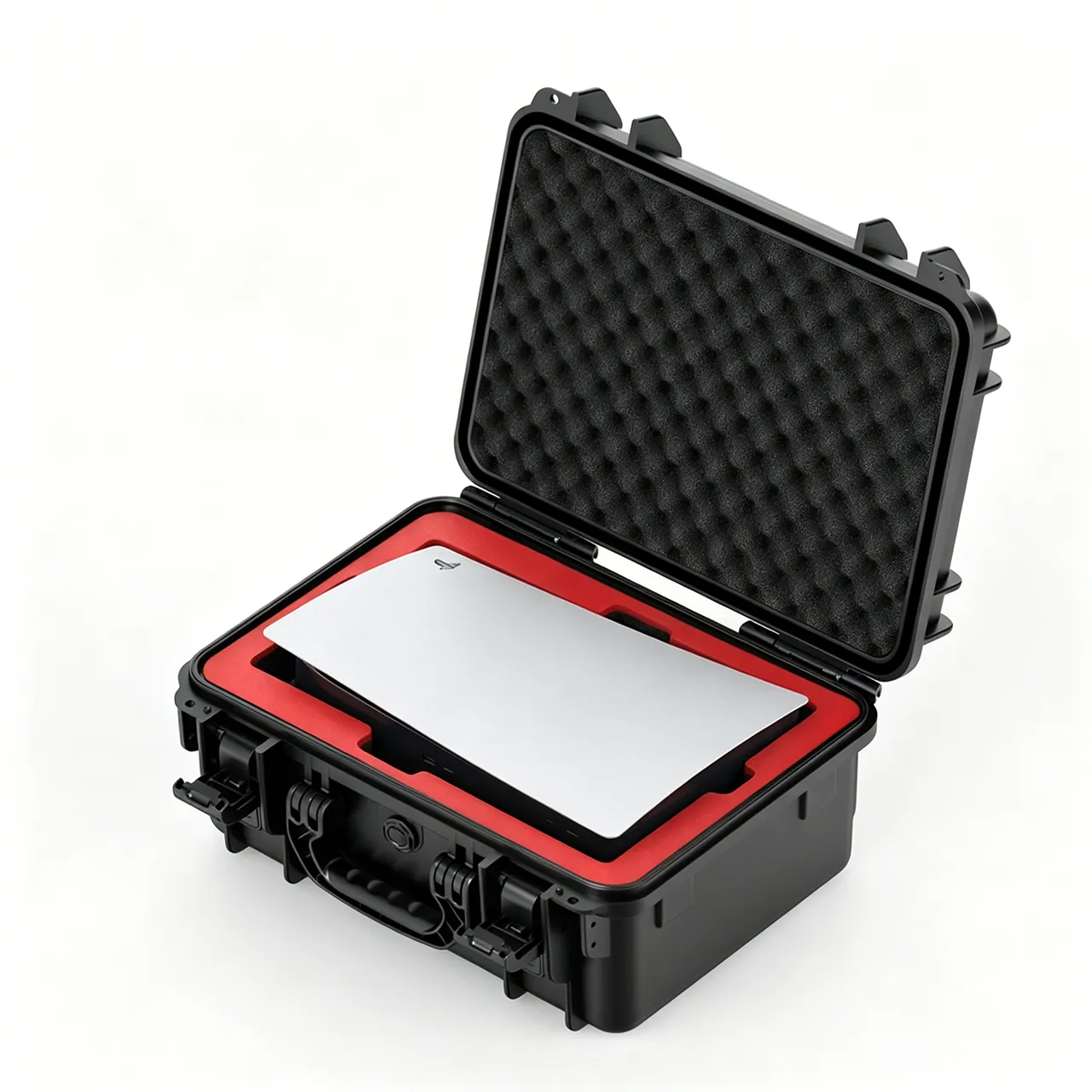
Damping. A ring die has high mass and relatively low stiffness, so it couples readily with the low-frequency vibration of vehicle suspension. Fit a low-stiffness elastic layer under the seat ring to absorb mid and high frequency vibration, and use rigid limit blocks to control large displacement, giving a soft-pad plus hard-stop combination.
8. Protecting Roller Assemblies and Bearings
A roller assembly combines a toothed shell with a precision shaft system, so the protection strategy must cover three risk families at once.
Keep teeth free. The tooth flank is a functional surface and must never be a load path. Locate the roller by its journals or end faces and maintain clearance between the teeth and the insert.
Journals and housing bores. The journal is a ground fit surface that sets rotational accuracy. Fit journal sleeves and cut soft mating slots in the insert. Housing bores must stay clean and free of moisture before assembly.
Pack bearings separately. Precision bearings should not travel in the same cavity as heavy parts. Where they must, use an isolated rigid compartment and keep the original packaging, to avoid false brinelling of the raceways. The reasoning behind isolated cavity management of sensitive parts is covered in ESD shielding case applications.
Fasteners and shims. Roller gap adjusters, shims, and pins should be compartmented and labelled so that loose hardware cannot score a tooth flank.
Pre-assembly checklist. A short checklist is worth standardising: any scores or broken teeth on the flank, any brinell marks or rust on journals, smooth rotation with no abnormal noise, and end-face flatness consistent with the factory marking.
9. Rust Prevention and Feed-Contact Hygiene Requirements
Rust prevention is the first priority for ring die packaging, but it must be designed together with hygiene.
Short-term protection stack. The standard approach is clean, dry, VCI, then seal. For die holes, a thin removable rust preventive may be applied after cleaning and drying, with VCI maintaining vapour-phase protection afterwards.
Selecting rust preventives. Parts that contact feed should use removable, low-odour products explicitly rated for food or feed machinery. Heavy residual oil films that trap dust or emit odour are unsuitable, because residual oil becomes a carrier for material adhesion and microbial growth.
Desiccant placement. Desiccant must not touch metal surfaces or precision fits. Use a breathable pack fixed in an insert recess. Sizing should include margin, and the replacement interval should be marked on the outside of the case.
Hygiene and cross-contamination control. Packaging materials must not shed debris, support mould growth, or carry odour. Wooden supports require confirmed moisture content and quarantine compliance. Cases and inserts must be cleaned and dried before reuse.
Food-contact compliance note. Where an insert or packaging material could contact feed or enter the food chain downstream, suppliers should provide a declaration of conformity to the applicable food-contact materials standards (such as the GB 4806 series) with migration test data. Related hygiene packaging thinking appears in cold chain food case selection.
| Protection item | Requirement | Implementation |
|---|---|---|
| --- | --- | --- |
| Die hole rust prevention | No corrosion, no oil entrapment | Removable rust preventive plus VCI plus desiccant |
| Surface cleanliness | No debris, oil, or odour | Dust removal, gloves, clean inserts |
| Material compatibility | No reaction with hardened steel | Supplier composition data, contact test |
| Hygiene compliance | Traceable contact material declaration | Declaration of conformity, batch records |
| Reuse management | No residual contamination | Cleaning and drying log, insert replacement cycle |
Compliance note: hygiene requirements for feed-contact components depend on destination regulations. This article provides an engineering path; final hygiene and compliance judgement should be confirmed by the plant quality function and qualified compliance specialists.
10. Dust Explosion Awareness: What a Case Can and Cannot Do
Dust in grain and feed processing systems presents an explosion hazard. In China, GB 17440 (safety code for dust explosion prevention in grain processing and storage systems) and the corresponding codes for feed processing systems set out systematic requirements for work areas, equipment, and work practices. International projects often refer to ATEX directives and zone classification concepts.
The boundary must be stated clearly.
Scope of a case. A protective case isolates moisture, contaminants, and mechanical damage during transport and storage. It is outer packaging protection. It is not a dust explosion prevention measure, and it does not change the explosion zoning requirements for the pellet mill itself or the workshop.
Notes for packaging work. When opening cases inside a feed plant or a dusty area, follow the site work permit and hot work rules. Paper and wood packaging are combustible and should not be stored long term in dust accumulation zones. Paper and wood debris from unpacking should be cleared promptly so it does not add to the combustible dust mixture.
Notes for transport. Where the case contains electrical components or energy-carrying parts, handle them under the applicable dangerous goods and electrical transport rules, described in hazardous goods transport case compliance.
Safety note: never interpret "it is in a protective case" as permission to work or store freely inside a dust explosion hazard zone. Explosion prevention is a site process and equipment matter that requires assessment by a qualified body.
11. Sealing and Ingress Protection: An IEC 60529 and GB/T 4208 View
IEC 60529 and its Chinese equivalent GB/T 4208 define how IP codes are verified. Recommendations for feed pellet mill parts cases are as follows.
| Use scenario | Recommended rating | Notes |
|---|---|---|
| --- | --- | --- |
| In-plant circulation and covered short haul | IP54 | Dust protection is the priority |
| Domestic long-haul road freight | IP65 | Dust tight plus water jet protection |
| Export sea freight and open storage | IP67 | No ingress during short immersion |
| Storage in a humid pelleting room | IP65 or better | Dust and moisture together |
The three critical sealing components are the gasket, the latches, and the hinges. A ring die case is a large heavy-duty case with a long sealing perimeter and high lid stiffness demand, so simply thickening the gasket does not solve flatness variation. More latches and a multi-point clamping architecture are required. Structural detail is covered in case hinge and latch sealing structure. For cases opened frequently, a pressure equalization valve reduces opening force and gasket fatigue.
12. Transport Vibration and Shock Validation: GB/T 4857 and ISTA
The GB/T 4857 series is China's transport package test method system. For heavy items such as ring dies and rollers, GB/T 4857.23 (random vibration) and GB/T 4857.5 (vertical impact drop) are the core validations; the system is explained in GB/T 4857 transport packaging standards.
The ISTA series provides test procedures built around distribution chains. Export projects and door-to-door deliveries commonly reference ISTA 3A and 3E; selection guidance is in ISTA transport testing procedure selection. Where a complete parts case with electrical content must simulate a full distribution cycle, see ASTM D4169 distribution cycle testing.
| Test item | Reference standard | Applied condition (example) | Failure of interest |
|---|---|---|---|
| --- | --- | --- | --- |
| Random vibration | GB/T 4857.23, ASTM D4728 | Road spectrum converted by distance | Insert collapse, die movement, rust film rupture |
| Drop | GB/T 4857.5, ISTA 1A | Height set by mass class | Case cracking, end-face distortion, hole-edge chipping |
| Stacking | GB/T 4857.3, GB/T 4857.4 | Load and duration based | Case creep, die compression |
| Temperature and humidity conditioning | GB/T 4857.2 | Hot humid and cold cycling | Gasket ageing, condensation, corrosion |
| Combined environment | MIL-STD-810H (as an environmental test methodology reference only, not a military certification) | Temperature, humidity, vibration, shock combined | Overall robustness |
MIL-STD-810H provides a systematic environmental test methodology, and citing its methods improves validation completeness. It must be stated clearly that referencing this standard is a test-method reference only; it does not represent a military certification or any defence procurement qualification. Wording practice is covered in MIL-STD-810H case environmental testing compliance.
Insert flammability. Where a customer requires fire performance, ask the insert supplier for a UL94 flammability rating statement. Note that results at one thickness and density cannot be directly converted to another.
13. Labelling, Traceability and On-Site Unpacking
A labelling system should cover the project number and mill model, case number, component name and specification (for example ring die outer diameter by width), quantity, gross and net mass, stacking limit, lifting marks, tamper evidence, a note to check shock and humidity indicators before opening, and the rust prevention validity period with the desiccant replacement date.
On-site unpacking should follow five fixed steps.
- Check before opening. Inspect shock indicator labels and humidity indicator cards to determine whether the shipment saw excess shock or moisture. This is the basis for later traceability.
- Photograph. Record the case before opening, during opening, and after opening to build a complete acceptance record.
- Remove in sequence. Follow the packing list strictly. Heavy items require dedicated lifting gear; never lift a ring die with a wire rope through the die holes.
- Inspect before reassembly. Check hole edges, bore corrosion, end-face flatness, keyways, roller tooth flanks, and journals part by part. Record and stop on any anomaly rather than installing and hoping.
- Return the case. Put inserts, dividers, desiccant, and accessories back and log them for reuse.
Where a project requires opening and sampling inspection, use custom case acceptance AQL sampling to define decision rules.
14. OEM/ODM Workflow, Acceptance and Reuse Management
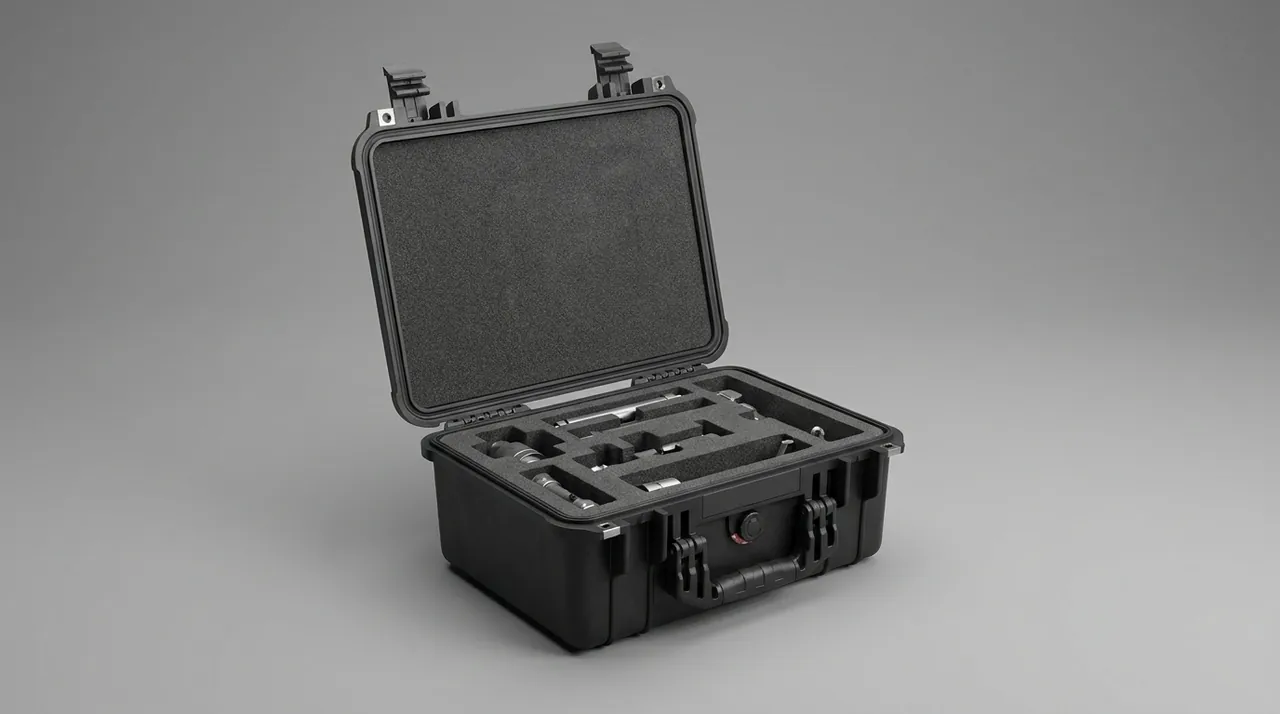
A customization project typically runs through six stages: requirement input (parts list, drawings or physical measurement, mill model and annual volume, transport chain), concept design (case structure, insert layering, rust prevention and sealing level), prototype validation (first-article fitting, clearance checks, and where needed pre-tests for vibration and drop), pilot production, volume supply with batch traceability, and iterative optimization.
Supplier assessment should focus on structural design capability, insert machining accuracy, rust prevention and hygiene experience, ability to provide test documentation, and delivery stability; the methodology is set out in how to choose a protective case OEM factory. JUNZHJIA, manufactured by Kexin New Materials (Guangdong) Co., Ltd., supplies feed machinery manufacturers, feed group engineering departments, and spare parts distributors with an integrated service from structural design and custom inserts to volume delivery. Cases can be supplied with matched gaskets and hardware by mill model, and supporting test documents can be provided for tenders and acceptance.
Acceptance items should include appearance and dimensions, insert fit clearance, rust preventive film integrity, desiccant and indicator configuration, case sealing test records, and labelling completeness.
Reuse management should maintain a case number register recording use count, repair history, and insert replacement cycle. Cases containing desiccant and VCI must have consumables replaced and sealing re-assessed before every reuse. Wheeled case consumables are covered in case wheels and trolley handle configuration; where a project needs a one-way high-protection wooden or steel case, see custom case mould cost analysis to assess the investment.

Frequently Asked Questions
Q: Why can a ring die not be shipped lying flat like an ordinary steel ring?
A: The reason is that a ring die is a thin-walled precision ring whose value sits in end-face flatness and the die holes in its inner wall, and horizontal placement threatens both. First, when lying flat the die contacts its support along the cylindrical surface, and cylinder-on-flat contact is essentially line contact, so contact stress is very high and local brinelling and out-of-roundness develop under vibration and self weight. Second, a die lying flat can roll, and once it strikes another hard part the first area to suffer is the hole edge, which is hard but not ductile, producing chips. Third, horizontal placement forces the insert into a large flat support that cannot apply uniform clamping to the end faces, so the die can migrate slightly in transit and, cumulatively, wear the keyway and mating faces. Fourth, a horizontal case has a high centre of gravity and a large footprint, which complicates stacking and forklift handling. The correct approach is upright placement with a lower seat ring carrying the load, resilient clamping on the upper end face, and curved radial limit blocks, giving the shortest load path and keeping every hole edge untouched. The seat ring inner diameter must also avoid the die hole zone.
Q: Why is corrosion inside the die holes worse than surface rust?
A: The two affect service completely differently. Surface rust is mainly cosmetic and normally has no functional effect after cleaning, while bore corrosion directly changes the geometry and friction of the extrusion channel. First, hole diameter and taper are the core parameters of output rate, and a rust layer materially changes both diameter and wall roughness, so extrusion force rises and throughput falls. Second, a rough bore raises friction between material and wall, creating local heat that gelatinizes or even carbonizes material inside the hole and finally blinds it. Third, once blinded, the die usually has to be removed and the holes reamed, and the downtime cost far exceeds the value of the spare part. Fourth, corrosion interacts with residual moisture and salts in a self-accelerating cycle, so the longer the storage period the greater the damage. Fifth, bore corrosion is extremely difficult to clean, and mechanical reaming tends to damage the hole edge and wall further. Moisture design must therefore be based on the worst-case condition, with sufficient desiccant, humidity indicator cards, and compatible vapour corrosion inhibitor materials, applied after cleaning and drying.
Q: How should the tooth flank of a roller shell be located inside the case?
A: The principle is teeth free, journals locating, end faces restrained. The tooth flank is the functional surface of the roller and its profile determines grip and compression, so it must never be a load path in hard contact with an insert. Practical measures include: locate primarily on the journals or end faces of the roller, cut soft mating slots in the insert so the shaft system carries load; keep a visible, uniform clearance between the tooth flank and the insert in every direction; fit limit blocks on the end faces to restrain axial movement so that vibration cannot cause axial impact; fit sleeves over the journals to prevent scoring and corrosion; keep the roller out of the same cavity as heavy parts, or at minimum build an isolated rigid compartment so that heavy items cannot crush it under vibration; and clean and rust-protect the tooth flank before packing so that residual material cannot attract moisture. Bearings and seals should be kept in their original packaging in a separate cavity rather than travelling with heavy parts, which prevents false brinelling of the raceways.
Q: What ingress protection rating should a feed equipment parts case use?
A: Set the rating from the worst case in the transport and storage chain, not from the factory condition. For in-plant circulation and covered short haul, IP54 is usually sufficient, with dust as the priority so that dust cannot enter the case and adhere to the rust preventive film. For domestic long-haul road freight and multi-stop distribution, IP65 is recommended for full dust tightness plus water jet protection, which matters especially in the dusty atmosphere of a feed plant. For export sea freight, open storage, and terminal transfer, IP67 is recommended, with no ingress during short immersion. Where the case contains electrical components, sensors, or energy-carrying parts, IP67 or better is advisable for the whole case, with separate consideration of insulation and marking. Note that the larger the case and the longer its opening perimeter, the harder it becomes to control sealing face flatness; simply thickening the gasket is usually ineffective, and more latches, a multi-point clamping architecture, and higher case stiffness are needed. Verification follows IEC 60529 and GB/T 4208, but real performance depends on gasket material and compression, latch distribution, and case stiffness working together, so whole-case validation of production units is recommended with records retained as delivery documents.
Q: What specific harm does transport vibration do to ring dies and rollers?
A: There are six main mechanisms. First, a large thin-walled ring die has a low natural frequency and couples readily with the low-frequency band of vehicle suspension and road excitation, producing large amplitudes and reciprocating movement inside its limits. Second, during that movement the die outer diameter repeatedly strikes the limit blocks, scoring the outer surface and creating out-of-roundness while the end faces see alternating load. Third, sustained vibration causes foam compression fatigue and collapse, so the seat ring that was originally tight develops a gap and the die starts to loosen; damage is often concentrated in the second half of the journey. Fourth, in rollers, vibration can cause fretting wear between journals and locating slots, damaging the mating surfaces. Fifth, if the rust preventive film or VCI packaging ruptures, local failure points form and, with condensation, pitting begins. Sixth, fasteners and small parts can work loose and become free hard objects inside the case, causing secondary impact damage. For validation, domestic projects should use GB/T 4857.23 random vibration and GB/T 4857.5 impact drop tests, while international projects can reference ASTM D4728 and the ISTA 3 series, with a case opening and inspection after testing.
Q: What process should on-site unpacking follow?
A: Five fixed steps, with checking placed before opening. First, without opening the case, inspect the shock indicator labels and humidity indicator cards to determine whether excess shock or moisture occurred; this step determines later traceability and liability, because once the case is opened the evidence cannot be restored. Second, photograph the case before opening, during opening, and after opening to create a complete acceptance record. Third, remove parts strictly in packing list order; ring dies are heavy items that require dedicated lifting gear or symmetrical load points, and passing a wire rope through the die holes to lift a die is forbidden, since that is where hole-edge chipping usually happens. Fourth, inspect before reassembly: check hole edges for chips, bores for corrosion, end-face flatness against factory marks, keyways for impact damage, roller tooth flanks and journals for damage, and bearings for smooth rotation. Record any anomaly immediately and stop rather than installing the part to see what happens. Fifth, return inserts, dividers, desiccant, and accessories to the case and log them for reuse. Where sampling inspection is required, use AQL sampling methods to establish decision rules.
Q: What are the common pitfalls in choosing rust preventives and desiccants?
A: This step is the most frequently underestimated, and four problems dominate. First, conflict with hygiene requirements: parts that contact feed should use removable, low-odour products rated for food or feed machinery, and heavy residual oil films that trap dust or emit odour must be avoided, because residual oil becomes a carrier for material adhesion and microbial growth. Second, unconfirmed VCI compatibility: vapour corrosion inhibitors work well on carbon steel, but compatibility with non-ferrous metals, platings, and non-metallic parts must be confirmed item by item, since the wrong VCI can accelerate corrosion of some materials. Third, incorrect desiccant placement: desiccant should not touch metal surfaces or precision fits, and should be a breathable pack fixed in an insert recess, otherwise it becomes a local moisture or abrasion source. Fourth, under-sized quantities: estimate from case volume, insert moisture uptake, transit duration, and climate zones crossed, then add margin, and pre-dry any fibrous insert material so it does not act as a moisture source itself. In addition, both desiccant and VCI have shelf lives, so reused cases must have consumables replaced and sealing re-assessed.
Q: How do dust explosion requirements relate to a packaging case?
A: They operate at different levels, and the boundary must be clear. Dust explosion prevention addresses the work area and the equipment itself. Dust in grain and feed processing systems presents an explosion hazard, and safety codes such as GB 17440 in China set systematic requirements for work areas, dust collection systems, electrical equipment, hot work, and housekeeping; international projects commonly refer to ATEX directives and zone classification concepts. These requirements are assessed by qualified bodies and implemented in site processes and equipment. A protective case is outer packaging protection whose job is to isolate moisture, contaminants, and mechanical damage during transport and storage. It is not a dust explosion prevention measure and cannot replace site explosion prevention management. That said, several practical points apply to packaging work: opening cases inside a dusty environment should follow site work permits and hot work rules; paper and wood packaging are combustible and should not be stored long term in dust accumulation zones; paper and wood debris should be cleared promptly; and where a case contains electrical or energy-carrying components, they should be handled separately under the applicable dangerous goods and electrical transport rules with compliant marking.
Conclusion & Related Reading
What a feed pellet mill parts case has to solve is a protection problem where value is concentrated almost entirely in surfaces and geometry. The die holes, end faces, and keyway of a ring die, and the tooth flank and journals of a press roller, are assets that cannot be restored cheaply on site. Rust prevention, moisture control, and hygiene together determine whether a spare part can go straight onto the machine.
The selection path can be reduced to one sentence: separate the design by part nature (hardened steel surface parts, precision shaft system parts, hygienic stainless parts, electrical parts), then set sealing, rust prevention, and cleanliness levels from the transport and storage chain, and finally fix insert modularity, labelling, and unpacking process from the mill model and project structure. For feed machinery manufacturers and feed group engineering departments that need custom inserts, model-matched volume supply, OEM/ODM production, or supporting test documents, JUNZHJIA provides an integrated service from structural design to volume delivery, and can supply sealing, vibration, and rust prevention test documentation to project requirements.
Related Reading