


A filter press builds its filter chambers by stacking plate after plate and locks them with a hydraulic closing mechanism that can hold dozens or even more than one hundred plates under pressure. It is the most common solid-liquid separation machine in mining tailings, municipal sludge, chemical and food plants. The parts most likely to be injured during handling are exactly the two families that decide sealing: the filter plates and the hydraulic closing system. Plates are usually reinforced polypropylene or diaphragm plates with rubber membranes, their flatness measured in fractions of a millimetre, and a chipped corner or centre feed hole destroys the chamber seal. The cylinder barrel and piston rod are a moving pair with micron-class fit; one scratch on the plated layer leaks oil and loses pressure. JUNZHIJIA's protection principle for filter press cases is organised along four lines: prevent deformation, prevent edge chipping, prevent scratches, and prevent bending. Use vertical supports to hold plate flatness, rigid cradles to fix hydraulic cantilevers, and roll rather than fold the cloth, instead of dumping heavy parts into a wooden crate stuffed with foam.
Many filter press projects share the same loss at the receiving stage: the equipment arrives with no visible damage, but the commissioning pressure test leaks slurry. The cause is rarely installation; it is transport. Plates laid flat in a dozen layers crush the bottom plate into permanent deflection, so after mounting the surfaces never meet and slurry escapes along the seal edge as soon as feed pressure rises. A diaphragm plate's rubber membrane folded for two weeks develops a stress line and tears on the first squeeze. A piston rod used as a rest on the crate edge bends plastically in vibration and scores the chrome plating. These injuries are invisible at acceptance and inevitable in operation, yet on-site remedies are extremely limited. This article addresses equipment and spare-parts managers, wastewater plant operators, and export packaging engineers at press manufacturers, giving packing posture, support structure, liner selection, anti-corrosion and acceptance criteria part by part, with a configuration table and FAQ.
Table of Contents
- Failure Modes of Filter Press Parts in Transport
- Filter Plates: Flatness and Edge Protection of the Polypropylene Body
- Diaphragm Plates and Rubber Membranes: Crease and Aging Control
- Hydraulic Closing Mechanism: Barrel, Piston Rod and Seal Faces
- Hydraulic Power Unit and Valve Blocks: Cleanliness and Port Protection
- Filter Cloth and Feed Piping: Anti-Fold, Anti-Scratch, Anti-Mould
- Heavy Lifting and Case Load-Bearing Design
- Anti-Corrosion and Salt Spray: Material Selection under GB/T 10125
- Liners and Compartments: Material Choice and Structure
- Case Sealing, Latches and Pressure Equalisation
- Transport Test Basis: ISTA, GB/T 4857 and ASTM D4169
- Packaging Marks, Traceability and Receiving Inspection
- Configuration Checklist and Selection Table
- Reusable Service, Spare Storage and OEM/ODM Customisation
- Frequently Asked Questions FAQ
- Conclusion and Related Reading
Failure Modes of Filter Press Parts in Transport
A filter press combines a large low-pressure plane with a heavy long-stroke actuator, and its parts differ enormously. Plates are thin large panels; cylinders are long, high-surface-finish moving parts; cloth is flexible fabric; valve blocks are hydraulic elements with precision mating faces. These four families work together on one machine yet demand almost incompatible protection, which is the root cause of high arrival damage rates when all are mixed in one wooden box.
From failure statistics, transport damage concentrates in four classes. The first is loss of flatness and warping. Reinforced polypropylene plates have some toughness at normal temperature but limited rigidity; too many flat-stacked layers, or self-weight sagging in a summer open trailer, produces unrecoverable deflection. Plate flatness is the premise of chamber sealing; once out of tolerance, even full hydraulic force leaves local gaps, showing as slurry blow-by, turbid filtrate and early cloth wear. The second is edge and port chipping. The lifting lugs, handle bosses, centre feed hole and corner holes sit at section transition with stress concentration; polypropylene toughness drops sharply in low temperature, so one knock in winter can break a corner that cannot be repaired. The third is precision pair scratching. The honed cylinder bore and the hard-chrome piston rod, tens of microns thick, take a furrow from any hard object, causing internal leakage, poor pressure hold and abnormal seal wear. The fourth is flexible and rubber part creasing and aging. Folded cloth and membranes form permanent creases that tear under alternating pressure; cloth in humidity also moulds, dropping fibre strength.
The table below maps failure paths to measures and can be used directly as a packing checklist.
| Part | Typical Material | Transport Failure | Protection Measure |
|---|---|---|---|
| --- | --- | --- | --- |
| Chamber plate | Glass-fibre reinforced polypropylene | Flatness loss, warping, corner chipping | Vertical slots, limit flat layers, edge guards |
| Diaphragm plate | Reinforced PP body + EPDM/butyl membrane | Membrane crease and tear, weld shear | Membrane up, single layer, no folding, soft face |
| Cylinder and rod | Honed carbon steel barrel, hard-chrome rod | Coating scratch, rod bend, thread damage | Full-length support, no rest point, caps and plugs |
| Power unit and valves | Cast iron pump, aluminium valve block | Port knock, dust ingress, oil contamination | Port plugs, compartment fix, clean pack |
| Filter cloth | PP monofilament, nylon, polyester | Crease, snag, mould | Roll storage, desiccant, opaque pack |
| Feed pipe and hose | Stainless pipe, rubber hose, flange | Port deformation, small-radius bend | Port seal, bend radius limit, long-pipe support |
After this table, the design logic is clear: plates stand up and are face-supported; hydraulic parts lie full-length on rigid cradles with no bare surface touching hard objects; cloth rolls and stays dry; valves and pipes are sealed and compartmented. The four families should ship in separate cases; if one case is mandatory, rigid partitions must separate them, never with the cylinder pressing on the plates.
Filter Plates: Flatness and Edge Protection of the Polypropylene Body
Filter plates are the most numerous and the easiest to deform in storage and transport. Common sizes run from 500 by 500 mm small plates to over 2000 by 2000 mm large plates, thickness 20 to 80 mm, single mass from a few kilograms to over one hundred. The body is mostly glass- or mineral-filled reinforced polypropylene, with a centre feed hole and corner filtrate, wash and blow holes forming complex internal channels, surrounded by the sealing edge and handle boss.
Packing posture is the first control of flatness. The recommended posture is vertical insertion: the plate face perpendicular to the case floor, held by shaped slots on both edges so self-weight transfers along the face without bending moment. The slot spacing is a little larger than plate thickness (2 to 3 mm per side), lined with low-compression-set closed-cell foam or EVA, with chamfered slot mouths to avoid cutting the face. A 5 to 10 degree tilt from vertical lets the plate rest naturally against one support face and prevents sway. If vertical is impossible and flat stacking is required, strictly limit layers and add a full-face rigid separator each layer so upper weight spreads evenly rather than on the plate edge; total layers should follow the maker's rule, practically no more than six to eight, with the bottom on a rigid pallet.
The transport environment's effect on polypropylene is underestimated. Polypropylene has a clear low-temperature brittle transition; near or below zero its impact toughness drops sharply, so a light edge knock in winter can chip a corner that only leaves a shallow mark in summer. Winter guards and cushion layers should be thicker than at normal temperature. On the high-temperature side, open yards or sealed summer trailers soften polypropylene and cause creep deflection under long stacking or suspension, so the case needs shading and ventilation.
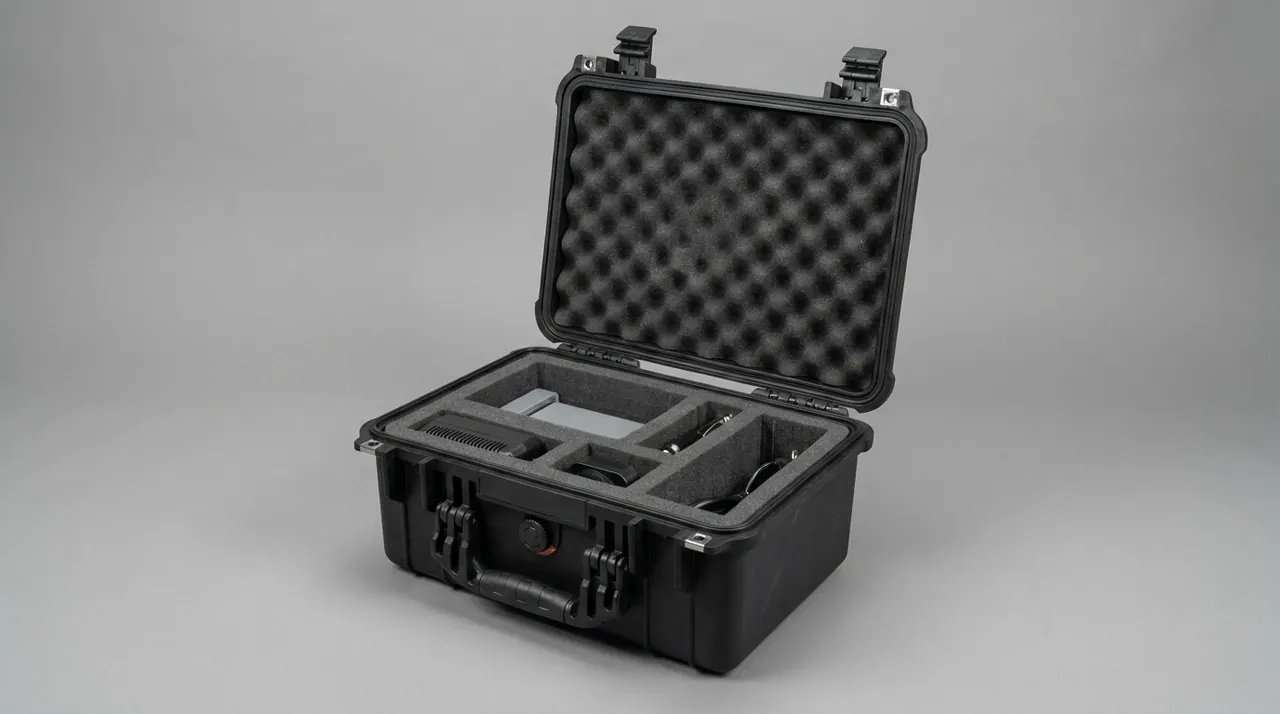
Edge and port protection is the second control. The sealing edge and handle boss should be wrapped with U-shaped corner or edge guards of polyethylene or EVA, softer than polypropylene, so they deform and absorb energy first. The centre feed hole and corner holes should be plugged with plastic or soft caps before packing, avoiding both edge chipping and sand entering the channels, because residue in channels clogs the cloth with filtrate. Plates must not touch directly; insert non-woven or film separators to prevent vibration grinding marks. JUNZHIJIA's slot-and-divider approach for large panels matches the modular thinking in the removable divider system, letting slot liners be configured by plate size. The figure below shows the vertical insertion and edge-guard structure.
Flatness at acceptance should be checked on a flat platform with a straightedge and feeler gauge along diagonals and long-edge midpoints, judged by the maker's drawing or industry practice; the typical requirement is flatness deviation of the sealing face within a fraction of a millimetre across the whole plate. Any diagonal bend, handle-root crack or port chip found after transport should reject the whole plate, not be ground, because polypropylene repair cannot restore the original sealing precision.
Diaphragm Plates and Rubber Membranes: Crease and Aging Control
A diaphragm plate adds a pressurisable rubber membrane on top of a chamber plate, using a second squeeze to lower cake moisture, widely used in municipal sludge and concentrate dewatering. Its value lies entirely in membrane integrity and elasticity, and the membrane is the part most easily destroyed by transport method.
Membrane materials are commonly EPDM, butyl, neoprene and fluoroelastomer, 3 to 6 mm thick, fixed by bolts or integral vulcanisation or welding. Three failure modes exist: crease tear, local dent and aging hardening. Crease comes from folded storage, leaving stress concentration and micro-cracks that open along the fold on first pressurisation. Dent comes from hard contact, the membrane face pressed on another plate's boss, bolt head or strap buckle, leaving a pit that bursts first. Aging comes from environment: rubber hardens and cracks under ozone, UV, heat and oil; mixing oily parts or plasticiser-migrating liners accelerates it.
When packing, the membrane face must face up or toward a soft support, plates separated by a full-face board covering the whole membrane area, avoiding local concentrated force. Never stand diaphragm plates on edge or stack them with straps across the membrane. Tightening bolts should be re-torqued and marked before packing; if bolt heads rise above the face, cut relief holes in the liner so they do not press the membrane. The membrane must not contact mineral oil, grease or sulphur-bearing rubber; use neutral, plasticiser-free PE or EVA liner with desiccant. Rubber is temperature sensitive, so avoid hot case positions on long routes and record temperature history as an acceptance basis.
For used diaphragm plates in return transport, apply the same new-part rules and first rinse cake residue and dry thoroughly; never pack with slurry. Residual sulphides, salts and organic acids in cake accelerate membrane aging and form a corrosive atmosphere inside. Once a membrane shows crease, bulge or hardening, it will fail in the squeeze stage, and replacing it often means disassembling the whole plate group, a downtime cost far above packaging.
Hydraulic Closing Mechanism: Barrel, Piston Rod and Seal Faces
The hydraulic closing mechanism consists of cylinder, piston, seal set, trunnion or flange connection and a pressure-holding circuit, pressing the whole plate pack to set pressure before filtration and holding it through filtration and squeeze. It decides whether the press can build an effective chamber, so its transport protection tolerance is very low.
The cylinder bore is usually honed to a high surface finish; the piston rod is hard-chrome plated and polished. These two surfaces form the sliding seal pair, and any hard scratch breaks the oil film, causing internal leakage, shorter pressure hold and abnormal seal wear. Rule one: no bare precision surface touches any hard object. The rod gets a sleeve or wrap; barrel ports and rod threads get plugs and caps; barrel ports are sealed with clean plugs and anti-dust tape before packing.
Rule two: full-length support, no cantilever. The cylinder is a long part; if the rod extends and only the ends rest while the middle hangs, vibration creates alternating bending moment on the rod, and micro-plastic deformation under the plating leads to permanent bend or plating spall. Correctly, the barrel and rod rest full-length on rigid cradles with arc saddles of engineering plastic or rubber-lined steel, arc radius matching the barrel outside diameter, contact face without hard edges. The rod must be fully retracted when packed; if structure prevents retraction, add a mid support through soft padding, never directly on the chrome face.
Rule three: never use hydraulic parts as structural supports or lifting points. Rods, trunnion pin holes and ports are not load paths; using them as timber or sling points causes bending and shear. Use dedicated clamps or straps with rubber pads between strap and barrel, avoiding ports and welds.
The table lists key parts and requirements for a packing instruction sheet.
| Part | Precision Feature | Typical Taboo | Required Practice |
|---|---|---|---|
| --- | --- | --- | --- |
| Barrel | Honed bore, end register | Insert hard object, roll flat | Vertical or arc cradle, port plug |
| Piston rod | Hard-chrome, thread, shoulder | Use as rest, bare wipe | Full support, sleeve, stay retracted |
| Seal set | PU or rubber ring, wiper | Fold, squeeze, sharp contact | Flat, original pack, dark and oil-free |
| Trunnion and pin | Fit hole, coaxiality | Sling through pin hole | Compartment fix, pin-hole plug |
| Valve and port | Mating face, port thread | Open, dust ingress | Plug, clean pack, separate cavity |
For a complete power unit with pump, valve block, accumulator and tank, lay it horizontally on a steel frame; the pump shaft must not take side load; the accumulator is placed per rule and depressurised. The power unit and plates must be separate cases or strictly separated cavities, because valve oil leaks contaminate cloth and membranes, and rubber swelling from oil is irreversible.
Hydraulic Power Unit and Valve Blocks: Cleanliness and Port Protection
Hydraulic reliability depends heavily on oil cleanliness, which is built or destroyed at every step of manufacture, packing, storage and assembly. Filter press hydraulics often run at medium-high pressure; valve spool and sleeve clearance is small, and particle contamination directly causes stuck valves, internal leakage and pressure fluctuation, so packing must follow oil contamination grades.
The industry uses ISO 4406 to describe solid particle contamination by counts above 4, 6 and 14 micrometres. For such systems, acceptance usually requires a medium-high grade; packing translates this into three measures. First, all ports are plugged immediately after cleaning with sealed plastic or aluminium plugs with O-rings; never use rag, paper or tape for long-term sealing. Second, pipe and hose ends get dust caps; hose coil radius is at least six to eight times outside diameter, no dead bends or crushing. Third, the power unit and valves use a separate clean cavity with non-shedding, plasticiser-free liner, outside a dust cover or high-barrier film to stop warehouse dust entering the tank through the breather.
The tank breather is an often-ignored entry. If the tank ships filled, the air filter must be fitted and sealed; if empty, the inner wall needs rust-proofing or vapour-phase inhibitor, because condensation on an empty tank wall rusts and particles then circulate to valves. For units stored long at destination, place a humidity indicator card and require an oil-cleanliness check before energising.
Valve blocks, gauges and sensors are fixed in separate cells; dials and pressure sensors are precision parts, never pressed or in extreme temperature. Proportional valves and pressure sensors with electronics also need anti-static and vibration care, using ESD shielding pack connected to the case ground terminal, following the grounding and shielding practice in ESD shield cases. Archive all packing images and cleanliness records as claim and liability evidence.
Filter Cloth and Feed Piping: Anti-Fold, Anti-Scratch, Anti-Mould
Filter cloth is the consumable giant of the press: large, flexible, seemingly knock-proof, but actually afraid of two things: crease and mould. Cloth is usually polypropylene mono- or multi-filament, also nylon and polyester, cut to plate size with holes or as seamless sleeves on both sides. A crease changes the weave density, making filtration resistance uneven and the cloth burst first at the fold; mould hydrolyses and embrittles the fibre, dropping strength.
The correct transport and storage is rolling, not folding. Cloth rolls on a core of at least 150 mm diameter, even tension, not too tight, wrapped in acid-free paper or non-woven then bagged. If already sewn with mounting holes, align holes when rolling to avoid local fold at holes. Never strap the cloth roll directly or press it under the plate stack; long-term heavy pressure leaves permanent marks.
Anti-mould is the core of cloth packing. Mould needs humidity and temperature; when relative humidity stays high and temperature moderate, organic residue on the cloth becomes a culture medium. So the cloth must be washed and fully dried before packing, with desiccant by volume and a humidity indicator card, sealed in a high-barrier or aluminium-foil laminate bag. For sea transport or tropical storage, note in the delivery file to check for mould on opening, and mouldy cloth should not be used directly. For long-stock consumables, the desiccant should be replaceable and the pack easy to open repeatedly.
Feed piping follows the three rules of seal, bend limit and support. Main, branch, flange and quick couplings are cleaned and sealed inside; flange faces get plastic caps; long pipes run along the case length on multiple V-saddles, never two-end only. Rubber hose and bellows keep natural bend, radius not less than a multiple of outside diameter, no dead bend or strap acute angle. Valves stay at the specified open or closed position, handwheel and stem capped, instrument ports plugged. All piping seals are removed only before installation to avoid storage contamination.
Heavy Lifting and Case Load-Bearing Design
Filter press spare cases are often heavy packaging: a set of large plates, one cylinder or one power unit, single case mass from hundreds of kilograms to several tonnes. Heavy-case failure is usually not "dropped" but "lifted badly" and "crushed", so structure and lifting rules must be set together.
The first load-bearing principle is to let load follow a rigid path. The case bottom needs a steel pallet or aluminium profile frame; part weight goes through saddles and frame directly to the case outer frame and bottom beams, not through the liner foam. The liner only locates and absorbs vibration; its thickness and hardness are chosen by part mass and allowed acceleration, and it must not carry static load. The second principle is stack check: single case mass times allowed stack layers times a safety factor (usually 1.5) is the check load shared by walls and frame, and the upper case load must not press on the part body or its seal face. Plate faces are never a stack-bearing surface.
For lifting, the case needs clearly marked lift points; sling and shackle rated load is de-rated by the worst lift angle, and the angle from vertical should be kept small. Never sling the case directly with wire rope, never fork with one tine or push sideways. Fork pockets match common forklifts with steel plates inside to stop tine penetration. The case marks centre of gravity, lift direction and allowed stack layers.
For plate sets that must stand, the case configures a vertical rack matching plate size, steel or aluminium, slots of engineering plastic or rubber-lined steel with soft pads at the slot bottom. The rack itself is fixed to the case floor to avoid toppling. For extra-long cylinders, the case is lengthened with multiple saddles along the full length; never lift by single-point suspension leaving both ends cantilevered. The figure below shows a heavy case with steel pallet, lift points and stack-limit marking.

Anti-Corrosion and Salt Spray: Material Selection under GB/T 10125
Filter press sites are coal washeries, ore dressing plants, wastewater plants and chemical workshops: high humidity, salt or acid-alkali aerosol, with coastal and sea-transit chloride exposure especially clear. Cast iron frames, carbon steel brackets, galvanised parts and stainless fasteners rust to varying degrees, so anti-corrosion must be specified separately for the part body and the case hardware.
For evaluation, use the neutral salt spray (NSS) test of GB/T 10125 to compare candidate surface treatments: under the same condition, observe the red-rust time difference among processes (zinc electroplate, zinc-aluminium coating, passivation, powder coat, hot-dip) to set the hardware, support and saddle treatment. Note that salt spray results are only for process comparison and screening, not a direct conversion to field life, because UV, temperature-humidity cycles and mechanical wear also act.
Material details matter. First, avoid galvanic corrosion from dissimilar metal contact: stainless fasteners touching carbon steel or aluminium need insulating washers or coating isolation, especially in humidity. Second, structural gaps are corrosion and water traps; hinges, welds and seams should avoid undrainable grooves, with caulking or drain holes as needed. Third, once a coating is broken in handling, corrosion spreads from the break, so saddles and straps should avoid hard-contact wear. Fourth, wooden pack in coastal storage absorbs water and stays wet against steel, accelerating rust; add a moisture barrier at steel-wood contact or use fumigation-free composite board.
For long outdoor or semi-outdoor storage, corrosion at seams, latches and locks is most critical; the cooperation of hinge, latch and seal decides both sealing and life, detailed in toolbox hinge latch and seal. If the customer demands a unified salt spray grade for machine and case, write the test standard, time and judgement basis separately in the technical agreement to avoid "did a salt spray test" yet no pass criterion.
Liners and Compartments: Material Choice and Structure
A filter press case liner must meet three conditions: no collapse under heavy load, no shedding under vibration, no moisture absorption or mould in humidity. Open-cell foam, straw, shredded paper and ordinary corrugated dust fail, because they either have high compression set, become mould carriers when wet, or shed dust that contaminates hydraulics and cloth.
Liner selection assigns material by part family, not one material for all. Bearing and bottom faces use high-density, low-compression-set material such as cross-linked polyethylene or high-density EVA to spread weight to the frame and damp vertical shock; locating slots and large support faces use medium-hardness EVA with non-woven on the contact side; precision pairs and instruments use polyurethane foam or low-shed soft material to avoid hard-edge contact; cloth and membrane contact layers must be acid-free paper or non-woven, never long-term direct foam contact because some foam components migrate at high temperature.
Compartments follow "same family same cavity, heavy and light layered, precision independent". Bottom holds the heaviest power unit and pipes on steel saddles and frame; middle holds the plate pack on a vertical rack or flat layers with full separators; top holds cloth, membrane spares, seals and small accessories. Cylinders are long and best in a separate case or a full-layer cavity with full-length support. Each cell depth is a little more than part thickness so the part sits below the cell rim; cell wall thickness at least 8 mm with rounded corners. Removable slots suit mixed plate sizes for easy on-site pick by plate number.
Case accessories also need planning: desiccant near cloth and rubber with a replaceable position; humidity card on the easy-view inner lid; shipping documents (packing list, assembly drawing, test record) in a waterproof pouch fixed inside the lid to avoid tool cuts. Liner process and tolerance control are in custom foam inserts guide; material comparison is in case foam material comparison.
Case Sealing, Latches and Pressure Equalisation
Filter press spares are sensitive to both humidity and dust, so case sealing is not optional. Ingress protection follows IEC 60529 and GB/T 4208; such heavy cases are usually IP65 (water jet) or IP67 (temporary immersion) by route and storage. The hard part for heavy cases is rigidity: the larger and heavier the case, the more the lid mid deflects after closing, and the seal strip loses compression on the longest side and leaks.
Engineering controls three points. First, seal strip selection and compression match. Foamed silicone or hollow EPDM extrusion is common, compression 25 to 35 percent, confirmed by FEA or measurement along the perimeter after closing. Second, latch spacing and rigidity match. Latches carry the clamp force; too-wide spacing lets the lid bow between them, so place a latch every 300 to 400 mm on the long side and add stiffeners inside the lid. Third, lifting and stacking must not deform the case: lifting from the case body creates concentrated load at corners that twists and breaks the seal, so heavy cases should load through the bottom frame. The cooperation of hinge, latch and seal is systematically explained in toolbox hinge latch and seal, and heavy cases can enlarge the specification and latch count.
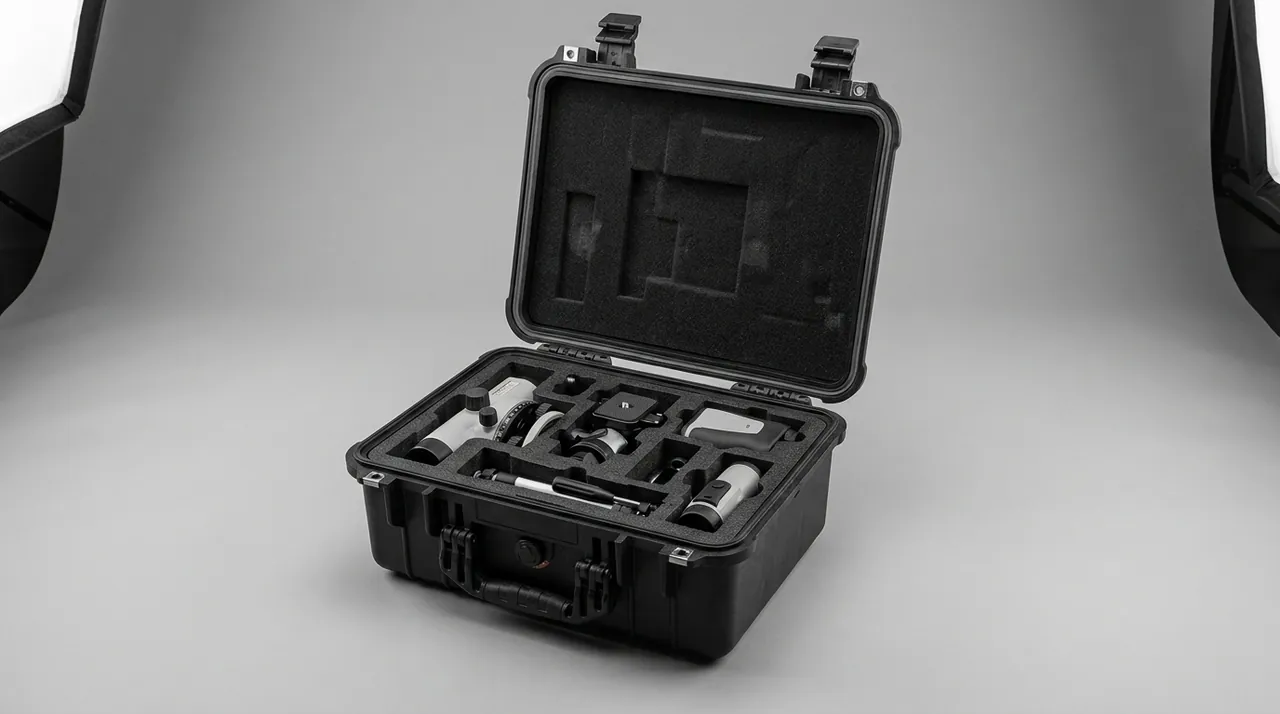
Pressure equalisation is often overlooked in sealed heavy cases. A sealed case under air or plateau road transport takes internal-external pressure difference; the lid bows permanently and after landing is hard to open and cannot reseal. The fix is a one-way pressure equalisation valve on the case wall allowing slow air passage while blocking liquid and dust; place it high on the side to avoid water or dust blocking, with selection and layout in case pressure equalisation valve. The figure below shows a heavy case with steel pallet, vertical rack and equalisation valve.
Transport Test Basis: ISTA, GB/T 4857 and ASTM D4169
Packaging strength must be verified by test, not estimated. Filter press parts are mixed heavy and long loads, so the test plan must match the route.
For North American distribution, choose ISTA procedures such as ISTA 2A for single packages and ISTA 3A for parcel systems, covering drop, random vibration, stacking and temperature-humidity preconditioning. For domestic transport, refer to GB/T 4857 series by actual conditions for drop height, vibration time and stack load. For complete-equipment export, use ASTM D4169 distribution cycle by the real path (plant-to-port road, port handling, sea, destination inland) with corresponding test sequences and severity, closer to the press spare's "multiple handlings, long sea" reality. The classification of these standards in packaging engineering is in GB/T 4857 transport packaging case.
For environmental adaptability, vibration and shock methods may cite MIL-STD-810H as a methodological reference (this standard is referenced here only as an environmental test method and does not constitute any military certification); case impact resistance is described by IK rating, and dust-water by IEC 60529 or GB/T 4208. For filter press cases, add two targeted checks: after stacking, check plate flatness change; after vibration, check cylinder saddle shift and strap looseness. These reflect real risk better than a vague "case intact".
Packaging Marks, Traceability and Receiving Inspection
Packaging marks follow GB/T 191 pictograms: at least "handle with care", "keep dry", "this way up", "do not roll" and "stack layer limit"; heavy cases add max stack layers, single mass, centre of gravity and lift points. General technical conditions for electromechanical product packing refer to GB/T 13384, covering case structure, liner fixing and shipping documents. Export wooden pack must meet ISPM 15 or use plywood, honeycomb and other fumigation-free materials to avoid schedule delay.
Traceability key is "plate number traceable, part number matchable, document verifiable". Plates and diaphragm plates are checked against appearance and flatness records before packing; cylinders record barrel number, plating inspection and retracted state; cloth and membranes mark batch and shelf life. The case carries a packing list with part number, quantity, position code and inspection state; the outside has a unique code scannable to the manufacturing batch and inspection record. For first-article acceptance, supply key-dimension reports and flatness data.
Receiving inspection follows a fixed order. Step one, check the outer case: drop marks, water stains, latch and valve state, stack over-limit. Step two, open and match list to part numbers. Step three, check plates: scratch, edge and port chips, sample flatness, membrane crease, dent and hardening. Step four, check hydraulics: barrel and rod coating scratch, rod straightness and thread, port plugs complete, seal pack intact. Step five, check flexible parts: cloth crease, mould and snag, hose crush and dead bend. Step six, read humidity card and temperature record and archive. Any key item failing isolates the whole case; never "pick a few usable plates and install".
Configuration Checklist and Selection Table
Filter press cases are configured by machine model and spare list. The table below is a quotation template; the customer fills spec and quantity for structure design and pricing.
| Item | Option | Info to Confirm |
|---|---|---|
| --- | --- | --- |
| Case type and size | Single long case, full-pack vertical case, multi-layer heavy case | Largest outline, total mass, transport mode |
| Case structure | Steel frame + panel, aluminium profile, composite | Fork pocket, lift point, stack layers |
| Plate support | Vertical slot rack, flat full separator, A rack | Plate spec, count, allowed flat layers |
| Hydraulic cradle | Arc saddle, full cradle, clamp and strap | Bore, length, retractable or not |
| Liner material | High-density EVA, XLPE, PU foam, non-woven | Part family, cleanliness, contact face |
| Flexible pack | Roll core + barrier bag, desiccant, humidity card | Cloth size, storage period, destination climate |
| Seal and fittings | Foamed silicone, equalisation valve, stainless latch and hinge | IP grade, air or plateau transport |
| Document and mark | Packing list, test report, humidity record, pictograms | Quality agreement and customs needs |
Two common errors when filling: "size the case by plates, then fit all parts in it" and "ignore lifting and stack info". The first forces the cylinder and pipes into leftover space and loses full-length support; the second fails the stack check and forces on-site layer removal, raising damage risk. If a project has both new and used plates, label and case them separately to avoid mix-up of plate numbers and management confusion.
Reusable Service, Spare Storage and OEM/ODM Customisation
Reusable spare cases clearly lower long-term cost, given a maintenance system. Latches, hinges and seals are the main consumables: the seal hardens and loses spring under repeated compression and UV, so check compression set every 12 to 24 months; replace loose or stuck latch springs and hinge pins as a set. Liner slots and saddles wear after repeated use, especially the vertical rack slot mouth; once the slot widens, plates sway and the slot strip should be replaced. Steel pallets need periodic weld and coating checks; repair coating breaks rather than let rust spread.
For storage, register case, rack, liner and accessories as one asset to avoid "case present, rack lost, plate bare" after a few turns. For cloth and membranes with shelf life, follow first-in-first-out and check humidity cards, replacing desiccant as needed. For coastal or humid spare warehouses, add dehumidification and archive opening inspections.
For OEM/ODM, JUNZHIJIA offers press manufacturers and dealers custom solutions from single spare cases to complete-machine sub-cases, including case structure and size customisation, vertical rack and saddle tooling, liner slot machining, edge guards and plugs by plate spec, brand screen-print and colour customisation, and shipping-document templates. Given the press model, plate spec and spare list, JUNZHIJIA can deliver an integrated plan of case structure, liner configuration and document list, moving packaging design ahead of the equipment shipment plan to avoid "machine waits for case" or "case does not fit plate" rework. For projects exporting both machine and spares, unify packaging marks and traceability so the customer can count and stock by one numbering logic on site.
Frequently Asked Questions FAQ
Q: Why do polypropylene plates chip easily in transport, and what extra care does winter need?
A: Reinforced polypropylene has some toughness at normal temperature but a clear low-temperature brittle transition; near or below zero its impact toughness drops sharply, so the same knock that only leaves a shallow mark in summer can chip a corner in winter. Chips concentrate at the four corner lugs, handle bosses, centre feed hole and corner holes because of section transition and stress concentration. Winter measures include edge guards and edge strips of polyethylene or EVA softer than polypropylene, thicker cushion layers than at normal temperature, and no throwing, rolling or prying of the plate face during handling. In low temperature, open and inspect indoors after warming to avoid direct force on the cold plate. Polypropylene also creeps under long suspension or stacking in summer heat, so the case should be shaded and ventilated. Critically, a chip cannot be restored to original sealing precision by welding or filling, so a chipped sealing edge should reject the whole plate rather than be repaired on site, because any patch changes the chamber sealing line and risks slurry blow-by at operating pressure.
Q: How is plate flatness kept during packing and transport?
A: The enemy of flatness is bending moment and creep, so packing posture matters more than cushion material. The first choice is vertical insertion, plate face perpendicular to the case floor, held by shaped slots on both sides so self-weight transfers along the face without bending moment; the slot leaves 2 to 3 mm per side and is lined with closed-cell foam with a chamfered mouth. If flat stacking is unavoidable, add a full-face rigid separator each layer so upper weight spreads evenly rather than on the plate edge, limit total layers per maker rule to no more than six to eight, and rest the bottom on a rigid pallet. In transport, polypropylene softens at high temperature and creeps under long stacking or suspension, so avoid prolonged sun exposure and use a ventilated, shaded case. After arrival, check flatness on a flat platform with straightedge and feeler along diagonals and long-edge midpoints, judged by the maker's drawing, and reject plates showing diagonal bend or port chip because uneven plates let filtrate escape along the seal edge during the squeeze cycle.
Q: Can the rubber membrane be folded or rolled for transport?
A: Neither. The membrane is the elastic part enabling second squeeze, only a few millimetres thick; a fold leaves stress concentration and micro-cracks that open along the line on first pressurisation, and rolling also creates permanent deformation and internal stress at small radius. Correctly keep the membrane plate flat, membrane face up or toward a soft full-face support, plates separated by a board covering the whole membrane area, never on edge or strapped across the membrane. Re-torque and mark bolts before packing; cut relief holes in the liner where bolt heads rise above the face. The membrane must not contact mineral oil, grease or sulphur-bearing rubber; use plasticiser-free liner with desiccant. Used diaphragm plates must be rinsed and dried before return transport, or cake residue with sulphides and salts accelerates aging and forms a corrosive atmosphere that shortens membrane life and raises downtime cost far above any saving from careless packing of a used plate.
Q: Why is the piston rod forbidden as a support point when packing the cylinder?
A: The rod is a slender long part with a hard-chrome layer only tens of microns thick. If the rod hangs with only ends resting, vibration creates alternating bending moment; even below yield, long cycling causes micro-plastic deformation and plating spall. If the rod rests directly on a case edge or timber, local contact stress dents the coating and forms an oil-leak path that later scores the seal. Correctly, the barrel and rod rest full-length on arc rigid cradles lined with rubber or engineering plastic, arc radius matching the barrel outside diameter; the rod stays fully retracted, or if not, add a mid support through soft padding. Trunnion pin holes, ports and threads are not load points; never sling through them or use them as supports, because a bent rod or scored thread forces a full cylinder replacement rather than a simple fix, and the replacement lead time can hold up an entire press line during commissioning.
Q: What cleanliness do the power unit and valves need, and how is it done in packing?
A: Hydraulic reliability depends heavily on oil cleanliness; valve spool and sleeve clearance is small, and particles cause stuck valves, internal leakage and pressure fluctuation. The industry uses ISO 4406 by counts above 4, 6 and 14 micrometres, with acceptance usually at a medium-high grade. Packing applies three measures: first, seal all ports immediately after cleaning with O-ring plastic or aluminium plugs, never rag, paper or tape long term; second, dust caps on pipe and hose ends, hose coil radius at least six to eight times outside diameter, no dead bend or crush; third, a separate clean cavity for power unit and valves with non-shedding liner and an outside dust cover or high-barrier film. Empty tanks need inner-wall rust-proofing or vapour inhibitor to avoid condensation particles reaching valves in operation, and a humidity card should record storage state for the receiver so the site can decide whether an oil-cleanliness check is needed before energising the unit.
Q: Should filter cloth be folded or rolled for transport?
A: Rolled, not folded. A cloth fold changes weave density and makes filtration resistance uneven, so the cloth bursts first at the fold; the crease also causes local clog and hard cleaning. Correctly roll on a core of at least 150 mm diameter, even tension, not too tight, wrap in acid-free paper or non-woven then bag; sewn cloth aligns holes when rolling to avoid local fold at holes. Never strap the roll directly or press it under the plate stack, because long-term pressure leaves permanent marks. Anti-mould matters equally: wash and fully dry before packing, add desiccant and humidity card, seal in high-barrier or aluminium-foil laminate; for sea or tropical storage, note in the file to check mould on opening, and mouldy cloth should not be used directly because fibre strength drops and hygiene risk rises, so a small packing saving can spoil a whole roll of consumable cloth. JUNZHIJIA ships filter cloth with a humidity indicator card inside the bag and recommends re-checking for mildew before use on tropical or sea routes, so a damp cloth is caught at receiving rather than after installation.
Q: How do anti-corrosion requirements link to salt spray testing?
A: Separate the part body from the case hardware. The part body material follows medium and duty; the case hinges, latches, saddles and fasteners follow transport and storage environment for surface treatment, and the two should not be mixed in one technical agreement. Evaluation may use the neutral salt spray test of GB/T 10125 to compare red-rust time among zinc electroplate, zinc-aluminium coating, passivation and powder coat under the same condition, then set the plan. Note that salt spray only compares and screens processes, not a direct field-life conversion. Engineering also avoids galvanic corrosion from stainless touching carbon steel or aluminium with insulating washers or coating isolation, avoids undrainable grooves and gaps, and adds moisture barrier at steel-wood contact or uses fumigation-free composite board to slow rust in humid coastal storage, because a seized latch or pitted saddle is a common cause of a case that will not open cleanly on arrival.
Q: What are the mandatory lifting and stacking rules for heavy filter press cases?
A: For lifting, the case must have clearly marked lift points; sling and shackle rated load is de-rated by the worst angle, and the angle from vertical should stay small; never sling the case directly with wire rope, never fork with one tine or push sideways; fork pockets match common forklifts with steel plates inside. For load, single mass times allowed stack layers times safety factor (usually 1.5) is the check load shared by walls and rigid frame; the liner only locates and absorbs vibration, never carries static load, and plate faces are never a stack-bearing surface. In use, mark max stack layers, single mass and centre of gravity; never over-stack to save space, because over-stacking creeps the lower case and presses internal plates. After repeated turns, check pallet welds, saddle shift and latch state, and stop using a deformed case immediately to avoid cascading damage to the plates and hydraulics stored inside.
Conclusion and Related Reading
The protection logic of filter press spares is as clear as its working principle: chambers seal face to face, hydraulics slide precision face to precision face. JUNZHIJIA provides custom cases, vertical racks, liner slots and documents by plate spec and spare list.
Related Reading