

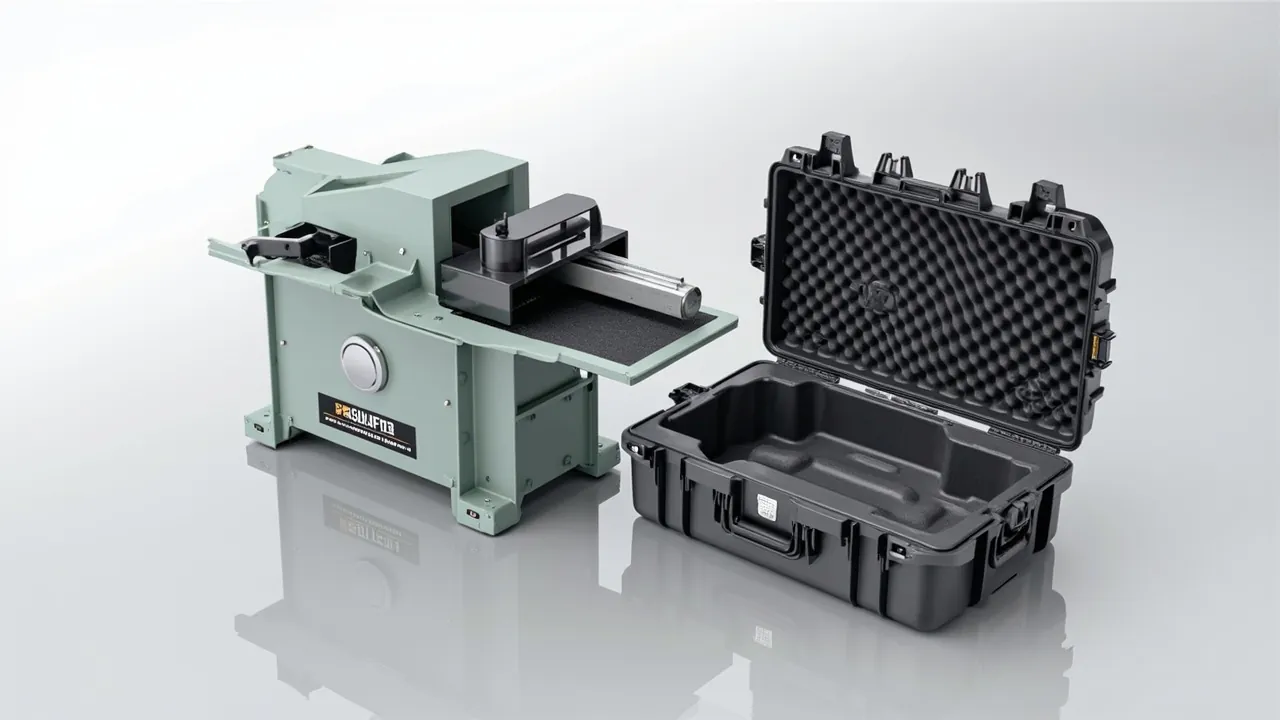
Spare parts in a sludge dewatering workshop share one inherited problem: the medium they work in is itself the corrosion source. The judgement is clear: for screw and filter belt components, the protective focus is not cushioning but breaking the ongoing action of corrosive media and residues. Getting the four steps — clean, dry, barrier, inhibit — into the right order is far more effective than making the case thicker. The screw shaft of a screw press and the filter belt of a belt press fail in different ways: the first to pitting and stress corrosion cracking driven by chlorides and hydrogen sulphide, the second to material degradation caused by acids, alkalis and microbial activity in retained sludge. What they share is a timeline: corrosion and degradation begin accumulating within the first two weeks after packing, yet the problem usually only surfaces weeks after the equipment returns to service.
This article is written for municipal wastewater treatment plants, industrial effluent treatment stations, sludge disposal centres, dewatering equipment manufacturers and environmental engineering companies. It covers packaging practice for screw shafts and flights (including wear-resistant hardfacing), filter belts (including joints and tension rollers), flocculation and mixing assemblies, wash water spray and filtrate collection components. It sets out material-versus-medium comparisons, a three-layer corrosion protection structure, control of the hydrogen sulphide and humidity coupling, residue classification, test references, and storage plus unpacking and refitting procedures. Data quoted are empirical industry ranges; each project should still follow its equipment drawings, material certificates and transport contract.
Table of Contents
- The Corrosion Ledger for Dewatering Spares: Medium, Temperature, Dwell Time
- Screw Shafts and Flights: Differential Protection for Hardfacing and Base Metal
- Stainless Steel Selection and the Chloride Trap
- Filter Belt Form and Joints: Creases and Clasps Are the Weak Links
- Why Retained Sludge Must Be Removed Before Packing
- Protection for Remaining Parts: Mixing, Spray and Filtrate Collection
- The Three-Layer Corrosion Protection Structure
- Humidity, Hydrogen Sulphide and the Sealed Space Coupling
- Liner Materials: Corrosion Resistance and Compatibility
- Residue Classification and Compliance Boundaries
- Test References and Acceptance Criteria
- Storage, Unpacking and On-Site Refitting
- Customization Workflow and Supply Models
- Frequently Asked Questions
- Conclusion and Related Reading
The Corrosion Ledger for Dewatering Spares: Medium, Temperature, Dwell Time
Any effective protection scheme starts with a clear corrosion ledger. Corrosion in a sludge dewatering environment is governed by three variables, and underestimating any one of them makes the scheme fail.
The first variable is medium composition. After anaerobic digestion, municipal sludge produces hydrogen sulphide, which forms a weakly acidic solution when dissolved. Industrial sludge may contain chlorides, sulphates, ammonium salts and various organic acids. Chlorides are the classic threat to stainless steel: they locally destroy the passive film, initiating pitting and crevice corrosion, and where tensile stress is present they can develop into stress corrosion cracking. Beyond participating directly in electrochemical corrosion, hydrogen sulphide also reacts with iron to form sulphides, producing black corrosion products that accelerate subsequent attack.
The second variable is temperature. Each increase in temperature raises the rate of the electrochemical reactions. Dewatering workshops generally run from ambient to moderate temperatures, but sludge after thermal hydrolysis or high-temperature digestion is hotter, and components pulled during maintenance often carry residual heat. Temperature has a second effect: it governs evaporation and condensation behaviour inside the case, and thus humidity control indirectly.
The third variable is dwell time. This is the most easily overlooked because it happens after packing. Residues on component surfaces create a local environment inside the sealed case: retained moisture slowly evaporates and is reabsorbed, salts concentrate, and corrosion products accumulate. The longer the dwell, the greater the cumulative damage even from light initial contamination. On export ocean freight, dwell often exceeds two months.
| Medium constituent | Main targets | Typical damage pattern | Protection focus |
|---|---|---|---|
| --- | --- | --- | --- |
| Chlorides | Austenitic stainless steel | Pitting, crevice corrosion, stress corrosion cracking | Chloride control, chloride-free cleaning, isolation layers |
| Hydrogen sulphide and sulphides | Carbon and low-alloy steel | General corrosion, sulphide product layers | Residue removal, barrier, vapour phase inhibition |
| Organic acids and ammonium salts | Coatings, seals | Coating blistering, elastomer ageing | Cleaning, drying, compatibility confirmation |
| Alkaline cleaning residue | Aluminium, galvanized parts | Surface blackening, coating dissolution | Neutralizing rinse, separate packing |
| Water-bearing sludge residue | All metal parts | Persistent moisture and corrosion source | Complete removal and drying |
One point deserves emphasis: these factors amplify one another after packing. Water-bearing residue supplies the moisture, concentrated salts supply the electrolyte, thermal cycling drives evaporation and condensation, and long dwell lets the reactions run to completion. The aim of a packaging scheme is therefore not to exclude air but to cut the chain at its origin — deal with residues and moisture before the case is closed.
Screw Shafts and Flights: Differential Protection for Hardfacing and Base Metal
The screw shaft of a screw press dewatering machine is the archetypal two-materials-in-one-body part: the base metal is usually stainless steel, while the outer edge of each flight carries a hardfacing alloy to extend wear life. The two zones have different surface conditions and different protection priorities.
Hardfacing is characterised by high hardness, comparatively good corrosion resistance and a rough surface. Weld bead ripples, microcracks and local porosity trap moisture and salts, becoming pitting initiation sites. Once hardfacing spalls, the exposed base metal corrodes at a rate far above that of the hardfacing. The hardfaced zone therefore needs thorough cleaning and drying, with a penetrating rust preventive where appropriate so the inhibitive film reaches into the weld texture.
Base metal (stainless steel) is characterised by a smooth surface that fears chlorides. The shaft's cylindrical fits, journals and bearing seats are high-precision; scoring degrades assembly and concentricity. These areas need rigid protective sleeves, and the packaging materials used must be free of chlorine and sulphur.
The screw shaft's form factor is slender with limited stiffness. If a long shaft is supported at both ends with the middle unsupported, vibration induces bending and straightness goes out of tolerance; because the clearance between screw and barrel is narrow in a screw press, a change in straightness causes galling and abnormal wear. Packaging must therefore deliver multi-point support plus axial restraint: support points distributed along the shaft length, no unsupported mid-span, and axial restraint to prevent end play.
Flight outer diameter is a precision dimension. The clearance between flight edge and filter barrel governs dewatering performance. If flight edges bear load directly during stacking, they deform locally. Shafts should therefore be "suspended" in cradles so that load passes through journals or end flanges rather than through flight edges.
Bearing housings and seals are precision parts and belong in a separate cavity, individually packed, so that shaft weight never acts directly on a bearing housing.
Wear parts (wear plates, bushings, seal rings) should be packed as sets with a bill of materials, preventing substitution with non-original parts on site when something is missing.
Stainless Steel Selection and the Chloride Trap
In dewatering equipment selection, "we used stainless steel" is often treated as the end of the corrosion question, yet in chloride-bearing environments the grade choice and the way the surface is treated are themselves risk points.
Grades differ markedly in chloride resistance. Type 304 austenitic stainless steel can pit in ambient-temperature chloride-bearing water; 316L gains pitting resistance from its molybdenum content; duplex stainless steel such as 2205 performs better still in chloride environments; and certain high-molybdenum super grades serve the most aggressive duties. Transport and storage protection requirements should follow the grade: the lower the corrosion resistance, the more sensitive the material is to humidity and chloride residue.
There are three common sources of the chloride trap. The first is cleaning: chloride-bearing cleaning agents or untreated tap water rinse leave chlorides on the surface. The second is packaging material: some polyvinyl chloride films, chlorine-containing label adhesives, and foam made from recycled stock can release chlorides under certain conditions. The third is the environment: air at coastal plants already carries salt fog, and outdoor storage deposits chlorides continuously.
Sensitized zones and weld areas are weak positions. If the heat-affected zone is sensitized, its corrosion resistance falls noticeably below that of the base metal, and corrosion usually starts there. Weld zones need focused protection during packing and should be listed as inspection points at acceptance.
Avoid galvanic corrosion. Dewatering spare parts frequently include stainless, carbon steel and galvanized items together. If the three touch directly in a humid environment, a galvanic couple forms and the more active metal corrodes faster. Insert insulating isolation layers between different materials during packing, especially between fasteners and bodies.
| Material | Chloride performance | Transport protection focus | Common misuse |
|---|---|---|---|
| --- | --- | --- | --- |
| Type 304 austenitic | Moderate; pits in ambient chloride water | Chloride and humidity control, avoid scoring | Specified for long-term chloride duty |
| 316L | Good | Chloride control, focused protection at welds | Assumed to be entirely rust-free, moisture control relaxed |
| Duplex 2205 | Very good | Prevent scoring, avoid carbon steel contact | Co-packed with carbon steel parts |
| Carbon and low-alloy steel | Poor | Residue removal, rust preventive coating, vapour phase inhibition | Shipped with ordinary rust oil only |
| Galvanized parts | Moderate; sensitive to alkali | Avoid alkaline residue, pack separately | In direct contact with stainless steel |
Filter Belt Form and Joints: Creases and Clasps Are the Weak Links
Filter belts on belt presses and vacuum filters are flexible components whose failure modes differ entirely from metal parts and require their own logic.
Belt materials include polyester (PET), polypropylene (PP), nylon (PA) and composite structures. Polyester is strong with good temperature resistance, but hydrolyses faster under strong alkali and hot humid conditions. Polypropylene offers excellent chemical resistance but lower tensile strength and temperature resistance. Nylon wears well but changes dimensions noticeably on moisture uptake. Material choice determines how sensitive the belt is to humidity and temperature.
Filter belts fail in four ways. First, creasing: once a belt is folded, warp and weft yarns at the fold line are flattened, permeability drops, and that zone clogs and then wears. Second, joint damage: belt joints take the form of steel clasps, stitching or heat-welded seams. Clasp joints are a rigid discontinuity and the most likely place for the entire belt to break; bending in transit damages them directly. Third, edge wear: if the sealed edges of the belt are abraded in transit, the opened edge propagates longitudinally. Fourth, contamination: sludge particles embedded in the mesh reduce permeability and accelerate wear.
Tension rollers and guide rollers are companion components. They are usually rubber-covered, so they fear compression marks and oil contamination, while roller shaft ends fear impact damage. Their packaging logic matches general roller components, described in transport protection for conveyor and drive roller components.
Rolled delivery at a large diameter is the recommended belt form, with a core diameter large enough to prevent inner-layer compaction and end face guards at both ends. Where a project requires flat delivery, folding is prohibited: use face-contact cradles and keep the belt flat throughout transfer.
| Belt area | Weak point | Consequence | Protection |
|---|---|---|---|
| --- | --- | --- | --- |
| Mid-belt body | Crease compaction | Permeability drop, faster clogging | Large-diameter rolling, no folding |
| Clasp joint | Rigid discontinuity | Breakage in service | Soft pad at joint, no bending |
| Stitched seam | Seam abrasion | Opened seam spreading longitudinally | Dedicated seam protection |
| Sealed edges | Edge abrasion | Edge opening, belt mistracking | End face guards, edge strips |
| Surface mesh | Embedded particles | Permeability drop | Cleaning, independent inner bag |
| Tension roller rubber face | Compression marks, oil | Belt mistracking | Suspended roller face, oil exclusion, restraint |
Why Retained Sludge Must Be Removed Before Packing
This section is the most basic in the article and the most often skipped. Screws and belts removed during maintenance carry widely varying quantities and compositions of sludge, and packing them without removal seals both a corrosion source and a moisture source inside the case.
Retained sludge does three kinds of harm. It supplies moisture that sustains a liquid film on metal surfaces; it supplies electrolyte, since salts in the sludge dissolve into conductive solution; and it supplies microbes and organic matter that continue to decompose in the sealed space and generate hydrogen sulphide and other corrosive gases. Together, the three establish a continuously operating corrosion environment inside the case.
The recommended cleaning sequence is physical removal, chemical neutralization, rinse, dry. Physical removal clears bulk residue; chemical neutralization addresses acidic or alkaline residue with agents selected for the material and coating; the rinse should use deionized water to avoid introducing chlorides and hardness constituents; and drying must cover crevices, blind holes and interlayers, because residual moisture hides precisely in those places.
Drying is the most critical and the most difficult of the four steps. Flight roots on screw shafts, clasp gaps and the interstices of belt yarns are all difficult to dry. Empirical practice is to extend drying time with forced ventilation, add moderate heat where appropriate, and apply rust prevention to large shaft components immediately after drying to shorten exposure.
What about parts that cannot be cleaned thoroughly? Site conditions frequently make complete cleaning or drying impossible. In that case: seal them independently, use a separate case or separate cavity, and clearly mark the component state on the case and the packing list (uncleaned, cleaned but not dried, cleaned and dried). This serves two purposes — it prevents contamination spreading to other spares in the shipment, and it tells site staff in advance what protective measures are needed.
Protection for Remaining Parts: Mixing, Spray and Filtrate Collection
Beyond screws and belts, a complete dewatering machine has several components that also need packing but are routinely overlooked. They are few in number, yet easily cause rework when packed carelessly.
Flocculation and mixing assemblies typically include a stirring shaft, paddles and a dosing connection, usually in stainless steel. Paddles are thin plate structures that bend easily and need face-contact cradles; dosing pipe connections are precision areas requiring protective caps.
Wash water spray systems consist of spray pipes, nozzles and valves. Nozzle orifices are small, and clogging or deformation directly degrades belt regeneration, so nozzles are precision wear items needing individual packing with orifice sleeves. Spray pipes are long components requiring full-length support. Valve packaging practice is covered in transport protection for pump and valve components.
Filtrate collection and vacuum system components include collection pipes, air-water separators and vacuum pump connections. These often involve welded structures and flanges, and flange sealing faces are precision surfaces needing focused protection.
Drive and transmission components (gearboxes, couplings, chains and sprockets) are heavy and belong on the lower layer with rigid restraint. Gearbox output shafts and mounting flanges are precision areas needing protective sleeves, and pressure must never be applied directly to shaft ends.
Electrical and instrument items (variable frequency drives, level gauges, flow meters) need moisture, static and compression protection in a dedicated small cavity with desiccant. Instrument packaging practice follows transport protection for online instruments and monitoring equipment.
The Three-Layer Corrosion Protection Structure
Bringing the earlier requirements together, corrosion protection packaging for sludge dewatering components resolves into a clear three-layer structure, each layer solving one problem.
The first layer is surface treatment. The aim is to give the metal surface itself short-term corrosion resistance without interfering with later processes. This includes removable rust preventives (easy to clean on site), welding-friendly rust preventives (for areas to be welded), and penetrating products for hardfacing textures. The key constraint on this layer is compatibility with subsequent processes: where painting follows, the rust preventive must be removable by normal cleaning; where welding follows, residue must not affect weld quality.
The second layer is barrier and inhibition. The aim is to slow the ingress of moisture and corrosive gases while actively inhibiting corrosion within the sealed space. The usual combination is vapour phase inhibiting film plus barrier film such as aluminium foil laminate, which is especially effective for parts with crevices, blind holes and internal cavities. The advantage of vapour phase inhibitors is that they reach places coating cannot, but they may react with certain rubber seals, plastics and coatings, so compatibility must be confirmed at the design stage.
The third layer is support and monitoring. Support structures solve restraint for heavy and long parts, while monitoring solves the question of whether protection is still effective. The humidity indicator card is the lowest-cost, highest-information monitoring tool; on long ocean routes, fit a viewing window so it can be read without opening the case.
| Layer | Aim | Typical practice | Key constraint |
|---|---|---|---|
| --- | --- | --- | --- |
| Surface treatment | Short-term surface corrosion resistance | Removable and penetrating rust preventives | Compatible with welding and painting |
| Barrier and inhibition | Slow ingress, actively inhibit | Vapour phase film plus barrier film | Compatibility with rubber, plastics, coatings |
| Support and monitoring | Restraint plus visual monitoring | Cradles, restraints, humidity indicator cards | Materials must not absorb moisture or shed |
Three practices to avoid: using ordinary rust oil with no barrier, since the oil film is lost at high temperature and fails; using barrier film with no surface treatment, since any trace of moisture inside acts on crevices over the long term; and surface treatment with no monitoring, which makes it impossible to tell where a problem originated.
Humidity, Hydrogen Sulphide and the Sealed Space Coupling
Corrosion of sludge dewatering spares has one distinctive feature: the corrosive gas may be generated inside the case rather than entering from outside. That is what makes gas behaviour inside the sealed space part of the design.
The source is residue. If incompletely cleaned sludge or sulphur-bearing deposits remain in the case, microbial and chemical processes continue to generate hydrogen sulphide in the sealed space. Dissolved into the moisture film on metal surfaces, it forms a weak acid and reacts with iron to form sulphides; such corrosion products are typically black and loose, form no protective layer, and accelerate subsequent attack.
The coupling can be understood as a cycle: rising temperature evaporates moisture from the residue and raises internal humidity; falling temperature condenses moisture onto metal surfaces, forming a liquid film; the film absorbs hydrogen sulphide and becomes a corrosive solution; the corrosion products are loose and cannot block the reaction; and the residue keeps supplying fresh sulphur. The whole process can start within days of packing.
Three control measures follow:
- Source control — thoroughly remove sulphur-bearing residue. This is the only genuinely effective measure.
- Vapour phase inhibition — use vapour phase inhibiting products suited to sulphur-bearing environments, and check their compatibility with non-ferrous metals.
- Humidity control — use barrier and desiccant to bring internal humidity below the level at which a continuous liquid film forms, and deploy humidity indicators inside the case.
One exception concerns rubber parts: excessively low humidity accelerates ageing of some rubber materials, causing hardening and cracking. Where a case contains both metal and rubber parts, consider separate cavities with different humidity targets, or specify an acceptable humidity range for rubber parts in the technical agreement.
Liner Materials: Corrosion Resistance and Compatibility
Liner material in a sludge dewatering parts case plays two roles: restraining components, and not becoming a new corrosion source. The second role is often overlooked.
Foam materials (EVA, PE, PU) should be selected on three criteria. First, formulation: choose low-outgassing, halogen-free grades that do not release corrosive substances. Second, density and hardness: use high-density foam or composite structure under heavy parts, noting that foam creeps under long static load, so the principal load should be carried by rigid support blocks. Third, water absorption: open-cell foam absorbs water and releases it slowly over a long period, so it should not be used in direct contact with metal surfaces.
Rubber and elastomers suit damping and restraint but require compatibility confirmation with metal parts. Some rubbers release sulphides under prolonged contact, which is especially harmful to copper, silver and plated parts. Rubber used in sulphur-bearing environments should also be confirmed for sulphide resistance.
Engineering plastics and panels (PE, PP, PVC board) offer good stiffness and corrosion resistance and suit dividers and support plates. Note that PVC contains chlorine and may release chlorides at elevated temperature or over prolonged contact, which is a risk for stainless steel; avoid direct long-term contact with stainless parts.
Timber and paper products are cheap but highly moisture-absorbing. Undried timber releases moisture, preservative-treated timber may react with metals, and export projects must consider phytosanitary requirements for wood packaging. If they must be used, choose moisture-resistant grades with a barrier layer, and never place them directly against metal surfaces.
Metal structural elements are the strongest option but must be corrosion-protected, with a non-metallic isolation layer wherever they touch components, to prevent galvanic corrosion.
Seal and latch materials deserve the same attention. The compound used in the case gasket determines its durability in sulphur-bearing and high-humidity environments; selection guidance is set out in seal material performance and suitable environments.
Residue Classification and Compliance Boundaries
Sludge-related spares raise a practical question in transport: what exactly is the adhering material. The answer affects packaging, marking and documentation.
Case one: new components that have never contacted sludge. Ship as ordinary industrial equipment, with no solid waste management requirements. If processing fluid, cleaning agent or rust preventive remains on the surface, that falls under chemical residue management and should be handled per the supplier's instructions and declared in the accompanying documents.
Case two: components removed during maintenance and thoroughly cleaned and dried. Generally ship as ordinary metal parts, but retain cleaning and drying records so the process and final condition can be demonstrated if required.
Case three: components carrying untreated sludge residue. This is the most sensitive case. Sludge properties depend on origin: municipal and industrial sludges differ, and sludge containing heavy metals or organic pollutants may fall into a specially regulated category under different legal systems. Such components should be sealed, clearly marked and shipped separately, and the requirements of the destination and transit territories confirmed before dispatch. Where packaging and marking for dangerous goods apply, follow the general practice in compliance requirements for hazmat transport cases.
In every case, state the component condition honestly in the accompanying documents. This is not only a compliance matter but a precondition for site safety: unpacking staff need to know whether protective equipment is required, whether ventilation must come first, and how residue should be disposed of. For sludge-related spares, also consider the compliance context of dewatering itself — municipal wastewater discharge and sludge disposal requirements, and volatile organic compound and odour control rules — so that packing and unpacking do not create new environmental problems.
Test References and Acceptance Criteria
Verification for sludge dewatering parts cases must cover both mechanical performance and protection performance, and the latter often matters more.
Mechanical references: choose the applicable stacking, vibration, impact and drop procedures from the GB/T 4857 family for the transport mode actually used; where a shipment is intermodal, follow the matching ISTA program; and for export work, let ASTM D4169 set the sequence against a distribution cycle.
Protection verification: salt spray methods suit evaluation of rust prevention under ocean freight and coastal storage; damp heat and thermal cycling tests suit evaluation of condensation risk inside the case. For components sensitive to sulphur-bearing environments, consider adding targeted accelerated corrosion verification, with items and methods agreed in the technical agreement.
On the use of MIL-STD-810H: where a contract requires a citation, treat the document as a library of environmental test methods, note the method numbers and severity levels used, and state plainly that it is cited only as a test method and constitutes no military certification, so that acceptance documents avoid ambiguity.
Acceptance criteria should cover five groups:
- Surface: no corrosion on critical machined faces, no rust at welds and heat-affected zones, no hardfacing spalling.
- Material: verify material certificates and batch numbers against the contract, with on-site material verification where required.
- Form: screw shaft straightness within tolerance, flight edges free of compression damage; filter belts free of creases with joints undamaged.
- Cleanliness: confirm by the agreed method that residue and chloride levels are within limits.
- Humidity: humidity indicators below threshold, with internal humidity re-measured on opening where necessary.
Note that corrosion defects are delayed in appearance, so "it looks fine" at acceptance does not prove the protection works. Build a storage observation period into the acceptance flow: after the opening inspection, store under the recommended conditions for a period and then recheck critical surfaces. This detects insufficient protection earlier. Guidance on case service life and replacement criteria is available in protective case service life and replacement criteria.
Storage, Unpacking and On-Site Refitting
Tiered storage management: within three months the original packaging can stand as is; from three to six months, check humidity indicators and replenish desiccant as needed; beyond six months, open the case to re-inspect critical surfaces and belt form. Outdoors, elevate the base, shed rain from the top, keep cases away from walls and respect the marked stacking tiers. Storage at coastal plants needs extra salt fog measures, because deposited salt continuously drives chloride ingress into the case.
Choosing the unpacking moment: in seasons with large temperature swings, moving a case from a cold environment straight into a warm humid workshop causes instant condensation on component surfaces. Let the case equalize in the storage environment first, and avoid opening for inspection in rain or during high-humidity periods.
Sequence after opening: read humidity indicators first, then check case and inner bag condition, then inspect each component in turn. For parts treated with removable rust preventives, clean them per the manufacturer's guidance before the next process step. For filter belts, unroll and inspect on a flat surface, never dragging them over rough ground.
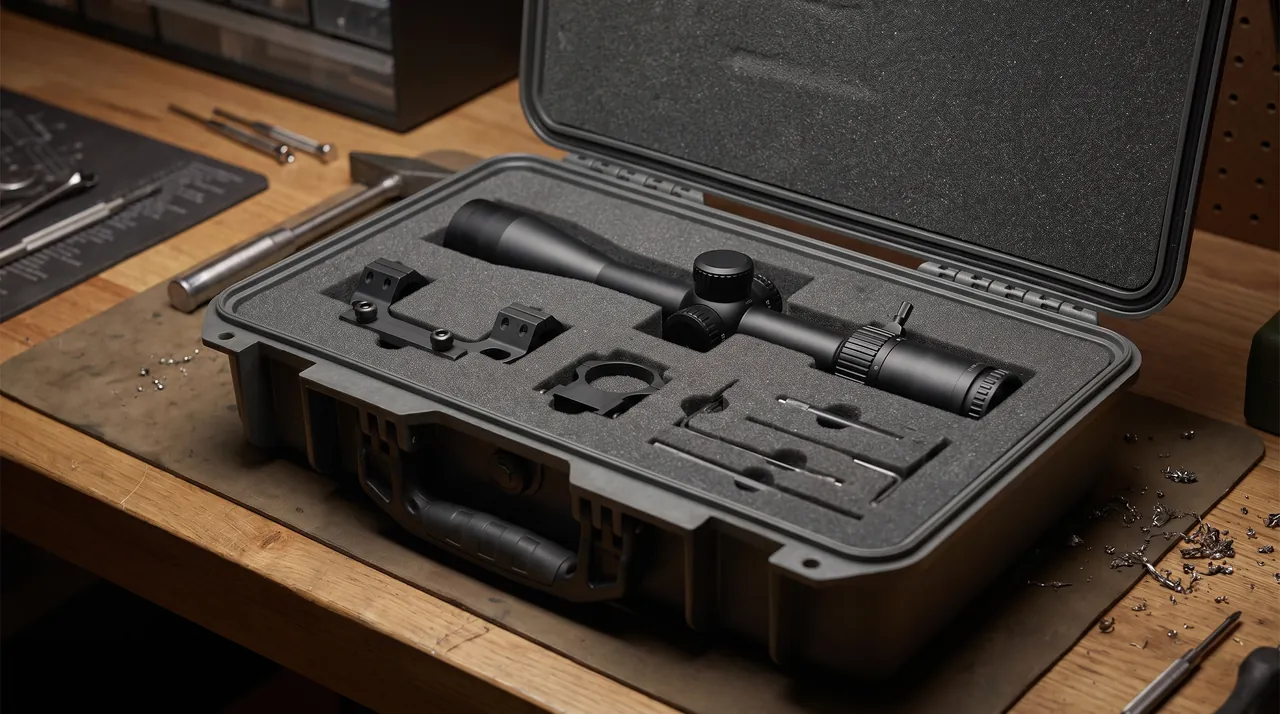
On-site refitting: liners and cradles should be removable and refittable, and the original liner and layout drawing should be retained. Dewatering workshop spares turn over frequently and the same case is often reused within a short period; once the liner is lost, only bare packing remains possible. Where different specification items must be drawn frequently, removable divider structures improve adaptability.

Customization Workflow and Supply Models
Sludge dewatering projects vary widely in their spare parts lists: a screw press and a belt press share almost no components, and even within one model family, shaft length, pitch and belt width differ by size. Case types should therefore be project-specific. A six-stage workflow is recommended.
Stage one, medium and duty confirmation. Establish sludge origin (municipal or industrial), whether it undergoes anaerobic digestion, the temperature range, and whether chlorides or sulphur are present. This step determines the basis for material and protection level selection.
Stage two, structured list. Split spares into four categories — precision metal, flexible filter media, heavy drive components and electrical items — each annotated with material, dimensions, weight and surface condition.
Stage three, protection scheme confirmation. Define surface treatment products, barrier and inhibition approach, desiccant quantity, and the humidity target for each cavity.
Stage four, trial case with real loading. Produce a trial case, load it with the actual spare list, and verify both access convenience and restraint quality.
Stage five, testing and volume production. After the agreed tests pass, move to volume production, retaining production and traceability records.
Stage six, delivery and on-site support. Provide refitting drawings, unpacking and cleaning work instructions, and storage guidance.
This case family is manufactured by Kexin New Materials (Guangdong) Co., Ltd. Cavity dimensions and support arrangements can be tailored around the screw shaft section length and filter belt width of the dewatering machine. The business model covers volume wholesale, regional agency, OEM/ODM contract manufacturing and supply to customers worldwide, and test documents and material certificates agreed in the contract can be delivered with the shipment. Where a project also involves air pollution control or solid waste sorting equipment components, review the approaches in air pollution control equipment cases and solid waste sorting equipment cases so a single case family series can cover the whole order.
Frequently Asked Questions
Q: Why is a screw press shaft so sensitive to water?
A: Because both of its materials are moisture-sensitive and the consequences of failure are severe. The base metal is austenitic stainless steel, whose corrosion resistance depends on a dense passive film; once moisture carrying chlorides or sulphides adheres to the surface, it locally destroys that film and initiates pitting and crevice corrosion. Where residual tensile stress exists in the shaft, it can develop further into stress corrosion cracking, damage that cannot be repaired by surface treatment and requires replacing the whole shaft. The hardfacing on flight edges has weld bead ripples and minor defects that trap moisture and salts, becoming pitting initiation sites; if the hardfacing spalls, the exposed base metal corrodes far faster. In addition, clearances between screw and barrel are narrow, so corrosion products that increase the outer diameter cause galling and abnormal wear. Protection in transit must achieve cleaning, drying and barrier protection simultaneously; "it is stainless steel anyway" is not a valid simplification.
Q: What happens if a screw shaft removed during maintenance is packed with sludge still on it?
A: The consequences begin accumulating within days of packing but only surface after the equipment returns to service. Retained sludge contains moisture, salts and organic matter, establishing a continuously operating corrosion environment inside the sealed case: moisture sustains the liquid film on metal surfaces, dissolved salts provide electrolyte, and microbial and chemical processes keep producing hydrogen sulphide and other corrosive gases, while the loose corrosion products cannot halt the reaction. The result is pitting and rust on critical fits and in hardfaced areas. Correcting it on site usually requires re-cleaning or even grinding, and fits with limited grinding allowance may be scrapped. In addition, residue spreads under transport vibration and contaminates other spares and the liner. Where site conditions genuinely prevent thorough cleaning and drying, seal such parts independently in a separate case and state the condition honestly on the case and packing list, so site staff know what protection and handling measures to apply before opening.
Q: Why is a filter belt clasp joint the most critical area to protect in transit?
A: Because the joint is a rigid discontinuity in an otherwise continuous belt and the point where alternating loads concentrate most in service. A belt runs under tension, and the weave structure on either side of the joint differs in stiffness, so load transfers through the clasp, making it a fatigue weak point by nature. Bending in transit imposes additional local stress at the clasp, which may deform it, misalign the teeth or tear the stitching. Such damage is usually invisible when the case is packed and develops into a break only under the combined action of tension and abrasion after commissioning. Once a joint breaks, the entire belt must be replaced with a shutdown, costing far more than the packaging. Protection practice: deliver rolled at a large diameter with the joint on the outer layer rather than trapped inside the roll; add a soft pad over the joint area and mark it individually, prohibiting bending or compression there; and never stack heavy items on the belt in storage.
Q: Can rust oil, vapour phase inhibiting film and desiccant be used separately rather than together?
A: Their mechanisms differ, so they are normally combined rather than substituted for one another. Rust oil or a rust preventive acts on the metal surface itself, forming a physical or chemical barrier, but it cannot reach crevices, blind holes and flight roots. Vapour phase inhibiting material releases inhibitive constituents within a sealed space and does reach crevices and cavities that coating cannot, but its effectiveness depends on the sealed volume, and it may react with certain rubber seals, plastics and coatings. Desiccant lowers relative humidity inside the sealed space, reducing available moisture at the source, but it needs a barrier to work with, or it is quickly consumed by moisture entering from outside. A sound combination is: surface treatment on critical machined faces, vapour phase inhibition covering crevices and cavities, overall closure with barrier film plus metered desiccant, and a humidity indicator card to confirm protection status. Two constraints shape the choice: any rust preventive on a surface that will later be welded must be welding-friendly, and any film on a surface that will later be painted must be removable by the normal cleaning process at the fabrication shop.
Q: What liner material should be used in a sludge dewatering parts case?
A: Three criteria apply, and all three are necessary. The first is not introducing corrosive media: choose low-outgassing, halogen-free foam or board, avoiding materials that release chlorides or sulphides; PVC-based materials contain chlorine and should not be in long-term direct contact with stainless parts. The second is low or zero water absorption: open-cell foam absorbs water and releases it slowly, forming a local moisture source, so it should not be used tight against metal surfaces; timber and paper-based materials absorb moisture strongly and, if used, should be moisture-resistant grades with a barrier layer. The third is matching the load: rigid support blocks should carry the principal load under heavy items such as gearboxes and shafts, with foam used only for cushioning and restraint, bearing in mind that foam creeps under prolonged static load. Rubber damping elements also need compatibility confirmation with metal parts, since some rubbers release sulphides under prolonged contact, which is harmful to copper, silver and plated parts.
Q: Are there compliance risks in transporting components with sludge residue?
A: First distinguish component condition. New parts that have never contacted sludge ship as ordinary industrial equipment; parts removed during maintenance but thoroughly cleaned and dried generally ship as ordinary metal parts, though cleaning and drying records should be kept. Parts with untreated sludge residue need particular care, because sludge properties depend on origin, and sludge containing heavy metals or organic pollutants may fall into a specially regulated category under different legal systems. For such parts, seal the packaging, mark clearly, ship separately, and confirm destination and transit requirements before dispatch; where packaging and marking for dangerous goods apply, follow the corresponding general practice. In every case, the accompanying documents should state the component condition honestly, because unpacking staff need to know whether protective equipment or ventilation is required. Note also that dewatering itself is subject to discharge and disposal regulations, so rinse water, cleaning residue and volatile gases generated during packing and unpacking should be handled under site environmental rules, not discharged to storm drainage or left open in a confined space for long periods.
Q: How does hydrogen sulphide affect material selection for the packaging scheme?
A: It affects three areas. First, the gas may be generated by residue inside the case rather than entering from outside, so the scheme must prioritize source cleaning rather than simply strengthening the barrier. Second, material compatibility: sulphur-bearing environments accelerate corrosion of certain metals and affect the service life of some rubbers and elastomers, so the material of damping elements and seals should be confirmed for sulphide resistance, and vapour phase inhibiting products should be selected in grades suited to sulphur-bearing environments with their compatibility with non-ferrous metals checked. Third, corrosion product morphology: sulphide products are typically loose and black, forming no protective layer, so once corrosion starts, subsequent development is markedly faster. This is why acceptance inspection should list welds, heat-affected zones and hardfaced areas as priority check points. On control measures, thorough removal of sulphur-bearing residue comes first, followed by controlled humidity combined with vapour phase inhibition, and finally visual monitoring through humidity indicators.
Q: What problems are most likely with long components such as screw shafts on export ocean freight?
A: Three problems dominate. First, bending: if a long shaft is supported at both ends with an unsupported mid-span, sustained ship vibration bends it, and because the clearance between screw and barrel in a screw press is narrow, the change in straightness causes galling. Second, corrosion of fits: over an ocean voyage a container experiences day-night temperature swings and generates substantial condensation, and once rust spots appear on precision fits such as journals and bearing seats, grinding is required — with limited grinding allowance available. Third, salt fog and chloride deposition: air at coastal ports and en route carries salt, and chlorides penetrating the packaging initiate pitting on stainless surfaces, becoming more pronounced over longer storage. Responses are: distribute support points evenly along the shaft with axial restraint; apply surface treatment to critical fits and fit protective sleeves; use a combination of barrier film, vapour phase inhibition and metered desiccant; fit a humidity viewing window readable without opening the case; and let the shipment equalize in temperature before opening on arrival.
Conclusion and Related Reading
The design of a sludge dewatering equipment parts case follows one line: remove the corrosion sources first, then build the three protection layers, and only then consider mechanical restraint. The sources are retained sludge and moisture; where they cannot be removed, isolate them and state the condition honestly. The three layers are surface treatment, barrier with inhibition, and support with monitoring; omitting any one leaves a hidden weakness. Mechanical restraint handles form retention for long shafts, heavy parts and flexible belts. Write surface corrosion, weld and hardfacing condition, belt crease and joint condition, and internal humidity indicator readings into the acceptance criteria, because these four reveal the true level of protection far better than whether the case exterior survived intact.
Related Reading