

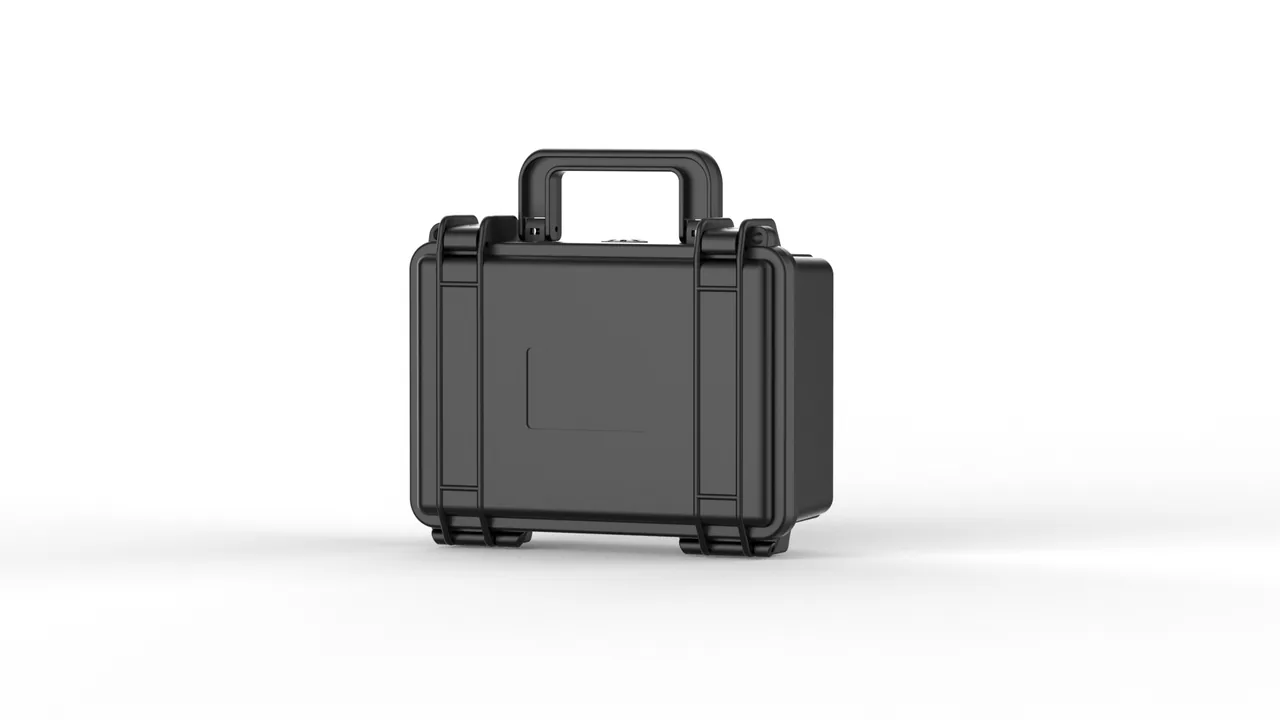
Planters and seeders are the precision foundation of modern row-crop farming, and the quality of every stand they establish depends on the condition of seed meters, opener discs, seed and fertilizer lines, and electronic control boards. Yet these components face a gauntlet of risks during factory transfer, cross-region deployment, after-sales spare parts mailing, and ocean export: vibration, compression, moisture, corrosion, and static discharge. As a protective-case manufacturer, JUNZHIJIA has spent years upgrading packaging for agricultural machinery component suppliers. We build complete transport-protection systems for precision planter parts, spanning compartment design, liner cushioning, IP67 waterproofing, and VCI vapor-phase rust prevention. Written from the maker's perspective, this article maps the typical damage patterns of metering-plate accuracy, opener-disc edges, seed and fertilizer lines, and control boards in logistics, then explains how a dedicated protective case minimizes those risks.
Transport Risks to Seed-Metering Plate Accuracy
The seed-metering plate is the heart of mechanical and pneumatic planters, determining how many seeds each revolution releases through the precisely shaped cells or pockets on its face. These cells are formed by high-accuracy stamping or EDM, with tolerances kept extremely tight; even minor distortion changes the fill-and-clear timing and causes skips, doubles, or uneven spacing. In logistics the plate fears three things: stacking pressure that warps the disc, mutual friction that raises burrs on cell edges, and grit or humidity that triggers local rust and sticking.
Conventional cartons or bare pallets cannot give the plate rigid support. Continuous road vibration slowly shifts multiple discs within the box so they collide. JUNZHIJIA recommends a dedicated hard EVA locating slot for each metering plate, with walls thick enough to absorb lateral shock while isolation sheets keep metal faces apart. For complete meter assemblies with shafts or agitators, a contoured liner suspends the whole unit at the chamber center so every vulnerable surface avoids rigid contact with the case wall.
Beyond geometry, the metering system also includes calibration springs, seed sensors, and brush seals whose function depends on clean, undistorted contact surfaces. A brushed or singulated seed sensor that arrives bent will miscount during the first field pass, and a distorted brush seal will either over-fill or starve the cell. JUNZHIJIA treats these sub-components as precision items even when they are small, giving them recessed pockets with finger-access cutouts so technicians can remove and reinstall them without tools scraping neighboring parts. The result is that the meter arrives not merely unbroken but field-ready, reducing the setup time a dealer spends calibrating each planter before the season opens.
Opener-Disc Edge Chipping and Protection
The opener creates the seed furrow and guides placement, and its edge profile, whether shovel, disc, or knife type, directly affects penetration resistance and soil coverage. The edge is heat-treated and honed to high hardness, which also makes it brittle; a hard impact or drop easily produces chipping, rolling, or micro-cracks. Because openers are bulky and weight-concentrated, an unsecured part slides inside the case and strikes others, causing secondary damage.
JUNZHIJIA places each opener in a reinforced chamber separated by structural partitions, lining the inner wall with high-density foam to cushion edge loading. The cutting edge faces the cavity center and receives a protective sleeve or paper corner guard. For disc openers, a dedicated disc cradle clamps the perimeter so the plate cannot roll and its face carries no load. Heavy parts are fixed to the base with limit blocks and straps, ensuring zero displacement under any tilt angle during transit.
Disc openers additionally rely on a relatively thin gauge wheel arm and a scraper that keeps the disc face clear of mud; both are easily bent if the case lets the opener rock. JUNZHIJIA adds a shaped saddle under the gauge-wheel arm so the load path runs through the hub rather than the thin arm, and the scraper edge is shrouded by a molded lip. Where the opener ships with its mounting bolts, those bolts are captured in a labeled foam channel rather than loose in the cavity, preventing the very common scenario where a loose bolt rolls into the edge and dents it during a rough forklift transfer. These details matter because a slightly bent opener still plants, but plants shallow or crooked, and the yield loss is discovered weeks later.
Bending and Blockage Hazards in Seed and Fertilizer Lines
Seed and fertilizer lines include seed tubes, fertilizer tubes, distributors, and elbows, mostly engineering plastic or thin-wall metal, and the interior must stay clean and clear. Their biggest transport risks are bending deformation and foreign-object intrusion: plastic hose pressed into a crease becomes permanently kinked and later restricts seed flow; metal thread ends bruised in handling complicate assembly; open fittings that admit dust, weld slag, or insect eggs cause field blockages that destabilize the whole planting line.
For line parts, JUNZHIJIA fits removable dividers and elastic straps that coil each hose at a near-natural radius to avoid forced small-radius bends, with plastic plugs sealing every opening and a desiccant sachet lowering humidity. Distributors and elbows sit in separate small cells to prevent rolling collisions. When shipped together with other components, the compartment thinking for pipe and valve parts described in the agricultural machinery parts case helps raise both loading density and safety.
Moisture and Static Damage to Electronic Control Boards
Modern planters carry seed monitoring, variable-rate fertilization, and GPS guidance, so control boards, sensors, and harness connectors form the nervous system. These electronics are extremely sensitive to moisture and static: surface-mount parts may short under condensation, oxidized connectors lose contact, and frictional static in dry conditions can destroy sensitive chips. Because trailers swing through large day-night temperature ranges, condensation forms inside the case and becomes an invisible killer of electronic reliability.
JUNZHIJIA uses anti-static EVA liner in the electronics chamber and laminates conductive foam on the inner wall so the board sits in a low-potential environment. The card inserts into a dedicated slot and its connector is sealed with anti-static foam. To fight temperature-swing condensation, the chamber carries a humidity indicator card and exchangeable desiccant packs, with an optional pressure-equalization valve balancing internal and external air. More static-protection practices appear in the anti-static protective case guide, which details independent shielding for board-class parts.
It is worth noting that board protection does not end at the liner. Many planter controllers are already conformal-coated at the factory, and the case should complement rather than replace that coating by keeping the local humidity below the threshold where creep corrosion starts. JUNZHIJIA also avoids lining the electronics chamber with ordinary polyurethane foam, which can shed fine fibers onto connectors; instead we specify low-particulate anti-static grades. Cables and harnesses are routed in their own shallow tray with strain-relief loops, so a tug on one end during removal does not transmit bending force to a soldered junction on the board, a frequent but hidden cause of intermittent field faults.
JUNZHIJIA Compartment Design Philosophy
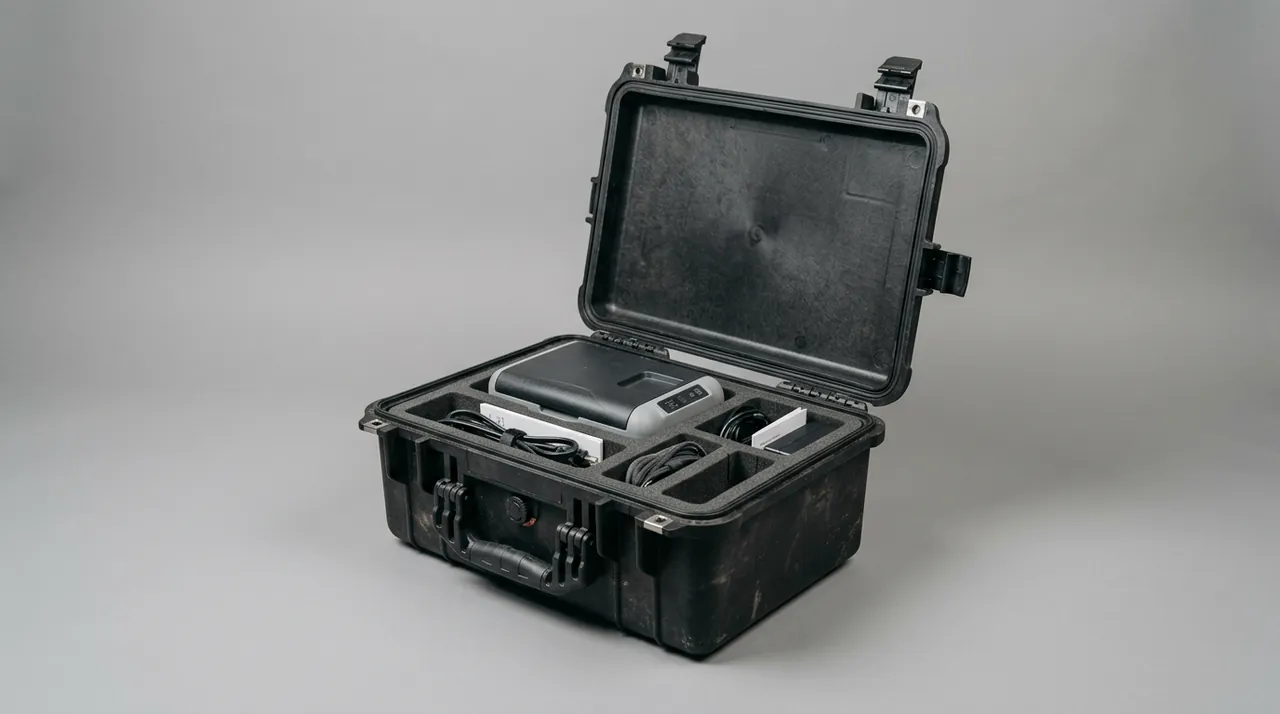
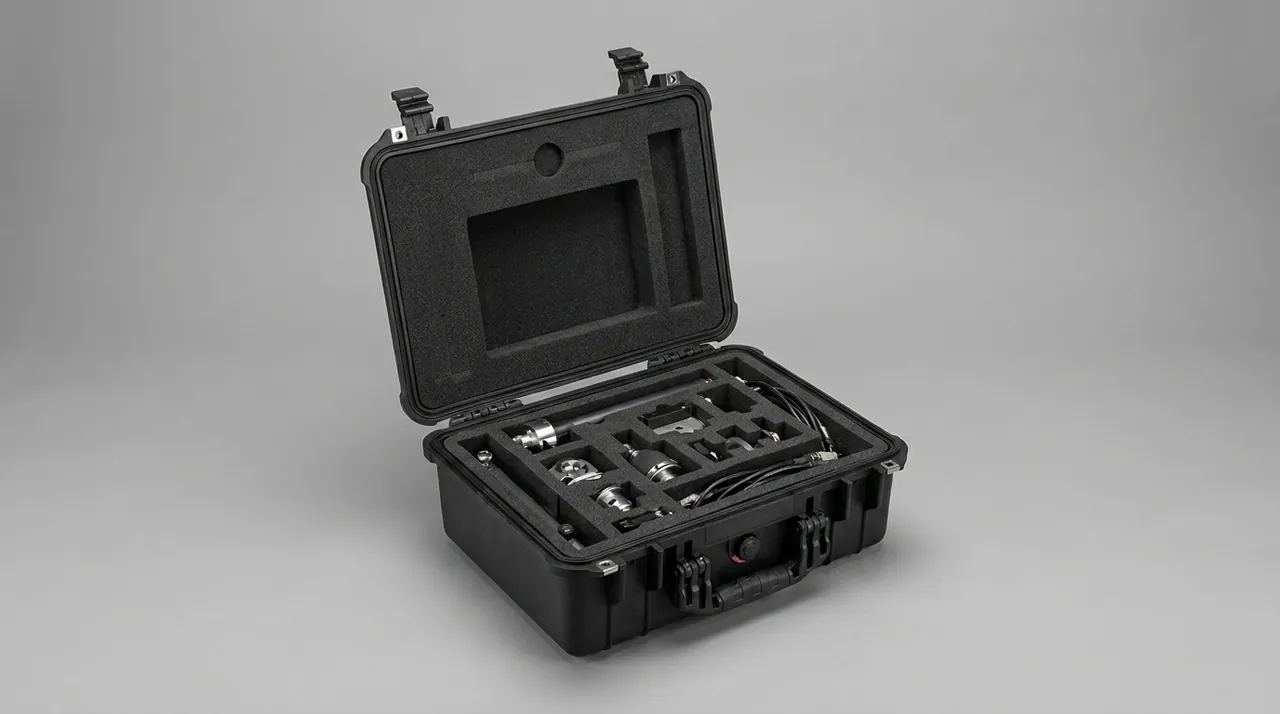
A single cavity cannot serve the different protection needs of precision parts, heavy parts, and electronics, so JUNZHIJIA follows the principle of compartment by part and defense by risk. A planter spare case is usually divided into four relatively independent zones: a precision metering chamber, a heavy opener chamber, a line and harness chamber, and an electronics chamber, physically isolated by reinforced ribs and partitions so heavy parts never press precision parts and wet zones never affect dry zones.
Compartmentalization also simplifies loading management: service staff open one zone and take parts without rummaging and knocking others; factories pre-load by zone to cut mis-shipment. JUNZHIJIA can use 3D modeling to recreate each part's placement posture from the customer's list and dimensions, then generate matching contoured liner drawings so each case gets its own diagram. For models with frequent configuration changes, modular dividers let one case adapt to different annual spare combinations.
The compartment logic also supports visual management. JUNZHIJIA can color-code each zone and print a pocket map on the inside lid so a new technician identifies the right cavity without reading a separate manual. Edge labels molded into the liner name the part and its serial range, which helps during recall campaigns where only certain batches must be intercepted. Because the partitions are structural rather than loose cardboard, the case keeps its geometry after many cycles, so the visual map stays accurate instead of drifting as dividers sag. This combination of physical isolation and visual clarity is what lets a planter case serve a dealer network rather than a single trained packer.
EVA Liner and Precision-Part Cushioning
The liner is the last line of defense for precision parts. JUNZHIJIA commonly uses EVA foam formed by CNC routing or thermo-compression into contoured liners whose closed-cell structure gives good rebound and energy absorption. For flat thin parts like metering plates, stepped cradles suspend the face so only the edge carries load; for parts with bosses or journals, relief holes in the cradle avoid local pushing.
The core of cushioning is to fit without clamping and secure without locking rigidly. A tiny gap between liner and part lets the part move slightly with liner deformation to absorb shock, yet prevents rattling inside the slot during normal handling. In the pre-production sampling stage JUNZHIJIA runs drop and vibration tests, then adjusts liner density and slot depth from measured displacement. For liner selection and customization process, see the custom foam inserts guide covering density-to-load ranges.
Where a part mix changes too often for a fully contoured liner, JUNZHIJIA offers a hybrid: a contoured base for the fixed heavy and precision items plus a pick-and-pluck upper layer the dealer can tear to fit occasional spares. The pick-and-pluck layer is sealed with a thin film after configuration so cubes do not drift during transit. We caution that pick-and-pluck alone is insufficient for the most fragile metering plates, because torn cubes leave uneven support; hence the hybrid keeps the critical parts in true contoured pockets and reserves the adjustable layer for robust spares such as bolts, guards, and hoses that tolerate minor movement.
IP67 Waterproof and Dustproof Structure
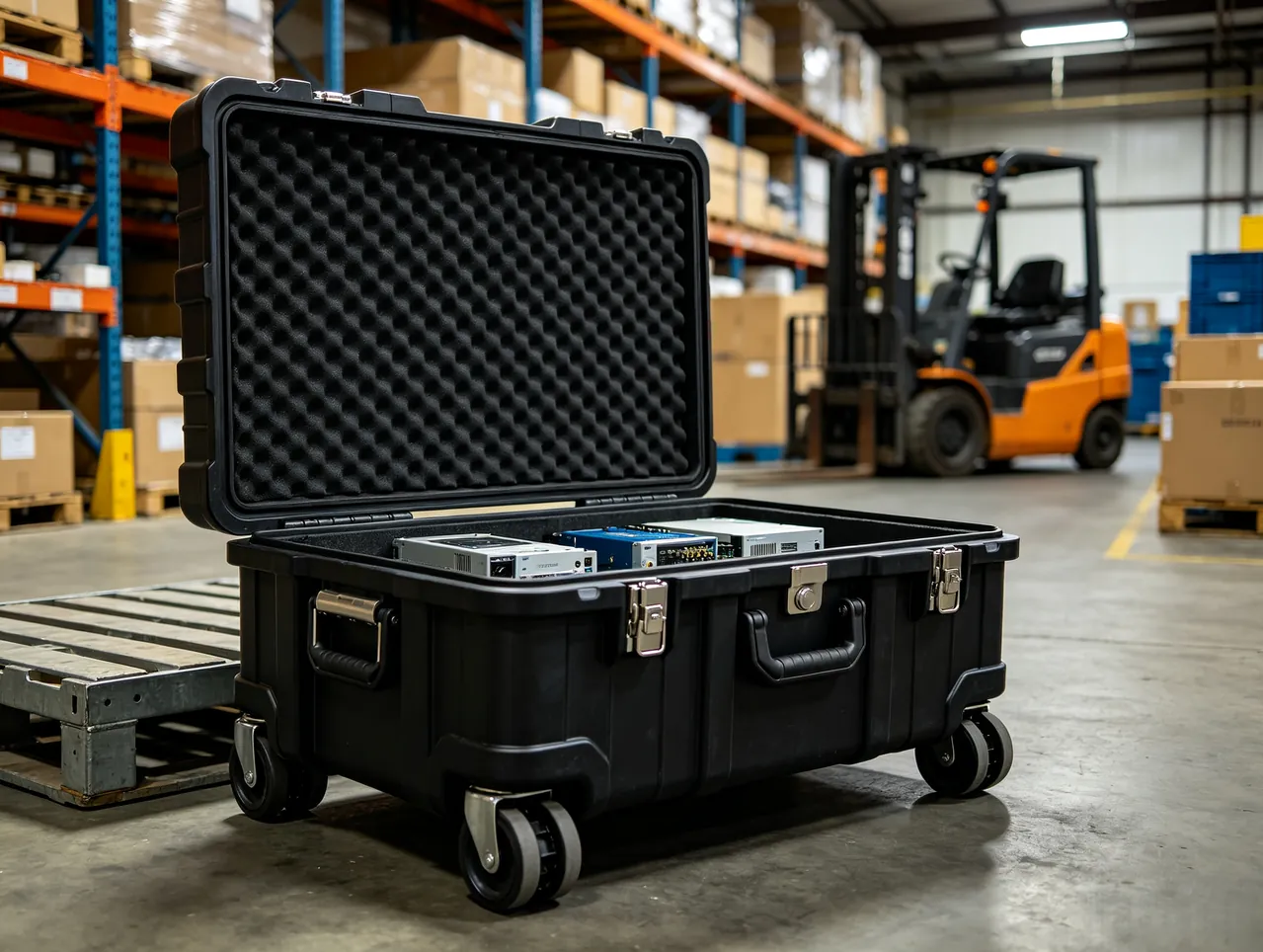
Planter spares constantly move between open yards, field edges, and ocean containers, where rain and dust are routine threats. JUNZHIJIA IP67 cases use one-piece injection or rotomolded shells with embedded gaskets and compression latches that block water and dust under short immersion and high-pressure spray. Once closed, the gasket forms a continuous seal under even pressure, achieving complete dust exclusion and short-term immersion protection.
It must be stressed that IP67 is not permanent; gasket aging and latch loosening both weaken protection. JUNZHIJIA selects weather-resistant rubber gaskets and adds secondary sealing at key corners, while latches carry a lock-state indicator for quick field verification of full closure. For customers operating long-term in humid regions, pairing with the desiccant liner combination mentioned in the outdoor rain and humidity case design upgrades passive waterproofing into active humidity control.
A detail often overlooked is the pressure-equalization valve, sometimes called a breather. As the case moves from a cool warehouse to a hot trailer, sealed air expands and can bow the lid or force the gasket; a valve with a Gore-type membrane lets air pass while blocking water and dust, protecting the seal integrity on long routes. JUNZHIJIA fits this valve on cases destined for air freight or large temperature swings, and positions it away from direct spray. The valve also simplifies opening after altitude changes, preventing the vacuum-lock that can damage a latch when a case is opened at a different elevation than it was closed.
VCI Vapor-Phase Rust Prevention for Metal Parts
Metering plates, openers, and line fittings are mostly steel or cast iron and rust easily in the high-salt atmosphere of cross-ocean shipping. Traditional oil coating works but must be cleaned before field use, adding farmer workload. JUNZHIJIA introduces VCI paper and VCI tablets placed inside the metal-part chamber; the inhibitor molecules volatilize in the sealed space and adsorb onto metal surfaces as a monomolecular film that suppresses electrochemical corrosion without oily residue.
The VCI approach fits naturally with compartment design: one VCI sheet in the heavy chamber and one in the precision chamber covers all metal surfaces, and after opening the film slowly volatilizes without affecting assembly. For already surface-treated parts, VCI also slows pitting at coating micropores. In export orders JUNZHIJIA often combines VCI with desiccant for both humidity and rust control, markedly lowering the defect rate at destination opening.
VCI must be chosen for material compatibility. Some volatile amines can affect certain plastics or non-ferrous metals if the formulation is wrong, so JUNZHIJIA specifies ferrous-safe VCI for steel openers and metering plates, and verifies it does not cloud polycarbonate seed-tube sight glasses. We also keep VCI paper from direct contact with bare aluminum where the customer uses aluminum distributors, preferring a separated placement that still floods the cavity with vapor. Documenting the VCI grade on the case label lets receivers know the expected protection window, typically several months in a sealed case, after which replenishment is simple by dropping in a fresh tablet.
Humidity Control and Desiccant Strategy
Even at IP67, day-night temperature swings can condense water on the chamber wall. JUNZHIJIA treats humidity control as equal to waterproofing, typically using a three-in-one scheme of sealing, desiccant, and indication. Reusable silica or montmorillonite packs change color when saturated to signal replacement, and a humidity indicator card lets the receiver judge at a glance whether the case ever saw high moisture.
For control-board spares with high electronics content, JUNZHIJIA laminates an aluminum-foil moisture-barrier film on the chamber inner layer to further cut water-vapor transmission. Ocean shipping warrants doubled desiccant capacity and an immediate indicator check on arrival. Related humidity experience is compared in the condensation control in cases article, which quantifies desiccant dose across climate zones.
The choice between silica gel and montmorillonite clay depends on the route. Silica regenerates by heating and is preferred where the case returns for refill, while clay is cheaper and performs well in moderate climates without regeneration. JUNZHIJIA sizes the desiccant by the cavity volume and the expected temperature-humidity swing rather than by a fixed rule, because an oversized pack adds weight and an undersized one saturates before arrival. For high-value controller spares we add an electronic data-logger option that records internal humidity and temperature, giving proof of condition for insurance and warranty disputes on long international lanes.
Selection Advice for Different Transport Scenarios
Planter-part shipping scenarios vary widely, and case selection should match. Short regional truck transfer prioritizes shock and compression resistance, so a medium-wall case with standard EVA liner suffices; long cross-region routes need dust and temperature-swing readiness, so strengthen seals and add desiccant; export ocean freight faces salt spray and stacking, so increase wall thickness, apply VCI, and add outer protection; air express favors lightweight high-strength thin-wall cases to cut freight.
JUNZHIJIA first learns the transport chain: origin climate, transfer count, carrier mode, and stacking height all enter the structural calculation. For example, bottom ocean stacks bear greater upper weight, so base ribs and wheel feet are reinforced accordingly. Seed-related spares can also borrow the long-term humidity and temperature thinking in the seed germplasm storage case to connect transport and storage functions.
Stack height also dictates latch count and case footprint. A case destined to sit four high needs either more latches or a stronger compression frame than one that rides loose on a truck, and JUNZHIJIA models the stacked load to confirm the lid will not bow into the electronics cavity. Where the planter spares travel with the implement rather than separately, we match the case footprint to the tractor toolbox or trailer rack so it straps down without overhang. This fit-to-vehicle thinking prevents the common damage of a case sliding and tipping when the trailer brakes, which is a larger hazard than the vibration most people worry about.
Packing Rules and Field Workflow
Even the best case depends on correct packing. JUNZHIJIA supplies each custom case with an illustrated packing instruction stating each part's chamber, liner orientation, desiccant position, and latch sequence. Field work follows the rule of heavy first then light, lower first then upper, and chamber-by-chamber check: heavy parts seat and strap first, precision and electronics load later into upper chambers, and each chamber is verified against the list as it fills.
After packing, a unique serial label and do-not-tip mark go on the outside, with optional asset-tracking tags enabling factory-to-field traceability. For returned repair parts, a fault description card inside helps the factory locate issues fast. Standard packing cuts human error to the minimum and is the precondition for the case to deliver its designed protection.
Training matters as much as the instruction itself. JUNZHIJIA recommends a five-minute onboarding where packers practice with weighted dummy parts before handling real metering plates, because the most frequent error is forcing a part into a slot at the wrong orientation. We also supply a clear-photo lid label showing the filled case, so a quick visual compare catches an empty cavity or a swapped part. For distributed dealer networks, a short video of the packing sequence travels better than a written manual, and we can embed a QR code on the case that opens the current instruction, keeping the procedure in sync with any mid-season part changes.
Common Materials and Cost Trade-offs
Common case materials include PP, ABS, and modified engineering plastics, and JUNZHIJIA recommends by protection grade and budget. PP shells are tough, low-cost, and low-temperature resistant, fitting high-volume standard spares; ABS is rigid with good surface quality, fitting display or high-accuracy parts; modified engineering plastic balances impact and weathering for harsh duty.
Cost trade-off cannot look only at unit case price; liner life, repair rate, and transport loss matter too. A well-structured case cycles dozens of times, with per-use cost often below one-time wooden box plus foam. JUNZHIJIA provides material comparison and usage estimates at the proposal stage to balance protection and budget. For material differences, the precision instrument protective case details shell matching across part types.
Temperature behavior should guide the choice too. PP stays tough well below freezing, important for planter spares stored in unheated northern depots, whereas some ABS grades grow brittle in deep cold and can crack if dropped on a frozen yard. Modified engineering blends close that gap but raise cost, so JUNZHIJIA reserves them for cases that must survive both cold storage and hot-field handling. We also consider UV exposure: a case that lives on an open trailer all season needs a stabilized shell or a painted outer skin, because ultraviolet breakdown silently reduces wall strength long before any visible cracking appears.
Acceptance and Quality Traceability
Every JUNZHIJIA case passes outgoing inspection focused on gasket fit, latch lock force, liner conformity, and cavity dimensions. For IP67 batches, sampling splash and immersion tests confirm no water or dust intrusion. The case and liner both carry batch numbers for later tracing of raw material and molding process.
On receipt, customers should do three simple checks: see whether the gasket is continuously compressed after closing, shake the case to hear liner rattle, and verify desiccant and indicator cards are complete. JUNZHIJIA keeps each order's 3D drawings and test records so any transit anomaly can be quickly traced and analyzed, forming a design-verify-improve loop.
Acceptance is best tied to a clear sampling plan. JUNZHIJIA proposes an AQL-based incoming check where the buyer inspects a fixed fraction of cases for seal continuity, latch force, and liner fit, rather than opening every unit. For IP67 batches we recommend a periodic immersion re-test on a sample, because a worn gasket in one cavity can let water into the whole case. Recording the serial of the tested unit closes the loop: if a field failure later appears, the buyer can confirm whether that specific case passed the documented check or fell outside the sampled set, which keeps improvement conversations factual instead of anecdotal.
Industry Cases and Protection Results
One planter OEM saw high arrival deformation of metering plates and frequent after-sales replacement before adopting JUNZHIJIA compartment cases. We designed a four-zone independent structure: plates suspended in single slots, openers reinforced and limited, lines elastic-bound, control boards anti-static shielded, with VCI and desiccant included. After one season, precision-part arrival defect rate dropped clearly, field first-pass assembly rate rose, and after-sales claims fell substantially.
Similar results appeared in export orders. A planter exporter to Southeast Asia previously used wooden boxes with paper dividers, and ocean arrival showed metal rust and electronics moisture. After switching to JUNZHIJIA IP67 cases with combined VCI humidity control, arrival pass rate stayed high and complaints dropped sharply. Such cases show that systematic protection tailored to planter parts beats generic packaging economically.
A second example comes from a domestic dealership group that ran multiple planter brands from one yard. Their pain was not breakage but mix-ups: similar-looking opener discs from different brands were confused, causing wrong-fit field calls. JUNZHIJIA built brand-colored liners and printed the model code into each cavity, so a picker could not place a brand-A disc into a brand-B pocket. The simple visual discipline cut wrong-shipments sharply and shortened the time a technician spent identifying spares during peak planting windows, when a lost day costs far more than the case itself. The lesson is that protection is not only physical; it is also about making the right part unavoidably obvious.
Maintenance and Long-Term Storage
The case itself needs care to last. JUNZHIJIA advises cleaning mud and desiccant dust after each use, checking gasket cracking and latch rebound, and replacing aging parts promptly. For long storage, stand the case in a dry ventilated place away from prolonged sunlight that ages material, and lay liners flat to avoid permanent creases.
For circulating spare cases, a simple cycle ledger helps: record each case's use count, last service, and liner status. When a liner shows obvious collapse or loose cavities, it can be re-cut alone without scrapping the whole case, lowering long-term cost. JUNZHIJIA offers liner re-cutting and spare supply so the case keeps working through the product lifecycle.
A practical maintenance interval helps. We suggest inspecting the gasket every twenty cycles or at each season change, because UV and compression set degrade rubber even when the case looks fine. Carry a spare gasket and a tube of compatible lubricant for the latch pivots; a sticky latch gets forced, and forced latches bend. If a shell ever cracks from a severe impact, JUNZHIJIA can often weld or patch a rotomolded body for continued non-critical use while a replacement ships, avoiding a total write-off. Treating the case as a maintained asset rather than a disposable box is what turns the initial purchase into years of lower damage cost.
Frequently Asked Questions
Q: Why do seed-metering plates deform easily in transit, and how does the case solve it? A: The metering plate is a thin-walled disc whose cells are formed to very tight tolerances, so overall rigidity is low; stacked pressure or mutual friction easily warps the face and raises burrs on cell edges, changing fill-and-clear timing and causing skips or doubles. JUNZHIJIA gives each plate a dedicated hard EVA locating slot with walls thick enough to absorb lateral shock, while isolation sheets keep metal faces apart. For shafted meter assemblies we use a contoured liner that suspends the whole unit at the chamber center so every vulnerable surface avoids rigid wall contact, eliminating both pressure and friction at the structural level. We also treat calibration springs, seed sensors, and brush seals as precision items, giving them recessed pockets with finger cutouts so a technician can lift them without scraping neighbours. The design intent is not merely to keep the plate unbroken but to hold its displacement below the machining tolerance that metering accuracy depends on, which is why we calculate cushioning travel from drop height and stacking load rather than estimating by feel. Dealers then spend far less time recalibrating each planter before the season opens.
Q: Opener edges are brittle; how can the case prevent chipping? A: Opener edges are heat-treated to high hardness but become brittle, so hard impact or drops easily chip or roll them. JUNZHIJIA places each opener in a reinforced chamber lined with high-density foam that cushions edge loading, with the cutting edge facing the cavity center and receiving a sleeve or paper corner guard. Disc openers use a dedicated cradle that clamps the perimeter so the plate cannot roll and its face carries no load. Heavy parts are fixed to the base with limit blocks and straps, ensuring zero displacement under any tilt angle, which pushes chipping risk to the minimum during rough handling and stacking. Beyond the edge itself, a depth-wheel arm is deliberately thin and bends under side load, and the scraper that clears the disc face can be pried and gouge the plate, so the liner carries a shaped saddle that routes load through the hub and a molded lip that shrouds the scraper. Mounting bolts travel in a labelled foam channel instead of loose in the cavity, because a bolt rolling beneath the edge and then compressed during unloading is one of the most common causes of a chipped corner. A slightly bent opener still plants, but plants shallow and crooked, and that yield loss only surfaces weeks later. This approach pushes chipping risk to the minimum during rough handling and stacking.
Q: What goes wrong most with seed and fertilizer lines, and how are they protected? A: Lines are mostly engineering plastic or thin-wall metal, and their biggest risks are bending deformation and foreign-object intrusion. Pressed plastic hose gains a permanent kink that later restricts seed flow, bruised metal threads complicate assembly, and open fittings admitting dust or insect eggs cause field blockages. JUNZHIJIA fits removable dividers and elastic straps that coil each hose at a near-natural radius to avoid forced bends, seals every opening with plastic plugs, and adds a desiccant sachet. Distributors and elbows sit in separate small cells to prevent rolling collisions, keeping the interior clean and the routing intact for reliable field operation. A further concern is the seed-fertilizer divider that splits one meter output to multiple rows; its internal channels are narrow and cannot be visually inspected once closed. JUNZHIJIA supplies these dividers with both ends plugged and a short blow-test note in the packing list, so the receiver can verify clear airflow before installation rather than after a blocked row appears mid-field. For fertilizer lines specifically, any residual fertilizer dust is hygroscopic and will cake, so the case interior is kept dry enough that the dust stays free-flowing; this is where the desiccant strategy earns its place in the same cavity as the lines rather than only with the electronics.
Q: Control boards fear moisture and static; how does the case handle both? A: Boards are sensitive to both: condensation shorts them, oxidized connectors lose contact, and dry frictional static can destroy chips. JUNZHIJIA uses anti-static EVA liner in the electronics chamber and laminates conductive foam on the inner wall so the board sits in a low-potential environment. The card inserts into a dedicated slot and its connector is sealed with anti-static foam. To fight temperature-swing condensation, the chamber carries a humidity indicator card and exchangeable desiccant packs, with an optional pressure-equalization valve balancing air, delivering combined moisture and static protection for sensitive planting electronics. Two further details matter. First, we never line the electronics chamber with ordinary polyurethane foam, because it sheds fine fibres onto connectors; only low-particulate anti-static grades are specified. Second, harnesses are routed in their own shallow tray with strain-relief loops, so pulling one end during removal does not transmit bending force to a soldered junction on the board, a frequent but hidden cause of intermittent field faults. Because many planter controllers are already conformal-coated at the factory, the case complements rather than replaces that coating by holding local humidity below the threshold where creep corrosion begins. For high-value boards we can add an electronic data-logger that records internal temperature and humidity, giving verifiable evidence for warranty or insurance disputes on long international lanes.
Q: Does VCI vapor rust prevention dirty parts or affect field assembly? A: VCI works by volatilizing inhibitor molecules in the sealed space that adsorb as a monomolecular film on metal, suppressing corrosion without oil or residue; after opening the film slowly volatilizes naturally, so it never dirties parts or interferes with later field assembly and cleaning. JUNZHIJIA places VCI paper or tablets in the heavy and precision chambers, fitting naturally with compartment design to cover all metal surfaces. For already surface-treated parts it also slows pitting at coating micropores, making it a cleaner rust-prevention choice than oil coating for export and storage alike. Material compatibility must be checked, however. Some volatile amine formulations can affect certain plastics or non-ferrous metals if wrongly chosen, so JUNZHIJIA specifies ferrous-safe VCI for steel openers and metering plates and verifies that it does not cloud transparent seed-tube sight glasses. Where a customer uses aluminium distributors, we keep VCI paper from direct contact with bare aluminium and instead separate the placement so the vapour still floods the cavity. For mixed cast-iron and plated chambers we layer the protection: tablets at the base, parts raised on a liner, and a VCI sheet over the top, so vapour reaches metal from both directions and rebuilds quickly if a case is briefly opened for inspection. The VCI grade and its protection window are printed on the case label, so receivers know when a fresh tablet is due.
Q: Is an IP67 case really enough for long ocean shipping? A: IP67 blocks short immersion and fully excludes dust, which is enough for open yards and spray, but ocean freight also brings salt spray and stacking pressure, so sealing alone is insufficient. JUNZHIJIA increases wall thickness in export orders and reinforces base ribs and wheel feet against upper stacks, while placing VCI in metal chambers and adding desiccant to upgrade passive waterproofing into active humidity and rust control. On arrival we recommend checking the humidity indicator card immediately to confirm protection status, and the combined scheme steadily guarantees opening pass rate. Stack height also dictates latch count and case footprint: a case destined to sit four high needs either more latches or a stronger compression frame than one riding loose on a truck, and we model the stacked load to confirm the lid will not bow into the electronics cavity. A pressure-equalisation valve with a waterproof membrane is fitted on cases bound for air freight or routes with large temperature swings, because sealed air expanding in a hot trailer can bow the lid or force the gasket. The valve also prevents the vacuum-lock that damages a latch when a case is opened at a different elevation from where it was closed, a small fitting that quietly protects seal integrity on long lanes.
Q: How many cycles can one case serve, and is it cost-effective? A: A well-structured JUNZHIJIA case can cycle dozens of times, with per-use cost usually below a one-time wooden box plus foam. The trade-off cannot look only at unit price; liner life, repair rate, and transport loss all count. When a liner collapses or cavities loosen, it can be re-cut and replaced alone without scrapping the whole case. For high-volume after-sales spares and cross-region transfers, cycling markedly spreads packaging cost, making it more economical than generic one-time packaging over the product life. Maintenance discipline is what realises that saving. We suggest inspecting the gasket every twenty cycles or at each season change, because ultraviolet exposure and compression set degrade rubber even while a case still looks sound. Keeping a spare gasket and a tube of compatible lubricant for the latch pivots prevents the common failure where a sticky latch is forced and bends. If a shell ever cracks from a severe impact, a rotomolded body can often be welded or patched for continued non-critical use while a replacement ships, avoiding a total write-off. Treating the case as a maintained asset rather than a disposable box is what turns the initial purchase into years of lower damage cost.
Q: What information is needed to customize a planter-parts case? A: Customers provide a parts list, each part's dimensions and weight, descriptions of vulnerable areas, the target transport chain (origin climate, transfer count, carrier mode, stacking height), and the required protection grade. Supplying drawings or 3D models shortens the modelling cycle considerably. JUNZHIJIA then models each part's placement in 3D, generates contoured liner drawings, samples, and mass-produces after drop and vibration tests. If annual configurations change often, modular dividers let one case adapt to different spare combinations, shortening redevelopment cycle and cost while keeping protection consistent across model years. It also helps to know how the spares will be used. A dealer stocking seasonal service parts needs high loading density and quick visual identification, whereas an OEM sending a complete retrofit kit needs every component grouped by assembly step so a technician never hunts for a bracket mid-job. Tell us which of the two applies and we will bias the layout accordingly, for instance by ordering cavities in the same sequence as the service manual. Beyond the drawings, sample parts themselves are valuable, because a cast surface can differ from a nominal model and a real part proves the pocket depth before tooling is cut. Finally, tell us the annual volume and expected service life, since that determines whether a thermoformed liner or a CNC-routed EVA liner gives the better cost per cycle over the fleet.
Q: How does a planter case differ from a general farm-machinery case, and can they be shared? A: Planter parts center on precision metering plates, brittle opener edges, easily kinked lines, and sensitive boards, so protection focuses on metering accuracy, edge integrity, line clarity, and board moisture-static control, which differs from mere heavy-part impact needs and should not be replaced by a generic farm case. JUNZHIJIA builds a four-zone independent design with VCI and desiccant humidity control, fitting planter spares better than a universal box. Where cross-model use is required, the agricultural machinery parts case can be adapted by reworking compartments per part. The practical difference shows up in the tolerances each case must hold. A generic farm box is judged by whether a heavy casting arrives uncracked, so thick foam and a strong shell are enough. A planter case is judged by whether a metering plate still falls inside a millimetre-scale tolerance and whether a control board still passes its own self-test, so shell strength is only the starting point. That is why we calculate cushioning travel from the actual vibration spectrum, specify anti-static liner grades, and treat humidity as a controlled variable rather than an afterthought. Sharing one shell design across both duties is therefore possible only after re-cutting the liner and re-verifying the electronics chamber, never by simply swapping the foam.
Related Reading: agricultural machinery parts case, custom foam inserts guide, anti-static protective case.