

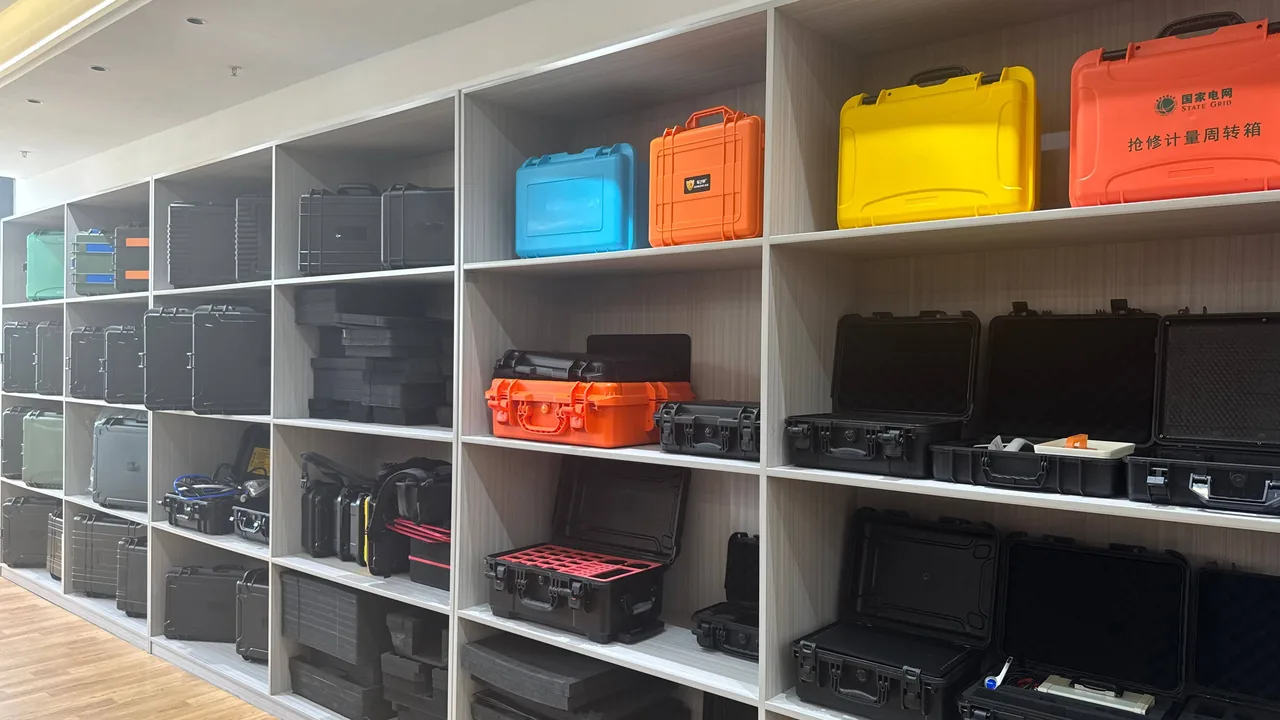
A rice mill renovation is usually squeezed into a short shutdown window. Hulling rolls leave the warehouse one day, screens travel beside the main machine the next, and sand rolls, milling blades, screw conveyors and bearing housings follow in separate consignments. What these items share is that none of them is a shelf part. They are formed to a specific mill model, and the site has neither a spare on the rack nor any realistic way to true a distorted screen or re-groove a rubber roll. Once a hulling roll takes a permanent flat spot or absorbs oil, the running velocity and nip angle change and both the hulling rate and the broken-grain rate drift together. A screen is a thin punched sheet; warp it slightly and it no longer seats against the milling blade, while a burr on a perforation keeps scuffing grain kernels for months.
Protection principle: protecting mill parts in transit is not a matter of putting things into a box. It starts from each part's geometry, material sensitivity and assembly tolerance, and uses the shell, the liner and the restraint points together to hold a repeatable transport environment. JUNZHIJIA designs mill parts cases around exactly this logic, combining separate cavities, positive location and moisture control in a single package.
Table of Contents
- Rice Milling Process Chain and Transport Failure Scenarios
- Material Sensitivity of the Rubber Hulling Roll
- Thin-Wall Deformation in Screens, Sieve Plates and Screen Bars
- Multi-Cavity Layout for Milling Chamber Components
- Liner Foam Selection: EPE, EVA, PE and IXPE
- Shell Material and Structural Strength: PP, ABS, PC and Rotomolded LLDPE
- Sealing and Ingress Protection: Dust, Moisture and Sea-Freight Salt Spray
- Pressure Equalization Valves, Desiccant and Condensation Control
- Cushioning Design and Transport Testing: Drop, Vibration and Shock
- Stacking Load, Pallet Planning and Center-of-Gravity Marking
- Dividers, Latches and Hinge Durability
- Incoming Inspection, Batch Criteria and AQL Sampling
- Customization, Tooling and OEM/ODM Services
- Frequently Asked Questions FAQ
- Conclusion and Related Reading
Rice Milling Process Chain and Transport Failure Scenarios
Turning paddy into polished rice involves a fixed sequence: cleaning and destoning, hulling, paddy separation, milling, polishing, colour sorting and grading. Each step depends on a small set of formed, model-specific components. The huller carries a matched pair of rubber rolls. The mill carries a sand roll or iron roll, milling blades, screens and a screw conveyor. The polisher carries a polishing roll and chamber liners, while the pneumatic conveying line depends on fan impellers and rotary airlock rotors. Lead times for these parts run into weeks, and critical parts for imported machines can run into months, so damage in transit stops an entire line rather than one station.
Failure in transit falls into four families that often appear together. The first is impact and crushing: fork tines pressed into a case side, a load shifting forward under braking, or stacked cases compressing the bottom layer until a rubber roll develops a flat, permanently deformed band. The second is vibration and fretting: long road legs sit in the low single-digit hertz band, and an unlocated screen slides back and forth until its edges chip against the case wall and the arc picks up scuff marks and micro-cracks. The third is environmental attack: humid sea freight and monsoon-season storage rust cast-iron cores, bearing housings and fasteners, with unprotected carbon steel showing uniform corrosion after a three-week voyage. The fourth is chemical and ageing exposure: rubber is sensitive to oils, ozone, ultraviolet light and heat, and long contact with grease, paint thinner or plasticised wrapping film causes swelling and hardening.
Reading these four scenarios correctly is the precondition for choosing shell material, liner structure and restraint method. Wrapping a hulling roll and a screen in bubble film and dropping them into a carton handles a light bump in a warehouse, not a real intermodal chain.
Material Sensitivity of the Rubber Hulling Roll
A hulling roll is a metal core with a bonded rubber cover, typically at 85 to 95 Shore A, machined with straight, inclined or herringbone grooves that grip the husk and clear it after separation. The cover runs from a few millimetres to more than ten millimetres thick, and behaves as a hard but delicate surface: it tolerates radial compression and rotational shear, yet reacts badly to concentrated local load, sharp-edge scuffing and sustained static pressure.
Four difficulties dominate. Static indentation comes first. If a bracket or divider presses against a roll at a point, the contact patch slowly flattens, and the roll then runs with a cyclic vibration and uneven hulling. Restraint must therefore spread contact across a matching arc rather than a point, with contact area sized to the roll diameter. Oil and solvent uptake comes second. Rubber absorbs mineral, animal and vegetable oils and most organic solvents to some degree, so cleaning residue, hydraulic drips from a forklift or preservative bleeding from a timber pallet can all cause local swelling; the liner should be closed-cell foam without plasticiser migration risk, and should never sit directly on oily timber. Ozone and ultraviolet ageing come third: stress-aligned cracking develops in ozone, and prolonged sunlight hardens the surface, so packing is best done out of direct light and the shell should be opaque. Temperature and dwell time come fourth: heat accelerates cross-linking and cold embrittles the cover, so cross-climate shipments need the internal temperature range assessed and, where necessary, an insulating liner.
In practice a hulling roll is best secured with end supports plus a mid-span cradle: the ends take axial movement through wrap-around cradles, the middle spreads self-weight across a curved shoe, and no single point carries the roll. Where several rolls share a case, dividers must keep the surfaces apart, and rolls must never be stacked on one another.
Thin-Wall Deformation in Screens, Sieve Plates and Screen Bars
The screen is the core separation element of a rice mill. Most are formed from thin stainless punched sheet, commonly a fraction of a millimetre to one and a half millimetres thick, perforated in the 0.8 to 2.0 mm range and curved to match the milling chamber. A screen weighs very little and has very low stiffness, because its second moment of area scales with the cube of thickness; cut thickness by twenty percent and bending resistance falls by almost half. Any concentrated load, edge knock or long compression in transit leaves a warp that is impractical to true back.
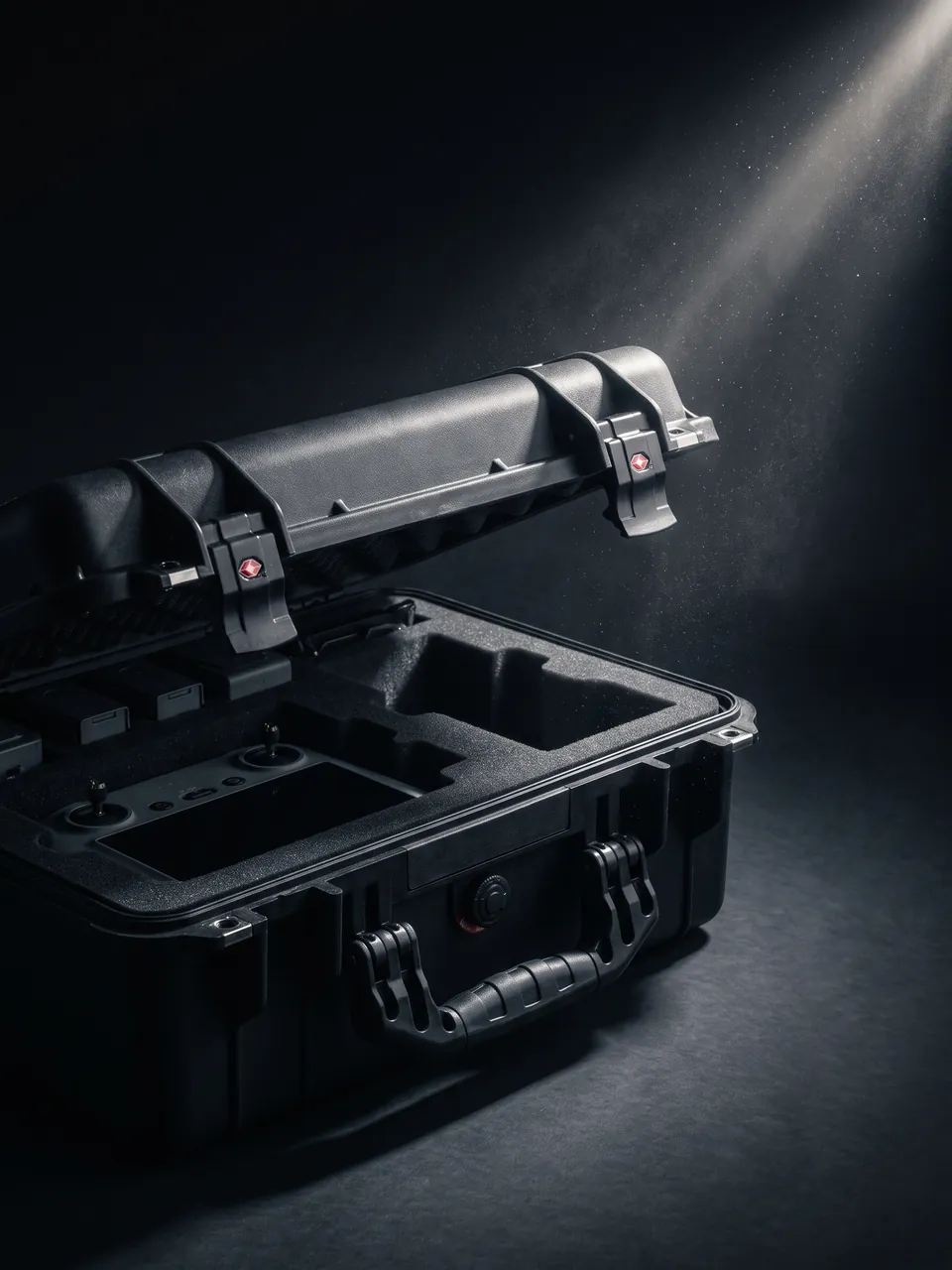
Three mechanisms drive thin-wall distortion. Edge instability comes first. The folded flange around a screen is where most of its stiffness lives, so once a fork-lift impact or a stacking load reaches the edge, the flange dents locally and the arc then springs out of shape overall. Inter-layer fretting comes second. When several screens are stacked, vibration makes each sheet creep slightly against its neighbours, perforation edges scrape one another, and micro-cracks can start at the hole rims as fatigue origins. Residual stress release comes third. Punching and roll-forming leave internal stresses, and a long road leg acts as low-amplitude cyclic loading that lets a previously seated arc drift through elastic after-effect.
The standard answer is a three-part arrangement: layer, cradle and edge protection. Each screen gets a cradle formed to the same arc, sheets are separated by a soft interleaf, and edges are covered with trim or flexible corner protectors. The stack is then bound with even, limited face pressure so it cannot move but is never locally over-compressed. Long thin items such as screen bars and milling blades belong in grooved locating strips that constrain them along their full length and end all repeated sliding.
Multi-Cavity Layout for Milling Chamber Components
The milling chamber is a dusty, high-wear environment, and its components differ widely in shape, mass and finish. Packing them loosely in one volume is the most common mistake. Sand and iron rolls are heavy with rough surfaces, and if they share a cavity with polishing rolls or chamber liners, vibration grinds the finished surfaces against one another. Milling blades and screen bars are slender, and without their own compartment they travel freely and strike whatever is in the way. Bearing housings and matched fasteners are precision fits, and a heavy neighbour pressing on them damages the mating faces.
A sound cavity plan groups parts on three axes: mass, stiffness and surface requirement. Heavy, impact-tolerant sand and iron rolls go in their own cavity near the case floor and transfer load into a base pallet. Medium-mass parts with high surface requirements, such as polishing rolls and hulling rolls, get a dedicated cavity on curved cradles. Slender thin items are consolidated into a grooved compartment that fully constrains their length. Precision items, seals, bearings and standard fasteners go into small separate pockets or a tool tray, isolated from dust and oil; the mating-face protection logic mirrors what a bearing and gearbox case must deliver.
Dividers or a moulded liner form a physical separation between cavities, and the divider itself should help carry load into the case wall instead of passing it down onto the layer below. There is a quieter benefit as well: an organised case is unpacked in assembly order, which reduces how often parts sit loose on an opening bench. A mill overhaul often has only a few days of window, so matching pick order to build order removes a great deal of secondary handling damage. Where a machine ships together with its parts case, the two should form a stable combined load on one pallet with no overhanging section.
Liner Foam Selection: EPE, EVA, PE and IXPE
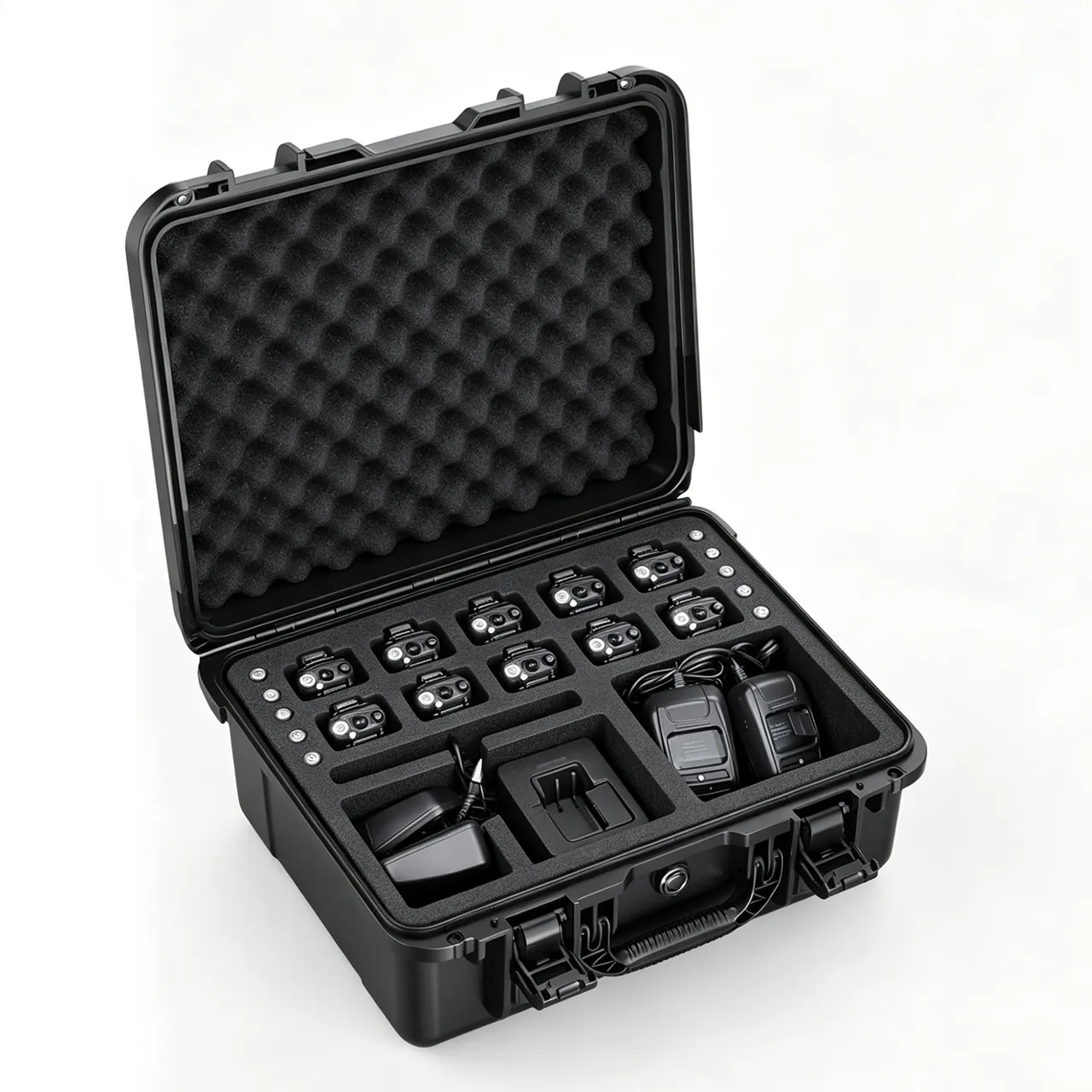
The liner is the working layer of a protective case, doing three jobs at once: locating the part, absorbing energy and separating materials. A rice mill parts case may carry a sand roll of several tens of kilograms and a screen weighing a few hundred grams, and no single foam serves both. Selection has to be per part, and the final choice should always be confirmed by drop and full-case vibration trials rather than by catalogue values alone.
| Foam type | Density range (kg/m3) | Rebound and cushioning | Compression set | Typical mill-part use |
|---|---|---|---|---|
| --- | --- | --- | --- | --- |
| EPE pearl foam | 20 to 35 | Fast rebound, noticeable decay after repeated impacts | Relatively high | Hulling roll wrapping, interleaf between screens |
| EVA copolymer foam | 45 to 90 | Balanced rebound and damping, easy to form | Low | Curved roll cradles, moulded cavity liners |
| Cross-linked PE foam | 30 to 60 | Firm, excellent creep resistance | Very low | Support blocks under sand and iron rolls |
| IXPE cross-linked PE | 30 to 80 | High closed-cell ratio, good moisture and weather resistance | Low | Base moisture barrier for coastal and sea freight |
The first rule is firm for load carriers, soft for delicate surfaces and thin between layers. Sand and iron rolls want firmer cross-linked PE blocks that spread load into the base and walls. Hulling rolls want a medium-density EVA cradle thermoformed to the roll diameter. Screens need only a two to three millimetre EPE interleaf, since an over-thick soft liner lets the sheet travel further under vibration. The second rule is that closed-cell beats open-cell, because low water uptake blocks moisture migration from the case floor and walls toward metal parts, which matters most in sea freight and humid regions. The third rule is that liner and shell are designed as one system: the liner should be sized with a compression allowance that keeps the part under light preload and removes rattle gaps, but not so much preload that a thin-wall part creeps under sustained static load.
Shell Material and Structural Strength: PP, ABS, PC and Rotomolded LLDPE
The shell sets overall stiffness, weather resistance and service life. Mill parts mostly move between buildings and over medium road distances, with some export sea freight, so the shell must handle stacking and impact while resisting moisture and temperature swings. The four mainstream options trade off as follows.
| Material and process | Impact resistance | Stiffness and stacking | Weather and chemical resistance | Where it fits, and its limits |
|---|---|---|---|---|
| --- | --- | --- | --- | --- |
| Injection-moulded PP | Medium | Medium, needs rib reinforcement | Resists water and most acids and alkalis, brittle when cold | Light to medium standard cases, cost-effective, poor at very low temperature |
| Injection-moulded ABS | Fairly high | Fairly high, dimensionally stable | Moderate weathering, yellows under long sun exposure | Cases for finish-critical precision parts, kept out of strong UV |
| Injection-moulded PC | Very high | High, but costly and dense | Good weathering and clarity | Case types that need visibility of contents, higher price |
| Rotomolded LLDPE | Extremely high | High, allows large thick-wall sizes | Weather, low-temperature and stress-crack resistant | Heavy and large parts, longer unit cycle time |
Three structural points matter most. Rib and radius design comes first: longitudinal and transverse ribs on walls and base turn them into a grid and raise bending stiffness sharply, while every loaded corner needs a radius to avoid stress concentration and cracking. Wall thickness against weight comes second: thickness is not automatically good, since a thin ribbed wall is often far more efficient than a thick flat one, and excess thickness only adds mass and material cost. Load paths come third: the base should carry feet or bearing steps that pass stacking load straight down through the walls instead of leaving the centre of the floor unsupported. For a heavy sand-roll case, a rotomolded shell with a reinforced base pallet lets load travel from part to cradle to base to vehicle floor as one continuous path; the same reasoning for heavy crushing and screening components is set out in a crushing and screening parts case.
Sealing and Ingress Protection: Dust, Moisture and Sea-Freight Salt Spray
A rice mill environment is dusty, damp and occasionally hosed down. Rice flour and husk dust are fine, hygroscopic and aggressive: once inside a case they cling to rubber, absorb moisture and form a paste that ages the cover faster while contaminating precision fits; the control problem is closely related to what a dust collector equipment case faces with fine powder ingress. Enclosure protection therefore has to address both solid particles and water, and is normally defined against the IP code in IEC 60529 or GB/T 4208. A solid rating of 6 means dust-tight, a water rating of 5 means protection against jets from any direction, and 7 means temporary immersion. For parts moving inside a plant, IP65 is usually sufficient. For cases exposed to rain during handling or short-term standing water, IP67 is the safer choice.
IP ratings describe the shell's ability to keep foreign matter out; they say nothing about absolute protection of the contents. Sealing depends jointly on the rim profile, the gasket cross-section and the compression achieved. The gasket should be silicone or EPDM for ageing and compression-set resistance, the rim should compress it evenly without shearing it, and latch count and spacing must press the rim shut around the whole perimeter, since corners are where insufficient stiffness first opens a gap. Coastal and ocean routes also need salt-spray resistance for metal hardware, and neutral salt spray testing to GB/T 10125 can rank competing schemes. It must be stated plainly that salt spray testing only ranks schemes against each other, cannot project field life and does not constitute a certification claim.
Pressure Equalization Valves, Desiccant and Condensation Control
Export sea freight and high-altitude transport produce large swings in pressure and temperature. A container can reach fifty to sixty degrees Celsius by day and drop sharply at night, so the trapped air expands and contracts repeatedly. A fully sealed case with no vent develops a pressure difference that presses and then sucks the gasket, and after enough cycles the gasket takes a permanent set or is drawn into the case, at which point sealing is lost. A waterproof breathable equalization valve lets gas pass slowly while blocking water and dust, holding the differential across the seal within a small band.
Condensation control combines three elements: desiccant, a humidity indicator and structural ventilation. The desiccant quantity should match the internal volume, voyage length and target humidity, and it belongs where air can reach it rather than buried under a liner. The indicator card gives a quick read on arrival as to whether the internal humidity ever exceeded its limit. Structurally, the interior should avoid closed dead spaces and the liner can include fine air channels so that moisture reaches the desiccant instead of condensing on metal. For components with cast-iron cores and bearings, vapour-phase corrosion inhibitor materials can supplement the desiccant by forming a molecular film on metal surfaces, covering the corners that a desiccant cannot reach on its own.
Cushioning Design and Transport Testing: Drop, Vibration and Shock
Cushioning design is fundamentally about controlling acceleration. The force a part sees in a drop or impact is roughly its mass times the deceleration, so the liner works by extending the collision time and lowering the peak deceleration, keeping the acceleration transmitted to the part within its allowance. Liner thickness and foam stress-strain behaviour must be matched to the part: a heavy sand roll with a low acceleration allowance needs a thicker, lower-density foam to absorb energy, while a light, stiff screen paired with an overly thick soft foam will simply travel further and strike the case repeatedly.
Full-case performance can be checked against the ISTA series of transport test procedures, against the GB/T 4857 family for vibration, shock, stacking and drop domestically, and against the ASTM D4169 distribution cycle for the United States. Drop height is set from the gross case weight in bands, with heavier cases tested from lower heights. Vibration testing should cover the dominant frequency range of long road transport and pay particular attention to resonance: when the excitation frequency approaches the natural frequency of the part and liner system, amplitude is amplified, and a thin-wall part can develop fatigue cracks after hours at resonance. Cushioning and restraint should therefore raise system stiffness and steer clear of the resonance band, changing foam density or adding support points where needed. These methods provide the evaluation framework; the actual test conditions and acceptance criteria should be those agreed in the purchase technical specification.
Stacking Load, Pallet Planning and Center-of-Gravity Marking
Space is tight in rice mills and logistics warehouses alike, and protective cases are routinely stacked two or three high. Stacking capacity depends on the load-bearing structure at the base, not on wall thickness. Load should pass straight down through feet, bearing steps or a base pallet, with the walls doing only the work of preventing sideways instability. If the floor is a single flat sheet with no mid-span support, long-term stacking slowly bows it downward and transfers the pressure to the contents.
Pallet planning answers three questions: the maximum number of layers per pallet, the rated capacity of the pallet itself, and the stability of the whole unit load. Stack height should be set against rack clearance and forklift capability, and cases should sit centred on the pallet with clearance at the edges for fork entry. Center-of-gravity marking matters for the same reason: dense hulling rolls and sand rolls can sit low but off the geometric centre, so the outer packaging should show the centre of gravity and the lifting points to stop the case tipping during a lift. Transport marks should carry the familiar set of instructions, including this way up, keep dry, centre of gravity, lifting points and stacking limit, so that handlers can act correctly without opening anything.
Dividers, Latches and Hinge Durability
For a case that is opened and closed repeatedly, latches and hinges usually fail before the shell does. A latch has to satisfy three conditions at once: a clear closed position with an anti-release feature, no creep loosening under transport vibration, and an opening force that still works with gloves on. Hinge pins should be stainless steel with a designed clearance so they cannot seize in a damp environment, and hinge mounts should sit in reinforced zones of the shell so that opening load is carried by structure rather than by screws in isolation.
The divider system determines whether the internal layout can adapt. Fixed dividers are cheap and stiff, which suits a stable batch of one model. Removable slotted dividers let cavity size follow the parts, which suits a spares case covering several machine models. For long thin items such as milling blades and screen bars, the slot should be slightly wider than the part and lined with a soft strip, so lateral movement is stopped without marking an edge. Latches, hinges and exposed hardware in coastal or humid locations should preferentially be 316 stainless steel, or use a surface treatment matched to the corrosion resistance the material actually provides; a vibrating screen case addresses the same thin-wall and hardware-durability trade-offs for screening equipment.
Incoming Inspection, Batch Criteria and AQL Sampling
A protective case is itself a purchased item, and its quality governs the safety of everything it carries. Incoming inspection should cover appearance, dimensions, structure and function. Appearance checks look for sink marks, voids, flash and colour variation. Dimensions verify the outer envelope, internal clearances and drawing tolerances. Structure confirms that ribs, radii, feet and wall thickness match the approved sample. Function covers latch effort, hinge rotation, gasket seating and equalization valve airflow. Where a case claims a particular IP rating, sampling can verify it with water jet or short immersion tests against the relevant standard.
Batch acceptance normally uses an AQL sampling plan, with a tightened level for critical defects that affect sealing or load capacity and a normal level for minor cosmetic issues. For repeat supply, batch consistency should also be confirmed across colour, wall thickness, latch model and gasket material against the first-article sample. It is good practice to write the key acceptance items, sample sizes and acceptance limits into the purchase technical specification, and to keep inspection records and photographs for each batch so responsibility can be established if a dispute arises. Any nonconformance should be recorded and raised with the supplier rather than absorbed on site.
Customization, Tooling and OEM/ODM Services
Because mill parts vary so much between models, a universal case rarely satisfies cavity layout, location and volume efficiency at the same time, so customization is almost always required. The process normally starts with requirement confirmation: a parts list, external dimensions, unit weights, surface-sensitive areas, the number of parts per packing unit and the intended transport mode. From these inputs the supplier completes the liner layout and shell structure design. A sampling stage follows, using CNC carving or thermoforming to make liner prototypes quickly, assembling real parts to verify location and handling, and then confirming cushioning margin through full-case drop and vibration tests.
For branded projects, the shell can carry colour customization, screen printing or in-mould labels, and a dedicated case type can be developed and tooled to the customer's structure. A dedicated mould requires balancing tooling cost, minimum order quantity and production lead time: complex parts with stable volume suit tooling, while small-volume projects and models still under revision are better served by a standard shell with a custom liner as an interim step. JUNZHIJIA supports custom liners, shell tooling, colour and marking options and documentation packs, works on either an OEM or ODM basis, and can supply structure drawings, material declarations and inspection records so that the case can be brought into the customer's own quality system. The matching discipline for flour milling components is described in a flour mill parts case, and grain drying equipment follows the same principles in a grain dryer case.
Frequently Asked Questions FAQ
Q: What is the most commonly overlooked damage to a hulling roll in transit?
A: The most commonly overlooked damage is permanent indentation from sustained static pressure. Teams watch for visible impact damage but miss the flat band that forms when a bracket or divider presses on a rubber roll at a single point across weeks of transport. It is almost invisible on opening and only shows up on the huller as cyclic vibration, a drifting hulling rate and a rising broken-grain rate. Restraint should spread contact across an arc matched to the roll diameter, using end supports plus a mid-span cradle, never a single point. The liner should hold light, even preload so the roll cannot rattle without creating a local concentrated load. Rolls should also stay clear of oily timber, grease and solvent residue, and the surface should be confirmed clean and dry before packing. They should be stored and shipped out of direct sunlight as well, because ozone and ultraviolet light harden the compound and open stress cracks along the grooves, and a hardened cover loses grip long before it looks worn. Where a roll has to stay packed for months, record the storage temperature range and the packing date, and inspect the surface for flat spots before mounting.
Q: Why can thin parts such as screens and sieve plates not simply be stacked and packed?
A: Because a screen combines low stiffness with large area, and stacking introduces two risks at once. Vibration makes adjacent sheets creep slightly against each other, perforation edges scrape across one another, and micro-cracks can start at the hole rims as fatigue origins. The folded flange around a screen carries most of its stiffness, so a stacking or impact load at the edge dents the flange first and the arc then springs out of shape overall, leaving a sheet that no longer seats against the milling blade. The practical arrangement is layered, cradled and edge-protected: each screen on a cradle formed to the same arc, sheets separated by a soft interleaf, edges covered with trim or flexible corner protectors, and the stack bound with even limited face pressure so it can neither move nor be locally over-compressed. A stack should never mix screens of different curvature either, because a mismatched sheet resting on another concentrates load along a single contact line and distorts the one beneath it.
Q: Should rice mill parts cases be rated IP65 or IP67?
A: The answer depends on the transport and storage environment rather than on choosing the higher number. IP65 is dust-tight and withstands water jets from any direction, which suits in-plant movement and medium road legs, and it keeps the case lighter and less costly. IP67 adds temporary immersion, which suits handling in rain, open quayside storage or short-term standing water on a sea route. The rating must be considered together with gasket material, rim accuracy, latch spacing and the equalization valve. A case sealed tightly but without a vent will press and release its gasket through every temperature and pressure cycle and fail sooner rather than later. It is best to define the rating against IEC 60529 or GB/T 4208 and then verify the actual performance with sampled water jet or short immersion testing. Remember that latches must press the rim shut along the whole perimeter, since a corner with insufficient stiffness is always the first place a gap opens under load.
Q: Why does sea freight need a pressure equalization valve and desiccant?
A: Because ocean voyages produce far larger temperature, humidity and pressure swings than domestic road legs. A container can reach fifty to sixty degrees Celsius by day and cool sharply at night, so trapped air repeatedly expands and contracts. A fully sealed case develops a differential that presses the gasket inward and then sucks it outward, and after enough cycles the gasket takes a permanent set or is drawn into the case, destroying the seal. A waterproof breathable equalization valve lets gas pass slowly while blocking water and dust, keeping the differential small. Desiccant addresses moisture: high humidity rusts cast-iron cores and bearings, and desiccant with a humidity indicator card holds internal humidity within limits and lets the card be read on arrival to decide whether drying is needed. Vapour-phase corrosion inhibitor materials can supplement desiccant for cast-iron components. Quantities should be recalculated for long voyages rather than copied from a domestic route, and the indicator reading should be logged on arrival so that the next shipment can be adjusted.
Q: Can all the components of one rice mill ship in a single protective case?
A: Technically yes, but only with a carefully designed cavity layout. Milling chamber components differ enormously in mass, stiffness and finish requirement. Sand and iron rolls are heavy, rough and impact tolerant. Hulling rolls and polishing rolls have delicate surfaces that fear compression and oil. Milling blades and screen bars are slender and bend easily. Bearing housings and matched fasteners are precision fits. Mixed in one cavity, heavy parts grind finished surfaces, slender parts travel and strike, and precision parts are crushed. The sound approach is to split components into cavities on the three axes of mass, stiffness and surface requirement: heavy parts low in the case and carried by a base pallet, surface-critical parts on curved cradles, slender parts in grooved compartments, precision parts in isolated pockets, with dividers or moulded liners separating cavities and guiding upper load into the case wall. A clear packing list and cavity numbering should accompany the case so that the site can return every part to its place after the overhaul.
Q: How are liner foam thickness and density determined?
A: The goal is to control the acceleration reaching the part, not simply to choose foam that looks thick. The liner extends collision time and lowers peak deceleration, and its thickness and density must match part mass and allowable acceleration. A heavy sand roll with a low allowable acceleration needs a thicker, lower-density foam to absorb energy, whereas a light, stiff screen paired with a thick soft foam travels further and strikes the case repeatedly, which is more dangerous, not less. In practice the calculation starts from part mass, support area and target drop height, and is then confirmed by full-case drop testing. The liner should also carry a compression allowance that keeps the part under light preload, but not so much that a thin-wall part creeps under sustained static load. Density and thickness should be adjusted together rather than independently, because raising density at a fixed thickness stiffens the cushion and reduces deflection, while adding thickness softens the response and allows more travel.
Q: How should the stacking limit for a protective case be set?
A: Stacking layers should follow from the load-bearing structure and the gross case weight together, and the figure must be marked on the packaging. Load should pass straight down through feet, bearing steps or a base pallet, with the walls only preventing sideways instability. If the floor is a single flat sheet without mid-span support, long-term stacking slowly bows it and transfers pressure to the contents. Setting the limit means checking gross case weight, base bearing area and the compression set behaviour of the foam, and also considering how warehouse temperature softens the plastic and reduces capacity when it is warm. At pallet level, the layer limit, pallet rating and unit-load stability must all be confirmed, with the centre of gravity and lifting points marked so that a lift cannot tip the case. The stacking figure should also be rechecked whenever the packing list changes, because adding one heavy part raises the base load even if the case dimensions stay the same.
Q: What customization and support services does JUNZHIJIA offer for rice mill parts cases?
A: JUNZHIJIA provides end-to-end customization from liner layout through shell structure, based on the customer's parts list. Typical services include cavity and restraint design driven by the geometry and surface sensitivity of hulling rolls, screens and sand rolls; CNC-carved or thermoformed liner prototypes assembled with real parts for verification; dedicated shell tooling where volume justifies it, or a standard shell with custom liner as an interim route; colour, screen printing and in-mould labelling for branding; and desiccant, humidity indicator cards and equalization valves as supporting components. Documentation such as structure drawings, material declarations and inspection records can be supplied so the case fits into the buyer's supplier quality system. Both OEM and ODM models are supported, with the mould and supply strategy chosen to suit project volume and development timing.
Conclusion and Related Reading
Protecting rice mill parts is ultimately a tolerancing exercise: the roll cover must not take a flat spot, the screen arc must not warp, the sand roll must not chip, and cores and bearings must not rust.
Related Reading