


The core precision assets of flour milling equipment are concentrated in the rolls of the roller mill and the sieve frames and screens of the plansifter. The conclusion first: rolls and screens are precision items whose surface geometry is irreversible and whose flatness and tension are extremely sensitive. They must be shipped in sealed, moisture-controlled cases with rigid inserts that support the journals and keep the roll surface free, combined with food-grade removable rust prevention. A wooden crate with loose fill, or simply stacking rolls, hands the most expensive precision asset in a flour mill to probability. Once a roll tooth chips or a tooth tip rolls over, grinding performance, flour extraction rate, and flour quality fluctuate immediately and specific energy consumption rises. A tooth profile can only be restored by re-fluting, and the number of re-flutings available is limited. Once a screen is creased or torn, sifting efficiency and grading accuracy fall, flour ash and extraction change, and the original tension cannot be restored on site.
The transport pain points are very concrete. A roll is a heavy precision body of revolution, and a single roll can weigh several hundred kilograms, with a hardened surface produced by fluting or sandblasting on which any hard contact leaves an irreversible mark. The journals at both ends of a roll are ground mating surfaces; a damaged journal shows up directly as runout and uneven grinding after assembly. Sieve frames and screens are thin-walled frames and fine mesh surfaces that distort easily under load, bending, or moisture, and nylon sieve cloth changes dimension when it absorbs moisture, which destroys tension. A flour mill also contains a high concentration of combustible dust, so packaging material choices must balance contamination control with combustible material management. This article is written for flour machinery manufacturers, engineering departments of flour milling groups, grain machinery distributors, and OEM/ODM buyers. It covers component grading, case and insert design, rust prevention and hygiene requirements, sealing levels, standard validation methods, and on-site unpacking practice, and explains how JUNZHJIA supports custom inserts and volume supply.
Table of Contents
- 1. Why Rolls and Screens Need Precision Vibration-Damped Cases
- 2. Component List and Sensitivity Grading
- 3. Failure Modes: Tooth Chipping, Roll Surface Damage, Screen Distortion and Bearing Failure
- 4. Roll Tooth Profile and Surface: An Irreversible Precision Asset
- 5. Size and Weight Boundaries: Rolls, Bearing Housings and Plansifter Parts
- 6. Case Structure and Material Selection
- 7. Insert and Locating Design: Journal Support and a Free Roll Surface
- 8. Flat Support Solutions for Screens and Sieve Frames
- 9. Rust Prevention and Flour Contact Hygiene Requirements
- 10. Dust Explosion Awareness: Special Notes on Flour Dust
- 11. Sealing and Ingress Protection: An IEC 60529 and GB/T 4208 View
- 12. Transport Vibration and Shock Validation: GB/T 4857 and ISTA
- 13. Labelling, Traceability and On-Site Unpacking
- 14. OEM/ODM Workflow, Acceptance and Reuse Management
- Frequently Asked Questions
- Conclusion & Related Reading
1. Why Rolls and Screens Need Precision Vibration-Damped Cases
The precision chain in milling is continuous: the rolls determine grinding and scraping, and the screens determine grading and extraction. Together they determine extraction rate, flour ash, and specific energy consumption. A loss of accuracy anywhere in the chain shows up in finished product indices.
First, the value of a roll is in its surface geometry. A fluted roll carries grooves machined to strict parameters. Tooth count, tooth angle, pitch, and spiral angle together determine the grinding action and the way material moves through the grinding zone. These parameters are the product of forming and fluting operations and there is no field repair method. A rolled-over tooth tip changes the scraping effect; a chipped tooth creates a grinding blind spot in that section and can damage the mating roll.
Second, a roll is an asset with a limited number of repairs. A roll is re-fluted after a period of service, and each re-fluting reduces the roll diameter, so the number of available re-flutings is finite. A single hard impact in transit can consume one or more of those valuable repair opportunities.
Third, the value of a screen is in mesh opening and tension. The frames and screens in a plansifter form the sifting unit. Mesh specification sets the cut point and tension sets sifting efficiency and screen life. A creased, bent, or moisture-affected screen loses tension, and the symptoms are reduced sifting efficiency, flour leakage past the screen, and blinding.
Fourth, bearing and mating face accuracy cannot be recovered. Roll bearing housings and journals are precision fits. Impact-induced brinell marks develop into heat, noise, and sharply reduced life in service.
Fifth, flour hygiene and safety. Rolls and screens contact flour directly, so packaging materials and rust preventives must not introduce contaminants. Flour dust is also a combustible dust, so combustible material management around packaging is part of site safety.
Practical note: the most common hidden loss in a flour mill is not the purchase price of a spare part but a new roll that still will not bring flour quality indices up. This is often traceable to roll surface impact damage in transit or to journal mating face damage, and troubleshooting consumes multiple shutdown windows.
For flour machinery manufacturers and flour milling group engineering departments, the parts case also acts as standard tooling. One insert architecture serves one roller mill model, and sieve frames are stored by specification, which prevents impact damage and simplifies storage and planned maintenance turnover. Reuse assessment methods are described in protective case service life and reuse years.
2. Component List and Sensitivity Grading
Score each part on three axes - forming precision sensitivity, shock fragility, and moisture and hygiene sensitivity - to build the packing decision basis.
| Component | Typical material / structure | Critical sensitivity | Environment and hygiene | Recommended protection |
|---|---|---|---|---|
| --- | --- | --- | --- | --- |
| Roll (fluted or smooth) | Centrifugal cast alloy iron or bimetal, hardened surface | Tooth profile, tooth tips, surface roughness, journals, end faces | Surface corrosion, rust preventive residue | V supports on journals, roll surface free, removable rust preventive |
| Roll bearing housing | Cast iron or cast steel | Bearing bore, register, oilways | Corrosion, contamination | End covers, isolated cavity, anti-rust film |
| Roll gap adjustment mechanism | Alloy steel or bronze | Threads, wedges, mating faces | Seizure, corrosion | Compartmented small-part box, rust preventive coating |
| Pneumatic clutch and cylinder | Castings plus rubber parts | Sealing faces, piston rod plating | Corrosion, ageing | Port capping, rod sleeves |
| Feed roll (toothed or grooved) | Alloy or stainless steel | Tooth or groove form, journals | Corrosion, impact | Slotted support, end covers |
| Feed gate and adjustment plate | Stainless or carbon steel | Flatness, hinge points | Distortion, contamination | Flat support, separate cavity |
| Roll scraper (doctor blade) | Tool steel or alloy steel | Edge straightness | Edge chipping | Edge guards, separate small case |
| Sieve frame | Wood, aluminium alloy, or engineering plastic | Flatness, sealing face, locating holes | Moisture distortion, contamination | Flat stacking, interlayer padding, moisture control |
| Screen (sieve cloth) | Nylon, polyester, or silk | Mesh opening, tension, surface | Moisture dimensional change, creasing, contamination | Flat support, roll or flat pack, moisture-proof wrap |
| Cleaners and rubber balls | Rubber or engineering plastic | Dimensions, elasticity | Ageing, oil | Separate bags, never with heavy parts |
| Plansifter hangers and tensioners | Steel or alloy | Threads, straightness | Corrosion, bending | Long-part case, end protection |
| Aspiration hoods and duct parts | Galvanised or stainless sheet | Flange faces, seams | Distortion | Flange rings, multi-point support |
The pattern is clear: rolls and bearing housings are the physical protection priority, sieve frames and screens are the flatness and moisture priority, and rubber and cleaner parts are the ageing and contamination priority, while flour contact hygiene requirements cut across every component that touches flour.
3. Failure Modes: Tooth Chipping, Roll Surface Damage, Screen Distortion and Bearing Failure
Tooth tip rolling and chipping. The tooth tip is the most fragile location on a roll: hard and small in cross section. When a roll is struck laterally or touches a hard item directly, tooth tips roll over or chip. Rolled tips reduce scraping capability, and chipped teeth create a grinding blind spot in that section and may damage the mating roll.
Roll surface brinelling and scoring. Smooth and sandblasted rolls used in reduction and fine grinding depend on surface roughness to control grinding action and material flow. Brinell marks and scores change local grinding conditions and cause fluctuation in the mill flow balance.
Journal damage and mating face corrosion. Journals are ground mating surfaces. A raised burr from an impact causes runout after assembly; corrosion destroys fit accuracy. Both show up as machine vibration and uneven grinding.
Bearing housing bore and register corrosion. Corrosion destroys fit accuracy, the bearing outer ring micro-moves after assembly, and the assembly runs hot with abnormal noise.
Roll bending and loss of dynamic balance. A roll has a relatively large length-to-diameter ratio and heavy mass. Too few support points or an impact can introduce slight bending, which appears as excessive vibration in service.
Moisture distortion of sieve frames. Wooden sieve frames warp as they absorb moisture, destroying flatness and sealing and causing flour leakage past the frame.
Screen creasing, tearing, and loss of tension. Fine sieve cloth has low surface strength, and compressive load, folding, or abrasion against a hard item all damage the mesh. Nylon cloth changes dimension when it absorbs moisture, so if it takes on moisture during packing, stable tension is difficult to achieve after installation.
Ageing of cleaner parts. Cleaners and rubber balls harden under heat, oil, and ozone and lose their cleaning capability.
Safety note: a roll is a heavy precision body of revolution. Lifting must use journal lifting gear or symmetrical load points. Never use the roll surface or tooth flanks as a load path, and never wrap a wire rope directly around the roll body. Tooth profile damage is irreversible and the number of repairs is limited.
4. Roll Tooth Profile and Surface: An Irreversible Precision Asset
Understanding how the value of a roll is composed is what makes the packaging design trade-offs clear.
Engineering meaning of the tooth parameters. Tooth count, tooth angle, pitch, and spiral angle together determine how material is gripped, conveyed, and scraped in the grinding zone. Tooth angle affects the balance of compression and shear, pitch affects the length of the grinding zone and how material passes through it, and spiral angle affects material distribution along the roll length. These parameters are selected as part of the mill flow design, and different grinding passages use different parameter combinations. A roll is therefore not a universal part but a dedicated part matched to a grinding passage position. Installing the wrong one or damaging one immediately disturbs the mill flow balance.
Fluting count and service life. A roll recovers its tooth profile through re-fluting, and each re-fluting reduces the diameter and changes the tooth parameters, so the number of re-flutings available is limited. This means the real cost of a severe impact in transit is not only that roll but also the lost repair opportunity and potentially early replacement.
Smooth and sandblasted rolls. Reduction system smooth and sandblasted rolls achieve toothless grinding through surface roughness and roundness. Their surfaces tolerate local brinelling even less, because any local geometric discontinuity causes material to accumulate or slip at that point.
Balance requirements. Rolls run at elevated speed and are normally balance corrected before dispatch, to a balance grade under ISO 1940-1 or the equivalent Chinese standard GB/T 9239.1. Impact and bending in transit destroy that balance state.
End faces and keyways. The roll end face mates with the drive side, and the keyway or coupling transmits torque. End-face damage causes poor seating and axial movement.
The design trade-off. Because the tooth surface cannot be repaired, packaging design must follow one hard rule: the tooth surface never carries load. The journals or end faces are the only locating and load-bearing datum, and a visible clearance must be maintained between the tooth surface and the insert. This rule outranks every cost consideration.
5. Size and Weight Boundaries: Rolls, Bearing Housings and Plansifter Parts
Flour equipment parts span a wide size range, from fine screen cloth to rolls weighing several hundred kilograms, and must be handled by category.
| Component type | Typical size | Recommended case | Locating method | Vibration demand |
|---|---|---|---|---|
| --- | --- | --- | --- | --- |
| Roll (medium to large) | 0.25-0.3 m diameter, 0.8-1.5 m long | Long-part precision case | V supports at both journals, end restraint, surface free | Very high |
| Roll (small) | Smaller diameter, shorter length | Slotted case | Journal support plus compartment isolation | High |
| Roll bearing housing | Small to medium heavy part | Isolated cavity precision case | Register location plus end-face clamping | High |
| Pneumatic clutch and cylinder | Small to medium | Rigid compartmented case | Flange location plus port capping | High |
| Feed roll | Small to medium long part | Slotted case | Journal support, tooth surface free | High |
| Sieve frame | Flat frame part | Flat stacking case | Flat support plus interlayer padding | Medium |
| Screen (roll form) | Rolled material | Rolled tube | Rigid core support plus end protection | Medium |
| Screen (cut sheets) | Flat sheet | Flat case | Flat, uncreased, padded above and below | Medium |
| Scrapers and cleaners | Small parts | Compartmented small-part box | Edge guards plus compartments | High |
Weight distribution principle. A roll is a heavy item, and a single roll can weigh several hundred kilograms. It should sit as low as possible and near the centre of gravity, and the load must be carried by rigid structure in the case base, never by foam. A rigid load-bearing plate or a solid base under the insert is recommended, with local reinforcement at the lifting points.
Length-to-diameter ratio and bending. A roll has a relatively large length-to-diameter ratio, so support spacing in practice should not exceed one third of the roll length, with a low-stiffness elastic layer under the cradles to give a soft-pad plus hard-stop combination and prevent bending under vibration.
Thin-wall and flat part principle. Sieve frames and screens must be supported flat; bending and stacking under load are not acceptable. Rolled screen material needs a core with sufficient stiffness so that core collapse cannot crush the inner layers.
6. Case Structure and Material Selection
Rotomoulded HDPE cases. Seamless, impact resistant, tolerant of low temperature, with mature sealing architecture. Suitable for the moisture and vibration demands of rolls and bearing housings, and can be built with waterproof IP-rated construction.
Injection-moulded PP cases. High precision, batch consistency, and a dense easy-clean surface. Suitable for bearing housings, valves, and cleaner parts, and easy to stack in production.
Aluminium frame cases. High stiffness and re-openable, suitable for rolls and long parts that must be opened and reassembled on site. A split insert lets the support positions be adjusted to the roll length.
Steel-wood or steel-plastic pallet cases. High load capacity for very heavy roll sets, but wood moisture content, export quarantine rules, and wood splinter contamination must be managed. For parts that contact flour, wood-free, heat-treated materials that do not shed debris and do not support mould should be preferred.
Selection order: establish load capacity and stiffness from mass and length-to-diameter ratio, then set sealing, rust prevention, and moisture control levels from part nature (roll surface precision part, precision shaft system part, flat thin part, rubber part), and finally set maintainability and insert replacement method from the number of reuse cycles.
7. Insert and Locating Design: Journal Support and a Free Roll Surface
The success of roll packaging depends almost entirely on the locating scheme.
V supports on both journals. Fit V cradles at the journals at each end of the roll so the roll is carried by its journals and the roll surface is suspended. A V form restrains radial movement in two directions and prevents the roll from rotating or rolling. The cradle surface should have a soft liner so journals are not scored.
Axial restraint. The shoulder or end face inside the journal can serve as the axial datum. Fit resilient limit blocks to restrain axial movement without transmitting excessive shock.
Verifying that the surface is free. After packing, check the clearance between the roll surface and the insert roll by roll. The clearance should be roughly uniform and visible in every direction. This check belongs in the packing work instruction and should be an outgoing inspection item.
End face protection. Roll end faces and keyways need dedicated guards so they never touch the insert hard.
Separating multiple rolls in one case. When several rolls travel in one case, rigid dividers and soft interlayers must separate them, and roll surfaces must never touch one another. A removable divider system lets one case serve several specifications; design details are in removable divider system design.
Separate cavities for bearing housings. Bearing housings and precision bearings should travel in separate cavities or a separate small case from the roll body, and bearings should stay in their original packaging to avoid false brinelling of the raceways. The reasoning behind separated cavity management of precision parts is covered in instrument case selection guide and cushion liner design approach.
Insert material selection. Consider hardness, resilience, compression set, moisture uptake, and cleanliness together. For parts that contact flour, inserts should be dense, non-shedding, easy to clean, and low in moisture uptake; material comparisons are given in case foam material comparison. Custom structure design and prototyping are described in custom foam inserts guide.
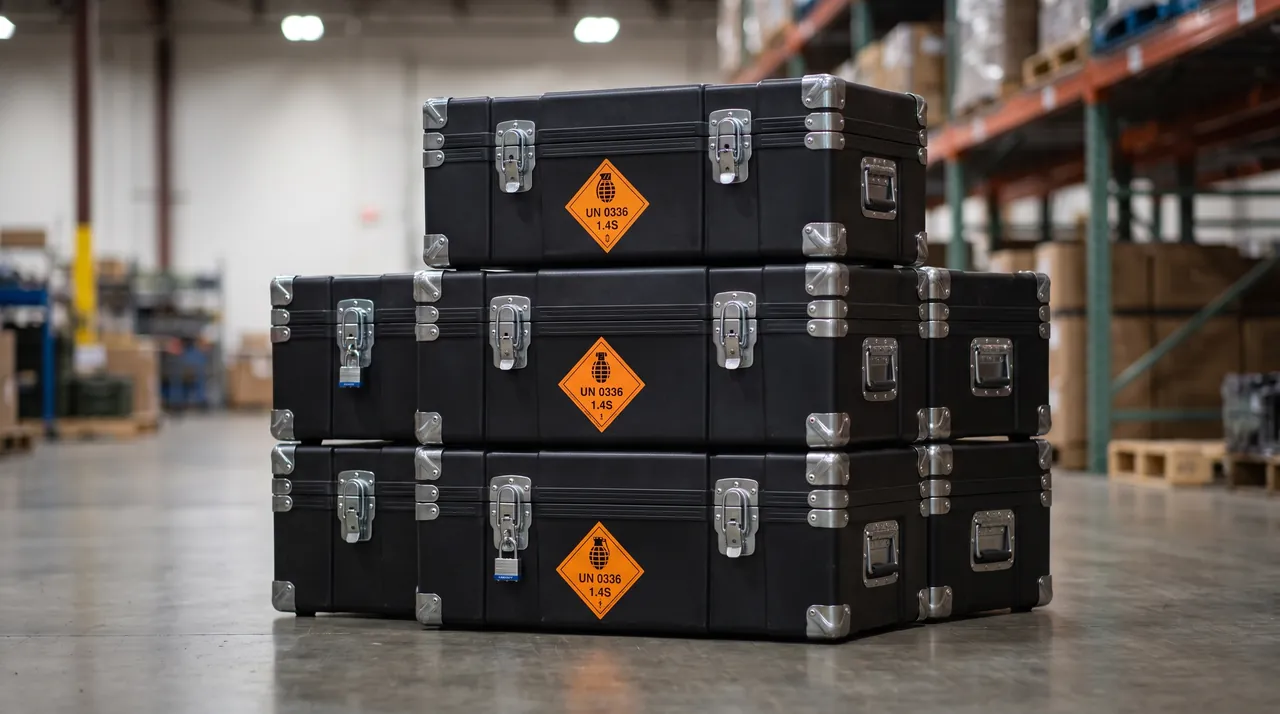
Damping. A roll has high mass and a large length-to-diameter ratio, so it has a low first bending natural frequency and couples readily with the low-frequency band of transport vibration. Support spacing should not exceed one third of the roll length, with a low-stiffness elastic layer under the cradles to combine vibration absorption with large displacement limitation.
8. Flat Support Solutions for Screens and Sieve Frames
Screens and sieve frames are the parts that look least important and are in fact the easiest to scrap.
Flat stacking for sieve frames. A sieve frame is a flat frame part whose flatness and sealing face accuracy determine the sealing of the sifting unit. Pack frames flat in a stack with padding between layers so frames do not rub or press on each other, and control the stack height so lower frames are not compressed under load for long periods. Wooden frames are moisture sensitive and must be packed dry with desiccant fitted.
Flat support principles for screens.
- No bending, no folding. Once fine sieve cloth takes a crease, the mesh geometry at the crease is destroyed, causing local flour leakage past the screen or blinding during sifting, and it cannot be restored.
- Rolled or flat, two options. Large screen rolls should use a rolled tube with a rigid core, since an under-stiff core collapses and crushes the inner layers; cut sheets and small screens should be packed flat with soft padding and rigid plates above and below.
- Moisture control is mandatory. Nylon sieve cloth changes dimension when it absorbs moisture, so moisture exposure during transport and storage destabilizes tension after installation. Fit desiccant with a humidity indicator card and use low-uptake packaging materials.
- Never in the same cavity as heavy parts. Screens must not travel with rolls or other heavy items, since any movement of the heavy part under vibration damages the mesh directly.
- Edge protection. Cut edges and tension edges are stress concentration points and need guards.
| Screen protection item | Requirement | Implementation |
|---|---|---|
| --- | --- | --- |
| Flatness | No creases or wrinkles | Flat or rolled packing plus rigid support |
| Tension retention | No moisture dimensional change | Desiccant, humidity indicator card, low-uptake materials |
| Mesh protection | No contact with hard items | Soft padding plus isolated cavity |
| Edge protection | Tension edges undamaged | Guards plus core end protection |
| Cleanliness | No debris or oil | Clean packing area plus gloves |
Cleaners and rubber parts. Rubber parts such as cleaners and rubber balls are sensitive to ozone, heat, and oil, and should be bagged separately and kept away from electrical components that generate ozone. Natural ageing of rubber parts is closely related to the packaging environment, so control temperature and avoid long-term compression.
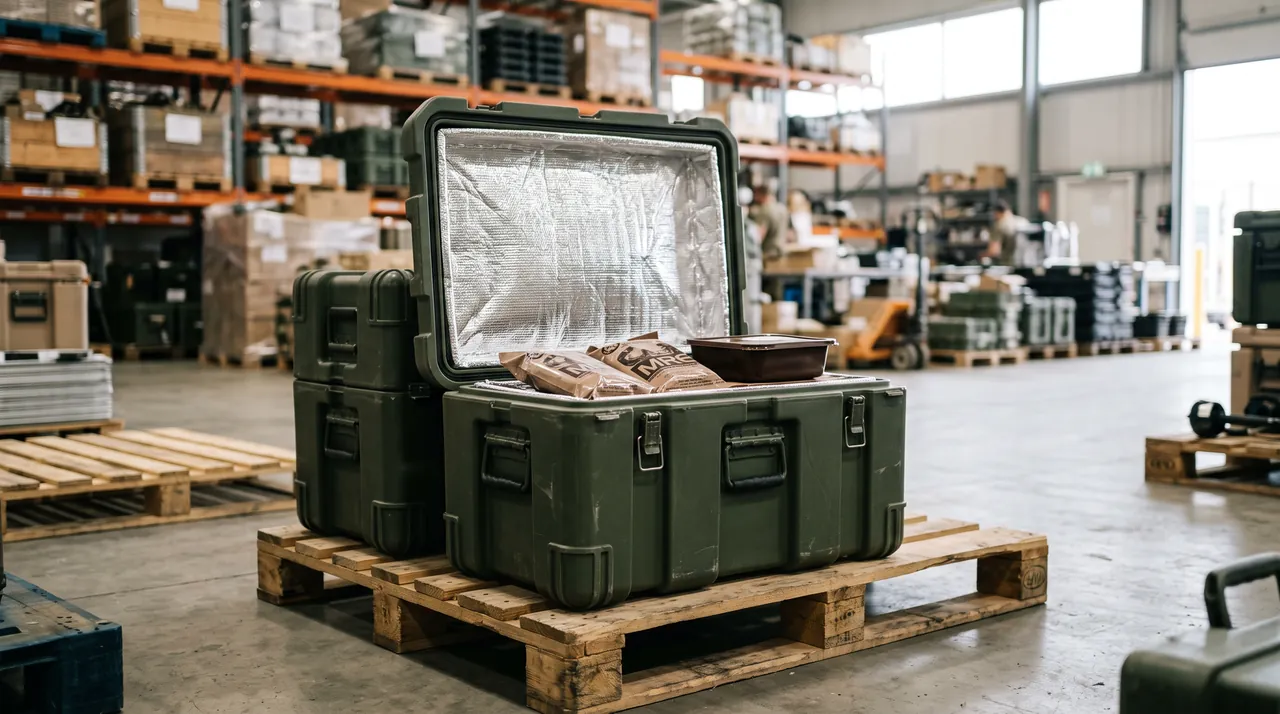
9. Rust Prevention and Flour Contact Hygiene Requirements
Rust prevention and hygiene must both be satisfied, and that is the core constraint on flour equipment parts packaging.
The correct order. Clean and degrease, dry thoroughly, apply rust prevention, then seal and pack. The roll surface and tooth grooves are the focus areas for rust prevention, because grooves readily trap both moisture and rust preventive.
What makes roll rust prevention special. The groove structure of a fluted roll causes rust preventive to accumulate in the grooves. If a heavy oil film is used, it is difficult to remove completely before installation and the residue enters the flour; if a vapour corrosion inhibitor is used, its reach into deep narrow grooves within an enclosed space must be considered, since VCI relies on gas diffusion and protection at the bottom of a deep groove needs verification. The more robust engineering approach is a combination of a thin removable rust preventive, a vapour corrosion inhibitor, and desiccant, with a clearly stated removal method.
Food contact compliance note. Rolls, screens, sieve frames, and feed rolls contact flour directly. Where an insert, divider, or bag could touch part surfaces, suppliers should provide a declaration of conformity to the relevant food contact materials standards, such as the GB 4806 series general safety requirements and the applicable material-specific standards, with migration test data where required. On finished flour safety, GB 2761 sets mycotoxin limits and GB 2715 sets food safety requirements for grain, so the packaging stage must not introduce contamination sources or mould risk. Related hygiene packaging thinking appears in cold chain and food packaging case selection.
Cleaning acceptance criteria. In practice the criterion is a white cloth test: no obvious oil mark, no metal chips, no odour. Cleaned parts must be dried thoroughly, with particular attention to liquid trapped at journal roots, keyways, and tooth grooves.
Mould and contamination control. A flour mill contains large amounts of organic dust and moisture, so mould-prone packaging materials should be avoided, inserts must carry no irritant odour, and wooden items require confirmed moisture content and quarantine compliance. Cleaning practice for cases and inserts is described in how to clean a protective case.
Compliance note: food contact compliance depends on the contacting material, the contact conditions, and destination regulations. This article provides an engineering path; the final judgement should be confirmed by the flour mill quality function and qualified compliance specialists, with supplier declarations and batch records retained.
10. Dust Explosion Awareness: Special Notes on Flour Dust
Flour dust is a combustible dust with a high explosion hazard, and this is one of the central safety topics in flour milling. In China, GB 17440 (safety code for dust explosion prevention in grain processing and storage systems) sets systematic requirements for work areas, dust collection systems, electrical equipment, hot work, and housekeeping. International projects commonly refer to ATEX directives and zone classification concepts.
The boundary must be stated clearly.
Scope of a case. A protective case isolates moisture, dust, contaminants, and mechanical damage during transport and storage; it is outer packaging protection. It is not a dust explosion prevention measure and cannot replace on-site explosion prevention management in a flour mill. Zoning, equipment selection, and electrical protection type must be assessed by a qualified body.
Practical points for packaging work.
- Opening cases in dust accumulation areas should follow site work permits and hot work rules.
- Paper and wood packaging are combustible and should not be stored long term in dust accumulation areas; paper and wood debris from unpacking should be cleared promptly.
- Where a customer is concerned about packaging flammability, ask the insert supplier for a UL94 flammability rating statement, and note that results at one thickness or density cannot be directly converted to another.
- Where a case contains electrical or energy-carrying components, handle them separately under the applicable rules with compliant marking.
Additional requirements for flour contact parts. Beyond explosion prevention management, parts that contact flour must also satisfy hygiene requirements, so packaging materials must balance low flammability against not contaminating food. In practice, dense, non-shedding, flame-resistant, and cleanable case and insert materials are preferred.
Safety note: never interpret "it is in a protective case" as permission to work or store freely inside a dust explosion hazard zone. Explosion prevention is a site process and equipment matter.
11. Sealing and Ingress Protection: An IEC 60529 and GB/T 4208 View
IEC 60529 and its Chinese equivalent GB/T 4208 define how IP codes are verified. Recommendations for flour mill parts cases are as follows.
| Use scenario | Recommended rating | Notes |
|---|---|---|
| --- | --- | --- |
| In-plant circulation and covered short haul | IP54 | Dust protection is the priority |
| Domestic long-haul road freight | IP65 | Dust tight plus water jet protection |
| Export sea freight and open storage | IP67 | No ingress during short immersion |
| Roll and precision surface cases | IP65 or better recommended | Dust, moisture, and rust prevention together |
| Screen and sieve frame cases | IP65 or better recommended | Moisture first, to prevent mesh dimensional change |
The three critical sealing components are the gasket, the latches, and the hinges. A roll case is a long, heavy-duty case with a long sealing perimeter and high lid stiffness demand, so simply thickening the gasket does not solve flatness variation; more latches and a multi-point clamping architecture are needed. See case hinge and latch sealing structure. Gasket compression set over long service is the main failure mode; material selection is covered in case seal materials and sealing system selection. For frequently opened cases, a pressure equalization valve reduces opening force and gasket fatigue.
The division of labour between sealing and desiccant. Sealing keeps external vapour and dust out; desiccant absorbs the initial vapour already inside. The two must be used together: with a poorly sealed case the desiccant saturates quickly, and without desiccant even a well-sealed case develops internal condensation driven by the day-night temperature swing, which is a direct threat to both tooth grooves and screens.
12. Transport Vibration and Shock Validation: GB/T 4857 and ISTA
The GB/T 4857 series is China's transport package test method system. For heavy precision bodies of revolution such as rolls, GB/T 4857.23 (random vibration) and GB/T 4857.5 (vertical impact drop) are the core validations, while GB/T 4857.2 (temperature and humidity conditioning) is especially important for cases containing screens; the system is explained in GB/T 4857 transport packaging standards.
The ISTA series provides procedures built around distribution chains. Export projects and door-to-door deliveries commonly reference ISTA 3A and 3E; selection guidance is in ISTA transport testing procedure selection. Where a complete parts case with control components must simulate a full distribution cycle, see ASTM D4169 distribution cycle testing.
| Test item | Reference standard | Applied condition (example) | Failure of interest |
|---|---|---|---|
| --- | --- | --- | --- |
| Random vibration | GB/T 4857.23, ASTM D4728 | Road spectrum converted by distance | Roll movement, surface rub marks, insert collapse |
| Drop | GB/T 4857.5, ISTA 1A | Height set by mass class | Case cracking, journal distortion, end face damage |
| Stacking | GB/T 4857.3, GB/T 4857.4 | Load and duration based | Case creep, sieve frame distortion under load |
| Temperature and humidity conditioning | GB/T 4857.2 | Hot humid and cold cycling | Condensation, tooth groove corrosion, screen dimensional change |
| Combined environment | MIL-STD-810H (as an environmental test methodology reference only, not a military certification) | Temperature, humidity, vibration, shock combined | Overall robustness |
MIL-STD-810H provides a systematic environmental test methodology, and citing its methods improves validation completeness. It must be stated clearly that referencing this standard is a test-method reference only; it does not represent a military certification or any defence procurement qualification. Wording practice is covered in MIL-STD-810H case environmental testing compliance.
A note on dynamic balance. Passing a packaging vibration test only shows that the packaging and locating scheme work; it does not mean the roll is dynamically balanced. Where the customer requires it, inspect the roll after the packaging test for tooth surface condition, body straightness, and journal condition, and have the manufacturer re-check balance where necessary. The two are different levels of validation and must not be confused.
13. Labelling, Traceability and On-Site Unpacking
A labelling system should cover the project number and roller mill model, case number, grinding passage position code (rolls are dedicated parts matched to a passage), component name and specification (diameter by length, tooth parameter code), quantity, gross and net mass, stacking limit, lifting marks, a warning that the roll surface and tooth flanks must not carry load, tamper evidence, a note to check shock and humidity indicators before opening, and the rust prevention validity period with the desiccant replacement date.
On-site unpacking should follow five fixed steps.
- Check before opening. Inspect shock indicator labels and humidity indicator cards. For cases containing screens, the humidity record is the basis for judging whether the mesh may have changed dimension.
- Photograph. Record the case before, during, and after opening to build an acceptance record.
- Remove in sequence. Follow the packing list and the grinding passage code, since rolls are dedicated parts matched to a passage. Rolls must be lifted from journals with dedicated gear or symmetrical load points; wrapping the roll body with a sling is forbidden.
- Inspect before reassembly. Check tooth tips for rolling and chipping, the roll surface for brinelling and scoring, journals for damage and rust, end faces and keyways, bearing housing bores and registers for rust, sieve frames for warping, screens for creases and tears, and cleaner parts for ageing. Record and stop on any anomaly.
- Return the case. Put inserts, dividers, desiccant, and accessories back and log them for reuse.
Where a project requires opening and sampling inspection, use custom case acceptance AQL sampling to define decision rules. Both the tooth surface clearance check and the humidity indicator card reading should be written into the standard packing and unpacking work instructions, turning experience into executable, traceable actions.
14. OEM/ODM Workflow, Acceptance and Reuse Management
A customization project typically runs through six stages: requirement input (parts list, drawings or physical measurement, roller mill model and passage matching, annual volume, transport chain), concept design (case structure, insert layering, rust prevention and moisture control level), prototype validation (first-article fitting, journal fit and tooth surface clearance checks, and where needed pre-tests for vibration and drop), pilot production, volume supply with batch traceability, and iterative optimization.
Supplier assessment should focus on structural design capability, insert machining accuracy and cleanliness control, experience with locating schemes for heavy precision parts, ability to provide test documentation, and delivery stability; the methodology is set out in how to choose a protective case OEM factory. JUNZHJIA, manufactured by Kexin New Materials (Guangdong) Co., Ltd., supplies flour machinery manufacturers, flour milling group engineering departments, and grain machinery distributors with an integrated service from structural design and custom inserts to volume delivery. Inserts and labelling systems can be customized to the mill model and passage matching, and supporting test documents can be provided for tenders and acceptance.
Acceptance items should include appearance and dimensions, insert fit clearance, tooth surface clearance, journal support condition, desiccant and humidity indicator configuration, gasket integrity, case sealing test records, labelling and passage code completeness, and cleanliness against the white cloth criterion.
Reuse management should maintain a case number register recording use count, repair history, and insert replacement cycle. On a heavy-duty case, the base load-bearing structure, latches, and gaskets are the main wear points and should be inspected periodically. Cases containing desiccant and VCI must have consumables replaced, be fully cleaned and dried, and have sealing re-assessed before every reuse. Wheeled case consumables are covered in case wheels and trolley handle configuration; where a project needs a one-way high-protection wooden or steel case, see custom case mould cost analysis to assess the investment.
Frequently Asked Questions
Q: Why can a roll not be bundled and lifted with a wire rope like an ordinary steel roller?
A: Because the value of a roll is entirely in its surface - the tooth profile of a fluted roll or the surface roughness of a smooth roll - and bundling places the load precisely on that surface. Three families of damage follow. First, a wire rope or sling creates extremely high contact stress where it meets the roll surface, marking the tooth tips. Tooth tips are hard but small in cross section, and once they roll over or flatten, scraping capability falls and that section becomes a grinding blind spot; on smooth and sandblasted rolls, local flattening of the surface roughness changes material flow and grinding conditions at that point, causing fluctuation in the mill flow balance. Second, a roll is a heavy body of revolution, often several hundred kilograms, and uneven load during bundling introduces slight bending that destroys the factory dynamic balance, showing up as excessive vibration in service. Third, journals are ground mating surfaces, and a sling passing over or loading a journal scores or brinells it, producing runout after assembly. The correct method is journal lifting gear or symmetrical load points so that journals or end faces carry the load, with the roll surface and tooth flanks never touching lifting gear or case supports at any stage.
Q: Why is damage to roll tooth geometry irreversible?
A: Because the tooth profile is produced by a dedicated fluting operation, and each re-fluting reduces the roll diameter, so the number of available re-flutings is limited - often only a few. That means the real cost of one severe impact in transit is not merely a repair: it can consume one or more valuable repair opportunities and push the roll toward early scrapping. The deeper reason lies in the engineering nature of the tooth parameters. Tooth count, tooth angle, pitch, and spiral angle are chosen as part of the mill flow design, and different grinding passages use different parameter combinations, so a roll is a dedicated part matched to a passage position rather than a universal part that can be swapped freely. A chipped tooth creates a grinding blind spot in that section and may damage the mating roll; a rolled-over tip reduces scraping effect. These changes appear downstream as fluctuation in extraction rate, flour ash, and specific energy consumption, and locating them usually requires several shutdowns. Packaging design must therefore follow the hard rule that the tooth surface never carries load.
Q: What matters most when packing screens?
A: Three keywords: no bending, no compression, no moisture. First, no bending: once fine sieve cloth takes a crease, the mesh geometry at the crease is destroyed, causing local flour leakage past the screen or blinding during sifting, and it cannot be restored. Screens must therefore be packed flat or in rolls on a rigid core, since an under-stiff core collapses and crushes the inner layers. Second, no compression: screens must not travel in the same cavity as heavy items such as rolls, because any movement of a heavy item under vibration damages the mesh directly; cut sheets should be packed flat with soft padding and rigid plates above and below; and cut edges and tension edges are stress concentration points that need guards. Third, no moisture: nylon sieve cloth changes dimension when it absorbs moisture, so moisture exposure during transport or storage destabilizes tension after installation, showing up as reduced sifting efficiency and changed grading accuracy; fit desiccant with a humidity indicator card and use low-uptake packaging materials. In addition, a sieve frame is a flat frame part whose flatness and sealing face accuracy determine the sealing of the sifting unit, so frames should be stacked flat with padding between layers and with stack height controlled so lower frames are not compressed for long periods; wooden frames are moisture sensitive and must be packed dry.
Q: What ingress protection rating should a flour mill parts case use?
A: Set the rating from the worst case in the transport and storage chain. For in-plant circulation and covered short haul, IP54 is usually sufficient with dust protection as the priority. For domestic long-haul road freight and multi-stop distribution, IP65 is recommended for full dust tightness plus water jet protection. For export sea freight and open storage, IP67 is recommended, because the day-night temperature swing inside a sea container increases condensation risk. For roll cases carrying precision surfaces, IP65 or better is recommended, covering dust, moisture, and rust prevention together. For screen and sieve frame cases, IP65 or better is also recommended, with moisture control taking priority because mesh dimensional change under moisture directly destroys tension. Note also that a roll case is a long, heavy-duty case with a long sealing perimeter and high lid stiffness demand; simply thickening the gasket does not solve flatness variation, and more latches, multi-point clamping, and higher case stiffness are needed. Verification follows IEC 60529 and GB/T 4208, and real performance depends on gasket material, compression, latch distribution, and case stiffness working together, so whole-case validation of production units is recommended with records retained.
Q: What specific harm does transport vibration do to rolls and screens?
A: For a roll: first, a heavy body of revolution has a low natural frequency and couples readily with the low-frequency band of transport vibration, migrating within its limits and repeatedly striking the limit blocks; second, if there are too few supports or the cradles are too stiff, the roll body bends slightly and the factory dynamic balance is destroyed; third, high-frequency micro-movement between the roll surface and its cradle leaves rub marks, and without a soft liner those develop into scoring; fourth, fretting wear between journals and locating slots damages the fits; fifth, if the rust preventive film or VCI packaging ruptures, local failure points form and, with condensation, corrosion begins inside the tooth grooves. For screens and sieve frames: sixth, stacked frames distort under sustained vibration through compression fatigue, and a warped frame loses sealing and causes flour leakage; seventh, a screen that is not firmly restrained slides inside the case and abrades against hard items; eighth, rubber cleaner parts take a permanent set under long-term compression and vibration. For validation, domestic projects should use GB/T 4857.23 random vibration, GB/T 4857.5 drop, and GB/T 4857.2 temperature and humidity conditioning, while international projects can reference ASTM D4728 and the ISTA 3 series.
Q: What is special about rust prevention for rolls?
A: The special nature of roll rust prevention comes from combining two constraints: the tooth groove structure and flour contact. Grooves trap rust preventive, and that is the heart of the problem. With a heavy oil film, complete removal before installation is difficult, so residue enters the flour, creating a food safety risk and potentially affecting flour odour. With a vapour corrosion inhibitor, its reach into the bottom of deep narrow grooves within an enclosed space must be considered, because VCI relies on gas diffusion and protection deep inside a groove needs verification. The more robust engineering approach is a combination of a thin removable rust preventive, a vapour corrosion inhibitor, and desiccant, with the supplier required to state the removal method and the type of removal agent. Three further points matter. First, cleaning, degreasing, and thorough drying must be completed before rust prevention is applied, with particular attention to liquid trapped at journal roots, keyways, and tooth grooves. Second, parts that contact flour should use removable, low-odour products explicitly rated for food machinery. Third, where an insert or packaging material could touch part surfaces, the supplier should provide a declaration of conformity to food contact materials standards such as the GB 4806 series, with batch records retained.
Q: What process should on-site unpacking follow?
A: Five fixed steps, with checking placed before opening. First, without opening the case, inspect shock indicator labels and humidity indicator cards; for a case containing screens, the humidity record is the key basis for judging whether the mesh may have changed dimension. Second, photograph the case before, during, and after opening to create a complete acceptance record. Third, remove parts in packing list order and by grinding passage code, since rolls are dedicated parts matched to a passage; rolls must be lifted from journals using dedicated gear or symmetrical load points, and wrapping the roll body with a sling is forbidden. Fourth, inspect before reassembly: check tooth tips for rolling and chipping, the roll surface for brinelling and scoring, journals for damage and rust, end faces and keyways, bearing housing bores and registers, sieve frames for warping, screens for creases and tears, and cleaner parts for ageing. Record any anomaly immediately and stop rather than installing the part to see what happens. Fifth, return inserts, dividers, desiccant, and accessories to the case and log them for reuse. Where sampling inspection is required, use AQL sampling methods to establish decision rules.
Q: How do dust explosion requirements relate to a packaging case?
A: They operate at different levels, and the boundary must be clear. Flour dust is a combustible dust with a high explosion hazard, and explosion prevention management addresses the work area and the equipment itself. Safety codes such as GB 17440 in China set systematic requirements for work areas, dust collection systems, electrical equipment, hot work, and housekeeping; international projects commonly refer to ATEX directives and zone classification concepts. These requirements are assessed by qualified bodies and implemented in site processes and equipment. A protective case is outer packaging protection whose job is to isolate moisture, dust, contaminants, and mechanical damage during transport and storage. It is not a dust explosion prevention measure and cannot replace on-site explosion prevention management in a flour mill. Several practical points still apply to packaging work: opening cases in dust accumulation areas should follow site work permits and hot work rules; paper and wood packaging are combustible and should not be stored long term in dust accumulation areas; and paper and wood debris from unpacking should be cleared promptly. Where a customer is concerned about packaging flammability, ask the insert supplier for a UL94 flammability rating statement, noting that results at one thickness or density cannot be directly converted to another. Because parts contacting flour must also satisfy hygiene requirements, material selection must balance low flammability against not contaminating food.
Conclusion & Related Reading
What a flour mill parts case has to solve is a problem in which the precision asset is irreversible and food hygiene must be satisfied at the same time. The tooth profile and surface of a roll, the mating faces of its journals, and the flatness and tension of sieve frames and screens are all assets that cannot be restored cheaply on site, and three principles - the tooth surface never carries load, the mesh is never bent or compressed, and sealing plus desiccant controls moisture - determine whether those assets arrive at the installation site intact.
The selection path can be reduced to one sentence: separate the design by part nature (roll surface precision parts, precision shaft system parts, flat thin parts, rubber parts), then set sealing, rust prevention, and moisture control levels from the transport and storage chain, and finally fix insert modularity, the labelling system, and the unpacking process from the mill model and passage matching. For flour machinery manufacturers and flour milling group engineering departments that need custom inserts, model and passage matched volume supply, OEM/ODM production, or supporting test documents, JUNZHJIA provides an integrated service from structural design to volume delivery, and can supply sealing, temperature and humidity, and vibration test documentation to project requirements.
Related Reading