

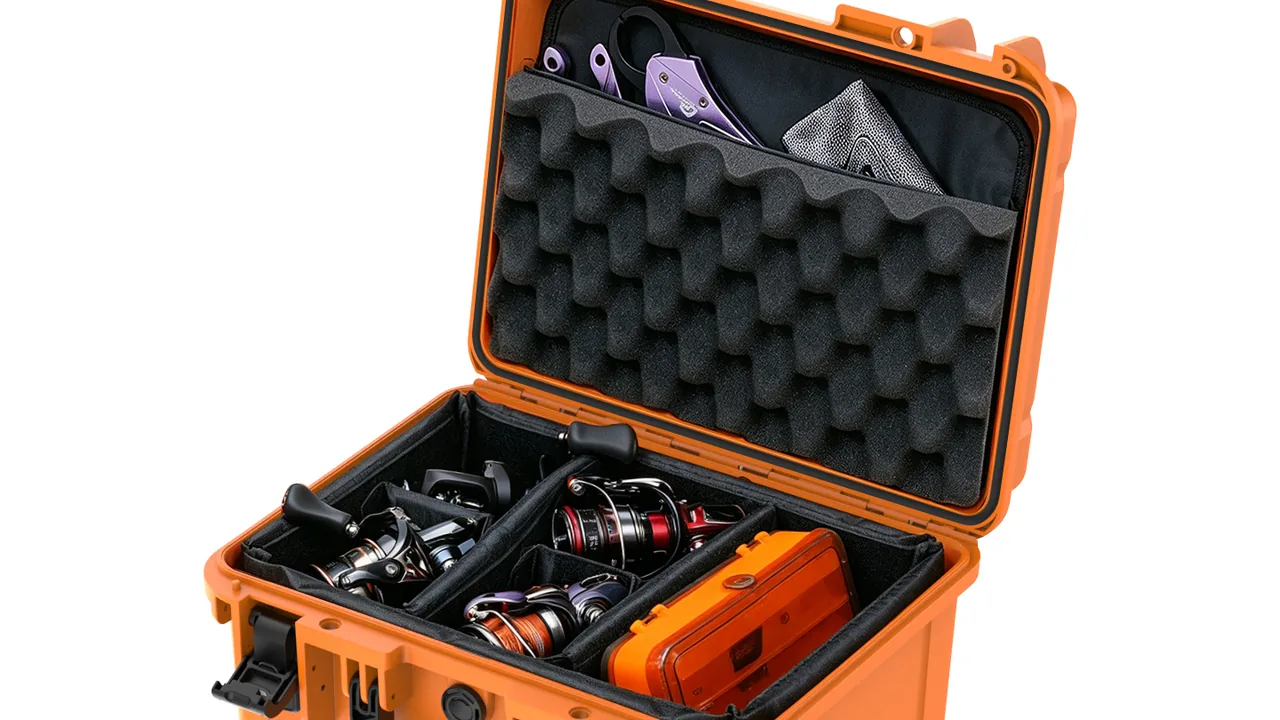
A supermarket shelving set is not complicated in composition: cold-rolled steel uprights formed by bending, perforated back panels, shelves and bracket arms, cross beams, and end-cap display frames. Its value lies precisely in the visible layer: the electrostatic powder coat, the galvanized layer, and the anodized finish. During store renovations, cross-store transfers, and new-store stocking, shelving travels by road and endures repeated handling; once delivered, the most common failures are not structural strength but scratched coating lines, uprights bent so they no longer fit the base sockets, curled shelf edges, and connector bags mixed into an unidentifiable pile. Therefore the design line of a supermarket shelf component case must address four points: use vertical-insert cradles with multi-point support to keep upright curvature within one thousandth of the span, isolate coated parts across their full face with lint-free pearl cotton, protect both the edges and the flat faces of shelves with U-shaped corner guards and interleaving paper, and pack fasteners into separate spec-labeled bags with quantities and position numbers, while controlling the storage phase with humidity-stable lining and pest-proof packaging. The following sections unfold layer by layer: damage classification, upright support, shelf protection, coated-surface defense, and fastener management.
Chain-store construction windows are usually counted in hours, and overnight renovations often demand that old fixtures be removed and new ones installed in a single night. At that pace, a case that arrives with bent uprights, curled shelf edges, and mixed bolt specs costs far more than a replacement-shipping fee; the entire crew waits idle, and the store may fail to open the next day. Most procurement teams focus their tenders on static load rating and surface-treatment process, yet rarely ask how these components are treated between the factory and the store. Coating is typically judged at factory acceptance by two metrics: adhesion and hardness, referencing the cross-cut test and the pencil-hardness test; neither metric survives a single hard-object scrape in transit. Building protection into the case keeps cost controlled and amortizes it across multiple transfers. General packaging marking and technical requirements can reference the GB/T 4857 transport packaging test; this article discusses only the parts unique to shelving components.
Table of Contents
- 1. Six Categories of Surface and Deformation Damage During Shelf Component Transit
- 2. Anti-Bending and End Protection for Uprights
- 3. Edge and Surface Protection for Shelves and Brackets
- 4. Anti-Deformation Packaging for Back Panels, Wire Mesh and Price-Tag Channels
- 5. Compartment Layout for Checkout Counters, Promotion Tables and Display Racks
- 6. Scratch Protection for Coated, Galvanized and Anodized Surfaces
- 7. Rust Prevention and Spec-Sorted Counting for Fasteners
- 8. Structural Rigidity and Lifting for Long-Component Cases
- 9. Lining Materials, Humidity Control and Pest Prevention
- 10. Sealing, Waterproofing, Pressure Equalization and Hardware Reliability
- 11. Vibration, Drop and Transport Test Methods
- 12. Case Splitting, Counting and On-Site Handover
- 13. Delivery Documents, Maintenance and Service Life
- Frequently Asked Questions
- Conclusion and Related Reading
1. Six Categories of Surface and Deformation Damage During Shelf Component Transit
The first category is coating scratches and paint loss. After degreasing, phosphating, electrostatic powder coating, and curing, uprights and shelves typically carry a coating thickness of 60 to 90 micrometers. The bond between coating and substrate resists normal use but cannot resist a single edge-on-edge slide: two coated uprights pushing against each other for one meter leave a bare-baseline bright scratch along the contact line. Coating inspection normally includes adhesion and hardness, but transit protection must address the ways external force far exceeds these two indicators.
The second category is bending of long uprights. Uprights are open-section profiles bent from 1.5 to 2.5 mm cold-rolled steel, commonly 2000 to 4000 mm long, with perforations weakening the local section. When laid flat with no mid-span support, self-weight and stacking weight produce overall bowing; once curvature exceeds one thousandth of the span, the upright may fail to enter the base socket or, once fitted, misalign with the back-panel holes. The ends are the weakest point: a single dent on the lower plug section scraps the whole piece.
The third category is curled shelf edges and surface dents. The four-side edges of shelves are hemmed or curled structures; any concentrated load deforms them. If the flat area is locally pressed by a heavy object, an unrecoverable dent remains. When multiple layers stack without interleaving paper, the upper shelf edge presses directly into the center of the lower shelf face.
The fourth category is deformation of back panels and wire mesh. Back panels are mostly 0.5 to 1.0 mm perforated thin sheet; wire mesh is welded fine steel wire. Both fear point loads and crushing; once the grid permanently deforms, a gap appears against the price-tag channel or light box when installed.
The fifth category is fastener rust and loss. Bolts, expansion anchors, connector plates, floor levelers, and circlips are small parts; if mixed in one bag, on-site counting is nearly impossible. The galvanized layer under moisture and acidic cleaner residue develops white rust, hurting appearance and torque stability.
The sixth category is breakage of glass shelves and acrylic fittings. Glass shelf breakage often starts at edge micro-cracks; acrylic fears hard-impact and solvent attack. In mixed packing these two are most easily "pressed aside casually."
| Damage Type | Typical Location | Store Consequence | Protection Main Line |
|---|---|---|---|
| --- | --- | --- | --- |
| Scratches and paint loss | Upright exposed face, shelf border, end screen | Appearance rework, customer rejection | Lint-free pearl cotton full-face isolation, no direct contact |
| Bending and end impact | Upright mid-span, lower plug section | Fails to fit base, hole misalignment | Vertical cradle, multi-point V support, end boot |
| Edge curl and dent | Shelf four edges, shelf flat face | Uneven shelf, display impact | U corner guard, limited stacking, interleaving paper |
| Back panel and mesh deform | Thin back panel, weld nodes | Visible seam, fails to hold tag channel | Flat clamping, edge wrapping |
| Rust and loss | Bolts, expansion anchors, plates | Assembly stoppage, unstable torque | Spec bags, vapor-phase rust prevention |
| Glass and acrylic break | Glass shelf edge, acrylic baffle | Missing parts, cut risk | Four-corner guard, separate slot, dedicated layer |
2. Anti-Bending and End Protection for Uprights
Upright support answers two questions: where do the support points go, and how is the end kept from being struck.
Support points must sit where the section does not undergo local buckling. The upright is an open thin-wall section whose bending resistance comes mainly from the two webs and hems, so the support pad must cradle both sides of the section rather than single-point the flange. The standard practice is to machine V or U wooden cradles matching the upright section profile, the cradle wrapping the web and hem; support spacing follows length: within 3000 mm use three-point support (both ends plus mid-span), beyond 3000 mm use four points, with maximum spacing not exceeding 1500 mm. The pad surface carries 3 to 5 mm felt or EVA; the tightening criterion is "no hand-shake, no visible flange deformation."
In posture, uprights are preferably inserted vertically rather than laid flat. A vertical-insert cradle inserts the lower end into a soft locating slot, the upper end constrained by a slatted frame, each upright occupying its own cell with 10 to 15 mm gap between cells. This layout makes the upright carry axial compression, with almost no mid-span bending moment, while avoiding face-to-face contact and mutual sliding. If box height forces flat laying, always use multi-point V supports with same-direction stacking, forbidding front-back cross stacking that lets hems embed into each other.
End protection needs separate design. The lower plug section is the mating face, typically 30 to 80 mm long; one dent and it will not enter the base. The method is a protective sleeve matching the plug cross-section (EVA or rotomolded), covering the whole section, thickness not less than 5 mm, the mouth flared outward so it does not rub the coating. The upper end cap and decorative piece are wrapped separately in soft film. The vertical cradle bottom needs a load-bearing plate distributing all upright weight to the case floor, preventing slot-bottom collapse from long-term end pressure.
Upright curvature acceptance is recommended both after packing and after arrival: lay the upright on a flat plate, measure maximum mid-span gap with a feeler gauge, convert to one thousandth of the span as the control line; a 3000 mm length corresponds to 3 mm allowable. This criterion is more reliable than visual inspection and makes "whether transit exceeded the limit" a traceable record.
3. Edge and Surface Protection for Shelves and Brackets
The shelf problem is "large face, thin edge." A 900 mm by 400 mm steel shelf often has only 15 to 25 mm hem height; edge rigidity is far lower than the flat face, and any concentrated load on the edge collapses or curls the hem.
Edge protection uses U-shaped corner guards most directly. The inner width matches plate thickness (0.5 to 1 mm assembly clearance), length covering the whole edge or at least 150 mm over each of the four corners; material is high-density EVA or pearl-cotton extruded profile, hardness not too high, otherwise the guard itself presses a mark. After all four edges carry guards, contact between shelves becomes "guard against guard," with the force path on the guard rather than the coating or hem.
Surface protection relies on stacking rules. Shelf stacking is recommended at no more than 10 sheets per pile, pile height no more than 300 mm; between sheets add a 1 to 2 mm pearl-cotton or kraft interleaving layer, the interleaving paper at least 20 mm larger than the shelf to avoid the upper edge pressing the lower face center. After stacking, strap the whole pile at the one-quarter and three-quarter heights, with guard plates under the strap to prevent strap marks. If the shelf surface carries print or film, the interleaving paper must be lint-free to avoid fiber adhesion.
Bracket arms and cross beams are mating-face-sensitive. The hook and latch of the arm determine shelf height positioning; once the hook dents or the galvanized layer peels, the installed shelf wobbles. The method is to group arms in pairs, hooks up into cells, soft spacer between hooks; one group tied as a bundle with cable ties routed around the non-mating face, never touching hook or latch. Cross beams are long with plug ends at both sides and need, like uprights, multi-point support and end boots; if cased with shelves, the beam sits in its own long slot, never touching shelf edges.
Glass shelves and acrylic baffles are handled as fragile parts separately: four-corner guards, whole-face foam-film wrap, independent slot with over 20 mm cavity above; never in the same cell as metal shelves, never pressed under any metal part. Acrylic must avoid solvent-containing lining material, because stress cracking often appears days later and is most easily misjudged as "material defect."
4. Anti-Deformation Packaging for Back Panels, Wire Mesh and Price-Tag Channels
Back panels and wire mesh are the two "largest area, smallest thickness" parts in shelving; their protection logic differs from shelves: shelves fear edge load, back panels and mesh fear point pressure on the face.
Thin back panels use flat clamping rather than curling. When stacking, add a 3 to 5 mm rigid plate (corrugated plastic or thin plywood) top and bottom as "cover sheets," turning point load into face load; stack count within 20 sheets, interleaving paper between to prevent perforated edges gnawing each other. Back panels must not be rolled for transport, because curl rebound leaves ripples and a light-gap against shelves when installed. If the back panel carries printed film, avoid stacking immediately after lamination; confirm full cure, otherwise the interleaving paper may stick to the film.
Wire mesh handling focuses on edges and weld nodes. The border wire is usually thicker than the grid wire with relatively good rigidity, but the crossing weld is a stress-concentration point that easily opens under crush. The method is flat stacking within 15 sheets, corrugated or pearl-cotton separators between, mesh face never directly pressing another mesh face; add cover sheets top and bottom, four-corner guards on the pile. If the mesh carries coating, confirm the separator contains no plasticizer-migration components, to avoid foggy traces on the coating after long contact.
Price-tag channels and light-box tracks are slender profiles, thin section, long length, bending-prone like uprights. The method is length-matched slots, end caps both sides, soft lining strip at slot bottom, preventing the channel latch from being pressed by the case floor. Multiple channels in one slot must keep same direction with interleaving paper, never front-back interleaving.
The packing order of these flat parts also matters: cover sheet at bottom, back panel, interleaving paper, back panel, and so on, final cover sheet on top, then settle into place to avoid high-drop impact. If one case holds both back panels and mesh, a partition must separate them, because the mesh weld bumps will repeatedly strike the back-panel face in vibration, forming regularly arranged dents that are hard to explain and hardest to repair on site.
5. Compartment Layout for Checkout Counters, Promotion Tables and Display Racks
Checkout counters, promotion tables, and end-cap racks are "finished assemblies"; their transit risk concentrates on countertop corners, screen-panel connectors, and the stiffness of the package itself.
The checkout counter cabinet normally consists of a top panel, front baffle, side panels, and internal supports; arrival state may be loose parts or fully assembled. For loose-part transport, the top panel is cased separately, four-corner guards, lint-free film over the surface then a rigid cover sheet; front baffle and side panels treated as flat parts. For assembled transport, support blocks inside limit cabinet movement, drawers and doors fixed closed, lock boots added; four feet get corner guards and case-floor load lands on the frame, not on decorative panels.
Promotion tables and end-cap racks have more irregular parts: curved screen panels, grid light boxes, acrylic shelves, metal hooks, sign holders. Their common trait is "small quantity each, different shape each," so compartment layout must be arranged by shape rather than by function. Curved screen panels use curvature-matched shaped blocks supporting both ends, the curved face bearing no point pressure; grid light boxes are mostly thin-plate and tube structures inside and should be cased independently with an "up" mark; hooks and sign holders are small parts bagged by spec into the accessory grid.
The basic compartment principle is "heavy low, light high; hard and soft separated; long parts in own slot." Heavy parts (cabinet side panels, glass shelves) go to the bottom layer; light and flexible parts (mesh, tag channels, soft-film rolls) to the upper; metal parts must be partitioned from acrylic and glass; each long part occupies its own slot, never mixed with short parts lest the short part slips into the long slot and jams the end. The checkout counter electrical accessories — power cord, socket module, scanner bracket — are recommended in a separate labeled cell, avoiding wear on cable sheathing from vibration against metal structure parts.
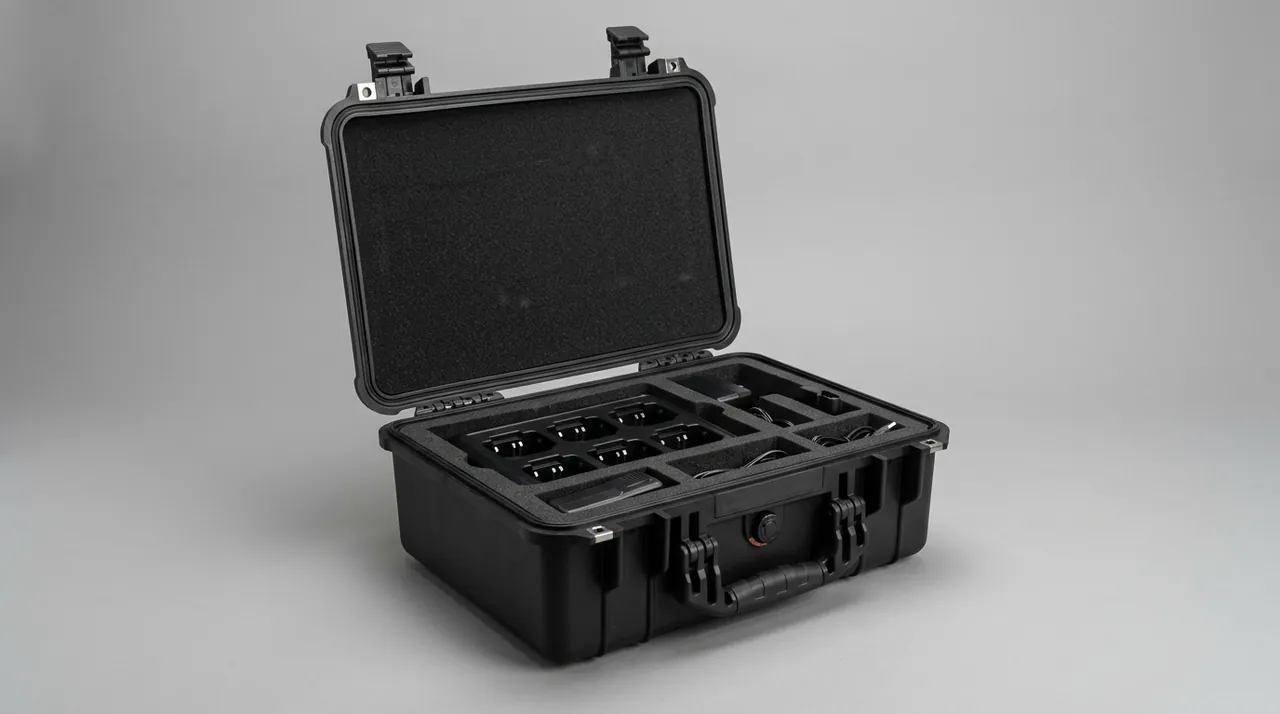
The real on-site problem is "finding parts." A new store may have dozens of component position numbers; if the in-case layout disagrees with assembly order, the crew dumps everything on the floor to re-sort, and that process itself is a human-induced damage. The solution is a position-number distribution map on the inside of the case lid, layered by installation order: base and uprights first, then shelves and back panels, finally tag channels and decorative parts, so the pick order matches the construction order. The divider system can be customized per project; the approach references the removable divider system.
6. Scratch Protection for Coated, Galvanized and Anodized Surfaces
Coating and plating damage has four forms: scratch (exposes substrate), scuff (coating surface goes matte), dent (soft part under long pressure), and chemical attack (white rust, loss of gloss). All four share the trigger: "metal-to-metal, coating-to-coating direct contact with relative motion."
Isolation is the core means. All coated parts must have a lint-free isolation layer between them, material chosen from 1 to 2 mm pearl cotton, EVA sheet, or plastic-coated paper; the layer's role is not to cushion impact but to eliminate hard-to-hard contact, lowering friction so vibrational relative displacement happens inside the layer rather than on the coating surface. The isolation layer should cover the full face, extending over 20 mm at edges, to avoid a "leaked" contact zone at the edge. Bubble film wrapping the coating is not ideal, because bubbles under sustained pressure press regularly arranged dimples that look like coating defects.
The fixing method also matters. Common clear carton tape stuck directly on the coating leaves residue or even lifts the coating on removal, especially after high-temperature summer storage; the correct method is to form mechanical restraint with corner guards and partitions, using low-tack protection film if necessary, noting removal direction and time limit in the pack record. Strapping must never directly bite the coating; guard plate or EVA strip goes under the band.
White-rust control on galvanized parts is chemical protection. White rust forms from corrosion products on the zinc surface in damp environments, triggered by stagnant water film and poor ventilation. The method is to keep the case dry, avoid direct galvanized-to-stainless contact forming a galvanic pair, and use vapor-phase rust film if necessary. Anodized aluminum parts (decorative strips, sign frames) fear acid-alkali and chlorine cleaners; confirm clean, residue-free surface before packing, and avoid direct contact with sulfur-containing rubber.
Arrival acceptance of coated surfaces is recommended by "contact trace" rather than "scratch count": first confirm coating adhesion by the cross-cut idea, then record visible bare-substrate scratches by position and length, grading appearance defects separately from structural defects; the sampling plan can follow the thinking in custom case acceptance and AQL sampling. The benefit is that transit quality becomes quantifiable, claimable evidence rather than on-site argument.
7. Rust Prevention and Spec-Sorted Counting for Fasteners
The quantity of fasteners in a shelving set often exceeds the structural parts themselves, and the specs are fine: M6/M8 hex socket bolts, self-tapping screws, expansion anchors, connector plates, circlips, floor levelers, shelf locating pins. Their problem is not "expensive" but "messy" and "rusty."
Spec-sorting is the only fix for "messy." Recommend a three-layer structure: the first layer sorts by spec into cells, e.g. M6, M8, M10 each in its own cell; the second layer packs by installation position, e.g. "base connectors," "upright and back-panel connectors," "shelf bracket connectors" each in a bag; the third layer labels on the bag the spec, quantity, position number, and equipment serial. A small card inside the bag states the drawing position number, so a missing part can be quickly sourced by position number rather than re-checking the whole list.
Fixing "rust" needs three things. First, the material itself: prefer galvanized or stainless fasteners, the galvanized thickness chosen by environment, higher grade near outdoor or fresh-food zones. Second, packaging isolation: fasteners not cased with other metal structure parts, bag material a rust-proof bag or with a vapor-phase rust film. Third, dryness control: desiccant and humidity indicator card inside, avoiding condensation during rainy-season storage. For coastal or high-humidity projects, compare plating corrosion resistance by the GB/T 10125 neutral salt-spray result, duration chosen by actual exposure intensity rather than a fixed number.
Counting is recommended at both packing and arrival nodes; only when the two records match is the loop closed. The pack record should include theoretical and actual weighed quantity per bag (bag weight computed from single-piece weight to quickly find missing parts); the arrival record only rechecks bag count and seal integrity, not piece-by-piece counting, which significantly reduces store-site workload. Spec-sorted counting's value is especially clear in renovation projects, because removed old connectors are usually already mixed; once new ones also mix, the site loses its usable baseline.
| Fastener Category | Common Spec | Assembly Position | Packing Method |
|---|---|---|---|
| --- | --- | --- | --- |
| Hex socket bolt | M6x16 to M8x40 | Upright to base, beam joint | Spec cell, rust-proof bag |
| Self-tapping screw | M4 to M5 | Back panel to upright, tag channel | Position bag, quantity marked |
| Expansion anchor | M8 to M12 | Base to floor fix | Separate cell, protective cap |
| Connector plate and circlip | Stamped part | Beam joint, shelf locate | Divided box, interleaving paper |
| Floor leveler and adjuster | Threaded part | Upright bottom leveling | Divided, avoid thread bite |
| Shelf locating pin | Plastic or metal | Shelf height locate | Small bag, position marked |
8. Structural Rigidity and Lifting for Long-Component Cases
The case holding long uprights is itself a long beam, and its rigidity check differs entirely from ordinary totes.
Case deformation comes mainly from three places: mid-span bending, torsion, and end-opening flare. Mid-span bending is estimated as a simply supported beam; the height-direction section inertia comes from the wall stiffeners, with rib spacing recommended not exceeding 400 mm. For spans over 2000 mm, the case floor should add stringers or metal reinforcement, or transfer upright weight directly to the bottom pallet frame, letting the wall carry only lateral restraint, not bending moment. Torsion appears mainly when the forklift forks only one side or the lift is off-center; the countermeasure is two sets of fork holes at the case bottom with the center of gravity near the geometric center, and avoiding a single sling looped around the case middle. End-opening flare comes from upright self-weight pushing the side walls; the case ends need cross-braces or removable end plates, locked to the side wall by bolts or clips.
Lifting method should be written explicitly into the pack instruction. Lift the whole case from four corner points, sling angle not over 90 degrees, guard at sling-case contact; when using a forklift, enter at the marked position, forbidding angled insertion that locally loads the floor; if necessary, fit a removable lift frame outside the case, transferring lift points from the wall to the frame. If the case has wheels and a pull handle, short-distance small-batch transfer is economical, but for full-pallet long-haul confirm the wheel load rating and lock state; the selection logic references case wheels and trolley handle selection. Case-surface marks follow GB/T 191 and GB/T 13384, at least "up," "keep dry," "center of gravity," "no rolling," and case and position number.
The loose-versus-assembled trade-off also needs engineering judgment. Assembled transport saves store labor but the case is large with high per-unit shipping cost; loose transport has high load rate but long on-site assembly time and easier loss of small parts after unpacking. A common compromise is the "three-part method": uprights and back panels loose, shelves and brackets bundled in groups, checkout counters and racks cased as finished goods, with each case lid marking the assembly order.
9. Lining Materials, Humidity Control and Pest Prevention
Lining in a shelving-component case does three things: isolate the coated surface, constrain long-part posture, and maintain low humidity inside. The three demands differ, so a single material should not be expected to do everything.
Pearl cotton (EPE) sheet suits full-face isolation and light-part wrapping, soft, lint-free, no plasticizer migration; EVA and XPE suit corner guards, shaped blocks, and slot lining, with selectable hardness and stable dimensions; corrugated board suits pile cover sheets and interleaving paper, but confirm its moisture content and cleanliness, because damp board releases moisture into the case; corrugated plastic (PP hollow board) suits divider partitions and cover sheets, good rigidity, moisture-resistant, reusable. All lining materials should provide a flammability rating (referencing UL94) and confirm low-extract formulation, avoiding stress cracking on acrylic after long contact. Material-orientation comparison references the case foam material comparison.
Humidity control targets "storage" not only "transport." Shelving parts often dwell for weeks in store back-rooms or distribution centers; relative humidity inside is recommended below 50 percent, using silica desiccant with humidity indicator card. Desiccant dosage estimates 50 to 150 g per 100 L of free volume, taking the upper limit for long storage or many transfers. Note desiccant only handles limited moisture; if the case seal level is insufficient, it saturates within days, so sealing and dehumidification must be designed together.
Pest and mold prevention is often overlooked in public-facility packaging. Wooden pallets and blocks may carry insect eggs and mold spores; export scenarios should apply ISPM 15 heat treatment or fumigation with proof. Lining may absorb moisture in transit; for long storage confirm foam moisture content before packing and avoid starch tape or untreated paper fillers inside, which are mold and pest carriers in hot-humid environments. For long storage, place slow-release anti-mold sheets inside and check lining for mold spots and insect traces after each opening.
10. Sealing, Waterproofing, Pressure Equalization and Hardware Reliability
The sealing need of a shelving-component case is not as strict as for precision instruments, but "moisture resistance" and "dust resistance" matter equally in storage and road transport, especially when cases must overnight on open docks or travel by sea on pallets.
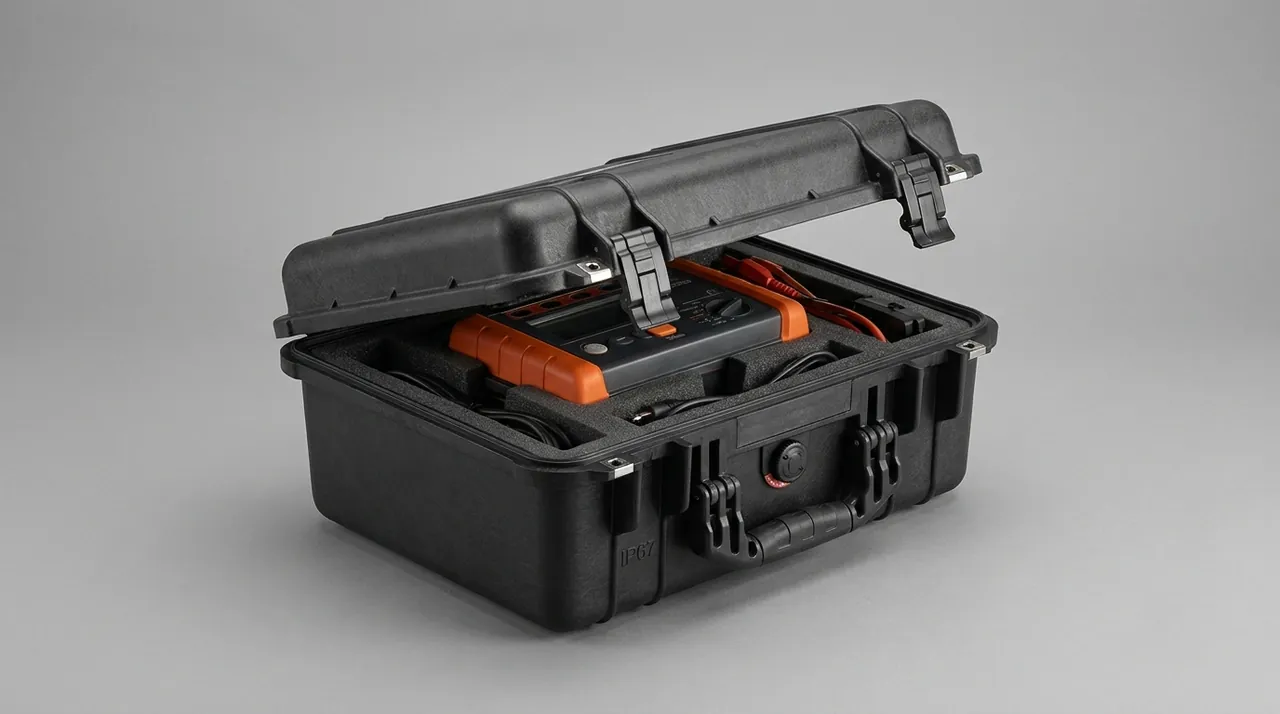
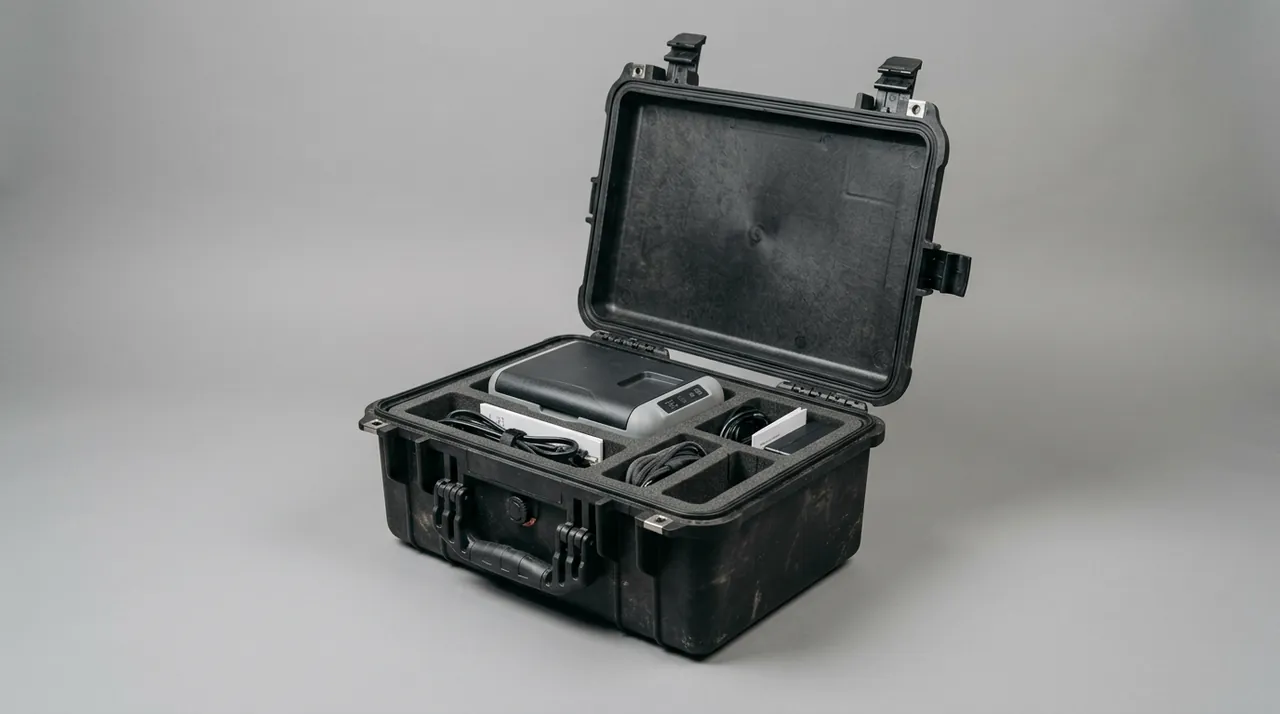
The sealing grade criterion follows the IEC 60529 / GB/T 4208 framework. For shelving cases, IP54 already handles dust and splashing water; projects needing open-air transfer or water transport should raise to IP65; if mixed with glass shelves or acrylic parts, whole-case IP67 is recommended so desiccant can form a closed loop inside. Seal compression ratio is typically 25 to 35 percent; insufficient compression leaks, excessive compression permanently deforms the seal so it no longer rebounds after a few openings.
Latch and hinge selection directly affects opening experience and service life. Long cases should place a latch set every 350 to 450 mm of case length to ensure even seal compression; hinges use stainless pin shafts to avoid rust seizure on damp docks; handle and pull-rod joints should have metal backing plates spreading the pull. If the case lid and body meet on a flat lap, add a dust lip to reduce fine-dust entry along the gap. Hardware material and structure selection details are in case hinges, latches and seals.
A pressure-equalization valve adds value for long-haul. Summer container interiors reach over 60 degrees Celsius; if expanded internal air cannot escape, the pressure differential forces the seal open or jams the latch shut; night cooling creates negative pressure that draws external moisture in. A valve with hydrophobic microporous membrane allows slow gas exchange while blocking liquid water and dust, satisfying both sealing and breathing. If glass shelves are cased, add an anti-slip liner to avoid glass parts colliding on opening.
Corrosion of structural parts also needs attention. If case hinges, reinforcement strips, and rivets are ordinary carbon steel, they often fail before the case in damp dock environments; choose stainless or passivated metal parts and confirm at design stage that wear parts are individually replaceable. JUNZHIJIA normally determines stiffener spacing, end-plate lock method, and wheel configuration on long-component cases by part length and lift posture, and can supply lining dividers and fastener divider boxes per project, allowing stores to reuse the same batch of cases across multiple renovation rounds.
11. Vibration, Drop and Transport Test Methods
The test focus of a shelving-component case differs from other equipment cases: it verifies "whether surfaces scratch each other" and "whether long parts still fit the mating holes," not whether electronic functions work.
Vibration testing follows the GB/T 4857 series or the corresponding ISTA procedure; before the test, place acceleration sensors at representative in-case positions (upright mid-span, shelf-pile center, accessory grid), then check item by item after: upright mid-span curvature change, shelf edge curl, new contact traces on coating, fastener bag rupture. Coating inspection under fixed oblique light reveals shallow scuffs that front light hides. For full-pallet shipment, verify pallet-and-case fixation by the ISTA unit-load procedure, focusing on whether straps loosen in vibration.
Drop and impact tests choose height by part weight and handling method: whole cases use edge and corner drops, heavy cases fork-drop; single parts (shelf pile, back-panel pile) use edge and corner drops. Criteria include: can the upright freely insert the simulated base socket, does the shelf edge still latch with the bracket, any new glass crack, any acrylic stress-whitening. Emphasize one easily missed point — acrylic stress cracking may appear days after the drop, so recommend a 48-hour rest before re-inspection.
Temperature-humidity cycling verifies stability of coating, lining, and fasteners. Typical condition is a -10 to +55 degree Celsius cycle; the high-temperature segment watches foam softening letting long parts lose restraint and coating softening letting interleaving paper stick; the low-temperature segment watches insufficient seal rebound and brittle plastic. Sea or coastal projects add damp-heat and salt-spray items, salt spray per GB/T 10125, to compare galvanized versus stainless corrosion resistance. The transport vibration and shock methods in MIL-STD-810H may be cited as environmental-test-method basis, but should be noted as not a military certification, and no claim of passing a military standard may be made on that basis.
The value of test data lies in forming "design input" — for example, contact-trace positions found by oblique-light inspection directly point to where isolation layers should be added or support spacing adjusted. Archiving each test's raw records and photos lets the next same-type project save re-trial time.
12. Case Splitting, Counting and On-Site Handover
A medium supermarket shelving set easily exceeds twenty part types, so "how many cases, how to split" is itself a design decision.
Case-splitting logic recommends three rules: split by installation order (base and uprights, shelves and back panels, decorative and electrical accessories each a system), split by weight and volume (avoid overweight or top-heavy single cases), and split by sensitivity (glass shelves, acrylic parts, and precision accessories not cased with heavy metal parts). After splitting, each case has an independent position-number list, and parent-child relations are marked between cases, e.g. "this case is the main case, Zone A rack 1 uprights and base."
Sizing needs three clearance types reserved: fit clearance between lining and part (1 to 2 mm), isolation clearance between parts (recommended not less than 15 mm), and buffer clearance between part and wall (recommended not less than 25 mm, long-case recommended over 40 mm). Long cases also check mid-span deflection; by experience, case span over 2000 mm should add stringers or transfer weight directly to the pallet frame.
| Part | Typical Spec | Recommended Case | Lining and Support | Reference Qty per Case |
|---|---|---|---|---|
| --- | --- | --- | --- | --- |
| Upright | Length 2000 to 4000 mm, section 60x80 mm class | Tall vertical-insert or long case | Soft slot + multi-point V cradle + end boot | 20 to 40 (by case height) |
| Shelf | 800x400 to 1200x500 mm | Flat large case | U corner guard + interleaving + cover sheet | 8 to 10 per pile |
| Bracket and beam | Length 300 to 1200 mm | Medium divider case | Paired group + soft spacer + end cap | 20 to 60 |
| Back panel and mesh | Thin sheet or weld mesh, 0.4 to 1.2 m2 | Flat large case | Flat clamp + cover sheet + edge wrap | 15 to 20 |
| Tag channel and light track | Length 600 to 2000 mm | Long slotted case | Same-direction stack + end cap + soft strip | 15 to 30 |
| Checkout component | Top and cabinet loose or assembled | Medium square case | Corner guard + support block + movable lock | 1 set |
| Glass and acrylic | Shelf or baffle | Separate fragile case | Four-corner guard + own slot + cavity | 5 to 10 |
| Fastener | M4 to M12 various | Divider box or case | Spec cell + position bag + rust bag | By project list |
On-site handover is the last link of the whole chain and the easiest to fail. Recommend the "three-documents-consistent" method: pack list, in-case position card, and store construction drawing use the same position-number system; after arrival the crew leader checks seal integrity and position card by case, opens only after confirmation; after opening, pick by position number, store empty cases and lining centrally, recover after renovation. This process turns "whether transit passed" from subjective argument into document check, and preserves usable cases and lining for the next transfer round.
13. Delivery Documents, Maintenance and Service Life
Delivery documents for a shelving-component case should cover four content types. The first is material and process: case material, lining material and flammability grade, coating system and adhesion/hardness test results for coated parts (methods per GB/T 9286 and GB/T 6739); the second is performance: sealing grade per IEC 60529 / GB/T 4208, vibration, stacking, and drop records per GB/T 4857 series or ASTM D4169; the third is corrosion and pest: fastener plating note, neutral salt-spray comparison per GB/T 10125, ISPM 15 treatment proof for wooden packaging; the fourth is operation: lining divider diagram, pack instruction, position-number distribution map, and inspection records. Sampling follows AQL thinking, grading appearance defects (shallow scuff, color difference) separately from structural defects (bend, deform, break).
Maintenance runs three action types by period. After each case return, check whether lining corner guards have detached, slots collapsed, seals marked or cracked; every 6 months check desiccant and humidity indicator card, replace on color change; every 12 months clean lining and case, lining with neutral cleaner, case coating avoiding chlorine or solvent cleaners, detailed care in case cleaning and maintenance. Glass and acrylic storage avoids direct sun and high heat; confirm no interleaving adhesion before long storage.
Service life depends on use intensity and storage condition. Chain renovation projects often require cases to be reused across multiple store-opening rounds, where seals, corner guards, and slot lining are the first wear parts to reach life; designing them as individually replaceable significantly extends case life. Cases stored long in humid back-rooms mainly fail by lining moisture absorption, damp paper partitions, and fastener rust. Making lining, corner guards, and seals separately orderable spares, and marking production batch and lining version on the case, is the realistic way to keep the same batch of cases flowing between stores for years. JUNZHIJIA, as the manufacturer, can supply case, lining, and fastener divider boxes as a matching replacement list by shelving model and supports OEM/ODM customization.
Frequently Asked Questions
Q: What material works best as an isolation layer for coated surfaces? A: Prefer lint-free pearl cotton (EPE) sheet or EVA sheet, covering the full face with over 20 mm extension at edges. The isolation layer's role is not to cushion impact but to eliminate hard-to-hard contact, consuming vibrational relative displacement inside the layer rather than on the coating surface, so the material must be soft, lint-free, free of plasticizer migration, and chemically inert to the coating. Bubble film is unsuitable for direct coating wrap because bubbles under sustained pressure press regularly arranged dimples that look like coating defects and are hard to explain on site. Plastic-coated paper suits flat-to-flat interleaving but tears easily on hemmed or perforated parts. For components with printed film or laminate, the layer must be verified as non-adhesive under heat so it will not bond to the surface during summer storage. All isolation materials should confirm flammability grade (referencing UL94) and low-extract formulation, with material model and thickness written in the pack record for consistent later re-purchase of the same specification.
Q: Should long uprights be laid flat or inserted vertically? A: Prefer vertical insertion. A vertical-insert cradle lets the upright carry axial compression, with almost no mid-span bending moment, while avoiding face-to-face contact and mutual sliding, which is the most reliable way to control curvature. Each upright occupies its own cell with 10 to 15 mm gap, the lower plug section sheathed, the upper end constrained by a slatted frame. If case height forces flat laying, always use V or U cradles matching the section, support spacing not over 1500 mm, at least three-point support within 3000 mm, four points beyond, same-direction stacking, forbidding front-back cross stacking that embeds hems. Before packing, confirm the cradle cell width matches the upright width with no rattling, and verify the felt or EVA pad stays bonded after repeated use. Either posture forbids single-point lifting or using the upright as the case load beam. Measure mid-span curvature once after packing and once after arrival, using one thousandth of the span as the control line, recorded on the pack list as a traceable basis.
Q: How long must the shelf-edge corner guard be to count as enough? A: Recommend full-edge coverage, or at minimum 150 mm over each of the four corners with stacking layers held under 8. The inner width should match plate thickness with 0.5 to 1 mm assembly clearance; material is high-density EVA or pearl-cotton extruded profile, hardness not too high, otherwise the guard itself presses a mark on the coating. After all four edges carry guards, sheet-to-sheet contact becomes "guard against guard," the force path on the guard rather than the hem or coating. Meanwhile add a 1 to 2 mm interleaving layer between sheets, the paper over 20 mm larger than the shelf to avoid the upper edge pressing the lower face center. The pile strap should sit on a guard plate and be placed at the one-quarter and three-quarter pile heights, with single-pile height recommended not over 300 mm. When shelves carry printed or filmed surfaces, the interleaving paper must be lint-free and verified non-adhesive, and strap tension should be checked so it holds the pile without embossing the top sheet.
Q: Mixed fasteners are the biggest pain point; how should they be sorted to be practical? A: Sort by a three-layer structure: the first layer sorts by spec into cells (M6, M8, M10 each a cell), the second layer packs by installation position (base, upright and back panel, shelf bracket each a bag), the third layer labels on the bag the spec, quantity, position number, and equipment serial, with a position card inside. This lets a missing part be quickly sourced by position number rather than re-checking the whole list. For rust, keep fasteners out of the metal-structure cell, use rust-proof bags or add a vapor-phase rust film, and put desiccant and humidity card inside; prefer galvanized or stainless fasteners, and for coastal or humid projects compare plating by the GB/T 10125 neutral salt-spray result. Counting happens at both packing and arrival nodes; the pack record double-checks bag count and weight, arrival only rechecks bag count and seal. For large projects, duplicate the position card outside the bag so the crew can verify contents without opening the rust-proof film, preserving its protective atmosphere until installation.
Q: Why does the acrylic baffle crack only days after arrival? A: This is usually stress cracking rather than direct transport impact. Acrylic cracking needs two conditions: residual stress and a corrosive medium. Residual stress comes from forming and assembly; the corrosive medium may come from solvent- or plasticizer-containing packaging, cleaner residue, even hand sweat and oil. Combined, the crack extends over hours to days. Protection does three things: first, avoid direct acrylic contact with solvent-containing lining, tape, or rubber, confirming low-extract packaging formulation; second, confirm clean residue-free surface before packing, using neutral cleaner and pure water wipe-dry if needed; third, avoid local pressure and hard-object contact in transit, using a separate slot with four-corner guards and over 20 mm cavity. Never stack acrylic on metal shelves or let it touch the case wall, because point loads trigger the same failure. Acceptance recommends a 48-hour rest after arrival before re-inspection, avoiding misjudging delayed cracking as incoming-material defect, and any piece showing stress-whitening should be quarantined rather than installed.
Q: Does a shelving-component case need to reach IP67? A: It depends on storage and transfer conditions, not uniformly maxed. Indoor distribution and same-day short-haul projects, IP54 already handles dust and splashing water; projects needing open-air dock overnight, pallet transfer, or sea transport should start at IP65; if the case mixes glass shelves, acrylic parts, and other fragile items and plans to rely on internal desiccant for low humidity, whole-case IP67 is safer, because only with sufficient sealing will the desiccant not be continuously consumed by external moisture. Whatever grade, seal compression stays 25 to 35 percent, with a latch set every 350 to 450 mm of case length for even compression. Long-haul recommends a pressure-equalization valve with hydrophobic microporous membrane, eliminating the breathing effect of day-night temperature swing while keeping the seal grade. Note that a higher rating adds cost and weight, so the grade should be chosen from the actual route and storage environment rather than by a fixed default for every shipment.
Q: How many uprights and how many shelves per case is reasonable? A: Derive from weight and case rigidity, not volume. "Case weight divided by single-part weight" is only an upper bound; actual check must include the floor load zone and pallet-frame capacity, and whether fork-hole position is occupied by support structure. Taking a common 3000 mm upright as example, the vertical-insert case count is limited by case height and cell number, typically one per cell, 20 to 40 per case, weight concentrated at the floor, so the floor must carry a load-bearing plate spreading the load. Shelf piles recommended at no more than 10 sheets, pile height no more than 300 mm; multiple piles in one case are separated by partitions to avoid mutual sliding in transit. For large project quantities, prefer splitting into several standard cases with marked parent-child position numbers rather than pushing a single case to its limit to save one box. If the project spans several stores, identical case dimensions let the same pallet pattern repeat, simplifying loading plans and warehouse stacking.
Q: Renovation projects require repeated case use; which parts should be designed as wear parts? A: Seals, lining corner guards and slot lining, straps, and case-end lock hardware fail first. Seals permanently deform after repeated opening and compression, so design them as a removable slot-type structure that store crews can replace without tools. Lining corner guards and slot lining collapse or detach after many pick-and-place cycles; manage them as separately orderable spares and mark the lining version on the case so reorders match the original material. Straps are consumables best stocked by project usage rather than equipped per case. Case-end lock hardware in ordinary carbon steel rusts and seizes on damp docks, so choose stainless or passivated parts and confirm they are individually replaceable. Making these parts separable lets the case body keep serving across multiple store-opening rounds instead of scrapping the whole unit when only a seal or guard wears out.
Conclusion and Related Reading
Shelf-component protection is essentially surface engineering: a well-coated upright cannot stop one edge slide, and a rigid shelf cannot survive edge concentration. Fix long uprights by vertical insertion, fit shelf edges with corner guards, isolate coated surfaces with lint-free material, and bag fasteners by spec with labels. JUNZHIJIA supplies matching cradles, guards, divider lining, and fastener boxes by shelving model, supporting OEM/ODM and chain-project customization.
Related Reading