

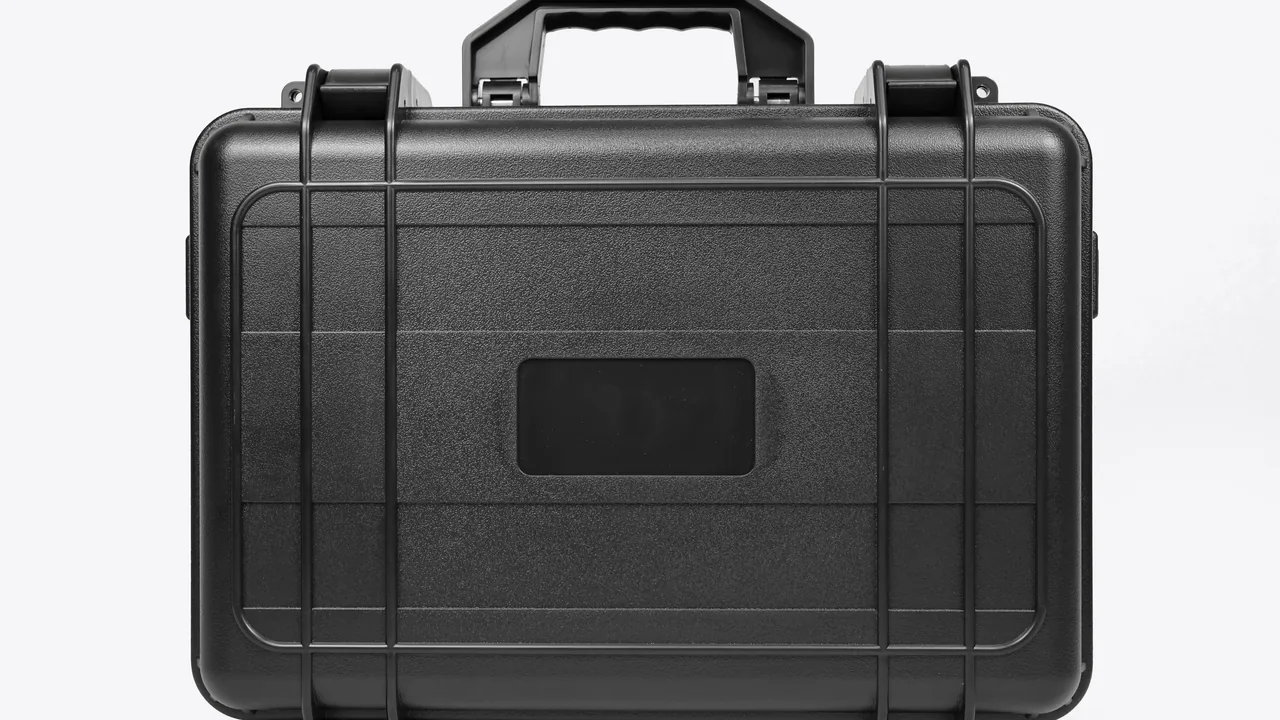
Straw and hay balers sit at the centre of forage and residue collection, and a single machine depends on knotters, compression-chamber wall plates, plunger bearings and hydraulic valves that are frequently transported separately — whether as factory-fitted components, aftermarket replacement parts, or spares carried between fields during a custom-harvesting season. Some of these parts are precision assemblies whose tolerances are measured in hundredths of a millimetre; others are heavy steel structures weighing hundreds of kilograms. Vibration, impact, rain and corrosion during transport translate directly into downtime and repair cost. JUNZHIJIA, manufactured by Kexin New Materials (Guangdong) Co., Ltd., develops dedicated protective-case solutions for baler parts, and this article works through four critical component groups — knotters, compression chambers, plungers and hydraulics — to explain how transport damage occurs and how case structure prevents it.
A baler may run several hundred hours in a single harvest, and bale density, tying success rate and feeding smoothness all depend on every assembly holding the fit it had when it left the factory. The months of idleness outside the harvest window are precisely when parts are most exposed to moisture, stacking load and knocks. Whether transport protection is done properly determines whether the machine can be put straight to work at the start of the next season. That is why JUNZHIJIA treats a baler parts case as a complete engineering solution rather than a generic shipping container.
The Real Cost of Baler Part Transport Damage
The working environment of a baler leaves its components exposed to dust, moisture and alternating loads, so by the time a part returns for repair or replacement it is already in a stress-released, sensitive state. A knotter assembly contains dozens of precision parts — knotter bills, twine holders, cutters and a drive cam — and any impact can disturb the timing relationship between them, raising the failure rate of the tying action. Compression-chamber wall plates carry the repeated impact of the plunger, and their flatness directly governs the consistency of bale density. Plunger bearings and the crank-connecting-rod mechanism are sensitive to coaxiality; if they are squeezed out of alignment in transit, assembly produces abnormal vibration. Hydraulic valve spools and bores run with clearances of a few microns, where contamination or rust causes sticking.
In aftermarket data, transport damage to baler parts clusters into three categories: precision mechanisms knocked out of timing, heavy parts deformed in flatness or coaxiality by compression, and machined metal surfaces corroded by moisture. All three share a defining trait — they are preventable during transport and irreversible after assembly. The value of a protective case therefore lies not in wrapping but in using structure to isolate external force and environment.
The cost of this damage is routinely underestimated. A harvest window may last only two or three weeks; a baler forced to stop repeatedly because tying failures have risen costs the whole crew its seasonal income. A wall plate that is out of flatness and must be reworked or replaced may also take seals and guide rails with it. Against that, a case with cavities shaped to each part and validated by transport testing is a small fraction of the value of the parts it protects, yet it removes most of the transport risk before it can occur. JUNZHIJIA applies a principle of "categorised compartments, separating precision from heavy parts": precision assemblies get their own cavities with vibration-damping liners, heavy wall plates and plungers get load-bearing cradles and restraints, and hydraulic and electronic components receive moisture and cleanliness control.
Precision Protection for Knotter Assemblies
The knotter is one of the most technically demanding assemblies on a baler. Configurations vary — D-type, C-type and others — but all share many moving parts and tight clearances. The greatest transport risk is relative displacement caused by impact: once the phase relationship between the knotter bill and the twine holder is disturbed, on-site adjustment consumes significant time and may require a return to the factory for recalibration. JUNZHIJIA builds knotter cases with CNC-moulded high-density EVA liners cut to the actual profile, so the assembly has no room to shift. The closed-cell EVA absorbs high-frequency vibration and cushions instantaneous impact from the transport vehicle. The shell is impact-modified PP or ABS engineering plastic with reinforcement ribs and heavy-duty hinges, holding structural stability during pallet stacking and forklift handling.

For vulnerable spares carried alongside — knotter bills, cutter blades and twine-holder springs — the case provides individual small compartments fixed by removable dividers. If such parts scatter and are lost, they are rarely substitutable in the field. Compartmentalisation prevents small parts from colliding with heavy ones and simplifies counting, reducing the risk of missed installation during a change-out.
Knotter Timing Integrity and Packaging as a Fixture
The difficulty with a knotter is not any single component but the timing between components. The bill feeds the twine, the twine holder grips the end, the knife cuts the tail, and the stripper pushes the loop off the bill — a sequence completed in well under a second, with every phase determined by the relative position of cams and gears. If a cam or gear is nudged through a fraction of a degree in transit, the whole sequence shifts.
To prevent this, JUNZHIJIA reproduces the assembly datum inside the knotter case. The cavity is not a simple outline of the assembly; it is formed to match the knotter's installed attitude on the machine, with locating bosses running parallel to the mounting face. The knotter therefore sits in the case in the same attitude it takes on the baler, with the same centre of gravity and the same support relationships, so the transport load direction approaches the working load direction and no abrupt stress-state change occurs.
Packaging as a fixture also shows up at the point of use. A custom-harvesting site usually has a simple hoist and hand tools, not calibration equipment. JUNZHIJIA leaves hoisting recesses at the knotter journals so an operator can lift the assembly by its lifting points instead of gripping precision surfaces, and the cavity locates it back into position without a second alignment. For a component where a small seating error can cost a day of adjustment, moving the calibration step into the packaging structure is the most economical way to cut field downtime.
Load-Bearing and Anti-Distortion Design for Chamber Wall Plates
Compression-chamber wall plates are among the larger and heavier structural parts of a baler, and their flatness directly affects bale formation. The classic transport damage is bending under stack load and impact during lifting, especially when several plates are stacked — the middle layer deforms plastically when load distribution is uneven. JUNZHIJIA develops load-bearing cases for such heavy structures: the base is thickened and embedded with wooden or engineering-plastic bearers so the plate is held edge-on with its face spanning free, avoiding direct face loading. Longitudinal restraint slots stop forward and backward movement under emergency braking.

For transport and storage in coastal or high-humidity regions, machined surfaces also need rust protection. JUNZHIJIA configures VCI vapour-phase-inhibitor liners or anti-rust bags inside the case; the slow-release inhibitor forms a protective film on metal surfaces even if the case is briefly opened or its seal is challenged. Machined faces receive a soft non-woven facing to prevent scratching.
Load Paths and Stacking Plans for Chamber Wall Plates
A wall plate does not simply "get crushed"; load travels along a definite path to the weakest point. Three sources dominate in transit: the dead weight of whatever is stacked above, inertial force from braking and road shock, and concentrated contact force where lifting gear touches the plate. Interrupt those three paths and the plate cannot distort.
JUNZHIJIA load-bearing cases redirect the load onto the plate's reinforced edges and flanges. The plate rests edge-on on bearers with its face spanning free, so its own weight travels through the rigid edges into the case base rather than bending the steel across its middle. Inertial force is restrained by longitudinal slots and lateral stops, allowing only a very small movement before a rigid stop is reached, so repeated shocks cannot accumulate. Concentrated lifting force is spread across several bearers through the partitioned support inside the liner rather than being taken at a single point.
Stacking is a planning problem too. Case bases and lids carry matching stacking features, and outer reinforcement ribs carry the weight of upper cases down the walls to the floor without passing through the contents. For storage, JUNZHIJIA recommends heavy cases low, light cases high, with similar case heights on one pallet so that no upper case bridges across a gap and creates an eccentric load. Spare wall plates held for long periods should keep fresh desiccant inside, and the gasket and rust-protection configuration should be inspected every few months.
Preserving Coaxiality in Plungers and Crank Mechanisms
The plunger executes the compression stroke through a crank-connecting-rod mechanism, and its bearing seats and guide faces demand high coaxiality. If the plunger and connecting rod are stacked carelessly in transit, gravity and vibration pass through the bearing seats to the guide faces and cause micron-level deformation. JUNZHIJIA fixes the plunger and rod on separate cradles, uses wrap-around liners to limit radial freedom, and recesses the journals so machined surfaces never contact the liner. For complete plunger assemblies shipped together, the case fixes them in their assembly attitude so the transport load direction approaches the working load direction, reducing abrupt stress-state change.
Here the case is more than a container — it is a mobile fixture. By reproducing the assembly datum inside, the plunger can be lifted into position on arrival without a second alignment. This matters especially to custom-harvesting users who lack precision measuring equipment in the field.
Plunger Assembly Attitude and Split Crank Options
The transport difficulty with a plunger assembly is that it involves two parts sharing one datum. The plunger body is a long shaft-like component; the crank and connecting rod form an eccentric moving group; on the machine they join through bearings and a pin. Shipping the complete assembly in one cavity concentrates weight and raises the centre of gravity, which makes the case prone to tipping during handling. Stripping it down to separate parts creates a realignment problem at the machine and can add more risk than it removes.
JUNZHIJIA therefore offers two arrangements by machine type. For complete plunger assemblies on small and medium balers, a cavity formed to the assembly attitude holds the guide face up and the connecting rod hanging, with a cradle supporting the big end so the weight lands mainly on the two ends of the plunger body instead of sagging in the middle. For large machines with separate plunger and rod, each part gets its own cavity and the pin bore is fitted with a locating sleeve, so the bore relationship is preserved and the assembly datum carries over from the packaging to the machine.
Crankshaft sections of the mechanism are sensitive to bending, so cases always use multi-point support rather than simple two-end support, roughly halving the effective span and reducing deflection accordingly. Journals and seal seats receive a soft facing to avoid abrasion against harder liner surfaces. If slight discolouration or scoring is found on a journal before assembly, roundness should be re-measured before the part goes back on the machine — the check most often skipped in the field and the one that matters most.
Moisture and Cleanliness Protection for Hydraulic Valve Groups
A baler's hydraulic system includes multiple directional valves, cylinders, accumulators and line fittings, and valve spools and bores run with clearances often measured in microns. Once dust or water vapour enters a valve body, the result ranges from sluggish action to a seized spool. JUNZHIJIA hydraulic-part cases centre on sealing: the shell with a silicone gasket reaches IP67, tolerating short immersion without leakage, and desiccant or humidity indicator cards inside let users judge when to replace the desiccant.
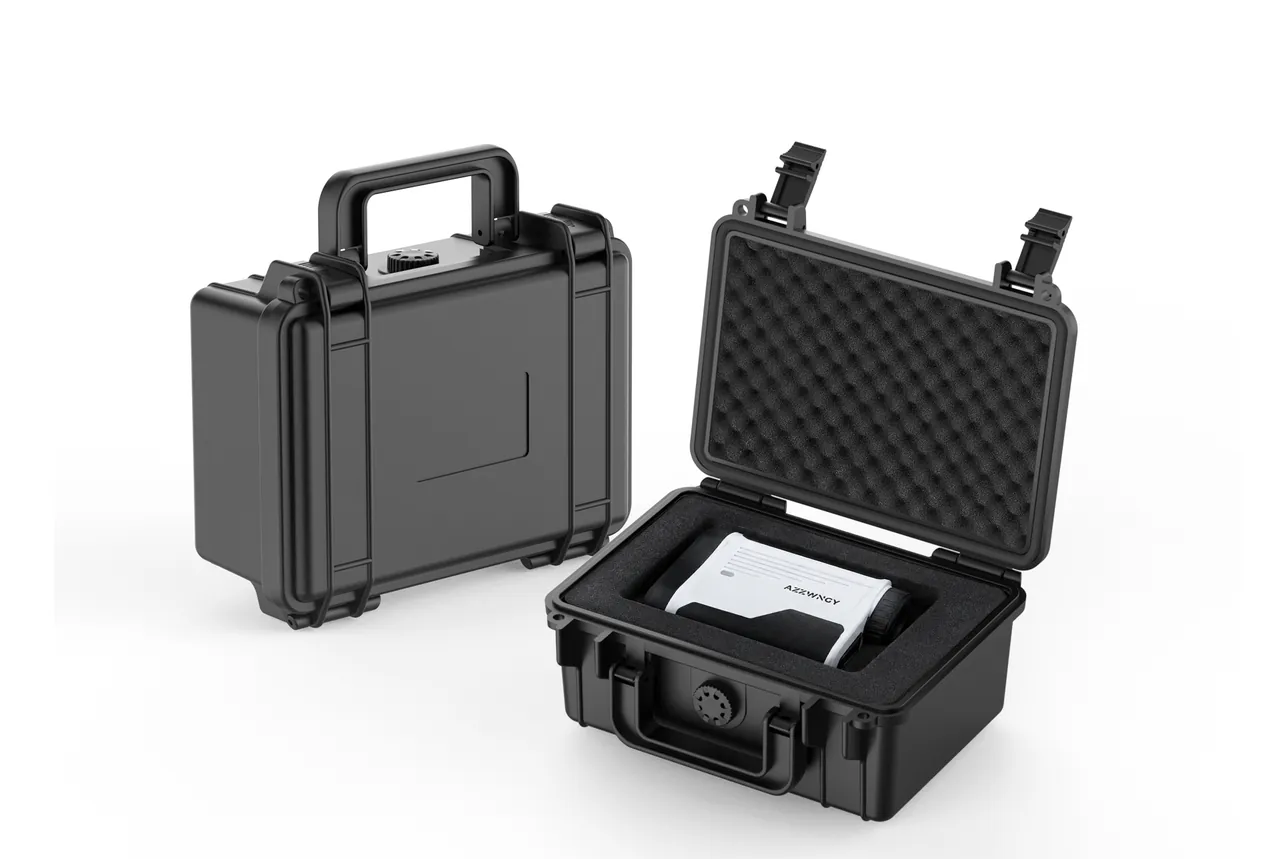
Fixation inside the case matters equally. JUNZHIJIA uses milled liners matching the valve profile so directional valves and cylinders keep their assembly attitude; line ports are capped with dust plugs before loading to prevent damage from transport vibration. For models with electro-proportional valves, the electronic section is isolated from hydraulic-oil contamination sources.
Cylinders deserve separate treatment in the same case. A cylinder is long, heavy and finished on its rod surface, so it cannot simply be laid beside a valve body. Rods are held in a recessed channel that carries them along their length rather than at two points, keeping bending stress low, and the exposed rod surface is covered with a soft sleeve so it never contacts the liner. Accumulators are pressurised components, so they are fixed in their working attitude and never stacked beneath heavier items. Where a machine uses several valve sizes, JUNZHIJIA keeps one cavity per part number rather than one cavity per part shape, because identical-looking bodies with different internal spools are easy to confuse during a rushed repair.
Contamination Control and Clean Assembly for Hydraulic Valves
Hydraulic components rarely fail because they wore out; they fail because they were contaminated. A clearance measured in microns means a single chip or a layer of airborne dust can score and seize a spool. The design priority for a hydraulic valve case is therefore not shell strength but carrying cleanliness through packing, transport, unpacking and assembly.
Before packing, JUNZHIJIA recommends that valve groups be cleaned and dried, with every port plugged so that residual oil and moisture cannot form a corrosive medium inside the case. The liner is made from materials that do not shed particles, and its cavity faces are sealed so the liner itself never becomes a contamination source. Valve bodies sit in their assembly attitude without bridging or compression, and line fittings occupy separate compartments at a distance from the body.
In transit, IP67 sealing and the pressure-equalisation valve together exclude water vapour and dust, desiccant holds internal humidity low, and a humidity indicator card gives a visible criterion. Unpacking has its own sequence: open in a clean area, wipe the case mouth and exterior first, then remove the valve group, so that dust sitting on the outside never falls in. Confirm afterwards that the dust caps are still in place; if a cap has come off, the part must be flushed again before assembly.
Conditions at the assembly site are usually basic, so JUNZHIJIA offers a practical three-check routine: check port plugs and surface cleanliness before assembly, check threads and sealing rings before connecting lines, and check that the system has completed a flushing cycle before commissioning. The routine costs little time and covers the great majority of early-life failures caused by contamination.
Material and Structural Logic for Baler Part Cases
The shell material must balance impact resistance, weight and weather resistance. JUNZHIJIA commonly uses modified PP, ABS and PC alloys: PP offers good toughness, chemical resistance and moderate cost for most heavy parts; ABS offers high surface hardness and good appearance for precision-instrument contents; PC alloy excels in impact resistance for transport with wide temperature swings. Internal reinforcement ribs raise overall rigidity, the lid uses a double-wall structure to reduce distortion, and hinges and latches are stainless or galvanised to resist outdoor moisture.
Sealing is the key to IP67. JUNZHIJIA uses a channel-type gasket at the joint face, compressed into a continuous sealing line when closed, and fits a pressure-equalisation valve to balance the pressure difference from aircraft cargo holds, high-altitude transport or sudden temperature change — avoiding seal instability or difficult opening. These structures significantly reduce moisture risk in long-haul transport and seasonal storage of baler parts.
Materials and Seals: From Selection to Service Life
Material selection is never a lookup table on its own; it follows weight, climate and handling method. Baler part cases are mostly in the medium-to-large size band, so wall thickness has to match the span: a thin wall across a wide span bulges under stacking, while an excessively thick wall adds weight and makes handling knocks more likely. JUNZHIJIA normally uses reinforcement ribs instead of uniform thickening and a double-wall lid for bending stiffness, so the material is spent where it actually carries load.
Seal service life is more easily overlooked than initial seal performance. A silicone gasket gradually loses resilience under permanent compression and ultraviolet exposure, and stiffens in winter cold, raising closing effort while making the sealing line shallower. JUNZHIJIA recommends maintenance intervals that follow usage: aftermarket cases opened frequently should have gasket section and compression checked quarterly, while seasonal storage cases should be checked entering and leaving the season. A gasket showing permanent set, cracking or obvious hardening should be replaced as a whole rather than patched locally.
Latches and hinges are the other service-life nodes. Outdoor dust works into hinge pins and latch springs, raising opening resistance until users force the case and damage the shell. JUNZHIJIA uses replaceable hinge pins and metal latch seats in the structure, and provides cleaning and lubrication guidance in the manual, so a case still holds its designed sealing performance after years of use.
Logistics Fit for Custom Harvesting and Aftermarket Replacement
Baler use is strongly seasonal, and during wheat and autumn harvest, custom-harvesting operators demand extreme timeliness for parts. In this context a protective case is not only protection but a logistics unit. JUNZHIJIA designs standardised case dimensions for frequently replaced baler parts so they match pallets, racks and vehicle space, improving loading efficiency. Barcode or QR labels can be added externally to record part number and batch for full-lifecycle tracking.
For emergency spares shipped by air, the pressure-equalisation valve lets the case adapt to cargo-hold pressure change; for sea-freight export of baler parts, the sealing and rust-protection design resists high-salinity conditions. On export orders JUNZHIJIA generally recommends adding VCI anti-rust components and reinforcing the outer packing to handle the many handling stages of international transport.
The real rhythm of custom harvesting is that parts travel with the operator, and operator routes cross several climate zones: dry and dusty in the north, hot and humid in the river basins, salt-laden along the coast. One case has to cope with all of them, which means sealing and rust protection need margin. JUNZHIJIA generally recommends fitting both desiccant and VCI components, and marking the case with the contents and the date of the last inspection so a crew in transit can quickly judge whether moisture-control consumables need replacing.
Aftermarket replacement adds one more requirement: reusability. An OEM ships parts to a distributor, the distributor ships them to the operator, and if the case is discarded at every step the cost ends up in the parts price. JUNZHIJIA cases are built for repeated round trips, liners can be re-milled for changed parts, and shells and latches are available as separate spares, so packaging becomes an asset of the service network rather than a consumable.
Transport Testing and Acceptance Points
Before a design is finalised, a protective case should pass transport simulation testing. Common bases include the GB/T 4857 series for transport packages, the ISTA series testing procedures, and the ATA 300 specification for international air transport, with tests covering vibration, drop, stacking and pressure. In developing baler part cases, JUNZHIJIA designs drop height and vibration spectrum around the actual loaded weight and centre of gravity, verifying how liner and shell perform under extreme conditions.
Acceptance should focus on three points: the fit between liner and part profile, since poor fit allows movement; the integrity and compression of the seal, since aged or under-compressed gaskets weaken IP67 performance; and the assembly strength of latches and hinges, the weak point in frequent-open-close scenarios. JUNZHIJIA runs latch-cycle testing and seal sampling before shipment to ensure batch consistency.
Beyond testing, batch records should be kept. Logging the drop height, vibration duration, seal test result and measured weight of each batch means that if a problem appears in the field there is evidence to work from. JUNZHIJIA normally supplies this kind of record with deliveries to OEMs and distributors, so packaging quality can be traced rather than judged on impression.
Test results should also be read against the real journey rather than treated as a pass mark. A case validated for a hundred-kilometre road leg behaves differently on a multi-leg international route with several transhipments, so the test envelope has to match the longest and roughest movement a part will realistically make. Where a case is used for both domestic distribution and export, JUNZHIJIA generally validates to the more demanding of the two, since a design that only satisfies the easier route leaves the export shipment unprotected. It is also worth testing the actual packed weight, because a case that passes with a single part inside may fail once the same cavity is used for a full spare kit.
Visual inspection before dispatch catches what bench testing cannot. Checking that the liner sits fully home, that no moulding burr prevents the lid closing flush, that the gasket is seated with no twist, and that the latch engages with a firm click takes seconds per unit and prevents the most common cause of a returned case, which is a sealing line compromised during assembly rather than a design fault.
Common Usage and Maintenance Questions
A protective case delivers value only when used correctly. In practice, common problems include liners removed at will, debris trapped in the seal, long-term sun exposure ageing the material, and parts stored far above the design weight. JUNZHIJIA provides usage guidance at delivery, advising users to keep liners intact, clean sealing faces regularly, avoid overloading, and store empty cases in a cool, dry place.
For seasonal equipment such as balers, the case's storage role is equally important between seasons. Returning removed knotters, plungers and hydraulic valves to their cavities prevents dust and moisture and enables fast reuse in the next season. JUNZHIJIA's modular liner design supports re-milling for changed parts, extending case service life.
One frequently ignored detail is empty-case management. At the end of a harvest, many operators pile parts in a corner of the shed, take the protective case away to store odds and ends, and let straw debris contaminate the sealing face, only to find next year that the gasket has failed. JUNZHIJIA advises keeping case and parts together, marking the outside with the machine model and component, leaving cases closed between seasons, and storing them on a raised rack so the base does not sit in moisture.
Packaging and Delivery Checklist for Baler Part Protection
Turning all of the above into an executable checklist greatly reduces drift in execution. On baler part projects JUNZHIJIA normally works in this order: confirm the parts list and the transport sensitivities of each item; define the cavity arrangement and restraint method for each part; determine shell material, sealing level and rust-protection configuration; and finally settle marking and delivery documentation. The value of the sequence is that every step has a defined input, which avoids the common mistake of fixing a case size first and forcing the parts to fit afterwards.
A delivery set typically contains the shell, the moulded liner, removable dividers, desiccant or a humidity indicator card, VCI anti-rust components where required, port dust caps where required, stacking and lifting marks, and usage and maintenance instructions. Marking should state the part name, the machine models it fits, gross weight and centre-of-gravity guidance so that handlers know which way up the case goes. For distribution through an aftermarket network, a QR code can be added for tracing part origin and batch.
JUNZHIJIA, manufactured by Kexin New Materials (Guangdong) Co., Ltd., has long supplied custom protective-case solutions for industrial equipment, precision instruments and heavy structures. For baler parts, JUNZHIJIA provides not a generic shell but custom liner and structural design based on the actual part profile, weight and transport conditions.
Drawing on accumulated expertise in engineering-plastic formulation, liner processing and seal design, JUNZHIJIA supports baler OEMs, parts distributors and custom-harvesting service providers with stable, reliable protection. Whether as original-equipment packaging or independent aftermarket packing, JUNZHIJIA customises dimensions, liners and marking to help users reduce transport loss and improve parts turnover efficiency.
FAQ: Baler Part Protection Questions
Q: What is the most overlooked damage to a baler knotter assembly in transport? A: The most overlooked is timing displacement caused by impact, not cosmetic knocks. A knotter contains knotter bills, twine holders, cutters and a cam mechanism with strict timing between moving parts. If the assembly shifts inside the case in transit, a single moderate impact can change the relative angle between the bill and the twine holder. The exterior shows nothing wrong, yet the tying success rate drops markedly after assembly, and field adjustment often means recalibration or a return to the factory. JUNZHIJIA counters this by CNC-milling the liner to the actual knotter profile, so the assembly has no freedom inside, and by using closed-cell EVA to absorb vibration energy before it can disturb the timing. The cavity is also formed to the installed attitude of the knotter, so the transport load direction approaches the working load direction. A part seated the way it is seated on the machine is far less likely to slip than a part lying loose in a box of foam, which is why the attitude, not just the padding, decides whether the timing survives the journey intact.
Q: Why do compression-chamber wall plates distort when stacked, and how does the case solve it? A: Wall plates are large, relatively flexible steel structures. When several are stacked, the middle layer carries the concentrated load of the plates above, and if the stacking faces are uneven or lifting load is unbalanced, the plate bends plastically. Once flatness is out of tolerance, bale density consistency suffers and the plunger no longer runs against a true surface. JUNZHIJIA designs load-bearing cases for such heavy parts: a thickened base embedded with wooden or engineering-plastic bearers holds the plate edge-on with its face spanning free, so its weight travels through the rigid edges instead of bending the steel across the middle. Longitudinal restraint slots stop forward and backward movement under emergency braking, while lateral stops take inertial force after only a very small travel. A soft non-woven facing protects machined surfaces from abrasion. For storage, heavy cases go low and light cases high, with similar heights on one pallet so that no upper case bridges a gap and creates an eccentric load, which is the condition most often responsible for the middle-layer deformation seen in the field.
Q: Why is coaxiality preservation emphasised for plungers and crank mechanisms? A: The plunger gains its reciprocating motion through a crank-connecting-rod mechanism, and the coaxiality of its bearing seats and guide faces is often measured in hundredths of a millimetre. If the plunger and rod are stacked carelessly in transit, gravity and vibration pass through the bearing seats to the guide faces and cause micron-level deformation, appearing after assembly as abnormal vibration and premature seal wear. JUNZHIJIA fixes the plunger and rod on separate cradles, uses wrap-around liners to limit radial freedom, and recesses the journals so machined surfaces never contact the liner. Complete assemblies are fixed in assembly attitude so that the transport load direction approaches the working load direction. Crankshaft sections use multi-point support rather than simple two-end support, roughly halving the effective span and cutting deflection with it. For split shipments, a locating sleeve locks the pin bore relationship so that no second alignment is needed at the machine, which is often the difference between a same-day repair and a lost working day.
Q: Why do hydraulic valve groups need IP67-level sealing inside the case? A: Baler hydraulic valve spools and bores run with clearances often measured in microns, and dust or water vapour entering a valve body causes sluggish action or a seized spool. Because the clearance is so small, a single chip or a layer of airborne grit is enough to score a spool, and once that happens the valve is effectively scrap. JUNZHIJIA hydraulic-part cases use a silicone gasket to reach IP67, tolerating short immersion, with desiccant or humidity indicator cards inside to judge replacement timing. Line ports are capped with dust plugs, and for models with proportional valves the electronic section is isolated from hydraulic-oil contamination. Liner materials are chosen so they do not shed particles, and the cavity faces are sealed so the liner itself never becomes a source of contamination. Unpacking follows a sequence as well: open in a clean area, wipe the case exterior and mouth first, then lift out the valve group, so exterior dust never reaches the cavity, and confirm the dust caps are still fitted before assembly begins.
Q: What practical difference does a pressure-equalisation valve make for baler parts? A: A pressure-equalisation valve balances the pressure difference between case interior and exterior. Baler parts shipped by air face large cargo-hold pressure change, and high-altitude transport or seasonal temperature swings in storage create the same effect. Without the valve, the pressure difference can deform the gasket and destabilise the seal, or create negative internal pressure that makes opening difficult, and a case that is hard to open is a case that gets forced open and damaged. JUNZHIJIA fits a pressure-equalisation valve on the shell, permitting slow gas exchange while maintaining waterproofing and dustproofing, so the seal stays stable under pressure change. The valve is small but it protects the whole sealing system, because the gasket only works while it sits in its designed compression range. This is especially valuable for custom-harvesting users who air-freight emergency spares, since a case that opens easily and re-closes tightly at altitude keeps its protection intact across repeated legs of a long journey. The valve must be kept clean, because a dust-blocked valve behaves like no valve at all.
Q: Which baler parts are suited to VCI vapour-phase-inhibitor liners? A: VCI suits rust protection of machined metal faces such as chamber wall-plate working edges, plunger guide faces, cutters and knotter bills. The mechanism is slow release of inhibitor molecules forming a monomolecular protective film on metal surfaces, delaying corrosion in storage even if the case is briefly opened or the seal is challenged. JUNZHIJIA typically configures VCI liners or anti-rust bags, and recommends enhanced configuration for high-salinity sea freight or high-humidity storage, where condensation cycles are the main threat rather than direct rain. Note that VCI has limited effect on already-corroded surfaces, so parts should be loaded immediately after machining, clean and dry. Any cutting fluid or handling residue left on the surface must be removed first, because an inhibitor film cannot bond evenly through an oily layer, and an uneven film leaves the areas most exposed to condensation unprotected. VCI also has a service life of its own, so a case stored for more than a year without being opened should have its inhibitor components renewed.
Q: How should the engineering plastic of the case be selected? A: Balance impact resistance, weight and weather resistance. Modified PP offers good toughness, chemical resistance and moderate cost for most heavy parts; ABS offers high surface hardness and good appearance for precision-instrument contents; PC alloy excels in impact resistance for wide temperature swings. JUNZHIJIA selects material by part weight and transport conditions, sets internal reinforcement ribs to raise rigidity, uses a double-wall lid to reduce distortion, and chooses stainless or galvanised hinges and latches to resist outdoor moisture. Wall thickness is matched to span, because a thin wall across a wide case bulges under stacking while an over-thick wall adds handling weight and invites knocks. Selection is never a lookup table on its own: weight distribution, transport mode and climate all feed into it. For aftermarket cases that cross climate zones, a formulation with better low-temperature toughness is usually preferred, since a case that becomes brittle in winter handling can crack at a corner and lose its sealing performance permanently. Hinge and latch materials deserve the same attention as the shell, because they are the parts users touch and stress every single day.
Q: What transport tests should a baler part case pass before shipment? A: Common bases include the GB/T 4857 series, the ISTA series testing procedures, and the ATA 300 specification for international air transport, with tests covering vibration, drop, stacking and pressure. JUNZHIJIA designs drop height and vibration spectrum around the actual loaded weight and centre of gravity, verifying liner and shell performance under extreme conditions. A case tested empty proves very little, because the real risk comes from the mass inside it. Acceptance focuses on liner fit, seal integrity and compression, and latch and hinge assembly strength, the three factors that decide reliability during repeated opening and stacking. Batch records are kept as well: drop height, vibration duration, seal test result and measured weight for each production run, so that if a field problem appears there is evidence rather than impression to work from. Those records also let JUNZHIJIA show a customer exactly which test envelope a given case design was validated against, which is useful when a specification has to be defended on paper.
Q: What should users watch for in daily use of a baler part case? A: The core principle is to keep the design intent intact. JUNZHIJIA advises users to keep liners whole rather than removing or substituting them; clean sealing faces regularly so straw fragments or grit do not lodge in the gasket; avoid overloading, since parts above the design weight weaken liner cushioning and shell load capacity; and store empty cases in a cool, dry place to limit UV ageing of the engineering plastic. Gasket condition deserves a fixed interval: quarterly for cases opened frequently, and twice a year for seasonal storage cases, with a gasket showing permanent set, cracking or hardening replaced as a whole rather than patched. For seasonal balers, returning removed knotters, plungers and hydraulic valves to their cavities prevents dust and moisture and enables fast reuse next season.
Related Reading
- Transport protection for agricultural machinery parts
- Load-bearing structure and liner design for heavy-duty cases
- IP67 protective case sealing principles and selection
- Cross-border logistics planning for protective cases
- Transport vibration testing and resonance control
- How pressure-equalisation valves work on sealed cases
- VCI rust prevention for humid warehouse storage
- Comparing engineering plastics for protective cases