

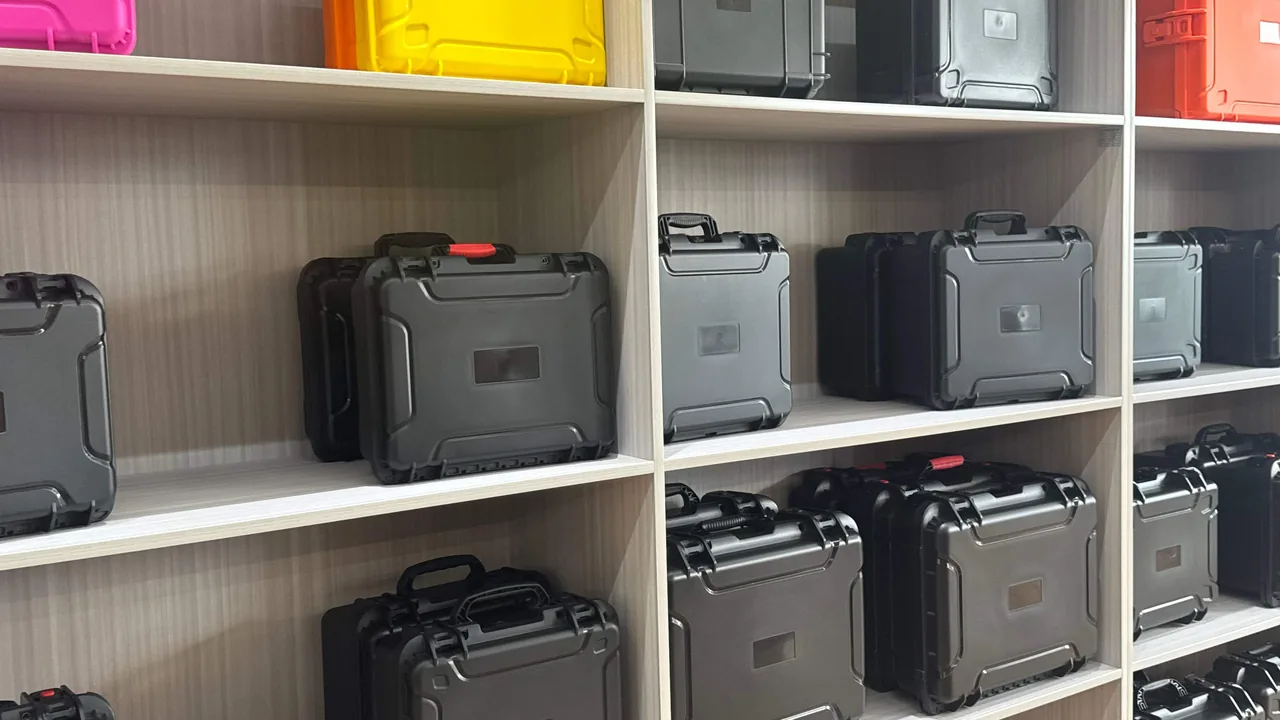
Cocoa processing is a sticky, warm, and very fine-grained business. Beans are cleaned, roasted, winnowed, then ground into cocoa liquor; the liquor is pushed through a hydraulic press at tens of megapascals to squeeze out cocoa butter and leave a press cake; the cake is milled into powder, while the liquor moves on to multi-roll refiners, conches, and tempering units before it is poured into moulds. Along that line sit grinder discs, refiner rolls, press platens, filter frames, and pump bodies. They are usually 304 or 316 stainless steel or hard alloys, they weigh anywhere from a few tens of kilograms to several hundred, their mating faces are flat to within hundredths of a millimetre, and they constantly travel between warm coastal factories and inland manufacturing bases.
The JUNZHIJIA protection principle is direct: cocoa equipment parts are vulnerable to impact, moisture, and cross-contamination all at once, so geometric restraint, humidity control, and hygienic isolation must all be engineered into the same case instead of treating food-contact machinery like ordinary freight.
Table of Contents
- How the Cocoa Process Chain Shapes Case Requirements
- Grinders and Refiners: Supporting Discs, Rolls, and Shaft Assemblies
- Cocoa Press Parts: Preventing Distortion in Platens and Filter Frames
- Moisture, Odour, and Caking in Cocoa Beans and Powder
- Dust, Fat Residue, and Food Safety Inside the Case
- Thermal Window: Cocoa Butter Melting Point and Tropical Freight
- Cushion Liner Choice: EPE, EVA, IXPE, and Compartment Layout
- Sealing Ratings, Gaskets, and the Pressure Equalisation Valve
- Vibration, Shock, and Transport Test Criteria
- Salt Spray, Pitting, and Cleaning Agent Residue
- Stacking Load, Pallets, and Lifting Plans
- Custom Liner Processes, Tooling, and OEM/ODM Workflow
- Acceptance Criteria, Documentation, and Life-Cycle Care
- Frequently Asked Questions FAQ
- Conclusion and Related Reading
How the Cocoa Process Chain Shapes Case Requirements
Unlike general machinery, cocoa equipment is squeezed by two sets of constraints at once. The mechanical set covers mass, eccentricity, mating accuracy, and dynamic balance. The hygienic set covers absence of contamination, absence of shed particles, no odour pickup, and cleanability. The first determines how strong the shell must be and how firm the liner must be; the second determines which contact materials are permitted and which are forbidden. The two frequently pull in opposite directions, because a cheap foam chosen purely for cushioning may release plasticiser odour that cocoa powder adsorbs and never gives back.
Broken down by process stage, the risk map becomes obvious. In grinding, the dominant risks are mass-related drop damage and eccentric loading on shaft assemblies. In pressing, the dominant risks are scratched high-pressure mating faces and crushed or deformed seals. In refining and conching, the risk is a high spot raised on a roll or scraper by an impact. In tempering and moulding, the risk shifts to moisture damage and thermal drift in control components. Comparable packaging logic for food machinery appears in Food Processing Line Cases and Filter Press Cases.
| Equipment or part | Typical material | Unit mass | Critical accuracy or hygiene point | Main transport failure | Protection focus |
|---|---|---|---|---|---|
| --- | --- | --- | --- | --- | --- |
| Grinder disc or toothed plate | Stainless steel, hard alloy | 40 to 200 kg | Flatness, balance, no metal swarf | Chipped edge, bore distortion | Heavy-duty cradle, axial restraint |
| Refiner roll | Coated alloy steel, stainless | 80 to 400 kg | Cylindricity, surface roughness | Surface dents, journal bruising | Full wrap, compartment isolation |
| Press cylinder or ram | Chrome-plated steel | 100 to 600 kg | Plating integrity, straightness | Plating scratches, bending | Rigid support, end-face protection |
| Press platen or filter frame | 304 or 316 stainless | 30 to 150 kg | Flatness, open grid channels | Distortion, crushed grid | Full-face support, no stacking |
| Conveyor screw or pump body | Stainless steel | 20 to 120 kg | Clean internal cavity | Dust ingress, odour pickup | Port sealing, clean liner |
| Tempering control assembly | Stainless, copper parts | 10 to 60 kg | Flat heat-transfer face | Moisture oxidation, thermal shock | Desiccant, condensation control |
Grinders and Refiners: Supporting Discs, Rolls, and Shaft Assemblies
Grinders turn roasted cocoa nibs into cocoa liquor, using disc, ball, or bead geometries depending on the design. Refiners reduce particle size by squeezing and shearing between multiple rolls, commonly five. Their shared trait is that the removable parts are either large planar bodies or heavy rotating bodies, with a high centre of gravity and highly accurate contact surfaces. Once such a part shifts in transit, the secondary impact lands on a shaft bore, a roll journal, or a grinding pattern.
Standing a grinder disc upright in a foam box is the classic mistake. A disc weighing two hundred kilograms creates a large overturning moment under braking or a drop, and the load concentrates on a narrow strip along the bottom edge. The result ranges from crushed foam to plastic deformation of the disc rim. The correct approach is to lay the disc with its non-working back face against a rigid cradle, restrain horizontal movement with a higher-density EVA side block, and cover only the working face with a thin protective sheet. Nothing heavy and nothing metallic should ever rest on the grinding pattern.
Shaft assemblies deserve separate treatment. Where a shaft is fitted, the journal is the primary locating datum, so a bored insert should enclose the journal and stop the overhung section from swinging and causing fretting wear. Equipment makers often pack bearing housings separately from discs, in which case the documentation must record the matched serial numbers so the site does not assemble the wrong pair. The heavy-cavity approach used for Ball Mill Liner Cases follows the same logic, with an added requirement for cleaner, less odour-absorbing contact surfaces. If a roll is plated or mirror-finished, the contact layer must be a non-shedding closed-cell material, and the roll should be wrapped in clean lint-free cloth before packing so liner grit cannot leave fine scratches.
Cocoa Press Parts: Preventing Distortion in Platens and Filter Frames
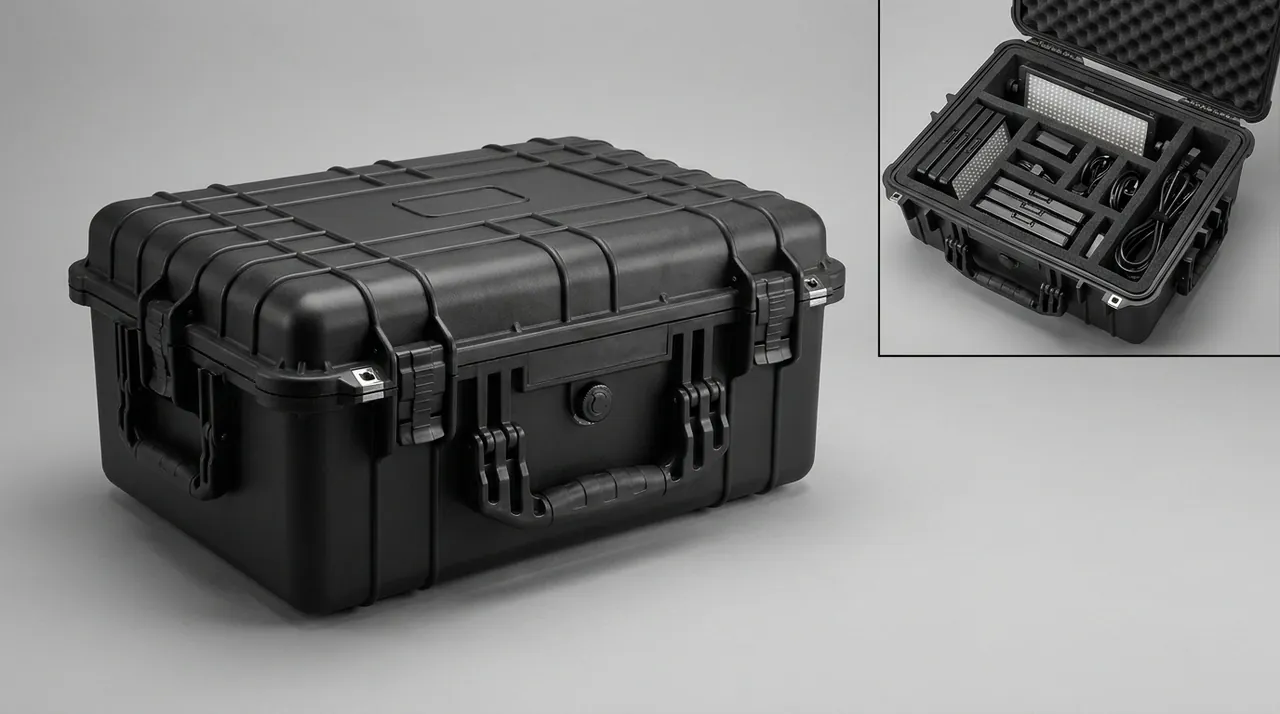
The hydraulic press is the heaviest equipment island in a cocoa plant. A ram, cylinder, top platen, lower pressure plate, and a stack of filter frames together form a high-pressure chamber that can run at twenty to forty megapascals. In transit, the most expensive items are rarely the cylinder body itself but the platens and the chrome-plated ram surface, both of which must mate precisely with a counterpart. A scratch only a fraction of a millimetre deep can open a local leak at pressure and push the fat content of an entire press cake outside the process window.
These parts must be protected as surfaces, not as volumes. Platen flatness depends on both faces working together, so point loads must be eliminated. When stacked, a platen should lie face down on a full-area rigid pallet matched to its frame size, and nothing should be placed on top of it. If several platens travel in one case, rigid dividers must break the load path between neighbours so that the upper item cannot keep pressing through the liner onto the lower face. Ram and cylinder plating should be wrapped in rust-preventive paper or VCI film, then fully enclosed in closed-cell EVA, with all ports sealed by clean caps so dust and moisture cannot enter the bore.
Filter frames and grid parts are a second category of fragile goods. They are thin-walled and low in stiffness, and their worst enemy is stacked compression and twisting. Once bent, they cause uneven flow during pressing, concentrate cocoa butter in local channels, and rupture the filter cloth. They should be laid flat in a single layer, separated by rigid dividers, edged with corner protectors, and wrapped away from metal parts so burrs cannot snag the cloth or transfer metal dust and grease. The layered method used for Crushing and Screening Parts Cases is a useful reference.
Moisture, Odour, and Caking in Cocoa Beans and Powder
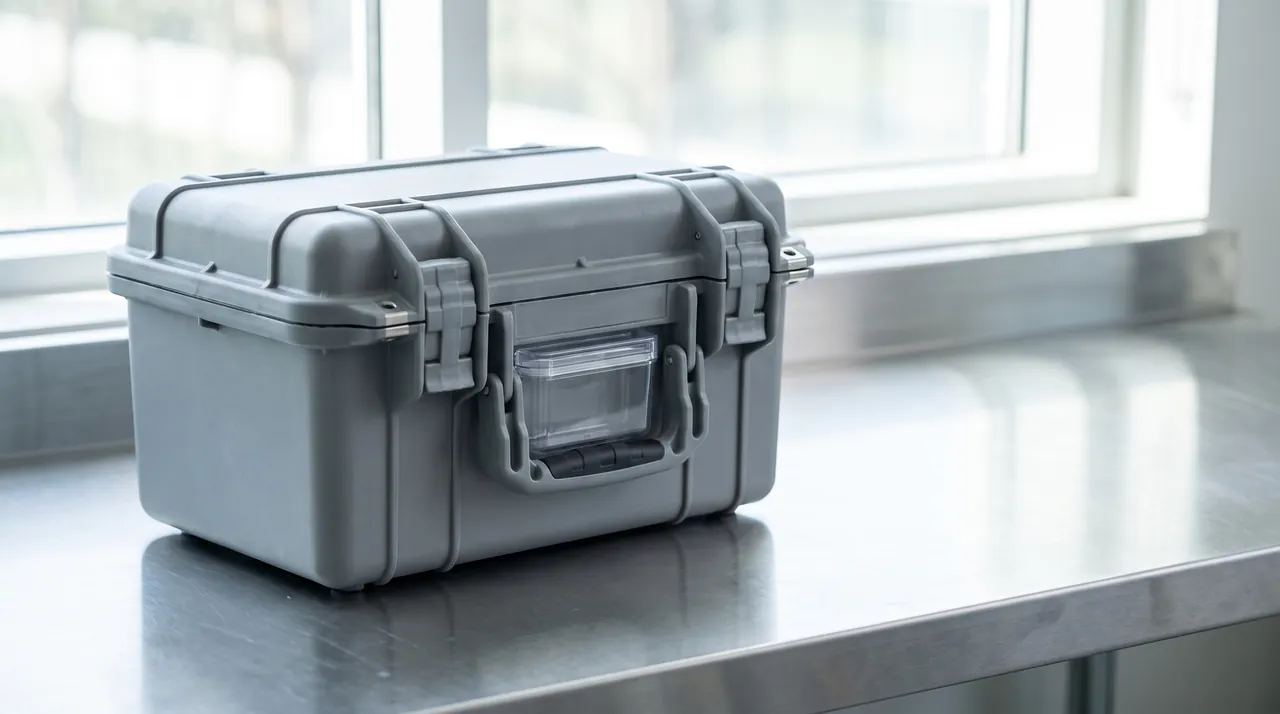
The physical nature of cocoa materials forces the case interior to be controlled more tightly than for general machinery. Cocoa powder is a highly porous, fat-bearing solid with a large specific surface area. Once relative humidity passes a threshold, the surface first clumps and then cakes, and re-wetted powder becomes prone to mould growth. Beans and nibs, meanwhile, readily adsorb odours. If the liner releases solvent, musty, or smoky smells, the sensory assessment of the whole batch can be affected.
The engineering sequence is dehumidify first, seal second, monitor third. Before packing, let the liner and the parts equilibrate in a dry area to release residual moisture from the materials. The target relative humidity inside the case is generally held below forty percent, and stricter for powder-related components. Desiccant quantity is calculated from the free air volume, the moisture transmission rate of the materials, and the transit duration rather than estimated by habit. After sealing, place a readable humidity indicator card inside and mark the packing date and inspection window on the outside. Record readings at unpacking and file them to build a humidity history.
One caution: moisture protection does not mean welding the case shut. Fat-bearing cocoa materials release trace gases as temperature rises, and a fully sealed case lets pressure and odour accumulate. The practical answer is controlled breathing, using a sealed body plus a pressure equalisation valve fitted with drying and odour-blocking media, so the case breathes slowly as pressure changes while external moisture and smells stay out. The case materials themselves should be selected at a low-odour grade, especially the auxiliary trays and dividers that share the transport unit with cocoa powder.
Dust, Fat Residue, and Food Safety Inside the Case
Cocoa powder, shell powder, and sugar powder are all combustible dusts. A protective case is not itself process equipment, but when it carries powered components, dusty residues, or static-sensitive sensors in the same shipment, it should be treated according to combustible dust principles. Surfaces that accumulate static charge should be avoided, and where necessary a conductive or antistatic surface treatment can be specified, with metal parts kept electrically continuous with a conductive liner.
The other food-safety thread is cleanability and non-shedding. A liner for food-contact equipment must not shed, powder, or release odour, and it must survive repeated wiping with ordinary cleaning agents without cracking. Low-cost recycled foam often carries inclusions and odour sources and is a false economy in this setting. If parts arrive with fat residue, they should be cleaned and dried before packing, and no paper or textile cushioning that absorbs grease should be placed inside, because rancid fat will contaminate the liner.
| Contamination type | Source | Consequence | Control measure |
|---|---|---|---|
| --- | --- | --- | --- |
| Particulate foreign body | Liner shedding, metal burrs | Foreign matter in product, food safety risk | Closed-cell non-shedding liner, deburred edges |
| Fat residue | Uncleaned cocoa butter, lubricant | Rancid odour, dust attraction | Clean and dry before packing, no absorbent liner |
| Moisture | Ambient humidity, hygroscopic liner | Caking, mould, metal corrosion | Dry equilibration, desiccant, indicator card |
| Odour | Cheap foam, untreated timber, solvent | Off-spec sensory result | Low-odour materials, treated and isolated timber |
| Dust accumulation | Internal residue, static on liner | Hard to clean, explosion risk | Antistatic surface, blow-clean before packing |
Thermal Window: Cocoa Butter Melting Point and Tropical Freight
Cocoa butter melts between thirty-four and thirty-eight degrees Celsius, and that single number drives the entire temperature strategy for cocoa equipment and materials. If a pump body, port, or pipeline still holds cocoa butter, tropical routes will soften it and let it creep into liner seams, where it cools and sets, bonding the part to the cushion. Separating them at unpacking easily tears a sealing face. Fat-bearing parts must therefore be fully drained and cleaned before packing, and open-cell foam that soaks up grease should not be used inside.
The case body itself also has to be considered. In summer, a container interior can far exceed ambient temperature, and a dark case in direct sun gets hotter still. EVA foam softens under sustained heat and loses resilience, so permanent deformation grows under long stacking, weakening restraint. The practical response is to use higher-temperature PE or IXPE for the load-bearing layer on hot routes, keeping EVA for the contact layer only; to choose light or low-absorbing colours for the shell; and where necessary to add a reflective or insulated outer wrap while avoiding direct contact with metal bulkheads that form thermal bridges.
Temperature and humidity interact. Large swings inside the case create a pumping effect, driving moisture to the shell by day and back to the cargo surface at night, where it eventually condenses. There are two ways to suppress this: reduce the free air volume by filling voids with liner, and use a valve with drying media so the breathing path passes through a drying stage instead of admitting humid air. For sensitive assemblies, a resettable temperature and humidity data logger can be included, and the full curve read at handover.
Cushion Liner Choice: EPE, EVA, IXPE, and Compartment Layout
Cushioning for cocoa equipment is not about being soft; it is about being controllably soft. Too soft and a heavy part travels too far under impact and strikes the case wall. Too hard and the shock passes straight into the mating surface. Selection therefore follows three factors in order: unit mass sets the density of the base support layer, surface characteristics set the contact material, and centre-of-gravity position sets cavity wall thickness and reinforcement.
Compartmentalisation is not simply cutting holes. Cavity wall thickness should match the mass it carries, cavity depth should match the centre-of-gravity height, and an off-centre part should be reinforced on the offset side. When several parts share a case, the heaviest goes over the stiffest area of the base plate, and rigid dividers break the load paths so a heavy part cannot press continuously on a light one through the liner. For parts handled repeatedly, insertion force and return reliability must also be assessed; a compartment only qualifies if it returns the part to the same position after many loading cycles.
| Liner material | Density and feel | Resilience and durability | Odour and cleanliness | Typical position |
|---|---|---|---|---|
| --- | --- | --- | --- | --- |
| EPE pearl foam | Light, soft | Moderate, thins after repeated compression | Low odour, closed cell, non-shedding | Light-part contact layer, void filling |
| EVA foam | Medium to high density, tough | Good, tolerates repeated compression | Requires low-odour grade | Medium and heavy support, side blocks |
| IXPE cross-linked foam | Fine, closed cell | Dimensionally stable, better heat resistance | Clean, non-shedding | Contact layer for plated and mirror parts |
| PE board | Hard, stiff | Creep resistant, strong | Odourless, wipeable | Heavy base cradles, rigid dividers |
| Plywood divider | Rigid | High load capacity | Needs treatment, watch odour | Large-part compartments, stacking support |
Sealing Ratings, Gaskets, and the Pressure Equalisation Valve
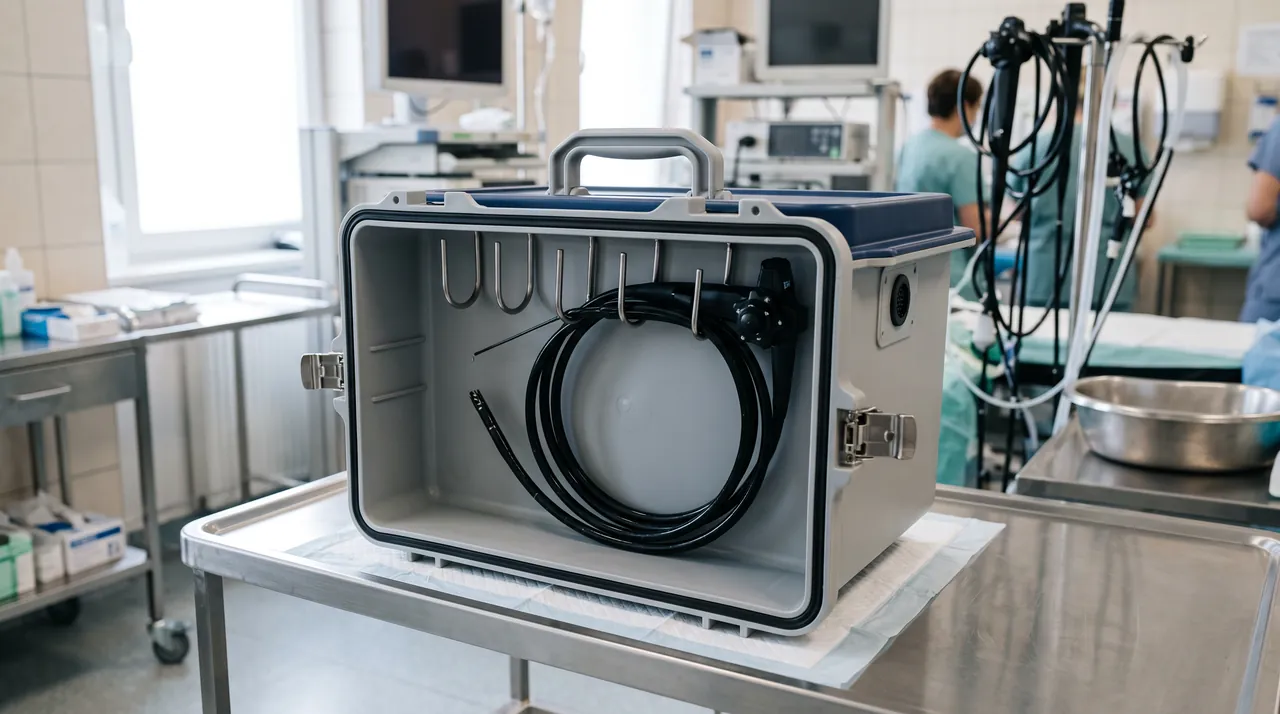
Case sealing is described in the language of IEC 60529 and GB/T 4208. For cocoa equipment, whether IP67 is required depends on real exposure. A case used only for short internal transfers under a roof is usually served by an IP65-level spray rating. A case that goes to sea, is handled in the open at a terminal, or is stored outdoors for long periods should reach IP67 so it stays dry after rain wash or brief immersion. Higher ratings demand more gasket compression, more even latch loading, and a stiffer shell, so cost rises with the rating.
The gasket is where the rating is actually delivered. Common materials include silicone, EPDM, and nitrile rubber, and selection must weigh temperature range, grease resistance, and compression set together. Cocoa environments involve frequent fat contact, so nitrile or fluoroelastomer grades resist oil better but rebound poorly in the cold, while silicone covers a wide temperature range with low odour but only moderate oil resistance. The sound approach is to select against the actual contact medium and to guarantee a continuous gasket in the groove with no splice offset and no twisting.
A pressure equalisation valve solves the differential problem. In sea and air freight the differential across the case reverses quickly, and a fully sealed body compresses the gasket and then draws external moisture in as pressure releases. A valve with a hydrophobic and oleophobic membrane lets air pass slowly while blocking liquid water and oil mist, and is standard equipment for long routes. Where parts carry cocoa powder residue, valve selection must also consider dust clogging, so a dust cap and a defined cleaning interval are advisable.
Vibration, Shock, and Transport Test Criteria
Most transport damage to cocoa equipment parts does not come from one huge drop but from thousands of small vibration cycles that accumulate into fretting wear and loosened fasteners. When the excitation band of road transport overlaps the natural frequency of the case-and-liner system, resonance amplifies the response, and the acceleration inside the case can be several times that at the base. The aim of damping design is therefore not only to cushion but to tune, moving the system natural frequency out of common excitation bands by adjusting liner hardness and support area.
Verification must come from testing rather than from handling impressions. A basic programme combines fixed-frequency vibration, random vibration, drop, stacking load, and incline impact, referencing the GB/T 4857 series, the ISTA series, and the ASTM D4169 cycle. During testing, accelerometers placed at critical positions inside the case measure transmissibility from the base to the component support surface. Judgement is layered: the shell and liner may absorb minor surface marks and a degree of compression, but the component itself must stay unmoved, unscuffed and fully functional.
| Test item | Reference standard | Simulated scenario | Typical criterion |
|---|---|---|---|
| --- | --- | --- | --- |
| Fixed and random vibration | GB/T 4857, ASTM D4169 | Long road and rail transit | No displacement, no fretting, fasteners tight |
| Drop | ISTA 1A or 2A | Handling drops, sorting throws | Case may scuff, part has no functional damage |
| Stacking load | GB/T 4857 | Container and warehouse stacking | No collapse, liner creep within limit |
| Incline impact | ASTM D4169 | Braking and hump shunting | Restraint holds, part does not shift |
| Pressure and immersion | IEC 60529, GB/T 4208 | Sea differential and rain wash | Agreed IP rating achieved, no water ingress |
Salt Spray, Pitting, and Cleaning Agent Residue
Cocoa plants use a great deal of stainless steel, but stainless is not immune to corrosion. Grade 316 gains chloride resistance from molybdenum, yet pitting and crevice corrosion can still occur where chloride and cleaning agent residue act together. A sea voyage combines deck-level heat, airborne salt, and trapped internal moisture, a combination that favours pitting. Evaluating hardware and surface finishes against the neutral salt spray method of GB/T 10125 is common practice, with duration set according to transit length and exposure level.
The critical corrosion points are rarely the large bodies but the details: latches, hinges, rivets, screws, and nameplates. These are often made from a different alloy than the shell and can form galvanic couples, while crevices accumulate salt and water and become pitting initiation sites. The engineering response is to prefer hardware from the same stainless family, to insulate unavoidable dissimilar joints, and to keep moving parts lubricated with a grease that resists water and salt.
Cleaning agent residue deserves equal attention. If a factory wipes parts with a chlorine-bearing cleaner before dispatch, the residue activates in warm humid conditions and accelerates pitting; a strongly alkaline cleaner can damage the passive film instead. The last step before packing should therefore be a wipe with deionised water or a neutral cleaner followed by thorough drying, after which the part enters a clean area for packing. The same point recurs in Food Packaging Machine Cases.
Stacking Load, Pallets, and Lifting Plans
A cocoa equipment maker shipping to an overseas plant rarely sends one case; it sends dozens in a single container. Stacking plans therefore decide whether the bottom cases creep out of shape under long-term load. Stacking load should be calculated against months of storage, not just a few days in transit, because plastics creep under sustained static load and deformation after months can far exceed short-term test results.
The planning rule is heavy below and light above, large below and small above, with the load-bearing columns of each case aligned vertically. Where a case has no built-in stacking register, a rigid interlayer board should spread the load so that the upper case corners do not press directly on the centre of the lower lid. On the pallet, overhang should be controlled, straps should pass over corner protectors to avoid crushing the shell, and the whole pallet load should sit low, be stretch-wrapped, and be checked once for tip-over stability.
Lifting and handling should also be specified in advance. Cases with lifting eyes should state the lifting points and the permitted angle; cases without eyes should state the forklift entry direction and prohibit single-side lifting. For components above a defined mass, the case exterior should mark the centre of gravity and a do-not-invert notice, and the liner should be made pose-unique so that a wrong orientation simply cannot be fitted. Preventing the error by structure rather than by wording is always more reliable across staff changes.
Custom Liner Processes, Tooling, and OEM/ODM Workflow
Custom liners for cocoa equipment normally follow one of two technical routes. CNC routing cuts cavities and side blocks directly from EVA, PE, or IXPE board, suiting small and medium batches, complex geometry, and fast prototyping, since a dimensional change only requires a program edit. Thermoforming makes a mould first and then heats and forms sheet material, suiting larger batches that repeat the same cavity and demand high consistency and surface quality. The two can be combined, with thermoforming ensuring consistency in the load-bearing layer and CNC routing providing local conformity in the contact layer.
A typical customisation flow covers requirement confirmation, 3D modelling and layout, material selection, first-article sampling, trial fitting, volume production, and acceptance. First-article sampling is the cheapest correction opportunity, so it should use the real component to confirm insertion force, restraint reliability, and freedom from cosmetic scuffing rather than checking drawing dimensions alone. Tooling carries a one-off cost that only amortises across sufficient volume, so expected annual usage and the likelihood of later revisions should be stated at the outset.
For clients wanting a complete case, an OEM or ODM route is also available, in which the manufacturer supplies a proven shell structure, liner concept, and documentation set and the client confirms appearance and marking. The accompanying package usually includes a packing drawing, material composition and volatile declarations, packing humidity records, a transport test report summary, and unpacking and repacking instructions. Export projects may also need fumigation-alternative and compliance documents. Related customisation experience can be seen in Food Processing Line Cases and Confectionery Machinery Cases.
Acceptance Criteria, Documentation, and Life-Cycle Care
Acceptance is best carried out item by item across case body, liner, accessories, and documents, with the decision rules written into the technical agreement beforehand so that no dispute arises on arrival. The case body check covers gasket face flatness, latch and hinge action, pressure equalisation valve function, and appearance. The liner check covers cavity dimensions, hardness zoning, whether the contact layer sheds, and whether edges are deburred. Accessories are verified for dividers, corner protectors, desiccant, and indicator card in the specified quantity and grade. Documents are checked against the agreement for drawing consistency, material declarations, humidity records, and test report summaries.
Life-cycle management is often neglected even though it directly determines return on investment. Cases used by a cocoa equipment maker typically make many round trips: new parts outbound, field repair, worn parts returning, spares dispatched. Every cycle consumes service life, so both the shell and the liner should carry an identification number and an inspection record, with defined replacement intervals for gaskets and pressure valves and defined scrap criteria for compression set, cracking, or contamination in the liner. A reusable loading diagram is a low-cost way to cut repacking errors on site.
| Acceptance category | Inspection item | Method | Action if non-conforming |
|---|---|---|---|
| --- | --- | --- | --- |
| Case body | Gasket face, latches, hinges, valve | Visual, operation feel, function test | Replace gasket or hardware |
| Liner | Cavity size, hardness zones, shedding | Gauging, white cloth wipe test | Local trimming or re-forming |
| Accessories | Dividers, corner guards, desiccant, cards | Quantity and grade check | Replenish |
| Documents | Drawings, material declarations, humidity records | Line-by-line comparison with agreement | Reissue or revise |
Frequently Asked Questions FAQ
Q: Why can cocoa grinder and press parts not simply be shipped in a wooden crate with bubble wrap?
A: The problem with a wooden crate and bubble wrap is not whether cushioning exists but that three things cannot be closed. First, bubble wrap cushions only at points, so a disc or platen weighing hundreds of kilograms compresses the bubbles instantly under impact and reaches the crate floor, transmitting energy into the mating face without attenuation. Second, timber absorbs moisture and releases odour, and cocoa powder and liquor residue readily adsorb smells, which can directly affect the sensory result of raw material. Third, a wooden crate has no compartments or restraint, so parts collide when several share a box, and cocoa equipment parts are mostly rotating bodies and thin-walled frames that are worst affected by secondary impact. A dedicated case spreads pressure through a full-area rigid cradle, breaks load paths with compartment dividers, and controls humidity and odour through sealing, which together bring risk inside process tolerance. For food-contact equipment, add non-shedding, wipeable, low-odour liners, and keep a documented loading diagram so the same arrangement survives staff changes and repeated round trips.
Q: Should grinder discs and refiner rolls be laid flat or stood upright, and how is the pose decided?
A: The basic rule is to keep the centre of gravity low and the mating face away from the load path. A grinder disc can weigh two hundred kilograms and has a high centre of gravity, so standing it upright produces a large overturning moment under braking or a drop, concentrating pressure on one narrow bottom edge, which crushes the cushion and can plastically deform the rim. It should therefore be laid flat with its non-working back face against a rigid cradle, leaving only a thin sheet over the working face for scuff protection. A refiner roll is a slender rotating body and is best placed horizontally along its axis on saddles that support the roll body at both ends, so the journal is never loaded alone; a mirror or plated roll must first be wrapped in lint-free cloth before contacting a closed-cell liner. Shaft assemblies should use the journal as the primary datum, with a bored sleeve enclosing it to limit overhung swing and reduce fretting. Every pose should be confirmed by a first-article trial fitting, marked on the case, and made structurally unique.
Q: Why do press platens and filter frames distort so easily in transit, and how is this prevented?
A: Platens and filter frames share the traits of a large flat face, thin walls, and stiffness that only appears once assembled, so their bending resistance in transit is poor. A platen is most vulnerable to point loads and stacking compression; a raised high spot opens a local leak at pressure or causes uneven flow, which directly changes the fat content of the press cake. A filter frame grid, once crushed or twisted, disrupts slurry channels and can rupture the filter cloth. There are three practical countermeasures. First, lay flat in a single layer, face down on a full-area rigid pallet matched to the frame size, with nothing placed on top. Second, when several are stacked, add a rigid divider at every layer to break the load path between neighbours, with thin sheets between frames. Third, fit corner protectors around the stack to limit horizontal movement. Filter cloth should travel in a separate compartment from metal parts so burrs cannot snag it and metal dust and grease cannot transfer onto it.
Q: How does a protective case deal with moisture uptake, odour pickup, and caking in cocoa beans and powder?
A: The sequence is dehumidify first, seal second, monitor third. Before packing, let the liner and the parts equilibrate in a dry area to release residual moisture from the materials. Relative humidity inside the case is generally held below forty percent, and stricter where powder-related components are involved. Desiccant quantity is calculated from the free air volume, the moisture transmission rate of the materials, and the transit duration, with a safety margin included rather than dosing by habit. After sealing, place a readable humidity indicator card inside and mark the packing date and inspection window on the case exterior, recording readings at unpacking to build a humidity history. On odour, select low-odour liner grades and avoid low-cost recycled foam and untreated timber in the same case, adding an odour-blocking membrane between liner and cargo where needed. Note that complete sealing is not ideal, because temperature swings with fat-bearing materials change internal pressure, so a controlled-breathing design combining a sealed body with a pressure equalisation valve is preferable.
Q: Cocoa butter melts in the heat, so what temperature issues matter on tropical routes?
A: Cocoa butter melts between thirty-four and thirty-eight degrees Celsius, and a container interior under tropical sun can far exceed that, so temperature is both an equipment issue and a material issue. For equipment parts, pump bodies, ports, and pipelines that still hold cocoa butter must be fully drained and cleaned before packing; otherwise softened butter creeps into liner seams, sets as it cools, and bonds the part to the cushion, so that separating them at unpacking tears a sealing face. On the case, EVA foam loses resilience under sustained heat and takes a larger permanent set after long stacking, so hot routes should use higher-temperature PE or IXPE for the load-bearing layer and reserve EVA for contact layers. Light or low-absorbing colours are preferable, and the case should not sit directly against a metal bulkhead that forms a thermal bridge. Temperature swings also drive a breathing effect and condensation, which can be suppressed by filling free air volume and using a valve fitted with drying media.
Q: How should transport testing be carried out, and what acceptance criteria are reasonable?
A: Testing should cover fixed and random vibration, drop, stacking load, and incline impact, referencing the GB/T 4857 series, the ISTA series, and the ASTM D4169 cycle, with drop height and attitude selected from the standard according to mass and packaging type. Accelerometers placed at critical positions inside the case measure transmissibility from the base to the component support surface, and confirm that the system natural frequency avoids the common excitation bands of road and rail transport so that resonance amplification does not occur. Judgement should use layered criteria, and this is the important part: the outer case may show light scuffing and the liner limited compression or local indentation, while the component itself must meet three hard conditions of no displacement, no scuffing, and no functional damage. Plated or mirror-finished parts should also have surface roughness or appearance re-measured. Test results and conclusions should be written into the technical agreement and archived, so that any later packaging dispute can be settled with measured data rather than recollection. Where in-house equipment is unavailable, an accredited laboratory report is the practical alternative.
Q: How is the sealing rating chosen, and does the difference between IP65 and IP67 matter for cocoa work?
A: The difference depends on the real exposure during transport and storage. Under IEC 60529 and GB/T 4208, IP65 covers water jets and IP67 covers brief immersion, and the two place different demands on gasket compression, shell stiffness, and even latch loading. A case used only for short internal transfers under a roof is usually served by an IP65-level spray rating. A case that goes to sea, is handled in the open at a terminal, or is stored outdoors for long periods should reach IP67 so that it stays dry after rain wash or brief immersion. Cocoa work has two further quirks. First, fat contact is frequent, so gaskets should favour oil-resistant grades while still rebounding adequately in the cold. Second, the pressure valve on a powder-carrying case can clog with dust, so a dust cap and a defined cleaning interval are needed. Cost rises with the rating, so selection should follow actual exposure rather than an instinct that higher is always better.
Q: What do custom liner lead time, tooling cost, and the accompanying documentation typically include?
A: Custom work normally follows one of two routes. CNC routing suits small and medium batches with complex geometry, since a dimensional change only requires a program edit, while thermoforming suits larger repeated-cavity volumes with better consistency and surface quality. The flow generally covers requirement confirmation, 3D modelling and layout, material selection, first-article sampling, trial fitting, volume production, and acceptance. First-article sampling is the most important correction opportunity and should use the real component to confirm insertion force, restraint reliability, and freedom from cosmetic scuffing. Tooling carries a one-off cost that only amortises across sufficient volume, so expected annual usage and the likelihood of later revisions should be stated at the outset. The accompanying document set usually includes a packing drawing, material composition and volatile declarations, packing humidity records, a transport test report summary, and unpacking and repacking instructions. Export projects may also need fumigation-alternative and compliance documents.
Conclusion and Related Reading
Cocoa transport protection means locking heavy parts in place, keeping moisture and odour out, and designing the shock path. JUNZHIJIA supplies compartmentalised, sealed, clean-liner custom cases with OEM/ODM support.
Related Reading