


In confectionery machinery spare-parts logistics, the most underestimated damage source is not impact but sugar dust and sticky residue. Sugar dust absorbs moisture, cakes and adheres to forming and sealing surfaces; residual syrup becomes a starting point for microbial growth and corrosion in humid conditions; and once dust or a hard particle is trapped in the nip of a film-handling component, it produces continuous seal defects in service. The design direction for a confectionery machinery case should therefore be clean packaging, precision location, moisture control and static control. The conclusion: forming and wrapping components should be split across four families - food contact, precision moving interface, electrically sensitive and structural - using closed-cell cleanable inserts, one bag per item, sealing plus desiccant, and verification against the GB/T 4857 and ISTA test series. JUNZHJIA supplies this class of case with custom inserts, OEM/ODM programmes and volume production to confectionery equipment manufacturers, food packaging machinery suppliers and export traders.
A second industry characteristic is that the equipment itself is designed for clean production, so there is an implicit requirement on the condition of spares on arrival. Audits and quality systems in confectionery plants routinely ask whether a replacement part is clean and whether it carries any foreign-body risk. If a spare has picked up dust, fibres or packaging debris in transit, it can be judged non-conforming even with no visible damage. Confectionery machinery also uses large amounts of stainless steel and food-grade plastics, so the risks of dissimilar metal contact, iron contamination and odour transfer are higher than in general machinery. This article gives protection grades, clean-packing process, insert materials, sealing levels and test references by component category, with comparison tables, an acceptance method and a FAQ section for equipment engineers, quality staff and procurement.
Table of Contents
- 1. The Specific Conflicts of Confectionery Machinery Spares: Sugar Dust, Stickiness and Cleanliness
- 2. Confectionery Machinery Component Families and Protection Grades
- 3. Forming Components: Mould Rollers, Dies and Depositing Nozzles
- 4. Wrapping Components: Formers, Film Rolls and Sealing Jaws
- 5. Cutting Blades and Cutting Mechanisms
- 6. Conveying and Aligning Mechanisms
- 7. Servos, Sensors and Print-Registration Photo-Eyes
- 8. Cleaning Process for Sugar Dust and Sticky Residue
- 9. Food-Contact Compliance and Odour Control for Confectionery Machinery
- 10. Confectionery Clean-Packing Insert Materials Compared
- 11. Sealing, IP Ratings and Sugar Dust Ingress
- 12. Test References in a Sugar-Dust Environment
- 13. Confectionery Spares Acceptance and Collaboration Flow
1. The Specific Conflicts of Confectionery Machinery Spares: Sugar Dust, Stickiness and Cleanliness
The material properties of confectionery production make the packaging requirements for these spares different from those of general food machinery.
First, sugar dust is a contaminant that finds its own way into gaps. The air and equipment surfaces in a confectionery plant carry sugar dust year-round: fine, easily airborne, and sticky once it absorbs moisture. It reaches bearings, guideways, gear meshes and forming cavities, then cakes and acts as an abrasive paste that accelerates wear. For packaging this means two things: parts must be thoroughly cleaned of sugar dust before packing, and simply blowing air at them is not enough because moistened dust adheres; and the case must have sufficient dust exclusion so the part is not re-contaminated in transit and storage.
Second, syrup residue drives both microbial and corrosion problems. Unlike dust, syrup residue is visible yet hard to remove: it hides in internal corners, threads, blind holes and assembly clearances. In humid conditions it not only supports microbial growth but also creates a locally acidic environment on metal surfaces that accelerates pitting of stainless steel. For material-contact parts, drying thoroughly after cleaning is therefore as important a step as the cleaning itself.
Third, the cleanliness of film and sealing components directly determines product yield. On a flow-wrap machine, the former, film rolls, sealing jaws and cutting blades will produce continuous seal defects if a hard particle or a layer of dust is trapped in a nip. Such defects usually require the machine to be stopped for cleaning, and the loss is far greater than the value of the component. Packaging for these parts must therefore be at clean grade.
Fourth, the temperature and humidity control of the plant itself creates a challenge. To stop confectionery absorbing moisture and becoming sticky, plants usually run at low humidity. That control is absent in transit and in storage. If the case is not sealed, a spare absorbs moisture on the way and needs additional drying before installation.
2. Confectionery Machinery Component Families and Protection Grades
Grading by food-contact status, precision of the moving interface, electrical sensitivity and stiffness is the first step in configuring a confectionery machinery case.
| Protection grade | Typical components | Dominant failure mode | Cleanliness requirement | Insert and packaging strategy |
|---|---|---|---|---|
| --- | --- | --- | --- | --- |
| C1 Food-contact precision | Forming rollers, dies, depositing nozzles, sealing jaws, formers | Scratching, indentation, trapped dust | Highest; no debris, no silicone | One bag per item plus contoured cavity plus face cap |
| C2 Precision moving interface | Film rolls, guide rollers, blade assemblies, cams, gears | Impact, corrosion, damaged mating faces | High; no dust | One cavity per item plus soft location plus shaft sleeves |
| C3 Electrically sensitive | Servo drives, print-registration photo-eyes, encoders, load cells | ESD damage, moisture, contaminated optical window | Medium to high; anti-static needed | Anti-static bag plus anti-static insert plus window protection |
| C4 Structural | Frames, guards, hoppers, guideways, short pipe spools | Distortion, coating damage | Moderate | Hard stops plus elastic support plus half-round cradles |
Three operating principles follow from the grading.
Principle one: keep C1 and C2 apart. Sealing jaws and formers are food-contact precision parts; guide rollers and cams are precision moving interfaces. Mixed packing harms both sides: grease, metal debris and packaging particles from the moving interface contaminate the food-contact surface, while cleaning residue from the food-contact surface adheres to the moving interface and attracts dust. Once separated, each side can be held to its own cleanliness standard.
Principle two: give C3 its own cavities. Servo drives and photo-eyes are static-sensitive and need anti-static packaging, while C1 and C2 inserts are usually ordinary closed-cell material. Mixed packing weakens the static control and lets dust contaminate the optical window. The photo-eye window is especially sensitive: once dust or a fingerprint settles on it during packing or transit, detection sensitivity falls and in service the result is false triggering or missed marks.
Principle three: solve C4 with stiffness, not cushioning. The requirement for frames and guards is that they must not distort, and the answer is location plus support.
For C1 components, contoured inserts are the core measure: mill the cavity from a 3D scan or template, with depth at 1/2 to 2/3 of component height so nothing escapes when inverted, and fully relieve the region in contact with a forming surface. For the process see the custom foam insert guide and custom EVA foam insert process.
3. Forming Components: Mould Rollers, Dies and Depositing Nozzles
Forming components embody the principle that precision is product quality: the cavity of a mould roller defines the shape of the sweet, the edge of a die defines cut quality, and the bore and internal passage of a depositing nozzle define the consistency of deposit weight.
Mould or forming rollers are metal rollers carrying multiple rows of cavities, often with a plated or mirror-polished surface. Their failure modes include cavities struck by hard objects, which produces shape defects in the product; scratched plating, which causes poor release; and damaged journals, which cause run-out after mounting. Fit protective sleeves over the journals and never use a journal as a support point; fully relieve the cavity region so no hard object can touch it; support the roller at both ends on area-contact saddles rather than line contact; and ensure the cavities carry no residual cleaning liquid by drying thoroughly before packing.
Dies and cutting dies have edges measured in microns. Their failure modes are edge impact, which produces burrs and incomplete cuts, and edge corrosion. Fit removable protective plates or soft sleeves over the edge, give each die its own cavity with rust protection, and never carry the die by its cutting edge. For dies whose edges have been reground and whose grinding allowance is recorded, supply the grinding record with the case.
Depositing and discharge nozzles commonly have bores in the 0.5 to 3 mm range and internal passages that are highly contamination-sensitive. Bag each item individually and plug the bore, using silicone-free or low-outgassing plug material; leave a void in the cavity at the bore end; and never wrap the nozzle directly in open-cell foam. Where a nozzle carries a heating element or temperature probe, treat the electrical portion as C3.
For forming part sets, meaning several moulds of different specifications for the same machine, compartmentalise them inside one case and label the specification number, cavity count and applicable product. This has high on-site value because confectionery plants change over frequently, and being able to take the right part directly from its compartment shortens changeover time considerably. Where a load must be shipped as one case and picked compartment by compartment, use a removable divider system (see removable divider system design).
For forming surfaces that have already been surface treated, whether chrome plated, polished or PTFE coated, the contact material must avoid sulphur-bearing, chlorine-bearing or plasticiser-bearing constituents that can cause pitting or reduce coating adhesion in humid conditions.
4. Wrapping Components: Formers, Film Rolls and Sealing Jaws
Wrapping components sit closest to the product and are the group most likely to cause batch defects from the smallest imperfection.
Formers, including forming necks and collar formers, are the key parts of a flow-wrap machine and their curved surfaces determine film forming quality. Their failure modes are scratched surfaces, which cause film to track off-centre or wrinkle, and damaged edges. Fully relieve the curved surface so nothing touches it, support the whole part on area-contact saddles, and fit removable protective strips to the edges. Former surfaces have a high surface-finish requirement, so packaging materials must not be capable of leaving rub marks.
Film rolls and guide rollers are C2 precision moving interfaces. Their failure modes are damaged roller surfaces, which cause film tension fluctuation; damaged bearings, which cause stiff rotation; and corrosion. Fit soft sleeves over roller surfaces and protective sleeves over shaft ends, never use the roller body itself as a load-bearing point, and for rollers with rubber or PTFE coverings avoid long-term compression that deforms the covering.
Sealing jaws are the direct determinant of seal quality. Their failure modes are damage to the sealing face, which causes weak or leaking seals, and moisture in heating elements and sensors. The sealing face must be fully relieved, with one cavity per item and a fitted cap; the sealing face must not touch any other component; and for jaws with heater and thermocouple, handle the electrical portion as C3 and keep the calibration label under seal. One point deserves emphasis: any indentation or trapped particle on a sealing face produces continuous seal defects, so packing should take place in a clean environment and the cavity should be checked for debris.
Cutting blades and cutting mechanisms follow the same rules as dies: protect the edge, one cavity per item, and never carry the blade by its cutting edge. Rotary cutters and shear blades produce burred or incomplete cuts once the edge is struck.
One further requirement for wrapping components is that they must be oil free. Some confectionery wrapping must avoid any oil contact with the film face, so use oil-free gloves during packing and handling, and avoid insert materials that contain oil or plasticiser.
5. Cutting Blades and Cutting Mechanisms
Cutting blades and mechanisms appear at several points in confectionery production: cutting the rope, cutting the wrapping film, dividing the sweets and aligning them.
Rotary cutters fail by edge chipping and shaft bending. A chipped edge raises cutting resistance, producing burrs and machine vibration. Fit removable protective plates over the edge, protective sleeves over the journals at both ends, and support the assembly on area-contact saddles rather than leaving both ends unsupported.
Shear and guillotine blades are usually heavy with high inertia. They fail by edge impact and blade-holder distortion. Control holder displacement with hard stops and use elastic support on the base, protect the edge, and for assemblies whose clearance has already been set, restrain the assembly as a unit and keep the clearance marking.
Circular and serrated blades divide the sweets and have complex edge geometry. One cavity per item matched to the blade outline, never stack several blades, and for blade sets that have been balanced or aligned coaxially, keep the markings and pack them as a unit.
The shared requirement for all cutting mechanisms is that a cutting edge is never a load-bearing face. This is easily violated at the packing station, where workers habitually lay blades flat and stack them so that edges strike each other. Mark the blade orientation on the case and provide dedicated edge relief grooves in the insert.
For blades that circulate between machines, use a standard shell plus changeable blade slots approach: the shell and hardware are common while slots are customised to blade types. This generalisation measurably reduces case count and cost on multi-specification projects; see protective case mould cost analysis.
6. Conveying and Aligning Mechanisms
Conveying and aligning mechanisms determine how smoothly the product flows through the machine, and their spares are usually long, thin, or chain-like.
Conveyor and food-grade belts are C1 food-contact items that also fear scratching and folding. Wind them onto a core large enough to avoid permanent curvature, apply a barrier film to the surface, never fold or heavily compress them, and keep debris-shedding materials out of the case. Belt surface condition directly affects product appearance and incline capability, so acceptance should treat no new surface scratches as a separate check item.
Slat chains and roller chains fail by link deformation and pin damage. Pack them in segments with each segment separately restrained, never coil a chain loosely and place a heavy item on top, and give chains that have already been lubricated their own cavity so grease cannot contaminate other components.
Guideways and chutes are often long thin-walled parts that warp easily. Use multiple cradles with area-contact support and no concentrated mid-length load, and where a guideway has a wear strip or rubber covering, the contact face must be soft and must not be compressed long term.
Vibratory and orienting bowls are usually stainless bowls with spiral tracks. They fail by bowl distortion and track damage. Support the bowl on an annular saddle, relieve the spiral track region, and for assemblies that have already been tuned for vibration, keep the adjustment markings and restrain them as a unit.
Hoppers and receiving parts are often thin sheet weldments with hygiene requirements. Ensure no residual cleaning liquid remains inside, never support stainless parts on timber, and where necessary apply a protective film to the internal surface for removal at unpacking.
For guideways or chutes longer than 2 m, use a frame-type long case in which the inner frame carries the load and the shell only shields and seals. This separation of load bearing from weather protection is especially effective for long thin-walled parts; see cushion liner case structural solutions.
7. Servos, Sensors and Print-Registration Photo-Eyes
The precision of confectionery machinery depends on electrical and sensing components, and this group is sensitive to static, moisture and optical contamination.
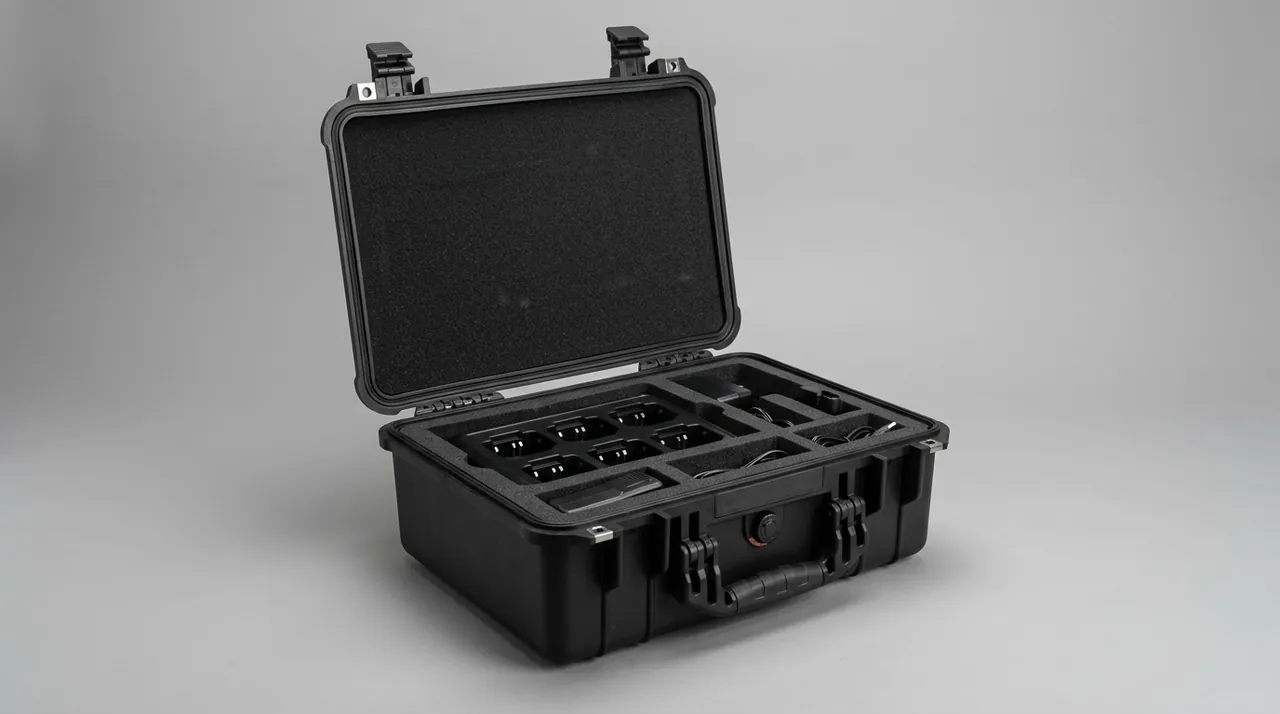
Servo drives and servo motors fail in several ways: bearing damage from side load on the output shaft, damp drive modules, and encoder failure from impact. Zero side load on the output shaft is a hard requirement, so the cavity must restrain the motor body and gearbox; seal drive modules in anti-static bags; and protect the encoder from strong impact.
Print-registration photo-eyes and photoelectric sensors are among the most delicate components on a confectionery wrapping machine. Once the optical window is scratched or contaminated, detection sensitivity falls, and in service the result is false triggering or missed marks, leading to misaligned cuts and out-of-register packs. Fit a removable transparent window cap, give each item its own cavity with anti-static packaging, keep the packing area clean because dust settles on the window, and remove the cap and inspect the window at unpacking.
Load cells and pressure sensors are precision elastic elements that fear overload and impact. One cavity per item, never apply preload or side load to the sensor, keep calibration labels under seal, and avoid drops, which cause permanent zero shift.
Encoders and proximity switches fail by impact and broken leads. Coil and secure the leads so they are never pulled in tension, and fit protective sleeves over the sensor bodies.
The common requirement for electrical components is static and moisture control. Use anti-static shielding bags, use anti-static flame-retardant insert material, and include desiccant and a humidity indicator card. Where the project requires it, use a full anti-static insert solution (see anti-static and flame-retardant insert solution).
One further reminder: washing operations in a confectionery plant involve water and cleaning agents. If a case is opened on the production floor to take out a part, the sealing level and internal drying strategy should match that use case, otherwise every opening introduces fresh moisture.
8. Cleaning Process for Sugar Dust and Sticky Residue
Cleanliness is not "a wipe at packing time" but a traceable process chain. For sugar dust and syrup residue in the confectionery industry, establish a work instruction along these steps.
- Pre-removal: remove loose sugar dust by dry means first, using clean compressed air or a soft brush. Do not start with a water wash, which turns sugar dust into syrup that is harder to remove.
- Wash: select the method by material and construction. Stainless parts can take warm water with a food-grade detergent; parts containing electrical components should be wiped rather than immersed.
- Critical areas: treat syrup residue in internal corners, threads, blind holes and assembly clearances separately. These are the places where residue most easily remains and most slowly dries.
- Dry thoroughly: drying is the step most often skipped in the confectionery industry and the most critical. Residual liquid inside a sealed case becomes a starting point for corrosion and microbial growth. Blow dry with clean compressed air, then allow to stand, using low-temperature drying where necessary.
- Inspect: combine visual and tactile inspection, concentrating on internal corners and clearances; for forming and sealing surfaces, inspect under raking white light for any residual film.
- Cap: fit plugs or caps to all bores, ports and passages, using silicone-free or low-outgassing material.
- Bag individually: bag C1 and C3 components individually and expel the air.
- Load and record: clean the cavities beforehand, then record component numbers, cleaning method, drying method, inspection result, packing date and operator.
Packing-area management matters equally. Because sugar dust is present in the air of a confectionery plant year-round, the packing area should be a relatively separate, easy-to-clean location, ideally with positive pressure or local clean-air provision. Operators should wear lint-free, oil-free gloves, and cutting, grinding and film-tearing operations should be prohibited in the packing area.
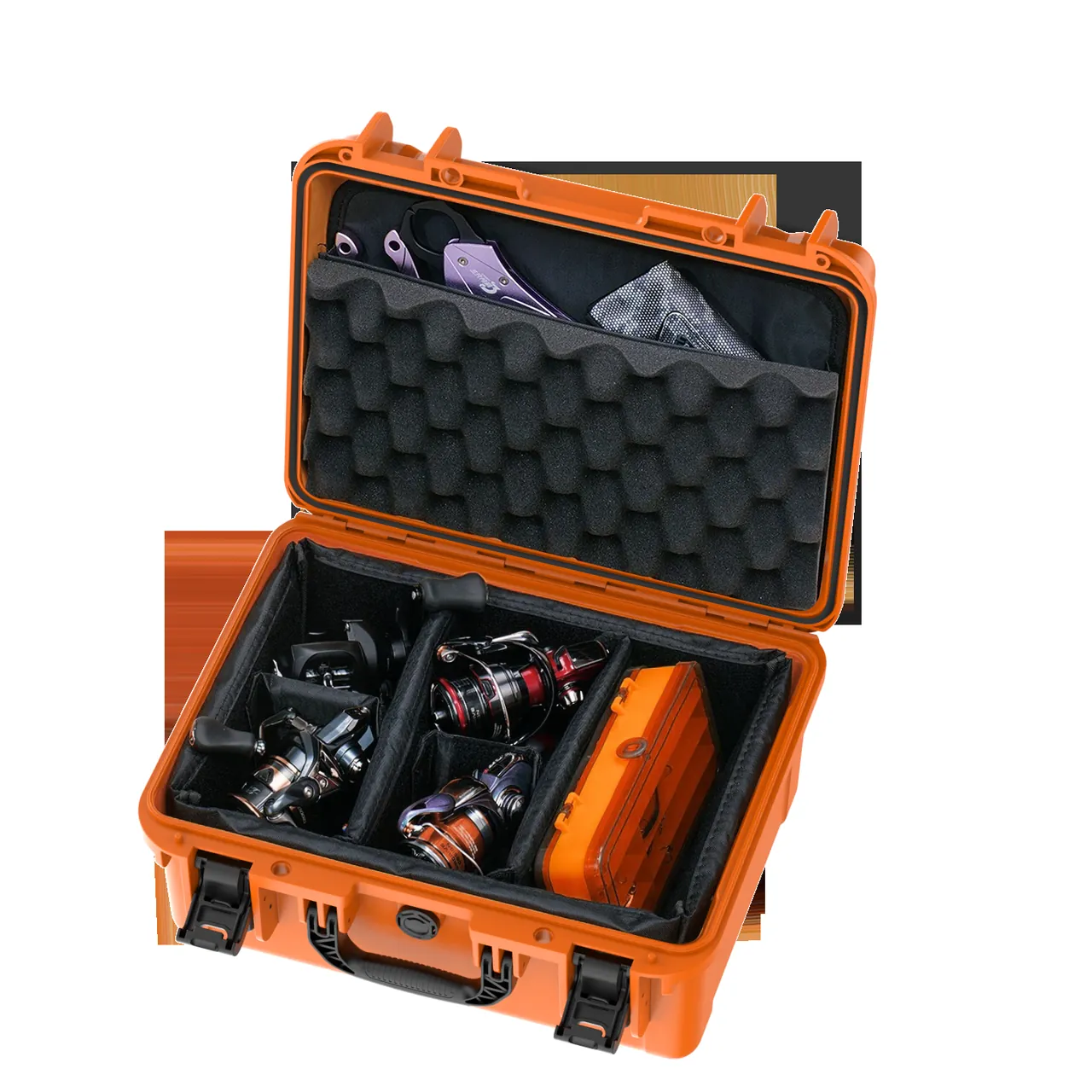
Insert material choice determines whether cleanliness can be retained. Wood, felt, open-cell foam and ordinary pearl foam are all unsuitable for direct contact with C1 components; closed-cell EVA or PE is recommended, optionally with a clean barrier film. For a detailed comparison see case foam material comparison.
The case itself must also be clean: clean the interior walls, latches and gasket grooves before each use, and when returning a case to service after long storage, check the gasket for ageing and the groove for accumulated sugar dust, which sticks once it absorbs moisture and can glue the gasket into the groove. For methods see how to clean and maintain a protective case.
9. Food-Contact Compliance and Odour Control for Confectionery Machinery
Confectionery is eaten directly, so compliance and odour requirements for food-contact surfaces are stricter than in most industries.
First, the boundary must be clear. Food contact materials and articles must meet the applicable national standards, for example the GB 4806 series on food contact materials and articles. Those requirements target the food-contact components of the equipment itself, such as the migration behaviour of stainless steel or the safety of plastic and coated parts. The case and insert are transport packaging; they are not food contact materials and cannot substitute for the component's own compliance evidence. Write this into the technical agreement.
Second is odour control, which is specific to this industry and easily overlooked. Confectionery, and chocolate and fat-containing sweets in particular, readily absorbs ambient odours. If the packaging material itself carries an odour, whether from certain recycled plastics, solvent-based adhesives or untreated wood, a spare stored in a sealed case for a long period takes on that odour and can then transfer it to the product on contact. Therefore:
- choose low-odour, low-outgassing insert materials and require material documentation from the supplier;
- prohibit inserts with a noticeable odour or made with solvent-based adhesives;
- air a new case before first use if the case itself, or its gasket, has a strong odour;
- for chocolate-contact parts, add a sensory odour check before packing as an acceptance item.
Third is traceability of cleanliness. Supply a cleaning record with the case covering washing method, detergent, drying method and duration, inspection result, operator and date, so that the clean condition can be verified on arrival. This is normally seen as a positive in confectionery plant supplier audits.
Fourth is prevention of cross contamination. Pack food-contact and non-food-contact items separately; separate stainless from carbon steel and galvanised parts to avoid iron contamination and galvanic corrosion; and separate lubricated moving interfaces from food-contact parts to prevent grease migration. For related distribution practice see cold chain and food distribution protection; the core logic is the same, namely to block the conditions for deterioration by sealing and humidity control.
10. Confectionery Clean-Packing Insert Materials Compared
The table below gives insert and packaging material guidance for confectionery machinery spares.
| Material or form | Cleanliness and cleanability | Cushioning and support | Odour and outgassing | Suitable components | Cautions |
|---|---|---|---|---|---|
| --- | --- | --- | --- | --- | --- |
| Closed-cell precision-milled EVA | High, surface can be wiped clean | Good support, moderate cushioning | Low, confirm batch | C1 forming parts, C2 rollers | Needs desiccant; confirm silicone-free and odour-free |
| Food-grade silicone pad | High, cleanable | Good cushioning | Low | C1 food-contact isolation | Confirm material compliance evidence |
| Anti-static flame-retardant EVA or PE | High | Good support | Low | C3 servo drives, sensors | Requires UL94 evidence |
| Nitrile or CR foam | Medium to high | Excellent cushioning | Moderate | Oily parts, drive components | Must be isolated from food-contact parts |
| High-density closed-cell PE blocks | Medium to high | Strong support | Low | C4 guards, frame pads | Must not touch forming surfaces |
| Self-skinning PU foam | Moderate | Excellent conformity | Moderate, confirm | Irregular parts, saddles | Control density and odour |
| Low-density PE pearl foam | Low, sheds debris | Fair cushioning | Moderate | C4 void fill and gap packing | Keep away from C1 and C3 |
| Felt or non-woven | Low, sheds fibres, absorbs moisture | Weak support | Moderate | Not recommended for this family | High risk of fibres reaching sealing faces |
| Timber support blocks | Low, sheds debris, absorbs moisture, odorous | Strong support | High odour | Internal support in frame cases | Never touch food-contact parts |
The selection principle can be summarised as choose material by cleanliness grade and cavity form by stiffness: first exclude debris-shedding, moisture-absorbing, odorous and migratory-additive materials according to whether the part touches food or is electrically sensitive, then set the cavity structure by stiffness and weight. For C1 and C3 components it is better to spend more on material than to accept contamination and static risk.
For clean packaging form, a three-layer isolation is recommended: an inner layer of silicone-free clean bag, one per item; a middle layer of clean barrier film or food-grade soft pad; and an outer layer of contoured insert. This layering prevents direct rubbing between component and insert that would generate debris, and it makes the unpacking sequence clear, bag first then component, which reduces contamination risk during unpacking.
11. Sealing, IP Ratings and Sugar Dust Ingress
Case protection levels are defined by IEC 60529, and the identical Chinese standard is GB/T 4208. Confectionery machinery spares cases typically involve three levels.
| Rating | Meaning | Typical scenario | Configuration |
|---|---|---|---|
| --- | --- | --- | --- |
| IP65 | Dust tight, protected against water jets | In-plant movement, indoor storage, covered road transport | Silicone gasket plus desiccant plus humidity indicator card |
| IP66 | Dust tight, protected against powerful water jets | Near washdown stations, heavy rainfall exposure | Reinforced seal plus tightened latch layout |
| IP67 | Dust tight, protected against temporary immersion | Ocean freight, open yards, rainy-season long haul, intermodal | Reinforced seal plus pressure equalisation valve plus desiccant |
For the confectionery industry, the first digit, 6, meaning dust tight, matters more than the second digit, because the dominant ingress is sugar dust. Sugar dust is fine, easily airborne and sticky once moist: once inside the case it adheres to forming and sealing surfaces, causing scratches and trapped particles, and once moist it also sticks in the gasket groove and degrades sealing.
Three practical recommendations follow. First, close the case promptly after taking a part out so it does not sit open in plant air and re-ingest dust. Second, clean the gasket groove periodically, especially after use in a dust-laden area, because caked sugar can glue the gasket in place and prevent proper closure next time. Third, the case exterior should be easy to wipe down, avoiding textured or hard-to-clean surface finishes.
On pressure equalisation: on multi-climate routes, sharp temperature change creates a differential that can force the gasket into the case or bulge the shell. A pressure equalisation valve allows gas to exchange slowly and equalise the differential while blocking liquid water and dust; for principles and selection see pressure equalisation valve configuration. It is essential for air freight and high-altitude transfer.
Latches and hinges are the critical interfaces for maintaining a seal. For cases opened frequently, choose a design with replaceable gaskets so an aged gasket does not scrap the whole case; see toolbox hinge and latch sealing structure. For the differences between water protection levels and how they are verified, see waterproof cases and IP ratings.
12. Test References in a Sugar-Dust Environment
Whether a case is strong enough and dust tight enough should rest on test evidence.
For transport testing, three families are common: the GB/T 4857 series covering vibration, impact, stacking and drop methods, the foundation for transport packaging verification in China; the ISTA series, organising test sequences around the distribution environment for export orders and intermodal routes; and ASTM D4169, using a distribution cycle plus assurance level approach for high-value cargo. For confectionery machinery spares, complete at least vibration, impact and stacking, and add two industry-specific re-checks: a post-test cleanliness re-check, observing whether vibration has generated new debris in the cavities and whether single-item bags are intact; and a post-test functional re-check, verifying sensor calibration labels and appearance and inspecting optical windows for contamination. For methods see GB/T 4857 transport packaging testing and ISTA transport testing procedures.
On environmental test references, where a project needs one, MIL-STD-810H may be used as a reference for environmental test methods such as temperature and humidity, vibration, shock and salt fog. It is not itself a military certification and does not constitute product certification. External documents must say so precisely; with food-industry customers an overstated claim directly damages supplier qualification.
Regulatory and standards awareness requires three clear boundaries.
First, the case is transport packaging and is not a food contact material. Food contact materials and articles must meet applicable national standards such as the GB 4806 series, and those requirements target the food-contact components of the equipment. A case cannot substitute for the component's compliance evidence.
Second, the case is transport packaging and is not a pressure vessel or pressure part. Where a confectionery line includes a steam-jacketed kettle, pressure piping or a boiler, the design, manufacture and inspection of those parts must follow the applicable regulations and standards, including GB/T 150 for pressure vessel design, TSG 21 for fixed pressure vessels, and awareness of GB/T 16507 for boilers. The case takes no part in that.
Third, food safety management system requirements address equipment and processes. HACCP and similar systems deal with hazard analysis and critical control points; the role of a case is to maintain equipment components in a clean, undamaged condition and thereby support the controls the plant has established. Define the hygiene requirements and acceptance method for packaging in the technical agreement.
Flame retardancy and material compliance: where a case is used in a location with fire requirements or the shipment involves air freight, the insert material can be required to provide UL94 flame-retardant evidence such as UL94 V-0, agreed in the technical agreement in advance. Export projects should also note phytosanitary requirements for wood packaging: a rigid case removes the fumigation step and its waiting time, and avoids the debris, moisture and odour problems that timber brings.
13. Confectionery Spares Acceptance and Collaboration Flow
Acceptance should follow a four-check, one-measure flow, in which the cleanliness check and the odour check are specific to this industry.
Check the packaging for sugar-powder intrusion and residue: rupture, distortion or water staining, and particularly sugar-dust ingress at the gasket channel and sugar-film residue inside the cavities; confirm seal integrity and the humidity indicator card state.
Check cleanliness: whether cavities contain sugar dust, debris or fibres; whether single-item bags are intact; whether plugs have come loose; whether optical windows are contaminated.
Check odour: perform a sensory odour check on opening, especially for parts contacting chocolate or fat-containing sweets, and confirm no abnormal odour. If the insert has a noticeable odour, isolate it and assess.
Check appearance and state: verify component numbers and quantities; inspect forming surfaces, sealing faces and blade edges for impact and scratches; verify sensor calibration labels and seals; verify whether a parameter list for servo drives accompanies the shipment.
Measure the critical items: sample flatness or surface roughness on forming and sealing parts where the project requires it, check rollers for freedom of rotation, and verify sensor zero readings where conditions allow.
For volume orders, incoming inspection of cases and inserts can follow an AQL sampling plan (see custom case acceptance and AQL sampling): appearance defects at general inspection level II with AQL 2.5, and defects affecting protective performance such as missing gasket, misaligned cavity, non-conforming anti-static performance or failed latch at AQL 0.65 or under tightened inspection. For food-contact projects, add an insert cleanliness sampling item and a material compliance and odour document check.
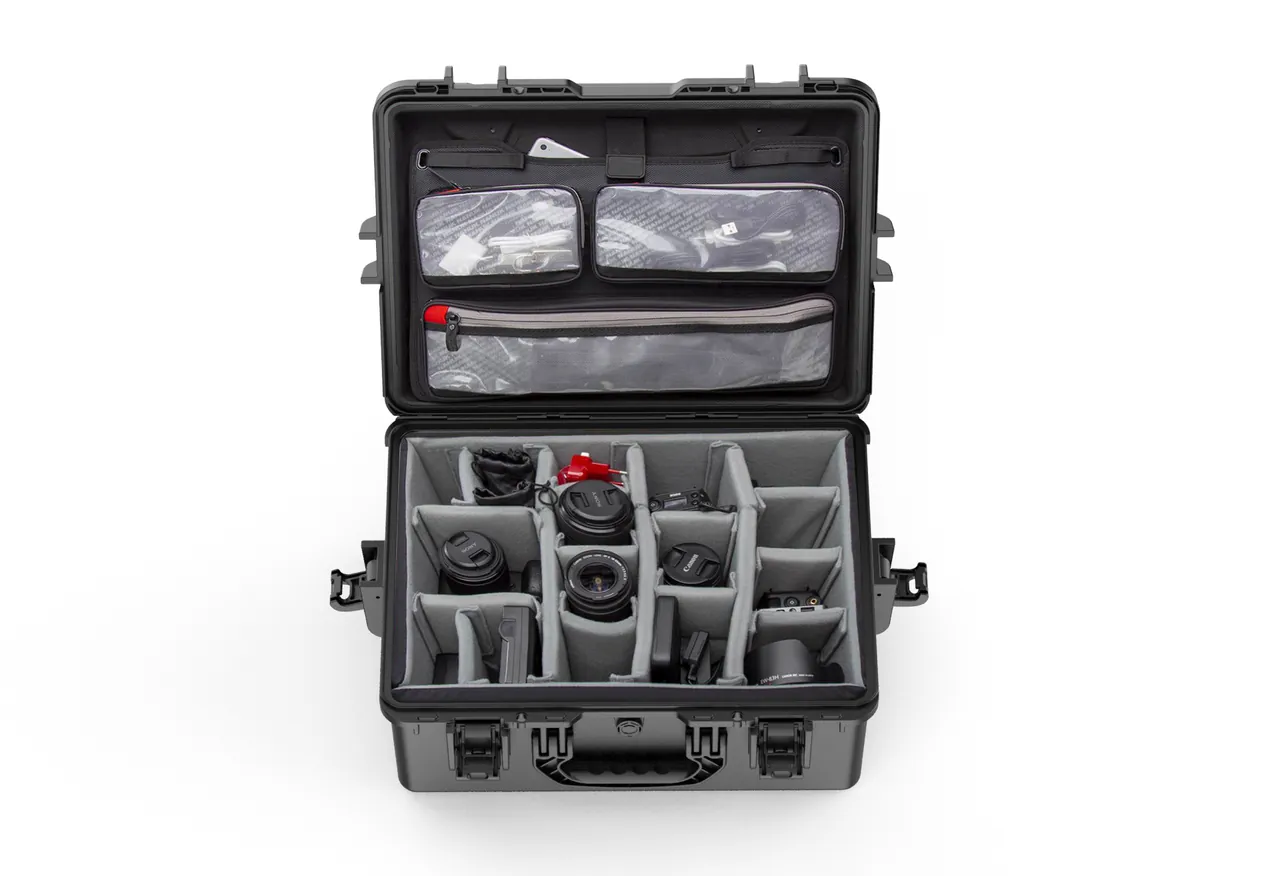
The OEM/ODM flow typically runs: requirement clarification (component list, food-contact status, cleanliness grade, electrical characteristics, dimensions and weights, transport mode and destination climate), grading and case-splitting plan, insert and clean-packing design, sample case trial fit with cleanliness confirmation, test verification, volume production, and delivery with identification. At sample stage, confirm three things in particular: whether forming and sealing surfaces stay clear of every contamination source throughout; whether single-item bags are easy to handle; and whether the moisture strategy can be verified on site. JUNZHJIA supports the sample stage with insert drawings, clean-packing work guidance and trial-fit feedback, supplies seals and hardware configured to each forming and wrapping component, and returns trial-fit records plus clean-packing documents with anti-static verification.
For cases intended for reuse across projects, use a standard shell plus changeable insert strategy: the shell and hardware are common while inserts are component-specific, which is especially economical for confectionery equipment makers with many models and scattered batch sizes. Where tooling is involved, evaluate mould amortisation first (see protective case mould cost analysis). When selecting a supplier, also look at insert material batch consistency and odour stability (see identifying genuine versus counterfeit protective cases). For the general evaluation method at early selection stage, see the instrument case selection guide.
FAQ
Q: Why is sugar dust more troublesome than ordinary dust, and how should packaging respond?
A: Because sugar dust combines three difficult properties. First, it is fine and easily airborne, so it reaches small clearances such as bearings, guideways, gear meshes and forming cavities. Second, it becomes sticky once it absorbs moisture, so once adhered it cannot be removed by blowing air and it cakes inside clearances. Third, once caked it acts as an abrasive paste that accelerates wear on moving interfaces. Packaging must respond on three fronts. The first is thorough removal before packing: strip loose sugar dust by dry means using clean compressed air or a soft brush, avoid starting with a water wash that turns dust into syrup and makes it harder to remove, then wash according to material and dry thoroughly. The second is dust exclusion by the case: the first digit, 6, meaning dust tight, matters more than the water rating. The third is user practice: close the case promptly after taking a part out so it does not sit open in plant air and re-ingest dust, and clean the gasket groove periodically, because caked sugar can glue the gasket in place and prevent proper closure next time, which then loses the dust protection altogether.
Q: What damages forming rollers most in transit, and how should the insert be designed?
A: Three things: cavities struck by hard objects, plated or polished surfaces scratched, and journals damaged by impact. A struck cavity directly causes product shape defects; a scratched surface causes poor release and product sticking; a damaged journal affects run-out after mounting and therefore forming consistency. The insert should follow a two-relieve, two-support rule. The two relieves are: fully relieve the cavity region so no hard object can touch a forming surface, and cover and relieve the journal regions, never allowing a journal to act as a support. The two supports are: support the roller at both ends on area-contact saddles rather than line contact, because line contact leaves indentations on the roller surface, with soft padding at the contact; and control displacement with hard stops, locating rather than clamping. Two further points deserve attention: cavities and roller surfaces must be thoroughly dried before packing, since residual liquid causes corrosion inside a sealed case; and for rollers with plated or polished finishes, the contact material should avoid sulphur-bearing, chlorine-bearing or plasticiser-bearing constituents that drive pitting and reduce coating adhesion.
Q: How should sealing jaw and blade edges be protected, and why is cleanliness so critical for them?
A: The core of edge protection is that a cutting or sealing edge must never be a load-bearing face. Practices include fitting removable protective plates or soft sleeves over the edge, storing one item per cavity and never stacking several together, because workers habitually lay blades flat and stack them so edges strike each other, and providing dedicated edge relief grooves in the insert with the blade orientation marked on the case so that nobody lifts it against the load direction. For edges that have been reground with a recorded grinding allowance, supply the grinding record with the case. The reason cleanliness is critical is the amplification of failure: a single hard particle or layer of dust trapped on a sealing face or blade edge produces continuous seal defects or burred cuts, and such defects are usually only found after start-up, requiring the machine to be stopped for cleaning, with a loss far greater than the value of the component. These parts must therefore be packed in a clean environment, inspected under raking white light for residue beforehand, placed in pre-cleaned cavities confirmed free of debris, and handled with oil-free lint-free gloves so that grease cannot reach film or sealing faces.
Q: Why should odour matter for food-contact parts such as forming and sealing surfaces?
A: Because confectionery, and chocolate and fat-containing sweets in particular, readily absorbs ambient odours. If the packaging material itself carries an odour, a spare stored in a sealed case for a long period takes on that odour and can then transfer it to the product on contact or in close proximity, affecting flavour. Common odour sources include certain recycled plastic materials, inserts made with solvent-based adhesives, untreated wood containing resin constituents, and strongly odorous gasket materials. Four countermeasures apply: choose low-odour, low-outgassing insert materials and require material documentation from the supplier; prohibit inserts with a noticeable odour or made with solvent-based adhesives; air a new case before first use until the odour has dissipated; and include a sensory odour check in both pre-packing inspection and arrival acceptance for chocolate-contact parts. Odour is subjective but reproducible, so agree no abnormal odour as an explicit acceptance clause in the technical agreement rather than assuming compliance.
Q: Why must wrapping components and food-contact parts be packed separately?
A: Because the two define cleanliness differently, and mixed packing damages both definitions. Food-contact precision parts such as formers and sealing jaws require verifiable cleanliness: no dust, no grease, no packaging debris. Precision moving interfaces such as film rolls, guide rollers and cams are usually protected with grease or rust-preventive oil and generate metal debris as they wear. Mixed packing harms both directions: grease and debris from the moving interface contaminate the food-contact surface, while cleaning residue from the food-contact surface adheres to the moving interface and attracts dust, which then cakes. Once separated, each side can be held to its own cleaning and protection standard. If the two genuinely must travel in one case, use solid dividers to form separate cavities rather than relying on foam alone, ensure the greased side is well sealed, and cover the clean side with barrier film. This arrangement is also much easier to explain in a confectionery plant supplier audit.
Q: What easily overlooked requirements apply to electrical items such as servo drives and photo-eyes?
A: Three are commonly missed. The first is static control: servo drives, encoders and some sensors are static-sensitive devices and must be sealed in anti-static shielding bags with anti-static flame-retardant inserts; ordinary foam can carry static and must not touch modules directly. The second is optical window protection: once a print-registration photo-eye window is scratched or contaminated, detection sensitivity falls, and in service the result is false triggering or missed marks, leading to misaligned cuts and out-of-register packs. Fit a removable transparent cap, keep the packing area clean, and remove the cap and inspect the window first at unpacking. The third is continuity of calibration and configuration: sensors and drives are usually calibrated or parameterised at the factory, and strong impact in transit can cause zero shift or lost parameters. Keep calibration labels under seal, supply a parameter list or backup with the case, and verify key parameters at unpacking. Note also that sensors are precision elastic elements and a drop causes permanent zero shift, so handling must avoid drops.
Q: How should IP65, IP66 and IP67 be chosen, and why does dust protection matter more than water protection?
A: Choose by actual exposure rather than defaulting to the highest rating. IP65 is dust tight and protected against water jets, suitable for in-plant movement, indoor storage and covered road transport. IP66 is dust tight and protected against powerful water jets, suitable near washdown stations or where heavy rainfall exposure occurs. IP67 is dust tight and protected against temporary immersion, typically 1 m for 30 minutes, suitable for ocean freight, open yards and rainy-season long haul. In the confectionery industry dust protection, the first digit 6, genuinely matters more than water protection, because the dominant ingress is sugar dust rather than water: dust is fine, airborne and reaches forming cavities and sealing faces where it causes scratches and trapped particles, and once moist it adheres in the gasket groove and degrades sealing. A higher water rating usually means a heavier seal structure and higher cost, so choosing IP67 without an immersion risk is not necessarily good value. Conversely, dust tightness is the first digit 6 in all three levels, so whichever level is chosen, ensure gasket compression is controlled in a sensible band, typically 20 to 30 percent, and inspected and replaced on a cycle. For multi-climate routes, also fit a pressure equalisation valve.
Q: Which transport tests should a confectionery machinery spares case undergo, and what must be checked afterwards?
A: Three families of reference are common: the GB/T 4857 series covering vibration, impact, stacking and drop methods, the foundation for transport packaging verification in China; the ISTA series organising test sequences around the distribution environment for export orders and intermodal routes; and ASTM D4169 using a distribution cycle plus assurance level approach for high-value cargo. Complete at least vibration, impact and stacking, and add temperature and humidity preconditioning for export projects. The post-test re-checks are the key supplement in this industry and should cover at least four items: a cleanliness re-check for newly generated debris in the cavities and for damage to single-item bags; a check that plugs and caps have not come loose; a functional re-check covering sensor calibration labels and appearance, optical window contamination and roller freedom of rotation; and a cavity-fit re-check to confirm the insert has not taken a permanent set and lost its locating ability. Where MIL-STD-810H is cited as an environmental test method reference, state that it is not a military certification and does not constitute product certification.
Q: What else should export projects consider for confectionery machinery packaging?
A: Three categories. The first is phytosanitary requirements for wood packaging: many countries require fumigation or heat treatment of solid wood packaging, and crates, timber pallets or timber support blocks add processing steps and waiting time, whereas a rigid plastic case with fumigation-free pallets simplifies the flow. Note also that timber brings debris, moisture absorption and odour, which is unsuitable for food-contact components in any case. The second is documentation and precise compliance wording: export projects usually need a packing list, component numbers and identification; where the line includes a steam-jacketed kettle, pressure piping or a boiler, the manufacturing and inspection documents for those parts should accompany the shipment. At the same time the documents should state accurately that the case is transport packaging, is not a food contact material, cannot substitute for the component's compliance evidence under standards such as the GB 4806 series, and cannot substitute for any equipment certification required where gas or explosion protection is involved. The third is climate adaptability: for ocean freight and humid destinations aim for IP67 with a pressure equalisation valve and sufficient desiccant, and consider the stability and odour behaviour of insert materials at high temperature and humidity, since a softened insert loses its locating function and heat can change odour. Write these requirements into the technical agreement item by item and complete sampling before dispatch.
Conclusion & Related Reading
The design logic of a confectionery machinery parts case can be summarised in four lines: remove sugar dust and syrup completely before packing rather than relying on the case to compensate; isolate contamination with single-item bags and contoured inserts rather than mixing to save effort; block moisture uptake with sealing plus desiccant rather than depending on the plant environment; and demonstrate cleanliness with traceable records rather than verbal assurance. Add static control, transport testing and unpacking verification, and both the arrival condition and the installation yield of confectionery machinery spares move from experience to records.
Three boundaries should be stated. First, the case is outer transport packaging and is not a food contact material; food contact materials and articles must be evidenced by the component manufacturer under standards such as the GB 4806 series. Second, the case is transport packaging and is not a pressure vessel or pressure part; where a line includes a steam-jacketed kettle, pressure piping or a boiler, those parts must follow applicable standards and regulations including GB/T 150, TSG 21 and GB/T 16507. Third, MIL-STD-810H serves only as an environmental test method reference and is not a military certification; where fire requirements or air freight apply, UL94 flame-retardant evidence can be required for the insert material.
JUNZHJIA (Kexin New Materials (Guangdong) Co., Ltd.) supplies forming and wrapping component cases to confectionery equipment manufacturers, food packaging machinery suppliers and export traders, with custom inserts, clean-packing concepts, anti-static inserts, OEM/ODM programmes and volume production, and can issue case-splitting plans, per-line packing specifications with insert-layout drawings, anti-static notes and clean-packing inspection records for forming and wrapping components.
Related Reading