

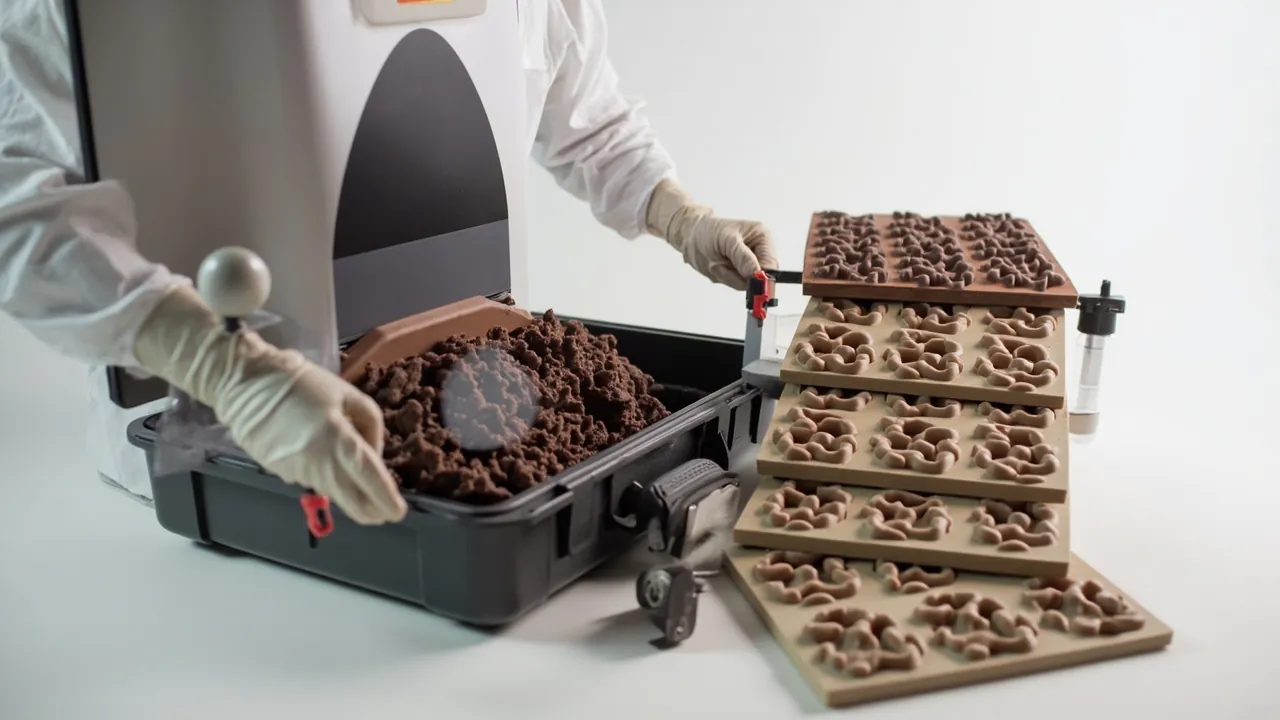
In chocolate production equipment spare-parts logistics, two apparently contradictory requirements must be met at the same time: molds and tempering components dislike temperature swings, while the forming surfaces of molds and the precision mating faces of tempering components dislike any impact at all. Cocoa butter residue is extremely temperature sensitive. Warm conditions soften it so that it penetrates packaging material; cold conditions harden it so that it cracks or flakes surfaces on demolding. And once the forming surface of a polycarbonate mold, a silicone mold or a metal mold is scratched or dented, the product appearance defect appears immediately and cannot be repaired. The design direction for a chocolate mold case should therefore be temperature-capable materials, form-relieved cavities, clean packaging and condensation control. The conclusion: depositing molds and tempering components should be split across four families - mold face, precision moving interface, electrical temperature control and structural - using temperature-capable closed-cell inserts, one relieved cavity per item, sealing plus desiccant, and verification against the GB/T 4857 and ISTA test series. JUNZHJIA supplies this class of case with custom inserts, OEM/ODM programmes and volume production to chocolate equipment manufacturers, confectionery and bakery machinery suppliers and export traders.
A second characteristic of chocolate industry spares is easily overlooked: odour sensitivity is exceptionally high. Cocoa butter and chocolate products absorb ambient odours readily, and molds and depositing components are the parts that touch the product surface directly, so the odour and outgassing behaviour of packaging material shows up directly in product flavour. This differs from general food machinery, which focuses mainly on cleanliness; chocolate equipment requires cleanliness plus odour neutrality plus temperature capability at the same time. Add to that the sheer number and variety of molds - a book mold may be only 300 mm square, yet one depositing line can carry hundreds of molds - and identifiability and reusability of packaging become significant considerations too. This article gives protection grades, insert materials, temperature boundaries, sealing levels and test references by component category, with comparison tables, an acceptance method and a FAQ section for equipment engineers, quality staff and procurement.
Table of Contents
- 1. Chocolate Molds and Tempering Components: Why Temperature and Impact Matter Equally
- 2. Mold and Tempering Component Families and Protection Grades
- 3. Depositing Molds: Polycarbonate, Silicone and Metal
- 4. Mold Surface Quality and Release Performance
- 5. Tempering Unit Components: Screw Pumps, Scrapers and Temperature Circuits
- 6. Depositing Heads and Nozzle Sets
- 7. Cooling Tunnels and Vibration Components
- 8. Temperature Control: Boundaries in Transit
- 9. Food-Contact and Odour Control for Chocolate Molds
- 10. Insert Materials and Temperature-Aware Packaging Compared
- 11. Sealing, IP Ratings and Condensation Control
- 12. Mold Case Test References and Regulatory Awareness
- 13. Mold Case Acceptance, Sampling and Customisation
1. Chocolate Molds and Tempering Components: Why Temperature and Impact Matter Equally
One premise must be stated first: a packaging case is not a temperature-control device. Insulated cases, cold chain containers and phase-change cooling can slow temperature change, but they cannot actively cool or heat. The "temperature-aware protection" discussed here therefore means slowing temperature fluctuation, avoiding extremes, and preventing secondary damage caused by temperature change, principally condensation, softening and embrittlement. Responsibility for actual temperature control lies with the temperature-controlled vehicles, cold stores and process management in the transport and storage chain.
With that premise established, chocolate equipment spares have two sensitive requirement groups at the same time.
The first is the geometric accuracy and surface quality of molds. The forming surface of a polycarbonate depositing mold is usually a gloss or matte finished surface, and any scratch, indentation or polishing damage is reproduced directly on the product. Chocolate appearance requirements are very high, particularly for tablet, praline and moulded products, so a mold with a damaged forming surface can often only be scrapped or reworked. Metal molds, for example stainless or aluminium, are harder but still vulnerable to impact, while silicone molds fear tearing and permanent deformation.
The second is the temperature and fit precision of tempering and depositing components. The screw pump, scrapers, temperature circuit and jacketed piping of a tempering unit all depend on a stable temperature field and accurate clearances. Large temperature swings have two consequences: residual cocoa butter hardens at low temperature and can jam the screw or scrapers, and repeated thermal expansion and contraction affects clearances and seal performance. Temperature-control elements such as sensors and control modules also fear moisture and impact.
The third is how residue behaves as temperature changes. Cocoa butter begins to soften at around 30 C and penetrates insert material at higher temperatures; at low temperatures it hardens and becomes brittle, so transport vibration can cause it to flake off and carry fine particles away from the mold surface. For parts that have contacted product, thorough drying after cleaning and control of the temperature range must therefore be satisfied together.
2. Mold and Tempering Component Families and Protection Grades
Grade by food-contact status, temperature sensitivity, precision of the moving interface and stiffness.
| Protection grade | Typical components | Dominant failure mode | Temperature and cleanliness requirement | Insert and packaging strategy |
|---|---|---|---|---|
| --- | --- | --- | --- | --- |
| D1 Mold face | Polycarbonate depositing molds, silicone molds, moulded-shape molds, demolding plates | Scratching, indentation, deformation, tearing | Avoid high temperature and sharp change; no debris, no silicone | One relieved cavity per item plus silicone-free bag plus oriented flat or vertical restraint |
| D2 Precision moving interface | Screw pumps, scrapers, metering rollers, gear pumps, valve spools | Impact, jamming from cold-hardened residue, corrosion | Avoid low temperature and sharp change; no dust | One cavity per item plus soft location plus face caps |
| D3 Electrical temperature control | Control modules, temperature sensors, servo drives, level sensors | Moisture, ESD damage, calibration drift | Moisture and static control | Anti-static bag plus isolated cavity plus desiccant |
| D4 Structural | Cooling tunnel frames, guards, piping, hoppers, brackets | Distortion, coating damage | Moderate | Hard stops plus elastic support plus half-round cradles |
Three operating principles follow.
Principle one: keep D1 and D2 apart. Mold faces carry the highest cleanliness and surface requirements, while screw pumps and scrapers carry grease or product residue and generate metal debris. Mixed packing harms both ways: grease and debris contaminate the forming surface, while cleaning residue from the mold adheres to the moving interface and attracts dust.
Principle two: give D3 its own cavities with static control. Control modules and sensors are static-sensitive and moisture-fearing, and they also have temperature limits, since prolonged heat shortens electronic life. Use isolated cavities and anti-static packaging (see anti-static and flame-retardant insert solution).
Principle three: solve D4 with stiffness. The requirement for tunnel frames and guards is that they must not distort, and the answer is location and support, not thicker cushioning.
For D1 molds, form-relieved inserts are the core measure: the cavity is left completely open in the forming-surface region, and the mold is carried on its edges, its back face or dedicated support points. This follows the same logic as precision part packaging, but the relief requirement is stricter; see the custom foam insert guide and custom EVA foam insert process.
3. Depositing Molds: Polycarbonate, Silicone and Metal
Depositing molds are the most numerous and most frequently changed spares in chocolate equipment, and their packaging must balance protection with handling efficiency.
Polycarbonate depositing molds are the most common type, combining good rigidity with high surface quality. Their failure modes include scratched forming surfaces, which produce product surface defects; overall bowing, which produces uneven deposit thickness; and damaged corners. Fully relieve the forming surface so no hard object can touch it; separate molds with silicone-free interleaving paper or clean separators and never stack them in direct contact; for large molds such as book molds above 275 by 175 mm, lay them flat and control displacement with hard stops rather than standing them on edge where self-weight can bow them; and fit soft corner protectors.
Silicone molds are flexible and release easily but fear tearing and permanent deformation. Never fold or heavily compress them; lay each one flat in a shallow cavity matched to its outline to limit movement; keep them away from sharp-edged components in the same case; and for molds that have been used and washed, confirm they are fully dry before packing, because the microporous surface holds moisture.
Metal molds, stainless or aluminium, are rigid but conduct heat quickly, so their surfaces condense readily during temperature change. Relieve the forming surface; dry the mold and apply short-term rust protection before packing; and avoid direct contact with carbon steel to prevent galvanic corrosion of plating or coating. For aluminium molds, also avoid direct contact with stainless parts.
Mold count management is a practical pain point in chocolate plants: one depositing line may carry hundreds of molds with different patterns and sizes. Compartmentalise by pattern number and specification, and label both the compartment and the case exterior. For frequently used molds, a tote case with changeable inserts lets one case accommodate different mold patterns. Where a load must be shipped as one case and picked compartment by compartment, use a removable divider system (see removable divider system design).
Mold orientation also matters. For book and praline molds, laying flat, with the forming surface up or down over a separator, is usually better than standing on edge, because self-weight causes slight bowing that can become permanent in long storage. If vertical storage is necessary to save space, add sufficiently stiff separators between molds and place the support points at the stiffer edges.
4. Mold Surface Quality and Release Performance
Release performance depends on the roughness and surface energy state of the forming surface. Surface protection therefore goes beyond scratch prevention to preventing any change in surface state.
First, avoid physical damage. Scratches and indentations are the most direct damage. Fully relieve the forming surface; keep molds out of direct contact with each other; and use lint-free, oil-free gloves during handling, never bare hands, because perspiration and skin oil change the surface state and leave fingerprints that become local sticking points on demolding.
Second, avoid chemical contamination. Silicone-bearing materials leave silicone residue on the forming surface, changing surface energy and causing poor release or a hazy mark on the product. Packaging material must therefore be silicone-free or low-outgassing, and no silicone-bearing release agent should touch the forming surface. Soft PVC material with plasticiser should also be avoided, since the plasticiser migrates onto the mold surface.
Third, avoid surface change caused by temperature. High temperature slightly softens a polycarbonate mold surface, and if packaging material is in contact at that moment it can leave a print mark; low temperature makes the material brittle and reduces impact resistance. Insert material therefore needs a sufficient temperature range and must not soften and conform to the mold surface when warm.
Fourth, avoid cured residue. If a thin film of cocoa butter remains on the surface it hardens into a film at low temperature, and transport vibration can make it flake off in a brittle manner, carrying fine particles with it and leaving micro-roughness behind. Cleaning and thorough drying before packing are essential.
Fifth, control humidity against condensation. When a mold moves from a cold environment into warm humid air, its surface condenses. The water film causes corrosion on metal molds, contaminates surfaces, and adversely affects release in subsequent use. The case should therefore be sealed with desiccant, and unpacking should not be followed by immediate exposure.
Mold traceability should not be overlooked either. Mark molds that have been reground or refurbished with the grinding record and service status, and supply a list with the case. A mold already classified as for internal or downgraded use should be marked on the case exterior to prevent misuse. For molds held in long-term storage, use sealing plus desiccant plus periodic indicator-card checks, and re-verify surface condition before each return to service.
5. Tempering Unit Components: Screw Pumps, Scrapers and Temperature Circuits
Tempering is the most critical process step in chocolate production, and the condition of tempering components directly determines gloss, snap and contraction of the product.
Screw pumps and gear pumps fail in several ways: damaged screw or gear mating faces, which cause delivery pulsation and metering error; jamming from residue hardened at low temperature; and seal damage causing leakage. Give each pump its own cavity with face caps fitted so that no mating face is exposed; never use the pump body as a support point; restrain assembled pump sets as a unit and keep the assembly markings; and remove all product residue before packing, because cocoa butter hardens at low temperature and jams the rotor.
Scrapers and metering rollers are surface-precision parts and, like mold faces, fear scratching. Relieve the working surface and carry the part on its edges or journals; fit protective sleeves to shaft ends; and for scrapers with a coating or plating, avoid contact materials containing sulphur or chlorine.
Temperature circuits and jacketed piping, including hoses, quick couplings and control valves, fail by damaged connections and contaminated bores. Cap the connections, support pipe runs at multiple cradles, and for assemblies that have passed hydrostatic or leak tests, keep the test label and protect the connections.
Seals such as O-rings and lip seals are wear parts that fear compression, folding and moisture. Bag each one individually, lay flat in a shallow cavity, never fold or compress heavily, keep rubber parts away from oil-bearing or plasticiser-bearing materials, and observe storage temperature, since heat accelerates rubber ageing.
Temperature-control elements such as sensors, control modules and heater tubes should be handled as D3: anti-static bag, isolated cavity, desiccant, and calibration labels kept under seal. Sensors are precision elastic or slender parts, and a drop causes permanent zero shift, so handling must avoid drops.
One point tied directly to the tempering process: if residue remains on tempering components, a cold environment hardens it. If the machine is started immediately on arrival, hardened residue can damage the screw or scrapers. Warm and clean to procedure after unpacking rather than starting straight away.
6. Depositing Heads and Nozzle Sets
The depositing head determines deposit quality and comprises nozzle sets, valve trains, distribution plates and heating jackets.
Depositing nozzles commonly have bores in the 0.8 to 4 mm range, and the bore and internal passage determine deposit weight uniformity. Failure modes are damaged bore edges, contaminated passages and damp heaters. Bag each nozzle individually and plug the bore with silicone-free or low-outgassing material; leave a void in the cavity at the bore end; never wrap the nozzle in open-cell foam; and for nozzles with heaters, treat the electrical part as D3.
Valve trains, including needle and piston valves, are D2 precision moving interfaces. They fail by damaged spool and seat mating faces, spring deformation and sticking. Give each valve its own cavity with no rigid clamping, cap the ports, and for valves whose stroke has been set, apply a lead seal or mark and note it on the case exterior.
Distribution and runner plates are plates with precision internal passages that are hard to clean. Cap the passage ports, relieve the plate faces, complete cleaning and drying before packing because residue hardened at low temperature blocks passages, and for plates that have passed flow testing, keep the test label.
Heating jackets and insulation elements fail by jacket distortion and damaged insulation. Support jackets on annular saddles, avoid local compression, and for heated elements with wiring, fit insulating sleeves and moisture caps to the terminals.
For complete depositing head assemblies, meaning nozzle, valve train and distribution plate together, use restrained as a unit, separable by component: the assembly is fixed as a whole to preserve relative position, while each sub-component has its own cavity so it can be replaced individually on site. This prevents the assembly from coming apart in transit and avoids the need to empty the whole case on site.
7. Cooling Tunnels and Vibration Components
The cooling tunnel sets the product, and its spares are mostly long parts and structural components.
Tunnel frames and guards are D4 structural grade and fail by warping and coating damage. Control displacement with hard stops and use full-face elastic support on the base; for insulated panels the contact face must use soft padding rather than a hard block pressed against a visible surface; and fully relieve any viewing window region.
Conveyor mesh belts and chains are common replacement items. Wind them onto a core of adequate diameter, fit soft sleeves at the ends, never fold or heavily compress them, and give lubricated chains their own cavity so grease cannot contaminate other components. Belt surface condition affects the underside appearance of the product, so acceptance should treat no new surface scratches and no new flattened points as separate check items.
Vibration components, including vibrators, vibrating frames and elastic mounts, fail by accelerated ageing of elastic elements and fatigue of structural parts. Avoid long-term compression, which permanently deforms rubber mounts, and avoid contact with oils, which swell some rubbers. For vibration assemblies that have been balanced or carry adjustment markings, keep the markings and restrain them as a unit.
Fans and duct components used for air circulation in the tunnel fail by scroll distortion and loss of impeller balance. Restrain impellers separately, control scroll displacement with hard stops, purge duct interiors and mark them as requiring a second purge before installation.
For tunnel parts longer than 2 m, such as guideways, ducts and belt frames, use a frame-type long case in which the inner frame carries the load and the shell provides shielding and sealing. This separation of load bearing from weather protection is especially effective for long thin-walled parts; see cushion liner case structural solutions.
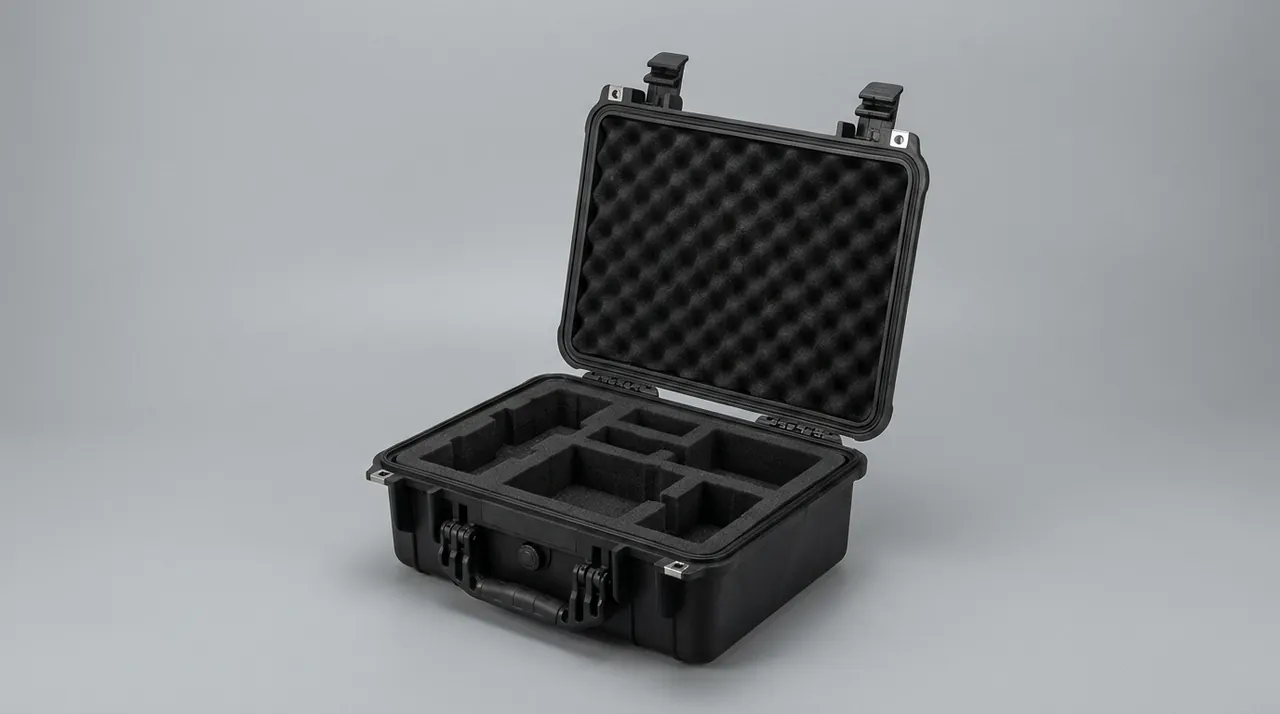
8. Temperature Control: Boundaries in Transit
This section must begin with the boundary: a packaging case is not a temperature-control device. What it can do is slow temperature change, avoid extremes, and prevent the secondary damage that temperature change causes. Responsibility for actual temperature control lies with the transport and storage chain.
Chocolate equipment spares have three temperature-sensitive points.
The first is phase change of residual product. Cocoa butter begins to soften around 30 C. If the temperature inside the case exceeds that, residual cocoa butter softens and penetrates the insert material, causing contamination that is hard to remove; if the temperature then falls, the absorbed fat hardens and can glue the component into its cavity, making removal difficult or damaging. Insert material should therefore have a stated temperature range, with common closed-cell EVA and PE rated around -20 to 60 C long term, subject to the material datasheet, and prolonged high-temperature exposure should be avoided.
The second is condensation from sharp temperature change. When a case moves from a cold environment into warm humid air, or when the internal temperature falls below the dew point, vapour condenses on metal and mold surfaces. Condensation causes corrosion, surface contamination and reduced insulation on electrical parts. The answer is sealing plus desiccant plus a humidity indicator card, and avoiding immediate exposure to humid air after opening.
The third is the effect of extremes on material properties. High temperature slightly softens a polycarbonate mold surface so that contact with packaging material can leave a print mark; low temperature embrittles some plastics and reduces impact resistance. On multi-climate routes, avoid prolonged stacking in direct sun, since container interior temperatures can be significantly above ambient, and mark temperature cautions on the case. Where a project has a defined temperature requirement, achieve it through the transport mode, such as temperature-controlled vehicles and cold storage, and through process management, not by relying on the case.
On the cooling option: for projects that genuinely need to slow temperature rise, an insulated liner or phase-change cooling pack can provide short-term holding capability. Three cautions apply: cooling introduces condensation risk and needs moisture isolation; the capability is limited and does not replace temperature-controlled transport; and the compliance and isolation of the cooling material, particularly relative to food-contact parts, must be defined in the technical agreement. For related food distribution practice see cold chain and food distribution protection, where the logic of blocking deterioration conditions by sealing and humidity control applies equally to chocolate equipment spares.
For how materials behave across a wide temperature range, see wide-temperature-range case solutions.
9. Food-Contact and Odour Control for Chocolate Molds
Chocolate is eaten directly and absorbs odour very readily, so compliance and odour requirements for contact parts are the strictest in this industry.
First, the boundary must be clear. Food contact materials and articles must meet the applicable national standards, for example the GB 4806 series on food contact materials and articles. Those requirements target the food-contact components of the equipment itself, such as the migration behaviour of polycarbonate molds, stainless steel and silicone parts. The case and insert are transport packaging; they are not food contact materials and cannot substitute for the component's own compliance evidence. Write this into the technical agreement.
Second is odour control, the most sensitive item in the chocolate industry. Cocoa butter absorbs ambient odours strongly, and molds and depositing components touch the product surface directly, so packaging odour migrates along the path of packaging, then component, then product. Countermeasures:
- choose low-odour, low-outgassing, temperature-capable insert materials and require material documentation from the supplier;
- prohibit odorous inserts and solvent-based adhesives, and avoid untreated wood with resin odour;
- air a new case before first use, until the odour has dissipated, before it carries molds;
- perform a sensory odour check before packing and make no abnormal odour an acceptance clause;
- for molds in long-term storage, open and smell as well as inspect surface condition periodically, rather than assuming fitness.
Third is traceability of cleanliness. Supply a cleaning record with the case covering washing method, detergent, drying method and duration, inspection result, operator and date, and mark the clean state on the case exterior. This is normally seen as a positive in chocolate plant supplier audits.
Fourth is prevention of cross contamination. Pack food-contact and non-food-contact items separately; separate stainless from carbon steel and galvanised parts to avoid iron contamination and galvanic corrosion; separate lubricated moving interfaces from molds to prevent grease migration; and never let silicone-bearing materials such as certain silicone pads and release agents touch a mold forming surface.
For cleaning and residue management, see the approach in how to clean and maintain a protective case, combined with cleaning and drying methods suited to the mold material and residue type.
10. Insert Materials and Temperature-Aware Packaging Compared
The table below gives insert and packaging material guidance for chocolate equipment spares, focused on temperature capability, odour neutrality, silicone freedom and no debris.
| Material or form | Temperature capability | Cleanliness and odour | Cushioning and support | Suitable components | Cautions |
|---|---|---|---|---|---|
| --- | --- | --- | --- | --- | --- |
| Closed-cell precision-milled EVA | About -20 to 60 C, per datasheet | High; low-odour grades available | Good support, moderate cushioning | D1 molds, D2 pump bodies | Confirm silicone-free and odour-free; avoid prolonged heat |
| High-density closed-cell PE blocks | Higher | Medium to high, low odour | Strong support | D4 frame pads, relief cavity bases | Must not touch mold forming surfaces |
| Food-grade silicone pad | Wide | High, confirm | Good cushioning | General isolation only | Contains silicone; keep away from mold forming surfaces |
| Nitrile or CR foam | Moderate | Moderate | Excellent cushioning | Oily parts, drive components | Must be isolated from mold-contact parts |
| Self-skinning PU foam | Moderate | Moderate, confirm odour | Excellent conformity | Irregular parts, saddles | Control density and odour |
| Insulating or thermal liner | Material dependent | Moderate | Fair support | Projects needing slower temperature rise | Needs condensation protection; not a substitute for temperature-controlled transport |
| Low-density PE pearl foam | Moderate | Low, sheds debris | Fair cushioning | D4 void fill and gap packing | Keep away from molds and depositing parts |
| Felt or non-woven | Moderate | Low; sheds fibres, absorbs odour | Weak support | Not recommended for this family | High risk of fibres and odour absorption |
| Timber support blocks | Moderate | Low; resin odour | Strong support | Internal support in frame cases | Never touch food-contact parts |
The selection principle can be summarised as choose material by temperature and odour, and create relief according to mold-face requirements. For D1 molds: the insert material must be temperature capable, odour neutral, silicone free and non-shedding, the forming surface region must be fully relieved, and contact points must be at the edges or the back face. For D2 and D3 components: follow precision-part and electrical-part requirements, including static and moisture control, and keep lubricating grease away from molds.
The key difference from a general equipment case is that a general case can treat thicker cushioning as the main measure, whereas a chocolate mold case must put relief, surface integrity and odour neutrality first. No amount of cushioning helps if a hard object touches the forming surface; the surface defect is unrecoverable. For detailed comparisons of materials and structures see case foam material comparison.
11. Sealing, IP Ratings and Condensation Control
Case protection levels are defined by IEC 60529, and the identical Chinese standard is GB/T 4208. Chocolate equipment spares cases typically involve three levels.
| Rating | Meaning | Typical scenario | Configuration |
|---|---|---|---|
| --- | --- | --- | --- |
| IP65 | Dust tight, protected against water jets | In-plant movement, indoor storage, covered road transport | Silicone gasket plus desiccant plus humidity indicator card |
| IP66 | Dust tight, protected against powerful water jets | Near washing stations, heavy rainfall exposure | Reinforced seal plus tightened latch layout |
| IP67 | Dust tight, protected against temporary immersion | Ocean freight, open yards, rainy-season long haul, intermodal | Reinforced seal plus pressure equalisation valve plus desiccant |
Dust exclusion, the first digit of the rating, is equally critical for chocolate equipment spares: sugar dust, cocoa powder and general dust that reaches a mold forming surface creates scratches under transport vibration. Whichever water rating is chosen, the dust capability should be 6.
Condensation control is the industry-specific priority. Four measures are recommended. First, sealing plus adequate desiccant plus a humidity indicator card: sealing blocks external moisture exchange, desiccant lowers internal humidity, and the card provides a visible criterion. Second, avoid the sequence of packing cold and opening warm: when a case moves from a cold environment into warm humid air it should stand until close to room temperature before opening. Third, prefer closed-cell insert materials, because open-cell foam and felt absorb moisture and release it when the temperature falls, becoming an internal water source. Fourth, fit a pressure equalisation valve: on multi-climate routes, sharp temperature change creates a differential that can force the gasket into the case or bulge the shell, and the valve allows gas to exchange slowly and equalise the differential while blocking liquid water and dust. For principles and selection see pressure equalisation valve configuration. It is essential for air freight and high-altitude transfer.
Latches and hinges are the critical interfaces for maintaining a seal. For cases opened frequently, choose a design with replaceable gaskets so an aged gasket does not scrap the whole case; see toolbox hinge and latch sealing structure. For the differences between water protection levels see waterproof cases and IP ratings.
Because molds are numerous and cases are opened often, provide a quickly replaceable desiccant compartment and mark the case as requiring the humidity indicator card to be checked after every opening.
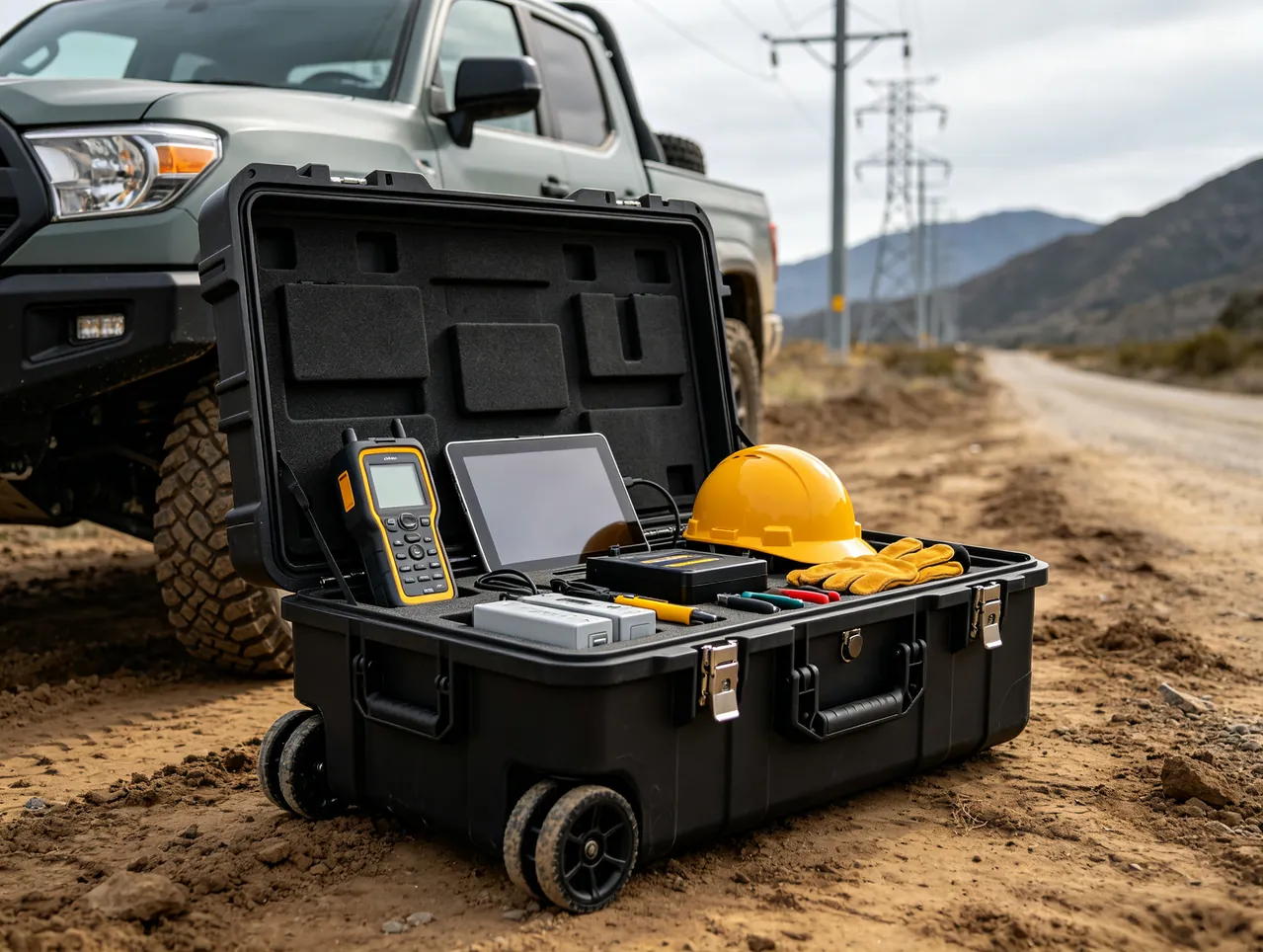
12. Mold Case Test References and Regulatory Awareness
Whether a case is strong enough and sufficiently dust and moisture tight should rest on test evidence.
For transport testing, three families are common: the GB/T 4857 series covering vibration, impact, stacking and drop methods, the foundation for transport packaging verification in China; the ISTA series, organising test sequences around the distribution environment for export orders and intermodal routes; and ASTM D4169, using a distribution cycle plus assurance level approach for high-value cargo. For chocolate equipment spares, complete at least vibration, impact and stacking, and add three industry-specific re-checks: a post-test mold-surface re-check, inspecting forming surfaces under raking light or magnification for new scratches and indentations; a post-test cleanliness and odour re-check, looking for debris in the cavities and smelling on opening to confirm no abnormal odour; and a post-test electrical re-check, verifying sensor calibration labels and inspecting optical and terminal condition. For methods see GB/T 4857 transport packaging testing and ISTA transport testing procedures.
Where a project needs temperature-related verification, the usual practice is a combination of temperature and humidity preconditioning with transport testing: precondition to the target climate, then run vibration, impact and stacking, to observe the combined effect of temperature and mechanical stress. Note that MIL-STD-810H may be used as a reference for environmental test methods such as temperature and humidity, vibration, shock and salt fog. It is not itself a military certification and does not constitute product certification, and external documents must say so precisely.
Regulatory and standards awareness requires three clear boundaries.
First, the case is transport packaging, not a food contact material and not a temperature-control device. Food contact materials and articles must be evidenced by the component manufacturer under standards such as the GB 4806 series, and temperature control must be delivered by the temperature-controlled facilities and process management of the transport and storage chain.
Second, the case is transport packaging and is not a pressure vessel or pressure part. Where a chocolate line includes a steam-jacketed vessel, pressure piping or a boiler, the design, manufacture and inspection of those parts must follow the applicable regulations and standards, including GB/T 150 for pressure vessel design, TSG 21 for fixed pressure vessels, and awareness of GB/T 16507 for boilers. The case takes no part in that.
Third, food safety management system requirements address equipment and processes. HACCP and similar systems deal with hazard analysis and critical control points; the role of a case is to maintain equipment components in a clean, odour-neutral, undamaged condition and thereby support the controls the plant has established. Define the hygiene requirements, odour requirements and acceptance method for packaging in the technical agreement.
Flame retardancy and material compliance: where a case is used in a location with fire requirements or the shipment involves air freight, the insert material can be required to provide UL94 flame-retardant evidence such as UL94 V-0, agreed in the technical agreement in advance. Export projects should also note phytosanitary requirements for wood packaging: a rigid case removes the fumigation step and its waiting time, and avoids the debris, moisture and odour problems that timber brings.
13. Mold Case Acceptance, Sampling and Customisation
Acceptance should follow a five-check, one-measure flow, in which the odour check, surface check and condensation check are specific to this industry.
Check the packaging for tempering condensate and mold water staining: rupture, distortion or water staining, and especially condensate marks from the tempering machine and water stains on mold surfaces; confirm seal integrity and that no condensate has reached the cavity floors.
Check humidity and condensation: whether the humidity indicator card has changed colour; whether mold and metal surfaces show water marks or a hazy film; if condensation is found, isolate and assess by material, checking metal parts for corrosion, polycarbonate molds for surface print marks and electrical parts for insulation.
Check odour: perform a sensory odour check on opening and confirm no abnormal odour, especially for molds and depositing components.
Check surfaces: inspect mold forming surfaces under raking light or magnification for new scratches and indentations; check demolding surfaces for print marks; check silicone molds for tearing.
Check the state: verify mold pattern numbers and specification quantities; verify labels and seals on tested or calibrated components; verify assembly markings and lead seals on pump sets and valve trains.
Measure the critical items: sample flatness and key dimensions on molds where the project requires it, check rollers and bearings for freedom of rotation, and verify sensor zero readings where conditions allow.
For volume orders, incoming inspection of cases and inserts can follow an AQL sampling plan (see custom case acceptance and AQL sampling): appearance defects at general inspection level II with AQL 2.5, and defects affecting protective performance such as missing gasket, misaligned cavity, insufficient relief at a forming surface, non-conforming anti-static performance or failed latch at AQL 0.65 or under tightened inspection. For mold projects, add a dedicated forming-surface relief check: use a feeler gauge or visual inspection to confirm the cavity genuinely leaves clearance in the forming-surface region rather than nominally relieving while touching in practice. Also add a material odour and compliance document check.
The OEM/ODM flow typically runs: requirement clarification (component list, materials, forming-surface dimensions and orientation, weights, food-contact status, temperature requirements, transport mode and destination climate), grading and case-splitting plan, insert and relief cavity design, sample case trial fit with surface confirmation, test verification, volume production, and delivery with identification. At sample stage, confirm three things in particular: whether the forming surface stays clear of contact throughout; whether molds can be handled smoothly without scraping; and whether the moisture and odour strategy can be verified on site.
JUNZHJIA supports the sample stage with insert drawings, relief cavity design recommendations and trial-fit feedback, supplies seals and hardware configured to each depositing and tempering component, and returns trial-fit records plus clean-packing documents with relief-cavity checks.
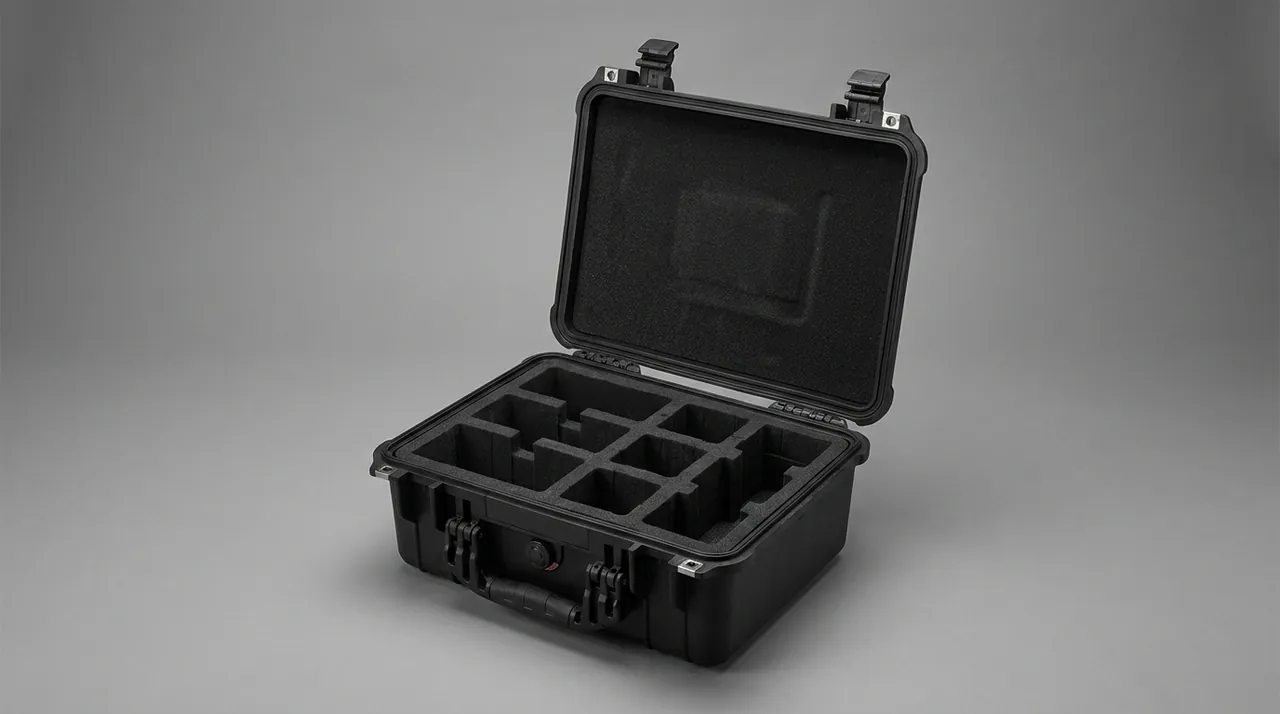
For cases intended for reuse across projects, use a standard shell plus changeable insert strategy: the shell and hardware are common while inserts are customised to mold size and pattern. For chocolate plants with many molds and frequent changes, a tote case with modular inserts can take this further, letting one case accommodate different mold sets. Where tooling is involved, evaluate mould amortisation first (see protective case mould cost analysis). When selecting a supplier, also look at insert material batch consistency and odour stability (see identifying genuine versus counterfeit protective cases). For the general evaluation method at early selection stage, see the instrument case selection guide.
FAQ
Q: Why are the packaging requirements for chocolate molds stricter than for general food machinery molds?
A: Because chocolate sets the highest bar in the food industry for both appearance and flavour, and a mold determines both. On appearance, the forming surface of a polycarbonate or metal mold is a gloss or matte finished surface, and any scratch, indentation or polishing damage is reproduced one to one on the product. Gloss, edge definition and pattern clarity are quality indicators the consumer judges directly, so a mold with a damaged forming surface can often only be scrapped or reworked, not compensated for by adjusting the process. On flavour, cocoa butter absorbs ambient odours strongly and molds are the parts that touch the product surface, so packaging odour migrates along the path of packaging, then mold, then product, causing flavour contamination. Add the sheer number of molds, since one line may carry hundreds, and frequent changes, and the packaging also needs identifiability and reusability. The requirements for a chocolate mold case therefore reduce to four: fully relieve the forming surface, use silicone-free and odour-neutral materials, be temperature capable and condensation resistant, and compartmentalise by pattern number with traceability.
Q: What damage do polycarbonate depositing molds most commonly suffer in transit, and how can it be avoided?
A: Most commonly, scratches and indentations on the forming surface; then overall bowing and damaged corners. Forming-surface scratches come mainly from three situations: molds stacked directly in contact and rubbing, packaging debris acting as an abrasive under vibration, and fingers or tools touching the forming surface during handling. Indentations come mainly from local compression, for example treating the mold as a load path, placing other components on top of a mold, or a cavity too shallow so the lid presses on the mold. Four practices avoid this. First, fully relieve the forming-surface region so the mold is carried on its edges, its back face or dedicated support points. Second, separate molds with silicone-free interleaving paper or clean separators and never stack them in direct contact. Third, for large molds lay them flat and control displacement with hard stops rather than standing them on edge where self-weight bows them; if vertical storage is necessary, add sufficiently stiff separators and place support points at the stiffer edges. Fourth, use lint-free oil-free gloves and never touch the forming surface with bare hands, because perspiration and skin oil change the surface state and leave fingerprints.
Q: How do the protection priorities differ between silicone molds and metal molds?
A: Silicone molds prioritise tear prevention, deformation prevention and moisture control. Silicone is flexible but limited in strength, so folding and heavy compression cause tearing or permanent deformation, which means never fold, never compress heavily, and lay each mold flat in a shallow cavity matched to its outline to limit movement. Silicone also has a microporous surface that holds moisture and dries slowly, so cleaning must be followed by thorough drying, and long-term storage needs desiccant and periodic checks. Metal molds, stainless or aluminium, prioritise impact prevention, galvanic corrosion prevention and condensation control. Metal is rigid but can still be dented or burred by impact, and a burr scratches the product directly. Aluminium must not touch stainless steel directly, to avoid galvanic corrosion. Metal conducts heat quickly, so its surface condenses easily when moving from a cold environment into warm humid air; the case must therefore be sealed with desiccant and unpacking must not be followed by immediate exposure. Both types share the same baseline: fully relieve the forming surface, use silicone-free and odour-neutral material, and store by pattern number with identification.
Q: Why must packaging material be silicone free, and what happens if it is not?
A: Because silicone, meaning siloxane-type substances, changes the surface energy of a mold forming surface and thereby destroys release performance. Chocolate release depends on the cleanliness and surface energy state of the mold; once siloxane residue is present, the distribution of adhesion between chocolate and mold becomes uneven, which shows up as local sticking, a hazy mark on the product surface, or inconsistent gloss, and in severe cases requires the line to stop for mold cleaning. Silicone contamination is also migratory: it transfers to other surfaces on contact and can recur in later production, so the cost of remediation is high. The main sources are three: silicone-bearing release agents, silicone-bearing packaging materials such as certain silicone pads and silicone-coated papers, and silicone-bearing detergents or gloves. Recommendations: require insert materials to be silicone-free or low-outgassing and to come with material documentation; prohibit silicone-bearing materials from touching forming surfaces; establish a no-silicone work instruction covering tools, gloves and detergents; and make silicone-free status an explicit clause in the technical agreement, confirmed by incoming inspection.
Q: Why do tempering components dislike low temperature, and how should transport respond?
A: Because a tempering unit always retains some product when stopped, and cocoa butter gradually hardens below about 30 C. Hardened residue causes three problems: it can jam the rotor of a screw or gear pump, causing overload or damage on restart; it can form hard particles in clearances that scratch mating faces in operation; and it can block the fine passages in depositing nozzles and distribution plates, causing uneven deposit weight. Three responses apply. First, remove product residue thoroughly and dry fully before packing, which is the fundamental measure. Second, avoid prolonged storage in a cold environment, choosing insulated transport or a shorter transit time where necessary, and include desiccant for cleaned components while avoiding sharp temperature change. Third, do not start the machine immediately on arrival: warm and clean to procedure, confirm components move freely, and only then return to service. In addition, temperature-control elements and sensors should be handled as electrical parts, with static and moisture protection and calibration labels kept under seal, and protected from drops that cause permanent zero shift.
Q: Can a packaging case provide constant temperature, and how is temperature controlled in transit?
A: Strictly speaking, no. A case is not a temperature-control device; it can slow temperature change through an insulated liner or phase-change cooling, but it cannot actively cool or heat. Temperature-aware protection therefore means three things: slowing fluctuation, for example with an insulated liner or phase-change material providing short-term holding capability; avoiding extremes, for example avoiding prolonged stacking in direct sun where container interior temperatures can be far above ambient, and avoiding sharing a vehicle with heat sources; and preventing secondary damage from temperature change, principally condensation. Responsibility for actual temperature control lies with the transport and storage chain, requiring temperature-controlled vehicles, cold stores and process management. Where a project genuinely needs cooling inside the case, three cautions apply: cooling introduces condensation risk and needs moisture isolation; the capability is limited and does not replace temperature-controlled transport; and the compliance of the cooling material and its isolation from food-contact parts must be defined in the technical agreement.
Q: With many molds of many specifications, how should compartments and identification be organised?
A: Design at three levels. First, the compartment structure: compartmentalise by pattern number and specification, with each compartment matching a label on the case exterior. For frequently used molds, a removable divider system achieves shipping as one case and picking compartment by compartment, so the site team does not have to empty the whole case. Second, identification: label each compartment with its number, and put the packing list and a simplified pattern thumbnail on the case exterior, together with cleanliness status and packing date. Molds that have been reground or refurbished should carry a separate grinding record and service status to prevent misuse. Third, reuse design: use a standard shell with changeable insert, or a tote case with modular inserts, so that one case accommodates different mold sets, which is especially economical for chocolate plants with large mold inventories and frequent changeovers. Note that the label material itself should be silicone-free, low-odour and non-lifting, so that label adhesive cannot leave residue on a mold surface.
Q: Which transport tests should a chocolate mold case undergo, and what should be checked afterwards?
A: Three families of reference are common: the GB/T 4857 series covering vibration, impact, stacking and drop methods, the foundation for transport packaging verification in China; the ISTA series organising test sequences around the distribution environment for export orders and intermodal routes; and ASTM D4169 using a distribution cycle plus assurance level approach for high-value cargo. Complete at least vibration, impact and stacking; where the project has climate requirements, precondition temperature and humidity before the mechanical tests to observe the combined effect. The post-test re-checks should cover at least four items: a forming-surface re-check under raking light or magnification for new scratches and indentations, which is the most critical check in this industry; a cleanliness and odour re-check for debris in the cavities and for abnormal odour on opening; an electrical re-check of sensor and control module calibration labels and appearance; and a cavity and relief re-check to confirm the insert has not taken a permanent set and that relief clearances still exist. Where MIL-STD-810H is cited as an environmental test method reference, state that it is not a military certification and does not constitute product certification.
Q: What else should export projects consider for chocolate mold packaging?
A: Four categories. The first is phytosanitary requirements for wood packaging: many countries require fumigation or heat treatment of solid wood packaging, and crates, timber pallets or timber support blocks add processing steps and waiting time, whereas a rigid plastic case with fumigation-free pallets simplifies the flow. It also avoids the debris, moisture absorption and resin odour of timber, which matters particularly for chocolate molds. The second is documentation and precise compliance wording: export projects usually need a packing list, pattern numbers and identification; where the line includes a steam-jacketed vessel, pressure piping or a boiler, the manufacturing and inspection documents for those parts should accompany the shipment. At the same time the documents should state accurately that the case is transport packaging, is not a food contact material, cannot substitute for the component's compliance evidence under standards such as the GB 4806 series, and is not a temperature-control device. The third is climate adaptability: for ocean freight and humid destinations aim for IP67 with a pressure equalisation valve and sufficient desiccant, and consider whether insert material softens at high temperature, since softening loses the locating function and can conform to a mold surface leaving a print mark, and whether it embrittles at low temperature. The fourth is long-term odour and cleanliness stability: on long ocean voyages molds remain inside a sealed case for a long time, so include a humidity indicator card and desiccant and prioritise the odour and surface checks on arrival.
Conclusion & Related Reading
The design logic of a chocolate mold case can be summarised in four lines: protect the forming surface with relieved cavities rather than thicker foam; guarantee release and flavour with silicone-free, odour-neutral, temperature-capable materials rather than cleaning afterwards; control condensation with sealing plus desiccant rather than relying on the plant environment; and make everything identifiable and traceable with pattern compartments and cleaning records rather than taking parts by impression. Add temperature boundary management, transport testing and unpacking verification, and the arrival condition of chocolate molds and tempering components moves from luck to records.
Three boundaries should be stated. First, the case is outer transport packaging; it is not a food contact material and not a temperature-control device; food contact materials and articles must be evidenced by the component manufacturer under standards such as the GB 4806 series, and temperature control must be delivered by the temperature-controlled facilities and process management of the transport and storage chain. Second, the case is transport packaging and is not a pressure vessel or pressure part; where a line includes a steam-jacketed vessel, pressure piping or a boiler, those parts must follow applicable standards and regulations including GB/T 150, TSG 21 and GB/T 16507. Third, MIL-STD-810H serves only as an environmental test method reference and is not a military certification; where fire requirements or air freight apply, UL94 flame-retardant evidence can be required for the insert material.
JUNZHJIA (Kexin New Materials (Guangdong) Co., Ltd.) supplies depositing mold and tempering component cases to chocolate equipment manufacturers, confectionery and bakery machinery suppliers and export traders, with custom inserts, relief cavity design, clean-packing concepts, OEM/ODM programmes and volume production, and can issue case-splitting plans, per-line packing specifications with relief-cavity insert drawings, clean-packing notes and tempering-component inspection records that map each part to its cavity.
Related Reading