

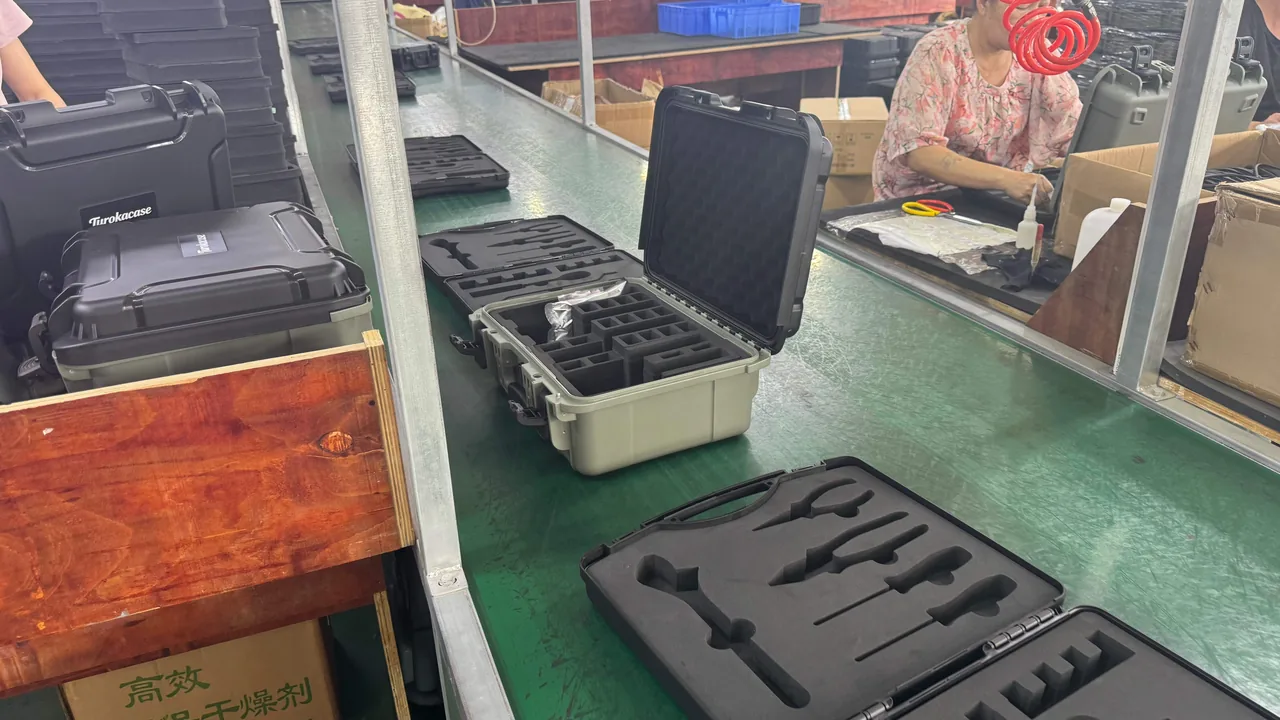
A distillery or brewery is an unusually hostile place for metal parts. The fermenter hall holds 60–90% relative humidity year round, vapour drawn off the tank headspace mixes ethanol with water and condenses into a film that drives electrochemical corrosion on anything that is not stainless, and cleaning is equally aggressive: CIP recirculates 1–2% sodium hydroxide at 80–90 °C, while SIP holds saturated steam at 121–135 °C. Any organic residue left in a sealing groove, on a thread or under a clamp ferrule becomes a contamination source for the next batch. Tri-clamp ferrules, sight glasses, spray balls, sample valves and porous carbonation stones shipped loose commonly arrive with scratches, embedded debris or compressed gaskets before they have ever been installed.
The JUNZHIJIA protection principle is to sort fermenter fittings and instruments along three axes — surface finish, chemical exposure and cleanliness class — and to hold them in a liner that does not shed, can be wiped or rinsed, and can be sterilised, so parts are ready to use without a second wash. A case is not a box that parts are dropped into; it fixes the interface between the clean zone and the logistics zone so that every opening state can be reproduced and audited.
Table of Contents
- The Humid, Alcohol-Laden Environment of Distilleries and Breweries
- Failure Modes of Hygienic Stainless Fittings and What Protection Must Achieve
- Seal and Gasket Material Compatibility: EPDM, FKM and PTFE
- CIP and SIP Chemical Exposure and Residue Risk
- Liner Design for Tri-Clamps, Sight Glasses, Spray Balls and Sample Valves
- Protecting Porous Parts: Carbonation Stones and Sintered Elements
- Handling Instruments: Temperature, Pressure and Density or Mass-Flow Meters
- Calibration Records and Traceable Documentation in the Case
- Comparing Three Protection Approaches: Barrier Bag, Die-Cut Foam, Compartment Tray
- Case Sealing Class and Structure: From IP65 to IP69K
- Stacking, Transport and Seasonal Spare-Part Warehousing
- Inspection on Receipt and Hygiene Acceptance Criteria
- Customisation, Tooling and OEM/ODM Delivery Points
- Frequently Asked Questions FAQ
- Conclusion and Related Reading
The Humid, Alcohol-Laden Environment of Distilleries and Breweries
Protection only works if the environment is quantified first. The load on a distillery case is the sum of four independent components: continuous high humidity, cyclic high temperature, ethanol vapour with organic acids, and alternating strong alkali and acid cleaning. Each is manageable on its own; combined, their attack on materials is far more severe than a normal food plant or machine shop.
| Environmental factor | Typical value | Main effect on case and liner | Response |
|---|---|---|---|
| --- | --- | --- | --- |
| Relative humidity | 60–90% steady, up to 95% at tank head | Moisture-absorbing foam grows mould, metal parts flash-rust | Closed-cell foam, desiccant, sealing class above IP65 |
| Temperature cycling | 121–135 °C sterilisation, cooling to 20–30 °C | Liner contraction, adhesive release, case bulging under vacuum | Liner rated above 80 °C, pressure equalisation valve |
| Ethanol vapour | 0.5–6% by volume at the headspace | Some elastomers swell, labels lift | Solvent-resistant elastomer, laminated labels |
| Cleaning chemicals | NaOH 1–2% at 80–90 °C, nitric or phosphoric acid 0.5–2% | Seal ageing, pitting of metal hinges | EPDM or PTFE seals, 316 stainless hardware |
The breathing effect caused by temperature cycling deserves particular attention. If a case is sealed at 90 °C or above after SIP and then cools to 25 °C, the interior drops to roughly 0.2–0.3 bar below ambient; the gasket is pulled into the gap, the next opening is noticeably stiff, and after several cycles the sealing lip collapses permanently. A breathable membrane that equalises pressure is one answer, and the selection method described in How to Choose a Pressure Equalization Valve for a Protective Case gives concrete ranges for membrane airflow and temperature rating.
Failure Modes of Hygienic Stainless Fittings and What Protection Must Achieve
Hygienic stainless parts resist corrosion in bulk, but the surface state is what fails. Once the passive layer on 1.4404 or 316L is scratched, the exposed area pits quickly under chlorinated cleaners and moisture. Ferrule grooves, thread roots and sight-glass sealing faces are geometric dead zones where cleaning fluid cannot flush debris away, so the trapped material becomes an attachment point for biofilm. The first step in protection design is to convert each failure mode into a verifiable protection objective.
| Failure mode | Typical cause | Consequence | Protection objective |
|---|---|---|---|
| --- | --- | --- | --- |
| Surface scratch, Ra rising from 0.4 µm to above 1.6 µm | Direct part-to-part impact, hard debris between contact faces | Product adhesion, incomplete cleaning | Soft isolation at every contact surface, no relative movement |
| Embedded debris | Paper lint, wood dust, foam fragments pressed into grooves | Foreign matter in product | Liner that does not shed, powder or trap grit |
| Gasket crushing or deformation | Stacking load above compression-set limit | Leaks, CIP breakthrough | Individual slots, stacking load carried by the case |
| Damaged clamp threads | Free movement and mutual impact | Unstable assembly torque, seepage | Thread end fixed, constrained axially and radially |
| Chipped sight-glass edge | Point load on the rim | Window cracks, pressure rating falls | Floated edge, face support, at least 3 mm buffer |
Mixing welded fittings with precision valve internals in a single case invites hardware-on-hardware abrasion, because their stiffness differs. Group by outside diameter and mass, and put heavy rough parts in a different case or compartment from finish-machined items. The three-tier grouping used for impellers, bodies and flanges in Pump, Valve & Fitting Cases applies directly: group by rigidity first, then refine by surface requirement.
Seal and Gasket Material Compatibility: EPDM, FKM and PTFE
A case gasket and a spare-part O-ring are different products, but the material logic overlaps. With humidity, heat, ethanol vapour and CIP chemicals all present, elastomer selection must be based jointly on compression set and chemical swell rate, not on the maximum temperature figure alone.
| Material | Service range | Alkali resistance (NaOH 1–2%, 80–90 °C) | Acid resistance (nitric or phosphoric CIP, 60–80 °C) | Hypochlorite / peracetic acid | Ethanol vapour | Hygienic suitability |
|---|---|---|---|---|---|---|
| --- | --- | --- | --- | --- | --- | --- |
| EPDM | −40 to +120 °C | Excellent, swell below 5% | Good, nitric acid concentration limited | Moderate, ages in prolonged high concentration | Moderate | Widely used, food contact possible |
| FKM | −20 to +200 °C | Poor, degrades in strong alkali | Excellent | Moderate | Excellent | Grade compliance must be confirmed |
| PTFE | −60 to +260 °C | Excellent | Excellent | Excellent | Excellent | Best, most inert |
| Silicone | −60 to +200 °C | Good | Moderate | Moderate | Moderate | Common, but weak against oil and solvent |
| NBR | −30 to +100 °C | Good | Moderate | Poor | Poor | Not recommended for this duty |
The usual practical combination is EPDM for the case gasket, because it balances cost, resilience and alkali resistance, with FKM or PTFE-encapsulated gaskets for acid service spares, EPDM for alkaline circuits and PTFE where steam contacts directly. Note that EPDM tolerates mineral oil and some aromatic solvents poorly; if grease contamination is possible in the workshop, store EPDM items separately. A fuller comparison of seal materials and the selection logic appears in What Materials Are Used for Protective-Case Seals, which treats low-temperature resilience and compression set in more detail.
CIP and SIP Chemical Exposure and Residue Risk
CIP and SIP are different attacks. CIP is chemical erosion plus fluid scouring; SIP is the heat and hydrolysis of saturated steam. For a protective case the risk is not that the case gets washed, but that the case or its liner carries cleaning-chemical residue into the clean zone. Dried chlorinated cleaner leaves salt crystals that start pitting on 316L, and alkaline residue mixed with acid residue inside the same case can even generate local heat.
| Cleaning stage | Medium and conditions | Interaction with protection hardware | Control measure |
|---|---|---|---|
| --- | --- | --- | --- |
| Pre-rinse | Ambient process water, 0.5–2 bar | Dissolves soluble residue | Case can be rinsed whole, no liquid traps |
| Caustic wash | NaOH 1–2%, 80–90 °C, 15–30 min | Attacks aluminium hardware and soft foam | 316 hardware, closed-cell EVA or PE liner |
| Intermediate rinse | Ambient process water | Dilutes residue | Drain holes, sloped drainage |
| Acid wash | Nitric acid 0.5–1.5%, 60–80 °C | Accelerates corrosion on unpassivated surfaces | Acid-resistant liner, no bare carbon steel |
| Final rinse | Purified water, conductivity monitored online | Residue is the acceptance criterion | Liner introduces no ions |
| SIP | Saturated steam 121–135 °C, 20–30 min | Liner distortion, adhesive failure | Liner rated above 120 °C, or removed |
A case that leaves the clean zone should therefore be wipeable, rinsable and self-draining. This is not identical to the high-pressure hot-water duty described in What Is IP69K: CIP demands chemical tolerance and drainage, while IP69K demands that a high-temperature, high-pressure water jet does not breach the seal. The test conditions and selection points must be checked separately and are not interchangeable.
Liner Design for Tri-Clamps, Sight Glasses, Spray Balls and Sample Valves
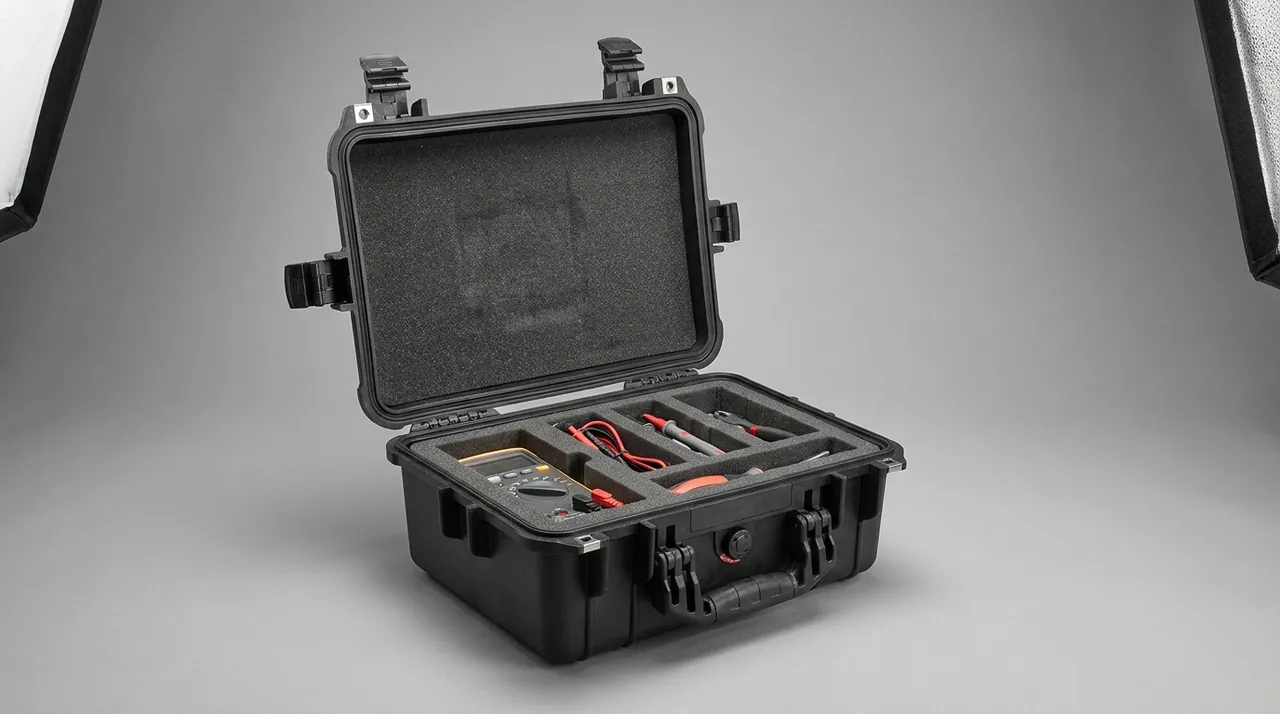
These four parts happen to represent four geometries and therefore four retention strategies. A tri-clamp is a short cylinder with a flange, so the priority is preventing axial movement and face damage. A sight glass is thin glass in a metal ring, so face support with a floated rim is essential. A spray ball is a thin-walled sphere perforated with holes, so resistance to crushing matters most. A sample valve is slender with a stem, so the stem must not be bent.
| Part | Critical weak point | Liner design point | Suggested cushion thickness |
|---|---|---|---|
| --- | --- | --- | --- |
| Tri-clamp or quick-coupling | Sealing groove and thread on the face | Cylindrical slot, face floated 2–3 mm | EVA 20–30 mm |
| Sight glass or observation window | Glass rim and ring marks | Face support, annular slot, glass floated | EVA 25–35 mm plus face pad |
| Spray ball | Thin-wall distortion, blocked holes | Moulded spherical cavity, capped inlet | EVA 30 mm |
| Sample valve | Bent stem, damaged handwheel | Slender slot with two-point support | EVA 25 mm plus end cap |
| Carbonation stone or sintered part | Brittle chipping, debris in pores | Individual bag plus foam slot | EVA 20 mm or more |
The preferred liner material is closed-cell EVA die-cut at 45–60 kg/m³. Its closed cells do not absorb water, do not shed, can be wiped, and it retains enough resilience to keep clamping force after repeated use. Open-cell PE or expanded polyethylene is cheaper, but in a humid environment it takes up moisture and generates fragments under compression; once those fragments enter a ferrule groove they are very hard to remove, so neither should touch a hygienic surface directly. The density and compression-strength comparison in What Are the Types of Internal Foam for a Protective Case? sets out the boundaries of each foam family.
Protecting Porous Parts: Carbonation Stones and Sintered Elements
Carbonation stones, ceramic membranes and sintered stainless elements are porous and brittle. Their real failure is usually not fracture but performance decay: once pores clog with debris, gas distribution becomes uneven, carbonation efficiency and cleaning effectiveness fall together, and the part still looks perfectly normal until batch-to-batch taste differences appear. The core of the protection design is to cut off the source of foreign matter inside the case.
| Risk | Symptom | Prevention | Acceptance check |
|---|---|---|---|
| --- | --- | --- | --- |
| Clogged pores | Rising pressure drop, uneven bubble pattern | Individual barrier bag, debris-free slot | Compressed-air backflush plus pressure-drop log |
| Chipped edge | Fragments entering product | Floated edge, soft contact, one part per slot | Visual check plus finger check of the rim |
| Hidden crack | Crack initiates after vibration | Whole assembly constrained, no point loads | Tap test, pressure test where applicable |
| Oil adsorption | Hydrophobicity changes | Not stored with lubricated parts, gloved handling | Wettability check |
Porous parts are best handled with a barrier bag inside a foam slot: the inner layer is a clean PE or PET/PE laminate sealed under partial vacuum, while the outer EVA slot provides geometric constraint. Even if the outer case takes an impact, no abrasive debris reaches the bag interior, and at opening the operator first checks whether the bag is intact before deciding whether rewashing is necessary. Note that no plastic bag should be stored hot for long periods; summer vehicle interiors can exceed 60 °C, so prolonged sun-exposed stacking should be avoided.
Handling Instruments: Temperature, Pressure and Density or Mass-Flow Meters
Four instrument families dominate fermenter areas: temperature probes with thermowells, pressure transmitters and gauges, density meters, and Coriolis mass-flow meters. The first three are relatively tolerant; the Coriolis meter is the classic high-value, high-sensitivity item, because its measuring tubes are thin-walled and any improper support changes the stiffness of the tube system, shifting zero and measurement accuracy.
| Instrument | Sensitive area | Permitted shock, reference | Packing point |
|---|---|---|---|
| --- | --- | --- | --- |
| Pt100 and thermowell | Probe weld, lead wires | As for general industrial instruments | Probe fixed, leads not tensioned |
| Pressure transmitter | Diaphragm, capillary | Diaphragm must not be loaded | Diaphragm up or with protective cap |
| Pressure gauge | Needle movement, glass face | Avoid face impact | Face pad plus separate slot |
| Density meter | Vibrating tube, flange | Per manufacturer | Supported in transport attitude, no cantilever |
| Coriolis mass-flow meter | Measuring tubes, flange, terminal box | Often 10 g or less, per manufacturer | Fixed in original attitude, tubes never load-bearing |
The governing rule is to fix the instrument in the transport attitude defined by the original manufacturer. That is the load path the meter was designed to survive at dispatch, and changing the support points introduces additional stress. Flanged instruments should transfer load through the flange face into the case structure rather than letting the measuring tube carry inertia. The structural logic parallels the way spindles and guideways are supported in CNC Machine Tool Cases: heavy parts go on structural support, precision parts on flexible isolation, and the two never share one liner design.
Calibration Records and Traceable Documentation in the Case
Under a hygiene and quality system, half the value of an instrument is in its records. Calibration certificates, material certificates such as 3.1, cleaning and sterilisation logs and gasket batch numbers all break the traceability chain if they are crumpled, damp or lost in transit. The standard solution is a dedicated document compartment inside the case with a waterproof bag, plus an externally readable label and QR code.
| Document | Content | Storage requirement | Traceability use |
|---|---|---|---|
| --- | --- | --- | --- |
| Calibration certificate | Points, uncertainty, validity | Waterproof bag, uncrushed | Metrology audit |
| Material certificate | Heat number, standard, 3.1 | Waterproof bag | Compliance review |
| Cleaning and sterilisation log | Time, medium, temperature, conductivity | Batch file | Quality release |
| Gasket batch record | Material grade, batch, approval | Stored with the spare | Replacement traceability |
| Inspection report | Dimensions, roughness, passivation | Electronic plus paper | Incoming acceptance |
The document bag belongs in a shallow compartment in the lid, separate from metal parts, so it cannot be abraded during handling. The exterior label should state part number, batch, quantity and protection validity date. Cases with an asset number can be paired with a QR code for scan-based tracking, which makes stock reconciliation straightforward when cases move between tank areas.
Comparing Three Protection Approaches: Barrier Bag, Die-Cut Foam, Compartment Tray
The same part can be packed three ways, with clearly different cost, cleanliness and handling speed. Choose by surface class, retrieval frequency and batch size rather than applying one method everywhere.
| Approach | Structure | Cleanliness protection | Unit cost | Handling speed | Best for |
|---|---|---|---|---|---|
| --- | --- | --- | --- | --- | --- |
| Barrier bag in a case | Clean bag plus general liner | High, blocks debris and dust | Medium | Medium, bag must be opened | High cleanliness, storage |
| Die-cut foam liner | Solid EVA cut to each part | High, blocks impact and movement | Medium-high | High | Fixed sets of shaped parts |
| Compartment tray | Injection or thermoformed tray | Medium, impact only, no dust control | Low at volume | High | Uniform small parts |
| Adjustable dividers | Slotted divider plates | Low to medium | Low | High | Mixed or variable sizes |
| Soft wrap only | Bubble film or EPE | Low | Lowest | Low | Short trips, low-value parts |
Cleanliness and shock control are two different problems: a compartment tray stops collision but not abrasion debris, while a barrier bag stops debris but not impact. High-value hygienic parts normally need a barrier bag inside a die-cut foam slot, so foreign matter is excluded first and displacement controlled second. For small batches with changing sizes, adjustable dividers with soft pads are acceptable, but the drop in cleanliness must be accepted and an extra check added before use.
Case Sealing Class and Structure: From IP65 to IP69K
The case rating should match the real duty, not simply be as high as possible. In a distillery, cases face condensate, washdown water and occasional steam spray, so IP65 usually covers water-jet protection; if the case enters a CIP area and is washed with high-pressure hot water, IP66 or above is needed, verified against IP69K conditions where required.
| Rating | Meaning | Suitable location in a distillery | Note |
|---|---|---|---|
| --- | --- | --- | --- |
| IP54 | Dust protected, splash resistant | Dry storage areas | Not for washdown zones |
| IP65 | Dust tight, water jets | Around tank areas, general wet zones | Gasket inspection needed periodically |
| IP66 | Dust tight, powerful water jets | Washdown rooms | Drainage must actually empty |
| IP67 | Temporary immersion | Floors with standing water | Wipe the sealing face after immersion |
| IP69K | High-pressure hot-water jets | Beside equipment that is washed directly | Must be tested to the condition, not extrapolated |
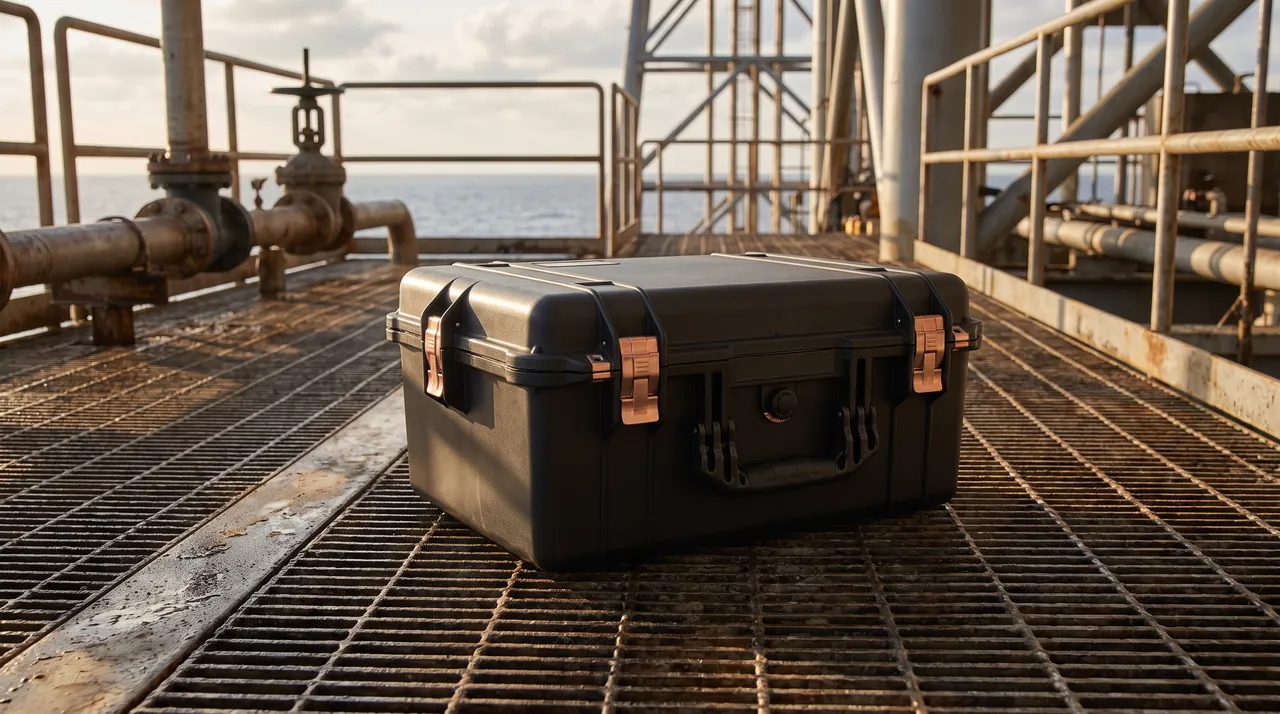
Structurally, three things must be solved at once: sealing, drainage and pressure equalisation. A dual-lip EPDM gasket with 25–35% compression is a good starting point, since over-compression causes permanent set and under-compression leaks. The base should have an openable drain or a sloped floor so washdown water cannot accumulate, and pressure equalisation prevents vacuum lock after thermal cycling. Gaskets are consumables: after prolonged high temperature they harden and lose resilience, so a replacement interval should be set against usage frequency with batch records retained. If the case is used regularly in a washdown area, hinges and latches should be 316 stainless rather than plated hardware that blisters in alkali.
Stacking, Transport and Seasonal Spare-Part Warehousing
Harvest and brewing seasons create sharp peaks, so many plants buy spare parts in bulk during the off season and may store the same batch for three to nine months. The dominant warehousing risks are stacking load, temperature and humidity cycling, and rodents or insects, not transport shock.
| Warehousing factor | Suggested control | Failure consequence | Measure |
|---|---|---|---|
| --- | --- | --- | --- |
| Stack height | Per case rating, usually no more than 5 | Lower cases creep, liner collapses | Pallets, layer limit |
| Ambient humidity | 40–60% RH | Mould, rust spots | Dehumidification plus desiccant |
| Temperature | 5–30 °C, out of sunlight | Liner distortion, adhesive ageing | Shaded warehouse |
| Storage period | Re-inspect at least every 6 months | Gasket ageing invisible | Periodic sampling |
| Pests | None | Contamination, gnawing | Off-floor, off-wall, pest boards |
Outbound issues should follow first-in, first-out. Rubber parts are especially time-sensitive: even unused, EPDM stored at 30 °C shows a clear rise in compression set after two years. Label each case with both the inbound date and a recommended re-inspection date, and place desiccant and a humidity indicator card inside so that storage condition can be judged the moment the case is opened. Cases with wheels and a telescopic handle should not carry heavy stacked loads, because the handle mechanism jams once compressed.
Inspection on Receipt and Hygiene Acceptance Criteria
Opening a delivery is not a glance and a signature. Set executable criteria across four items: appearance, cleanliness, dimensions and documentation, so transport damage never reaches the clean zone.
| Inspection item | Criterion | Method | Action if failed |
|---|---|---|---|
| --- | --- | --- | --- |
| Case sealing | Gasket not flattened or cracked | Visual plus rebound by hand | Replace gasket |
| Liner | No fragments, no shedding, no collapse | Visual plus white-cloth wipe | Replace liner |
| Surface cleanliness | No visible particles on white cloth | Cleanroom cloth wipe | Rewash |
| Surface roughness | Sealing face Ra 0.8 µm or better per drawing | Roughness tester on sample | Return or replace |
| Dimensions and quantity | Match the packing list | Callipers, count | Record deviation |
| Documentation | Certificates complete, dry | Item-by-item check | Reissue |
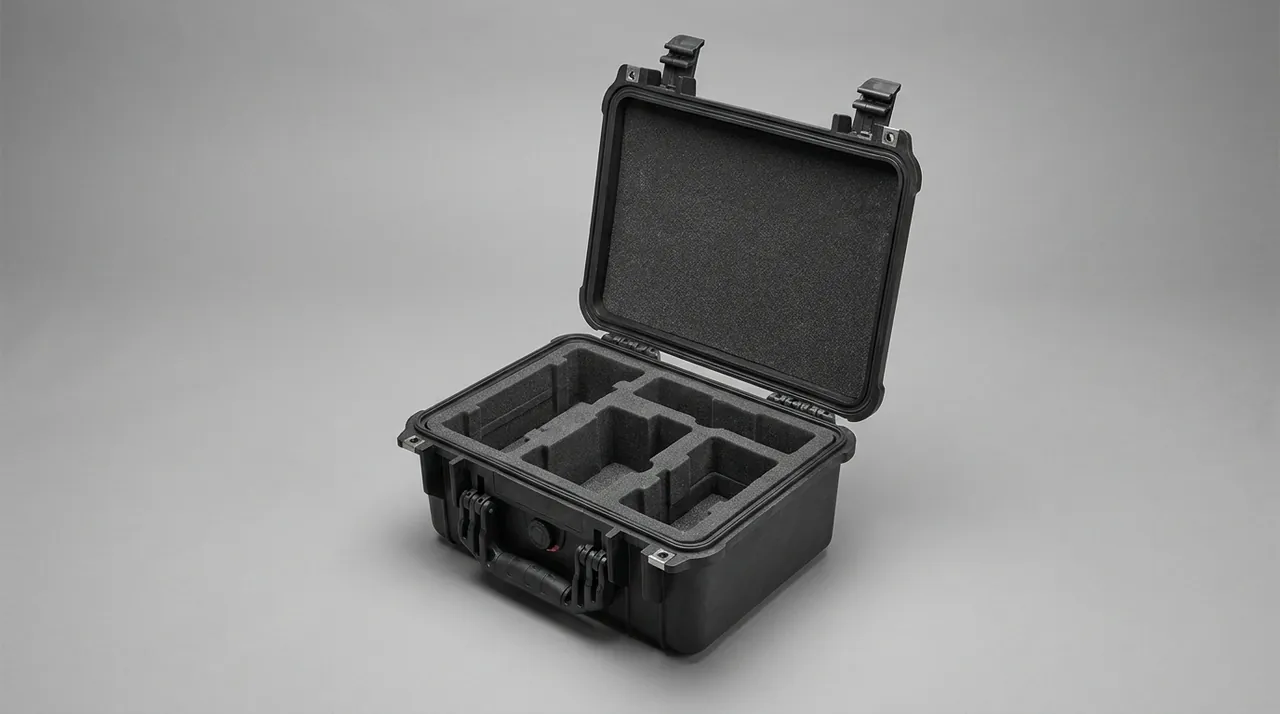
A fixed cleanliness acceptance sequence is recommended: inspect the outer case, then open and inspect the liner, then wipe critical surfaces with a lint-free cloth and look for residue. The acceptance record should be tied to the batch to form a traceable evidence chain. For gaskets and porous parts, add a bag-opening check so that package integrity is confirmed before the part enters the clean zone.
Customisation, Tooling and OEM/ODM Delivery Points
Fermenter fittings and instruments vary widely in size, so a catalogue case rarely delivers both cleanliness and retention, and customisation is the norm. Before designing anything, fix three inputs: the parts list with critical dimensions, the cleanliness and sterilisation requirement, and the logistics and stacking conditions. From these, the case size series, liner material and latch type follow.
| Input | What to specify | Impact |
|---|---|---|
| --- | --- | --- |
| Parts list | Name, material, size, mass, quantity | Number of compartments, liner thickness |
| Surface requirement | Ra, mirror finish, barrier bag needed | Liner material, packing layers |
| Sterilisation method | In-case sterilisation, temperature and medium | Liner temperature rating and material |
| Logistics | Stack height, drop height, transport mode | Wall thickness, reinforcing ribs |
| Traceability | Labels, QR codes, in-case documents | Document compartment, marking design |
JUNZHIJIA cases support custom liner architecture, tooling development and OEM/ODM cooperation, with moulds built to drawings, liners die-cut per part and space reserved for document compartments and labels. Case, liner, seals and documentation can be confirmed together as one delivery package, which removes the information loss that comes from coordinating several suppliers. Structural and material performance should be verified by a suitably qualified third-party laboratory against current standards; the specific test items and pass criteria depend on the test plan actually commissioned.
Frequently Asked Questions FAQ
Q: Will ethanol vapour in a distillery corrode a protective case, and how should the case material be chosen?
A: Ethanol vapour alone attacks most engineering plastics only mildly. The real risk is the combination of vapour, high humidity and temperature cycling, plus any organic acid that may be present at the tank head. For the shell, high-density polyethylene or polypropylene is a sensible choice, because both tolerate alcohols and weak organic acids well, do not absorb water and can be wiped down; avoid polycarbonate and some ABS grades that swell in alcohols over time. For the gasket, EPDM is the first choice, moving to FKM or a PTFE-encapsulated profile if the case sits permanently in acid mist. It is important to remember that a case is not process equipment: it is not designed to carry pressure or survive sterilisation in place. If a case must enter an SIP area, confirm the temperature limit of the liner and seals first and plan to remove the liner for separate treatment. For labelling, use laminated polyester rather than paper, since paper labels lift and curl within weeks at 90% relative humidity.
Q: Why should hygienic stainless parts not be wrapped directly in ordinary expanded polyethylene?
A: Expanded polyethylene, commonly called EPE or pearl cotton, has partly interconnected cells, so it absorbs moisture in a humid environment. More importantly, it sheds fine fragments when compressed and rubbed. Once those fragments are pressed into a tri-clamp sealing groove, a sight-glass flange face or a thread root, cleaning fluid cannot flush them out, and they become attachment points for product residue and biofilm. EPE is also soft, so it cannot hold a stable geometric constraint on heavy parts; after repeated handling it collapses, parts shift inside the case and strike each other, and a 0.4 µm mirror finish is soon scratched beyond 1.6 µm. If a low-cost cushion is genuinely required, use EPE only as outer void fill, keep a separate clean barrier bag between it and the part, and prefer closed-cell EVA or PE foam as the direct contact layer. Whatever touches the part should not shed, should not absorb moisture and should be wipeable; otherwise every opening triggers a rewash, which adds work in the clean zone rather than removing it.
Q: How should EPDM, FKM and PTFE gaskets be selected for CIP service?
A: Select by the dominant cleaning chemistry rather than by maximum temperature rating. CIP is normally a sequence of caustic wash, intermediate rinse and acid wash, and the caustic stage is usually 1–2% sodium hydroxide at 80–90 °C. EPDM performs best there, with volume swell typically under 5% and modest compression set, whereas FKM can dehydrofluorinate and degrade in strong alkali and should not serve alkaline circuits long term. In the acid stage, FKM and PTFE are clearly better; PTFE is essentially inert to every common CIP chemical, but it is hard, needs higher seating stress and is therefore usually supplied as an encapsulated or lip profile. Temperature is the second variable: PTFE serves to 260 °C, FKM to 200 °C and EPDM to 120 °C. In practice, colour-code the system by medium, use EPDM on alkaline loops, FKM or PTFE on acid loops and PTFE where steam contacts directly, and store the parts in colour-separated compartments inside the case so they cannot be cross-fitted at the point of use.
Q: How can clogging of porous parts such as carbonation stones be prevented?
A: Cut off the source of foreign matter at the packaging level rather than relying on cleaning afterwards. A two-layer structure works best: an inner clean PE or PET/PE laminate bag sealed under partial vacuum isolates the stone completely from dust, paper lint and foam fragments, while an outer EVA slot die-cut at 45–60 kg/m³ to the spherical profile provides geometric constraint and absorbs transport shock. At opening, check the bag for damage first, then examine the liner for fragments, and only then open the bag. If the bag is torn, perform a compressed-air backflush and log the change in pressure drop. Storage should avoid oily or greasy environments, because a carbonation stone that adsorbs oil changes its hydrophobicity and produces a less even bubble pattern. Recording the pressure drop before and after backflush by batch is also worthwhile, since it gives an early indicator of decay rather than waiting for a taste difference in the finished product to trigger an investigation.
Q: Does a Coriolis mass-flow meter need recalibration after transport?
A: It depends on whether the meter experienced loads beyond the manufacturer's allowance, so a blanket answer is not appropriate. The heart of a Coriolis meter is a thin-walled measuring tube, and any change in tube-system stiffness shifts the zero point and the flow coefficient; even without visible damage, a meter that was carried by its tube body, or whose flange saw cantilever loading, or that experienced shock above the specified level should have its zero re-verified and, if necessary, be recalibrated across the range. The correct practice is to fix the meter in the original transport attitude: the flange face transfers load into the case structure, the measuring tubes and terminal box carry nothing, and the same support points used at dispatch are reproduced so no additional stress is introduced. On opening, first confirm that the manufacturer's transport restraints are still in place, then check the flange faces for impact marks and listen for abnormal noise from the tubes. Where a full calibration certificate accompanies the batch and transport records are complete, a zero check is usually sufficient, but documenting the decision on whether recalibration is required is far easier to defend in an audit than reconstructing the reasoning later.
Q: Can a protective-case liner be sterilised with steam or wiped with disinfectant?
A: The two cases need separate answers. Standard closed-cell EVA should not be steam sterilised directly: saturated steam above 121 °C softens it, reduces its resilience, and if the liner is bonded into the case the adhesive layer fails first so the whole sheet lifts. Remove the liner before entering an SIP area and treat case and liner separately. Disinfectant wiping is more feasible: 75% ethanol, peracetic acid and sodium hypochlorite solution can all be applied with a lint-free cloth to EVA and PE surfaces, but the surface must then be rinsed with purified water to remove residue. This matters most for chlorinated agents, because dried residue forms salt crystals that accelerate pitting on stainless steel. If the duty requires a liner that can be sterilised repeatedly, move to a high-temperature silicone or PTFE-faced construction and accept the higher cost. In every case, avoid prolonged contact between strong alkali and aluminium hardware, and specify 316 stainless hinges and latches to extend service life in a wet alkaline environment.
Q: What should be considered when storing spares bought in bulk during the off season?
A: Stacking, temperature and humidity, and the ageing of rubber parts are the three priorities. Keep stack height within the case rating, usually no more than five layers; under a full load the lower cases creep over time and the liner collapses, losing its clamping force. Use pallets to spread the load and re-stack at least every six months. Hold the warehouse at 5–30 °C and 40–60% relative humidity, away from sunlight and steam lines, otherwise liner distortion, adhesive ageing and gasket hardening occur together. Rubber ages even in storage: EPDM kept at 30 °C shows a clear rise in compression set after two years, so gasket spares should follow first-in, first-out and each case should carry both an inbound date and a recommended re-inspection date. Desiccant and a humidity indicator card inside the case let the condition be judged the instant it is opened. Finally, cases with telescopic handles and wheels should not carry heavy stacked loads for long periods, because the mechanism jams once it is compressed.
Q: How should minimum order quantity and lead time be negotiated for small-batch custom fermenter fittings?
A: Separate fixed cost from variable cost before discussing numbers. The fixed cost is mainly tooling: a new case mould depends on size, structural complexity and whether multi-colour injection is required, and is normally a one-time investment, whereas an EVA die-cut liner uses a low-cost cutting die that can be revised far more easily than a case mould. For small batches, therefore, a standard case with a custom liner usually cuts the minimum order quantity substantially. Variable cost is driven by material, processing time and inspection scope, and add-ons such as barrier bags, document compartments, labels and desiccant should be priced per piece. On lead time, settle the sample approval cycle, the number of mould trials and the production slot first, and order at least a quarter ahead because capacity tightens across peak season. Put the acceptance criteria in the contract as well, covering liner density and thickness tolerance, case sealing class, the document list and the disposition of non-conforming goods, so that no dispute arises about criteria after delivery.
Conclusion and Related Reading
Distillery protection is about managing a clean interface: keep humidity, ethanol vapour and CIP chemicals away from the parts, and keep debris and scratches away from the product. JUNZHIJIA die-cut liners make every opening state reproducible.
Related Reading