

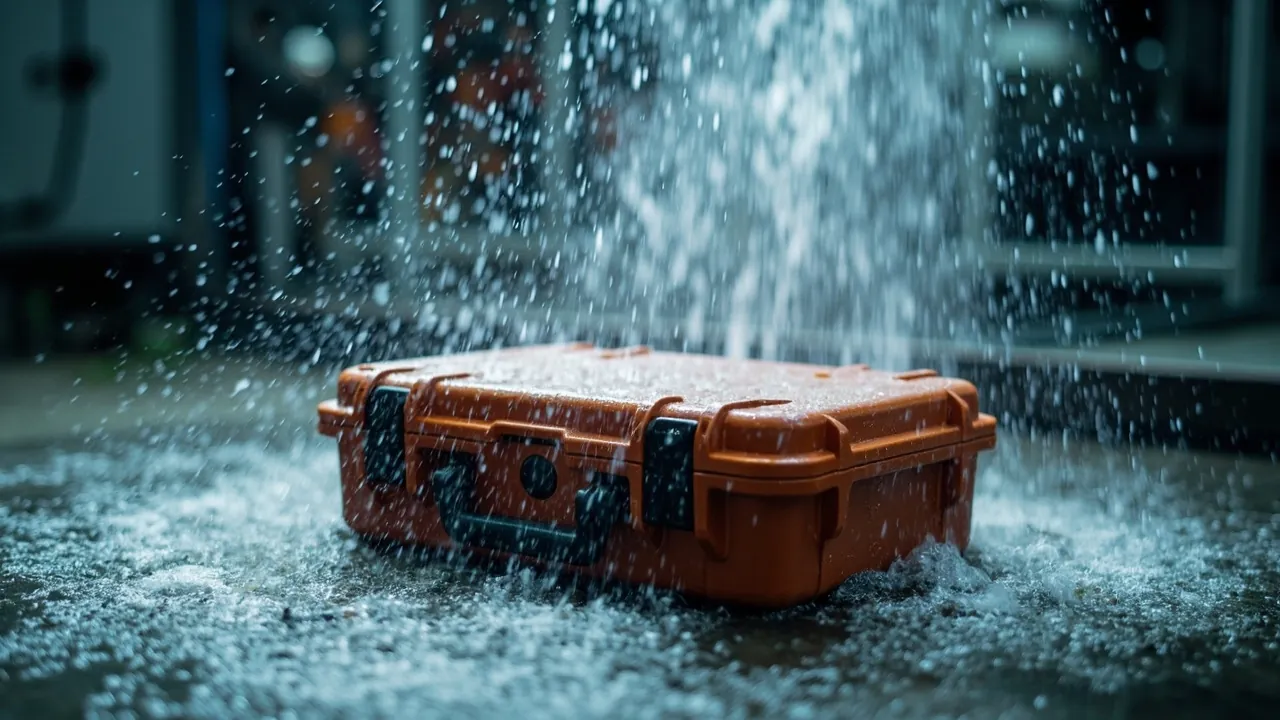
The short answer: IP69K is the ingress protection rating that addresses high-pressure, high-temperature water jets. It does not mean "more waterproof than IP68". It means a completely different test regime is being applied. The core conditions come from ISO 20653, the road-vehicle ingress protection standard, and have been adopted into IEC 60529 and GB/T 4208 as IPX9: water at 80 C, jet pressure of 80 to 100 bar (8 to 10 MPa), flow rate of 14 to 16 L/min, nozzle distance of 100 to 150 mm, jetting in sequence from four angles of 0, 30, 60 and 90 degrees for about 30 seconds each, with the sample rotating at roughly 5 rpm. IP67 asks whether a case keeps water out while submerged. IP69K asks whether it keeps water out when blasted. The first is static head; the second is dynamic pressure plus heat plus steam penetration. Neither substitutes for the other. For a protective case, passing IP69K means it will survive the frequent hot-pressure washdowns found in food processing, pharmaceuticals, vehicle washing and construction machinery without letting water in.
The most common confusion among buyers and engineers is to picture IP ratings as a single ladder from IP00 to IP69K, assuming a larger number is better and includes the lower ones. That is wrong. The second digit does describe water protection, but levels 7, 8 and 9 correspond to three different test methods: short-term immersion for IPX7, sustained immersion under agreed conditions for IPX8, and high-temperature high-pressure water jets for IPX9. A case can pass IP69K and fail IPX8, or perform beautifully in IPX8 and fail IP69K, because the failure mechanisms are entirely different. This matters enormously when writing tender specifications and selecting products.
This guide is written for procurement and engineering staff who must specify cases for high-hygiene, high-washdown environments. It works through the origin of the standard, the test conditions in detail, the equipment required, how IP69K differs from IP67, IP68 and IP69, the design and material requirements for compliance, the typical failure modes, and a checklist for reviewing a test report. All pressures, temperatures, flow rates and durations quoted are standard or industry-typical values. Binding conditions are whatever the released standard and the agreed test plan specify.
Contents
- What IP69K is, and how it differs from IP67, IP68 and IP69
- Reading IP code syntax under IEC 60529 and GB/T 4208
- Where the K came from: ISO 20653 and the road-vehicle standard
- The IP69K test conditions item by item
- Test equipment: nozzle, spray head and turntable
- Why hot high-pressure water is harder to survive than immersion
- Four ratings side by side: IP67, IP68, IP69 and IP69K
- Design for compliance: choosing seal materials
- Making groove, latch and relief valve work together
- What hot water does to the case material
- Typical failure modes and how to fix them
- How to read an IP69K test report
- Applications: which industries genuinely need IP69K
- Frequently Asked Questions
- Conclusion and Related Reading
What IP69K is, and how it differs from IP67, IP68 and IP69
Start by separating three pairs of ideas.
First, IP69 and IP69K. Both refer to a high-temperature, high-pressure water jet test. IPX9 appears in later revisions of IEC 60529 and in GB/T 4208. IPX9K comes from ISO 20653, formerly German standard DIN 40050-9, where K indicates the rating originated in the road-vehicle sector. Both use jet water at around 80 C and pressure in the 80 to 100 bar range, with closely similar geometry and duration. In practice, a customer writing IP69K in a tender usually means a jet test run to the vehicle-industry convention, while one writing IPX9 usually means the jet test run to IEC 60529. When writing a specification or a label, state the standard and its revision rather than four characters alone.
Second, IP69K and IP68. IPX8 is sustained immersion, testing long-term sealing under static head. IPX9K is a jet, testing sealing stability under the dynamic pressure of a high-speed water column, thermal shock from hot water, and steam penetration. IP69K involves no immersion; IPX8 involves no jetting. Neither contains the other. A case marked with both IP68 and IP69K has passed two separate tests, and that is the complete and correct statement.
Third, IP69K and IP67. IP67 has two digits. The first, 6, means dust-tight. The second, 7, means short-term immersion. IP69K describes the second position only, so the strictly correct form is IP6K9K, with IP69K the more common shorthand. Quoting IP69K without the first digit declares nothing about dust protection. Buyers should ask suppliers for the complete code.
The one-line distinction: IP67 asks whether water gets in while the case is submerged; IP69K asks whether water gets in while the case is being blasted with hot water at pressure. A food plant washdown is the second case. Sea water pooling on a deck is the first. Do not confuse them.
Reading IP code syntax under IEC 60529 and GB/T 4208
The IP code is defined by IEC 60529, Ingress Protection Code, and its Chinese national equivalent GB/T 4208. The basic form is IP followed by two digits, with optional letters.
| Position | Meaning | Example values | Notes |
|---|---|---|---|
| --- | --- | --- | --- |
| IP | Identifier | IP | Ingress protection |
| First digit | Solid object protection | 0 to 6 | 6 means dust-tight |
| Second digit | Water protection | 0 to 9 | 7 short immersion, 8 sustained immersion, 9 hot high-pressure jet |
| Additional letter | Access to hazardous parts | A, B, C, D | Related to electric shock, rarely used for cases |
| Supplementary letter | Supplementary condition | H, M, S, W | For example H for high-voltage apparatus |
| Suffix K | Test origin | K | Indicates ISO 20653 vehicle-industry conditions |
Four writing errors are common. First, quoting IP69K alone without the first digit, so dust protection cannot be judged. Second, writing IP68K or IP6K8. Third, treating K as a marker of a higher level, when it only indicates the origin and convention of the test. Fourth, making a public claim without stating the standard revision, since earlier editions of IEC 60529 did not include level 9 at all. A model specification looks like this: IP6K9K, ISO 20653, 80 C, 80 to 100 bar, 14 to 16 L/min. Writing temperature, pressure and flow into the specification eliminates a large amount of later dispute.
Where the K came from: ISO 20653 and the road-vehicle standard
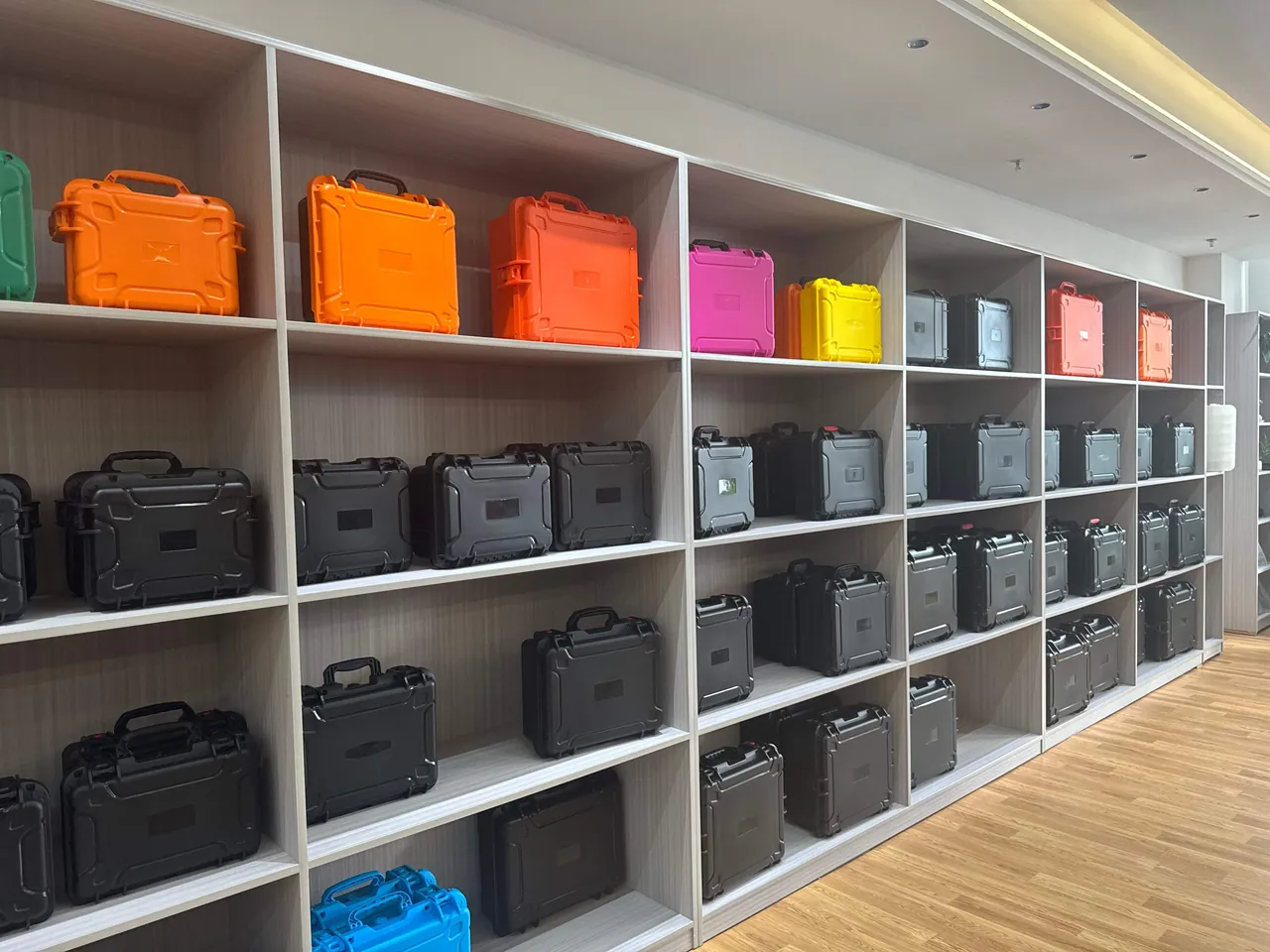
IP69K did not evolve out of consumer electronics. It came from vehicles and construction machinery. During the 1980s, electrical components on European road vehicles had to survive high-pressure cleaning: at wash lines, on construction sites, and during the disinfection washing of food transport vehicles, they were hit directly by hot water under pressure. IEC 60529 at the time only reached IPX8 for immersion and could not describe the condition of a high-speed hot water column. German standard DIN 40050-9 therefore introduced IP69K, later adopted by ISO 20653, Road vehicles, degrees of protection, which became the global vehicle-industry convention.
Understanding that origin matters for selection. It explains why the test conditions are jet water at 80 C and 80 to 100 bar, with the nozzle 100 to 150 mm away, four angles and about 30 seconds each. The parameters simulate what an industrial washdown gun or a car wash actually produces, not rainfall or immersion. It also explains why IP69K places such heavy emphasis on steam and heat. Hot water used for washing and disinfection creates local temperature rise and steam penetration, which is far harder to resist than cold water. For a protective case, wherever the downstream customer will use a pressure washer, IP69K becomes a requirement rather than a bonus.
The IP69K test conditions item by item
The table below summarises the typical IPX9 and IPX9K conditions. These parameters drive the design direction, so each deserves attention.
| Parameter | Typical condition (IPX9 / IPX9K) | Engineering meaning |
|---|---|---|
| --- | --- | --- |
| Water temperature | Around 80 C | Softens seal material, drives steam penetration |
| Jet pressure | 80 to 100 bar (8 to 10 MPa) | Dynamic pressure far above the roughly 0.01 MPa of 1 m of water |
| Flow rate | 14 to 16 L/min | Large water volume doing work continuously |
| Nozzle orifice | About 12.5 mm | Sets the jet cross-section and concentration |
| Nozzle distance | 100 to 150 mm | Closer means a more concentrated impact |
| Jet angles | 0, 30, 60 and 90 degrees | Covers normal and oblique impact, tests gap orientation |
| Duration per angle | About 30 seconds | Roughly two minutes across four angles |
| Turntable speed | About 5 rpm | Sweeps the jet around the full circumference |
| Post-test check | No harmful water ingress | The acceptance method must be agreed in advance |
Several details slip past most readers. First, be explicit whether pressure is quoted in bar or MPa. 80 bar is about 8 MPa, equivalent to roughly 800 metres of water head, nearly a thousand times the 1 metre column of IPX7. Second, the test is applied to the enclosure, but in practice failures occur at assembly interfaces, so the sample condition must match production. Third, the standard permits opening the case after the test, but whether residual marks, a slight internal mist or a functional effect count as ingress must be defined in the test plan. Without that, the same test can support completely different conclusions. For a rigorous approach to ingress judgement, see how the IP67 submersion test is run.
Test equipment: nozzle, spray head and turntable
The IP69K rig is not a garden hose or a car wash lance. It is a calibrated instrument, and understanding its parts helps you judge whether a report was produced properly.
- High-pressure hot water pump set. It must deliver 80 to 100 bar at roughly 80 C with controlled flow, and log both pressure and temperature. The water must be clean, since debris blocks the nozzle and changes the jet shape.
- Dedicated spray head. Meeting the specified orifice size and internal flow geometry so that the jet has the defined form at the specified distance. Nozzle wear changes impact intensity significantly, so periodic verification is needed.
- Angle positioning and holding fixture. The test requires the nozzle at 0, 30, 60 and 90 degrees for about 30 seconds each, with the angle referenced to the specified datum. A handheld lance cannot reproduce this.
- Rotating turntable. About 5 rpm, sweeping the jet across the whole circumference so that no side escapes by luck.
- Distance control. The nozzle stays 100 to 150 mm from the external surface, normally fixed by a jig.
- Recording and imaging. Pressure and temperature traces plus video of the run are key evidence of a credible report.
The critical point is sample orientation. Standards normally require the sample to be mounted in its normal service attitude. For a case that means latch orientation, valve orientation and handle orientation must all be as delivered, because the effect of gravity drainage and the directionality of gaps differs completely between a downward jet, an upward jet and a horizontal one. If the lab positions the case in whichever attitude drains best, the engineering value of the result drops sharply.
Why hot high-pressure water is harder to survive than immersion
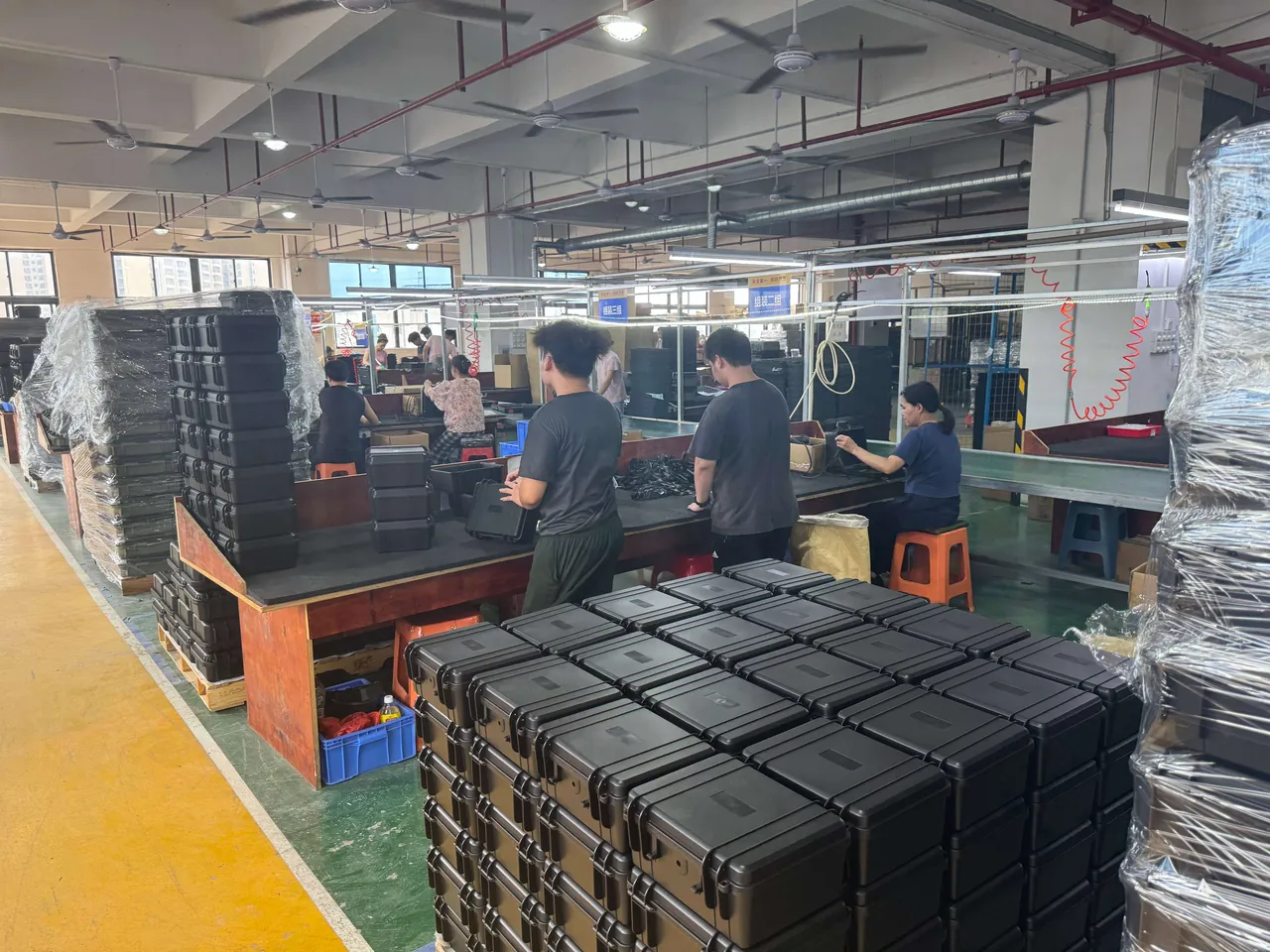
Intuition suggests that a case which holds water out during immersion must hold it out during jetting. That misreads the failure mechanism. Four effects stack up.
First, dynamic pressure dwarfs static pressure. One metre of water is about 10 kPa; 80 bar is 8 MPa, nearly a thousand times more. A gasket in still water only resists a small differential, whereas a jet creates a steep local pressure gradient across the sealing face and drives water into gaps that were previously closed. This is the water wedge effect.
Second, heat softening and thermal shock. Hot water at 80 C reduces the hardness and modulus of rubber, changing compression. For a case sitting at room temperature, the hot water is a sudden thermal load, and because the shell and the seal have different expansion coefficients, contact stress at the interface fluctuates sharply within seconds. This combination of thermal shock and changing compression readily exposes seals with insufficient design margin.
Third, steam penetration. Hot water in a gap can locally vaporise. Steam molecules are smaller than liquid water clusters and diffuse more readily, crossing micro-channels that liquid water cannot, then condensing on the cooler interior wall. IP69K failure therefore often appears as mist or general dampness on the inner wall rather than standing water, and that distinction must be handled in the acceptance criteria.
Fourth, the dynamic behaviour of the seal. The jet sweeps the surface at high speed, causing repeated local pressure fluctuations between gasket and groove. Over time this can cause micro-motion wear and extrusion deformation, especially in the hot state.
The conclusion: IP69K does not test how tight a seal is, but how stable it stays under extreme dynamic pressure and heat. The design therefore needs not only sufficient compression but also margin against extrusion, thermal distortion and steam penetration. For the material side, see choosing case seal materials.
Four ratings side by side: IP67, IP68, IP69 and IP69K
| Item | IPX7 | IPX8 | IPX9 | IPX9K |
|---|---|---|---|---|
| --- | --- | --- | --- | --- |
| Standard origin | IEC 60529 / GB/T 4208 | IEC 60529 / GB/T 4208 | IEC 60529 / GB/T 4208 | ISO 20653 |
| Test form | Short immersion | Sustained immersion, agreed conditions | Hot high-pressure jet | Hot high-pressure jet |
| Typical condition | 1 m, 30 minutes | Depth and duration agreed by parties | 80 C, 80 to 100 bar | 80 C, 80 to 100 bar |
| Dominant load | Static head | Long-term static head | Dynamic pressure, heat, steam | Dynamic pressure, heat, steam |
| Typical failure | Insufficient gasket compression | Material permeation and creep | Water wedge, hot extrusion | As IPX9, vehicle convention |
| Typical use | Falling in water, rain, short soak | Long immersion, underwater work | Food, pharma, industrial washdown | Vehicles, machinery, car wash |
The point to remember is that these levels do not nest. A case can achieve IP69K and still fail a long IPX8 soak through material permeation, and it can excel at IPX8 while letting water in under IP69K through the water wedge effect. Select the rating from the actual service condition, and if two ratings are needed, run two tests. Never infer one from the other. For the dust half of the code, the first digit, see dustproof design for outdoor cases.
Design for compliance: choosing seal materials
The seal material is the first gate IP69K has to pass. Water at 80 C, repeated thermal shock and possibly chemical cleaning agents impose far more than a room-temperature soak.
- Silicone (VMQ). Wide temperature range, typically minus 50 to plus 200 C, low compression set, good resistance to hot water and steam. One of the most common first choices for IP69K, with the weakness of moderate oil resistance and tear strength.
- Fluorocarbon (FKM). Outstanding heat, oil and chemical resistance, well suited where cleaning agents and oils are both present. Weaker at low temperature and more expensive.
- EPDM. Excellent water, steam, ozone and weather resistance at moderate cost, a common choice for hot water and steam, but not resistant to mineral oil.
- Nitrile (NBR). Good oil resistance and low cost, but only moderate resistance to hot water and ozone. Not recommended as the primary seal for IP69K.
- Thermoplastic elastomer (TPE/TPV). Suited to two-shot moulding and structural integration, with temperature resistance adjustable by formulation, useful for seals moulded into the shell.
| Material | Temperature (typical) | Hot water / steam | Oil resistance | IP69K suitability |
|---|---|---|---|---|
| --- | --- | --- | --- | --- |
| Silicone VMQ | minus 50 to plus 200 C | Good | Moderate | High |
| Fluorocarbon FKM | minus 20 to plus 200 C | Very good | Very good | High, where oil is present |
| EPDM | minus 40 to plus 150 C | Very good | Poor | High, for water and steam |
| Nitrile NBR | minus 30 to plus 100 C | Moderate | Good | Low to medium |
| TPE | minus 40 to plus 120 C | Moderate | Moderate | Medium, integrated designs |
Compound and process matter as much as the polymer family. Within one rubber type, hardness, filler system and cure schedule change hot-water performance markedly. As a rule, seals exposed long-term to 80 C water should use a low compression set compound with hardness in a middle range, since too hard seats poorly and too soft extrudes from the groove under a jet. A useful sequence is to run a hot-water immersion plus compression set pre-test on the candidate compound before the full case test, so unsuitable formulations are eliminated cheaply. For ageing behaviour and replacement intervals, see seal ageing and replacement cycles.
Making groove, latch and relief valve work together
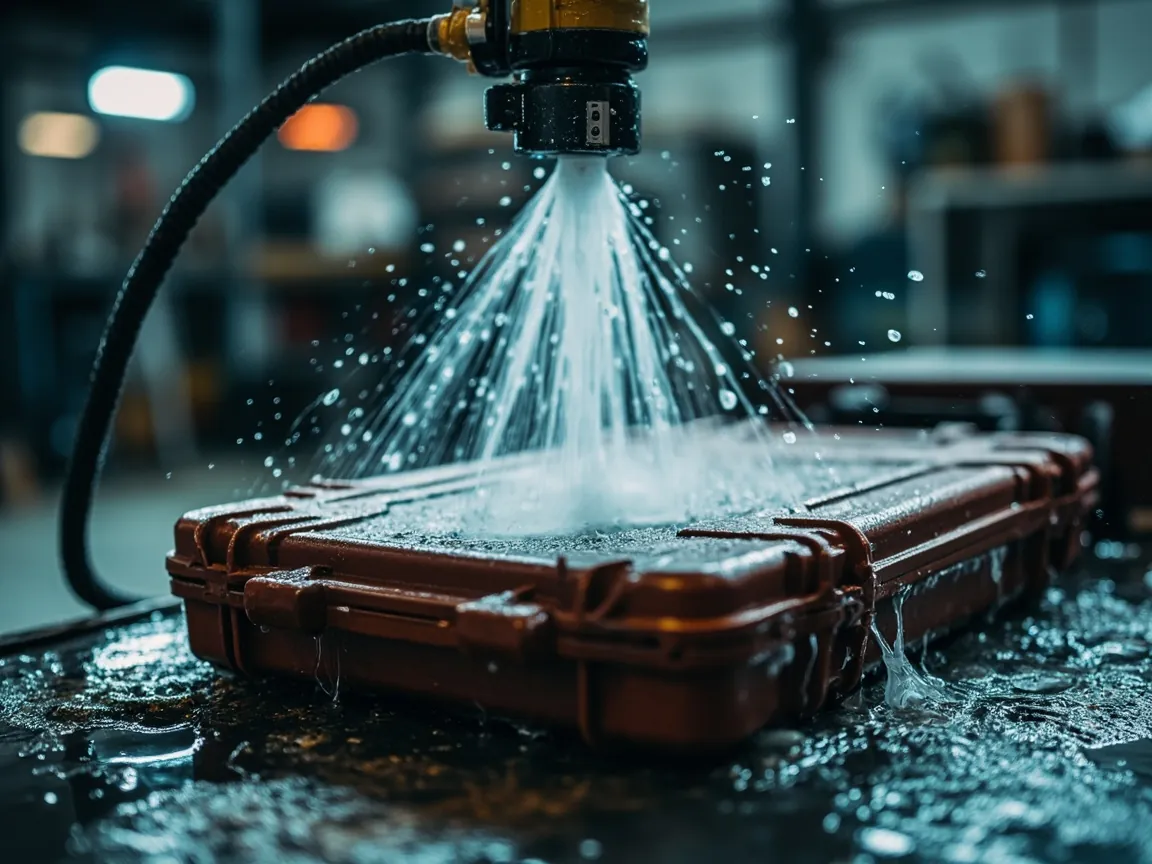
Even a good material fails if the structure does not match. Three items deserve attention.
First, groove and compression ratio. The compression ratio, that is compression divided by free section height, is the central variable in sealing. For static seals a ratio of 15 to 30 per cent is typical, and against IP69K dynamic pressure it is usually taken toward the upper part of that band, while leaving enough fill-ratio margin. Too high a fill ratio leaves the rubber nowhere to go, creating local high stress under jet impact and accelerating extrusion failure. For the design logic, see how a protective case seal ring is designed.
Second, even latch clamping. Ultimate compression comes from the latches. Too few latches, or spacing that is too wide, lets the lid lift between them under water pressure and opens a local gap. Insufficient latch travel or stiffness loses clamping force in the hot state as the material softens. Retest latch closing force and case-mouth gap after soaking at 60 to 80 C, which is the single best way to expose hot-state failure. For latch selection, see choosing case latches.
Third, the two-way logic of the relief valve. Many cases carry a pressure equalisation valve to balance differentials caused by temperature change. Under IP69K this component cuts both ways. If the cracking differential is set too low, the jet pushes water straight in. If the valve lacks a hydrophobic membrane, steam passes through and condenses inside. The correct approach is a valve with a hydrophobic breathable membrane, verified for sealing against hot water at 80 C in the direction of impact, with the mounting orientation matching the service attitude. See pressure valves and pressure equalisation.
What hot water does to the case material
IP69K tests the shell as well as the seal. Water at 80 C changes the temperature field near the surface within seconds, with several consequences.
- Dimensional drift. The coefficient of linear expansion of engineering plastics is far greater than that of metals, so the case-mouth geometry shifts by micrometres to millimetres, altering gasket compression.
- Falling modulus and hardness. Most engineering plastics lose stiffness noticeably as they approach their heat deflection temperature. If the wall is thin or reinforcement is inadequate, the case can deflect under load in the hot state, worsening case-mouth flatness.
- Release of moulded-in stress. Residual stress in an injection moulding can relax under heat and cause slight warping, particularly at transitions between thin and thick walls.
- Surface and appearance. Prolonged hot-water exposure causes loss of gloss, blooming or coating blistering. This may not affect sealing but does affect a customer's perception of condition.
- Thermal mismatch at metal parts and inserts. Differential expansion between insert and plastic generates interface stress under thermal shock, and repeated cycles can crack the plastic around the insert, creating a new leak path.
The design response is hot-state margin. Compression and clearance calculations must not rely on room-temperature data alone. Include material modulus, expansion and deflection at the maximum service temperature, and where necessary add ribs, radii and local thickening to raise hot-state stiffness. See designing high-strength case structures and high and low temperature testing of cases.
Typical failure modes and how to fix them
| Failure mode | Symptom | Root cause | Improvement |
|---|---|---|---|
| --- | --- | --- | --- |
| Local ingress at case mouth | Water marks on one inner wall | Lid lifted locally in hot state, compression lost | More latches, stiffer latches, closer spacing |
| Internal mist | Even dampness, no standing water | Steam crossed a micro-channel and condensed | Lower-permeation material, an extra seal line, better membrane |
| Gasket extrusion | Flared or feathered gasket edge | Fill ratio too high, rubber too soft | Revise groove, raise hardness, reduce compression |
| Leak at insert | Damp trace at insert root | Interface cracked under thermal shock | Blind insert, add shoulder and undercut, use a washer |
| Valve seepage | Water near the vent valve | Membrane permeates in reverse under dynamic pressure | Hydrophobic membrane valve, verify cracking direction |
| Label window ingress | Marks around the window | Bond or weld interface cracked in hot state | Mould as one piece, stabilise welding parameters |
| Degradation over repeats | First test passes, later ones fail | Cumulative compression set of the seal | Low set compound, defined replacement interval |
Binding the failure modes to the test sequence is the most effective diagnostic. If you suspect the lid is lifting in the hot state, modify the test to soak at 80 C before jetting. If you suspect steam penetration, open the case immediately after the run and check whether the inner wall is uniformly damp. For how environmental test sequences are organised, see tailoring MIL-STD-810 testing and how many salt spray hours a case needs.
How to read an IP69K test report
When a report claiming IP69K arrives, check the following list.
- Standard and revision. Is it ISO 20653, or IEC 60529 or GB/T 4208, and which edition?
- Complete IP code. Is it IP6K9K, or IP69K alone? Is the first digit declared as well?
- Test parameters. Are water temperature, pressure, flow, nozzle orifice, jet distance, duration at each of the four angles and turntable speed stated, and within the standard range?
- Sample condition. Do model, material, seal configuration and latch count match production? Was the mounting attitude the normal service attitude?
- Acceptance criteria. How was the case checked after the test? How is ingress defined? Is internal mist permitted? Was function retested?
- Supporting records. Are pressure and temperature traces, run video, and before-and-after photographs attached?
- Change rules. Does a material, structural or seal change trigger re-verification, and what scope?
A report that gives only a conclusion and no parameters cannot be assessed for rigour. The review logic matches IP immersion reports, as set out in how to verify an IP67 certificate.
Applications: which industries genuinely need IP69K
IP69K is not a marketing badge of quality. It maps to defined service conditions.
- Food and beverage processing. Equipment and containers are washed down daily with hot water or hot cleaning solution, and hygiene requirements leave no room for dead zones. Cases house controls, sensors and tools.
- Pharmaceuticals and biology laboratories. Frequent cleaning and disinfection, with sensitivity to residue, so cases must resist both water and cleaning agents.
- Commercial vehicle washing. Car wash guns typically operate at 80 to 120 bar, closely matching the IP69K condition.
- Construction and agricultural machinery. On-site pressure washing combined with mud and vibration, so cases are often required to be dust-tight, waterproof and impact resistant at once.
- Outdoor and emergency equipment. Where heavy rain, water crossings and rapid washing combine, IP67 is often enough, but if a pressure washer will be used, IP69K should be considered.
- Seafood and cold chain. Frequent washing alternating with low temperature places heavier demands on the seal material's temperature span.
Selection advice: establish how the downstream customer washes the equipment before choosing a rating. Rain and a short dunk need IP67. A pressure washer used at close range, especially with hot water, requires IP69K verification. Prolonged immersion requires IPX8. Giving the supplier one sentence describing the service condition is far more effective than quoting a rating code alone.
Frequently Asked Questions
Q: Is IP69K a higher grade than IP68? A: They are not on the same axis, so ranking them makes no sense. IPX8 is sustained immersion, testing long-term sealing under static head, with depth and duration agreed between the parties. IPX9K is a hot high-pressure water jet, testing sealing stability under dynamic pressure, heat and steam, with conditions of around 80 C water, 80 to 100 bar, 14 to 16 L/min and four jet angles. A case can comfortably pass IP69K and still fail a long IPX8 soak through material permeation or gasket creep, and equally it can excel at IPX8 and fail IP69K as the water wedge effect drives water past the seal. Never infer one rating from the other. Choose the rating from the actual service condition, test each one that is required, and state the standard revision and parameters in the specification so that the assumption that a larger number is stronger does not lead to a selection error.
Q: What is the difference between IP69K and IP69? A: Both describe a hot high-pressure water jet test. The difference is mainly the standard origin and the convention of expression. IPX9 appears in later revisions of IEC 60529 and in Chinese national standard GB/T 4208, within the international electrotechnical system. IPX9K comes from ISO 20653, formerly German DIN 40050-9, where K indicates the road-vehicle sector. The water temperature, pressure, flow, standoff distance and jet angles are closely comparable, and in practice the two are often treated as equivalent. The differences show up in rigour: under ISO 20653 the mounting attitude, nozzle geometry and acceptance wording carry more specific vehicle-industry requirements. For procurement, the characters matter less than the report stating which standard, which edition and which parameters. Write the requirement as IP6K9K to ISO 20653 or the corresponding clause of IEC 60529, at 80 C, 80 to 100 bar and 14 to 16 L/min, to remove ambiguity.
Q: Why does the IP69K test use water at 80 C? A: Because the real service condition is hot. IP69K originated in road vehicles and industrial cleaning, where wash lines and food processing lines use hot water, often with cleaning agents, at 60 to 90 C. Testing with cold water would seriously understate the difficulty, for three reasons. Heat softens rubber seals, reducing modulus and resilience so that compression changes. Hot water partially vaporises in gaps, and steam molecules are smaller and diffuse more readily than liquid water, crossing micro-channels that liquid cannot and then condensing on the cooler inner wall, producing the deceptive condition of damp walls without standing water. Thermal shock also generates transient stress between shell, seal and metal insert, testing the long-term stability of those interfaces. Using 80 C water therefore stacks heat, pressure and moisture into one test, which is far more severe than static head at room temperature.
Q: Does passing IP69K mean the case also passes IP67? A: No. They are independent tests and neither implies the other. IP67 uses two digits, the first for dust-tightness and the second for short-term immersion. IP69K describes the water position only, using a completely different test form. To pass IP67, a sample must show no harmful ingress after immersion at the specified depth and duration. To pass IP69K, it must survive dynamic pressure, thermal shock and steam penetration under a hot high-pressure jet. The failure mechanisms differ, so the conclusions cannot be swapped. The most common practical error is a supplier running IP69K and then labelling the product IP67, or the reverse, running IP67 and advertising suitability for pressure washing. Verify and declare each rating separately, for example IP67 to IEC 60529 at 1 m for 30 minutes, and IP6K9K to ISO 20653 at 80 C and 80 to 100 bar, so that customers can choose against their own conditions.
Q: For a case that must meet IP69K, how should the seal material be chosen? A: Start with elastomers that resist heat and hot water, and prefer compounds with low compression set. Three families cover most needs. Silicone has a wide temperature range and low compression set and suits pure hot water and steam. EPDM has excellent water, steam, ozone and weather resistance at moderate cost and is a common choice for washdown, though it is not oil resistant. Fluorocarbon excels at heat, oil and chemical resistance and suits environments with both oil and cleaning agents, at the cost of weaker low-temperature performance and higher price. Nitrile is oil resistant and cheap but only moderate against hot water and ozone, so it is not recommended as the primary IP69K seal. Hardness also matters, since too hard seats poorly and too soft extrudes under the jet. Before freezing the design, run an 80 C hot water immersion with compression set measurement to eliminate unsuitable compounds cheaply, then test the complete case.
Q: Why does IP69K failure often show as internal mist rather than standing water? A: Because it is a hot test with a specific failure path. Water at 80 C can partially vaporise inside gaps, and steam molecules are much smaller than liquid water clusters, so they cross micro-channels that liquid cannot. Once inside, they meet the cooler inner wall and condense into fine mist or uniform dampness. Because what entered was gas rather than liquid, no pool forms at the bottom, which makes the failure easy to misread as a pass. The acceptance criteria must therefore be settled before the test: whether internal mist is permitted, at what level, and whether a drying indicator such as colour-change silica gel or dry filter paper should be placed inside to aid judgement. For food, pharmaceutical and electronics customers, any internal moisture risks corrosion or hygiene problems, so write no internal mist as the requirement rather than the vaguer phrase no harmful ingress.
Q: If the case has a vent valve, does that affect IP69K? A: Yes, and the vent valve is often the highest-risk component in an IP69K application. Its purpose is to balance internal and external pressure so that temperature or altitude changes do not lift or suck down the lid. But under a high-pressure jet, if the valve cracking differential is set too low, the dynamic pressure of the jet pushes water straight through. If the valve has no hydrophobic breathable membrane, steam also passes and condenses inside. The right answer is a pressure equalisation valve with a hydrophobic membrane, which passes gas in both directions while blocking liquid water, and which stays sealed at 80 C in the direction of impact. Confirm that the mounting orientation matches the case's service attitude, since a valve facing down and one facing up see completely different jet directions and gravity drainage. Test the case with the valve fitted as delivered, not blanked off, otherwise the result does not describe the actual product.
Q: Structurally, what should be changed first to pass IP69K? A: The top three priorities are latches, groove and interfaces. Latches come first because they supply the compression. Too few latches or excessive spacing lets the lid lift between them under pressure and opens a local gap, and hot-state softening reduces clamping force further, so retest closing force and case-mouth gap after soaking at 60 to 80 C. The groove comes second, because an excessive fill ratio leaves the rubber nowhere to go, raising local stress under jet impact and accelerating extrusion, so compression must be set while preserving fill margin. Interfaces come third, including insert roots, hinge bores, label windows, ports and valve mounting faces, all of which are prone to micro-cracking under thermal shock. Fix them by converting to blind holes, adding sealing washers or moulding as a single piece. Working through these three in order is usually more effective than changing material.
Q: Should a mechanical pre-treatment such as a drop test precede the IP69K jet? A: The standard IP69K test itself normally does not include drop or vibration pre-treatment, but in real procurement and engineering validation, adding one often better reflects the risk, and it should be agreed with the laboratory in the test plan. The reason is that hot high-pressure jetting is most likely to fail when the case has already taken mechanical damage. After a drop, the case mouth may be slightly distorted: a room-temperature soak may still hold, but in the hot state compression falls and the jet then drives water in. A common combination is to induce mechanical damage with a drop or vibration first, age the material with thermal cycling, then run the IP69K jet and open the case immediately afterwards. If the customer requires only the standard test, run it as written. If the customer cares about staying resistant after long use, specify the pre-treatment and sequence in the requirement and settle the acceptance criteria at the same time.
Conclusion and Related Reading
Back to the question in the title. IP69K is the ingress protection rating dedicated to high-temperature, high-pressure water jets, with typical conditions of about 80 C water, 80 to 100 bar, 14 to 16 L/min, a nozzle standoff of 100 to 150 mm, jets from 0 to 90 degrees for roughly 30 seconds each, and the sample rotating at about 5 rpm. It does not sit above IP67 or IP68 on a single ladder. The three are different test forms, examining short-term immersion, sustained immersion and high-speed hot jetting respectively. For a protective case to pass IP69K, seal material, groove geometry, latch clamping force, valve design and hot-state structural margin must all work together.
Three actions follow. First, write the downstream washing method into the specification, stating whether a pressure washer will be used, at what water temperature, and with what cleaning agents, then choose IP67, IPX8 or IP6K9K accordingly instead of chasing a bigger number. Second, quote the complete IP code and the test parameters, for example IP6K9K to ISO 20653 at 80 C, 80 to 100 bar and 14 to 16 L/min, and require pressure and temperature traces plus the sample configuration in the report. Third, build hot-state retesting into design validation, rechecking case-mouth gap and gasket compression after a 60 to 80 C soak, specifically to catch the hidden class of problems that pass cold and fail hot.
JUNZHJIA, manufactured by KeXin New Materials (Guangdong) Co., Ltd., produces protective cases, tool cases, military-specification storage cases and waterproof junction boxes for wholesale, distribution, OEM and ODM supply worldwide. We can recommend seal materials and structural solutions based on a customer's downstream washing conditions, supply matching gaskets and structural documentation, and agree ingress protection verification items and acceptance wording with the customer.
Related Reading