

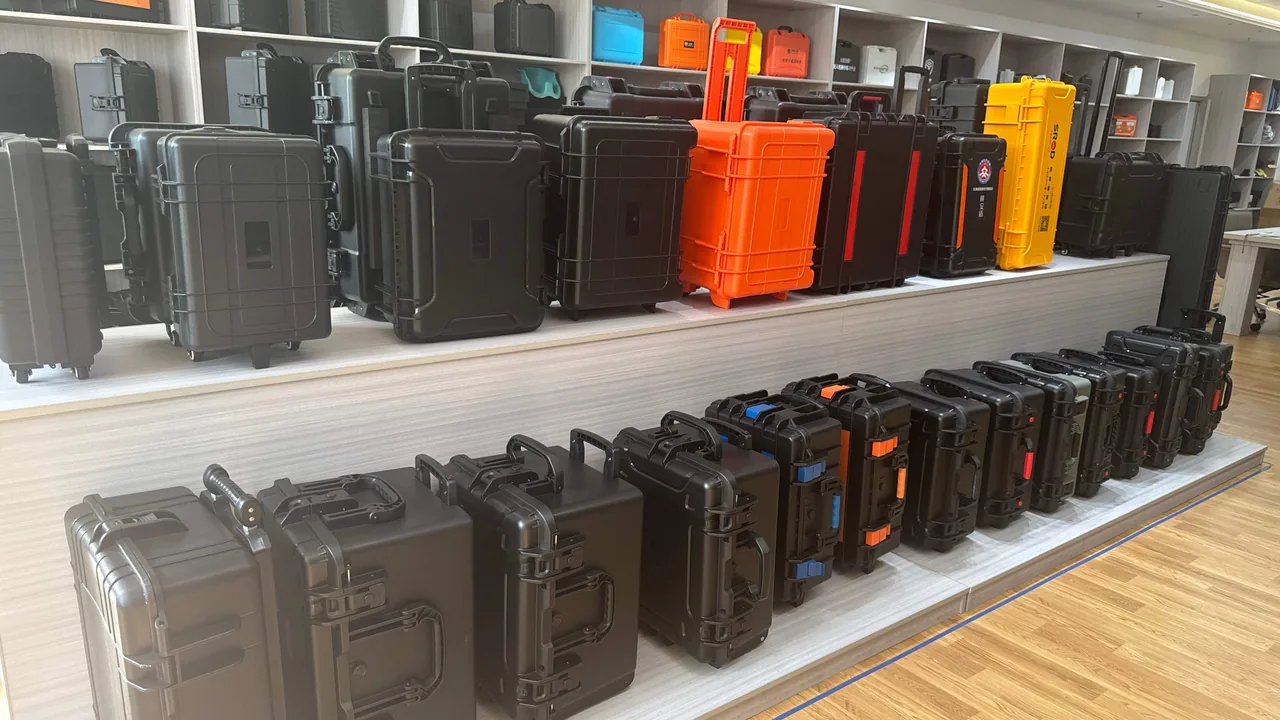
From crude oil to a finished, retail-grade edible oil, a refinery runs five stages back to back: degumming, deacidification, bleaching, deodorization and winterization. The bleaching filter and the deodorizer tower with its vacuum system are the two groups of equipment in that line that care most about surface condition and cleanliness. They leave the workshop polished, passivated, pressure-tested and cleaned - at their best. From there they face loading, long-haul road freight, port storage, sea freight in salt-laden air and open-air staging, before being lifted back into position. What decides whether the parts pass hydrostatic and hygiene acceptance first time is rarely the steel grade. It is whether sealing faces were chipped, whether filter media were flattened, and whether stainless surfaces started to pit.
JUNZHIJIA holds that the packaging metric for refining equipment is not compression resistance but state preservation: sealing faces with zero scratches, filter media with zero deformation, stainless steel with zero pitting, and a controllable, traceable internal microclimate. Break any one of these four lines and the failure surfaces on site as rework, deep cleaning or full replacement, at a cost far above the packaging that should have prevented it.
Table of Contents
- The Edible Oil Refining Chain and Why Component Cases Matter
- Bleaching Filters: Load-Bearing and Deformation Control for Plates, Screens and Cloths
- Spent Clay and Filter Cake: Dust, Moisture Uptake and Residual Oil
- Deodorizer Towers and Packed Columns: Vacuum Sealing Faces and Distributors
- Plate and Shell-and-Tube Heat Exchangers: Plates, Gaskets and Tube Bundles
- Vacuum Systems: Moisture and Corrosion Protection for Ejectors and Liquid Ring Pumps
- Fatty Acid Corrosion and Material Selection: Passive Film, Iron Contamination and Chlorides
- Food Safety and Cleanliness: Migration, Odour and Cleaning Residue
- Sealing Class, Gaskets and Pressure Equalization Valves
- Cushion Liners and Compartments: EPE, EVA, IXPE and PE
- Vibration, Shock and Stacking Verification: Standards and Criteria
- Temperature, Humidity, Salt Spray and Pitting Control
- Custom Tooling, OEM/ODM and Incoming Acceptance Criteria
- Frequently Asked Questions FAQ
- Conclusion and Related Reading
The Edible Oil Refining Chain and Why Component Cases Matter
Before designing protection, treat the refinery as a flow of components rather than a row of machines. Crude oil is first degummed to remove phospholipids, then deacidified to lower free fatty acids, then bleached with activated clay and carbon to adsorb pigments, soaps and trace metals, then deodorized under high temperature and deep vacuum using direct steam to strip fatty acids and odour bodies, and finally winterized when the product requires it.
Bleaching filters come as plate-and-frame presses, vertical leaf filters or candle filters, and their filter plates, screens, manifolds and hydraulic clamping gear all need individual protection. Deodorizer towers are packed, or a combination of trays and packing, and their internals include structured packing discs, random packing, liquid distributors, packing support grids and collectors. These thin-wall stainless parts are the most likely in the whole plant to be written off by a concentrated load. The vacuum system combines multi-stage steam ejectors, inter-stage condensers and liquid ring or dry vacuum pumps. Heat exchangers cover plate, spiral and shell-and-tube types.
| Stage | Core equipment | Parts needing individual protection | Most sensitive transit failure |
|---|---|---|---|
| --- | --- | --- | --- |
| Degumming | Centrifuge, mixer | Bowl, scroll, shaft seal | Balance loss, chipped seal face |
| Deacidification | Neutralizer, separator | Agitator shaft, distribution ring, sight glass | Shaft bending, broken glass |
| Bleaching | Bleaching filter, clay mixer | Plates, screens, manifold, hydraulic cylinder | Flattened screens, scratched seals |
| Deodorization | Deodorizer tower, packed column | Packing discs, distributor, support grid, flanges | Distorted internals, chipped seals |
| Vacuum | Steam ejector, liquid ring pump | Nozzle, diffuser, impeller, mechanical seal | Throat distortion, clearance change |
| Heat exchange | Plate, spiral, shell-and-tube | Plates, gaskets, tube bundle, baffles | Plate crush, gasket set |
Read this table and the first rule of refining equipment packaging appears: allocate protection by component, not by machine. Filter media need forming and anti-crease protection, tower internals need resistance to concentrated load while holding shape, stainless parts need contamination and corrosion control, and vacuum parts need clearance and surface preservation. These four constructs barely overlap.
Bleaching Filters: Load-Bearing and Deformation Control for Plates, Screens and Cloths
The bleaching filter separates spent clay carrying pigments and impurities from the oil. Whether plate-and-frame, leaf or candle design, its removable parts fall into four groups: load-bearing filter plates, the screens or cloths that do the filtering, the manifolds that route oil in and out, and the hydraulic cylinder and piston rod that apply clamping force. Their packaging requirements conflict, so they must be handled separately.
Filter plates fail according to material. Polypropylene plates are light and chemically resistant, but lose toughness at low temperature, chip at the corners under impact and creep under sustained load, so they must not be stacked under pressure or stored in the open through a hard winter. Stainless plates tolerate heat and pressure, but their sealing and channel faces are easily dented by hard objects; once a dent exists, a gasket cannot compensate and the plate goes for rework. Stainless plates therefore need sealing faces that never touch each other, separated by acid-free paper or PE film, with soft pads between plates.
Screens and cloths are the group most often scrapped in transit. Woven and sintered metal screens hate dents and bends; a corrugated screen that has been flattened loses filtration area and flux permanently, and that damage is not repairable. Filter cloths crease, take up moisture, grow mould and pick up oil, and a hard crease will form a preferential flow path or a tear in service. Metal screens should lie flat, clamped between rigid plates; cloths should be rolled or laid flat inside a dedicated clean bag, with the case kept dry.
Manifolds and collection pipes are thin-walled and perforated, and hole size governs blowback and oil distribution. A crushed hole changes the flow split across the whole machine and cannot be corrected on site. Piston rods and cylinders carry a chromium layer only tens of microns thick; a scratch pits quickly in a damp environment and then destroys the seal.
| Part | Typical material | Main failure mode | Packaging countermeasure |
|---|---|---|---|
| --- | --- | --- | --- |
| Filter plate | Polypropylene | Cold brittleness, chipped corners, creep | Separated compartments, no stacking, ambient transit |
| Filter plate | 304/316L | Chipped sealing face, channel dents | Protective film on seals, form-cut support |
| Metal screen | 316L woven or sintered | Dents, plastic bending | Flat lay, clamped between rigid plates |
| Filter cloth | Polyester, nylon, polypropylene | Creasing, mould, oil soiling | Rolled, moisture-proof, clean inner bag |
| Manifold, nozzle | 316L | Distorted holes, dust blockage | Capped ends, individual fixing, dust control |
| Piston rod, cylinder | Chromium-plated steel | Plating scratches, pitting | Soft end pads, moisture control, VCI |

Plates and screens are formed parts whose entire value lies in geometry, so the goal of transit protection is to keep that geometry unchanged until the parts are lifted back into position. Related practice on compartmentalising by component stiffness appears in Filter Press Equipment Cases: Storage and Transit Protection for Plates and Cloths.
Spent Clay and Filter Cake: Dust, Moisture Uptake and Residual Oil
Activated bleaching clay and activated carbon are also materials that must be transported, and their capacity to damage the internal environment of a case is consistently underestimated. Activated clay is bentonite treated with acid; it has an enormous surface area, absorbs moisture readily and raises dust easily. Activated carbon is finer still and strongly adsorptive. Once either enters a case, three things follow. Fine powder lodges in threads, orifices and seal grooves and is very hard to remove. Powder that has taken up moisture forms a paste on metal surfaces, providing an electrolyte for pitting. And where residual oil is present, clay that has absorbed oil forms a sludge that is expensive to clean.
One further risk is easily overlooked: clay and cloth soaked in oil are oxidation-heating materials. Oil-soaked cloth and oily spent clay can slowly oxidise and generate heat under sealed, stacked, poorly ventilated conditions, a recognised self-heating hazard in the oils and fats industry. Parts carrying oily residue, such as cloths and screens, should therefore be drained and roughly de-oiled before being packed clean, and should never share a compartment with desiccant or paper documents for long periods.
The dosing side matters too. Clay tanks, screw conveyors and rotary valves need capped ends and positive location, because fine powder migrates freely in transit and small clearances in a rotary valve will seize and wear. The conclusion is simple: a refining case must be physically isolated from the powder environment and must start life clean, dry and oil-free.
Deodorizer Towers and Packed Columns: Vacuum Sealing Faces and Distributors
Deodorization is the hottest and deepest-vacuum stage in refining, typically running at 220 to 260 degrees Celsius and an absolute pressure of a few millibar, stripping fatty acids and odour bodies with direct steam. Because the duty is severe, the internals are thin and precise, and those internals are exactly what transit damages most easily.
Structured packing discs are built from thin corrugated sheet or wire gauze. They offer high specific surface and low pressure drop, but are highly sensitive to compressive load. Flatten a few areas of a gauze packing disc and the mass transfer efficiency is no longer uniform across the disc, and no amount of site reshaping restores it. This is not a cosmetic issue, it is a performance issue. Structured discs must therefore stand upright on dedicated cradles, each in its own compartment, with nothing stacked on the disc face.
Random packing, including Raschig rings, Pall rings and saddles in ceramic, metal or plastic, fails differently: it breaks, loses edges and powders. Ceramic packing is brittle, and fragments from a drop or a squeeze travel into the tower and block distributors and support grids. Random packing should be bagged with an inner liner, with stack height controlled and no shared compartment with hard heavy items.
Liquid distributors are the watershed of a deodorizer. The tooth profile of a trough distributor, or the fine holes of a pipe distributor, sets whether liquid spreads evenly across the packing. A flattened tooth or a deformed hole causes channelling, with dry zones and overloaded zones that pull deodorization efficiency down. Distributors are classic thin-wall precision parts and must be packed individually with form-cut padding. Tower flanges and packing support grids are large structural items: a large-diameter flange sealing face has a tight flatness requirement and can only be dressed or replaced on site once chipped, while a welded support grid cracks at welds or warps under a concentrated load.
| Tower internal | Structure | Main failure mode | Protection focus |
|---|---|---|---|
| --- | --- | --- | --- |
| Structured packing disc | Thin corrugation plus gauze | Crushed, edge curled | Upright, dedicated cradle, own compartment |
| Random packing | Ceramic, metal, plastic | Breakage, chipped edges, powdering | Lined bags, stack height limit |
| Liquid distributor | Thin sheet plus fine holes or teeth | Distorted holes, flattened teeth | Form-cut padding, individual packing |
| Packing support grid | Welded grid | Weld cracking, warping | Multi-point support, face-to-face stacking |
| Tower flange | Large raised or flat face | Chipped seal face, flatness loss | Protective cover plate, edge ring |
| Stainless internals | 304/316L | Pitting, iron contamination | Clean packing, no carbon steel mixed |
The packaging logic for tower internals is shape preservation first: strength is usually adequate, while stiffness and precision are not, so constraining shape, limiting relative movement and eliminating point loads beats adding wall thickness.
Plate and Shell-and-Tube Heat Exchangers: Plates, Gaskets and Tube Bundles
A refinery has many heat duties: oil-to-oil exchange ahead of bleaching, energy recovery on deodorizer feed and discharge, steam heating and cooling water circuits. These map onto plate, spiral and shell-and-tube exchangers, and the protection logic for each differs.
Plate heat exchanger plates are commonly only 0.5 to 0.8 millimetres thick, and the chevron pattern pressed into them is both heat transfer surface and flow channel support. Plates are extremely sensitive to face contact and point loads: any dent changes local channel width and therefore flow distribution. The gaskets between plates, in NBR, EPDM or FKM, age, are attacked by oil, degrade under ultraviolet light and take a permanent set if compressed for long periods. Plates are therefore normally stored upright, hung with spacers, and gaskets are kept flat or in their original packaging. Never ship a plate pack in the clamped condition: after prolonged clamping the gasket may lose its resilience, and reassembly on site will leak.
Spiral exchangers are fully welded and stiff, but nozzles, flanges and lifting lugs are weak points where a knock can start a crack in the weld heat-affected zone. Shell-and-tube exchangers have a removable bundle of tubes, baffles, tubesheet and tie rods. Tubes are long and slender, and bending both obstructs reassembly and concentrates stress at expanded or welded tube ends; displaced baffles alter shell-side velocity distribution. Bundles should be rigidly fixed as a unit, with end rings fitted and a small axial clearance allowed to release thermal stress.
Plates usually ship with a peelable protective film, which is both an anti-scratch and an anti-corrosion layer. If the film is abraded through, the plate can suffer crevice corrosion where it meets damp air and dust. On arrival, check that the film is intact, then check the plate for dents, and only then remove the film.
| Exchanger type | Key removable parts | Sensitive failure | Transit location method |
|---|---|---|---|
| --- | --- | --- | --- |
| Plate | Plates, gaskets | Plate dents, permanent gasket set | Hung upright, spacers, gaskets stored flat |
| Spiral | Nozzles, flanges, lugs | Weld cracking, nozzle distortion | Rigid fixing, corner guards, soft slings |
| Shell-and-tube | Bundle, baffles, tubesheet | Tube bending, tube-end stress | Fixed as a unit, end rings, axial clearance |
| Plate, large | Frame plates, tie bolts | Bolt loss, frame distortion | Bolts in dedicated compartments |
In every case, heat exchanger packaging answers one question: will gaskets and sealing faces mate leak-free first time on site? Every locating measure exists to protect that. Related component-level practice appears in Heat Exchanger Parts Cases: Protection for Tube Bundles, Heads and Gaskets.
Vacuum Systems: Moisture and Corrosion Protection for Ejectors and Liquid Ring Pumps
Whether a deodorizer holds a few millibar absolute depends on the vacuum system. The common arrangement is multi-stage steam ejectors with inter-stage condensers, sometimes with a liquid ring or dry vacuum pump as final stage or alternative. What these systems share is that performance is set by dimensional accuracy and running clearance, neither of which can be protected by adding wall thickness.
The heart of a steam ejector is the nozzle and diffuser. The nozzle is a Laval form, and throat diameter and expansion angle are the parameters that determine suction capacity; the diffuser converts the kinetic energy of high-velocity gas into pressure. A dent, scratch or slight distortion at the nozzle throat changes steam flow and velocity distribution, so suction efficiency falls, and that loss cannot be recovered by adjustment on site. Nozzles and diffusers must be individually fixed with form-cut padding and must not be allowed to strike each other.
Inter-stage condensers are often graphite block exchangers. Graphite has excellent corrosion resistance but is brittle and poor in impact, so a single knock can crack a channel invisibly. Graphite parts need rigid overall support, no local point loads and no shared compartment with heavy metal items. Liquid ring pumps have an impeller and a mechanical seal as removable parts: the impeller is dynamically balanced, so any distortion introduces an imbalance that appears later as vibration and bearing wear, while the mating faces of the mechanical seal leak if chipped. Dry vacuum pumps, whether screw or claw type, run with clearances of only tens of microns between rotor and rotor and between rotor and casing, so an impact that shifts a rotor slightly can cause scoring on first start-up.
| Vacuum part | Material | Sensitive point | Packaging countermeasure |
|---|---|---|---|
| --- | --- | --- | --- |
| Steam nozzle | 316L or graphite | Throat dimension, surface finish | Form-cut padding, single fixing, end caps |
| Diffuser | 316L | Internal distortion, impact damage | Internal brace plus outer guard |
| Graphite condenser | Impregnated graphite | Brittle cracking, hidden channel cracks | Rigid support, face contact, no point load |
| Liquid ring impeller | Stainless or bronze | Balance, blade distortion | Dedicated cradle, axial fixing |
| Mechanical seal | Silicon carbide or graphite | Chipped mating faces | Individual box, soft padding, dust control |
| Pump shaft | Stainless steel | Bending, plating scratches | Multi-point support, axial limit |
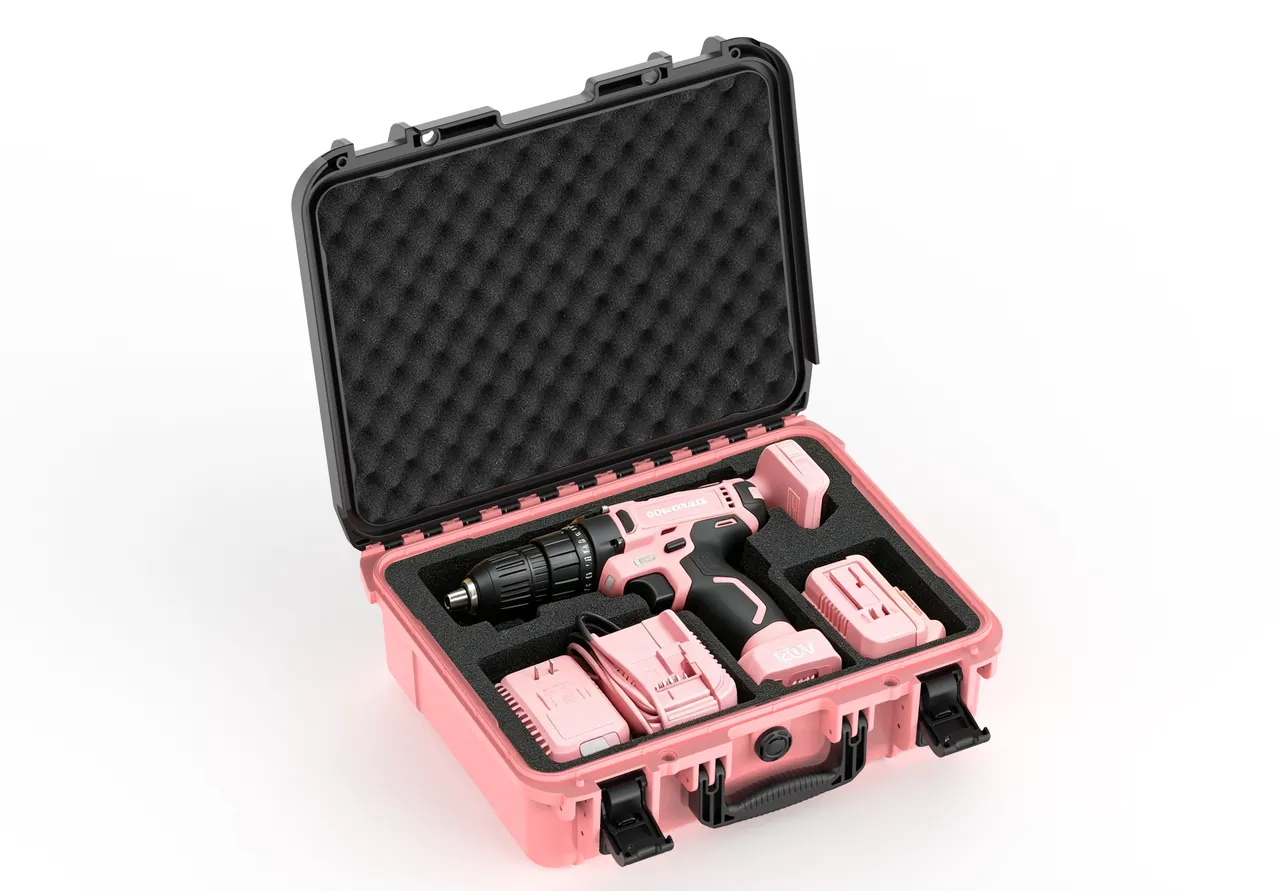
One more risk is easily neglected: moisture. Graphite parts, silicon carbide seal faces and stainless internal cavities absorb moisture, pit and pick up contamination during long periods in damp air, and pumping before drying simply carries water vapour into the system. Vacuum parts should travel in barrier packaging with desiccant and a humidity indicator card, and the card should be read before drying and reassembly.
Fatty Acid Corrosion and Material Selection: Passive Film, Iron Contamination and Chlorides
Refining equipment uses stainless steel widely because hot fatty acids and steam corrode carbon steel badly. Stainless relies on a passive film of chromium oxide, and transport and storage attack that film from two directions: mechanically and chemically.
Mechanical damage and iron contamination are the commonest. Carbon steel case bodies, pallets, timber bearers, tools and swarf leave free iron particles on stainless surfaces on contact or by sharing a compartment. Those particles rust first in damp air, and the rust spots are both a cosmetic defect and the starting point of corrosion. Worse, pitting from iron contamination often appears months after commissioning, by which time it is blamed on the steel grade. On food contact equipment it is also a hygiene concern. Stainless parts must therefore never share a compartment with carbon steel and must never touch it; liners and dividers should be stainless-clad, plastic or sulphur-free rubber.
Chloride pitting is the second path. Chloride ions break the local integrity of the passive film and form pits, and the higher the temperature and chloride concentration the more readily this happens. Sea freight, coastal projects and chloride-bearing cleaning residues all introduce chlorides, and condensation driven by day-night temperature swings forms a chloride-enriched liquid film. The response is to control humidity, control chlorides and protect the surface: hold internal humidity low, choose low-chloride, sulphur-free liner materials, and use full barrier packing for stainless parts where needed.
| Material | Typical application | Corrosion behaviour | Transit protection focus |
|---|---|---|---|
| --- | --- | --- | --- |
| 304 | General internals, exposed structure | Resists normal atmosphere and oils | Iron contamination, scratching |
| 316L | Tower internals, distributors, nozzles | Resists fatty acids and chlorides | Chloride pitting, clean packing |
| Duplex | High-corrosion sections, tubes | High strength plus stress corrosion resistance | Impact, point loading |
| Titanium | Extreme corrosion duties | Excellent resistance, high cost | Scratching, hydrogen contamination |
| Impregnated graphite | Inter-stage condenser | Corrosion resistant but brittle | Brittle cracking, point loads |
This gives a practical acceptance test: check stainless parts on arrival for both appearance and surface contamination, not for scratches alone. Wipe a sample area with white non-woven fabric and look for iron residue, and where necessary run a ferroxyl or blue-spot test or re-passivate, turning iron contamination from a judgement call into a verifiable acceptance item. Related corrosion and cleanliness thinking appears in Chemical Reactor Parts Cases: Balancing Corrosion Resistance and Cleanliness.
Food Safety and Cleanliness: Migration, Odour and Cleaning Residue
Refining equipment presents many food contact surfaces. Its packaging liner does not touch finished oil directly, yet it can affect surface condition through a contact, migration and residue path, and thereby affect food hygiene. This is what separates refining equipment packaging from general industrial packaging.
Migration means low-molecular-weight components of the liner transferring to equipment surfaces under temperature, time and contact. Certain plasticisers in flexible PVC, small molecules in recycled foam and residual solvents in adhesives are all candidates to avoid. Refineries normally clean or passivate before installation, but contamination that has entered a rough surface or a thread is hard to remove completely, so liners should be food-grade polyethylene foam, EVA or an inert plastic rather than foam of unknown recycled origin or material containing harmful plasticisers.
Odour is the second path. Rubber, low-grade EVA and adhesives release volatile odours, and stainless surfaces, particularly the high-surface-area tower internals and packing, tend to adsorb them. Adsorbed odour is slowly released when the equipment is heated at start-up and can affect the flavour of the first oil produced. Liners and packaging aids close to food contact surfaces should therefore be low-odour, and strong-smelling paper or timber should not be used inside the case.
Cleaning residue and foreign matter are the third path. Shedding paper, linting felt and fibre from synthetic fabric can all become foreign matter inside a cavity and reach the oil circuit in service. If paper cushioning is used it should be acid-free and kept away from cavities; it is more robust to let non-shedding foam do the cushioning and locating.
| Risk path | Main source | On-site consequence | Control measure |
|---|---|---|---|
| --- | --- | --- | --- |
| Migration | Plasticisers, recycled material, adhesive | Surface contamination, compliance risk | Food-grade PE or EVA liner, no recycled content |
| Odour | Rubber, low-grade foam, timber | Adsorbed odour affects oil flavour | Low-odour materials, odour pre-check |
| Foreign matter | Paper dust, fibre, felt lint | Cavity residue, oil circuit blockage | Non-shedding liner, sealed cavities |
| Micro-organisms | Damp cloth, oily residue | Mould, hygiene failure | Drained and de-oiled, desiccant, clean bag |
A workable rule is to treat packaging materials near food contact surfaces with the caution applied to indirect food contact materials. That does not demand certified food-grade liner for every part, but it does demand no dust, no migration, no odour and cleanability. Related clean assembly and inner-bag practice appears in Food Processing Line Equipment Cases: Protection for Conveying and Forming Components.
Sealing Class, Gaskets and Pressure Equalization Valves
The sealing design of a refining equipment case must answer two questions at once: protect against what, and can it breathe. The first sets the IP class, the second decides whether a pressure equalization valve is mandatory.
Choose the IP class from the harshest condition across the whole logistics chain. IP65 means dust-tight and resistant to water jets from any direction, IP66 adds resistance to powerful jets, IP67 adds short-term immersion and IP69K adds high-temperature, high-pressure washdown. For indoor installation, short hauls and shaded staging, IP65 is usually sufficient. IP66 or IP67 is genuinely justified for long-term open-air storage, coastal high-salt sites and export sea freight. Refining parts are often large structural items, and the larger the case the longer the sealing perimeter and the greater the deflection it must tolerate, which makes sealing harder.
Gasket material must match the environment. Silicone (VMQ) has a wide temperature range and good weathering and is a general-purpose choice; EPDM offers excellent water and weather resistance at moderate cost; NBR tolerates oil well but weathers less well; FKM gives the best high-temperature and chemical resistance. Foamed silicone strip running against a curved compression face is a common construction, because controlling compression ratio balances sealing against life: too little seals poorly, too much causes permanent set and early failure.
A pressure equalization valve is often essential on refining cases. Its core is an expanded polytetrafluoroethylene (ePTFE) membrane that equalises pressure while blocking liquid water and dust. Refining parts often see repeated sea voyages and wide day-night temperature swings. During the day internal gas expands and at night it contracts; without a breather, the gasket is repeatedly pushed and ages faster, and the moment the case is opened a negative pressure draws damp outside air inside. High sealing, a breather valve and desiccant form one system, not three alternatives.
| Seal configuration | Application | Advantage | Note |
|---|---|---|---|
| --- | --- | --- | --- |
| IP65 with silicone | Indoor, short haul, shaded | Moderate cost, general purpose | Not for prolonged immersion |
| IP66 with EPDM | Open-air staging, wet regions | Weather and water resistant | Requires breather valve |
| IP67 with FKM | Coastal, sea freight, salt spray | High sealing class | Long perimeter, tight face tolerance |
| IP69K with reinforced seal | Washdown environments | Withstands hot high-pressure wash | Complex, higher cost |
Sealing class, case stiffness and breather must be verified together. A well-sealed but flexible large case will lose its seal through deflection under stacking and transit, and no rating will hold. Related sealing materials and structure selection appear in Gasket and Seal Material Selection Guide.
Cushion Liners and Compartments: EPE, EVA, IXPE and PE
Refining equipment includes filter plates weighing tens of kilograms and distributors weighing a few kilograms, brittle graphite parts and thin-wall stainless parts. No single material covers every need, so the sound approach is to select material from stiffness, weight and precision combined, and to separate parts of different character into compartments.
EPE (expanded polyethylene) is low in density, resilient and cost-effective, well suited to being the main support and gap filler for large items. EVA (ethylene-vinyl acetate) is denser and tougher and can be heat-formed into accurate shapes, so it suits precision parts such as distributors, nozzles and gaskets, locking them into position. IXPE (cross-linked polyethylene foam) has finer cells and higher cushioning efficiency, suited to thin-wall and tight-clearance situations and often used as case-wall lining. PE sheet is rigid and serves as divider, support pillar and cavity frame, carrying location and load rather than cushioning. PU poured foam can produce a fully conforming nest with good resilience, though at higher cost and with some moisture sensitivity.
The core principle of compartmentalisation is to keep parts of similar stiffness together and to separate hard from soft and heavy from light. Heavy filter plates and hydraulic parts belong in a load-bearing cavity with rigid dividers carrying load straight to the base and reinforcing ribs. Precision distributors, nozzles and mechanical seals belong in individual compartments surrounded by EVA or IXPE. Filter cloths and gaskets belong in a clean inner bag away from metal. Carbon steel must never share a compartment with stainless steel, and graphite parts must never sit where another part can press on them.
| Liner material | Density and feel | Main use | Example parts | Note |
|---|---|---|---|---|
| --- | --- | --- | --- | --- |
| EPE | Low density, soft, resilient | Large-part support, gap filling | Filter plates, frames, bundles | Consider creep under long load |
| EVA | High density, heat-formable | Precision form-cut location | Distributors, nozzles, gaskets | Higher cost, tooling or heat forming |
| IXPE | Fine cells, efficient cushioning | Thin-wall parts, lining | Thin plates, instruments, sensors | Assess tear resistance |
| PE sheet | Rigid | Divider, frame, load path | Cavity dividers, pillars | Not a cushioning material |
| PU poured | Fully conforming | Shaped nests | Irregular internals, valve bodies | High cost, moisture sensitivity |
Liner design is not about being softer or thicker; it is about constraining parts reliably under acceleration in any direction. Related foam comparison and selection appears in Cushioning Foam Material Comparison: Choosing EPE, EVA and IXPE.
Vibration, Shock and Stacking Verification: Standards and Criteria
Refining parts are often long, thin, heavy and asymmetric, and their transit failures are cumulative rather than single-event: sustained micro-movement under road vibration loosens fasteners, shifts liners and fatigues thin walls. A packaging scheme must therefore be verified by test rather than accepted on experience alone.
Common test standards include the ISTA series for parcel and pallet transport, such as 1A, 2A and 3A; ASTM D4169 for distribution cycles, where DC 13 and DC 18 are frequent combinations; the GB/T 4857 series of basic transport package tests; and MIL-STD-810H for military and severe environments. Refining parts usually need a combination of vibration, drop, stacking and incline impact.
Criteria should be quantified. Typical practice checks that case and liner show no structural cracking or displacement; that relative movement of parts within the cavity stays within a set limit; that sealing faces show no compression marks under contact checks using carbon paper or pressure tape; that peak acceleration recorded by accelerometer during transit or bench testing stays within limits; and that parts and accessories match the packing list after opening.
Resonance is a hidden risk for long rods and tubes. Road random vibration concentrates energy in the lower frequency bands, and the first bending mode of a long tube bundle, screw shaft or filter plate can fall inside that band. Once resonance occurs, local stress multiplies. This is why long parts need multi-point support with spacing that has been calculated, rather than being tied at both ends and forgotten.
| Test | Common standard | Purpose | Typical criterion |
|---|---|---|---|
| --- | --- | --- | --- |
| Random vibration | ISTA 3A, GB/T 4857 | Cumulative fatigue and fastener security | No loosening, movement or cracking |
| Drop | ISTA 1A, GB/T 4857 | Handling impact tolerance | Case intact, contents unbroken |
| Stacking | ASTM D4169, GB/T 4857 | Static load and creep allowance | No collapse, seal intact |
| Incline impact | ASTM D4169 | Emergency-stop impact | Liner no shift, ends unchipped |
| Resonance search | MIL-STD-810H | Identify long-part resonance bands | Avoid main transport frequencies |
Testing exists to expose weak points and drive improvements in support and liner, not to issue a certificate. The valuable output is information such as which part moves, in which direction and at what acceleration.
Temperature, Humidity, Salt Spray and Pitting Control
Temperature and humidity are the slowest and harshest variables in refining equipment packaging. They cause no instant breakage; they change surface condition over weeks.
Salt spray is often misunderstood. Although 304 and 316L perform well in normal atmospheres, they still pit in chloride-bearing environments, and the risk rises sharply when chloride concentration, temperature and surface condition combine. GB/T 10125, the neutral salt spray test, and ISO 9227 are the usual evaluation methods, and test duration should follow the actual logistics chain and project environment rather than being copied from a number. For sea freight and coastal projects, stainless parts should use barrier packing to keep salt spray away from the surface.
Humidity and condensation are the second thread. Containers form "container rain" as temperatures swing day to night, with condensate dripping from the roof; if condensation forms inside the case as well, precision surfaces carry a liquid film enriched with contaminants. The response has three layers: an outer barrier film to reduce vapour exchange, an adequate desiccant charge inside to absorb residual moisture, and a pressure equalization valve so that pressure differences vent through the membrane instead of drawing damp air in. A humidity indicator card turns "has it got damp" into readable, photographable evidence.
Temperature shows up as changing material properties. Polypropylene filter plates lose toughness at low temperature and become more brittle; rubber gaskets age faster under sustained heat or direct sunlight; some adhesives soften or migrate when hot. Liner materials and adhesives should be selected for the extremes actually encountered, and the storage temperature range should be stated in the packaging specification.
| Factor | Main targets | Typical consequence | Control measure |
|---|---|---|---|
| --- | --- | --- | --- |
| Salt spray, chlorides | 316L and 304 stainless | Pitting, rust spots | Barrier packing, low-chloride liner |
| High humidity, condensation | All metal and graphite parts | Liquid film corrosion, moisture uptake | Desiccant, barrier film, breather valve |
| Low temperature | PP plates, rubber | Brittleness, hardening | Ambient transit, insulated liner |
| High temperature | Gaskets, adhesives, foam | Ageing, migration, softening | Shade, temperature-rated selection |
| Day-night cycling | Gaskets, case body | Repeated pressure differential | Breather valve, controlled compression |

With salt spray, humidity and temperature considered together, material selection becomes clear: case stiffness decides whether the seal holds, liner material decides whether contamination is avoided, and microclimate control decides whether the surface is preserved. A cross-comparison of outdoor and corrosion-resistant materials appears in Stainless Steel versus Plastic Cases for Outdoor Use.
Custom Tooling, OEM/ODM and Incoming Acceptance Criteria
Refining parts often come from several suppliers in different sizes, and a standard case rarely satisfies location, cleanliness and load requirements at once, so customisation is usually extensive. A mature custom flow runs from collecting part drawings and a component list, through grading parts by stiffness and precision, defining compartments and liner detail, sampling and trial packing, small-batch verification, to volume delivery. The trial packing step cannot be skipped: only real parts in a real case reveal interference, pressure points and handling difficulties that drawings do not show.
For projects that need visual and brand consistency, OEM/ODM capability matters equally. Customisable items include case colour and printed logo, nameplates and QR traceability, shipping documents such as the packing list, material certificates, hygiene-related certificates, pressure test reports, assembly drawings and reassembly guidance, and separate packaging for accessories. Export projects may also involve packaging compliance and labelling requirements that should be settled at the specification stage.
Incoming acceptance is where all of the above reaches paper. Form an acceptance checklist with four columns: item, method, criterion and disposition, so every point is measurable, judgeable and traceable.
| Acceptance item | Method | Acceptance criterion | Disposition |
|---|---|---|---|
| --- | --- | --- | --- |
| Case appearance and structure | Visual and manual | No cracking, no severe distortion | Photograph and assess contents |
| Gasket condition | Visual and compression check | No permanent set, no detachment | Replace gasket |
| Breather valve | Ventilation check | Venting normal, undamaged | Replace valve, recheck humidity |
| Liner fit | Trial fitting every part | No shift, no abnormal marks | Adjust or replace liner |
| Seal face protection | Inspect after film removal | Film intact, no scratches | Assess dressing or replacement |
| Humidity indicator card | Read and photograph | No colour change or below threshold | Dry and re-inspect |
| Accessory quantity and spec | Against packing list | Item by item match | Reissue and record difference |
Acceptance is not only confirmation that a shipment arrived intact; it feeds results back into the next batch of packaging. On a well-run project the checklist gets shorter with each batch, because problems are eliminated at the packing stage.
Frequently Asked Questions FAQ
Q: Why can edible oil refining equipment not simply be shipped in an ordinary wooden crate?
A: A crate solves outer containment and rain shedding, but it does not solve the three things refining equipment really fears: precision surfaces being scratched, thin-wall parts being crushed, and stainless steel being contaminated and corroded. Timber bearers and nails inside a crate are hard protrusions, and transport vibration keeps sealing faces, thin-wall distributors and screens rubbing against them, so plating, passive film and geometric accuracy are lost in movement that looks trivial. Timber also sheds, takes up moisture and releases odour, creating foreign matter and odour risks for food contact equipment. A bare crate also cannot control internal humidity, and sea freight combined with day-night temperature swings produces condensation that sets up pitting. Where parts are heavy, the crate must also carry stack load to the base through stiff members rather than through the contents, because a timber bearer spanning an unsupported gap will deflect and press on whatever sits beneath it. The correct approach provides structure and rain shedding outside, location and cleanliness inside, and drying plus pressure equalisation for the microclimate, all at once.
Q: How do bleaching filter plates and screens most often fail in transit?
A: Plates and screens are formed parts, so they fail geometrically. Polypropylene plates typically suffer cold brittleness and chipped corners; stacked or impacted during winter transport they crack from the loaded corner, and sustained load also causes creep that leaves the sealing face uneven. Stainless plates fail mainly through sealing face impact damage, and once a dent exists a gasket cannot compensate for it. Woven and sintered metal screens fail by denting and bending; a corrugated screen flattened in transit loses filtration area permanently. Filter cloth creases, takes up moisture, grows mould and picks up oil, and a hard crease forms a preferential flow path in service. Incoming inspection should therefore compare every plate and screen against a reference sample and a flatness check, not simply count the pieces received, because the damage that matters is often invisible at a glance. The countermeasures are to separate plates into compartments, forbid stacking, protect sealing faces with film and support them with form-cut padding, lay screens flat and clamp them between rigid plates, and roll cloth into moisture-proof clean bags.
Q: Why must structured packing discs for a deodorizer stand upright in their own compartments?
A: Because a structured packing disc is a thin-wall precision part designed around specific surface area and uniform channels, and its entire value lies in its shape. It is built from densely packed corrugated sheet or wire gauze, and its stiffness is far below its strength, so under compression it buckles first and then deforms plastically. Once part of it is crushed or an edge is curled, the channel dimensions in that area change, steam and liquid distribution become uneven, deodorization efficiency falls, and no site reshaping restores it. If several discs are stacked, the lower discs carry the whole stack and are very likely to be crushed under long-haul vibration, and a disc that looks acceptable from above may have flattened corrugations underneath. The correct practice is therefore to stand each disc upright on a dedicated cradle, keep the disc face clear of any load, give each disc its own compartment, and mark orientation and this-way-up on the packing list so that nobody stores the case on its side.
Q: Why is iron contamination such a problem for stainless steel parts in refining equipment?
A: Stainless steel relies on a dense passive film for corrosion resistance, and once free iron particles sit on the surface they rust first in damp air. The resulting rust spots are simultaneously a cosmetic defect and a corrosion initiation site. Iron contamination has many sources: carbon steel case bodies, pallets, timber bearers, tools and swarf, and even carbon steel dust blown in during transport. It is insidious because the rust spots often appear only months after commissioning, and are then misdiagnosed as a material problem. On food contact equipment such as refining parts, iron contamination is also treated as a hygiene concern, and a customer audit will raise it regardless of how well the equipment performs. Stainless parts must therefore never share a compartment with carbon steel and must never touch it, liners and dividers should be stainless-clad, plastic or sulphur-free rubber, and on arrival a white non-woven wipe sample, with a ferroxyl or blue-spot test where needed, provides objective evidence rather than opinion.
Q: Why are vacuum system nozzles and rotors so sensitive to transit shock?
A: Because vacuum system performance is set by dimensional accuracy and running clearance rather than by structural strength. A steam ejector nozzle is a Laval form in which throat diameter and expansion angle are the core parameters of suction capacity, so a dent or scratch at the throat changes steam flow and velocity distribution and lowers suction efficiency, and that loss can barely be adjusted out on site. A liquid ring pump impeller is dynamically balanced, so any distortion introduces an imbalance that shows up later as vibration and bearing wear. A dry vacuum pump runs with clearances of only tens of microns between rotor and rotor and between rotor and casing, so a micro-displacement caused by one impact can cause scoring on first start-up. Replacing a scored rotor or a distorted nozzle usually means a long lead time and a repeat of the acceptance testing. These parts must therefore be individually fixed with form-cut padding, prevented from striking each other, and shielded from high transit acceleration.
Q: How does packaging for food contact equipment avoid odour and migration?
A: The key is to treat packaging materials near food contact surfaces with the caution applied to indirect food contact materials. On migration, certain plasticisers in flexible PVC, small molecules in recycled foam and residual solvents in adhesives can transfer to equipment surfaces, and once they have entered a rough surface or a thread they are difficult to remove completely, so liners should be food-grade polyethylene foam, EVA or an inert plastic rather than material of unknown recycled origin. On odour, rubber, low-grade foam and timber release volatiles, and stainless tower internals and packing have large surface areas that tend to adsorb them; the adsorbed odour is slowly released when the equipment is heated at start-up and can affect the flavour of the first oil, so low-odour materials should be selected and an odour pre-check performed. Non-shedding foam should carry the cushioning and locating duty so that paper dust and fibre do not become foreign matter inside cavities, and any liner that has picked up a smell in storage should be replaced rather than aired.
Q: Should a refining equipment case be rated IP65 or IP67, and is a pressure equalization valve needed?
A: Define the environment first, then the class, then verify pressure differential. IP65 suits indoor installation, short hauls and shaded staging; IP66 suits open-air staging and wet regions; IP67 adds short-term immersion for long-term open-air storage, coastal high-salt sites and sea freight. What matters more than the class is the breather valve, because unless the case is hermetically sealed with a rigid, unchanging geometry, day-night temperature swings will repeatedly load the gasket. Without a breather, the gasket is held under continuous compression and ages faster, and opening the case draws damp outside air inward under negative pressure. An ePTFE breather membrane equalises pressure while blocking liquid water and dust, which is exactly what a case that cannot be opened during transit needs. High sealing, a breather valve, desiccant and a humidity indicator card should therefore be specified as one system, then rechecked against the longest route the equipment will actually travel, against the season in which it will be shipped, and again at each contract review.
Q: Which quantified indicators should be checked when refining parts arrive on site?
A: Use the technical agreement and packing list as the reference, covering seven groups. First, case appearance and structure, checking for cracking and severe distortion. Second, gasket condition, checking for permanent set and detachment. Third, breather valve function, confirmed by a ventilation check. Fourth, liner fit, verified by trial fitting every part to confirm no shifting and no abnormal pressure marks. Fifth, seal face protection, checking after film removal that the protective film is intact and the sealing face unmarked. Sixth, the humidity indicator card reading, photographed before the case is opened, with drying and re-inspection if the threshold is exceeded. Seventh, accessory quantity and specification against the packing list. Stainless parts can be given an additional iron contamination wipe test. Together these checks form a loading, arrival and unpacking evidence chain; a single signed acceptance sheet, kept with the photographs, is what makes that chain usable months later.
Conclusion and Related Reading
Protecting refining equipment is state preservation: deliver intact sealing faces, accurate filter media and clean stainless surfaces exactly as they left the factory. JUNZHIJIA builds form-cut liners, component compartments, breather valves and OEM/ODM tooling for edible oil refining cases.
Related Reading