

A forklift is a heavy-duty, high-cycle machine, and its spare parts and subassemblies carry four awkward properties at once: they are heavy, they are long, they are precise, and they hate moisture. On a three-tonne internal-combustion truck, a single mast section can run 2.4 to 4.2 metres and weigh 180 to 420 kilograms, while the lift cylinder and the multi-way valve group beside it are machined to micron clearances. Ship them in one consignment across a province or an ocean, and a single impact, tilt or damp night can turn into downtime at the end customer's bay. A bent mast section produces off-centre loading between the rollers and the channel, which shows up as jerky lifting and uneven chain tension; a valve group that weeps residual oil and collects dust develops spool sticking far more often.
The JUNZHIJIA protection principle is simple: a forklift parts case is not about fitting everything in, but about giving every metre of a long section a support point, giving every hydraulic port its own sealed chamber, and giving every vibration on a harness somewhere to go. We build the whole route from factory gate to service bay around three lines of attack: straightness restraint for mast-length parts, leak-proof segregation for valve groups and cylinders, and vibration plus moisture defence for electronic controls, backed by stacking capacity, salt-spray protection and transport testing.
Table of Contents
- Typical Failure Modes in Forklift Parts Logistics and Protection Targets
- Mast Sections and Long Parts: Straightness Support and Bending Restraint
- Hydraulic Valve Groups and Cylinders: Segregated Chambers and Cleanliness Control
- Electronic Controls, Sensors and Wiring Harnesses: Vibration and Moisture Defence
- Forks, Attachments and Counterweights: Load-Bearing Liners
- Material and Structure Selection: HDPE, PP, PC and Aluminium Frames
- Sealing Classes: IP65/IP67 and IEC 60529 / GB/T 4208
- Cushioning System: Combining EPE, EVA, PE and IXPE
- Latches, Hinges and Pressure Equalization Valves
- Stacking, Load Capacity and Pallet Planning
- Temperature, Humidity, Salt Spray and Rust Control (GB/T 10125)
- Transport Testing and Acceptance Criteria (ISTA / GB-T 4857 / ASTM D4169)
- Frequently Asked Questions FAQ
- Conclusion and Related Reading
Typical Failure Modes in Forklift Parts Logistics and Protection Targets
Damage to forklift parts in transit rarely means a crushed box. It spreads across several channels at once: long sections take a permanent set, hydraulic units weep, electronics draw moisture, machined surfaces rust, seals fail and stacks collapse. Only a written failure list tells you where protection money should go. A mast section is supported at both ends and spans more than 1.5 metres in the middle, so transport vibration superimposed on vehicle braking leaves a residual bend. A multi-way valve group is wrapped in foam but its ports face downward and stay open, so escaping oil contaminates everything else in the case.
| Part family | Typical failure mode | Triggering condition | Protection target | Countermeasure |
|---|---|---|---|---|
| --- | --- | --- | --- | --- |
| Mast sections, inner and outer | Residual bend, channel edge damage | Long-haul vibration, drops, stacking | Straightness at or under 1.5 mm/m | Multiple V-supports, limited overhang |
| Lift cylinder | Rod scoring, chrome pitting | Rolling inside the case, condensation | Rod finish and plating intact | Dedicated cradle plus rod sleeve |
| Multi-way and priority valves | Spool sticking, port contamination | Residual oil weep, dust ingress | Closed ports, clean fluid path | Plugs plus a dedicated drainage chamber |
| Controller and contactors | Short circuit, terminal oxidation | Day-night condensation, salt spray | Controlled internal humidity | Desiccant plus moisture barrier bag |
| Harnesses and sensors | Abraded insulation, loose plugs | Sustained vibration, repeated handling | No movement, plugs retained | Tie-down points plus foam isolation |
| Forks and attachments | Surface rust, edge nicks | Sea transit, rain exposure | No red rust, no chipped edges | VCI film plus local wrapping |
| Case sealing system | Water ingress, pressure suction | Thermal cycling, air and sea freight | Maintained IP65 or IP67 | Gasket plus pressure equalization valve |
Every row maps to an acceptance criterion, and putting those criteria into the procurement specification beats arguing at goods-in about whether a mark counts as damage. For a wider view of how machinery parts are protected, see the approach in Construction Machinery Parts Cases.
Mast Sections and Long Parts: Straightness Support and Bending Restraint
A forklift mast is a nested assembly of inner and outer channels, usually rolled C or J profiles, with lengths from 1.8 to 4.5 metres and a high slenderness ratio. This makes masts the parts most likely to come out of a case with a permanent set. When the energy of road vibration lands near the first bending mode of the profile, amplitude is amplified, and the longer the unsupported overhang, the more readily the section is thrown into plastic deformation. The whole discipline therefore reduces to one sentence: supports close enough, overhangs short enough, contact faces soft enough.
Support spacing is the first parameter that decides straightness. For profile depths of 100 to 160 mm, keep spacing at or below 800 mm; for depths of 160 to 220 mm, keep it at or below 1000 mm; and never allow an end overhang beyond 150 mm. Supports are shaped as custom EVA or PE V-blocks with a 90 to 120 degree included angle and a 2 to 3 mm closed-cell foam face, so the metal never touches metal and no stress concentration point forms.
| Profile depth | Recommended spacing | Maximum end overhang | Support type | Straightness acceptance |
|---|---|---|---|---|
| --- | --- | --- | --- | --- |
| Up to 100 mm | Up to 600 mm | Up to 120 mm | EVA V-block | 1.5 mm/m or less |
| 100 to 160 mm | Up to 800 mm | Up to 150 mm | EVA or PE V-block | 1.5 mm/m or less |
| 160 to 220 mm | Up to 1000 mm | Up to 150 mm | Widened PE V-block | 2.0 mm/m or less |
| Over 220 mm | Up to 1200 mm plus mid clamp | Up to 150 mm | Profile clamp plus V-block | 2.0 mm/m or less |
Long parts also need axial restraint. Fit a limit block at each end with a 3 to 5 mm compression allowance, so the section cannot slide lengthwise but is never rigidly trapped. When several mast sections ship in one case, separate each layer with a full-width EPE sheet and forbid direct stacking, because the line contact at a channel flange leaves a local indentation under vibration. If a lift cylinder travels in the same case, give it its own cradle, keep the rod upward or sleeved, and never let it touch the sections. For related hydraulic hardware, see Hydraulic Lift Equipment Parts Protection.
Hydraulic Valve Groups and Cylinders: Segregated Chambers and Cleanliness Control
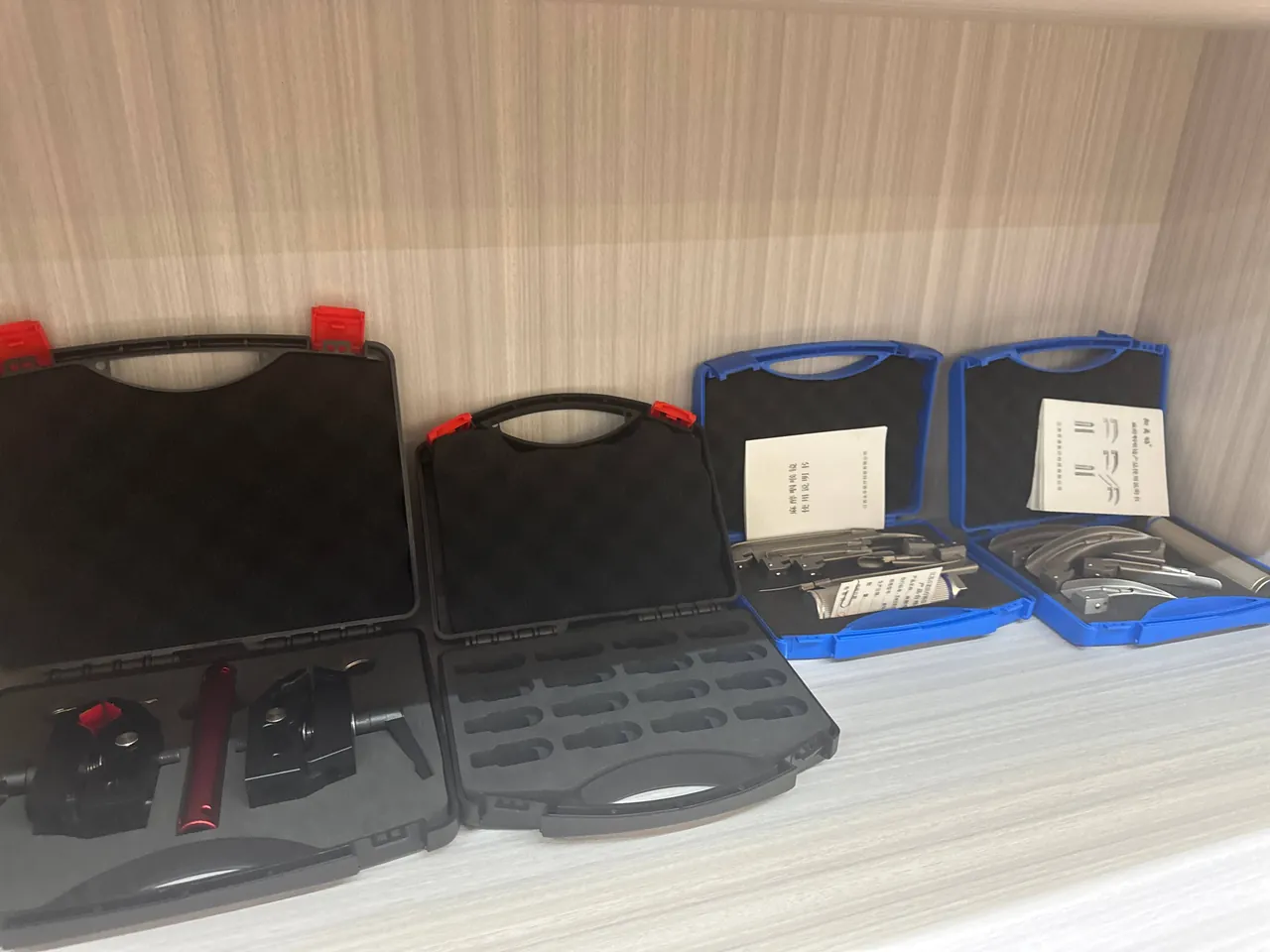
Hydraulic parts are the most contamination-sensitive family in the whole shipment. The spool-to-bore clearance in a multi-way, priority or relief valve is typically 3 to 8 micrometres, so a single 50 micrometre particle is enough to jam the spool. Forklift spares are usually pressure-tested before dispatch, which means a small amount of oil inevitably remains inside. Temperature swings in transit push that oil past the ports, and once it mixes with dust the resulting sludge drops cleanliness far below the ISO 4406 18/16/13 typically recorded at dispatch.
Leak-proof segregation works in three layers. Layer one is port-by-port plugging: every port receives a plastic plug or steel blind cap matched to its thread, with an O-ring on the seating face, and tape wraps are forbidden. Layer two is the dedicated drainage chamber: an absorbent pad or high-capacity sheet sits under the valve group, sized to about three times the residual oil volume, and EVA partitions separate it from everything else so a weep cannot migrate. Layer three is cleanliness sealing: the valve group goes into a dust bag closed with a tie, with silica gel and a humidity indicator card inside.
| Port type | Plugging method | Seal element | Suggested torque | Inspection point |
|---|---|---|---|---|
| --- | --- | --- | --- | --- |
| G1/4 | Plastic plug | NBR O-ring | 8 to 12 N·m | Not loose, no trace of oil |
| G3/8 | Plastic plug | NBR O-ring | 12 to 18 N·m | Not loose, no trace of oil |
| G1/2 | Steel blind cap | Bonded washer | 25 to 35 N·m | Thread undamaged |
| SAE flange | Flange blank | O-ring plus bolts | Per specification | Even load at four corners |
Cylinders follow different logic, because the critical surfaces are the chrome-plated rod and the gland. Once the plating is scored, the rod seal fails within a few hundred strokes, so the rod must be sleeved in a soft cover and capped at the end. Ports on the barrel still need plugs, and the barrel body is held by semicircular EVA clamps rather than allowed to roll. Cylinders and valve groups belong to the same hydraulic system but should travel in separate cases or at least separate layers, so the cylinder mass cannot crush the valve group. For general practice, see Pump and Valve Parts Cases.
Electronic Controls, Sensors and Wiring Harnesses: Vibration and Moisture Defence
The electrical side of a forklift includes the controller, contactors, relays, instruments, pedal and lift-height sensors and a sizeable harness loom. Their shared weakness is vibration plus humidity. A harness under continuous vibration rubs against the case wall or an adjacent metal part, and once the insulation is breached a short circuit follows. Plugs work loose and the truck later shows an intermittent fault that costs hours to trace. Controllers and instruments are moisture-sensitive: condensation from the day-night swing forms a water film on the board, and prolonged exposure oxidises terminals.
The first rule is to convert every flexible element into a restrained one. Coil the harness at a diameter no smaller than fifteen times the cable diameter, never crease it, add a tie every 200 to 250 mm, and wrap each plug in self-adhesive foam held by hook-and-loop tape so nothing swings free. The second rule is dry and traceable: put silica gel in the electronic chamber, scaled from a baseline of 5 to 8 grams per litre of volume with a 1.5 safety factor, and add a humidity indicator card that receiving staff can simply read. The third rule is ESD control: seal static-sensitive items such as controllers and sensors in antistatic bags before locating them in conductive foam or antistatic EVA slots.
| Electronic item | Main risk | Fixing method | Moisture measure | Verification |
|---|---|---|---|---|
| --- | --- | --- | --- | --- |
| Controller | Condensation, terminal oxidation | EVA slot plus strap | Desiccant and indicator card | Read card, insulation test |
| Contactors and relays | Loosening under vibration | Dedicated compartment | Barrier bag | Visual and manual check |
| Wiring harness | Abrasion, plug release | Ties plus foam wrap | Barrier bag | No visible wear |
| Sensors | Static discharge, impact | Antistatic bag plus foam | Desiccant | Part-number cross-check |
| Instruments and displays | Face scratching, compression | Screen film plus divider | Desiccant | No visible pressure marks |
Forks, Attachments and Counterweights: Load-Bearing Liners
Forks, side shifters, clamps, rotators and counterweights are the heavy end of the shipment, often more than sixty percent of total case weight, and the protection focus shifts from damping to compression and corrosion control. A pair of 1.5 metre forged forks rated at 2.5 tonnes can weigh 80 to 120 kilograms each. Lying directly on base foam, they crush it under vibration and nick the blade edges. The correct approach starts with a load-bearing floor: a plywood skid or aluminium-reinforced base plate with locating recesses machined 6 to 10 mm deep, so vertical load travels through the plate and the foam only damps.
Attachment geometry varies widely, and the sliding blocks and rails of a side shifter, the arms of a clamp and the slewing ring of a rotator are all precision mating surfaces. Use a two-part strategy of location plus isolation: a custom EVA cradle constrains degrees of freedom, and full-width PE sheets separate the attachment from the case wall so metal never touches metal. Counterweights are massive but simple, so steel strapping straight to the case structure works provided edge guards stop a sharp corner from cutting the webbing.
| Heavy item | Unit weight range | Liner strategy | Fixing method | Acceptance point |
|---|---|---|---|---|
| --- | --- | --- | --- | --- |
| Forged forks | 60 to 150 kg | Recessed floor plus EVA saddles | Recesses and straps | Blade edges unchipped |
| Side shifter | 80 to 200 kg | EVA cradle plus PE divider | Cradle and straps | Rail faces unscratched |
| Clamp or rotator | 100 to 350 kg | Custom slot plus reinforced floor | Slot and steel band | Slewing face undeformed |
| Counterweight | 200 to 1200 kg | Edge guards plus steel band | Steel banding | No shift, guards intact |
Material and Structure Selection: HDPE, PP, PC and Aluminium Frames
Choosing a case material for forklift parts is a trade between impact resistance, temperature tolerance, chemical resistance, tare weight and cost. Forklift spares move between repair workshops, open yards, ports and quays, so the case must carry its own contents while surviving grease, hydraulic oil and cleaning agents. We normally offer four material routes and recommend according to the customer's actual handling loop.
| Material | Density (g/cm³) | Long-term service temperature | Impact behaviour | Oil and chemical resistance | Typical use |
|---|---|---|---|---|---|
| --- | --- | --- | --- | --- | --- |
| HDPE | 0.94 to 0.96 | −40 to +60 °C | Excellent, no cold brittleness | Good | Heavy complete cases, sea freight |
| PP | 0.90 to 0.91 | −20 to +80 °C | Good | Excellent | Chemical areas, oily environments |
| PC | 1.20 | −40 to +120 °C | Excellent | Moderate | Precision electronics, visibility needed |
| Aluminium 6061-T6 | 2.70 | −50 to +150 °C | Good as a skeleton | Good | High-stiffness frames, frequent opening |
| Powder-coated steel | 7.85 | −40 to +120 °C | Excellent | Depends on coating | Fixed-position storage |
Above roughly 300 kilograms of gross case weight with two-level stacking, we favour an HDPE shell combined with an aluminium reinforcement frame: the shell handles sealing and corrosion resistance, the frame handles stiffness and stacking load, and the two are joined with stainless bolts and moulded-in inserts rather than threads cut directly into plastic. PC serves observation windows and small parts cases where internal status must be visible without opening. Material choice also couples to the transport route: by sea to a hot and humid destination, salt-spray resistance and sealing class should outweigh tare-weight optimisation. On sealing classes themselves, see IP65, IP66 and IP67 Explained.
Sealing Classes: IP65/IP67 and IEC 60529 / GB/T 4208
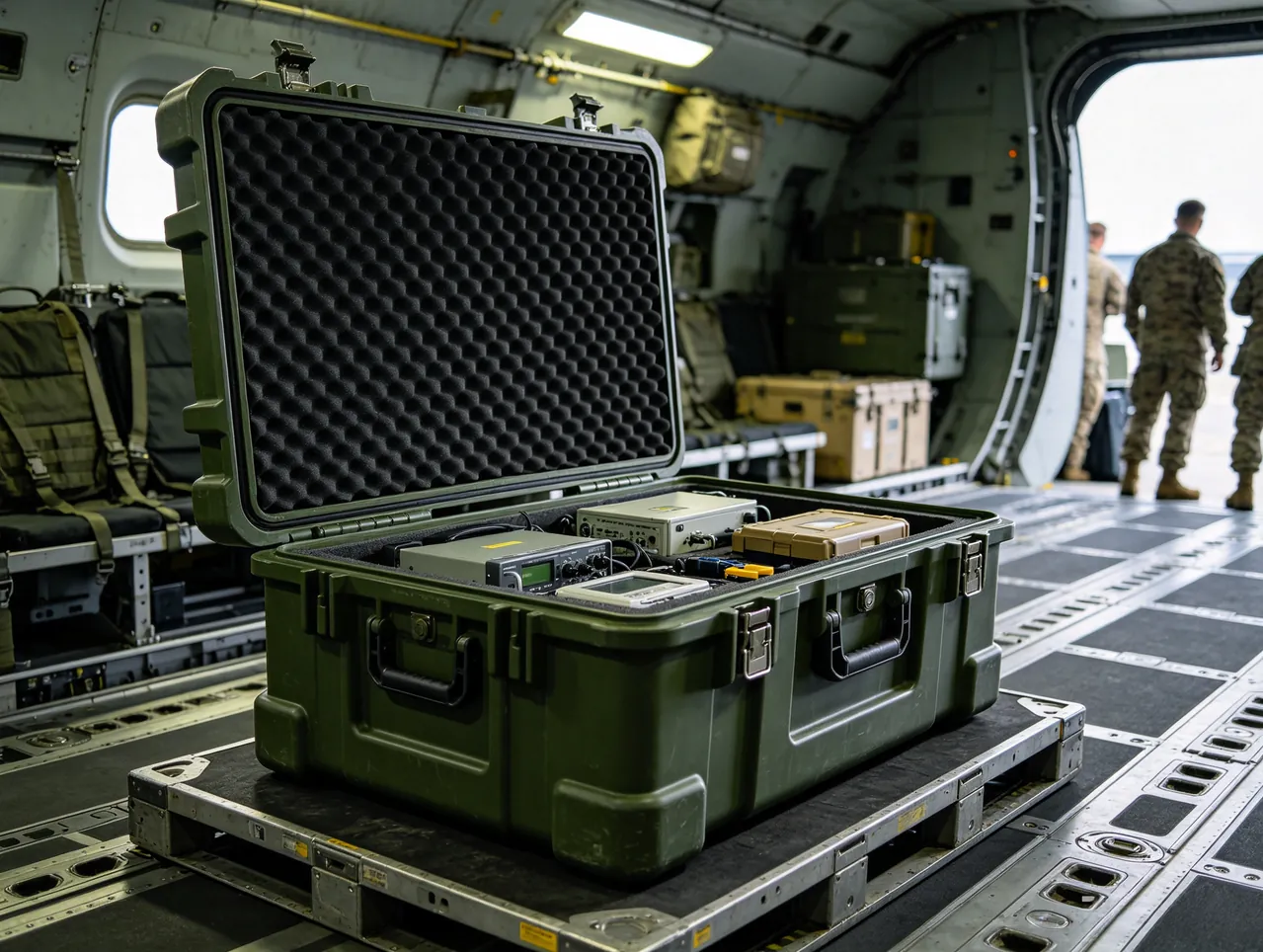
Higher ingress protection is not automatically better; it has to match the transport and storage environment. The IP code is defined by IEC 60529 and mirrored in GB/T 4208, with the two digits covering solids and liquids. IP6X means dust-tight, IPX5 means resistance to a 6.3 mm nozzle delivering 12.5 litres per minute, and IPX7 means no ingress after thirty minutes at one metre depth. For forklift parts, IP65 covers rain and splash during handling, while IP67 is the right choice when cases are stored in the open, may sit in standing water, or travel where spray comes over the rail.
Sealing performance depends mainly on how the gasket sits in its groove, not on how many latches are fitted. Target a gasket compression of 25 to 35 percent: too little leaks, too much takes a permanent set and shortens service life. The groove should be 10 to 15 percent narrower than the gasket cross-section, and deep enough to leave a 0.3 to 0.5 mm residual gap after compression. Choose the compound to suit the environment: EPDM for general use, NBR where oil is present, silicone for wide temperature ranges. If a case sits in sunlight for long periods, specify a weather-resistant compound to stop the gasket hardening and cracking.
| Sealing class | Dust | Water condition | Recommended scenario | Key control point |
|---|---|---|---|---|
| --- | --- | --- | --- | --- |
| IP54 | Limited dust protection | Splashing | Indoor workshop transfer | Gasket compression at least 25 percent |
| IP65 | Dust-tight | Water jets | Routine forklift spare dispatch | Groove tolerance within 0.2 mm |
| IP66 | Dust-tight | Powerful jets | Open-air handling, rainy regions | Even latch preload |
| IP67 | Dust-tight | One metre for thirty minutes | Sea freight, open storage | Equalization valve plus dual seals |
Every IP rating assumes undamaged sealing faces and fully closed latches. A latch left half-closed, or a particle trapped on the gasket, drops real-world protection sharply, so we mark a latch confirmation point and describe the seal face check in the travelling documents.
Cushioning System: Combining EPE, EVA, PE and IXPE
Cushioning is often reduced to a slogan that softer is better, yet for forklift parts the correct logic is graded stiffness with layered load paths. An effective liner is a gradient structure: the layer touching the part is soft and conforming, absorbing high-frequency vibration and preventing surface marks; the middle layer is firm and compression-resistant, taking inertial load without collapsing; the layer against the shell is monolithic, spreading impact into the wall.
| Material | Density range | Resilience | Load capacity | Primary role |
|---|---|---|---|---|
| --- | --- | --- | --- | --- |
| EPE | 20 to 35 kg/m³ | Medium | Medium | Full-width interlayer separation, void fill |
| EVA | 45 to 90 kg/m³ | Medium to high | High | Custom cradles, V-blocks |
| PE closed-cell | 25 to 40 kg/m³ | Low | Medium to high | Partitions, drainage chamber walls |
| IXPE | 30 to 60 kg/m³ | Medium | Medium to high | Thin-wall cushioning, surface protection |
| PU foam | 25 to 60 kg/m³ | High | Medium | Conforming to precision surfaces |
For mast-length parts, use EVA V-blocks as the contact layer, a full EPE sheet between layers and PE partitions at the sides. For precision valve groups, use thin IXPE as surface protection, an EVA cradle for location and EPE to fill voids. For forks, the structural floor carries the main load and EVA only cushions and locates. Cut density must match the drawing, and hand cutting should not replace moulded forming, because manual tolerances of more than two millimetres destroy locating accuracy. Cushioning design belongs in the same session as structural design, not in a later step where foam is stuffed into a finished case.
Latches, Hinges and Pressure Equalization Valves
Forklift parts cases are opened, unloaded and closed again many times, so latch and hinge durability sets the working life of the case. On heavy cases we fit 304 stainless or die-cast zinc latches on reinforced bases, each rated for at least 800 newtons of design load, and we use at least two latches on any case longer than 800 mm, symmetrically spaced no more than 500 mm apart. Hinges are pin-through or concealed types with a pin diameter of at least 5 mm, backed by moulded-in inserts rather than fixed into a thin wall.
The pressure equalization valve is the component most often overlooked and most often decisive. Air freight, thermal cycling or transport into humid regions creates a pressure difference across the wall. In a fully sealed case the difference pulls the gasket inward, making the case hard to open and eventually deforming the gasket permanently. The valve lets gas pass slowly once a threshold is exceeded while blocking liquid water and dust. Three parameters deserve attention at selection: cracking pressure, usually 3 to 8 kPa; ingress protection, which should match the case at IP65 or better; and the hydrophobic performance of the membrane. We manage valve, latches and gasket as a single sealing subsystem so that no weak link drags the whole rating down. Further detail is in Case Pressure Equalization Valve Guide.
Stacking, Load Capacity and Pallet Planning
Forklift parts cases are usually stacked in storage and in transit, and stacking capacity is the most direct trade between cost and safety. It depends on the compressive strength of the lid, whether the liner shares the load, and the stacking pattern. We state capacity against a baseline of a fully loaded single case under 72 hours of static load, and we require the load path between cases to run through ribs and corner posts rather than the middle of the lid.
| Case size | Loaded weight | Recommended stack | Lid capacity (upper load) | Pallet match | Note |
|---|---|---|---|---|---|
| --- | --- | --- | --- | --- | --- |
| 600 x 400 x 300 mm | Up to 40 kg | 4 to 5 high | At least 40 kg | Four per 1200 x 1000 | Aligned stacking |
| 800 x 600 x 400 mm | Up to 80 kg | 3 to 4 high | At least 80 kg | Two per 1200 x 1000 | No interlocking |
| 1200 x 800 x 500 mm | Up to 200 kg | 2 to 3 high | At least 200 kg | One per 1200 x 1000 | Add centre beam |
| 1400 x 900 x 600 mm | Up to 300 kg | 2 high | At least 300 kg | Custom pallet | Aluminium frame required |
Pallet planning matters too. Forklift spare cases usually ride on standard 1200 by 1000 mm pallets, and the centre of gravity should fall within 200 mm of the pallet centre, with stretch film or strapping holding the case down. Once the stacking limit is fixed, print the maximum number of layers on the case side so the warehouse cannot add a level informally. Inside a sea container, fill the gap to the wall so cases cannot shift when the vessel rolls.
Temperature, Humidity, Salt Spray and Rust Control (GB/T 10125)
Forklift masts, forks and attachments are largely carbon or low-alloy steel with paint, zinc or chrome finishes that are not a long-term corrosion system on their own. Once condensation appears, corrosion starts at edges and threaded holes and spreads quickly. Humidity control rests on three actions: reduce the absolute moisture inside the case, block the pathways that admit vapour, and leave evidence that can be read at goods-in. Typical measures are silica gel inside the case, VCI vapour-phase film or paper, rust-preventive oil on threads and mating faces, and a humidity indicator card.
Salt-laden air is unavoidable for sea freight and coastal storage. Under the neutral salt spray method of GB/T 10125, ordinary industrial parts are often referenced at 48 to 240 hours, while outdoor or marine items may be specified at 480 hours or more. Salt spray duration and real service life are not linearly related, and a result holds only under the stated test conditions. We treat salt spray as a screening tool for materials and processes rather than a promise of a rust-free period. For carbon steel the most economical effective combination is coating, VCI film and desiccant together.
| Protection layer | Measure | Applies to | Reference duration | Inspection method |
|---|---|---|---|---|
| --- | --- | --- | --- | --- |
| Contact | Rust-preventive oil or paper | Threads, mating faces | 6 to 12 months | No red rust visually |
| Vapour phase | VCI film | Carbon steel, forks | 12 to 24 months | Film intact |
| Humidity | Desiccant plus indicator card | Whole case | Per dosage calculation | Card colour check |
| Barrier | Sealed case at IP65 or better | Complete sets | Follows the seal | Gasket check on opening |
Transport Testing and Acceptance Criteria (ISTA / GB-T 4857 / ASTM D4169)
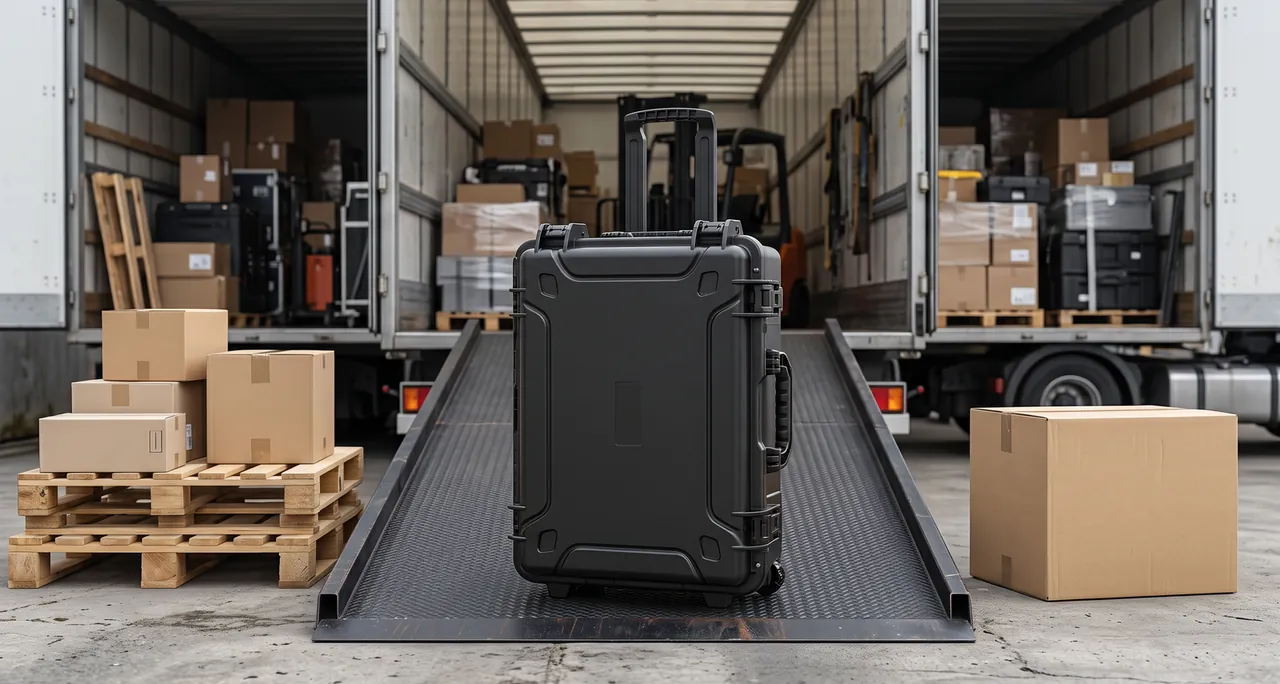
Even careful design has to be proven by test. Transport testing for forklift parts cases normally covers drop, vibration, stacking, incline impact and concentrated load, using the ISTA series, the GB/T 4857 series or ASTM D4169. We advise against releasing a batch to production without test data, especially above 200 kilograms gross weight or with precision hydraulics, because one test round costs far less than one damaged batch.
| Test item | Reference standard | Typical condition | Acceptance criterion |
|---|---|---|---|
| --- | --- | --- | --- |
| Drop | GB/T 4857.5 / ISTA 2A | Height by weight, corner edge and face once each | No shell cracking, no part shift |
| Random vibration | GB/T 4857.23 / ASTM D4169 | Profile-based duration | No loosening, no resonance amplification |
| Fixed-frequency vibration | GB/T 4857.7 | Frequency and duration per plan | Liner does not collapse |
| Stacking | GB/T 4857.3 / ISTA | Full load for 72 hours | No permanent deformation |
| Incline impact | ASTM D4169 | Per assurance level | Latches stay closed |
| Rain and immersion | GB/T 4208 | Per target IP class | No water inside |
A test report recording case serial number, internal configuration, conditions, results and photographs becomes the acceptance reference. For repeat purchases, write the first-article result into the technical agreement and retest at an agreed sampling frequency. For the differences between ISTA and GB/T 4857, see ISTA Transport Testing Procedure and GB-T 4857 Transport Packaging. Salt spray planning is covered in Salt Spray Corrosion Test.
Frequently Asked Questions FAQ
Q: Mast sections come in a wide range of lengths. Does every length need its own mould?
A: No, but the liner must be redesigned for each length. Our standard approach is a fixed case platform with an adjustable liner: the shell is divided into length bands such as 1.8, 2.4, 3.0, 3.6 and 4.2 metres, while the liner adapts through modular V-blocks and limit stops. The V-block feet slide along a base rail and lock at 100 mm increments, so a customer only needs to supply three inputs, namely the profile cross-section drawing, the unit length and the unit weight, and we return a liner layout drawing within three to five working days. If a profile exceeds 220 mm in depth or 400 kilograms per piece, we additionally verify base-plate capacity and add a mid-span clamp, still without cutting a new shell mould. When one customer buys several lengths at once, we recommend sharing the shell size and differentiating only the liner parts, which spreads tooling cost and simplifies spare-part management on site. Above 4.5 metres, a split case or dedicated stillage should be evaluated instead.
Q: Valve groups and cylinders are pressure-tested before dispatch, so some oil always remains. How should that be handled in the packaging?
A: The logic is to control residual oil first, then contamination, then evidence. Controlling residual oil means draining and air-drying properly before packing: leave the unit ports-down for at least four hours, then blow the surfaces with clean compressed air, which drives residual volume close to zero. Controlling contamination means plugging every port with an O-ringed plug or blind cap, never with tape or cling film, bagging the valve group into a separate drainage chamber with an absorbent layer beneath, and partitioning that chamber with EVA walls so even a small weep cannot reach electronics or rust-protected steel. Controlling evidence means putting silica gel and a humidity indicator card in each hydraulic chamber and recording seal status and packing time on the packing list, so receiving staff can compare on opening. For precision valve groups we also require the supplier's dispatch cleanliness record, usually assessed to ISO 4406, and file it beside the packaging record, so if a spool sticks in the field we can separate transport contamination from assembly contamination quickly.
Q: Electronic controls and harnesses are light, so why do they need dedicated design inside the case?
A: Low weight does not mean low risk, and electronics plus harnesses are exactly where hidden transit damage concentrates. A harness swings continuously under vehicle vibration over long distances, rubbing against metal parts or the case wall until insulation is breached and a short circuit becomes possible, and that damage is rarely visible at goods-in. Plugs can release under vibration and the truck then shows start-stop anomalies or intermittent faults that are expensive to diagnose. Components with circuit boards, such as controllers and instruments, are humidity-sensitive: condensation from the day-night temperature swing forms a water film on the board and, over time, oxidises terminals. Our strategy is therefore threefold: restrain the flexible parts, drive moisture out and give static charge a path away. Coil harnesses at no less than fifteen times the cable diameter, add a tie every 200 to 250 mm, wrap plugs in self-adhesive foam, locate controllers in EVA slots with desiccant and an indicator card, and bag static-sensitive devices before seating them in conductive foam. The marginal cost is small, and it removes most of the rework that never appears at goods-in but shows up only when the truck is assembled.
Q: If a case is marked IP67, does that mean it can be stored outdoors or submerged for long periods?
A: That is a misunderstanding of what the rating means. IP67 states that under the defined test conditions, one metre of water for thirty minutes, no water enters the enclosure. It describes a single test result, not a long-term warranty. Many real factors affect performance: whether the gasket has aged, whether the sealing face is scored or has trapped grit, whether all latches are fully closed, whether the shell has deformed in heat, and whether a pressure difference is pulling the gasket inward. In prolonged outdoor storage, ultraviolet light hardens the gasket and the day-night cycle condenses moisture inside the case repeatedly, and neither effect is covered by the IP67 test. Our guidance is to treat IP67 as protection against short water exposure during handling or transport. If long-term open storage is genuinely required, add a cover or a simple shelter, inspect gasket resilience on a schedule, keep the desiccant active, and fit a pressure equalization valve so the gasket is never sucked inward. In short, IP67 covers brief water exposure, while long-term protection comes from a gasket maintenance regime and environmental management working together.
Q: With EPE, EVA and IXPE available for liners, how do we know whether the selection is correct?
A: The test is not which material is better in the abstract but whether each material sits in the right layer. EPE is light, inexpensive and easy to shape, which suits full-width interlayers and void filling, but it creeps under sustained load and should not locate heavy parts. EVA is denser, more resilient and machinable, which makes it the first choice for custom cradles and V-blocks. IXPE is thinner and finer-surfaced, so it wraps precision mating faces and acts as the surface protection layer over metal. PE closed-cell foam absorbs almost no water and resists oil, making it a good partition material for drainage chambers. A common mistake is filling a case with EPE only: heavy parts compress it under vibration, location is lost and a cushioning problem becomes an impact problem. The correct approach is layered design, with EVA or a structural floor for load, EPE for cushioning, PE for separation and IXPE for surface protection. Final verification is to run vibration and drop tests, then measure part displacement, which should stay within about three millimetres.
Q: How should mast straightness be inspected after transport, and at what point does it fail?
A: Inspect after the part has left the case, returned to ambient temperature and rested horizontally for at least two hours, because foam compression and temperature both cause temporary apparent deformation. Take at least five measurement points along the full length, use a feeler gauge with a straight edge or a laser alignment tool, and divide the maximum deviation by the measured span to obtain deviation per unit length. Common limits are 1.5 mm/m for profiles up to 160 mm deep, 2.0 mm/m for 160 to 220 mm, and 2.5 mm/m for heavy masts above 220 mm, with total length deviation also inside the mast clearance tolerance used at assembly. If results exceed the limits, first exclude measurement error and environmental effects, then repeat at the ends and mid-span to identify whether the deviation is a global bow or a local indentation. Local marks usually come from too few contact points or supports that are too hard, while a global bow points to excessive overhang or stacking overload. We recommend writing the straightness clause, the number of measurement points and the failure thresholds into the procurement specification, and performing a witnessed first-article measurement so that batch disputes never arise later.
Q: If a customer wants the case to reinforce brand image, what external customisation is possible?
A: External customisation and protective performance can coexist, provided decorative features never compromise structural integrity. Typical options include shell colour, either compounded in the masterbatch to a brand shade or painted with a wear-resistant clear coat, printed or hot-stamped logos, and asset numbers or QR code panels on the lid. Any opening, recess or print area must be coordinated with the reinforcement ribs: print should avoid impact zones, codes and labels belong on flat surfaces that do not wear, and if handles, wheels or nameplates are added, moulded-in insert positions should be designed into the tool rather than machined into finished parts. For export customers we also support multilingual operating instructions and warning marks on the exterior. When a new mould is involved, a sample review usually comes first to confirm appearance, colour and assembly before the production tool is cut. Colour and printing are appearance items and do not change IP class or load capacity, so appearance and performance acceptance criteria should be written as separate clauses in the technical agreement to avoid confusion at inspection.
Q: Can you supply the case together with the documentation needed for direct delivery to our end customer?
A: Yes. We treat travelling documents as part of the deliverable. Standard items include the case specification and material statement, the liner layout and packing work instruction, a sealing class and test report summary, and an opening and repacking card. On request we provide an internal parts list with part numbers, quantities and weights, instructions for reading the desiccant and humidity card, and maintenance guidance covering gasket inspection intervals, latch lubrication and pressure valve venting checks. For export projects we can issue English or bilingual versions and help prepare the goods description required for customs. All documents should be keyed to the case serial number so an end customer receiving several cases can cross-check quickly. Technical values must reflect the tested data of the delivered batch, and any design change must raise the document revision, so no case claims IP67 on paper while being built to IP65. Customers with export documentation needs can refer to Export Packaging Compliance Documents.
Conclusion and Related Reading
Protecting forklift parts is not about a bigger box, but about getting three things right: straightness for long sections, cleanliness for hydraulics and dryness for electronics. JUNZHIJIA offers liner design, tooling and OEM/ODM production.
Related Reading