

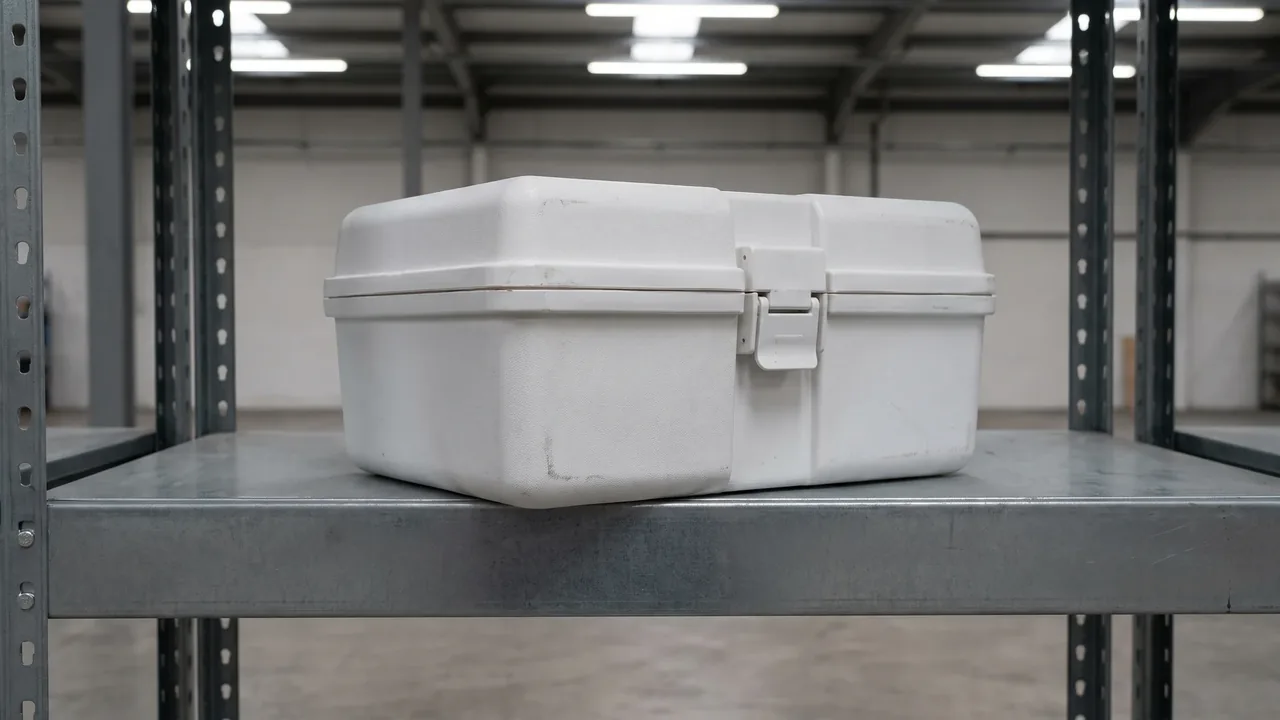
Ordnance storage and shipping contractors, together with defence-trade exporters, usually discover that their real problem is not shell strength but three stubborn facts: the contents will not sit still, will not stay down, and will not come out easily. A Grenade Transport Case, a shipping box for the same class of items, and a long-term storage case all face contents whose profile is an ellipsoid or a short cylinder with local protrusions, where surface curvature changes continuously and the centre of gravity does not coincide with the geometric centre. Such a shape cannot be matched by a right-angled liner, and it cannot be pinned down by a few flat sheets of foam. Leave space for movement and the vehicle's road shock and braking will drive the item to hammer against the liner and the case wall, producing surface abrasion, localised dents and, eventually, collapsed padding. JUNZHIJIA, manufactured by Kexin New Materials (Guangdong) Co., Ltd., has supplied custom protective cases for ordnance and special equipment for many years, and this article deals only with the container side of the problem: how a profiled cavity, formed liner, retaining stops and anti-shift dividers restrain an irregular profile to something close to zero freedom, and how bench testing proves that the restraint holds under drop and vibration.
One boundary needs stating first. Everything below concerns the packaging container itself — shell material, liner moulding, cushioning and restraint, sealing and moisture control, stacking and lifting, locks, seals and packaging certification. It does not address the structure, composition or performance of the contents, and it offers no operating guidance. Specific storage conditions, transport modes and export-control requirements are governed by local regulations and contract terms.
It is worth being clear about why the container is engineered at all rather than simply bought. A case that arrives intact but lets its contents move has failed, even if nothing is visibly broken on delivery, because the damage shows up later as a loss of fit, a scratched surface or a liner that has taken a permanent set. The measures described here are therefore judged against the condition of the contents after the journey, not against the appearance of the box, and every design decision is traceable to a specific transport risk rather than to a general preference for thicker material.
Why Irregular Contents Break Conventional Case Liners
Transport failures with irregular items almost always trace back to one of three paths. The first is shift abrasion: the item has play inside the case, and starting, braking and road undulation make it slide repeatedly within that limited space, so a protruding feature rubs against the liner at a single point, wearing through the liner surface and then the item itself. The second is localised indentation: because the profile is irregular, load concentrates at a few high points, and at the same gross weight the contact stress is far higher than for a regular block, so a low-density liner bottoms out, cushioning travel reaches zero and impact energy passes straight into the item. The third is stacking distortion: when the case carries the weight of units above it, any mismatch between the internal support points and the item profile lets load bypass the liner and press on the weakest area.
Those three paths define three required functions. The restraint layer removes freedom of movement so the item cannot shift under normal transport conditions. The cushion layer absorbs drop and vibration energy within the recoverable deflection range of the liner. The load layer carries stacking and lifting loads straight into the case structure without passing them through the item. On irregular-content projects JUNZHIJIA designs and validates these three layers separately rather than trying to solve everything by adding more foam, because thick foam cushions but cannot locate, while a purely rigid restraint transmits impact unchanged.
Moulding the Profiled Cavity: From 3D Scan to Cavity Layout
The first step with a profiled cavity is turning the shape into usable data. JUNZHIJIA scans the item in three dimensions or reverse-engineers the surface from drawings, rebuilds a solid model from the point cloud, and marks three zones on that model: handling clearance, load-bearing support, and areas that must never be compressed. This stage decides everything that follows, because a scan that lacks accuracy or a misjudged support zone means the liner will never fit properly. For production orders a single trial cavity is normally cut first to confirm fit, easy removal and freedom from interference before tooling is committed.
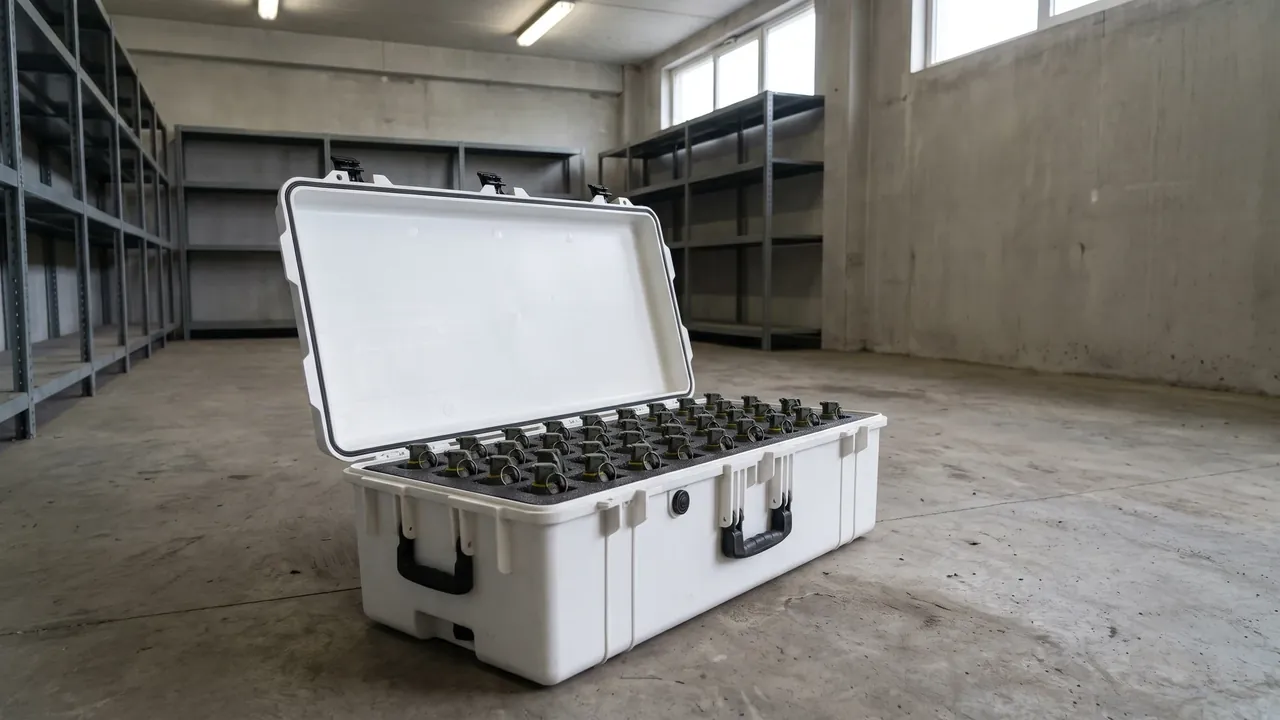
Cavity layout is the next trade-off. One case often carries several items, and the layout must satisfy three conditions at once: the combined centre of gravity sits central, protruding features clear each other, and fingers can reach in to lift each item out. A central centre of gravity keeps the case from tipping during lifting; clearing the protrusions prevents two items from bracing against each other at a single point; handling clearance is a direct productivity question, because ordnance handling sites rarely have good conditions, and if an item can only be extracted with a tool the risk of scratching or dropping it rises. JUNZHIJIA generally works to one cavity per item with independent cavities rather than a shared open well, accepting a slightly lower fill ratio because an open well cannot prevent items from moving relative to one another.
EVA Formed Liners: Processing Route and Density Choice
EVA is the most common forming material for profiled cavities because it can be CNC-milled into complex surfaces and also moulded for volume production. CNC milling suits prototypes and small batches, giving high cavity accuracy and cheap revisions; compression moulding suits volume orders, where unit cost falls with quantity but a steel tool is needed and changes are expensive. JUNZHIJIA normally mills trial cavities and switches to moulding for production, re-confirming cavity tolerances at the changeover so that process differences do not alter the clearance.
Density choice defines the character of the liner. Low-density EVA is soft with slow recovery and long cushioning travel, but its support is weak and it compresses solid under load. High-density EVA supports well and holds dimensions, yet feels hard and can offer less protection to delicate surfaces. The usual approach for irregular contents is density by zone: support and locating faces use higher density to hold position, while cushion and contact zones use lower density to absorb energy, with the two bonded or moulded into a single liner. JUNZHIJIA also applies a soft facing over the EVA cavity so the item never rubs directly against the liner and picks up fine scratches.
EPE Cushion Layers and EPDM Gaskets Working Together
EPE is low-density expanded polyethylene: resilient, light and inexpensive, but unable to form a shape, and it flattens if used alone. In an irregular-content case, therefore, EPE does not locate anything; it sits beneath the EVA as a cushion layer whose job is to flatten the peak acceleration of a drop. The EVA-locates, EPE-absorbs pairing lets each material do what it does best: EVA preserves positional accuracy, EPE provides cushioning travel. JUNZHIJIA works backwards from item weight and expected drop height to set EPE thickness and density rather than spreading a layer by rule of thumb.
The gasket is the interface between case and environment. EPDM rubber resists weathering, ozone and water vapour, ages far more slowly than ordinary rubber under outdoor temperature swings and ultraviolet exposure, and is a common choice for ordnance-class case seals. What matters is not the material name but compression set: once the gasket loses resilience after prolonged compression, the sealing line at the joint face becomes shallower and the protection rating falls. JUNZHIJIA uses a channel-type gasket so the profile is confined and compressed evenly when the lid closes, preventing both over-compression and the gasket being squeezed out of position.
Retaining Stops and Anti-Shift Dividers
Retaining stops solve a specific problem: permit slight movement but halt large movement. A perfectly fitted cavity should leave no travel, yet in practice a small clearance always remains, and transport vibration lets an item gradually creep. JUNZHIJIA adds rigid stops in the critical directions, with minimal clearance to the item, so that once movement reaches the stop it is arrested rigidly instead of accumulating. The stop faces carry a compliant pad so that rigid contact does not mark a protruding feature.
Anti-shift dividers partition the case when several items travel together. Removable dividers cut the internal volume into independent cavities so items never touch and therefore never collide. JUNZHIJIA normally makes the dividers insertable, matching slots in the EVA liner, so users can add or remove them according to load. Divider thickness and stiffness must be adequate, or a heavy item pressing laterally will bow the divider and destroy its separating function. For storage and shipping patterns whose load mix changes often, removable dividers plus individual cavity pads are far more flexible than a single open well, but every reconfiguration demands a cavity check, so marking cavity numbers on the inside of the shell is advisable to prevent mismatched loading.
Layered Liner Build-Up: Load, Cushion and Facing
Treating the liner as one solid block of material is the most common mistake in irregular-content design. A more reliable approach splits it into a load layer, a cushion layer and a facing layer. The load layer sits at the base and on lateral support faces, using high-density EVA or an engineering-plastic bearer to route stacking and lifting loads into the case structure. The cushion layer sits between the load layer and the item, using EPE or medium-to-low-density EVA to absorb impact. The facing layer is the thin innermost material, a non-woven or short-pile fabric, which reduces friction and marking.
The three thicknesses must match. Too thin a load layer collapses under stacking and movement returns; too thin a cushion layer fails to flatten drop acceleration; an over-thick or over-soft facing hides cavity tolerance and lets operators believe a poor fit is acceptable. During trial-cavity validation JUNZHIJIA samples each layer separately, running a compression test first to establish the hardness curve and then assembling the full cavity for drop and vibration work. If a problem appears, it can be traced to a specific layer and replaced on its own rather than discarding the whole liner.
Layer interfaces are the hidden risk in this build-up. Adhesive between EVA and EPE must survive the same temperature range as the foams themselves, because a bond that softens in a hot container or embrittles in a cold warehouse will separate and let the cushion layer slide out from under the item. Where the liner is not bonded but stacked, locating features should key the layers together so they cannot shift relative to each other in service. Replacement parts also need to be defined at this level: on a case that is expected to make many round trips, the facing layer wears first, and it should be a consumable that can be peeled off and renewed without recutting the whole cavity. That keeps the expensive formed geometry in service while the cheap sacrificial surface is refreshed.
Shell Material, Wall Thickness and Reinforcement Ribs
The shell is the outer boundary of the restraint system, and its task is to keep the liner's locating relationships intact once loads are applied. Rotationally moulded HDPE suits medium and large cases with thick walls and high impact demand, forming a seamless one-piece body with good low-temperature toughness. Injection-moulded modified PP, ABS and PC alloys suit smaller cases and cases needing a precise dimensional chain, with better surface quality and tolerance control. JUNZHIJIA selects by case size, payload weight and transport mode rather than standardising on one material.
Wall thickness must match case span. A thin wall across a wide span bulges under stacking load, and that bulge loosens the liner, ending as reduced fit. An over-thick wall adds weight, invites handling knocks and raises unit shipping cost. A more effective route is reinforcement ribs instead of uniform thickening: material goes where it genuinely carries load, at wall transitions and the base, with ribs creating local stiffness, while the lid uses a double-wall structure for bending resistance. JUNZHIJIA also keeps a mating face between the base ribs and the liner so the load layer sits directly on the case's structural members, avoiding the path where load crosses a thin wall before reaching a rib.
Corner radius, hinge reinforcement and base feet deserve the same attention as wall thickness, because they are where handling loads actually enter the shell. A sharp internal corner concentrates stress and becomes the first place a crack starts under repeated impact, so generous radii are used at every internal transition. Hinge bosses are thickened locally and tied back into the reinforcement ribs rather than being left as isolated pads, since a hinge that pulls out of the wall ends the service life of an otherwise sound case. Integrally moulded feet raise the base clear of standing water on a wet apron and spread concentrated floor loads over a larger area, while also giving forklift tines a defined pick-up face. For cases handled by crane, lifting points are located so that the sling load passes through the structural walls instead of through the lid, because a lid is designed to close a case, not to carry it.
Sealing, Pressure Equalisation and Moisture Control
Sealing is the heart of the protection rating. JUNZHIJIA uses a channel-type gasket at the joint face, compressed into a continuous sealing line when the lid closes. That line must close completely; a single point lifted by debris becomes an air path. In service, most sealing failures are not caused by poor gasket material but by failure to clean the joint face before closing — grit and fragments trapped between gasket and channel form a permanent set after a few closures.
A pressure-equalisation valve handles differential pressure. Air-freight cargo-hold pressure change, high-altitude transport and day-night temperature swings all create a pressure difference across the case. Without the valve the difference can displace the gasket and destabilise the seal, or create internal negative pressure that makes the lid hard to open, and a hard-to-open case is usually forced open, damaging the sealing face. The valve allows slow gas exchange while maintaining waterproofing and dustproofing, keeping the seal stable when pressure changes.
Moisture control addresses long-term storage. JUNZHIJIA normally fits desiccant and a humidity indicator card, the card giving a visible criterion so users need not guess when to change the desiccant. For machined metal surfaces, VCI vapour-phase-inhibitor components can be added; the slow-release molecules form a protective film on the surface, delaying corrosion in storage even if the case is briefly opened. Note that VCI has limited effect on surfaces already corroded, so it must go in immediately after cleaning and drying.
Drop and Vibration Bench Validation
The feel of a well-fitted liner is no substitute for test data. Before freezing a design for irregular contents, JUNZHIJIA runs two families of bench validation. Impact tests — free drop and edge, corner and face drops — check whether the cushion layer has enough absorption travel. Vibration tests — fixed-frequency and random — check whether the retaining stops and anti-shift dividers hold position over long periods of road shock. Test bases typically reference MIL-STD-810H, GJB military-standard test methods, the GB/T 4857 series for transport packages and the ISTA series testing procedures, with the specific programme assembled from customer and destination-market requirements.
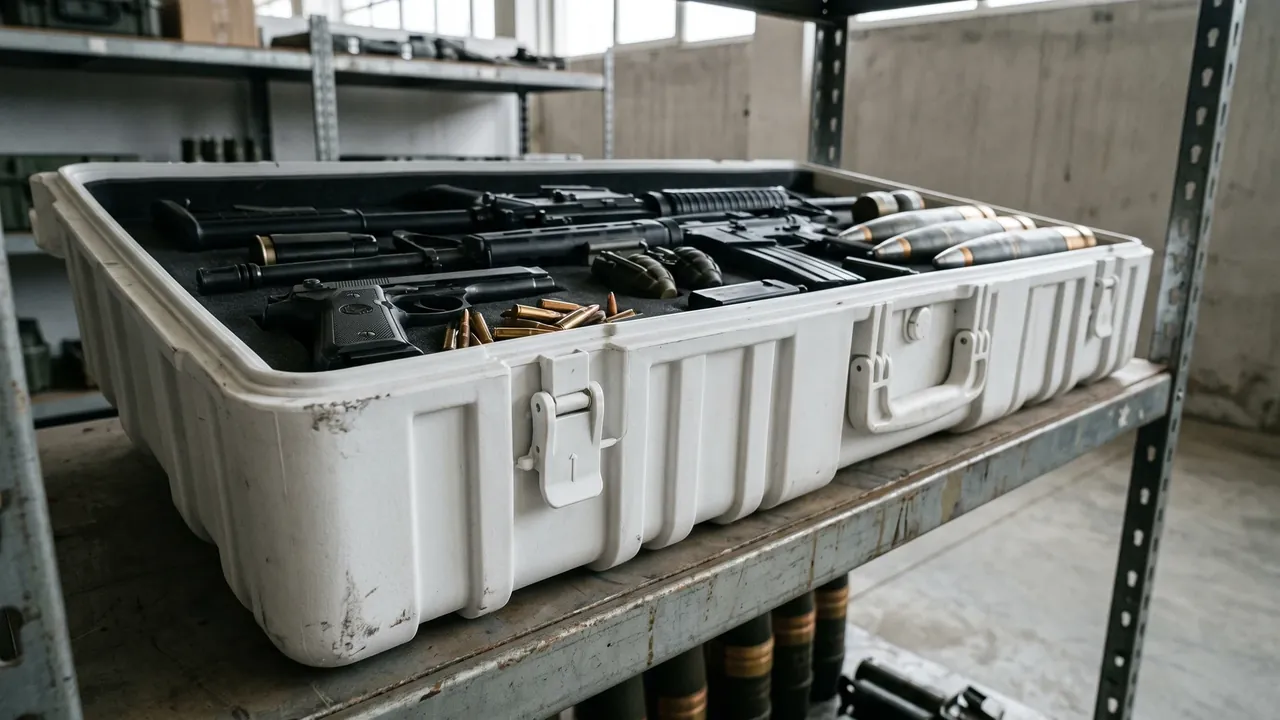
The programme has to be designed around the actual load state, and this is the most frequently skipped point. Testing an empty case proves very little, because the real risk comes from the mass inside; the same case carrying a single item and carrying a full load has a completely different centre-of-gravity height and inertial load, so drop height and vibration spectrum must change accordingly. JUNZHIJIA designs its test matrix around the heaviest load combination and the least favourable centre of gravity, and measures key cavity dimensions before and after testing so that dimensional change, rather than visual judgement, confirms whether the liner has taken a permanent set.
Palletisation, Stacking and Container Loading
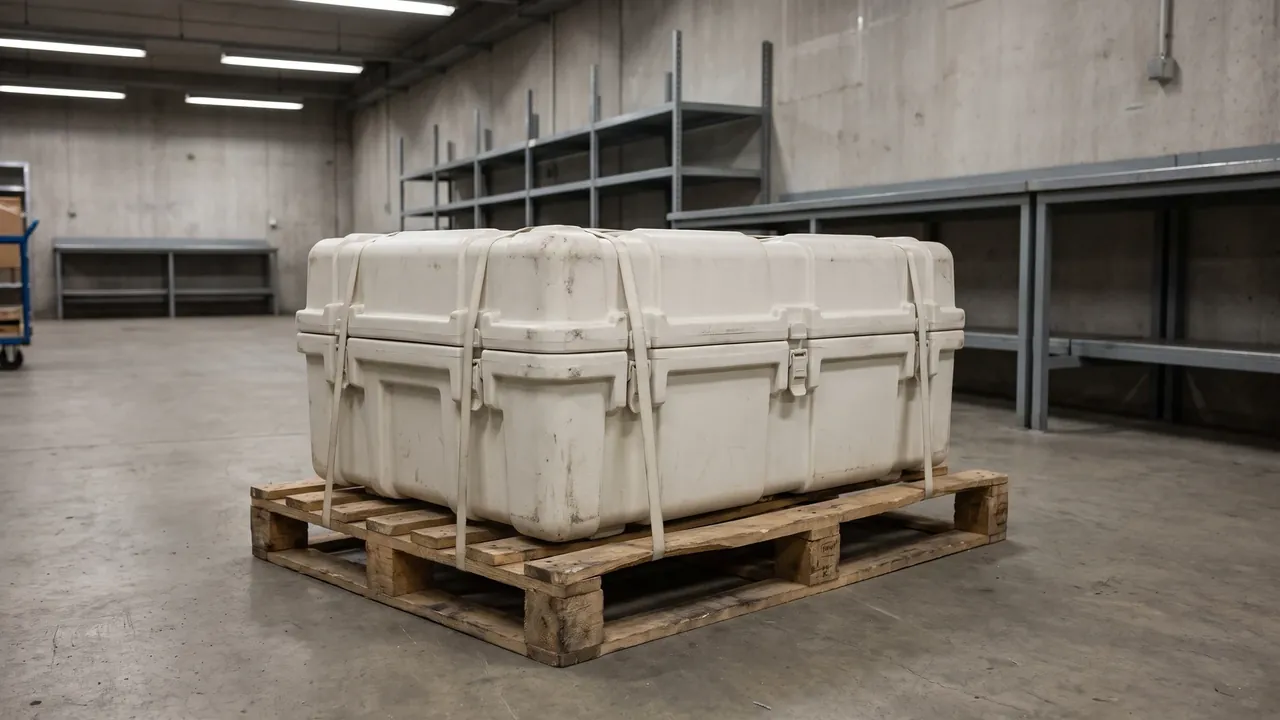
The case is only one level in the logistics chain. Palletisation is the first step in turning it into a stackable, forkliftable unit: the base must present a flat bearing surface compatible with the pallet deck, and the lid must carry a stacking feature matching the base of the unit above, so upper loads travel down the case walls into the pallet instead of pressing on the liner. Stacking height follows case load capacity and storage conditions, and the exterior should be marked with this-way-up and maximum-stack indications so handlers are not left to judge by appearance.
Container loading is hardest when specifications are mixed. Cases of different sizes stacked at random readily create eccentric loads or voids, and in transit the cases move inside the container, producing shock far beyond the design condition. The sensible order is to group by pallet size first, place equal-height pallets on the same tier, keep heavy units low and near the longitudinal centre, and put lighter units high and at the ends. Voids between cases, and between cases and container walls, are removed by dunnage or lashing, and lashing points should land on pallets or structural reinforcements, never on latches and hinges.
Stacking capacity figures need interpreting before loading. The layer count a manufacturer quotes is normally measured at ambient temperature under static, evenly distributed load; in service, local concentrated loads or high temperatures let the engineering plastic creep, so the real number of layers a case can take over months is lower than the nominal figure. JUNZHIJIA therefore advises leaving a safety margin below the nominal count for long-term storage and using the strongest cases for the bottom layer. Fixing cases to the pallet also deserves a defined method: strapping case and pallet into one unit is more reliable than relying on weight alone, because vertical vibration gradually walks a case across the pallet until it hangs over an edge and loses support. For empty return journeys, check whether cases can be nested; nesting saves volume but rubs sealing faces together, so a soft interleaf is needed between layers.
Locks, Tamper-Evident Seals and RFID Traceability
Locks do two jobs in storage and shipping: they prevent accidental opening, and they record that opening happened. JUNZHIJIA selects the form by duty — internal rotation cases opened frequently get replaceable metal latches, cases sealed for long storage get padlocks or mechanical combination locks, and export and transit stages get one-piece tamper-evident seals whose numbers correspond to the accompanying documents, so any unauthorised opening leaves a visible trace. The latch seat should be a replaceable part, because it wears fastest in service and its failure should never scrap a whole case.
Traceability has become the fastest-growing requirement. A QR or RFID label on the exterior can record case number, load list, seal number and dates of each inspection, retrievable by scanning and immune to the loss of paper documents. JUNZHIJIA advises locating the label where forklift contact is unlikely and running a uniqueness check on batch orders so that duplicated numbers do not break the traceability chain. For cases sealed for long periods, the label can also carry the date the desiccant was last changed, letting store staff decide quickly during inspection whether moisture-control consumables need replenishing.
Tamper-evident seals also need to be readable and non-restorable. Readable means anyone can see without opening the case whether the seal is intact, so the seal should span the joint between lid and body rather than being fixed to a latch on one side only. Non-restorable means the seal cannot be reinstalled after removal without leaving evidence, which one-piece plastic seals and metal crimp seals achieve and ordinary cable ties do not. The seal number must match the shipping documents and the electronic record, checked once on despatch and once on receipt to close the loop. For cases making repeated round trips, JUNZHIJIA recommends writing seal replacement into the standard work instruction rather than hunting for a substitute after a seal breaks, because improvised substitutes destroy the credibility of the traceability chain.
Export Packaging Certification and Compliance
Defence-trade and export scenarios demand more than structure; they demand certification documents. Typical areas include the regulatory requirements applying to packaging for dangerous goods, the fumigation or heat-treatment marking required for export wooden packaging, and destination-country inspection requirements for packaging materials. On export orders JUNZHIJIA confirms transport mode and destination first, then determines whether the specified shell material needs additional testing and documentation, and supplies test reports and material certificates with the shipment so that incomplete paperwork does not cause a hold at the port.
Certification and export compliance for packaging must be confirmed case by case. Export controls on defence and dual-use items, destination-market access rules and declaration requirements vary widely. This article discusses the packaging container only; all actual export activity is governed by local regulations, export-control requirements and contract terms. JUNZHIJIA's role is to supply cases meeting the agreed technical conditions together with validation data, while the declaration and licensing steps are handled by the qualified exporter.
Custom Delivery Checklist and Batch Acceptance
Turning the design into an executable checklist greatly reduces drift in execution. On irregular-content projects JUNZHIJIA normally proceeds in this order: confirm the list of contents and each item's transport sensitivities; define the cavity layout and restraint method; determine shell material, sealing level and moisture-control configuration; and finally settle marking and delivery documentation. The value of the sequence is that each step has a defined input, avoiding the common mistake of fixing a case size first and forcing the liner to fit afterwards.
A delivery set typically contains the shell, the formed liner, removable dividers and individual cavity pads, desiccant or a humidity indicator card, VCI components where required, seals where required, stacking and lifting marks, and usage and maintenance instructions. Batch acceptance should focus on three things: fit between liner and profile, since poor fit produces movement directly; gasket integrity and compression, which together decide whether the protection rating holds; and the assembly strength of latches and hinges, the weak point where cases are opened often. JUNZHIJIA runs latch-cycle testing and seal sampling before despatch and keeps batch records of drop height, vibration duration and measured weight so that any field problem can be traced.
Grenade Transport Case FAQ
Q: Why does a grenade transport case need a profiled cavity instead of flat foam? A: Because an irregular profile cannot be held securely by flat foam. Flat foam only presses on the highest point of the item, so a protruding feature becomes the single load path, contact stress at the same gross weight rises sharply, the foam bottoms out quickly and the cushioning travel is exhausted, leaving impact to pass straight into the item. The recesses between protrusions stay unsupported as well, and the item can roll slightly within them, so road vibration slowly walks it against the cavity wall. A profiled cavity copies the full outline into the liner, turning contact from a few points into a continuous fitted surface so stress spreads and movement is restrained. JUNZHIJIA usually scans the item to rebuild a solid model, marks support, clearance and sensitive zones, then cuts a trial cavity to confirm removal and fit before moving to moulded production. The upfront data work is heavier, but the restraint becomes measurable rather than a matter of feel. That is why the same case design that looks adequate on a bench often fails after a few hundred kilometres of rough road.
Q: How should EVA and EPE be divided in an irregular-content case? A: EVA locates, EPE absorbs, and the two should not substitute for each other. EVA can be milled or moulded into complex surfaces, holds its dimensions and supports well, so it makes a cavity that fits the profile and leaves the item no room to roam freely. At higher densities, however, EVA is stiff, and if it carries the drop cushion alone the peak acceleration rises. EPE is low-density expanded polyethylene: resilient, light and good at absorbing impact, but incapable of forming a shape, so used alone it flattens. The common combination therefore places EPE beneath the EVA as a cushion layer, letting EVA preserve positional accuracy while EPE provides cushioning travel. JUNZHIJIA works backwards from item weight and expected drop height to set EPE thickness and density rather than laying a layer by rule of thumb. A soft facing over the EVA cavity reduces friction marking on sensitive surfaces, and the three materials are validated as one assembly rather than chosen independently.
Q: Are retaining stops and anti-shift dividers redundant? A: No, they control different directions and different scopes. A retaining stop addresses small movement of a single item within its cavity. It does not aim for perfect fit; it places a rigid stop in the critical direction at the closest possible distance, so the item keeps a very small clearance but is arrested as soon as movement reaches the stop, preventing displacement from accumulating over the journey. An anti-shift divider addresses partitioning when several items share a case, cutting the internal volume into cavities that do not connect so that items never touch and therefore never collide. They work in sequence: dividers partition first, stops then restrain movement, and cavity pads finally fill the remaining clearance. JUNZHIJIA normally makes dividers insertable so they match slots in the liner and can be added or removed with the load. Dividers must have enough thickness and stiffness, because a heavy item pressing sideways will otherwise bow them and cancel the separating function entirely, which is a failure that only shows up once the case is in service.
Q: Why split the liner into load, cushion and facing layers? A: Because the three functions make conflicting demands on material, and one layer rarely satisfies all of them. The load layer must route stacking and lifting loads into the case structure, which calls for high density, dimensional stability and resistance to compression set. The cushion layer must absorb impact energy, which calls for low density, good resilience and long compression travel. The facing layer must reduce friction and marking, which calls for softness, low shedding and compatibility with the item surface. Compress all three into one layer and a high density leaves too little cushioning while a low density leaves too little support, so the case collapses under stacking or transmits excessive shock on a drop. JUNZHIJIA separates the layers by function and, during trial-cavity work, tests each layer in compression first to establish its hardness curve before assembling the cavity for drop and vibration runs. When a test fails, the cause can be traced to one layer and only that layer is replaced, which also makes production improvements much faster.
Q: What do the gasket and the pressure-equalisation valve each solve? A: The gasket stops water vapour and dust entering, while the pressure-equalisation valve manages the pressure difference between inside and outside. The channel-type gasket is compressed into a continuous sealing line when the lid closes, and as long as that line closes completely, external moisture and dust cannot get in. In practice, sealing failures usually come not from poor gasket material but from failing to clean the joint face before closing, so grit trapped between gasket and channel forms a permanent set after a few closures. The valve addresses pressure differences created by air-freight cargo-hold changes, high-altitude transport and day-night temperature swings. Without it, differential pressure can displace the gasket and destabilise the seal, or create internal negative pressure that makes the lid hard to open, and a hard-to-open case tends to be forced open and permanently damages the sealing face. JUNZHIJIA fits both on the shell so the seal stays stable when pressure changes, and advises checking during each maintenance interval that the valve is not blocked by dust.
Q: How should drop and vibration testing be designed to be meaningful? A: The programme must be built around the actual load state, not around an empty case. Testing empty proves very little, because the real risk comes from the mass inside; an empty case has neither inertial load nor anything to reveal whether the restraint system holds position. JUNZHIJIA designs its matrix around the heaviest load combination and the least favourable centre of gravity, packing real items or weight simulators, and selects test bases according to destination-market requirements, commonly MIL-STD-810H, GJB military-standard test methods, the GB/T 4857 series for transport packages and the ISTA series testing procedures. Impact tests check whether cushion travel is sufficient, while vibration tests check whether retaining stops and anti-shift dividers hold position through long periods of road shock. Cavity dimensions should be measured before and after testing, so that dimensional change, rather than visual judgement, confirms whether the liner has taken a permanent set and lost its locating accuracy. Repeating the programme on the first production units is also worthwhile, because a cavity moulded in volume can differ slightly from the trial sample and a small tolerance change is enough to reintroduce movement that the prototype had eliminated.
Q: What must be confirmed early on an export order for packaging? A: At least three things should be settled before quotation. First, transport mode and destination, because inspection requirements for packaging materials differ widely between modes and markets, and some destinations demand material certificates or test reports. Second, the treatment required for wooden packaging: pallets and wooden bearers normally need fumigation or heat treatment with the relevant marking applied under international plant-health measures, and untreated wooden packaging may be refused or turned back at the port. Third, the applicability of dangerous-goods packaging regulations to the consignment, which must be judged jointly by a qualified exporter and the carrier. On export orders JUNZHIJIA confirms these points with the customer before finalising shell material and test programme, and supplies test reports together with material certificates alongside the shipment to reduce the risk of a hold caused by incomplete paperwork. Where a customer operates in several markets, it is often cheaper to validate against the strictest of them than to run separate programmes. This article discusses the packaging container only; actual export activity follows local regulations and export-control requirements.
Q: What should batch acceptance of irregular-content cases actually check? A: Split acceptance into incoming checks, structural checks and measurements. Incoming checks cover appearance and quantity: impact cracks, missing latches or hinges, marking consistent with the order, and the accompanying test reports and material certificates. Structural checks focus on liner-to-profile fit, verified by a trial fitting to confirm easy removal with no interference, and on whether removable dividers slide into their slots and sit without play; poor fit produces movement directly and is the issue most worth catching early. Measurements cover gasket integrity and compression, latch and hinge assembly strength, and gross weight and centre of gravity against the agreed figures, since these decide whether the protection rating holds over time. JUNZHIJIA runs latch-cycle testing and seal sampling before despatch and keeps batch records of drop height, vibration duration and measured weight. Large orders can agree a sampling inspection scheme with the key indicators written as pass-or-fail criteria, so that acceptance rests on evidence rather than impression.
Related Reading
- Packaging certification and testing requirements for ammunition transport boxes
- Custom foam inserts for ammunition boxes: from profile capture to cavity forming
- Comparing liner foam types for protective cases
- Design and machining points for pre-cut foam liners
- Test bases and acceptance criteria for military-standard cases
- Stacking structures and load-bearing design for protective cases
- The complete engineering workflow for custom foam inserts
- How military ammunition cases and storage boxes differ in use