

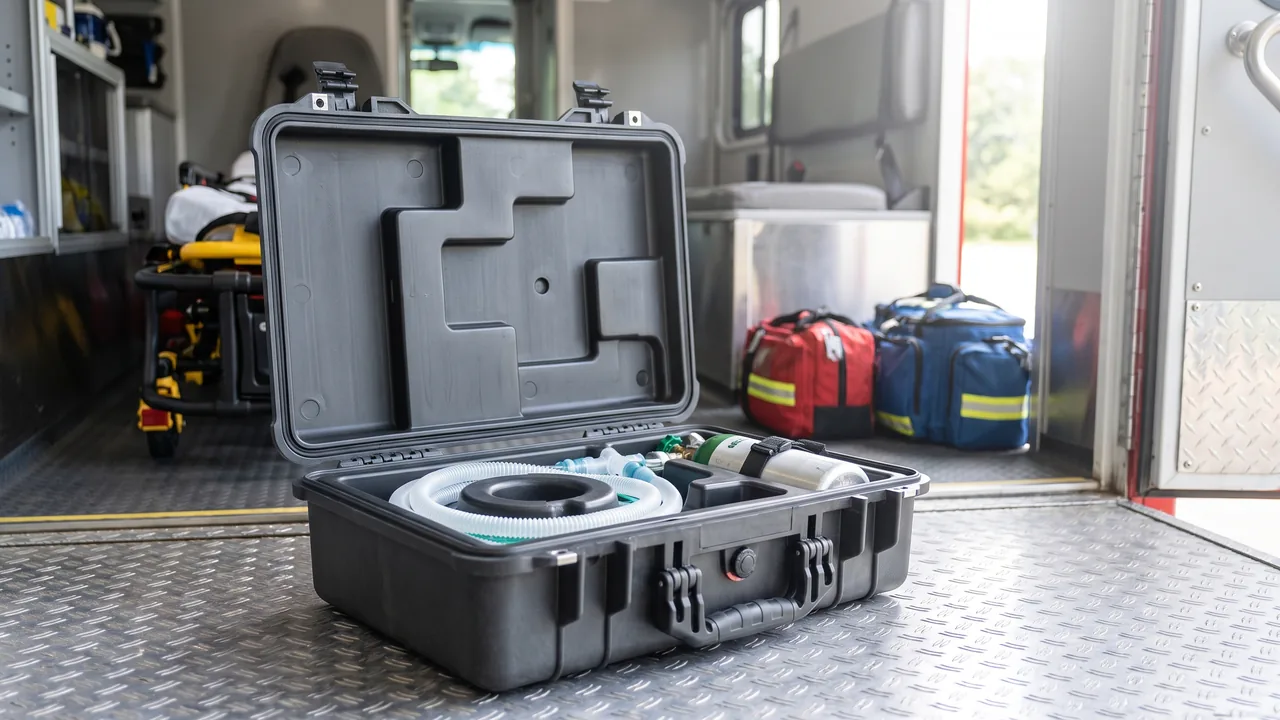
The core components of a hotel laundry - washer-extractors, tumble dryers and flatwork ironers - revolve around two themes, rotation and steam. That means stainless steel drums from 600 to 1200 mm in diameter with thin walls, cast iron bearing housings, shock absorbers and air springs, rubber door seals and capsule gaskets, steam valves and heating coils. These items travel by road and by sea when a machine is shipped, when a spare is transferred between regional stores, and when equipment is reallocated between properties. Their failure mode is rarely the single event of being dropped. It is the slow accumulation of out-of-round drums, corroded fits, creased rubber and marked sealing faces. The design line for a hotel laundry component case therefore rests on four points: keep drum ovality inside 0.3 percent of diameter with a support system at three points or more, hold bearing fits under a rust-preventive oil plus vapour phase film, let rubber parts set in their natural arc instead of being folded under load, and close the case with a compartmented liner, IP67 sealing and a pressure equalisation valve against moisture and chloride. The following sections move from damage mechanism through drum support, precision fits, rubber parts, valves and coils, corrosion strategy, test method and delivery acceptance.
A hotel laundry is a high-humidity, high-temperature environment with an alkaline mist from detergents, and the spare parts store usually sits next to the machine room, where floors stay wet and steam condenses. A drum that picks up a five millimetre dent in transit becomes an unbalance at extraction speed, vibration rises and the service life of both bearings and damping elements drops with it. A bearing housing that takes on moisture during a rainy-season shipment grows a film of surface rust enough to spoil the interference fit at assembly and push shaft runout out of tolerance. Most purchasers focus on the machine itself and on service response time, and overlook the leg from the supplier store to the machine room, which is the leg most exposed to damp, chloride and careless stacking. Engineering that leg with proper cases costs far less than one unplanned stoppage that interrupts linen circulation. General sealing and water-ingress criteria are covered in IP67 waterproof case selection; this article deals only with what is specific to laundry equipment parts.
Table of Contents
- 1. Five Damage Modes in Laundry Component Transit
- 2. Anti-Deformation Support Design for Thin-Wall Drums
- 3. Protecting Bearing Housings, Journals and Precision Fits
- 4. Transport Attitude for Dampers, Air Springs and Spring Packs
- 5. No-Fold, No-Crush Packing for Door Seals, Sight Glasses and Capsule Gaskets
- 6. Protecting Steam Valves, Steam Traps and Heating Coils
- 7. Rust and Pitting Control on Stainless Steel Parts
- 8. Liner Materials and Compartment Layout
- 9. Sealing, Pressure Equalisation and Hardware Reliability
- 10. Vibration, Drop and Environmental Test Methods
- 11. Lifting, Packing and On-Site Securing Procedure
- 12. Sizing and Component List Reference
- 13. Delivery Documents, Maintenance and Service Life
- Frequently Asked Questions
- Conclusion and Related Reading
1. Five Damage Modes in Laundry Component Transit
The first mode is loss of roundness and local denting on a thin-wall drum. A washer-extractor drum is usually a rolled and welded austenitic stainless shell between 1.2 and 2.0 mm thick, with a large length-to-diameter ratio, and its stiffness comes from the annular section rather than from wall thickness. When the mid-section has no internal support and the drum lies flat on a pallet with other weight stacked above, the shell flattens into an ellipse. A drum measured at more than 0.5 percent ovality widens the critical speed band during extraction, which shows up on site as machine feet vibration and loosened anchor bolts.
The second mode is impact damage and corrosion on bearing fits. The housing bore and the journal form a transition fit in the H7/js6 family, with working surfaces often held between Ra 0.8 and Ra 1.6, so any radial nick reduces the contact area. The unmachined surfaces of a cast iron housing can show surface rust within 24 to 48 hours in a damp environment, and rust powder that reaches an oil gallery travels onward into the bearing.
The third mode is folding and ageing of rubber parts. Door seals, capsule gaskets and air spring bellows are EPDM or nitrile rubber components, and a fold held beyond 90 degrees for a long period leaves a crease that does not spring back. Ozone and ultraviolet exposure accelerate surface cracking, and the folded zone is exactly where cracks initiate first.
The fourth mode is scratching, pitting and galvanic corrosion on stainless surfaces. Scratches on a polished drum face or an exposed door ring are hard to repair, and where a part touches a carbon steel bracket, a galvanised wire or an untreated timber batten, condensed water enriched with chloride produces pitting pits within weeks.
The fifth mode is damage to valve seats and coil tube walls. The flange faces of steam valves and steam traps and the bent sections of heating coils are both stress-sensitive and seal-sensitive. A point-contact impression or a flattened tube wall becomes a steam leak or a loss of heat transfer rate once the part is reinstalled.
| Damage type | Typical location | Consequence on site | Protection line |
|---|---|---|---|
| --- | --- | --- | --- |
| Out-of-round and denting | Drum shell, inner basket, end cover | Extraction vibration, early bearing failure | Three-point or more internal support, saddle cradles |
| Impact and corrosion | Housing bore, journal, flange face | Wrong interference, contaminated oil gallery | Protective plug and ring, vapour phase rust film |
| Folding and ageing | Door seal, capsule gasket, air spring | Seal failure, water leak, lost damping | Shape keeper ring, no fold under load |
| Scratch and pitting | Polished drum face, door ring, glass frame | Cosmetic rework, growing pits | Lint-free separator film, no carbon steel contact |
| Seat and tube wall damage | Steam valve flange, steam trap, heating coil | Steam leak, lower heat transfer | Guard cap, port plug, dedicated slot |
2. Anti-Deformation Support Design for Thin-Wall Drums
The central question in drum support is where to apply the load. A drum shell cannot take a radial point load, so every support point has to land on a stiff ring: the end cover flange, an intermediate stiffening ring, or a purpose-made process ring. Start by fixing the support sections. For a drum between 800 and 2000 mm long, one internal support ring at mid-span is the minimum, and two are advisable beyond 1400 mm, which keeps the support spacing within 1.2 times the shell diameter.
Three internal support families are common. The first is a timber or aluminium cross-brace that pushes against the inner shell at four or eight points, with soft felt on each pad and the preload judged by the rule that the drum neither rocks when pushed by hand nor shows visible shell deformation. The second is an adjustable internal ring, a split ring faced with felt or polyurethane and expanded by a screw mechanism, which can be reused across diameters. The third is an end-face clamp with a mandrel: the covers are gripped at the flange and the shell hangs freely between them, which suits thin-wall machines whose lifting ribs make internal bracing awkward.
External support matters just as much. In the horizontal attitude, use two V-saddles with a wrap angle of 90 to 120 degrees, felt or high-density foam on the contact faces, spaced at 0.6 to 0.7 of the drum length and positioned near stiffening rings. In the vertical attitude, use a pallet with a centring boss that engages the end cover bore so the load travels through the flange rather than the shell. In either attitude, never pass a sling around the shell, and never use a sight glass or loading door opening as a load path.
Ovality should be sampled after loading. At three sections along the drum - both ends and the middle - measure the diameter in two directions 90 degrees apart with an internal micrometer or a laser distance meter, then express ovality as the difference between maximum and minimum divided by nominal diameter. A practical threshold is 0.3 percent after a short road leg and 0.5 percent for sea freight with multiple transfers. A drum outside the threshold should be re-supported before departure rather than dealt with on site.
3. Protecting Bearing Housings, Journals and Precision Fits
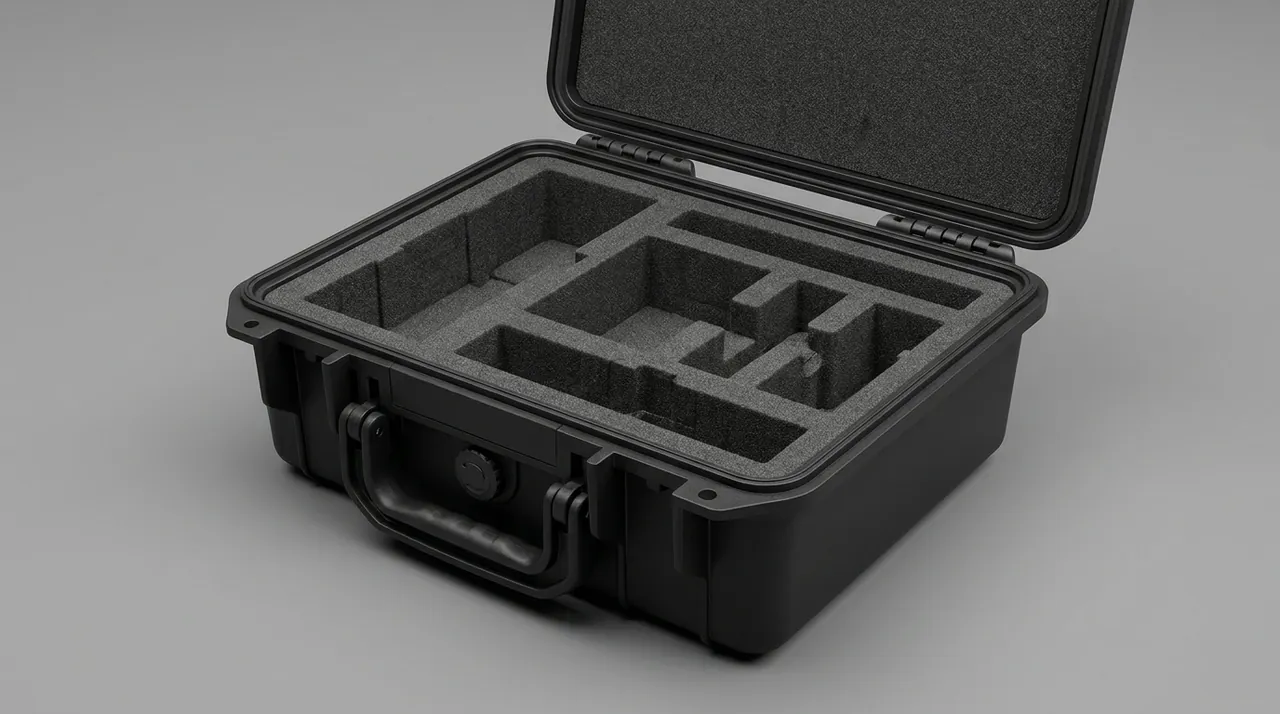
The bearing housing and the main shaft are the most precise pair in a laundry machine. The housing bore and the journal are usually toleranced in the H7/js6 family, and high-speed models ask for H6/js5, with defined limits on cylindricity and surface roughness on the working faces. The transport objective is narrow: the fit must arrive with the same dimensions and surface condition it had at final inspection.
Housing protection has three layers. The first is bore protection, using a polymer or timber plug matched to the bore with a chamfered outer edge so no metal item can slide into the bore. On assemblies that already carry bearings, a central sleeve transmits load between inner and outer rings, because the rolling elements must never take an axial shock. The second layer covers the mounting flange face with a lint-free film and a rigid guard ring, with felt between guard and machined face. The third layer is bulk corrosion control: a thin film of rust-preventive grease on the fits, wrapped in vapour phase corrosion inhibitor film, then placed in its own compartment so it cannot rub against other metal parts.
A journal is more vulnerable to bending than to impact. A slender shaft must be supported along its axis inside the case, with V-blocks or padded saddles under the shoulders on both sides of the journal and an adjustable support at mid-span. Threads and keyways are covered with protective sleeves, and keyways are filled with a timber insert to prevent deformation at the edges. A shaft must never hang from a single point, and must never be stacked directly against a drum.
The packing list should state the required orientation, such as fits facing upward or to the side, together with a no-stacking marking. Where several housings travel in one consignment, use a vertical slotted compartment layout with one housing per slot, and after closing, push each item by hand to confirm it neither rocks nor touches its neighbour. The same fix-first-then-seal logic applies to heavy rotating parts, and the lifting and restraint practice for those is described in heavy component restraint for hoist and winch parts.
4. Transport Attitude for Dampers, Air Springs and Spring Packs
The damping system of a washer-extractor combines shock absorbers, air springs and coil spring packs, and it is designed to work under pressure and in reciprocating motion, which is the exact opposite of sitting still under load. If a damper is left at working height and an air spring is left inflated for a long transport period, the rubber body creeps continuously, and after reinstallation both the damping characteristic and the load height have shifted.
An air spring should be depressurised and kept in its natural shape. Before packing, release pressure to near ambient as the manufacturer specifies, then support the top and bottom plates with a shape keeper ring or a soft liner so the bellows sits in natural folds rather than being flattened or stretched. A bellows must not share a compartment with sharp items and must not be cinched by a strap deep enough to leave a groove. Some bellows carry metal end plates and studs, and these need a damping pad under the plate.
Coil springs should be compressed to the transport length specified by the manufacturer and held with a locking block or a band, with a rubber pad between the block and the end coil so transport vibration does not wear the coil against the block. Spring packs travel upright or laid along the axis, never loaded sideways in a way that shortens free length, and the packing record should carry a note that the case contains spring elements and must not be compressed, backed by an upward marking on the case face.
The piston rod is the part of a damper that most fears a side load. The rod must be free of any lateral restraint in the case, with the bracket supporting the cylinder body rather than the rod end, and any rubber bushing in the mounting eye filled with a soft plug to stop it shifting under vibration. A reliable pattern is to machine one pocket per damper to two thirds of the body diameter, then hold the exposed portion with a light elastic bar, which gives axial location with radial freedom. For sea freight, record the initial reading of a humidity indicator card, and add five to ten grams of desiccant to the compartment that holds the dampers and bellows. Record the release pressure and the transport length in the packing note, because the crew that reinstalls the machine has to know what was done so it can be reversed.
5. No-Fold, No-Crush Packing for Door Seals, Sight Glasses and Capsule Gaskets
The door seal and capsule gasket decide whether a washing machine leaks, and they are the parts most easily ruined by a casual fold during packing. The rubber bellows relies on its corrugated section to provide compression travel, so any area that is flattened or folded shut becomes a permanent deformation, and after installation it forms a leak path at exactly that point.
The packing principle can be reduced to three prohibitions: no folding, no compression, no hanging. No folding means the corrugated section stays in its natural arc, held open by a shape keeper ring sized to the gasket bore and made from hollow board or foam, with the opening facing upward in the case and never drawn together with a band. No compression means nothing is placed on top of a door seal; where the case must be layered, the upper level rides on an independent load-bearing divider and not on the seal itself. No hanging means a long gasket is never suspended from one point but supported along its full length or coiled onto a large-diameter keeper.
Sight glasses and door frames form another sensitive group. The impact resistance of tempered glass depends on compressive stress in its surface layer, and edges and corners are the weak points, where a knock can shatter the pane without leaving an obvious mark. Wrap each glass unit in foam film and add corner protectors in high-density pearl foam or EVA, seat it in a dedicated groove, and leave at least 20 mm of free space above. For a complete door assembly with hinges and latches, pack it in the assembled state, block the hinge travel with a support, and leave every latch in the engaged position with a protective sleeve. Hardware details and their interaction with the gasket are covered in case hinges, latches and seals.
Environmental control matters too. Rubber parts are sensitive to ozone and ultraviolet, so avoid chlorine or sulphur bearing packing materials and never restrain a door seal with an untreated rubber band. A seal held in stock for more than twelve months should be re-checked for surface cracking, and the packing document should record the production batch so stock can be rotated.
6. Protecting Steam Valves, Steam Traps and Heating Coils
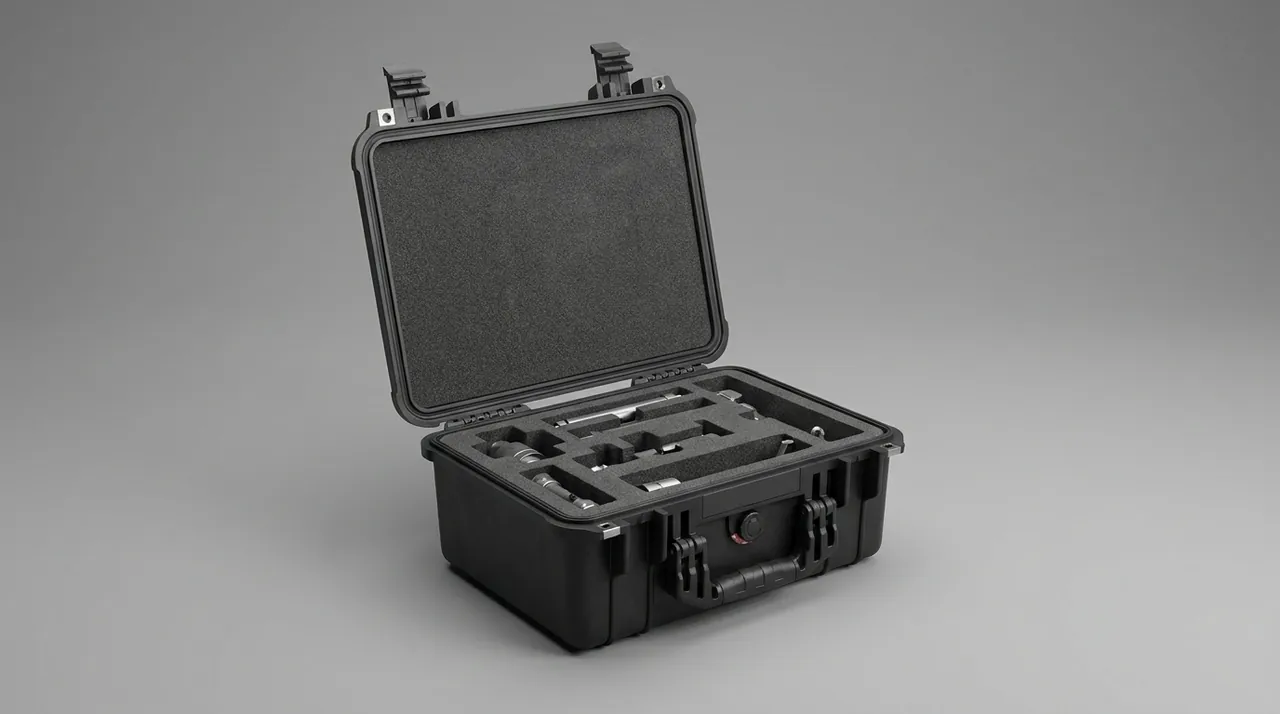
A laundry steam system commonly runs between 0.4 and 0.8 MPa, and steam valves, steam traps and heating coils are the three representative items, sharing the same sensitive features: sealing faces and internal flow passages.
Steam valves are mostly flanged, and the flatness of the flange face decides whether steam escapes. Cover each sealing face with a polymer guard sized to the flange outer diameter and line it with felt. A valve body must not rest directly on its sealing face, and two valves must never be stacked face to face. The stem follows the same logic as a damper piston rod: no side load, never used as a lifting point, and no clamping at the packing gland. A valve with a handwheel should have the handwheel locked in the open or closed position the manufacturer specifies and sleeved, so transit cannot rotate the stem.
Steam traps are mostly mechanical or thermodynamic types with fine moving parts such as floats, capsules or discs, and they are sensitive to installation angle. Pack them in the orientation marked by the manufacturer and never upside down. A capsule type must not take external compression, so give it its own compartment with soft padding. Plug the blowdown and outlet ports against ingress of particles.
The problem with a heating coil is stiffness. Coils are usually bent stainless or copper tube with a wall thickness between 1.0 and 1.5 mm, they bend easily and the welded joints are the weak locations. Support them on timber or polymer blocks shaped to the bend radius, positioned on straight runs at several points, and leave the bends unsupported rather than load bearing. Plug every tube end against dust, insects and moisture. A coil must not be coiled up and then loaded at the outermost turn, and must not share a compartment with valves or flanges. Where a coil will work against steam above 100 degrees Celsius, confirm that the temperature class of the liner foam is compatible with the air temperature inside a closed container in summer, since a soft liner that collapses removes the support entirely. Material trade-offs are discussed in high temperature case selection.
7. Rust and Pitting Control on Stainless Steel Parts
Stainless does not mean rust free. Pitting on laundry equipment parts is normally produced by three conditions acting together: chloride, an oxygen-depleted environment and a standing water film. Detergents, bleach and tap water around a hotel laundry already contribute chloride, and if a drum or a coil is wrapped airtight in polymer film while condensation remains inside, the result is a classic occluded cell and pitting starts from it.
Countermeasures rank in a clear order. First comes moisture control: hold relative humidity inside the case below 45 percent with silica gel and a humidity indicator card, sizing the desiccant at 100 to 200 grams per 100 litres of free volume, doubled for long sea legs, and fit a pressure equalisation valve to remove the breathing effect caused by temperature swings, whose principle is described in case pressure equalisation valve. Second comes separation: stainless parts must not touch carbon steel or galvanised components, and a lint-free polyethylene or felt layer goes between them to prevent galvanic corrosion. Timber battens and pallets should be low in salt and properly dried, so that acids and salts in the wood cannot migrate onto metal surfaces. Third comes surface protection: a passivated surface must not be wiped with a chlorine containing solvent, and where temporary protection is needed before assembly, apply a thin neutral rust-preventive grease to the working face and wrap it in vapour phase film.
Where incoming parts are stored in a humid region or must travel by sea, arrange neutral salt spray testing to validate the protection scheme. The test method follows GB/T 10125, and the record should state the time to first pit and the area fraction affected. A duration of 48 to 96 hours is normally enough to compare schemes of the same family rather than to chase a fixed number. Salt spray is not a service life prediction. It answers one question only: which combination of barriers resists chloride better.
8. Liner Materials and Compartment Layout
The job of the liner is to convert whole-case vibration into a defined load path for each component, so material choice and compartment layout carry equal weight.
EVA foam has good rebound and a fine surface, which suits wrapping polished stainless faces and door rings. Cross-linked polyethylene foam is uniform in density and moderate in cost, which suits large support areas and load-bearing pads. Expanded polypropylene and expanded polyethylene are stiff and fatigue resistant, which suits structural blocks and the cradles for heavy bearing housings. Felt and lint-free cloth serve as the separating layer between metal parts. Every liner material should be confirmed as low-bleed and low-hygroscopic, with written flammability classification to a recognised scheme such as UL94, because a spare parts store next to a machine room is no place to add an unnecessary fuel load.
Compartment layout follows three dimensions in order: weight, sensitivity and geometry. Heavy items go at the bottom close to the case ribs, precise items go in their own mid-level pockets, and long or flexible items go on the top layer or into a dedicated long groove. Keep the number of different components in one case to four to six; beyond that, split the consignment, because more pockets mean thinner walls between them and a higher chance of mutual compression in transit. Add removable dividers between pockets so the crew can pick by tag number and avoid the secondary contact that comes from rummaging. Field experience with modular layouts is summarised in removable divider systems.
The machining route depends on volume. For prototypes and small batches, CNC-cut foam allows each pocket to follow a measured outline, and the development path is set out in custom foam insert guide. Once the batch is stable, die cutting or moulding gives better dimensional consistency and a lower unit cost. The practical acceptance test at the loading dock is simple: an item pushes into place by hand, does not fall out when the case is inverted, and makes no rattle when shaken. Those three checks work better on a shop floor than any tolerance table.
| Component family | Weight range | Sensitive feature | Recommended liner and support |
|---|---|---|---|
| --- | --- | --- | --- |
| Thin-wall drum | 30-150 kg | Ovality, surface scratches | Internal support ring, V-saddles, felt pads |
| Bearing housing and shaft | 15-80 kg | Fits, journal bending | Vertical slots, bore plugs, vapour phase film |
| Door seal and capsule gasket | 2-15 kg | Creasing, cracking | Shape keeper ring, dedicated pocket |
| Damper and air spring | 5-25 kg | Creep, rod side load | Machined pocket, elastic hold-down bar |
| Steam valve and steam trap | 10-60 kg | Flange face, stem | Guard cap, free stem, dust plug |
| Heating coil | 20-90 kg | Bend stiffness, port contamination | Bend radius blocks, plugged ports |
9. Sealing, Pressure Equalisation and Hardware Reliability
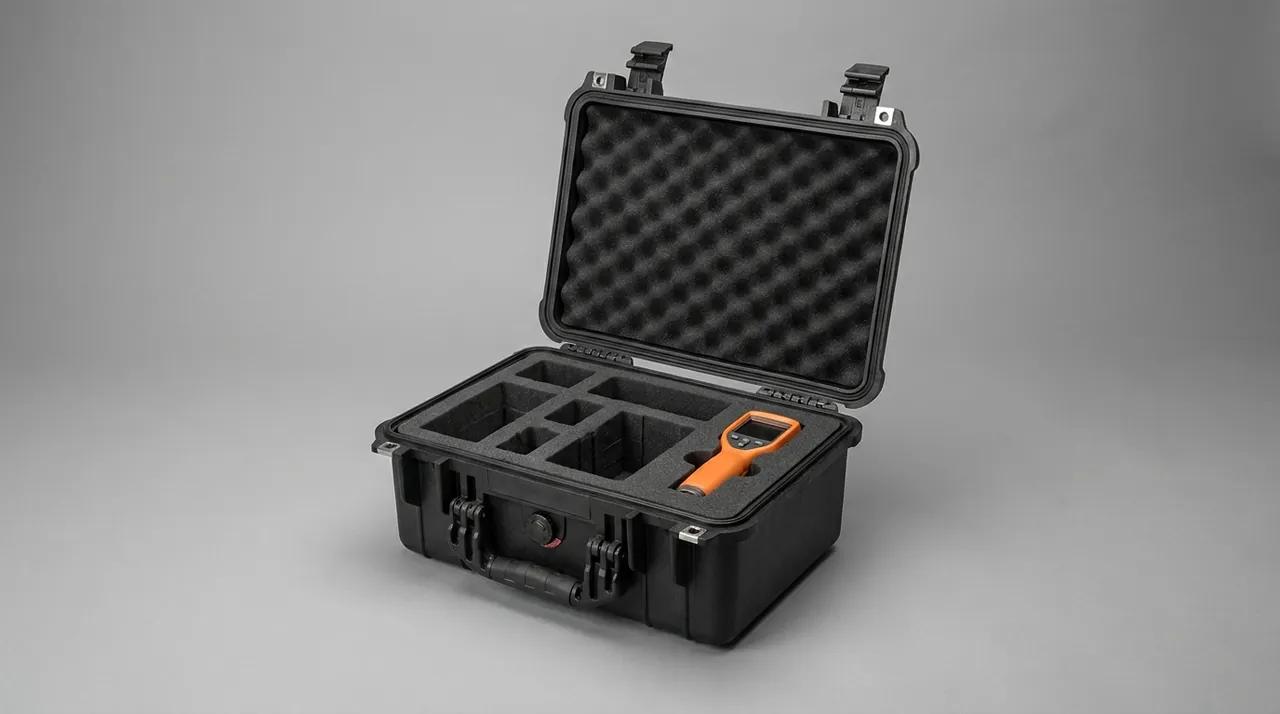
Humidity in a hotel laundry spare store stays high year round, so the sealing class of the case decides whether the desiccant inside is doing useful work. Under the assessment method of IEC 60529 and GB/T 4208, IP67 means no ingress during immersion at a defined depth for a defined time, and IP65 means protection against water jets. For sea freight or open-air transhipment, specify IP67 for the complete case, and treat IP65 as the floor.
Three details in the seal design cause most failures. The first is the mating face: the compression of the gasket has to match the joint geometry on the hinge side, and a compression ratio between 25 and 35 percent is the usual target, since less leaks and more accelerates permanent set. The second is latch force distribution: on a long case with a single central latch, the gasket at both ends is under-compressed and forms a water path, so plan one latch every 300 to 400 mm of case length. The third is the hardware itself. Hinge pins, latch bars and rivets in ordinary carbon steel often fail before the case body does in a damp environment, so specify stainless or passivated metal and review the structure against case hinges, latches and seals.
A pressure equalisation valve is essential for long-distance transport. Day and night temperature swings and altitude changes create a pressure differential across the case wall, and if the case is fully sealed that differential pushes the gasket inward or lifts a latch, while the breathing effect also exchanges humid air repeatedly. A valve with a micro-porous hydrophobic membrane lets gas pass slowly while blocking liquid water and dust, so IP67 is retained and breathing is eliminated. For high-value drums and bearing assemblies, add impact and tilt indicators so an abnormal transport event becomes traceable evidence.
Case structure needs verification as well. Confirm stacking and vibration capability in both empty and loaded conditions using the general approach of the GB/T 4857 series or ASTM D4169, and place ribs, base structure and forklift pockets so they avoid the load path of the liner pockets. On heavy component cases, JUNZHIJIA normally sizes wall thickness, rib pitch and wheel configuration from component weight and lifting attitude, and can supply stainless hinges, two-stage latches and replaceable gaskets to match, so a laundry can renew wearing parts on site without replacing the whole case.
10. Vibration, Drop and Environmental Test Methods
The purpose of transport testing is not to attach a pass label to a case. It is to find the first thing in the design that fails. A laundry component case should be tested against four families of condition: vibration, impact and drop, temperature and humidity cycling, and salt spray corrosion.
Vibration testing follows the GB/T 4857 series or the relevant ISTA procedure, and the points to watch are whether internal supports loosen, whether bearings shift, and whether rubber parts show rubbing marks. The most common road transport damage comes from resonance amplification, usually between 5 and 50 Hz, so record the relationship between the acceleration response inside the case and the visible condition of the case, and use it to place reinforcement ribs. For palletised consignments, use an ISTA unitised load procedure so that the pallet-to-case fixing is validated as part of the system.
Impact and drop heights are selected from component weight and handling method. Heavy cases are usually tested by forklift and edge drops, lighter cases by corner drop. Acceptance criteria include the change in drum ovality, the absence of nicks on bearing fits, the absence of impressions on valve flanges, and the absence of component displacement inside the case. The transport vibration and shock methods in MIL-STD-810H can be cited as a test method basis, but this is not a military certification and no military approval may be claimed from it.
Temperature and humidity cycling validates liner and seal stability. A typical profile runs from minus 20 to plus 60 degrees Celsius, with the hot leg watched for softened foam that loses support and the cold leg watched for a gasket that fails to recover. Sea freight adds damp heat and salt spray, the latter per GB/T 10125, used to compare chloride resistance between protection schemes. Keep raw records and specimen photographs for every test as design input for the next similar project, rather than a single page of conclusions.
11. Lifting, Packing and On-Site Securing Procedure
Drums and bearing assemblies sit in the 30 to 150 kg band, which makes manual handling risky, so lifting is normal practice, and lifting itself can be the source of damage.
Lifting points must be the designed ones. A drum uses the dedicated lifting eyes on the end cover flange or a mandrel through the centre, never a sling wrapped around the shell. A bearing housing is lifted from eyebolts threaded into the flange bolt holes, never from a machined face. A coil is carried by a purpose-made yoke applying load at two points on straight runs. Keep the sling angle within 90 degrees and lift horizontally, because an offset load puts a local force into the shell. Confirm protective corners are fitted wherever a sling touches metal, so a worn sling cannot fail suddenly.
Packing follows a fixed sequence: clean the case and liner and confirm the absence of dust and swarf; place heavy items and tighten their supports; place precise parts and rubber parts; and finally place the accessory bag and documents. Every support needs a second tightening pass, because the first transport vibration lets internal rings and locking blocks settle slightly. After loading, recheck the centre of gravity, keep heavy items near the geometric centre of the case, and confirm that the forklift pockets are not blocked by support structure.
Case markings follow GB/T 191 and GB/T 13384, and should include upward, keep dry, centre of gravity, no rolling, plus case number and component tag list. Where one shipment is split across cases, attach a split packing list to the outside of each, showing which tag numbers it holds and their machine serial numbers, so the crew can open cases in installation order. When moving with a forklift or pallet truck, watch the bending of a long case and use two forks to carry both ends where necessary.
12. Sizing and Component List Reference
Sizing starts from an accurate component list, not from a table of case dimensions. The list should carry six items of information at minimum: component name and tag number, overall dimensions, net weight, the location of exposed precision or rubber surfaces, the required transport attitude, and the quantity per batch. If any is missing, the liner design proceeds on an assumption.
Three clearances are also needed: the fit clearance between pocket and component, typically 0.5 to 2 mm depending on surface sensitivity; the separation between neighbouring components, preferably at least 15 mm; and the buffer clearance to the case wall, preferably at least 20 mm. A long case also needs a mid-span deflection check, and as a rule of thumb a span beyond 1200 mm calls for a reinforced base or an intermediate support.
| Component | Typical size | Suggested case | Liner and support | Reference load per case |
|---|---|---|---|---|
| --- | --- | --- | --- | --- |
| Washer-extractor drum | 600-1200 mm diameter, 800-1400 mm long | Horizontal long case or vertical round case | Internal support ring plus V-saddles | 1 unit, or 2 with an independent divider |
| Tumble dryer drum | 800-1200 mm diameter, perforated thin wall | Vertical round case | End clamps plus mandrel | 1 unit |
| Bearing housing assembly | 300-600 mm square | Medium cube case | Vertical slots plus bore plugs | 2-4 sets |
| Main shaft | 800-1600 mm long | Long narrow case | Multiple V-blocks plus end sleeves | 1-2 pieces |
| Door seal and capsule gasket | 500-1000 mm ring | Wide shallow case | Shape keeper rings | 2-5 pieces |
| Damper and air spring | 300-700 mm long | Medium cube case | Machined pockets plus elastic bars | 4-8 pieces |
| Steam valve and steam trap | DN25-DN80 | Medium cube case | Guard caps plus dedicated pockets | 4-8 pieces |
| Heating coil | 1-4 m developed length | Long divided case | Bend radius blocks plus port plugs | 1-3 sets |
When specifications are mixed, use a main case plus supplementary case structure: put the drum and bearing assembly of one machine in the main case, and the remaining accessories in a supplementary case, with the parent-child relationship marked on both. This avoids an overweight single case and keeps the pick order on site aligned with the assembly order, which cuts the re-sorting effort after opening.
13. Delivery Documents, Maintenance and Service Life
Whether a case is acceptable cannot be judged from its appearance. A delivery should include a document set covering at least the following: material and flammability classification statements for the case body and liner; the test basis and judgement method behind the sealing class; material certificates for the hardware; the liner pocket drawing and component mapping table; the packing work instruction with a diagram of the support re-tightening points; and the sampling records. The sampling approach described in custom case acceptance and AQL sampling is a reasonable basis, setting sample size from batch size and separating cosmetic defects from structural failures.
Maintenance follows three cycles. After every opening, check the gasket for impressions and cracks, the latches for deformation and the internal supports for looseness. Every six months, verify gasket compression and desiccant condition, and replace the desiccant as soon as the indicator card changes colour. Every twelve months, clean the liner and inspect the foam for collapse and powdering, using a mild neutral cleaner as described in protective case cleaning and care. Powdering foam is a particle contamination risk and is especially undesirable near bearings, so it is better to replace foam early than to keep shipping with a crumbling liner.
Service life depends on duty and environment. Cases that fly frequently, take repeated forklift knocks and wait outdoors in transhipment will wear out the gasket and latches first, and replacing those consumables keeps the case body in service. Cases that live in a temperature controlled spare store fail mainly through polymer ageing and liner moisture uptake. Designing consumables as replaceable items and the liner as a separately orderable part is the practical way to keep a case useful for the whole life of the machine. As the manufacturer, JUNZHIJIA can supply matched replacement lists for case bodies, liners and seals by machine model.
Frequently Asked Questions
Q: Can a drum 1200 mm in diameter with a 1.5 mm wall be shipped with foam wrapping alone? A: No. The stiffness of a thin-wall drum comes from its annular section, and foam only provides local cushioning; it cannot stop the shell going out of round under its own weight and the load above it. The correct approach is to route the load into stiff rings: one or two adjustable internal support rings at mid-span, and V-saddles with a wrap angle of 90 to 120 degrees at both ends, spaced at 0.6 to 0.7 of the drum length and placed near stiffening rings. After loading, measure the diameter at three sections in two directions 90 degrees apart and express ovality as the difference over nominal diameter. Hold it within 0.3 percent for a short road leg and 0.5 percent for sea freight with multiple transfers. Where space rules out internal bracing, switch to an end clamp and mandrel so the load passes through the flange. Also verify that every pad bears on a ring section rather than on an unsupported shell area, because a pad resting on a bare shell transfers the dent instead of preventing it.
Q: Should a drum travel upright or on its side in the case? A: It depends on wall thickness, the position of stiffening rings and the case height. The horizontal attitude keeps the centre of gravity low and is easier for forklift handling, but it needs two saddles under stiffening rings and the shell must never touch the case floor. The vertical attitude means the shell only carries its own axial compression, which gives the lowest deformation risk, provided the pallet has a centring boss and the load passes through the end cover flange. In neither attitude may the shell or a loading door opening become a load path. Where two drums share one case, an independent load-bearing divider is mandatory and its stiffness must be checked separately, because the lower drum must not carry the upper one through foam alone. Make the final choice from a measured ovality reading taken after loading rather than from habit. Where the case is too shallow for the vertical attitude and internal bracing is impossible, a saddle set machined to the measured shell is the next best option, and it should be accepted on an ovality reading as well.
Q: What is the most reliable way to protect bearing housing and journal fits from rust? A: Fit protection has to solve two things at once, keeping moisture out and suppressing electrochemical corrosion. The recommended combination is a thin neutral rust-preventive grease first, then vapour phase corrosion inhibitor film, then a dedicated compartment so the part cannot rub against other metal. Plug the housing bore with a matched plug whose outer edge is chamfered, so no metal item can slide in. On an assembly that already carries bearings, use a central sleeve so load passes between inner and outer rings, because the rolling elements must never take an axial shock. Hold relative humidity inside the case below 45 percent, size silica gel at 100 to 200 grams per 100 litres of free volume, and include a humidity indicator card. Unmachined cast iron can show surface rust within 24 to 48 hours in damp heat, so omitting the vapour phase film is not advisable for a rainy-season or sea freight shipment.
Q: How do I prevent creasing and ageing in a rubber door seal? A: Keep the corrugated section in its natural arc at all times, never folded shut, never compressed and never hung from one point. Fit a hollow board or foam keeper ring sized to the gasket bore to hold the opening, lay the seal flat in a dedicated pocket with the opening facing up, and place nothing on top: where the case must be layered, the upper load rides on an independent divider. Never draw a seal together with a band into a folded bundle, and never cinch an untreated rubber strap across the corrugation, because a fold held beyond 90 degrees for a sustained period leaves a crease that will not recover. Avoid chlorine and sulphur bearing packing materials, since ozone and sulphides accelerate cracking. For seals held in stock beyond twelve months, inspect the corrugation for fine cracks before dispatch and record the production batch so stock can be rotated.
Q: Do steam valves and steam traps need a dedicated transport lock? A: It depends on the type. For a steam valve the priorities are the flange sealing face and the stem. Cover the sealing face with a polymer guard and a felt pad, never let a valve body rest on its sealing face, and never stack two valves face to face. The stem must not take a side load, must never be used as a lifting point, and must not be clamped at the packing gland. A valve with a handwheel should have the handwheel locked in the position specified by the manufacturer and sleeved. A steam trap contains fine moving parts such as floats, capsules or discs and is sensitive to installation angle, so pack it in the marked orientation and never upside down, and give a capsule type its own compartment with soft padding because it must not take external compression. Where the manufacturer supplies a transport lock or pin, use it as instructed and remove it before reinstallation. Confirm as well that the handwheel position recorded on the packing note matches the one the machine expects, because a partly open valve found at commissioning costs an extra site visit and delays the linen plan.
Q: The laundry environment is damp. Does the case need extra dehumidification? A: Yes, and dehumidification has to be designed together with sealing and pressure equalisation. Hold relative humidity inside the case below 45 percent using silica gel with a humidity indicator card, sized at 100 to 200 grams per 100 litres of free volume and doubled for sea freight or multi-leg transhipment. Desiccant alone in a poorly sealed case saturates quickly, while sealing alone without a pressure equalisation valve lets the differential from daily temperature swings and altitude change drive humid air in and out through the gasket. Specify the complete case to IP67 under IEC 60529 and GB/T 4208 and fit a valve with a hydrophobic micro-porous membrane, which allows slow gas exchange while blocking liquid water and dust, and keep impact and tilt indicators fitted to record abnormal handling. Before dispatch, record the indicator card reading on the packing note so the receiving store can compare it against the reading taken on arrival and act if humidity has climbed.
Q: How many different components should share one case? A: Keep it to four to six at most, and arrange them in layers by weight, sensitivity and geometry. Heavy items go at the bottom close to the case ribs, precision items go in mid-level pockets of their own, and long or flexible items go on the top layer or in a dedicated long groove. Put removable dividers between pockets so the crew can pick by tag number, which reduces the secondary handling that comes from searching through a mixed case. Overloading a case has two consequences: pocket walls become thin and neighbours compress each other under vibration, and counting on site becomes unreliable, so a missing or wrong part is only discovered after installation. A main case plus supplementary case structure works better, with the drum and bearing assembly of one machine in the main case and the rest in the supplementary case, each marked with its parent machine serial number. Label both cases with the same machine tag so the crew never has to guess which drum belongs to which machine before starting assembly.
Q: What test documents should come with such a case order? A: Four groups usually apply. The first covers materials: density, rebound and flammability classification of the liner foam, plus material certificates for metal parts. The second covers performance: the sealing class assessed under IEC 60529 and GB/T 4208, and vibration, stacking and drop records for the case structure following the GB/T 4857 series or ASTM D4169. The third covers corrosion protection: the neutral salt spray scheme and result to GB/T 10125, stating duration and rating method, and noting that the result is used for comparing schemes rather than predicting service life. The fourth covers operations: the liner pocket drawing, the packing work instruction, the support re-tightening diagram and the sampling records. Where transport vibration and shock methods are cited from MIL-STD-810H, state clearly that it is used as a test method basis and is not a military certification. Keep one copy of the set with the case and one in the project file.
Conclusion and Related Reading
Protecting laundry components is not about putting items in a box, but about solving rotating machinery failure within the logistics step: drum support routed into stiff rings, bearing fits sealed against moisture, rubber set in its natural arc, valve seats and coil walls kept off hard contact. JUNZHIJIA supplies matched liner cavities, supports and seals by machine model.
Related Reading