

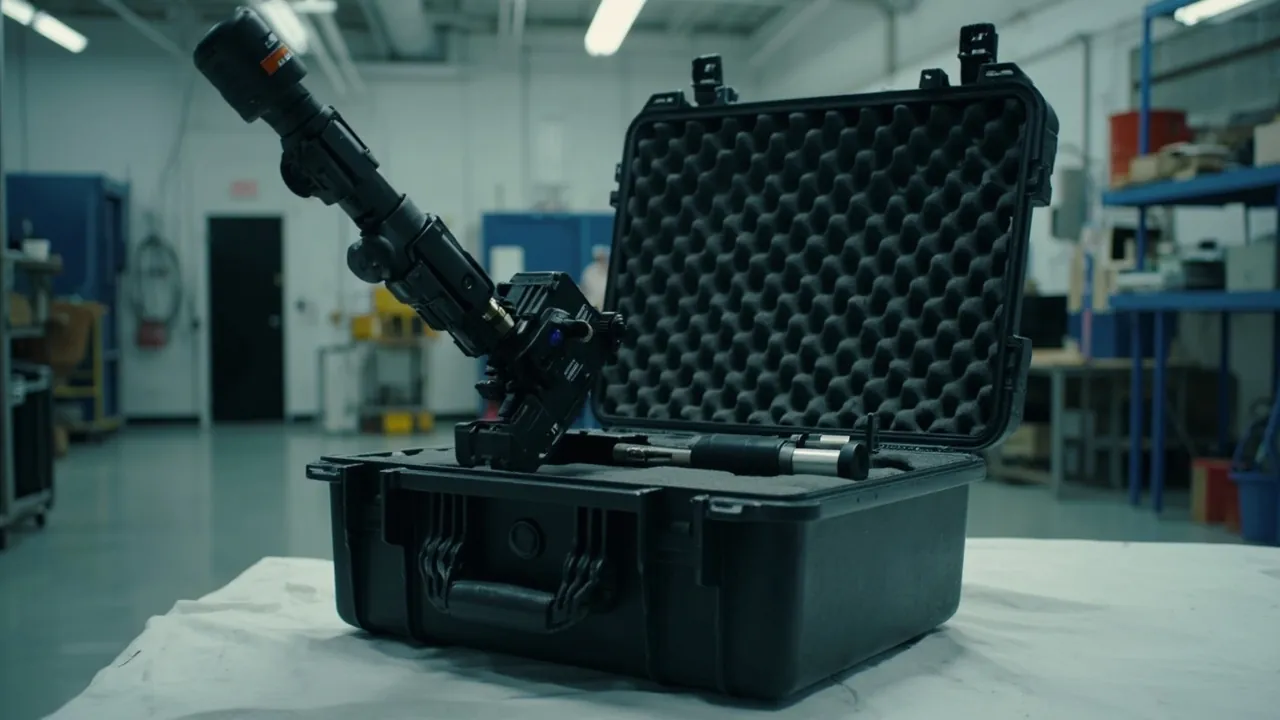
The hard part of protecting laboratory sample preparation equipment is not impact resistance; it is contamination and carry-over. A score on the inner wall of a grinding jar, a slight deformation of a digestion vessel sealing face, a blocked or corroded nebuliser, all show up later as elevated blank values, low recovery or poor agreement between replicates, and none of them are visible at incoming inspection. The conclusion is direct: grinding and digestion components must travel in a purpose-built case with custom foam that is chemically resistant and fully cleanable. An ordinary tool box, a carton or a generic flight case is not an acceptable substitute.
Sample preparation is the first link in the analytical chain and it sets the ceiling on data quality. Grinding, whether ball milling, knife milling or mortar milling, homogenises the sample to a particle size that can be weighed and digested. Digestion, whether microwave, hotplate or dry ashing, converts a solid sample into a solution that can be introduced to an instrument. Both steps use vessels that touch the sample directly, so any contamination introduced by packaging or the environment ends up in the final result. A microwave digestion system that represents a substantial investment will keep producing incomplete digestions in every batch if a vessel sealing face was crushed in transit, and the cost of chasing that problem far exceeds the cost of a compliant case.
This article is written for laboratory managers in testing bodies, equipment managers in corporate quality centres, operations and procurement staff in third-party testing companies, and the engineering staff who run whole-laboratory relocations and equipment transfers. It breaks down the fragile points of grinding and digestion components, cleanliness and cross-contamination control, chemically resistant liner selection, sealing and condensation control, the transport test standards that apply, and an acceptance method that can be written into a relocation plan.
Table of Contents
- 1. Why Sample-Prep Equipment Needs a Purpose-Built Case
- 2. Sample-Prep Component List and Fragility Grading
- 3. Grinding Equipment: Jars, Grinding Media and Mill Bodies
- 4. Digestion Equipment: Vessels, Liners and Sealing Caps
- 5. Microwave Digestion Waveguides and Door Assemblies
- 6. Acid Purification and Reagent Handling Components
- 7. Elemental Analysis Front Ends: Sample Introduction and Nebulisers
- 8. Cleanliness and Cross-Contamination Control
- 9. Corrosion-Resistant Materials: PTFE, PFA and Foam Liners
- 10. Sealing Tiers and Cleanliness Requirements for Sample-Prep Equipment
- 11. Vibration Isolation and the Test Basis for Sample-Prep Equipment
- 12. Temperature Control and Condensation Prevention
- 13. Cleanliness Marks, Chemical Status and Material Declarations
- 14. Selecting and Releasing a Sample-Prep Case
- Frequently Asked Questions
- Conclusion & Related Reading
1. Why Sample-Prep Equipment Needs a Purpose-Built Case
What makes sample preparation equipment different is that its critical parts are vessels that touch the sample, not structures that carry load. A cosmetic mark on the housing of a mill rarely matters. A single score on the inner wall of a grinding jar will retain material from the previous batch and cause cross-contamination. In the same way, a slightly deformed sealing face on a digestion vessel can cause one vessel in a batch to behave abnormally and the digestion to be incomplete.
Transport affects sample preparation equipment through three mechanisms:
- Mechanical. Grinding jars, digestion vessels and nebulisers are thin-walled or precision-fitted. Impact produces inner wall scoring, sealing face deformation, thread damage and nozzle blockage.
- Chemical and carry-over. Plasticisers, release agents, dust and fibres released by packaging material deposit on the vessel surface. In trace element analysis and organic analysis these may directly raise the blank.
- Thermal and condensation. Components containing liquid can leak or condense under a temperature difference, and components carrying acid can generate corrosive vapour when stored sealed for long periods.
A purpose-built case performs four functions here:
- Geometric locking. Vessels, liners and accessories stay in fixed positions and cannot collide or rub.
- Clean isolation. A cleanable case and liner block external dust and packaging debris.
- Carry-over isolation. Individual pockets and replaceable liners separate cleaned components from uncleaned ones.
- Traceable status. Labels and a packing list let the receiving party confirm the components travelled as intended.
The approach JUNZHJIA uses with laboratory customers is to split components into two groups by whether they touch the sample, give every sample-contact component an individual pocket and a cleanable liner, and then choose the corrosion resistance grade from the chemical environment. That sequence prevents the long-term problems that come from packing everything into one case.
2. Sample-Prep Component List and Fragility Grading
There are many models of sample preparation equipment, but grading by two dimensions, whether the part touches the sample and whether it carries chemical residue, produces a stable classification. The table below can be used directly to draft a packaging work instruction for a relocation or transfer.
| Component category | Typical items | Primary failure mode | Sensitivity | Recommended protection |
|---|---|---|---|---|
| --- | --- | --- | --- | --- |
| Grinding jars | Ball mill jars, agate jars, tungsten carbide jars | Inner wall scoring, carry-over, jar mouth deformation | Very high | Individual pockets, cleanable liner, lid protection |
| Grinding media | Grinding balls, beads | Surface contamination, mixing, loss | High | Compartmented small pockets with a count list |
| Digestion vessels | Microwave inner and outer vessels, caps | Sealing face deformation, thread damage, inner wall scoring | Very high | Individual pockets, located caps, no compression |
| Digestion liners | PTFE and PFA liner cups | Inner wall scoring, deformation, carry-over | Very high | Individual pockets, non-shedding material |
| Waveguide and door | Waveguide assembly, door gasket | Deformation, gasket ageing, microwave leakage risk | High | Individual pockets, anti-deformation support |
| Acid purification | Sub-boiling still, high purity acid bottles | Breakage, leakage, acid vapour attacking surroundings | High | Acid-resistant liner, drip tray |
| Sample introduction | Nebuliser, spray chamber, torch | Nozzle blockage, capillary breakage, quartz breakage | Very high | Individual tube pockets, vibration and impact isolation |
| Mill bodies | Main unit, drive assembly | Drive eccentricity, bearing shock | Medium-high | Individual pockets, damped support |
| Temperature control | Heating module, controller, sensor | Board moisture, sensor lead damage | High | ESD protection, desiccant |
| Weighing and support | Balance, weights where travelling | De-calibration, surface damage | High | Individual pockets, vibration isolation |
The critical action after grading is one drawing and one position per component, with a clear distinction between clean items and items awaiting cleaning. Every case needs a liner layout drawing recording the component name, quantity and removal sequence for each pocket. For sample-contact components, mark the cleanliness status explicitly as cleaned or awaiting cleaning so the two cannot be mixed on site.
One particular warning: grinding media look the least delicate but are a common source of cross-contamination. Grinding balls of different materials, such as agate, zirconia, tungsten carbide and stainless steel, must never share a compartment. Once mixed they cannot be distinguished by appearance, and the resulting contamination cannot be attributed to the right source.
3. Grinding Equipment: Jars, Grinding Media and Mill Bodies
Grinding is the key homogenisation step, and the materials of the jar and the grinding media determine which contaminants are introduced and at what level.
Grinding jar protection points:
- The inner wall is the working surface. Once a grinding jar inner wall is scored or dented, residual sample cannot be removed by routine cleaning. The inner wall must touch nothing hard, and the jar mouth must not be compressed. Give each jar a lid protection pad and its own pocket.
- Jar mouth and seals. Some jars seal by thread or latch. A damaged thread prevents a proper seal and powder escapes during milling. Fit a protective cap and keep the jar away from metal parts.
- Material differences matter. Agate jars are brittle and intolerant of impact. Zirconia jars are tougher but still vulnerable to concentrated local loading. Tungsten carbide jars are hard but heavy and need stronger load support. Stainless steel jars tolerate impact but introduce iron, chromium and nickel. Liner design must handle brittleness and weight separately rather than using one pocket shape for everything.
- Jar weight. A large tungsten carbide jar can weigh several kilograms, so the case needs a base load plate and pocket depth that covers the height above the centre of gravity.
Grinding media protection points:
- Separate by material. Different materials must go in different compartments with labels. This is the first line of defence against cross-contamination.
- Avoid attrition. Balls rubbing against each other over time generate powder that contaminates their surfaces. Use a soft pocket base and limit the free space so movement is constrained.
- Count control. Grinding media are numerous and small, and therefore easy to lose. Use lidded compartment boxes and include a count list in the case.
Mill body protection points:
- Drives dislike vibration. The eccentric drive and bearings of a mill can shift under transport shock, which shows up as increased running noise and reduced grinding consistency. Provide damped support for the whole unit or the main module.
- Panels and displays. Fragile, so give them individual soft wrapping or relief pockets.
- Centre of gravity and attitude. A mill body usually has a low centre of gravity but a boxy shape. Ship it upright rather than lying on its side for long periods, which can cause grease to migrate internally.
When JUNZHJIA builds custom liners for laboratory customers, the standard request is a list of jar materials with unit weights, so that brittle items and heavy items can be given different pocket designs. For jar sets, the liner drawing carries the identification number and material so that jars cannot be mixed on site.
4. Digestion Equipment: Vessels, Liners and Sealing Caps
Digestion is the step most likely to introduce systematic error in trace analysis. A microwave digestion vessel normally consists of an inner vessel in PTFE, PFA or quartz, an outer vessel in high strength engineering plastic or composite, and a sealing cap. The fit between the three determines both safety and completeness of digestion.
Digestion vessel protection points:
- The sealing face must never be compressed. Sealing relies on precise flatness or a cone fit, and once plastic deformation occurs the result is an abnormal vessel in a batch or an incomplete digestion. Sealing faces must be suspended or touch only soft material, and vessels must never be stacked on each other.
- Threads and latches. Damage causes uneven tightening torque and is a common cause of digestion failure. Fit protective caps.
- Protect liner cups from scoring. The inner wall of a PTFE or PFA liner touches the sample directly, and a score is difficult to clean out. Keep liners away from hard objects and out of pockets shared with anything other than their matching outer vessel.
- Do not mix sets. Inner vessel, outer vessel and sealing cap should be stored as a set with the number marked on the pocket. Set integrity matters for fit accuracy.
Chemical compatibility reminders:
- PTFE and PFA resist most strong acids, but at high temperature with certain reagent combinations caution is still required. Confirm that vessels have been thoroughly cleaned and dried before packing so residual acid cannot act inside a sealed case over weeks.
- Quartz liners are brittle and highly impact sensitive, and need an individual cushioned pocket with impact isolation.
Three practical anti-compression measures:
- Use an upright pocket so the vessel is supported along its own axis rather than being squeezed laterally at the sealing face.
- Store caps in a separate zone so a cap is never pressing on a liner.
- Use a low-density compression layer on top that prevents movement without over-compressing.
Metrology and quality note. The analytical balance used alongside sample preparation is a measuring instrument, and its verification or calibration should follow the applicable national verification regulation or calibration specification, that is the method in the relevant JJG or JJF series document. After transport, let the balance reach thermal equilibrium in the laboratory before powering it up, rather than switching it on immediately. A laboratory operating to ISO/IEC 17025 should also update the equipment file and intermediate check plan after a relocation and reassess the validity of data issued before the move.
5. Microwave Digestion Waveguides and Door Assemblies
The waveguide assembly, door and door sealing structure of a microwave digestion system are components where structural accuracy affects safety, which places them above ordinary housing parts.
Waveguide assembly:
- A waveguide is a dimensionally sensitive structure, and deformation reduces microwave transmission efficiency and distorts the field distribution, which appears as inconsistent digestion temperatures.
- Provide reliable support in transit so no unsupported span can deform under vibration.
- The waveguide flange is a mating face and must be given a protective cover to prevent damage.
Door and sealing structure:
- The door hinge and locking mechanism carry a frequent open-close duty cycle. Ship the door closed and locked so the hinge takes no lateral force.
- The door gasket, usually silicone or a fluoroelastomer, dislikes prolonged compression and ozone. On long transit, confirm the gasket is not left compressed at its extreme position.
- The door viewing window is fragile and needs a protective pad and separation from other components.
- Safety note. The door and interlock of a microwave digestion system are safety-related. After transport, check the closed state and interlock function before use, and confirm microwave leakage checks as required by the manufacturer. Any door deformation or gasket damage should be resolved before use, never worked around.
Pressure components:
- Digestion generates pressure inside the vessel, so outer vessels, burst discs and pressure relief structures are safety parts. Do not block or deform a relief path in transit.
- Burst discs are single-use items. Verify quantity and condition before and after transport, and do not fit a disc that has been deformed or exposed to moisture.
6. Acid Purification and Reagent Handling Components
Acid purification equipment such as sub-boiling stills and acid purifiers, along with reagent handling components, form the most corrosive group of items in a sample preparation laboratory.
Main fragile points:
- Quartz and glass. The quartz components of a sub-boiling still are brittle and highly sensitive to impact and local loading, and need an individual cushioned pocket.
- Acid residue. Clean and dry thoroughly before packing. Residual acid inside a sealed case can corrode the case and liner and generate acid vapour.
- Joints and ground glass. A damaged ground joint cannot seal properly. Fit protective sleeves and store these parts separately.
- High purity acid and reagent bottles. Fragile containers need acid-resistant liner material, individual compartments and a drip tray at the base of the case.
Three design essentials:
- Acid-resistant liner first. Choose a liner with a high chemical resistance grade for anything that has carried acid, and avoid ordinary recycled foam.
- Drip tray. Add a removable, cleanable tray in the base of the case so that a leak does not contaminate the case body itself.
- Individual compartments. Separate components by reagent compatibility so that breakage cannot cause cross-contamination.
A safety reminder: any component that may retain corrosive or toxic material should be cleaned, neutralised and dried before packing, and the case should be marked externally with the class of material previously handled. This is standard laboratory safety practice and it is also the precondition for choosing liner material, since different residues are compatible with very different materials.
7. Elemental Analysis Front Ends: Sample Introduction and Nebulisers
After preparation, samples normally enter ICP-OES, ICP-MS or atomic absorption instruments. The nebuliser, spray chamber, torch and peristaltic pump tubing in the sample introduction system form a combination of quartz parts and fine capillaries, and are the most fragile elements in the whole chain.
Nebulisers:
- The capillary bore is extremely fine, any foreign matter blocks it, and most nebulisers cannot be dismantled for cleaning. Cap the sample inlet and gas outlet for transport.
- Mostly quartz or PFA, brittle, and needing an individual tube pocket with vibration-isolated support.
- Never share a pocket with other glass or quartz items.
Spray chambers and torches:
- Ground joints are mating faces, and damage causes leakage and unstable signal. Fit protective sleeves.
- A torch is a quartz item and needs axial support so that no cantilever can vibrate.
- If the spray chamber inner wall carries an inert coating, keep it from rubbing against hard material.
Peristaltic pump tubing and connections:
- Consumables, but still handle them so that nothing is squeezed or kinked. Prolonged compression deforms the bore and changes the flow rate.
- Coil them with a radius at least ten times the tubing outer diameter.
Cleanliness requirements:
- The sample introduction system contacts the solution being measured, so any dust or fibre raises the blank. Confirm components are clean before packing, use clean individual wrapping, and avoid shedding materials inside the case.
- Prefer cleanable rigid dividers to relying on foam alone.
8. Cleanliness and Cross-Contamination Control
Cleanliness is the biggest difference between laboratory sample preparation packaging and ordinary industrial packaging. Industrial packaging aims at no breakage; laboratory sample preparation packaging also requires no contamination introduced.
Sources of contamination and how to control them:
| Contamination source | Effect | Control measure |
|---|---|---|
| --- | --- | --- |
| Liner shedding | Fibres and particles enter the vessel and raise the blank | Low-shedding, cleanable liner material |
| Material outgassing | Organic compounds adsorb onto surfaces | Low-outgassing material, no recycled foam |
| Dust and atmospheric fallout | Trace element contamination | Sealed case, wipe the outside before opening |
| Hand contact | Sweat and sebum introduce sodium and chloride | Clean gloves, no bare-hand contact with working surfaces |
| Rubbing between items | Material-to-material contamination | Individual pockets, separate compartments by material |
| Residual sample | Carry-over from the previous batch | Clean thoroughly before packing, mark clean status |
Three workable rules:
- Keep flow one-directional. Move from the clean zone toward the zone awaiting cleaning so that cleaned items never pass back through a contaminated area.
- Cleanability before cushioning. The liner must be removable for cleaning or replacement. An all-foam liner cushions well but accumulates dust over time that cannot be fully removed, which works against trace analysis.
- Make status explicit. Cleaned and uncleaned components should not share a case. Where sharing is unavoidable, use a physical divider and label each side.
General methods for cleaning a protective case, including liner removal, cleaning agent selection and drying requirements, are covered in how to clean a protective case.
9. Corrosion-Resistant Materials: PTFE, PFA and Foam Liners
Liner selection for sample preparation equipment must satisfy four requirements at once: chemical resistance, low shedding, cleanability and cushioning. That normally means a layered combination rather than a single material.
| Material | Chemical resistance | Shedding tendency | Cleanability | Where used | Notes |
|---|---|---|---|---|---|
| --- | --- | --- | --- | --- | --- |
| EVA, low outgassing grade | Fair | Low | Good | Main locating layer, load layer | Add a barrier against long acid contact |
| PE, closed cell | Good | Low | Good | Load layer, base plate | Closed cell structure cleans well |
| PU, polyurethane | Fair | Medium | Moderate | Conforming layer for precision parts | Confirm outgassing grade |
| PTFE / PFA sheet | Excellent | Very low | Excellent | Barrier layer against acid and clean items | High cost, usually a thin layer |
| PP / PE rigid divider | Good | Low | Excellent | Compartment dividers, trays | Removable for cleaning |
| Acid-free or cleanroom paper | Good | Low | Single use | Quartz and optical face separation | Single use avoids secondary contamination |
Zoning recommendations:
- Load layer. High-density EVA or closed cell PE to carry weight and absorb impact.
- Locating layer. Routed EVA or conforming PU to hold attitude.
- Barrier layer. A thin PTFE or PFA sheet, or acid-free paper, between the component and the foam to prevent direct contact.
- Divider layer. PP or PE rigid dividers to separate clean and non-clean zones.
- Top compression layer. Low-density PE, enough to stop movement and no more.
Three points to keep in mind:
- Do not let foam touch anything that has carried strong acid. Keep the barrier layer even when the component has been cleaned.
- Do not use recycled foam. Its outgassing and shedding risk is unacceptable in trace analysis.
- The liner must be removable. This is the precondition for cleaning, drying and replacing it when needed to maintain cleanliness over years.
How these materials behave over years of service is compared in case foam material comparison; the routing, pressing and common-error side of a custom liner is covered in the custom foam insert design guide.
10. Sealing Tiers and Cleanliness Requirements for Sample-Prep Equipment
Laboratory equipment usually travels from one room to another, but the middle of the journey can still involve loading in rain, an open-air dock or a high-humidity container. For sample preparation components, however, sealing has to solve more than water: acid mist and dust matter just as much.
Grinding jars, grinding media and jar caps suffer inner-wall scoring and damp residue powder that cakes. Once the bore of an agate, zirconia or tungsten carbide jar is scored, the groove holds powder and creates cross-contamination; stainless steel bodies pit under acid mist, and damp residue accelerates corrosion. The priority for this class is positive location, separate labelled compartments and a washable liner, and IP65 is enough, but the caps must be in a separate zone and never press on the jar body.
Digestion vessels, liners and sealing caps suffer sealing face deformation, residual acid attack and a second sealing failure after high-temperature pressure relief. PTFE and PFA are soft, so contact with hard items leaves fine scratches that are difficult to clean; a sealing face that has taken a compression set later shows up as one vessel behaving abnormally or a digestion that does not go to completion. For vessels that have just been through a high-temperature digestion, if the cap is not reseated or the seal ring not dried after pressure relief, re-sealing traps acid vapour that corrodes the threads. This class also takes IP65, but the case interior must be flat and wipeable, sealing faces must stay suspended, and desiccant with a humidity indicator card must travel in the case.
Microwave digestion door assemblies, waveguides and temperature or pressure sensors are electrical parts and suffer moisture and dust. IP65 with desiccant, plus a dust cap on the waveguide mouth and on every connector so that cleaning on site does not push powder inside.
| Component group | Dominant failure mechanism | Target rating | Cleanliness and additional measures |
|---|---|---|---|
| --- | --- | --- | --- |
| Grinding jars and media | Bore scored, residual powder taking on moisture | IP65 | Separate labelled compartments, soft pocket floors |
| Digestion vessels, liners, caps | Sealing face compression set, residual acid attack | IP65 | Sealing faces suspended, wipeable interior |
| Waveguides, door assemblies, sensors | Moisture and dust reaching electrical parts | IP65 | Desiccant, dust caps on interfaces |
| Acid purification and reagent parts | Residual liquid attack, volatile media accumulating | IP65 | Removable drip tray, chemical-resistant liner |
| Sample introduction and nebulisers | Capillary breakage, nebuliser blockage | IP65 | Box-in-box, individual pocket |
What each digit of an IP code means is general material and is not repeated here; see ingress ratings and standard definitions. This section covers only which tier a sample preparation component needs, and what cleanliness adds on top.
What cleanliness adds. For high-purity components the value of a sealed case is not only water exclusion but dust exclusion. Choose a case with a flat, easily wiped interior, avoid felt-type materials that collect dust, and wipe the outside of the case before opening so that atmospheric dust does not drop onto cleaned components as the lid comes up.
If a relocation involves air freight or a change of climate zone, add a pressure equalization valve; without one, opening resistance climbs and users will lever the case, which ages the gasket. See the role and selection of case pressure equalization valves.
11. Vibration Isolation and the Test Basis for Sample-Prep Equipment
Sample preparation equipment combines brittle quartz parts, precisely fitted digestion vessels and a mill body with a drive mechanism, so the vibration design has to be specific.
Three layers of isolation:
- Case layer. Ribs and a suitable wall thickness prevent resonant amplification.
- Liner layer. A layered structure creates an impedance mismatch: a load-bearing base, a conforming middle layer, and less energy reaching the vessel.
- Item layer. Contact between vessel and liner is face contact rather than point contact; brittle items travel box-in-box, restrained first in an individual small box and then seated in a pocket.
Test basis. Pick the test items from the fragility of the component rather than from a general list.
| Fragility of the component | Corresponding test clause | Must be re-checked afterwards |
|---|---|---|
| --- | --- | --- |
| Brittle quartz parts, agate jars | Drop and impact clauses | Cracks and chipped edges |
| Digestion vessel sealing faces | Stacking and sustained compression | Compression marks on sealing faces |
| Mill drive and motor | Vibration clauses | Alignment, abnormal noise |
| Temperature control parts and sensors | Temperature and humidity clauses | Control deviation, indication |
| Whole relocation route | Distribution cycle combination | Combined judgement |
The clauses most often cited in domestic relocation and transfer contracts are set out in GB/T 4857 transport packaging essentials; general simulation testing for small high-value consignments is described in the ISTA transport testing procedure; The way test items are combined along a real route is set out in ASTM D4169 distribution cycle testing. One point deserves emphasis: the method parts of MIL-STD-810H are used here as environmental test methods only, and that is a test method reference which does not amount to a military certification or listing eligibility.
Validation advice. Run a transport simulation on the new case and liner first, then a fully loaded case drop; open the case afterwards and re-check sealing faces and alignment on the critical parts, rather than judging by appearance. File the test report with the case specification and the liner layout drawing.
12. Temperature Control and Condensation Prevention
Digestion systems and some mills include temperature control modules, so temperature management in transit has two aspects: protecting the electrical components and preventing condensate from entering the vessels.
Temperature management points:
- Avoid extremes. The interior of a container can sit above 50 degrees Celsius for long periods in summer, which is hard on electronic modules and seals. Assess whether a thermal barrier is needed on long routes.
- Condensation control. Moving from a cold environment into warm humid air causes rapid condensation on cold internal surfaces. The correct approach is to let the case stand in the unloading environment for two to four hours before opening, so that no water film forms directly on a digestion vessel inner wall or an electrical component.
- Desiccant. As a rule of thumb, allow 20 to 50 g per 30 to 50 litres of internal volume, doubling it for ocean freight or journeys over 30 days, and always with a humidity indicator card.
- Components carrying liquid. Drain them or fit a drip tray at the base of the case, and confirm the sealing state.
- Temperature sensors. Leads are fragile and need a dedicated channel so they cannot tangle or be repeatedly flexed.
A common site error is opening the case immediately after bringing it in from outdoors in winter. The internal temperature may be well below the laboratory temperature, so humid air enters and condenses on cold surfaces the moment the lid opens. If that happens on a digestion vessel inner wall or a quartz part, the component has to be cleaned again and may carry hidden contamination.
13. Cleanliness Marks, Chemical Status and Material Declarations
A case for sample preparation components has to answer two questions before it is opened: is it clean, and what was in it last.
Cleanliness and chemical status marking:
- Cleanliness status. Whether the component is ready for use, awaiting cleaning or restricted to non-critical work, marked on the outside of the case rather than in a paper record that travels separately.
- Previously handled material. The class of substance the component last contacted, which is what decides the liner material it can share a case with.
- Component identity and material. Name, number, material grade for jars, media and vessels, and the set number where items are used as a group.
- Handling marks. Gross weight, stacking limit, this-way-up, keep-dry and corrosive-substance symbols, with any seal number recorded on the accompanying document.
Chemical safety. No residual liquid leaves the laboratory. Components that carried acid or residual sample are washed, neutralised and dried before packing, and the case is opened in a well-ventilated area. A removable, cleanable drip tray goes under any component that touched acid, and the liner chosen for that zone must be compatible with the residue. Consignments are not mixed with food, drinking water or personal effects.
Declarations. UL94 flammability declarations cover the plastic parts, foam and label materials inside the case. Sample preparation equipment is industrial laboratory equipment, and the GB 4806 series for food-contact materials does not apply to it; do not use food-contact criteria in incoming inspection. Where the same supplier also makes cases for the food industry, the two standard systems are managed separately.
Traceability. Packaging batch, liner material batch, inspection status and the last cleaning date should be readable from the case itself. For the hardware itself, including hinge geometry, latch life and gasket compression, see toolbox hinges, latches and seals explained.
14. Selecting and Releasing a Sample-Prep Case
Condensing the previous thirteen sections into an executable sequence gives seven steps, and the second of them governs the liner and the marking scheme that follow.
Step one: build the component list. Record name, quantity, material, envelope dimensions, unit weight, whether the part contacts sample, and whether it carries chemical residue. Step two: separate the clean zone from the dirty zone. Sample-contact parts travel in their own case or their own compartment and never share a case with residue-carrying parts. Step three: fix the case type and count. Split by brittleness and mass, keeping brittle quartz parts away from heavy metal parts. Step four: decide the sealing scheme. Choose the tier from the route and decide the desiccant quantity and whether an insulating layer is needed from the temperature swing and the journey length. Step five: design the liner. Layer the structure, add PTFE or PFA separation sheets or rigid dividers, draw the layout and mark the removal order. Step six: sample and trial fit. Trial fit with the real components and check clearance, access, whether any sealing face is under pressure, and whether brittle parts have independent cushioning. Step seven: validate and accept. Run the transport simulation, write the acceptance criteria and execute sampling inspection.
Checklist to write into the purchase contract:
| Check item | Method | Acceptance criterion |
|---|---|---|
| --- | --- | --- |
| Cleanliness | Visual plus white-cloth wipe | No dust, no fibres, no shedding |
| Chemical status | Visual plus label check | No residual liquid, last substance class marked |
| Sealing face condition | Visual plus gloved touch | No compression marks on vessel sealing faces, threads undamaged |
| Bore condition | Oblique high-intensity light | No scoring inside jars or liner cups |
| Sealing performance | Air tightness test or immersion sampling | Meets the declared IP rating |
| Bagging and closure | Check the packaging state | Clean components individually bagged and sealed |
| Hinge and latch | Full-load open-close cycle | No binding, noise or deformation |
| Liner fit | Trial fit with real parts | 1 to 2 mm clearance, no significant play |
| Marking | Visual plus scan | Content correct, code readable |
Support available from JUNZHJIA. Relocation cases for third-party testing bodies, university analytical centres and food or environmental laboratories are built by Kexin New Materials (Guangdong) Co., Ltd. under the JUNZHJIA brand: sample-contact parts and non-contact parts can be designed into separate cases or compartments, liners are made removable for cleaning, OEM and ODM branding is supported, and specifications, layout drawings and batch inspection records travel with the shipment. Cleaning and care are covered in how to clean and maintain a protective case; supplier screening points are collected in how to choose a protective case OEM factory.
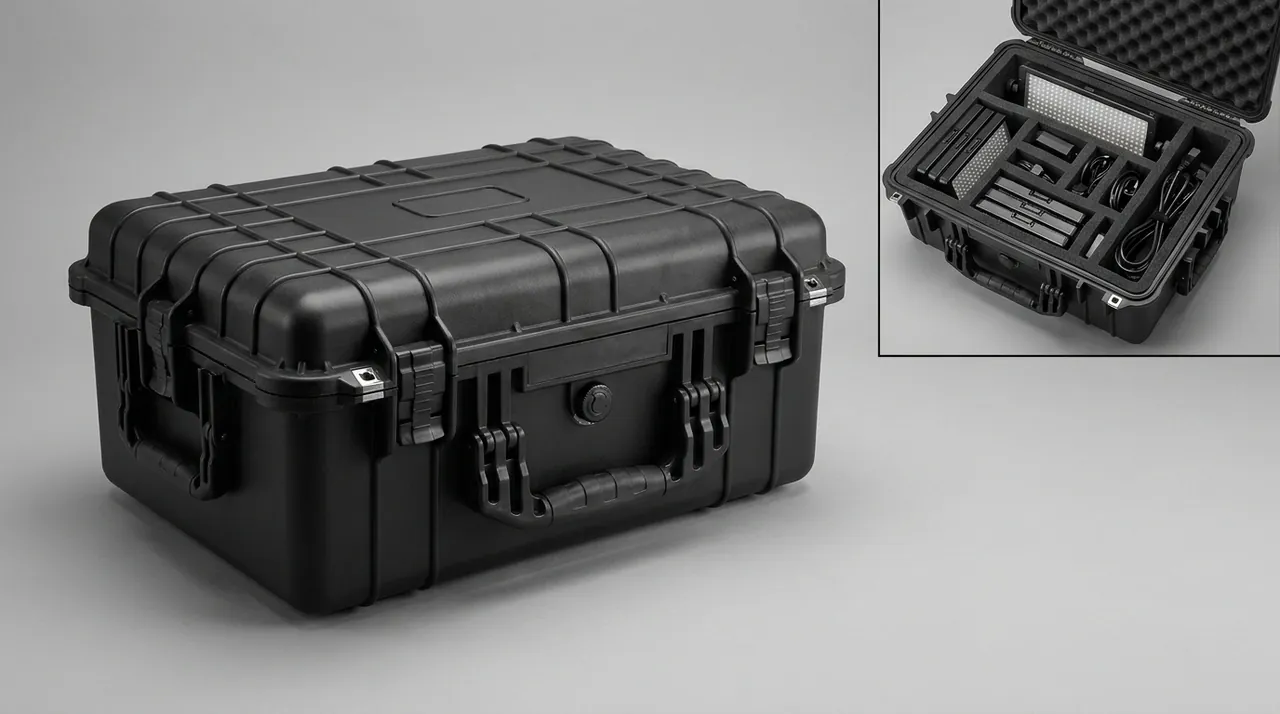
Grinding jar packing. Stand jars upright and support them in liner pockets, with a protection pad on each jar mouth. Store jars and grinding media of different materials in separate labelled compartments and include a count list so the set can be verified on site.
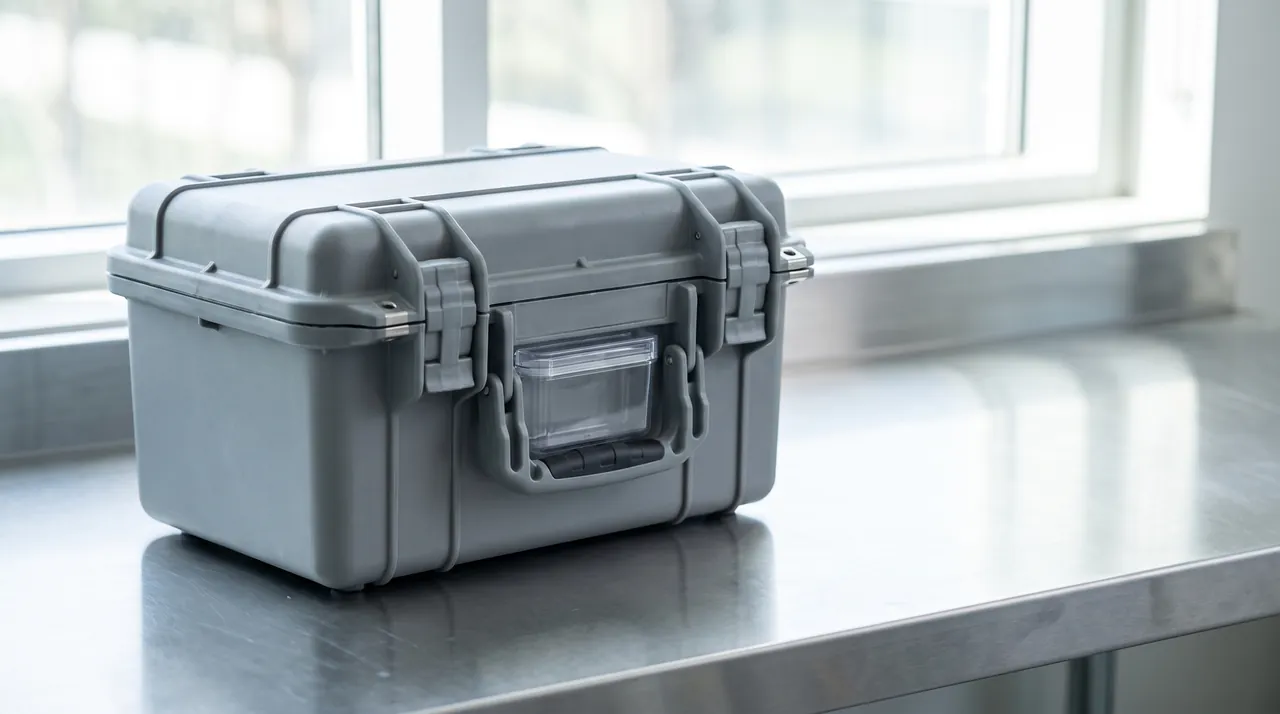
Digestion vessel packing. Locate inner vessels, outer vessels and caps separately so sealing faces stay suspended and uncompressed, with flat pocket floors. Use a low-density compression layer on top, enough to stop movement and no more.
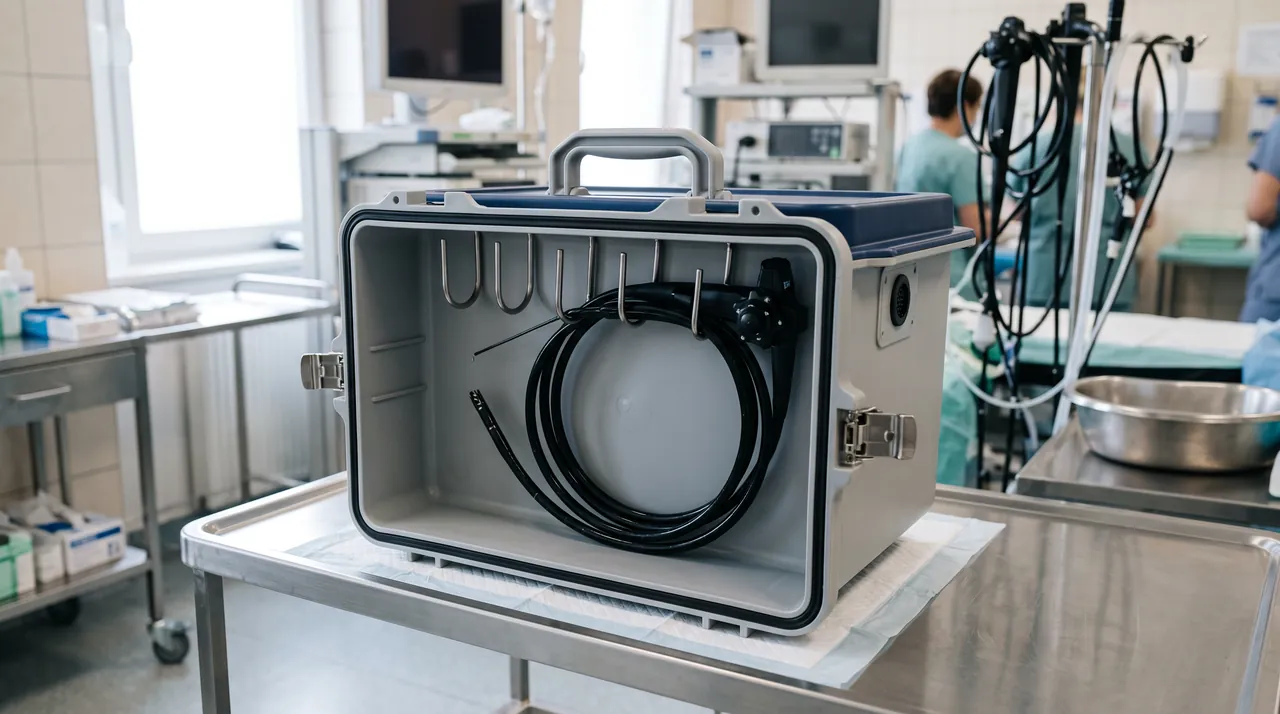
Final check before release. Count the components against the list and the material labels, confirm that clean components are individually bagged, that desiccant and the humidity indicator card are in place and that every latch is fully engaged, then write the cleanliness status, the last substance class, the packer and the date on the outside of the case. A case with unclear marking does not leave the store.
Frequently Asked Questions
Q: Why can laboratory sample preparation equipment not be shipped in an ordinary tool box or a carton?
A: The core reason is not impact resistance but contamination. Sample preparation components touch the sample directly, so a score on a grinding jar inner wall, deformation of a digestion vessel sealing face, or foreign matter on a nebuliser capillary shows up later as elevated blanks, low recovery or poor agreement between replicates, and none of it is visible at incoming inspection. An ordinary tool box usually has a recycled foam or rubber liner, which releases plasticisers and sulphur compounds and sheds particles. A carton offers neither moisture control nor mechanical support, and paper fibre is itself a contamination source in trace analysis. A purpose-built case provides four capabilities: geometric locking, clean isolation, carry-over isolation and traceable status, and the middle two are simply absent from ordinary packaging. When supporting laboratory customers, JUNZHJIA normally splits components into two groups by whether they touch the sample, and gives every sample-contact component an individual pocket and a cleanable liner.
Q: What most often goes wrong with digestion vessels in transport, and how can it be prevented?
A: The most common problems are sealing face deformation under compression and thread damage. A microwave digestion vessel seals through precise flatness or a cone fit, and once plastic deformation occurs the result is an abnormal vessel within a batch or an incomplete digestion that is very hard to identify visually. Four measures prevent it. First, sealing faces must be suspended or touch only soft material, and vessels must never be stacked on each other. Second, inner vessel, outer vessel and cap should be stored as a numbered set, since set integrity matters for fit accuracy. Third, use upright pockets so the vessel is supported along its own axis rather than being squeezed laterally at the sealing face. Fourth, store caps in a separate zone so no cap presses on a liner. Before packing, also confirm the vessel has been cleaned and dried, because residual acid acts on seals and liner over weeks in a sealed case.
Q: Why must grinding jars and grinding media of different materials be stored in separate compartments?
A: Because once mixed they cannot be distinguished by appearance, and the resulting contamination cannot be attributed to the right source. Grinding media themselves introduce contamination: agate mainly introduces silicon, zirconia introduces zirconium and hafnium, tungsten carbide introduces tungsten and cobalt, and stainless steel introduces iron, chromium and nickel. If balls of different materials share one compartment, the operator cannot tell them apart, and using the wrong material adds an untraceable contamination term to the result that can only be resolved by re-sampling and re-grinding. The established practice is therefore to store jars and media of different materials in separate labelled compartments with a material and count list inside the case, and to number the corresponding pockets on the layout drawing. In addition, balls rubbing against each other generate surface powder over time, so use a soft pocket base and limit free movement. Number the compartments on the layout drawing as well, so that a partly used set can be checked back against the drawing in seconds.
Q: How should liner material be chosen, and can foam alone be used?
A: Foam alone is not advisable. A liner for sample preparation equipment must satisfy four requirements at once: chemical resistance, low shedding, cleanability and cushioning. That normally needs a layered build. A high-density EVA or closed cell PE base carries load and absorbs impact. A routed EVA or conforming PU middle layer holds attitude. A thin PTFE or PFA sheet, or acid-free paper, sits between component and foam to prevent direct contact. PP or PE rigid dividers separate clean from non-clean zones. A low-density PE top layer stops movement without over-compressing. The problem with an all-foam liner is that it accumulates dust over time and cannot be fully cleaned, and in trace analysis both shedding and outgassing are measurable contamination sources. Avoid recycled foam for the same reason. The liner should also be removable so it can be cleaned, dried and replaced when needed. Confirm the outgassing grade with the supplier rather than assuming it, because two foams of the same density can behave very differently after years of storage inside a closed case.
Q: Should the case be IP65 or IP67, and how much desiccant is needed?
A: Choose from the route first. For a same-city or same-building move with covered loading, IP54 or IP65 is enough. For inter-provincial road transport that may see rain or snow at loading, prefer IP65. For ocean freight, intermodal transfer or cross-border movements, prefer IP67. For sample preparation equipment, though, the tier is only one of the variables, because cleanliness and residue control matter at least as much. The real value of a sealed case here is that it blocks dust and acid mist, not only water, so choose a case with a flat, wipeable interior and avoid felt-type liners that hold dust. Allow 20 to 50 g of desiccant per 30 to 50 litres of internal volume, doubling that for ocean freight or journeys beyond a month, and add a humidity indicator card. Two further points: a rating says nothing about vibration or shock, so isolation has to be assessed separately against drop, stacking and vibration clauses; and high-purity components are best held by removable, wipeable rigid dividers, with the outside of the case wiped before opening so that atmospheric dust does not fall onto cleaned parts.
Q: Do digestion vessels and grinding jars need re-validation after a relocation?
A: Separate two things: equipment validation and confirmation of item condition. Digestion vessels and grinding jars normally do not need a calibration certificate of the kind issued for measuring instruments, but their condition should be confirmed after a move: check sealing faces for compression marks or deformation, bores for scoring, threads and catches for damage, and whether the set is still complete. For equipment such as a microwave digestion system, follow the manufacturer's installation and operational qualification requirements after the move, covering temperature and pressure control, door interlock and safety functions, and run a recovery check with a reference sample where appropriate. Where the laboratory operates to ISO/IEC 17025, a relocation is a change that may affect the validity of results, so update the equipment file and the intermediate check plan and reassess data issued before the move. A balance used alongside the equipment is a measuring instrument, and its verification or calibration is carried out under the applicable verification regulation or calibration specification, that is the corresponding document in the JJG or JJF series; confirm which one applies with a qualified metrology body.
Q: How should components that have carried acid or residual sample be handled before packing?
A: Clean, neutralise and dry, and then confirm there is no residual liquid. Cleaning should use a method compatible with the residue, with particular attention to grinding jar inner walls and digestion vessel sealing faces, which are hard to clean. Neutralisation handles acidic or alkaline residue. Drying must ensure no liquid remains in cavities or threads, because in a sealed case residual liquid corrodes the component as well as the liner and the case body over time. Afterwards mark the class of material previously handled on the outside of the case, which is both standard laboratory safety practice and the precondition for liner selection, since different residues are compatible with very different materials. Use a high chemical resistance liner for anything that has carried acid, and add a removable, cleanable drip tray at the base of the case. Do not ship in the same vehicle as food, drinking water or personal effects, and open the case in a well ventilated area.
Q: Which transport tests should sample preparation equipment cases be put through, and does MIL-STD-810H count as military certification?
A: Pick the test items from the fragility of the component. Brittle quartz parts and agate jars are at risk from drop and impact, so those clauses apply and cracks and chipped edges are checked afterwards. Digestion vessel sealing faces are at risk from stacking and sustained compression, so the stacking clauses apply and compression marks are checked afterwards. Mill drives and motors are at risk from sustained vibration, so the vibration clauses apply, with alignment and abnormal noise checked afterwards. Temperature control parts and sensors are at risk from temperature and humidity, so those clauses apply, with control deviation and indication checked afterwards. Whole-route risk is best covered by a distribution cycle that combines the items in the order they will actually occur. For sequence, validate the packaging on a single item by vibration first, then drop a fully loaded case, then simulate one complete distribution cycle along the actual relocation route, opening the case after each stage instead of judging by appearance. The clauses most often cited in domestic relocation and transfer contracts come from the GB/T 4857 series. On MIL-STD-810H, note that its method parts are quoted as environmental test methods only, and quoting them does not amount to a military certification or listing eligibility; say so in the test report.
Conclusion & Related Reading
What separates sample preparation equipment from ordinary laboratory equipment is that the objective has an extra layer: not merely undamaged, but uncontaminated and free of residue. That objective pins down four things. Geometric restraint, so that nothing collides and no sealing face is compressed. A cleanable liner with a separation layer, so that nothing sheds and cross-contamination cannot travel. Sealing plus desiccant, against moisture and dust alike. And a cleanliness status mark, so that every opening of the case can be judged on evidence.
Work through five moves: grade the components by whether they contact sample, set the rating and the desiccant quantity from the transport route, design the layered liner and separation layers around brittleness and chemistry, validate with a transport simulation, then write the cleanliness status and the last substance class on the outside of the case. Five moves, and the raised blanks and poorer repeatability that follow a relocation become rare.
Related Reading