

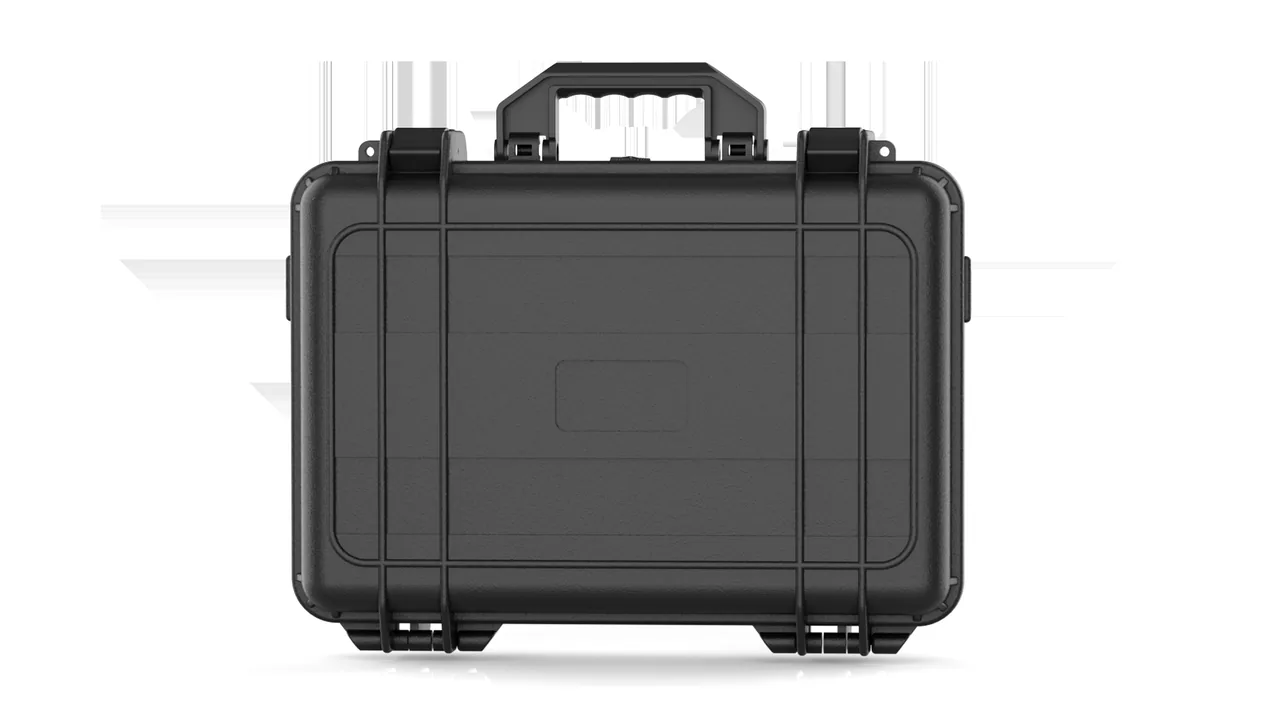
A mower-conditioner sits at the centre of forage harvesting. It cuts standing crop and immediately crimps the stems between conditioning rollers, so the crop dries faster and the baling window widens. Almost all of that performance depends on two component groups: the cutting system that severs the stems, and the roller set that crushes them. Whether the machine is being shipped from the factory, a dealer is dispatching replacement parts, an export order is crossing an ocean, or a contractor is moving spares between fields, cutter bars, conditioning rollers, guard fingers and drive pulleys all travel detached from the machine. Some of these parts are over three metres long yet only tens of millimetres thick. Some carry tooth profiles or rubber coverings across their working surface. Some house bearing bores with clearances measured in microns. Bending, impact, condensation and corrosion in transit all convert into downtime in the middle of a cutting window. JUNZHIJIA develops targeted protective-case solutions for the four core component groups of mower-conditioners, and this article works from failure mode to structural countermeasure.
Four Failure Modes in Mower-Conditioner Part Transport
The part spectrum of a mower-conditioner is unusually wide. It runs from a complete cutter bar down to a single guard-finger bolt, a weight range spanning several hundred times, and a stiffness range that is wider still. Sorting transport damage into categories yields four recurring failure modes, and each one maps onto a different protective logic.
The first mode is bending and twisting. Cutter bars, roller shafts and roller shells are slender structures whose length-to-diameter ratio frequently exceeds twenty to one. Simply supported, such a part sags under its own weight; if cargo presses on its mid-span, plastic bending is almost guaranteed. Once cutter-bar straightness is out of tolerance, the shear clearance between blades and guards cannot be held, stubble is torn rather than cut, and blades and guard fingers wear prematurely.
The second mode is surface damage. A conditioning roller is not a smooth cylinder. Its working surface carries tooth grooves, welded ribs or a rubber covering, and the purpose of that surface is to crack the stem rather than pulverise it. Once a tooth crown is chipped or a rubber layer is torn, conditioning quality falls immediately. Guard-finger edges and cutter-blade serrations are working surfaces too, and contact damage or abrasion during stacking leaves micro-chips that raise cutting resistance.
The third mode is corrosion. A mower-conditioner works through damp grass, so metal parts frequently arrive at a workshop already carrying moisture and plant sap. Sap is acidic, and acidic residue on a steel surface accelerates pitting, while enclosed transport and storage spaces hold moisture in place.
The fourth mode is damage to precision fits. Pulley taper bores, roller bearing housings and gearbox output shafts all belong to the small-tolerance category. Dust entering a bearing housing or a rust patch on a taper face will push radial runout out of specification after assembly, producing vibration at working speed.
All four modes share one defining trait: they happen during transport and become irreversible once the machine is assembled. They also share a single useful property: every one of them can be interrupted by case structure. JUNZHIJIA designs mower-conditioner part cases around a deliberately plain division of labour — long parts are handled by anti-bend geometry, working surfaces by clearance, metal parts by rust control, and precision fits by cleanliness.
Anti-Bend Location Strategy for Cutter Bars and Knife Bars
The cutter bar is the archetypal slender part on a mower. Working widths commonly run from 1.8 metres to more than 4 metres, and the beam itself is usually a welded rectangular tube or folded steel plate carrying blade mounting pads, guard-finger mounting faces and the eccentric drive at the transmission end. Straightness is typically held to within one millimetre per metre, and beyond that the cutting quality of the whole machine suffers.
Bending in transit has three sources. The first is stack load: the bar lies flat on a pallet and other cargo is stacked on top, making mid-span the maximum bending-moment section. The second is lifting distortion: a single-point lift concentrates the self-weight moment near the sling. The third is long-term creep across an oversized support span, which is particularly relevant to slender steel parts stored through a hot summer, where the part deforms slowly under its own weight.
JUNZHIJIA builds cutter-bar cases around multi-point support rather than a single large cavity. The case floor carries three or four equal-height cradles positioned from the bending-moment distribution, normally at both ends and at the one-third and two-third span points, so the blade mounting face — the most sensitive surface on the bar — is held upward and free of the floor. The cradle contact faces are shaped as arcs or vees that match the beam section, enlarging the bearing area while a soft pad prevents scoring of the anti-rust coating on the welded surface.
The inside of the lid carries restraint blocks as well, but these bear only on reinforced sections of the beam, never on the blade pads. Under vehicle vibration the bar is therefore constrained from above and below: it cannot bounce, and it cannot bend locally because the blocks are in the wrong place. Cutter bars fitted with an eccentric drive get a dedicated relief cavity so the eccentric wheel and wobble mechanism hang free rather than acting as a load path into the case.
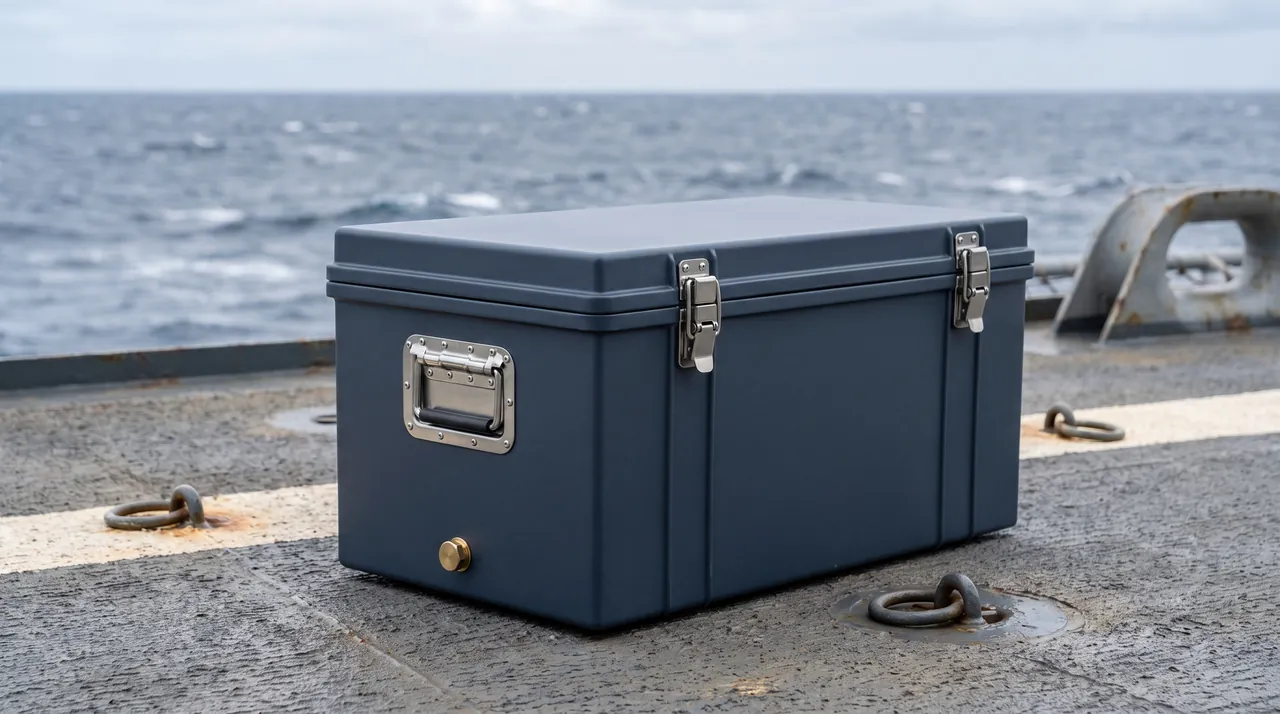
Structurally, a cutter-bar case is a classic long-body format. Longitudinal reinforcement ribs run along the interior walls, the floor uses a double-wall section with an embedded stiffening plate, and the shell resists sagging even when supported only at the ends. JUNZHIJIA typically thickens the floor by one specification, adds corner protectors, and moulds strap channels into the exterior for secondary tie-down on a pallet or in a vehicle bed.
Thermal distortion deserves separate mention. A dark case left in a summer yard can reach more than twenty degrees Celsius above ambient inside. The thermal expansion coefficients of the steel bar and the polymer shell differ, so if both ends are rigidly clamped, the beam's growth has nowhere to go and converts into compressive buckling. JUNZHIJIA leaves axial clearance in the end stops of long-part cases and recommends shade or a light-coloured cover for open-air storage. For seasonal storage in hot regions, a temperature and humidity recording label can be added to document the storage history.
Blade-pad protection merits its own note. The pads are welded fittings whose face flatness governs the shear clearance between blade and guard finger. They stand proud of the beam by ten to twenty millimetres and are the first thing to be crushed by other cargo. JUNZHIJIA orients them upward and cuts relief pockets in the lid lining so the pad faces carry no load under stacking. Where the loading orientation cannot be arranged that way, an additional cover-plate liner spreads load into the beam body instead of the pads.
Contact Protection for Conditioning-Roller Teeth and Rubber Layers
The conditioning roller is the functional heart of a mower-conditioner. Common configurations include toothed steel rollers, ribbed rollers, rubber-covered rollers and combined roller sets. The two rollers run with a very small gap and counter-rotate, rubbing and cracking the stems that pass between them. The roller surface is therefore simultaneously a working surface and the part of the machine most easily damaged in transit.
Steel toothed rollers are milled or hard-faced, and the tooth crown is only a few millimetres wide. The usual damage is a chipped crown or a stress crack at the tooth root. Stack two rollers directly on top of each other and the teeth form point contacts: tens of kilograms concentrated on a handful of tooth tips makes tooth loss essentially certain. JUNZHIJIA uses tooth-profile interlocking pads for such rollers, machining pockets to match the actual tooth pitch so that crowns hang free, roots take the load, and the roller is located on its journals. The roller cannot damage its neighbour's teeth and cannot roll inside the case.
Rubber-covered and polyurethane rollers present a different problem. Rubber resists compression but hates sharp edges, deforms permanently under sustained load, and at elevated temperature can migrate plasticiser into and out of adjacent liners. When specifying liners for rubber rollers, JUNZHIJIA avoids soft PVC with mobile plasticisers and uses closed-cell EVA or polyethylene, with radiused contact faces. Support points fall on the metal shaft ends so the rubber layer spans free, preventing permanent indentation at any single point. For transport through hot regions, the case retains ventilation clearance or uses a light-coloured shell to reduce solar gain.
Roller bearing housings follow a separate logic. If rollers and races lose preload during transport vibration, micro-motion wear follows, producing the pattern known as false brinelling. JUNZHIJIA fits locating rings and axial pressure blocks at the journals to lock the roller both axially and radially, keeping the bearing loaded in the way it was designed to be loaded and limiting free movement of the rolling elements. Desiccant goes into the same cavity, because once condensation forms in a bearing housing, corrosion starts on the races, and that corrosion is nearly impossible to detect visually before assembly.

The drive connection at the roller end needs its own treatment. Roller sets usually connect to the drive shaft through sprockets, gears or universal joints, and the keyways, splines and dowel locations in these areas are all precision fits. If the roller shifts axially in the case, splines and keyways hammer each other, raising burrs and indentations that leave the joint loose after assembly. JUNZHIJIA places axial pressure blocks and end-face pads at the roller end so all axial force is taken by the case while the splined section hangs free. On roller sets with hydraulic motor ports, the ports are capped with dust plugs before loading, keeping grit out of the hydraulic cavity.
There is also an empirical rule about storage attitude. Over months of storage, a rubber or polyurethane layer in continuous contact with a liner can take a permanent set even at very low contact pressure. For long-term storage JUNZHIJIA recommends intermittent support in which the roller rests only on its two shaft ends and the roller face touches nothing at all. This is achieved with a journal-groove support block at each end, lined with low-hardness polyurethane so that neither metal-to-metal contact nor roller-face loading occurs.
Edge Preservation for Guard Fingers and Cutting Blades
Guard fingers, also called ledger plates or stationary knives, and cutting blades together form the shear pair of a mower. The clearance between them is measured in fractions of a millimetre. Guard fingers are usually cast or forged steel with a tapered point and a heat-treated edge: hard, but also brittle. The cutting blade is a thin steel strip with a serrated or plain edge, fixed to the knife bar and reciprocating past the guards.
Damage to these two parts shares one awkward property: it is invisible to the eye and only shows up once the machine is running. A guard finger with a chipped tip leaves an uncut strip in the swath. A blade with two or three flattened serrations raises cutting resistance, which changes the temperature and vibration of the entire knife bar. Such damage is extremely hard to attribute fairly in aftermarket disputes, and suppliers routinely absorb the cost.
JUNZHIJIA packs guard fingers and cutting blades on a principle of individual isolation with free edges. Guard fingers are arranged in rows, each seated in its own pocket cut to only one third of the body height, so edge and point hang clear. Reinforcing ribs separate adjacent fingers so they cannot strike each other in transit. Where fingers ship as an assembled unit, the case uses a comb-style divider plate giving every piece its own slot.
Cutting blades require a solution to thin-plate warping. A blade is often as long as the cutter bar but only a few millimetres thick, so it bends under its own weight inside a case. JUNZHIJIA inserts blades vertically or at a steep angle into slotted liners, with slot depth covering more than two thirds of blade height so the blade stays close to a vertical load path. Equal gaps between blades prevent edge-to-edge abrasion. A complete knife assembly already riveted to its bar is handled as a cutter bar, with multi-point cradles and end stops.
Rust control is mandatory for these parts. JUNZHIJIA normally configures vapour-phase-inhibitor liners or anti-rust paper inside such cases, with slow-release molecules forming a protective film on edges and metal surfaces. The treatment must follow cleaning and drying: if grinding fluid or hand sweat remains on an edge, the inhibitor film simply seals the contamination in place.
Preserving the Fits of Drive Pulleys and Taper Lock Bushes
Mower-conditioner drive systems typically combine a power take-off shaft, a gearbox, pulleys and multiple V-belts. The pulleys are usually cast iron or steel, weighing from a few kilograms to several tens of kilograms, and they mount on the shaft through a taper lock bush. The bush-to-bore joint is an interference fit whose quality is judged by contact-patch area, normally confirmed with a marking-compound check.
The transport risk for these parts concentrates on the fits. A score inside the taper bore reduces contact area, the bush slips under load, the pulley turns relative to the shaft, and in severe cases the shaft journal is ground undersize. A rust patch on the bush taper has the same effect. Cast-iron pulleys bring an additional weakness: thin rim sections are brittle, a lateral impact can start a crack, and that crack propagates under centrifugal load once the machine runs.
JUNZHIJIA cases for pulley-type parts are built so that taper bore and taper face are fully relieved. The liner is formed to the pulley outside diameter and groove profile, with support falling on the hub end face and reinforced rim areas while the bore region stays completely clear of material. When several pulleys share a case, JUNZHIJIA uses a layered tray liner, one pulley position per layer, with a separate divider between layers so rims never stack on one another.
On multi-vee pulleys the groove faces are working surfaces as well. Liner material pressing directly on a groove leaves a permanent mark in the groove root during long storage. JUNZHIJIA keeps the entire groove band spanning free and supports only the hub and rim planes. Where a pulley ships with its bearing fitted, the bearing is held in assembly attitude with light axial preload so transport vibration does not produce race indentation.
On rust control, cast-iron parts usually begin corroding at machined faces, particularly the taper bore and the grooves. JUNZHIJIA configures vapour-phase inhibitor protection for pulley cases and fits a protective sleeve or wraps the bore in anti-rust paper. The case itself reaches IP67 with a silicone gasket and a pressure-equalisation valve, keeping internal humidity inside a safe band during sea freight, open-air staging and high-humidity storage.

Rust Prevention and Humidity Control Inside the Case
Mower-conditioner parts are predominantly steel and cast iron, with a few rubber or polyurethane rollers. These metals normally leave the factory with anti-rust oil or a phosphated layer, but that protection is easily broken locally during handling, inspection and secondary movement, and the break point becomes the origin of corrosion.
The conditions for corrosion during transport and storage are concrete: relative humidity above a threshold, an electrolyte on the surface (hand sweat, rain, sea salt), and temperature cycling that produces condensation. Two of the three are enough and corrosion appears within weeks. Forage machinery adds an acidic contaminant source of its own, since plant sap is far more corrosive to steel when wet than plain water.
JUNZHIJIA's strategy is isolation first, slow release second. Isolation comes from the shell: an IP67 sealed structure with a pressure-equalisation valve keeps external moisture out while the lid is closed and allows pressure to equalise, so differential pressure cannot push the gasket out of place. Slow release comes from vapour-phase inhibitor materials. A VCI liner or anti-rust bag continuously releases inhibitor molecules inside the sealed cavity, forming a monomolecular film on metal surfaces and buying weeks of protection even if the case is briefly opened or the seal ages.
One frequently overlooked factor in humidity control is the moisture content of the parts at loading. A part that is loaded wet turns the case into a sealed evaporation bag and saturates the desiccant quickly. JUNZHIJIA supplies loading-condition guidance with its cases, normally requiring no free water on metal surfaces and cautioning against sealing the case while the parts are cooler than the ambient air. A humidity indicator card inside shows by colour change whether the desiccant needs replacing or the rust treatment needs repeating.
For export orders, and particularly for full-case shipments to high-salinity regions by sea, JUNZHIJIA recommends an enhanced configuration: thicker VCI liner, local anti-rust paper wrapping on taper faces and edges, and reinforced outer banding. This combination typically pushes the onset of corrosion well beyond the duration of a normal sea voyage.
Shell Material, Reinforcement and Sealing Class
Material selection for a mower-conditioner part case has to satisfy three conditions at once: impact resistance, outdoor UV resistance, and manageable weight, because a farm user often has to lift a full case with two people.
JUNZHIJIA works with three engineering plastics. Impact-modified PP offers good toughness, chemical resistance and moderate cost, and is the mainstay for heavy long parts such as cutter bars and conditioning rollers. ABS provides high surface hardness and dimensional stability, suiting precision fits and pulley-type parts. PC alloy has outstanding impact performance and resists brittle fracture at low temperature, which suits northern-winter shipments and export orders to cold regions.
Structurally, the stiffness of a long case is carried by three features: longitudinal ribs in the walls, a double-wall floor with an embedded stiffening plate, and corner protectors. The lid carries its own ring of reinforcement ribs to limit deflection under stacking load. Hinges and latches are consumables in a farm environment, so JUNZHIJIA specifies stainless or galvanised steel to prevent failure from rain and plant sap.
On sealing class, the requirement for mower-conditioner parts lands mainly on IP67. That rating means the case does not admit water during short immersion, which covers open-air staging, loading in rain and condensation inside a sea container. What delivers IP67 is not gasket thickness but uniform compression in the seal groove and flatness of the mating faces. JUNZHIJIA inspects the mating-face flatness after moulding and spot-checks sealing integrity before dispatch.
A pressure-equalisation valve is essential for long-distance transport. Air cargo pressure change, high-altitude road transport and large day-night temperature swings all create a pressure differential across a sealed cavity. Without a valve, differential pressure deforms the gasket and destabilises the seal, or holds the lid shut under negative internal pressure. JUNZHIJIA fits a pressure-equalisation valve as standard on mower-conditioner part cases, maintaining IP67 while permitting slow gas exchange.
Anti-Vibration Liner Design for Long Cases
Transport vibration for mower-conditioner parts has two signature characteristics. Long parts readily resonate with the vehicle's vibration spectrum, and relative micro-movement between liner and part produces surface abrasion, the pattern known in the field as fretting or scuffing.
Resonance is tied to the overall stiffness of the case and liner together. Slender parts have low natural frequencies that usually fall inside the excitation band of a moving vehicle. If the part can move freely inside the case, vibration energy has no release path and amplitude grows. JUNZHIJIA reduces part freedom to a minimum: multi-point cradles handle the vertical direction, lateral restraint blocks handle transverse motion, and end stops handle axial movement. Once fully constrained, vibration manifests as small elastic deformation of the liner material rather than bulk movement of the part.
Fretting is a different mechanism. Even with the part fixed, long-term vibration leaves micron-level relative displacement between liner and metal. If the contact material is hard or carries grit, the result is a hazy score pattern on the metal surface. JUNZHIJIA builds liners in layers: the contact layer uses soft non-woven fabric or closed-cell EVA facing to absorb micro-movement, the middle layer uses high-density EVA to carry load, and the base layer uses a rigid support board to hold form. Soft for movement, hard for load, the two functions are separated.
Liner manufacturing method determines fit. Mower-conditioner parts are geometrically complex, particularly toothed rollers, guard-finger rows and welded cutter bars, and hand-cut flat foam rarely conforms. JUNZHIJIA uses CNC moulding or thermoforming for such parts, machining cavities directly from the three-dimensional model and holding fit tolerance to within a millimetre. For low-volume or unusual shapes, the actual geometry can first be captured by three-dimensional scanning and the tooling cut from that data.
Alongside fit, liner compression behaviour matters. A liner that is too hard transfers impact straight into the part; one that is too soft collapses and loses restraint. JUNZHIJIA matches density and thickness to part mass, and includes crush-limiting features so that the liner cannot be compressed beyond a design point during a drop.
Logistics Fit for Farm Storage and Custom Harvesting
Mower-conditioner use is highly seasonal, with northern pasture regions and alfalfa districts offering only two or three cutting windows a year. That pattern shapes two logistics requirements: parts must be replaceable fast, and storage must be stable. A protective case plays a different role in each.
In a replacement scenario the case is a mobile workbench. A contractor changing a set of guard fingers in the field needs a case that opens quickly and shows part locations at a glance. JUNZHIJIA builds layered liners for common wear parts, grouping small items by specification and printing a part-number map on the inside of the lid to cut identification time. Anti-slip feet on the case base keep it from sliding on a machine platform or trailer deck.
In a storage scenario the case is a long-term sealed container. Spare cutter bars and spare conditioning rollers may sit in a warehouse for months or a year. Here sealing and rust configuration matter more than convenience. JUNZHIJIA recommends re-treating parts for rust before long-term loading, using a VCI liner, recording the loading date, and inspecting contents or replacing rust-control materials after a defined interval.
Custom-harvesting and export scenarios add demands on structural strength and identification. JUNZHIJIA moulds label slots into the outer shell so barcode or QR cards can record part number, batch and inspection status. For cases that circulate repeatedly, corners and latch areas are reinforced to prevent structural loosening after many handling cycles. Empty cases nest to reduce warehouse footprint, which matters for dealers holding several sizes.
There is also a documentation dimension. Parts moving across borders may be inspected at several points, and a case that opens cleanly and presents an ordered interior shortens those inspections. JUNZHIJIA can print handling instructions and orientation marks directly on the shell, reducing the chance that a customs or carrier inspection closes the case with the part in the wrong attitude.
Transport Validation and Pre-Dispatch Acceptance
A protective case should pass simulated transport validation before its design is frozen. The reference framework usually combines three strands: the GB/T 4857 family for transport packages, the ISTA testing procedures, and ATA 300 where the route involves air freight. For long, heavy mower-conditioner parts, the emphasis differs from ordinary cases.
Vibration testing is central. The case is loaded with the actual part at its real weight and centre of gravity, then excited with a spectrum matched to the transport mode. For slender parts, the critical questions are whether end and mid-span supports loosen over hours of vibration and whether the load-bearing liner compresses permanently. JUNZHIJIA measures straightness or coaxiality change across the test rather than simply checking whether the shell survived.
Drop and impact testing addresses handling. Cutter bars and rollers commonly take lateral impacts at their ends during forklift work, so corner and edge drops carry proportionally more weight in the test matrix, validating the corner protectors and end stops.
Stacking tests address storage and container transport. The weak point of a long case is the middle of the lid, so JUNZHIJIA loads to the actual stacking count, measures lid deflection, and rechecks liner fit afterwards.
At pre-dispatch acceptance, JUNZHIJIA suggests buyers check four items: liner fit to the part against tolerance, absence of foreign matter in the seal groove, free operation of the pressure-equalisation valve, and latch and hinge effort within a sensible band. These four determine real-world reliability and decide whether the protection scheme delivers on its design promise.
Service Life, Maintenance and Case Reuse
A protective case is not single-trip packaging, and its value only appears across repeated cycles. Mower-conditioner parts have an uneven duty pattern: wear parts may be replaced several times in one season, while structural parts such as cutter bars and conditioning rollers change only every few years. One batch of cases therefore serves both high-frequency small parts and low-frequency large parts, with very different usage intensity. Low-frequency cases usually fail through material ageing, while high-frequency cases fail through mechanical wear, and the maintenance rhythm cannot be the same for both.
The seal is the first component to bring into a maintenance plan. A silicone gasket slowly loses resilience after prolonged compression, and grit or crop fragments left in the groove score the sealing face. JUNZHIJIA advises checking groove cleanliness before every closure and assessing gasket resilience against usage frequency. On a long case opened only a few times a year, gasket ageing dominates life; on a case opened weekly, mechanical scoring and trapped debris dominate instead.
Liner life depends on how load is carried. Cradles and restraint blocks slowly crush down under sustained load, and once they do, the part regains freedom and protection fades. JUNZHIJIA designs load-bearing features as separately replaceable inserts, so a user who finds compression only replaces the insert rather than the whole liner. This matters most on long cases, where a full liner replacement costs far more than a set of inserts.
Cleaning belongs in the same plan. Plant sap, soil and grease from a farm environment collect on the case inside and out and will eventually attack the hardware and contaminate new parts. JUNZHIJIA recommends neutral detergent and a soft cloth, and warns against solvent cleaners, because some solvents cause stress cracking in engineering plastics. The case should be fully dry before closing so that moisture is not carried into the sealed cavity.
When a batch of cases reaches the end of its rated life, one further option is worth planning: downgrading. A long case whose sealing has degraded can move to internal factory circulation instead of export or long-term storage duty. This extends the practical service period of each case and lowers total outlay. Dealers who plan a downgrade route explicitly tend to see a materially lower packaging cost per part than those who use and discard.
Common Questions About Mower-Conditioner Part Protection
Q: Why must a cutter bar be supported at multiple points instead of simply lying on foam? A: A cutter bar typically has a length-to-diameter ratio above twenty to one, which makes it a classic slender beam rather than a rigid plate. Laid flat on a case floor with foam packed around it, the bar still deflects under its own weight and under the stack load of everything above it, because foam cushions impact but provides no bending support at all. The mid-span becomes the maximum bending-moment section, and on a long shipment that is where plastic deformation starts. JUNZHIJIA uses three or four equal-height cradles positioned from the bending-moment distribution, normally at both ends and at the one-third and two-third span points, so the blade mounting face is held upward and clear of the floor while lid-side blocks restrain vertical movement. Load paths in transit then resemble the load paths the bar sees in service, straightness change stays controlled, and no re-straightening is needed at assembly. The cradle faces are shaped to the beam section to enlarge the bearing area. Cradle spacing is verified against the bar's measured length and mass, not assumed from a catalogue size, and the blocks are replaceable if they compress over years of use.
Q: Why can't conditioning-roller teeth simply be wrapped in ordinary foam? A: Tooth crowns on a conditioning roller are often only a few millimetres wide, which makes them small-contact, high-stress features rather than broad surfaces. Wrap a roller in foam, stack a second roller or any other cargo above it, and tens of kilograms concentrate on a handful of tooth tips; chipped crowns and root cracks become almost unavoidable, and once a tooth is gone the roller is scrap. JUNZHIJIA instead uses tooth-profile interlocking pads, machining pockets to match the roller's actual pitch so crowns hang free, roots carry the load, and the roller is located on its journals with no freedom to roll. This protects the tooth form and prevents two rollers from crushing each other inside the same case, and it is the only reliable transport attitude for a steel toothed roller. Ribbed and hard-faced rollers get pockets cut from their own measured profile rather than from a generic pitch. Pads are also cut slightly deeper than the tooth height so the load is carried at the root fillet, which is the strongest part of the profile, rather than at the crown.
Q: How does protecting a rubber-covered roller differ from protecting a steel one? A: A steel roller fears impact; a rubber or polyurethane roller fears sustained load and material migration instead. Rubber takes a permanent set under continuous pressure, so a roller resting on its own covering for months can come out with a flat spot that shows up as uneven conditioning across the full working width. At elevated temperature rubber can also exchange plasticiser with a soft liner, leaving the surface tacky or hardened, and both conditions are irreversible once they develop. JUNZHIJIA selects closed-cell EVA or polyethylene for rubber rollers, radiuses the contact faces, and places support only at the metal shaft ends so the rubber layer spans completely free of any bearing point. Soft PVC with mobile plasticisers is avoided entirely, and light-coloured shells are specified for hot-region transport to reduce solar gain inside the case. Grease and oil residues should also be wiped off before loading, since some lubricants soften rubber over long storage. Rollers should also be rotated through storage if they must remain boxed, so no single contact zone carries the load for the entire closed season. Where humidity is high, a desiccant sachet is added to the same cavity as a matter of routine.
Q: Why is edge damage to guard fingers and blades so troublesome in aftermarket service? A: Because it is nearly invisible when the case is packed and only appears once the machine is running in the field. A guard finger with a chipped point leaves an uncut strip in the swath, and a blade with a few flattened serrations raises cutting resistance, which changes the vibration and temperature of the entire knife bar and accelerates wear on everything downstream. By the time the machine is cutting, the packing is long gone, so attributing cause afterwards is difficult and suppliers commonly absorb the cost of a replacement set. JUNZHIJIA responds with individual isolation and free edges: guard fingers seat one per pocket cut to about a third of body height, so edge and point hang clear of everything around them, and blades are inserted vertically into deep slotted liners so no edge touches another edge or a hard surface. Individual slots also allow piece-by-piece counting. Packing lists inside the lid name each slot, so a missing finger or blade is caught at unpacking rather than at the first pass down the field. Heavier sections such as the blade spine are supported, never the serrated band.
Q: Why must the taper bore and taper bush of a drive pulley be completely relieved? A: The bush-to-bore joint is an interference fit whose quality is judged by contact-patch area, usually confirmed with a marking-compound check across the taper. A score inside the taper bore reduces that contact area, so the bush slips under load, the pulley turns relative to the shaft, and in severe cases the journal is ground undersize, at which point the shaft must be replaced rather than the pulley alone. Cast-iron pulleys add a second risk, because a lateral impact on a thin rim can start a crack that propagates under centrifugal load once the machine runs. JUNZHIJIA forms the liner to the pulley outside diameter and groove profile, so support falls only on the hub end face and the reinforced rim areas while the bore region stays fully clear of material. Multiple pulleys in one case use layered tray liners, one position per layer, with the groove band spanning free to prevent root marks. Bush and bore are matched as a set, so any score means replacing both parts rather than one, and that cost usually exceeds the case itself many times over.
Q: Is a sealed case by itself enough to prevent rust on metal parts? A: No. IP67 sealing keeps external moisture out but cannot deal with moisture that the parts bring in with them. A part loaded wet, or loaded straight after washing, turns the case into a sealed evaporation bag; the desiccant saturates quickly and internal humidity climbs above the corrosion threshold within days rather than weeks. JUNZHIJIA therefore combines isolation with slow release. The shell and gasket provide isolation, while a VCI liner or anti-rust bag continuously releases inhibitor molecules that form a protective film on metal surfaces, buying time even if the case is briefly opened. Loading guidance requires no free water on surfaces and cautions against closing the case while parts are cooler than ambient air. A humidity indicator card shows by colour change whether the desiccant needs changing, and forage machinery needs one extra step, because plant sap is acidic and must be removed before treatment. Parts should be inspected and the inhibitor renewed at defined intervals, because indicator cards only report humidity, not the condition of the protective film itself. A hygrometer strip gives a numeric reading where an indicator card gives only a colour band.
Q: What does a pressure-equalisation valve solve on mower-conditioner part transport? A: It resolves the pressure differential across a sealed cavity, which is a mechanical problem rather than a moisture problem. Air cargo holds change pressure substantially during a flight, and high-altitude road transport and large day-night temperature swings create the same effect on a smaller scale. Without a valve, that differential pressure deforms the gasket until the seal destabilises and a moisture path opens, or produces negative internal pressure that holds the lid shut so firmly that opening requires force and damages the sealing lip. JUNZHIJIA fits a pressure-equalisation valve as standard on long-part cases, maintaining IP67 waterproofing and dustproofing while permitting slow gas exchange across the membrane. For a contractor air-freighting a spare cutter bar to a custom-harvesting site, this configuration decides whether the case opens normally on landing and whether the gasket survives the trip intact. The valve membrane also blocks liquid water and dust while allowing vapour exchange, so it does not weaken the IP67 claim it is fitted to protect. It should be checked as a maintenance item, because a blocked membrane behaves exactly like no valve at all.
Q: Why does a long-part case liner need to be built in layers? A: Because fretting abrasion and impact cushioning are different mechanical problems, and no single material solves both well. Even a fully restrained part still moves a few microns relative to the liner over hours of vibration, and hard contact material or trapped grit leaves a hazy score mark on machined metal that cannot be polished out in the field. A very soft liner, on the other hand, collapses under load and lets the part move far enough to strike the shell. JUNZHIJIA builds three layers: a soft non-woven or closed-cell EVA facing to absorb micro-movement, a high-density EVA core to carry load, and a rigid support board to hold the cavity shape. Separating the functions keeps the liner from collapsing in service and stops it from losing cushioning once the facing wears through. On toothed, edged and taper-bored parts the facing is additionally relieved, so the soft layer never presses on a working surface. Layer thickness is matched to part mass, so a heavy cutter bar gets a thicker core and a lighter guard-finger set gets a thinner one with the same protective logic.
Q: What should a farm user do to keep the case doing its job over years of use? A: The key is not to defeat the design intent. JUNZHIJIA advises keeping liners intact rather than removing or substituting them, because cradle and restraint positions derive from the part's bending moment and geometry, and replacing them with plain foam abandons the anti-bend function entirely. Clean sealing faces before every closure so crop fragments and grit do not lodge in the gasket, and check that the gasket still has resilience rather than a permanent flat profile. Do not overload the case, since parts above design weight crush the support structure, and even after returning to normal load the part's freedom inside the case has permanently changed. Re-treat long-stored parts for rust and record the loading date, then read the humidity card before opening. Store empty cases in the shade to limit UV ageing and avoid long-term compression at high temperature.
Related Reading
- Transport protection approaches for agricultural machinery parts
- Load-bearing structure and liner design for heavy-duty cases
- IP67 protective case sealing principles and rating explained
- Rust prevention for metal toolboxes and protective cases
- Transport vibration testing and resonance risk control
- Functional layering and material selection for case liner foam
- Case pressure differential and the role of the pressure-equalisation valve
- Protective case solutions for livestock farming equipment parts