

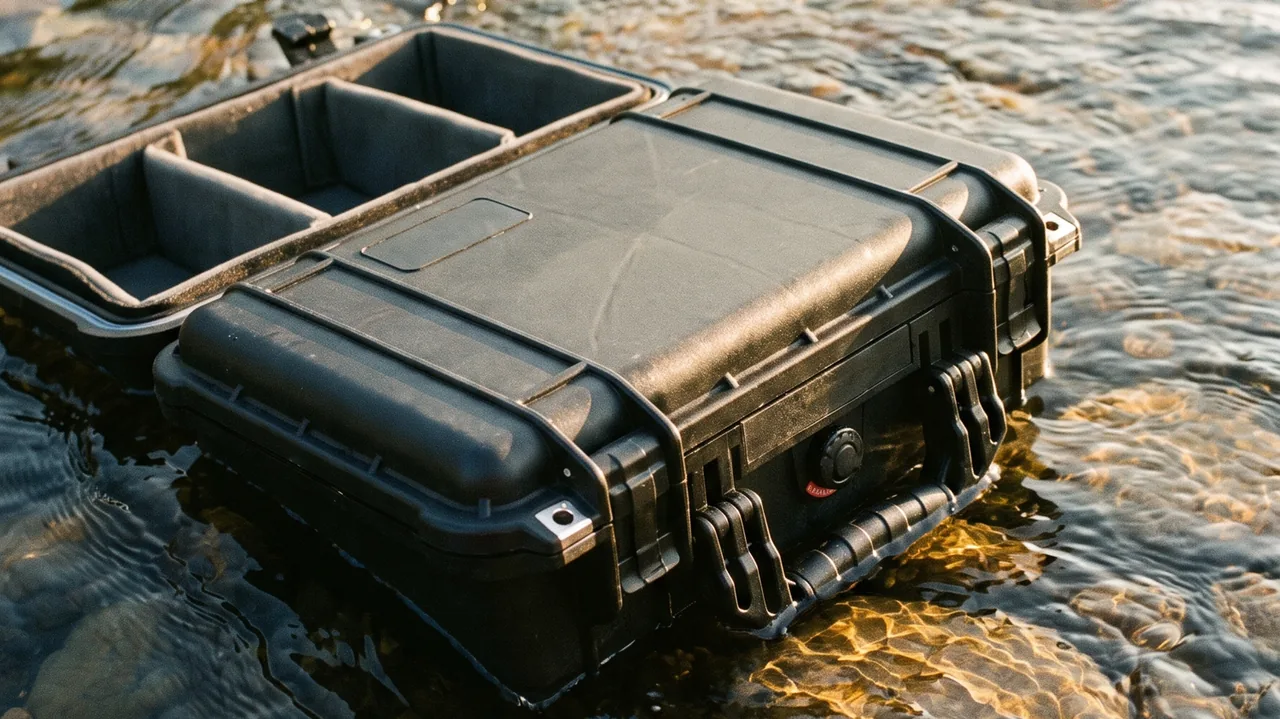
A radiation monitor is a measuring instrument first and a piece of hardware second: it only has value if the numbers it returns in the field still match the calibration it left the lab with. A survey meter that has taken a hard knock may still power on, look intact and read a plausible dose rate, yet drift far enough from its reference to miss a hot spot or raise a false alarm. The case is therefore the instrument's calibrated environment in transit, not just a box that stops the glass breaking. This article sets out, from the conditions of field radiation work, how a transport case should protect detectors, probes and spectroscopy units so that the reading on arrival is the reading the lab certified.
JUNZHIJIA takes a firm position on this category: the case must hold each detector in a located, shock-isolated pocket, keep the probe and its connector undamaged, and resist the weather and dust of field survey routes, without pretending to be a shielded vault. A case that does those things protects the measurement; a heavier case that lets the detector rattle protects only the housing.
Table of Contents
- 1. Why Field Monitors Fail in Transit
- 2. Detector Types and What Each One Fears
- 3. Probes, Cables and Connector Protection
- 4. Spectroscopy Units: Cryocoolers, PMTs and Vibration
- 5. Liner Design for Low-Background Instruments
- 6. Weather Exposure on Survey Routes
- 7. Ingress Protection and the Altitude Valve
- 8. Batteries and Check-Source Isolation
- 9. Fast Field Deployment and Labelled Access
- 10. Drop and Vibration Verification of the Packed Case
- 11. Calibration Certificate, Config Record and Custody
- 12. Custom Foam and OEM/ODM for Monitor Fleets
- Frequently Asked Questions FAQ
- Conclusion and Related Reading
1. Why Field Monitors Fail in Transit
A radiation monitor is calibrated as a complete system, detector plus electronics plus firmware, and the calibration is only valid if every part arrives in the state it left. Field failure is rarely a dead unit; it is a unit that still works but reads wrong, which is harder to catch because nothing looks broken. The three causes are shock that shifts a detector or loosens a board, vibration that fatigues a solder joint or a scintillator mount, and environment that drifts a reference or grows leakage current in a connector. The case cannot recalibrate the instrument, but it can keep all three within the band the lab assumed when it issued the certificate.
The mistake is to treat the monitor like a rugged tool. A dose-rate meter rated for site use is rated for use, not for the cumulative drop, stack load and temperature swing of a logistics chain it never sees in service. The case closes that gap by absorbing what the rating does not cover. The practical test is simple: after a route, the instrument should pass its own functional check and its reading should agree with a reference, and the case is what makes that likely rather than lucky.
The cost of a wrong reading is not symmetric. A monitor that over-reads raises alarms and wastes time; one that under-reads misses exposure and puts a worker at risk, so a case that preserves calibration is a safety device rather than a convenience. The difference between the two is exactly the margin the case was built to hold, and a route that erodes that margin is a route that quietly changes the reading, which is why the case is specified against the worst expected condition rather than the average.
2. Detector Types and What Each One Fears
Different detector technologies fail differently, and the liner has to know which one it is carrying. A Geiger-Muller tube is a thin glass envelope that shatters under point load, so it needs a cradled pocket with no local pressure and a clearance that stops the shell touching it. A scintillation detector pairs a crystal with a photomultiplier and fears shock that fractures the crystal or detunes the optical joint, so it wants a rigid, located seat with damping on every axis. A semiconductor detector is small and precise and fears both mechanical shock and electrostatic damage, so it wants a conductive, located pocket with controlled humidity.
| Detector | Main transit risk | Liner response |
|---|---|---|
| --- | --- | --- |
| GM tube | Glass fracture from point load | Cradled pocket, clearance, no pressure points |
| Scintillation | Crystal crack, optical detune | Rigid located seat, tri-axial damping |
| Semiconductor | Shock, ESD, humidity | Conductive pocket, humidity control |
| Ionisation chamber | Electrode shift | Located, supported electrode |
The single most useful design rule is to build the pocket to the detector, not the case. A generic foam block that fits the outer shape leaves the fragile internal joint unsupported, and that joint is where calibration is won or lost. The liner that locates the detector by its mount and supports the sensitive axis is the one that preserves the reading.
Mixing detector types in one case is a mistake for the same reason: a shared foam that suits a GM tube leaves a scintillator's crystal unsupported, so each detector type earns its own pocket profile rather than a compromise that fits none well. Where a case must carry two technologies, the liner is built as two located zones with different damping, not one bed asked to do both, and the separation also stops a heavier unit from loading the lighter one through the foam during a drop.
3. Probes, Cables and Connector Protection
The probe is the part that actually meets the field, and its cable and connector are the parts most often damaged in transit. A connector with a bent pin or a contaminated contact reads intermittently, and an intermittent probe is worse than a dead one because it looks fine until it drops a measurement. The probe should sit in its own pocket with the connector capped and supported, not coiled loose where it can chafe or take a knock, and the cable should be strain-relieved so a pull at the case edge cannot lever the joint.
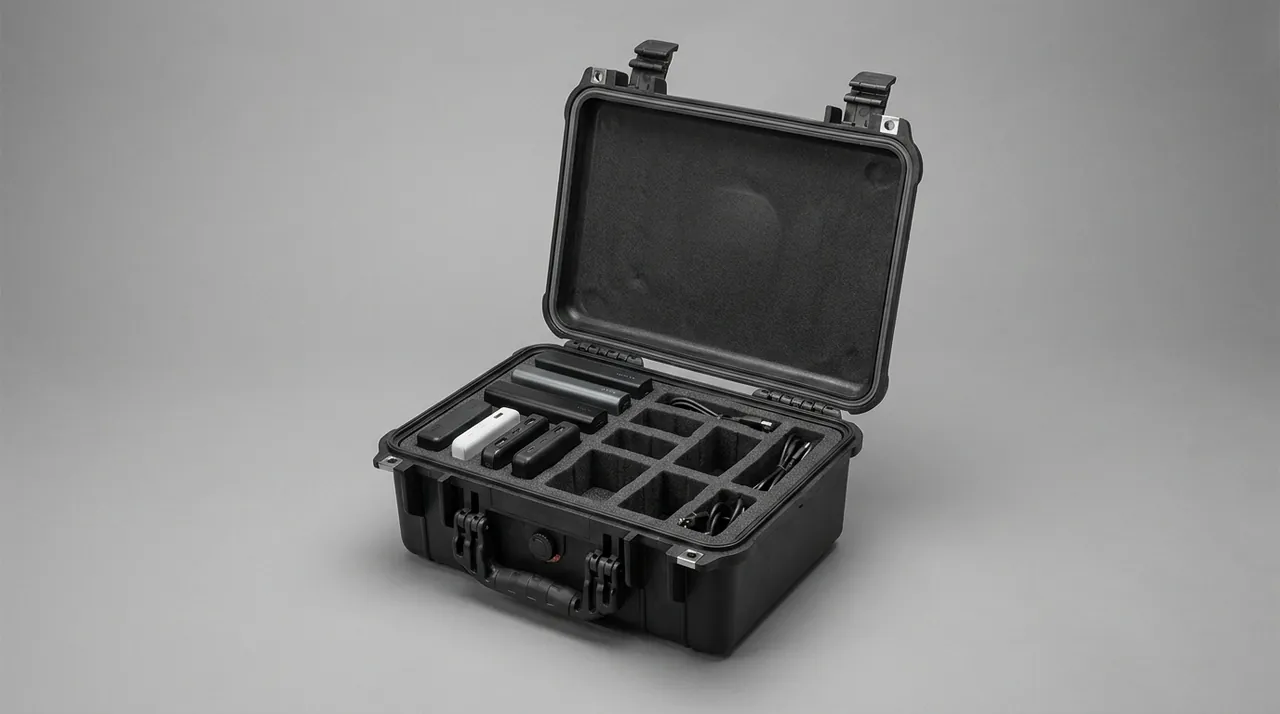
The cap matters more than it looks: an open probe window collects dust and moisture that the field user then has to clean before the first reading, and a scratch on the window changes the response. A simple threaded or snap cap held in the pocket, plus a desiccant sachet for long tropical storage, keeps the probe ready. The connector should be mated to a short protective plug or wrapped so the pins cannot touch metal in the case, because a pin bent in transit is a repair, not a wipe. The case that treats the probe as the measuring end of the system, not an accessory, is the one that arrives field-ready.
4. Spectroscopy Units: Cryocoolers, PMTs and Vibration
Portable spectroscopy adds a fragile subsystem to the monitor: a cooled detector, a photomultiplier or a small cryocooler that holds the sensor at operating temperature. Each of these hates vibration. A cryocooler with a displaced cold head loses its hold and the spectrum drifts; a photomultiplier with a shaken dynode stack changes gain; a cooled semiconductor with a disturbed mount loses energy resolution. The liner for a spectroscopy unit is therefore a rigid, located cradle with damping on all axes, not a soft bed that lets the unit rock.
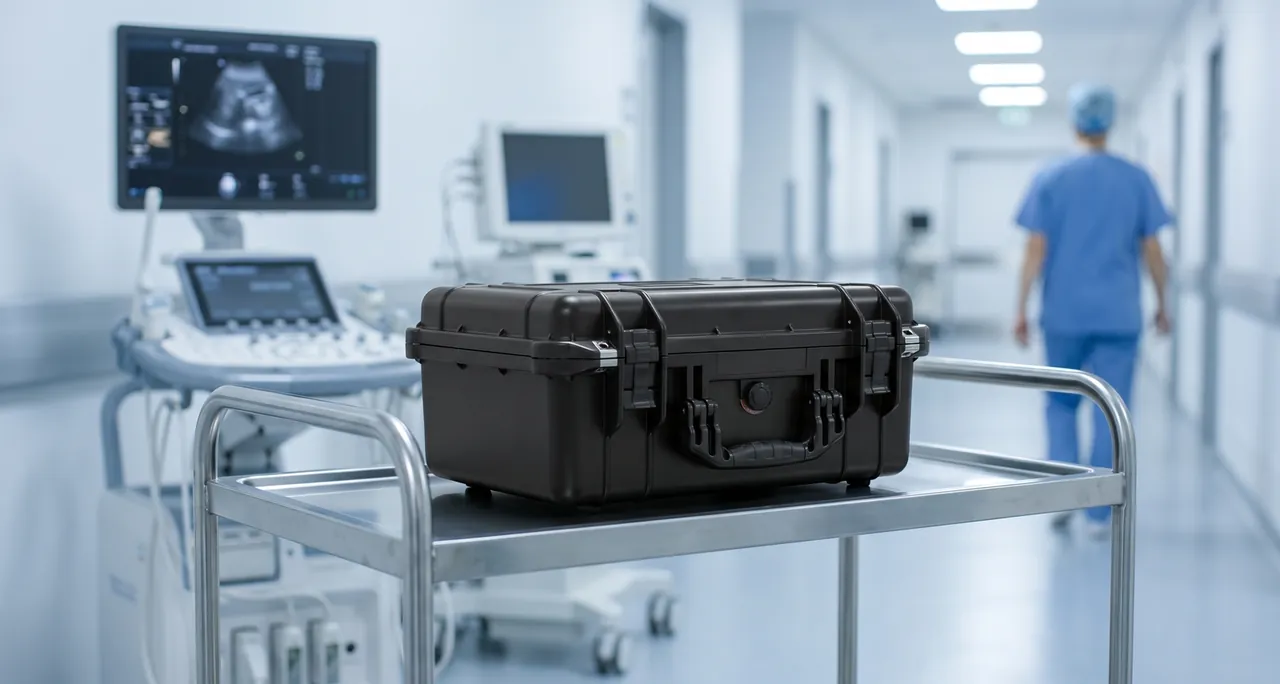
The unit should be held by its housing, not by pressure on the detector window, because the window is the optical path and any load on it detunes the measurement. Cabling inside the case should be routed and clipped so nothing rests on the cold head or the PMT, and the battery should be isolated so a shift cannot short the board. The MIL-STD-810H case compliance framing of test plans applies directly here: the verification should state the profile and the pass criterion up front, without implying any certification of the instrument itself, which remains the lab's responsibility. A spectroscopy unit that survives transit with its resolution intact is the goal, and the cradle is how it gets there.
5. Liner Design for Low-Background Instruments
Some monitors are built for low-background or low-noise work, and the liner material itself can contaminate the measurement if it outgasses or carries trace activity. The choice is then a closed-cell, low-outgassing foam that does not shed particles or deposit volatiles on the detector, rather than a generic cushion that may leach plasticiser onto a sensitive surface. The pocket should be wipe-clean and the foam should be replaceable, because a liner that cannot be decontaminated eventually becomes part of the background rather than the protection.
The liner should also separate the instrument from anything that could abrade or statically charge it. A conductive layer that is grounded through the case latch controls static on a semiconductor detector, and a smooth interior that traps no dust keeps the background low on the next use. The gasket and O-ring material selection logic of matching media to material applies to the liner too: the foam should be inert to the environments the monitor sees in storage. A liner specified for the measurement, not just the shape, is what keeps a low-background instrument low-background after a year of routes.
6. Weather Exposure on Survey Routes
Field survey routes are wet, dusty and temperature-swung in a way a lab is not. A monitor carried between vehicles, left in a tent or loaded on an open trailer sees rain, condensation, blowing dust and a daily temperature swing that the case must buffer. The shell should shed water and the seams should be sealed, but the bigger risk is condensation inside: a cold case brought into a warm humid space sweats, and that moisture finds the connector and the window first. The answer is a sealed case with a desiccant charge and a humidity indicator the user can read without opening.
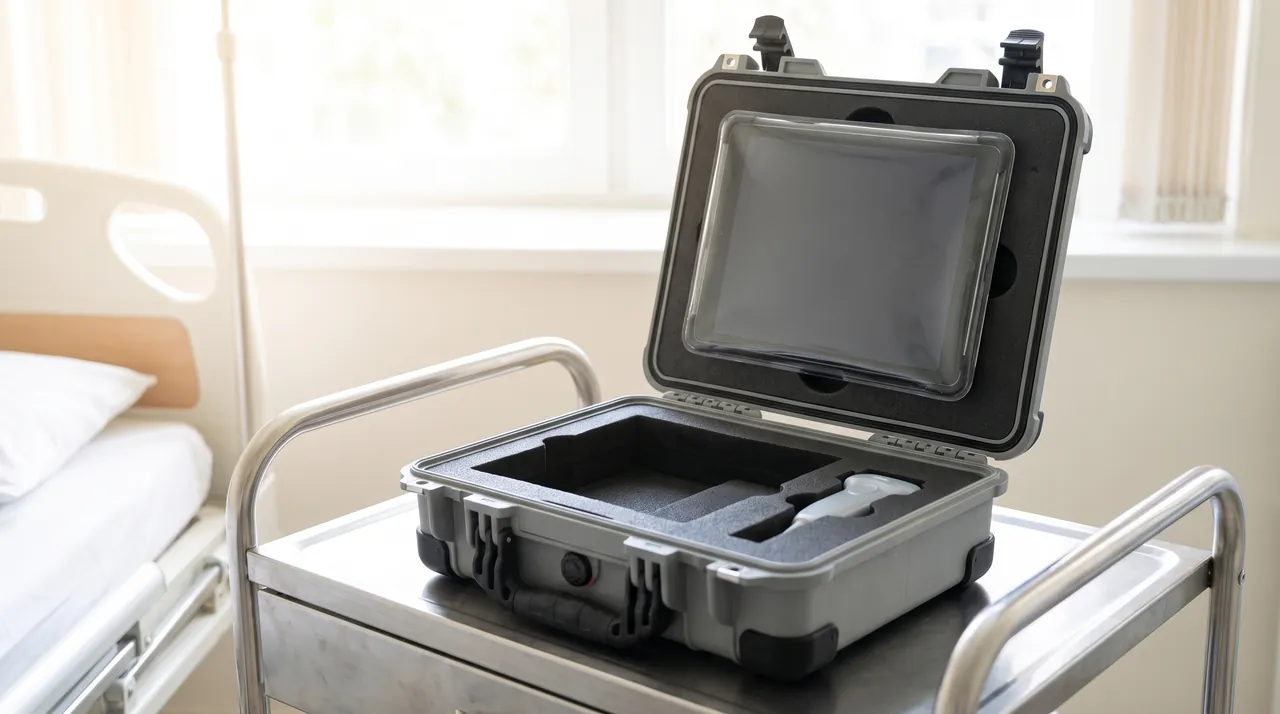
The IP65 IP66 IP67 difference sets how the case is rated against the route, and for most field survey work an IP65 or IP67 rating is the right target, with the choice driven by whether the case will face driving rain or temporary immersion. The rating is a design input, not a slogan: it decides the gasket, the closure and the cable glands, and it should be stated in the order so the case that arrives is the case the route needed. A monitor that survives the weather arrives ready; one that does not arrives as a humidity problem waiting to be discovered on the first reading.
7. Ingress Protection and the Altitude Valve
Ingress protection is not only about water. Radioactive dust on a route is a contamination risk that the case must keep out of the cavity, and a case that leaks dust also leaks the user's own decon burden back in. The seal should be a continuous joint-free gasket compressed in a groove, and the interior should be smooth and cleanable so any dust that does enter can be wiped, not trapped in corners. The closure should pull the lid square so the compression is even, because a case that seals on three sides and gaps on the fourth is not IP-rated at all.
At altitude the sealed case needs a pressure equalisation path, or the differential loads the gasket and pulls humid air in on landing. A hydrophobic breathable valve solves this without letting water in, and the pressure equalisation valve selection guidance applies directly. The valve also keeps the case easy to open after a flight, which matters when the user is gloved and on a clock. Ingress protection and altitude breathing are one system: the gasket keeps the bad out, the valve keeps the case honest, and both should be specified, not assumed.
8. Batteries and Check-Source Isolation
Most field monitors carry a battery, and some carry a check or reference source for daily verification. The battery should sit in its own compartment with terminal protection so a shift in transit cannot short the board or leak into the case, and it should be reachable without disturbing the detector. A lithium pack that has taken a knock is a fire and a repair, so the battery pocket is part of the protection, not an afterthought. The case should state the battery type and the isolation rule in the travelling documents.
Where a check source travels with the monitor, it must be in a dedicated, labelled, shielded pocket that the user can account for at every handover, because a missing source is a regulatory event, not a logistics slip. The pocket should be located and fixed so the source cannot migrate against the detector, and the documents should record the source identity and activity. The salt spray corrosion test is not the concern here, but the same discipline of stated criterion and recorded result applies: the source is accounted for, the battery is isolated, and the record shows both, so the monitor arrives as a controlled instrument rather than a loose one.
9. Fast Field Deployment and Labelled Access
In the field the monitor is often needed quickly, in poor light and with gloved hands, and the case should make the right thing the easy thing. Each instrument and probe should have one obvious pocket, labelled by function, so the user does not dig or guess, and the opening should be single-action so it can be done without setting the case down in contamination. A clear window or a labelled lid insert that shows what belongs where turns a frantic unpack into a check-the-labels routine.
The benefit is not only speed. A case that makes the layout obvious is a case that gets repacked correctly at the end of the day, which is when most damage actually happens, as a tired user forces a probe into the wrong pocket. Labels, colour cues and a documented pack list reduce that risk more than extra foam does. The medical instrument case practice of treating the case as a procedure, with a defined pack and a defined check, is the model JUNZHIJIA applies here, because a monitor that is easy to deploy correctly is also a monitor that survives the route intact.
The pack list itself is part of the case. A laminated card clipped inside the lid that names every pocket and its contents turns the case into a procedure the user follows, and a procedure is easier to repeat correctly than a memory, especially at the end of a long field day. The card also doubles as the acceptance check on return: a quick count of empty pockets against the list shows at a glance whether every item came back, which is the moment a missing probe or source is still recoverable rather than discovered weeks later.
10. Drop and Vibration Verification of the Packed Case
The case should be verified as packed, with the instrument inside, because an empty-case test passes conditions the loaded case would fail. The profile covers drop, vibration, shock and stacking, and the pass criterion should come from the instrument's own fragility and the agreed route, not from a generic standard read as a certificate. A drop test that only checks the shell misses the point if the detector still shifted inside, so the check is the instrument's post-test functional reading, not the case's appearance.
The verification should be documented with the case, so the next user knows what was proved. The transport vibration testing basis sets how a packed case is framed, and for a radiation monitor the framed test is the one that protects the measurement, stated in the procurement spec rather than assumed. A case that has been drop- and vibration-verified with the instrument inside arrives with evidence behind it, and evidence is what turns a damaged-on-arrival argument into a known result. The test exists to protect the calibration, and the calibration is the product.
11. Calibration Certificate, Config Record and Custody
A monitor moves with paper, and the case is part of that chain. The calibration certificate, the configuration record and the condition note at each handover turn the instrument into a tracked asset rather than a loose meter. The case needs a water-resistant document sleeve fixed to it, plus a defined slot for the handover condition note, so the certificate that justifies the reading is never stored apart from the monitor. The certificate is what makes the reading defensible, and the case is where it should travel.
For field programmes the case number, the instrument serial and the calibration due date should be captured into a single scannable record such as asset QR-code tracking, so one read returns every field a claim needs. Custody is only as strong as its weakest handover, and the case is where most handovers occur, so the identification, the marker and the date field together decide whether a dispute is settled by evidence or by assertion. A monitor that keeps its certificate with it and its history clear is a measurement you can stand behind; one without is a number you have to explain.
The record also has a shelf life that the case should enforce. A calibration certificate that expires mid-route, or a functional check that was due before dispatch, changes the status of the instrument no matter how well the case performed, so the case exterior should show the next due date as plainly as it shows the case number. That single visible field lets a store or a site reject a monitor before it travels rather than after it returns, and it turns the paperwork from a filing exercise into a field control that the case carries with it.
12. Custom Foam and OEM/ODM for Monitor Fleets
Monitor fleets repeat the same instrument and the same probe across many cases, and that repetition is an opportunity: a custom foam insert milled to the exact instrument and probe profile becomes a low-variance, repeatable part rather than a one-off guess. The insert should be closed-cell, low-outgassing where the measurement demands it, and washable, and the case should accept a spare insert so a contaminated or worn liner retires without scrapping the whole case. For a fleet this standardisation is what keeps every case field-ready from the first use to the hundredth.
JUNZHIJIA supports custom foam inserts and compartment layouts, dedicated tooling and OEM or ODM programmes for radiation monitoring fleets, with cases manufactured by Kexin New Materials (Guangdong) Co., Ltd. The order should specify detector type, probe and cable geometry, whether a check source travels with the unit, expected route weather and altitude, and the required ingress rating, because those variables decide the liner profile, the shell and the valve. A first-article case is built and the loaded instrument is functionally checked before batch production, so the design is verified against the real detector and the real route rather than against a generic assumption about how monitors travel.
Frequently Asked Questions FAQ
Q: What is the biggest transit risk to a radiation monitor?
A: The biggest risk is not a dead unit but a unit that still works and reads wrong, because nothing looks broken and the error only shows as a missed hot spot or a false alarm in the field. The causes are shock that shifts a detector or loosens a board, vibration that fatigues a solder joint or a scintillator mount, and environment that drifts a reference or grows leakage in a connector. The case cannot recalibrate the instrument, but it can keep all three within the band the lab assumed when it issued the certificate, by holding each part in a located, damped pocket and buffering the weather. The practical test is that after a route the instrument passes its own functional check and agrees with a reference, and the case is what makes that likely rather than lucky, because a monitor rated for site use is rated for use, not for the drops and swings of a logistics chain.
Q: How should probes and cables be protected in the case?
A: The probe is the measuring end of the system and its connector and cable are the parts most often damaged, so the probe should sit in its own pocket with the connector capped and supported, never coiled loose where it can chafe or take a knock. The cable should be strain-relieved so a pull at the case edge cannot lever the joint, and the connector should be mated to a short protective plug or wrapped so its pins cannot touch metal inside the case, because a bent pin is a repair rather than a wipe. The cap keeps dust and moisture off the window, which the field user would otherwise have to clean before the first reading, and a scratch on the window changes the response. A desiccant sachet in the pocket helps on long tropical storage. The case that treats the probe as the measurement, not an accessory, arrives field-ready instead of field-dubious.
Q: Do scintillation and semiconductor detectors need different liners?
A: Yes, because they fail differently and the liner has to match the failure. A scintillation detector pairs a crystal with a photomultiplier and fears shock that cracks the crystal or detunes the optical joint, so it wants a rigid located seat with damping on every axis and support on the sensitive axis rather than a soft bed that lets it rock. A semiconductor detector is small and precise and fears shock, electrostatic damage and humidity, so it wants a conductive located pocket with humidity control and a grounded path through the case latch. A generic foam block that fits the outer shape leaves the fragile internal joint unsupported, and that joint is where calibration is won or lost. The rule is to build the pocket to the detector, locating it by its mount, because the liner that supports the sensitive axis is the one that preserves the reading after transit. For a mixed fleet the practical answer is two insert profiles rather than one compromise, and the extra tooling cost is small against a single loss of resolution on a unit that then reads wrong for the rest of its service life.
Q: What ingress rating should the case have for field use?
A: For most field survey routes an IP65 or IP67 rating is the right target, with the choice driven by whether the case will face driving rain or temporary immersion, and the rating should be stated in the order so the case that arrives is the case the route needed. The rating is a design input, not a slogan: it decides the gasket, the closure and the cable glands, and it should be verified rather than printed on the lid. The cable glands should also be field-serviceable so a damaged seal can be swapped without returning the case, because a monitor that cannot be re-sealed on site is a monitor out of service at the worst moment. The bigger field risk is condensation inside, because a cold case brought into warm humid air sweats and the moisture finds the connector and window first, so a sealed case with a desiccant charge and a readable humidity indicator matters as much as the external rating. A monitor that survives the weather arrives ready; one that does not arrives as a humidity problem discovered on the first reading.
Q: How are live or check sources carried with the monitor?
A: A check or reference source that travels with the monitor must sit in a dedicated, labelled, shielded pocket that the user can account for at every handover, because a missing source is a regulatory event rather than a logistics slip. The pocket should be located and fixed so the source cannot migrate against the detector and alter the measurement, and the travelling documents should record the source identity and activity so custody is continuous. The case should also state the battery isolation rule, because a lithium pack that has taken a knock is a fire and a repair, and its pocket is part of the protection rather than an afterthought. The discipline is the same as any stated criterion with a recorded result: the source is accounted for, the battery is isolated, and the record shows both, so the monitor arrives as a controlled instrument instead of a loose one with an unexplained gap in its chain.
Q: How should the packed case be tested before field issue?
A: The case should be verified as packed, with the instrument inside, because an empty-case test passes conditions the loaded case would fail, and a drop test that only checks the shell misses a detector that shifted inside. The profile covers drop, vibration, shock and stacking, and the pass criterion should come from the instrument's own fragility and the agreed route, not from a generic standard read as a certificate of the unit. The real check is the instrument's post-test functional reading and its agreement with a reference, documented with the case so the next user knows what was proved. The acceptance should be written as a hold point in the procurement specification, and the verification should be repeated after any liner change or major repair, because a case re-foamed to a new instrument needs a fresh drop record rather than the old one carried over by habit. The GJB military standard case design framing of how such plans are written applies, and the test exists to protect the calibration, which is the actual product, not the appearance of the case after the drop.
Q: What documents should travel with a field monitor?
A: The monitor moves with its calibration certificate, its configuration record and a condition note at each handover, and the case is where those should travel, because a number without its certificate is not a defensible measurement. The case needs a water-resistant sleeve fixed to the lid for the certificate and a defined slot for the handover note, so neither the paper nor the status of the instrument depends on a separate folder that can go astray. For field programmes the case number, instrument serial and calibration due date should be captured into a single scannable record, so one read returns every field a claim needs without opening the case. A record that stays with the instrument is what makes a reading stand up later, and the case is where that record lives, so a monitor that arrives with its history complete is one you can defend and one that arrives without it is a number you have to explain. For audited programmes the certificate expiry and the last functional check should be visible on the case exterior, so a monitor past its window is pulled before it ever leaves the store.
Q: What should I specify when ordering a custom monitor case?
A: Specify detector type, probe and cable geometry, whether a check source travels with the unit, the expected route weather and altitude, and the required ingress rating, because those variables decide the liner profile, the shell and the valve, and a case built to them protects the measurement rather than just containing the instrument. State the altitude band so the case gets a breathable equalisation valve, and the weather so the gasket and closure match the route rather than a generic rating. JUNZHIJIA builds these cases with Kexin New Materials (Guangdong) Co., Ltd., and the order should also note any low-outgassing or conductive-liner requirement driven by the detector, because a low-background instrument needs a liner specified for the measurement, not just the shape. A first-article case is built and the loaded instrument is functionally checked before batch production, so the design is verified against the real detector and the real route rather than against a generic assumption about how monitors travel.
Conclusion and Related Reading
A radiation monitoring case is not a heavier box; it is the instrument's calibrated environment in transit, holding each detector located and damped, keeping the probe intact and resisting the weather and dust of the route. Specify from the detector and the route, and verify the packed case against the reading it must protect.
Related Reading