

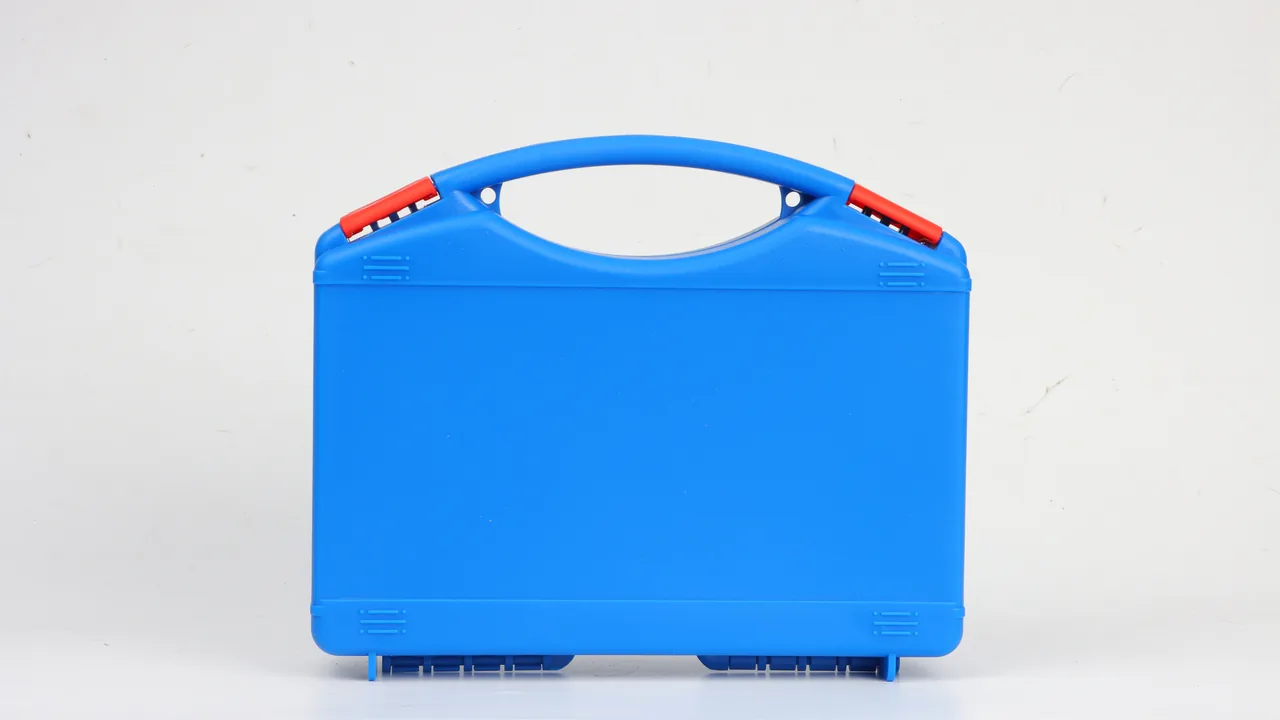
Salt refining is an industry that lives alongside chloride ions every hour of the day. Whether the feedstock is sea salt, rock salt from solution mining or lake brine, the brine passes through purification, preheating, multi-effect evaporation and crystallization, centrifugal dewatering, drying and packaging before it becomes a bag of refined salt. The most expensive components on the line cluster in two places: the evaporator and the centrifuge. Titanium heating tubes, stainless tubesheets, demister mesh, forced-circulation impellers, pusher centrifuge baskets and wedge-wire screens all sit in contact with saturated brine, hot mother liquor and chloride-bearing vapor, running a continuous corrosion examination. When a plant shuts down for maintenance, relocates a line, builds a second site or exports machinery, those same components face a second and cruder test: lifting, sea freight, stacking, vibration and impact.
JUNZHIJIA's position is that protecting salt refining components in transit is not a packing problem but the simultaneous execution of two disciplines inside one case: first create an inert, dry, compartmentalized environment that cuts the contact path between chloride ions and moisture, then use quantified cushioning and restraint so that lifting, vibration and stacking loads stop at the case wall instead of reaching the component.
This article is written for equipment engineers at salt and salt-chemical plants, export packaging managers at evaporator and centrifuge manufacturers, and technical buyers responsible for large spare-parts procurement. It breaks down packing methods for key components in evaporation, separation, washing and drying duty, and provides selection tables, test references and acceptance criteria that can be quoted directly.
Table of Contents
- 1. The Salt Refining Process Chain and Where Protection Fails
- 2. Multi-Effect Evaporator Heating Chambers: Tubes, Tubesheets and Heads
- 3. Separators, Demisters and Circulation Pump Components
- 4. Centrifuge Baskets, Screens and Pusher Mechanisms
- 5. Washing, Thickening and Fluid-Bed Drying Components
- 6. Stress Corrosion and Material Selection in High-Chloride Service
- 7. Salt Build-Up, Rinsing and Drainage Design
- 8. Sealing Levels and the IP Protection System
- 9. Cushioning Liners: Choosing Between EPE, EVA, PE and IXPE
- 10. Compartments, Latches, Hinges and Pressure Equalization Valves
- 11. Stacking Loads, Salt Spray and Transport Testing
- 12. Customization, OEM/ODM and Acceptance Criteria
- Frequently Asked Questions FAQ
- Conclusion and Related Reading
1. The Salt Refining Process Chain and Where Protection Fails
To understand why salt refining equipment is difficult to pack, it helps to see the stations it passes through. A vacuum or mechanical vapor recompression plant generally runs: raw brine, purification, preheating of purified brine, multi-effect evaporation and crystallization, salt slurry thickening, centrifugal dewatering, drying, screening and packing. Each station attacks its components with a different medium, so the protection emphasis shifts along the line.
| Station | Core components | Dominant failure mode | Transport and storage focus |
|---|---|---|---|
| --- | --- | --- | --- |
| Brine purification | Reactors, agitators, filter presses, dosing pumps | Scaling, pitting, lining separation | Moisture and frost control, lining impact protection |
| Evaporation and crystallization | Heating tubes and tubesheets, separation chamber, demister, salt leg, circulation pump | Chloride pitting and stress corrosion, tube-end wear, mesh deformation | Port caps, axial support, compartment restraint, desiccant |
| Thickening and washing | Thickener rake arms, hydrocyclones, slurry pumps | Wear, bearing corrosion, shaft bending | Anti-bend shaft supports, bearing moisture control |
| Centrifugal dewatering | Basket, pusher disc, wedge-wire screen, main shaft, differential gearbox | Loss of dynamic balance, screen deformation, bearing contamination | Axial locking, no cantilever loading, individual cradles |
| Drying and cooling | Fluid-bed distributor plate and caps, cyclone, blower impeller | Loose air caps, impeller distortion, plate warping | Rigid flat storage, compartmentalized clamping, moisture control |
| Packing and storage | Control cabinets, instruments, spare-parts boxes | Moisture, salt spray, vibration loosening | IP sealing, cushioning, stacking capacity |
Transport damage to salt refining components is rarely a dramatic break. It is hidden degradation. A tubesheet sealing face takes micro-indentations, a basket loses dynamic balance after sustained vibration, a screen slot deforms under compression, and bearing races collect salt dust. None of this is visible at installation; it surfaces after start-up as leakage, amplitude alarms or falling separation efficiency.
2. Multi-Effect Evaporator Heating Chambers: Tubes, Tubesheets and Heads
The heating chamber is the heart of the evaporator and among the most expensive single components in the plant. A typical design fixes several hundred titanium or duplex stainless heat exchange tubes into upper and lower tubesheets, with the bundle passing through baffle plates and water boxes at each end. Transport difficulty concentrates on three facts: the assembly is slender, precision-finished and sensitive to compression.
- Titanium tube bundles. Wall thickness is often 0.7 to 1.2 mm, so stiffness is low and the length-to-diameter ratio is high. If the bundle is supported only at both ends, the mid-span develops resonant bending under sustained vibration, and stress concentration appears first at the expanded or welded tube-to-tubesheet joints. Comb-shaped support plates matched to the tube pitch, positioned every 800 to 1200 mm, are the recommended solution.
- Tubesheets. A sealing face is flatness-critical. Contact with a hard object leaves an indentation that prevents the gasket from seating. Apply a peelable protective film and add a flange cover.
- Water boxes and flanges. These irregular shells must be lifted from dedicated lugs, never from a wire rope slung around a weld seam. Flange groove faces need the same protection.
- Shell and expansion joint. The bellows element is flexible and must never be used as a lifting point or left permanently compressed.
- Baffle plates and spacer tubes. Numerous, light and easily lost or scratched when loose. Use compartmentalized trays keyed to the drawing item numbers.
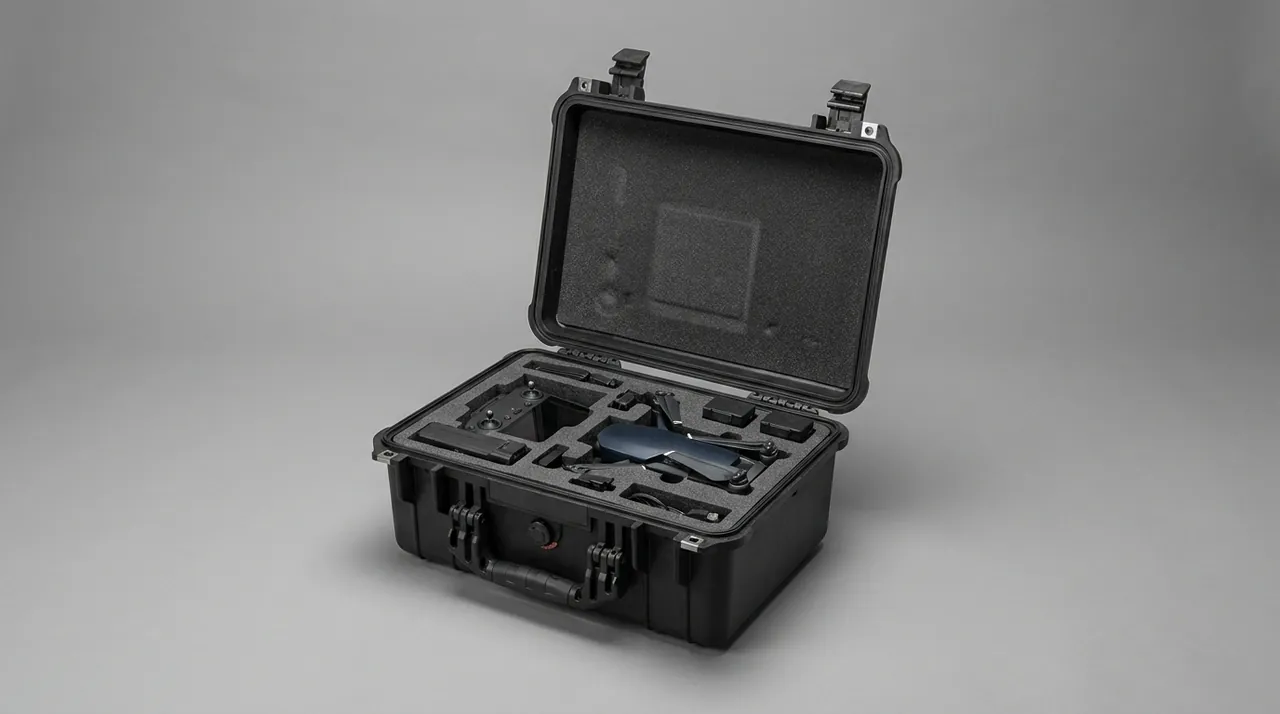
| Component | Weak point | Typical transport damage | Protection measure |
|---|---|---|---|
| --- | --- | --- | --- |
| Titanium tube bundle | Tube ends, mid-span | Cracked tube ends, bent tubes | Comb supports, axial restraint, no cantilever |
| Tubesheet | Sealing face flatness | Indentations, scratches | Protective film plus flange cover |
| Water box | Welds, flange | Sling damage, flange impact | Dedicated lugs, soft slings |
| Expansion joint | Bellows | Plastic deformation, torn convolution | Positioning rods, separate packing |
| Baffles and spacer tubes | Edges, bores | Scratches, mixing and loss | Keyed compartments, item-number labels |
3. Separators, Demisters and Circulation Pump Components
The separation side of an evaporator consists of the separation chamber, the demister, the salt leg and the circulation pump. These parts are more dispersed than the heating chamber, yet they sit where salt spray and mother liquor concentrate, so protection must address deformation and residual liquid at the same time.
Demister mesh is usually a stack of metal wire mesh or corrugated plates, bulky and easily crushed. Once compressed, demisting efficiency drops, vapor carries liquid, condensate picks up salt and downstream equipment scales. Transport it on a rigid frame pallet, upright or flat, with strict stacking limits and a "no heavy load on top" marking.
Separation chambers and salt legs are welded shells that may contain guide vanes and elutriation rings. Shell stiffness is adequate, but flange faces and nozzle openings must be capped against salt dust and moisture.
Forced-circulation and axial-flow pumps are the energy core of the system. The impeller is cantilevered; if the case tilts or takes an impact, the pump shaft can bend plastically, which shows up after assembly as excessive vibration and seal leakage. Pack the pump body horizontally with an impeller-side saddle, remove the cartridge mechanical seal as a separate unit so rotating and stationary faces do not fret, and plug the bearing cavity. Shafts and rotors share this restraint logic, set out in Centrifuge Rotor Cases: Dynamic Balance and Compartment Design.
Because this group relies on titanium, duplex stainless and tube-bundle construction, its nozzle protection, flange face protection and lifting geometry follow the same family rules described in Heat Exchanger Parts Cases: Bundle and Tubesheet Protection. Designing them as one packaging family keeps the spare materials list short on site.
4. Centrifuge Baskets, Screens and Pusher Mechanisms
Damage in the dewatering section tends to be machine-level rather than part-level. A centrifuge basket is a high-speed rotating element, and once dynamic balance is disturbed, restoring it on site is expensive. Salt plants commonly run pusher centrifuges, single or two-stage, and decanter centrifuges.
- Basket. Balance grade requirements are high, so the basket must be locked axially and restrained radially in transit. Never rest it on a cantilever, and never use the basket flange as a lifting point. Protect the inner filter cloth and backing screen from scratches.
- Pusher disc and pusher shaft. The piston stroke is precise, and axial shock in transit creates coaxiality error. Use a dedicated transport lock ring to hold the pusher disc in its shipping position.
- Wedge-wire and profile screens. The most underestimated fragile parts. A screen is a thin welded plate with slot openings often between 0.1 and 0.5 mm. Once compressed, slots collapse or widen, immediately changing product particle size and moisture. Store each screen flat in a bespoke recess, respect the minimum coiling radius for rolled screens, and never stack several together.
- Main shaft and differential gearbox. The decanter differential is a precision gear assembly and should be removed, boxed separately and protected with a barrier bag and desiccant. Fit protective sleeves to both shaft journals.
- Bearings and seals. A bearing contaminated with salt dust loses life quickly. Keep it in its original sealed package and confirm the rust-prevention period before packing.
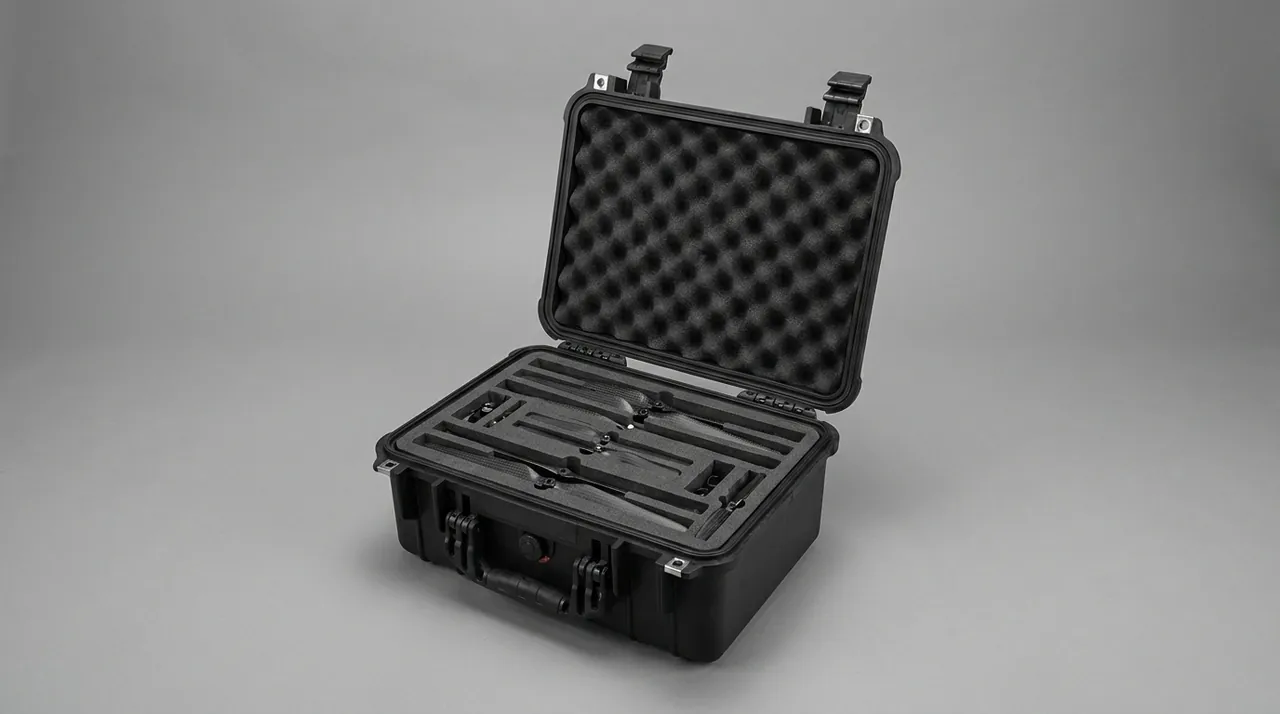
| Component | Critical precision | Consequence of failure | Packing requirement |
|---|---|---|---|
| --- | --- | --- | --- |
| Basket | Dynamic balance, roundness | Excessive vibration, early bearing failure | Axial lock, radial restraint, no flange lifting |
| Pusher disc and shaft | Coaxiality, stroke | Pusher jamming, seal leakage | Transport lock ring, shaft sleeve |
| Wedge-wire screen | Slot size, flatness | Particle size drift, moisture exceedance | Flat single layers, bespoke recess, no stacking |
| Differential gearbox | Gear mesh, backlash | Noise, temperature rise, tooth breakage | Separate case, barrier bag plus desiccant |
| Main shaft | Journal size, straightness | Seal leakage, vibration | Horizontal support, journal sleeves |
5. Washing, Thickening and Fluid-Bed Drying Components
Salt slurry leaving the crystallizer is first thickened, then washed to strip mother liquor and impurities, then dewatered and dried. These parts look rugged, but their precision requirements are not low.
Thickeners and salt slurry washing. The thickener rake is a low-speed, high-torque assembly with long arms and limited stiffness, so sustained load in transit causes deflection. Support the arms from below at equal heights, and remove the drive head and gearbox for separate packing so the output shaft is not bent. Hydrocyclone clusters are parallel assemblies of small units that damage easily; secure the cluster as a whole or compartmentalize each unit.
Fluid-bed dryers. The distributor plate and air caps determine fluidization quality. A perforated thin plate that bends in transit warps permanently, producing uneven air distribution and localized dead zones; store it rigidly and flat with full underside support, never on point supports. Air caps are small and numerous, so a compartmentalized tray is needed for location and count reconciliation.
Cyclones and blowers. Lift a cyclone shell only from the reinforcement ring, never from the thin shell. A blower impeller is cantilevered and needs the same axial fixing and impeller support as a circulation pump. Finned heater bundles must resist compression, because collapsed fins sharply reduce heat transfer.
Piping and valves. Salt plant valves are typically PTFE-lined, rubber-lined or titanium, and both flange faces and lining layers are vulnerable. Keep end caps in place, and never leave lined parts in direct sun, which ages and cracks the lining. If these components ship with seawater desalination or brine concentration equipment, the zoning and material tables in Desalination Plant Cases: Sealing and Anti-Corrosion Solutions apply directly.
6. Stress Corrosion and Material Selection in High-Chloride Service
The distinctive corrosion condition in salt refining is the combination of high chloride, moderate temperature and tensile stress, which produces stress corrosion cracking and pitting. Temperature is the amplifier: the same chloride concentration is several times more aggressive at 110 C than at 60 C. Transport and storage happen at low temperature, but if residual liquid, moisture and salt dust are not removed, the corrosion conditions are simply packed together with the component.
| Material | Chloride pitting resistance | Stress corrosion resistance | Practical temperature window | Typical duty | Transport and storage notes |
|---|---|---|---|---|---|
| --- | --- | --- | --- | --- | --- |
| 304 / 304L | Low | Low | Below 60 C | Low-chloride utility lines | Rusts in coastal air, needs moisture control |
| 316 / 316L | Medium | Medium | Below 60 to 80 C | Mother liquor lines, non-hot parts | Residual salt absorbs moisture, crevice risk |
| 317L | Medium-high | Medium-high | Around 80 C | Hot mother liquor piping | Sealing faces need protection |
| 904L / 254SMO | High | High | Above 100 C | Hot, concentrated chloride duty | Isolate dissimilar metal contacts |
| 2205 / 2507 duplex | High | High | Above 100 C | Evaporator shells, pump casings | Weld zones need passivation protection |
| Titanium TA1 / TA2 | High | High | All temperatures with oxygen | Heat exchange tubes, tubesheet lining | Never rub against carbon steel, avoid hydrogen embrittlement |
| Copper-nickel | Medium-high | Medium-high | Low to moderate | Seawater cooling circuits | Protect from ammonia and sulfide contamination |
| FRP / graphite | Not applicable | Not applicable | Resin dependent | Dilute acid, hypochlorite lines | UV, impact and frost protection |
Three conclusions follow. First, 316L is not a universal chloride material; in hot, concentrated chloride service it shows clear pitting and crevice corrosion risk, so pressure-containing parts in long-term contact with saturated brine should move to duplex stainless or titanium. Second, titanium carries a hydrogen embrittlement risk in oxygen-depleted conditions, so it must not touch carbon steel directly and must not be washed with chloride-containing cleaners. Third, dissimilar metal joints must be electrically insulated, because a galvanic couple corrodes far faster than either material alone.
7. Salt Build-Up, Rinsing and Drainage Design
A component removed from service usually carries a film of salt crystals or mother liquor. That film looks harmless when dry, but once the case interior rises above roughly 60 percent relative humidity it deliquesces into a continuously active corrosive liquid layer. Growing salt crystals also jack open flange faces and seize threads. Rinsing and drying before packing is therefore not optional.
| Pre-packing step | Method | Purpose |
|---|---|---|
| --- | --- | --- |
| Saturated brine pre-rinse | Rinse first with brine of matching composition | Dissolves mother liquor without secondary crystallization |
| Deionized final rinse | Fast deionized water rinse followed by immediate blow-dry | Carries away soluble salt, cuts residual chloride |
| Compressed-air blow-through | Focus on tube bores, flange grooves, threaded holes | Removes pooled water and salt dust |
| Drying | Hot air at 60 to 80 C until no condensation remains | Lowers the initial humidity inside the case |
| Borescope check | Sample inspection of tube bores | Confirms no residual crystals or debris |
Drainage matters just as much. A protective case should have a sealable drain plug and a sloped floor so condensate collects at one point instead of spreading across the base. During long storage, open the case monthly and check for pooled water near the plug. Never use natural fiber fillers that absorb moisture and then drip.
Components that must stay wet, such as mechanical seals and rubber linings kept from drying out, belong in a separate wet zone. Electrical parts, instruments, bearings and titanium components belong in the dry zone, where lower humidity is always better. Separate the two with a sealed divider and give each zone its own humidity indicator card.
8. Sealing Levels and the IP Protection System
A salt plant combines high humidity, salt spray and washdown water, so case sealing cannot be chosen from a catalogue number alone. The widely used ingress protection definitions come from IEC 60529 and GB/T 4208, and IP65, IP66, IP67 and IP69K behave very differently in a salt environment.

| Scenario | Recommended rating | Rationale |
|---|---|---|
| --- | --- | --- |
| In-plant transfer, covered warehouse storage | IP54 / IP65 | Dust is the main concern, occasional splash |
| Open yard storage, port marshalling area | IP65 / IP66 | Must tolerate rain and washdown |
| Deck handling, possible immersion | IP67 | Short-term immersion without ingress |
| Stored beside in-tank CIP washdown | IP69K | High-pressure, high-temperature spray |
Three details decide whether a seal works. First, compression ratio, which should sit between 20 and 30 percent; too little and the seal does not close, too much and the gasket takes a permanent set and ages faster in salt spray. Second, parting-line flatness; if the case mouth warps when the latches close, even a perfect gasket fails, so the shell needs adequate wall thickness and reinforcement ribs, and large cases need a latch spacing calculation. Third, pressure equalization; across an ocean voyage, an air shipment or a large day-night temperature swing, the pressure differential can suck the gasket inward and make the case hard to open, which is why a breathable waterproof vent is standard practice, as explained in The Role and Selection of Pressure Equalization Valves for Cases.
Gasket material must match the environment too. Silicone has a wide temperature range but is average against oily media, EPDM offers good weather and water vapor resistance, and FKM is chemically strong but stiff at low temperature.
9. Cushioning Liners: Choosing Between EPE, EVA, PE and IXPE
Salt refining components span an enormous weight range. An air cap or gasket may weigh less than a kilogram, while a basket or water box can exceed several hundred. Cushioning cannot be uniform; it should be zoned by weight, fragility and geometry.
| Material | Density range | Cushioning character | Resilience | Suitable parts |
|---|---|---|---|---|
| --- | --- | --- | --- | --- |
| EPE | 20 to 35 kg/m3 | Flexible, good energy absorption | Medium | Shells, water boxes, large support pads |
| EVA | 40 to 90 kg/m3 | High compressive strength, machinable | Good | Basket cradles, screen recesses, precision fixtures |
| PE foam | 25 to 45 kg/m3 | Low cost, firm | Medium | General filling, interlayer pads |
| IXPE | 30 to 60 kg/m3 | Thin and dense | Medium | Thin plates, flange protection, surface anti-scratch |
| PU sponge | 20 to 40 kg/m3 | Soft surface | Good | Surface protection, needs moisture treatment |
Two quantified rules must hold. First, displacement control: total travel of the component inside the case, in any direction, must stay under 3 mm, and heavy baskets and water boxes should be restrained on all six faces. Second, contact pressure control: support area must be calculated against component weight so that local pressure does not crush a sealing face or screen. For parts above 100 kg, use a composite build of a rigid base pallet, lateral EVA restraint blocks and a top elastic clamp rather than setting the part directly on foam. The performance trade-offs between materials are covered in Case Foam Material Comparison and Selection.
One further caution: foam takes a compression set under sustained load. Salt plants hold spare parts for months or across a fiscal year, and after long stacking the liner loses resilience, so its cushioning in the second use is far weaker. Heavy-duty liners should be replaceable modules.
10. Compartments, Latches, Hinges and Pressure Equalization Valves
Salt plant spares are varied and mixed in size, and mixed loading damages both the parts and site assembly efficiency. Compartmentalization delivers three benefits: physical isolation, so metal tools never meet screens or sealing faces; faster reconciliation, because fitters pull parts in a fixed order; and state management, because each compartment has fixed content and a missing item becomes immediately visible.
Four layout rules apply: heavy parts low, light parts high; hard parts inside, soft parts outside; liquid-bearing parts isolated; tools in their own compartment. If a case must carry both hard tooling and thin-walled parts, a divider is more reliable than simply adding more foam, as set out in Dividers versus Foam Inserts.
Latches and hinges are the load path for both containment and sealing. Salt plant spare cases are large and heavily loaded, so latch holding force and cycle life must be verified against the fully loaded weight, and hinge pins should be 316 stainless with the load checked at the full opening angle. For cases opened frequently, track the decay curve of holding force rather than the initial feel.
Pressure equalization valves were covered in section 8. One field note: in salt spray the valve core can clog with salt dust, and once the vent path closes the case cannot breathe through temperature swings, which loads the gasket with a larger differential instead of a smaller one.
Marking is part of the design too. Lifting direction, center of gravity, maximum stack layers and moisture warnings must survive salt spray immersion without peeling, and a position should be reserved for an asset QR code or RFID tag.
11. Stacking Loads, Salt Spray and Transport Testing
Protective case performance has to be proven by test. Salt plant spares are heavy, export-heavy and exposed to long sea voyages, so validation across four load families, salt spray, vibration, shock and stacking, is essential.
| Test type | Main reference | Verification target | Salt plant focus |
|---|---|---|---|
| --- | --- | --- | --- |
| Neutral salt spray | GB/T 10125 / ISO 9227 | Corrosion resistance of metal parts and coatings | Fasteners, latches, hinges, plating |
| Transport package tests | GB/T 4857 series | Vibration, shock, stacking, drop | Heavy-part restraint, foam compression |
| Distribution cycle | ISTA series, ASTM D4169 | Combined real logistics stresses | Sea, transshipment and road combination |
| Static stacking | Company standard or contract | Capacity at the rated stack height | Base case and foam creep |
| Seal performance | Method matching target IP | Spray, immersion or pressure decay | Gasket compression and parting line |
Salt spray duration and judgement directly affect the completeness of export documentation. Salt spray is an accelerated test and there is no simple linear conversion between test hours and years of exposure, so shipping documents should describe the test conditions and acceptance criteria honestly rather than claim that five hundred hours equals ten coastal years. Typical durations and judgement methods are covered in Salt Spray Corrosion Test Duration and Judgement Standards for Cases.
On transport testing, the GB/T 4857 series defines the basic methods for transport packages, including vibration, shock, stacking and drop, and is the usual basis for domestic deliveries and national-standard exports, described in GB/T 4857 Transport Packaging Test Methods. Orders for North America and cross-border e-commerce more often cite ISTA procedures and the ASTM D4169 distribution cycle, described in Choosing and Running an ISTA Transport Test Procedure.
Drop height scales inversely with package weight, so for basket packages in the hundreds of kilograms free drop is normally replaced by lifting-drop, tip-over and edge-impact checks. For stacking, calculate the static load on the base case at the actual warehouse height, allow for foam creep under sustained load, and place heavy cases at the bottom.
12. Customization, OEM/ODM and Acceptance Criteria
Salt plant spares are highly non-standard in shape: a tube bundle is a slender array, a basket a rotating body open at both ends, a screen a thin rolled plate, a demister a bulky block. Standard cases rarely fit exactly, yet exact fit is the precondition for protection. Too loose and the part moves; too tight and assembly is difficult and sealing faces are compressed.
Custom protective cases typically offer these options:
- Custom liner. CNC-cut EVA or EPE keyed to the component model; thin recesses for screens, comb supports for bundles, an axial lock ring for baskets.
- Structural modification. Adjust height, add an intermediate shelf, fit casters and forklift pockets, or add lifting apertures to a standard shell.
- Sealing level. Adjust seal construction and validation level for open-yard or deck duty.
- Anti-corrosion configuration. Upgrade metal latches and hinges to 316 stainless, passivate fasteners, and avoid galvanic couples between dissimilar metals.
- Marking and color. Screen-printed logos, asset numbers and color zoning for multi-line spare identification.
- Shipping documents. Certificate of conformity, material certificates, salt spray and vibration reports, packing list, and unpacking and maintenance instructions, available in multiple languages.
Where the case itself must serve long-term in a corrosive atmosphere, material and surface treatment logic follows Corrosion Resistant Enclosure: Material and Structural Design.
Three OEM/ODM models are common: pure OEM builds to the customer drawing and applies the customer brand; joint design returns a structure and liner solution from the customer's duty requirements; full ODM supplies a proven case and liner for the customer to brand. All three should fix drawing and tooling ownership, acceptance criteria and warranty boundaries in the contract.
Acceptance criteria should include at least five items, written into the technical agreement:
| Acceptance item | Criterion | Method |
|---|---|---|
| --- | --- | --- |
| Appearance and structure | No cracks, no deformation, ribs intact | Visual plus dimensional sampling |
| Seal performance | Meets target IP rating | Spray, immersion or pressure decay |
| Liner fit | Component travel 3 mm or less, no hard spots | Loaded measurement plus feeler gauge |
| Material and finish | Certificates complete, no rust on metal parts | Material certificates plus visual |
| Delivery documents | Certificate, test reports and packing list complete | Document reconciliation |
Frequently Asked Questions FAQ
Q: What kinds of damage are most likely to affect titanium tube bundles in an evaporator during transport?
A: Four types dominate. The first is tube bending: in a bundle with a high length-to-diameter ratio, supporting only the two ends allows the mid-span to deflect under sustained vibration, and in severe cases the tubes rub against the baffle bores and lose wall thickness. The second is tube-end cracking: expanded or welded joints are stress concentration zones, and axial shock in transit can initiate micro-cracks that later appear as leakage at the tubesheet. The third is sealing-face indentation: if the tubesheet face contacts a hard object, it takes an indentation that cannot be repaired and prevents the gasket from seating. The fourth is internal contamination: uncapped tube ends admit salt dust, moisture and packing debris, causing blockage and internal pitting. The countermeasures are comb-shaped supports at intervals, protective caps on every tube end, peelable film plus flange covers on sealing faces, a full blow-through and drying cycle before packing, and a no-cantilever handling marking on the case.
Q: Why should wedge-wire centrifuge screens never be stacked for transport?
A: A wedge-wire screen is a thin welded plate with slot openings typically between 0.1 and 0.5 mm, a scale that is highly sensitive to pressure. When several screens are stacked, the weight of the upper screens and transport vibration press on the lower screens through point contacts, locally collapsing or widening the slots. The change is hard to see with the naked eye, but after installation it directly alters cut size and dewatering performance: narrower slots reduce throughput and increase blinding, while wider slots let fine crystals pass and cause off-specification particle size and mother liquor carry-over. The correct method is to store each screen flat in its own bespoke recess, with the recess slightly deeper than the screen thickness and enough clearance around the edges for handling. Rolled screens must respect the minimum coiling radius given by the supplier and must never be creased. Screens should not share a cavity with wrenches or bolts and must not be used as a pad under other components.
Q: Do 316L and 2205 duplex parts need to be isolated from each other inside the same protective case?
A: Yes, and this is one of the most commonly overlooked galvanic corrosion risks. 316L and 2205 have different corrosion potentials, and when they touch in a damp or salt-contaminated environment they form a galvanic couple in which the more active material, normally 316L, becomes the anode and corrodes faster, showing clear pitting and crevice attack near the contact area. A salt plant environment is chloride-rich to begin with, so once residual mother liquor absorbs moisture and forms a liquid film, the galvanic circuit closes and the corrosion rate far exceeds that of either material alone. The correct measures are: physically separate parts of different grades with insulating gaskets or EVA dividers; rinse and dry thoroughly before packing so no continuous liquid film can form; keep fasteners and parent material in the same grade where possible, and insulate where mixed grades are unavoidable; and if abnormal rust staining appears at a contact face on unpacking, passivate it before the part returns to service.
Q: Why must a salt refining equipment case be fitted with a pressure equalization valve?
A: Because a sealed case develops an internal-to-external pressure differential under temperature and altitude changes, and that differential acts directly on the gasket. Salt plant spares frequently travel by sea, where a voyage can bring day-night temperature swings of twenty to thirty degrees Celsius, and air freight can bring rapid pressure drops. Internal air contracts or expands according to the gas laws, and if the case is fully sealed, opening it may require substantial force, while the gasket can be sucked inward by negative pressure, displacing it and leaving permanent deformation. In extreme cases the lid distorts or a latch releases. A pressure equalization valve allows slow gas exchange while preserving water and dust protection, holding the differential within a narrow band. When specifying, check vent flow rate, water protection level and salt spray resistance, mount it away from areas that collect water or receive direct washdown, and inspect regularly for salt dust clogging, replacing the valve if the vent path fails.
Q: How should IP65 and IP67 be chosen for salt refining applications?
A: The deciding question is whether the part can be briefly immersed, not whether a higher number sounds better. IP65 withstands water jets and suits in-plant transfer, covered warehouse storage and locations that see washdown splash. IP67 withstands short-term immersion at a specified depth and time and suits deck handling, unsheltered port marshalling yards and operations where falling into water is possible. It is important to note that IP67 usually depends on a higher gasket compression ratio, so the seal sits in a more deformed state and ages faster in salt spray; without regular maintenance its practical service life may be no better than a well-maintained IP65 case. For most domestic salt plants, where spares spend most of their time in a warehouse, IP65 combined with desiccant, humidity indicator cards and a proper liner is more economical. Only parts that genuinely go aboard ship, onto a deck or into long-term open storage justify the cost of IP67, together with a third-party test report from the supplier.
Q: How many hours of salt spray testing are needed to cover the corrosion risk of a sea voyage?
A: There is no simple conversion, and any claim that a given number of hours equals a given number of years should be treated with caution. The salt spray test defined in GB/T 10125 is an accelerated test whose corrosion mechanism differs from real marine atmospheric exposure, so test duration supports relative comparison between materials or processes rather than linear extrapolation to service years. The practical approach has two steps. First, define the actual exposure conditions of the metal parts, such as outdoor exposure, contact with residual salt liquid and the presence of a protective coating, then choose a suitable method such as neutral salt spray, acetic acid salt spray or copper-accelerated acetic acid salt spray. Second, set the acceptance criterion with historical data and customer requirements, for example the rusted area percentage or the time to first rust spot. For exported salt plant spares, the shipping documents should state the test method, duration, acceptance criterion and specimen condition, and describe the inspection and maintenance interval that follows.
Q: How should a foam liner be designed for components weighing more than 100 kilograms?
A: A heavy component must not sit directly on foam, because transport vibration compresses the foam almost to full density, cushioning fails and only hard contact remains between the part and the case floor. A composite build is recommended. The base uses a rigid pallet or an engineering-plastic base to carry the weight, with a layer of medium-to-high density EPE between the pallet and the case floor as a secondary energy-absorbing layer. Laterally, EVA restraint blocks key into the component outline to limit radial movement. On top, an elastic clamp block applies moderate preload to suppress vertical hopping. Two calculations are required: support area versus contact pressure, so local pressure does not crush a sealing face or a screen; and foam compression set, because long stacked storage of a heavy part removes resilience, so the liner should be a replaceable module. After packing, run a short road trip or a vibration test and measure actual component travel; holding it under 3 mm is the most direct proof that the design works.
Q: What steps does a custom protective case go through from requirement to volume production?
A: The standard flow has seven stages. First, confirm the requirement and duty: component size and weight, center of gravity, transport mode, storage environment and target protection level. Second, design the structure and liner, issuing a 3D model that defines support points, restraint method and compartment layout. Third, validate a sample using 3D printing or a hand-built unit to confirm fit, handling and cushioning. Fourth, design and manufacture tooling, a step that can be skipped if an existing shell is reused. Fifth, trial the mold and inspect the first article for dimensions, sealing, appearance and stacking capacity. Sixth, run a small batch trial with salt spray, vibration and immersion validation. Seventh, move to volume production with the shipping documents. For a first-time partnership, sample validation is the most underestimated stage: bundle support interference, a basket lock ring that will not fit and excessive lid closing force often become visible only with a physical part. The contract should also fix drawing and tooling ownership and warranty scope.
Conclusion and Related Reading
Rinsing, drying, sealing, cushioning and compartmentalization done right at packing time buy continuous production. JUNZHIJIA customizes liners and tooling for salt plant components. Manufactured by Kexin New Materials (Guangdong) Co., Ltd.
Related Reading