

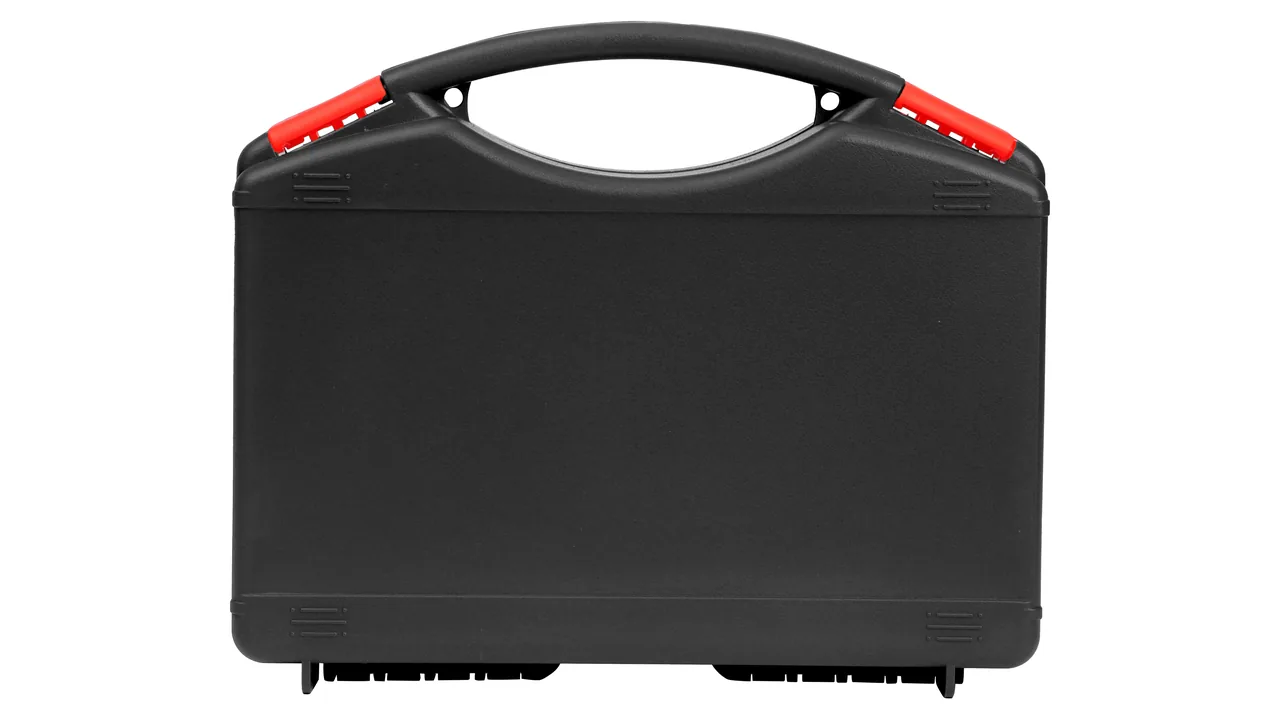
A shutdown window at an alumina refinery is often measured in shifts, not weeks. The digester baffles and piping spools have just been pulled out of hot caustic service, the settler rake arms still carry a crust of red mud, and the replacement parts have already left another site by truck. These components are not delicate instruments, yet they are harder to ship than most instruments: they are heavy, long, awkwardly shaped, and they carry a film of hot caustic on their surfaces while their flange faces still have to meet micron-level flatness.
JUNZHIJIA holds one principle: let the medium and the operating conditions define the protection, and let the transport route define the structure. Packaging for alumina equipment cannot borrow the logic of a general-purpose toolbox. It must first read four constraints — the NaOH system, the scale crust, flange precision, and the stiffness of long parts — and then work backward to compartment layout, liner design, sealing and load bearing. This article follows the Bayer process stage by stage and gives deployable solutions, material comparison tables and acceptance criteria.
Table of Contents
- Alumina Refining Process Chain and Protection Challenges
- Digester (Autoclave) Baffles and Piping Parts
- Settler (Thickener) Rake Arms and Drive Assemblies
- Agitators and Shaft Seals in Hot Caustic Service
- Pump and Valve Parts for Slurry and Caustic Duty
- Materials and Corrosion Control in the NaOH System
- Case Shell Materials and Structural Design
- Sealing Classes: IP65 / IP67 with IEC 60529 and GB/T 4208
- Cushioning and Compartmentalization: EPE / EVA / PE / IXPE Liners
- Latches, Hinges, Pressure Equalization Valves and Stacking Load
- Temperature, Humidity, Salt Spray and Transport Testing
- Customization, OEM/ODM and Acceptance Criteria
- Frequently Asked Questions FAQ
- Conclusion and Related Reading
Alumina Refining Process Chain and Protection Challenges
The Bayer process turns bauxite into metallurgical-grade alumina through a chain that runs roughly as follows: slurry preparation, pre-desilication, high-temperature digestion, dilution and flash evaporation, settler separation of red mud, filtration and seed precipitation, and finally calcination of aluminium hydroxide. Two stages concentrate almost all of the transport-protection demand.
Digestion. The digester, also called an autoclave or pressure digester, runs continuously at 240–270 °C, 3.5–5.5 MPa and high circulating caustic concentration. Inside it sit baffles, heating tube bundles, a circulation barrel, manholes and pressure-relief devices. During a shutdown, baffles, nozzle spools and blind flanges are lifted out as complete pieces.
Settling. The settler, or thickener, separates red mud from sodium aluminate liquor. Rake arms, rake teeth, the centre drive gearbox, the lifting mechanism and the feed well form a low-speed, high-torque system, and a single rake arm can run 10–30 m long.
Four constraints summarize the difficulty:
| Constraint | Manifestation | Direct packaging requirement |
|---|---|---|
| --- | --- | --- |
| Medium residue | NaOH, sodium aluminate scale, red mud slurry | Moisture barrier, no caustic migration, neutralizable cleaning |
| Geometry | Long rods, thin walls, odd-shaped baffles, large flanges | Compartmentalization, support points, bending resistance |
| Precision | Flange flatness, bearing seats at IT6–IT7 | Cushioning, impact and fretting control |
| Mass and stiffness | Hundreds of kilograms to several tonnes, self-weight deflection | High-capacity pallet, lifting points, positive location |
The essential point is that alumina parts are rarely brittle items that "fear a drop." They fear scratches, pitting and fretting. Protection design therefore shifts from drop resistance to controlling contact, humidity and relative displacement.
Digester (Autoclave) Baffles and Piping Parts
Typical items removed from a digester include radial baffles, spiral baffles, inner barrel sections, heating bundle flange necks, circulation pipe spools, manhole covers, relief orifice plates and flash tank connections. They share three traits: flanges, passive films and caustic residue.
| Failure mode | Trigger stage | Countermeasure |
|---|---|---|
| --- | --- | --- |
| Flange face nicks and burrs | Lifting, stacking, handling | PE flange cap plus annular EVA gasket; face never touches the case wall |
| Passive film scratched | Rubbing against wall or neighbouring part | 2 mm EPE plus non-woven fabric on inner walls; no metal-on-metal |
| Nozzle thread damage | Vibration, repeated insertion | PP or nylon thread protector; dedicated slot in the case |
| Baffle edge distortion | Unsupported self-weight, wrong support | At least three supports along length; EVA edge guards |
| Caustic film absorbs moisture, pitting | Sea freight, day-night cycling | Neutralize, dry, then VCI film plus desiccant |
| Bolt-hole misalignment | Fretting, stacking compression | Positive location; never use bolt holes as tie-down points |
Long baffles are best shipped vertically or at an angle with segmented support. Support blocks should avoid the high-stress zone at the blade root and use EVA at 45 kg/m³ or denser, with non-woven fabric on the contact face. Pipe spools belong in their own compartments, capped at both ends, separated by removable dividers so that ends cannot strike each other.
For bundle necks in nickel alloys or titanium, never pack them bare in the same compartment as carbon steel. In a humid environment dissimilar metals form a galvanic couple, and the contact point becomes the origin of pitting. If they must share a case, insert an insulating separator between them.
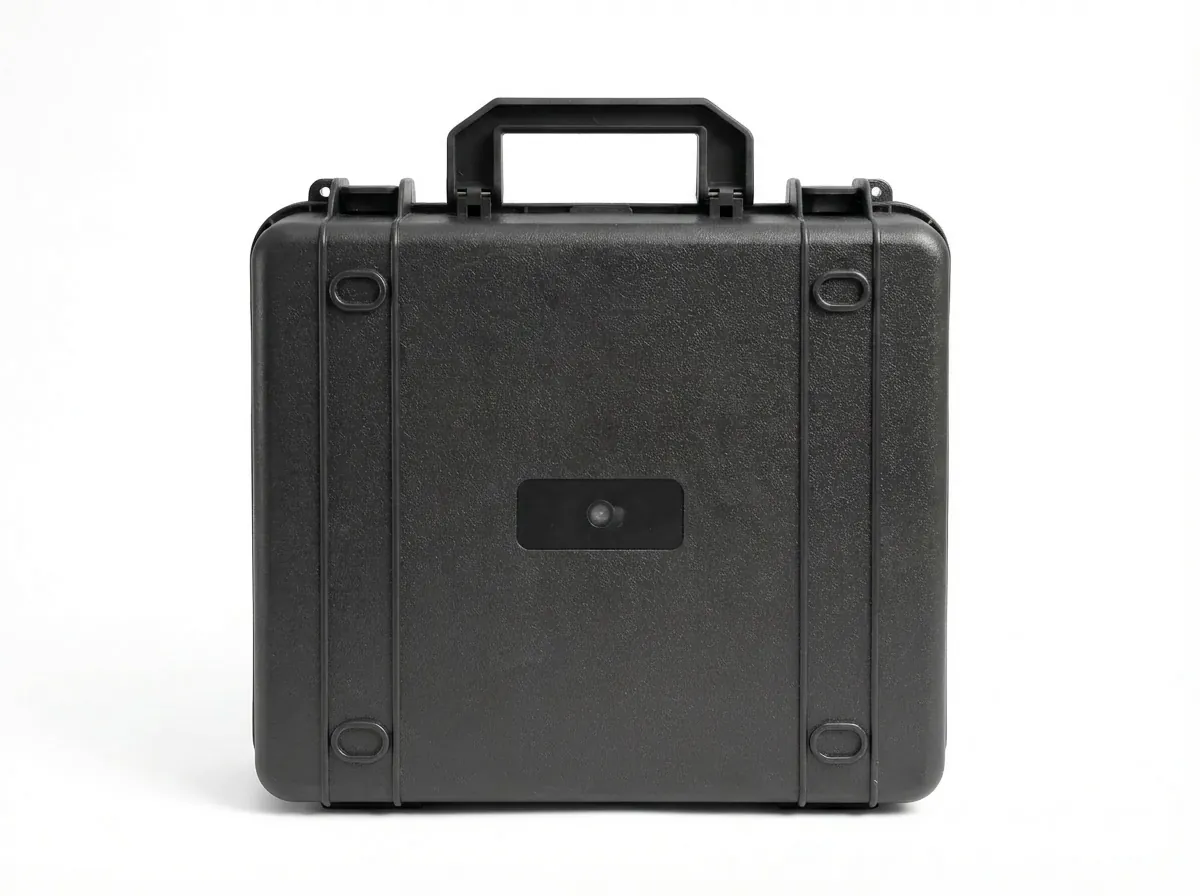
For the general protection logic of comparable pressure equipment, see Chemical Reactor Parts Cases and Pressure Vessel Component Cases; their approach to flange caps, passive-film protection and compartment location transfers directly to digester parts. What makes a digester different is a stronger caustic residue and a harder scale crust, so cleaning and neutralization carry more weight than they do for ordinary reactor components.
Settler (Thickener) Rake Arms and Drive Assemblies
Settler protection splits into two families — long parts and heavy parts — and the two follow completely different packaging logic.
Long parts (rake arms, rake teeth, feed wells, overflow weir plates). The dominant risk is plastic bending caused by insufficient stiffness. Design points include three to five evenly spaced supports along the length, all at the same height so load is shared; timber or PP comb cradles to limit lateral movement; and separately packaged joint flanges with matched markings so that parts cannot be installed on the wrong arm. Straightness should be re-measured after transport and filed as an acceptance record, because a bent rake arm cannot be corrected in the field.
Heavy parts (centre drive gearbox, lifting mechanism, couplings, bearing housings). These carry precision gear pairs and bearing seats, and their enemy is fretting wear driven by vibration. Pack the assembly in a VCI foil bag, evacuated or heat-sealed; fit protective sleeves on bearing seats; and hold the body with an EVA machined cavity covering 60–75% of the surface. Too loose and it vibrates; too tight and the liner dents the casting. If the unit ships with lubricating oil, confirm the seal orientation and the transport attitude so that oil cannot seep into the cavity and contaminate the liner.
The most common rake-system transport incident is not a drop — it is a bent arm or a mismatched flange. Support design solves the first; labelling discipline solves the second. Include a part-location drawing and a lifting-sequence card in every case, and give each part a unique QR label tied to the packing list.
Agitators and Shaft Seals in Hot Caustic Service
Alumina plants use mechanical agitation throughout: pre-desilication tanks, flocculant mixing in the settler, and seed agitation in precipitation tanks all depend on agitators and shafting. Shippable items include hydrofoil impellers, pitched-blade turbines, agitator shafts, mechanical seal cartridges, packing seals, shaft sleeves and couplings.
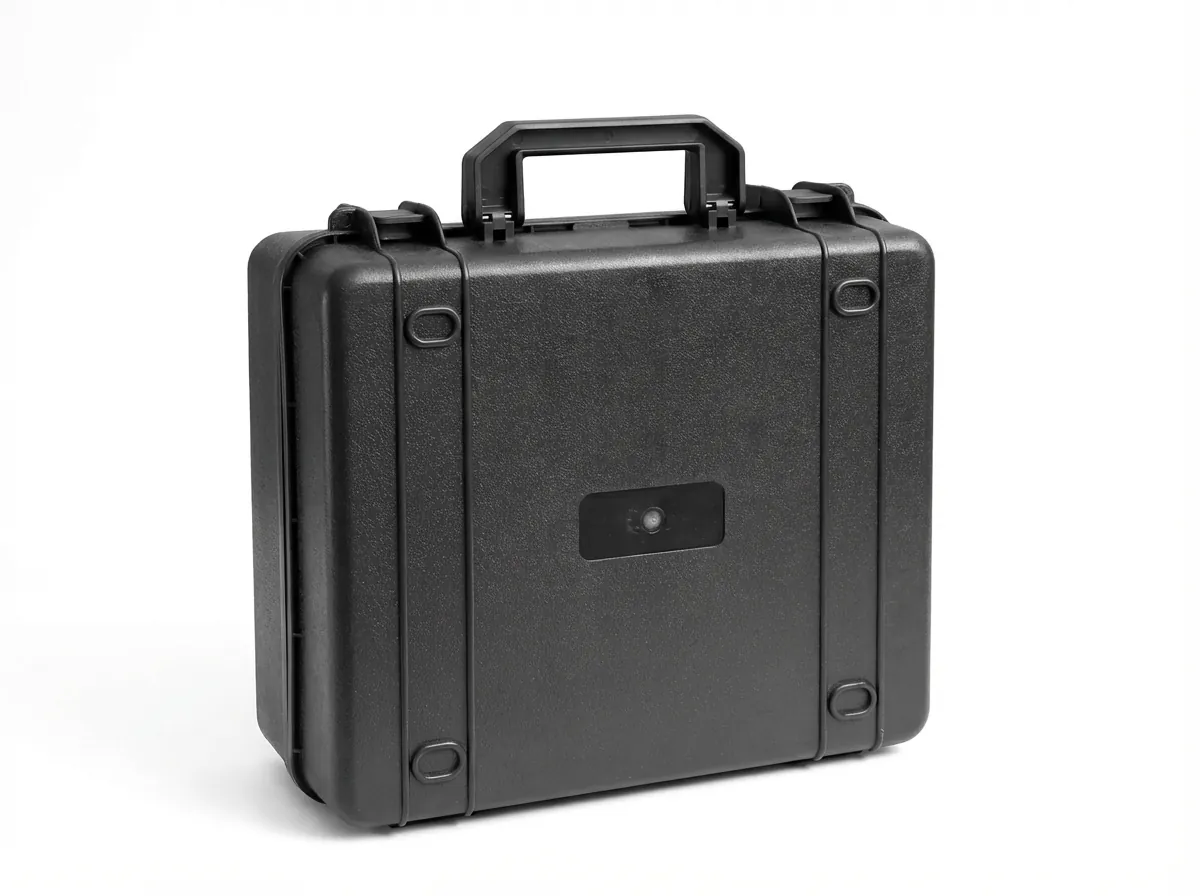
Impellers are usually cast or welded, with thin blades on a long cantilever, and are prone to tip distortion. Guard the tips with individual EVA sleeves, cap the hub face with a flange cover, and support the assembly at two or three points along its axis.
Mechanical seals are the most fragile items in the case. Silicon carbide and graphite friction pairs are brittle, and any impact can leave micro-cracks that become a leak once the seal runs. The answer is an independent compartment and individual packing: wrap in non-woven fabric, then place in a machined EVA cavity with no free travel, and store the rotating and stationary rings separately, never stacked.
Agitator shafts. The governing parameter is straightness. Support the shaft at multiple points on V-shaped timber or PP cradles, fit thread protectors on the shaft ends, and apply protective film over coated zones.
Seal materials must match the service environment:
| Seal material | Temperature range | Caustic (NaOH) resistance | Typical location |
|---|---|---|---|
| --- | --- | --- | --- |
| EPDM | −45 to 150 °C | Excellent | Case main seal, flange gaskets |
| VMQ silicone | −60 to 200 °C | Good | High-temperature compartment seals |
| NBR nitrile | −30 to 100 °C | Moderate | Oil-side seals |
| FKM fluoroelastomer | −20 to 200 °C | Moderate | Oil and solvent resistance |
| PTFE encapsulated | −100 to 260 °C | Excellent | Strong caustic contact faces |
Storage matters just as much. Rubber parts should be kept out of light, ozone and compression, with a suggested shelf life of no more than two years; even visually perfect expired parts should be re-checked for hardness and compression set.
Pump and Valve Parts for Slurry and Caustic Duty
Pumps and valves are the highest-volume, highest-turnover component group in an alumina plant, and the most frequent transport-protection demand. Typical items include slurry pump impellers and casings, diaphragm pump valve boxes, centrifugal pump shafts and seals, gate and knife-gate discs, ball valve seats, check valve discs, and control valve plugs and cages.
| Part | Critical precision face | Main risk | Recommended protection |
|---|---|---|---|
| --- | --- | --- | --- |
| Impeller | Flow passage profile, wear ring | Impact distortion, passage scratches | Compartment plus EVA grip plus wear-ring guard |
| Casing | Joint face, seal face | Joint face nicks | Flange caps plus custom supports |
| Disc / seat | Sealing pair | Scratches, pitting | Independent compartment, anti-rust paper, desiccant |
| Plug / cage | Fits and clearances | Fretting | VCI bag plus divided fixing |
| Diaphragm | Membrane curvature | Creasing, cold hardening | Lay flat, avoid compression and low temperature |
The emphasis is protecting the sealing pair. Once a metal hard face is scratched, lapping it back costs far more than the packaging. Apply peelable protective film to every machined face, fit plastic caps on flanges, and separate parts with EVA dividers. For rubber-lined casings, avoid long-term compression and never stack lined parts in multiple layers. Because pumps and valves turn over so frequently, see Pump and Valve Parts Cases for the general rules on hard-face protection and compartmentalized location; for abrasive slurry duty, Refinery Pump Parts Cases describes impeller and wear-ring practice that applies directly here.
Materials and Corrosion Control in the NaOH System
Alumina production is a caustic hydrometallurgical process, and its corrosion modes differ from those of an ordinary chemical plant.
Caustic embrittlement. Carbon steel under tensile stress in hot concentrated caustic is prone to stress corrosion cracking. Transport is not hot, but residual caustic can concentrate in a humid environment and still initiate micro-cracks at stress raisers such as weld toes and thread roots.
Scaling. Sodium silicate and hydrated sodium aluminate crusts deposit in digestion and settling circuits. The crust is hard, alkaline and swells in water. If it ships in place, vibration breaks it loose, and the fragments scratch neighbouring surfaces and clog case vents.
Chloride sensitivity. Chloride threatens austenitic stainless steels such as 304 and 316L through stress corrosion cracking, while duplex 2205 and 2504, 904L, titanium and nickel alloys resist chloride far better. Material selection must match the chloride level and temperature of the slurry.
Run a standardized cleaning and neutralization sequence before packing:
- High-pressure water wash, kept below roughly 200 bar to avoid damaging the passive film;
- Neutralize residual caustic with a dilute acid, confirming near-neutral pH with test paper;
- Rinse with deionized water so that tap water does not introduce chlorides;
- Blow dry with compressed air or dry at low temperature, paying attention to flange grooves and threaded holes;
- Confirm no free caustic and no free water before the case is closed.
Neutralization chemistry and material compatibility must be confirmed against the specific alloy grade. The parameters here are engineering practice references; the equipment maker's technical file and the site quality plan take precedence.
Corrosion protection is normally verified through salt spray testing, as described in Salt Spray Corrosion Test; where parts sit permanently in chemical and metallurgical environments, the shell itself should be selected along the lines of Corrosion Resistant Enclosures.
Case Shell Materials and Structural Design
Because alumina parts are heavy, long and irregular, shell material decides load capacity and resistance to deformation.
| Shell process | Material | Wall thickness | Strength | Best fit |
|---|---|---|---|---|
| --- | --- | --- | --- | --- |
| Rotational moulding | LLDPE / HDPE | 3–8 mm | Seamless, impact resistant, large sizes possible | Long, heavy and irregular parts |
| Injection moulding | PP / ABS / PC | 2–5 mm | High dimensional precision, low unit cost at volume | Small and medium pump and valve parts |
| Aluminium frame with panels | 6061 / 5052 | 1.5–3 mm | High stiffness, demountable | Very long parts shipped in sections |
| Steel frame with timber | Q235 plus plywood | By load | Highest capacity, lowest cost | One-way complete unit shipments |
Four structural levers matter:
- Reinforcement ribs. Run ribs in both directions across the base and side walls, with a rib-height-to-wall-thickness ratio around 3:1 to 5:1. This raises bending stiffness sharply with modest added weight.
- Corner radii. Round the internal corners to avoid stress concentration and to help the liner conform.
- Lifting points. Heavy cases should have forklift pockets or lifting ears, with centre of gravity and lifting direction marked on the shell.
- Positive location. Slots or locating posts constrain the part horizontally and vertically rather than relying on foam compression alone.
Shell and liner form one system: the shell carries and seals, the liner cushions and locates, and neither replaces the other. Placing a heavy part on foam without location means the foam compacts and the part still moves.
Sealing Classes: IP65 / IP67 with IEC 60529 and GB/T 4208
Dust and water ingress protection is classified under IEC 60529 or the equivalent GB/T 4208, written as IP followed by two digits: the first covers solids (0–6), the second liquids (0–9K).
| Class | Dust | Water | Representative test | Fit for alumina service |
|---|---|---|---|---|
| --- | --- | --- | --- | --- |
| IP54 | Partial dust protection | Splash resistant | Splash from all directions | In-plant shuttles, covered areas |
| IP65 | Dust tight | Jet resistant | 6.3 mm nozzle, 12.5 L/min | Open yards, rain-exposed transfer |
| IP67 | Dust tight | Short-term immersion | 1 m depth, 30 min | Rainy regions, deck transport |
| IP69K | Dust tight | High-pressure hot water | 80 °C, 80–100 bar | Returnable cases needing washdown |
Two misconceptions are worth clearing up. First, IP67 does not mean the case can stay submerged; it defines a 30-minute immersion. Second, dust rating is tied to gasket life, and a case loses its rating as the rubber ages.
Sealing design points: use a primary seal plus a secondary seal; design the O-ring groove for 15–25% compression; hold contact surfaces to Ra 1.6–3.2 μm; and on frequently opened cases run one gasket along the hinge side and one along the latch side, moulding the corners as a single piece to eliminate joints. EPDM is the common choice in alumina service because of its caustic and weather resistance. When choosing between IP54, IP65 and IP67, see IP65 vs IP66 vs IP67 Differences; gasket material and replacement intervals are covered in Seal Materials Selection, including ageing and compression set data.
Cushioning and Compartmentalization: EPE / EVA / PE / IXPE Liners
Foam is not "softer is better." It has to match mass, brittleness and contact area.
| Material | Density (kg/m³) | Resilience | Compression set | Recommended use |
|---|---|---|---|---|
| --- | --- | --- | --- | --- |
| EPE pearl foam | 20–35 | High, light | Low | Inner wall padding, wrapping |
| EVA | 40–90 | Medium, machinable | Very low | Precision locating cavities, heavy supports |
| PE foam | 25–45 | Firmer, good energy absorption | Low | Base load pads, dividers |
| IXPE | 30–60 | Closed cell, dense | Low | Water barrier, thin cushioning |
| PU sponge | 20–40 | Soft, slow recovery | Medium | Light dust-cover lining |
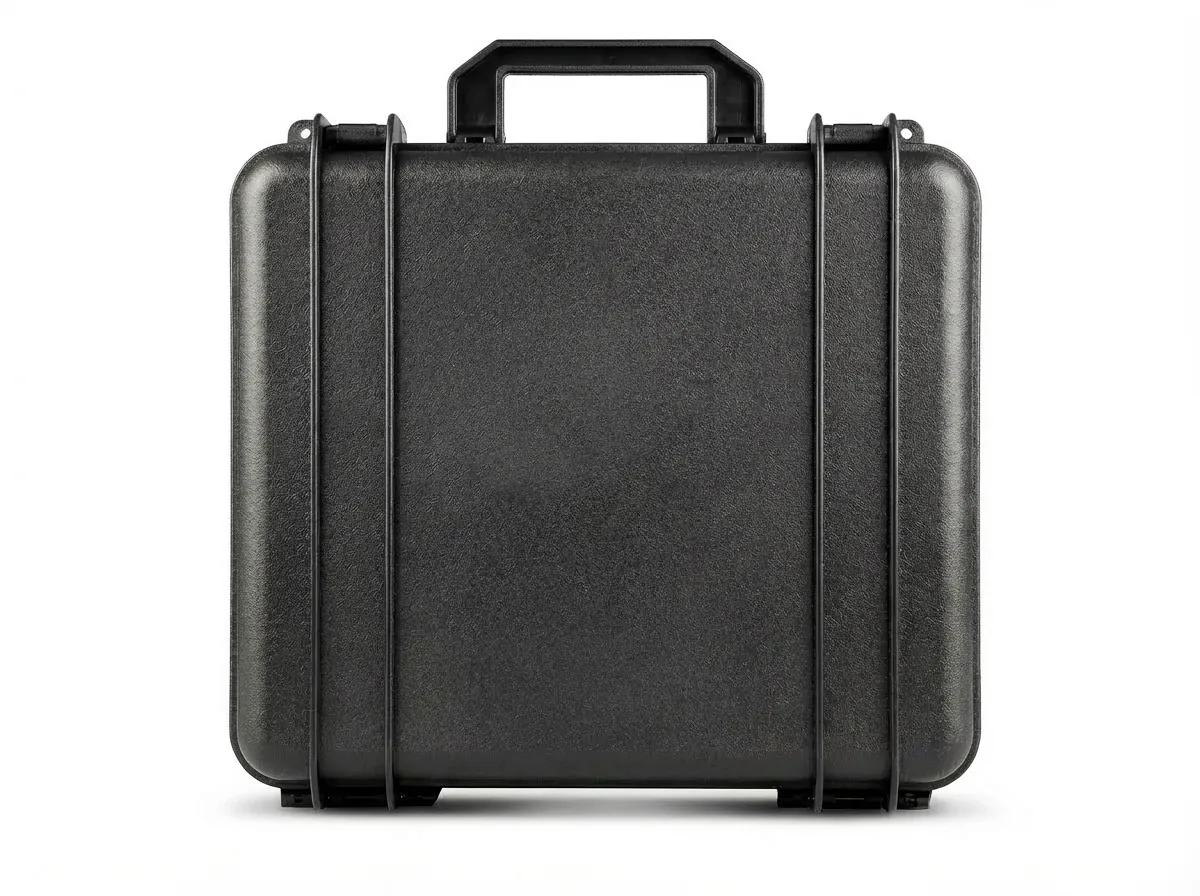
Compartmentalization is the core method for heavy parts, and there are three common routes:
- Removable dividers. Best for large quantities of similarly shaped pump and valve parts; dividers reposition to suit each batch and reuse well.
- CNC-machined EVA cavities. The cavity follows the part's 3D contour for high locating accuracy, ideal for mechanical seals and valve plugs.
- XPE or IXPE thermoformed liners. Seamless and moisture resistant, suited to wrapping medium and long parts.
Aim for a coverage ratio — the share of the part surface wrapped by the liner — of 60–75% for precision brittle items and 40–60% for heavy rigid bodies. Too high and the part is hard to remove without damage; too low and vibration displacement is not suppressed. Fill awkward recesses with shaped blocks so that no section hangs unsupported. For resilience and compression set data across foams, see Foam Material Comparison; where many similar parts ship together, removable dividers usually beat full machined cavities on cost, as discussed in Divider versus Foam.
Latches, Hinges, Pressure Equalization Valves and Stacking Load
The moving parts of a case decide whether protection holds for the whole journey.
Latches. Choose self-locking, vibration-resistant catches, four to eight per case, evenly loaded. Heavy cases need reinforced catch points that accept a lock or a strap. Latch fatigue life can be verified with a cyclic open-close test.
Hinges. Stainless pins in engineering-plastic bodies avoid galvanic corrosion; long cases need three or more hinges to spread torque.
Pressure equalization valves. This is the most overlooked detail in sea-freight packaging for alumina parts. Day-night temperature swings and altitude changes create a pressure differential between the inside and outside of the case, which can distort the shell or draw the gasket into its groove. A pressure equalization valve with an ePTFE hydrophobic membrane equalizes pressure while blocking liquid water and dust. When selecting one, check the airflow rate in mL/min, the cracking pressure, and that the membrane rating matches the case IP class.
Stacking load. Cases are usually stacked in warehouses and containers, so the design must be checked against the intended number of layers.
| Stacked layers | Compressive load (200 kg case) | Suggested base structure |
|---|---|---|
| --- | --- | --- |
| 2 layers | ≈ 200 kg | Standard reinforcement ribs |
| 3 layers | ≈ 400 kg | Dense ribs plus pallet |
| 4 layers or more | ≥ 600 kg | Steel pallet or frame case |
Stack so that the upper case bears on the side walls and corner posts rather than directly on the lid, and rotate stock during long storage so that sustained static load does not creep the shell.
Temperature, Humidity, Salt Spray and Transport Testing
A packaging plan cannot stay on paper; it has to be verified. Alumina parts often travel by sea and face high humidity, salt and wide temperature swings.
| Test | Reference standard | Purpose | Typical conditions |
|---|---|---|---|
| --- | --- | --- | --- |
| Neutral salt spray | GB/T 10125 | Evaluate metal and hardware protection | 5% NaCl, 35 °C, 48–240 h as required |
| Vibration | GB/T 4857 series / ASTM D4169 | Simulate transport vibration, assess cushioning | Random spectrum by transport mode |
| Drop and impact | ISTA 1A / 2A / 3A | Assess handling impact | Drop height by weight |
| Temperature and humidity cycling | Hot-cold humid test | Assess condensation and material stability | −20 to 60 °C, 95% RH |
| Stacking load | Static load test | Assess long-term stacking deformation | Load by layer count |
Salt spray duration depends on the local environment, transit time and maintenance interval, so the ranges above are engineering references and are not a service-life warranty. ISTA and ASTM test levels must likewise be selected for the actual route — road, rail, sea or multimodal — and passing a test does not promise zero damage under any specific logistics condition.
Three quick field checks: confirm visually that the liner is compressed with no void at contact faces; check gasket contact for creases or breaks at corners; and after closing, run a simple airtightness or pressure-decay check to confirm there is no leak path. For test design, see GB/T 4857 Transport Packaging Cases for domestic road and rail routes and ISTA Transport Testing Procedure for international multimodal and e-commerce routes. The two can be combined, but note that drop height falls as weight rises and the vibration spectrum changes with transport mode, so copying parameters blindly yields results that are either too optimistic or too conservative. For sea-freight spares, add one humidity cycle beyond vibration and stacking to expose the migration path of condensation inside a humid cavity.
Customization, OEM/ODM and Acceptance Criteria
Alumina parts are mostly non-standard, and an off-the-shelf case rarely fits. A sensible customization sequence runs: requirement confirmation (part list, dimensions, weight, transport route), 3D survey and design, liner prototype and trial fit, tooling and first-article approval, small-batch validation, then volume production. JUNZHIJIA offers machined liners, case tooling, logo printing and documentation packages, supports OEM and ODM models, and can supply material certificates, test reports and packing lists on request. The programme is delivered alongside Kexin New Materials (Guangdong) Co., Ltd.
Acceptance criteria should be quantified rather than left to a vague visual pass.
| Acceptance item | Criterion | Method |
|---|---|---|
| --- | --- | --- |
| Appearance | No cracks, punctures or severe flow marks | Visual and tactile |
| Dimensions | Key cavity dimensions within drawing tolerance | Calipers or tape |
| Sealing | Passes the water test for its declared class | Per IEC 60529 / GB/T 4208 |
| Liner | Cavity fits the part with no free travel | Trial fit and hand check |
| Load | No permanent deformation after stacking load | Static load test |
| Hardware | Latches and hinges operate freely | Cyclic open-close |
| Marking | Part number, weight and lifting direction legible | Visual comparison |
Frequently Asked Questions FAQ
Q: What happens if digester baffles are packed while still wet with caustic?
A: The real risk is not dirt but a secondary reaction during transit. A concentrated NaOH film absorbs moisture as day and night temperatures swing, forming a liquid layer that creeps into flange grooves, threaded holes and weld seams. In carbon steel that creates an environment favourable to caustic embrittlement, while in stainless steel chloride enrichment can trigger pitting and stress corrosion cracking. The film also swells as it absorbs water and lifts the protective film, leaving a stagnant pocket underneath. The correct sequence is to neutralize, rinse and dry before packing, then add VCI material and sufficient desiccant inside the case. If a hard scale crust is present, remove loose fragments first, because vibration in transit can free them to scratch neighbouring surfaces or block the hydrophobic membrane of the equalization valve. Where a part cannot be cleaned immediately, seal it in a VCI bag on site and record the residual condition, rather than letting it sit open in the workshop for days.
Q: What is the key to protecting settler rake arms longer than ten metres?
A: The key is controlling bending rather than resisting impact. A rake arm with a large length-to-diameter ratio deflects under its own weight, and if supports are too few or set at different heights, transport vibration amplifies the deflection until it becomes plastic. The engineering answer is three to five evenly spaced supports along the length, all set at the same height, with blocks made of EVA at 45 kg/m³ or denser faced with non-woven fabric, plus timber or PP comb cradles to limit sideways motion. If the arm ships in sections, protect each joint flange separately and mark matched pairs with grouped bolt numbering so the joint cannot be assembled out of alignment. For very long parts, use a dedicated cradle or frame case rather than stacking sections inside a general-purpose box. Re-measure straightness after transport and file the record for traceability. Mark the supported zones on the arm itself so the receiving crew sets the cradle in the same place during any later handling.
Q: Why must mechanical seals be packed in their own compartments?
A: The friction pair, usually silicon carbide against graphite, is hard but brittle and weak in impact and bending. Sharing a compartment with metal parts allows relative movement in transit, and the resulting point-contact stresses can create micro-cracks that are invisible to the eye. Once the seal is installed and running in hot caustic, those cracks propagate quickly into a leak path. The correct practice is individual packing: wrap in non-woven fabric for cushioning, then place the item in a contour-machined EVA cavity with no free travel between cavity wall and part. Rotating and stationary rings should be stored separately and never stacked or stood on edge. Mark the case fragile and keep-dry, verify each item against the location drawing when opening, inspect the friction faces for scratches before assembly, and check flatness as the final confirmation step. Keep packed seal cartridges in a dry, temperature-stable store before installation, because a cartridge left on a vibrating workbench for a single shift can pick up the same damage the case was built to prevent, and that mistake only shows up at start-up.
Q: How should an alumina plant choose between IP65 and IP67 cases?
A: The answer depends on the transfer route rather than the plant itself. If parts only shuttle between covered areas on site, IP54 already handles splash. If they are stored in open yards or exposed to rain during transfer, choose IP65, which withstands jets from all directions. If they travel by sea, pass through rainy regions, or may be briefly immersed, choose IP67, which passes a 30-minute immersion at one metre. Remember that IP67 defines short-term immersion, not continuous submersion. Another overlooked factor is gasket ageing: under ultraviolet light, ozone and temperature cycling, rubber hardens, compression set increases, and the effective rating declines over time, so gaskets need scheduled inspection and replacement. Frequently opened cases should carry one gasket along the hinge side and another along the latch side, with corners moulded as a single piece to reduce joint leak paths. Label each case with the parts it belongs to rather than the machine group, because a mixed label is the fastest way to send a precision case to the wrong warehouse.
Q: How do part materials and the packaging plan work together in hot caustic service?
A: The material determines the corrosion mode, and the packaging plan responds to it. Carbon steel is prone to caustic embrittlement, so the priority is neutralizing and drying residual caustic and avoiding stress concentration in transit. Austenitic stainless steels such as 304 and 316L are sensitive to chloride stress corrosion cracking, so cleaning must use deionized water, free of tap-water or chloride-bearing residues, and these parts must never share a bare compartment with carbon steel because of galvanic coupling. Duplex 2205 and 2504, 904L, titanium and nickel alloys resist corrosion better, but their passive films still scratch easily, so liner contact points must stay soft and free of hard inclusions. Flange faces, threads and bearing seats are precision surfaces and need peelable film plus caps. If different materials share one case, insert insulating separators at every contact and record material and protection requirements on the packing list for field verification. Record the rinse water conductivity after cleaning so the next shift can see whether neutralization actually finished.
Q: What role does the pressure equalization valve play in sea-freight packaging?
A: It solves the breathing problem a case experiences in transit. Temperature inside a container or ship hold can swing more than 20 °C between day and night, so the air inside a case expands and contracts and creates a pressure differential. If the case is fully sealed, that differential bows the walls outward or draws the gasket into its groove, causing a local seal failure. A pressure equalization valve contains an ePTFE hydrophobic, breathable membrane that lets air pass while blocking liquid water and dust, so pressure equalizes without losing the dust and water rating. Three parameters matter when selecting one: whether the airflow rate suits the case volume, whether the cracking pressure is reasonable, and whether the membrane rating matches the case's declared IP class. In service, check periodically that the membrane is not clogged by scale fragments or dust; once blocked it stops equalizing, and the case becomes more prone to distortion under temperature swings. Check the membrane at every scheduled case inspection, not only when a leak is suspected.
Q: Which transport tests should alumina part packaging pass, and when is it good enough?
A: Combine tests according to the route rather than relying on a single item. A sea-dominated route typically combines neutral salt spray per GB/T 10125 for metal and hardware corrosion, vibration per the GB/T 4857 series or ASTM D4169 for cushioning and fastening, static stacking for long-term compression, and temperature-humidity cycling for condensation and material stability. Where handling is rough, add ISTA 1A, 2A or 3A drop and impact. Define pass criteria in advance: no part deformation or scratches, no liner collapse or displacement marks, the sealing class re-tested and passed, and no broken or loose hardware. Be clear that salt spray duration and test levels depend on the local environment, transit time and maintenance interval, so a pass represents that set of conditions only. It is not a long-term service-life warranty, nor a promise of zero damage under any logistics condition. Archive the test report with the packing specification so a future batch follows the same validated combination.
Q: What milestones should be confirmed when customizing a case for non-standard parts?
A: Five checkpoints avoid rework later. First, requirement confirmation: provide the part list, 3D models or measured dimensions, individual weights, centre of gravity and transport route, and state the medium residue. Second, design: settle the shell process — rotational moulding, injection moulding or frame — plus liner material and compartment layout, and issue structural drawings. Third, prototype and trial fit: build the liner prototype first and verify fit and handling convenience. Fourth, tooling and first-article approval: check dimensional tolerance, sealing class and load results on the first article. Fifth, volume production only after small-batch validation. Agree in advance on the documentation package — material certificates, test reports, packing list and location drawing — and on marking and logo printing for OEM and ODM. Writing these checkpoints into the acceptance list reduces change costs after volume delivery.
Conclusion and Related Reading
Alumina packaging translates three constraints — hot caustic, long heavy irregular geometry, and precision faces — into shell structure, liner layout and cleaning procedure. Neutralize and dry first, compartmentalize second, verify by test third.
Related Reading