

Spinnerets and bonding components sit on two red lines at once: geometry measured in microns and surface cleanliness measured in particle counts. In transit, damage to either is effectively irreversible. A meltblown or spunbond spinneret carries hundreds to thousands of capillaries in the 0.15 to 0.6 mm range, polished at the orifice to a roughness near Ra 0.1 micron, while a bonding roller depends on its raised pattern and coating to keep bond strength uniform. One scratch, one dust deposit, is enough to travel the chain from unstable melt flow to scattered fibre diameter to filament breaks and die-face build-up, and a spinneret or a bonding roller generally cannot be economically repaired. A nonwoven component case is therefore not simply a shock-resistant box; it is a transport micro-environment with a controlled cleanliness level. Set the inner packaging format from the required cleanliness class, hold the parts with a low-shedding liner, and then preserve that environment with antistatic and moisture-control measures right up to opening.
Nonwoven producers face a problem that differs in kind from other textile processes. On the same machine, the spinneret cares about blocked capillaries and scratched faces, the bonding roller cares about crushed pattern points and damaged coating, and a spunlace jet strip cares about distorted micro-holes. What they share is that none of the damage can be tuned out at commissioning. Downtime economics make this worse, because a spunbond or meltblown line that slows or stops over a spinneret problem loses money by the hour. This guide works through four threads, namely micro-hole parts, roller-type bonding parts, the clean packaging system, and verification, and closes with an executable packing scheme, a cleanliness classification method and a quotation checklist. For the underlying clean packaging and case structure concepts, see our practice notes on cleanroom equipment component cases and the guide to how seal materials shape the case environment.
Table of Contents
- 1. Where the sensitivity of spinnerets and bonding parts comes from
- 2. Spinnerets: micro-hole geometry, mirror finish and irreversible scratching
- 3. Spunlace jet strips and meltblown die heads: thinner, finer, easier to scrap
- 4. Cleanliness classification: how far cleanroom packing should actually go
- 5. Calender and thermal bonding rollers: pattern, coating and crown retention
- 6. Ultrasonic anvil rolls and through-air bonding components
- 7. Pitting and chloride risk on stainless steel
- 8. Liner and packaging materials: low shedding, cleanable, antistatic
- 9. Sealing, vacuum and gas purging strategy
- 10. Case construction: what separates a clean case from an industrial case
- 11. Transport testing plus cleanliness regression checks
- 12. Splitting logic and quotation checklist
- Frequently Asked Questions
- Conclusion and Further Reading
1. Where the sensitivity of spinnerets and bonding parts comes from
The two component families found on nonwoven equipment draw their fragility from different sources, and the two effects compound each other. A spinneret's sensitivity comes from multi-hole geometry. A one metre meltblown plate may carry several thousand capillaries, and the combination of hole tolerance and hole-wall finish determines the flow resistance through each capillary; any inconsistency in that resistance shows up directly as scatter in fibre diameter. A bonding roller's sensitivity comes from surface topography. Thermal calendering forms bond points where raised features press into the web, so feature height, shape and areal density together set bond strength and hand feel. Once the points are crushed or the coating is scored, bond uniformity degrades across the width.
| Component | Critical dimensions and surface | Contamination and damage sensitivity | Packing response |
|---|---|---|---|
| --- | --- | --- | --- |
| Meltblown or spunbond spinneret | Capillaries 0.15 to 0.6 mm, orifice polished near Ra 0.1 micron | Orifice burrs, face scratches, dust and fibre adhesion | Mirror face touches nothing hard, foil clean bag plus individual pocket |
| Spunlace jet strip | Micro-holes 0.08 to 0.15 mm, very thin body | Hole deformation, strip bowing, rust spots | Rigid carrier plate, never unsupported, anti-rust plus clean bag |
| Meltblown die head assembly | Air passage clearance controlled to hundredths of a millimetre | Passage face damage, degraded polymer residue | Dismantle to single items, protection plate on passage faces |
| Thermal bonding roller | Pattern points 0.3 to 0.8 mm high, uniform coating | Crushed points, coating score, crown distortion | Pattern face contacts nothing, journals supported at both ends |
| Ultrasonic anvil roll | Tooth form and depth consistency | Tooth crest damage, horn interface damage | Individual soft seat, pattern face upward and free |
| Through-air bonding drum | Uniform hole distribution, shell roundness | Shell ovalisation, hole edge burrs | Internal support plus circumferential load distribution |
Use the table as the input to case splitting and liner design, and it answers the practical questions of a nonwoven project: which items need their own clean packaging, which may share a case, and which must be cleaned before they are packed at all.
2. Spinnerets: micro-hole geometry, mirror finish and irreversible scratching
Spinneret manufacturing difficulty concentrates at the orifice. The entry usually carries a chamfer or lead-in cone so the melt forms a stable converging flow, and the capillary wall is polished to a very low roughness to prevent melt stagnation and degradation. Once that geometry is damaged in transit the result is not a slight performance drop but an abnormal local flow condition. A burr at the orifice disturbs the filament emerging from that capillary, which produces diameter variation, die-face build-up and, in bad cases, filament breaks and a stop for plate cleaning. Spinnerets are normally made from 316L or a precipitation-hardening stainless grade, and surface defects can come either from metal-to-metal contact or from particles embedded by an unclean packaging material.
Three requirements are non-negotiable. First, the mirror face and orifice zone must not touch any hard material, whether another spinneret, a fastener or the case wall; contact is permitted only at non-working features, typically a support step or a side face. Second, the inner packaging must be cleanroom grade, with a low-shedding, non-particulating direct contact layer; ordinary corrugated board, unfinished foam edges and heavily inked labels must never touch the plate. Third, clean and dry the plate before packing and close the packaging in a clean environment; if the packing area itself is dusty, the best clean bag in the world only seals the contamination inside.
Storage attitude matters as much as the bag. A spinneret is a thin plate with limited bending stiffness in plane, so resting it on two ends with the middle unsupported produces slow bowing that later shows as poor seating against the die body. Support it on a rigid carrier covering a large share of the plate area, and add stops at the corners or around the perimeter so the plate cannot slide during transport.
3. Spunlace jet strips and meltblown die heads: thinner, finer, easier to scrap
If a spinneret is a precision part, a spunlace jet strip is an extreme precision part. Micro-holes often run as small as 0.08 to 0.15 mm, the strip body is thin, yet working pressure can reach several hundred bar. Those parameters force manufacturing to deliver uniform holes, clean hole walls and a flat strip. The failure threshold is correspondingly low: a slight bow shifts the jet angle, and slight hole deformation scatters the jet, and both are exactly the damage modes that occur in transit. A jet strip therefore belongs on a rigid carrier plate, never left unsupported and never stacked under or over another item. Protective film should be a clean, residue-free grade so that peeling it leaves no adhesive trace.
Meltblown die head assemblies are sensitive at the air passages. The die head uses high-velocity hot air to attenuate the melt, passage clearance is controlled at a very fine level, and any damage or carbonised residue on the passage faces disturbs the air field and therefore fibre fineness distribution. Die heads are large and heavy, so pack them as separate items that can be handled individually, fit protection plates over the passage faces, and never let those faces carry any support load.
One work discipline is easily overlooked: complete the cleaning of spinnerets and jet strips before packing and confirm they are dry. Residual polymer combines with moisture inside the case and can create a mildly acidic environment that promotes pitting on stainless steel, while cleaning agent residue, particularly from chloride-bearing products, is a direct trigger for pitting. Clean, dry, inspect and seal, in that order, with no step skipped.
4. Cleanliness classification: how far cleanroom packing should actually go
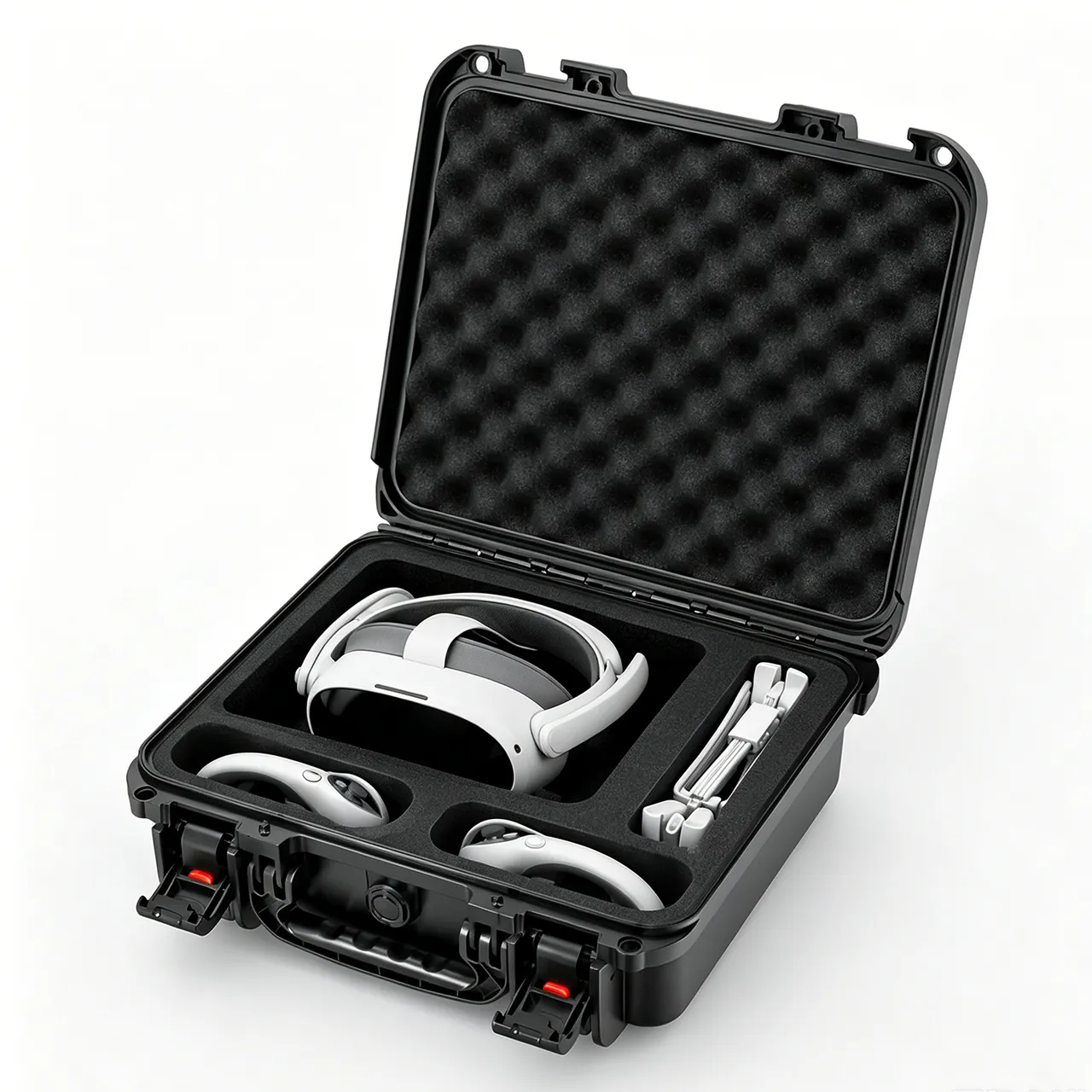
Clean packaging is not a slogan; it has to be expressed as a verifiable class. The requirement depends on the end product: lines feeding hygiene products, filtration media or medical-adjacent applications face tighter particle and bioburden limits than ordinary industrial lines. The international framework is the ISO 14644 series, with the GB/T 25915 series as the Chinese counterpart for cleanrooms and associated controlled environments. The classification logic should be: set the cleanliness class from the end use, then set the inner packaging format and sealing environment from that class. Applying the highest class everywhere is not correct, because cost and process complexity climb quickly with class.
| Cleanliness level (following the ISO 14644 / GB/T 25915 approach) | Applicable components | Sealing environment | Recommended inner packaging |
|---|---|---|---|
| --- | --- | --- | --- |
| Higher cleanliness requirement | Spinnerets and jet strips for medical and hygiene lines | Sealed inside a clean zone with controlled garments and tools | Double clean bag plus foil barrier bag plus clean liner |
| Medium cleanliness requirement | Spinnerets and bonding rollers for general filtration and hygiene lines | Relatively clean area, no board or unfinished foam | Clean bag plus desiccant plus moulded liner |
| Standard cleanliness requirement | Rollers and structural parts for industrial lines | Ordinary shop floor with controlled shedding from auxiliaries | Barrier bag plus anti-rust liner plus hard case |
Note that the class mainly governs shedding control and the sealing environment, not the number of bag layers. A common excess is wrapping a general-purpose guide roller in three clean bags while sealing it on a floor covered in paper debris, which raises cost without improving cleanliness. The correct order is to control the environment and the tools first, then choose inner packaging that matches.
5. Calender and thermal bonding rollers: pattern, coating and crown retention
A thermal bonding roller is a part that trades surface topography for bond strength. The face carries a dense pattern of raised points, usually 0.3 to 0.8 mm high at a density of tens of points per square centimetre, protected by chromium or a hard coating, while the body is internally heated with thermal oil, which places requirements on wall thickness uniformity and temperature uniformity. Three damage modes dominate in transit: crushed pattern points, a scored coating, and a change in roller crown. Crushed points are the most frequent, and the usual cause is letting the pattern face become a load-bearing surface.
The support logic is the mirror image of the spinneret case. A spinneret travels with its working face up and free while non-working features carry the load; a bonding roller also keeps its pattern face up and unloaded, but must be carried at the journals at both ends so the body itself sees no bending moment. Support goes at the journals, never on the face, and the supports should be soft saddles matched to the journal so the journal surface is not scored. For a roller with a large length-to-diameter ratio, keep support spacing within a sensible limit and add intermediate support where needed, so that self-weight plus vibration cannot bow the body.
Coating protection deserves equal attention. A chromium layer is thin, and the edges and end faces are usually where damage appears first, so soft protective rings at both ends are worthwhile, with a gap between ring and pattern zone so the ring itself does not rub the pattern. For rollers with internal channels, plug the oil ports so debris cannot enter and complicate the next cleaning.
6. Ultrasonic anvil rolls and through-air bonding components
Ultrasonic bonding forms bond points by mechanical vibration between a horn and an anvil roll, so the anvil and the horn are a matched pair. Tooth form depth, tooth crest flatness and the alignment relationship to the horn together determine bond point shape and strength, and damage anywhere in that relationship produces incomplete bonds. Anvil packing therefore focuses on tooth crest and interface protection: pattern face up and free, never carrying support load; a protection plate over the interface that mates with the horn; and group identity retained inside the case, because anvils are normally used as matched sets and must not be mixed across groups.
A through-air bonding drum is a different structure: a shell perforated with air passages, internally fed with hot air, sensitive to shell roundness and hole quality. The shell is a large diameter thin-wall body of revolution, similar to a knitting cylinder, so it carries the same ovalisation risk, and internal support combined with circumferentially distributed load is mandatory, with single-point slinging and local support ruled out. For hole protection, avoid fill materials that shed particles and fit a low-permeability protective sleeve over the shell so dust cannot enter the passages in transit.
7. Pitting and chloride risk on stainless steel
"Stainless steel does not rust" is the most common misconception in transport protection. Austenitic grades pit in chloride-bearing environments, and precipitation-hardening grades can behave similarly in certain heat treatment conditions. The chloride sources in a packaging context are very specific: operator perspiration, chloride-bearing cleaning agent residue, wash water that was not fully dried, and salt fog on sea routes. Once pitting starts at a spinneret orifice or on a roller face, it leaves a pit that is difficult to remove and directly degrades surface quality.
Four measures address it. First, require clean gloves in the packing procedure and forbid bare-hand contact with spinneret faces and roller faces; this is the cheapest and most effective single control. Second, specify low-chloride or chloride-free cleaning agents and confirm the absence of residue after drying. Third, use vapour-phase corrosion protection rated for both stainless and carbon steel and free of residue that would affect downstream processes; for polished surfaces give preference to an oil-free option so that a later degreasing step is not required. Fourth, for sea freight add a barrier bag and desiccant so salt fog and moisture are both held outside the bag. The related thinking on environmental simulation and packaging validation is set out in our note on choosing a transport packaging test method.
One further point: a nonwoven line usually contains carbon steel parts such as frames, fasteners and drive components alongside stainless parts. Packed in the same case, corrosion products from the carbon steel migrate onto stainless surfaces under vibration and create cross-metal contamination. Split by material, or at minimum zone by material, with an isolation layer between zones.
8. Liner and packaging materials: low shedding, cleanable, antistatic
The liner in a nonwoven component case does two jobs: holding the part and preserving cleanliness. The two pull in different directions, since high resilience favours energy absorption while low shedding favours cleanliness, so a layered design is usually needed. Ordinary pearl foam and unfinished foam shed continuously under vibration, leaving debris at spinneret orifices and in roller pattern grooves, and this is the most common material mistake in nonwoven packaging. Use a non-particulating cleanroom grade for the direct contact layer, a high-resilience material for the load-bearing layer, and combine the two by lamination or film coating.
Antistatic behaviour belongs in the specification for the same reason. Once a clean bag or liner becomes charged through friction, it attracts particles from inside the bag and from the surrounding area onto the part surface, producing the perverse result that a cleaner bag attracts more contamination. Give the direct contact layer a controlled surface resistivity and add a barrier bag outside the clean bag, forming an antistatic contact layer plus a barrier layer. The combined approach to static and cleanliness is covered in our article on ESD shield case design.
| Inner packaging format | Applicable parts | Advantages | Risk points |
|---|---|---|---|
| --- | --- | --- | --- |
| Clean bag plus foil barrier bag, double layer | Spinnerets, jet strips, die head passage parts | Cleanliness and barrier in one, desiccant can be added | A poor heat seal loses both layers at once |
| Clean bag plus desiccant, single layer | General-purpose rollers and structural parts | Low cost, fast to apply | Limited barrier performance, unsuitable for long sea legs |
| Clean protective film plus rigid carrier | Jet strips and thin plate parts | Flatness and surface protection together | Adhesive residue becomes secondary contamination |
| Gas purging with dry air or nitrogen | High-value parts in long storage | Suppresses oxidation and moisture | Bag must tolerate internal pressure and stay sealed |
9. Sealing, vacuum and gas purging strategy
Clean packaging succeeds or fails at the seal line. Heat seal parameters, meaning temperature, pressure and dwell, must be fixed against the bag film thickness and layer structure and written into a work instruction. An under-width seal, or a seal zone with a trapped particle, becomes a leak path. Vacuum strategy needs a trade-off: moderate evacuation reduces free volume inside the bag and raises desiccant efficiency, but deep vacuum applies face pressure to thin plate parts such as jet strips and can introduce bowing, and it also loads thin-wall roller structures unfavourably. For those parts use slight negative pressure or ambient pressure sealing.
Gas purging is a worthwhile option for long storage. Replacing bag air with dry air or nitrogen lowers both humidity and oxygen content and suppresses oxidation. Because purging creates positive internal pressure, the film needs adequate compressive and puncture resistance, and air freight requires allowance for pressure change. Any case that will fly should carry a pressure equalization valve, and the selection logic for those valves is described in our note on the case pressure equalization valve.
Integrity checking after sealing is the last gate. Use pressure decay sampling, or a visual check that the seal zone has no wrinkles, trapped material or incomplete welds. For high-value parts, record seal parameters and sampling results so they can be traced.
10. Case construction: what separates a clean case from an industrial case
The structural difference between a nonwoven component case and a general industrial case sits at the internal surfaces and the handling interface. An industrial case tolerates timber dust, board and rough interior surfaces; a clean case needs interior surfaces that do not shed, can be wiped, and have no dust-trapping dead corners. That shows up in three places: no open crevice between liner and case wall where dust can collect, no board or ink exposed above the parts when the lid opens, and corrosion-protected fasteners and metal parts inside so that rust particles never become a contamination source.
The external structure must also suit the usage location. Nonwoven lines normally sit in relatively clean halls, and unpacking inside the hall can carry outside dust in with the case. A double-layer arrangement of outer case plus inner clean bag is therefore the more sensible format: the outer case delivers transport protection and stacking strength, the inner clean bag carries the cleanliness requirement, and unpacking is completed at the bag level so that outside contamination never reaches the line. Sealing class and stacking strength follow the same design method as industrial cases; the general selection logic appears in our guide to IP67 protective case structure.
11. Transport testing plus cleanliness regression checks
A nonwoven component case needs one verification step beyond the usual programme: cleanliness regression. Testing must confirm not only that the part is mechanically intact but that the packaging's cleanliness performance survived the trip. The sequence should cover temperature and humidity conditioning, random vibration, shock and stacking compression, referenced to ISTA 3A, ASTM D4169 or a combination of GB/T 4857 sub-tests; the sequencing method is described in our walkthrough of the ISTA transport testing procedure.
Cleanliness regression checks should include a visual check for visible particles, debris and fibre inside the bag at opening; a wipe test on the part surface with inspection of the wipe cloth for adhered particles; magnified or low-power microscope inspection of the orifice zone and mirror zone on spinnerets and jet strips; inspection of the pattern zone on bonding and anvil rolls for crushing or displacement; and inspection of stainless parts for pitting initiation. Any part that must be repacked after testing needs its repackaging environment, time and operator recorded, otherwise a hasty repack at the end of the test programme undoes the whole controlled process.
Mechanical judgement follows the same logic as other textile components: spinnerets are judged at orifice and mirror zones, jet strips on flatness and micro-holes, bonding rollers on pattern points and coating, anvil rolls on tooth form, and through-air drums on roundness. All of these should be named as acceptance items in the contract with a defined sampling level.
12. Splitting logic and quotation checklist
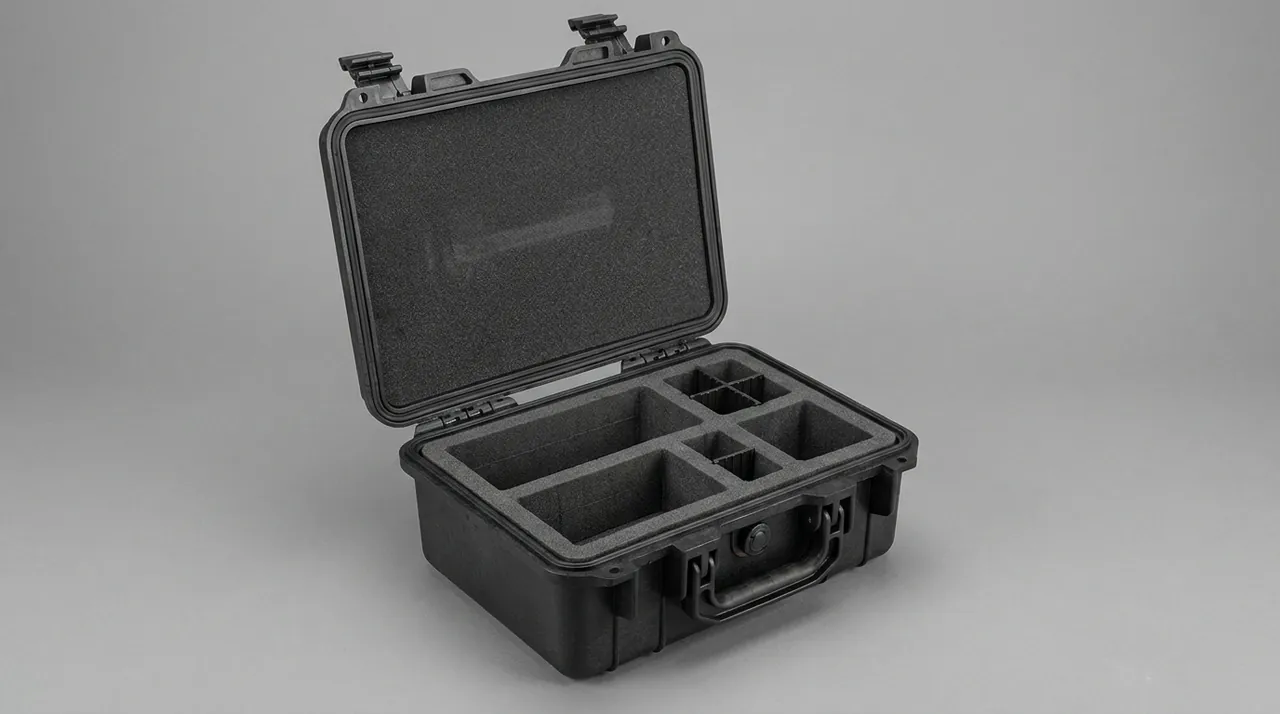
Component types on a nonwoven line vary widely, so splitting should follow the process section rather than size. On a spunbond line the critical items are the spinneret and the thermal bonding roller; on a meltblown line they are the die head and the spinneret; on a spunlace line they are the jet strip and the jet head assembly; needle punch lines centre on needle boards and drive parts. Split on three axes: process section, cleanliness class and component weight. Items from the same process section, the same cleanliness class and a similar weight share a case; small high-cleanliness items travel in their own small clean-packaged case rather than being mixed with heavy parts to reach a target weight.
For a quotation, provide: a part list with drawings covering name, material, net weight and envelope dimensions; a description of critical surfaces such as mirror zones, orifice zones, pattern zones, coating zones and mating faces; capillary diameter and hole count for micro-hole parts, so protection film and cleaning method can be chosen; cleanliness class and end product use; planned load per case and target case weight; transport mode and route; whether gas purging or long storage applies; whether matched-set identity and traceability numbering are needed; and delivery schedule with acceptance criteria.
JUNZHJIA, produced by Kexin New Materials (Guangdong) Co., Ltd., makes protective cases specifically for nonwoven production lines. Spinnerets, jet strips and bonding rollers are matched to clean liners and rigid carrier plates sized by capillary diameter, plate thickness, roller diameter and pattern zone position, with a barrier bag, desiccant and clean contact layer fitted inside the case. The business takes OEM and ODM commissions, and supplies through wholesale, agency and global channels, with inspection and material documents available to contract. A sensible route is cleanliness class and component assessment, confirmation of the inner packaging format, prototyping and trial fitting of liner and carrier, transport testing with cleanliness regression where required, batch production and inspection, then handover of the packaging work instructions. For non-repairable items such as spinnerets and jet strips, complete one trial fit plus a short-haul shipment before committing to volume.
If the project also covers other textile process equipment, compare the differences in cleanliness and precision handling described in our general framework for textile machinery component cases and in the guide to knitting machine component cases, so that packaging classes and numbering conventions can be aligned.
Frequently Asked Questions
Q: Can a scratched spinneret be repaired by polishing?
A: In the great majority of cases this is not a repair but a decision for the manufacturer to make about re-grinding or re-drilling. The critical geometry sits at the orifice: the chamfer or lead-in cone, the polished condition of the capillary wall, and the edge sharpness of the opening together set the converging flow of the melt at entry. Polishing the face changes the orifice edge geometry, which at best gives that capillary a flow characteristic different from every other hole and at worst raises a burr, and the line then shows local fibre irregularities and die-face build-up. Light marks on a non-working face outside the orifice zone may be acceptable, provided the manufacturer confirms that seating and sealing are unaffected. Damage in the mirror zone or at an orifice should mean replacing the plate. Judge it under magnification rather than by eye. From a cost standpoint, the price of a replacement plate is far below the loss from one slowdown or filament break event, so the "use it while it still works" instinct does not pay here.
Q: What cleanliness class does the packaging need, and is a higher class always better?
A: Higher is not automatically better; the class should match the end product. Lines feeding hygiene materials, filtration media or medical-adjacent applications face tight particle limits, so spinnerets and jet strips are normally sealed inside a clean zone with controlled garments, tools and bench surfaces, and the inner packaging uses a clean bag with a barrier bag and desiccant. Lines serving general industrial applications can use a relatively clean working area, with the priority being to keep board, unfinished foam and heavily inked labels away from the parts. The real cost of raising the class comes from three sources: time spent working inside the clean zone, the purchase cost of cleanroom-grade packaging materials, and verification plus documentation. If the working environment itself is not clean, adding bag layers changes nothing except to seal the contamination inside. The practical method is to look first at how sensitive the part actually is to particles on the line, then set the sealing environment and inner packaging format, and only then discuss a class number.
Q: Should the pattern face of a bonding roller point up or down?
A: Keep the pattern face in a non-load-bearing direction, which in practice means pattern up or simply not in contact with any support, with the roller carried at the journals at both ends. If the pattern face rests downward on a support, the raised points become the load path, and under vibration combined with the roller's own weight the points are crushed or displaced, which degrades bond uniformity so that bond point shape and strength vary across the web. The correct arrangement is a soft saddle at each journal so the body sees no bending moment, with intermediate support added for a large length-to-diameter ratio and surface protection on the saddles to prevent journal scoring. The coated edges at both ends are another vulnerable location, so fit soft protective rings with a gap to the pattern zone. Plug internal channel ports before packing so debris cannot enter and complicate cleaning. Note also that even with the pattern face upward, nothing heavy or bulky should be stacked on top of it.
Q: Why does stainless steel need corrosion protection at all?
A: Because the corrosion resistance of stainless steel depends on a passive surface film, and in a chloride-bearing environment that film breaks down locally and pitting begins. The chloride sources in a packaging context are concrete: perspiration left by bare-hand contact, residue from chloride-bearing cleaning agents, wash water that was not fully dried, and salt fog during sea freight. Once pitting appears at a spinneret orifice or on a roller face it forms a pit that is hard to remove and directly affects finished product quality. The countermeasures are straightforward. Require clean gloves during packing. Specify low-chloride or chloride-free cleaners and verify no residue remains after drying. Choose an oil-free vapour-phase corrosion protection route so that no later degreasing step is needed. For sea freight, add a barrier bag and desiccant to block both salt fog and moisture. It also helps to keep carbon steel parts out of the same case as stainless parts for long periods, because corrosion products from carbon steel migrate onto stainless surfaces under vibration and create cross-metal contamination.
Q: Can pearl foam be used as the liner material?
A: Not as a direct contact layer. Pearl foam is inexpensive and easy to process, but it sheds continuously under vibration, and debris that reaches a spinneret orifice or a bonding roller pattern groove is extremely difficult to remove completely. That makes the packaging itself the contamination source, which is the worst version of the problem. Pearl foam also takes a large compression set, so after one long shipment its thickness drops noticeably and restraint is lost on the second trip, allowing parts to move inside the case. A layered approach is better: a non-particulating cleanroom grade for the direct contact layer, and a cross-linked foam with good resilience and low set for the load-bearing layer, combined by lamination or film coating. Where a low-density material is used to fill empty volume, make sure it carries no critical restraint and separate it from the part with at least one clean barrier layer. Ask the supplier for shedding and outgassing information rather than choosing on density and price alone.
Q: Should the packaging be vacuum evacuated?
A: It depends on the part, so a blanket vacuum specification is wrong. Moderate evacuation reduces free volume inside the bag and raises desiccant efficiency, which is effective for small solid items. For a thin plate such as a jet strip, however, deep vacuum applies face pressure that can introduce bowing, and a bowed jet strip shifts the jet angle. Thin-wall roller structures can also be loaded unfavourably by vacuum. For such parts use slight negative pressure or ambient pressure sealing and rely on the barrier bag and desiccant to hold the environment. For high-value parts going into long storage, purging with dry air or nitrogen lowers both humidity and oxygen, but note that purging creates positive internal pressure, so the film needs adequate compressive and puncture resistance and air freight must allow for pressure change. Whichever route is chosen, fix the seal parameters against the film layer structure and run an integrity check after packing.
Q: How is cleanliness verified after a transport test?
A: Add cleanliness regression items on top of the usual mechanical checks. The standard programme covers temperature and humidity conditioning, random vibration, shock and stacking compression, referenced to ISTA 3A, ASTM D4169 or a combination of GB/T 4857 sub-tests. For regression, do the following: at opening, make a visual check for visible particles, debris and fibre inside the bag; wipe the part surface with a clean cloth and inspect the cloth for adhered particles; examine the orifice and mirror zones of spinnerets and jet strips under magnification for scratches, burrs and deposits; inspect the pattern zone of bonding and anvil rolls for crushing and displacement; and examine stainless parts for pitting initiation. One further discipline matters: any part that has to be repacked after testing must have its repackaging environment, time and operator recorded. A casual repack at the end of the programme breaks the controlled condition at the very last moment and invalidates everything done before it.
Q: Should cases be split by size or by process section?
A: By process section first, with size and weight as secondary factors. The critical components differ sharply between sections: on a spunbond line the spinneret and thermal bonding roller care about mirror finish and pattern; a meltblown die head cares about air passage clearance; a spunlace line cares about jet strip micro-holes and flatness; needle punch lines centre on needle boards and drive parts. Filling cases to a target weight easily produces a case where a small high-cleanliness part travels with a large carbon steel part, and the rust particles and impacts from the carbon steel then become both a contamination and a damage source for the clean part. A better three-axis split keeps items of the same process section, same cleanliness class and similar weight together, and gives small high-cleanliness items their own clean-packaged case. Items used as matched sets, such as an anvil roll with its horn or a spinneret with its die body, should stay in the same case with group identity retained, so that reinstallation cannot mix groups and change the alignment relationship.
Q: Can you issue packaging documents that correspond to our cleanliness class?
A: Yes, and for nonwoven projects the packaging documentation is as important as the hardware. Establish the document list at quotation stage. A typical set includes a mapping of inner packaging format to cleanliness class, material descriptions for the clean contact layer and the barrier bag, heat seal parameters with a checking method, packing work instructions covering garments and tools, and records from transport testing and cleanliness regression. The value of these documents is that the receiving team can judge on the spot whether the packaging is still in a controlled condition, using the same criteria, instead of arguing from experience. Nonwoven component cases with cleanliness documentation are supplied under the JUNZHJIA brand by Kexin New Materials (Guangdong) Co., Ltd., with the document set and cleanliness requirements confirmed against your specification, and with cooperation available on an OEM or ODM basis as well as through wholesale, agency and global supply channels, delivering inspection and material documents under contract.
Conclusion and Further Reading
Four decisions determine whether a nonwoven component case does its job. Decide the cleanliness class from the end product, not from ambition, and control the sealing environment before the bag count. Treat micro-hole and mirror surfaces as irreversibly damaged on first contact, so the governing rule is zero contact and zero contamination rather than softer padding. Carry roller-type parts at their journals with the pattern face free, because the working face must never become a load path. Manage chlorides and moisture together on stainless parts, since the passive film fails locally in exactly the conditions created by bare hands, chloride cleaners and sea fog. Apply those four to liner structure, packaging class and verification method, and spinnerets and bonding rollers will reach the line in the condition they left the factory.
Further Reading